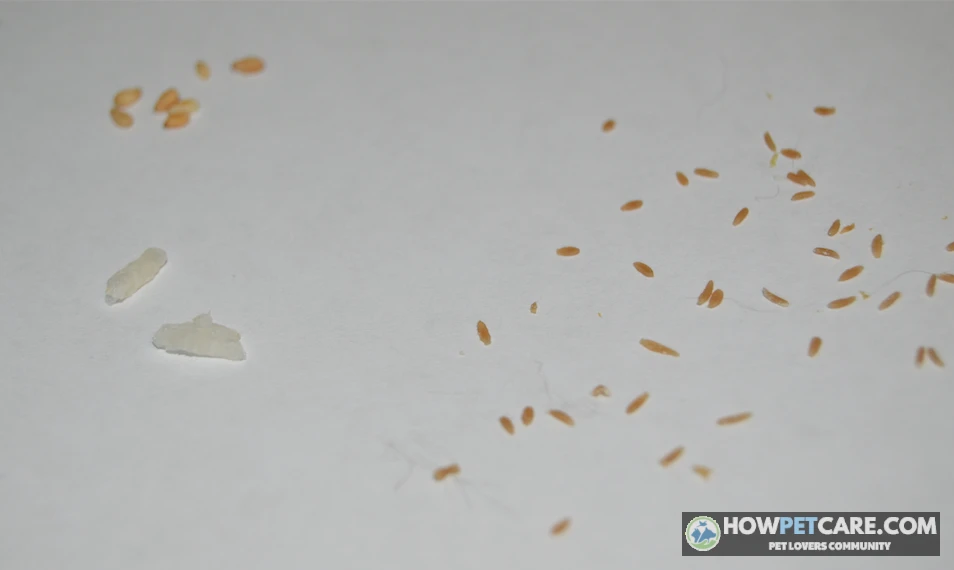

Tapeworms in cats usually show up as flat, rice-like white or cream segments near the tail, in stool, or on bedding. A cat-labeled praziquantel dewormer kills the worm, but because cats get it by swallowing infected fleas, continuous flea control for every pet is required to prevent reinfection.
Small white or cream pieces that look like grains of rice near your cat’s tail, in fresh stool, or on bedding may be tapeworm segments. Take a photo and contact your veterinarian to confirm what you found. A cat with the common flea tapeworm needs an effective dewormer and flea control; treating the worm alone won’t prevent reinfection.
Rice-Like Segments Near Your Cat’s Tail: How to Confirm Tapeworms
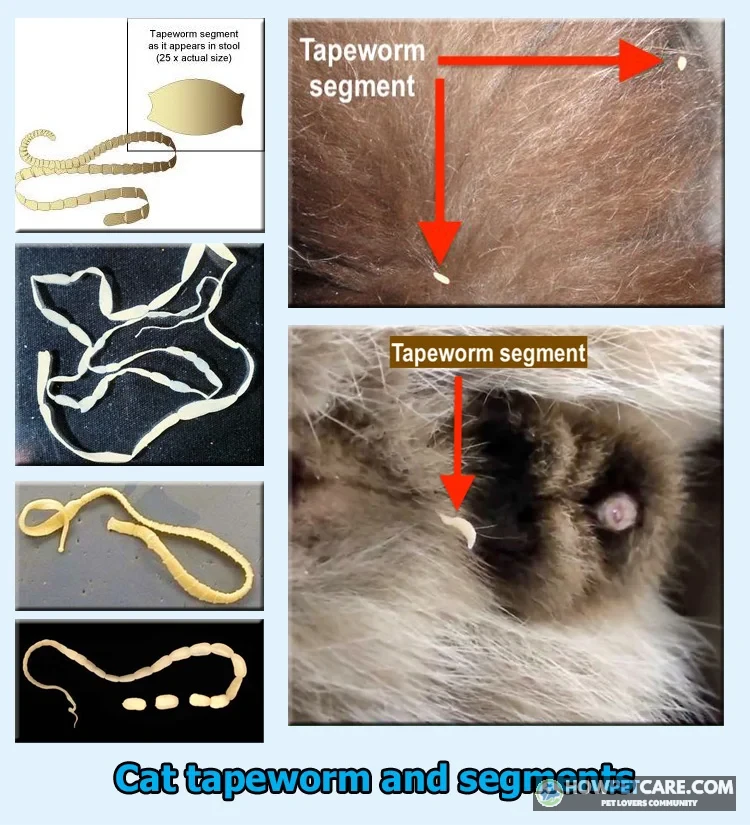
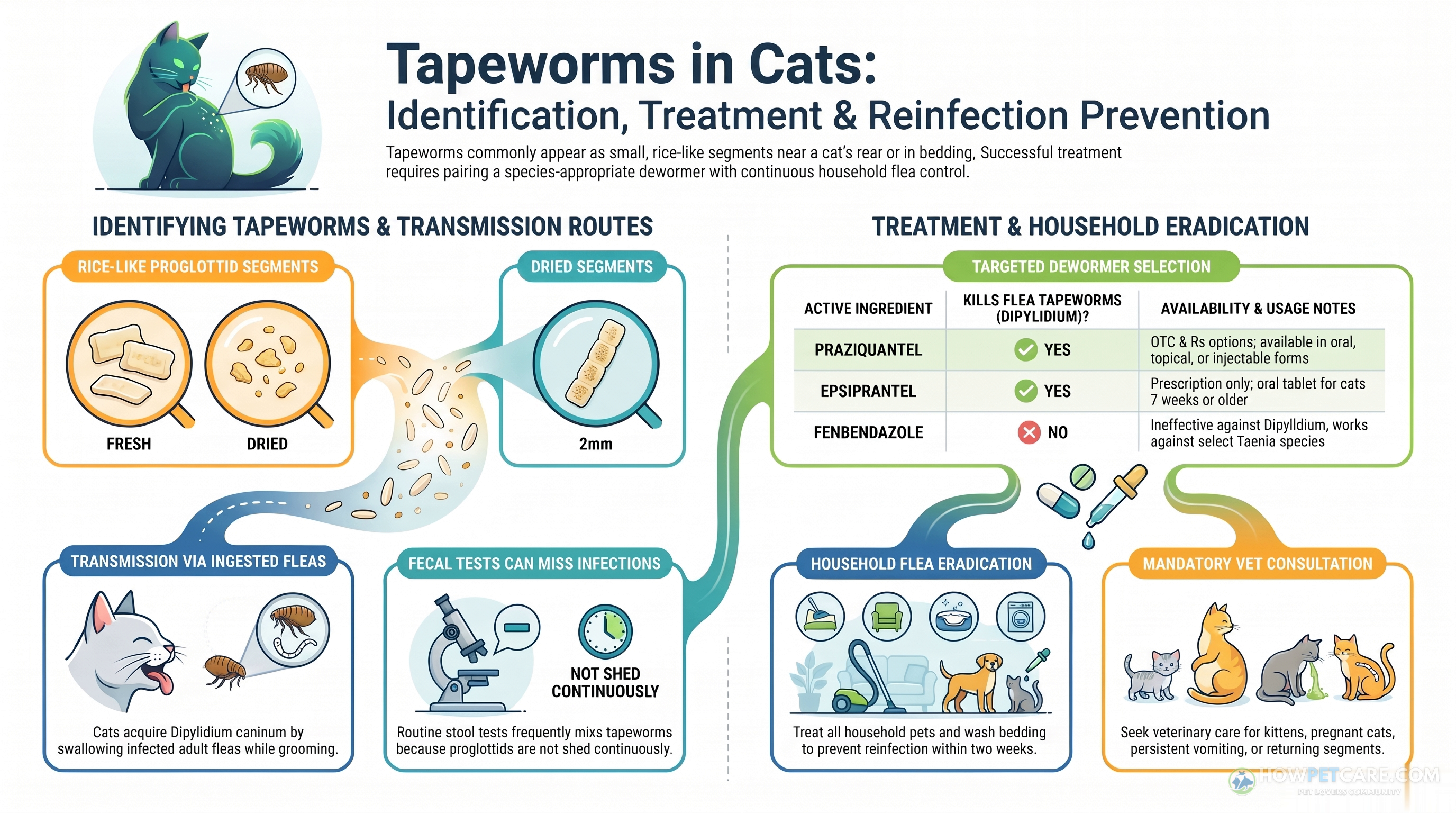
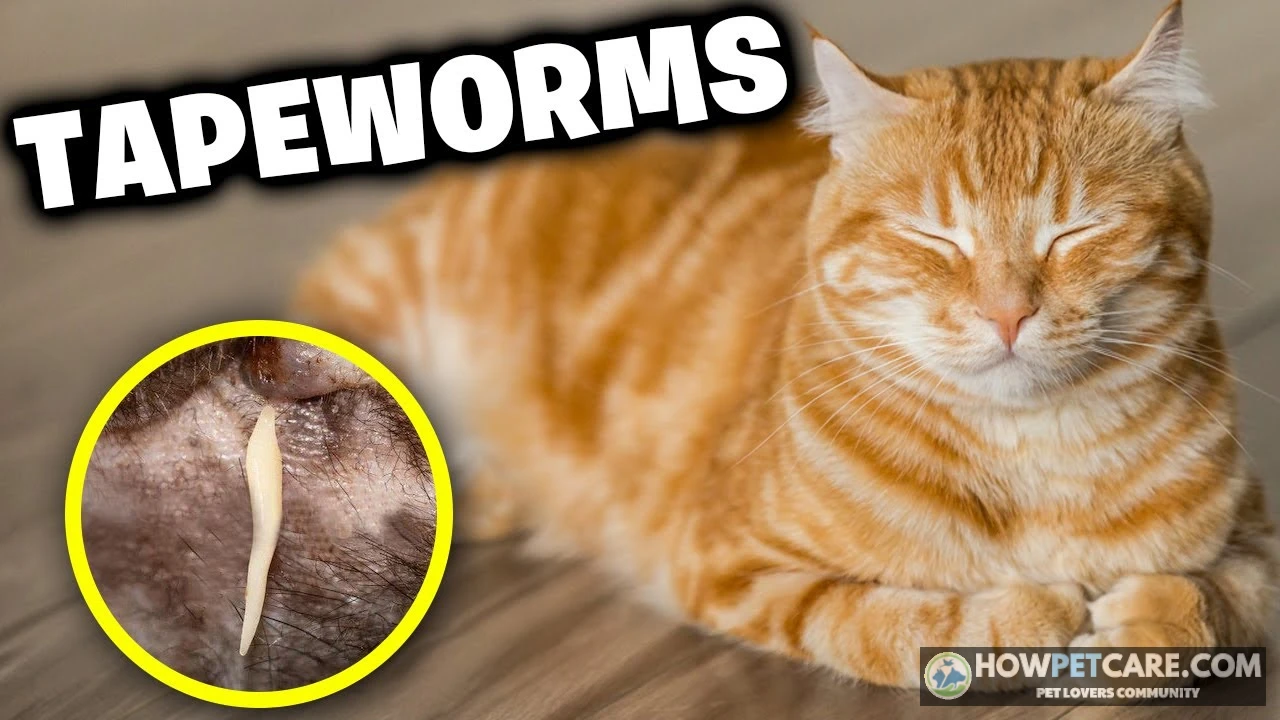
The pieces you see usually aren’t whole worms. They’re segments, called proglottids, that detach from an adult tapeworm living in the intestine. A segment is a useful clue, but your veterinarian can help distinguish it from other material and recommend treatment.
What fresh vs dried proglottids look like
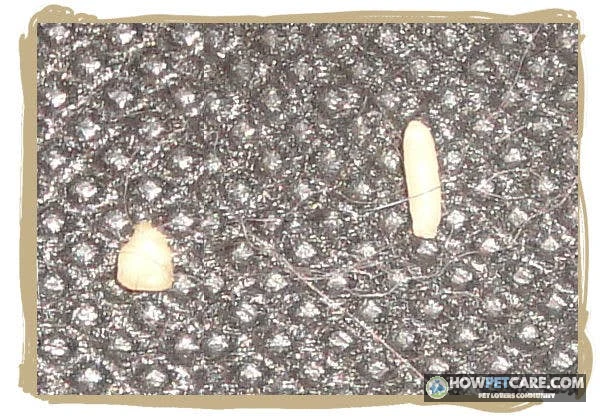
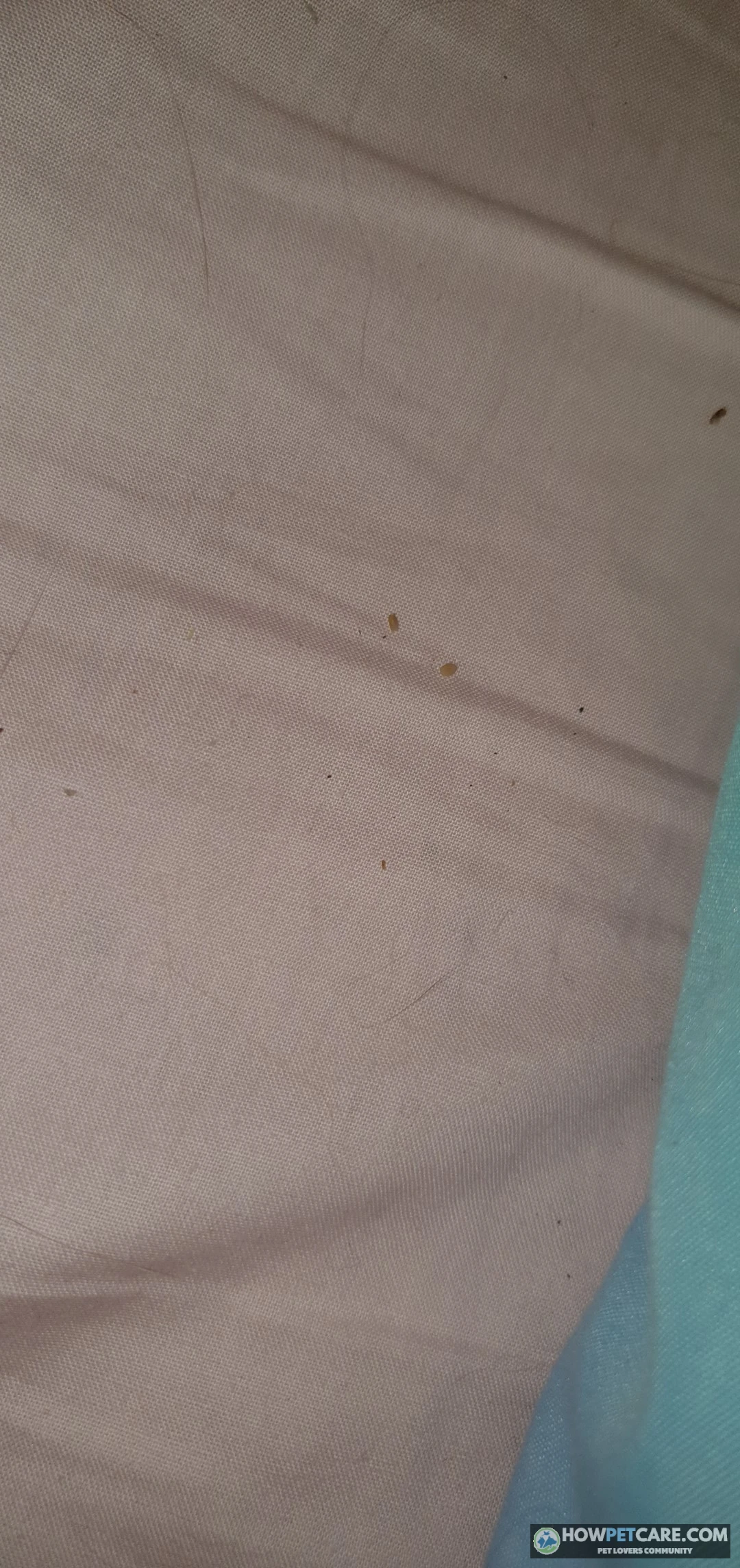
Fresh tapeworm segments are flat, white or cream, and shaped like grains of rice or cucumber seeds. They may stretch, contract, or move. As they dry, they shrink into smaller, yellowish specks that can cling to fur or bedding. One research summary describes dried segments as roughly 2 millimeters long, compared with about 12 millimeters when fresh.
Check your cat’s rear and favorite sleeping spots in good light. For a closer look, place a suspected segment on a dark surface or damp paper towel. Dried segments may no longer move, so a lack of movement doesn’t rule them out.
Tapeworms vs roundworms vs other things that look like worms
| What you see | Appearance | Where found | Possible explanation | What to do |
|---|---|---|---|---|
| White or cream pieces that may stretch and move | Flat, rice- or seed-shaped | Near the anus, on fresh stool, or on bedding | Fresh tapeworm segments | Photograph or collect a sample and contact your vet |
| Small yellowish specks | Dry and seed-like | Rear fur or sleeping areas | Dried tapeworm segments or debris | Collect a sample; appearance alone is not definitive |
| Long, pale strands | Round and spaghetti-like rather than flat grains | Stool or vomit | Possible roundworms | Contact your vet; treatment differs |
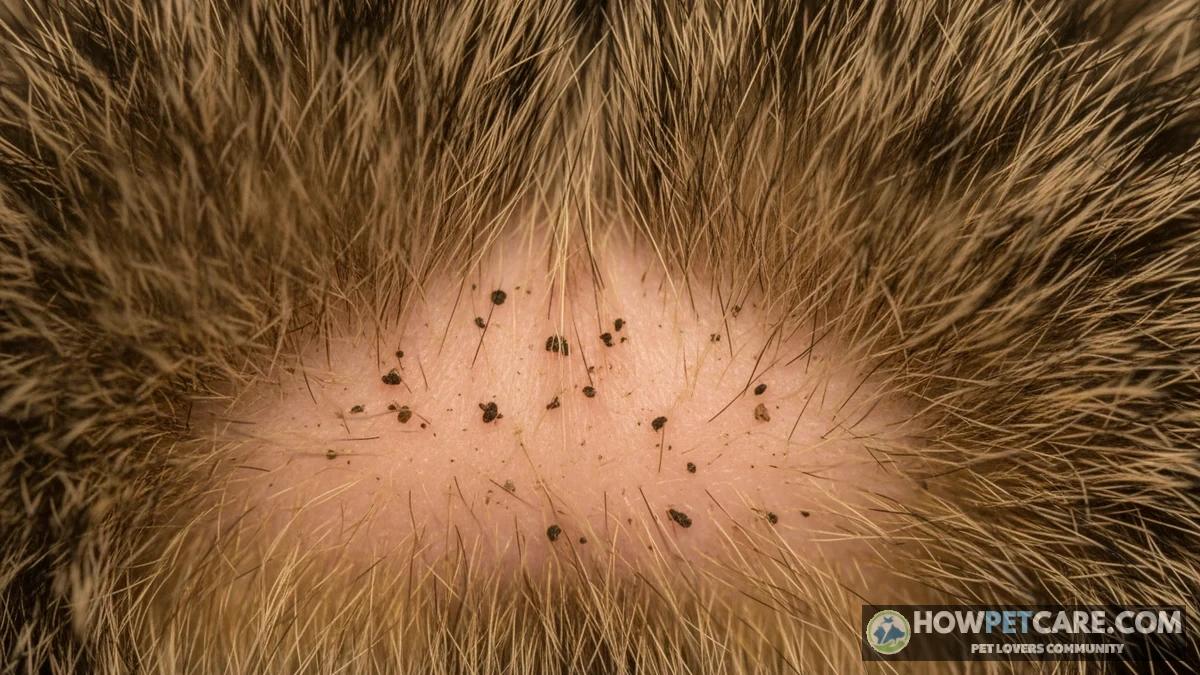
| Dark grit that smears reddish-brown when wet | Black or dark brown specks | Coat, especially near the tail base | Possible flea dirt | Check for fleas and discuss flea control |
| Wriggling, soft-bodied larvae | Elongated rather than flat | Food waste or litter that has been sitting | Possible fly larvae | Clean the area and ask your vet if the source is unclear |
| Uniform grains that do not move | Hard or crumbly | Around food or litter | Possible food or litter debris | Recheck the cat and save a sample if uncertain |
A suspicious segment is a good reason to discuss tapeworm treatment with your vet. But not seeing one doesn’t mean your cat is clear: segments aren’t shed continuously. If dark grit smears reddish-brown, compare it with what fleas look like before assuming tapeworms are the whole problem.
What to bring to the vet
Take a clear photo and, if possible, seal a segment in a bag or container. Tell the clinic when and where you found it, whether your cat hunts or has had fleas, and which parasite preventives or dewormers you’ve used. A fresh stool sample may also help your veterinarian check for other intestinal parasites.
How Cats Get Tapeworms: The Flea Life Cycle and Other Routes
The flea route: Dipylidium caninum
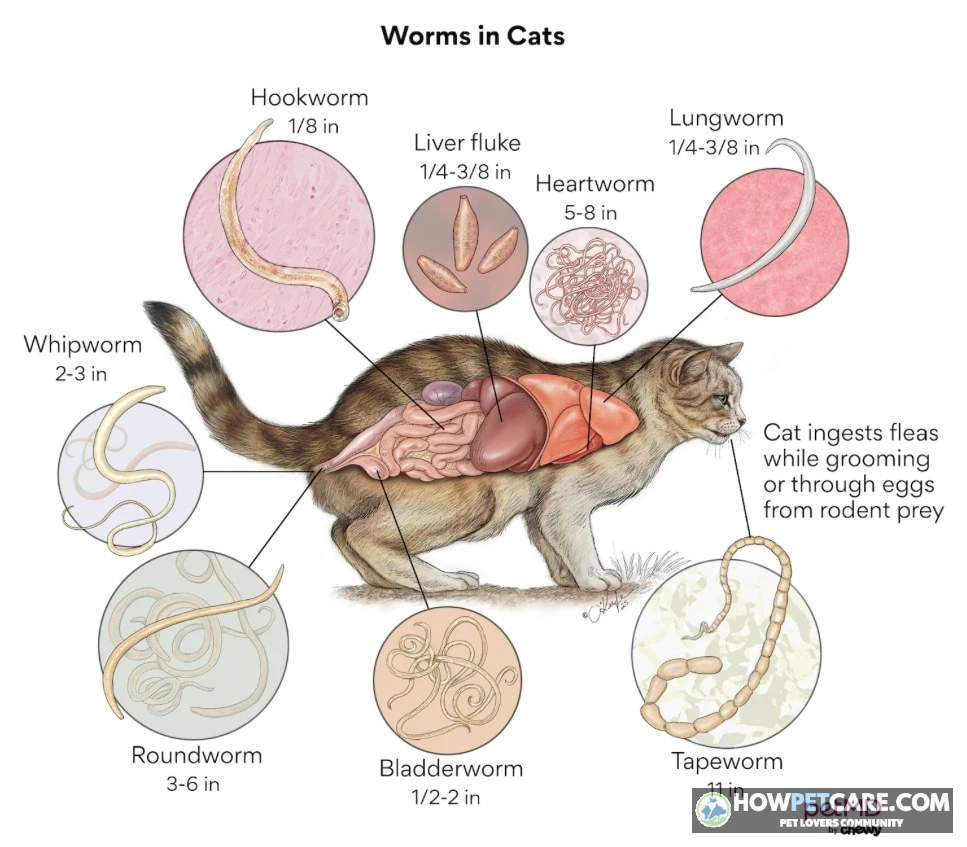
The most common cat tapeworm, Dipylidium caninum, spreads when a cat swallows an infected flea while grooming. The flea acts as an intermediate host—a necessary carrier for the developing parasite.
Here’s how the cycle works:
- An infected cat passes tapeworm segments containing eggs.
- Flea larvae in the environment ingest the eggs.
- The tapeworm develops inside the flea as the flea matures.
- A cat swallows an infected adult flea while grooming.
- The tapeworm develops in the cat’s intestine and begins shedding segments.
Flea eggs don’t transmit tapeworms directly to a cat. The cat has to swallow an infected flea. Research indicates that reinfection in a flea-contaminated environment can occur in as little as two weeks.
The prey route: Taenia taeniaeformis
A hunting cat can acquire Taenia taeniaeformis by eating an infected rodent. In this cycle, the rodent is the intermediate host. Flea prevention still matters, but it won’t prevent a hunting cat from getting this tapeworm through prey.
Why indoor-only cats are still at risk
Indoor cats can get tapeworms, too. Fleas may enter the home on another pet or in people’s belongings, and a cat can swallow one while grooming. Living indoors reduces some exposures, but doesn’t remove the need for a flea-control plan.
Signs of Tapeworms in Cats, and Why a Fecal Test Can Miss Them
Symptoms you may notice, and when there are none
Many cats with tapeworms appear well. The segments themselves may be the clearest sign. Some cats lick or bite around the rear, scoot, or seem irritated there. A heavy parasite burden can be more concerning in a kitten or a cat already in poor condition. Weight loss or a dull coat calls for veterinary attention, rather than an assumption that tapeworms are the only cause.
Contact a veterinarian promptly if your cat has persistent vomiting, bloody diarrhea, pronounced lethargy, or a swollen belly, especially if it’s a kitten. These signs can have other causes and shouldn’t be treated as a routine tapeworm problem at home.
How a veterinarian confirms tapeworms
Your veterinarian may identify tapeworms from segments you bring in or show in a photo, along with your cat’s history and examination. Fleas or flea dirt support the possibility of Dipylidium, but don’t prove which tapeworm is present. The vet may also recommend a fecal exam to look for other parasites.
Why one negative fecal exam does not rule them out
A routine fecal flotation can miss tapeworms because eggs are contained in segments, which aren’t shed continuously. So a negative result doesn’t outweigh a convincing segment or photo. Tell the clinic exactly what you saw, even if an earlier stool test was negative.
Tapeworm Medicine for Cats: Praziquantel vs Epsiprantel vs Fenbendazole
The right cat tapeworm medicine depends on the parasite, your cat, and the specific product. Praziquantel is a common treatment for the flea-associated tapeworm, but a product that treats some other intestinal parasites may not work against Dipylidium. Ask your veterinarian to confirm the choice if the diagnosis or product label isn’t clear.
Dewormer comparison at a glance
| Active ingredient | Forms available | Works against Dipylidium caninum? | Works against Taenia taeniaeformis? | Minimum age and weight: US product examples | OTC or prescription in the US | Kittens and pregnant or nursing cats |
|---|---|---|---|---|---|---|
| Praziquantel | Oral tablets; veterinary injection; topical products combined with other ingredients | Yes | Yes, when covered by the product’s label | Some cat tablets are labeled from 6 weeks; a topical emodepside combination is labeled from 8 weeks and 2.2 lb. Limits differ by product. | Some tablets are OTC; injectable and certain topical combinations are prescription. | Check the exact label and consult a vet before use in a kitten or a pregnant or nursing cat. |
| Epsiprantel | Oral tablet | Yes | Yes | The cat tablet label specifies 7 weeks or older; check the particular label for weight and dosing instructions. | Prescription | Ask a vet about use in kittens and during pregnancy or nursing; do not assume another product’s safety information applies. |
| Fenbendazole | Oral formulations, including liquid and granules | No | Has activity against some Taenia species; a vet must determine whether it fits the diagnosis. | Depends on formulation; do not assume a product labeled for another animal is appropriate for a cat. | Some formulations are OTC; veterinary use and availability depend on the product. | Use only under veterinary direction for cats, especially kittens and pregnant or nursing cats. |
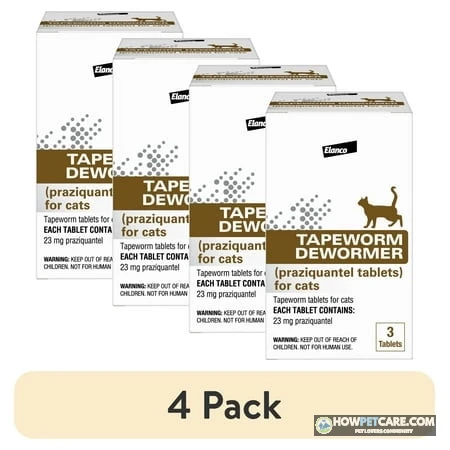
Read the exact product label. Minimum ages and weights apply to specific products, not every product with the same ingredient. Combination products also differ: for example, the NexGard COMBO label specifies a minimum of 8 weeks and 1.8 lb, not the minimum listed above for the separate emodepside combination.
Check every active ingredient and the label’s parasite claims. A tapeworm-only tablet does not remove fleas from the cat or home.
OTC or prescription: which route fits your cat
An OTC cat-labeled praziquantel tablet may suit a healthy adult cat when the pieces look like tapeworm segments, the cat meets the label requirements, and you can weigh it accurately. Contact your veterinarian to confirm the identification and product choice, particularly if you’re unsure the pieces came from your cat.
A prescription or veterinary visit is the better option if your cat is a kitten, pregnant or nursing, ill, losing weight, difficult to medicate, or still passing fresh segments after treatment. Your veterinarian can choose an appropriate formulation and check for another parasite or illness. If your clinician recommends flea control at the same visit, a prescription monthly topical for cats may be part of the plan.
Praziquantel dosage for cats depends on the product and the cat’s weight. Follow the specific cat label and veterinary instructions. Don’t calculate a dose from a dog product or a general internet formula.
Kittens, pregnant and nursing cats
For praziquantel, check the exact product’s minimum age and weight, and ask your vet about directions for pregnancy and nursing. For epsiprantel, ask the prescribing veterinarian whether the cat tablet and its label are appropriate for your kitten or pregnant or nursing cat. For fenbendazole products such as Panacur for cats, don’t substitute an OTC product intended for another species; discuss any use with your veterinarian first.
A kitten below a product’s minimum age or weight needs a veterinary plan, not a guessed smaller dose. Keep the packaging handy when you call so the clinic can check the active ingredients and strength.
Why natural tapeworm remedies are not a substitute
There’s no reliable evidence that pumpkin seeds, diatomaceous earth, or probiotics eliminate a cat’s tapeworm infection. Garlic can be toxic to cats. Use a proven dewormer selected for the suspected parasite, along with flea control or hunting prevention as appropriate.
What Tapeworm Diagnosis and Treatment Costs for a Cat
Costs depend on your location, clinic, product, and the services your cat needs. Published US price data is limited and varies widely, so the figures below are planning examples, not sourced national averages or clinic quotes. Ask for a written estimate; a local quote is more useful than assuming your bill will fall within these ranges.
Cost by line item
| Item | Illustrative US range | Source and date | What it covers | Notes |
|---|---|---|---|---|
| Office exam | $50–$110 | Unsourced planning estimate; not a verified 2026 survey | Examination and discussion of symptoms | Ask whether weighing and reviewing a sample are included. |
| Fecal exam | $25–$60 | Unsourced planning estimate; not a verified 2026 survey | Stool testing, often including a screen for other parasites | A negative routine test does not rule out tapeworms. |
| OTC praziquantel tablets | $10–$25 per pack | Unsourced planning estimate; retailer prices vary | Cat-labeled medication | Pack size and the number of tablets needed vary. |
| Vet-dispensed tablet or injection | $20–$45 per treatment | Unsourced planning estimate; clinic prices vary | Medication; administration may cost extra | Ask for the medication and administration charges separately. |
| Topical combination dewormer | $20–$40 per application | Unsourced planning estimate; product prices vary | A prescription combination product | Coverage and price depend on the specific product. |
| Flea prevention | $15–$30 per pet per month | Unsourced planning estimate; product prices vary | Ongoing flea prevention | Factor in every household pet and the recommended duration. |
These ranges aren’t guarantees, and the final bill may fall outside them. A cat with other symptoms may need additional testing or care. Insurance coverage varies by policy; ask your insurer whether it covers an exam, prescribed medication, or routine parasite prevention.
How to lower the bill without risking treatment failure
If your healthy adult cat has a convincing segment, ask whether the clinic can review a photo or sample and advise on a cat-labeled OTC product. Don’t skip an exam if your cat is unwell or the diagnosis is uncertain.
When you request an estimate, ask:
- Is an examination required before treatment, and what does the exam fee include?
- Is the fecal test recommended to look for other parasites?
- Can the clinic dispense the medicine or provide a prescription to fill elsewhere?
- Are flea prevention and any administration fee included?
- What follow-up is recommended if segments return?
After the Dose: What to Expect, a Vomited Tablet, and When Treatment Seems to Fail
How soon segments stop appearing
Effective dewormers act on the intestinal worm, which is usually digested rather than passed as an intact worm. Fresh segments should stop appearing after successful treatment, though old dried material may remain on bedding or fur. Clean the sleeping area and note the treatment date so you can tell newly observed material from what was already there.
Ask your veterinarian when to report continued fresh segments for the product used. Call sooner if your cat is ill or you’re unsure it received the full dose.
If your cat vomits the medication
Don’t automatically give another tablet. Note when you gave it, when vomiting happened, whether you can see any tablet material, and the product name and strength. Call your veterinarian or follow the product label before giving another dose; repeating it without advice could mean your cat gets too much medication.
Repeated vomiting, inability to keep water down, or marked lethargy calls for prompt veterinary advice.
Reinfection vs drug resistance: what to check first
If segments return, the cause may be a new infection, an incomplete dose, an incorrect diagnosis, or, less commonly, a drug that didn’t work as expected. Check these points before assuming the medicine failed:
- ☐ Check the product and weight. Was it labeled for cats and for the suspected tapeworm? Did your cat receive the amount directed for its weight?
- ☐ Review administration. Did your cat swallow the full tablet, or vomit or spit out any of it? Tell the vet rather than guessing at a replacement dose.
- ☐ Look for new evidence. Photograph fresh-looking segments and note when they appeared. Clean old segments from bedding to make changes easier to track.
- ☐ Audit flea control. Check the treated cat, other pets, missed doses, and the home environment. Fleas or flea dirt indicate exposure, but don’t prove that a particular dose failed.
- ☐ Consider hunting. A cat that eats infected rodents can acquire Taenia again, even with flea prevention in place.
- ☐ Recheck the diagnosis with the vet. Long, spaghetti-like worms or persistent illness may point to a different problem.
Praziquantel- and epsiprantel-resistant Dipylidium caninum has been reported in the United States since 2018. These reports don’t show that resistance is widespread or the usual reason segments return. If fresh segments persist despite appropriate treatment and carefully managed exposure, bring the evidence to your veterinarian. They can review the diagnosis and treatment history, and consider alternatives, rather than having you change drugs repeatedly on your own.
Do probiotics help after deworming?
A cat that eats and acts normally generally doesn’t need a probiotic just because it received a dewormer. Probiotics don’t replace tapeworm medicine. If diarrhea develops or persists, ask your vet whether digestive support is appropriate and whether your cat needs an examination.
Step-by-Step Flea Eradication Plan to Stop Tapeworms Coming Back
For flea-associated tapeworms, continuous flea control is essential to breaking the reinfection cycle. Coordinate care for your cat and the household when treatment begins, and continue prevention for the period your veterinarian recommends.
-
Treat every household pet
Ask your vet for an appropriate flea preventive for each cat and dog. Follow each product’s species, age, and weight directions, and keep doses on schedule.
-
Wash sleeping areas
Wash pet bedding, blankets, and removable covers using the hottest settings the fabric permits. Dry thoroughly. Bedding usually does not need to be discarded.
-
Vacuum thoroughly and often
Vacuum rugs, floors, furniture, baseboards, and cracks, paying special attention to places pets rest. Empty the canister or dispose of the vacuum bag outside.
-
Treat the environment if needed
For a persistent infestation, ask your vet or a pest-control professional about an appropriate household product. Follow the label, remove pets during application, and do not allow them back until the label says it is safe.
-
Reduce outdoor exposure
Limit access to hunting grounds, wildlife resting places, and areas where stray animals shelter when practical. Keep pets away from treated outdoor areas for the label’s specified period.
-
Monitor and continue prevention
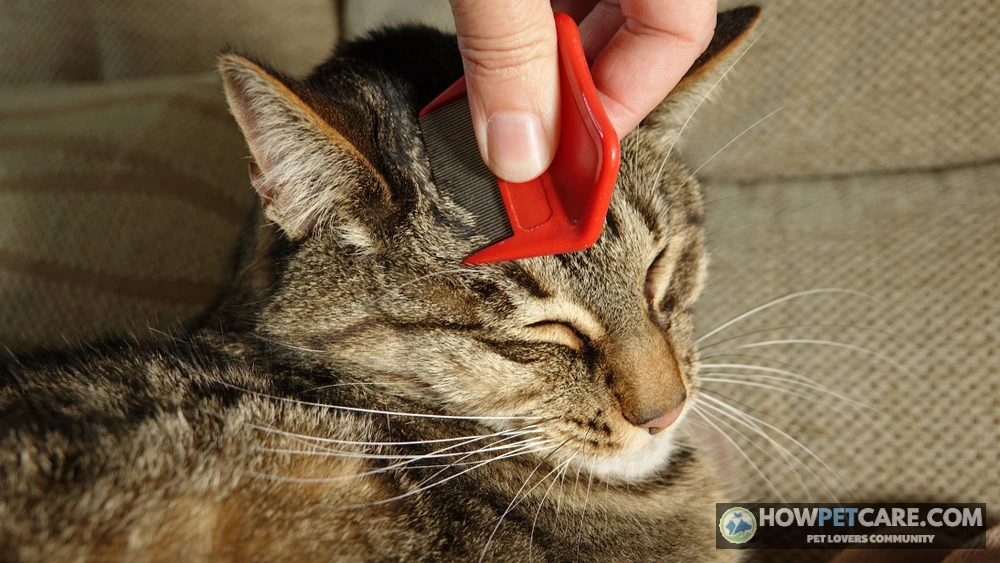
Use a flea comb and check the collected debris on damp white paper. Record preventive dates and call your vet if fleas continue to appear or your cat develops new segments.
Treat every pet and keep going
An untreated dog or cat can maintain a household flea problem. Choose a product intended for each animal’s species and follow its label; the right product can differ between pets. Environmental flea stages may continue to emerge after the first cleaning, so one application or vacuuming session won’t complete the job.
Some dog flea treatments contain permethrin, which can be toxic to cats. If a cat is exposed, contact a veterinarian or animal poison service immediately.
Clean the home: laundry, vacuuming, and environmental treatment
Keep up with laundry and vacuuming while you tackle the infestation, focusing on pet sleeping areas and upholstered furniture. A professional can help with a difficult infestation. Don’t apply household insecticides directly to your cat, and don’t assume a product is safe for pets just because it’s sold for household use. If the problem is bed bugs rather than fleas, follow cat-safe guidance for treating bed bugs on cats rather than reaching for household insecticides.
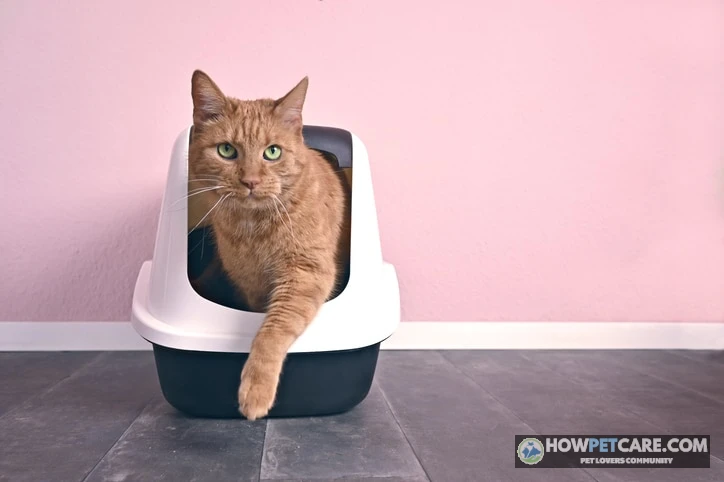
Indoor-only vs outdoor hunting cat: deworming and prevention schedule
There’s no single deworming schedule for every cat. For an indoor-only cat with limited exposure, ask your veterinarian whether testing and treatment when indicated make sense. For an outdoor or hunting cat, discuss a risk-based testing and deworming schedule, along with ways to reduce prey access. Kittens may need a separate parasite-control plan.
Your veterinarian can factor in local parasite risks, your cat’s history, household members, and the preventive products already in use.
Can Humans, Children, and Other Pets Catch Tapeworms From a Cat?
Which tapeworm species are actually zoonotic
People can acquire Dipylidium caninum, but the route matters: infection follows accidental swallowing of an infected flea, not ordinary contact with a cat or a tapeworm segment. Human infection is rare and most often recognized in children.
Taenia taeniaeformis isn’t generally considered a significant human risk from cats. A different group, Echinococcus, can infect people and cause serious disease, including disease affecting the liver. Risk depends on the species, geography, wildlife exposure, and animal involved. Echinococcus shouldn’t be assumed to explain the typical rice-like segments found on a US house cat. Ask your veterinarian about local risk if your cat hunts or has wildlife exposure.
Protecting children and other pets
Other cats and dogs can acquire Dipylidium by swallowing infected fleas; simply touching another pet’s segments won’t give them the infection. Treating the shared flea problem protects the whole household. If your dog is passing material too, use a dog-specific guide to worms in dog poop rather than cat tapeworm advice.
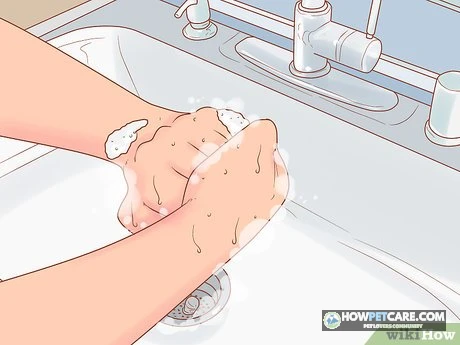
Wash your hands after handling litter or pet waste, scoop the litter box daily, and supervise young children around pets and litter. Keep play areas clean and follow the household flea plan. If a child passes suspected segments, contact their healthcare professional. An immunocompromised household member with concerns can also ask their clinician for individualized advice.
Your Tapeworm Action Plan: Checklist and When to Call the Vet
Printable checklist
- ☐ Photograph the suspected segments and save a sample in a sealed container.
- ☐ Contact your veterinarian to confirm the likely parasite and discuss whether a fecal exam is useful.
- ☐ Check the dewormer comparison and obtain a cat-labeled treatment appropriate for your cat’s age, weight, and health.
- ☐ Weigh your cat and follow the exact product label and veterinary directions; record the treatment date.
- ☐ Start or update flea prevention for every household pet and clean sleeping areas.
- ☐ Reduce hunting exposure where practical and arrange the follow-up your vet recommends.
- ☐ Request an itemized estimate if cost is a concern.
When to stop DIY and book a vet visit
Book a veterinary visit if your cat is a kitten below a product’s minimum age or weight, pregnant or nursing, seems ill, loses weight, or continues to pass fresh segments after treatment. Seek prompt advice for repeated vomiting, bloody stool, marked lethargy, or a swollen belly. If the diagnosis or treatment plan is still uncertain after follow-up, ask about a second opinion.
Clean away old segments, watch for new ones, and use the treatment date and flea-control record to guide your next conversation with your veterinarian.
FAQ
Can I get rid of tapeworms in cats naturally?
No home remedy has reliable evidence of killing tapeworms in cats. Pumpkin seeds, diatomaceous earth, and garlic are not proven, and garlic can be toxic to cats, so use a praziquantel or epsiprantel dewormer plus flea control.
Are tapeworms contagious from cat to cat?
Not directly. Dipylidium caninum requires a flea as the intermediate host, so cats in the same home get it by sharing fleas, not by contact with each other’s stool.
Do tapeworms make cats lose weight?
Usually not. Most adult cats have no weight change, but heavy infections in kittens or cats in poor condition can cause weight loss, a dull coat, or mild vomiting.
Is a tapeworm infection in a cat an emergency?
Rarely. Tapeworms are seldom dangerous in healthy adults, but a kitten, a pregnant cat, or a cat with vomiting, bloody diarrhea, or lethargy should see a vet promptly.
Should I throw out my cat’s bedding after tapeworms?
You do not need to throw it out. Wash it in hot water and dry it on high heat to kill flea eggs and larvae, which are the source of reinfection.