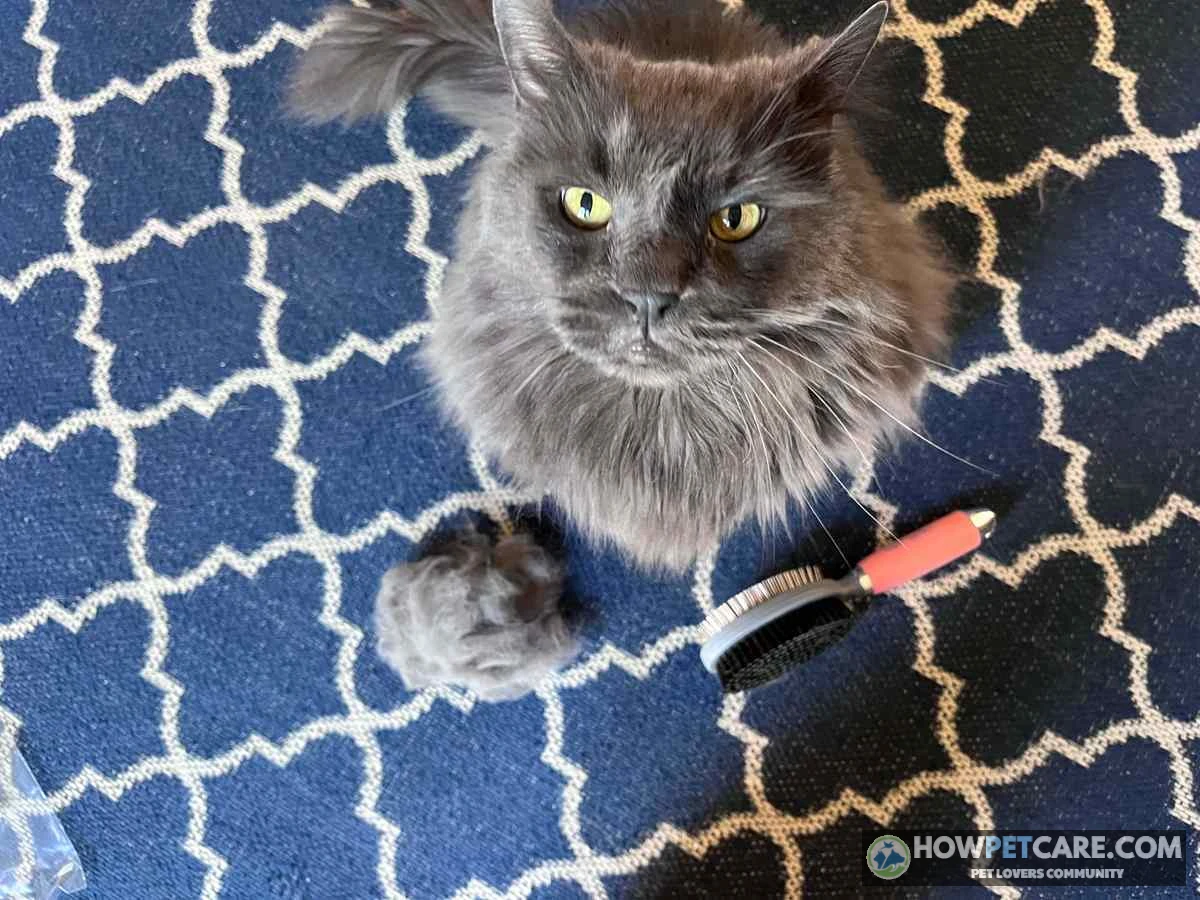

For a cat that has passed a hairball and is acting normally, treatment starts with daily gentle brushing, fresh water, and—if your vet agrees—a cat-specific hairball gel given per its label. Repeated unproductive retching, breathing trouble, or a swollen belly needs a vet, not home remedies.
If your cat has brought up one hairball and is now eating, breathing, and acting normally, start with gentle brushing and fresh water. A cat-specific hairball gel may be an option for an otherwise healthy adult cat. Check the product’s label and ask your vet whether it’s appropriate before giving it. Don’t assume ongoing hacking is a hairball that just needs more time to pass.
Repeated unproductive retching, breathing trouble, a swollen or painful belly, or vomiting with lethargy calls for prompt veterinary care—not a seven-day home trial. A hairball can sometimes obstruct the digestive tract, particularly when unproductive retching occurs alongside lethargy and loss of appetite.
Start Here: The 7-Day Home Treatment Plan for a Cat Hacking Up Hairballs
This plan is for a cat that has produced a hairball, stopped retching, and is otherwise behaving normally. It’s a prevention and monitoring plan, not a treatment for a suspected blockage.
Day 0: Safety check and first brush-out
- Check breathing and behavior. If your cat is struggling to breathe, repeatedly retching without producing anything, appears to be in pain, or is unusually weak, contact a vet immediately. Use the tiers in the Red Flags section below.
- Offer normal food and fresh water. Don’t withhold food or water as a hairball treatment. If your cat can’t keep water down, seek same-day care.
- Brush gently for 5–10 minutes, stopping sooner if your cat becomes stressed. Remove loose hair without pulling at tangles.
- Record the episode: note the date, whether you saw a wad of hair, and whether your cat’s appetite and litter-box habits remain normal.

Go/no-go checkpoint: Proceed only if the episode has stopped and your cat is eating, drinking, and acting normally. If your cat is hiding, refuses food, or starts retching again, call your vet instead of moving to the next step.
Days 1–3: First-line remedy
Continue the daily brush-out. If your vet agrees that a hairball remedy is appropriate, choose one cat-specific gel or paste and follow that product’s label for your cat’s age and the intended use. Formulations differ, so a ribbon length from one product isn’t a reliable dose for another.
If your cat refuses the gel, ask your vet whether a different formulation or a small amount of plain canned pumpkin is appropriate. Don’t force either into your cat’s mouth. Pumpkin is not an interchangeable rescue treatment for an obstructing hairball, and a weight-based dose has not been established in the evidence available for this guide.

Checkpoint: A cat that remains well can continue its grooming routine. If hacking or retching returns, call your vet promptly; don’t wait three days for a remedy to work.
Days 4–7: Prevention, not escalation of symptoms
If your cat has remained symptom-free, discuss a longer-term plan with your vet. Depending on your cat’s needs, that may mean continued brushing, a complete hairball-control food, or a vet-recommended fiber supplement. Introduce a new food gradually according to the food label or your vet’s instructions.
Don’t automatically add psyllium, pumpkin, gel, and a new food together. Changing one thing at a time makes it easier to spot food refusal or digestive upset. Extra fiber isn’t appropriate for every cat.
Day 7 and beyond: Decide what happens next
If another episode occurs during the week, contact your vet rather than adding more remedies. Even when a cat remains well, grooming and diet changes are preventive measures. There’s no reliable deadline by which they must produce a visible hairball or prove that treatment worked.
Red Flags: When to Take Your Cat to the Vet for Hairballs

A hairball, or trichobezoar, is a mass of swallowed hair that can form as a cat grooms: backward-facing structures on the tongue catch loose hairs, which the cat then swallows. Most swallowed hair moves through the digestive tract, but a mass can occasionally cause an obstruction.
Go to an emergency vet now
- Labored or open-mouth breathing, blue or pale gums, collapse, or severe weakness.
- Repeated unproductive retching, especially if it persists or occurs with lethargy, a painful or swollen abdomen, or refusal to eat. Don’t wait 24–48 hours to see if it stops.
- Persistent vomiting, a visibly distended or painful belly, or a cat that seems severely ill.
- Repeated straining in the litter box with little or no urine. This may be a urinary emergency rather than a hairball.
If possible, call the emergency clinic while arranging transport. Don’t give a laxative, oil, or food by force while you wait.
Call your vet within 24 hours—or sooner for a sick cat
- Your cat vomits more than twice in 24 hours, brings up blood, repeatedly vomits yellow fluid, or can’t keep water down: seek same-day care.
- Your cat refuses food for a day, or is eating markedly less and seems unwell: call promptly. Kittens and cats with other illnesses may need help sooner.
- Your cat hasn’t passed stool for 48 hours, strains to defecate, or has a significant change in stool. Seek urgent care sooner if vomiting, pain, or lethargy is also present.
- Episodes recur, hairballs appear more than about once a month, or the frequency is increasing.
- A kitten, senior cat, or cat with known gastrointestinal disease has a hairball episode and you’re considering a remedy.
Safe to monitor at home
You can usually monitor a cat at home after a single hairball if its breathing, appetite, energy, drinking, and litter-box use return to normal. If a warning sign develops, move to the appropriate higher tier immediately; don’t restart a home-treatment clock.
Hairball Retching vs. Asthma Cough vs. Ordinary Vomiting
The sounds and posture can overlap. A video can help a veterinarian assess an episode, but no home checklist can reliably diagnose its cause.
Quick comparison of what each episode looks and sounds like
| What to look for | Hairball retching | Asthma or bronchial cough | Other vomiting |
|---|---|---|---|
| Movement and sound | Gagging and abdominal heaving may precede a hairball | Repeated hacking or coughing; the cat may crouch with its neck extended | Nausea and abdominal heaving may precede food or fluid |
| What comes out | A wet, often tubular wad containing visible hair | Often nothing; occasionally foam or mucus | Food, liquid, or bile, without an obvious hair wad |
| What it can mean | A hairball was produced; repeated episodes still deserve investigation | A respiratory problem is possible, including feline asthma | Many causes are possible, including dietary or gastrointestinal disease |

A cat can crouch and extend its neck during more than one kind of episode. A hacking sound alone doesn’t confirm a hairball. If it’s safe, record about 30 seconds for your vet and note what, if anything, came up. Recurrent vomiting or hairballs can warrant investigation for inflammatory bowel disease (IBD), skin disease, or other illness; tumors are another possible cause, not an assumption about your cat.
A cat breathing with an open mouth or showing obvious breathing effort needs emergency veterinary care, whether or not you think the episode is a hairball.
Are Petroleum Gels and Mineral Oil Safe for Cats?

Cat-specific petroleum-based hairball gels are formulated for this use and may be appropriate when given according to their label and your vet’s advice. They aren’t the same as plain mineral oil or petroleum jelly. Repeated use of petroleum-based remedies can interfere with vitamin absorption, so discuss prolonged or frequent use with your vet.
Do not give plain mineral oil, plain petroleum jelly, or cod-liver oil as a home hairball remedy. A cat can inhale oil into its lungs, particularly if it’s forced into the mouth or the cat vomits. This can cause aspiration pneumonia. Cod-liver oil also carries a risk of excessive vitamin intake. Don’t use human laxatives, butter, or large amounts of olive oil without veterinary direction.
Some malt pastes and other non-petroleum products are marketed for hairballs, but ingredients differ. Check the label and ask your vet about the particular formulation. Follow its feeding instructions rather than assuming every gel must be given with—or away from—a meal.
Hairball Remedy Dosing by Cat Weight and Age
The evidence supplied for this guide does not provide a dependable universal weight chart for these remedies. Converting a paste’s ribbon length to teaspoons, or assigning pumpkin and psyllium doses by weight alone, could misdose an individual cat. The safest dose is the one on the specific cat product’s label, or the amount your vet recommends for your cat.
| Remedy | Kitten under 6 months | Adult under 8 lb | Adult 8–12 lb | Adult over 12 lb | Senior cat | Frequency and duration |
|---|---|---|---|---|---|---|
| Cat-specific gel or laxative paste | Ask a vet before use | Use the product’s applicable label or vet instructions | Use the product’s applicable label or vet instructions | Use the product’s applicable label or vet instructions | Ask a vet, especially if the cat has other conditions | Follow that formulation’s label; ask before ongoing use |
| Plain canned pumpkin | Ask a vet before use | Ask a vet for an amount | Ask a vet for an amount | Ask a vet for an amount | Ask a vet for an amount | Mix into food only if advised; stop and call if digestive signs develop |
| Plain psyllium | Ask a vet before use | Vet-directed amount only | Vet-directed amount only | Vet-directed amount only | Vet-directed amount only | Follow the vet’s mixing, hydration, and duration instructions |
Gel and laxative paste
Read the exact product’s label for age restrictions, amount, and frequency. Some labels distinguish initial use from maintenance. If your cat’s weight falls between label categories, or the product has no weight-specific directions, ask the manufacturer or your vet rather than estimating.
Canned pumpkin

Choose plain canned pumpkin, not pumpkin pie filling or a seasoned product. Pumpkin adds fiber, but it doesn’t remove a suspected obstruction. Ask your vet how much to add to your cat’s usual food and for how long; a larger cat doesn’t automatically need more.
Psyllium
Psyllium is a fiber supplement that absorbs water. Use it only with veterinary instructions for the particular product, amount, food, and water. Don’t give dry powder directly into the mouth or use it when blockage is suspected. Stop and contact your vet if constipation, diarrhea, vomiting, or food refusal develops.
Kittens and seniors
Don’t extrapolate an adult dose for a kitten. Seniors may have conditions or medications that change which treatment is appropriate. For both groups, call your vet before starting a supplement or laxative paste, especially if your cat is eating or drinking less than usual.
Gel vs. Fiber vs. Hairball Control Food vs. Brushing: Which Fits Your Cat?
The evidence available for this article lacks direct comparisons establishing that one approach is fastest or most effective for every cat. The right choice depends on whether your cat is well now, its diet and medical history, and why it’s swallowing or bringing up hair.
| Option | Example products or tools | When to expect a benefit | Effectiveness | Safety trade-offs | Best for |
|---|---|---|---|---|---|
| Cat-specific gel or paste | Laxatone or another labeled feline hairball paste | No guaranteed deadline; follow the label and vet’s plan | Intended to help hair move through the digestive tract; not a proven fix for every episode | Taste refusal; frequent petroleum-based use raises vitamin-absorption concerns | An otherwise well adult cat when the product is appropriate |
| Fiber supplement or pumpkin | Vet-directed psyllium; plain canned pumpkin | Varies with the cat and product | Fiber can support movement of swallowed hair through the gut | Too much or inappropriate fiber can worsen digestive signs; needs an individualized plan | A cat whose vet recommends added fiber |
| Hairball-control cat food | Hill’s Science Diet Hairball Control, Royal Canin Hairball Care, or Purina Pro Plan Hairball Management | A gradual dietary change, not emergency relief | Designed for ongoing management; individual responses differ | Diet changes can upset digestion or conflict with a prescribed diet | Long-term prevention when the food suits the cat |
| Brushing | Slicker brush, Zoom Groom, or a FURminator-style deshedding tool | Removes loose hair during each session; prevention is ongoing | Reduces the loose hair available to swallow | Aggressive brushing can irritate skin or pull hair | Most cats that tolerate grooming, particularly heavy shedders |

These are examples, not a ranking or an endorsement. Formulations can change, so check the current label and your cat’s dietary needs.
Best choice for an active episode
If your cat is still retching, vomiting repeatedly, or struggling to breathe, seek veterinary assessment rather than experimenting with gel or fiber. Once an isolated episode has ended and your cat is back to normal, brush gently and ask whether a labeled paste makes sense.
Best for long-haired cats
Daily, gentle grooming can reduce loose hair before it’s swallowed. Use a grooming brush suited to the coat; a deshedding tool is not a substitute for carefully addressing mats. If brushing hurts, stop and ask a groomer or vet for help.

Best for long-term prevention
For a cat that eats a suitable complete hairball-control food, the diet can be a convenient part of a routine alongside brushing and access to water. A prescription diet or medically necessary food takes priority unless the treating vet recommends a change.
If Your Cat Refuses Gels, Pumpkin, or Pills: Workarounds
Tricks for picky cats
Check the product label before changing how you offer it. If the label permits food mixing, offer the measured gel in a small portion of familiar wet food and make sure your cat eats that portion. A different flavor or formulation may also help.
Some product labels allow a small measured amount to be placed on a front paw for the cat to lick off. Apply it only while your cat is calm, and don’t restrain your cat or assume the entire amount was swallowed. If your cat shakes it off, don’t automatically give a second dose; ask your vet or follow the label’s missed-dose instructions. Keep the product away from eyes and damaged skin.

For pumpkin, ask whether a vet-approved amount can be mixed into a small serving of familiar pâté. If your cat refuses, leave it out and discuss another approach. Hairball treats may be an option for some cats, but check ingredients and calories; treats should make up no more than 10% of the overall diet.
Never syringe or force-feed gel, oil, or a supplement to a struggling cat. If refusal means your cat isn’t eating its normal meals, contact your vet.
Cats with IBD, allergies, or sensitive stomachs
Ask the treating vet before changing food or adding fiber. A flavored gel or treat may contain ingredients that don’t fit an elimination or prescription diet, and even a single-ingredient food such as pumpkin isn’t automatically suitable for every cat with IBD. Bring the ingredient list to the appointment. Kittens and seniors also need an individualized plan rather than an improvised dose.
How Often Is Normal? Reconciling ‘1–4 a Month’ With ‘A Few a Year’
Some older or less conservative guidance describes one to four hairballs a month as normal. Other sources describe hairballs as uncommon in healthy cats—perhaps a few a year—and advise investigation when they become frequent. These are different thresholds, not evidence that weekly vomiting is harmless.
A practical rule is to discuss more than one hairball a month, any increase from your cat’s usual pattern, or repeated vomiting of any kind with your vet. Long coats and heavy shedding can contribute, but frequent hairballs can also accompany excess grooming from skin problems or digestive disease.
Keep a simple log of the date, whether visible hair was present, appetite, energy, stool, and any video of the episode. That record helps your vet distinguish a recurring hairball problem from cough or vomiting with another cause.

What Vet Care Costs If Home Treatment Fails (US Ranges)
In the United States, the cost can range from an office visit to a much larger emergency or surgical bill. The evidence available for this guide doesn’t verify current nationwide prices for these services, so the table identifies what to request on an estimate rather than presenting unreliable dollar amounts. Prices vary by region, clinic, timing, and the care your cat needs.
| Service | Typical US cost range | What it involves | When it may be needed |
|---|---|---|---|
| General or emergency exam | Request a local estimate; emergency fees vary | Examination and assessment of hydration, breathing, and abdomen | Recurring episodes or warning signs |
| X-rays or ultrasound | Request an itemized estimate | Imaging to investigate a possible obstruction or another cause | When the vet recommends further investigation |
| Bloodwork | Request an itemized estimate | Tests to assess general health and possible underlying problems | Depending on examination and medical history |
| Medical management | Ask whether medication, fluids, and hospitalization are included | Treatment tailored to the diagnosis and severity | When the vet determines nonsurgical care is appropriate |
| Obstruction surgery | Request a written estimate and discuss potential additional costs | Anesthesia, surgery, monitoring, and recovery care | When an obstruction requires removal |

Exam and diagnostics
Describe exactly what happened, including whether hair came up and when your cat last ate, drank, and passed stool or urine. Your vet may recommend X-rays, ultrasound, bloodwork, or other tests based on the examination. Not every cat needs every test.
Medical management
Depending on the diagnosis, your vet may recommend fluids, medication, observation, or other care. Don’t assume a suspected blockage can be managed with a home laxative. Ask which services are included in the estimate and whether a deposit is required.
Obstruction surgery and recovery
A severe intestinal obstruction can require surgery to remove the material; an opening into the intestine is called an enterotomy. Ask the clinic for a written estimate that separates diagnostics, anesthesia, surgery, hospitalization, medications, and rechecks.
After surgery, follow the surgeon’s specific instructions for feeding, pain medication, activity restriction, incision checks, and a protective collar if prescribed. Call the clinic about renewed vomiting, refusal to eat, worsening lethargy, or an incision that opens or develops discharge. The treating team should provide a recheck schedule and recovery time.
Your Hairball Action Checklist and Prevention Routine
- Today: Check for emergency signs. If your cat has recovered from one episode and is otherwise normal, offer water and a gentle brush-out.
- Before any remedy: Check the exact cat-product label and ask your vet about dosing, especially for pumpkin, psyllium, kittens, seniors, and cats with medical conditions.
- During the week: Keep a log. If retching or vomiting returns, call your vet rather than waiting for day seven or stacking treatments.
- For ongoing grooming: Aim for daily gentle brushing for long-haired cats and two or three sessions a week for short-haired cats, adjusting to the coat and your cat’s tolerance.
- For diet and hydration: Keep fresh water available and discuss a suitable complete diet with your vet. Don’t replace a medically necessary diet without advice.
- For the appointment: Bring the symptom log, product labels, and a short video if you can safely record one.
1Under which condition is it appropriate to begin the 7-Day Home Protocol for hairballs?
The home plan is strictly intended for monitoring and prevention after an isolated episode has resolved and normal behavior resumes.
2Why is plain mineral oil explicitly advised against as a home hairball remedy for cats?
Liquid oils forced into a cat's mouth carry a high risk of entering the respiratory tract, leading to serious pulmonary inflammation.
3When introducing preventive measures on Days 4–7 of the protocol, what should pet owners avoid doing?
Stacking multiple dietary modifications simultaneously makes it impossible to identify which item caused potential stomach upset or food refusal.
4Which symptom is categorized as an immediate red flag requiring emergency veterinary care?
Severe breathing effort indicates potential airway compromise or respiratory distress that cannot wait for standard appointment hours.
5What key feature helps distinguish a feline asthma cough from typical hairball retching?
Respiratory coughing originates in the bronchial tubes rather than the stomach, so swallowed hair wads are absent.
6How should the correct dosage of a cat-specific petroleum hairball gel be determined?
Formulations vary across brands, making the individual product's instructions the only reliable guide for safe administration.
7What trade-off or risk is associated with frequent, prolonged use of petroleum-based hairball gels?
Petroleum coats the intestinal lining, which over time can impair the body's ability to absorb essential fat-soluble nutrients.
8If a cooperative cat refuses to eat hairball gel voluntarily, what label-permitted workaround can be tried?
Cats instinctively groom clean substances off their paws, encouraging self-administration without forced restraint.
9According to the practical guidelines provided, when should a cat's hairball frequency be evaluated by a vet?
Frequent episodes often indicate underlying skin irritation leading to over-grooming or gastrointestinal motility issues.
10What is the surgical term for an incision into the intestine performed to remove a severe hairball blockage?
An enterotomy specifically describes surgical entry into the intestinal lumen to clear physical obstructions.
| Option | Example products or tools | When to expect a benefit | Effectiveness | Safety trade-offs | Best for |
|---|---|---|---|---|---|
| Brushing | Slicker brush, Zoom Groom, or a FURminator-style deshedding tool | Immediate during each session; ongoing preventive benefit | Reduces loose hair available to swallow | Aggressive brushing can irritate skin or pull hair | Most cats that tolerate grooming, particularly heavy shedders |
| Cat-specific gel or paste | Laxatone or another labeled feline hairball paste | No guaranteed timeline; follow label and vet guidance | Helps hair move through the digestive tract; not a guaranteed fix for every episode | Taste refusal; frequent petroleum-based use raises vitamin-absorption concerns | An otherwise well adult cat when the product is appropriate |
| Hairball-control cat food | Hill's Science Diet Hairball Control, Royal Canin Hairball Care, or Purina Pro Plan Hairball Management | Gradual dietary transition; not intended for immediate emergency relief | Designed for ongoing management; individual responses vary | Diet changes can upset digestion or conflict with a prescribed diet | Long-term prevention when the food suits the cat |
| Fiber supplement or pumpkin | Vet-directed psyllium; plain canned pumpkin | Varies depending on the cat and specific product | Supports movement of swallowed hair through the gut | Excessive or inappropriate fiber can worsen digestive signs; requires an individualized plan | A cat whose vet recommends added fiber |
FAQ
Can hairballs cause diarrhea or constipation in cats?
Yes, a hairball that partially blocks the gut can cause constipation, reduced stool, or occasionally small amounts of liquid stool. Persistent changes with vomiting or lethargy should be checked by a vet promptly.
What natural remedies help a cat pass a hairball?
Plain canned pumpkin, a small amount of psyllium mixed into wet food, increased water intake, and regular brushing are the most commonly used natural options. Introduce them gradually and stop if stools become loose.
Is it normal for a cat to gag but not bring anything up?
An occasional dry gag can be a hairball that is passing or being swallowed back, but repeated unproductive retching for more than 24 hours is a possible blockage or respiratory issue and needs a vet. Open-mouth breathing is an emergency.
Do kittens and senior cats need hairball treatment?
Kittens rarely need it, and recurrent hairballs in either age group deserve a vet check before using remedies. Seniors are more prone to dehydration and underlying disease, so dosing should be discussed with a vet.
Can I give my cat olive oil or butter for hairballs?
It is not recommended. Fats can upset the stomach, trigger pancreatitis or diarrhea, and are not a proven or controlled-dose remedy, so a purpose-made gel or pumpkin is a safer choice.