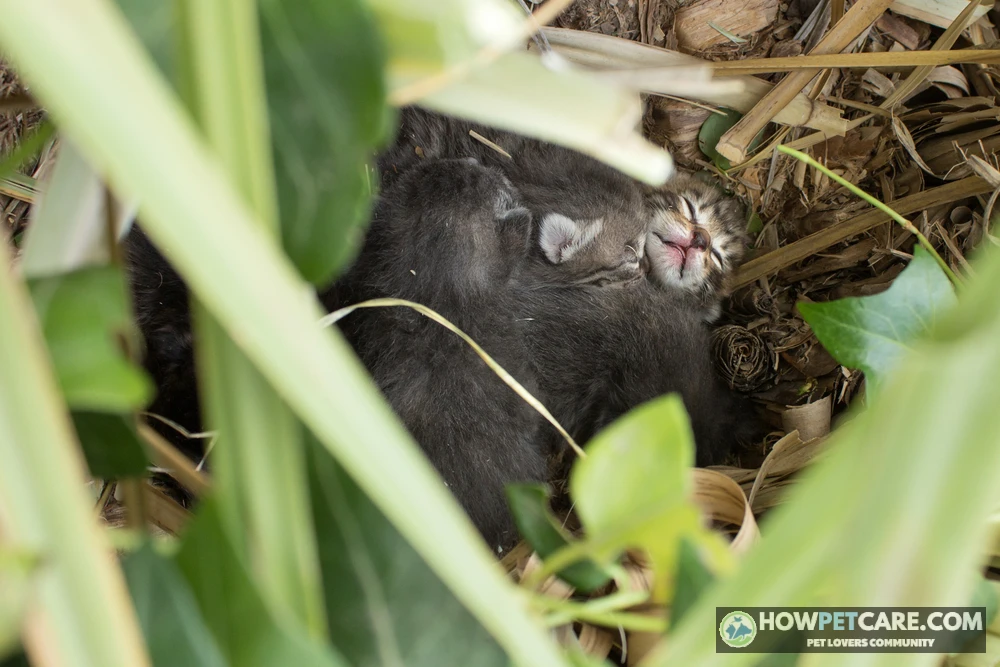

If the kittens look clean, warm, and plump and the spot is safe, leave them and watch from 30+ feet away for the mother — typically 4–6 hours. If the spot is dangerous, or any kitten is cold, limp, or injured, intervene now: warm gradually first (never feed a cold kitten), then call a vet or rescue.
The single most important rule: a cold kitten gets warmed before it gets fed. Force-feeding a cold or limp kitten can kill it via aspiration. If any kitten feels cool to the touch, is limp, or won’t suckle, warm it gradually first — then call a vet or rescue. No formula, no water, no milk until the kitten is warm.
You found kittens outside. Right now you need a clear decision, not a lecture. Here is the first rule: if the kittens look clean, plump, and quiet, and the spot is not actively dangerous, do not take them yet. Their mother is usually the best caregiver, and she is likely nearby hunting or hiding from you. This guide walks you through the first hour, the abandonment check, age-based care, the decision map, emergency triage, hands-on orphan care, after-hours logistics, legal steps, and a final checklist — so you can act fast and correctly.
-
Minutes 0–10: Secure the scene
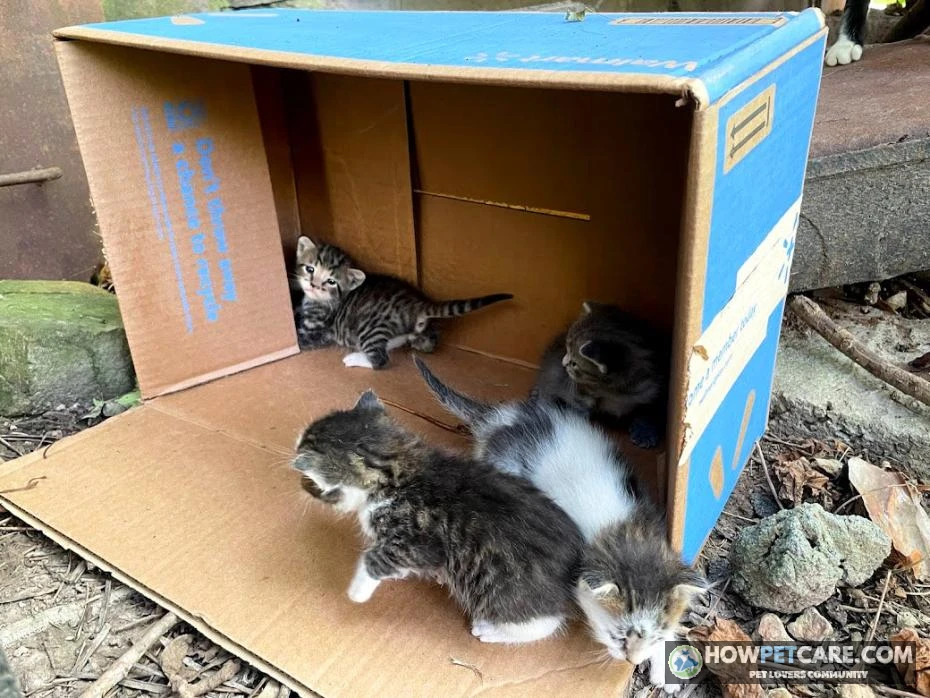
Move dogs, curious kids, and onlookers at least 30 feet away. Scan for immediate danger: traffic, standing water, direct sun on a 90°F+ day, freezing temps, construction, predators. Count the kittens and note whether any are separated from the group. Take one quick photo of the nest and kittens — useful for rescues and for spotting a returning mother later.
-
Minutes 10–20: The 60-second condition scan (look, don't grab)
Bellies: round and plump = recently fed. Thin, sunken, or bony = intervene sooner. Body temperature feel-test (one gentle touch if needed): warm = okay to watch; cold or cool to the touch = urgent. Behavior: quiet sleeping or soft chirping = likely cared for. Nonstop loud crying = distress. Red flags requiring action now: limp or unresponsive, visible wounds, flies or maggots, heavy flea coverage, pale gums, a dead or dying littermate.
-
Minutes 20–60: Set up the watch
Mark the spot mentally or drop a pin on your phone map. If kittens are in danger, move them only a few feet — into a shallow box or carrier placed in shade or shelter, as close to the original spot as possible. Back off to 30+ feet away, or watch from inside a car or window. Start a timer. Younger, sicker kittens and bad weather mean a shorter wait (details in the abandonment section).
Do NOT do these yet:
- No cow’s milk — ever.
- No baths.
- No long car rides or bringing kittens straight into a house with resident pets.
- No assuming the mother is gone just because you can’t see her.
Found Stray Kittens? Your First 10 to 60 Minutes
The 60-second safety and condition scan
The first ten minutes are about safety and observation, not capture. Keep people and pets back. Look for environmental hazards: a storm drain, a busy driveway, direct midday sun, freezing wind, or a dog that could reach the nest. Count the kittens silently. A quick photo helps you compare later and gives rescues a visual reference.
Now the condition scan. Do not pick them up unless you must. Look at bellies: round and taut means they ate recently. Sunken or wrinkled skin suggests they haven’t. Touch one kitten gently on the back or belly — if it feels cool, that is an emergency. Healthy neonates are warm; a cold kitten cannot digest food and will aspirate if fed. Listen: contented kittens sleep or make soft peeps. Constant, piercing cries mean hunger, cold, or distress.
Red flags that mean intervene immediately: limp body, visible injury, fly eggs or maggots, heavy flea dirt (black specks) on the gums or belly, pale or white gums, a dead sibling. If any of these are present, skip the watch and go straight to the emergency triage section.
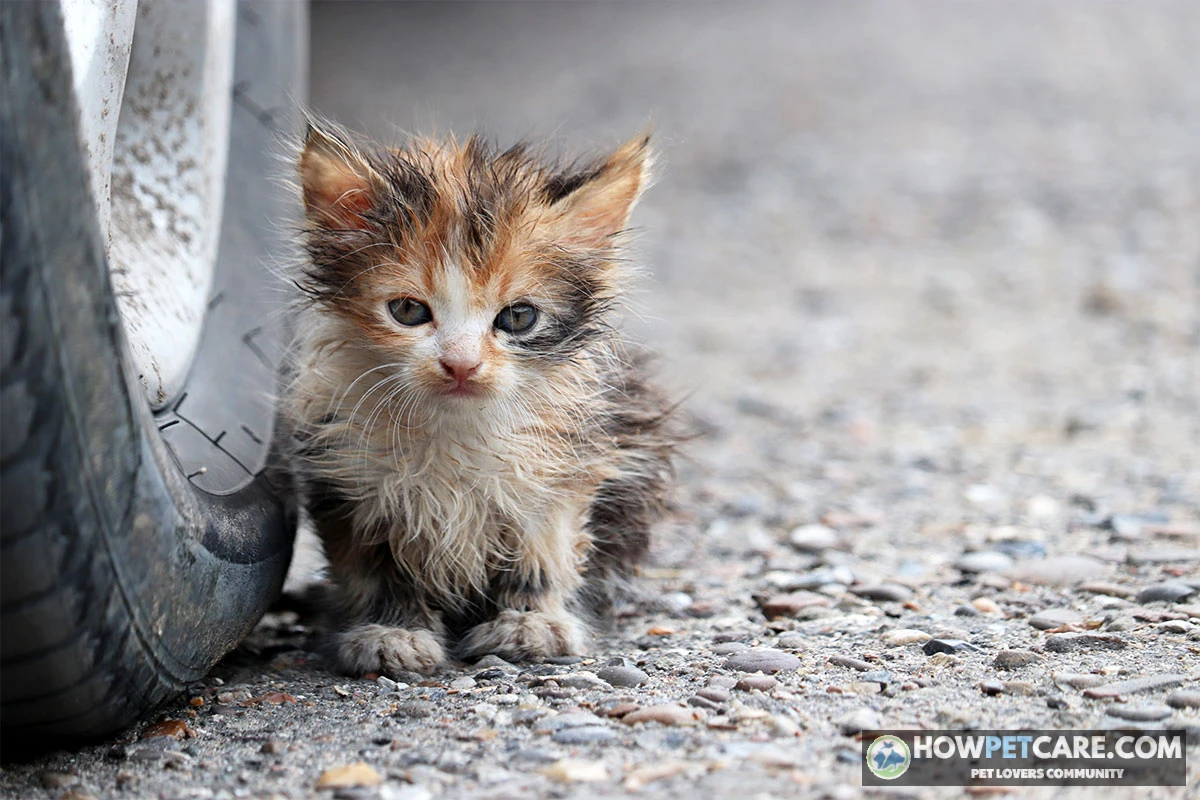
When it is okay to move kittens a short distance
Move kittens only if the current spot will kill them: rising water, active construction, a fire ant mound, direct sun on pavement, or a predator circling. Move them the minimum distance — a few feet — into a shallow box or carrier lined with a towel, placed in shade or shelter, as close to the original nest as possible. The mother finds them by scent and location; a large move breaks that trail.
What not to do yet: no milk, no baths, no long car trips
Never give cow’s milk. Kittens lack the enzyme to digest lactose; it causes osmotic diarrhea that can dehydrate and kill a neonate in hours. No baths — wet kittens chill fast and cannot rewarm themselves. No long transports unless you are headed straight to an emergency vet. And do not bring them into your home with resident pets until a vet has cleared them for parasites and infectious disease.
Are the Kittens Really Abandoned? How Long to Watch for the Mother
Step-by-step: how to run a watch from a distance
Mother cats (queens) often leave kittens for hours to eat, hunt, or move the litter. A missing mother alone does not mean abandonment. To test properly:
- Position yourself 30+ feet away, downwind if possible, or watch from a window or parked car.
- Stay quiet. No talking, no phone lights, no checking every five minutes.
- Set a timer based on age and conditions (see table below).
- If the mother returns, she will usually approach cautiously. Do not approach her.
Watch-time guidance (adjust for weather and kitten condition):
- Neonates (eyes closed, under ~2 weeks) in good weather, safe spot: 4–6 hours.
- Neonates in cold (<50°F), rain, extreme heat, or if kittens look thin/dirty: 2–3 hours max.
- Kittens 3–4 weeks (eyes open, wobbly walking) in safe spot: 4–6 hours.
- Kittens 5+ weeks (running, playing, eating solids) in safe spot: 6–8 hours or until dusk.
These are guidelines, not guarantees. If condition declines at any point, intervene. Call a local rescue for real-time advice — they know local predator pressure and weather patterns.
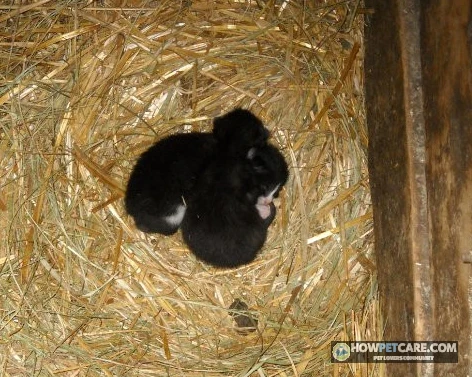
Signs the mother is not coming back
After the watch window, evaluate the evidence:
Points to abandonment:
- Mother not seen after the full watch period.
- Kittens cold, thin, dirty, crying nonstop.
- Skin tent stays up (dehydration), gums tacky.
- Nest is soiled, flies present, or a dead kitten is in the nest.
- Mother confirmed dead (hit by car, found nearby) or injured.
Points to mother still caring:
- Kittens clean, plump, quiet, warm.
- Nest dry and in use (fresh feces/urine spots).
- You see the mother return, or neighbors report seeing her.
- Flour-ring trick shows fresh paw prints — but treat this as one weak clue, not proof.
Stray, feral, or lost pet: how to tell
Behavior and age are your best indicators:
- Socialized/stray kittens approach, allow handling, purr, meow at people. A very young, clean, friendly kitten may be a lost pet — check for nearby owners, post on lost-pet sites, and scan for a microchip.
- Feral kittens hiss, spit, flee, hide. They avoid eye contact and will not eat while watched. The socialization window narrows sharply after 8–12 weeks; kittens older than 4 months are rarely socializable.
- Community cat colony members have a caretaker who feeds them. Look for ear-tips (the universal sign of TNR) on adults nearby.
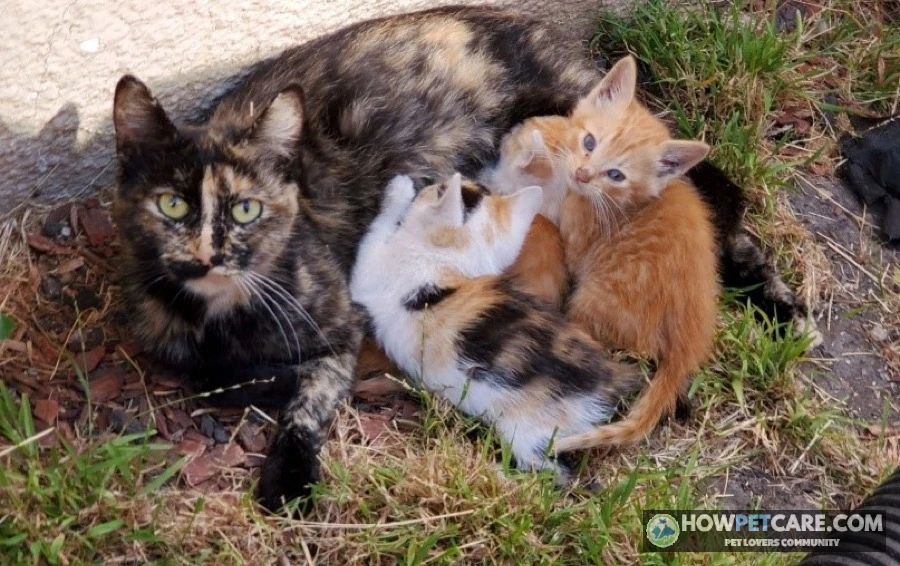
Kitten season and why litters appear outdoors in spring and summer
"Kitten season" runs roughly March through October in most of the U.S. Unspayed females can produce two to three litters a year. Shelters flood with neonates they cannot bottle-feed, which is why leave-and-monitor and TNR are welfare-first strategies — not neglect.
 You might be wonderingHow to care for a cat?How to Care for a Cat: A Practical Beginner’s GuideRead the answer
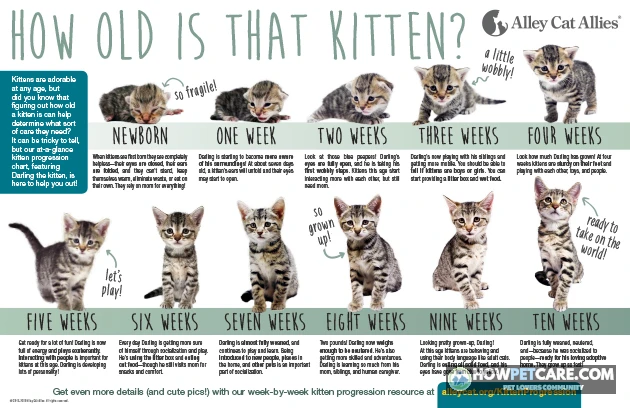
Estimate Kitten Age and Match It to Care Week by Week
Quick age clues you can check at home
- Eyes closed, ears folded, umbilical cord attached → newborn to 1 week.
- Eyes opening (blue), ears still folded, no teeth → 1–2 weeks.
- Eyes open, ears unfolding, first incisors → 2–3 weeks.
- Ears upright, canines appearing → 3–4 weeks.
- Baby teeth in, bright blue eyes, running/pouncing → 4–5 weeks.
- Full baby teeth, eye color changing, 1–2 lb → 5–8 weeks.
- Adult eye color settling, 2+ lb, fully coordinated → 8+ weeks.
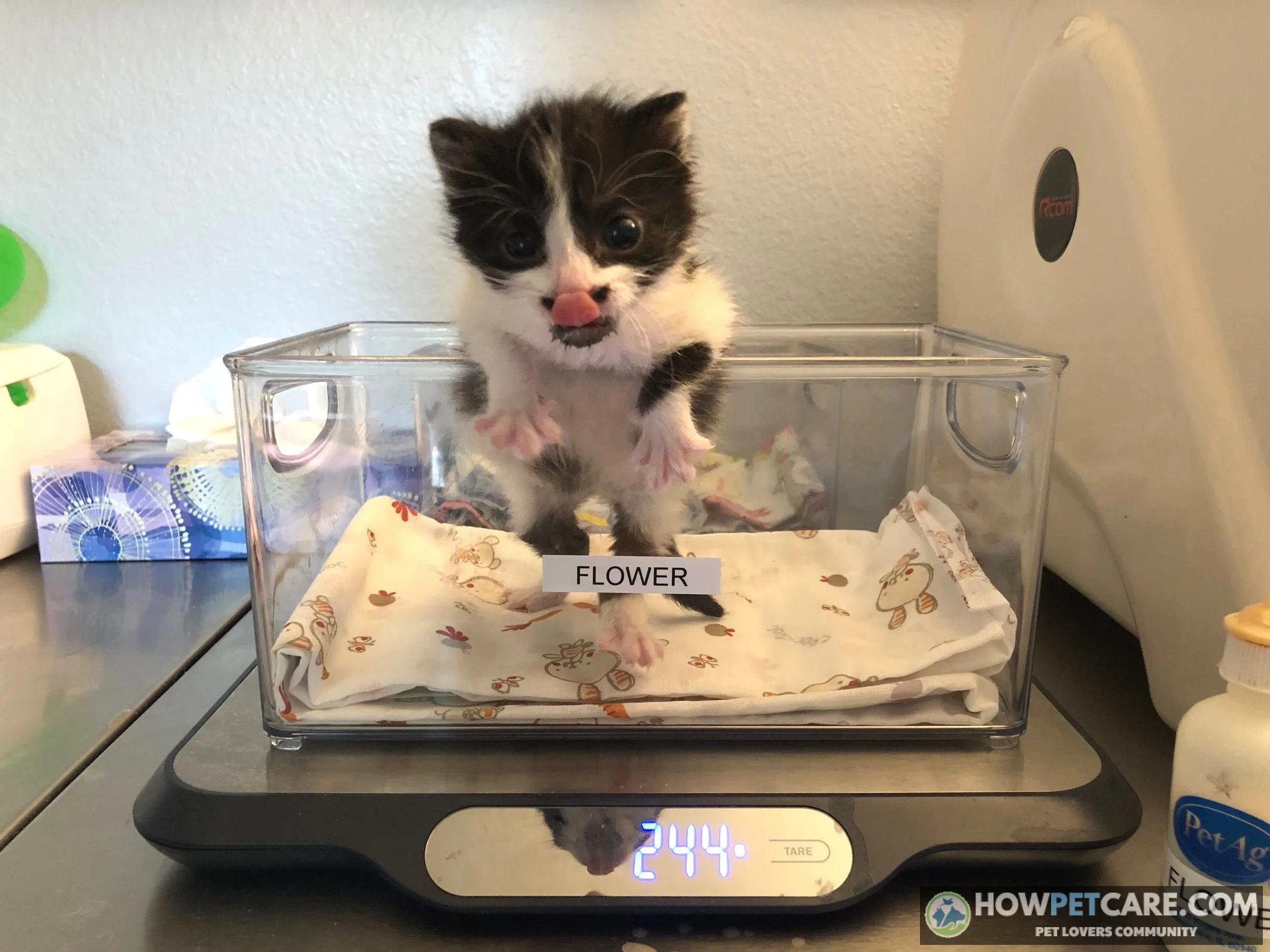
Weigh daily on a kitchen or postal scale (ounces or grams). Newborns average 3–4 oz and should gain ~0.5 oz (14 g) per day. No gain or weight loss over 24 hours is a red flag — call a vet.
Week-by-week age-to-care table
Kittens develop at slightly different rates. Have a vet or shelter confirm age and weight at the first visit. A kitchen scale that reads in ounces or grams is essential.
| Approx. age | Eyes, ears, and teeth | Typical weight | Mobility | Feeding and frequency | Warmth needs | Elimination stimulation | Weaning | Surgery and vaccine eligibility |
|---|---|---|---|---|---|---|---|---|
| Newborn–1 wk | Eyes closed, ears folded, umbilical cord attached | 3–5 oz | Crawls, can’t lift head well | Kitten formula (KMR) every 2–3 hrs, incl. overnight | Nest ~85–90°F; can’t self-regulate | Stimulate before/after every feeding | Not yet | Too young |
| 1–2 wks | Eyes begin opening (blue), ears still folded, no teeth | 5–8 oz | Wobbly crawling | Formula every 2–3 hrs | ~80–85°F | Stimulate every feeding | Not yet | Too young |
| 2–3 wks | Eyes open, ears unfolding, first incisors | 8–12 oz | Starts standing, wobbly steps | Formula every 3–4 hrs | ~80°F; can briefly leave heat | Stimulate every feeding | Not yet | Too young |
| 3–4 wks | Ears upright, canines appearing | 12–16 oz (approaching 1 lb) | Walking, exploring | Formula every 4–5 hrs; may offer gruel | ~75–80°F | Stimulate until litter box use begins | Can start offering slurry | Too young |
| 4–5 wks | Baby teeth in, bright blue eyes | ~1 lb | Running, pouncing, playing | Gruel + formula every 5–6 hrs | Room temp with warm retreat | Introduce shallow litter box | Active weaning begins | Too young |
| 5–8 wks | Full baby teeth, eye color may start changing | 1–2 lb | Fully mobile, coordinated | Wet kitten food 3–4x daily; water available | Room temperature | Litter-trained typically | Mostly or fully weaned by 7–8 wks | Deworming per vet; first vaccines ~6–8 wks |
| 8+ wks | Adult eye color settling in | 2+ lb | Fully independent | Kitten food 2–3x daily | Room temperature | Independent | Fully weaned | Spay/neuter commonly at ~2 lb / 8 wks — vet makes final call |
Red flag at any age: no weight gain or weight loss over 24 hours. Log weights daily.
Leave, Monitor, Foster, Call for Help, or TNR: The Decision Map
Find the row closest to your situation. When in doubt between two rows, call a local rescue and describe what you see — a 2-minute phone triage beats guessing.
| Situation (mother, age, condition, location, time of day) | Recommended action | What to do next | When to escalate |
|---|---|---|---|
| Any kitten cold, limp, injured, covered in flies/maggots, or nonstop crying — any time | Emergency intervention now | Warm gradually (no feeding a cold kitten), contain in a box, call an emergency vet | Immediately — this is the escalation |
| Kittens clean, plump, quiet; mother seen or likely nearby; safe location | Leave and monitor | Watch from 30+ ft for 4–6+ hrs (longer if kittens look 4+ wks); offer the mother food and water at a distance | If mother hasn’t returned after the watch window, or kitten condition declines |
| Mother present, but location unsafe (traffic, dogs, flooding) | Move a short distance | Relocate kittens a few feet into a sheltered box near the original site so she can find them; then watch | If she doesn’t reclaim them within a few hours, treat as absent |
| Mother absent past watch window; kittens under ~4 wks, unweaned | Intervene: foster or bottle-feed | Contain, warm, then feed KMR every 2–3 hrs; call rescues for a foster transfer | If you cannot feed overnight or kitten won’t eat — vet or rescue today |
| Mother absent; kittens 4–8 wks, eating, friendly | Foster and place | Contain in a quiet room, offer wet food, isolate from pets, call shelters/rescues for intake or foster support | If no placement within 24–48 hrs and you can’t continue care |
| Kittens 8–12+ wks, hissing/fleeing, or mother is a feral colony cat | TNR path | Contact a local TNR group or trap-loan program; kittens young enough may still be socialized instead | If kittens are under ~8 wks and handleable — intake beats return |
| Mother healthy and raising kittens outdoors in a safe spot | Support, then spay | Provide food, water, shelter; plan to trap and spay her once kittens wean (~5–6 wks) | If kittens are sick/injured, or the location becomes unsafe |
| It’s after hours and everything is closed | Tonight plan | Warm box + heat source in a quiet room; no food until warm; feed per age table; first calls at opening time | Any cold, limp, or injured kitten = emergency vet now, don’t wait for morning |
Older or unsocialized kittens: when TNR is the kinder choice
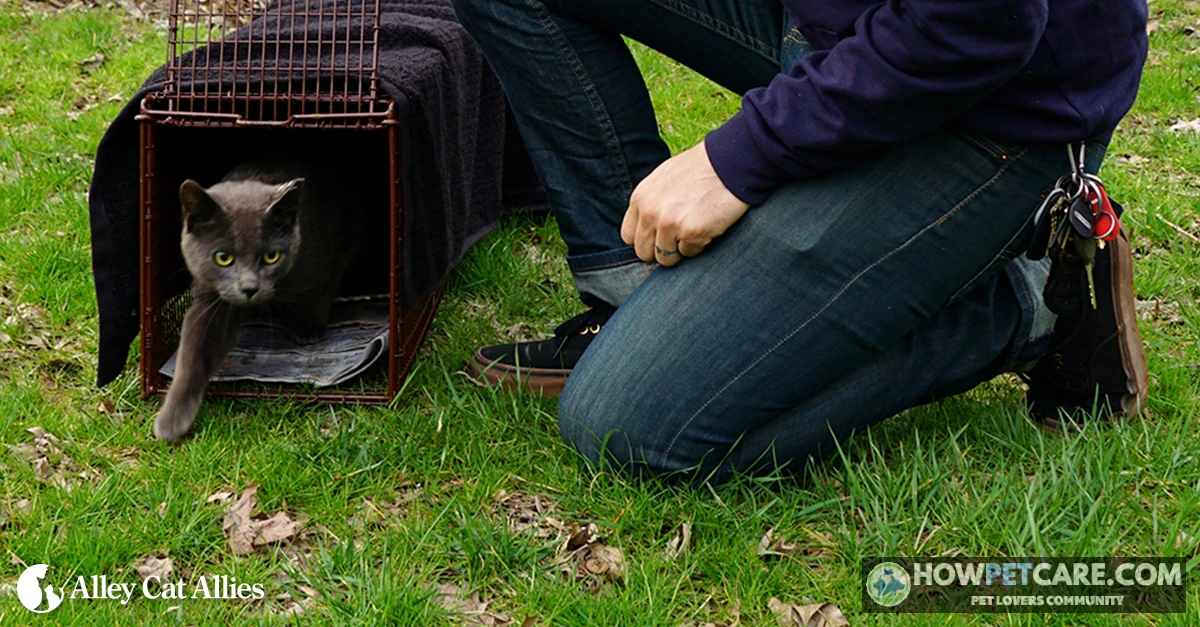
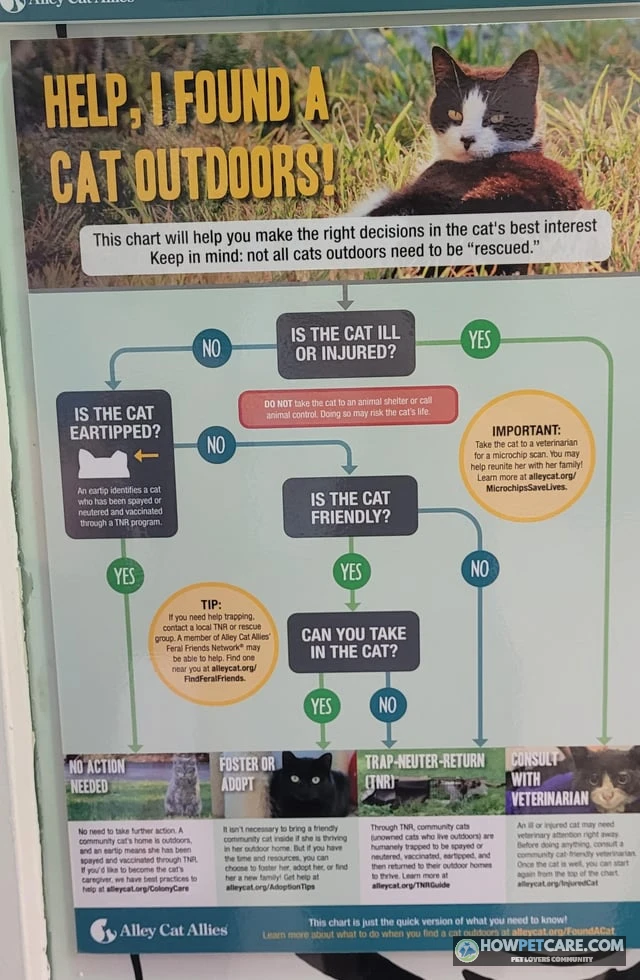
TNR (trap-neuter-return) means trapping, spaying/neutering, ear-tipping (the universal mark), vaccinating, and returning the cat to its outdoor home with a caretaker who provides food, water, and shelter. For kittens 8–12+ weeks who are truly feral — hissing, fleeing, unable to be handled without extreme stress — TNR is often kinder than forced indoor confinement. The socialization window closes with age and lack of human contact; prolonging the attempt causes chronic stress.
Key thresholds:
- Under 8 weeks and handleable → foster and socialize.
- 8–12 weeks, borderline → experienced foster may succeed, but have a TNR backup plan.
- Over 12 weeks / 3 months, feral behavior → TNR.
- Mother is a community cat with an ear-tip → she is already fixed; kittens follow the age rule above.
Contact a local TNR group or shelter for trap loans, depot appointments, and colony caretaker support. Many programs offer low-cost or free spay/neuter for community cats.
Shelter vs rescue vs foster: where should they go?
| Option | Who they accept | Speed | Trade-offs |
|---|---|---|---|
| Municipal shelter / animal control | All strays, including unweaned (but many lack neonatal capacity) | Immediate intake during hours | High euthanasia risk for unweaned/feral; stray hold applies; may be full |
| Private rescue (foster-based) | Often prioritize neonates, socializable kittens | May have waitlist; foster match takes time | Better outcomes for neonates; usually no-kill; limited capacity |
| You foster (with rescue support) | Any age you can manage | Instant | You control care; rescue covers vet/supplies; demanding, especially neonates |
| TNR program | Feral kittens 8+ wks, community cats | Scheduled clinic days | Returns cats outdoors; requires caretaker commitment |
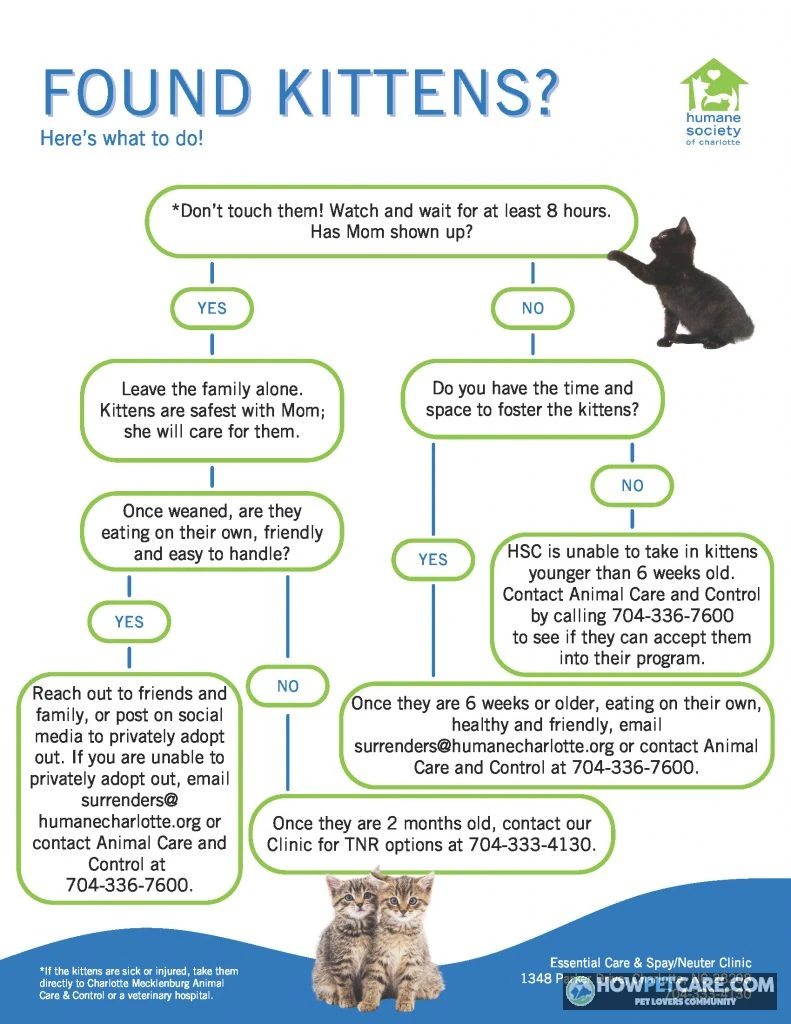
No option is universally "best." Match the kitten’s age, temperament, and your capacity.
If you cannot foster: your options and what to say
You are not a bad person if you cannot bottle-feed neonates for three weeks. Say this to shelters and rescues:
"I found [number] kittens, about [age], at [location]. Condition: [describe]. I cannot hold them overnight / cannot commit to full fostering. Do you have foster capacity, a neonatal program, or a supply-lending option? What’s the fastest handoff you can do?"
If they are full, ask for two things: names of other rescues to try, and whether they have a neonatal or community-cat program coordinator. Then post in local lost-and-found pet and neighborhood groups with your photo, location, and a clear ask ("need a bottle feeder for 3 kittens until [day]").
Emergency Triage: Cold, Dehydrated, Injured, or Possibly Contagious Kittens
Warming a cold kitten safely
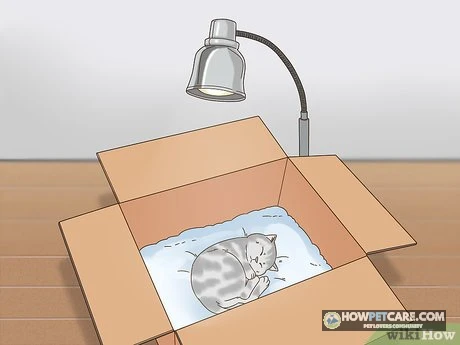
Rule: warm first, feed later. A cold kitten cannot digest; formula aspirates into lungs. Warm gradually over 30–60+ minutes:
- Heating pad on LOW under a towel (not directly under the kitten).
- Warm water bottle wrapped in fabric.
- Skin-to-skin contact inside your shirt.
The kitten must be able to crawl away from the heat. Do not use hair dryers, heating lamps, or hot water bottles directly on the kitten. Check temperature by touching the mouth or paw — it should feel warm, not hot. Once warm and alert, offer formula per the age table.
Triage table: sign, action, what not to do
| Sign | What it may mean | What to do now | What not to do | When to call a vet |
|---|---|---|---|---|
| Cold mouth or paws, limp, no suckle reflex | Hypothermia | Warm gradually: heating pad on LOW under a towel, warm water bottle wrapped in fabric, or skin-to-skin — kitten must be able to crawl away from heat. Expect 30–60+ min of gradual warming | No food or water until fully warm; no direct high heat or hair dryers | Immediately, and again if no improvement after warming |
| Skin tent stays up, tacky or sticky gums | Dehydration | Warm first, then offer warmed formula only if kitten is alert and swallowing | No plain water squirted into the mouth; no force-feeding | Same day; immediately if weak |
| Pale or white gums + heavy flea coverage | Flea anemia (life-threatening in kittens) | Warm, quiet box; pick off fleas with a flea comb; ask a vet for age-safe treatment | No adult flea products, no flea dips, no essential oils | Immediately — severe anemia can be fatal within hours |
| Visible wound, limping, hit by car, attacked | Trauma | Minimize handling; place in a small, padded, warm box; keep still and quiet | No human pain medication; no splints unless directed | Emergency vet now |
| Constant crying, failing to gain, isolated from littermates | Fading kitten syndrome | Warm, feed per schedule if alert, log weights | Don’t assume it will "catch up" on its own | Same day — treated as urgent |
| Vomiting, severe diarrhea, sudden lethargy | Infection (panleukopenia, parasites, others) | Isolate from all pets, wash hands, change clothes, disinfect surfaces with diluted bleach; call the clinic before arriving | No over-the-counter meds; don’t mix with other animals | Same day or ER if collapsing |
| Diarrhea but alert and eating | Diet issue, parasites, or stress | Keep feeding schedule consistent; bring a stool sample to a vet | No cow’s milk, no sudden formula changes | Within 24–48 hrs; sooner if worsening |
Money note: if cost is the barrier, say so on the phone — many clinics offer payment plans, and some rescues cover emergency triage for found kittens. Ask before declining care.
Isolation and hygiene for suspected infectious disease
Panleukopenia (feline distemper) is highly contagious and often fatal in unvaccinated kittens. If you see vomiting, severe diarrhea, sudden lethargy, or rapid decline:
- Isolate immediately — separate room, separate air space if possible.
- Wash hands, change clothes, disinfect shoes before touching your own pets.
- Disinfect surfaces with 1:32 bleach solution (1/2 cup bleach per gallon water), 10-minute contact time.
- Call the vet before arriving so they can isolate on intake.
- Do not share bowls, litter boxes, bedding, or toys.
How to Bottle-Feed Orphaned Kittens: Formula, Posture, Stimulation, and Night Feeds
Formula prep and temperature
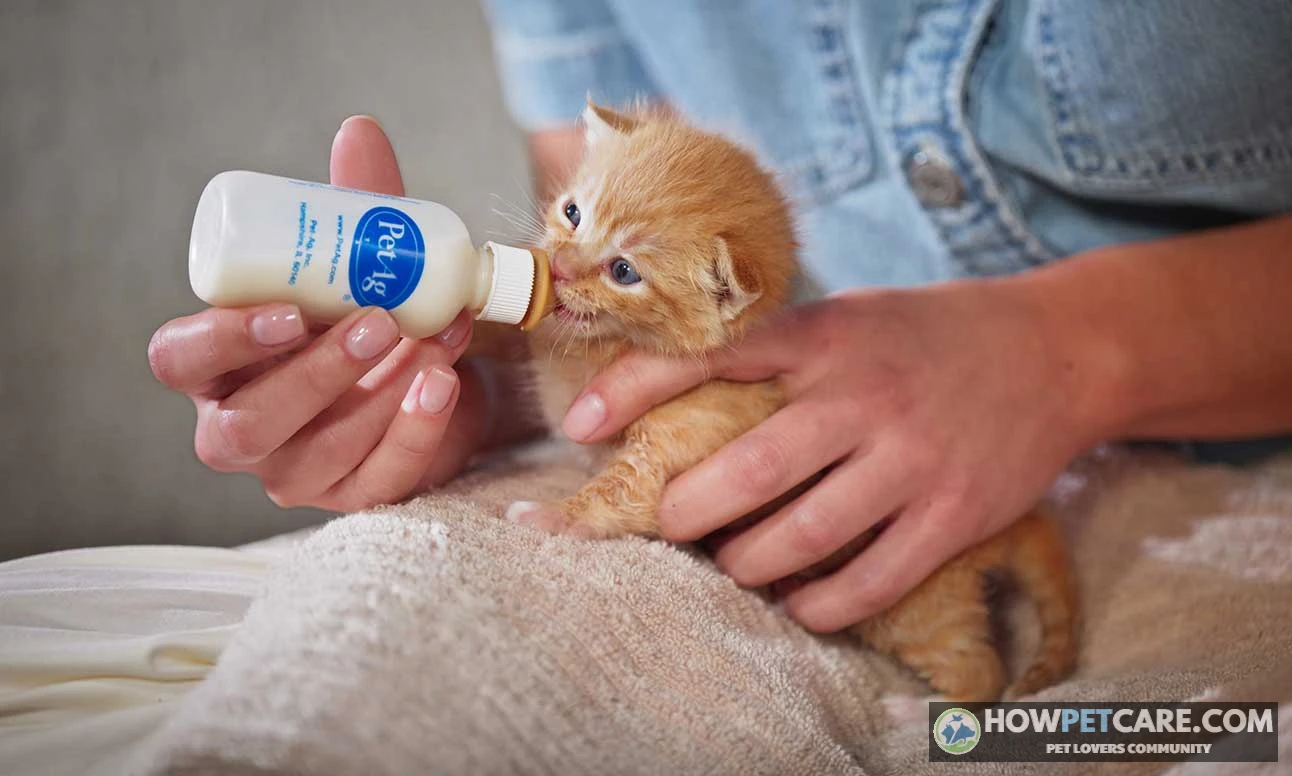
Use only kitten milk replacer (KMR) or a veterinary-recommended kitten formula. Cow’s milk causes diarrhea and dehydration — never use it. Homemade recipes are a last resort for a few hours only, after calling a vet or rescue.
- Follow label directions exactly. Mix fresh for each feeding or refrigerate up to 24 hours.
- Warm to body temperature (~100°F). Test on your inner wrist — warm, not hot.
- Discard leftovers after each feeding per label. Wash bottles and nipples with hot, soapy water; rinse well.
Bottle posture and nipple choice step by step
- Position: Kitten on its belly, head level or slightly raised. Never on its back — this causes aspiration.
- Nipple: Kitten-specific nipple with a small hole that drips slowly (one drop per second) when the bottle is inverted. Enlarge with a heated needle if too slow; replace if it pours.
- Technique: Insert nipple gently. Let the kitten latch and set the pace. Do not squeeze formula into the mouth.
- Burp: Hold upright against your shoulder, pat gently until a small burp releases.
Stimulating elimination and keeping kittens clean
Kittens under 3–4 weeks cannot urinate or defecate on their own. Before or after every feeding:
- Use a warm, damp cotton pad or soft cloth.
- Gently stroke the genital/anal area in a light, rhythmic motion.
- Continue until the kitten urinates and/or defecates.
- Clean the area afterward; keep bedding dry.
Night feeds and a realistic schedule
Neonates need feeding every 2–3 hours, including overnight. Plan on waking 1–2 times overnight during the first 2–3 weeks. Set alarms. Keep the warming station, formula, bottles, and stimulation supplies within arm’s reach. A sample overnight rhythm: feed at 11 PM, 2 AM, 5 AM — adjust for age. By 3–4 weeks, you can stretch to 4–5 hours.
What to do if the kitten refuses the bottle
- Check temperature: kitten must be warm, formula ~100°F.
- Try a different nipple (softer, slower flow).
- Stimulate elimination first — a full bladder/bowel can suppress appetite.
- If the kitten coughs, gasps, or milk comes from the nose: stop immediately, hold head-down briefly, call a vet. Do not force-feed.
- If no interest after two skipped feedings, or kitten is cold/weak: vet now.
Starting weaning
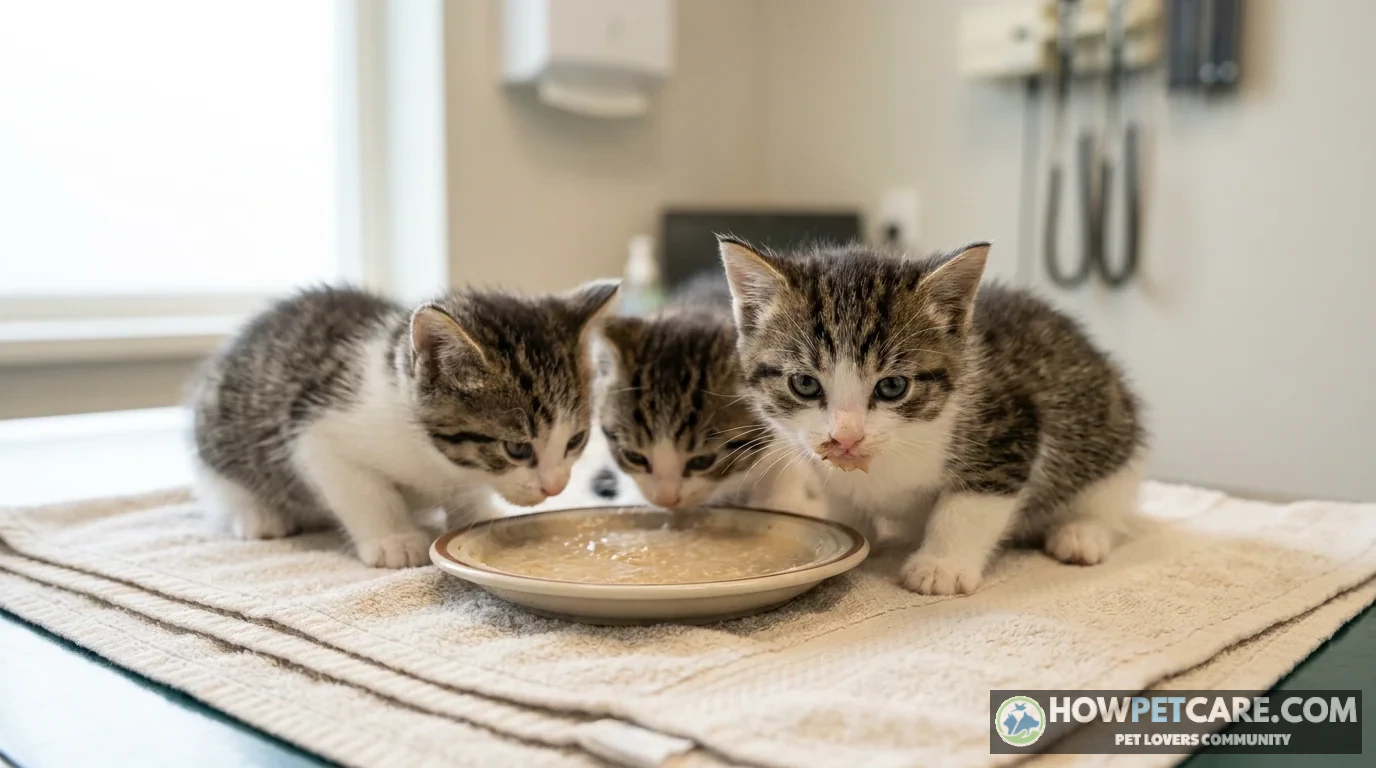
Around 4 weeks, offer a slurry of wet kitten food mixed with formula in a shallow dish. Let kittens explore. Continue bottle feeds while they learn to lap. By 5–6 weeks, most eat gruel well; by 7–8 weeks, fully weaned. Always provide fresh water.
Shelter Closed, Full, or Not Taking Unweaned Kittens? Tonight’s Plan and Costs
Who to call first at 9 p.m.
- Emergency vet — if any kitten is cold, injured, sick, or won’t eat.
- Animal control / emergency line — if kittens are a public hazard (roadway) or an adult is injured in public.
- Rescue warmline, foster network, neighborhood/social groups — for placement help.
Many municipal shelters are not open overnight. Policies vary by city — call the non-emergency line or check the website for after-hours instructions.
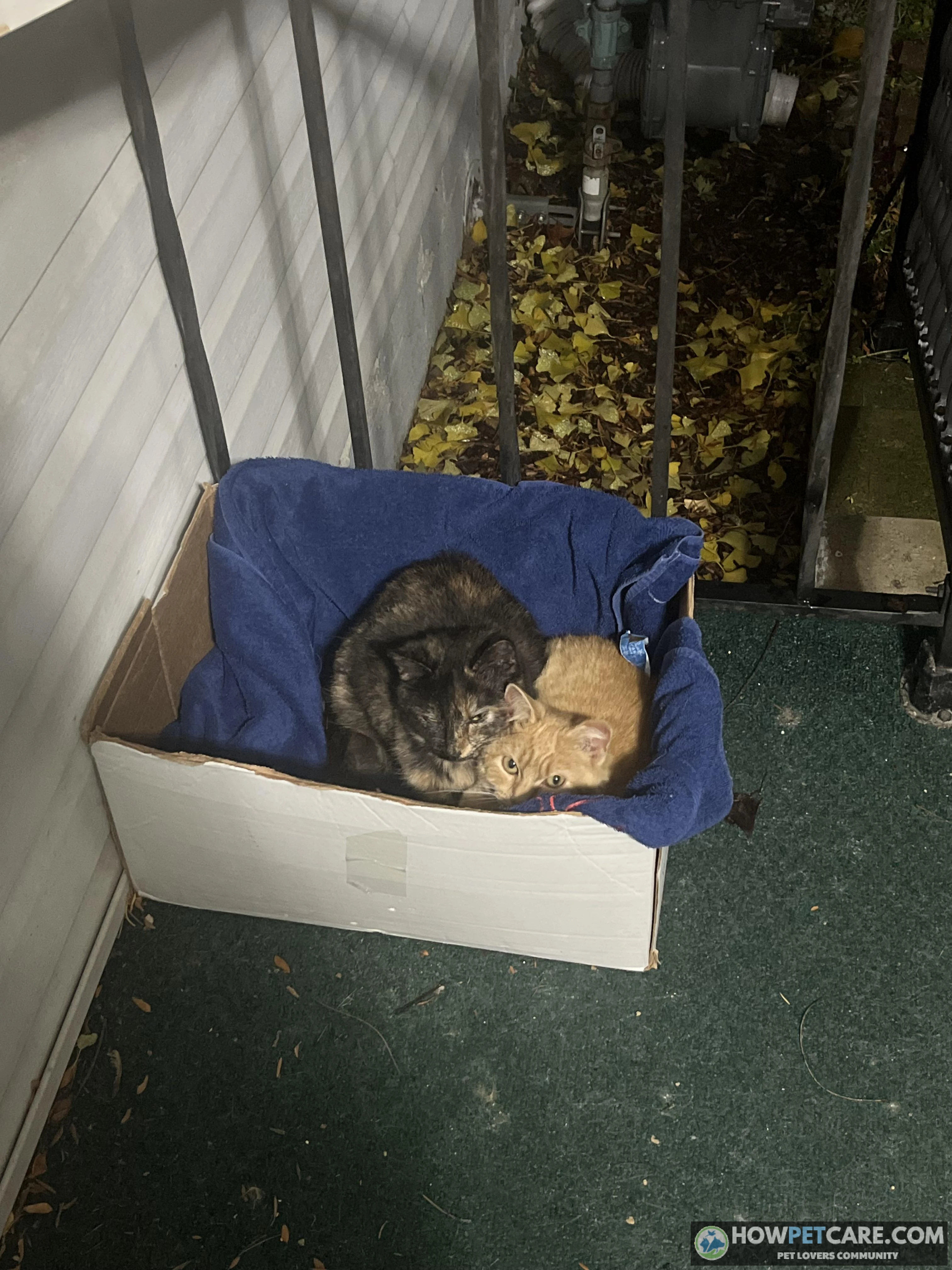
A safe overnight plan for unweaned kittens
- Container: Small cardboard box or plastic carrier.
- Heat: Heating pad on LOW under half the box (so they can move away), or a warm water bottle wrapped in fleece.
- Bedding: Fleece or towels, no loose strings. Change if soiled.
- Room: Quiet, separate from other pets, ~75–80°F ambient.
- Feeding: Warm KMR per age table. No food until warm.
- Stimulation: Before/after each feed.
- Log: Time, amount eaten, weight, urine/stool.
- Morning: Call shelters/rescues at opening.
Scripts for shelters and rescues when they are full
Shelter intake desk:
"I found [number] kittens, estimated [age], at [location]. The mother [was seen nearby / hasn’t been seen in X hours]. Their condition is [describe]. Do you accept unweaned/found kittens, and what is your current intake situation? If you’re full, do you have a foster-with-support program, a waitlist, or a ‘wait until weaned’ option? Can you lend supplies or formula?"
Rescue/foster network:
"I found [number] kittens, about [age], at [location]. Condition: [describe]. I [can / cannot] hold them overnight but cannot commit to full fostering. Do you have foster capacity, a neonatal program, or a supply-lending option? What’s the fastest handoff you can do?"
After-hours voicemail:
"My name is [name], phone [number]. I found [number] kittens today at [location], estimated [age], condition [describe], mother [seen/not seen]. I can hold them until [time]. Please call me back about intake or foster options."
First-week supplies and approximate costs
Priority 1 (must have tonight): Heat source, KMR formula, bottles/nipples, kitchen scale, carrier/box.
Priority 2 (first 24 hrs): Vet exam, dewormer, flea comb, shallow litter box, non-clumping litter, wet kitten food (for 4+ wks).
Priority 3 (first week): Vaccines (FVRCP), FeLV/FIV test, spay/neuter deposit.
| Item | Approx. cost range (US, 2026) | Notes |
|---|---|---|
| Kitten formula (KMR, 12 oz) | $12–$18 | One can lasts ~3–5 days for a neonate |
| Bottles & nipples (set) | $5–$10 | Buy extra nipples |
| Heating pad (no auto-off) | $15–$25 | Must stay on LOW continuously |
| Kitchen/postal scale | $10–$20 | 0.1 oz or 1 g resolution |
| Vet exam (initial) | $50–$100 | Varies widely; ask for "stray/good Samaritan" rate |
| Deworming (pyrantel) | $10–$20 | Often given at first visit |
| FVRCP vaccine (each) | $20–$40 | Series of 2–3 starting ~6–8 wks |
| FeLV/FIV test | $30–$60 | Recommended before mixing with pets |
| Spay/neuter | $50–$200+ | Low-cost clinics often $50–$80; private vet $150+ |
Prices vary by region and clinic. Call ahead. Many shelters and nonprofits offer low-cost vaccine/spay clinics — ask.
Low-cost clinics, trap deposits, and transport help
- Low-cost spay/neuter clinics: Search "low cost spay neuter [your county]" or ask the shelter for referrals.
- Trap loans: Most TNR groups lend traps for a refundable deposit ($50–$75).
- Transport: Ask rescuers if they have a transport network; some coordinate rides.
- Payment plans: Many vets offer CareCredit, Scratchpay, or in-house plans — ask before the exam.
Finder Legal Steps: Found Reports, Stray Holds, Microchip Scans, and Keeping the Kitten
Found report and microchip scan checklist
Rules vary by city, county, and state. Check your local animal control or municipal code.
- Scan for a microchip at any vet clinic, shelter, or pet store (often free). Kittens may not have one, but a scan takes 30 seconds.
- File a found-animal report with the local shelter or animal control (online, phone, or in person).
- Post locally: Petco Love Lost, 24PetConnect, Nextdoor, Facebook lost-and-found groups, neighborhood flyers.
- Keep records: Photos, dates, locations, report numbers, vet receipts.
Stray hold: what it is and why it matters
Many jurisdictions require a stray hold period (often 3–7 days, commonly 5 days) before a found animal can be adopted, transferred, or euthanized. This gives an owner time to reclaim the pet. Following the process protects you legally and gives a potential owner a fair chance.
Can I keep the kitten I found?
Often yes, after filing a found report and completing any required stray hold. But it varies — some cities require surrender to animal control first. Check local ordinances for:
- Pet limits per household.
- Licensing requirements.
- Landlord/HOA restrictions.
- Mandatory spay/neuter laws.
Ownership risk: An owner may reclaim the kitten within the hold period. Avoid naming or rehoming too soon. Keep all records.
For colony/community cats with a feral mother, owner claims are rare, but filing the report is still wise.
Your Next Steps: A Checklist by Situation
Pick the branch that matches your situation and start with the first action.
If the mother is present
- ☐ Watch from 30+ ft for the age-appropriate window.
- ☐ Offer mother food/water at a distance.
- ☐ If location unsafe, move kittens a few feet to shelter.
- ☐ Plan to trap and spay mother once kittens wean (~5–6 wks).
- ☐ Contact TNR group for trap loan and clinic schedule.
If the mother is gone and the kittens are healthy
- ☐ Estimate age using the week-by-week table.
- ☐ Under 4 wks: contain, warm, bottle-feed KMR every 2–3 hrs.
- ☐ 4–8 wks: offer wet food, litter box, isolate from pets.
- ☐ Call shelters/rescues for foster or intake.
- ☐ If you foster: daily weights, vet visit within 24 hrs.
If the kittens are weak, cold, or sick
- ☐ Warm first — no food.
- ☐ Call emergency vet now.
- ☐ Isolate from other pets.
- ☐ Bring to ER; ask about payment plans if needed.
If it is after hours
- ☐ Set up overnight warm box per the tonight plan.
- ☐ Feed per age table only after warm.
- ☐ Leave voicemails for shelters/rescues with the template script.
- ☐ Post in local groups for overnight bottle-feeder.
- ☐ First calls at opening.
If the kittens are older and unsocialized
- ☐ Assess age: 8–12 wks borderline, 12+ wks likely feral.
- ☐ Contact TNR group for trap-neuter-return.
- ☐ If under 8 wks and handleable: foster/socialize instead.
- ☐ Ensure colony has a caretaker for food, water, shelter post-return.
Every rescue is a team effort. There is no single right path — only the path that keeps the kittens alive and gets them to the best outcome for their age and temperament. Asking for help is part of caring for them. Start now with the first action on your checklist.
 You might be wonderingWhat do mice need to survive?What Do Mice Need to Survive? Food, Water, Shelter & WarmthRead the answer
FAQ
Will the mother cat reject her kittens if I touch them?
This is largely a myth, and mother cats usually take kittens back after brief, gentle handling. Still, keep handling minimal and keep people and pets away so she feels safe returning.
Can I keep stray kittens with my own pets?
Not at first. Keep found kittens separate until a vet has examined them and tested and treated them as needed, since they can carry fleas, parasites, and contagious illness.
Can I give a stray kitten a flea bath?
Avoid bathing young or cold kittens, because they chill quickly. For heavy fleas, ask a vet or rescue for a treatment that is safe for the kitten’s age and weight, since fleas can cause dangerous anemia in small kittens.
How long can a kitten go without eating?
Neonatal kittens need to eat every few hours and can decline quickly. A young kitten that refuses food, is cold, or is losing weight needs urgent vet or rescue advice.
At what age can stray kittens be spayed or neutered?
Many clinics and shelters spay or neuter kittens once they reach roughly 2 pounds and about 8 weeks, but the vet decides based on health and weight. Ask your clinic or TNR program about their requirements.