
Feline anatomy covers the cat’s external body regions—head, neck, chest, abdomen, limbs, and tail—and the internal systems beneath them. A cat has about 230–250 bones, 30 adult teeth, retractable claws, and organ systems arranged across the chest and abdomen, all built for flexibility and sensory precision.
A cat’s main body regions are the head, neck, chest, abdomen, limbs, and tail. Inside, a flexible skeleton, muscles, and organ systems extend from nose to tail. This feline anatomy guide shows those structures in labeled text diagrams and helps owners and veterinary students locate them and put that knowledge to use during a gentle home check.
Cat Body Parts Diagram and Key Anatomy Numbers at a Glance
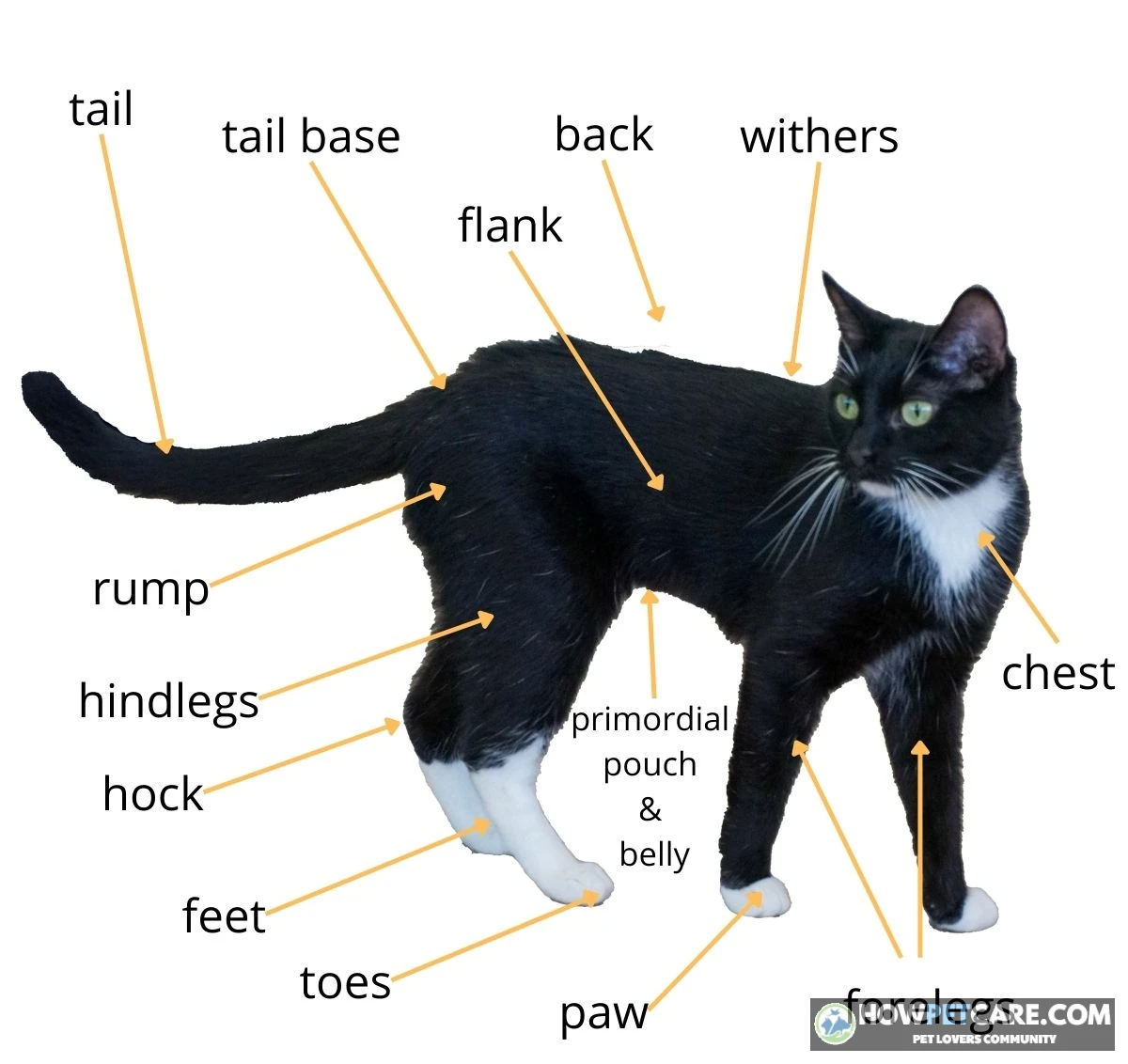
Labeled external anatomy diagram
Read this simplified side view from left to right: the cat faces left, with its back along the top. Use it to locate body parts, not as a scale drawing.
                  EAR                  BACK                         TAIL
                   /       NECK    _____________                  ~~~~~
        EYE →     /  ______/      /             ________________/
  NOSE →         (  o   )         /   THORAX       ABDOMEN
 WHISKERS →      /~~~~/_________/   (chest)        (belly)           |

                /                 SHOULDER                    HIP   /
               /                     |                         |   /

            MOUTH   CHIN          FORELIMB                   HINDLIMB
                                      |                         |

                                    WRIST                     HOCK
                                      |                         |

                                  FRONT PAW                 BACK PAW
The shoulder anchors the forelimb to the trunk, while the hip connects the hindlimb to the pelvis. The hock is the prominent bend above the back paw, not the knee. Whiskers extend from sensory follicles around the face and elsewhere on the body.
Quick-reference table: counts and vital signs
Use these figures for orientation, not as targets for an individual cat. Heart and breathing rates can rise with stress or activity, so measure breathing when the cat is asleep or fully relaxed. A veterinarian can interpret your cat’s measurements.
| Measure | Kitten | Adult | Senior | Notes and caveats |
|---|---|---|---|---|
| Bones | Some developing bones have separate growth centers | About 230–250 | Generally the adult count | Tail anatomy and counting conventions contribute to published differences. |
| Teeth | 26 baby teeth | 30 permanent teeth | Normally 30 if all are retained | Lost adult teeth deserve veterinary attention. |
| Vertebrae | Developing | 7 cervical, 13 thoracic, 7 lumbar, 3 sacral, variable caudal | Same basic arrangement | Sacral vertebrae fuse; tail length varies. |
| Heart rate | Often higher than an adult’s | Roughly 140–220 beats/minute | Adult reference range applies | Stress and handling affect the reading. |
| Resting breathing rate | Age and activity affect rate | Roughly 20–30 breaths/minute | Adult reference range applies | Count at rest; effort matters as well as rate. |
| Rectal temperature | Interpretation depends on age, especially in very young kittens | Roughly 100.5–102.5°F | Generally the adult range | Do not force a temperature check; ask a veterinary team for guidance. |
Feline Skeletal Structure: How Many Bones Does a Cat Have (230 vs 250)?
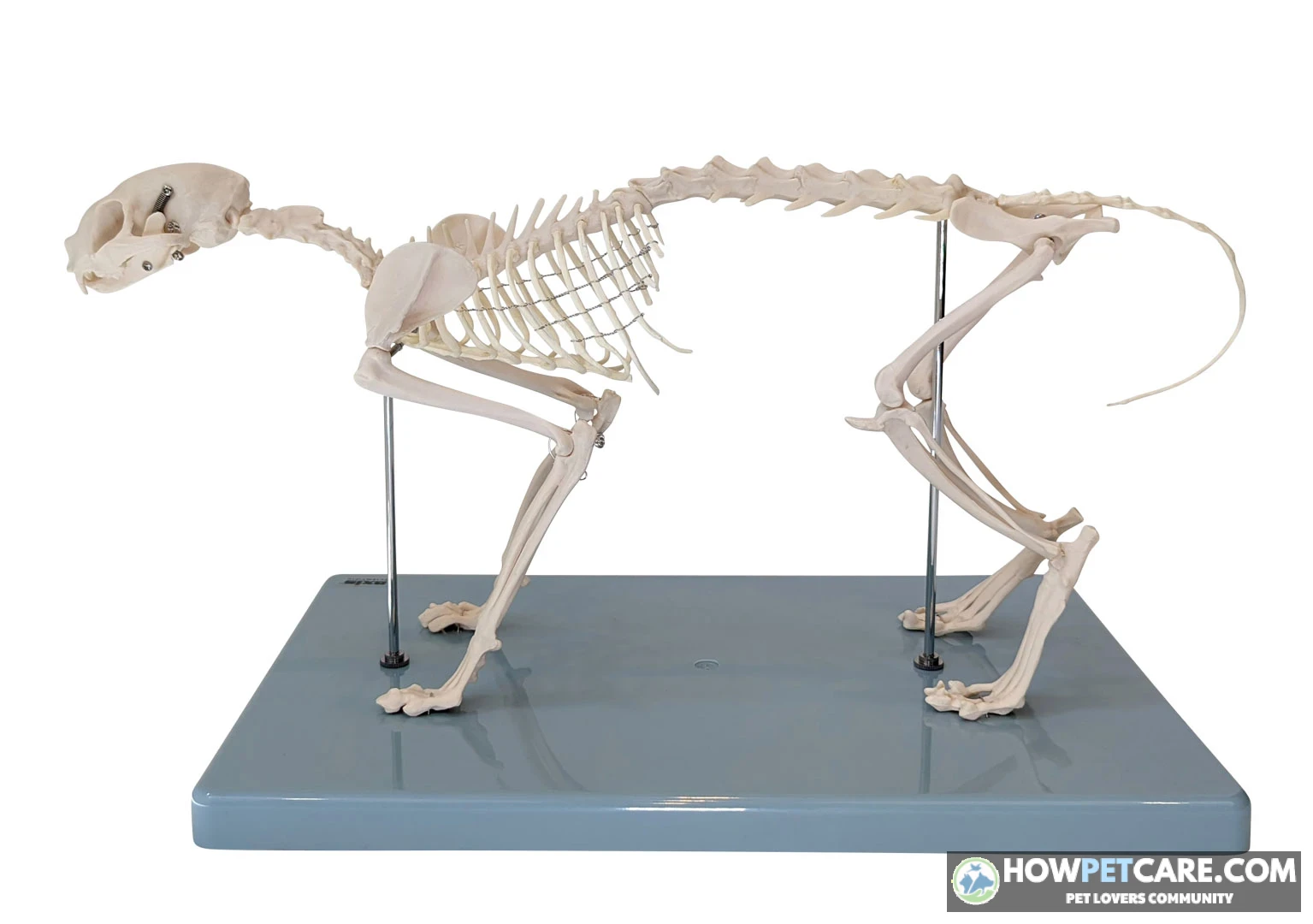
The feline skeleton supports the body, protects organs, and provides attachment points for muscles. A commonly quoted adult range is about 230–250 bones, rather than a single count that applies to every cat.
Labeled cat skeleton diagram
This schematic follows the skeleton from the head at left to the tail at right. Paired limb bones are grouped rather than shown in their precise anatomical positions.
 SKULL       VERTEBRAL COLUMN                                  CAUDAL
   ___   cervical   thoracic      lumbar       sacral          VERTEBRAE
  /   ____neck____chest________lower back____pelvis___________~~~~~~
  ___/              |                         |

 MANDIBLE       RIBS + SCAPULA               PELVIS
                     |                         |

                  HUMERUS                    FEMUR
                     |                         |

                RADIUS + ULNA              TIBIA + FIBULA
                     |                         |

                  CARPALS                   TARSALS
                     |                         |

                METACARPALS                METATARSALS
                     |                         |

                 PHALANGES                  PHALANGES
The skull and mandible form the head and lower jaw. The scapula is the shoulder blade, and the humerus is the upper forelimb bone. The femur is the thigh bone. Carpals and tarsals form the wrist and hock regions, while phalanges are the toe bones.
Why sources say 230 vs 250 bones
Both figures circulate because the total depends on the animal and what the source counts. The number of tail vertebrae varies, particularly in short-tailed breeds. Sources may count the small sesamoid bones embedded in tendons differently, and developing skeletal elements fuse as a cat matures. These are plausible contributors to the spread. A published total doesn’t always explain its method well enough to assign a precise number of extra bones to each factor.
For learning purposes, use about 230–250 and focus on identifying the structures rather than treating either endpoint as a universal inventory.
The vertebral column, scapula, and free-floating clavicle
The vertebral column comprises cervical vertebrae in the neck, thoracic vertebrae associated with the ribs, lumbar vertebrae in the lower back, sacral vertebrae at the pelvis, and caudal vertebrae in the tail. A typical cat has 13 pairs of ribs.
Muscles attach the scapula to the trunk. The clavicle, or collarbone, is a small vestigial bone within muscle and doesn’t form a rigid bony connection to the rest of the skeleton.
Why cats fit through tight gaps and land on their feet
Mobile shoulders and a flexible spine help a cat maneuver through narrow openings; the floating clavicle contributes to that mobility. The size and shape of the skull, chest, and body still limit what’s safe. Whiskers provide information about nearby surfaces, but they aren’t a foolproof width gauge.
The righting reflex draws on the inner ear’s balance system, vision, and flexibility through the spine, allowing the front and rear of the body to reorient. It doesn’t guarantee a safe landing: cats can be seriously injured in falls.
 You might be wonderingFeline herpesFeline Herpes: Symptoms, Treatment, Eye Care & PreventionRead the answer
Cat Musculature, Paws, and Retractable Claws: How the Mechanics Work
Main muscle groups and what they do
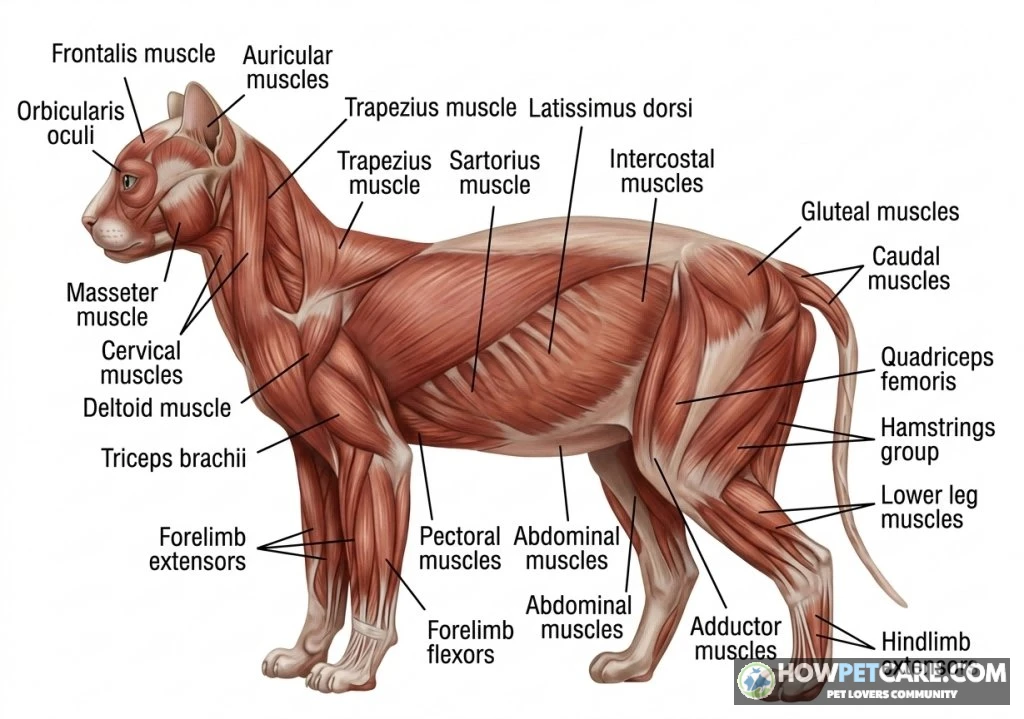
Cat muscles work with the skeleton through tendons, which attach muscle to bone. The quadriceps at the front of the thigh extend the knee. At the back of the thigh, the hamstrings contribute to propulsion, as does the gastrocnemius in the lower hindlimb. Shoulder and forelimb muscles help position the front legs during climbing and gripping. Epaxial muscles run along the upper side of the spine and help support and move the back.
For artists studying feline anatomy, start by locating the shoulder blade and pelvis. Their changing positions help explain why a moving cat’s outline changes so dramatically.
How retractable claws extend and retract
Elastic ligaments normally hold most cat claws back. When the deep digital flexor muscle contracts, its tendon pulls on the end toe bone, extending the claw.
SIDE VIEW OF ONE TOE — simplified

       elastic ligament helps draw claw back
                  ↓
 toe bones ──── end toe bone (third phalanx) ── curved CLAW
                       ↑
        deep digital flexor tendon pulls here
        to extend the claw forward

 skin around the resting claw forms a protective sheath
The claw isn’t pulled completely inside the toe. Its position and the surrounding skin help protect the tip when it isn’t extended.
Paw pads and the integument
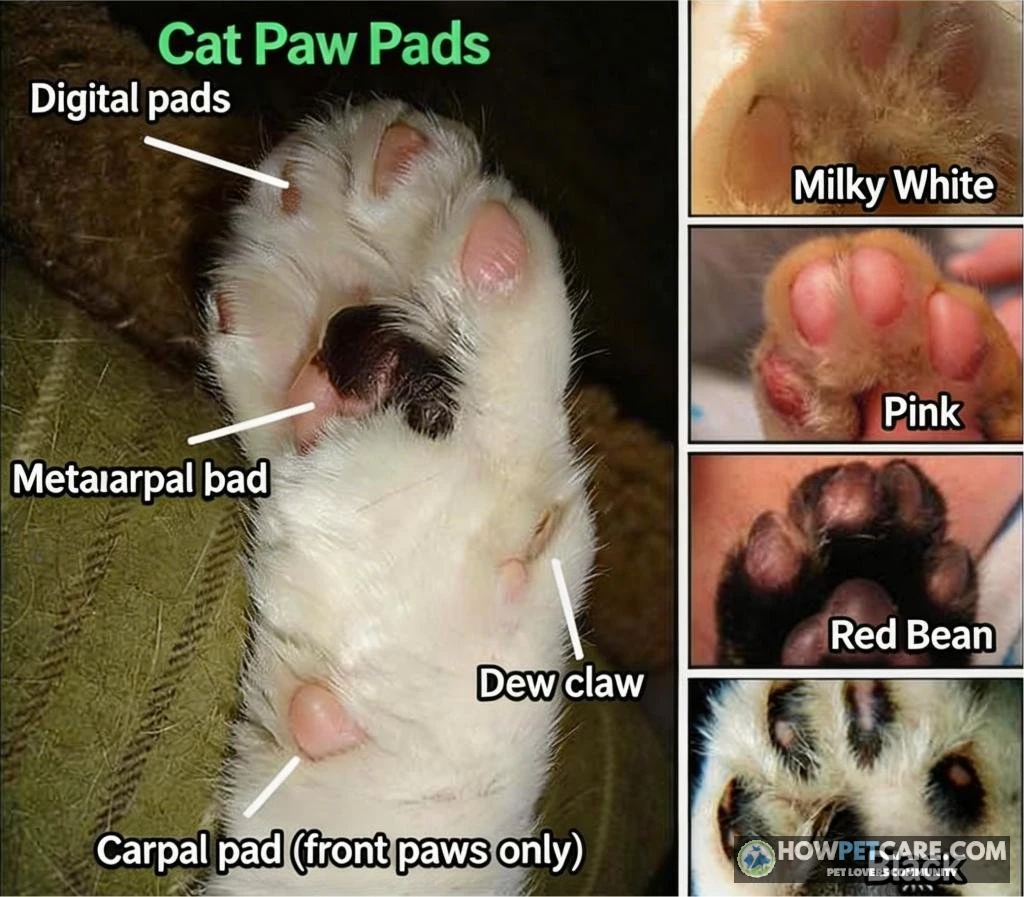
Cats are digitigrade: they walk on their toes. Digital pads sit beneath the toes; a larger metacarpal pad supports the front paw and a metatarsal pad supports the back paw. A carpal pad sits higher on the front limb. Most cats have 18 toes: five on each front paw, including the dewclaw, and four on each back paw. Polydactyl cats have extra toes.
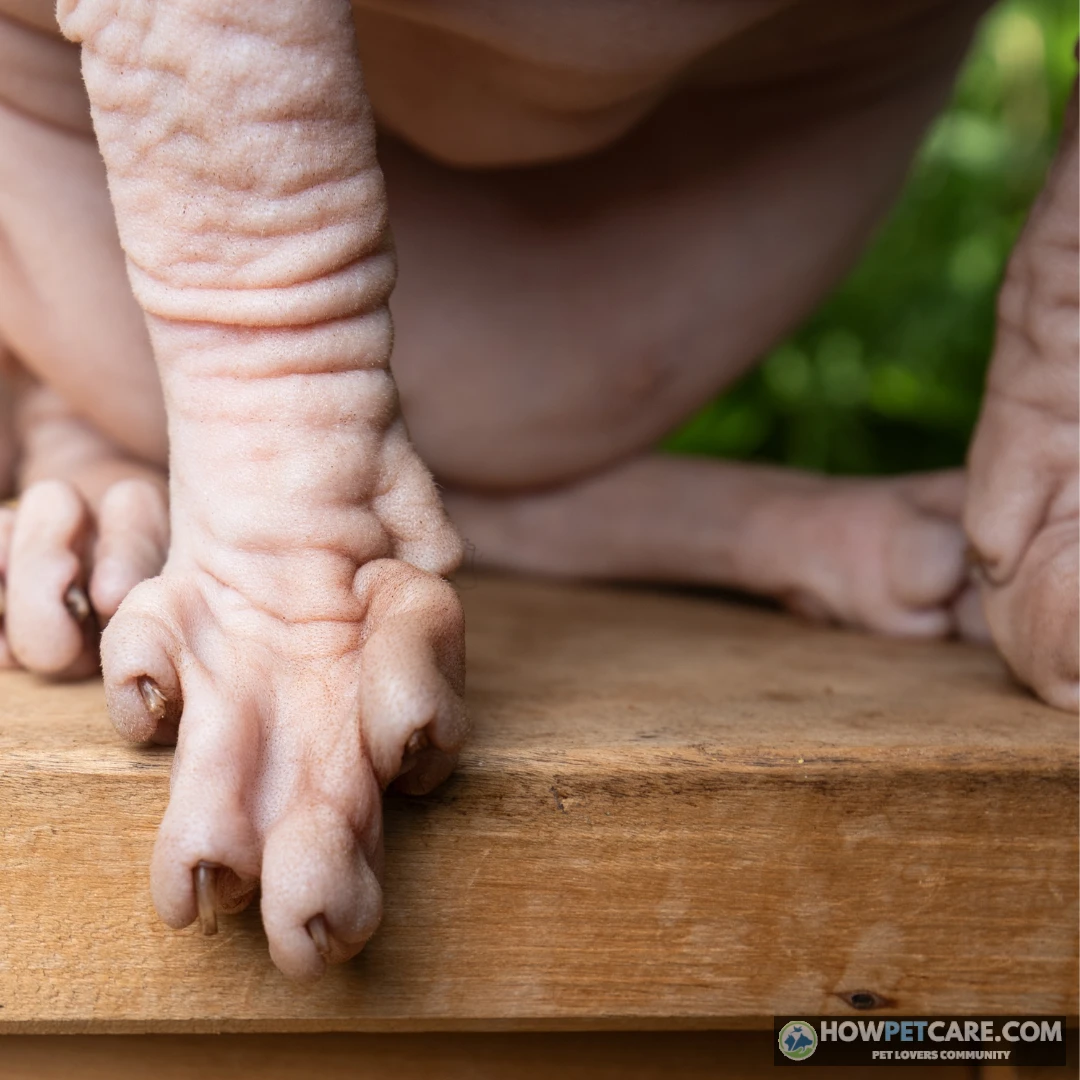
The integument includes skin, hair, claws, and pads. Skin thickness and coat density vary by body region and individual; a coat may include longer guard hairs and a softer undercoat. Cats have limited sweating over most of the body and sweat through their paw pads.
Head and Senses: Feline Dentition, Eyes, Ears, Nose, and Whiskers
Teeth and the feline dental formula
An adult cat normally has 30 permanent teeth; a kitten has 26 deciduous, or baby, teeth. The adult dental formula describes the teeth on one side of the upper and lower jaws:
I 3/3, C 1/1, P 3/2, M 1/1.
I means incisor, C canine, P premolar, and M molar. On each side, the upper jaw has 3 incisors, 1 canine, 3 premolars, and 1 molar; the lower has 3 incisors, 1 canine, 2 premolars, and 1 molar. That makes 15 per side and 30 in total.
ONE SIDE OF THE JAWS — front at left, back at right

 Upper:  I I I   C   P P P   M
 Lower:  I I I   C    P P    M
                         ↑    ↑
             upper fourth premolar and lower first molar:
             the shearing carnassial pair
The carnassial teeth work like shears. The jaw moves mainly up and down, while backward-facing, keratinized filiform papillae on the tongue help groom fur and scrape meat.
Eyes and the nictitating membrane
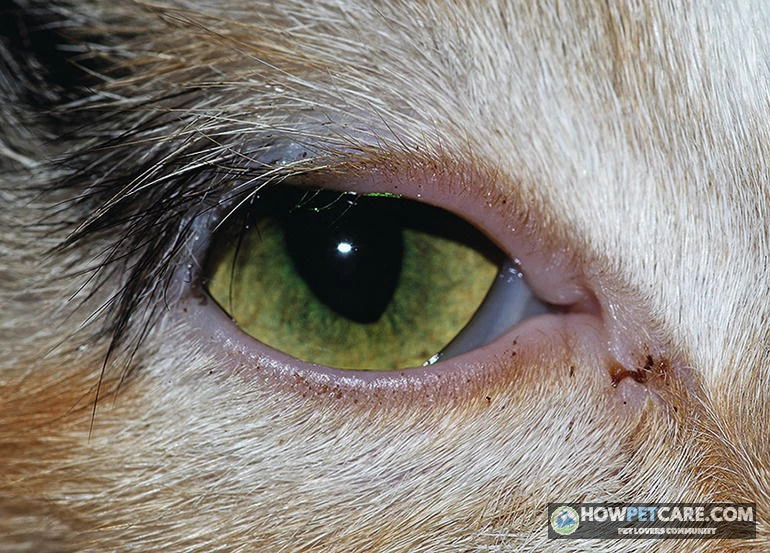
A cat’s pupils can narrow into vertical slits or open widely. Behind the retina, the tapetum lucidum reflects light back through the light-sensitive layer, improving vision in dim conditions. Cats still need some light; they can’t see in total darkness.
The nictitating membrane, or third eyelid, moves across the eye from its inner corner. If it remains prominent or its appearance changes, discuss it with a veterinarian. The often-quoted visual field is approximately 200 degrees, although an individual’s usable view depends on conditions.
Ears, nose, and the smell-receptor numbers question
The visible ear flap, or pinna, is highly mobile. A small fold at its outer edge is called Henry’s pocket; its function is not established. The ear canal bends before reaching the eardrum, while structures deeper in the ear contribute to hearing and balance. Published hearing ranges extend to approximately 65,000 Hz, though measurement and the individual cat matter.
Inside the nose, olfactory epithelium contains cells that respond to airborne chemicals. The vomeronasal organ, also called Jacobson’s organ, helps detect chemical signals and is associated with the open-mouthed flehmen response.
Why do sources say 70 million or 200 million smell receptors? Both numbers appear in popular accounts, but the available figures don’t establish a reliably measured single total for every domestic cat. Sources may use different estimates or terminology, and receptor cells shouldn’t be confused with receptor types. Treat either figure as uncertain rather than assuming the difference proves one particular counting method.
Whiskers and the purring mechanism
Whiskers, or vibrissae, are sensory hairs found on the muzzle and in other locations, including above the eyes and on the forelegs. Their nerve-rich follicles help a cat detect nearby contact and movement.
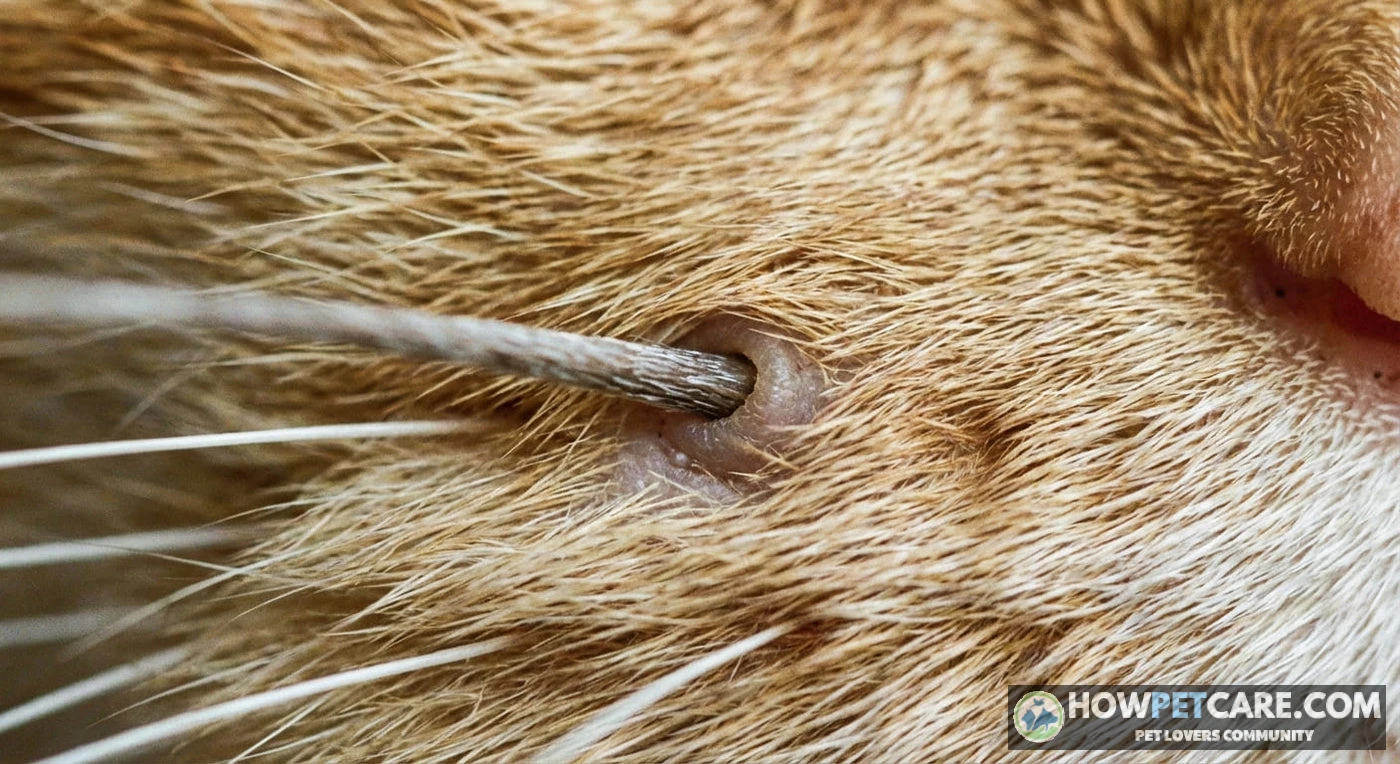
“Whisker fatigue” is a popular description of possible discomfort from repeated whisker contact, not a well-established diagnosis. Evidence remains limited. A cat’s reluctance to eat deserves attention rather than an assumption about the bowl.
Purring involves rhythmic vibration of tissues in the larynx as air passes through. How that rhythm is generated and controlled remains an active subject of research.
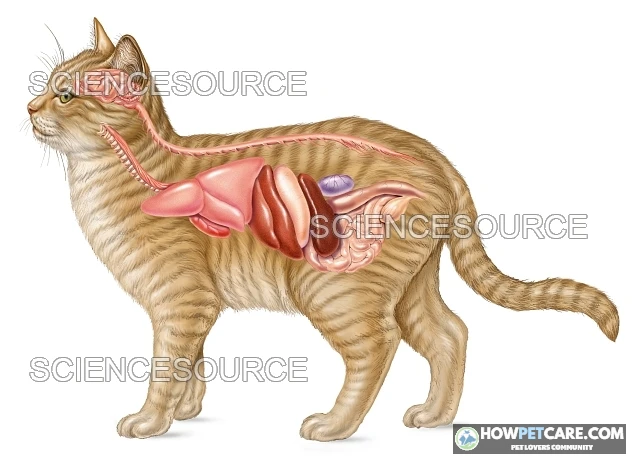
Internal Anatomy of a Cat: Where the Organs Are and What Each System Does
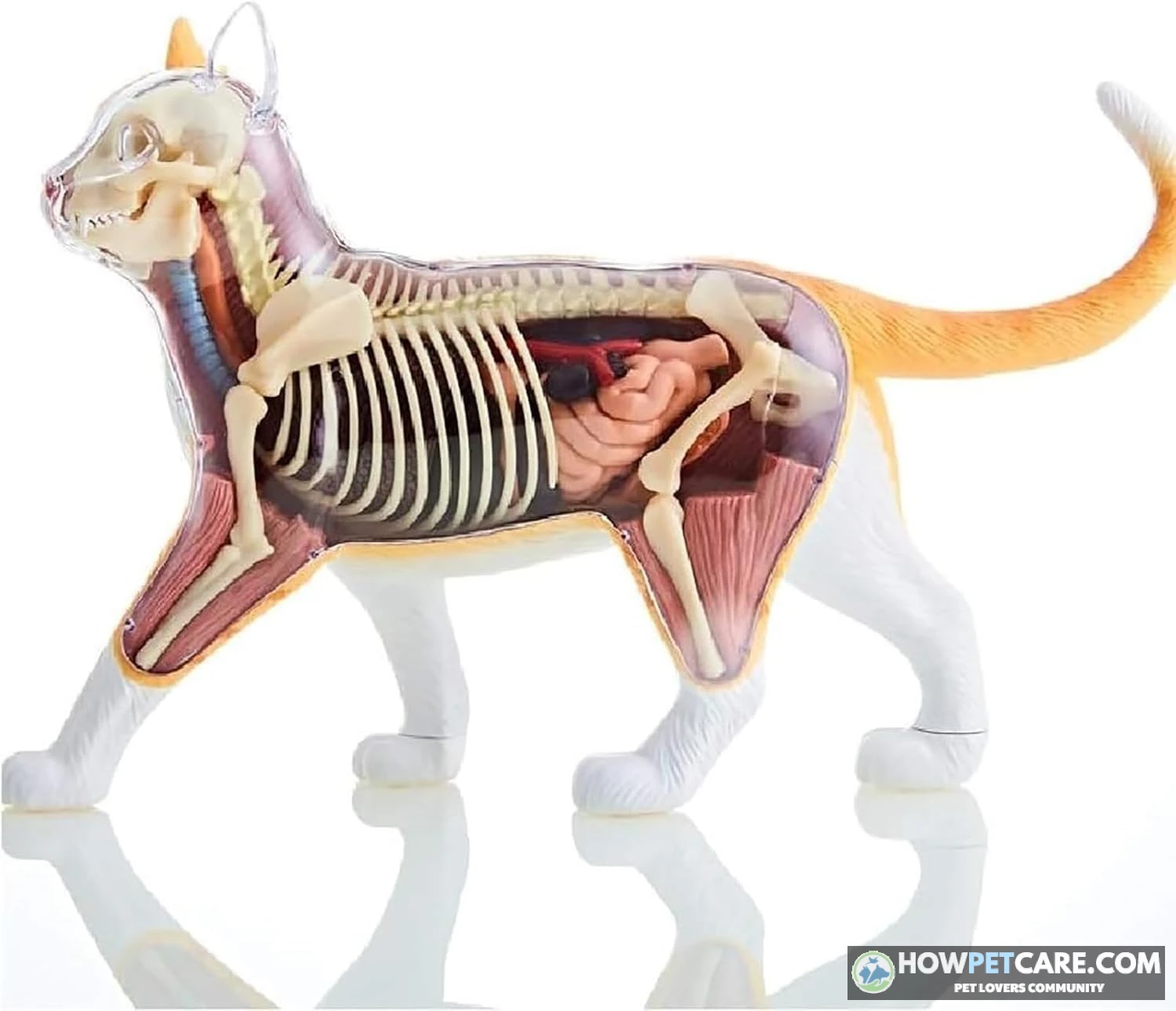
Labeled internal organ diagram
This side-view cat anatomy diagram is schematic: organs overlap in three dimensions, and their exact positions change with posture and the fullness of the stomach, intestines, and bladder. The head is to the left and the back is at the top.
 HEAD →  _____________________________________________  → TAIL
        /   THORAX       |         ABDOMEN

       /  LUNGS          |     KIDNEYS (high, near back)

      |     HEART        |  LIVER       STOMACH          |

      |                  |                SPLEEN         |

      |                  |       INTESTINES              |

      |                  |                   BLADDER     |

       _________________|___________________REPRODUCTIVE/

                      DIAPHRAGM                  ORGANS
The diaphragm separates the chest cavity from the abdomen. The kidneys sit high against the back wall, so they can overlap other organs in a side view. Reproductive anatomy differs by sex and whether the cat has been spayed or neutered.
Digestive and respiratory systems
The digestive system begins at the mouth and continues through the esophagus, stomach, small intestine, and large intestine to the rectum. The liver, gallbladder, and pancreas contribute substances that aid digestion. Cats are obligate carnivores, with teeth and a relatively short digestive tract adapted to an animal-based diet. Taurine is an essential nutrient for cats; anatomy alone doesn’t establish whether an individual diet is complete.
The respiratory system carries air through the nasal passages, larynx, and trachea into the lungs. The diaphragm is the main muscle that draws air into the chest. Open-mouth breathing at rest or visibly labored breathing requires emergency veterinary attention.
Cardiovascular system
The four-chambered heart sits in the lower chest between the lungs, approximately behind the elbows. Arteries carry blood away from the heart; veins return it. Blood supplies tissues with oxygen and nutrients and carries waste products away. A resting adult heart rate is commonly given as roughly 140–220 beats per minute, though stress can change a reading.
Urogenital system
The urinary tract includes two kidneys, two ureters, the bladder, and the urethra. Kidneys filter blood and make urine; ureters carry it to the bladder, and the urethra carries it out. The right kidney generally sits slightly farther forward than the left.
Female reproductive structures include ovaries and a uterus; male structures include testes and a penis. The male urethra is narrower, particularly toward its end, making obstruction a concern. Repeated attempts to urinate with little or no urine are an emergency and need immediate veterinary assessment.
Table: organ systems and where to find them
| Body system | Main organs | Location in the body | Key function |
|---|---|---|---|
| Digestive | Stomach, intestines, liver, pancreas, gallbladder | Mainly abdomen | Break down food and absorb nutrients |
| Respiratory | Nasal passages, trachea, lungs, diaphragm | Head, neck, and chest | Exchange oxygen and carbon dioxide |
| Cardiovascular | Heart and blood vessels | Chest and throughout body | Circulate blood |
| Urinary | Kidneys, ureters, bladder, urethra | Back of abdomen through pelvic outlet | Produce and carry urine |
| Reproductive | Ovaries and uterus, or testes and penis | Abdomen, pelvis, and external genital region | Reproduction |
| Nervous | Brain, spinal cord, nerves | Skull, vertebral canal, and throughout body | Coordinate sensation and movement |
| Endocrine | Thyroid and adrenal glands, among others | Neck and near kidneys, respectively | Release hormones |
| Lymphatic | Spleen, lymph nodes, lymph vessels | Abdomen and throughout body | Support immune function and fluid balance |
| Integumentary | Skin, hair, claws, pads | Body surface | Provide a protective barrier |
Cat Anatomy vs Dog Anatomy (and Human): The Differences That Matter
Cat vs dog: side-by-side comparison
| Feature | Cat | Dog | Why it matters |
|---|---|---|---|
| Adult teeth | Normally 30 | Normally 42 | Cats have fewer cheek teeth and prominent shearing teeth. |
| Claws | Usually retractile | Generally non-retractile | Their resting position and wear patterns differ. |
| Shoulder and spine | Mobile shoulder and highly flexible trunk | Shoulder also attached by muscle; build varies widely | Dogs also have a reduced clavicle, so a floating collarbone is not unique to cats. |
| Diet-related anatomy | Obligate carnivore with relatively short digestive tract | More dietary flexibility | Neither animal’s needs should be inferred solely from tooth shape. |
| Eyes | Tapetum and adaptations for dim light | Many dogs also have a tapetum | Both can use available dim light; neither sees in complete darkness. |
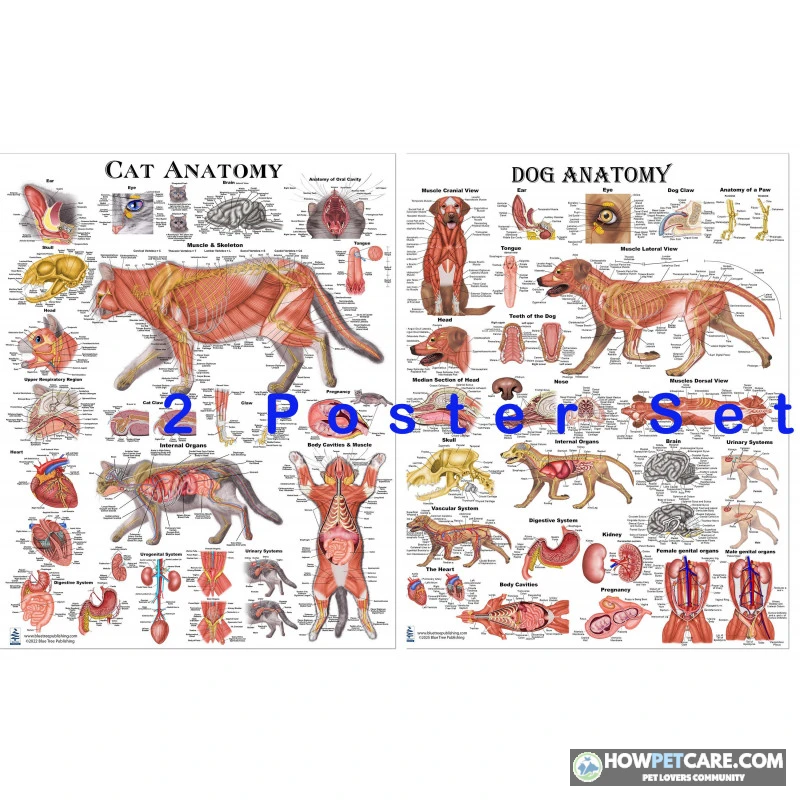
Breed and individual variation are substantial, especially in dogs. Don’t assume that every cat is more flexible or every dog has a better sense of smell than every individual of the other species.
Cat vs human: the short version
People typically walk on the soles of their feet; cats walk on their toes. Cats also have a tail, more mobile external ears, and a small vestigial clavicle rather than the substantial collarbone that braces the human shoulder. These differences affect how limbs move and how the body’s outline appears.
How Cat Anatomy Changes With Age and Breed
Kitten, adult, and senior anatomy benchmarks
Kittens grow through cartilage growth plates that close at different times in different bones. Baby teeth give way to permanent teeth, generally by about six to seven months. Young kittens can have different vital signs from adults, so age-specific interpretation matters. In seniors, the expected adult tooth count remains 30, although disease or previous extraction may reduce the number present.
Senior cat joints, spine, and osteoarthritis
With age, some cats develop osteoarthritis. Changes in a joint can include cartilage deterioration, altered bone, inflammation, and reduced comfortable movement. Muscle can diminish along the back and hindlimbs, especially when activity decreases. Reluctance to jump, stiffness, reduced grooming, or a change in usual movement can be reasons to arrange a veterinary examination; they don’t establish a diagnosis on their own.
Older cats may also develop thick or overgrown claws that catch or curve toward a pad. Reduced activity, wear, or mobility can contribute; aging doesn’t mean every claw mechanism fails. Dental disease and kidney problems also become more relevant with age, but aren’t inevitable.
Brachycephalic vs dolichocephalic skulls and health implications
Brachycephalic describes a shortened, broad skull, as seen in Persians and Exotic Shorthairs. In some cats, shortened facial structures are associated with narrowed air passages, tear overflow, or crowded teeth. These are predispositions, not certainties for every individual.
Dolichocephalic describes a longer, narrower head, as seen in Siamese-type and Oriental cats. Jaw and tooth alignment still vary among individuals; a long face alone doesn’t establish dental or sinus disease. A veterinarian can assess a particular cat’s structure and any signs.
Cat breed anatomy differences by body type
Cobby cats have compact bodies; foreign or Oriental types are generally long and slender; semi-foreign types fall between these descriptions. Large-framed cats, such as Maine Coons, have different proportions again. Frame, body condition, muscle, and individual development all affect loading on joints, so body type by itself can’t predict joint disease.
Feline Anatomy Glossary: Owner Terms and Veterinary Terminology
Table: owner term, clinical term, plain definition
Use these terms to connect the diagrams to a veterinary conversation. Directional terms describe position; they aren’t diagnoses.
| Everyday term | Veterinary term | Plain-language definition | Where it appears in this guide |
|---|---|---|---|
| Belly | Abdomen | Region behind the diaphragm containing many organs | Internal anatomy |
| Back side | Dorsal | Toward the back or upper surface | Skeleton |
| Belly side | Ventral | Toward the underside | Internal anatomy |
| Front paw | Manus | Forefoot, including its digits | Paws |
| Back paw | Pes | Hind foot, including its digits | Paws |
| Kneecap | Patella | Small bone in the knee tendon | Skeleton |
| Shoulder blade | Scapula | Flat bone of the shoulder | Skeleton |
| Collarbone | Clavicle | Small vestigial bone; called floating because it lacks a rigid skeletal joint | Skeleton |
| Hock | Tarsus | Hindlimb ankle region | External diagram |
| Tail bones | Caudal vertebrae | Vertebrae forming the tail | Skeleton |
| Whiskers | Vibrissae | Specialized sensory hairs | Senses |
| Third eyelid | Nictitating membrane | Membrane that moves across the eye | Senses |
| Eye-shine layer | Tapetum lucidum | Reflective layer behind the retina | Senses |
| Chemical-sensing organ | Vomeronasal organ | Organ involved in detecting chemical signals | Senses |
| Shearing cheek teeth | Carnassial teeth | Upper fourth premolar and lower first molar | Dentition |
| Tongue barbs | Filiform papillae | Backward-facing structures on the tongue | Dentition |
| Ear-edge fold | Henry’s pocket | Small fold in the outer ear margin | Senses |
| Skin and coat | Integument | Protective skin, hair, claws, and related structures | Paws |
| Toward head / tail | Cranial / caudal | Directions along the body | Diagrams |
| Toward / away from midline | Medial / lateral | Positions relative to the body’s center | Throughout |
| Nearer / farther along a limb | Proximal / distal | Positions relative to the limb’s attachment | Paws |
BAR — “bright, alert, responsive” — describes a cat’s observed demeanor, not a complete assessment of health.
Do a Basic At-Home Anatomy Check: Ears, Teeth, and Paws
Step-by-step ear, tooth, and paw checklist
Choose a calm moment, offer a treat if helpful, and work gently. Stop if your cat resists, seems distressed, or may be in pain. This is a screening check, not a diagnosis or a substitute for an examination.
- ☐ Ears: Look at the visible inner flap. Skin is often pale pink, with little debris and no strong odor. Don’t insert anything into the ear canal.
- ☐ Teeth and gums: Gently lift the lip if your cat tolerates it. Look for generally pink gums, intact visible teeth, and no bleeding or strong foul odor. You don’t need to force the mouth open or count every tooth.
- ☐ Paws and claws: Look at the pads, between the toes, and around each claw, including the front dewclaws. If your cat accepts it, gently press a toe pad to see the claw; don’t force a painful toe. Look for swelling, wounds, caught claws, or a claw curving toward the pad.
- ☐ Breathing: While your cat is asleep or fully relaxed, count chest rises for 30 seconds and double the result. Record the number and date. Adult resting rates are commonly around 20–30 breaths per minute.
What is normal and what needs a vet visit
Arrange a veterinary visit for persistent ear debris, odor, redness or head shaking; red or bleeding gums; a broken or loose tooth; drooling or dropping food; paw swelling, limping, or a claw approaching or entering a pad. A persistently elevated resting breathing rate also warrants a call, even if the cat seems comfortable.
Seek urgent veterinary care for a new head tilt or loss of balance, obvious severe pain, or labored or open-mouth breathing. Breathing difficulty is an emergency; don’t delay to complete the checklist.
Next steps: keep a simple log and plan regular vet exams
Record the date, resting breath count, and any change you noticed. Bring the log to your cat’s next veterinary visit, and contact the clinic sooner if a finding persists, worsens, or is listed above as urgent. Regular veterinary examinations can assess areas—including teeth below the gumline and internal organs—that a home check can’t see.
 You might be wonderingHow to tell if a cat is in pain?How to Tell if a Cat Is in Pain: Signs, Triage & Next StepsRead the answer
FAQ
How do cats see in the dark?
Cats have a reflective layer behind the retina called the tapetum lucidum that gives light a second pass through the photoreceptors. They also have large corneas and pupils that open wide in dim light. They still need some light and cannot see in total darkness.
What is whisker fatigue and are whiskers really that sensitive?
Whisker fatigue is a popular term, not an established veterinary diagnosis, for stress or discomfort some owners suspect when whiskers repeatedly brush against deep or narrow food bowls. Whiskers (vibrissae) do have many nerve endings at their base and help a cat sense nearby objects and air movement. A wide, shallow bowl is a harmless thing to try if your cat seems reluctant to eat from a deep one.
Do cats have collarbones?
Yes, but the clavicle is small and vestigial. It floats in muscle without joining the shoulder blade or the breastbone, which gives the forelimbs a wide range of motion and lets cats fit through narrow gaps.
How many toes does a cat have?
Most cats have 18 toes: five on each front paw (including the dewclaw) and four on each back paw. Polydactyl cats have extra toes from a genetic variation.
How many ribs does a cat have?
Cats have 13 pairs of ribs, matching their 13 thoracic vertebrae, for 26 ribs in total. The ribs are flexible, which helps the chest compress and the body twist.