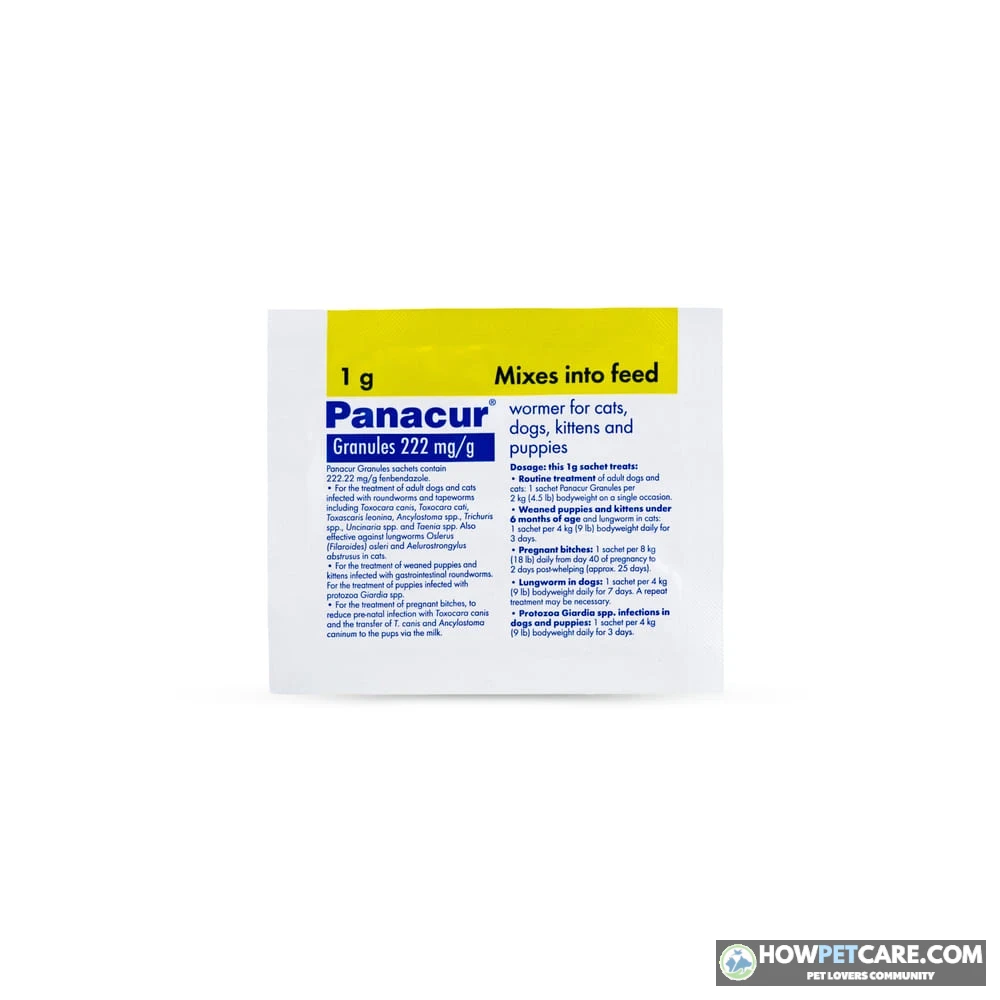

Panacur (fenbendazole) is a dewormer vets use in cats for roundworms, hookworms, Taenia tapeworms, and sometimes Giardia. A common reference dose is about 50 mg/kg once daily for 3–5 days, but US use is extra-label — a veterinarian must confirm the product, dose, and duration.
Panacur is a brand of fenbendazole, a deworming medicine veterinarians commonly use in cats for certain intestinal parasites. In the United States, Panacur for cats is extra-label: US Panacur products are labeled for dogs, while some Panacur products are licensed for cats in the UK and Europe. A veterinarian should confirm the parasite, product strength, dose, and treatment length before you give it. The weight-based examples below explain the math; they are not a prescription.
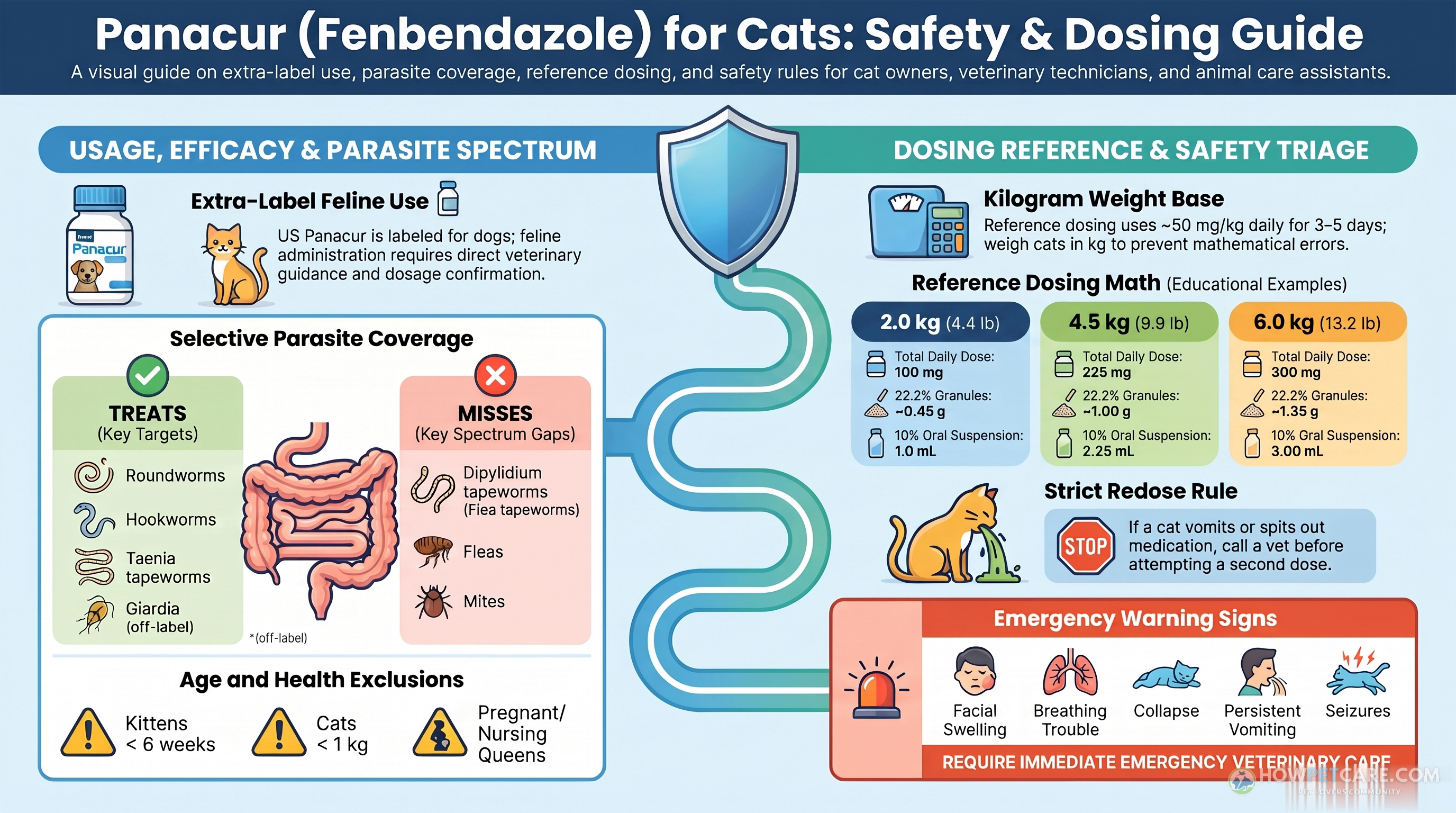
Panacur may be appropriate for roundworms, hookworms, some tapeworms, or a veterinarian-directed Giardia treatment. It does not reliably treat the common flea tapeworm, Dipylidium caninum, and it does not replace flea control or heartworm prevention. If your cat is very young, underweight, pregnant, nursing, ill, or has unexplained weight loss or bloody diarrhea, don’t self-treat.
Panacur for Cats: What It Is, Whether It’s Safe, and What to Do First
Fenbendazole is a benzimidazole anthelmintic: a medicine that disrupts parasite energy metabolism. It is poorly absorbed and works mostly in the intestinal tract. Panacur and other fenbendazole products are dewormers, but the right choice depends on which parasite is present.
For a healthy cat getting an appropriate product at a veterinarian-confirmed dose, fenbendazole is generally well tolerated. That doesn’t make a dog-labeled packet or a livestock product automatically safe to measure out at home. Concentrations, dosing instructions, and intended species vary by product.
Is Panacur safe for cats?
Veterinarians do use fenbendazole in cats, but safety depends on the cat, the parasite being treated, the product, and the regimen. A fecal exam can identify intestinal parasites and keep you from treating the wrong problem. If your cat is sick or symptoms are severe, an exam matters more than trying an over-the-counter dewormer first.
US use of fenbendazole in domestic cats is extra-label, meaning the veterinarian prescribes a drug in a way not specified on its US label. The FDA approval information cited for fenbendazole covers dogs and exotic animals, not domestic cats. Extra-label use is a veterinary decision. It does not mean the drug is experimental, and it does not mean the package directions apply to cats.
Why a dog-labeled product is used in cats
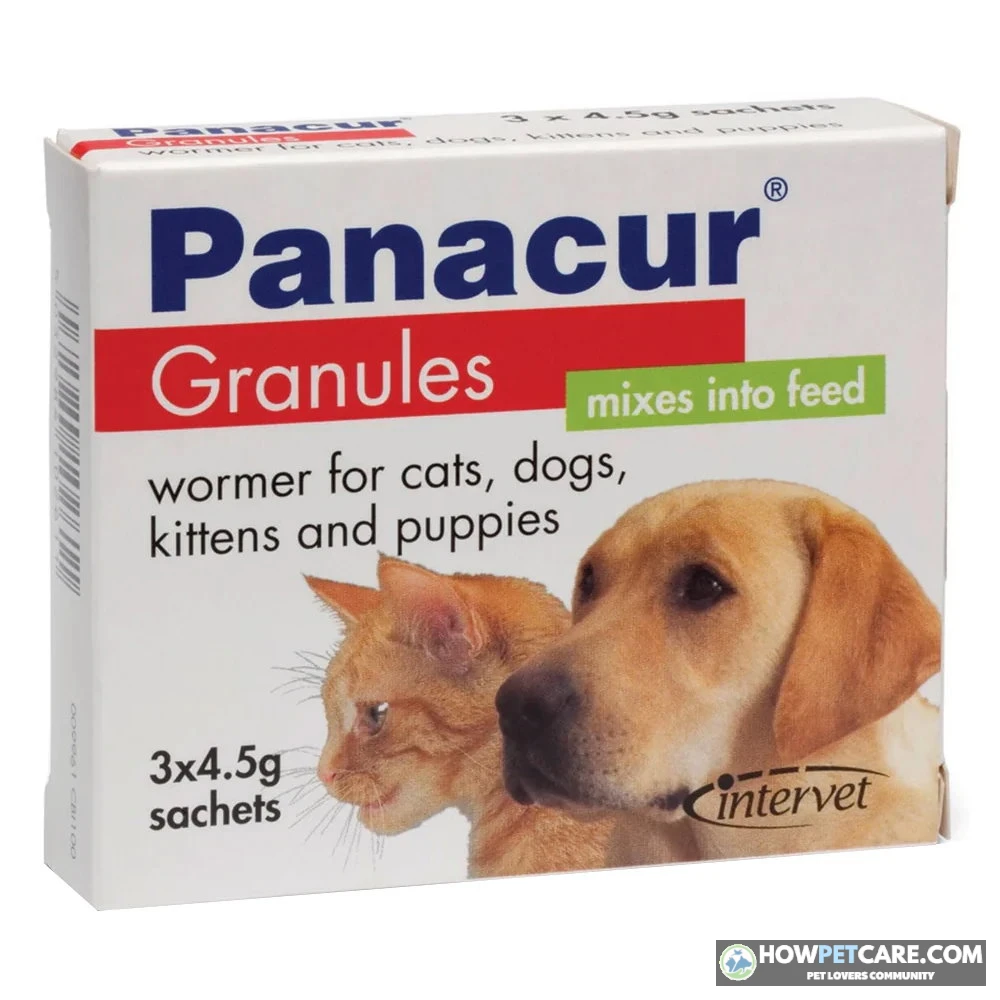
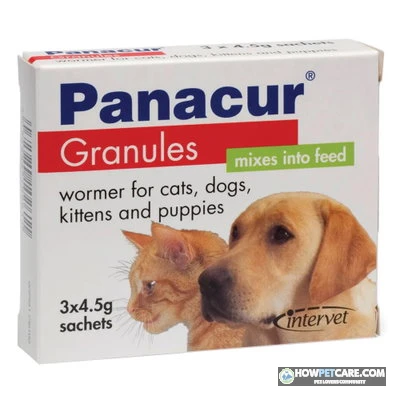
US Panacur C packaging is written for dogs, while veterinarians may direct its use in cats under extra-label prescribing rules. In contrast, Panacur tablets and paste are licensed for cats in the UK and Europe. That explains why an overseas cat dosing page may not match US package instructions. Follow the label and dose your veterinarian specifies for the exact product you have, not a chart made for another species or country.
Which Worms and Parasites Panacur Treats in Cats (and Which It Misses)
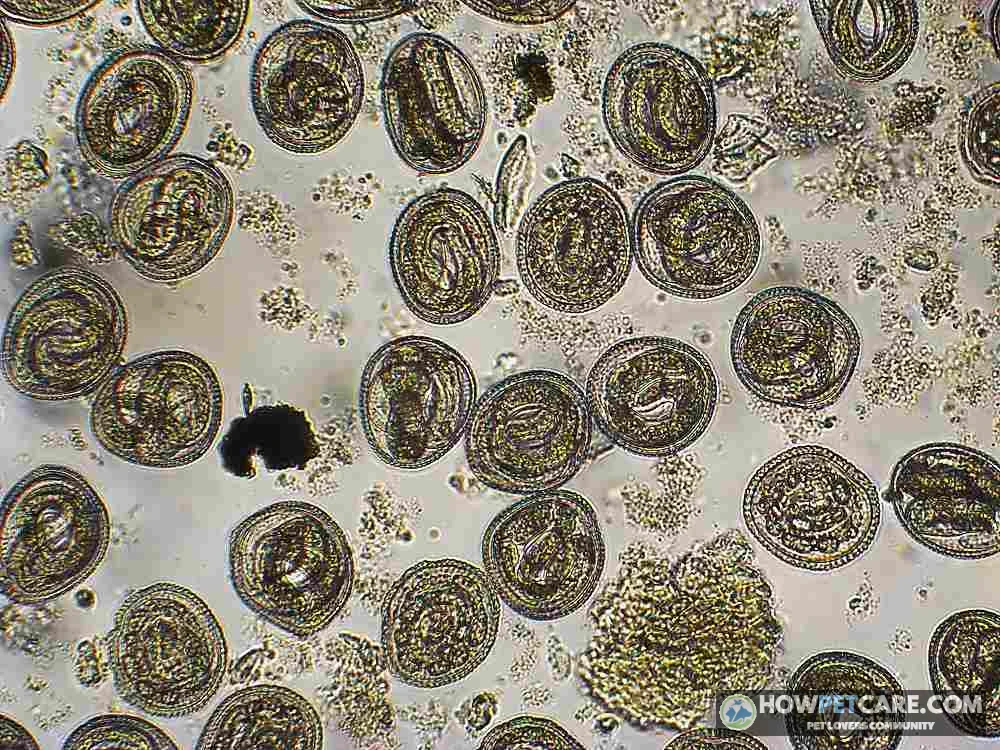
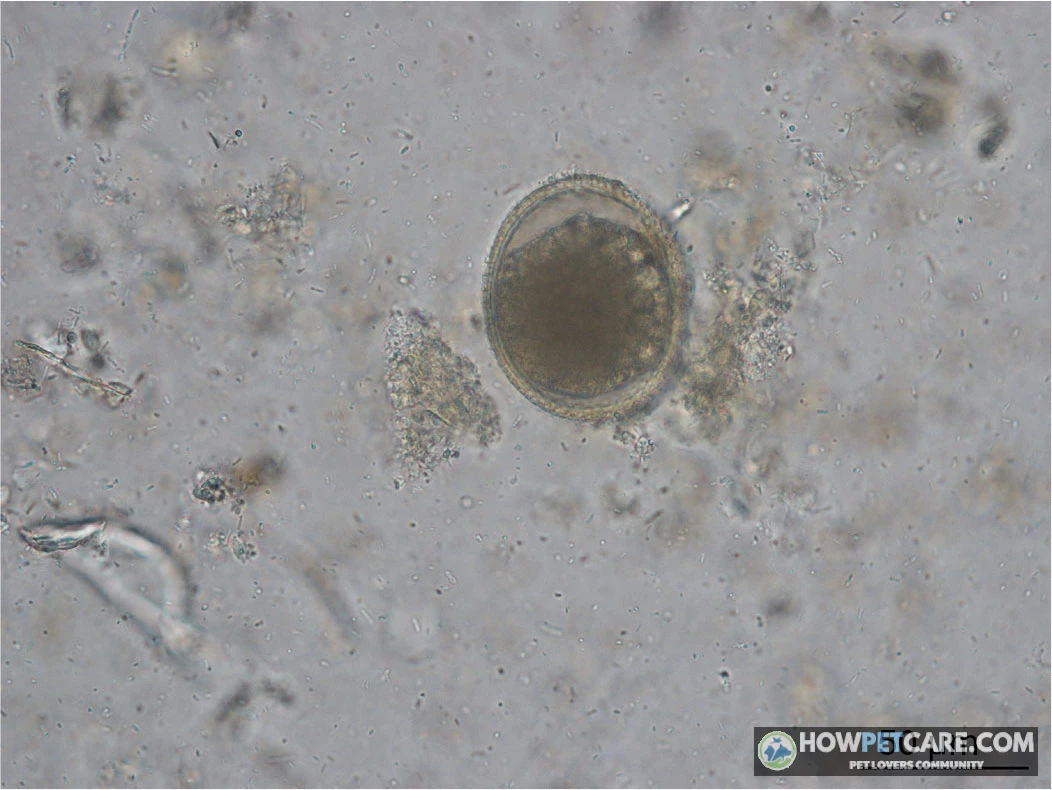
Fenbendazole can treat several feline parasites, but it isn’t a universal cat worm medicine. It is reported effective against feline roundworms, hookworms, Taenia tapeworms, and lungworms such as Aelurostrongylus abstrusus. Whether it is the right treatment depends on the species and diagnosis.
| Parasite | Covered by Panacur? | Typical veterinarian-directed approach | Better or additional option |
|---|---|---|---|
| Roundworms, including Toxocara cati | Yes | Fenbendazole course when appropriate; kittens may need a scheduled deworming plan | Pyrantel may also be appropriate |
| Hookworms, including Ancylostoma species | Yes | Treat based on diagnosis and the cat’s health | Pyrantel or a suitable preventive may be considered |
| Taenia tapeworms | Yes | Fenbendazole or another tapeworm treatment, depending on the case | Praziquantel |
| Whipworms | Uncommon in cats; confirm before treating | Vet-directed diagnosis and treatment | Depends on confirmed parasite |
| Giardia | Used off-label in cats; not routine worming | Often a longer, veterinarian-directed course plus hygiene and follow-up | The vet may choose or add another treatment |
| Lungworm or Capillaria | Some species-specific uses; not a self-treatment decision | Diagnosis first, then a tailored protocol | Depends on the species |
| Dipylidium caninum, the flea tapeworm | No reliable coverage | Treat the tapeworm and address fleas | Praziquantel plus flea control |
| Fleas, ear mites, ticks, or heartworm | No | Use parasite-specific prevention or treatment | A veterinarian-selected product, such as selamectin for some indications |
Does Panacur treat Giardia in cats?
Veterinarians may use fenbendazole off-label for Giardia in cats. This differs from routine treatment for intestinal worms: the vet may choose a multi-day course, hygiene measures, and a follow-up stool test based on the cat’s symptoms and household situation. Don’t assume that a routine deworming course is enough to clear Giardia.
Giardia can be hard to confirm because shedding may be inconsistent, and diarrhea can have other causes. A fecal test and treatment plan are more useful than repeating dewormer courses without a diagnosis. Ask the vet whether other pets need assessment and how to clean litter boxes and reduce reinfection.
The flea tapeworm gap: why Panacur alone may not clear segments
Rice-like pieces around your cat’s rear or in bedding may be tapeworm segments. One common source is Dipylidium caninum, which cats get by swallowing infected fleas. Fenbendazole is effective against Taenia tapeworms but does not reliably treat Dipylidium.
If you suspect flea tapeworm, ask about praziquantel and flea control. Treating the tapeworm without addressing fleas can leave your cat open to reinfection. A fecal exam may not always show tapeworm eggs, so describe or photograph the segments for your veterinarian.
Panacur Side Effects in Cats, Kitten and Pregnancy Limits, and Emergency Signs
Possible mild reactions include drooling or foaming from the taste, a temporary appetite dip, soft stool, or mild vomiting. A cat may also pass worms after treatment, but not seeing worms doesn’t prove the treatment failed. Fenbendazole starts killing susceptible parasites over one to two days, according to the cited product information.
Normal reactions vs. warning signs
Brief drooling after a bitter-tasting dose is different from an allergic reaction. Watch mild symptoms and note when they started. Call your veterinarian promptly for repeated vomiting, diarrhea that persists, blood or black stool, marked lethargy, weakness, or worsening illness.
Facial swelling, hives, trouble breathing, collapse, or seizures require emergency veterinary care. Don’t wait to see whether these symptoms resolve. If your cat vomits after a dose, don’t automatically give another dose; contact the veterinarian or pharmacist first.
Kittens, under-1-kg cats, pregnant and nursing queens
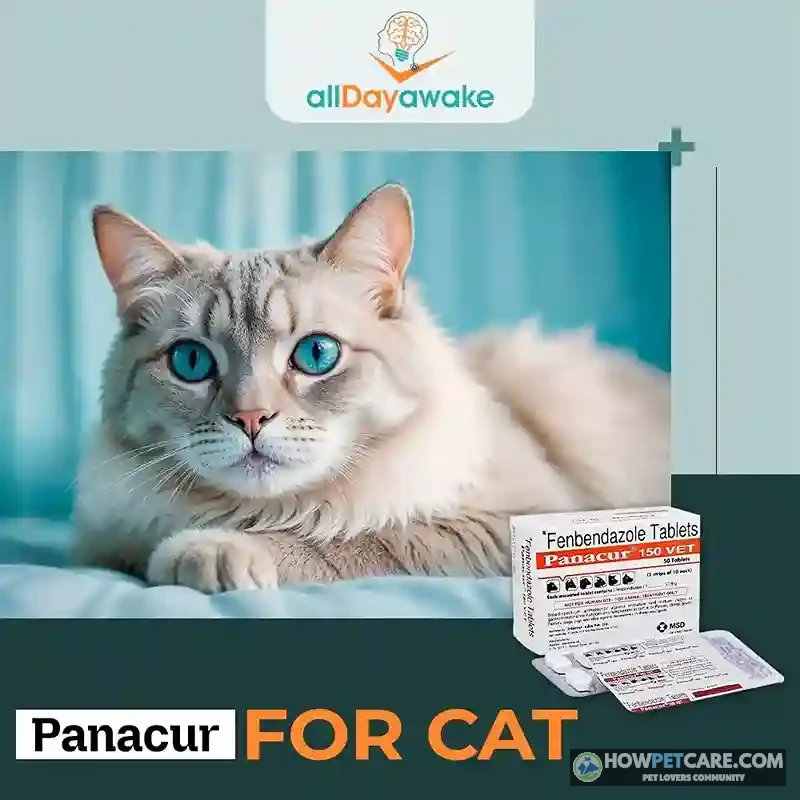
Do not dose a kitten under 6 weeks old or weighing under 1 kg without direct veterinary instruction. Those are important boundaries, not a guarantee that every kitten above them is ready for the same product or dose. Kittens can start shedding roundworm eggs at about 6 weeks, but a veterinarian should still set the deworming plan.
Don’t self-treat a pregnant or nursing cat. The veterinarian must weigh the mother’s needs, product information, and the kittens’ parasite exposure. Cats that are debilitated, very underweight, elderly, have liver disease, or take other medicines also need veterinary guidance before treatment.
Panacur Dosage for Cats by Weight: An Educational Reference to Confirm With Your Vet
A commonly cited veterinary reference for cats is about 50 mg of fenbendazole per kg of body weight by mouth once daily for 3 to 5 days. A veterinarian may use a 5-day course when targeting Giardia. These are educational reference figures, not an individualized prescription; the appropriate dose and duration depend on the diagnosis, cat, and formulation. The available evidence does not establish one universal feline dose for every condition.
How the dose is calculated (mg/kg to grams or mL)
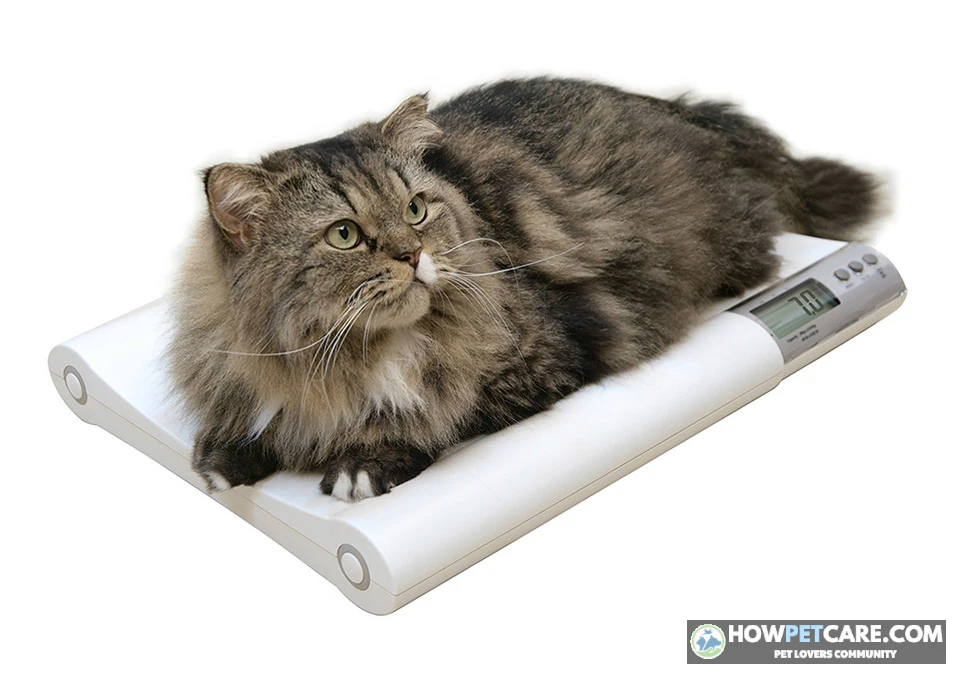
The basic calculation is simple: weight in kilograms multiplied by the veterinarian-confirmed mg/kg dose equals the total milligrams per dose. Then divide by the product concentration to get grams or milliliters.
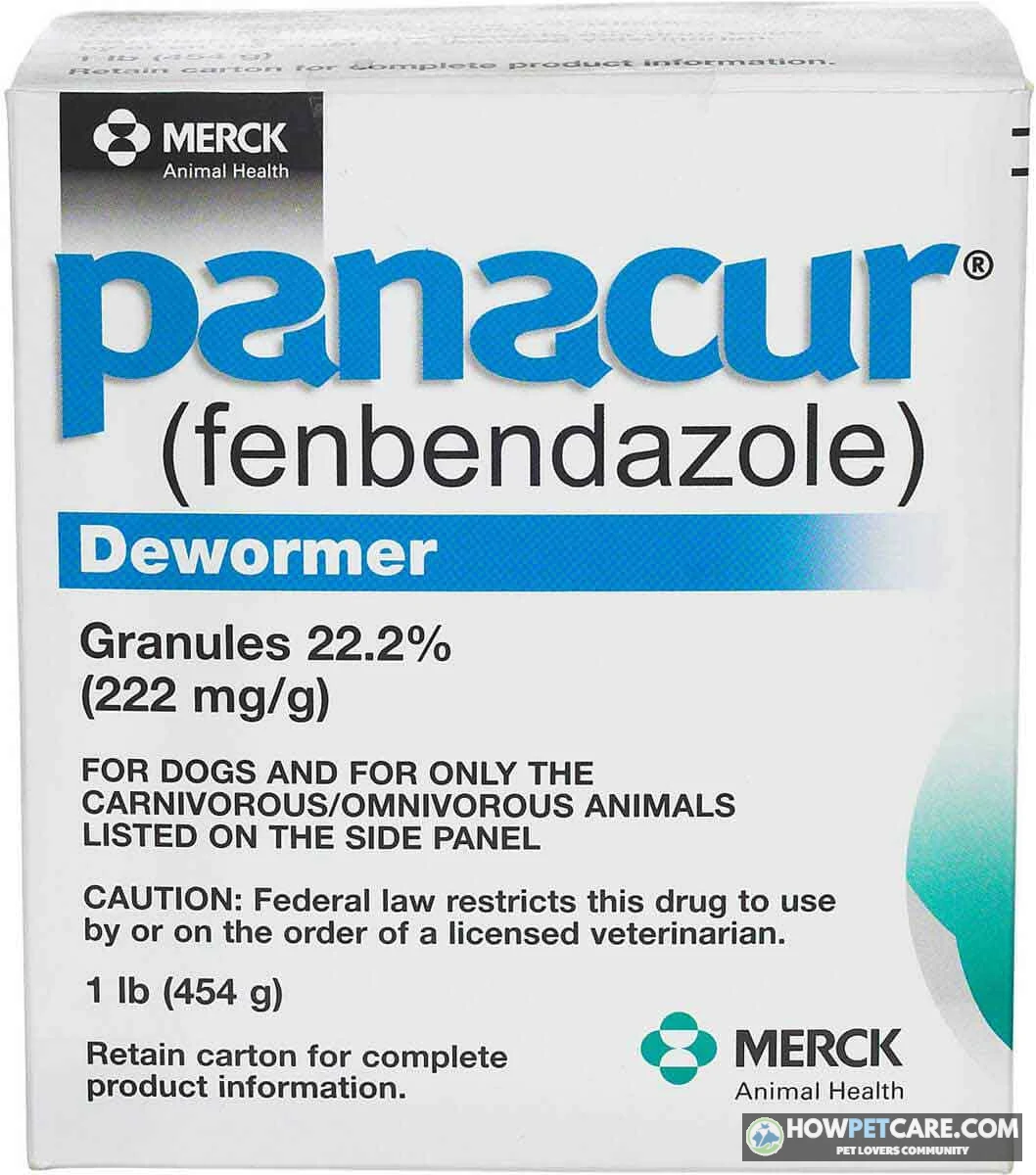
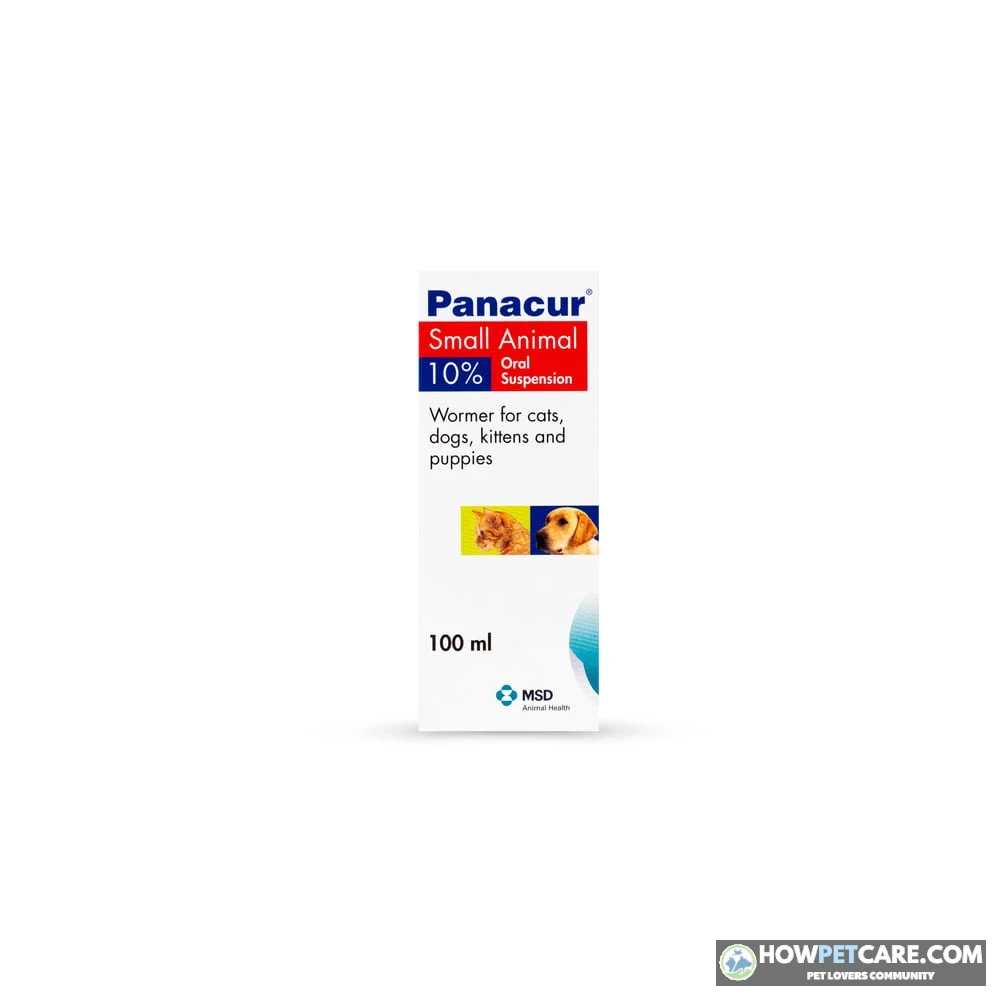
For the examples below, the assumed concentrations are about 222 mg of fenbendazole per gram for 22.2% granules and about 100 mg per mL for 10% suspension. Check the actual package: formulations and concentrations vary. Never use a dog dosing chart to determine a cat’s dose.
| Cat weight (kg / lb) | Total dose at about 50 mg/kg (mg) | 22.2% granules (g) | 10% suspension (mL) | Typical days |
|---|---|---|---|---|
| 2 kg / 4.4 lb | 100 mg | About 0.45 g | 1.0 mL | 3–5, if directed |
| 4.5 kg / 9.9 lb | 225 mg | About 1.0 g | 2.25 mL | 3–5, if directed |
| 6 kg / 13.2 lb | 300 mg | About 1.35 g | 3.0 mL | 3–5, if directed |
For example, a 4.5 kg cat at this reference rate works out to 225 mg per dose. Dividing by 222 mg per gram gives about 1.0 g of granules; dividing by 100 mg per mL gives 2.25 mL of suspension. These figures illustrate arithmetic only. Have the veterinarian confirm the dose, formulation, and how to measure it before giving any medication.
Worked examples for 2 kg, 4.5 kg and 6 kg cats
The 2 kg and 6 kg rows in the table follow the same calculation as the 4.5 kg example: 100 mg and 300 mg per dose, converted to grams or mL by the product concentration. Weigh the cat rather than estimating from appearance, and convert pounds to kilograms before calculating. Confusing pounds and kilograms can cause a substantial dosing error. Granule packets may contain more medicine than a single cat needs, and syringe markings may not line up with the calculated amount. Ask the veterinarian or pharmacist how to measure and round the dose safely.
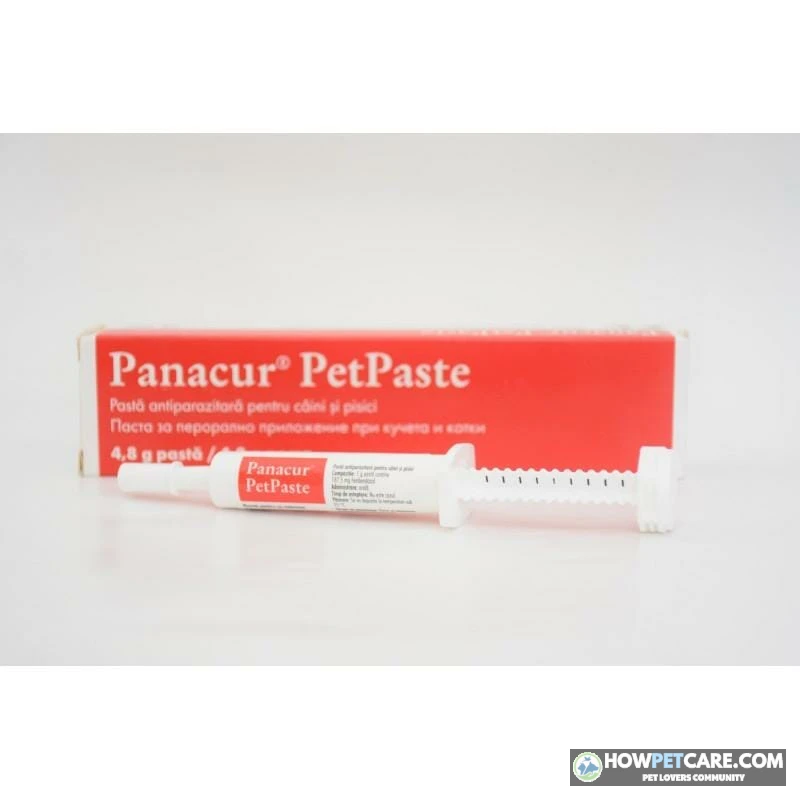
Panacur oral paste is a different concentration from the granules and suspension. The cited product data gives 187.5 mg of fenbendazole per gram of paste, with 50 mg per syringe graduation. Don’t transfer the table’s granule or suspension measurements to paste. Use the exact paste instructions and graduations confirmed by your veterinarian.
How many days, when to repeat, and when to retest the stool
Courses commonly last 3 to 5 consecutive days, but the treatment plan can differ by parasite; some protocols are longer and must be veterinarian-directed. A repeat course after 2 to 3 weeks is sometimes used, particularly when a vet is managing kittens or ongoing exposure, but it isn’t automatic. Don’t repeat a course simply because symptoms remain.
A follow-up fecal exam can help check whether treatment worked, especially after Giardia or when symptoms continue. Ask the vet when to collect the sample. In a multi-cat home, find out whether other cats should be tested or treated; don’t assume every pet needs the same medicine or amount.
Before leaving the clinic, confirm the parasite being treated, product name and concentration, dose in mg and in grams or mL, number of days, whether a repeat is planned, and whether a follow-up fecal test is needed.
Can You Buy Panacur for Cats Over the Counter? US Status, Where to Buy, and Typical Cost
In the United States, Panacur C is generally available without a prescription for dogs. That doesn’t make it an approved cat product: feline treatment is extra-label and should be directed by a veterinarian. Availability and prices change, so treat any retailer listing as a product for its labeled species unless your vet has instructed otherwise.
Why labels say dogs while vets use it in cats
The dog-labeled product and veterinary extra-label use are not contradictory. A veterinarian may prescribe an available drug for a different species when professional judgment supports it. The package directions remain dog directions, not a cat dosing guide.
Some UK and European Panacur products have cat-specific authorization and instructions, unlike US products commonly found on shelves. Don’t import a dose from another country without checking that the formulation and label match what you have.
Vet clinic vs. online pharmacy vs. farm store
US owners may encounter fenbendazole at veterinary clinics, online pet pharmacies, major online retailers, and some farm or feed stores. Farm stores may stock livestock products such as Safe-Guard, which can have different concentrations and intended uses. A small cat’s dose can be difficult to measure accurately from those products.
Costs vary by product size, formulation, seller, and location. As a general expectation in 2026, a small package may cost less than a veterinary exam, but the package price doesn’t include diagnosis or dose verification. Check current prices directly rather than relying on a quoted amount. Call a clinic or pharmacy and ask which exact concentration they carry; ask your vet to specify the product and dose before buying.
A clinic-supplied or pharmacy-prepared dose may be more practical than a large dog or livestock package. It can reduce measuring errors and let the veterinarian assess whether Panacur is the right treatment in the first place.
Selling a fenbendazole product over the counter doesn’t make its label a cat dosing guide. Have your veterinarian confirm the concentration and the cat-specific amount before use.
How to Give Panacur Granules, Suspension, or Paste to a Cat That Refuses Medication
Use the formulation your veterinarian specified. A small change in concentration changes the amount to give. Set up the dose before bringing the cat over, and keep other pets away so no one receives the wrong medicine.
Granules in food
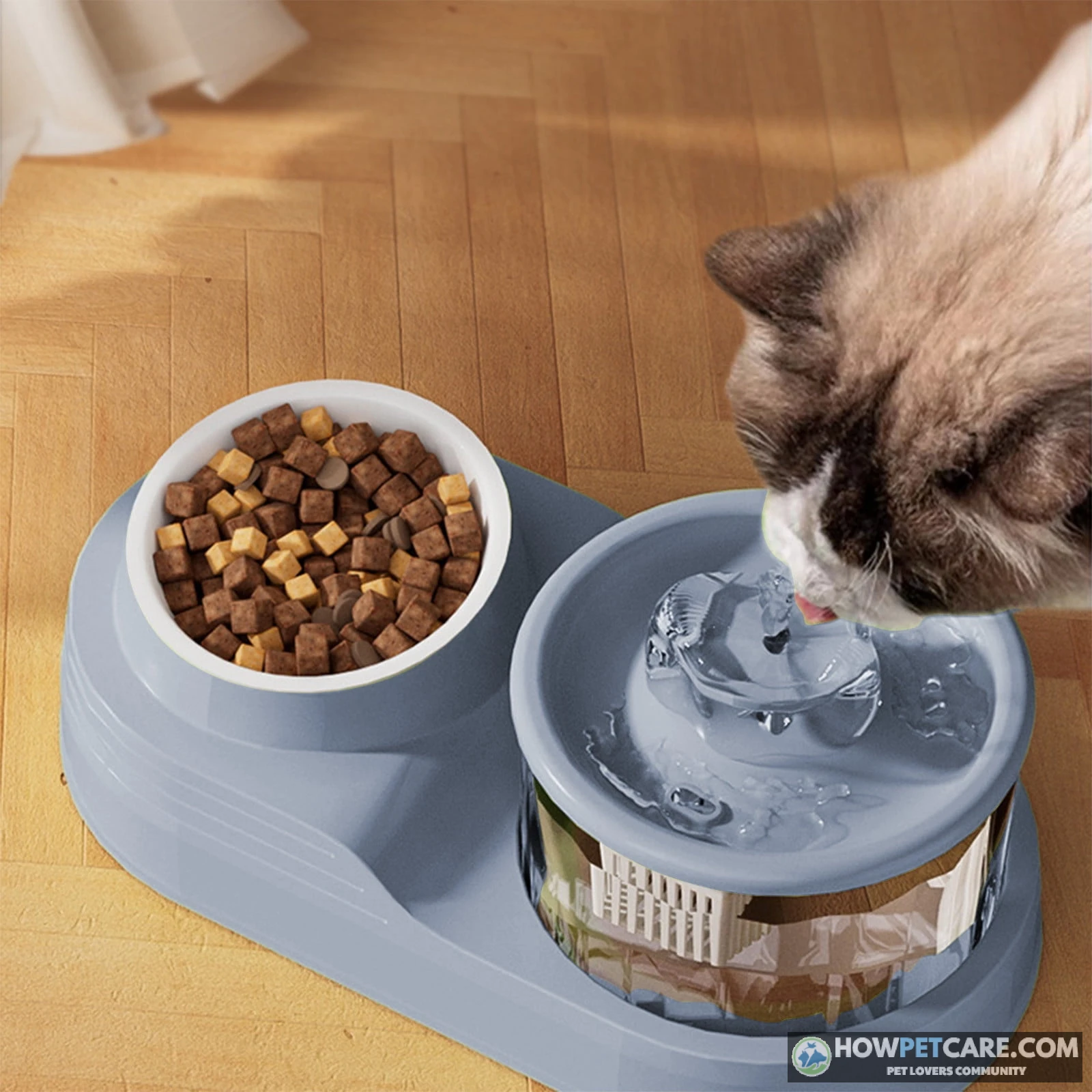
Measure the vet-confirmed amount and mix it into a small portion of strongly flavored wet food, not a full meal. Offer that portion first and check that your cat eats all of it before serving more food. In a multi-cat home, feed cats in separate rooms and label each bowl if needed.
If your cat refuses medicated food, try a different small portion of a familiar, strong-smelling food, but first check with the veterinarian that mixing is appropriate for the product. Don’t hide the dose in a full bowl your cat may leave unfinished. If your cat eats only part of the mixture, estimate what remains and ask before giving more.
Oral suspension by syringe
Shake the bottle well if directed on the label, then draw up the veterinarian-confirmed volume using an oral syringe. Wrap the cat loosely in a towel if that helps keep everyone safe. Keep the head in a neutral position or only slightly raised; don’t tip it far back.
Place the syringe tip into the cheek pouch at the side of the mouth, behind the canine tooth. Give a small amount slowly, allowing time to swallow before continuing. Don’t squirt medicine toward the back of the throat or dose a cat that is gasping or struggling to breathe; liquid can enter the airway.
Paste and multi-cat households
Where paste is available, use only the syringe graduations and dose your veterinarian confirmed. Panacur paste product information describes 50 mg of fenbendazole per graduation for a particular product; check the exact package because products can differ. Don’t assume that a graduation equals the dose for your cat.
If your cat spits or foams, pause and let the cat settle. Foaming can be a taste reaction, but if much of the dose was lost, call before repeating it. Try a small treat afterward if appropriate. If oral dosing keeps failing, ask about a different formulation, a compounded flavored liquid, or an in-clinic dose. Never force medication into the airway.
What to Do If Your Cat Vomits After Panacur, Spits It Out, or You Miss a Dose
The key rule is simple: don’t automatically repeat a dose after vomiting or partial loss. The amount absorbed is uncertain, and doubling up may be riskier than waiting for instructions. Record the time, amount given, and what happened, then contact your vet or pharmacist.
Vomiting after the dose
If your cat vomits soon after dosing, note how many minutes passed and whether you could see medicine in the vomit. Call the veterinarian for specific instructions; don’t redose just because the dose may have come back up. Seek urgent help for repeated vomiting, severe weakness, blood in vomit or stool, or any allergic-reaction signs.
Missed or partial doses
For a missed dose, contact the prescribing veterinarian to ask whether to give it when remembered or adjust the schedule. The right response depends on how late the dose is and the treatment plan. Don’t double the next dose. If the cat ate only part of medicated food or spat out medicine, tell the vet your best estimate of what was swallowed.
Worm die-off vs. side effect vs. allergic reaction
A mild, short-lived change in stool or appetite may be monitored if the cat otherwise seems well and the veterinarian has not advised differently. Passing visible worms can happen, but it isn’t a reliable test of success. Repeated vomiting, worsening diarrhea, severe lethargy, facial swelling, hives, breathing difficulty, collapse, or seizures are not routine die-off signs.
Use this triage guide:
| What you see | What to do |
|---|---|
| Brief drooling or foaming after a bitter dose; one mild soft stool; cat otherwise alert | Monitor, record it, and continue only as prescribed |
| Vomited after dosing, missed or partial dose, repeated vomiting, or diarrhea that persists | Call the veterinarian or pharmacist the same day; don’t redose without instructions |
| Facial swelling, hives, breathing difficulty, collapse, seizures, repeated vomiting, bloody or black stool, or severe lethargy | Seek emergency veterinary care now |
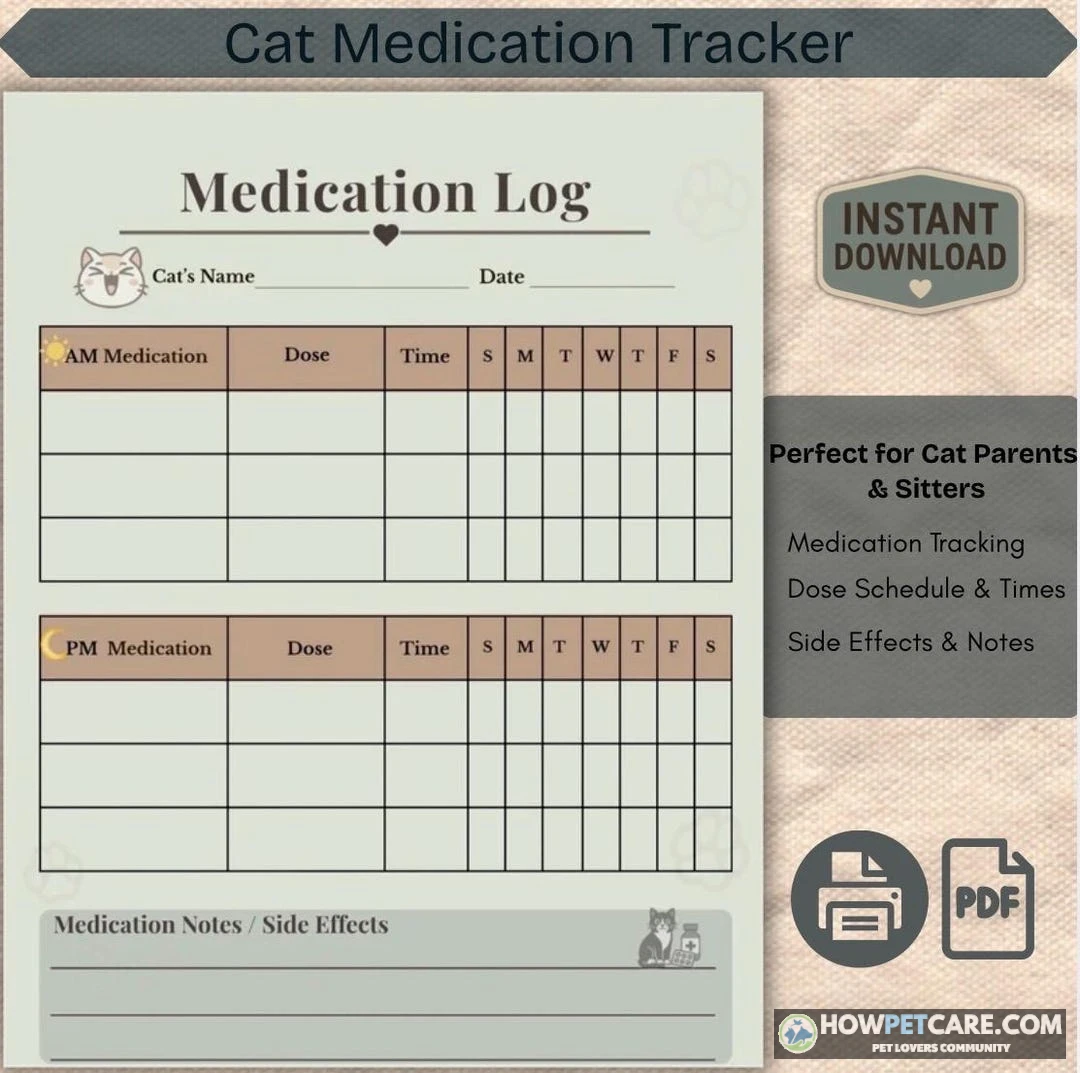
A dose log can prevent confusion: write down the date and time, amount in mL or grams, how it was given, whether your cat finished it, and any reaction and its timing.
After vomiting, spitting out medicine, or eating only part of a medicated meal, don’t guess how much was absorbed. Your vet can tell you whether to wait, repeat, or change the schedule.
Panacur vs. Pyrantel, Praziquantel, and Selamectin: Picking the Right Dewormer
Different medicines target different parasites. The best cat dewormer is the one that matches the likely or confirmed parasite, not the one that is easiest to buy. Mixed infections may need more than one product, which a veterinarian should plan.
| Drug | Main parasites covered | Key gaps | US availability | Best used when |
|---|---|---|---|---|
| Fenbendazole (Panacur) | Roundworms, hookworms, Taenia tapeworms; used off-label for Giardia | Not reliable for Dipylidium; does not treat fleas, mites, or heartworm | Commonly sold without prescription for dogs; cat use is extra-label | A veterinarian selects it for a confirmed or suspected susceptible parasite |
| Pyrantel pamoate | Roundworms and hookworms | No tapeworm or Giardia coverage | Available in some cat-labeled products | Vet-directed kitten deworming or a suitable roundworm/hookworm case |
| Praziquantel | Common tapeworms, including Dipylidium | Does not treat roundworms or hookworms by itself | Available in cat-labeled products; status depends on product | Rice-like segments or confirmed tapeworm, alongside flea control when needed |
| Selamectin | Fleas, ear mites, some roundworms and hookworms, and heartworm prevention | No tapeworm or Giardia treatment | Prescription product | Monthly prevention or a vet-selected plan for covered parasites |
Decision guide by parasite
- If a fecal exam identifies roundworms or hookworms, ask whether fenbendazole or pyrantel is appropriate for your cat’s age and health.
- If you see rice-like segments or fleas, ask about praziquantel and flea control; Panacur alone is not a reliable choice for Dipylidium.
- If Giardia is suspected, ask about diagnostic testing, a targeted treatment course, hygiene steps, and follow-up testing.
- If the goal is monthly flea or heartworm prevention, ask about a preventive such as selamectin where appropriate. Panacur is not a substitute.
Kittens may need a veterinarian-directed deworming schedule that starts at a young age. Don’t use an adult product or choose a schedule from a general chart without confirming the kitten’s age, weight, and product.
When Panacur is the wrong choice
Panacur alone is the wrong choice for flea tapeworm, fleas, ear mites, or heartworm prevention. It may also be the wrong choice when a cat’s symptoms haven’t been diagnosed, when a different parasite is likely, or when the cat falls into a high-risk group. A second medicine may be needed for a mixed infection, but combining products without veterinary direction can cause errors and unnecessary treatment.
Fenbendazole for cancer claims and drug resistance
Internet claims that fenbendazole treats cancer are not established veterinary cancer care. Don’t give it for cancer or replace a cat’s oncology treatment with it; discuss any supplement or drug claim with the veterinarian managing the cat.
Benzimidazole resistance is documented in livestock and has been reported in dog hookworms, while the evidence in cats is less developed. Avoid unnecessary repeat courses and use fecal testing when advised rather than repeatedly treating without confirming the cause.
Your Next Steps: A Checklist Before You Buy or Give Panacur
Use this sequence to make the conversation with your vet specific and to reduce dosing mistakes.
-
Confirm the problem
Collect a fresh stool sample if your clinic requests one. Note diarrhea, vomiting, weight loss, visible worms, or rice-like segments, and ask whether a fecal exam is needed before treatment.
-
Check your cat's details
Get an accurate weight and confirm age, pregnancy or nursing status, health conditions, and current medicines. Do not self-dose a cat under 6 weeks or under 1 kg.
-
Get the complete directions
Ask which parasite is being treated, the exact product and concentration, dose in mg and in mL or grams, number of days, whether to repeat, and when to retest.
-
Buy the specified product
Check the label, concentration, expiration date, and formulation. Do not substitute livestock fenbendazole, dog granules, suspension, or paste without the veterinarian confirming the conversion.
-
Give and record each dose
Use the method recommended for that formulation, separate cats during feeding, and record the amount and time. Call before redosing after vomiting or a partial dose.
-
Follow up
Clean litter boxes, wash hands, ask about flea control and other pets, and arrange a follow-up fecal test when advised, especially after Giardia treatment or if symptoms continue.
Skip self-treatment and contact a veterinarian if your cat is under the age or weight threshold, pregnant or nursing, debilitated, has liver disease, or has blood in the stool, ongoing vomiting, or unexplained weight loss. If emergency signs develop, seek urgent veterinary care rather than waiting for a routine appointment.
FAQ
Can I use dog Panacur for my cat?
US Panacur products are labeled for dogs, and vets do use them in cats off-label. Use only the strength and dose a veterinarian specifies for your cat’s weight, because dog dosing charts on the package are not cat instructions.
Can I use livestock fenbendazole such as Safe-Guard for a cat?
Livestock products have different concentrations and labeling, which makes measuring a small cat’s dose error-prone. Ask a vet before using one, and have them calculate the volume or weight to give.
How soon will I see worms after giving Panacur?
Some cats pass dead or partly dissolved worms within a day or two, and others pass none that are visible. Not seeing worms does not mean the treatment failed, so a follow-up fecal exam is the reliable check.
Is fenbendazole resistance a concern in cats?
Benzimidazole resistance is well documented in livestock and has been reported in dog hookworms, but it is less documented in cats. Avoiding unnecessary repeat courses and retesting stools after treatment helps keep the drug effective.
Can I give Panacur with flea or heartworm preventives?
Many cats receive deworming and monthly preventives in the same period, but check with your vet about timing and your cat’s health. Preventives cover different parasites, and Panacur does not replace flea control.