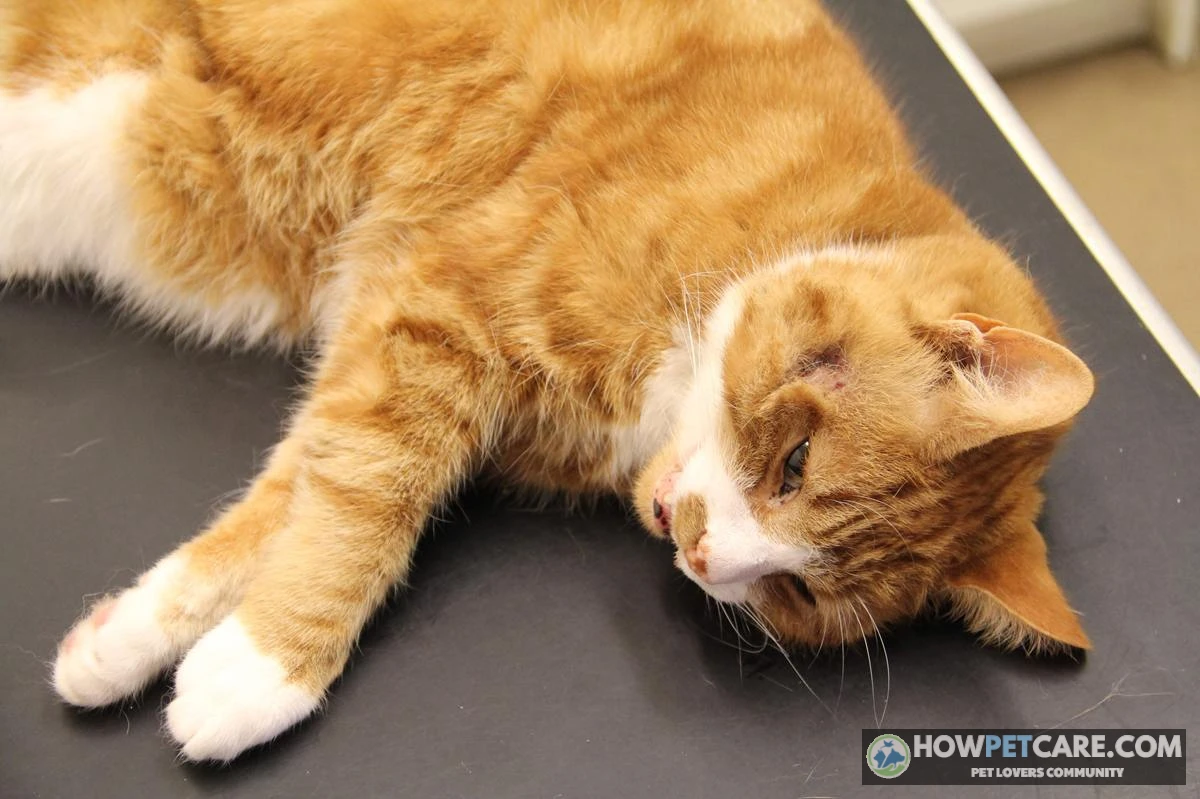

Sudden paralysis in a cat is an emergency — go to an emergency veterinarian now. Keep your cat still on a flat, rigid support such as a board or carrier base, note which legs are affected and when it started, and never give human pain medicine.
Your Cat Is Paralyzed: Treat It as an Emergency and Do This in the Next 30 Minutes
If your cat is paralyzed or suddenly can’t move a leg or can’t stand, go to an emergency veterinarian now. Sudden weakness or paralysis can signal a blood clot, spinal injury, or another serious condition. Some causes are intensely painful. Don’t wait to see whether it passes.
Keep your cat as still as possible, support its whole body on a flat surface, and leave for the clinic. If possible, call ahead while someone else drives. This guide can help you prepare, but it can’t replace a veterinary examination.
Emergency vet or call your regular vet first?
Go to an emergency hospital unless your regular veterinarian confirms they can examine your cat immediately. Don’t wait for a callback. If your cat is breathing with an open mouth, struggling to breathe, or crying out, tell the clinic right away so the team can prepare.
How to pick up and carry a cat with a possible spinal injury

Move promptly. The suggested times below are a guide, not a reason to delay departure.
-
Minutes 0–2: Get ready to leave
Note when you first noticed the problem and which legs are affected. If someone is with you, ask them to call the emergency hospital while you prepare your cat.
-
Minutes 2–8: Find a flat support
Place a towel on a rigid, flat surface, such as a baking sheet, board, sturdy box lid, or the bottom of a carrier with its top removed.
-
Minutes 8–15: Move gently
With help if available, slide your cat onto the support in the position it’s already lying in. Support the head, spine, and hips together; don’t force the body straight.
-
Leave for the clinic
Loosely cover your cat with a towel, keeping its face clear. Secure the support in a low-sided box or carrier, or on a flat area of the car, so it can’t slide. Keep your cat warm without applying direct heat.
Don’t lift your cat by the scruff, under the armpits, or by the torso alone. A frightened cat or one in pain may bite, so protect your hands without delaying transport. If moving your cat seems unsafe, call the clinic for guidance while you prepare to leave.
What to tell the clinic on the phone
Say: “My cat suddenly can’t walk.” Add which legs are affected, when it started, and whether the paws seem cold or your cat is breathing with its mouth open. Mention a possible fall, vehicle accident, fight, tick exposure, or toxin exposure. Bring a medication list and any existing video of the abnormal movement, but don’t delay to record one.
What not to do before you arrive
- Don’t give human pain medicine; acetaminophen and ibuprofen are toxic to cats.
- Don’t massage or stretch the legs, pinch toes, manipulate the spine, or make your cat walk.
- Don’t apply a heating pad or hot pack to cold limbs.
- Don’t offer food or water before the hospital advises you; sedation or anesthesia may be needed.
Paresis vs Paralysis: What “My Cat Can’t Walk” Really Means
Paresis vs paralysis in plain language
Paresis means partial loss of voluntary movement; paralysis means loss of voluntary movement. A cat with paresis may wobble, drag a paw, or move a leg a little. A paralyzed cat can’t voluntarily move the affected leg. Both need urgent assessment when they appear suddenly.
Paralysis may affect the hind legs, all four legs, or only one side. That pattern helps a veterinarian locate the problem, but it doesn’t identify the cause on its own.
A cat dragging its hind legs isn’t necessarily neurologically paralyzed. A fracture, severe pain, or generalized weakness can also prevent walking. Head tilt and loss of balance without clear leg weakness can point instead to a vestibular balance problem. These signs still warrant veterinary advice, especially if they appear suddenly.
Deep pain perception: what it is and why vets test it
Deep pain perception means the cat is consciously aware of a painful stimulus applied to a toe. During a neurological exam, the vet looks for an intentional response, such as turning toward the stimulus. Pulling the leg away alone can be a spinal reflex; it doesn’t prove the cat feels it.
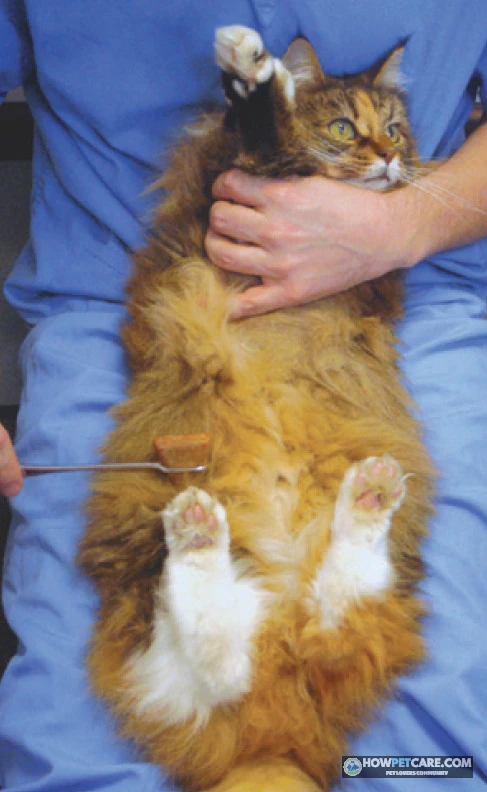
In a spinal cord injury, preserved deep pain perception is an important sign of a more favorable outlook. Complete loss makes the outlook worse, particularly with a vertebral fracture or dislocation. It’s not the only factor: the injury, its location, treatment options, and changes over time also matter. Don’t perform this test yourself.
 You might be wonderingSigns your cat is dyingSigns Your Cat Is Dying: Stages, Quality-of-Life Score & Next StepsRead the answer
Why Can’t My Cat Move Its Back Legs? Common Causes, Ranked by Urgency and Likelihood
Several conditions can make a cat appear paralyzed. At home, the most important distinction isn’t which diagnosis is most likely. It’s that sudden loss of movement needs emergency care regardless of the cause. Trauma, aortic thromboembolism, and tumors are among the important causes of acute hind-leg paralysis in cats.
Saddle thrombus and heart disease
A saddle thrombus, also called feline aortic thromboembolism, is a blood clot that blocks blood flow, often where the main artery divides toward the hind legs. It’s commonly associated with underlying heart disease, including hypertrophic cardiomyopathy, which may not have been diagnosed beforehand. Sudden hind-leg weakness or paralysis, cold limbs, pain, and absent femoral pulses are characteristic clues.
A clot can also affect one leg. A cat may cry out, suddenly pass out, or have rapid or difficult breathing, particularly if heart disease is also causing heart failure. The cat needs immediate pain relief and veterinary treatment.
Spinal injury and disc problems
A spinal cord injury can follow a fall, vehicle accident, or other trauma. A fracture or dislocation can damage the cord. Sometimes an outdoor cat’s accident isn’t witnessed.
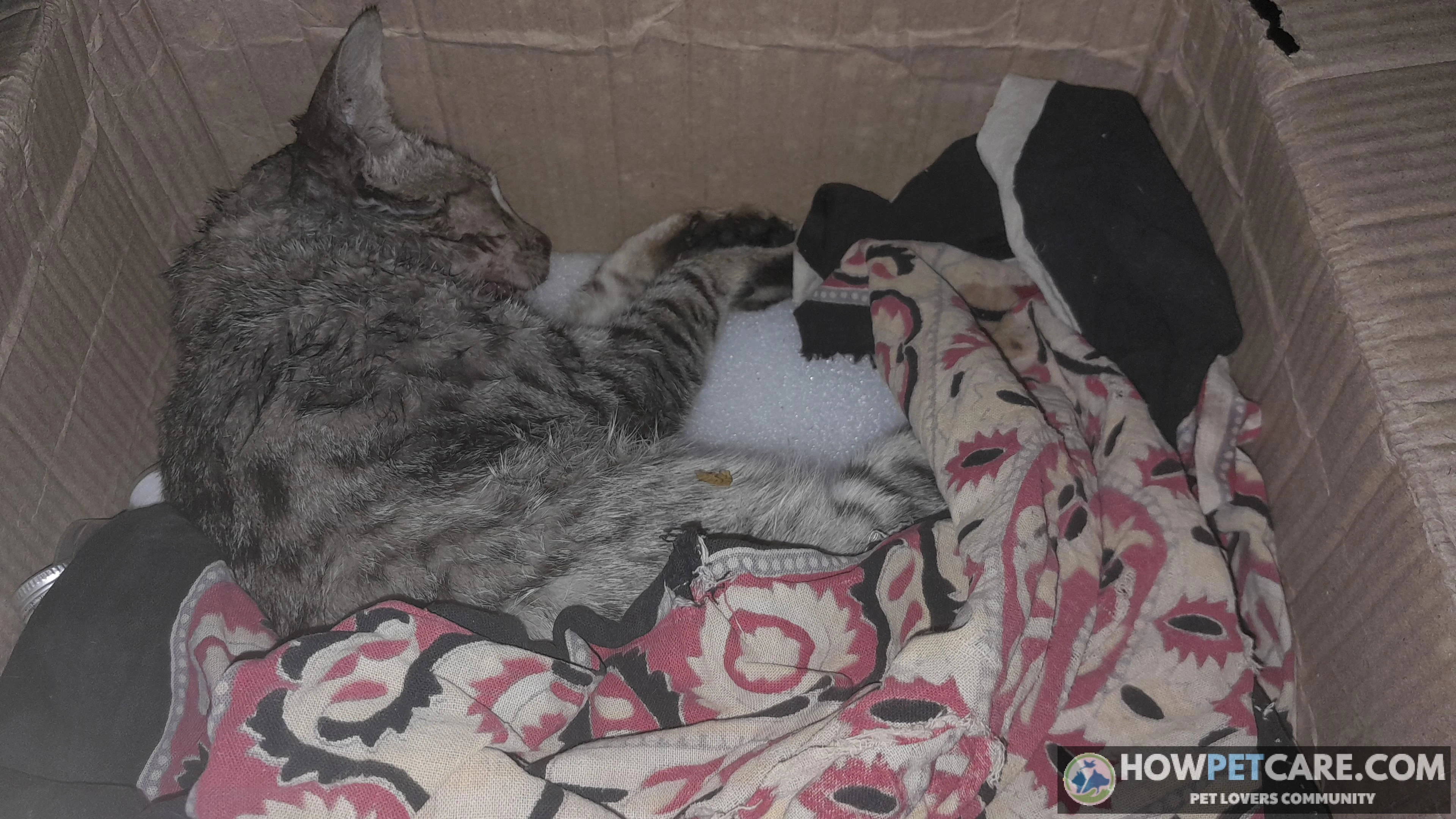
With intervertebral disc disease, or IVDD, disc material can press on the spinal cord. Signs may include back pain, reluctance to jump, weakness, or paralysis. Disc disease can come on suddenly or develop over time. An exam and imaging may be needed to distinguish it from trauma.
Infections, tumors, diabetes and toxins
Feline infectious peritonitis, or FIP, can affect the nervous system. Inflammation or other infections can also cause neurological signs such as head pressing. Modern antiviral treatment has changed the outlook for some cats with FIP. If your vet suspects FIP, discuss the available options rather than assuming nothing can be done.
Tumors, including spinal lymphoma, may cause progressive weakness or appear to cause a sudden decline. Feline diabetes neuropathy more often develops gradually, with a flat-footed stance in which the hocks—the joints above the back paws—drop toward the floor. Toxins and severe potassium abnormalities can also cause weakness.
Less common causes
A fibrocartilaginous embolism, sometimes called a spinal stroke, interrupts blood supply to part of the spinal cord. Signs often start suddenly and may affect one side more than the other. Tick paralysis is uncommon in US cats, but tick exposure is worth mentioning to the veterinarian. Some kittens have congenital problems that affect mobility.
Clot, Spine Injury or Disc Disease? Reading the Signs You Can See at Home
The following patterns are clues to report, not a home diagnosis. Every row calls for urgent veterinary assessment; a cat that has suddenly lost use of its legs should go to emergency care now.
| Possible cause | Onset speed | Paw pads and leg temperature | Pain level | Which legs | Other clues | Urgency |
|---|---|---|---|---|---|---|
| Saddle thrombus | Often seconds to minutes | May be cold, pale, gray, or bluish | Often severe | Usually hind legs; sometimes one limb | Crying, firm painful muscles, rapid breathing; heart disease may be unknown | Emergency now |
| Spinal trauma | Often sudden | Usually warm and normal-colored | Variable; back or injury may be painful | Hind legs or all four, depending on injury | Fall, vehicle accident, fight, or unwitnessed outdoor incident | Emergency now |
| IVDD | Sudden or progressive | Usually warm and normal-colored | Back pain may be present | Often hind legs, depending on the disc | Hunched posture or reluctance to jump may precede weakness | Emergency now if unable to walk |
| Spinal stroke | Usually sudden | Usually warm and normal-colored | May be painful at onset, then less so | One side may be worse | Can occur during activity; signs overlap with other conditions | Emergency now |
| Tumor or infection, including FIP | Often progressive, but can seem sudden | Usually warm and normal-colored | Variable | Variable | Possible appetite loss, fever, weight loss, or earlier weakness | Emergency now for sudden inability to walk |
What cold or bluish paw pads mean
Cold, pale, or bluish hind paws together with sudden pain are important clues to a possible clot. Vets may also find weak or absent pulses in the groin, but don’t waste time trying to locate them. A clot can present differently, and warm paws do not rule it out.
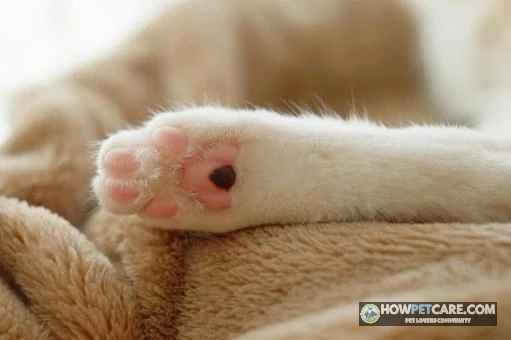
If you can see the pads without moving your cat, note their color. Feel for warmth only if you can do so gently and without delaying transport. Tell the clinic what you observed.
Signs that point toward spinal injury or IVDD
A known fall, painful back, or previous reluctance to jump may suggest a spinal problem. Neither the history nor paw temperature can reliably distinguish a fracture, disc problem, clot, or another cause. Keep the spine supported and let the vet investigate.
When the pattern is unclear
Don’t pinch toes or press the back to see whether your cat reacts. If your cat is resting and you can observe without handling it, note whether breathing looks fast or labored; report open-mouth breathing immediately. When in doubt, the next step is the same: go to the emergency vet.
What the Vet Will Do: Neurological Exam, Diagnostics and Treatment by Cause
The neurological exam and deep pain test
The team will first assess breathing, circulation, temperature, and pain. Your cat may need oxygen or pain medication before a complete examination. The veterinarian will examine movement, reflexes, sensation, limb temperature, and pulses to help distinguish a circulation problem from a nervous-system problem.
For a suspected spinal injury, ask: “Is deep pain perception present, and what does that mean for my cat’s particular injury?” The vet may need to repeat the exam as the clinical picture becomes clearer.
Diagnostic tests in plain English
Depending on the findings and your budget, the veterinarian may recommend:
- Blood and urine tests: Check organ function, blood sugar, potassium, and other abnormalities.
- X-rays: Look for some fractures and assess the chest; they don’t show the spinal cord in the detail an MRI can.
- Echocardiogram: An ultrasound examination of the heart, useful when heart disease or a clot is suspected.
- MRI or CT: Cross-sectional imaging that helps locate spinal injury, disc material, or a mass. Anesthesia or sedation may be needed.
- Spinal fluid analysis: Tests fluid around the brain and spinal cord when infection or inflammation is suspected, if the vet considers collection appropriate.
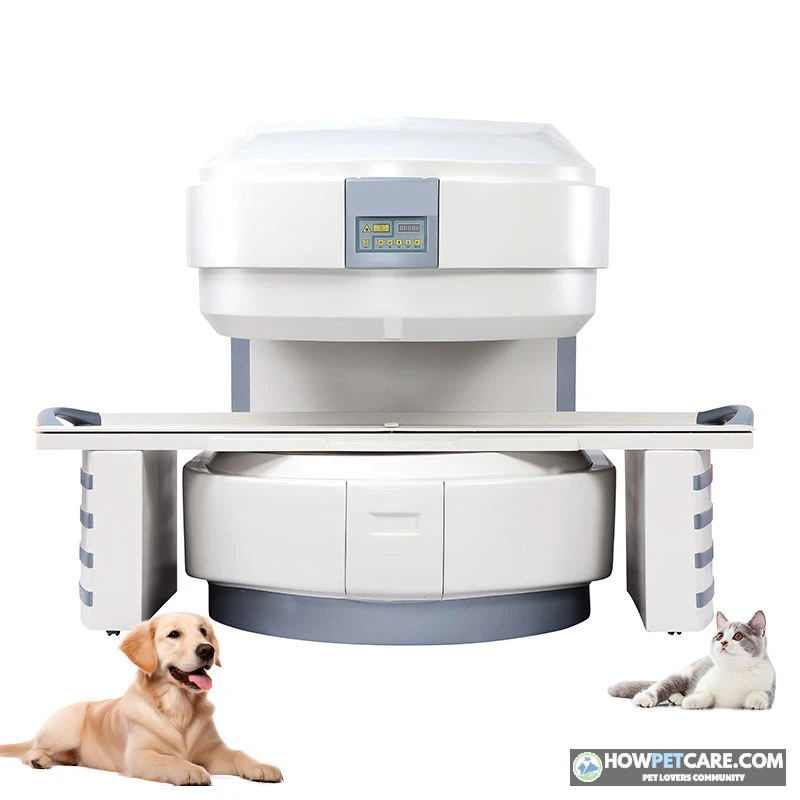
Not every cat needs every test. Ask which result would change treatment and whether there’s a safe, less expensive first step.
Treatment by cause
For saddle thrombus, care may include strong pain relief, medication to reduce further clot formation, treatment for heart failure if present, and close monitoring. When blood flow returns, the veterinary team also watches for complications, including dangerous potassium changes. Procedures to remove a clot aren’t routine and are considered selectively.
For spinal injury or IVDD, treatment may involve pain control and strict confinement, or surgery to relieve pressure or stabilize the spine. The choice depends on imaging, severity, neurological findings, and the cat’s overall condition. A cat with a tick-related problem needs tick removal and supportive care, including breathing support if necessary.
Steroids and FIP: what has changed
Don’t give leftover steroids at home. High-dose steroids aren’t a routine, proven fix for acute traumatic spinal injury and can cause harm, including gastrointestinal complications. Steroids may have a role in other diagnoses, so ask the vet why a particular drug is recommended for your cat.
For FIP, veterinarians may discuss antiviral treatment such as GS-441524 or related medicines. Access, formulation, and prescribing requirements can vary, so ask the treating vet about appropriate options and monitoring. FIP affecting the nervous system can require a different treatment plan from an uncomplicated case.
Paralyzed Cat Treatment Options and Cost in the US
Emergency and specialty bills vary substantially by location, hospital, testing, and how sick the cat is. The figures below are rough planning estimates, not verified national averages or quotes. Anesthesia, medications, specialist fees, and follow-up may be billed separately. Whenever your cat is stable enough for that discussion, ask for an itemized written estimate before authorizing the next stage.
What each test and treatment typically costs
| Service or scenario | What it involves | Approximate US range | What changes the price |
|---|---|---|---|
| Emergency exam | Triage and veterinary examination | $150–$350 | Hospital, location, and time of visit |
| Bloodwork | Blood counts, chemistry, glucose, or electrolytes | $100–$300 | Tests selected and laboratory fees |
| X-rays | Chest or spinal images | $150–$400 | Number of images and sedation |
| Echocardiogram | Heart ultrasound | $400–$700 | Specialist involvement and hospital |
| MRI or CT | Detailed imaging of the affected area | $1,500–$3,500 or more | Modality, anesthesia, and referral fees |
| Spinal surgery | Decompression or stabilization | $3,500–$8,000 or more | Complexity, implants, and surgeon |
| Hospital or ICU care | Monitoring, nursing, oxygen, and treatments | $500–$1,500 or more per day | Intensity of care and included services |
| Recheck or rehabilitation | Examination or therapy appointment | $50–$150 or more per visit | Provider and treatment |
| Mobility aid | Sling or cat wheelchair | $50–$400 or more | Fit and customization |
| Nursing supplies | Absorbent pads, bedding, and hygiene supplies | $30–$100 or more per month | Amount and duration of care |
Total cost by scenario
Using those illustrative ranges, a suspected clot workup with a few days of hospitalization might be $1,500–$4,500 or more. A spinal case managed without surgery but with advanced imaging might be $2,500–$5,000 or more. Imaging, spinal surgery, and several days in hospital might total $6,000–$12,000 or more. These aren’t package prices: complications and excluded charges can push a bill higher.
Ways to pay and questions to ask the vet
Be direct about your budget. Ask for a tiered estimate covering immediate stabilization, a standard diagnostic plan, and additional options. Useful questions include:
- “What diagnosis is most likely, and what would each test change?”
- “What is the expected outcome with treatment, and what happens without it?”
- “Which charges could rise if my cat needs intensive care?”
- “Can we set a spending limit and discuss any increase before it happens?”
Ask whether the hospital accepts financing such as CareCredit or Scratchpay and whether local charitable assistance is available. Approval and terms vary. Accident-and-illness insurance may help with a new covered condition, but waiting periods, exclusions, and pre-existing-condition rules matter. An existing policy doesn’t guarantee payment.
Can a Paralyzed Cat Recover? Survival Odds and Timelines by Cause
Some paralyzed cats recover the ability to walk. Some remain disabled but comfortable with support, while others have injuries or illnesses that can’t be managed humanely. The diagnosis matters more than the word “paralyzed.”
Prognosis by cause
| Cause | Key prognostic factor | Typical outcome | Typical recovery timeline | Evidence basis |
|---|---|---|---|---|
| Saddle thrombus | Circulation, heart disease, severity, and response to treatment | Some survive the initial episode and regain limb function; recurrence is possible | If function returns, improvement may begin over days to weeks | Published research summarized in the supplied evidence reports initial survival around 37%–39%; results vary by population and treatment decisions. |
| Spinal trauma | Injury severity and deep pain perception | Recovery ranges from meaningful improvement to permanent paralysis or death | Often weeks to months when recovery occurs | Deep pain perception is an important prognostic sign; fracture or dislocation with complete loss is unfavorable. |
| IVDD | Compression severity, neurological findings, and treatment | Some cats regain walking with appropriate medical or surgical care | Often weeks to months | Individual prognosis depends on examination and imaging; reliable percentages are not available in the supplied evidence. |
| Spinal stroke | Location and severity of cord damage | Some improve with supportive care and rehabilitation | Improvement may occur over days to weeks, with further recovery taking longer | Individual assessment; outcomes vary. |
| FIP, tumor, or infection | Exact diagnosis, extent, and treatment response | Variable; some causes are treatable, while others have a guarded outlook | Depends on the disease and treatment | Ask the vet for disease-specific expectations; older FIP outcomes may not reflect antiviral treatment. |
How long recovery takes
Published evidence summarized for aortic thromboembolism reports median survival figures of approximately 6 to 11.5 months in studied populations, but study designs and which cats were included matter. These figures don’t predict an individual cat’s outcome, and the studied populations may differ from cats like yours. Ask your vet which evidence best matches your cat’s condition.
A clot can recur, and associated heart disease may need ongoing treatment. If a clot does recur, the team will reassess pain, circulation, heart failure, treatment options, and your cat’s quality of life. Published recurrence estimates vary; a single percentage wouldn’t reliably predict your cat’s risk.
Living with permanent paralysis
A cat doesn’t have to walk normally to have a good life. Comfort, clean skin, manageable bladder and bowel care, interest in surroundings, and the ability to enjoy interaction all matter. At the same time, permanent paralysis can require substantial daily nursing. Ask for a realistic plan before discharge, including what to do overnight or if you can’t empty the bladder.
How to Care for a Paralyzed Cat at Home: Bladder Expression, Skin Care, Wheelchairs and Rehab
Home care starts after diagnosis and a discharge plan, not instead of emergency treatment. Before leaving the hospital, have a veterinary professional demonstrate each task and watch you practice.
How to express a cat’s bladder, step by step
Some cats can’t empty their bladder completely, even if urine leaks. Overfilling can damage the bladder and contribute to infection and other complications. A commonly recommended emptying frequency for paralyzed pets is three to four times daily, but your veterinarian must set the schedule for your cat.
A veterinarian or veterinary technician must first show you how to identify and empty your cat’s bladder safely. The steps below prepare you for training; they don’t establish that expression is appropriate or safe for your cat.
- Prepare the area. Put an absorbent pad or a low-sided litter box under your cat. Wash your hands and have a towel ready.
- Position your cat as demonstrated. Your veterinary team may show you a supported upright position or a side-lying position, depending on the injury and your cat’s comfort.
- Locate the bladder. The vet can guide your hand to the lower abdomen and help you recognize the bladder’s size and firmness. Don’t assume a lump is the bladder or that leaking means it’s empty.
- Use only the pressure you were taught. Cup the bladder gently using the hand position demonstrated by the team, and apply steady, gentle pressure in the direction they show you. Never jab, twist, or squeeze harder to force urine out.
- Check that urine flows and the bladder becomes smaller. Follow the vet’s instructions for determining whether it’s adequately empty. If you can’t locate it or can’t produce urine, stop and call the clinic for advice immediately.
- Clean, dry, and record. Gently clean any urine from the fur, dry the skin, and note the time and any unusual color or discomfort.

A large, firm or painful abdomen, repeated unsuccessful attempts to urinate, or inability to produce urine can be an emergency. Call the veterinarian immediately; don’t wait for the next scheduled session. Also report blood, straining, crying, lethargy, or a change in urine output. A blockage can’t be resolved safely by squeezing harder.
Ask about bowel care too. Constipation and difficulty passing stool need veterinary guidance; don’t attempt manual stool removal unless specifically trained and instructed.
Preventing pressure sores and urine scald
Check the hips, elbows, hocks, and other bony areas every day for redness, swelling, hair loss, or broken skin. Keep bedding clean and dry. Gently wash urine from the coat and dry it thoroughly. Ask the vet which skin products are safe if licked; don’t apply a household cream without checking.
Contact the clinic promptly about sores, persistent dampness, foul-smelling urine, or skin that’s red and painful. A sore can worsen quickly when a cat can’t move away from pressure or moisture.
Repositioning schedule and bedding
Use thick, supportive, washable bedding without hard seams or wrinkles. If your cat can’t change position independently, discuss a turning schedule with the vet. Approximately every four hours is a practical starting point to confirm or adjust for the individual cat. Record turns alongside bladder care so they aren’t missed.

Set up a small, safe room with food, water, and a low-sided litter box or absorbent pads within reach. Some partially mobile cats can use a low-entry box; others need assistance. Keep the environment quiet, but offer familiar interaction and opportunities to engage.
Cat wheelchairs, slings and rehabilitation exercises
A sling can support the hindquarters during a short, supervised trip to the litter box or a rehab exercise. A cat wheelchair may help some cats explore, but others find it stressful or can’t use one safely. Ask the vet or rehabilitation professional to check the fit, protect the skin, and show you how to introduce it. Supervise use and remove the device if it rubs, causes distress, or interferes with elimination. A cart isn’t a substitute for bladder care.
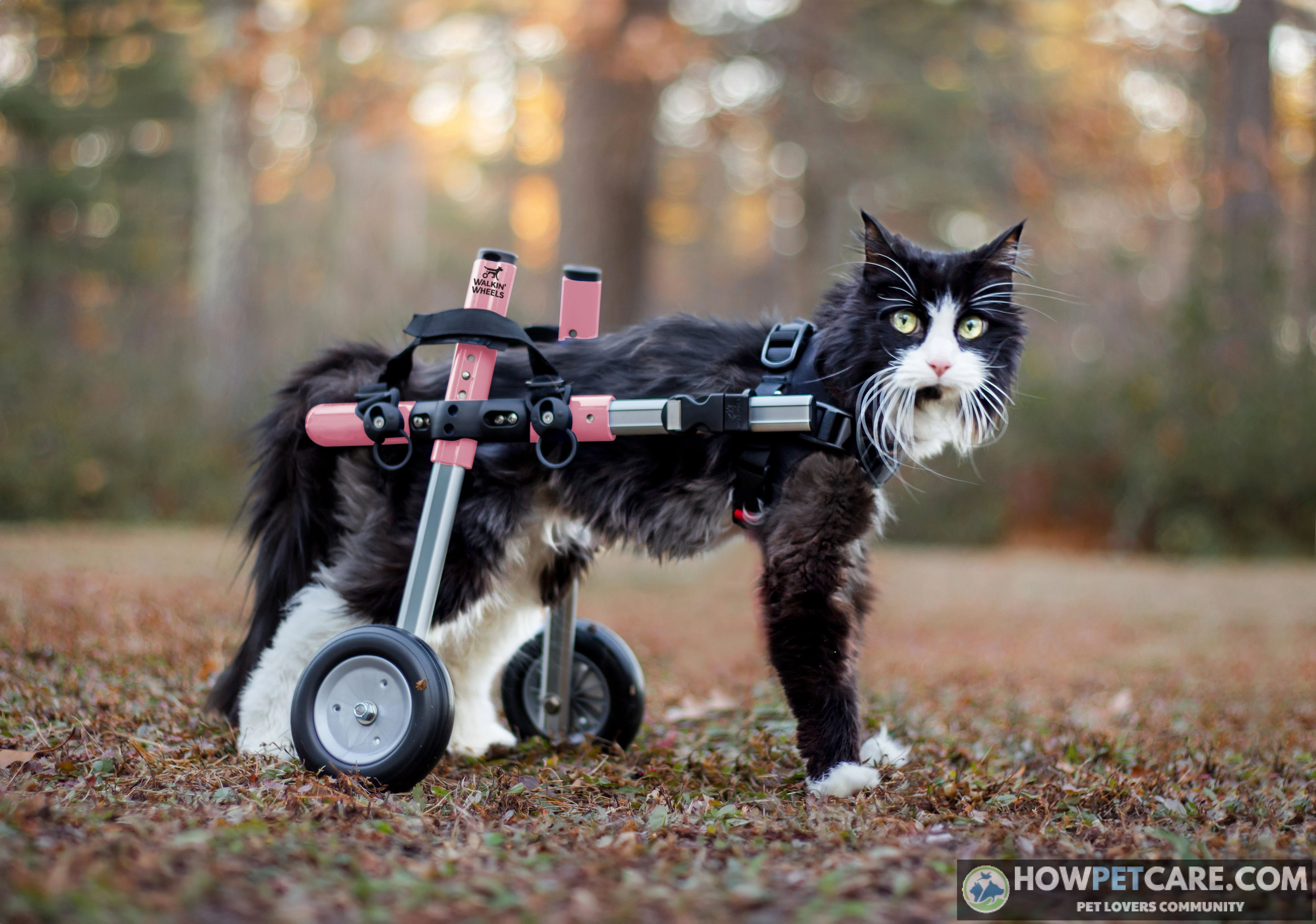
Physical therapy for cats may include gentle assisted movement, supported standing, or other exercises selected for the injury. Rather than copying a generic routine, ask the rehabilitation team to demonstrate the range of motion, repetitions, and frequency. Massage, hydrotherapy, laser treatment, or acupuncture may be discussed for selected cats; evidence and suitability vary. Never stretch a limb or start water therapy without veterinary clearance.
Your Next Steps: Quality-of-Life Checklist and When Euthanasia Is the Right Decision
A daily quality-of-life checklist
The HHHHHMM framework considers hurt, hunger, hydration, hygiene, happiness, mobility, and whether good days outnumber bad ones. Use the questions below to record your observations daily. You can mark each as good, mixed, or poor. A worsening pattern is a reason to talk with your vet, not an automatic verdict.
- ☐ Hurt: Is pain controlled enough for your cat to rest and be handled comfortably?
- ☐ Hunger: Is your cat eating enough, with or without the support the vet recommends?
- ☐ Hydration: Is your cat drinking or receiving the prescribed support, and is urine output being monitored?
- ☐ Hygiene: Are the skin and bedding clean and dry, without worsening sores or urine scald?
- ☐ Bladder and bowel care: Can elimination be managed safely and without distress?
- ☐ Happiness: Does your cat still show interest in food, people, surroundings, play, or another familiar pleasure?
- ☐ Mobility: Can your cat change position or be repositioned comfortably, with or without an aid?
- ☐ Caregiver capacity: Can your household provide the required care reliably, financially, physically, and emotionally?
- ☐ Good days: Over the past week, have good days outnumbered bad ones?

When euthanasia is the kind choice
Discuss euthanasia with your veterinarian when pain can’t be controlled, breathing remains distressing, your cat can’t eat or remain clean despite treatment, or repeated complications prevent comfort. Recurrent clots with serious heart failure, or a severe spinal injury with no deep pain perception and no improvement, may also prompt the conversation. No single finding should be interpreted without the full clinical picture.
Sometimes an emergency assessment shows that euthanasia is the most compassionate immediate choice. In other cases, a time-limited treatment trial is reasonable: agree on what improvement would look like, what suffering would mean the trial should stop, and when the vet will reassess. Your capacity to provide care is part of the decision, not a personal failure.
Your action checklist: first hour, first week, first month
- First hour: Get to the emergency veterinarian. Report breathing difficulty and cold paws, ask what the exam suggests, and request a written estimate when possible.
- First week: Confirm the diagnosis and treatment plan. If your cat is discharged, practice bladder care and repositioning with the team, arrange supplies, and know whom to call after hours.
- First month and beyond: Attend rechecks, follow the prescribed rehabilitation plan, keep a daily quality-of-life log, and review whether the current plan is meeting your cat’s needs. Set a specific decision point with your vet rather than waiting for another crisis.
 You might be wonderingCat gaggingCat Gagging: Emergency or Hairball? A Vet-Informed Triage GuideRead the answer
FAQ
Can a cat be paralyzed from a fall or car accident and still recover?
Yes. Cats with spinal bruising or less severe injury, especially those that still feel deep pain in the toes, can recover partly or fully over weeks to months. Cats with a severed or crushed spinal cord and no deep pain have a poor outlook.
Is tick paralysis in cats reversible?
Often yes. Once the tick is removed and the cat gets supportive care, many cats improve within days, though breathing problems can make it an emergency. It is most common in regions where paralysis ticks live, such as Australia, and is uncommon in US cats.
Does pet insurance cover paralysis in cats?
Most accident and illness plans cover diagnostics and treatment for new conditions, but they exclude pre-existing conditions such as known heart disease and apply waiting periods. Check your policy’s exclusions and ask the clinic about direct billing or reimbursement timing before you commit to treatment.
Can a paralyzed cat still use the litter box?
Usually not without help. Cats with spinal paralysis often cannot control urination or defecation, so they need bladder expression, bowel care, and padded or absorbent bedding. Some cats with partial weakness can use a very low-sided box.
Is a cat dragging its back legs always paralyzed?
Not always. Severe pain, a fracture, arthritis, or generalized weakness can also make a cat drag its back legs, so a vet needs to confirm whether the cause is neurological.