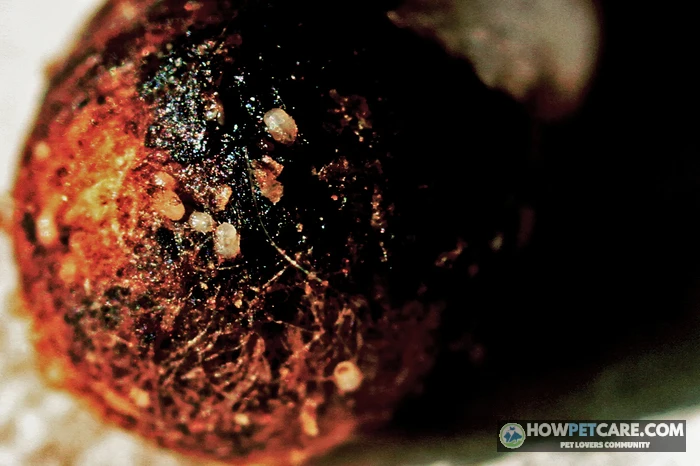

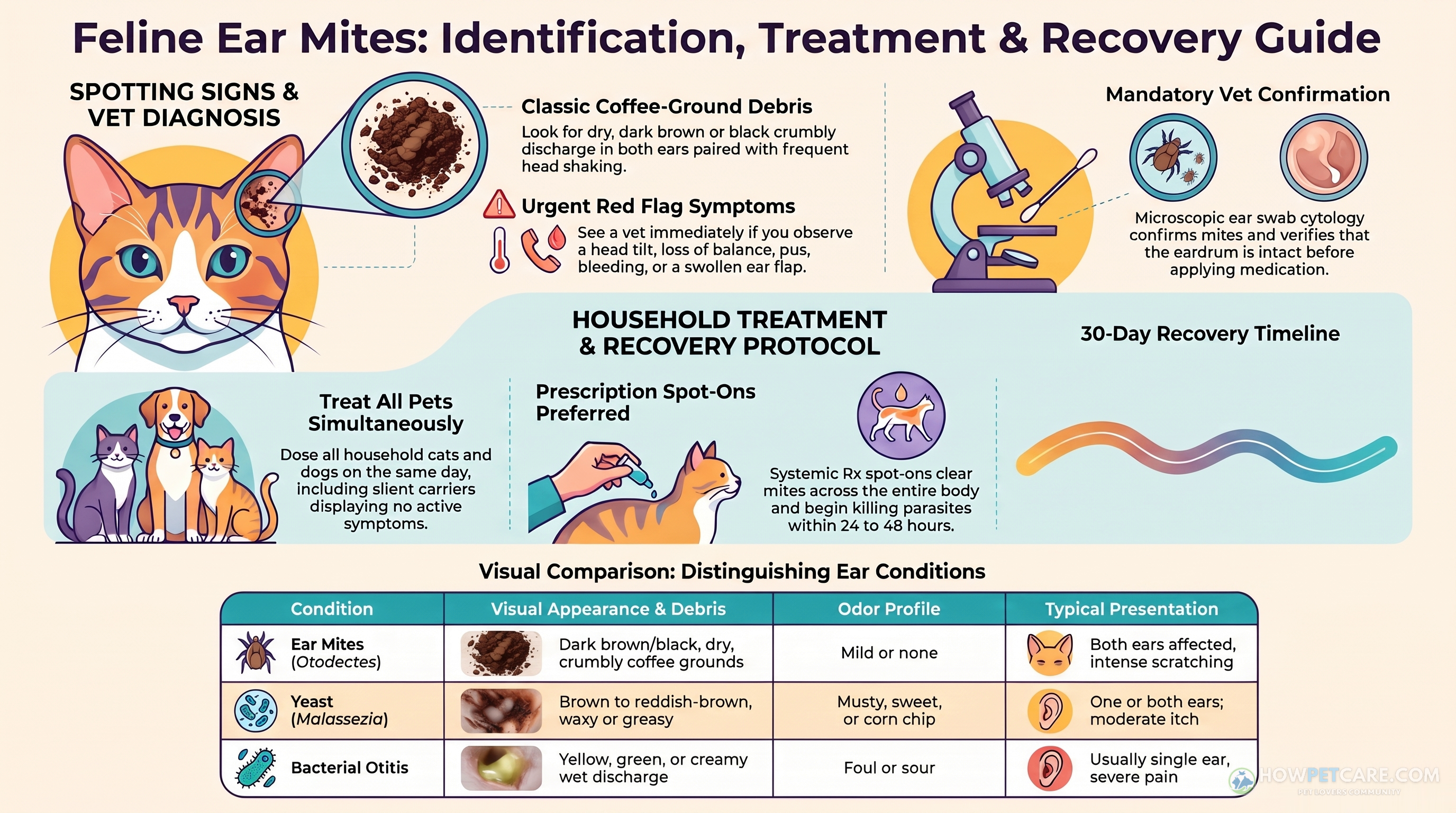
Ear mites in cats usually cause dry, dark brown to black crumbly debris — like coffee grounds — in both ears, plus intense scratching and head shaking. A vet confirms them with an ear swab under a microscope, since wax, yeast, and infection can look identical.
When a cat has dry, dark brown to black, crumbly debris in both ears and won’t stop scratching or shaking its head — especially a kitten, a new rescue, or a cat in a multi-pet home — ear mites are the top suspect. But that coffee-ground debris alone isn’t proof. Only an otoscope exam or an ear swab viewed under a microscope can confirm ear mites in cats, since yeast, bacteria, and plain wax can look the same. This guide helps you make a confident provisional call, flags the warning signs that mean you should skip home care, and walks you through US-specific treatment, realistic costs, a safe cleaning protocol, and a 30-day recovery plan.
Is It Ear Mites? The Quick Check Before You Do Anything Else
Start with the pattern, not the panic. Dry, black, crumbly debris in both ears plus scratching and head shaking makes ear mites the leading suspicion. Ear mites in kittens are especially common because the mites pass easily between animals, and up to 10% of cats can carry them with no visible symptoms at all. That silent-carrier detail matters later — it explains why an ear that looks clean can still spread mites.
Likely mites vs. likely something else
Lean toward ear mites if your cat is young or newly adopted, goes outdoors, lives with other pets, has both ears affected, and the debris is dry and coffee-ground-like. Ear mites are the most common cause of otitis externa (outer-ear inflammation) in cats, particularly in kittens and outdoor cats. Lean away from mites if only one ear is involved, the discharge is wet, yellow, or foul-smelling, the ear is very painful, or you have an older indoor-only single cat with sudden signs. A cat scratching its ears from allergies or a single infected ear usually looks different from the classic two-ear mite picture.
Signs that mean see a vet today
Some signs mean you should skip home care entirely: a head tilt, loss of balance or circling, bleeding, a swollen pillow-like ear flap, pus, severe pain, or a cat that won’t tolerate any ear handling. These can signal a ruptured eardrum or a complication, not routine mites. Most scratched ears aren’t an emergency, but don’t wait weeks — constant scratching and head shaking can lead to an aural hematoma (a blood-filled swelling of the ear flap) or skin damage around the face. This guide focuses on mites; for other causes of cat ear problems, the comparison table below is a starting point.
Signs of Ear Mites in Cats and What the Debris Actually Looks Like
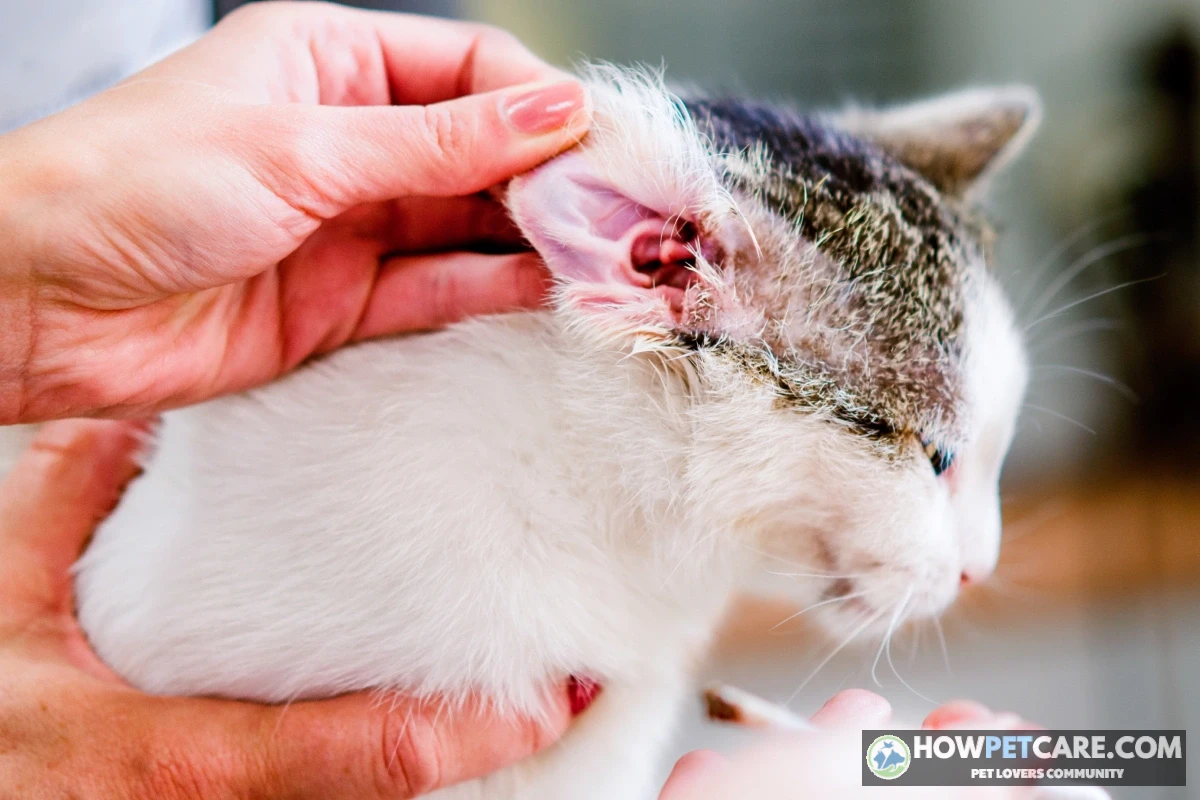
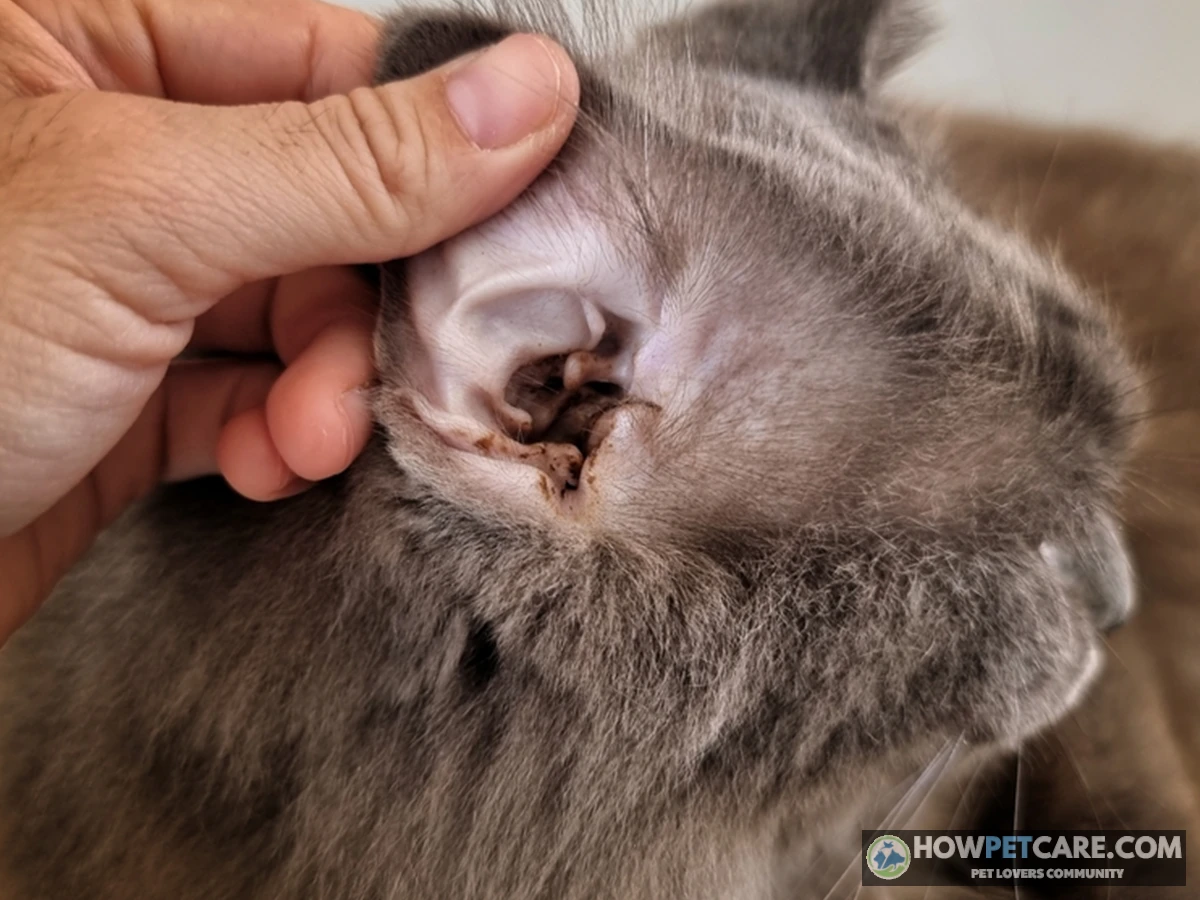
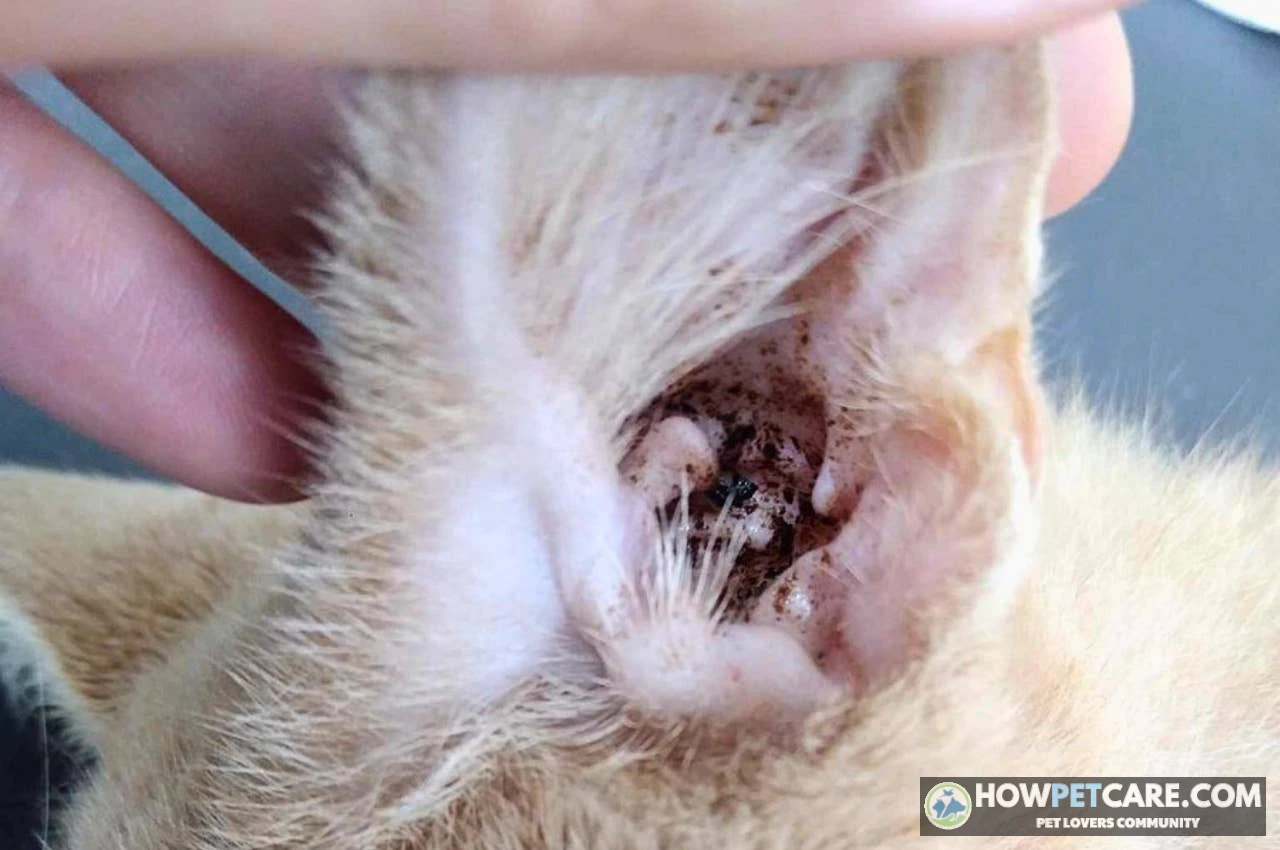
The classic signs of ear mites in cats cluster together: itching and head shaking, repeated scratching at the ears, dark brown or black dry debris, redness, scratch marks near the ear base or neck, and sometimes a mild head tilt. Otodectes cynotis, the mite responsible, is a surface-living parasite that inhabits the ear canal and feeds on skin cells, ear secretions, and skin oils rather than burrowing. A mature female mite is only about 400 micrometers across, and the whole life cycle runs under three weeks — roughly 21 days — with eggs hatching into larvae in about four days. That fast cycle is why a single missed dose lets the population rebound.
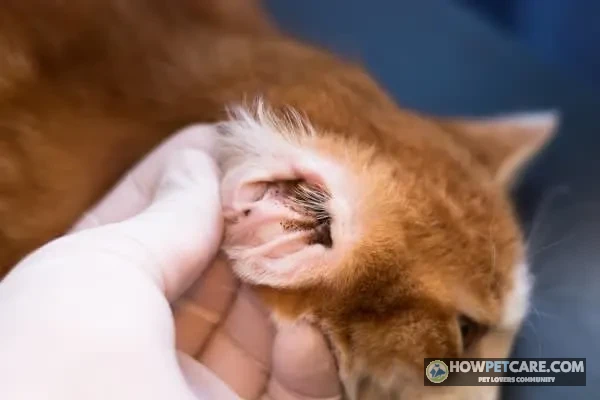
To check safely, use good light, gently lift the ear flap, and examine only the visible outer canal. Don’t probe or push anything inside. Compare both ears — symmetry is a clue.
Normal wax vs. coffee-ground debris
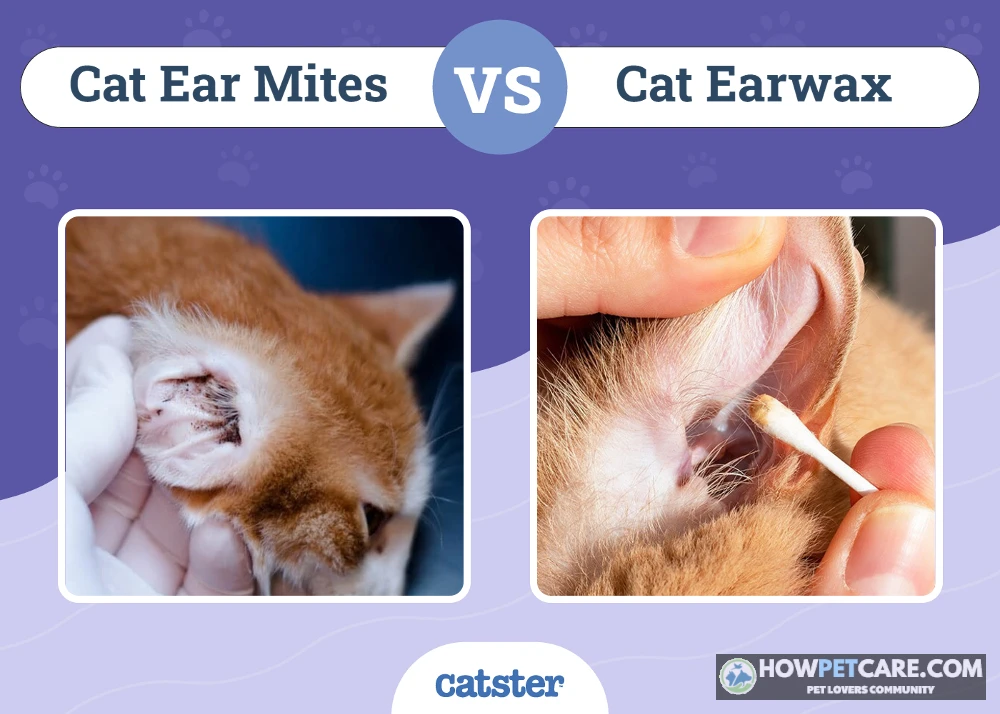
Normal ear wax is light to medium brown, thin, and waxy, appears in small amounts, and comes with little or no itching. Mite debris is the opposite: dark brown to black, dry, and crumbly, like coffee grounds, often in larger quantities and paired with obvious discomfort. The amount, dryness, and itch level together tell you more than color alone.
Ear mites vs. ear infection vs. yeast vs. flea dirt
Use the table below to compare what you see and smell. It won’t confirm a diagnosis — only a vet’s swab can — but it shows how concerned to be and what to mention when you call.
| Cause | Typical color and texture | Smell | Which ears and how much itching | Other clues | Confirm with |
|---|---|---|---|---|---|
| Ear mites (Otodectes) | Dark brown to black, dry, crumbly — like coffee grounds | Usually mild or none | Often both ears; intense scratching and head shaking | Kitten, rescue, outdoor, or multi-pet household; another pet scratching too | Otoscope exam plus ear swab under microscope |
| Normal ear wax | Light to medium brown, thin, waxy layer | None | Either ear; little or no itching | Cat is otherwise unbothered; small amount only | Vet exam if unsure — usually nothing needed |
| Yeast (Malassezia) | Brown to reddish-brown, waxy or greasy | Musty, sweet, or "corn chip" odor | One or both ears; moderate itch | Often follows allergy or a damp, inflamed ear | Ear swab cytology |
| Bacterial otitis | Yellow, green, or creamy discharge; may look wet | Foul or sour smell | Often one ear; painful, may cry when touched | Head may tilt; cat may hide or stop eating | Ear swab cytology; may need culture |
| Allergy-driven inflammation | Minimal debris; ear looks red and irritated | None or mild | Both ears; recurring itch | Scratching also at face, neck, or overgrooming elsewhere | Exam plus history; often diagnosed with skin work-up |
| Flea dirt (near ear base or neck) | Black gritty specks on skin or coat, not packed in the canal | None | Itch around ears and neck | Specks turn reddish-brown on a damp white tissue (digested blood) | Flea comb plus wet-paper test; vet exam |
| Aural hematoma (a result, not a cause) | Not debris — the ear flap itself swells like a soft pillow | None | Pain rather than itch; ear feels fluid-filled | Follows days of hard scratching or head shaking | Vet exam — often needs draining |
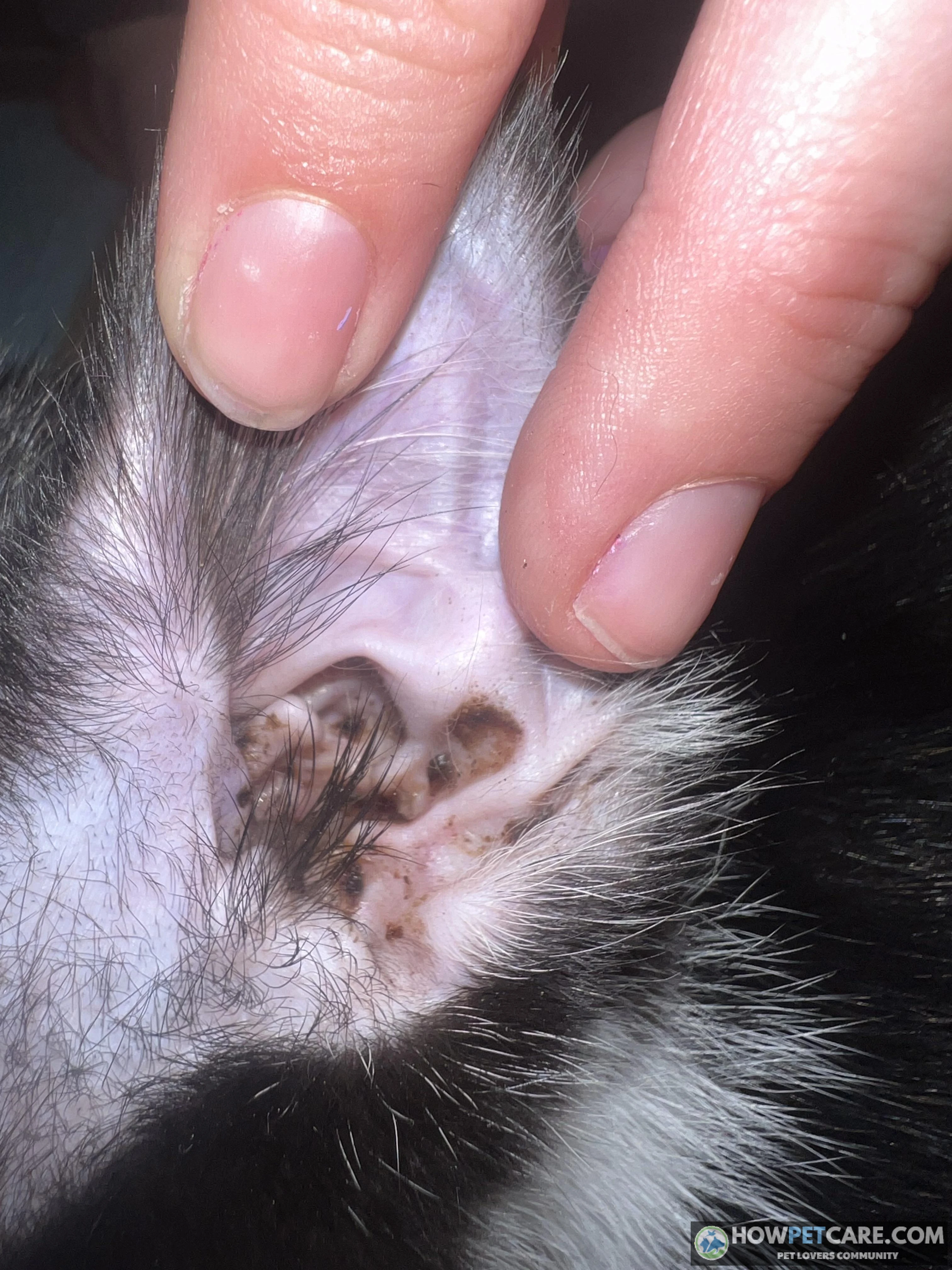
A quick home check with a damp white cotton pad or paper towel will turn flea dirt reddish, which helps rule fleas in or out, but debris color can never rule mites in or out. Where mites, yeast, and bacterial otitis externa overlap matters because they can occur together — a long-standing mite infestation creates a warm, irritated, debris-filled canal where secondary bacteria (Staphylococcus) or yeast (Malassezia) thrive. Bottom line: dry black coffee grounds in both ears of a cat who just arrived or lives with other pets is the classic mite picture; one wet, smelly, painful ear points to infection instead.
How Cats Get Ear Mites and Who Else in the House Is at Risk
Cats get ear mites almost entirely through close contact with another infested animal, including from mother to kitten in the newborn period. That’s why kittens, shelter and rescue cats, and outdoor or multi-pet households dominate the case list — and why a strictly indoor cat can still get them from another pet.
Can humans, dogs, rabbits, and ferrets catch ear mites?
Otodectes cynotis spreads readily by direct contact between cats, dogs, and ferrets, so those species can carry and re-share mites. Human risk is minor: mites may cause a brief, transient itchy rash, but they don’t establish or live in human ears, so there’s no cause for alarm. Rabbits are usually affected by a different mite (Psoroptes), not Otodectes, so a rabbit with ear problems needs an exotics vet rather than the cat’s medication. Because every cat and dog should be treated on the same day — even symptom-free ones, given that up to 10% carry mites silently — plan the logistics up front so no pet is missed.
How much cleaning does the house really need?
Otodectes mites are host-dependent and survive only a limited time off an animal; sources vary on the exact figure, so treat the animals as the real fix rather than deep-cleaning the house. Wash bedding and soft items in hot water, vacuum where pets sleep, and rely on correctly repeated doses.
Household fix, same day, all pets:
- Treat every cat at once, even ones with clean ears and no scratching — symptom-free cats commonly carry mites.
- Treat household dogs the same day; dogs carry Otodectes and can reinfest the cat. Ask the vet for a cat-safe plan — never borrow the dog’s product.
- Tell the vet about any ferret; ferrets get Otodectes too and can be part of the reinfection loop.
- Rabbits usually have a different mite (Psoroptes) — an exotics vet, not the cat’s meds.
Light cleaning only: wash bedding and blankets on the hottest setting the fabric tolerates, vacuum cat trees and couch corners, wipe carriers and collars. Skip foggers and environmental insecticide sprays — they are not justified for ear mites alone. Mark every pet’s repeat dose on the same calendar date; a staggered schedule is the most common reason households fail to clear mites.
How Vets Confirm Ear Mites: Otoscope Exam and Ear Swab Microscopy
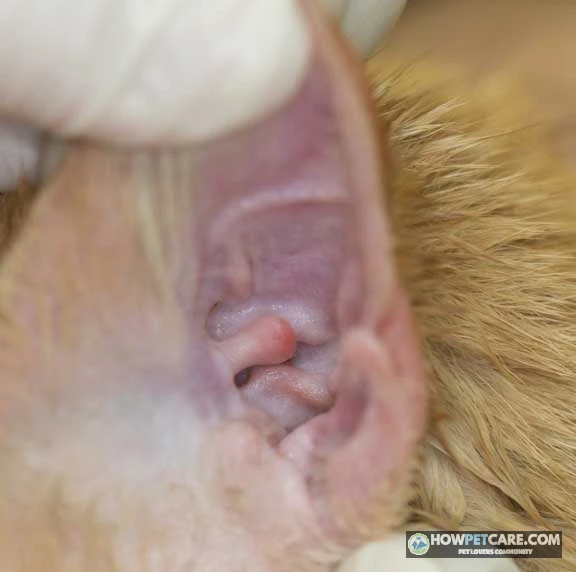
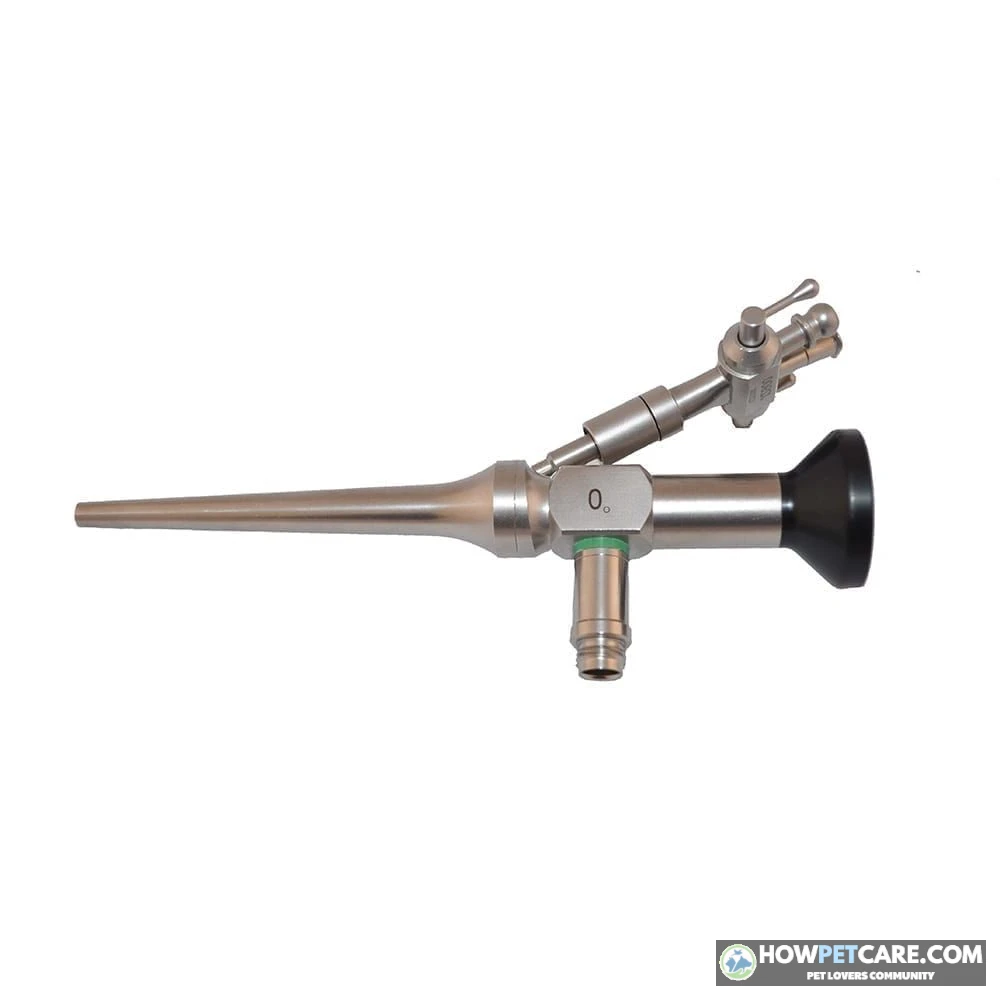
A proper visit starts with a history, then an otoscope exam of the canal where live mites can appear as tiny white moving specks, followed by an ear swab examined under a microscope — the ear cytology that actually confirms the diagnosis. This step matters because an otoscope exam alone can miss roughly one-third of infestations, while mineral-oil microscopy of a swab is more sensitive. Cytology also identifies yeast and bacteria at the same time, telling the vet whether your cat needs a miticide only or also treatment for a secondary infection. Critically, the vet checks eardrum integrity, which decides whether ear drops are safe — something you can’t judge at home. A swab can still come back negative when few mites are present, and a painful cat may need light sedation for a thorough look. That’s why "try a product and see" is a gamble: a wrong guess delays real treatment for a yeast infection, bacterial otitis, a polyp, or a foreign body.
Ear Mite Treatments Available in the US: Named Products Compared
Most modern parasiticides clear ear mites effectively — the macrocyclic lactones (selamectin, moxidectin, ivermectin) and the isoxazolines (fluralaner, sarolaner, afoxolaner) all reach high success rates. The real decisions for a US owner are access (prescription vs. OTC), how the drug reaches the mites, and age or weight limits. Prescription spot-ons are the usual first choice because they treat the whole cat and every mite on the body, not just the canal; in-ear drops work but only reach the treated ear. Most labeled products start killing mites within about 24 to 48 hours. No option here is a "best" — the goal is to help you ask the vet informed questions.
Prescription spot-ons and what they cover
Selamectin (Revolution, and Revolution Plus with sarolaner) and moxidectin plus imidacloprid (Advantage Multi for Cats) are labeled for ear mites in cats and applied as a spot-on at the back of the neck. They reach mites through the skin and bloodstream, cover the whole animal, and repeat monthly. Fluralaner (Bravecto topical for cats) is labeled for fleas and ticks, not ear mites, so mite use is off-label and vet-directed. Sarolaner as a standalone is a dog ingredient — never give a dog product to a cat; cats only get sarolaner inside Revolution Plus.
OTC ear drops: what they can and cannot do
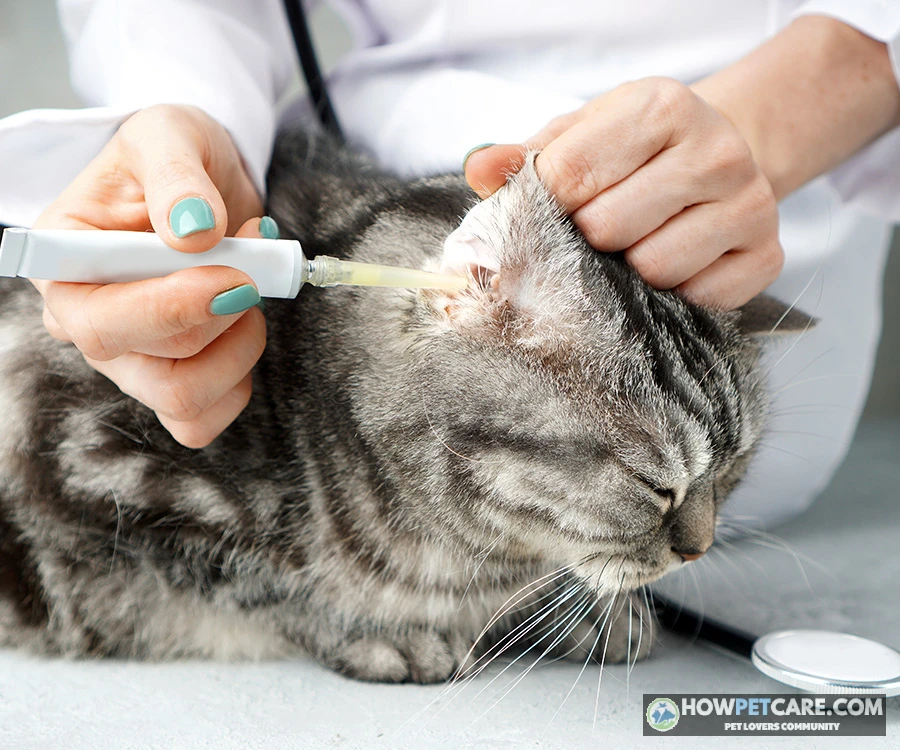
OTC pyrethrin-based ear drops kill mites on contact but are the weakest route: they miss mites elsewhere on the body, work slowly, require daily dosing, and do nothing for a secondary yeast or bacterial infection.
| Active ingredient | Example brand | Rx or OTC | Ear mites on US cat label? | Application route | Minimum age and weight (per label) | Repeat interval (per label) | Expected mite kill window | Pregnant/nursing note |
|---|---|---|---|---|---|---|---|---|
| Selamectin | Revolution; Revolution Plus (selamectin plus sarolaner) | Rx | Yes | Spot-on at back of neck | Revolution: 8 weeks+; Revolution Plus: 8 weeks+, 2.8 lb+ | Single dose; monthly for ongoing control | One dose eliminates infestation; about 24–48 hours to start killing | Label reports safety testing in breeding, pregnant, lactating cats — confirm with vet |
| Moxidectin plus imidacloprid | Advantage Multi for Cats | Rx | Yes | Spot-on at back of neck | 9 weeks+, 2 lb+ | Monthly | Single monthly dose treats infestations | Label carries cautions for pregnant/lactating cats — vet decision |
| Ivermectin otic | Acarexx 0.01% ear drops | Rx | Yes | Drops in each ear | 4 weeks+ | May repeat once per label | About 24–48 hours to start killing | Reproductive safety not established on label |
| Milbemycin oxime otic | MilbeMite (availability varies) | Rx | Yes | Drops in each ear | 4 weeks+ | Typically one application per label | Labeled to kill ear mites | Check current label with vet |
| Pyrethrin-based ear drops | Various OTC brands | OTC | Yes | Drops in each ear | Often 12 weeks+ — check each label | Usually daily for about 7 days, then repeat per label | Contact kill only; slower; treated ear only | Varies by product; avoid without vet input |
| Fluralaner | Bravecto topical for cats | Rx | No — labeled for fleas/ticks; ear mite use is off-label | Spot-on | 6 months+ per flea/tick label | Flea/tick schedule every 12 weeks | Strong mite kill reported in studies — vet-directed off-label only | Label caution — vet-directed use only |
| Sarolaner | Simparica (dog product) | Rx | No — not labeled for cats standalone | Oral (dogs) | Not applicable | Not applicable | Never give the dog product to a cat | Not for cats outside the labeled combo |
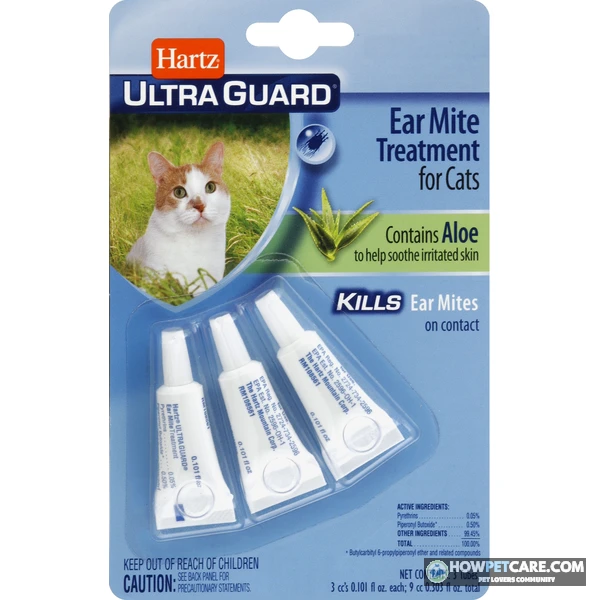
These figures reflect US labels and published studies at the time of writing; labels change, so always confirm the current package insert or ask your vet. Product labels control age, weight, pregnancy/nursing status, and indication — check the current label, especially for cats under the minimum or cats that are pregnant or nursing.
Kittens, pregnant cats, and nursing queens
Minimum ages vary by product (roughly 8 to 9 weeks for the common spot-ons, 4 weeks for some otic drops, and 12 weeks for many OTC products), so never guess for a kitten under the label minimum. Confirm with a vet before treating a kitten below the age or weight cutoff, or any pregnant or nursing queen — product choice here is a vet decision, not a do-it-yourself fix. Have the vet confirm the diagnosis and pick a product matched to your cat’s age and weight.
Home remedies to skip
Skip oil-smothering tricks, vinegar, garlic, and essential oils. They aren’t proven to clear an infestation, they can irritate or injure the ear, they can worsen a secondary infection, and some essential oils (including tea tree) are toxic to cats.
Do not use cotton swabs pushed into the canal (they pack debris down and can rupture the eardrum), hydrogen peroxide, rubbing alcohol, vinegar, tea tree or any essential oil, garlic, or mineral-oil smothering tricks. Most dangerous of all: dog flea products containing permethrin, which can be fatal to cats. Do not reuse leftover ear medication or start antibiotics or steroids without veterinary confirmation.
How to Clean and Medicate a Cat’s Ears at Home, Step by Step
Once a vet has diagnosed mites or cleared you to clean the ears, you can do this safely at home. If any safety flag below applies, skip straight to calling the vet.
-
Eardrum safety pre-check
Do not put liquid in the ear if the cat has a head tilt, wobbliness or circling, sudden severe pain, bleeding, pus, or a history of ear surgery or chronic ear disease. A ruptured eardrum plus drops can damage the inner ear. When in doubt, let the vet look first.
-
Set up
Gather a vet-approved ear cleaner, cotton balls or gauze, a towel, and treats. Work in a small, quiet room like a bathroom, with the medication within reach before you restrain the cat.
-
Towel-wrap
Wrap the cat snugly in a towel burrito with only the head out. This protects you from claws and calms most cats; a second person holding the wrapped cat is ideal.
-
Fill and massage
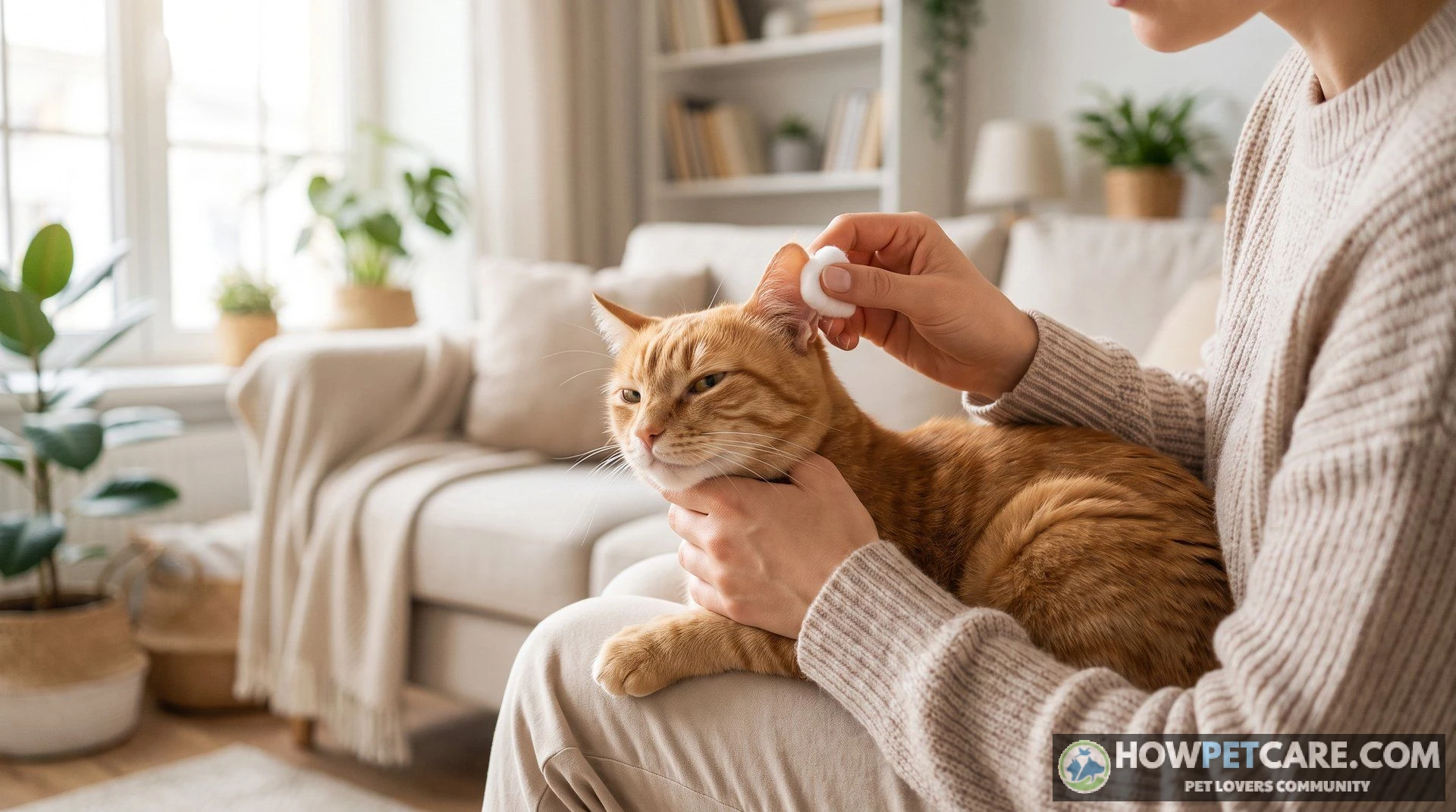
Lift the ear flap, insert only the tip of the cleaner bottle, and squeeze in the amount the label directs — typically enough to fill the canal. Massage the base of the ear for 20 to 30 seconds (check the product label); you should hear a squishing sound. The canal is L-shaped, turning a corner inside the skull, so massage — not probing — is what loosens debris.
-
Shake out and wipe
Let go and let the cat shake its head — this brings debris up. Wipe away only what you can see on the ear flap and canal opening with a cotton ball. Never push swabs down the canal.
-
Medicate
Ear drops go into the canal opening, then a brief massage. Spot-ons go on the skin at the back of the neck where the cat cannot lick — part the fur, apply to skin, and keep other pets from grooming the site until dry. Skip bathing for the time the label specifies.
-
Clean up and log
Wash your hands, wipe bottle tips, and note the date and dose. You will need it for the repeat schedule and for dosing your other pets the same day.
Don’t over-clean — too-frequent cleaning irritates the ear, so follow the vet’s frequency. Stop and call the vet if you see blood on the cotton ball, the cat screams or struggles frantically, or a new head tilt or staggering appears after application.

Recovery Timeline, Rechecks, and What to Do if Ear Mites Come Back
Exact timing depends on the product and your vet’s plan; use this as a sanity-check framework, not a guaranteed schedule. As mites die within roughly 24 to 48 hours, itching often eases in the first few days, debris tapers over one to two weeks, and some scratching continues while the irritated ear heals. Prescribed ear-drop courses commonly run 7 to 10 days, while monthly spot-ons repeat on a set date and all pets are treated within the same window.
A realistic 30-day timeline
Day 0: Vet confirms mites and checks the eardrum is intact; all cats and dogs dosed the same day; bedding in the wash.
Days 1–3: Itching often eases as mites die, but some scratching is normal — still scratching on day 2 is not proof of failure.
Days 4–10: Debris should visibly taper — less dark material on the cotton ball, less head shaking. Keep a daily note.
Days 10–14 (first decision point): If clearly reduced, stay the course and prep the repeat dose. If unchanged or worse, work this ordered list with your vet: (1) was every pet treated the same day? (2) was the dose applied to skin and not licked off? (3) is there secondary yeast or bacteria the miticide cannot fix? (4) is the diagnosis wrong — allergy, fleas, a polyp, a foreign body?
Day 30 / repeat-dose milestone: Second monthly dose goes on, all pets, same date. Ask the vet about a recheck or repeat ear swab — "cleared" is a lab finding, not just a quiet cat; mites and eggs can persist silently.
After day 30: Recurrence after a correct course usually means an untreated pet, a re-exposure source, or a misdiagnosed allergy/infection — rarely resistance.
If symptoms return or treatment seems to fail
Book the recheck rather than starting another OTC round — repeating the wrong medicine is how stubborn ear mites turn out to be yeast all along. Sustained infestation invites secondary infection and, from nonstop scratching, an aural hematoma. Prevention means keeping your cat on a parasite preventive that covers ear mites if the vet recommends one, and checking new pets before introducing them.
What Ear Mite Diagnosis and Treatment Cost in the US, and How to Decide Your Next Step
No public ranking gives exact US prices, so treat the bands below as approximate 2026 ranges, not quotes. Costs swing widely by clinic, region, urgent vs. routine visit, and how many pets you treat, so call local clinics for real numbers.
Typical US cost bands
| Cost item | What it includes | Typical range (approximate, 2026) | What drives the price up or down |
|---|---|---|---|
| Exam fee | Office visit and basic history | About $40–$70 | Urgent or emergency clinics charge more; some wellness packages bundle it |
| Otoscope exam | Visual canal check with an otoscope | Often included in the exam | Included at many general practices |
| Ear swab/cytology | Sample viewed under the microscope | About $30–$80 | Sometimes bundled with the exam; sedation adds cost |
| Prescription spot-on | One or more labeled doses | About $15–$30 per dose | Number of pets and clinic markup |
| Ear drops | Vet-dispensed otic medication | About $15–$40 | Product and whether a course is dispensed |
| Cleaner | Vet-approved ear cleaner | About $8–$20 | Bottle size |
| Recheck visit | Follow-up exam, possible repeat swab | About $30–$70 | Repeat cytology adds to the fee |
Urgent, this week, or watch at home: a decision guide
Go today if you see red flags: head tilt, loss of balance, bleeding, a swollen ear flap, pus, or severe pain. Book a vet this week if you suspect ear mites, have a kitten or a multi-pet home, or are simply unsure. Watchful waiting is only for very mild, short-lived itching with clean-looking ears — and if debris is present, don’t wait more than a few days. To keep costs down without delaying care, choose a routine appointment over an emergency clinic for mild signs, ask whether the swab is included, look into low-cost or shelter wellness clinics, and treat all pets in one visit.
Your ear mite action checklist
Confirm the diagnosis with a vet. Check that the eardrum is intact before any drops. Choose a labeled treatment with the vet for your cat’s age and weight. Treat every pet in the home the same day. Clean and medicate safely, skipping anything on the never-use list. Wash bedding. Schedule the recheck. Know the failure steps if scratching persists past 7 to 14 days. Bring four questions to the visit: Is the eardrum intact? Is there a secondary infection? Which product is labeled for ear mites at my cat’s age and weight? When should we recheck?
1A cat presents with dry, dark brown, crumbly ear discharge affecting both ears, accompanied by intense scratching, but no foul odor. Which condition is most strongly indicated by these specific symptoms?
Dry, dark brown to black crumbly debris resembling coffee grounds in both ears accompanied by intense itching is the classic presentation of ear mites.
2Which of the following symptoms in a cat indicate an immediate need for professional veterinary evaluation, ruling out safe at-home ear cleaning?
A soft, fluid-filled swelling of the ear flap indicates an aural hematoma from severe scratching, requiring medical drainage or surgical management.
3A pet owner discovers ear mites in one of their three indoor cats. What is the recommended household protocol for managing the remaining pets?
Up to 10% of cats can be asymptomatic silent carriers of Otodectes cynotis, and dogs can also harbor the mite and cause reinfection.
4Why is microscopic ear swab cytology necessary to confirm an ear mite infestation, rather than relying solely on a visual otoscope exam?
Visual examination via otoscope has lower sensitivity than mineral-oil swab microscopy, which can catch low-level infestations and concurrent yeast or bacteria.
5Why are prescription topical spot-on medications generally preferred over over-the-counter (OTC) otic drops for treating feline ear mites?
Prescription spot-ons distribute systemically through skin oils and bloodstream, killing mites that migrate outside the ear, whereas local drops only affect the canal.
6When cleaning and medicating a cat's ears at home, which of the following procedures adhere to safe veterinary care practices?
Massaging the ear base distributes liquid around the L-shaped ear canal, loosening coffee-ground crusts without pushing objects inside.
7According to clinical findings, what proportion of cats infected with ear mites can act as silent carriers showing no visible symptoms?
Up to 10% of cats host ear mites without displaying visible scratching, inflammation, or coffee-ground discharge, making simultaneous household treatment critical.
8A cat owner living with a dog, a ferret, a rabbit, and a child treats their cat for Otodectes cynotis. Which statement accurately describes the risk to the other household members?
Otodectes cynotis infects cats, dogs, and ferrets. Humans only get transient skin itching without ear colonization, and rabbit ear mites are typically Psoroptes cuniculi.
9Which of the following are essential questions to ask a veterinarian during an initial visit for suspected feline ear mites?
Checking eardrum integrity determines whether otic drops can be safely administered without causing inner ear damage.
FAQ
What happens if cat ear mites go untreated?
Ongoing irritation can lead to secondary yeast or bacterial infection, chronic ear inflammation, and an aural hematoma (blood-filled swelling of the ear flap) from scratching and head shaking. See a vet if signs last more than a few days.
Can ear mites go away on their own?
It is not safe to count on it. Mites usually persist and spread to other pets, and the ear can become infected while you wait. A vet can confirm the cause and recommend a treatment labeled for ear mites.
Can an indoor-only cat get ear mites?
Yes. Indoor cats can catch them from another cat or dog in the home, from a newly adopted pet, or after boarding or a grooming visit where animals share space.
Is it safe to use oil, vinegar, or essential oils for ear mites?
Vets generally advise against them. They are not proven to clear an infestation, can irritate or inflame the ear, and some essential oils are toxic to cats. Use a vet-recommended cleaner and a labeled treatment instead.
Are ear mites dangerous for kittens?
They are common in kittens and usually treatable, but heavy infestations can cause intense irritation and infection, and not every product is labeled for very young or small kittens. Have a vet confirm the diagnosis and choose a product based on the kitten’s age and weight.