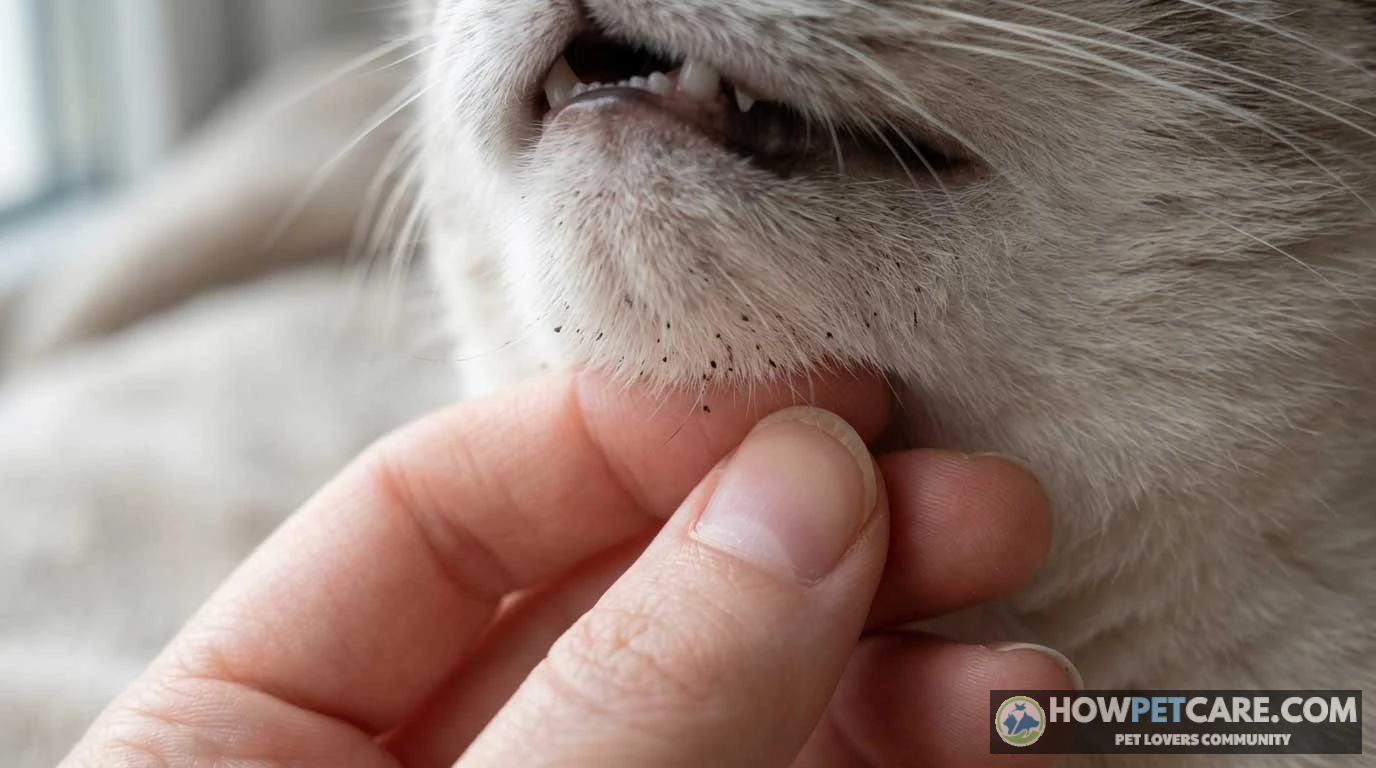

Cat acne is a skin condition where oil and dead skin cells plug hair follicles on a cat’s chin, forming blackheads called comedones. Mild cases often improve with gentle daily cleaning and clean, non-plastic bowls; swelling, pus, sores, pain, or reduced eating warrant a veterinary visit.
Black Specks on Your Cat’s Chin: Is It Cat Acne, and What to Do Tonight
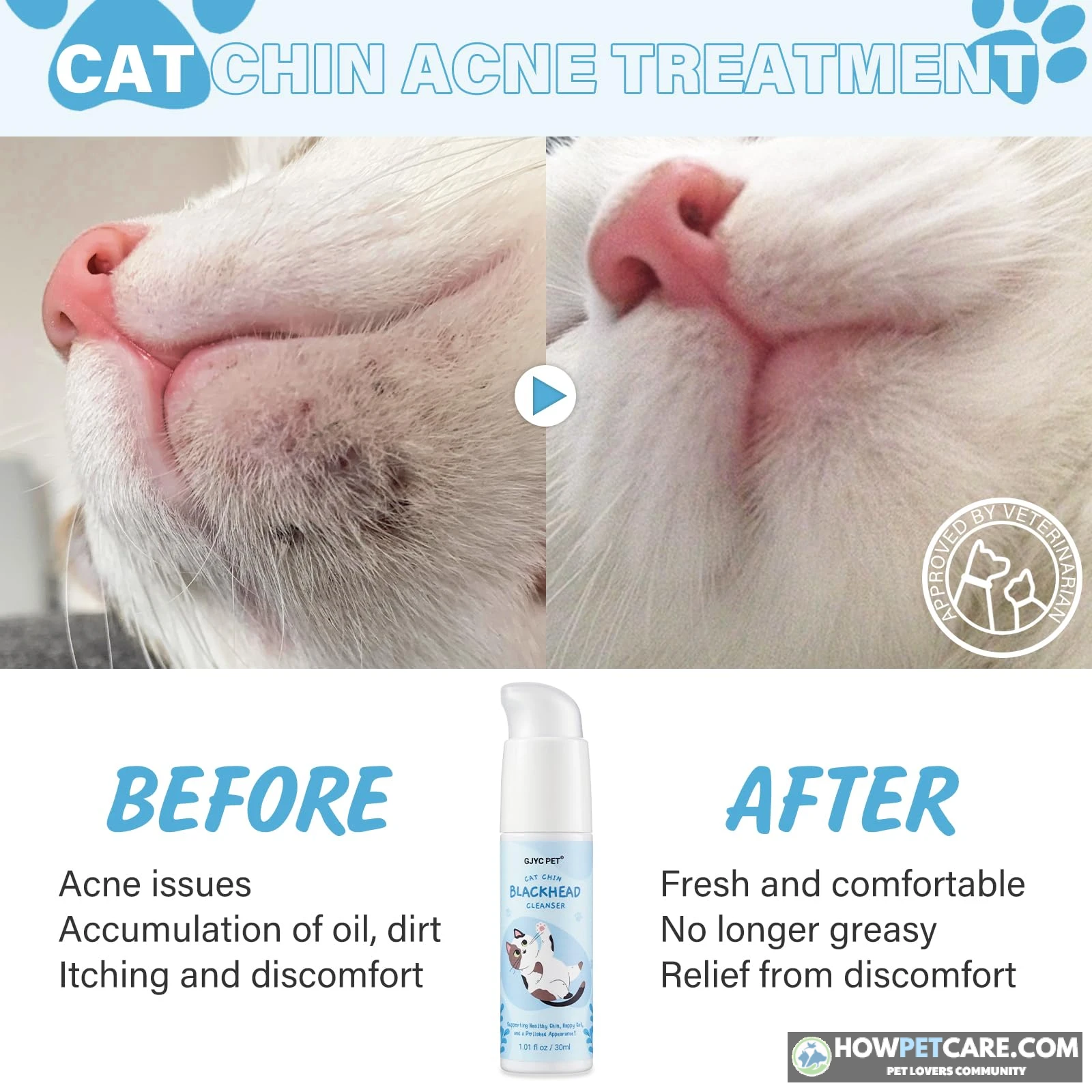
Black, dirt-like specks attached to your cat’s chin may be cat acne: plugged hair follicles that form blackheads, also called comedones. If there’s no swelling, broken skin, or obvious pain and your cat is eating and acting normally, gentle cleaning and monitoring are reasonable first steps. Acne can look like other skin problems, though, so appearance alone can’t confirm the diagnosis.
Tonight, check the chin in good light without squeezing it. Gently wipe the area with a warm, damp cloth, take a photo for comparison, and wash the food and water bowls. If you use plastic food bowls, consider switching to stainless steel or glass. Contact a veterinarian promptly if you notice swelling, pus, open sores, or signs of pain, or if your cat is reluctant to eat.
Loose black debris may be flea dirt rather than blackheads. Comb some onto a damp white paper towel: flea dirt may leave a reddish-brown smear, while acne plugs generally stay attached to the follicles. This can offer a clue, but it isn’t a diagnosis; a cat can have more than one problem at once.
This guide can’t replace a veterinary diagnosis. Ringworm, mites, other inflammatory conditions, and even tumors can resemble acne, especially when lesions are persistent or severe.
What Causes Cat Acne on the Chin: Sebaceous Glands, Grooming, and Triggers
Feline acne develops when material such as sebum, an oily substance produced by sebaceous glands, and dead skin cells plugs hair follicles. These plugs can form blackheads. Affected follicles may become inflamed and develop a secondary bacterial infection.
The exact cause is unknown. Possible contributors include excess oil or keratin production, individual predisposition, poor grooming, stress, irritants, and food or contact allergies. These factors may play a part, but they don’t prove what caused acne in an individual cat. Cats of any age can be affected.
Why the chin is the usual site
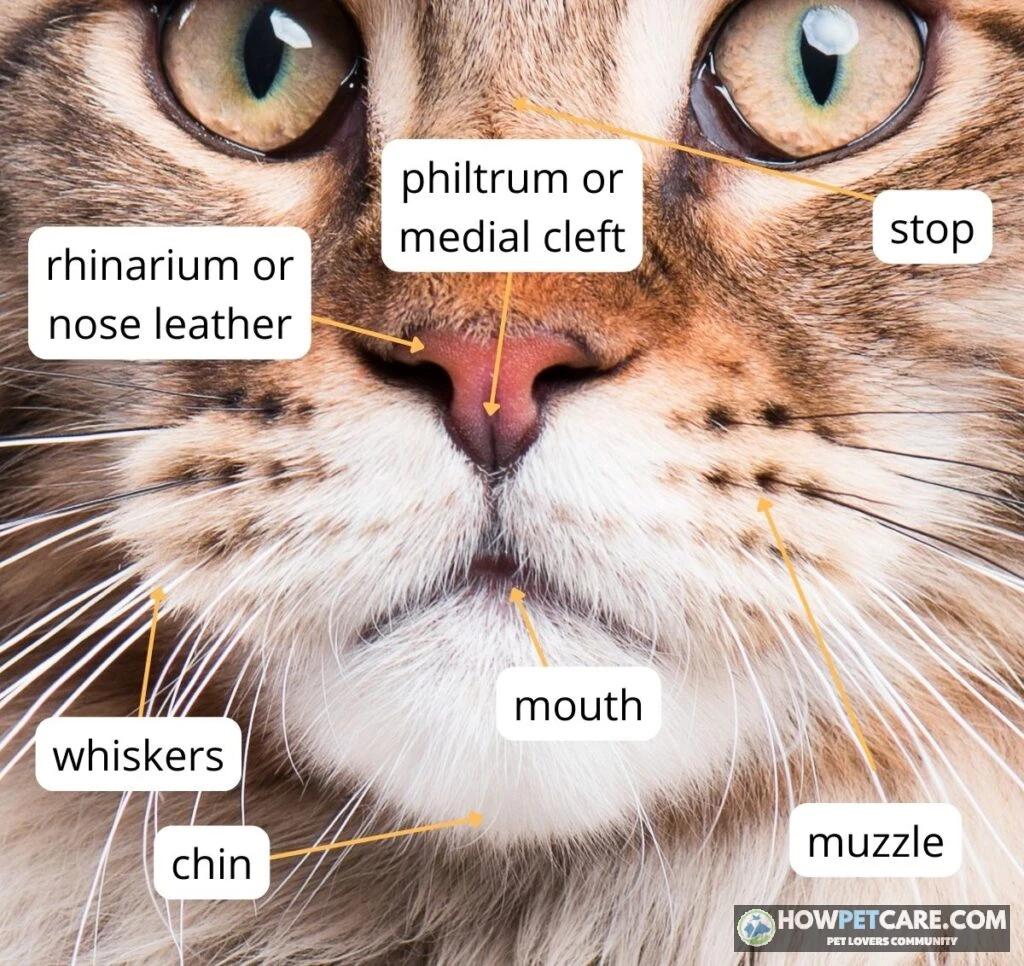
The chin has a concentration of sebaceous glands, including those associated with the submental organ. It’s also an awkward spot for a cat to groom directly. Oil and debris can collect around chin follicles, but a dirty chin doesn’t mean an owner has neglected the cat.
More inflamed lesions may involve bacteria or yeast as well as blocked follicles. If it’s unclear whether an infection is present or which treatment is appropriate, a veterinarian can examine a sample.
Can cat acne appear on the nose, lips, or elsewhere?
Chin acne can extend to the lower lip margins and nearby muzzle. Don’t assume a spot on the nose or elsewhere is acne: lip swelling, ulcers, an unusual lump, or a lesion that won’t heal should be checked by a veterinarian. Moist, itchy skin elsewhere on the body may have a different cause, such as hot spots on cats, and needs its own assessment.
Plastic Bowls, Stainless Steel, and Diet: What the Evidence Actually Shows
Bowl material comparison
Plastic bowls are often suspected of contributing to cat chin acne, but a direct cause-and-effect relationship hasn’t been firmly established. Contact irritation or allergy is possible, and scratched surfaces can be harder to clean. Replacing a scratched plastic bowl is a sensible step, but it doesn’t guarantee a cure.
| Material | Pros | Cons | Cleaning needs | Suitability for acne-prone cats |
|---|---|---|---|---|
| Stainless steel | Durable and easy to wash | Quality and shape vary | Wash daily and after wet-food meals | A practical first choice |
| Glass | Smooth and easy to inspect | Can break if dropped | Wash daily and after wet-food meals | A good option if safely placed |
| Glazed ceramic | Smooth when the glaze is intact | Chips and cracks can make cleaning harder | Wash daily; replace if chipped or cracked | Suitable when food-safe and undamaged |
| Plastic | Lightweight and inexpensive | Scratches can retain residue; contact sensitivity is possible | Wash thoroughly and replace when scratched | Consider switching if chin problems persist |
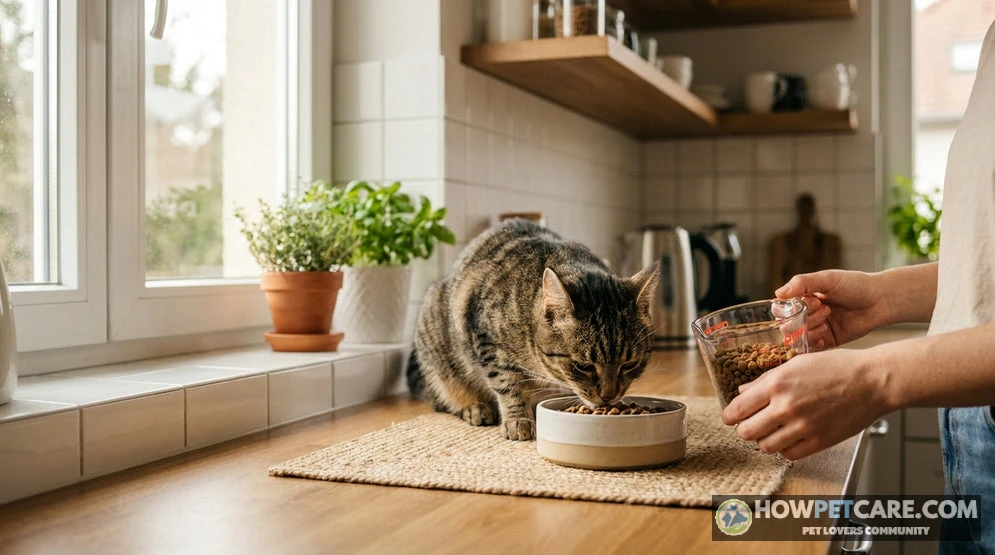
A wide, shallow dish may help keep the chin away from the rim. Wash food bowls with hot, soapy water after wet-food meals and clean water bowls daily. Rinse them thoroughly. Cleanliness matters whatever the material.

Could your cat’s food be causing or worsening the acne?
Food allergy is one possible contributor to skin inflammation, but chin blackheads alone don’t establish an allergy, and no particular diet is proven to cure acne. If your cat also itches elsewhere (for example, from flea allergy dermatitis in cats), has digestive symptoms, or keeps developing inflamed skin, ask your veterinarian whether a food trial makes sense.
A properly controlled elimination diet may involve a prescribed hydrolyzed or novel-protein food for several weeks. Treats, flavored medications, and other foods can interfere with the trial. Follow your vet’s instructions instead of repeatedly switching foods on your own. Ask before adding omega-3s or other supplements; they can’t replace an assessment of a sore chin.
Mild, Moderate, or Severe: What Each Stage of Cat Acne Looks Like
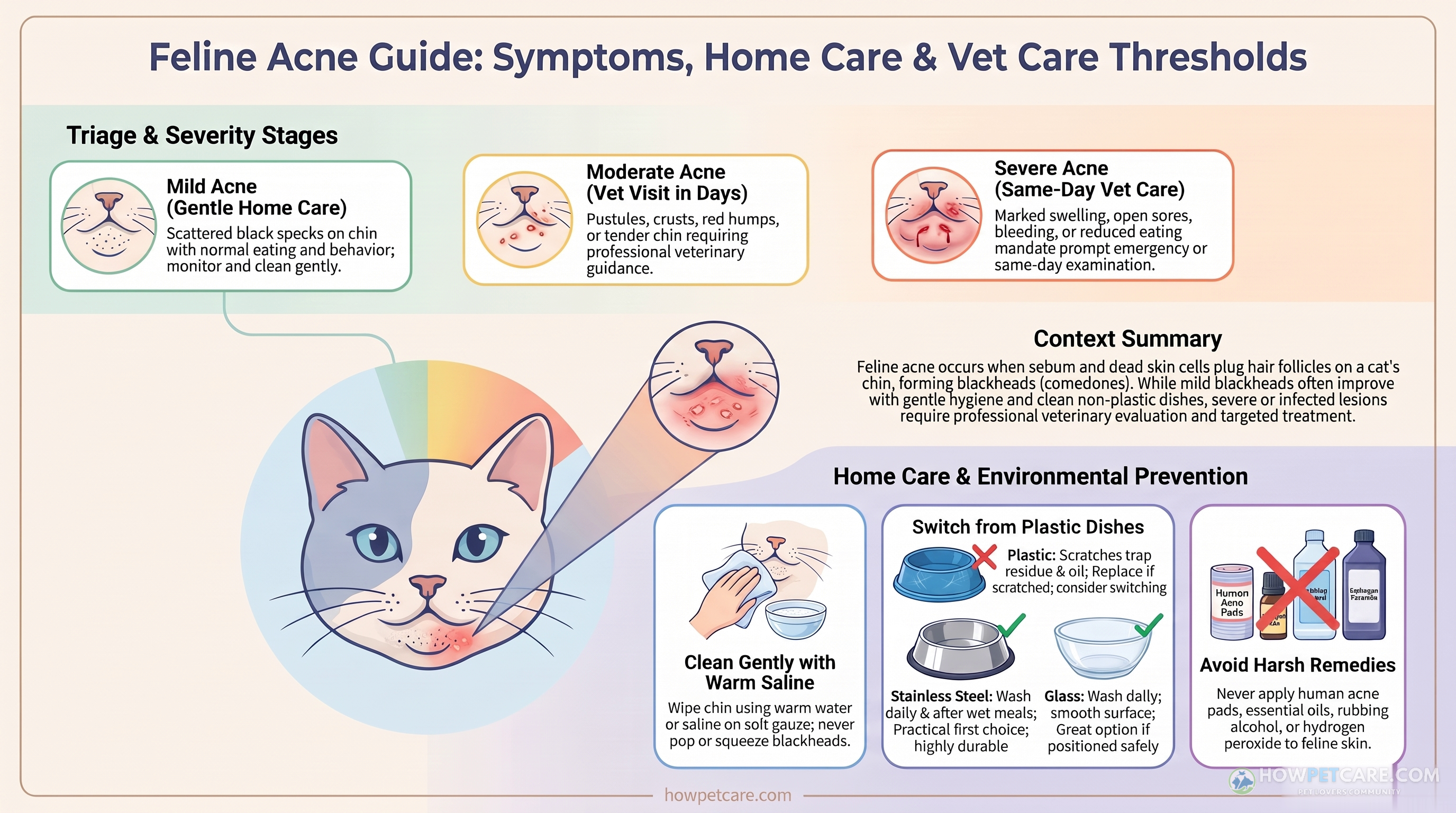
Use this guide to decide how quickly to seek help, not to diagnose your cat. A cat’s symptoms may not fit neatly into one stage. Don’t press on a sore chin to see how it feels.
| Stage | What you’ll see | How the chin feels | Cat’s behavior | Recommended action | Typical timeline |
|---|---|---|---|---|---|
| Mild | Scattered black specks or tiny plugs on the chin or lower lip edge; little or no redness | Usually normal; the coat may look slightly gritty | Eating and acting normally; no obvious discomfort | Gentle home care and monitoring | May improve over 1–2 weeks; plugs can persist longer |
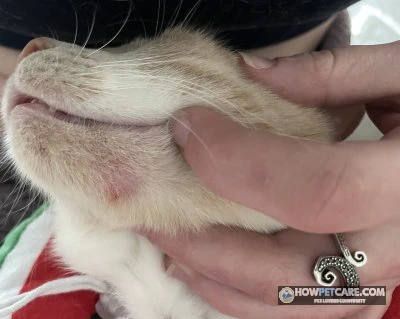
| Moderate | More blackheads with red bumps, small pustules, crusts, or greasy-looking fur | May be tender; the cat may pull away | May rub or paw at the chin | Arrange a vet appointment within days; sooner if worsening | With appropriate treatment, improvement may begin within days; clearing can take weeks |
| Severe | Marked swelling, open sores, draining material, bleeding, or substantial hair loss | Often painful or thickened | May drool, hide, paw at the face, or eat less | Contact a vet the same day; use emergency care if directed or the cat is very unwell | Depends on the cause and treatment; follow the vet’s recheck plan |
These descriptions are practical guides, not fixed medical stages or guaranteed recovery times. Deep, draining lesions may also be a cat abscess or another condition. Acne can range from blackheads to painful, oozing lesions.
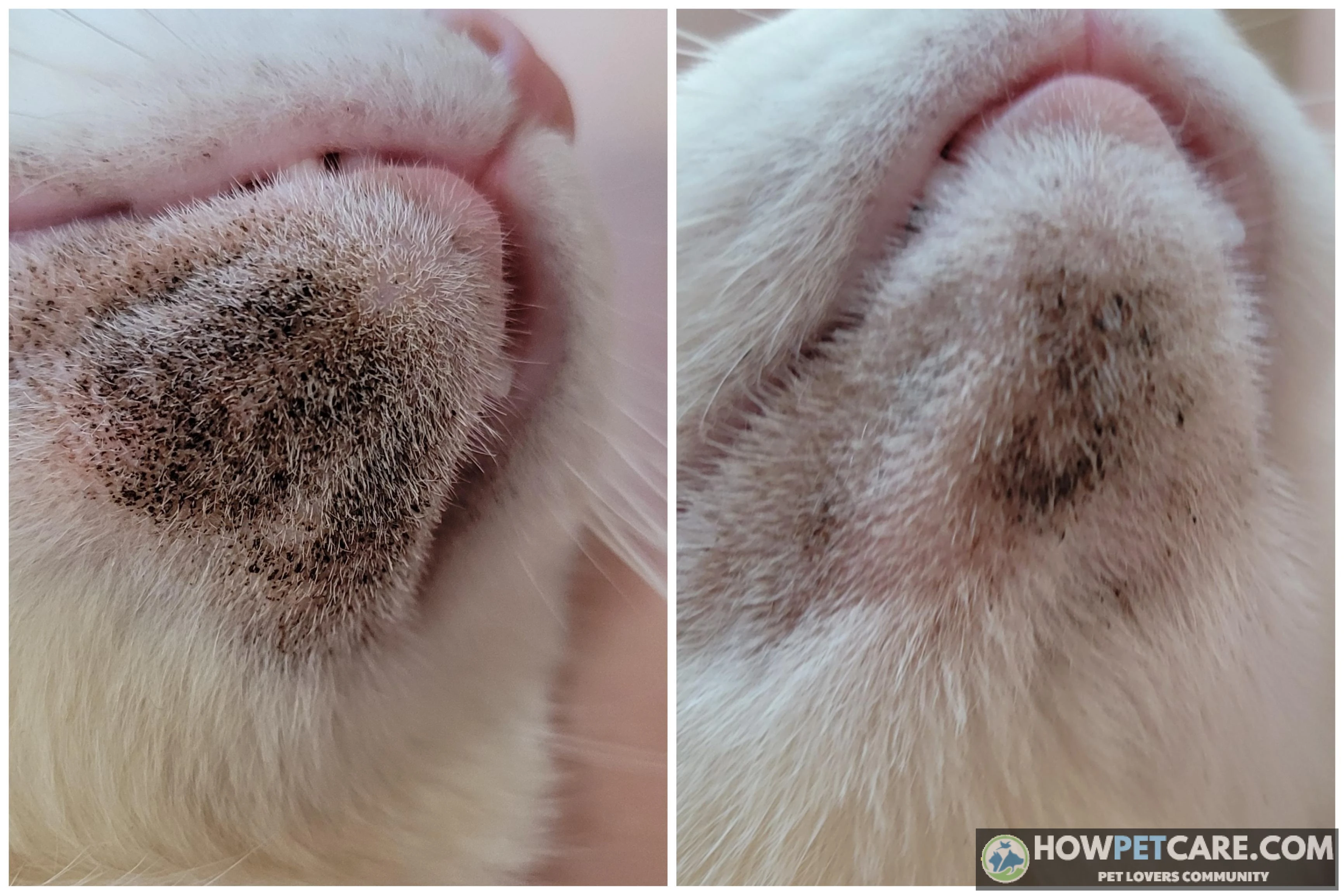
Photo-tracking tip: how to record your cat’s chin so you can judge progress
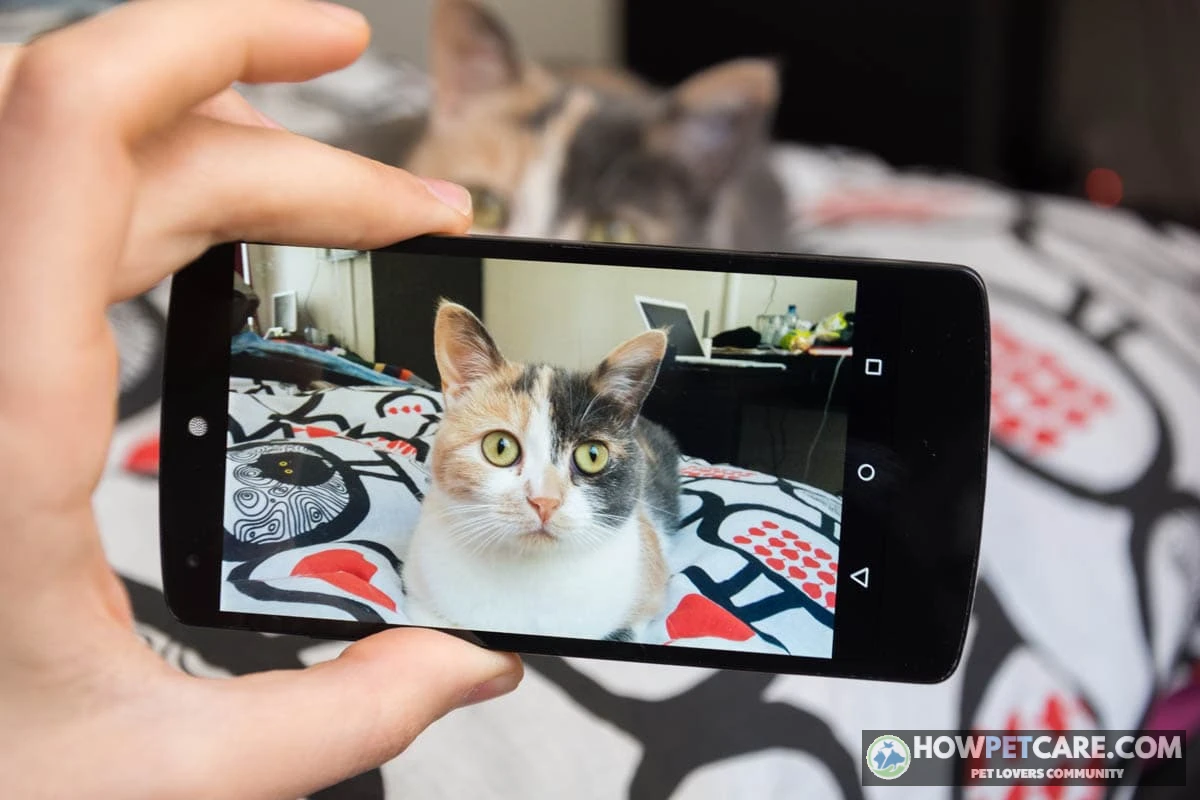
Take a clear photo from the same angle and in similar light each day or every few days. Include the lower lip and surrounding fur, but don’t force your cat’s head into position. Dated photos can help a clinic compare changes. Don’t delay a call about concerning symptoms while you wait for a better picture.
Cat Acne vs. Ringworm, Mites, and Other Chin Problems (and Whether It’s Contagious)
Is cat acne contagious to humans or other cats?
Cat acne itself isn’t contagious to people or other cats. The concern is that a condition that looks like acne may spread: ringworm is a fungal infection that can pass to people and animals, and some mites can spread between cats.
If another pet or a person develops a suspicious scaly or itchy patch, tell your veterinarian and contact the person’s healthcare professional. Wash your hands after handling the affected cat, and ask the vet if temporary separation or other precautions are needed. A person’s rash alone doesn’t necessarily make the cat’s condition an emergency, but it does make prompt advice important.
Acne look-alike comparison
| Condition | Typical appearance | Common location | Itch or hair loss | Contagious? | How a vet confirms it |
|---|---|---|---|---|---|
| Feline acne | Black plugs; sometimes red bumps or crusts | Chin and lip margins | Mild cases may not itch; inflamed skin can be sore or lose hair | Acne itself is not contagious | Examination and, when needed, tests to rule out other causes |
| Ringworm | Variable scaling, broken hairs, crusts, or bald patches; not always circular | Face, ears, paws, or other areas | Hair loss is common; itch varies | Can spread to people and animals | Fungal testing, such as culture or PCR, along with examination |
| Mites, including Demodex | Scaling, crusts, or irritated skin | Face or other areas, depending on the mite | Itch and hair loss vary | Some mites can spread between cats; risk depends on the species | Skin scrapings and other sampling; a negative result does not always exclude mites |
| Eosinophilic granuloma complex | Raised, swollen, or ulcerated patches | Often lips or chin, but can occur elsewhere | Variable | Not itself contagious | Examination and sometimes cytology or biopsy |
| Other disease, including a tumor | Persistent sore, lump, ulcer, or changing patch | Chin, lips, or other skin | Variable | Depends on the underlying cause | Sampling or biopsy when indicated |
Bacterial folliculitis and allergy-related dermatitis can also look like acne. Because appearances vary, a vet may need more than one test. Don’t keep treating a nonhealing sore or growing mass as acne without getting it checked.
How to Treat Cat Acne at Home: A Step-by-Step Chin Cleaning Routine
For a comfortable cat with blackheads only and no swelling, pus, or broken skin, start with warm water or sterile saline and a soft cloth or gauze. If you see red bumps, crusts, or tenderness, arrange a veterinary visit instead of trying to manage the flare with home care alone.
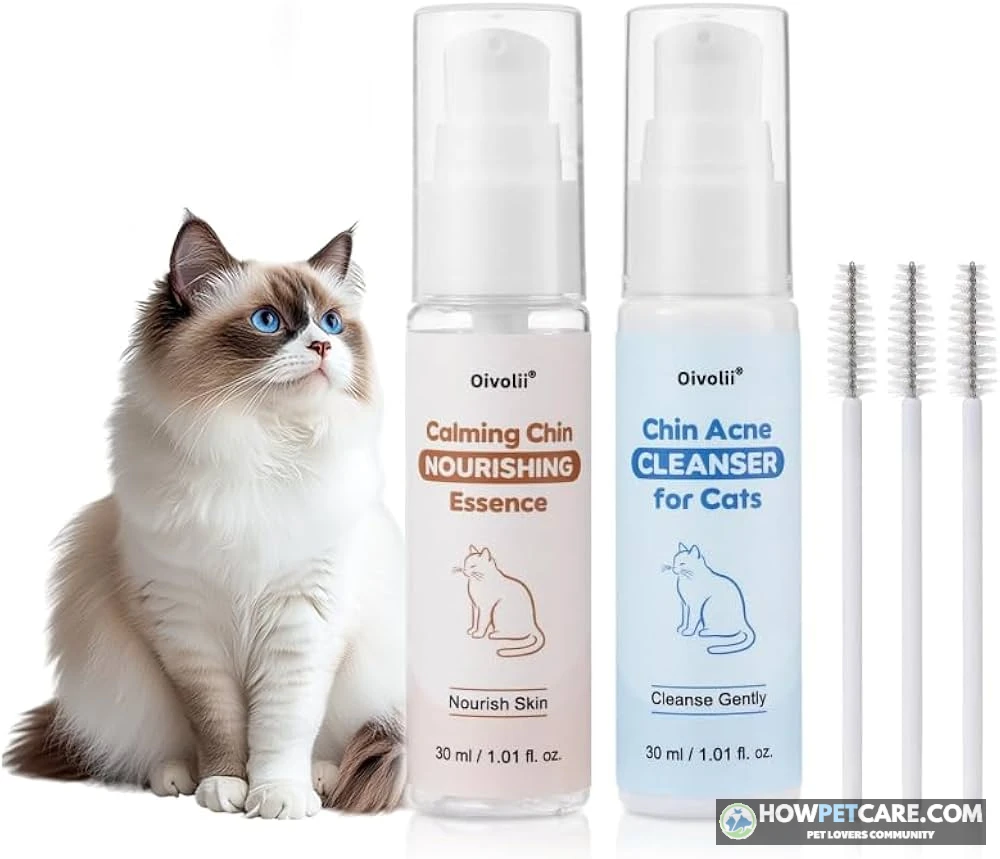
Gather a clean washcloth, soft gauze or cotton pads, warm water or sterile saline, a dry towel, and a favorite treat. Use a medicated cleanser only if your vet recommends one for your cat.
Step-by-step chin cleaning protocol
-
Choose a calm moment
Settle your cat in a comfortable spot. A treat or lick mat may help keep the experience pleasant.
-
Soften the debris
Hold a warm, not hot, damp cloth against the chin if your cat tolerates it. Aim for a few minutes; a brief contact is better than a struggle.
-
Wipe gently
Use damp gauze or a soft pad to lift loose debris. Don’t scrub, squeeze, pick, or try to remove every blackhead.
-
Remove residue and dry
If using a vet-recommended product, follow its directions on contact time and rinsing. Gently pat the chin dry.
-
Reward and stop
Offer a treat or praise, and finish while your cat is still comfortable.
For mild blackheads, try gentle cleaning once daily and watch for irritation. Cleaning more often isn’t necessarily better. If the skin gets red or your cat objects, stop and ask the vet. Medicated products may need different schedules; follow the specific veterinary directions rather than automatically applying them once or twice a day.
How to clean the chin of a cat that fights, scratches, or won’t sit still
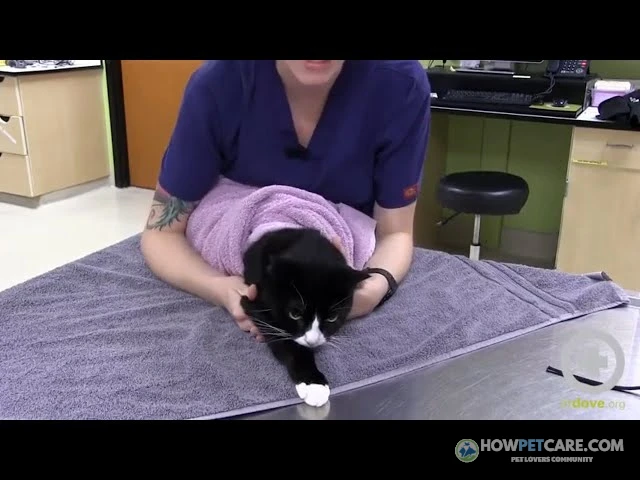
Try a short session after a meal or while a helper offers a treat. You can loosely wrap a cooperative cat’s body in a towel, leaving the head free, but don’t force the wrap or restrict breathing. Keep sessions brief—roughly 20–30 seconds may be all your cat tolerates.
Stop if your cat struggles, growls, tries to bite, or becomes distressed. Don’t hold the cat down to complete a five-minute compress. Ask the clinic for a handling demonstration or a treatment plan that requires less handling. Protecting both you and your cat matters more than finishing the routine.
What about clipping the chin hair?
A veterinarian may clip fur to examine or treat a particularly affected area. Don’t use scissors or a razor on a moving cat or on swollen, sore skin. If clipping is needed, ask the clinic to do it.
Squeezing, picking, and scrubbing can injure already irritated follicles. Leave attached plugs alone and have painful or worsening skin examined.
Safe Ingredients and Products for Cat Acne, and What to Avoid
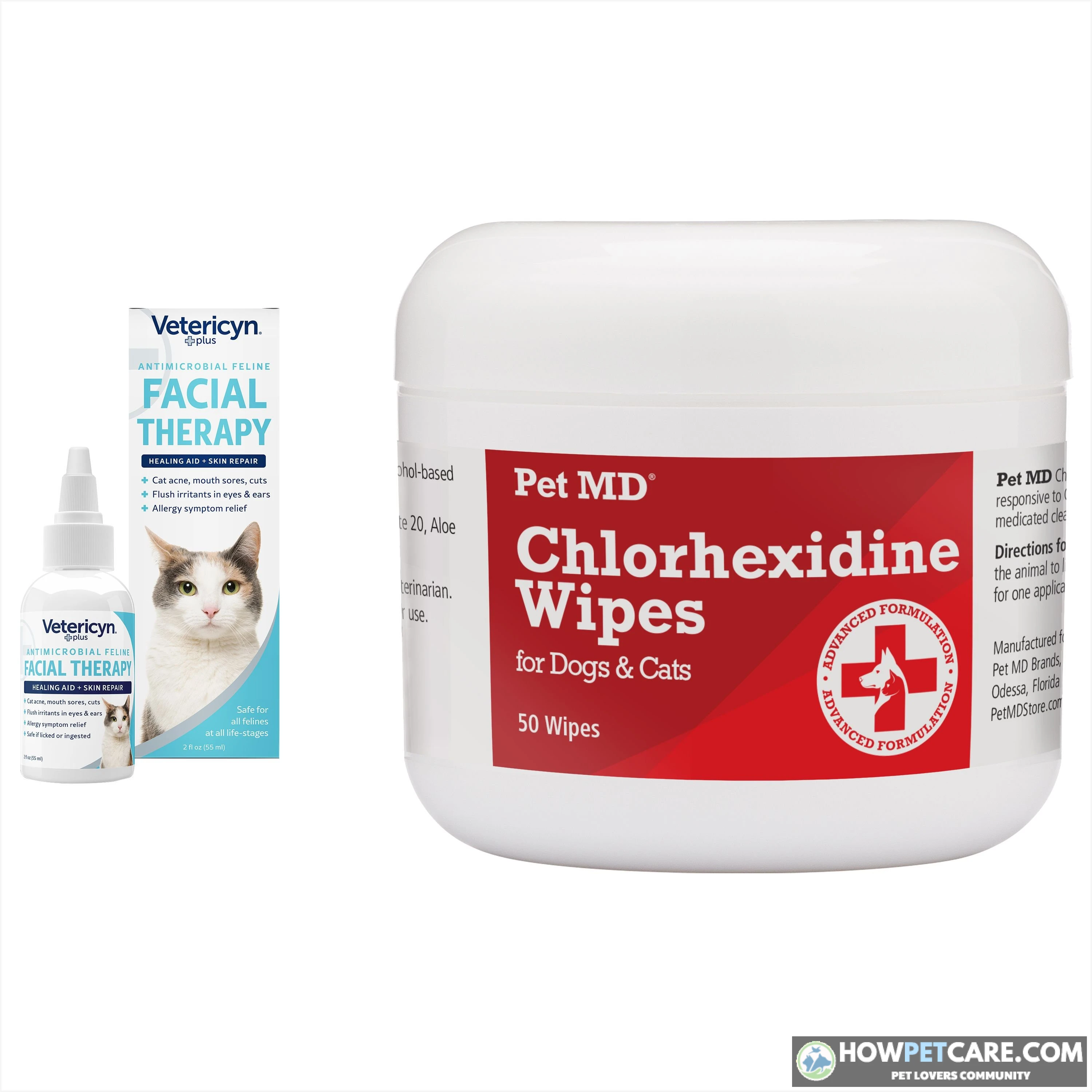
Water or sterile saline is the simplest place to start for an otherwise comfortable cat. Chlorhexidine and benzoyl peroxide are active ingredients veterinarians may use in topical feline acne care, but a familiar ingredient name doesn’t mean every formulation is safe for every cat.
Chlorhexidine wipes and cleansers
Chlorhexidine is an antiseptic found in some veterinary wipes, cleansers, and shampoos. Ask your vet which product and concentration are appropriate for your cat’s chin, how often to use it, and whether it needs rinsing. The concentration alone doesn’t tell you whether a product is safe to leave on a cat that may lick it.
Keep cleanser away from the eyes, inside of the mouth, and other sensitive areas. Stop and call the clinic if the skin gets more irritated or your cat reacts after application.
Benzoyl peroxide: when vets use it and the risks
A veterinarian may recommend a benzoyl peroxide preparation to help manage plugged follicles. It can dry or irritate the skin, and human acne preparations aren’t interchangeable with veterinary products. Use a cat-appropriate formulation only with veterinary guidance, including instructions on strength, contact time, and rinsing.
The supplied evidence doesn’t establish a single concentration that’s safe for every cat’s chin. If a label is unclear, ask the clinic instead of guessing or diluting a concentrated product yourself.
Do-not-use list
Avoid human acne creams and pads, including products containing salicylic acid or benzoyl peroxide, unless your veterinarian specifically directs you to use them. Also avoid hydrogen peroxide, rubbing alcohol, tea tree oil and other essential oils, and leftover steroid or antibiotic creams.
Coconut oil, apple cider vinegar, and tea compresses aren’t established treatments for feline acne. Oils may leave residue, and acidic products can sting damaged skin. Don’t apply prescription medicines such as mupirocin or oral antibiotics such as amoxicillin-clavulanate, sometimes sold as Clavamox, unless prescribed for this cat and this episode.
Home Care, Vet Soon, or Vet Now: Clear Thresholds for Cat Acne
Let the most urgent sign you see guide your next step. If you’re unsure how uncomfortable your cat is, call your veterinary clinic for triage.
Signs home care is enough
Try gentle cleaning and monitoring only when all of these apply:
- ☐ The chin has a few black plugs, with no significant redness or swelling.
- ☐ There’s no pus, bleeding, open sore, or obvious pain.
- ☐ Your cat is eating, drinking, and behaving normally.
- ☐ There’s no unexplained spreading rash, bald patch, or growing lump.
- ☐ You can clean gently without a struggle and keep an eye on changes.
This is a trial of supportive care, not confirmation of acne. If the specks haven’t improved after about two weeks, book an examination.
Signs you need a vet this week
Book an appointment within days if you notice red bumps, small pustules, crusting, mild localized swelling, ongoing hair loss, repeated flare-ups, or lesions extending onto the lips. Arrange an examination for a kitten, an older cat with other health problems, or any cat whose diagnosis is uncertain. Call sooner if the changes are progressing.
Signs you need a vet now
Contact a vet the same day for marked chin, lip, or facial swelling; draining pus or blood; open or ulcerated sores; obvious pain; rapid worsening; drooling; reduced eating; or unusual lethargy. Sores or swelling near the eye also need prompt assessment.
If your cat has trouble breathing, collapses, or can’t get prompt care from your regular vet, contact an emergency clinic immediately. Tell the clinic if your cat is refusing food so it can advise you on urgency. Deep inflammation and infection can worsen and may lead to scarring if treatment is delayed.
What the Vet Does for Cat Acne and What It Costs in the US
What diagnosis involves
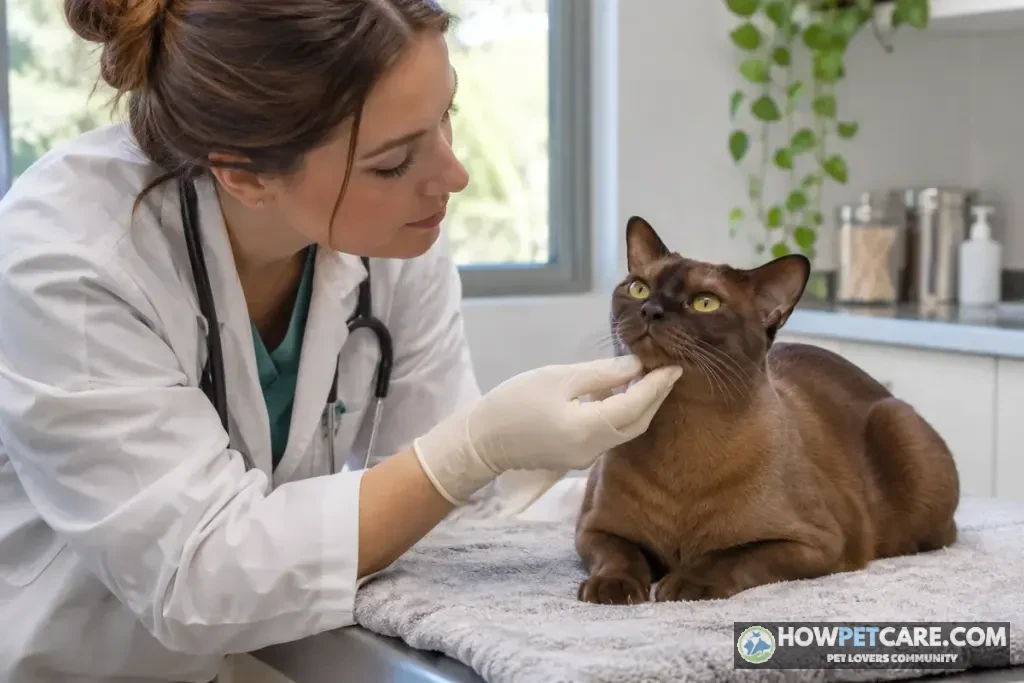
Your vet will examine the chin and ask about timing, bowl hygiene, products used, diet, and previous episodes. They may collect material with tape or a swab for cytology, which involves looking at cells and organisms under a microscope. Depending on the findings, they may recommend skin scraping, fungal testing, or a biopsy, especially for a persistent sore or unusual mass.
Treatment depends on the examination. Options may include a prescribed antiseptic cleanser, topical medication, or oral antibiotics when a bacterial infection needs treatment. Some cats need additional care for inflammation or an underlying skin problem. Don’t assume every blackhead needs an antibiotic.
Typical US cost ranges by item
The following are illustrative planning estimates, not verified national price data. Actual charges may fall outside these ranges, and the supplied research doesn’t establish current US averages. Ask your clinic for an itemized estimate before tests or treatment; emergency, specialist, sedation, laboratory, and medication charges can add substantially to the bill.
| Item | Illustrative estimate |
|---|---|
| General veterinary examination | $50–$100 |
| Chin cytology | $25–$75 |
| Fungal testing or skin scraping, if needed | $40–$150 |
| Cleanser or prescription medication | $15–$80 |
| Recheck | $30–$80 |
| Biopsy, potentially including sedation and laboratory fees | $200–$600 or more |
For example, the illustrative ranges for an exam, cytology, and a cleanser or medication add up to approximately $90–$255 before taxes or other fees. An exam, cytology, fungal testing or scraping, medication, and recheck add up to approximately $160–$485; a biopsy or emergency visit can raise the total. These are arithmetic examples, not quotes or predictions of what your cat will need.
Ask whether the exam includes a recheck, whether a generic prescription is suitable, and whether the clinic accepts photos for initial triage. Don’t postpone care for a painful or rapidly worsening chin while looking for a lower price.
Why vets are cautious with isotretinoin
Isotretinoin and other retinoids aren’t home remedies. Their use in cats requires veterinary supervision, and safety information and appropriate protocols for an individual cat may be limited. Retinoids can cause adverse effects and pose a serious birth-defect risk during pregnancy; ask the prescribing veterinarian about safe handling and storage. Never give a cat a leftover human prescription.
How Long Cat Acne Takes to Clear Up and Whether It Comes Back
A mild case may start to look better over one to two weeks of gentle care, though some blackheads can linger. With an infected or more inflamed chin, improvement may begin within days of effective veterinary treatment, while the full treatment plan can take several weeks or longer. These are rough expectations, not promises: diagnosis and severity matter.
Give prescribed medication for as long as your vet directs, and contact the clinic if side effects occur or your cat worsens. If there’s no improvement within the timeframe your vet gave you, arrange a reassessment instead of adding another product. A persistent lesion may need testing for ringworm, mites, allergy-related disease, or another cause.
Some cats have one episode; others have recurring or chronic flare-ups. A practical maintenance plan may include clean bowls, occasional gentle chin care if your vet recommends it, a predictable routine, and investigation of suspected allergies. Keep a short photo log alongside changes in diet, products, or household routine, but treat patterns as clues rather than proof of a cause.
Your Cat Acne Action Plan: Tonight, This Week, and Long Term
Printable checklist
- ☐ Tonight: Check for swelling, sores, discharge, pain, and changes in eating. Photograph the chin and gently clean it with warm water or saline if it’s comfortable and the skin is intact.
- ☐ Tonight: Wash the bowls and consider replacing scratched plastic with stainless steel or glass. Keep human acne products and essential oils away from your cat’s care supplies.
- ☐ This week: Continue gentle daily cleaning only while the chin remains comfortable. Wash bowls regularly and compare photos.
- ☐ Within days: Book a veterinary examination for red bumps, crusts, mild swelling, hair loss, recurring lesions, or uncertainty about what you’re seeing.
- ☐ By about two weeks: Arrange a visit if blackheads haven’t improved, even if your cat otherwise seems well.
- ☐ Long term: Follow the vet’s maintenance plan and discuss an allergy workup or controlled diet trial if flare-ups continue.
When to stop home care and call the vet
Stop cleaning and call the same day if the chin becomes painful, markedly swollen, open, or draining, or if your cat drools, eats less, or seems unwell. Seek emergency advice immediately for breathing difficulty or collapse. Bring your photos, a list of products applied, and details of your cat’s current diet to the appointment.
FAQ
Can I pop my cat’s blackheads?
No. Squeezing can rupture follicles, push bacteria deeper, and cause pain and scarring. Soften them with a warm compress and gentle cleaning instead.
Is cat acne itchy or painful?
Mild blackheads usually don’t bother cats. Infected acne can be itchy or sore, so pawing at the chin, flinching when touched, or rubbing the face on surfaces suggests it has progressed.
Can kittens and older cats get acne?
Yes. Cat acne can occur at any age and in any breed. A kitten with chin lesions should be seen by a vet, since ringworm and mites are also common causes at that age.
Can I use coconut oil or apple cider vinegar on cat acne?
There is no reliable evidence that either helps, and both carry risks. Oil can clog follicles further, and vinegar can sting irritated skin. Warm water or saline cleaning is safer, and your vet can recommend a medicated option.
Should I shave or trim the fur on my cat’s chin?
Trimming can help in some severe cases, but it is best done as part of a vet’s plan. Don’t use scissors or a razor on a swollen or sore chin, because the skin is easy to cut.