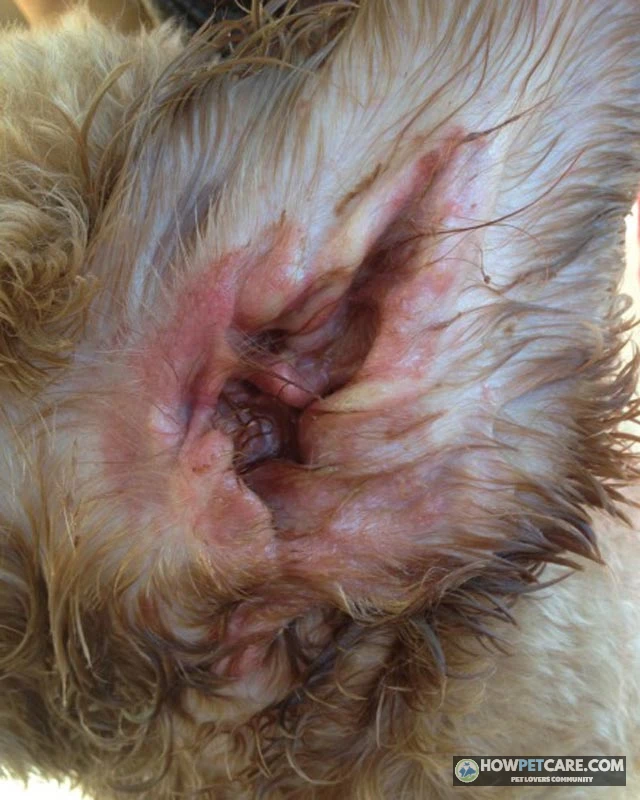

Ear mites (Otodectes cynotis) are tiny parasites living in a dog’s ear canal, causing intense itching, head shaking, and dark coffee-ground debris. Only a vet can confirm them via otoscope and ear cytology; treatment is usually a single-dose prescription parasiticide, with all household pets treated together.
Is It Ear Mites? Quick Signs and When a Vet Visit Can’t Wait
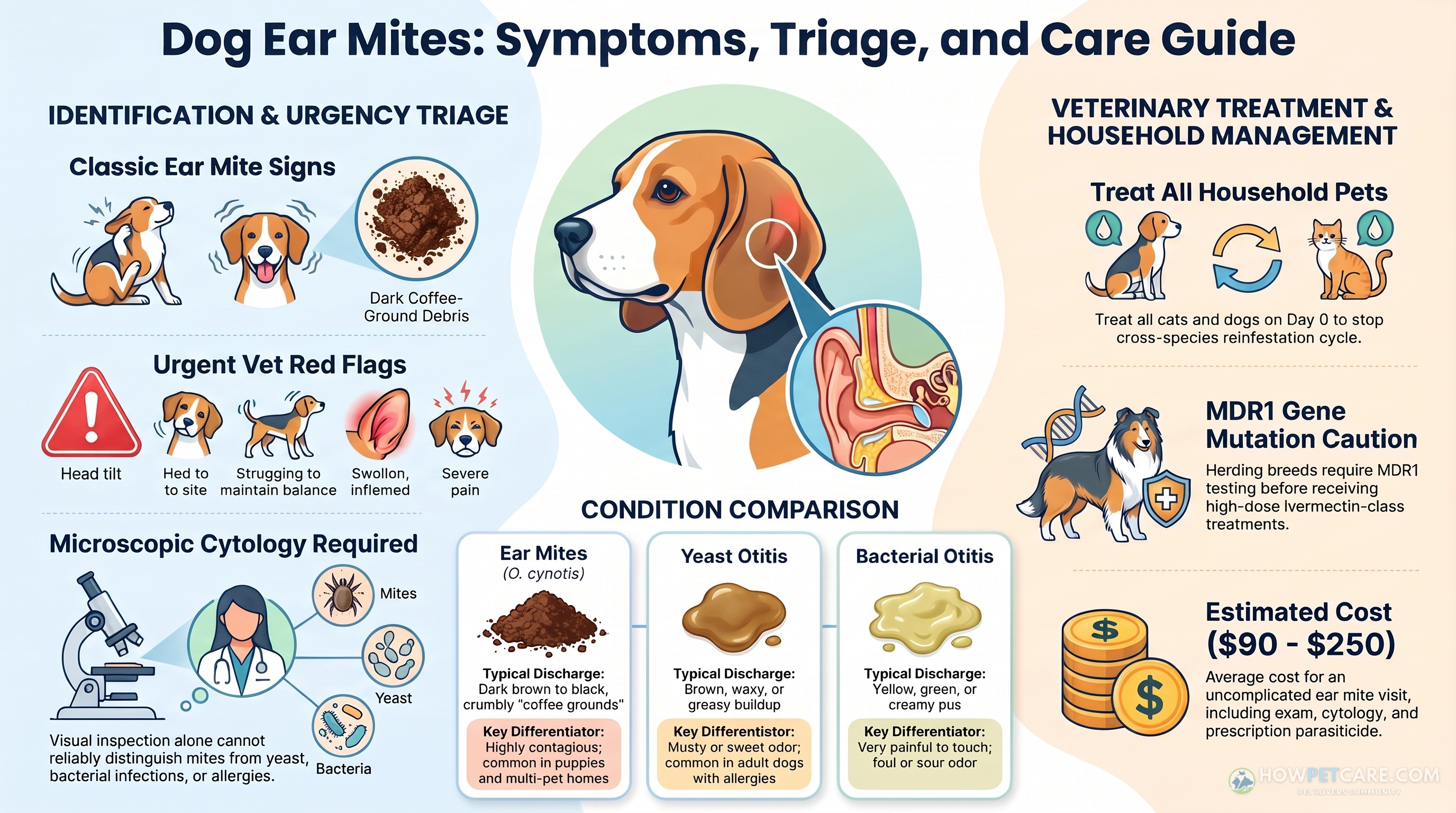
If your dog is scratching its ears, shaking its head, or you spot dark debris inside the ear flaps, ear mites are a strong possibility — especially in puppies or dogs that live with cats. The classic signs are intense itching, frequent head shaking, and a dry, dark brown to black discharge that looks like coffee grounds. In adult dogs, however, yeast infections, bacterial otitis, or allergies are actually more common than mites.
Urgent red flags: head tilt, aural hematoma, loss of balance
Go to a veterinarian today if you notice any of the following:
- A persistent head tilt or loss of balance (possible inner ear involvement)
- A swollen, balloon-like ear flap (aural hematoma from violent shaking)
- Severe pain when the ear is touched, bleeding, or a foul odor
- Rapid worsening over a few hours
These signs can indicate a ruptured eardrum, deep infection, or neurological issue that needs immediate care.
Can wait a day or two: mild itching and dark debris
If your dog is otherwise bright, eating normally, and the only signs are scratching, head shaking, and dark debris in both ears, you can schedule a regular appointment within the next 24–48 hours. Avoid putting any medication — prescription or over-the-counter — into the ear before the vet examines it, because a ruptured eardrum makes some products unsafe.
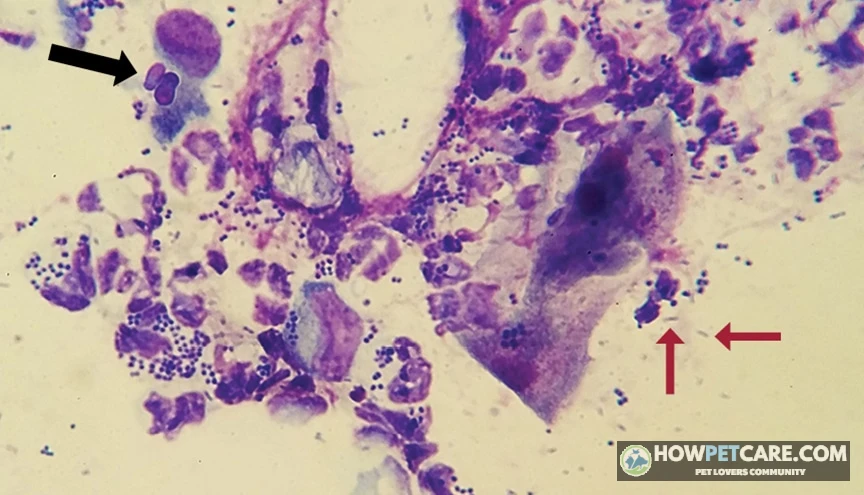
Only a veterinarian can confirm ear mites using an otoscope and microscopic ear cytology. Visual inspection alone cannot distinguish mites from yeast, bacteria, or normal wax.
What Ear Mites in Dogs Look Like: Symptoms, Discharge Variations, and Photos
Ear mites (Otodectes cynotis) are tiny surface-dwelling mites that live in the ear canal, feeding on ear wax and skin oils. They are barely visible to the naked eye as minute white specks, usually seen only with an otoscope.
What the debris can look like
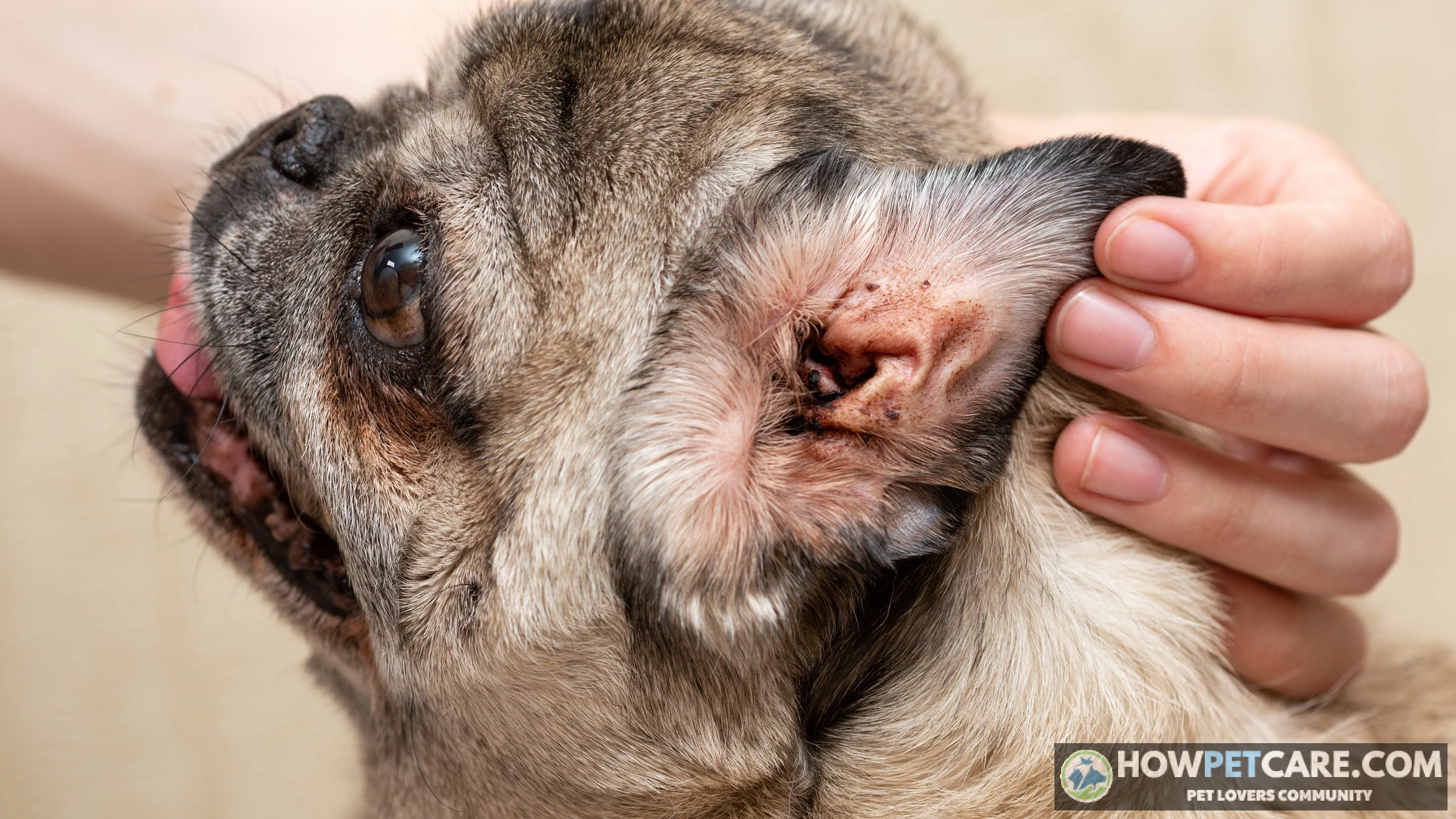
The characteristic discharge is often described as "coffee grounds," but the appearance varies:
- Color: dark brown to black
- Texture: dry and crumbly, or waxy and clumped
- Odor: mild or none unless a secondary yeast or bacterial infection is present (then it becomes musty or foul)
- Volume: moderate to heavy, often filling the vertical canal
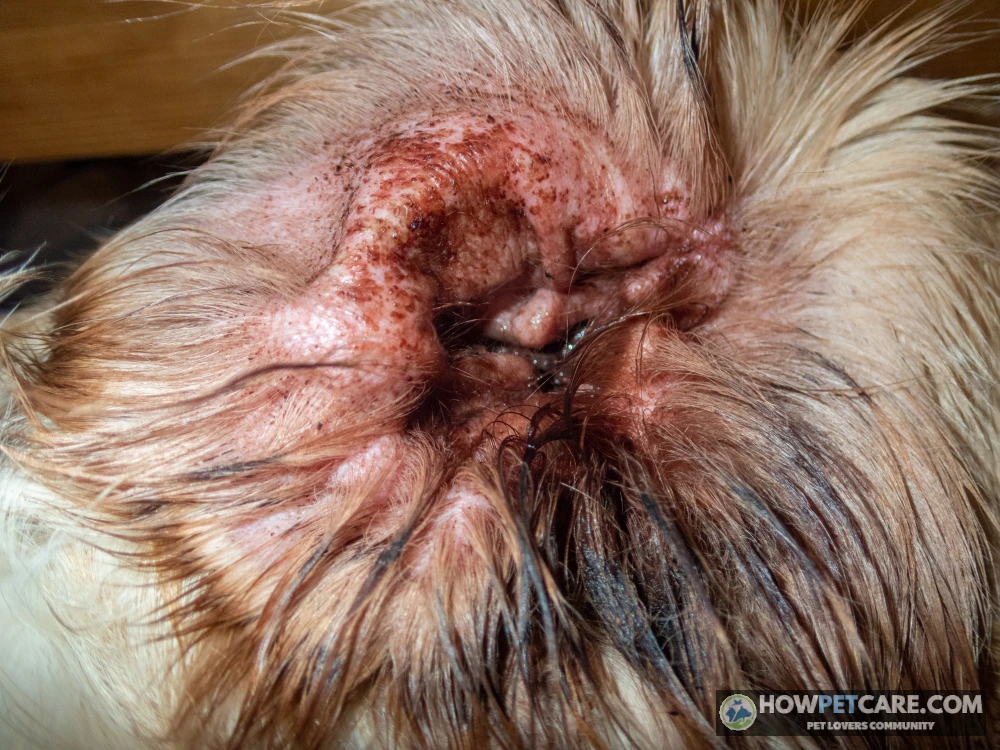
Behavior signs include relentless ear scratching, head shaking, rubbing ears on furniture, and sometimes scabs or redness around the ears and neck from self-trauma.
Symptoms in puppies vs adult dogs
Puppies are the most commonly affected group, especially those from shelters, foster homes, or multi-pet households with cats. In puppies, the itching can be severe enough to disrupt sleep and feeding. Adult dogs with ear mites are less common; when an adult dog presents with ear irritation, yeast (Malassezia), bacterial otitis, or underlying allergies are more likely diagnoses.
Secondary ear infection (otitis externa) frequently develops because constant scratching damages the ear canal lining, allowing bacteria and yeast to invade.
Ear Mites vs Yeast vs Bacterial Infection vs Normal Wax: Side-by-Side
Because the visual overlap is large, the table below gives you a practical framework. Remember: mites can coexist with yeast or bacteria, and ear cytology is the definitive tie-breaker. Do not reuse leftover ear medications from a previous episode — they may worsen the wrong condition.
Why looks alone can mislead
All four conditions can produce brownish debris and itching. The odor, texture, and pain level shift the probability, but only microscopic examination of a swab sample confirms the cause.
When allergies are the real cause
Recurrent ear problems in adult dogs — especially with red, inflamed ears but minimal discharge — often point to environmental or food allergies. Treating mites that aren’t there delays the real solution.
| Condition | Typical discharge appearance | Odor | Itch and pain level | Who it commonly affects | Usual treatment |
|---|---|---|---|---|---|
| Ear mites (Otodectes cynotis) | Dry, dark brown to black crumbs or clumps; gritty or waxy clumped debris; amount often moderate to heavy | Mild or none unless infection is also present | Intense itch and head shaking; pain rises once skin is scratched raw | Puppies, dogs living with cats, shelter or foster exposures | Vet-confirmed parasiticide plus ear cleaning; treat all in-contact pets |
| Yeast otitis | Brown, waxy or greasy buildup; often smeared rather than crumbly | Musty, sweet, or bread-like | Moderate to intense itch; ears may be red and warm | Adult dogs with allergies, floppy ears, or swimming history | Antifungal ear medication; allergy workup if it keeps returning |
| Bacterial otitis | Yellow, green, or creamy pus; canal may look swollen or moist | Foul or sour | Painful ear, pain when touched, rubbing more than scratching | Any dog, often after mites, yeast, water, or allergies | Cytology-guided ear drops; oral meds only for selected cases |
| Normal wax | Light tan to brown, thin to slightly sticky; small amount | Little to none | Minimal itch; dog is comfortable | Healthy ears | No treatment; gentle routine cleaning only if needed |
How Dogs Catch Ear Mites and Whether People or Other Pets Are at Risk
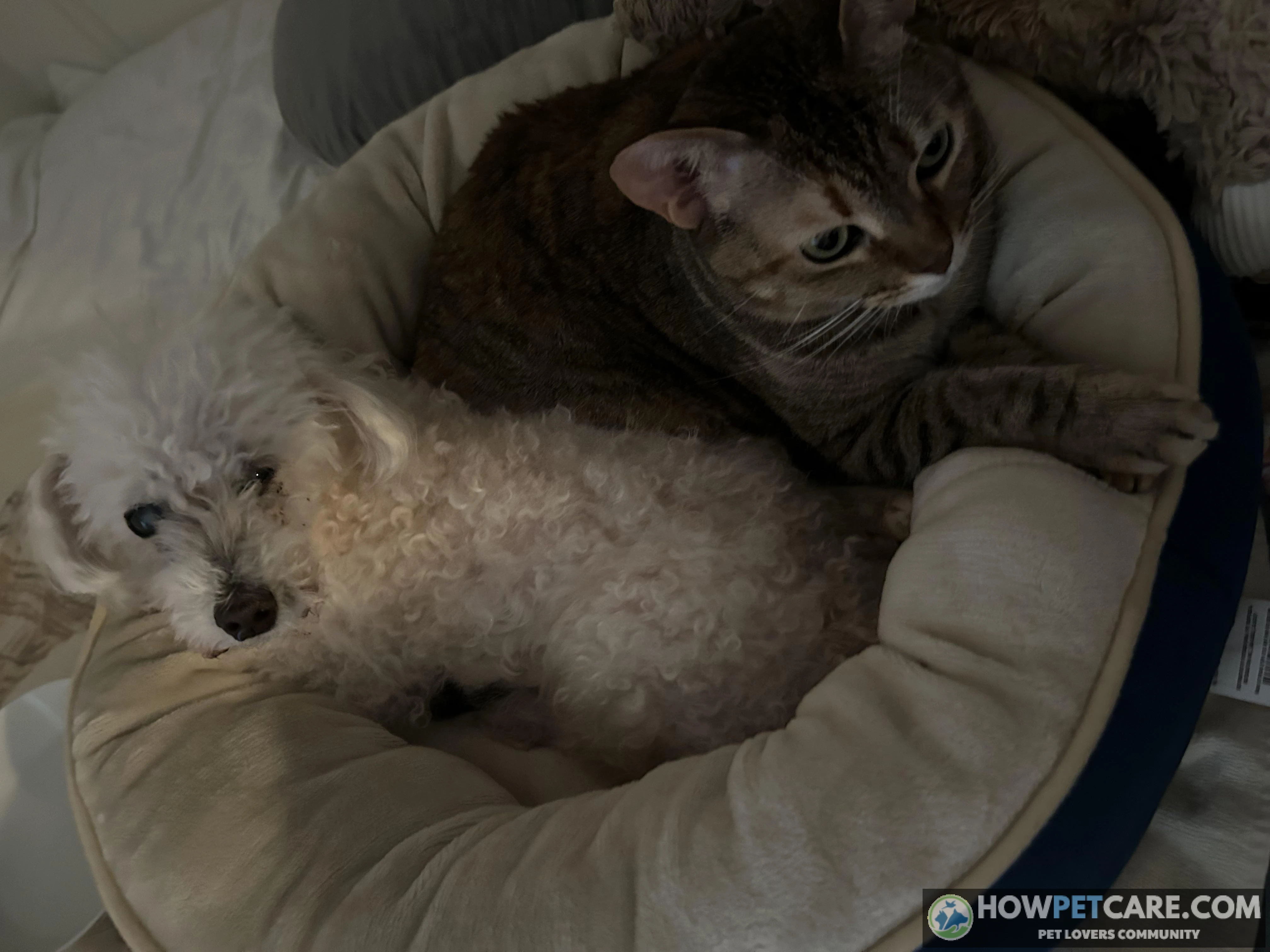
Ear mites spread by close contact — shared bedding, mutual grooming, and play. Outdoor cats, shelter animals, and foster pets are common sources. Because the same species (Otodectes cynotis) infects both dogs and cats, cross-species transmission in a household is highly likely.
Dog-to-cat and dog-to-dog spread
If one pet has mites, assume all dogs and cats in the home are exposed. Treating only the symptomatic animal almost guarantees reinfestation.
Can humans catch ear mites from dogs?
Human infestation is rare and self-limiting. Occasionally, mites may cause a temporary itchy skin rash on the arms or torso, but people are not natural hosts. If you develop a persistent rash, see a doctor, but there is no need to panic.
Mites survive only a short time off the host (generally a few days), so the main risk is direct contact, not the home environment.
How Vets Diagnose and Treat Ear Mites (and Why Home Treatment Alone Falls Short)
What happens at the appointment
- Otoscope exam – the vet visualizes the ear canal and may see moving white specks.
- Ear swab and cytology – a sample is rolled onto a slide, stained, and examined under a microscope to identify mites, eggs, yeast, and bacteria simultaneously.
- Eardrum check – if the eardrum is ruptured, certain medications (especially combination drops containing steroids or aminoglycosides) can cause deafness or vestibular signs.

Why self-diagnosis often fails
- Mites can lodge deep in the horizontal canal, invisible to the naked eye.
- Yeast and bacteria often accompany mites; treating only mites leaves the infection.
- Over-the-counter drops require daily application for 3–4 weeks; missed doses let the 3-week mite life cycle restart.
- A ruptured eardrum makes many products unsafe.
The typical vet plan: thorough ear cleaning, a prescription parasiticide (often a single-dose spot-on or oral), and medication for any secondary infection. A recheck visit confirms clearance.
Do ear mites go away on their own? Unlikely; they usually persist and can lead to chronic infection.
Ear Mite Treatment Options Compared: Products, Ingredients, Duration, and Age Minimums
Choosing between an OTC drop regimen and a prescription single-dose product involves cost, effort, and reliability trade-offs. The table below summarizes the most common options used in the US. Always confirm with your veterinarian — availability, labeling, and age/weight minimums vary.
OTC drops vs prescription single-dose: which fits your situation
OTC pyrethrin-based drops cost less upfront but demand daily or twice-daily application for up to 30 days. Missed doses are common, and the 3-week mite life cycle means treatment must cover the full cycle. Prescription spot-ons (selamectin, moxidectin) and oral isoxazolines (fluralaner, afoxolaner, sarolaner) are typically given once or monthly, offering higher compliance but at a higher per-dose price.
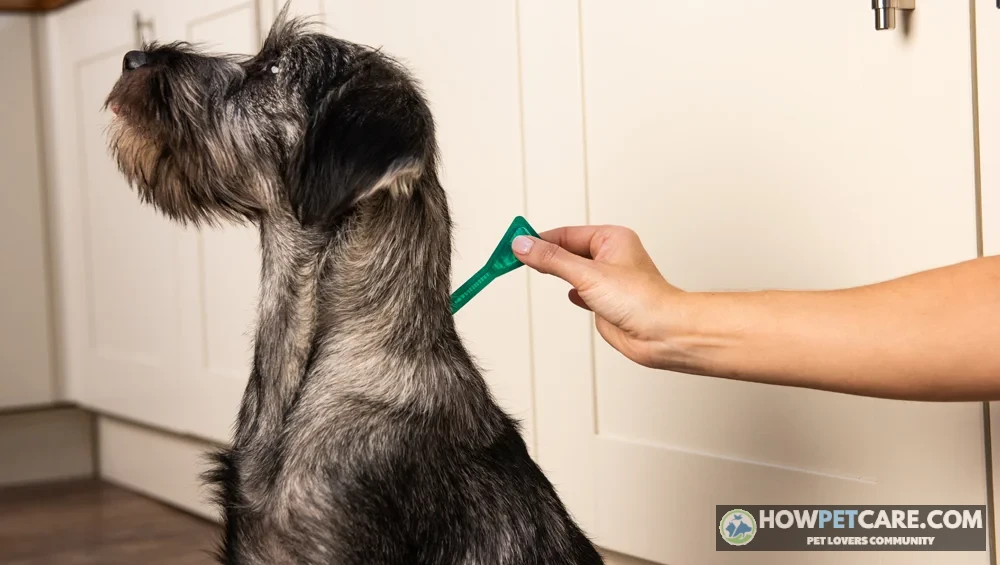
Labeled vs off-label use
Many oral isoxazolines are labeled for fleas and ticks; their use for ear mites is often off-label but widely practiced under veterinary direction. If ticks are also on your radar, a dog tick identification and removal guide helps with species and monitoring. Discuss the plan with your vet.
| Product (brand example) | Active ingredient | Form | Treatment duration | Minimum age/weight | Rx or OTC | Notes (labeled vs off-label, MDR1 caution) |
|---|---|---|---|---|---|---|
| Revolution | Selamectin | Monthly spot-on | Usually one dose, sometimes repeated per label/vet | Dogs: 6 weeks+ | Rx | Labeled for ear mites in dogs in the US; label varies by country |
| Advantage Multi / Advocate | Imidacloprid + moxidectin | Monthly spot-on | Usually monthly during treatment window | Dogs: 7 weeks+ and 3 lb+ | Rx | Ear-mite labeling varies by country; often used under vet direction |
| Bravecto | Fluralaner | Oral chew | One chew lasts 12 weeks for fleas/ticks; mite use scheduled by vet | Dogs: 6 months+ and 4.4 lb+ | Rx | Commonly off-label for ear mites in dogs; confirm local label |
| NexGard | Afoxolaner | Oral chew | Monthly flea/tick product; mite plan set by vet | Dogs: 8 weeks+ and 4 lb+ | Rx | Off-label for ear mites in many regions |
| Simparica | Sarolaner | Oral chew | Monthly flea/tick product; mite plan set by vet | Dogs: 6 months+ and 2.8 lb+ | Rx | Off-label for ear mites in many regions |
| Tresaderm | Thiabendazole + dexamethasone + neomycin | Prescription ear drops | Commonly 7–14 days, often twice daily | Per label and vet judgment | Rx | Combination drop for selected ears; unsafe if eardrum may be ruptured |
| OTC ear-mite drops | Usually pyrethrins + piperonyl butoxide | Ear drops | Often daily or repeated for 7–30 days | Many labels say 12 weeks+ | OTC | Lower upfront cost, but missed doses are common; never use dog products on cats |
For MDR1-prone breeds, review the ivermectin safety section below before any ivermectin-class product. Labels and availability differ by country, and isoxazolines are often prescribed off-label for ear mites.
Collies and Herding Breeds: Ivermectin and MDR1 Safety
Collies, Australian Shepherds, Shetland Sheepdogs, Old English Sheepdogs, and related herding breeds can carry the MDR1 (ABCB1) gene mutation. This makes them sensitive to ivermectin and related drugs at doses above the heartworm-preventive level. Never use livestock ivermectin or off-label high-dose ivermectin products in these breeds without MDR1 testing. Signs of toxicity — drooling, tremors, stumbling, dilated pupils — require emergency care. Preventive-dose products are generally safer, but your vet should decide based on your dog’s genotype.
Ask your veterinarian about ivermectin dosing and MDR1 testing before starting any ivermectin-class treatment.

What Ear Mite Care Costs in the US and How Long Until the Itching Stops
US cost breakdown
Costs vary by region, clinic type, and whether complications exist. The ranges below are 2026 benchmarks.
Budget benchmark (US, varies by region and clinic):
- Exam: $50–$100
- Ear cytology: $25–$60
- Ear cleaner: $15–$30
- Medication: $15–$80+ for OTC drops; $40–$120+ for many prescription spot-on/oral options
- Recheck: $0–$60
An uncomplicated mite episode often lands around $90–$250; mites plus yeast or bacterial infection often land around $180–$450.
Day-by-day recovery timeline
- Single-dose prescription products (selamectin, moxidectin, isoxazolines): Mites usually begin dying within 2–4 days, but itching can lag 7–14 days while debris and inflammation clear.
- Daily-drop regimens (OTC or prescription drops): Often need 3–4 weeks to cover the roughly 3-week mite life cycle (egg to adult takes about 21 days).
- Debris: Some waxy residue may persist for weeks as the ear canal epithelium heals.
Call the vet if itching is not clearly better after about a week, or sooner for head tilt, balance loss, bleeding, or a swollen ear flap.
Safe Home Care Before the Vet Visit: Cleaning Steps and Remedies to Skip
Tonight checklist
- ☐ Photograph both ears and the debris before cleaning so the vet can compare.
- ☐ Stop all leftover or unprescribed ear products; put nothing in an ear that is painful, bleeding, swollen, or paired with head tilt.
- ☐ Prevent self-trauma with an e-collar, T-shirt, or baby onesie if scratching is causing scabs.
- ☐ If the dog tolerates cleaning: use a vet-approved ear cleaner, fill the canal, massage the base for 20–30 seconds, let the dog shake, then wipe only the visible ear with gauze.
- ☐ Do not probe the canal or use cotton swabs; stop if the dog cries, pulls away, or the debris smells foul.
- ☐ Remedy verdicts: coconut oil or mineral oil may smother some mites but are unreliable and can worsen yeast; diluted vinegar can sting inflamed skin; avoid hydrogen peroxide and tea tree oil entirely.

Step-by-step ear cleaning
-
Prepare
Gather vet-approved ear cleaner, gauze squares, and treats. Warm the cleaner to body temperature.
-
Fill
Gently lift the ear flap and fill the canal with cleaner until you see it pool at the opening.
-
Massage
Massage the base of the ear for 20–30 seconds — you should hear a squishing sound.
-
Shake
Let the dog shake its head; this brings debris up from the horizontal canal.
-
Wipe
Use gauze to wipe the visible part of the ear canal and the inner flap. Do not insert anything into the canal.
-
Repeat
If the gauze comes out heavily soiled, repeat once. Stop if the ear becomes red or the dog shows pain.
Do vinegar, coconut oil, or mineral oil work?
- Coconut oil / mineral oil: May mechanically smother a few mites but do not penetrate the full life cycle; they can also feed yeast.
- Diluted vinegar (1:1 water): Can lower pH and discourage yeast, but stings raw, inflamed skin and is contraindicated if the eardrum is ruptured.
- Hydrogen peroxide / tea tree oil: Irritating and potentially toxic to the middle ear; avoid.
Home remedies are supportive at best — they are not treatments.
Multi-Pet Households: Treat-All Plan, Isolation, and Preventing Reinfection
Synchronized multi-pet plan
- ☐ Day 0: treat every dog and cat in the home on the same day with species-appropriate products — for cats, compare Revolution for cats dosing with your vet — and do not treat only the itchy dog.
- ☐ Day 0–3: wash bedding, blankets, and soft toys in hot water; vacuum sofas, crates, and car seats where pets sleep.
- ☐ Day 0–7: limit nose-to-ear contact, shared grooming tools, and pile sleeping only if practical; full isolation is usually unnecessary once all pets are treated.
- ☐ Do not fog or spray the whole home by default; reserve environmental products for defined cases such as repeated reinfestation, heavy foster turnover, or a vet-identified source.
- ☐ Day 21–30: recheck ears or book a vet recheck; missed doses, an untreated cat, stopping early, or a new exposure are the usual relapse causes.
- ☐ Ongoing: keep pets on vet-recommended flea/mite prevention and ear-check any new pet before introductions.
Do you need to spray your home?
Mites survive only briefly off the host (a few days), so thorough washing of bedding and vacuuming of resting areas is sufficient in most cases. Whole-home insecticide sprays are generally overkill and add unnecessary chemical exposure; if your concern is feline bed bugs instead, use bed bug care for cats rather than ear-mite steps.

Your Next-Step Plan: A Decision Guide From Tonight to Recheck
Decision path
- Red flags present (head tilt, hematoma, severe pain, balance loss): Emergency vet today.
- Mild signs only (itching, shaking, dark debris): Schedule a vet appointment within 1–2 days. Use the tonight checklist above.
- After treatment started: If itching is not improving after 7 days, or if new symptoms appear, contact your vet for a recheck.
What to bring to the appointment
- Photos of the ears taken before any cleaning
- Timeline of symptoms (when you first noticed scratching, head shaking, debris)
- List of all pets in the household
- Any current or recent ear products, flea/tick preventives, or medications
Questions to ask the vet
- Is it mites, yeast, bacteria, or a combination?
- Which product do you recommend, how long is the course, and what is the total cost?
- Is this product safe for my dog’s breed, age, and weight?
- When should we recheck, and what does the recheck involve?
Follow-up plan
- Complete the full prescribed course — even if the ears look clean early.
- Attend the recheck visit; cytology confirms clearance.
- Keep all household pets on year-round flea/mite prevention.
- Check ears weekly during grooming; early detection prevents the next episode.
Product Name Active Ingredient Form Treatment Duration Minimum Age / Weight Rx or OTC Notes & Usage Cautions Revolution Selamectin Monthly spot-on Usually one dose, sometimes repeated per label/vet Dogs: 6 weeks+ Rx Labeled for ear mites in dogs in the US; label varies by country Advantage Multi / Advocate Imidacloprid + moxidectin Monthly spot-on Usually monthly during treatment window Dogs: 7 weeks+ and 3 lb+ Rx Ear-mite labeling varies by country; often used under vet direction Bravecto Fluralaner Oral chew One chew lasts 12 weeks for fleas/ticks; mite use scheduled by vet Dogs: 6 months+ and 4.4 lb+ Rx Commonly off-label for ear mites in dogs; confirm local label NexGard Afoxolaner Oral chew Monthly flea/tick product; mite plan set by vet Dogs: 8 weeks+ and 4 lb+ Rx Off-label for ear mites in many regions Simparica Sarolaner Oral chew Monthly flea/tick product; mite plan set by vet Dogs: 6 months+ and 2.8 lb+ Rx Off-label for ear mites in many regions Tresaderm Thiabendazole + dexamethasone + neomycin Prescription ear drops Commonly 7–14 days, often twice daily Per label and vet judgment Rx Combination drop for selected ears; unsafe if eardrum may be ruptured OTC ear-mite drops Usually pyrethrins + piperonyl butoxide Ear drops Often daily or repeated for 7–30 days Many labels say 12 weeks+ OTC Lower upfront cost, but missed doses are common; never use dog products on cats
1A dog owner notices their pet shaking its head violently, resulting in a sudden, fluid-filled swelling on the ear flap that resembles a small water balloon. Which condition has developed, and what is the appropriate timeframe for veterinary care?
Violent head shaking can rupture blood vessels in the pinna, forming an aural hematoma that requires urgent treatment to prevent severe discomfort and permanent tissue damage.
2An adult dog presents with chronic ear redness and irritation, but an examination reveals minimal discharge and no microscopic parasites. Which condition is the most probable underlying cause?
In adult dogs, recurrent ear inflammation with minimal debris is far more commonly tied to underlying allergic disease than to primary parasite infestations.
3Why is performing microscopic ear cytology essential before prescribing medication for suspected ear mites? (Select all that apply.)
Tissue damage from scratching allows opportunistic yeast and bacteria to invade, requiring multi-modal treatment beyond a simple parasiticide.
4A veterinarian is selecting an antiparasitic treatment for an Australian Shepherd with ear mites. Why must the veterinarian verify drug safety and dosing specifically for this breed?
The MDR1 (ABCB1) gene mutation impairs the blood-brain barrier in susceptible herding breeds, leading to dangerous neurological reactions if given unapproved ivermectin dosages.
5A pet owner is preparing their dog for a scheduled veterinary appointment to check for ear mites. Which action is recommended as safe home care prior to the exam?
Capturing photographs preserves evidence of discharge for the vet while an e-collar stops damaging self-trauma without altering the ear canal environment.
6Five days after administering a single-dose prescription parasiticide (such as selamectin) for ear mites, a dog is still occasionally scratching its ears. How should the owner evaluate this situation?
Dead parasites, residual debris, and inflamed skin take one to two weeks to clear completely even after the medication effectively kills the living mites.
7Which of the following home remedies or treatments should be strictly avoided or flagged as unsafe when managing ear irritation in dogs? (Select all that apply.)
Tea tree oil contains compounds that are irritating and toxic to pets, making it dangerous for ear application.
8Why are chemical foggers or whole-home insecticide sprays unnecessary when addressing a household ear mite outbreak?
Because Otodectes cynotis relies on the host's ear environment for survival and dies quickly off-host, physical cleaning of resting areas removes environmental risks.
FAQ
Can dog ear mites go away on their own?
Rarely. Untreated mites typically persist and often lead to secondary infection, so see a vet for treatment and confirmation.
Can humans catch ear mites from dogs?
It is uncommon. Occasionally mites can cause a temporary itchy skin rash in people, but humans are not typical hosts; see a doctor if irritation persists.
How long do ear mites live off a dog?
Only a short time, generally a few days away from a host. Washing bedding and treating all pets is usually enough without whole-home sprays.
Are ear mites an emergency?
Usually not, but head tilt, loss of balance, a swollen ear flap, or severe pain needs prompt veterinary care.
Can I use cat ear mite medicine on my dog?
Don’t assume so. Some products are species-specific or dosed by weight, so check with your vet first.