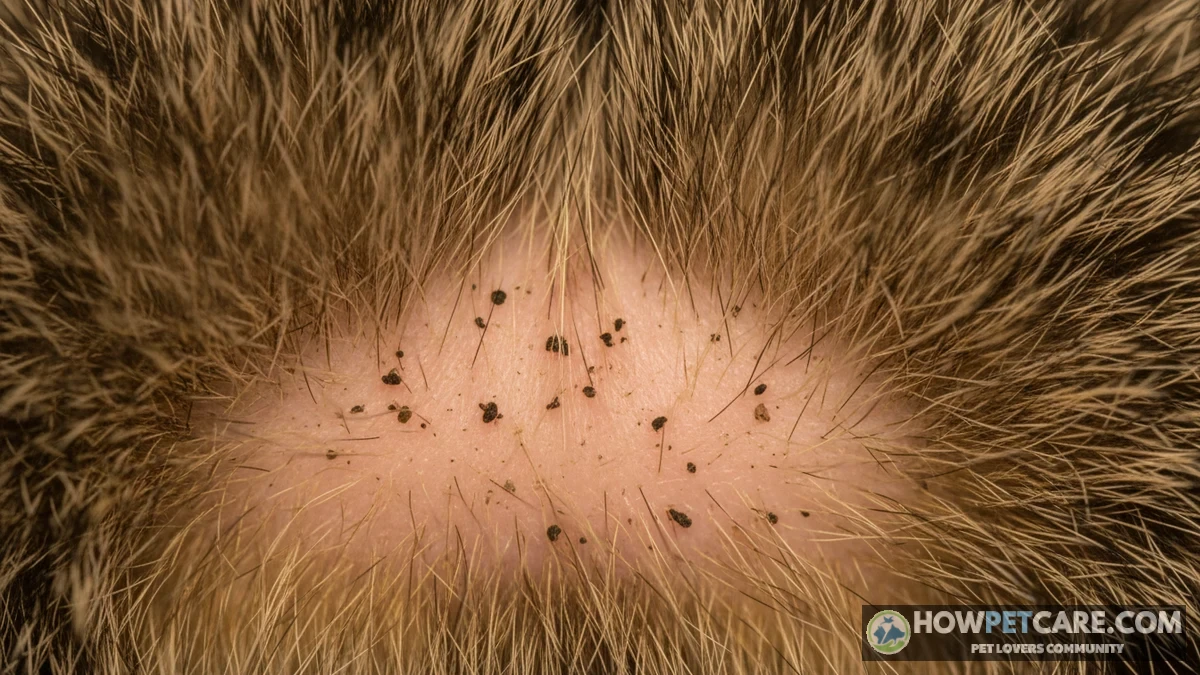

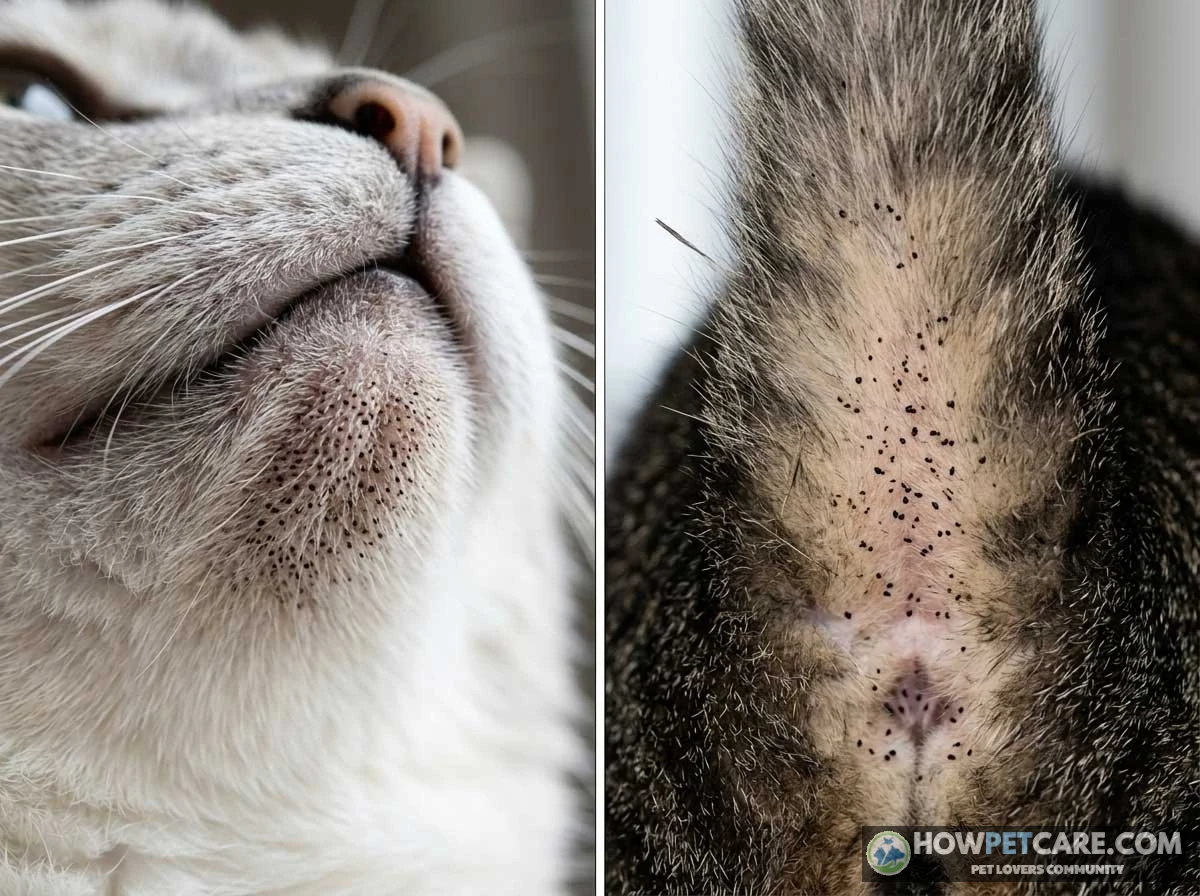
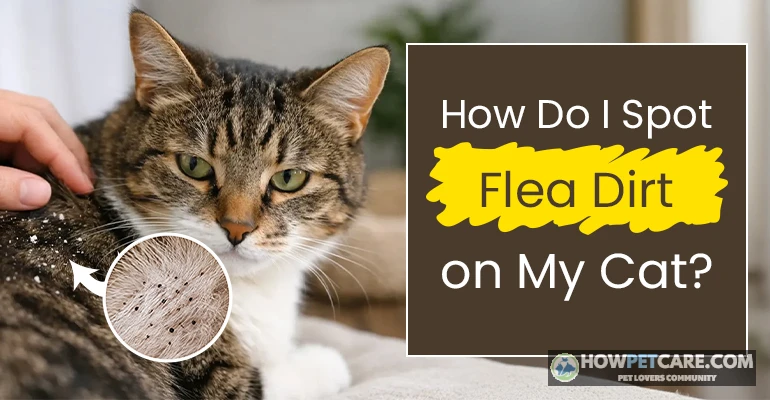
Flea dirt is flea feces—digested blood that looks like tiny black or dark-brown specks in your cat’s coat, usually near the tail base, back, and belly. To confirm it, place the specks on a damp white paper towel: a reddish-brown smear means fleas have fed on your cat.
Flea dirt is flea feces made up of digested blood. It looks like tiny black or dark-brown specks. If those specks leave a reddish smear when wet, fleas have fed on your cat—even if you can’t find a live flea.
A positive wet paper towel test means fleas are, or recently were, on your cat—so treat your cat and every other pet, and clean the home at the same time.
Confirm Flea Dirt in Two Minutes With the Wet Paper Towel Test
What you need
- A plain white paper towel
- A small bowl of warm water
- A fine-toothed flea comb, or your fingers if the specks are easy to pick off
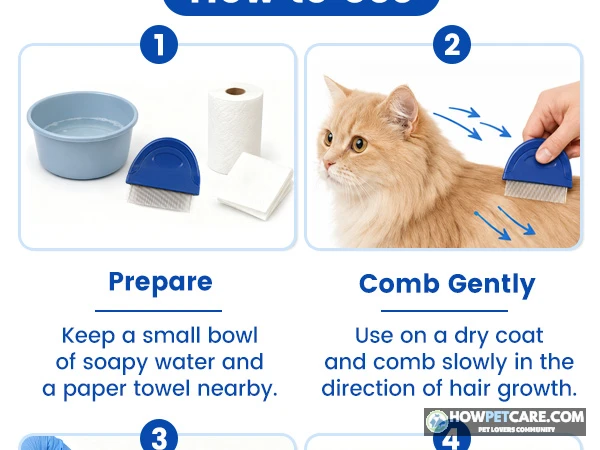
Step-by-step: how to do the test
-
Dampen the towel
Wet the paper towel until it’s moist but not dripping.
-
Collect specks
Comb a section of your cat’s coat over the towel, or pick 5–10 specks from the fur and drop them onto it.
-
Wait
Leave the specks for 1–2 minutes so the moisture can soak in.
-
Press and smear
Press each speck gently with a fingertip or the corner of the towel, then smear it.
-
Read the color
Check the smear, not the original speck. A reddish-brown or rust-colored halo points to flea dirt. Gray-brown or muddy color, or no color change, points to something else.
How to read the result
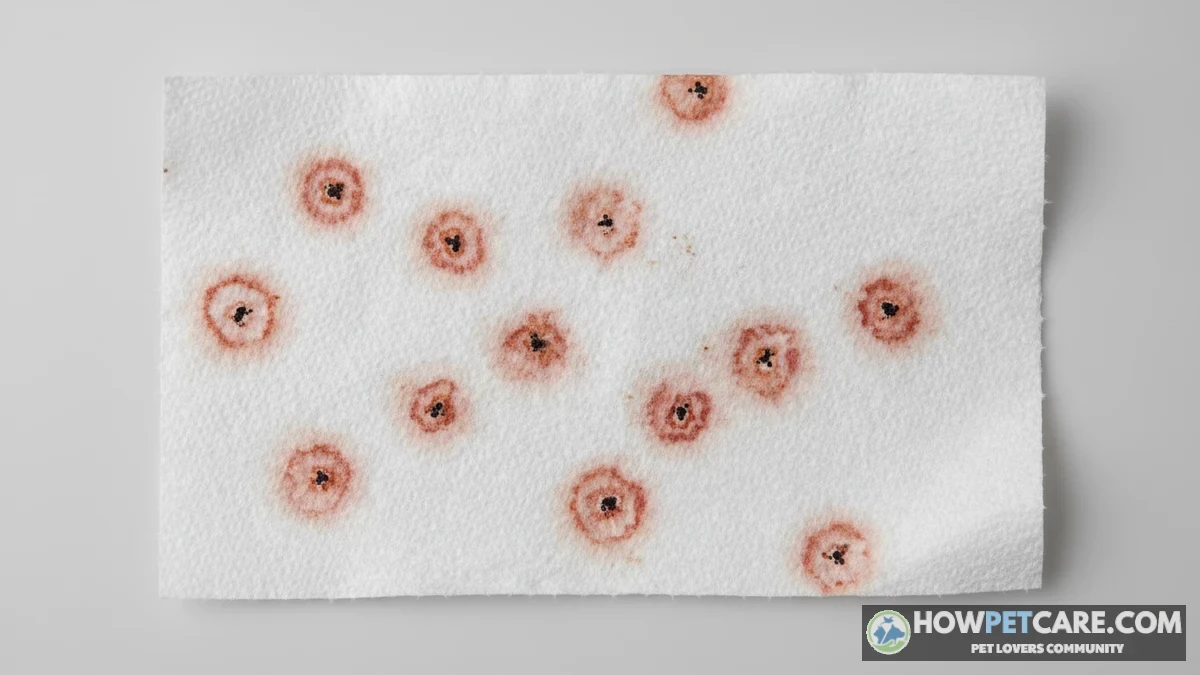
Digested blood dissolves in water, creating the red halo. If you see one, fleas have fed on your cat. The test won’t work if the towel is dry; moisture matters. For a dark or long coat, comb over a white sheet of paper first so you can see the debris before wetting it.
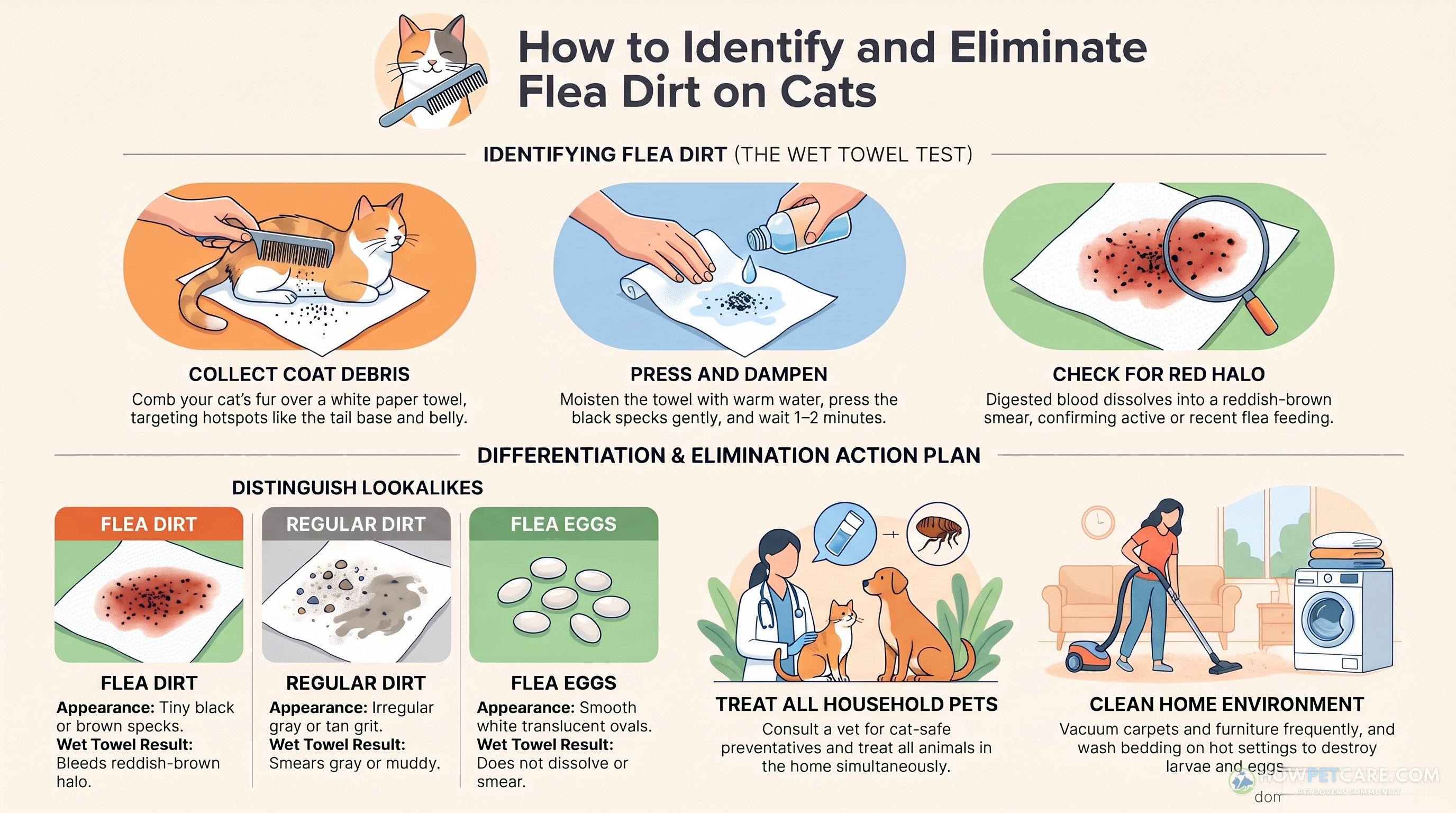
Where to Check Your Cat for Flea Dirt (and How to Comb It Out)
Hotspots on the body
Flea dirt tends to collect where fleas feed and where cats groom less thoroughly:
- Base of the tail and rump
- Lower back
- Belly and groin
- Inner thighs
- Neck and behind the ears
Part the fur against the direction it grows, or comb from head to tail over a white towel or sheet of paper. After each pass, dip the comb in soapy water to drown any live fleas caught in its teeth — see our guide to what fleas look like on cats if you want to confirm a catch. Cats can groom away both fleas and their droppings, so a cat may have fleas with little visible dirt. Scratching, overgrooming, or bald patches can also be clues.
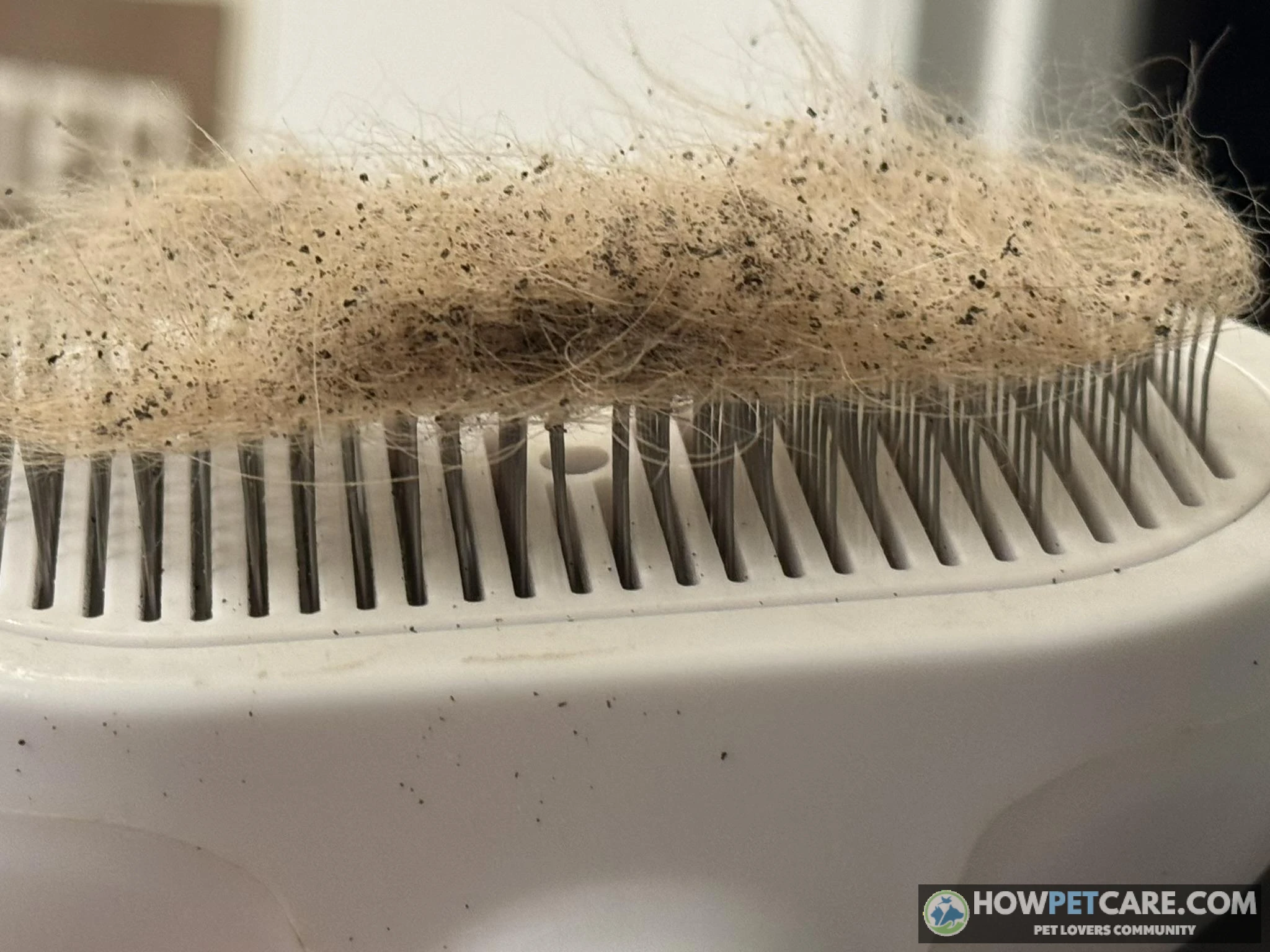
Using a flea comb step by step
- Lay a white towel across your lap.
- Comb slowly from head to tail, keeping the teeth close to the skin.
- Tap the comb onto the towel after each stroke.
- Check the debris and use the wet paper towel test on any black specks.
- Dunk the comb in hot, soapy water between strokes.
Check the places your cat sleeps. Flea dirt can fall into the bedding; the home section covers where else to look.
Flea Dirt vs Regular Dirt, Dandruff, Cat Acne, Scabs and Flea Eggs
Side-by-side comparison
Use the table to compare black or white specks and decide what to do next.
| Look-alike | Appearance | Where it appears | Wet paper towel result | Attached to skin or loose | Next step |
|---|---|---|---|---|---|
| Flea dirt | Tiny black or dark-brown specks, comma- or pepper-shaped, fairly uniform | Tail base, lower back, belly, groin, behind ears | Bleeds a reddish-brown or rust-colored smear | Loose in the coat, sits on skin surface | Positive test — start flea control protocol |
| Regular dirt / litter debris | Gritty, irregular sizes and shapes, may be tan or gray | Anywhere the coat contacts the floor; paws, belly | Smears gray-brown or muddy, no red | Loose, brushes off easily | Brush or wipe away; no treatment needed |
| Dandruff | White, gray, or translucent flat flakes | Along the back, especially near the base of hairs | Flattens or dissolves when wet, never red | Loose, clings near hair shafts | Dry skin — check diet, grooming, humidity |
| Cat acne | Blackheads — dark dots embedded in pores | Chin and lips only | No smear; specks stay fixed to the skin | Attached — inside skin pores | Clean chin daily; vet if inflamed or swollen |
| Scabs / crusts | Hard brown or rust-colored patches, irregular | Anywhere the cat scratches; often neck and back | Attached crusts don’t smear; may ooze if picked off | Attached — part of the skin | May signal flea allergy; see vet if spreading |
| Flea eggs | Tiny whitish or translucent ovals, smooth, rice-grain-like but smaller | On the cat briefly; mostly shed into bedding | No smear; stays whitish, does not dissolve | Loose — slides off fur easily | Check bedding; indicates an established infestation |
Rule of thumb: If a speck is loose and black, wet-test it. If it’s attached to the skin or appears only on the chin, the towel test won’t help; it may be a skin issue instead.
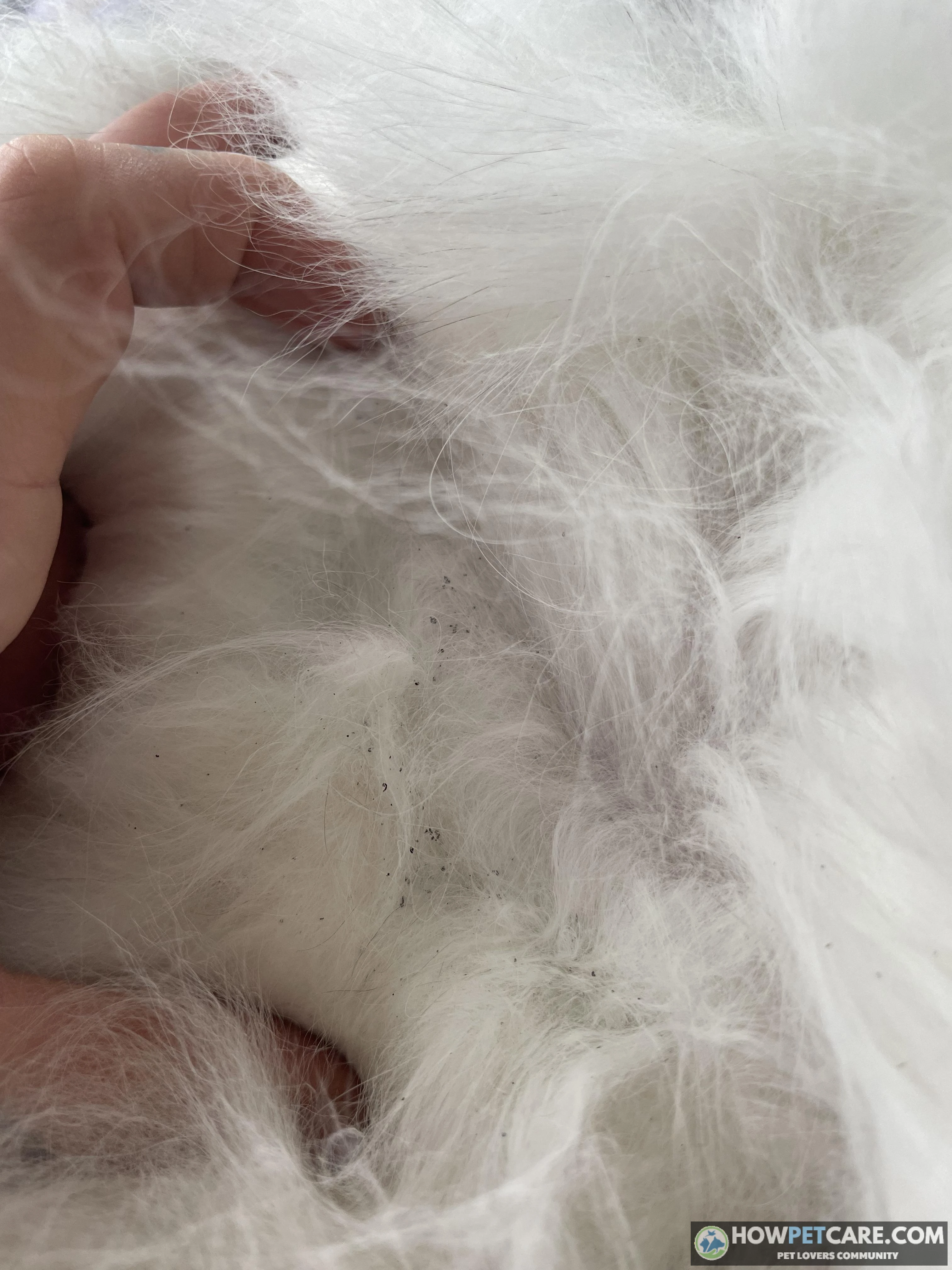
Quick decision checklist
- Loose black specks + red smear → flea dirt.
- Loose black specks + gray/muddy smear → regular dirt or litter dust.
- White/gray flakes → dandruff.
- Black dots only on chin → cat acne.
- Hard crusts on skin → scabs (often from flea allergy dermatitis).
- Tiny white ovals in bedding → flea eggs.
Home identification has limits. If specks appear with skin lesions or the test result is unclear, a vet can examine your cat’s skin.
| Look-alike | Appearance | Where it appears | Wet paper towel result | Attached to skin or loose | Next step |
|---|---|---|---|---|---|
| Flea dirt | Tiny black or dark-brown specks, comma- or pepper-shaped, fairly uniform | Tail base, lower back, belly, groin, behind ears | Bleeds a reddish-brown or rust-colored smear | Loose in the coat, sits on skin surface | Positive test — start flea control protocol |
| Regular dirt / litter debris | Gritty, irregular sizes and shapes, may be tan or gray | Anywhere the coat contacts the floor; paws, belly | Smears gray-brown or muddy, no red | Loose, brushes off easily | Brush or wipe away; no treatment needed |
| Dandruff | White, gray, or translucent flat flakes | Along the back, especially near the base of hairs | Flattens or dissolves when wet, never red | Loose, clings near hair shafts | Dry skin — check diet, grooming, humidity |
| Cat acne | Blackheads — dark dots embedded in pores | Chin and lips only | No smear; specks stay fixed to the skin | Attached — inside skin pores | Clean chin daily; vet if inflamed or swollen |
| Scabs / crusts | Hard brown or rust-colored patches, irregular | Anywhere the cat scratches; often neck and back | Attached crusts don't smear; may ooze if picked off | Attached — part of the skin | May signal flea allergy; see vet if spreading |
| Flea eggs | Tiny whitish or translucent ovals, smooth, rice-grain-like but smaller | On the cat briefly; mostly shed into bedding | No smear; stays whitish, does not dissolve | Loose — slides off fur easily | Check bedding; indicates an established infestation |
Flea Dirt but No Fleas on Your Cat: Active Infestation or Old Residue?
A positive test shows that fleas fed on your cat at some point. Adult fleas move quickly, hide in the coat, and are often groomed away. It’s common not to see one, and that doesn’t rule out an active problem.
Signs the infestation is still active
- Fresh dirt returns within a day or two of thorough combing
- New itching, chewing, or overgrooming
- Bites on people (ankles, legs), which are easy to confuse with bed bug bites needing different care
- Flea dirt or tiny white eggs in the cat’s bedding
- A live flea caught in the comb
Signs it may be leftover debris
- A single small patch of specks on the first comb-out
- No new specks after 5 days of daily rechecks
- No itching or skin changes
- Cat is on consistent, vet-recommended flea prevention
Most fleas are in the environment as eggs, larvae, and pupae, not on the cat. That means a cat who looks clean can still be part of an infestation. If you’re unsure, contact your vet before starting a new product, especially if your cat is a kitten, senior, or taking medication.
Active Infestation or Old Residue? A 5-Day Decision Path
Check for new signs over the next few days to see whether fleas may still be feeding:
- Day 0 — Deep clean: Comb the entire cat over a white towel for 5+ minutes, collect all specks, and discard them. Wash the cat’s bedding on hot. Note the date.
- Day 1–2 — Recheck: Comb the same hotspots (tail base, belly, neck) over the towel. Fresh specks back within 24–48 hours = active feeding — fleas are still on or near the cat.
- Day 3–5 — Look for corroborating signs:
- New scratching, chewing, or overgrooming
- Small bites on your own ankles or legs
- Specks or tiny white eggs in the washed bedding
- Any live flea caught in the comb (dip it in soapy water)
- Verdict — likely active: any fresh dirt after the clean, any live flea, or new itching. Proceed to treatment.
- Verdict — likely old residue: one small patch of specks on Day 0, nothing new by Day 5, no itching, and the cat is on consistent flea prevention. Residue from a resolved problem can cling to the coat for a while.
When in doubt, treat — most of a flea population lives in the environment as eggs and larvae, not on the cat. Call your vet before starting a new product if the cat is a kitten, senior, or on medication.
How Much Flea Dirt Is a Problem? Severity Guide and Health Risks to Your Cat
The number of specks alone doesn’t determine severity. Look at the full picture:
A practical severity gauge
| Observation | Likely severity |
|---|---|
| A few specks in one spot, no itching, cat on prevention | Low — monitor |
| Steady specks across back and tail base, scratching present | Moderate — treat promptly |
| Heavy dirt, skin lesions, hair loss, pale gums, lethargy | High — see vet immediately |
When to call the vet
- Pale gums, weakness, or low energy—especially in kittens, very small, elderly, or ill cats. Heavy flea feeding can cause anemia.
- Intense itching, scabbing, and hair loss from flea allergy dermatitis (FAD). Even a few bites can trigger a reaction in allergic cats.
- Rice-like segments near the tail or in stool may be tapeworm, which cats can get by swallowing an infected flea while grooming. Tapeworm doesn’t come from the dirt itself.
- Flea dirt mainly signals the presence of fleas. Fleas can bite people and transmit Bartonella henselae (cat scratch disease) and Rickettsia typhi (murine typhus). We cover whether fleas can live on humans in more detail in a separate guide.
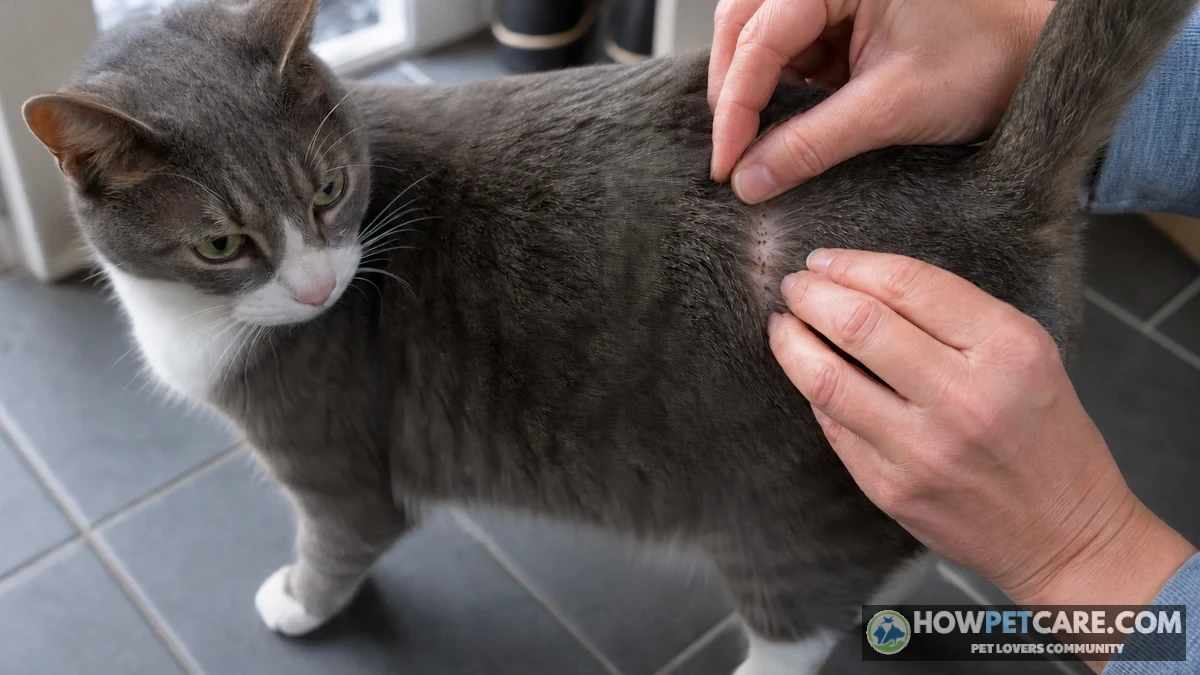
The cat flea Ctenocephalides felis is the most common species on cats and dogs. Treat all pets in the household at the same time.
Getting Flea Dirt Off Your Cat’s Coat and Killing the Fleas That Made It
There are two parts to the job: remove the debris with a comb or bath, then stop the fleas with treatment. Removing dirt alone won’t stop the fleas.
Combing and bathing: what actually works
- Daily flea combing over a white towel removes specks and live fleas, and helps you track progress.
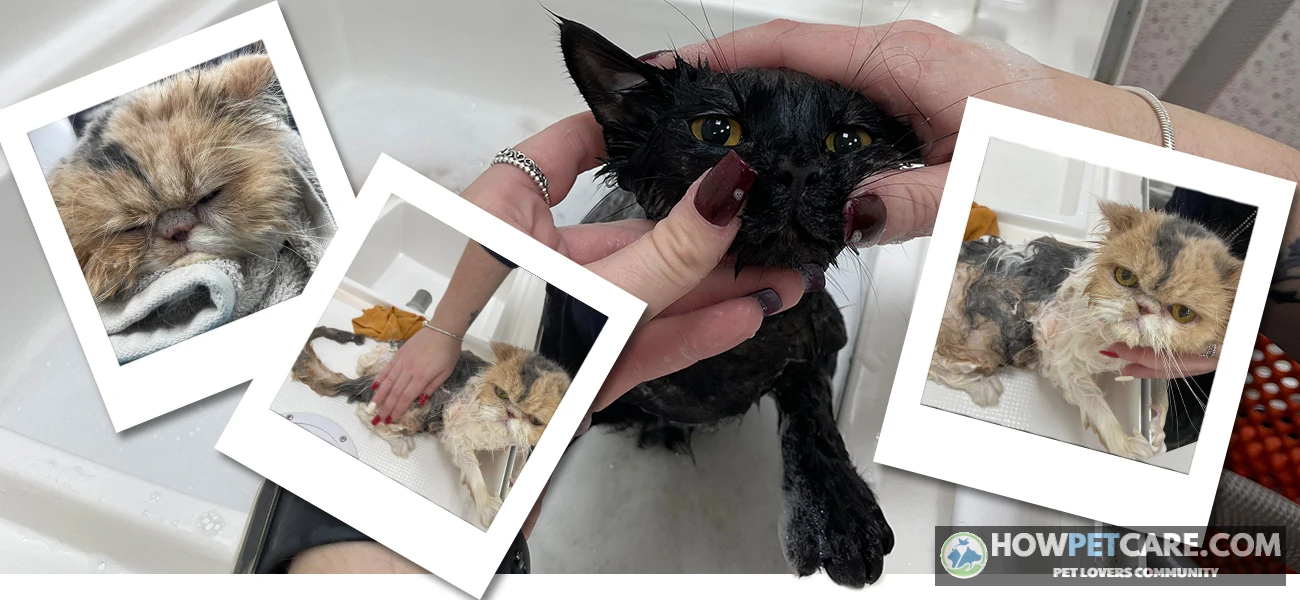
- Bathing: Use cat-safe products only. Regular cat shampoo can wash away loose dirt, but it won’t prevent reinfestation. Never use dog flea products on cats. Many cats dislike baths, so go gently or ask a groomer or vet for help.
Do not use dog products, essential-oil remedies, or unverified home treatments on cats. Ask a vet about kittens and pregnant or sick cats.
Choosing a cat-safe flea treatment with your vet
Ask your vet about a cat-labeled product, such as a spot-on flea prevention — our Revolution for cats guide covers one common prescription option — or an oral option (isoxazoline class, insect growth regulators like S-methoprene or pyriproxyfen). Follow the label for your cat’s weight and age. Keep the conversation focused on product categories and safety, not on choosing a specific product.
Flea Dirt in Your Home: Room-by-Room Inspection, Cleaning and Stain Removal
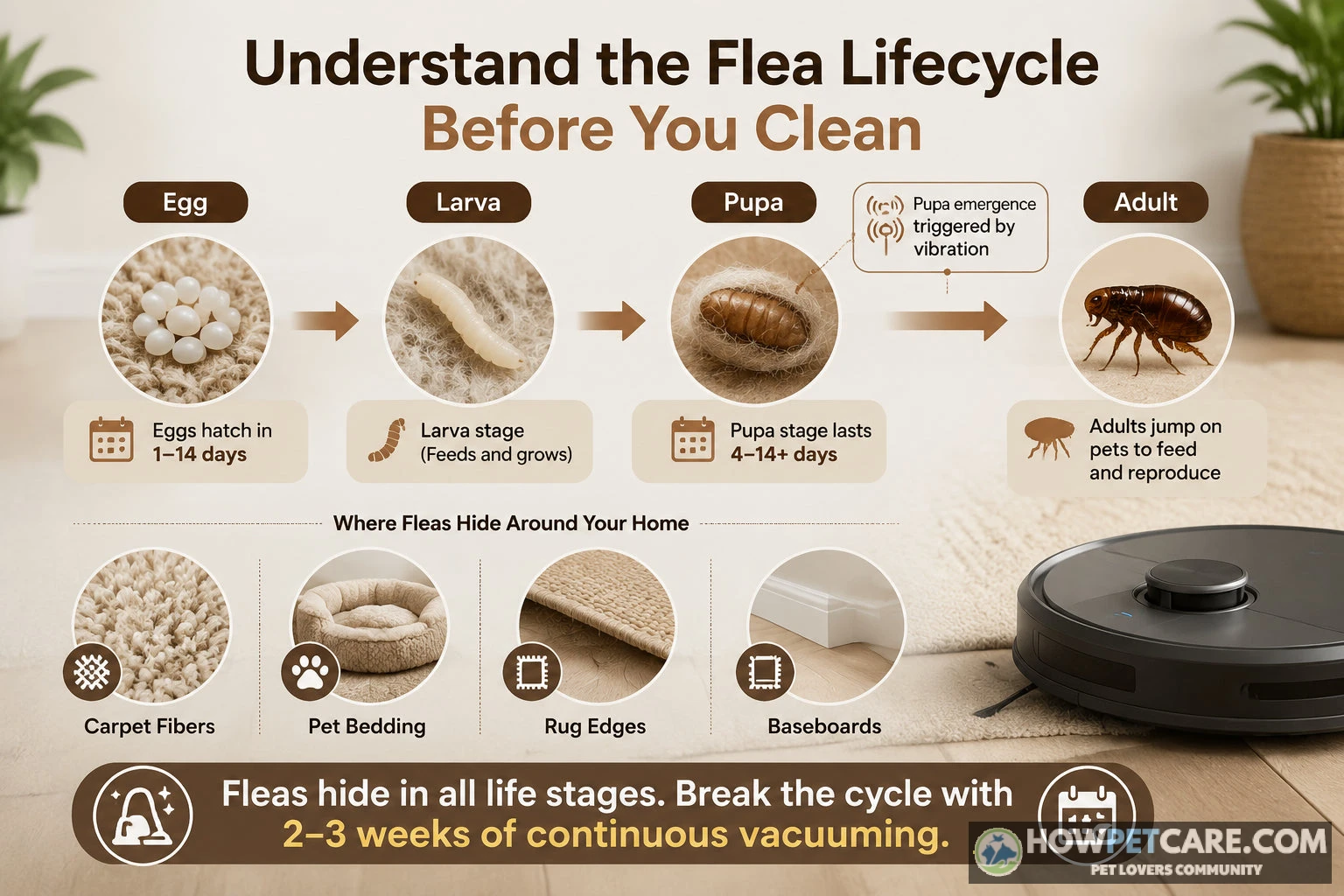
Why vacuuming and washing break the flea life cycle
Flea larvae feed on flea dirt—digested blood and adult flea feces—in the environment. Removing it takes away their main food source. Washing and vacuuming also pick up eggs and larvae that can keep the cycle going after you treat the cat.
Room-by-room checklist
| Location or item | What to look for | How to clean or treat | How often to repeat |
|---|---|---|---|
| Cat bed, blankets, cat tree covers | Black specks, white eggs, rust stains | Machine wash hot, dry on high heat | Weekly during treatment, monthly after |
| Your bed and sofa (if the cat sleeps there) | Specks on sheets and cushions, especially where the cat curls up | Wash bedding hot; vacuum cushions and crevices | Every few days while treating |
| Carpet edges and along baseboards | Specks, eggs, or tiny larvae where carpet meets wall | Vacuum slowly with crevice tool, working edges and corners | Every 2–3 days during treatment |
| Under furniture and low shelves | Accumulated debris in shadowed, undisturbed spots | Move furniture if possible; vacuum thoroughly underneath | Weekly |
| The cat’s favorite warm spots (sun patches, near vents) | Concentrated specks — larvae prefer warmth and darkness | Wet paper towel test on specks; vacuum area | Every 2–3 days |
| Hardwood or tile cracks | Specks lodged in gaps between boards | Vacuum with crevice tool; mop with soapy water | Weekly |
| Car carrier and cat’s travel spots | Debris left after vet trips | Wipe down interior; wash any padding | After each use |
| Vacuum itself | Fleas and larvae can survive inside | Empty the canister or seal and bin the bag outdoors immediately after each session | Every single session |
Removing rust-colored stains from bedding and carpets
- Pre-soak in cool water.
- Use an enzyme or oxygen-based cleaner.
- Avoid hot water on blood-based stains until they lift; heat sets protein stains.
- Test on a hidden spot first.
- Repeat cleaning every few days during treatment because pupae can hatch after treatment starts.
If you’re considering environmental sprays or foggers for the home, ask your vet which options are safe for cats and follow the product label directions.
How Long Flea Dirt Keeps Appearing After Treatment (and When It Means Treatment Failed)
What to expect week by week
| Time since treatment started | What to expect | Normal or concerning | What to do |
|---|---|---|---|
| First few days | Old specks still in the coat — treatment doesn’t remove debris that was already there. A few fleas may still be visible as they die off. | Normal | Comb daily over a white towel to clear old dirt; wash bedding; start home vacuuming |
| Week 1 | Fresh specks should be noticeably fewer and fainter. Pupae in the home may hatch and jump on the cat, but a working product kills them quickly. | Normal | Keep combing and vacuuming every few days; log what you collect |
| Weeks 2–3 | New flea dirt tapering off. Occasional speck may appear from a newly hatched flea killed after feeding. | Normal — still watch | Reapply or re-dose on the product’s schedule; don’t skip the date |
| Week 4 and beyond | Little to no fresh dirt; coat stays clean after combing | Normal — on track | Maintain prevention year-round, including for indoor cats |
| 4+ weeks with fresh reddish-smearing specks, live fleas, or continued itching | Product likely failing | Concerning | Call the vet — check for missed doses, wrong product/weight band, untreated pets, or an untreated home. Don’t stack products on your own. |
Note: Products vary in how quickly they kill fleas. Some act within hours, while others take longer. Check the label and your vet’s guidance rather than expecting fleas to disappear immediately.
Signs treatment is not working
- New, fresh flea dirt a month or more into consistent treatment
- Live fleas persist
- Itching or skin lesions continue
Common causes include missed doses or late reapplication, the wrong product or dose, untreated pets, or an untreated home or yard. Recheck the dose and timing, step up home cleaning, and call the vet rather than adding products on your own.
Your Flea Dirt Action Plan: What to Do Tonight and This Week
Tonight
- Run the wet paper towel test.
- Comb the cat over a white towel.
- Wash the cat’s bedding on hot.
- Check for pale gums or lethargy.
If test is positive
- Contact the vet about a cat-safe flea treatment.
- Treat every pet at once.
- Start the home cleaning checklist above.
If test is negative
- Use the lookalike table to identify acne, dandruff, or dirt.
- See the vet for skin problems that persist.
This week
- Comb daily over a white towel.
- Vacuum and wash bedding every few days.
- Log new specks to monitor progress.
Escalation criteria — see the vet promptly for
- Kittens, seniors, or sick cats
- Pale gums (anemia sign)
- Heavy infestation (large amounts of dirt, live fleas)
- Skin infection or open sores
- Treatment seems to be failing after 4 weeks
Prevention habit
Keep your cat’s flea prevention on schedule year-round as advised by your vet, including for indoor cats. Fleas can enter on clothing, shoes, other pets, or through shared hallways and windows.
For more on flea biology and the flea life cycle, see our guide to flea control in the home.
1Why does flea dirt produce a reddish-brown or rust-colored halo when placed on a damp paper towel?
Flea feces consists primarily of digested blood, which reconstitutes and bleeds out into a red halo when hydrated.
2Which body regions on a cat are considered primary hotspots where flea dirt and fleas tend to collect?
This region is a primary feeding ground where grooming is less thorough, making it a key site for debris accumulation.
3A pet owner performs a thorough comb-out and washes all cat bedding on Day 0. On Day 2, fresh black specks appear near the tail base during a recheck. What does this outcome indicate?
The appearance of new flea dirt within 24 to 48 hours after a complete clean-out confirms ongoing, active feeding by adult fleas.
4What is the primary biological reason that frequent vacuuming of carpets and baseboards breaks the flea life cycle?
Flea larvae rely on adult flea feces (flea dirt) in the environment to survive, so removing it starves the larval stage.
5According to home environmental control guidelines, which steps are necessary to manage flea dirt and prevent reinfestation?
High heat during washing and drying kills eggs and larvae while dissolving organic debris trapped in fabrics.
6Two weeks into a vet-recommended flea treatment, an owner notices an occasional black speck that bleeds red on a damp towel, but new dirt is tapering off and the cat is comfortable. What does this indicate?
Pupae in the environment continue hatching for weeks; as long as the treatment kills them quickly after feeding, specks will taper off normally.
7What is the most likely route by which an indoor-only cat living in a high-rise apartment can develop flea dirt and a flea infestation?
Fleas are opportunistic hitches that can easily travel indoors via human footwear, clothing, or shared building spaces.
FAQ
Is flea dirt dangerous to humans?
Flea dirt itself is mainly a sign that fleas are present, and it can irritate skin or trigger allergies in some people. The bigger concern is the fleas, which can bite people and can carry infections, so treat the cat and home promptly.
Can my cat get tapeworm from flea dirt?
No. Cats get the common flea tapeworm by swallowing an infected flea, usually while grooming. Flea dirt indicates fleas are present, so tapeworm is a possible consequence, but it does not cause it directly.
Can an indoor-only cat have flea dirt?
Yes. Fleas can enter on people’s clothing and shoes, on other pets, or through shared hallways and windows, and indoor homes can sustain an infestation. A positive test on an indoor cat still means fleas and warrants treatment.
How can I check a black cat or dark-coated cat for flea dirt?
Comb the coat over a white towel or sheet of paper so specks fall onto a light surface, then do the wet paper towel test on them. Check the base of the tail, back and belly, where dirt collects.
Do flea dirt specks always mean the infestation is serious?
No. Specks show that fleas have fed, but the number of specks is not a reliable measure of severity. Itching, skin damage, pale gums, tiredness and repeated new dirt after treatment say more about how serious the problem is.