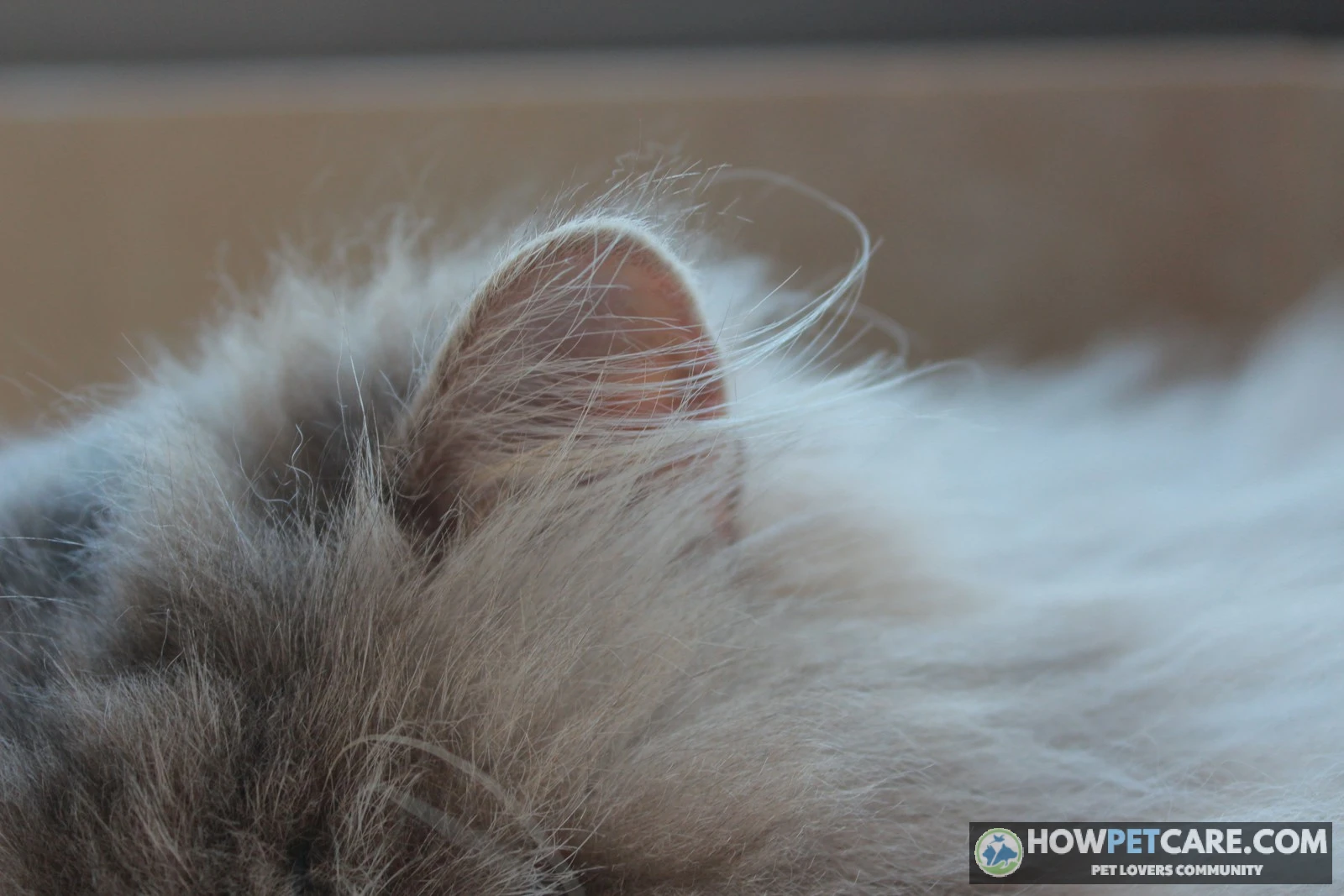

The most common cat ear problems, roughly in order of frequency:
- Otitis externa driven by an underlying cause — ear mites in kittens and outdoor cats, allergies in itchy cats
- Allergic otitis — recurring red, itchy ears with little debris
- Yeast and bacterial overgrowth — usually secondary to mites or allergy
- Foreign bodies — grass seeds causing sudden, violent head shaking
- Aural hematoma — a puffy, fluid-filled flap from scratching
- Polyps, tumors, and middle/inner ear disease — less common but more serious
Signs of Ear Problems in Cats and What Each Pattern Usually Points To
The signs of common cat ear problems are easy to recognize but harder to interpret: scratching, head shaking, dark or waxy discharge, odor, redness, a puffy ear flap, or a head tilt or wobble. These signs often point to inflammation of the outer ear canal, called otitis externa. The inflammation is usually secondary to another problem, such as ear mites, an allergy, a foreign body, or bacterial or yeast overgrowth in an already irritated canal.
Ear mites are a leading cause of outer-ear inflammation in kittens and outdoor cats. Their telltale sign is dark brown, coffee-ground-like debris in the canal [#N]. Allergies are another major cause: the ears may be red, warm, and itchy long before much debris appears. Infection often follows the allergy rather than causing it.
No single symptom tells the whole story. Scratching and head shaking occur with nearly every ear condition, from a mild mite infestation to a polyp buried behind the eardrum. The combination of clues helps narrow the cause: the appearance and smell of any discharge, pain on touch, swelling of the flap, whether one or both ears are affected, and any change in balance.
Why does my cat keep scratching its ears and shaking its head?
Something in the canal is likely itching or hurting, and scratching and head shaking are how a cat responds. The behavior pattern can help narrow the cause:
- Sudden, violent head shaking with one ear held flat, in a cat that was fine an hour earlier, raises suspicion of a foreign body, such as a grass seed or other debris lodged in the canal.
- Both ears, intense scratching, kitten or shelter cat in a multi-cat home: ear mites are high on the list.
- A long-running itch with redness but little debris, especially if the cat also scratches its face, chin, or belly: allergic otitis.
- Scratching focused on one ear that keeps relapsing after treatment: a polyp, a mass, or a stubborn single-ear infection that was never fully cleared.

Scratching can cause further injury. Forceful scratching and head shaking can rupture small blood vessels in the ear flap (pinna), producing an aural hematoma, a fluid-filled pocket a vet has to repair. A cat that suddenly develops a puffy flap often has a history of itching going back weeks.
Discharge color and odor: what black, yellow, brown, or bloody discharge suggests
Discharge is a useful clue to describe to your vet. Its color, texture, and smell can help the vet decide what to investigate.
- Dry, crumbly, dark brown to black debris that looks like coffee grounds: strongly suggests ear mites.
- Yellow to green, wet, pus-like discharge: bacterial infection, often developing on top of mites or an allergy.
- Dark brown, greasy wax with a sweet or musty smell: yeast overgrowth, common in allergic cats and in ears that have been treated repeatedly.
- Blood, fresh or dried: scratching trauma, a hematoma that has burst, or a growth in the canal.
- No discharge at all, just red itchy skin: early allergic inflammation, or an early infection before debris accumulates.
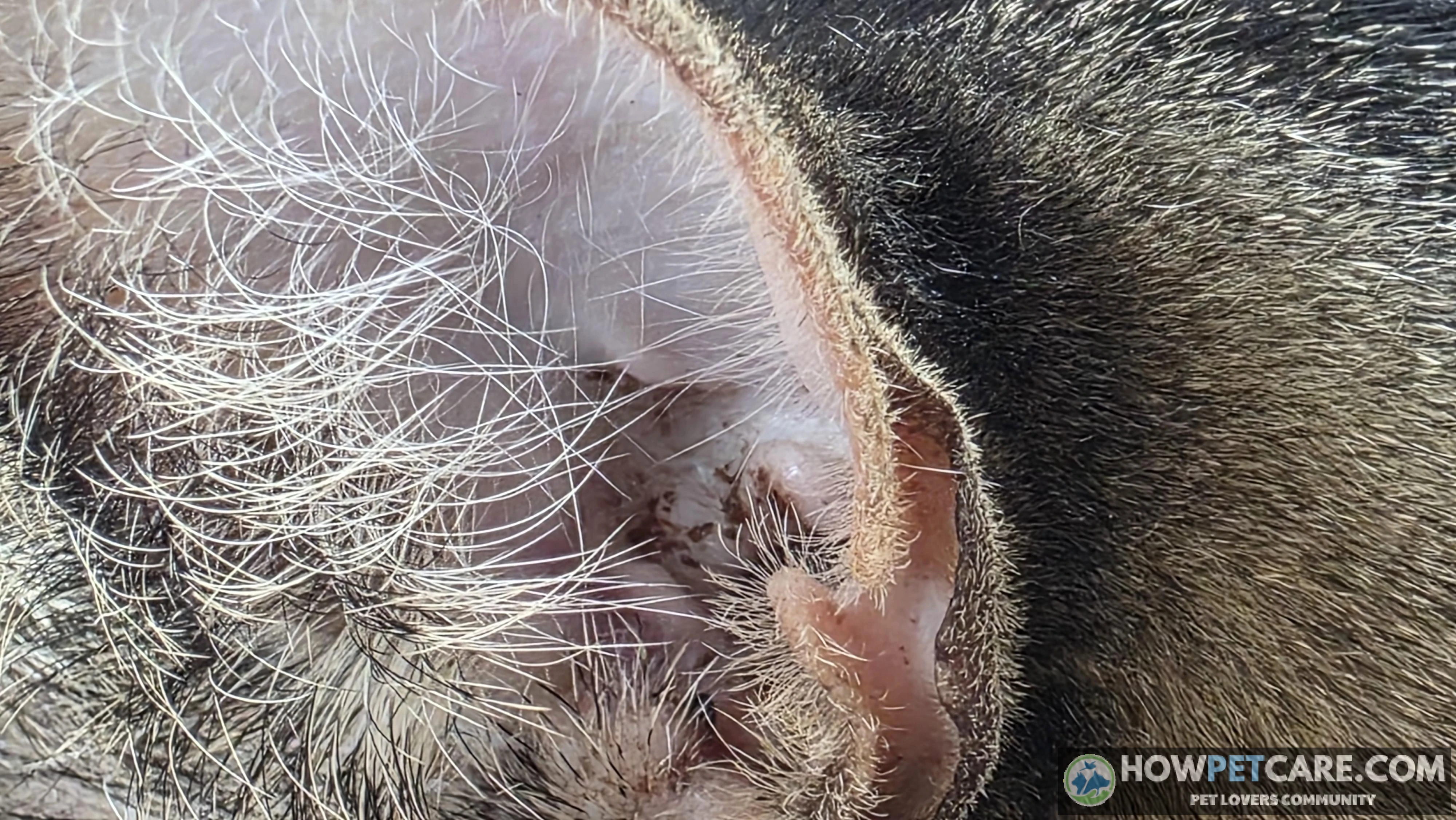
Color alone can’t confirm the cause. Heavy wax can look like mite debris, and a mixed yeast–bacterial infection can resemble either infection on its own. A vet swabs the canal and examines the sample under a microscope rather than guessing from a photo.
Swelling, head tilt, and balance changes: the signs that point deeper than the outer ear
A swollen flap and a tilted head signal different problems. Swelling of the flap itself is usually a hematoma, a mechanical injury caused by scratching rather than an infection of the canal. A head tilt, circling, wobbling, or jerky eye movements point deeper, toward the middle or inner ear, or a polyp or mass pressing on structures behind the canal.
Untreated outer-ear disease can spread inward. Otitis externa left alone can progress to otitis media and otitis interna, causing facial muscle weakness, loss of balance, and permanent deafness [#N].
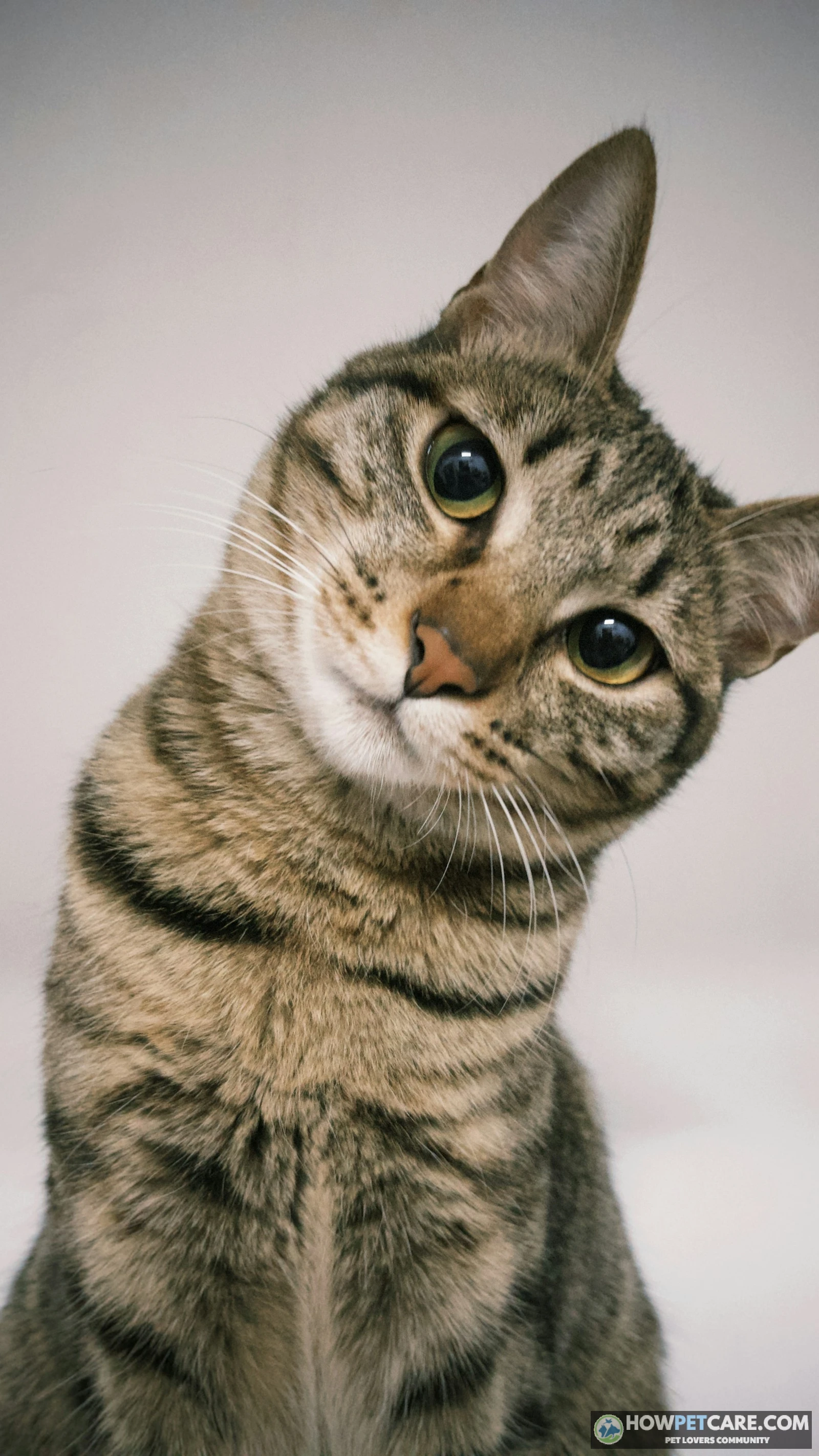
The table below matches the full pattern of discharge, odor, itch, pain, swelling, and balance changes to the conditions a vet would consider first.
| Likely cause | Discharge color and texture | Odor | Itch level | Pain | Swelling | Head tilt or balance change | Typical clue |
|---|---|---|---|---|---|---|---|
| Ear mites (Otodectes cynotis) | Dry, crumbly, dark brown to black, like coffee grounds | Little to none | Intense | Mild to moderate | Flap can swell if scratched raw | Uncommon | Both ears, kitten, shelter, outdoor, or multi-cat home |
| Bacterial otitis externa | Yellow-green, wet, pus-like | Foul, sour | Moderate | Moderate to severe | Canal red and narrowed | Possible if middle ear involved | Wet discharge, ear painful to touch |
| Yeast overgrowth | Dark brown, greasy or waxy | Sweet or musty | Intense | Mild to moderate | Canal thickened and red | Uncommon | Recurring problem in an allergic cat |
| Allergic inflammation | Little debris at first | None early | Intense | Mild | None | None | Itchy skin elsewhere, seasonal or food-linked pattern |
| Aural hematoma | None, or blood if it has burst | None | Not the main issue | Painful when touched | Soft, fluid-filled pocket on the flap | None | Puffy flap after a bout of scratching or head shaking |
| Ear polyp | Variable, often minimal, usually one ear | Variable | Mild | Variable | Visible fleshy mass deep in the canal | Possible | One-sided, relapsing, sometimes noisy breathing |
| Middle or inner ear disease | May be absent | Possible | Variable | Possible | Flap usually normal | Common | Tilt, circling, nystagmus, falling |
| Squamous cell carcinoma | None; crust or ulcer on the flap | None | Low | Variable | Thickened, ulcerated lesion that will not heal | Rare | White or light-pigmented ear tips with sun exposure |
Match the sign: what each clue most likely points to
Find the row that matches what you see, then read across. A single clue rarely identifies the cause, but it can narrow the possibilities.
| Observable clue | Top 1–3 likely causes | Confidence-limit caveat |
|---|---|---|
| Dry, crumbly, coffee-ground debris in one or both ears | 1. Ear mites 2. Dried wax or debris from another cause | Strongly suggests mites when both ears itch intensely, but a swab under the microscope confirms it in minutes |
| Yellow-green, wet, pus-like discharge | 1. Bacterial infection 2. Infection secondary to mites or allergies | Suggests infection, not what started it; cytology separates bacteria from yeast |
| Dark brown, greasy wax with a sweet or musty smell | 1. Yeast overgrowth 2. Mixed yeast–bacterial infection | Smell alone can’t establish severity; a red, painful canal needs a swab regardless |
| Red, warm, itchy ears with little debris | 1. Allergic inflammation 2. Early infection | Early allergy and early infection can look identical; the recurrence pattern matters more than one snapshot |
| Soft, puffy, fluid-feeling ear flap | 1. Hematoma from scratching or head shaking | The swelling is the effect, not the cause; look for the itch that triggered it |
| Head tilt, wobbling, circling | 1. Middle or inner ear disease 2. Polyp | Outer-ear clues may be absent; this points deeper than the canal and raises urgency |
| Symptoms in one ear only, not resolving | 1. Polyp or mass 2. Foreign body 3. Stubborn single-ear infection | A one-sided problem that doesn’t respond to treatment needs imaging or a closer look, not another course of drops |
| Heavy wax, no odor, no itch, cat unbothered | 1. Normal variation 2. Early buildup | Likely benign; monitor for darkening, odor, or a fast return after wiping |
Both tables rank possibilities, not answers. If two rows fit, let the more urgent sign—pain, tilt, swelling, or bleeding—guide what you do next. Only a veterinary exam and ear cytology can confirm the cause.
Healthy Cat Ear vs. Mite Debris, Infection Discharge, Allergy Redness, and Hematoma
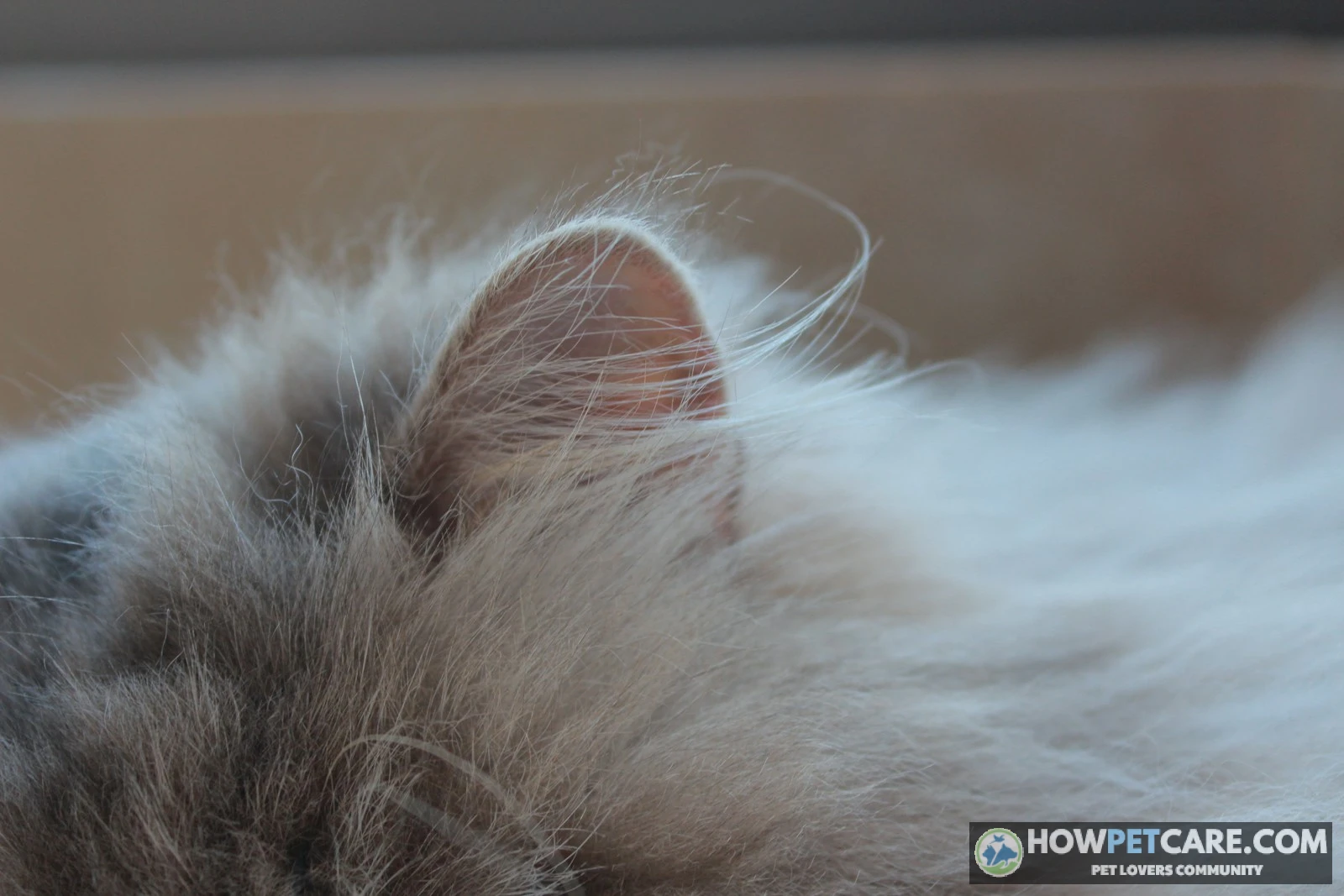
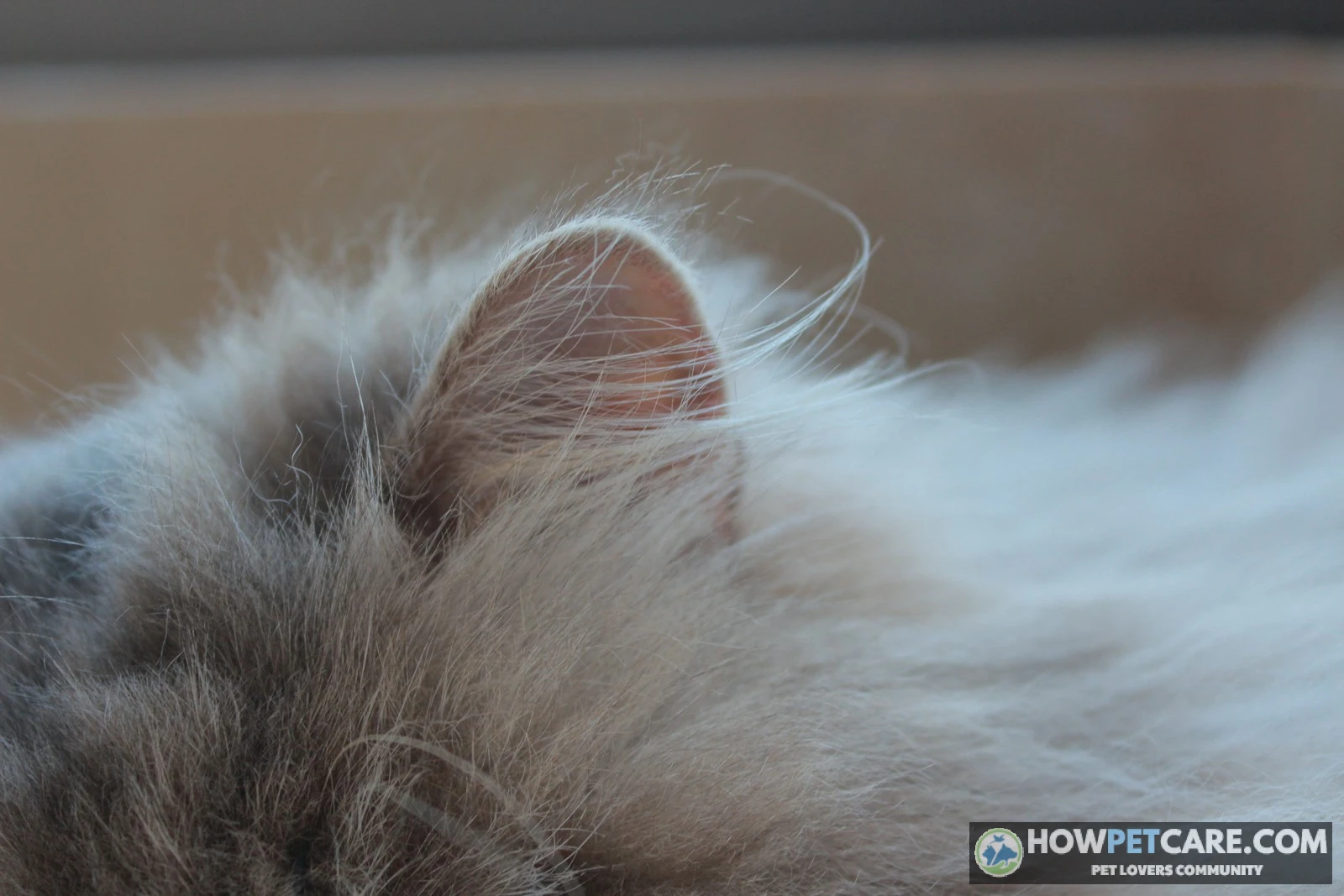
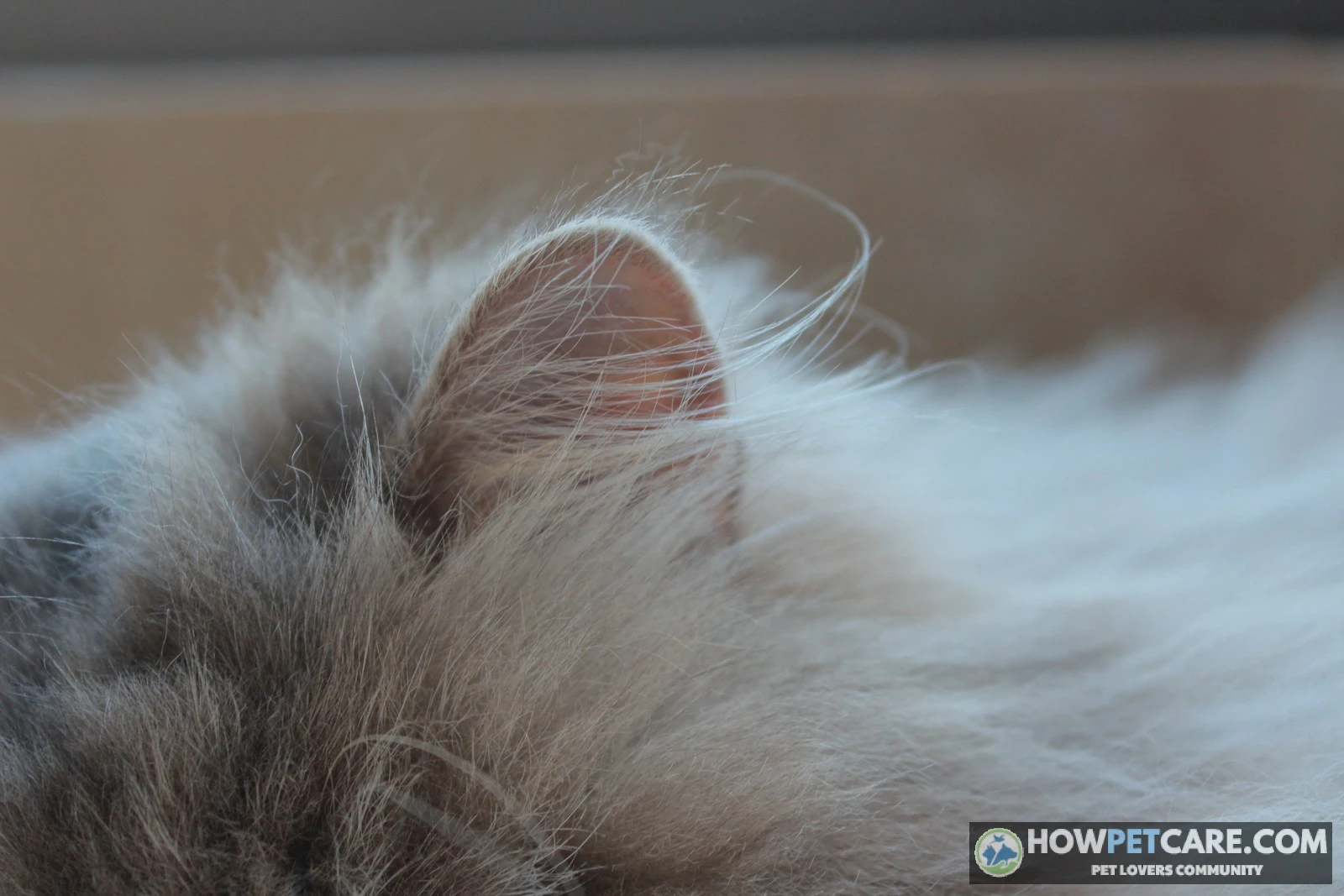
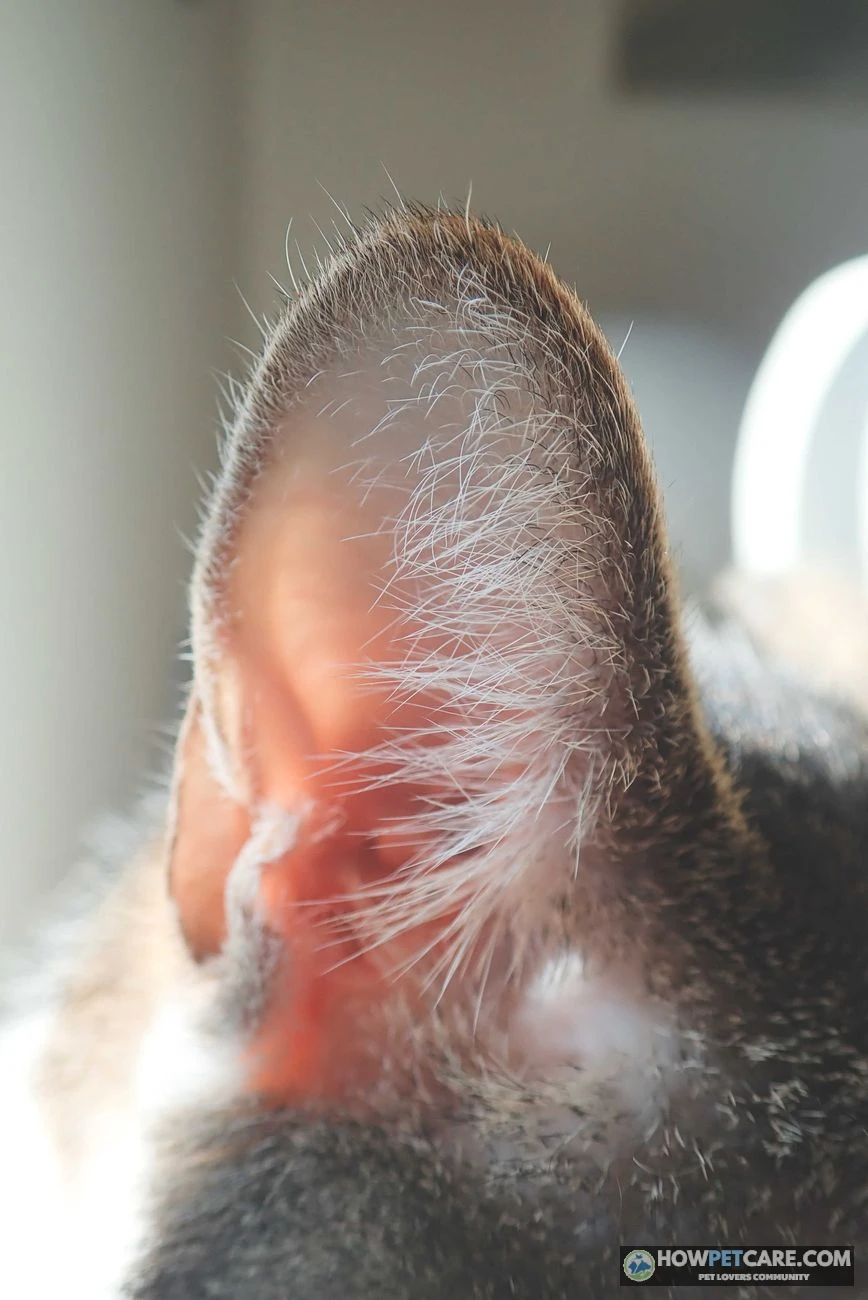
A healthy cat’s ear has a pale pink, clean inner flap and little or no visible wax in the canal. It has no odor. The cat lets you fold the flap back without flinching, and the skin feels flat and cool rather than warm or puffy. A small amount of light tan wax is normal variation, not a disease.
Ear mite discharge is dry and crumbly, dark brown to black, and often described as looking like coffee grounds. It sits in the canal and can spill onto the inner flap. It usually appears in both ears, itches intensely, and has little odor. The mites themselves are tiny white specks that are easy to miss without magnification, so owners usually notice the debris first.
Bacterial discharge is wetter: yellow to green and pus-like, often with a foul or sour smell. The canal may be red, swollen, and painful to touch. Yeast discharge is dark brown, greasy or waxy, with a sweet or musty odor; the canal may be thickened and red. You can’t reliably tell the two apart by eye.
Allergic ears are red, warm, and itchy, often with little debris at first. Clues may also appear elsewhere: the cat might scratch its chin, face, or belly, or its ears might flare every spring or after a diet change.
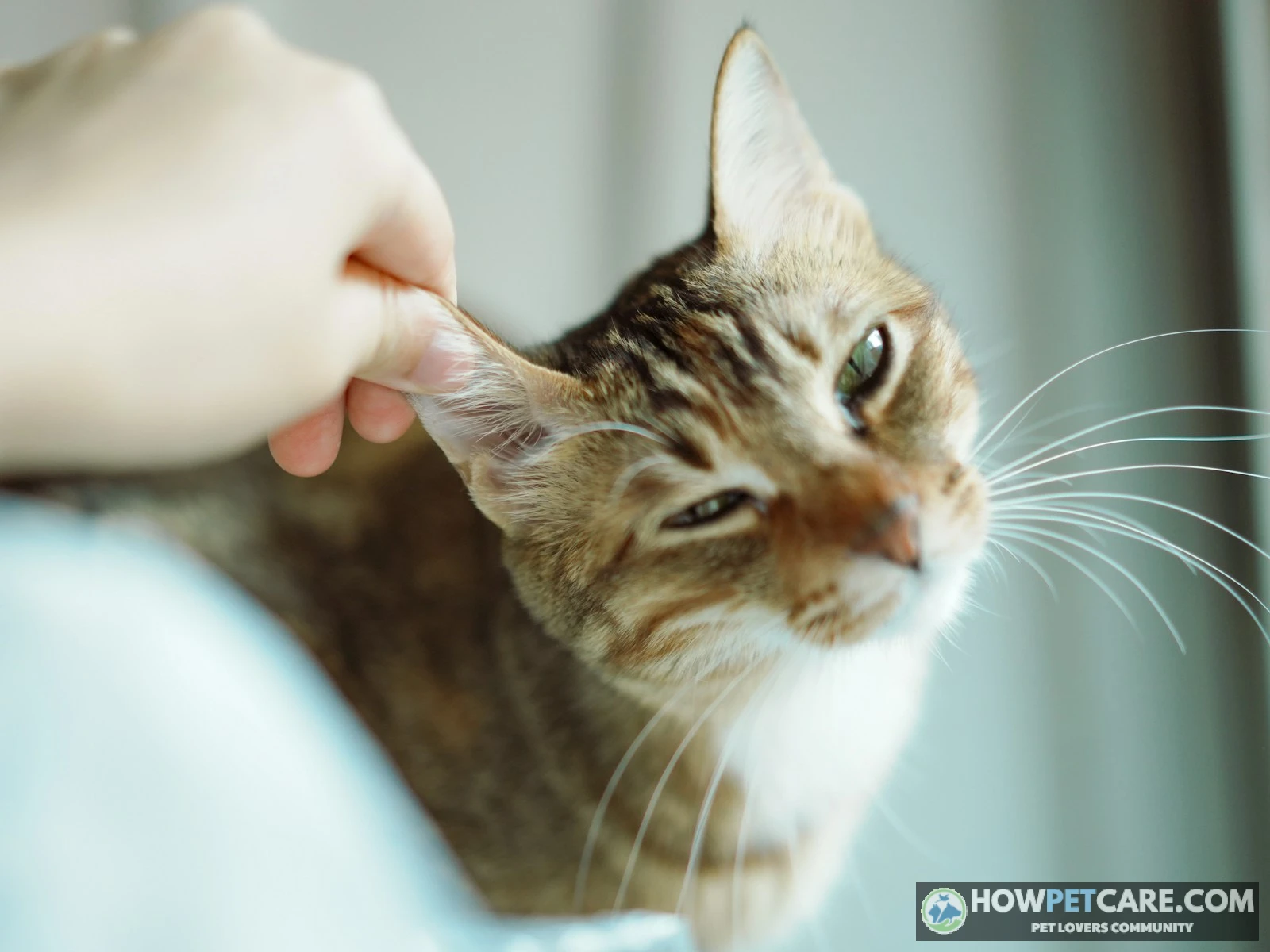
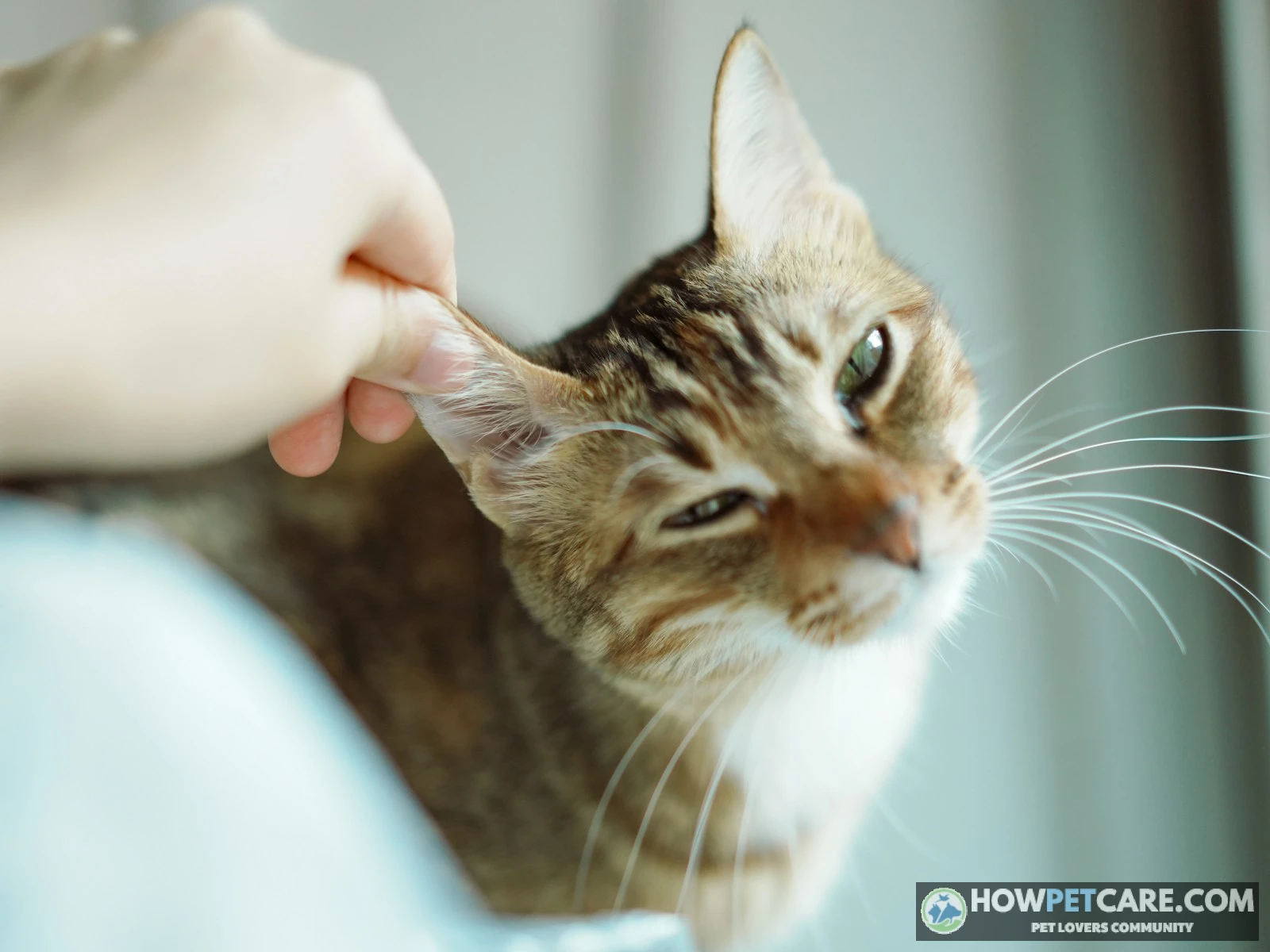
A hematoma changes the feel of the flap. Part or all of it becomes a soft, puffy, fluid-filled pocket, like a small water balloon under the skin. It usually follows intense scratching or head shaking, which can rupture vessels inside the flap. Blood may also come from a scratched ear, a hematoma that has opened, or a growth in the canal.
A fleshy lump in the canal, a sore on the ear tip that won’t heal, or one-sided discharge that keeps coming back needs an exam rather than a wait-and-see approach. White or light-pigmented ear tips with years of sun exposure carry a higher risk of actinic skin damage and squamous cell carcinoma, which can start as a minor-looking crust.
Coffee grounds vs. pus vs. wax: how to read what is in the canal
As a practical guide, dry and crumbly debris suggests mites, wet and colored discharge suggests bacteria, greasy and smelly wax suggests yeast, and red itchy skin without discharge suggests allergy. Mixed pictures are common: mites and allergies both create inflammation that lets bacteria and yeast take over. If two descriptions fit, a mixed infection is possible; cytology can sort it out.
How to look at your cat’s ears safely without probing
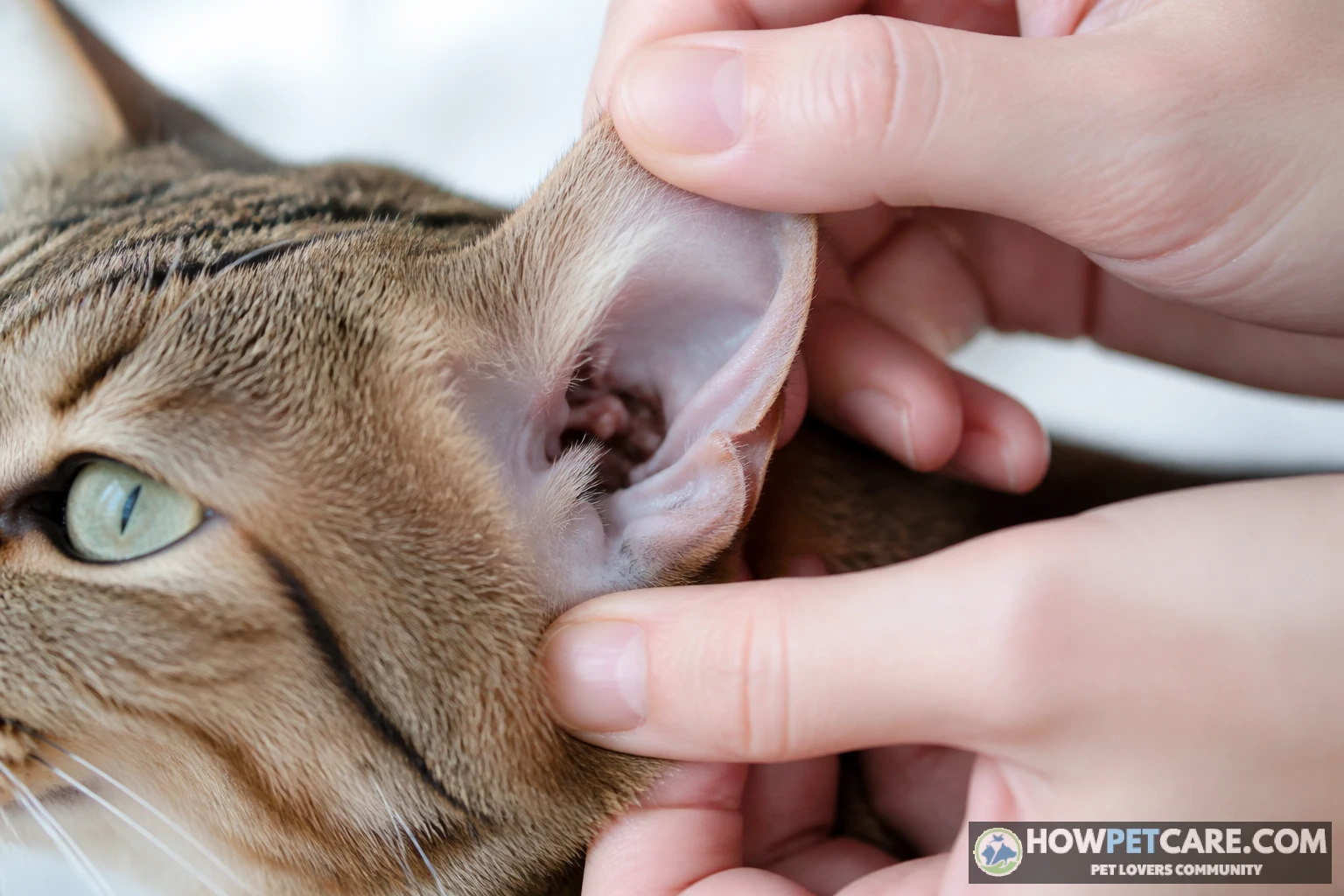
You can inspect the outside of the ear, but you can’t safely inspect the canal. Gently fold the flap back, look at what’s visible, and stop there. Never push a swab, finger, or dropper tip into the canal.
-
LOOK
Fold the flap back in good light. Is the skin pale pink or red? Note the color and texture of anything visible in the canal: dry black crumbles, yellow wet gunk, or dark greasy wax. Is the flap puffy? Is one ear worse than the other?
-
SMELL
From a few inches away, check for a musty, sweet, foul, or sour smell. You may notice no odor at all. Smell is a useful clue and one a vet will ask about.
-
FEEL
Touch the flap, not the canal. Is it warm and painful, puffy and fluid-filled, or cool and flat? If your cat flinches, cries, or pulls away, the ear is painful. Stop there.
-
BEHAVIOR
Note what you’ve seen in the last 24 hours: scratching, head shaking, head tilt, stumbling, or holding one ear flat. Film a 20-second clip if the shaking or tilt comes and goes.
What to say on the phone: "My cat has been scratching and shaking her head for about three days. The right ear shows yellow wet discharge. It smells foul. The ear is painful to touch and does not look swollen. She is eating normally." That description gives the clinic more to work with than "her ears seem off."
If your cat has severe pain, a head tilt, or bleeding, skip the rest of the check and call the clinic now.
 You might be wonderingWorms in catsWorms in Cats: Symptoms, Types, Treatment & When to See a VetRead the answer
Which Cat Ear Problems Are Most Common, and Which Cats Are at Highest Risk
It’s difficult to rank feline ear diseases with exact percentages. In general, outer-ear inflammation is the everyday problem, often driven by mites in young and outdoor cats or by allergies in itchy cats. Bacterial and yeast overgrowth, hematomas, polyps, and tumors are progressively less common but progressively more serious.
Most to least common: a ranked overview
- Otitis externa with an underlying cause. This broad category is by far the most frequent reason a cat’s ears get examined. In kittens, shelter cats, and outdoor cats, ear mites are the leading trigger.
- Allergic otitis. Food or environmental allergies can cause recurring red, itchy ears and are often why infections keep coming back.
- Yeast and bacterial overgrowth. These are usually secondary problems and often explain an ear’s odor.
- Foreign bodies. Grass seeds and plant material are more common in free-roaming cats and can cause sudden, violent head shaking.
- Aural hematoma. This mechanical consequence of intense scratching or head shaking isn’t an infection, and it can scar badly if left untreated.
- Ear polyps. These benign growths arise from the middle ear or nasopharynx after inflammation. They cause relapsing infection, discharge, and sometimes noisy breathing, and need surgical or endoscopic removal rather than drops.
- Middle and inner ear disease. Often an extension of neglected outer-ear inflammation, it can cause head tilt and balance loss.
- Tumors, including squamous cell carcinoma. These are uncommon, but a non-healing ear lesion or a one-sided mass needs an exam.
Risk by cat type: kittens, outdoor cats, multi-cat homes, allergic cats, seniors, white-eared cats
- Kittens and shelter or rescue cats. These cats have the highest exposure to ear mites, which spread through close contact between animals.
- Multi-cat households. One infested cat can spread mites through the group, so treatment usually covers every pet in the home.
- Outdoor and free-roaming cats. They have more exposure to mites and plant material in the canal, as well as fight or scratch injuries to the flap.
- Allergic cats. Their ears may flare along with the rest of the skin, followed by secondary yeast or bacterial infections.
- Young cats with one-sided, relapsing discharge. Polyps are a possibility, especially when the cat also breathes noisily.
- Senior cats. New discharge, one-sided swelling, or a mass in an older cat deserves a closer look rather than another round of the same drops.
- White or light-eared cats. Sun-exposed ear tips can develop actinic damage and squamous cell carcinoma, so crusts and sores should be checked early.
Emergency, Same-Day, Routine, or Monitor: Triage for Cat Ear Symptoms
The most useful decision isn’t which condition your cat has; it’s how quickly to act. Use three tiers: emergency or same-day care, a routine appointment within a few days, and short monitoring at home.
| Urgency level | Symptoms | What to do now | Why it matters |
|---|---|---|---|
| Emergency or same-day | Sudden head tilt, loss of balance, circling, falling, jerky eye movements, vomiting with a tilt, bleeding that will not stop, a flap swelling visibly fast, severe pain | Confine the cat somewhere low and safe, put nothing in the ear, call the emergency clinic and go | These signs can mean middle or inner ear involvement or another urgent problem, and delay raises the risk of lasting damage |
| Routine appointment (next 1–3 days) | Any discharge, odor, or persistent scratching and head shaking in a cat that is still eating and behaving normally; a puffy ear flap | Photograph the ear, note when it started and which ear, leave the canal uncleaned, book the visit | Common problems treated early are simpler and cheaper; an untreated hematoma scars the flap |
| Monitor 24–48 hours | A mild, brief bout of scratching with no discharge, redness, odor, pain, or swelling | Watch closely, set a deadline, escalate if anything new appears | Only genuinely mild cases belong here, and the window is deliberately short |
What to do tonight if your cat has a head tilt, balance loss, a swollen ear flap, or bleeding
-
Lane 1 — Emergency now
Check for a sudden tilt, stumbling, circling, falling, jerky eye movements, vomiting with a tilt, bleeding that doesn’t stop with a few minutes of light pressure, or a flap swelling visibly fast. If you see any of these, confine your cat to a low, enclosed room away from stairs and high furniture. Put nothing in the ear, and call the emergency clinic on your way.
-
Lane 2 — Book a visit within 1–3 days
Use this lane for discharge of any color, noticeable odor, persistent scratching or head shaking, or a puffy flap when the cat is eating, drinking, and behaving roughly normally. Leave the ear alone so the vet has debris to sample. Take photos and note when it started and which side is affected.
-
Lane 3 — Monitor 24–48 hours
This is only for a mild, brief bout of scratching with no discharge, redness, odor, pain, or swelling. Set a deadline: if anything appears, or the scratching continues past 48 hours, the cat moves to Lane 2.
Move a cat up a lane, not down, if it’s a kitten, the symptoms are one-sided, or the cat stops eating or becomes lethargic. A swollen flap isn’t usually a midnight emergency, but it should be seen within days. Left alone, a hematoma can scar into a permanently crumpled ear.
Don’t clean, flush, massage, or put drops into an ear that is painful, bleeding, swollen, or accompanied by a head tilt. You can cause pain, push debris deeper, and destroy the sample the vet needs. Keep your cat calm, prevent scratching if you can, and bring a video.
How Vets Diagnose and Treat Cat Ear Problems
A vet uses the history, exam, and tests to distinguish between possible causes. Treatment then targets the cause, not just the symptom.
What happens during the exam: otoscopy, cytology, and when imaging or culture is added
The vet takes a history, including when the problem began, which ear is affected, and what you’ve already tried. A physical and neurological check follows, looking for head tilt, facial asymmetry, and nystagmus. During otoscopy, the vet looks down the canal and at the eardrum with an otoscope or video-otoscope. A painful ear or one packed with debris may require sedation; a struggling cat can’t be examined safely.
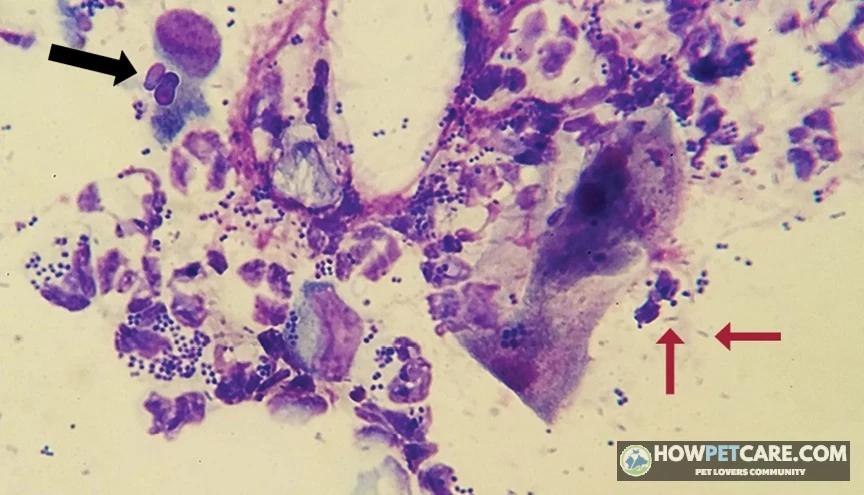
Cytology is a decisive step. The vet examines a swab from the canal under a microscope to identify mites, yeast, bacteria, and inflammatory cells. This helps distinguish a mite infestation from yeast overgrowth or a bacterial infection. Don’t clean the ear right before the appointment: you may remove the evidence the vet needs.
Further tests may be needed for complicated cases. These include culture and sensitivity for infections that keep returning or don’t respond, allergy workups for recurring itchy ears, and radiographs, CT, or MRI when middle or inner ear disease, a polyp, or a mass is suspected.
Treatment categories matched to the likely cause
- Ear mites: antiparasitic products, plus treatment of the other household pets, since mites spread by contact.
- Yeast: antifungal medication, often alongside treatment for the underlying allergy.
- Bacterial infection: antibiotics chosen on the basis of cytology, with culture when the infection is resistant or recurrent.
- Allergic inflammation: anti-inflammatory medication plus a plan for the allergy itself to help prevent the next flare.
- Debris-loaded ears: professional cleaning or flushing so medication can reach the canal wall.
- Hematoma, polyp, or tumor: a procedure, such as drainage and surgical repair for a hematoma, removal for a polyp, or surgery or referral for a mass.
Your vet will choose the medication and dose. Ear treatments differ by cause, and the wrong category—yeast drops on mites, for example, or mite drops on bacteria—wastes time and money while the disease continues.
What a typical treatment course and recheck schedule looks like
Mite infestations generally clear within weeks of a complete course. Bacterial and yeast infections typically need one to a few weeks of treatment. Allergy-driven cases are managed long term rather than cured, with the goal of fewer flares and infections. Rechecks matter: an ear that looks better on the outside can still harbor organisms, and stopping early is the most common reason an infection returns.
Stopping treatment at day four because an ear improved in three days is a classic setup for a resistant infection. The recheck confirms that the canal is clear, not just comfortable.
What Cat Ear Problems Cost in the US: Exam, Tests, Medication, and Surgery
Prices vary by region, clinic type, and the individual cat. Treat the ranges below as planning figures, not quotes. Ask for a written estimate before tests are run; most clinics will provide one on request.
| Service or treatment | What it is for | Approximate US cost range | What can raise the cost |
|---|---|---|---|
| Office or exam fee | The visit itself | $50–$90 | Emergency or after-hours clinics: $150–$300+ |
| Otoscopy or video-otoscopy | Looking down the canal and at the eardrum | Often included; $25–$100 if billed separately | Video-otoscopy or flushing under sedation |
| Ear cytology | Swab under the microscope — separates mites, yeast, and bacteria | $25–$60 | Both ears swabbed separately |
| Culture and sensitivity | For recurring or resistant infections | $90–$150 | Usually skipped on a first simple infection |
| Ear cleaning or flushing | Removing debris so medication can work | $40–$120 | Sedation for a painful or packed ear: add $150–$300 |
| Medications (drops or oral) | Antiparasitic, antifungal, antibiotic, anti-inflammatory | $30–$120 per course | Brand versus generic, course length, treating several pets for mites |
| Imaging | Radiographs, or CT/MRI when middle ear, polyp, or mass is suspected | X-ray $150–$400; CT or MRI $1,000–$3,500 | Anesthesia and specialist fees |
| Hematoma repair | Drainage plus surgical repair of the flap | $300–$800 | Anesthesia, complexity, rechecks |
| Polyp or mass surgery | Removal plus laboratory examination of the tissue | $800–$3,000+ | Referral surgeon, biopsy, hospitalization |
| Recheck visit | Confirming the infection is actually gone | $40–$90, plus repeat cytology if needed | Needed for most true infections |
Typical cost ranges by service
Two totals can help with planning. An uncomplicated first-time ear problem—exam, cytology, and a course of medication—usually costs somewhere near $150–$350. A case involving sedation, imaging, or surgery typically runs $1,000–$4,000+. That gap helps explain why relatively inexpensive cytology done early can be preferable to three rounds of the wrong drops.
Why costs vary and how to ask for an estimate
The major cost drivers are sedation or anesthesia, advanced imaging, recurring infections that need repeated visits, the number of rechecks, and emergency or after-hours fees. When you call, ask three questions: which tests are essential today and which can wait, whether a generic or compounded medication is appropriate, and what the recheck will cost. Skipping diagnosis to save money on products can be a false economy: the wrong treatment delays the right one and usually adds a second visit.
These ranges reflect typical US clinic pricing for 2026 and are meant for budgeting. Your clinic’s written estimate is the only number that applies to your cat.
The do and don’t list before your vet visit
- DO take clear photos of the visible ear and a short video of any head shaking, tilting, or wobbling; symptoms may not appear at the clinic.
- DO write down when it started, whether one or both ears are affected, and anything that seemed to trigger it.
- DO list every product already put in or on the ear, even ones that didn’t work.
- DO note other clues, including scratching elsewhere, sneezing, and recent diet or litter changes.
- DO keep your cat calm and limit scratching; a soft collar can help protect the ear.
- DO ask whether other household pets need checking if mites are found.
- DON’T clean or flush the ear within 24–48 hours of the appointment; you may remove the sample needed for cytology.
- DON’T put cotton swabs into the canal; they pack debris deeper and can injure the eardrum.
- DON’T use hydrogen peroxide, rubbing alcohol, vinegar, essential oils, coconut oil, or garlic; these can irritate or damage tissue and don’t treat the problem.
- DON’T use leftover drops from a previous infection or over-the-counter ear and mite products; they may be the wrong treatment.
- DON’T squeeze, puncture, or "drain" a puffy ear flap. A hematoma needs veterinary repair, and home drainage invites infection and worse scarring.
- DON’T assume a red, painful ear is safe to wipe. If touching it hurts, leave it alone and say so on the phone.
Is It Safe to Clean a Cat’s Ears at Home, and When Cleaning Makes Things Worse
Healthy ears rarely need cleaning. For specific cases, cleaning is a vet-guided tool rather than routine maintenance. Gently wiping the visible outer flap is different from flushing or probing the canal; only the first is reasonable at home.
Gentle outer-ear cleaning is reasonable when the flap is visibly dirty and the cat is otherwise comfortable, with no pain, odor, discharge, or head tilt. Use a vet-recommended feline ear cleaner and a cotton ball or gauze, and touch only what you can see.
Helpful cleaning vs. harmful probing
Cleaning can make a painful ear worse, as well as one with a suspected ruptured eardrum, bleeding, swelling, a head tilt, or heavy discharge. In these situations, cleaning causes pain, pushes debris deeper into the canal, and removes material a vet would have sampled. It can also turn a simple problem into one that needs sedation to examine.
Keep cotton swabs out of the canal, and don’t use hydrogen peroxide, rubbing alcohol, vinegar, essential oils, coconut oil, garlic, or leftover prescription or over-the-counter drops. These can irritate tissue, risk eardrum damage, or mask the real problem while the disease continues.
Don’t try to treat a hematoma at home. Avoid draining it, squeezing it, or wrapping it tight. A vet needs to treat the cause of the scratching and repair the flap so it heals flat rather than crumpled.
Home remedies and OTC products to avoid
Online advice often conflicts because it mixes two different jobs: maintaining a healthy ear and treating a diseased one. Maintenance advice, such as wiping occasionally or keeping the ear dry, gets repeated as treatment advice. Owners can end up cleaning an infected, painful ear that should have been left untouched for the exam. For safe interim care, keep your cat calm, prevent scratching where you can, photograph the ear, note what you saw and when it started, and leave the ear alone unless your vet tells you otherwise.
What Happens When Cat Ear Disease Is Ignored: Permanent Damage and How Fast It Progresses
Some ear problems are uncomfortable but reversible; others leave lasting damage. Time often makes the difference.
- Chronic inflammation thickens the canal. Repeated, untreated otitis narrows and stiffens the ear canal, making future infections harder to treat and sometimes leading to surgery.
- Hematomas scar. An unrepaired hematoma can heal into a permanently thickened, crumpled ear flap—the feline version of cauliflower ear.
- Infection moves inward. Untreated outer-ear disease can extend into the middle and inner ear, causing head tilt, balance loss, facial nerve signs, and permanent deafness.
- Hearing loss is easy to underestimate. Cats hear well above the human range—up to 60,000 vibrations per second, compared with roughly 20,000 for people—so a cat can lose a great deal of hearing before an owner notices at home [#N].
- Polyps and masses hide behind chronic discharge. A growth that looks like a stubborn infection won’t respond to drops. A one-sided or non-resolving problem needs a closer look.
Progression varies by cause. A mild outer-ear infection can worsen over days to weeks, while a head tilt or sudden loss of balance can appear within hours. Earlier treatment is generally simpler, cheaper, and less likely to involve surgery.
Companion guides on ear mites, ear infections, yeast, head shaking, cauliflower ear, hearing loss, and ear cancer cover each condition in more depth than this overview.
Your Next Steps: A Decision Checklist Before You Call the Vet
-
1. Check for red flags
Head tilt, balance loss, circling, jerky eye movements, severe pain, bleeding that won’t stop, or a flap swelling fast: treat these as same-day or emergency signs and call now.
-
2. Match what you see to the pattern
Note discharge color, odor, itch, pain, swelling, and whether one or both ears are involved. Use the two tables above to shortlist causes, not to diagnose your cat.
-
3. Prepare for the visit
Take photos and a short video, note when the problem began and which ear is affected, and list any products already used. Leave the ear uncleaned so the vet can take a sample for cytology.
-
4. Ask the right questions
What is the likely cause? Which tests are needed today? What will this cost? How long is the course? When is the recheck? Do the other pets need treatment?
-
5. Follow through
Complete the full course, return for the recheck, and ask about prevention, including allergy control, mite treatment for every pet in the home, and sun protection or shade for white-eared cats.
This guide is informational. It can help you sort possibilities and decide how urgently to act, but it can’t diagnose your cat or replace a veterinary exam. Follow your vet’s treatment plan.
Use the signs you’ve observed to decide how quickly your cat needs care. Leave the ear untouched until the exam, and let cytology help confirm what the visible clues can only suggest.
 You might be wonderingSigns of cancer in catsSigns of Cancer in Cats: What’s Urgent and What Can WaitRead the answer
FAQ
Can indoor cats get ear mites?
Yes. Indoor cats can pick up ear mites from another pet, a new kitten or rescue, or a boarding or grooming facility. Mites spread by close contact, so one infested pet can pass them to others in the home.
Can a cat’s ear infection go away on its own?
It is unlikely. Ear infections usually have an underlying cause such as mites or allergies, and without treatment they tend to persist or worsen. A vet can identify the cause with an exam and ear cytology, which is the only reliable way to pick the right treatment.
Is black discharge in a cat’s ears always ear mites?
No. Dark, crumbly debris is classic for mites, but yeast infections and heavy wax can look similar. A vet can confirm the cause by examining a swab under a microscope.
Can ear mites spread from cats to dogs or people?
Ear mites commonly spread between cats and dogs that live together, so other pets in the home are often treated too. Transmission to people is uncommon and usually limited to mild skin irritation, but ask your vet if anyone in the household has symptoms.
Are ear drops safe for kittens?
Only products and dosing chosen by a vet are safe, because kittens’ age, weight, and health affect which ear and mite treatments are appropriate. Do not use leftover or OTC products on a kitten without veterinary guidance.