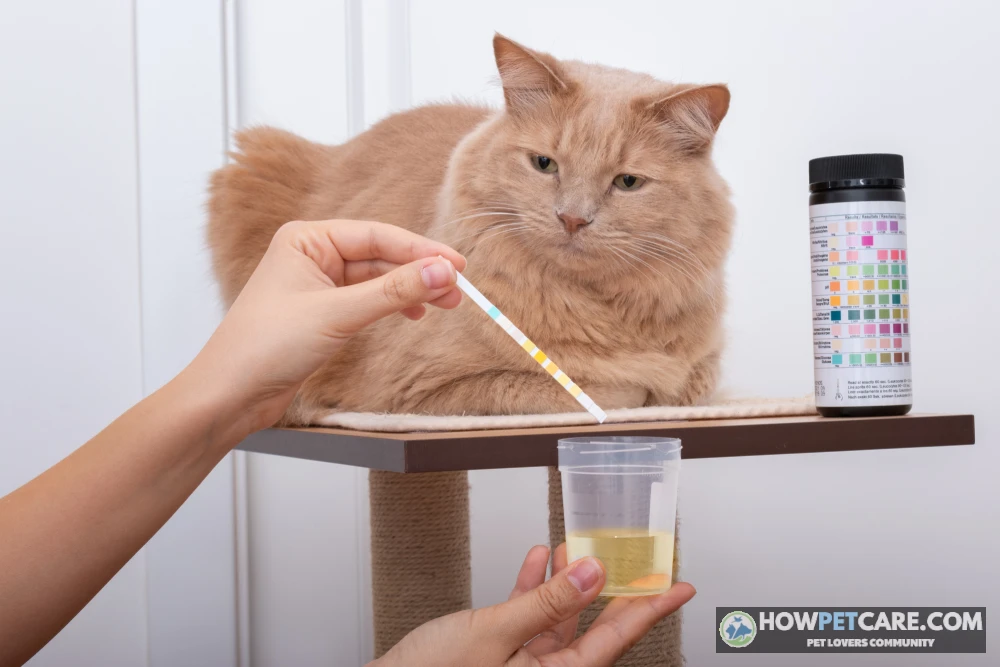

A urinary tract infection is a bacterial invasion of the bladder or urethra, while urinary crystals are mineral deposits that form in urine. They’re separate conditions: struvite crystals in cats are usually sterile and don’t automatically need antibiotics unless a urine culture confirms infection.
Cat UTI vs. urinary crystals: what is the difference?
A search for "cat urinary tract infection crystals" can make it sound as though crystals and infection are the same problem. They aren’t. A urinary tract infection (UTI) is a bacterial invasion of the bladder or urethra, while urinary crystals are microscopic mineral deposits that form in urine. A cat can have either, both, or neither and still show similar signs. The two problems rarely occur together. True bacterial UTIs are rare in cats, affecting less than 3% of otherwise healthy adult cats. When struvite crystals do appear in cats, they are usually sterile. That’s unlike dogs, where struvite often signals an infection that requires antibiotics. The distinction matters because antibiotics treat infection, not the crystals themselves.
Your vet will treat the underlying cause, not just the symptom. A cat with sterile struvite, for example, may never need antibiotics, while a cat with a confirmed bacterial infection will. The problems can coexist, but they’re managed separately: crystals often call for diet and hydration adjustments, whereas infections need targeted antimicrobial therapy.
The term feline lower urinary tract disease (FLUTD) describes a collection of urinary problems, including crystals, stones, inflammation, and obstruction. It’s a label that groups symptoms, not a diagnosis. Because FLUTD has many possible causes, don’t assume that crystals mean infection. Ask your vet to explain what’s present: sterile mineral buildup, bacterial infection, bladder inflammation (often called feline idiopathic cystitis), or a physical blockage.
Crystals and UTIs are separate problems; struvite crystals do not automatically require antibiotics in cats unless a culture proves otherwise. The sections that follow cover symptoms, crystal types, diagnosis, treatment options, costs, and prevention strategies.
Urinary symptoms in cats: when straining means an emergency
You might notice frequent litter-box trips, small urine spots, vocalizing while straining, excessive licking of the genital area, urination outside the box, or blood in the urine. Crystals, infections, inflammation, and obstruction can all cause these signs, so symptoms alone don’t identify the cause. Some signs need immediate veterinary attention.
A cat that has entered the litter box and strained 3 or more times in the last hour with no urine or only drops needs an emergency vet now, especially if the cat is male. Males have a naturally narrower urethra, making them far more prone to a complete blockage. Passing a few drops doesn’t rule out an obstruction; the cat may still be trying to pass a plug of crystals, mucus, or a stone.
Why waiting is dangerous: Straining to urinate can look almost identical to straining to defecate. If you can’t confirm normal-sized urine clumps in the box in the last 12-24 hours, treat it as a possible blockage rather than constipation. Constipation won’t kill a cat overnight; a urethral blockage can cause kidney failure within hours. Lethargy, vomiting, hiding, or a firm, tense belly alongside urinary difficulty make the situation more urgent. Don’t press the abdomen, try home remedies, or delay the ER trip to collect a urine sample first.

Signs of urinary crystals or a UTI in male and female cats
- Frequent small amounts of urine, which owners often miss.
- Straining with visible discomfort.
- Blood in urine (hematuria), which may appear as pink-red clumps or dark-colored urine.
- Licking the genital region excessively.
- Avoidance of the litter box; pain may cause the cat to go elsewhere.
- Vocalization, such as meowing or yowling, especially in the box.
These signs don’t point to a single cause, but visible blood or a complete inability to urinate makes the situation an emergency.
Blocked bladder or constipation: how to act when you cannot tell
Male cats are the most at-risk group, and it isn’t always easy to tell if a male cat is blocked and can’t pee. The 60-second triage checklist below can help you decide whether to go to an emergency vet immediately or monitor for a few hours while contacting a regular clinic. Use it as soon as you notice straining.
ER now vs. safe to monitor: a 60-second triage for a straining cat
Go to an emergency vet immediately if ANY of these are true:
- ☐ Your cat has entered the litter box and strained 3 or more times in the last hour with no urine or only drops
- ☐ Your cat is male (males have a narrower urethra and obstruct far more often; don’t wait to ‘see how it goes’)
- ☐ Your cat is vocalizing in pain, hiding, or lying flat and won’t move
- ☐ Your cat is vomiting, lethargic, or has a firm, tense belly; these suggest a blockage that’s been building
- ☐ Your cat collapses or seems weak while trying to urinate
A common trap: Straining to urinate looks almost identical to straining to poop. If you can’t confirm normal-sized urine clumps in the box in the last 12-24 hours, assume it might be a blockage, not constipation. Constipation won’t kill a cat overnight; a urethral blockage can.
Monitor (and call your vet in the morning) only if ALL are true:
- ☐ Your cat is producing visible, normal-sized urine clumps
- ☐ Your cat is eating, drinking, and acting normally otherwise
- ☐ There’s no vomiting, hiding, or crying in the box
Never do: Press on the abdomen, give human pain relievers, or delay the ER trip to collect a urine sample first.
Struvite vs. calcium oxalate crystals and bladder stones
If your vet finds crystals, the type matters. The two most common mineral types in cats are struvite and calcium oxalate. Their differences affect whether a diet can dissolve the crystals, whether surgery may be needed, and how aggressively you’ll need to prevent recurrence. The comparison below covers the main differences.
Struvite vs. calcium oxalate: the two mineral types compared
| Feature | Struvite | Calcium oxalate |
|---|---|---|
| Typical urine pH association | Usually more alkaline urine (often above ~pH 7.0) | Usually acidic to neutral urine (often below ~pH 6.5) |
| Microscopic shape | ‘Coffin lid’-shaped prisms | Small square ‘envelope’ shapes (dihydrate form); sometimes dumbbell-shaped (monohydrate form) |
| Common contributing factors | Concentrated urine, low water intake, diet; can form with or without a bacterial infection (‘sterile struvite’ is common in cats) | Genetic and dietary factors, very concentrated acidic urine; not driven by infection |
| Can diet dissolve it? | Yes — stones confirmed as struvite can often be dissolved with a vet-prescribed dissolution diet over weeks | No — diet cannot dissolve these; stones typically need surgical or procedural removal, then are sent for analysis |
| Recurrence risk | Moderate if the underlying cause isn’t addressed | Higher lifetime recurrence risk; a long-term prevention plan is essential |
| Typical prevention strategy | Increased water intake, urine dilution, possibly a maintenance urinary diet | Aggressive hydration, diet that avoids over-acidifying urine, sometimes medication; guided by stone analysis results |
Important caveat: Crystal shape and urine pH are clues, not proof. A stone’s true composition can only be confirmed by lab analysis of the actual stone after removal or dissolution. Cats can also carry more than one mineral type at once.

Why this matters for treatment
- Struvite can often be dissolved with a prescription diet that acidifies urine (pH < 6.4). The average dissolution time is 2-3 weeks, but the diet must be fed long enough to dissolve the stone completely before the cat transitions to a maintenance urinary formula.
- Calcium oxalate stones cannot be dissolved. They’re usually removed surgically (cystotomy) or through a minimally invasive technique called ureteroscopic laser lithotripsy. After removal, a strict long-term hydration and diet plan helps keep recurrence low.
How vets diagnose crystals, infection and stones
A vet typically starts with a physical exam, followed by laboratory testing and imaging. Two core tests are urinalysis and urine culture and sensitivity (C&S). Urinalysis checks concentration, pH, specific gravity, and sediment under a microscope, where crystals are visible. A culture grows any bacteria present and tells the vet which antibiotics will work. A negative culture doesn’t automatically mean the cat has a UTI; it may instead indicate sterile inflammation, prior antibiotic exposure, or sample handling issues.
If a culture is needed, many vets prefer cystocentesis: a needle sample taken directly from the bladder. This method gives the most accurate result for infection, but it requires skill and may be uncomfortable for the cat. X-rays can show radiopaque stones (commonly calcium oxalate), while bladder ultrasound detects both radiopaque and radiolucent stones (struvite is often radiolucent). Imaging also rules out other abnormalities, such as tumors or urethral plugs.

Urinalysis, culture and imaging: what each test adds
- Urinalysis checks urine concentration, pH, protein, glucose, cells, and crystals. It’s the first step because it can be done in-clinic.
- Urine culture + sensitivity is the gold standard for diagnosing a bacterial UTI. A positive culture confirms infection and guides antibiotic choice; a negative culture helps rule it out.
- Cystocentesis provides a sterile sample that reduces contamination risk, making cultures more reliable.
- X-ray is best for detecting radiopaque stones (calcium oxalate).
- Bladder ultrasound detects radiolucent stones (struvite) and soft tissue changes such as inflammation.
How to collect a fresh urine sample at home
Only attempt this for a stable cat that’s producing urine. Never delay an emergency visit to try.
- Call the clinic first. Ask for a collection kit or a pack of non-absorbent litter (brand examples: Kit4Cat, Nosorb). Many clinics provide it free or for a few dollars.
- Prep a clean litter box. Wash the tray with mild soap, rinse thoroughly, and dry it; soap or cleaning residue can contaminate the sample. Empty out the regular litter and add the non-absorbent beads or pellets.
- Confine the cat in a small room with only the prepared box. Water can stay; remove food to reduce contamination risk.
- Collect and transfer. Once your cat urinates, tilt the box and draw up the urine with the kit’s syringe or pour it into a clean container. A thoroughly washed, rinsed ladle or jar works in a pinch. Label it with the date and collection time.
- Deliver fast – the 1-hour rule. Aim to get the sample to the clinic within about 1 hour. If you can’t, refrigerate it (don’t freeze) and tell the vet exactly how long it sat. Many clinics will still accept refrigerated samples within roughly 4 hours, but follow their instructions.
Why timing matters: Urine left at room temperature, or even refrigerated, can grow crystals that weren’t in the cat’s bladder. This is called a storage artifact. A ‘crystal-heavy’ stale sample can send your vet down the wrong path, so explain how the sample was collected and stored.
Honest limitation: A home sample is fine for a basic urinalysis but usually can’t replace a vet-collected sterile sample (cystocentesis) if a culture is needed.

Treating urinary crystals, infection and blockage
Treatment depends on the diagnosis, not symptoms alone. Your vet will explain whether your cat has:
- Sterile struvite crystals, often managed with a prescription dissolution diet.
- Bacterial UTI, treated with antibiotics based on culture results.
- Bladder stones, either dissolved (if struvite) or removed (if calcium oxalate).
- Urethral obstruction, an emergency requiring decompression, pain control, and often hospitalization.

When a prescription urinary diet can dissolve struvite
For confirmed struvite stones, vets often prescribe a dissolution diet such as Hill’s Prescription Diet s/d or a similar veterinary formula. These diets acidify the urine (target pH < 6.4) and promote stone dissolution over 2-3 weeks. During this phase, the cat must eat only the prescription food, with no treats or table scraps. The vet will schedule repeat imaging (X-ray or ultrasound) to confirm complete dissolution.
Crucial points:
- The dissolution diet is short-term; feeding it indefinitely can cause other metabolic issues. After the stone disappears, the vet will transition the cat to a maintenance urinary diet (e.g., Royal Canin Urinary SO) that supports ongoing urine dilution and appropriate pH.
- Calcium oxalate stones do not dissolve with diet, so surgery or another removal technique is required. Even for a struvite stone, the vet may recommend surgery if the stone is large, causing obstruction, or the owner cannot follow the strict feeding regimen.

What happens when stones cannot be dissolved
If the stone is calcium oxalate, your vet will discuss surgical removal (cystotomy) or a minimally invasive option such as laser lithotripsy. These procedures require general anesthesia and a hospital stay of 1-3 days. The removed stone goes to an external lab (e.g., Minnesota Urolith Center) for composition analysis, which guides long-term prevention.
How an emergency blockage is treated
A complete urethral obstruction is a life-threatening crisis. Emergency care typically includes:
- Stabilization – IV fluids to correct dehydration and support kidney function.
- Pain relief – safe feline analgesics.
- Urinary catheterization – a sterile tube placed into the bladder to relieve pressure and allow urine to drain. This often requires sedation or anesthesia.
- Hospital monitoring – the vet watches kidney values, electrolytes, and signs of re-obstruction.
- Antibiotics – only if infection is suspected or confirmed; not all blocked cats have a bacterial UTI.
Success rates are high (91-94% survival to discharge after catheterization), but recurrence remains a concern, especially in male cats.

What diagnosis, unblocking and stone surgery may cost
Cost is a legitimate concern. Prices vary dramatically by region, clinic type, and emergency timing, but these ranges offer a picture of what owners might expect in the United States (mid-2020s data, adjusted for 2026 inflation). They’re approximate; ask your vet for an itemized estimate before any procedure.
Ballpark US costs for urinary workups and treatment
| Test or treatment | Sourced price range (USD) | What is included | Factors that affect cost |
|---|---|---|---|
| Exam + urinalysis | ~$50-150 total on top of an exam fee (~$50-100) | Physical exam; urine concentration, pH, and microscope check for crystals, blood, bacteria | Clinic type, geographic region, sample collection method (cystocentesis may add ~$30-60) |
| Urine culture + sensitivity | ~$100-200 | Lab grows bacteria to confirm infection and identify which antibiotics will work | Lab used, whether collection is included, turnaround speed |
| Imaging (X-ray and/or bladder ultrasound) | ~$150-400 per modality | Visualization of stones or other abnormalities | Ultrasound usually costs more than X-ray; sedation may be extra |
| Emergency unblocking (catheterization + hospitalization) | ~$1,000-3,000+ | Sedation/anesthesia, urinary catheter placement, IV fluids, pain meds, 1-3 days of hospitalization and monitoring | Severity, kidney values, length of stay, whether the cat re-blocks, ER vs. daytime pricing |
| Stone removal surgery (cystotomy) | ~$1,500-4,000+ | Surgery, anesthesia, stone removal and lab analysis of the stone, recovery care | Stone size/location, complications, post-op hospitalization days, surgeon vs. general practice |
Money-smart questions to ask before authorizing anything:
- "Can I have an itemized estimate with the urgent items marked separately from optional ones?"
- "Which tests are needed today, and which could wait for a recheck?"
- "Does this estimate include hospitalization days and recheck visits, or will those be additional?"
- "Do you offer payment plans, CareCredit, or work with pet insurance claims?"
Don’t double-count: An emergency unblocking bill often already includes imaging, fluids, and the exam. Ask whether quoted line items overlap before adding ranges together.

Preventing feline urinary crystals and recurrence
Once the immediate crisis is resolved, a prevention plan can address diet, water intake, the cat’s environment, and, in some cases, medication. The plan should fit the crystal type, your cat’s overall health, and your vet’s recommendations.
Choosing food and increasing water intake
Hydration tactics (the single biggest lever for urine dilution):
- ☐ Increase wet food percentage – even going from 0% to roughly half canned food meaningfully raises total water intake; ask your vet what ratio fits your cat’s diet prescription
- ☐ Place 3+ water bowls in different rooms, away from food and litter boxes (many cats avoid bowls near either)
- ☐ Try a fountain – some cats drink notably more from moving water; clean it weekly or biofilm builds up
- ☐ Test bowl material – try ceramic or glass over plastic if your cat seems reluctant to drink

Do cranberry, D-mannose or probiotics help?
Supplements – the evidence:
| Supplement | Verdict |
|---|---|
| Cranberry | ✖ Insufficient evidence in cats; some products acidify urine, which could theoretically favor the wrong crystal type |
| D-mannose | ✖ Insufficient evidence for preventing feline infection or crystals; harmless-seeming but unproven |
| Probiotics | — Plausible, unproven – no solid evidence they prevent urinary recurrence in cats |
You can discuss any supplement with your vet, but none substitutes for the confirmed treatment. A "natural urinary support" chew won’t dissolve a stone or clear a blockage.
A weekly urinary monitoring routine
Weekly litter-box monitoring (10 minutes, every week):
- ☐ Count and eyeball clump size: a normal clump is roughly golf-ball to fist-sized; flag a sudden streak of many tiny clumps
- ☐ Note frequency changes – more trips with smaller output is an early warning sign
- ☐ Check for pink/red tint in clumps (blood) or litter stuck to paws
- ☐ Track water bowl levels so you notice intake changes before symptoms appear
- ☐ Keep the recheck appointment your vet scheduled even if your cat seems fine – crystals and stones can return silently

Stress is another contributor to feline idiopathic cystitis (FIC), a non-stone inflammatory condition that mimics crystal disease. Predictable routines, clean litter boxes, and environmental enrichment can lower relapse risk, though stress doesn’t directly cause mineral crystals.
Your next steps after seeing urinary symptoms or crystals
A vet visit can leave you with a lot of information and several options to consider. Use this checklist to prioritize actions and questions, whether your cat is stable or in crisis.
- If your cat is repeatedly straining with no urine or only drops, go to an emergency vet now; if urine output is uncertain, don’t assume constipation.
- For a stable cat producing urine but showing signs, contact your regular vet promptly. Record:
- Symptom onset and changes.
- Approximate urine output (clump size, frequency).
- Current medications and diet.
- Any recent changes (new food, litter, environment).
- Ask the vet for clarity on the test results:
- "Do the urinalysis and culture together confirm infection, crystals, both, or neither?"
- "Which type of stone is present, and does it dissolve with diet?"
- "What is the recommended treatment plan and why?"
- Discuss diet options:
- "Is a short-term dissolution diet appropriate, and how long will we need it?"
- "What maintenance urinary diet fits my cat’s health profile?"
- Ask about costs and logistics:
- Itemized estimate for diagnostics.
- Cost of any recommended procedure vs. watchful waiting.
- Payment options and follow-up scheduling.
- Schedule a recheck as advised, even if your cat seems fine, so your vet can confirm that stones have dissolved or catch recurrence early.
These steps can help you act promptly, understand your vet’s recommendations, and make informed decisions about your cat’s urinary health.

FAQ
Can a cat have urinary crystals without symptoms?
Yes. Crystals can be found incidentally in urine, and their presence alone does not prove they are causing disease. A vet interprets the result alongside symptoms, sample handling and other tests.
Can female cats get a urinary blockage?
Yes. Blockage is more common in male cats, but females can also become obstructed. Repeated attempts to urinate with little or no urine warrant emergency veterinary care regardless of sex.
Can urinary crystals come back after treatment?
Yes. Recurrence is possible, and prevention depends on the mineral type and the cat’s underlying risk factors. Follow the vet’s feeding and recheck plan and monitor litter box habits.
Can stress cause urinary problems in cats?
Stress is a contributor to feline idiopathic cystitis (FIC), an inflammatory bladder condition that mimics crystal disease, though it doesn’t directly cause mineral crystals. Predictable routines, clean litter boxes, and environmental enrichment can lower the risk of urinary flare-ups.