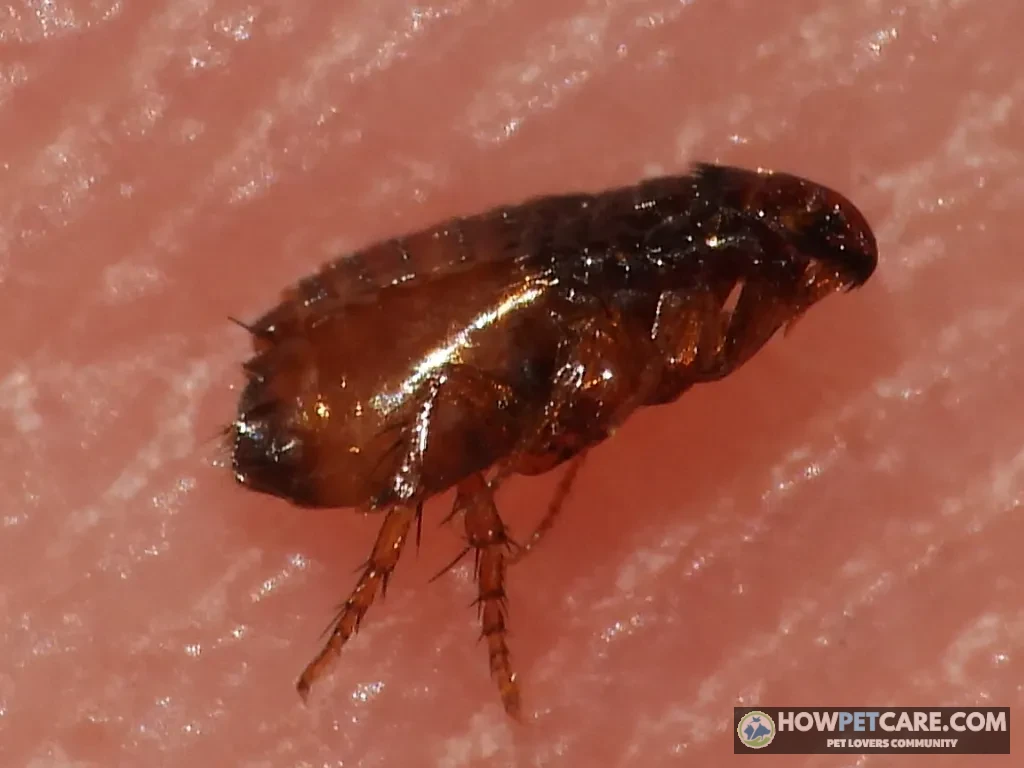

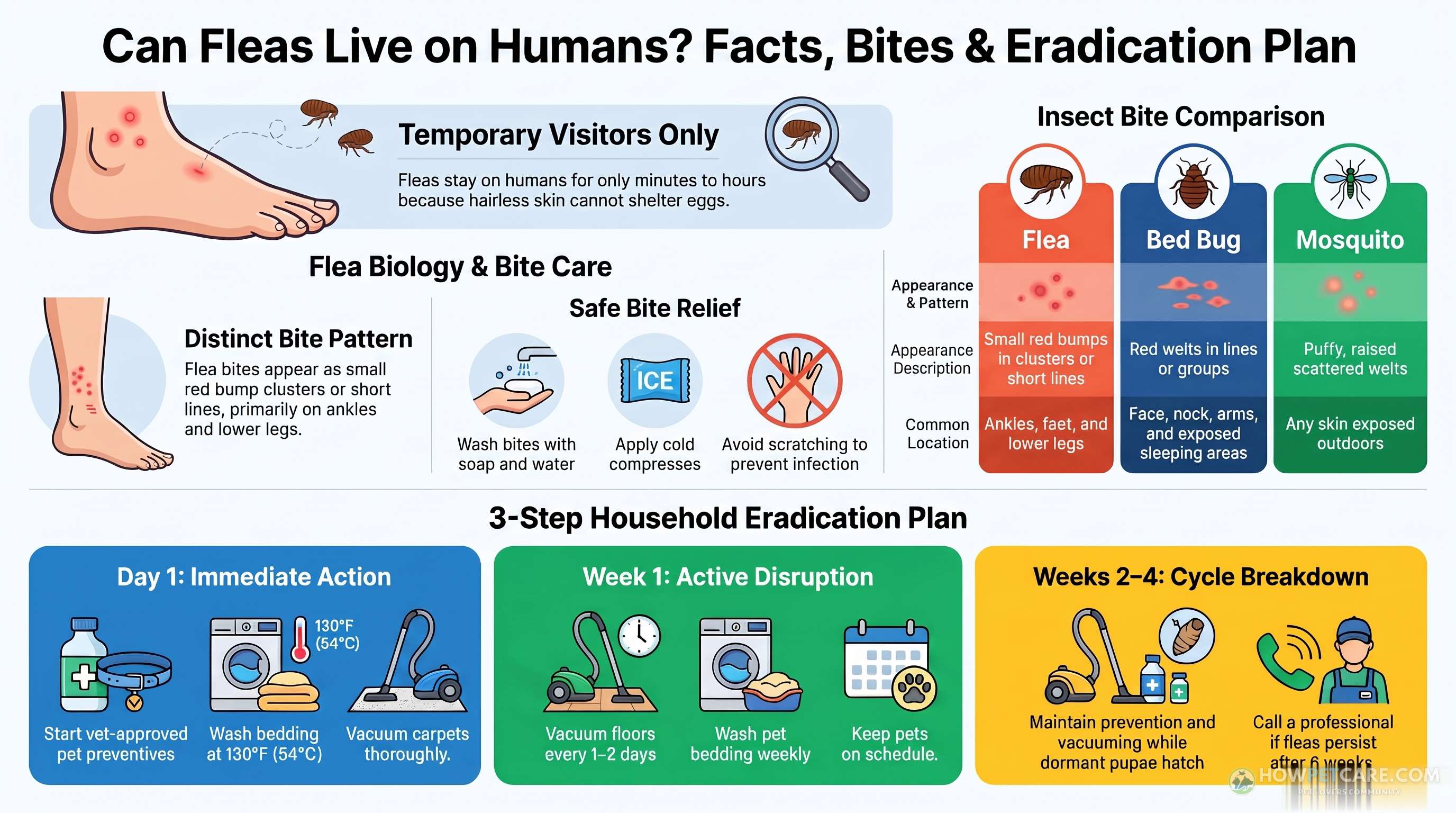
No. Fleas can bite people and briefly hitchhike on skin, hair, or clothing, but common cat and dog fleas cannot live, breed, or build an infestation on a human. A flea on you is a temporary visitor—usually gone within minutes to hours—and bites signal it’s time to treat your pets and home.
Fleas can bite people, and they may briefly hitchhike on skin or clothing. What common cat and dog fleas can’t do is settle in for good on a human. They don’t live, breed, or build a human infestation the way they do on a furry pet. So can fleas live on humans? No—not in any lasting sense. A flea on you is usually a visitor looking for an animal host, and bites are a reason to check your pets and home.
The visit tends to be short: minutes, sometimes a few hours, before the flea jumps off, gets removed, or dies. The practical fix is to treat every household pet with a veterinary-approved preventive and tackle the eggs, larvae, and pupae in the home—not to apply flea products to people.
Why Fleas Can’t Make a Home on People: Host Specificity and Biology
Fleas need the right host and the right conditions to feed and reproduce. Dense fur gives them cover and helps shelter eggs. Human skin and hair don’t offer that same stable habitat. People also bathe, change clothes, scratch, and groom, which makes it harder for a flea to stay put.
The cat flea, Ctenocephalides felis, is adapted to furry mammals and is the most common flea found on both cats and dogs in U.S. homes. It may bite a person when animal hosts are scarce or flea numbers are high, but it doesn’t become a human resident.
Flea eggs aren’t glued to hair. They drop from an animal’s coat into places where the animal rests, such as carpets and bedding. Flea larvae feed on organic debris and flea dirt in the environment, not on a person.
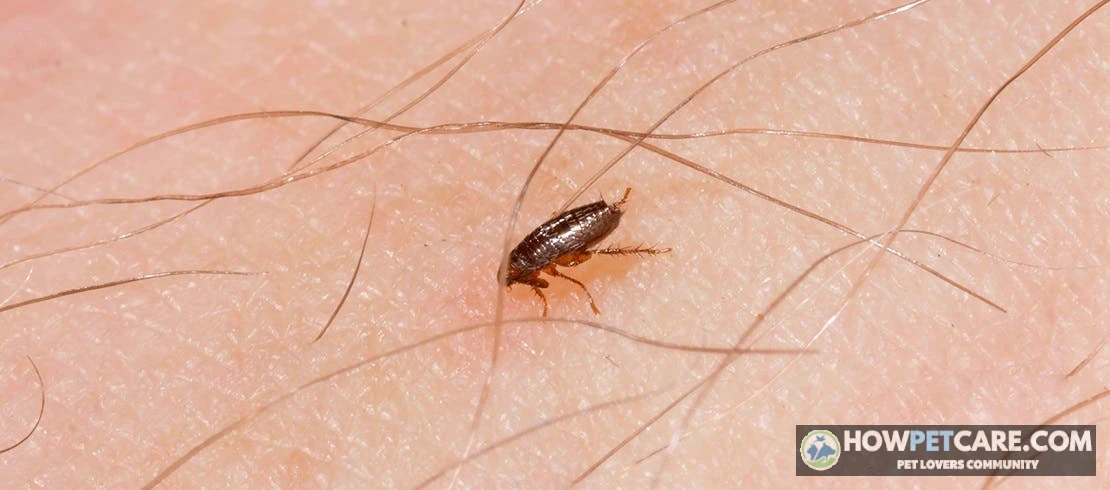
How long can a single flea stay on you?
There’s no dependable countdown for an individual flea. One may jump on, bite, and leave within minutes; another sheltered in clothing may stay for hours. The usual outcome is temporary contact, not a lasting stay. If you find a flea on your skin or clothes, check nearby pets and rooms.
Why fleas bite humans but don’t stay
Fleas can use human blood for a meal, but a bite doesn’t turn a person into a suitable long-term host. Their preferred hosts are animals with fur, where they can feed and reproduce more reliably. Fleas also jump between hosts and surroundings; they can leap roughly 13 inches, or about 33 centimeters.
Can Fleas Live in Human Hair, Beards, Clothes, or Bedding?
Fleas vs. head lice on the scalp
A flea can briefly land in thick hair or a beard, but it doesn’t cling to hair or attach eggs to hair shafts. It’s unlikely to live or reproduce on the scalp. Head lice are different: they live close to the scalp and attach their eggs, called nits, to hair. If you find insects staying in hair or eggs firmly attached to strands, consider lice rather than fleas and check with a pharmacist or clinician about lice treatment.
Fleas are small—adult fleas are about 1–3 millimeters long—and can be difficult to spot, so it helps to know what fleas look like. Their jumping behavior and the pattern of bites on ankles and lower legs are more useful clues than finding a single speck in hair.
Clothes, socks, and bedding can carry fleas or immature stages for a while. That makes a person a possible “taxi,” not a host. After visiting a place with fleas, change clothes and wash them using the hottest safe setting; drying on high heat adds another layer of protection. Fleas spread through infested environments, not by living on people or through ordinary person-to-person contact.
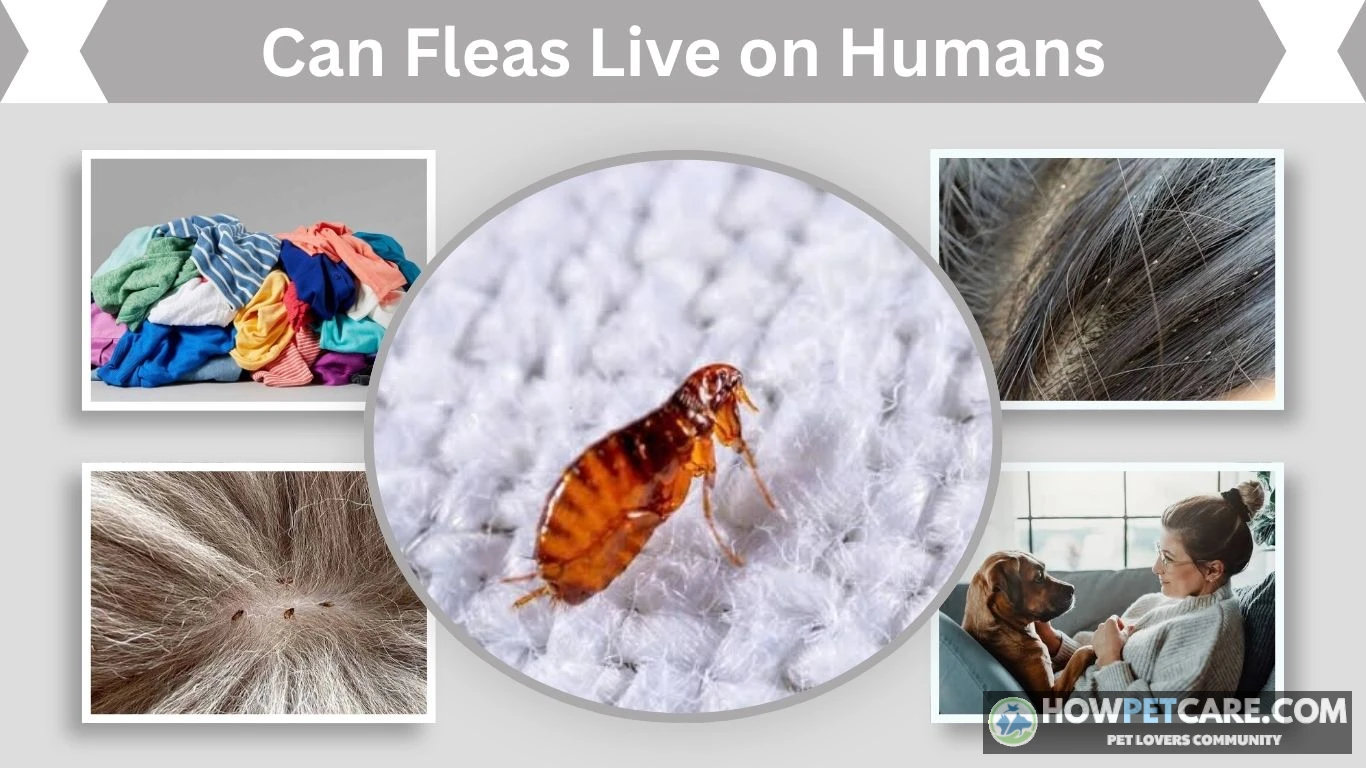
Sofas, carpet, floor cracks, and pet bedding are more likely places for a developing flea population. Wash bedding that pets use and vacuum areas where they sleep. Don’t use pet flea products on your skin or clothing.
Which Fleas Bite Humans? Cat Fleas, Dog Fleas, and Other Species
The cat flea (Ctenocephalides felis) is the species most likely to infest a U.S. home and bite both cats and dogs; it may bite people when pets are absent or flea pressure is high. The dog flea, Ctenocephalides canis, exists but is less commonly found in homes. The human flea, Pulex irritans, is uncommon in most U.S. households.
A different tropical species, the chigoe flea (Tunga penetrans), is an important exception: it can burrow into human skin, especially around the feet. This isn’t the typical household cat- or dog-flea situation described here.
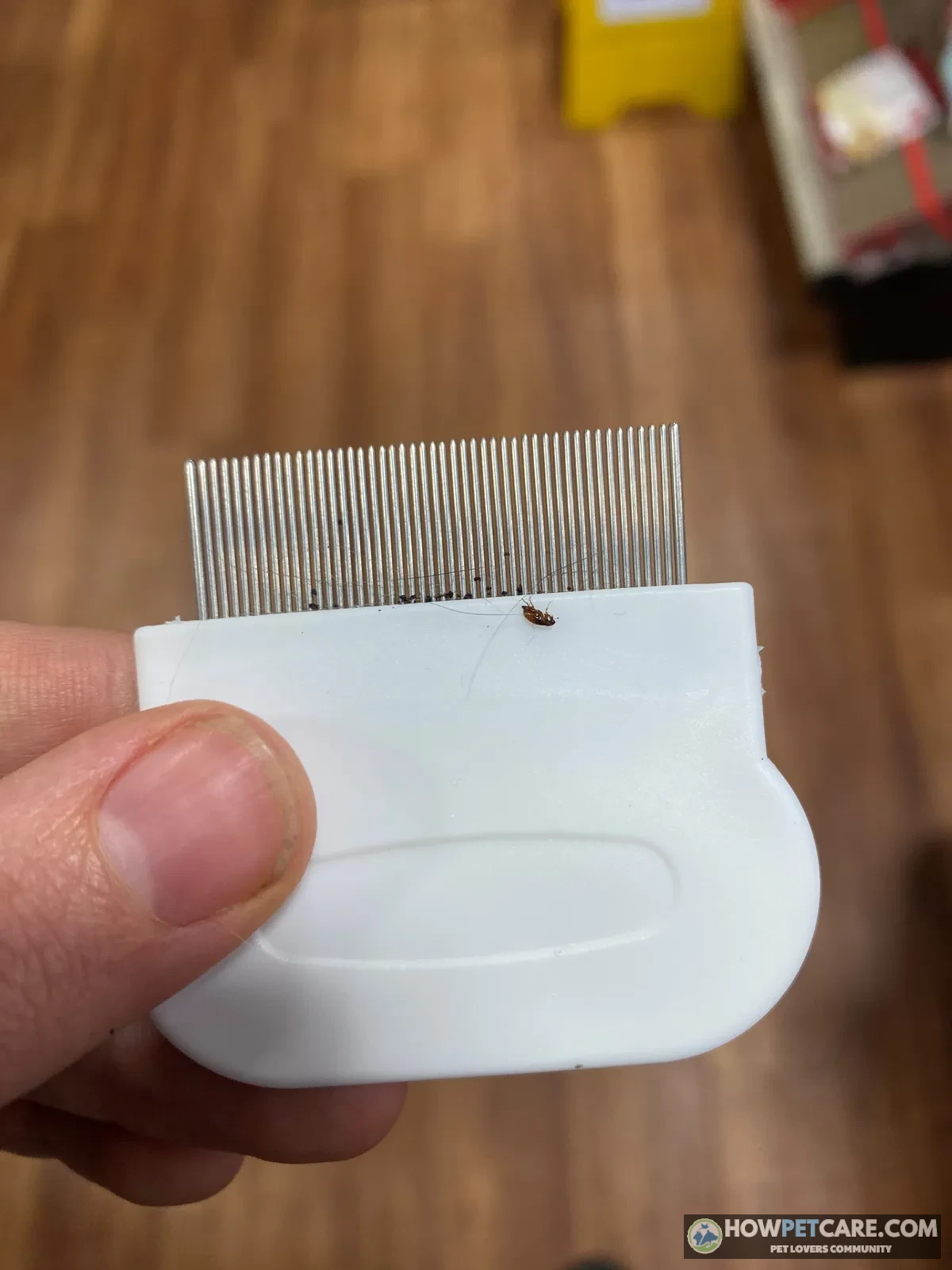
If you see black specks in a pet’s coat, place some on damp white paper. Flea dirt—flea feces containing digested blood—can leave a reddish-brown stain. A flea comb can help you check the coat, especially around the tail base and belly. Evidence on the pet helps identify the source more reliably than bites alone.
Flea Bites on Humans: How to Identify Them vs. Bed Bug and Mosquito Bites
Flea bites often appear as small, itchy red bumps in clusters or short lines, commonly around the ankles, feet, and lower legs. Bite appearance varies, though, and can’t confirm the insect by itself. Location, timing, and signs of fleas on pets or in the home provide useful context.
Flea vs. bed bug vs. mosquito bite comparison
| Feature | Flea bites | Bed bug bites | Mosquito bites |
|---|---|---|---|
| Appearance | Small red bumps; sometimes a tiny central puncture or red halo | Red welts that can be flat or raised | Often puffy, raised welts |
| Pattern | Clusters or short lines, often on lower legs | May appear in lines or groups on exposed skin | Usually scattered on exposed skin |
| Common location | Ankles, feet, and lower legs | Face, neck, arms, shoulders, or other skin exposed in bed | Any exposed skin |
| When noticed | Itching may begin soon after a bite | Reactions may not appear until hours or days later | Often noticed soon after the bite |
| Other clues | Pets scratching; flea dirt in fur; activity near carpets or pet resting spots | Signs of bugs or shed skins around mattress seams | Outdoor exposure or mosquitoes nearby |
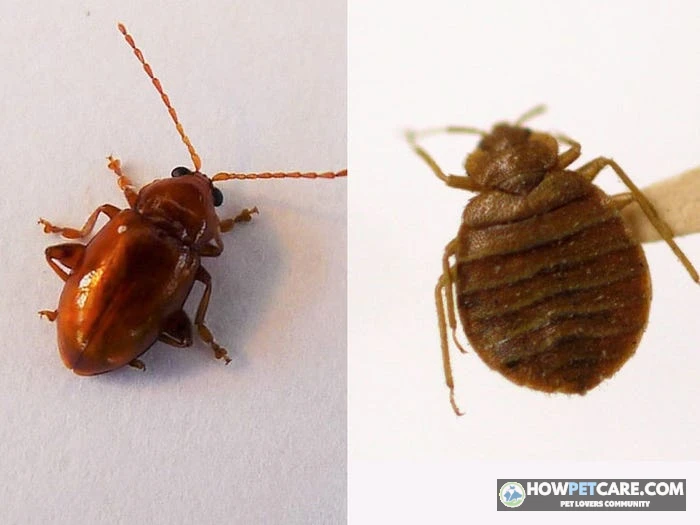
A white-sock check can help: walk slowly through carpeted areas in clean white socks and look for tiny dark fleas against the fabric. Comb your pet too, and check for flea dirt. Neither bite patterns nor this check replaces professional identification if the cause remains unclear. If signs point to bed bugs around a cat rather than fleas, follow advice for treating bed bugs on cats instead of using pet flea products on people.
How to Treat Flea Bites on Adults and Kids, and When to See a Doctor
Bite care step by step
Wash bites gently with soap and water, then use a cold compress to ease itching and swelling. Avoid scratching, which can break the skin and lead to infection. Adults may consider over-the-counter hydrocortisone cream, calamine lotion, or an oral antihistamine, following the product label and any clinician’s advice.
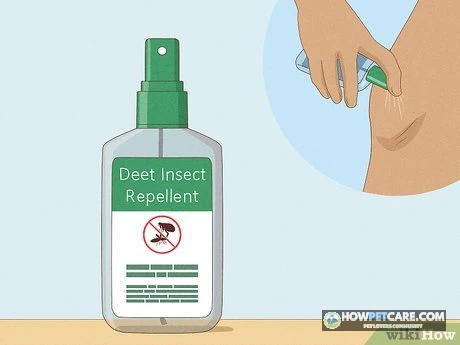
For children, check age restrictions and dosing instructions on any medicine, and ask a pediatrician or pharmacist if you’re unsure. Don’t put pet flea treatments on a child or adult. Products intended for animals can be harmful to people.
Are flea bites dangerous for children?
Most household flea bites cause local itching rather than serious illness. Children may scratch, though, and develop irritated or infected skin. Rarely, an infected flea can transmit Dipylidium caninum tapeworm if a person swallows it; this is a greater practical concern for young children who may put contaminated hands or objects in their mouths. Fleas can also carry pathogens associated with illnesses such as murine typhus, plague, or cat-scratch disease, but these aren’t typical outcomes of an ordinary household flea problem.
Are natural or essential-oil repellents safe?
“Natural” doesn’t automatically mean safe. Essential oils may irritate skin or be toxic if swallowed or used improperly, and some are particularly hazardous around cats. Evidence for repelling fleas on people is limited. Use only products labeled for human use, follow the label, and check with a pediatrician before using a repellent on a child. Never swap a pet product for a human one.
When to see a doctor
Contact a doctor or pediatrician for spreading redness, warmth, tenderness, pus, or open sores; these can indicate infection. Seek medical advice for a fever, a widespread rash, unusually large welts, or bites that aren’t improving after one to two weeks. Swelling of the face, lips, tongue, or throat, difficulty breathing, or dizziness after a bite requires emergency care.
How Long Fleas Survive: Life Stage Timelines on You and in an Empty Home
A flea’s life cycle includes egg, larva, pupa, and adult. The times below are approximate: temperature, humidity, and access to a host affect development and survival.
| Life stage | On a human | In a home without a host | What it means for you |
|---|---|---|---|
| Adult | Usually minutes to hours as a temporary hitchhiker | May survive days to roughly a couple of weeks without a blood meal, depending on conditions | A flea on you does not mean it has established itself on your body |
| Egg | Falls off; it cannot remain attached to hair | Often hatches in days; timing varies with conditions | Eggs are more likely to develop in carpets and bedding than on a person |
| Larva | Cannot live on a person | Feeds on flea dirt and organic debris for days to weeks before pupating | Carpet fibers, floor cracks, and pet bedding can shelter developing fleas |
| Pupa | Does not form on skin | May remain dormant for weeks or months; emergence depends on conditions and cues such as vibration or warmth | A vacant home can still release adult fleas when people or pets return |
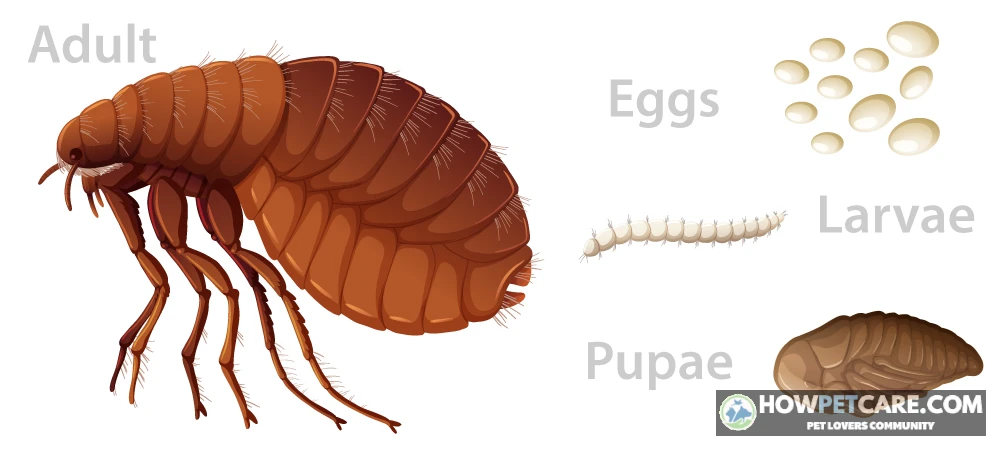
Flea larvae feed on flea dirt and other organic debris rather than blood. A home can keep producing fleas even after the pet has been treated. Pupae are protected in cocoons, and newly emerged adults may seek a host when activity returns. That’s why occasional bites can continue for weeks after treatment begins; it doesn’t necessarily mean the plan has failed.
Wash pet bedding and washable fabrics using the hottest water setting safe for the fabric—around 130°F (54°C) when the item’s care label allows—and dry thoroughly on high heat if safe. Combine laundry with repeated vacuuming and pet treatment; washing alone won’t remove every life stage from a home.
Flea Treatment Plan: Day 1, Week 1, and Weeks 2–4
Treat the pet and the environment together. Choose a preventive with a veterinarian, based on the animal’s species, age, weight, health, and other medications. Options include monthly oral preventives, topical spot-ons, and flea collars. Examples of brands include Advantage, Seresto, Credelio, and Revolution for cats, but products differ by species and formulation; a veterinarian should determine what’s appropriate. Never use a dog flea product on a cat. For the home, household sprays containing an insect growth regulator may help when appropriate; follow the label, keep children and pets away as directed, and don’t apply a home product to an animal or person.
| Timeframe | Pet actions | Home actions | Yard and outside actions |
|---|---|---|---|
| Day 1 | Use a flea comb and check for flea dirt; start veterinarian-approved treatment for every household pet | Wash pet bedding and washable household bedding on the hottest safe setting; vacuum carpets, edges, furniture, and car seats; empty the canister outdoors or seal and discard the bag | Clear debris where pets rest and note shaded, damp areas |
| Week 1 | Keep every pet on schedule; use the comb to monitor flea activity | Vacuum every day or two; wash pet bedding weekly; consider a labeled household treatment with an insect growth regulator if needed | Trim grass and limit access to crawl spaces or sheltered resting places |
| Weeks 2–4 | Continue prevention without gaps; check pets with a flea comb | Keep vacuuming and monitor for new bites as pupae emerge | Reduce brush piles and other sheltered areas where wildlife or pets may rest |
| Beyond 4–6 weeks | Ask the veterinarian whether the treatment plan needs adjustment | If fleas persist despite consistent treatment, contact a licensed pest professional | Consider outdoor sources if pets are being re-infested outside |

Day 1 checklist
Comb each pet, check for flea dirt, and start the correct veterinary-approved preventive. Wash bedding, vacuum where pets rest, and empty the vacuum outdoors. Shower and change clothes if fleas have been on you; treat the source rather than your skin.
Week 1 actions
Vacuum every day or two, wash pet bedding weekly, and keep all pets on their prescribed schedule. If you use a household spray, follow its label exactly, including precautions for children and animals.
Weeks 2–4 and prevention
Keep vacuuming and monitoring. You may still see occasional fleas or bites while pupae emerge, so continue the plan rather than stopping when the first adults disappear. Keep pets on their ongoing preventive schedule to reduce the chance of another cycle.
When to call a vet or pest professional
Contact the veterinarian if the pet still has fleas, reacts to treatment, or needs a different product. If a home infestation continues after four to six weeks of consistent pet and household measures, consult a licensed pest professional. For outdoor re-infestation, focus on shaded areas where pets rest and discuss appropriate control with a professional.
FAQ
Can fleas lay eggs on humans?
Fleas may lay eggs after feeding, but eggs are not sticky and fall off. On people they usually end up in clothing, bedding, or carpet, which is why the home needs treatment.
Can humans get tapeworms from fleas?
Yes, but only by accidentally swallowing an infected flea, which is uncommon and more of a risk for young children. Treating pets for fleas and tapeworms with your vet’s guidance lowers the risk.
Do fleas prefer humans or pets?
Fleas strongly prefer pets with fur, and humans are usually a secondary blood source. Bites on people often show up when flea numbers are high or the pet is absent.
Can I get fleas from my dog or cat sleeping in my bed?
Fleas can jump from pets onto bedding and bite you, but they won’t live on your body. Washing bedding hot and treating the pet are the key steps.
How do I get rid of fleas on my body?
Shower with soap and water, wash clothes and towels hot, and treat the itch with hydrocortisone or an antihistamine as directed. Fleas won’t stay on you, so the lasting fix is treating pets and the home.