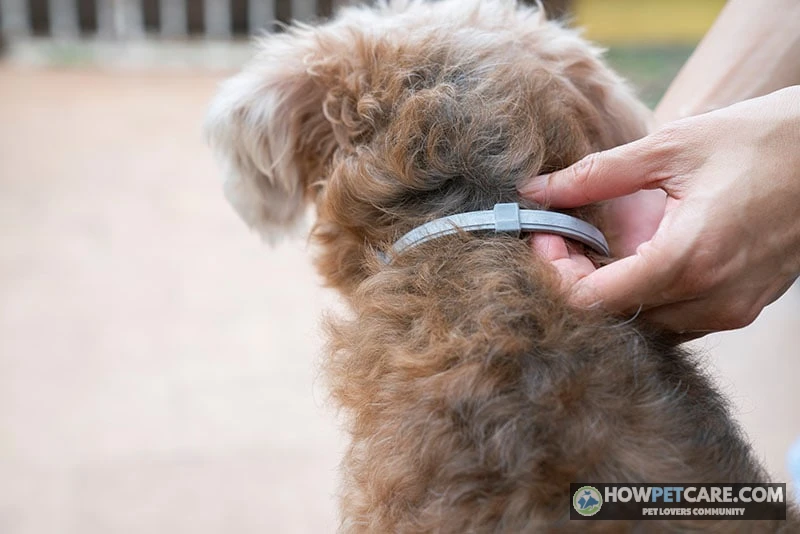

Medicated flea collars work by slowly releasing active ingredients that spread through a pet’s skin oils to kill and repel fleas and ticks for months. They work only when the label matches your pet’s species, age, and weight — and they will not clear a household infestation alone.
Modern medicated flea collars can give continuous flea and tick prevention, provided the product is labeled for your pet’s species, age, weight, and lifestyle. They won’t cure a household infestation on their own. A collar treats the pet, while eggs, larvae, and pupae in carpeting and bedding keep producing new adult fleas. In the available evidence, medicated collars are the designs with clinical support; natural-oil and ultrasonic collars lack comparable evidence.
This guide shows how to choose a dog flea collar or cat flea collar safely, compare protection duration with monthly treatments, fit the band correctly, and recognize when a collar is the wrong option. The product label and your veterinarian should make the final call, especially for puppies, kittens, cats living with treated dogs, pregnant pets, sick pets, or pets with a prior pesticide reaction. Cost per month is the actual price paid divided by the months of labeled flea protection the collar can realistically deliver; compare that figure with the per-dose cost of a topical or chewable before assuming a longer-lasting collar is cheaper. Author note: This educational guide was reviewed against current EPA product-label requirements, FDA Animal & Veterinary resources, and Companion Animal Parasite Council guidance.
Do Flea Collars Actually Work? How Modern Collars Protect Pets
A flea collar works when its active ingredients are released at the intended rate and spread through the pet’s skin oils and hair. Modern designs aim for ongoing surface distribution, not a room full of pesticide vapor. Seresto, for example, uses imidacloprid and flumethrin released into the skin’s oil layer to kill and repel parasites.

Matrix Technology vs. Old-School Vapor Collars
Many current flea and tick collar products use a polymer or matrix band that releases insecticides or acaricides gradually. Normal movement and coat oils carry the ingredients over the body. Older products mostly affected parasites near the neck.
Here’s a useful rule: a prevention collar is only as effective as its label match, fit, and usable lifespan. A collar labeled for dogs isn’t automatically suitable for cats. One that has been chewed, removed, soaked beyond its label limits, or left too loose may not perform as intended.
For an established infestation, treat the collar as one part of a plan. Every pet in the home needs species-appropriate parasite control. Vacuum pet resting areas, floor edges, rugs, and upholstered furniture. Wash bedding as the fabric permits. Keep monitoring, because immature flea stages can linger in the home after the adults on your pet begin dying; outdoor pressure matters too, so a plan for treating grass for fleas can support indoor cleanup when yards are part of the problem.
Onset Timeline: How Fast Do Flea Collars Start Killing Fleas?
Onset differs between products, so don’t assume. Check the exact label for its stated flea-kill window and the life stages it controls. A pet can still have live fleas shortly after application, and newly emerged adults may jump on from the home. That doesn’t automatically mean the collar failed.
A severe flea infestation may need a coordinated veterinary plan. Do not add a flea shampoo, spray, topical treatment, or oral flea medication simply to speed up results unless a veterinarian confirms that combination is appropriate.
Already Seeing Fleas? Use This Troubleshooting Flowchart
Record the application date and time, then compare progress with the product’s labeled initial kill time.
FLEAS SEEN AFTER APPLICATION
          |

          v
Is the pet unwell or reacting to the collar?
  YES -> Remove it if safe and contact a veterinarian.
  NO  -> Is it labeled for this species, age, and size?
           NO / UNSURE -> Stop and verify before continuing.
           YES -> Has the stated kill window passed?
                    NO -> Monitor and begin household control.
                    YES -> Check fit, directions, and water limits.
                              |

                              v
                    No downward trend or worsening itch?
                      -> Ask a veterinarian to reassess treatment.
Use a flea comb for a five-minute session at application, day 3, and day 7. Record live fleas, skin changes, and missed household cleaning. You’ll end up with a trend to discuss with a veterinarian. It isn’t a clinical efficacy test.

Active Ingredients Explained: Imidacloprid, Flumethrin, and Deltamethrin
Active ingredients matter more than broad marketing terms such as “flea prevention collar.” Read the active-ingredient panel on the exact package, since a brand can sell different formulations for different species or sizes.
Primary Insecticides: What Kills Fleas vs. What Repels Ticks
Imidacloprid is an insecticide used against fleas. Flumethrin is a synthetic pyrethroid used for flea and tick control. Collars can combine ingredients so one component targets fleas while another extends tick prevention. The Seresto collar option is the major veterinary-highlighted example named in the available evidence, and it uses imidacloprid plus flumethrin.
Deltamethrin, another synthetic pyrethroid, appears in some dog-focused flea and tick products. Its presence is a reason to slow down and read the species restrictions rather than assume all collar ingredients share a safety profile.
In the United States, EPA regulation governs pesticide products such as flea collars. Follow the EPA-approved package label exactly. It’s the legally controlling source for eligible species, minimum age, weight range, bathing limits, disposal, handling, and warnings. Labels and safety information can change, so don’t rely on an older package, a marketplace listing, or a similarly named product.

Species-Specific Toxicology: Why Dog Collars Can Be Lethal to Cats
Cats are not small dogs. Never put a dog-rated collar on a cat unless the label explicitly says it’s approved for cats. That matters most with pyrethroid-containing products: cats can be harmed by direct use of an unsuitable dog pesticide and potentially by close grooming contact with a treated dog.
In a multi-pet household, think beyond the wearer. Can a cat lick the dog’s neck, sleep against the collar, or chew a discarded offcut? Can a puppy mouth the collar? If so, talk with a veterinarian about a safer management plan or another prevention method.

A dog-rated flea and tick collar should never be treated as safe for a cat by default. Check the exact species label and prevent grooming or chewing contact between pets when the label requires it.
Recognizing Side Effects and Safety Risks: Skin Irritation to Water Exposure
No pesticide product is risk-free. The practical safety goal is early recognition: remove the exposure when appropriate, avoid adding products, and get veterinary help before a mild-looking problem becomes serious.
Spotting Contact Dermatitis and Toxic Reactions
Contact dermatitis can show up as redness, scratching at the neck, hair loss, scabbing, swelling, or blistering beneath the band. If you suspect a reaction, remove the collar and contact a veterinarian. Tremors, seizures, marked weakness, trouble breathing, collapse, or suspected ingestion call for urgent veterinary guidance. Don’t induce vomiting unless a veterinary professional tells you to.

Wash your hands after handling the collar or touching the treated neck area, especially before eating. Keep collars and trimmed pieces away from children and pets. Matrix collars distribute active ingredients through coat oils rather than working as room-fogging vapor products, but label handling precautions still apply.
Water Resistance vs. Waterproofing: Swimming and Bathing Limits
“Water resistant” doesn’t mean swimming or frequent shampooing is irrelevant. Water exposure can shorten a collar’s real-world usable duration, and flea protection may not last as long as tick protection on the same product. Check the label for bathing and swimming limits before you calculate value.
A waterproof flea collar for large dogs is a good fit only if its label accommodates that dog’s actual routine. A dog that swims often may do better with a veterinarian-recommended oral flea medication or another treatment whose label better matches frequent water exposure.

Puppy and Kitten Age & Weight Restrictions
Are flea collars safe for puppies? Only when the exact product label says the puppy or kitten meets the minimum age and weight requirements. Don’t estimate by appearance, and recheck fit often as young pets grow. Puppies and kittens with heavy flea burdens can become unwell quickly, so lethargy, weakness, pale gums, or poor appetite warrants prompt veterinary attention.
The Best Flea Collars for Dogs and Cats: Efficacy and Longevity Compared
There’s no universal best flea collar for dogs or cats. A transparent choice weighs species approval, active ingredients, flea and tick coverage, label duration, water limits, breakaway design for cats, household contact risks, and cost over the duration actually achieved.
Comprehensive Brand Comparison: Active Ingredients, Duration & Water Resistance
| Brand & Model | Target Species | Active Ingredients | Protection Duration (Fleas/Ticks) | Water Resistance Rating | Breakaway Safety Feature |
|---|---|---|---|---|---|
| Seresto formulation labeled for dogs | Dogs only when package specifies dogs | Imidacloprid, flumethrin | Check current package label | Check current package label | Check current package label |
| Seresto formulation labeled for cats | Cats only when package specifies cats | Imidacloprid, flumethrin | Check current package label | Check current package label | Verify collar-specific release design |
| PetArmor or another deltamethrin collar | Exact labeled species only | Read exact package; formulations vary | Check current package label | Check current package label | Verify collar-specific design |
| Essential-oil or “natural” collar | Exact labeled species only | Varies widely | Do not assume proven protection | Varies | Varies |

The available evidence identifies Seresto as a primary veterinary-recommended brand with robust safety and efficacy data. That doesn’t make every Seresto size or formulation right for every pet. Select only the package labeled for your animal. For every collar listed above, calculate cost per month as actual price paid divided by labeled usable months of flea protection, using any shorter duration required by bathing or swimming directions. Do not convert the price of a natural collar into a comparable flea-control monthly cost unless its label and evidence establish a protection duration.
Top Dog Flea Collars for Heavy Tick and Flea Infestations
If your dog spends time in tick-heavy brush, prioritize a label that covers the ticks in your area as well as fleas; if a collar is a poor fit, compare dog tick repellent options before deciding. Confirm the dog’s age, weight, neck fit, water exposure, and whether cats can groom or sleep against the dog. In a heavy active infestation, household control and veterinary guidance matter more than switching collars repeatedly.
Best Cat Flea Collars for Indoor and Outdoor Pets
For cats, the safest starting point is a cat-specific collar with the label’s safety-release feature intact. Indoor cats may still need flea prevention if other pets, visitors, wildlife exposure, or shared spaces bring fleas in. Never trim, tape, tie, or otherwise modify a breakaway mechanism.
Do Natural Flea Collar Alternatives Actually Work?
Natural flea collar alternatives for pets may appeal to owners who want to avoid conventional insecticides, but “natural” doesn’t establish effectiveness or safety. Essential oils can irritate skin and may be hazardous to cats. Medicated collars have clinical support in the available evidence, while natural-oil and ultrasonic collars lack comparable evidence. If chemical exposure worries you, ask a veterinarian to compare non-collar prevention options rather than relying on an unverified collar.

Flea Collar vs. Oral and Topical Treatments: The True Cost-per-Month
The true monthly cost is the price paid divided by the number of months the collar stays usable under its label. Use flea-protection duration for a flea comparison, since tick protection may last a different length of time. Don’t extend use beyond the label.
Retail prices shift by retailer, package size, promotions, and location. No verified current Amazon, Chewy, or Petco price listings were supplied for this draft, so assigning invented prices to named collars would mislead. Record the exact retailer, date retrieved, product size, pack quantity, and total purchase cost before comparing.
Cost-per-Month Breakdown Across Major Brands
| Product Type | Brand Example | Average Retail Price | Duration of Efficacy | Calculated Cost per Month | Best Application Scenario |
|---|---|---|---|---|---|
| Medicated collar | Seresto labeled formulation | Record current retailer price | Use current package flea duration | Price paid divided by usable months | Pet whose routine matches label limits |
| Medicated collar | Deltamethrin product | Record current retailer price | Use current package flea duration | Price paid divided by usable months | Dog only if exact label fits household safety |
| Monthly topical | Veterinarian-recommended topical treatment | Record price per dose or pack | One labeled monthly dose | Pack cost divided by doses | Pets needing a non-collar option |
| Monthly oral | Veterinarian-recommended chewable | Record price per dose or pack | One labeled monthly dose | Pack cost divided by doses | Pets that swim often or cannot wear collars |
Collar Longevity vs. Monthly Oral Chewables and Spot-On Topicals
Run this calculator before you decide a long-duration collar is automatically cheaper.
Enter your numbers
- Price paid for one collar, including unavoidable purchase costs: $___
- Labeled months of flea protection: ___
- Shorter duration required by bathing or swimming limits: ___
- Monthly alternative’s cost per dose: $___
Monthly collar cost equals price paid divided by usable months of protection.
| Scenario | Calculation | Cost per month |
|---|---|---|
| $64 collar used for 8 months | $64 divided by 8 | $8.00 |
| Same $64 collar replaced after 5 months | $64 divided by 5 | $12.80 |
| Six monthly topical doses costing $72 | $72 divided by 6 | $12.00 |
| Three monthly oral doses costing $84 | $84 divided by 3 | $28.00 |

These are illustrative calculations, not verified 2026 retailer quotations. Against a $12 monthly dose, a $64 collar costs less over six months only if it remains appropriate and effective for at least six months. Early replacement can erase the apparent savings.
| Product Type | Brand or Model Example | Target Species | Active Ingredients | Protection Duration | Water Resistance Rating | Safety Features and Constraints |
|---|---|---|---|---|---|---|
| Medicated collar | Seresto formulation labeled for dogs | Dogs | Imidacloprid, flumethrin | Check current package label | Check current package label | Do not use dog-rated collars on cats due to pyrethroid toxicosis risks; verify collar-specific safety features |
| Medicated collar | Seresto formulation labeled for cats | Cats | Imidacloprid, flumethrin | Check current package label | Check current package label | Cats only when package specifies cats; verify collar-specific release design / breakaway safety feature |
| Medicated collar | PetArmor or another deltamethrin collar | Exact labeled species only (dog-focused) | Deltamethrin | Check current package label | Check current package label | Synthetic pyrethroids like deltamethrin can cause fatal toxicosis in cats; verify collar-specific design; dog only if exact label fits household safety |
| Essential-oil or "natural" collar | Not in source | Exact labeled species only | Varies widely (essential oils) | Do not assume proven protection | Varies | Lacks clinical evidence; essential oils can irritate skin and may be hazardous to cats |
| Monthly topical | Veterinarian-recommended topical treatment | Pets needing a non-collar option | Not in source | One labeled monthly dose | Not in source | Brings handling and drying precautions |
| Monthly oral | Bravecto chewable for dogs / Veterinarian-recommended chewable | Dogs / Pets that swim often or cannot wear collars | Not in source | One labeled monthly dose | Not affected / suitable for frequent swimmers | Suitable for pets that swim often or cannot wear collars |
How to Properly Fit, Adjust, and Trim a Flea Prevention Collar
Correct fitting supports distribution through the coat and reduces choking, snagging, and chewing risks. Put the manufacturer’s instructions first, because fasteners, retaining loops, cut allowances, and safety-release features differ.
The Two-Finger Rule: Measuring Collar Snugness
-
Measure before selecting
Use a flexible tape around the intended collar position without compressing the neck. Confirm the package sizing guidance before opening or cutting the collar.
-
Thread and secure
Fit the collar exactly as the label illustrates. Where the label specifies a two-finger fit, two fingers should slide beneath the collar comfortably without forcing them.
-
Use the retaining loops
Secure the loose end as directed so it can’t hang where the pet can chew it or where it can snag.
-
Mark before cutting
Find the label’s required tail allowance, mark the location, remove and recheck the collar if safe, then cut only at the confirmed mark.
-
Inspect daily at first
Check neck skin and fit daily after application, then regularly throughout use. Growing pets need more frequent checks.
MEASUREMENT MAP - not to scale

Neck measurement:
      tape follows the intended collar position
      <---------- N = ___ cm ---------->

Tail after correct fitting:
[fastener]====[final retaining loop]---------|------ excess

                                    T      cut
                             <----------->
Trimming Excess Length and Managing Fast-Growing Pets
There’s no generic cut length. A neck measurement doesn’t account for the fastener, overlap, or retaining-loop position. If the manufacturer says to leave a specific tail after the final loop, measure from that point. Keep scissors away from the pet’s neck. Dispose of offcuts according to the package directions, out of reach of children and animals.
Skip the long tail “for growth.” It can become chewable or snagged. Recheck the fit frequently instead, and replace the collar when the pet outgrows the labeled size. Don’t alter a cat collar’s breakaway feature.

Pet Lifestyle Decision Checklist: Selecting Your Ideal Prevention Method
Choose the prevention method your household can use correctly every day, not the product with the longest advertised duration. A collar may suit a pet that tolerates neckwear and has predictable water exposure. An oral option such as a Bravecto chewable for dogs may be easier for frequent swimmers. A topical may work for some households but brings its own handling and drying precautions. Your veterinarian can help you choose when a pet has medical conditions, skin disease, prior reactions, or complicated multi-pet contact.
Print-and-Score Flea-Collar Decision Checklist
Pet: __ Age: __ Weight: __
Exact product and size: __ Date checked: __
Pass these gates before scoring:
- ☐ The package explicitly lists my pet’s species, age, and weight as eligible.
- ☐ I checked the exact active ingredients and directions, not only the brand name.
- ☐ I discussed previous pesticide reactions, illness, pregnancy, or concurrent flea treatment with a veterinarian.
- ☐ I can prevent chewing and manage contact with other pets, especially cats.
- ☐ For a cat, I confirmed the safety-release mechanism and its instructions.
An unchecked safety gate means pause, not subtract points and buy anyway.
| Category | 0 points | 1 point | 2 points | My score |
|---|---|---|---|---|
| Efficacy match | Does not cover the parasite needed | Label covers target parasite | Label fit and product evidence checked | ___ |
| Safety fit | Concern remains unresolved | Eligible with a precaution to plan | Eligible with household controls in place | ___ |
| Cost fit | Above budget | Fits only at full label duration | Fits realistic water-adjusted duration | ___ |
| Lifestyle fit | Swimming, chewing, or snagging conflicts | One manageable change needed | Routine fits directions | ___ |
Total: / 8. Monthly budget: $ . Planned usable duration: ___ months.
Compare scores only after every safety gate passes. This is a personal suitability tool, not a clinical rating and not proof that the highest-scoring collar is safer for your pet.
Before you buy, verify the species, age, and weight on the package. Write down the retailer price and date so your cost-per-month math is honest. Consider swimming and grooming behavior, and plan how cats and dogs will stay away from treated collar surfaces if needed. If fleas persist, the pet reacts, or the household has a heavy infestation, contact a veterinarian.
FAQ
Can I use a dog-rated flea collar safely in a household with cats?
You should exercise extreme caution; while some canine collars like Seresto use ingredients tolerated around cats, dog collars containing high concentrations of permethrin or deltamethrin can cause fatal toxicosis in cats that groom the dog or share bedding. Always ensure any dog collar used in a multi-pet home is non-toxic to cats upon secondary contact.
Do flea collars work if a dog or cat already has fleas?
Yes, but they take 24 to 48 hours to kill existing adult fleas and do not instantly clear eggs already scattered in your home. For active, heavy infestations, combine the collar with a fast-acting oral knockdown treatment (like nitenpyram) and thorough environmental vacuuming to break the life cycle immediately.
What environmental or home-air risks do chemical flea collars pose?
Modern matrix collars do not emit toxic gases or chemical dust into the ambient air, as the active ingredients stay bound within the pet’s skin oils and hair follicles. However, humans—especially young children—should wash their hands after petting the collar site and avoid letting pets wearing chemical collars sleep directly against bare human skin.
How do I recognize an adverse skin reaction, and what should I do?
Signs of contact dermatitis include redness, persistent scratching at the neck, hair loss, or blistering beneath the collar band. If you observe these symptoms, immediately remove the collar, wash the pet’s neck with mild dish soap and warm water to remove residual oils, and consult your veterinarian.