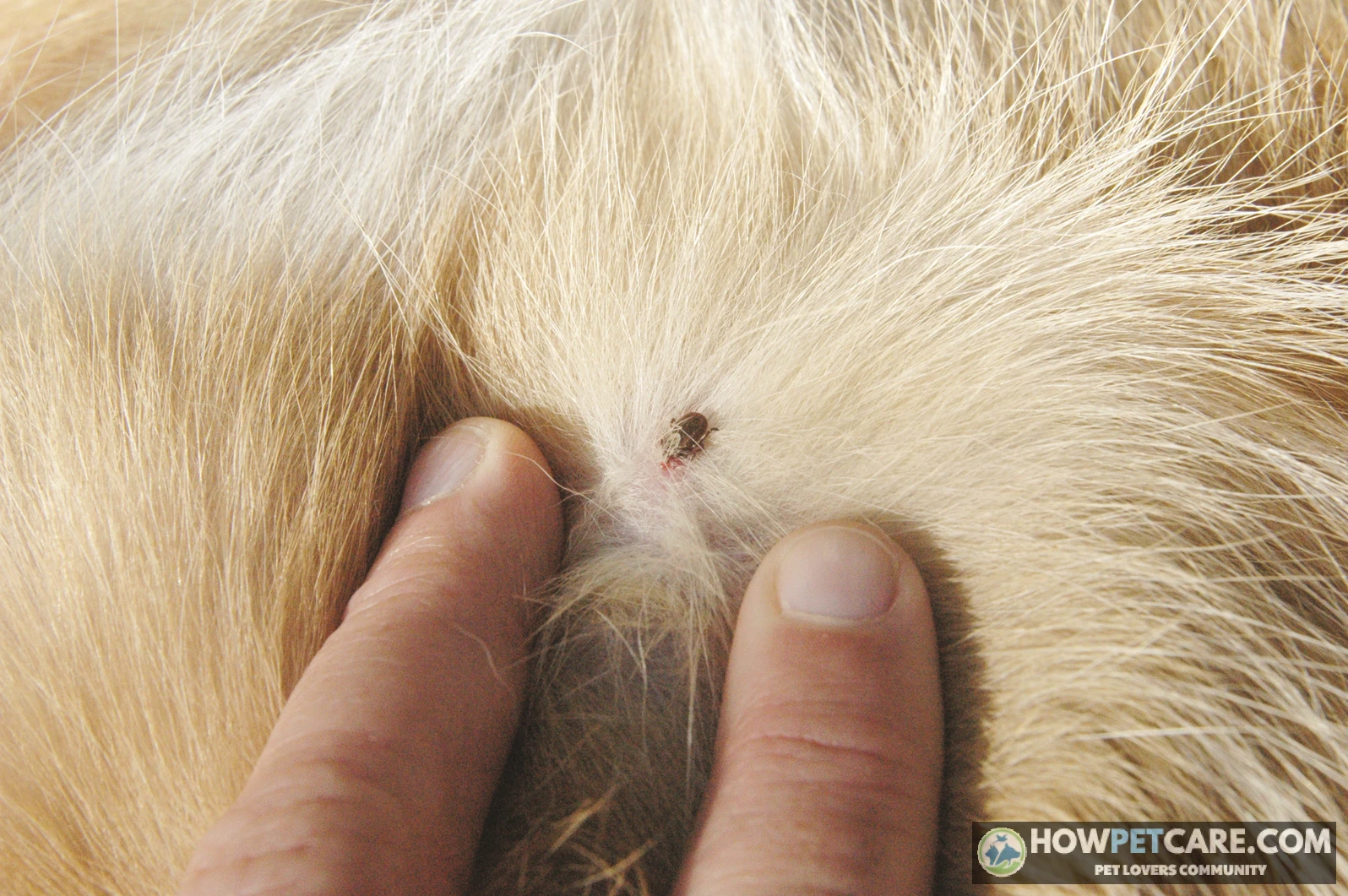

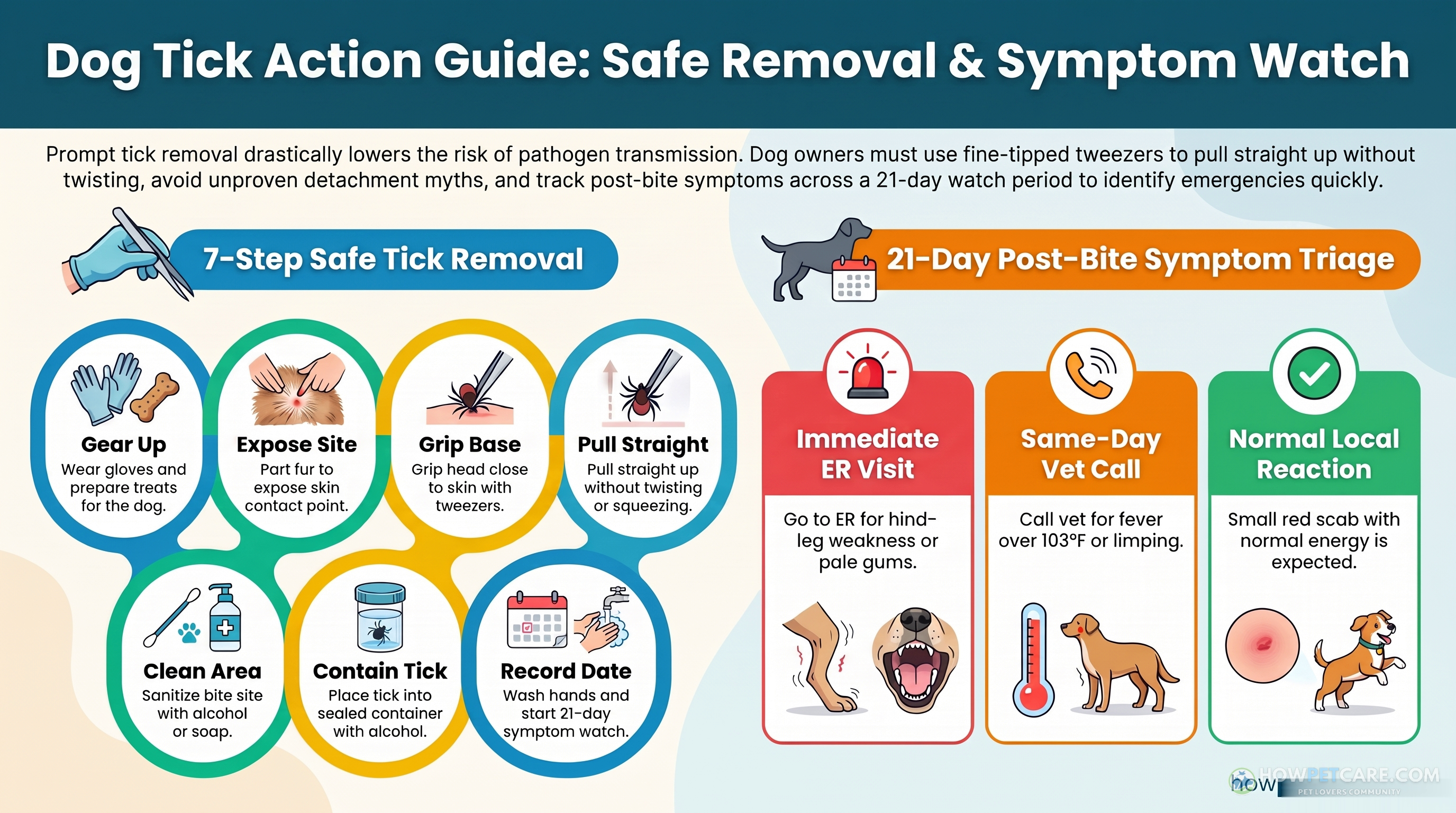
Grip the tick close to your dog’s skin with fine-tipped tweezers or a tick-removal hook and pull straight up with steady pressure—don’t twist with tweezers or squeeze the body. Clean the bite, save the tick in a sealed container if needed, and monitor your dog for 21 days for fever, lethargy, or lameness.
Found a Tick on Your Dog? How to Remove It Safely, Step by Step
Grip the tick close to your dog’s skin with a tick-removal tool or fine-tipped tweezers. Pull straight up with steady pressure, then clean the bite and your hands. Prompt removal lowers the chance of disease transmission: many pathogens need hours to days of attachment before they can infect a dog.
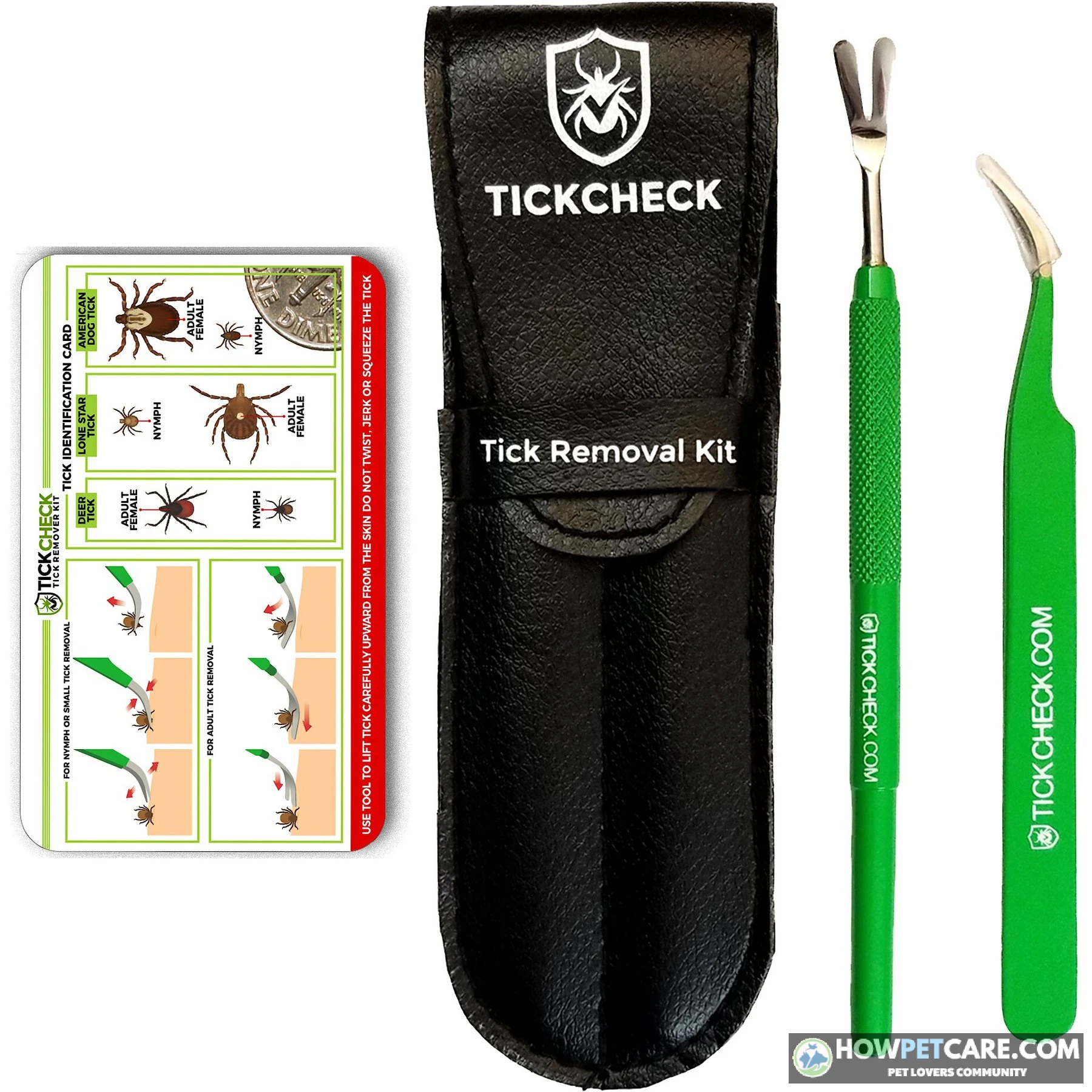
What You Need Before You Start
- Fine-tipped tweezers or a tick-removal hook
- Gloves (or a tool that keeps your fingers away from the tick)
- Rubbing alcohol or soap and water
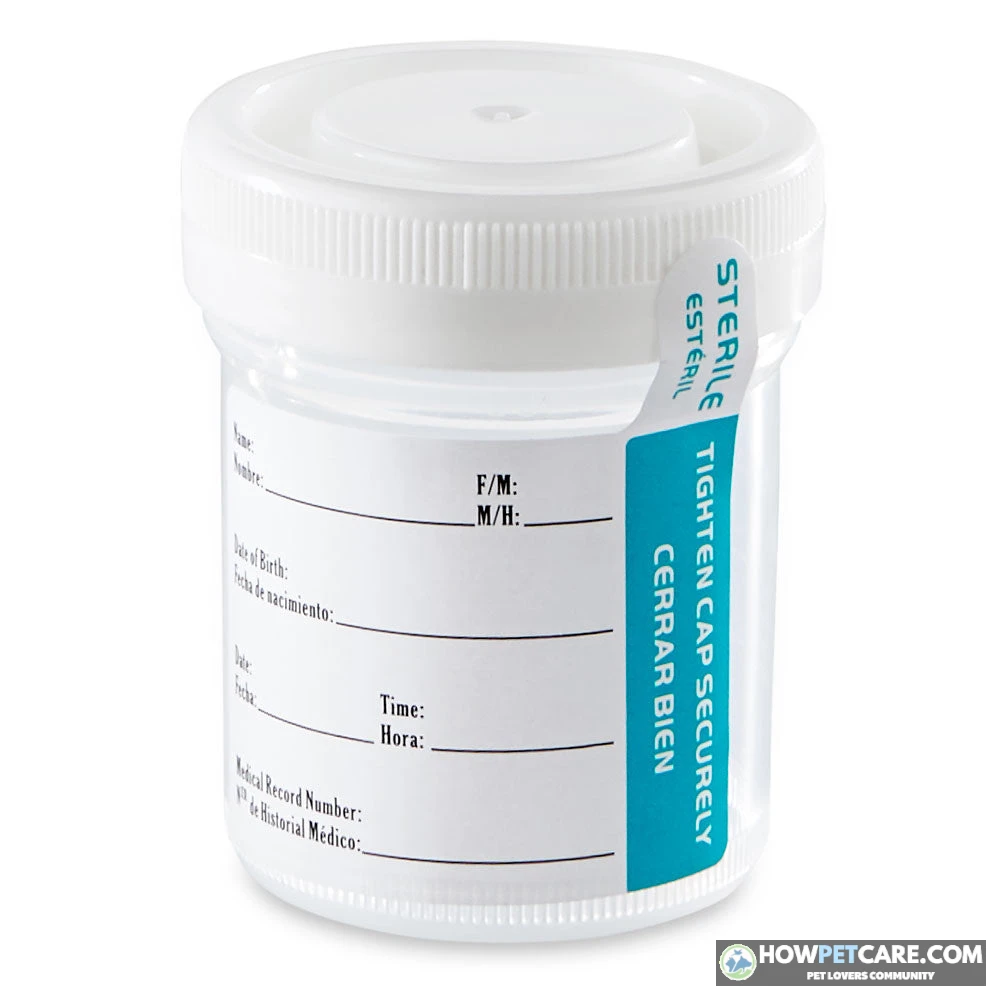
- A sealed container or zip-top bag
- Treats to help keep your dog calm
-
Step 1: Prepare
Put on gloves. Have a second person offer treats to help keep your dog still.
-
Step 2: Expose the tick
Part the fur so you can see the tick’s body and where it meets the skin.
-
Step 3: Grip correctly
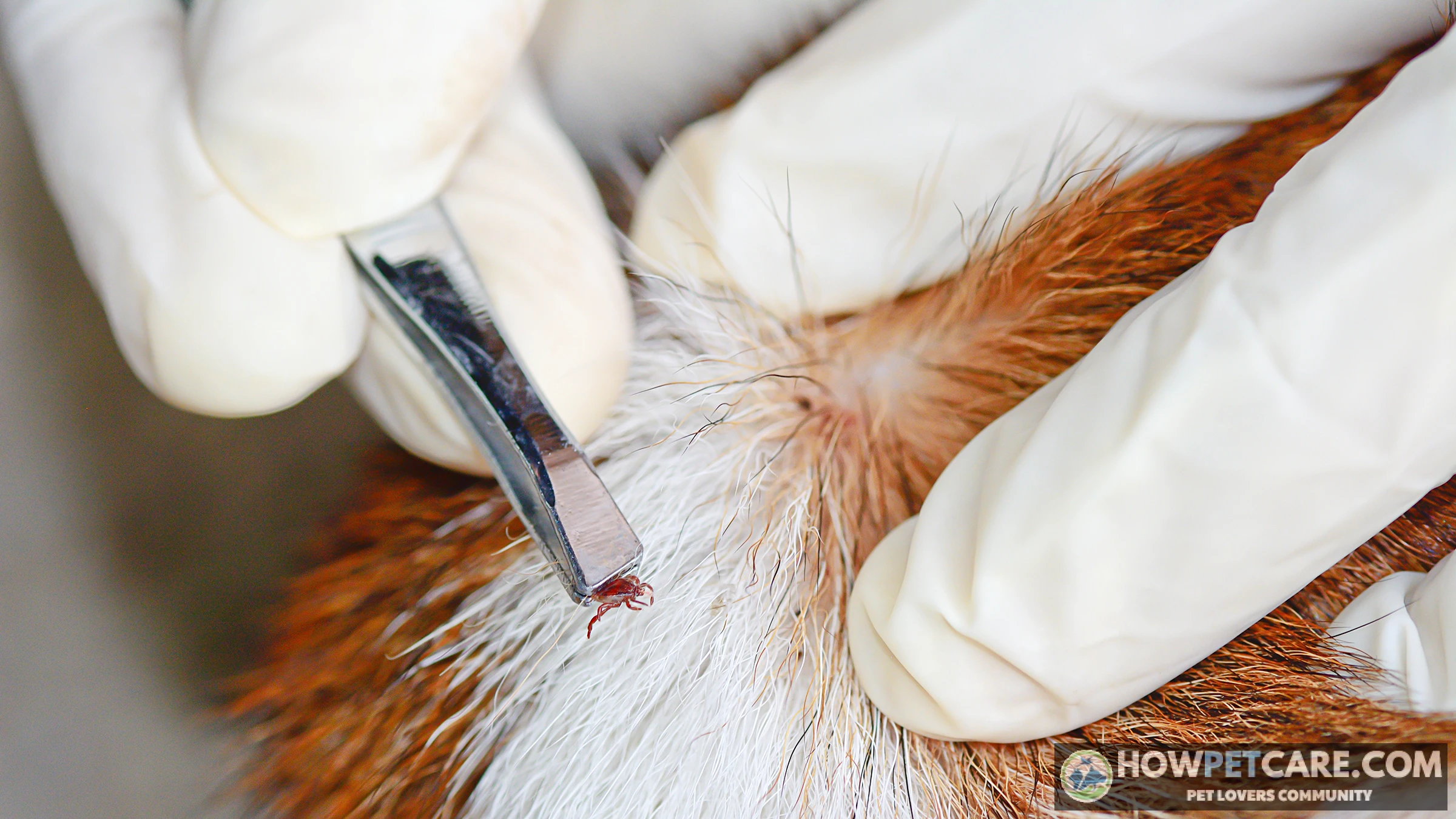
Slide the tweezers or hook as close to the skin as possible. Grip the head/mouthparts, not the swollen body.
-
Step 4: Pull steadily
Pull straight up with slow, steady pressure. Don’t twist with tweezers, jerk, or squeeze the body; squeezing can push gut contents into the bite. Tick hooks are used with a gentle lift-and-twist, as directed. The hook is designed to rotate; tweezers aren’t.
-
Step 5: Clean the site
Check the bite: the whole tick or a small crater-shaped mouthpart should come free. Clean the bite with soap and water or alcohol.
-
Step 6: Contain the tick
Drop the tick into the container. If you’re disposing of it, kill it with alcohol; never crush it between your fingers.
-
Step 7: Finish up
Wash your hands and the tool. Photograph the bite site and note today’s date to start your 21-day symptom watch.
After removal
- Tick removed whole → Monitor your dog for 21 days (see the symptom watch section).
- Mouthparts left behind → See the troubleshooting box below.
- Tick still engorged or you can’t grip it → Call your veterinarian.
Avoid these methods: Petroleum jelly, nail polish, alcohol, and a hot match won’t reliably make a tick detach. They may stress it into regurgitating into the bite.
Protect yourself: Wear gloves or use a tool. Never crush a tick with bare fingers, and wash your hands afterward.
What If the Tick’s Head or Mouthparts Break Off in the Skin?
What you’re seeing is usually the dark mouthparts, not a “head.” If a tiny fragment is visible at the surface, you can try one gentle pass with clean tweezers. Don’t dig: repeated probing can damage the skin more than the fragment will. If left alone, the body typically pushes it out over a few days, like a splinter. Keep the site clean and watch for swelling, pus, or spreading redness. Those signs—not the fragment itself—are reasons to call the vet. Disease transmission happens while the tick feeds. A retained mouthpart doesn’t keep “injecting” pathogens; the risk was set during the hours the tick was attached. That’s why removing it promptly matters more than getting every fragment.
Should You Save the Tick? Storage and Lab Testing Workflow
To have the tick identified or tested, put it in a sealed container with a blade of grass or a slightly damp paper towel to keep it from drying out. Label the container with the date and where on the body you found it. Refrigerate it if you’ll drop it off within a few days; freeze it for longer storage. A positive tick test does not prove your dog is infected, and a negative result doesn’t rule out other pathogens. Blood work on the dog helps guide treatment. University tick labs typically charge $40–$100 for pathogen screening in the tick.
What Does a Tick Look Like on a Dog? American Dog Tick vs. Brown Dog Tick vs. Deer Tick vs. Lone Star Tick
The table below compares the four tick species most often found on dogs.
Side-by-Side Tick Identification Table
| Common name (scientific name) | Unfed size & color | Engorged appearance | Distinguishing markings | Main U.S. range | Peak activity season | Where usually found on the dog |
|---|---|---|---|---|---|---|
| American dog tick (Dermacentor variabilis) | ~5 mm; reddish-brown | Up to ~15 mm; gray-olive | Whitish or silvery mottled shield on the back (both sexes) | East of the Rocky Mountains; also Pacific coast pockets | Spring–early summer (roughly April–August) | Ears, head, neck, along the back |
| Brown dog tick (Rhipicephalus sanguineus) | ~3 mm; uniform reddish-brown | ~10–12 mm; blue-gray | No markings — plain, uniform reddish-brown body | All 50 states; the only common tick that infests homes and kennels indoors | Year-round indoors; warm months outdoors | Between toes, in ears, around the neck |
| Deer / blacklegged tick (Ixodes scapularis) | Adult ~3 mm; nymph poppy-seed (~1 mm); black shield, reddish-orange body | ~10 mm; dark gray to near-black | Solid black shield contrasting with rust-colored body | Northeast, Upper Midwest, expanding down the Atlantic coast | Nymphs late spring–summer; adults spring AND fall | Head, ears, groin — easy to miss at nymph size |
| Lone star tick (Amblyomma americanum) | ~3–4 mm; reddish-brown | ~10–15 mm; gray-tan | Female: single white dot (‘lone star’) centered on the back; males have pale streaks at the body edge | Southeast and South; range expanding north | Spring–summer (roughly April–September) | Anywhere — aggressive, fast-moving hunter |
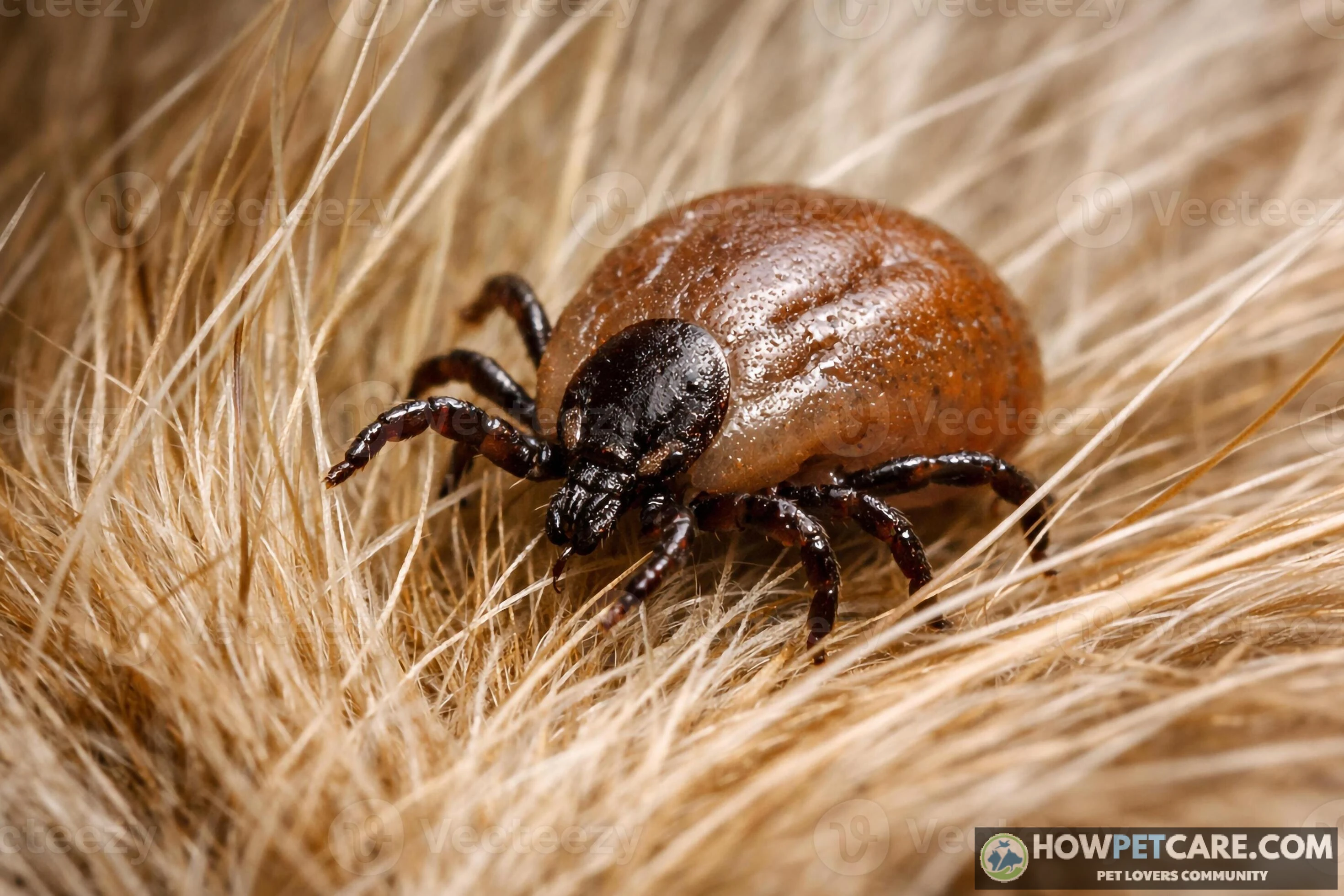
ID caveats: Once engorged, all four species can look gray and bean-shaped, and their markings become hard to see as the body stretches. If a firm identification matters—for example, when your vet is weighing disease testing—save the tick and ask your vet or a university tick-identification lab rather than guessing from photos.
Naming clarification: “Dog tick” usually means the American dog tick, but the brown dog tick is the species that specializes in dogs. A deer tick is the blacklegged tick. Range maps from CDC and university tick labs are changing; check current maps rather than relying on fixed boundaries. If the specks are smaller and hopping rather than attached, compare them with what fleas look like on pets before treating.
Where to Check Your Dog’s Body After Walks
Run your fingertips against the direction of the fur. You’re feeling for a new bump, not searching for legs.
- ☐ Inside and behind the ears — a common spot; check the ear-flap folds and ear-canal entrance
- ☐ Around the eyes, eyelids, lips, and chin — especially on dogs that sniff the ground
- ☐ Under the collar — a dark, warm, undisturbed strip of skin
- ☐ Armpits (front-leg ‘pits’)
- ☐ Groin and inner thighs — thin fur makes these spots easy to reach
- ☐ Between the toes and around the paw pads — the brown dog tick favors this spot
- ☐ Base of the tail and under the tail
- ☐ Down the back, sides, and belly — less common, but worth including in a full check
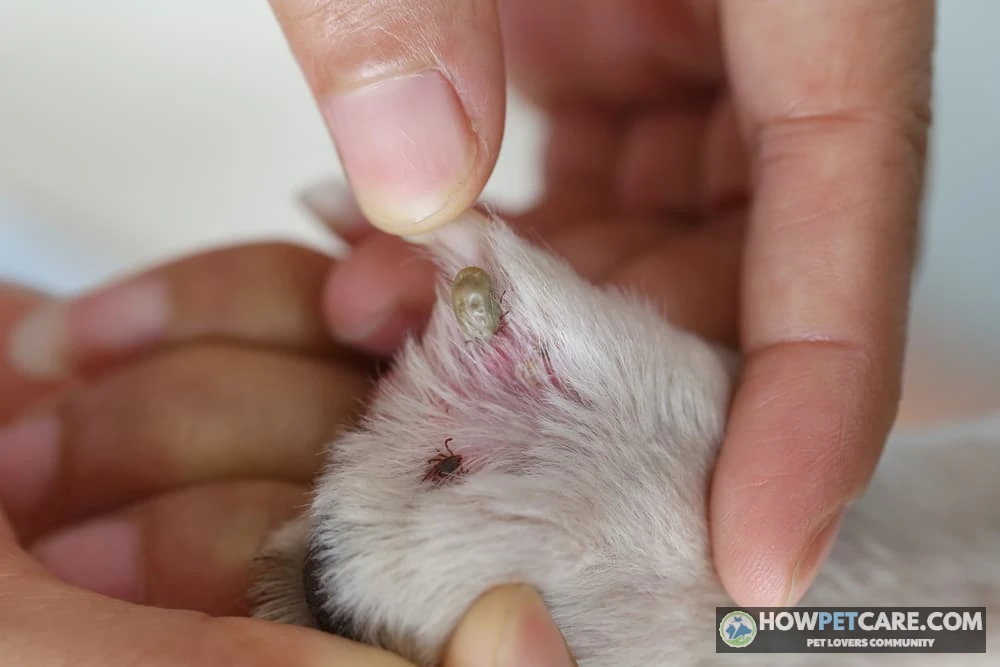
Frequency: Check your dog after every walk through grass, brush, or woods during tick season. In high-risk regions, aim for at least one hands-on check each day. Once you know the routine, a check takes under 2 minutes.
If ear scratching, head-shaking, or dark debris keeps up after ticks are ruled out, check for dog ear mites rather than assuming every ear problem is a tick.
Which Tick-Borne Diseases Can Dogs Get? A Species-to-Disease Chart
This chart links each tick species to specific diseases and symptoms, helping clarify conflicting claims across sources.
Species-to-Disease Matrix (Sourced)
| Tick species | Diseases transmitted to dogs | Typical early symptoms | Source and evidence note |
|---|---|---|---|
| American dog tick (Dermacentor variabilis) | Rocky Mountain spotted fever (RMSF), Tularemia, tick paralysis | Fever, lethargy, joint pain, vomiting, neurological signs; RMSF can progress rapidly | Primary vector for RMSF (Rickettsia rickettsii) and Tularemia, and a leading cause of tick paralysis in dogs. Does not transmit Ehrlichia species per Merck Veterinary Manual and CDC; Ehrlichia is mainly from brown dog tick and lone star tick. |
| Brown dog tick (Rhipicephalus sanguineus) | Ehrlichiosis (Ehrlichia canis), Babesiosis, Anaplasmosis (less common) | Fever, lethargy, weight loss, nosebleeds, bruising, enlarged lymph nodes | Adapted to indoor/kennel cycles; main vector for E. canis. |
| Deer / blacklegged tick (Ixodes scapularis) | Lyme disease (Borrelia burgdorferi), Anaplasmosis (Anaplasma phagocytophilum), Babesiosis | Lameness (shifting leg), fever, lethargy, joint swelling; many infected dogs show no signs | Lyme transmitted by I. scapularis; incubation weeks to months. |
| Lone star tick (Amblyomma americanum) | Ehrlichiosis (Ehrlichia ewingii, E. chaffeensis), Tularemia, STARI (human), tick paralysis | Fever, lethargy, joint pain, neurological signs; tick paralysis (ascending weakness) | Aggressive hunter; range expanding north. |
Key conflict resolved: Does the American dog tick spread ehrlichiosis? Merck Veterinary Manual, CDC, and CAPC attribute Ehrlichia species to the brown dog tick and lone star tick, not to Dermacentor variabilis. The American dog tick is the primary vector for RMSF and Tularemia.
Can dogs get Lyme disease from ticks? Yes, deer ticks can transmit Lyme disease. Many infected dogs show no signs. When symptoms do appear, lameness, fever, lethargy, or joint swelling may develop weeks to months later.
Early Signs of Tick Bite vs. Signs of Tick-Borne Illness
- Local bite reaction (normal): A small red bump or mild scab, with no systemic signs.
- Tick-borne illness (call vet): Fever, lethargy, appetite loss, joint pain, bruising or nosebleeds, or swollen lymph nodes.
A single tick can carry more than one pathogen, and disease risk depends on local prevalence. Check CAPC prevalence maps for your area.

After the Bite: A 7–21 Day Symptom Watch With Clear Vet-Visit Triggers
Use the timeline below to distinguish emergencies from signs that need a same-day call or continued monitoring.
Day-by-Day Timeline
- Day 0 (removal day): Photograph the tick and bite site, note the date, and start the 21-day watch.
- Days 1–7: The bite usually causes only local irritation. Call your vet if fever or lethargy develops.
- Days 7–21: This is a typical early-symptom window for ehrlichiosis, anaplasmosis, and RMSF. Lyme signs can appear weeks to months later, so keep watching past day 21 if a deer tick was involved.
Incubation varies by disease; the time windows above come from CDC and veterinary sources.
Emergency Signs: Go to the Vet Now
- Weakness that starts in the hind legs and spreads or worsens (possible tick paralysis—a neurotoxin reaction, not an infection; most dogs begin improving within ~24 hours of removal, but they need supportive care)
- Trouble breathing, or rapid or labored breathing
- Collapse, inability to stand, or seizures
- Pale or gray gums
- Unexplained bruising, nosebleeds, or bleeding that won’t stop
- Repeated vomiting with fever

Call Your Vet the Same Day
- Rectal temperature of 103°F (39.4°C) or higher — fever territory for dogs (normal is roughly 100–102.5°F); use a digital thermometer and lubricant if your dog seems warm, quiet, or shivery
- Lethargy — your dog is noticeably flat or won’t do normal activities
- Refusing food for more than ~24 hours
- Limping, shifting leg lameness, or visibly swollen joints
- Swollen lymph nodes (feel under the jaw and behind the knees)
What Normal Looks Like After a Tick Bite
- A small red bump or mild scab at the bite site
- Normal appetite, energy, and temperature
Tick Paralysis: Symptoms and Recovery Timeline
Tick paralysis can cause weakness that moves up from the hind limbs within days of attachment. It’s caused by a neurotoxin, not a bacterial disease. Recovery typically begins within 24 hours of tick removal, but supportive care (IV fluids, monitoring) is often needed. Recovery time varies, so treat this as typical, not guaranteed.
Decision tree graphic (described): Symptom present? → Emergency signs? → Go to ER. Mild signs? → Call vet. None? → Keep watching until day 21 and recheck.
Day 0 (removal day)
- ☐ Photograph the tick before disposal; save it in a labeled container (date + body location) if you want ID or testing later
- ☐ Photograph the bite site for comparison
- ☐ Write down the date — your 21-day watch starts now
GO TO AN EMERGENCY CLINIC NOW if any of these appear at any point
- ☐ Weakness starting in the hind legs that spreads or worsens (possible tick paralysis — a neurotoxin reaction, not an infection; most dogs begin improving within ~24 hours of removal, but they need supportive care)
- ☐ Trouble breathing, rapid or labored breathing
- ☐ Collapse, inability to stand, or seizures
- ☐ Pale or gray gums
- ☐ Unexplained bruising, nosebleeds, or bleeding that won’t stop
- ☐ Repeated vomiting with fever
CALL YOUR VET THE SAME DAY
- ☐ Rectal temperature of 103°F (39.4°C) or higher — that’s fever territory in dogs (normal is roughly 100–102.5°F); take it with a digital thermometer and lubricant if your dog seems warm, quiet, or shivery
- ☐ Lethargy — your dog is noticeably flat or won’t do normal activities
- ☐ Refusing food for more than ~24 hours
- ☐ Limping, shifting leg lameness, or visibly swollen joints
- ☐ Swollen lymph nodes (feel under the jaw and behind the knees)
KEEP WATCHING — this is normal
- ☐ A small red bump or mild scab at the bite site
- ☐ Normal appetite, energy, and temperature
Timeline notes: Days 1–7 usually bring only local irritation; days 7–21 are the typical early-symptom window for ehrlichiosis, anaplasmosis, and Rocky Mountain spotted fever. Lyme disease signs (limping, joint pain) can appear weeks to months later. Keep watching past day 21 if a deer tick was involved.
What Tick Testing and Treatment Cost: Vet Visit, Snap 4Dx, PCR, and Doxycycline
If you’re budgeting for care, these cost ranges offer a starting point. The notes below explain when each test may help.
Snap 4Dx vs. PCR: What Each Test Can and Can’t Tell You
- Snap 4Dx Plus (in-clinic screen): Detects antibodies for Lyme, Ehrlichia, and Anaplasma, plus heartworm antigen. Results take ~10 minutes. Antibodies may not be detectable for a few weeks after a bite, so an early negative Snap test doesn’t rule out infection.
- Send-out PCR panel: Detects pathogen DNA and may catch infection before antibodies develop. Ask your vet about timing and whether a retest is needed.
- Testing the tick itself: A positive tick doesn’t mean your dog is infected; a negative tick doesn’t rule out other pathogens. Testing the dog helps guide treatment.
Typical Price Ranges and Where They Come From
Typical U.S. price ranges (2026 survey and clinic-fee data — verify locally, as fees vary widely by region):
| Item | Realistic range | What it covers |
|---|---|---|
| Wellness/general exam | ~$50–$80 | The office visit itself |
| Emergency clinic exam | ~$100–$250 | After-hours or ER intake — before any tests |
| Snap 4Dx Plus (in-clinic screen) | ~$50–$100 | Antibodies for Lyme, Ehrlichia, Anaplasma + heartworm antigen, ~10-minute result |
| Send-out PCR panel | ~$100–$250 | Detects pathogen DNA; can catch infection before antibodies develop — ask your vet about timing |
| University tick lab (testing the tick) | ~$40–$100 | Identifies pathogens in the tick — a positive tick does NOT prove your dog is infected |
| Doxycycline, ~28-day course | ~$30–$90 | Standard first-line antibiotic for canine tick-borne infections; cost scales with dog size |
| Hospitalization (severe cases) | ~$500–$2,000+/day | IV fluids, transfusions, monitoring — the cost floor for RMSF or severe ehrlichiosis |
How to read this: An exam, Snap 4Dx, and doxycycline course often total under $200 — about the same as a single emergency-clinic exam fee. That’s the math behind “the test is cheaper than the wait-and-see.” One caveat: antibodies may not be detectable for a few weeks after a bite, so an early negative Snap test doesn’t close the case. Your vet may recommend a retest or go straight to PCR if symptoms are already present.
Treatment basics: Doxycycline is the usual first-line antibiotic, and symptoms often improve within days when treatment works. Severe illness may require hospitalization, IV fluids, or transfusions, which raise costs.
Cost-saving options: Consider preventive spending and wellness plans, and ask for an itemized estimate.
Tick Prevention for Dogs: Chewables vs. Topicals vs. Collars, and the FDA Isoxazoline Warning
Compare preventives by how they work, their safety information, and your dog’s needs—not just by brand.
Preventive Comparison: Active Ingredients, Duration, and Cautions
| Product type | Example active ingredients | Dosing and duration | Tick species on the label | Cost tier | Key cautions (including FDA isoxazoline warning) |
|---|---|---|---|---|---|
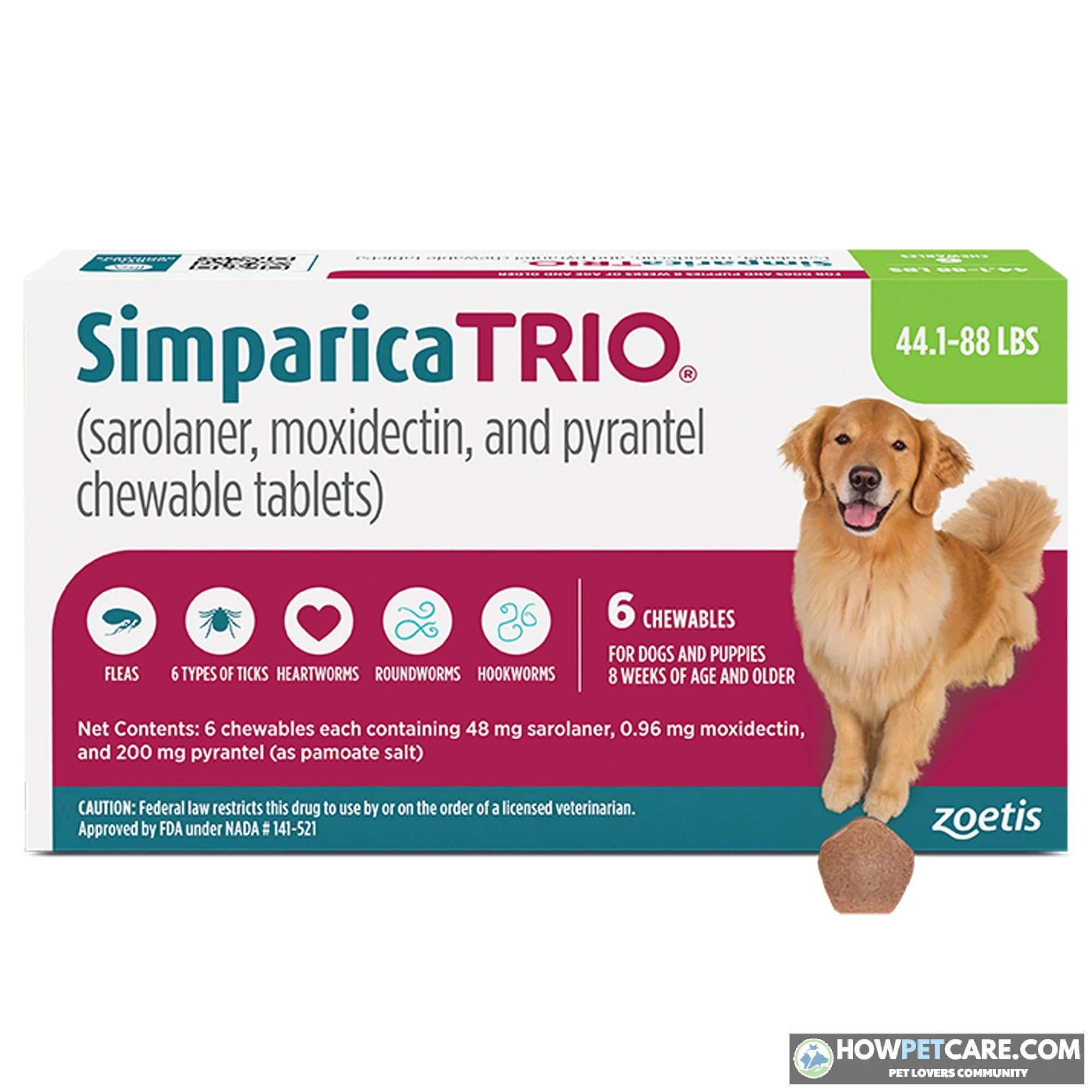
| Oral chewables (isoxazolines) | Afoxolaner, fluralaner, sarolaner, lotilaner | Monthly or every 12 weeks (fluralaner) | Varies by product; most cover deer tick, American dog tick, brown dog tick, lone star tick |
$
| FDA neurologic warning: may cause muscle tremors, ataxia, seizures; use with caution in dogs with seizure history. Discuss with vet. | |||||
|---|---|---|---|---|---|
| Topical (spot-on) | Permethrin, fipronil, imidacloprid + permethrin | Monthly | Check label; many cover deer tick, American dog tick, brown dog tick, lone star tick | ||
| Permethrin is toxic to cats — separate treated dog from cats until dry. Do not use on cats. | |||||
| Collar | Flumethrin + imidacloprid (Seresto), deltamethrin | Up to 8 months | Check label; typically deer tick, American dog tick, brown dog tick, lone star tick | $$ | Ensure proper fit; monitor for skin irritation. Some collars lose efficacy if wet frequently. |
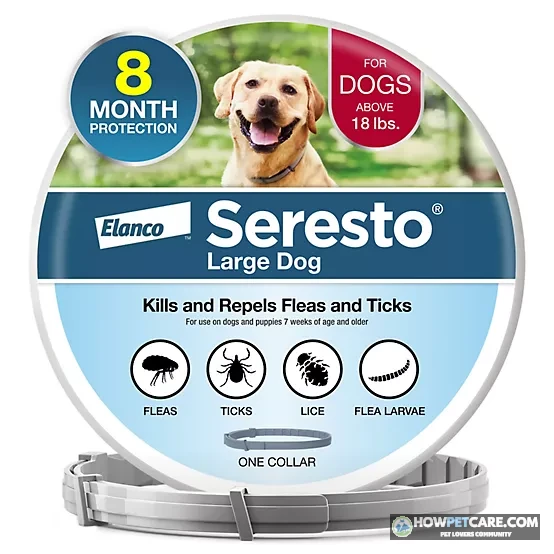
Check current label claims with the manufacturer and the FDA or EPA registration. Some sources still cite 2018–2020 guidance. Confirm which products are currently approved and which tick species they cover, especially as lone star ticks and other species expand their ranges.
Isoxazoline Neurologic Warning: What the FDA Says
The FDA’s 2018 alert on isoxazoline-class products (afoxolaner, fluralaner, sarolaner, lotilaner) notes potential neurologic adverse events, including muscle tremors, ataxia, and seizures. If your dog has a seizure history, discuss the warning with your vet. Check the FDA page for current wording.
Do Natural Tick Repellents Work?
Essential-oil sprays, garlic, and diatomaceous earth lack strong efficacy data, and some carry risks. Essential oils, for example, can be toxic if ingested or misapplied. Ask your vet before using them.
Choosing a Preventive for Your Region and Lifestyle
Consider your region and the tick species common there, your dog’s routine (including swimming, bathing, and outdoor exposure), health factors such as seizure history or drug sensitivities, and whether you have cats at home. If cats share the home, keep dog-only products away from them and use cat-specific guidance such as treating bed bugs on cats safely for feline parasite questions. There’s no single “best” option; choose one that fits your dog.
Tick Season, Yard Control, and Indoor Infestations: Can Dog Ticks Bite You or Move Into Your Home?
When Is Tick Season for Dogs? Regional Patterns
Ticks are active whenever temperatures are above freezing. Activity varies by region:
- Northeast and Midwest: Blacklegged (deer) ticks peak in spring and fall; nymphs in late spring–summer.
- Southeast and South: Lone star and American dog ticks peak in spring–summer.
- Southwest: Brown dog ticks and RMSF risk; brown dog ticks can be active indoors year-round.
Milder winters and expanding ranges mean year-round prevention is often advised (CDC, CAPC).
Yard and Landscape Steps That Reduce Ticks
- Mow grass short and clear leaf litter.
- Put a dry barrier (wood chips, gravel) between lawns and woods.
- Limit deer access with fencing or deer-resistant plants.
- Dry-ice tick traps: These can capture questing ticks but aren’t a standalone solution; evidence is limited and they need maintenance.

Brown Dog Ticks Indoors: Kennel and Home Infestation Plan
The brown dog tick (Rhipicephalus sanguineus) is the only common tick that can complete its whole life cycle indoors. An infestation can involve kennels, dog beds, baseboards, and wall cracks. Watch for ticks climbing walls or repeated ticks on your dog despite prevention. To address an infestation:
- Treat the dog with an effective preventive (isoxazoline or labeled topical/collar).
- Wash bedding on hot cycles.
- Vacuum thoroughly; consider professional pest control for cracks and crevices.
- Repeat environmental treatment according to the product label (often 2–3 weeks apart).

Can Dog Ticks Bite Humans?
Yes. Ticks that bite dogs can bite people, too. Check yourself after spending time outdoors, remove ticks promptly using the same technique, and call your doctor about symptoms. People also ask whether fleas can live on humans; the short version is that human flea exposure is handled differently from tick bites. This article doesn’t cover human treatment in depth.
Your Tick Action Plan: A Checklist for Today, This Week, and Tick Season
Today
- ☐ Remove the tick using the 7-step method.
- ☐ Clean the site and photograph the tick and bite. If you want ID or testing, save the tick in a labeled container (date + body location).
- ☐ Note the date to start the 21-day watch.
This Week
- ☐ Check your dog daily using the body-check map.
- ☐ Take its temperature if it seems off.
- ☐ Use the triage tiers (Emergency → Call → Watch) to decide whether to call the vet.
- ☐ Ask the vet about screening if you live in a high-risk area.
Before and During Tick Season
- ☐ Confirm a year-round or season-appropriate preventive with your vet.
- ☐ Check your dog after walks.
- ☐ Apply yard measures: mow, add a barrier, and reduce deer access.
Quick Decision Guidance
- Emergency clinic now: Hind-leg weakness that spreads, trouble breathing, collapse, seizures, pale gums, uncontrolled bleeding, or repeated vomiting with fever.
- Call vet same day: Fever ≥103°F, lethargy, not eating >24 hrs, limping or swollen joints, or swollen lymph nodes.
- Keep watching: A small red bump or scab at the bite site, with normal appetite, energy, and temperature.
Common Name (Scientific Name) Unfed Size & Color Engorged Appearance Distinguishing Markings Main U.S. Range Peak Activity Season Preferred Body Location on Dog Diseases Transmitted to Dogs American dog tick (Dermacentor variabilis) ~5 mm; reddish-brown Up to ~15 mm; gray-olive Whitish or silvery mottled shield on the back (both sexes) East of the Rocky Mountains; also Pacific coast pockets Spring–early summer (roughly April–August) Ears, head, neck, along the back Rocky Mountain spotted fever (RMSF), Tularemia, tick paralysis Brown dog tick (Rhipicephalus sanguineus) ~3 mm; uniform reddish-brown ~10–12 mm; blue-gray No markings — plain, uniform reddish-brown body All 50 states; the only common tick that infests homes and kennels indoors Year-round indoors; warm months outdoors Between toes, in ears, around the neck Ehrlichiosis (Ehrlichia canis), Babesiosis, Anaplasmosis (less common) Deer / blacklegged tick (Ixodes scapularis) Adult ~3 mm; nymph poppy-seed (~1 mm); black shield, reddish-orange body ~10 mm; dark gray to near-black Solid black shield contrasting with rust-colored body Northeast, Upper Midwest, expanding down the Atlantic coast Nymphs late spring–summer; adults spring AND fall Head, ears, groin — easy to miss at nymph size Lyme disease (Borrelia burgdorferi), Anaplasmosis (Anaplasma phagocytophilum), Babesiosis Lone star tick (Amblyomma americanum) ~3–4 mm; reddish-brown ~10–15 mm; gray-tan Female: single white dot ('lone star') centered on the back; males have pale streaks at the body edge Southeast and South; range expanding north Spring–summer (roughly April–September) Anywhere — aggressive, fast-moving hunter Ehrlichiosis (Ehrlichia ewingii, E. chaffeensis), Tularemia, STARI (human), tick paralysis
1When removing an attached tick from a dog using fine-tipped tweezers, why is it critical to pull straight up with steady pressure rather than twisting the tweezers or squeezing the tick's body?
Direct mechanical pressure on the engorged abdomen forces fluids backward into the host, and twisting rigid tweezers tears the attached mouthparts off in the skin.
2A dog owner removed a tick from their pet four days ago. Which of the following post-bite clinical signs should prompt an immediate trip to an emergency veterinary clinic?
Ascending hind-limb weakness is a hallmark sign of tick paralysis, requiring prompt emergency supportive care.
3A canine patient is diagnosed with Rocky Mountain spotted fever caused by Rickettsia rickettsii. Which tick species serves as the primary vector for this specific pathogen?
The American dog tick is the primary vector transmitting Rocky Mountain spotted fever (Rickettsia rickettsii) and Tularemia to dogs.
4When selecting a tick preventive for a dog with a clinical history of seizures, which class of active ingredients requires extra caution due to an FDA alert regarding neurological adverse events?
The FDA issued a safety alert for the isoxazoline class because these compounds have been linked to neurologic events such as muscle tremors, ataxia, and seizures.
5During tick removal, the body of the tick detaches, leaving small dark mouthparts embedded in the dog's skin. What are the appropriate clinical recommendations for handling these retained mouthparts?
A single careful attempt to grasp a superficial, visible mouthpart fragment can remove it without causing additional tissue trauma.
6How does the etiology of tick paralysis differ fundamentally from bacterial tick-borne illnesses such as Lyme disease or Ehrlichiosis?
Tick paralysis is caused by a salivary neurotoxin rather than an infectious organism; removing the source of the toxin allows rapid improvement, usually within 24 hours.
FAQ
How long can a tick stay on a dog?
Depending on species and life stage, a tick can feed for a few days to more than a week before dropping off engorged. Ticks do not reliably fall off before they can transmit disease, so check your dog and remove ticks promptly.
Should I use petroleum jelly, alcohol, or a hot match to make a tick let go?
No. These methods do not reliably make the tick detach and may stress it into regurgitating into the bite. Use a tick removal tool or fine-tipped tweezers and pull straight out.
Does the Lyme vaccine replace a tick preventive for dogs?
No. The vaccine only targets Lyme disease, while ticks carry other pathogens. Ask your veterinarian whether the vaccine makes sense in your area, and keep your dog on a tick preventive either way.
Are ticks active in winter?
Some are. Adult blacklegged ticks can become active on days above freezing, so many veterinarians recommend year-round prevention in regions with mild winters. Ask your vet what fits your area.