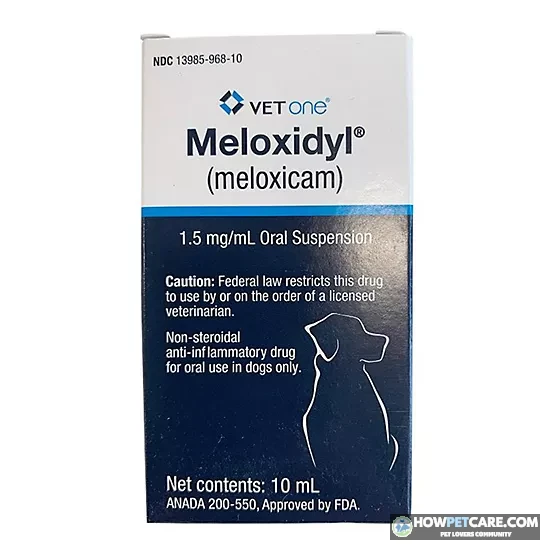

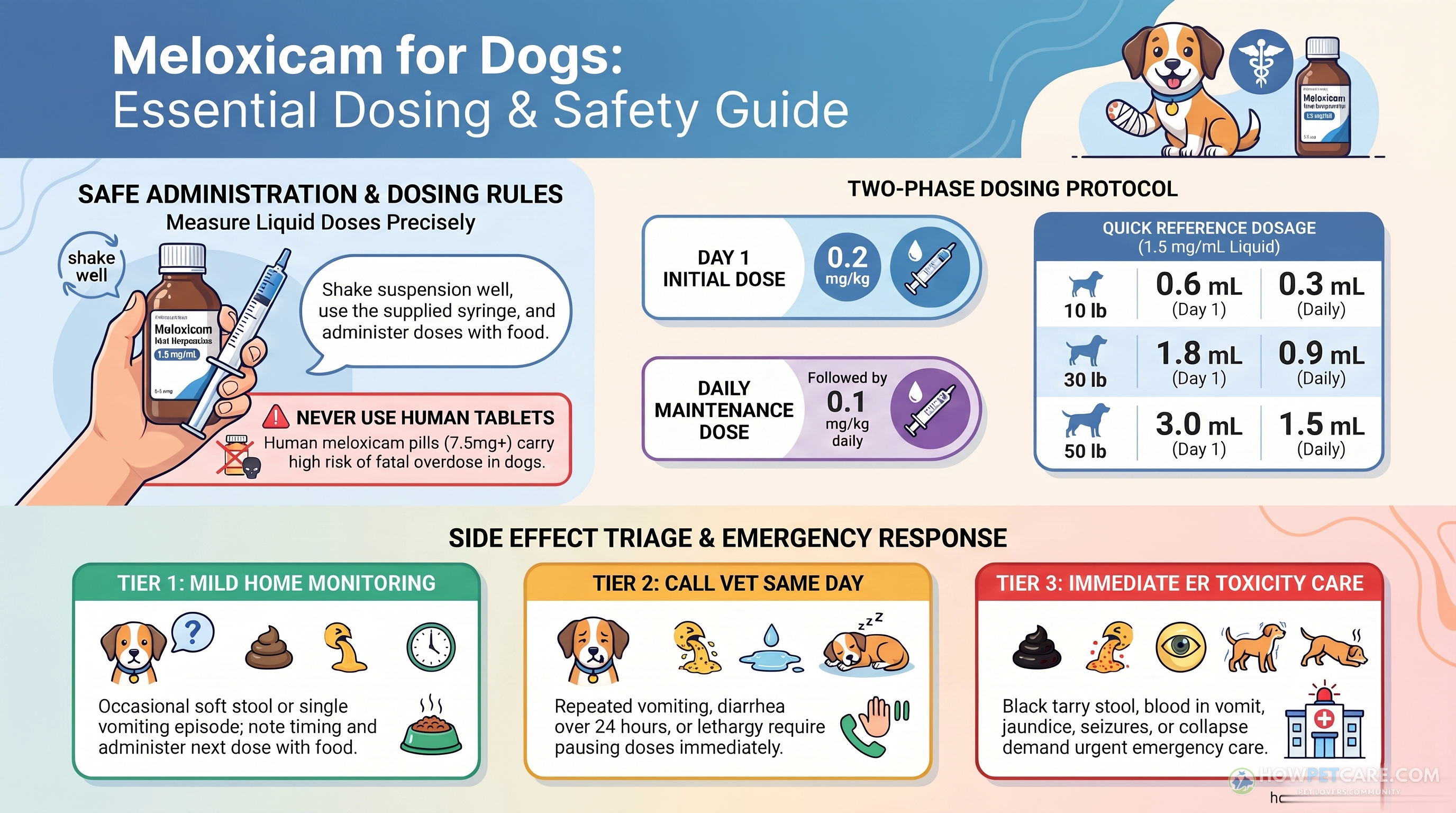
Meloxicam (brand Metacam) is a prescription NSAID for dog pain and inflammation. The standard dose is 0.2 mg/kg on day one, then 0.1 mg/kg once daily. With the common 1.5 mg/mL oral suspension, divide the mg dose by 1.5 to get mL. Always follow your vet’s prescribed dose.
What Meloxicam Treats in Dogs and How Fast It Works
Meloxicam is an FDA-approved prescription NSAID (non-steroidal anti-inflammatory drug) used to control pain and inflammation in dogs with osteoarthritis, post-surgical wounds, injuries, cancer, dental disease, and other inflammatory conditions. The medication works by selectively blocking COX-2 enzymes, which reduces prostaglandin production and therefore pain and swelling while sparing COX-1, a factor that helps protect the stomach lining. Most dogs notice improvement within a few hours to a day or two, and full arthritis relief is typically judged over several days to a couple of weeks. The drug is available as an oral liquid suspension, an injectable form for veterinary use, and occasionally as chewable tablets; the oral liquid is the most common for home administration. Because meloxicam is intended for dogs only, any discussion of cat dosing or human use is limited to explaining why those guidelines do not apply to your pet.
Is Meloxicam Safe for Dogs? Who Should Not Take It
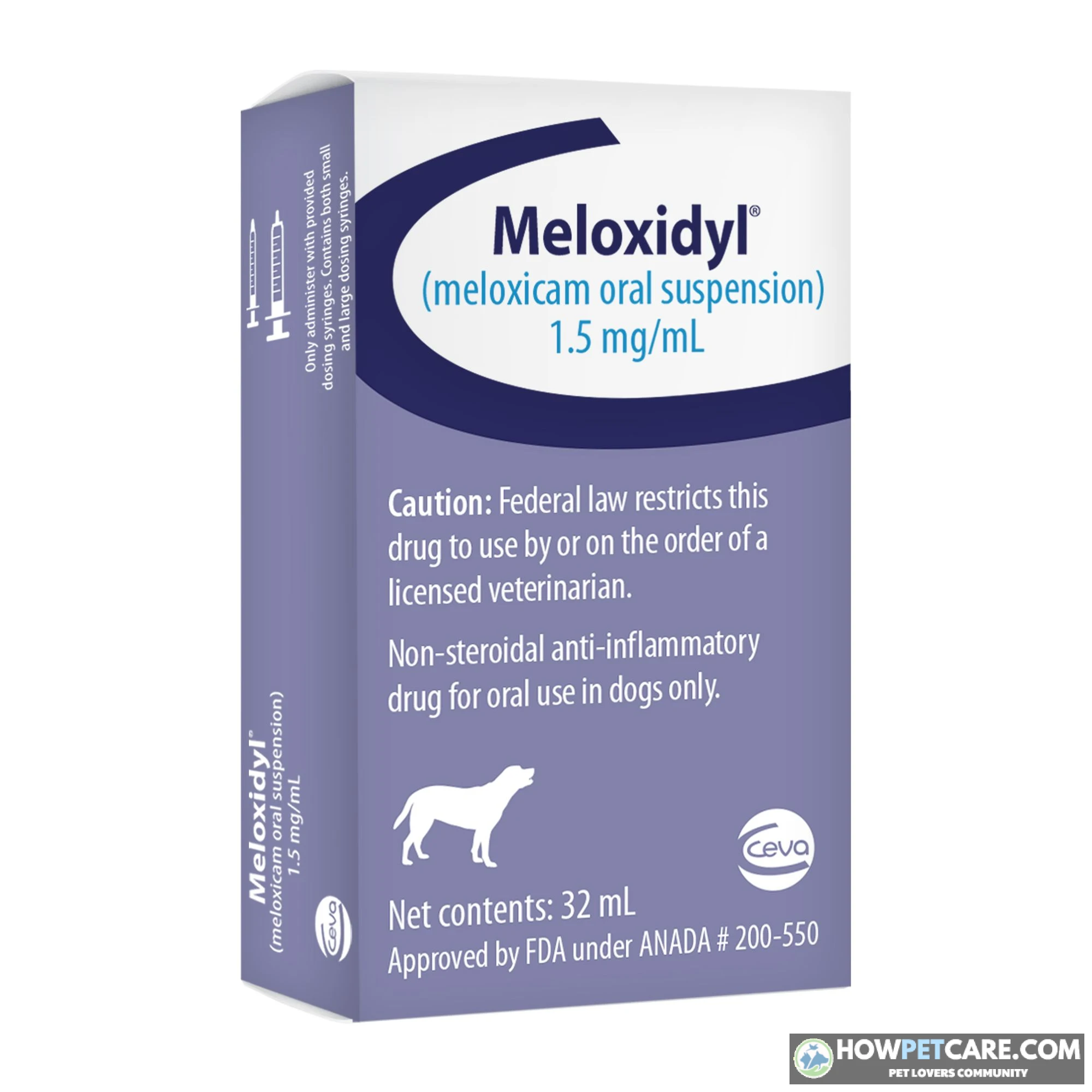
When prescribed by a veterinarian and given at the correct weight-based dose, meloxicam is generally safe for dogs. However, certain conditions make it risky: existing kidney, liver, or gastrointestinal disease or ulcers, bleeding disorders, severe dehydration, low blood pressure, or heart disease managed with heart medications such as pimobendan, and a prior NSAID reaction. Puppies under six months of age should not receive meloxicam, and pregnant or lactating dogs are not recommended to take it without a thorough risk assessment from the vet. Drug interactions are significant: never combine meloxicam with corticosteroids such as prednisone, other NSAIDs, or aspirin, and use caution with diuretics, ACE inhibitors, or any medication that affects kidney function. If your dog is on any other supplements or medications, inform the veterinarian before starting meloxicam.
What is the correct meloxicam dosage for my dog’s weight, in mg per kg/lb and in mL of liquid?
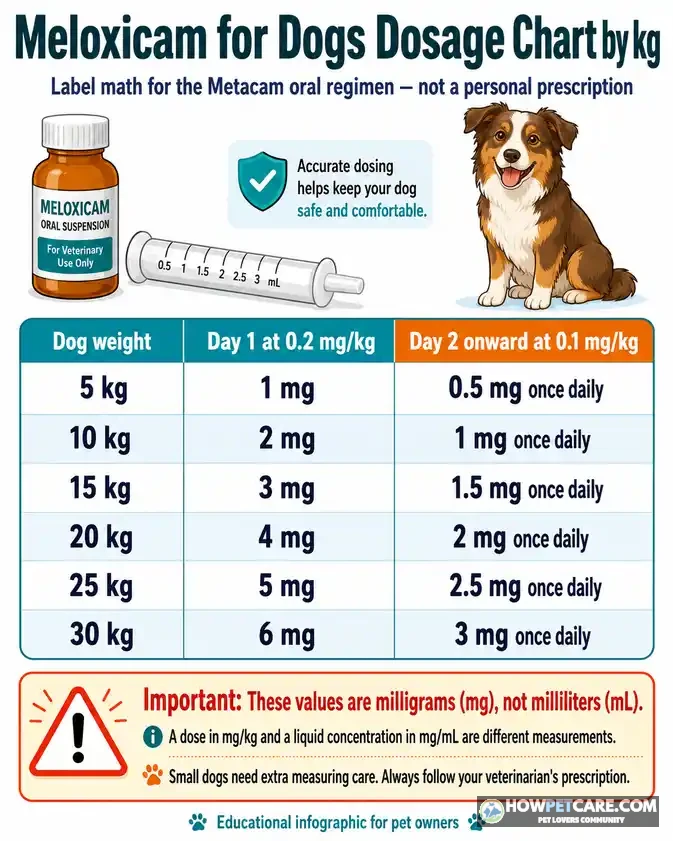
The standard label dose is about 0.2 mg per kilogram on day one, then about 0.1 mg per kilogram once daily for maintenance. The most common US oral suspension concentration is 1.5 mg per milliliter, so the conversion is mL = dose in mg ÷ 1.5 mg per mL. Your veterinarian’s prescribed dose always overrides this chart; a mismatch is a reason to call the clinic, not to adjust on your own. Below is a weight-based chart that shows the day-one dose and the daily maintenance dose for a range of dog weights.
| Dog weight (lb) | Dog weight (kg) | Day 1 dose (mg) | Day 1 dose (mL) | Daily dose after day 1 (mg) | Daily dose after day 1 (mL) |
|---|---|---|---|---|---|
| 5 | 2.3 | 0.5 | 0.3 | 0.2 | 0.15 |
| 10 | 4.5 | 0.9 | 0.6 | 0.5 | 0.3 |
| 15 | 6.8 | 1.4 | 0.9 | 0.7 | 0.45 |
| 20 | 9.1 | 1.8 | 1.2 | 0.9 | 0.6 |
| 30 | 13.6 | 2.7 | 1.8 | 1.4 | 0.9 |
| 40 | 18.1 | 3.6 | 2.4 | 1.8 | 1.2 |
| 50 | 22.7 | 4.5 | 3.0 | 2.3 | 1.5 |
| 60 | 27.2 | 5.4 | 3.6 | 2.7 | 1.8 |
| 70 | 31.8 | 6.4 | 4.2 | 3.2 | 2.1 |
| 80 | 36.3 | 7.3 | 4.8 | 3.6 | 2.4 |
| 90 | 40.8 | 8.2 | 5.4 | 4.1 | 2.7 |
| 100 | 45.4 | 9.1 | 6.0 | 4.5 | 3.0 |
| 125 | 56.7 | 11.3 | 7.6 | 5.7 | 3.8 |
| 150 | 68.0 | 13.6 | 9.1 | 6.8 | 4.5 |
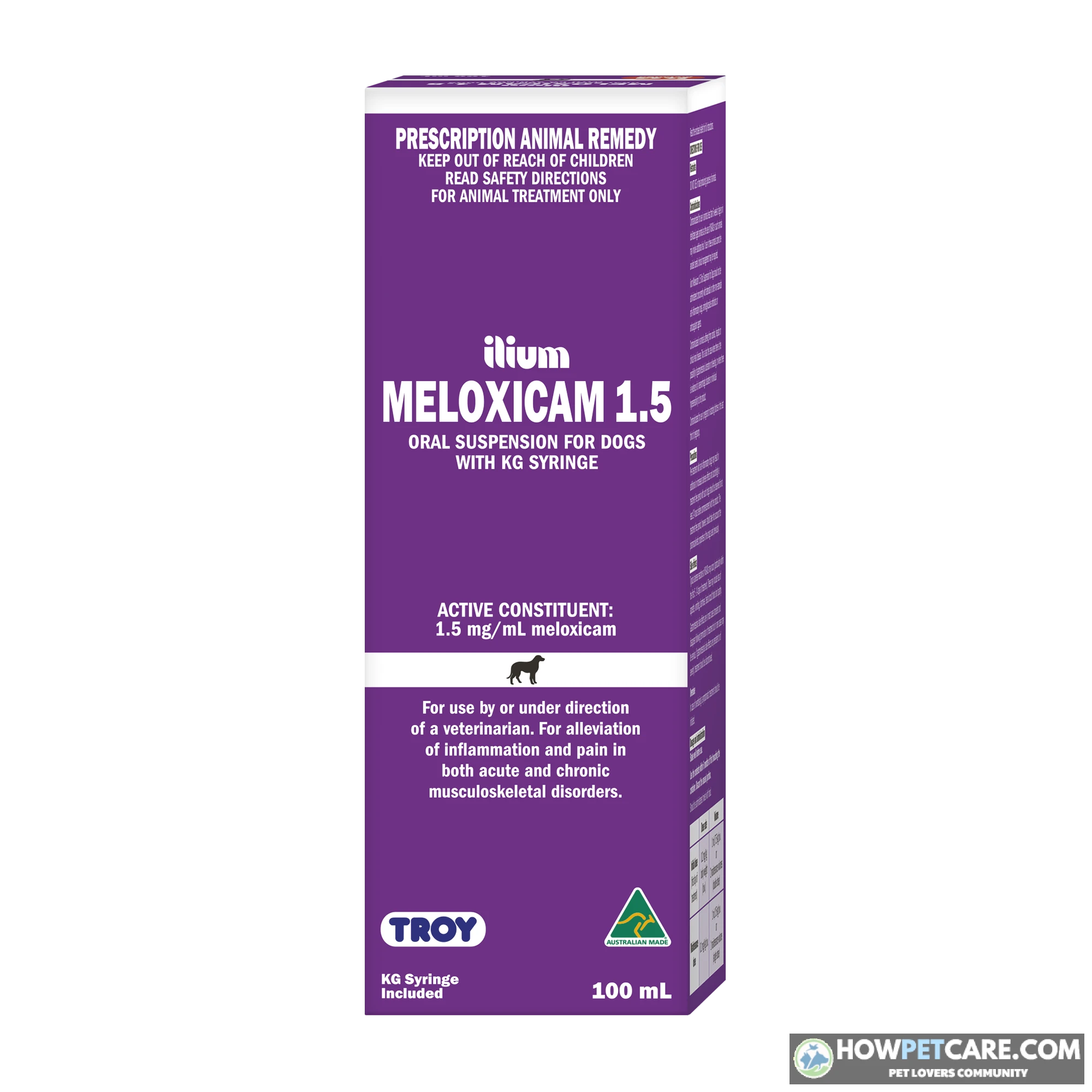
If your bottle’s concentration differs (for example 0.5 mg per mL sold in some markets), multiply the mg dose by 1 and divide by the concentration number on the label; a 0.5 mg/mL product requires three times the mL shown above. To give the dose correctly, shake the suspension, use the dosing syringe that came with the bottle, measure the exact milliliters, and administer with food to lessen stomach upset. The dose should be given once every 24 hours at the same time each day, and any weight change should prompt a call to the vet to recalculate the dose.
Which side effects are common and which ones mean I should call an emergency vet right now?
Common and mild reactions may include occasional soft stool, a mild drop in appetite, or a single episode of vomiting. These signs usually resolve within a day and are not an emergency, but you should note when they occur and ask the vet if you can give the next dose with food. If the same mild sign repeats or lasts more than 24 hours, call the clinic for advice.
| Severity tier | Signs to watch for | What it may mean | What to do |
|---|---|---|---|
| Tier 1 — monitor at home | Occasional soft stool, mild drop in appetite, a single episode of vomiting | Mild stomach upset, common in the first days of an NSAID | Note when it happened. Ask the vet if you can give the dose with food. Call the clinic if it repeats or lasts more than a day. |
| Tier 2 — call the vet the same day | Repeated vomiting, diarrhea over 24 hours, refusing food, increased thirst or urination, new lethargy, itchy or red skin | Possible GI irritation, early kidney stress, or a drug reaction | Skip the next dose until you have spoken to the vet. Have the bottle handy when you call. |
| Tier 3 — emergency now | Black tarry stool (melena), blood in vomit or stool, pale or yellow gums or eyes (jaundice), seizures, collapse, severe belly pain, no urination, persistent vomiting with weakness | GI bleeding, liver injury, kidney failure, or severe toxicity | Stop meloxicam and go to an emergency clinic. Bring the bottle so they know the product and concentration. |
GI bleeding and kidney injury are the main serious risks of meloxicam, so any sign of black stool, blood, jaundice, or sudden weakness should be treated as an emergency.
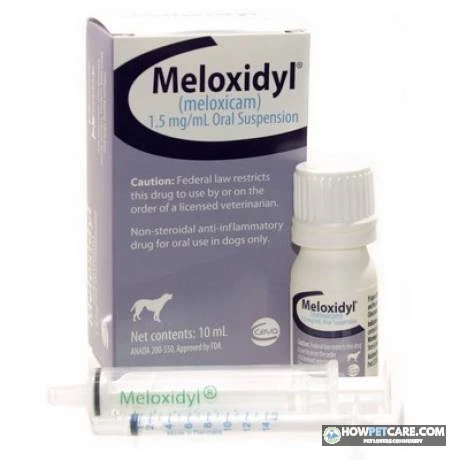
What should I do immediately if I miss a dose or my dog gets too much meloxicam?
If you realize a dose was missed and it is still the same day or within a few hours of the usual time, give the missed dose and then continue with the next scheduled dose at the normal interval. If the next dose is less than about 12 hours away, skip the missed dose and resume the regular schedule; never double up on a dose. If your dog vomits shortly after taking a dose, do not redose; contact the vet for guidance. In the case of a suspected double dose or if the dog chewed into the bottle, stop giving meloxicam immediately, secure the bottle out of reach, and note the product name, concentration, estimated amount missing, and time of exposure. Call your veterinarian, an emergency animal clinic, or a pet poison hotline such as ASPCA Animal Poison Control or Pet Poison Helpline right away; both services charge a consultation fee. Do NOT induce vomiting, give milk, or attempt any home remedy unless a professional explicitly tells you to. Watch for early warning signs such as vomiting, drooling, or reduced appetite, and for emergency signs like black stool, blood, lethargy, tremors, seizures, or collapse, which require immediate ER care. Bring a grab-and-go information packet to the clinic: your dog’s current weight, a photo of the label showing concentration, the estimated amount and time of exposure, and a list of all other common medications for dogs or supplements the dog is taking. The clinic may induce vomiting if the dose was recent, administer activated charcoal, start IV fluids, give GI protectants, and monitor kidney values; even a modest overdose in a small dog can be significant, so prompt professional care is essential.
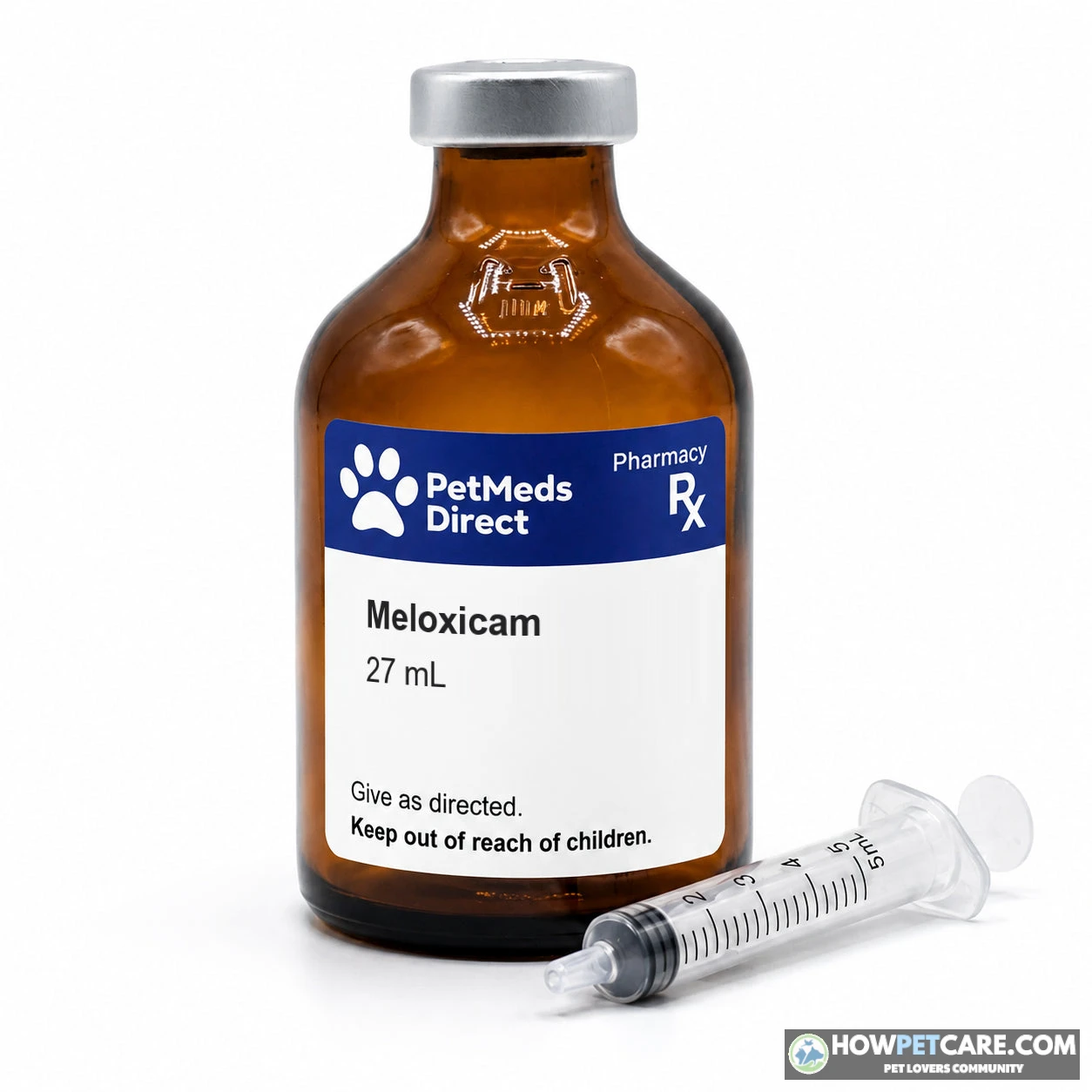
Can I give my dog human meloxicam tablets instead of the veterinary liquid?
Human meloxicam tablets are typically 7.5 mg or 15 mg per tablet, which is far larger than the dose needed for most dogs; a 7.5 mg tablet roughly equals the daily maintenance dose for a 75 kg (165 lb) dog, so a 10 kg dog would need only about 1 mg, making accurate splitting impossible. Tablets lack the precise mL measurement that the veterinary suspension provides, and error margins are narrow because of the narrow therapeutic window for kidney and GI safety. Only use human meloxicam if a veterinarian explicitly prescribes it and arranges for a compounding pharmacy to prepare a dog-appropriate strength. In the United States meloxicam for dogs requires a veterinary prescription; pharmacies that sell it without a prescription are operating outside the law. Always obtain the medication from a licensed veterinary pharmacy or a reputable online pharmacy that requires a valid prescription.
How does meloxicam compare to other canine NSAIDs like carprofen, deracoxib, firocoxib, and grapiprant?
| Drug (brand) | How it works | Form and dosing frequency | Typical use | Key cautions |
|---|---|---|---|---|
| Meloxicam (Metacam, generics) | NSAID that blocks COX enzymes with preference for COX-2 | Oral suspension once daily; injectable used in clinics | Arthritis pain and post-operative pain and inflammation | GI upset, kidney risk; liquid syringe needs careful measuring in small dogs |
| Carprofen (Rimadyl, generics) | COX-2 preferential NSAID | Tablets, caplets, or chewables once or twice daily | Arthritis and post-operative pain | GI and liver effects; liver enzyme monitoring often recommended |
| Deracoxib (Deramaxx) | COX-2 selective NSAID | Chewable tablet once daily | Arthritis and post-operative pain for orthopedic or dental surgery | Same NSAID class risks (GI, kidney, liver); label has weight minimums |
| Firocoxib (Previcox) | COX-2 selective NSAID | Chewable tablet once daily | Arthritis and post-operative pain | Same NSAID class risks; tablet size can be awkward for very small dogs |
| Grapiprant (Galliprant) | Not a COX inhibitor — blocks the EP4 prostaglandin receptor | Tablet once daily | Arthritis pain, sometimes chosen when a traditional NSAID is a concern | Not risk-free (still GI upset); long-term data is shorter than older NSAIDs |
Never combine any two of these NSAIDs or mix them with steroids like prednisone or aspirin. Switching between NSAIDs or from a steroid to an NSAID requires a washout period set by the veterinarian; do not improvise it. Grapiprant is not a COX inhibitor and works through a different pathway, so it may be chosen when a dog has previously reacted to a traditional NSAID, but it still carries GI and potential kidney risks.
How Fast Does Meloxicam Work and How Long Can a Dog Safely Stay on It?
Meloxicam typically begins to reduce pain within a few hours to a day, with noticeable improvement in mobility often seen after 24–48 hours. For osteoarthritis, full therapeutic benefit is usually judged over a period of several days to two weeks, and the drug can be continued long-term as long as the dog is monitored regularly. Baseline bloodwork before the first dose should include a complete blood count, a chemistry panel with kidney values (BUN, creatinine) and liver enzymes, and a urinalysis. After starting, a recheck is recommended within a few weeks, then every 3–6 months for chronic use, more frequently for senior dogs or those with other health issues. At home, owners should track appetite, stool color, water intake, urination frequency, energy level, and mobility in a simple weekly checklist or pain diary. If the dog becomes sick, dehydrated, or requires anesthesia, stop meloxicam and contact the vet immediately. Multimodal management — weight control, joint supplements, modified exercise, and possibly other pain medications — can allow the vet to use the lowest effective dose, which may be reduced over time.
What Meloxicam Costs: Metacam vs Generic Meloxicam for Dogs
Cost varies with dog weight, bottle size, concentration, and pharmacy type. Generic meloxicam suspension is generally less expensive than the brand Metacam, though exact price differences depend on regional pricing and insurance coverage. To lower cost, ask the veterinarian for a generic formulation, compare prices between a veterinary clinic pharmacy and a retail or online pharmacy that requires a prescription, and inquire about bottle size and refill policies. Remember to budget for monitoring expenses — bloodwork and recheck exams add to the total cost of long-term therapy. Never reduce or stretch doses on your own; the lowest effective dose should be determined by the vet.
Before Your Next Dose: A Vet-Visit and Safety Checklist
- Dose check: confirm the dog’s current weight, the concentration on the label, the mg dose, and the mL volume match the veterinarian’s prescription.
- Home safety: store the bottle out of reach of children and pets, use the supplied dosing syringe, and keep a written dosing log.
- Triage thresholds: know which signs mean stop and call the vet, and which signs require immediate ER care (black stool, blood, jaundice, seizures, collapse). Keep the vet, emergency clinic, and poison hotline numbers on the fridge.
- Questions to bring to your monitoring appointment: is the dog on the lowest effective dose?, could weight loss, joint supplements, or exercise changes allow a lower dose?, what would make you take the dog off meloxicam?, which drugs or supplements must be avoided?, is an alternative NSAID or non-NSAID option better for this dog?, and what is the required washout if switching to another NSAID?
- Before any new medication, surgery, or dental procedure, inform the surgical team that the dog is on meloxicam and follow their instructions on dose withholding, as NSAIDs can affect kidney function and bleeding during anesthesia.
FAQ
How should I store meloxicam oral suspension for my dog?
Store it at room temperature as the label directs, tightly closed and out of reach of children and pets. Use the dosing syringe that came with the bottle and check the label for shaking instructions and the discard date.
Can my dog take meloxicam with gabapentin?
Vets sometimes prescribe them together because they work differently. Only combine them on your vet’s instruction, and tell the vet about every medication and supplement your dog takes.
Does meloxicam make dogs sleepy?
Meloxicam is not a sedative, and pain relief often makes dogs more active. New lethargy, especially with vomiting or reduced appetite, can be a sign of a side effect and warrants a call to the vet.
Should my dog stop meloxicam before surgery?
Do not decide this yourself. Tell the surgical team that your dog takes meloxicam and follow their instructions on when to withhold doses, since NSAIDs can affect kidney function and bleeding during anesthesia.
Can I switch my dog from meloxicam to carprofen or a steroid?
Not directly. Dogs usually need a washout period of several days between NSAIDs, or between an NSAID and a steroid, and the vet sets that interval.