

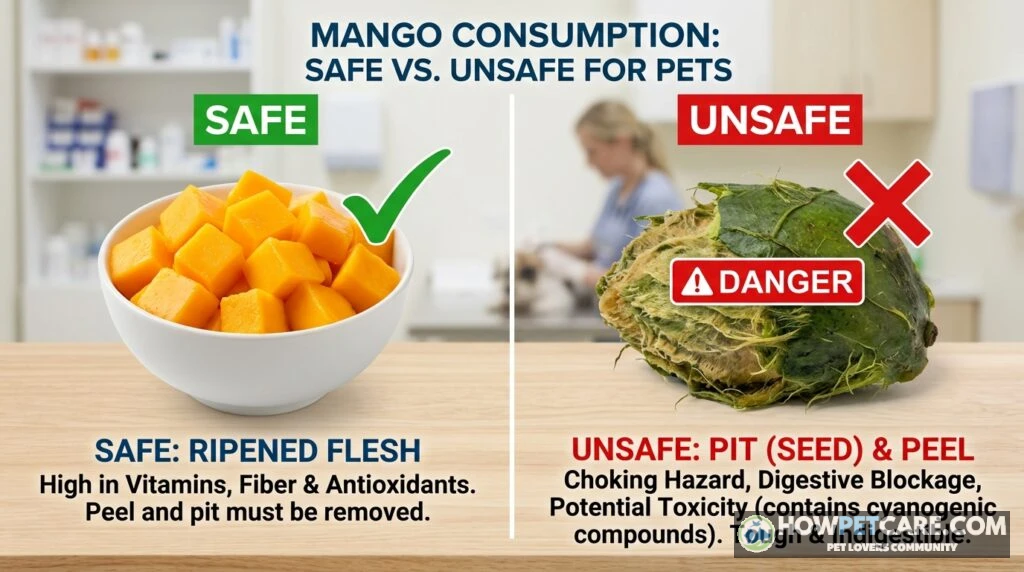
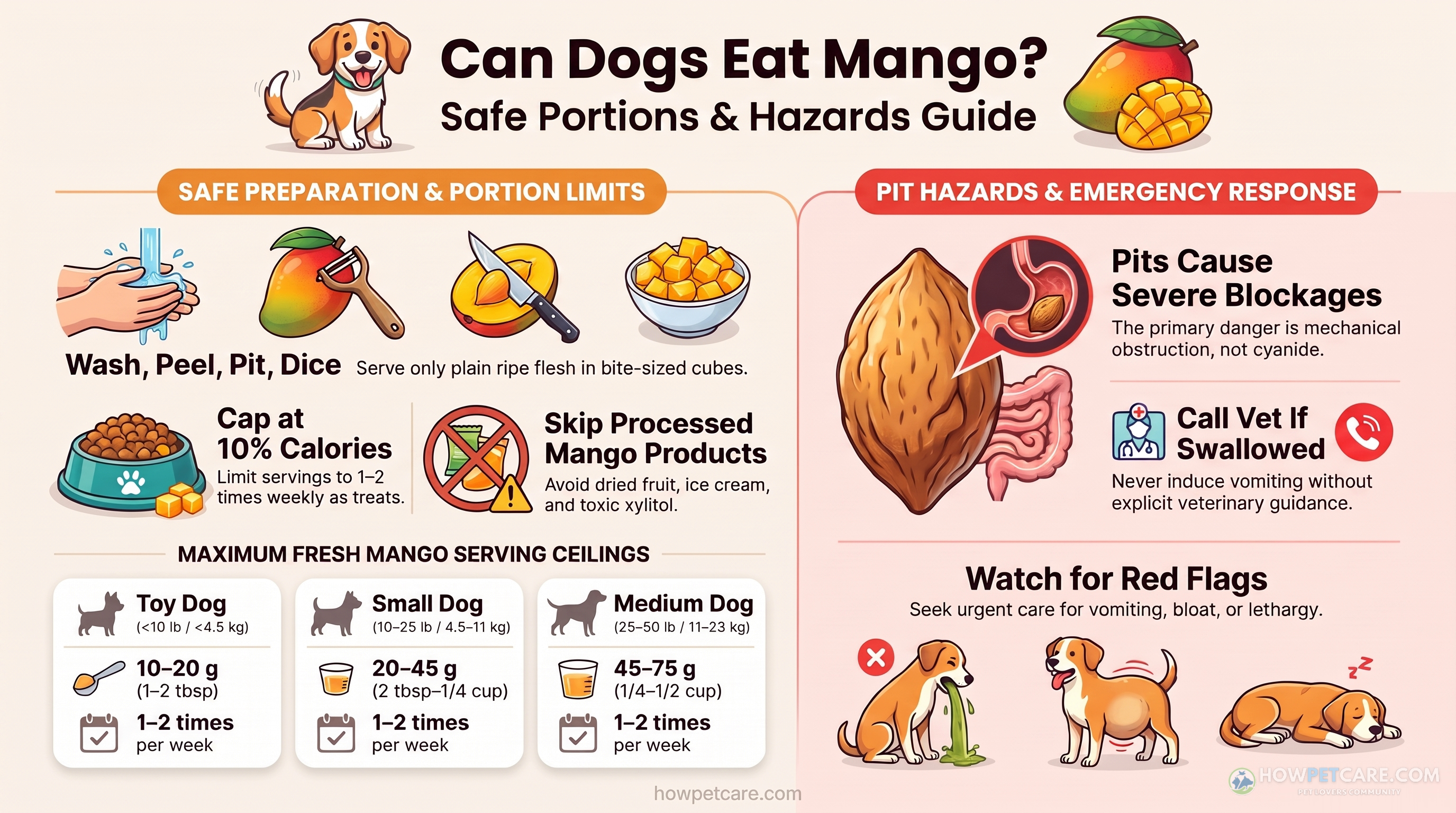
Yes — dogs can eat ripe mango flesh in small amounts. Peel the skin, remove the pit, and dice the flesh to your dog’s size. Keep servings within 10% of daily calories, once or twice a week. The pit is the real danger: it can choke a dog or block the intestine.
Yes — ripe, peeled, pitted mango flesh is safe for most healthy dogs as an occasional treat, and the pit is the real hazard. The skin is tough to digest, the pit can choke or block the intestine, and sugar means portion size and frequency matter. Most owners asking can dogs eat mango just need to know the flesh is fine in small doses.
| Mango part | Status for dogs | Why | What to do |
|---|---|---|---|
| Ripe flesh | Safe as a treat | Soft, digestible, still sugary | Peel, pit, dice; use weight-band portion |
| Skin/peel | Not recommended | Tough to digest, may carry residue; not the same emergency as pit | Peel fruit; wash whole mango before cutting |
| Pit/seed | Never | Choking and intestinal blockage risk; hard, slippery, easy to gulp | Dispose where dog cannot reach; see triage checklist if swallowed |
| Kernel inside pit | Avoid | Not a food; possible plant compounds are not worth testing | Do not crack pits open for dogs |
| Leaves and stems | Avoid | Poor safety data plus chewing/obstruction risk | Keep dogs away from backyard trees and prunings |
| Unripe/green flesh | Avoid or strictly limit | More acidic and firm; more likely to upset stomach | Choose ripe mango only |
| Fallen or fermenting backyard mango | Avoid | Hidden pits, mold, insects, fermentation | Pick up fallen fruit promptly |
Treats should stay within about 10% of daily calories. Fresh mango is roughly 60 kcal per 100 g. The chart below applies that rule and reconciles conflicting guidance — some sources cap at ¼ cup, while Hill’s allows up to 1 cup for giant breeds. These are ceilings for healthy adult dogs, not targets.
Mango pit, skin, leaves and stems: what is actually dangerous
Mango pit: choking hazard and intestinal blockage
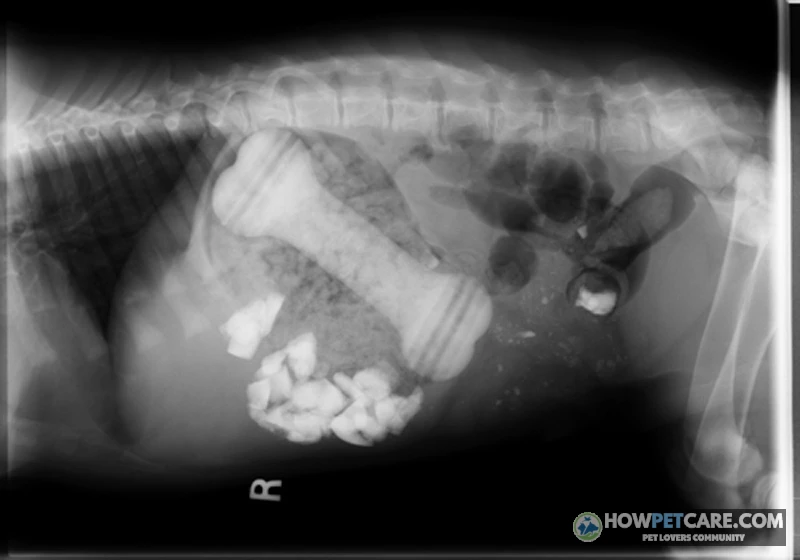
The main danger of a mango pit is mechanical. It’s large, hard, and slippery, so it can choke a dog or block the intestine — a particular risk for small and medium dogs, though large dogs can swallow one whole too. Even if a pit makes it past the throat, it can lodge in the esophagus, stomach, or intestines. That kind of obstruction is life-threatening and often requires surgery.
The cyanide question in realistic terms
Myth: If a dog swallows a mango pit, cyanide poisoning is the immediate worry.
Reality: The emergency that vets actually treat is mechanical. A mango pit is large, hard, and slippery, so the realistic dangers are choking and intestinal obstruction. The kernel inside stone-fruit pits can contain cyanogenic compounds, but for mango there is no reliable, weight-based dog toxicity threshold published by the usual authorities, and an intact pit often passes through or lodges before the kernel is meaningfully exposed.
Practical rule: Do not shrug it off, but aim your urgency at the right problem. A swallowed whole pit in a small or medium dog is a call-the-vet-now event even before symptoms. Contrast that with documented cyanogenic risks from pits/seeds such as peach, cherry, and apricot, where crushing many pits is the concern. For a single mango pit, watch for obstruction: repeated vomiting, retching, belly pain, lethargy, bloat, no appetite, straining, or no stool.
Mango pits do contain a small amount of cyanide, but no authoritative source publishes a dog-weight toxicity threshold or quantifies the amount. The practical emergency is still obstruction. Peach, cherry, and apricot pits carry well-documented cyanogenic risks; mango doesn’t rank in the same tier. If you’re worried about any pit ingestion, call your veterinarian or the ASPCA Animal Poison Control Center.
Mango skin, leaves, and stems
Mango skin isn’t toxic like the pit, but it’s tough to digest, can upset the stomach, and may carry pesticide residue or urushiol-like compounds that irritate some dogs. Wash the mango, then peel it. Leaves and stems aren’t a recommended food — safety data is lacking, and they carry chewing and obstruction risks. Keep dogs away from backyard mango trees and prunings. Fallen or fermenting fruit brings hidden pits, mold, insects, and alcohol from fermentation, so pick it up promptly.

My dog swallowed a mango pit or ate the skin: what to do right now
Step-by-step: the first 15 minutes
-
1. Stay calm and remove remaining mango
Take away any uneaten pieces so the dog cannot eat more.
-
2. Check for choking
Look for pawing at the mouth, gagging, blue or pale gums, loud breathing, or collapse. If any are present, go to an emergency clinic immediately.
-
3. Estimate weight, pit size, and condition
Note the dog’s weight, whether the pit was whole, cracked, or chewed, and the time of ingestion.
-
4. Call a veterinarian or emergency clinic
Do this before waiting for symptoms, especially for small dogs and whole pits. Do not induce vomiting at home unless a vet tells you to — a hard pit can lodge on the way back up.
Mild stomach upset or a possible obstruction? Symptom checklist
Use this if your dog already ate mango pit or skin.
Go to an emergency clinic now if any are true:
- Choking signs: pawing at mouth, gagging, blue/pale gums, loud breathing, collapse.
- Repeated vomiting, retching with nothing coming up, bloated or painful belly, hunched posture.
- Lethargy, no appetite, straining, no stool, or vomiting after drinking water.
Call your vet or an ER before waiting for symptoms if:
- Small or medium dog swallowed a whole pit.
- You do not know whether the pit was whole, cracked, or chewed.
- Ingestion was within the last few hours and the dog is a gulper, puppy, senior, or has prior GI surgery/obstruction history.
Usually monitor, but still call for advice if worried:
- Large dog chewed off only a small fragment and is acting normal.
- Only skin was eaten: expect possible gas, soft stool, or one vomit; offer water and skip rich food for a meal or two.
Do not: induce vomiting at home unless a vet explicitly tells you to; a hard pit can lodge coming back up. Remove remaining mango, note weight/time/what was swallowed, and save the emergency clinic number.
Mild upset means one vomit, soft stool, or mild gas. Possible obstruction means repeated vomiting, no appetite, lethargy, belly pain or a hunched posture, straining or no stool, a bloated belly, or vomiting after drinking water. If you see obstruction signs, seek same-day veterinary care. Timing depends on the dog and where the pit lodges.
What a vet visit for a swallowed pit may involve and cost
The vet will examine the dog and likely use X-ray or ultrasound to locate the pit. Options include monitoring (if the pit is small and likely to pass), induced vomiting (only when safe), endoscopy, or surgery. Rough estimates vary by region and clinic: exam and imaging $200–$600; endoscopy $800–$2,000; surgery $2,000–$5,000+. These aren’t fixed prices.
If your dog only ate the skin
Usually, just monitor for stomach upset. Offer water and skip rich food for a meal or two. Call the vet if vomiting or diarrhea persists, or if the dog is small or has other health issues.
How much mango can a dog eat? Portions in grams and cups by weight
Treats should stay within about 10% of daily calories. Fresh mango is roughly 60 kcal per 100 g. The chart below applies that rule and reconciles conflicting guidance — some sources cap at ¼ cup, while Hill’s allows up to 1 cup for giant breeds. These are ceilings for healthy adult dogs, not targets.

Basis: treats stay within about 10% of daily calories; fresh mango is roughly 60 kcal per 100 g. These are ceilings for healthy adult dogs, not targets, and they already stay conservative because most dogs get other treats too.
| Dog weight | Size category | Max fresh mango per serving | Approx. diced volume | Suggested frequency | Notes |
|---|---|---|---|---|---|
| Under 10 lb / under 4.5 kg | Toy | 10-20 g | 1-2 tbsp | 1-2x/week | 2-4 small cubes; mince for gulpers |
| 10-25 lb / 4.5-11 kg | Small | 20-45 g | 2 tbsp-1/4 cup | 1-2x/week | Count same-day chews/table scraps too |
| 25-50 lb / 11-23 kg | Medium | 45-75 g | 1/4-1/2 cup | 1-2x/week | Worked example below |
| 50-80 lb / 23-36 kg | Large | 75-110 g | 1/2-2/3 cup | 1-2x/week | Reduce for low-activity or senior dogs |
| 80+ lb / 36+ kg | Giant | 110-150 g | 2/3-1 cup max | 1-2x/week | Do not make fruit a daily habit |
Worked example, 25 lb / 11 kg dog: estimated maintenance calories are often around 650-750 kcal/day, so 10% is about 65-75 kcal, which mathematically equals roughly 110-125 g fresh mango. The practical cap is lower: 45-75 g keeps mango well inside the calorie allowance while limiting sugar load and stomach upset. First serving: 1-2 cubes, then wait 24 hours for diarrhea or itching.
How often per week is okay
A couple of times a week, not daily. Count mango toward the treat budget that same day. Scale back for less active, senior, or overweight dogs. Dogs on a weight-loss plan should follow the special-population guidance instead.
How to prepare mango for dogs: ripe, unripe, and frozen
Step-by-step: from whole mango to dog-safe cubes
-
1. Wash
Rinse the whole mango under running water to remove surface residues.
-
2. Peel
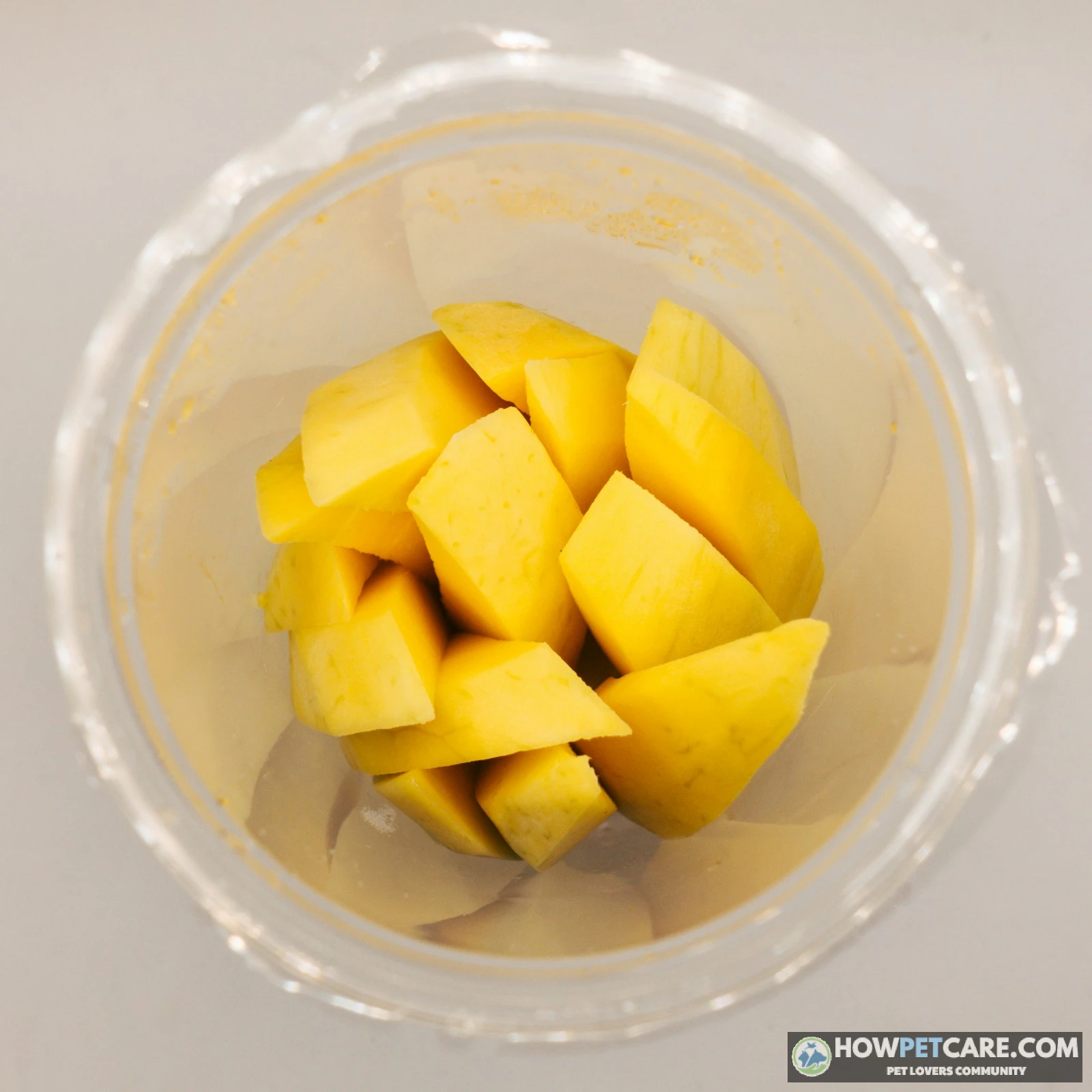
Use a vegetable peeler or knife to remove all skin.
-
3. Cut away from the pit
Slice the flesh off the flat sides of the pit, then trim any remaining flesh from the pit without cutting into it.
-
4. Dice
Cut into cubes sized for your dog — smaller for gulpers (about ½ inch / 1.27 cm).
-
5. Discard safely
Put the pit and peel in a closed bin the dog cannot reach.
Unripe or green mango
Green mango is more acidic and firmer, so it’s more likely to upset the stomach and harder to chew. Stick to ripe mango. A tart taste doesn’t make it toxic, but it’s not worth the risk.
Frozen mango
Plain frozen mango — pitted, peeled, and cut small — is safe and makes a cooling treat in hot weather (much like seedless watermelon flesh for summer) or for teething puppies. Large frozen chunks are a choking risk for small dogs, so serve smaller pieces or let them thaw slightly. Keep cut mango in the refrigerator and discard it after a few days.
Dried, canned, juice, ice cream, and popsicles: which mango products are safe?
Format-by-format verdict and sugar/calorie comparison
Approximate values vary by brand; always check the label. Fresh portion means the weight-band serving above.
| Format | Approx. calories per 100 g | Approx. sugar per 100 g | Verdict for dogs | Max amount vs. fresh portion | If you must / watch-outs |
|---|---|---|---|---|---|
| Fresh ripe flesh | ~60 | ~14 g | Yes | 100% of chart portion | Peel, pit, dice to size |
| Frozen plain chunks | ~60 | ~14 g | Yes | 100%, but cut smaller or thaw slightly | Large frozen chunks are a choking risk for small dogs |
| Homemade dried, unsweetened | ~300-340 | ~60-75 g | Tiny amounts only | About 1/5 to 1/4 of fresh portion by weight | Sugar is concentrated even with no additives; pieces can expand after eating |
| Store-bought dried | ~320-380 | ~55-75+ g | Avoid or rare sliver | Usually skip; at most one tiny sliver | Added sugar, sulfites, tougher pieces; read ingredients |
| Canned in water or own juice | ~60-90 | ~13-18 g | Distant second | About 1/2 of fresh portion, rinsed | Rinse off juice; no syrup, spices, or sweeteners |
| Canned in syrup | ~90-120 | ~20-28 g | No | Skip | Syrup defeats the point; sticky sweet fruit is easy to overfeed |
| Mango juice | ~50-70 | ~12-15 g | No | Skip | Sugar without fiber; easy to drink too much |
| Mango ice cream/sorbet | ~180-220+ | ~18-25+ g | No | Skip | Dairy can trigger diarrhea; sugar-free versions may contain xylitol |
| Popsicles/frozen bars | ~80-150 | ~15-30 g | No | Skip | Check for xylitol/birch sugar, chocolate coatings, sticks as choking hazards |
| Mango-flavored treats/yogurts/sauces | varies | varies | Usually no | Skip unless label is clean | Watch xylitol, onion/garlic, chili, salt, and added sugars |
Sugar-density rule: dried mango concentrates roughly 4-5x the sugar per bite of fresh, so a safe fresh cube becomes a postage-stamp-sized dried piece.
Dried mango: tiny amounts only
Dried mango isn’t toxic, but its sugar and calories are concentrated. The safe amount is only a fraction of the fresh portion. Homemade dehydrated mango skips added sugar and preservatives, but the sugar is still concentrated, so portions stay tiny. Store-bought versions often contain added sugar, sulfites, and tougher pieces — usually best to skip.

Mango ice cream, popsicles, and xylitol
Skip them. Sugar is high, and dairy can trigger diarrhea in lactose-sensitive dogs. Sugar-free versions may contain xylitol (birch sugar), which is highly toxic to dogs — check labels and avoid anything that lists it. Mango-flavored yogurts, sauces, or chili-lime fruit often contain onion, garlic, chili, salt, or added sugar; when in doubt, skip it.

Mango for puppies, diabetic, overweight, and sick dogs
Puppies, including under 3 months
Mango isn’t a nutritional need. For puppies under about 3 months, stick to the food your breeder or vet recommends and keep fruit out until the diet is settled. After that, offer tiny pieces with the pit and peel removed — puppies are prone to stomach upset and have small digestive tracts.

Diabetic and overweight dogs
Mango’s fructose makes it a poor choice for diabetic dogs; avoid it unless your vet has approved a specific amount for the dog’s insulin plan. For overweight dogs, fit mango into a calorie-controlled plan using the smallest weight band, count it toward the treat allowance, and consider lower-sugar fruits first.
Pancreatitis, kidney disease, and heart disease
A high-sugar treat isn’t a good fit for dogs with a history of pancreatitis. Fatty foods are the main trigger, but sudden dietary changes are also unwelcome, so avoid mango unless your vet clears it. Dogs with kidney or heart disease often follow prescription diets, and mango adds potassium and sugar. Treat it as a vet-approved exception and bring the portion amount to the appointment. For allergies or sensitive stomachs, watch for itching, hives, vomiting, or diarrhea; stop feeding and call the vet if symptoms are severe or if facial swelling occurs.
Is mango a good treat? Benefits and comparison with other dog-safe fruits
Mango benefits: vitamin A, vitamin C, and fiber
Mango provides vitamin A, vitamin C, fiber, and some potassium. Dogs make their own vitamin C from glucose, so mango’s vitamin C isn’t an essential addition. A whole mango can have up to 5 g of fiber, but a treat portion delivers far less. The real benefit is variety and enjoyment, not a nutritional requirement.
Mango versus blueberries, bananas, and watermelon
| Fruit | Calories per 100 g | Sugar per 100 g | Fiber per 100 g | Best use as a treat | Prep warning |
|---|---|---|---|---|---|
| Mango | ~60 | ~14 g | ~1.6 g | Occasional treat for healthy, active dogs | Peel, pit, dice |
| Blueberries | ~57 | ~10 g | ~2.4 g | Daily training treats, low sugar | Rinse, serve whole (halve for tiny dogs) |
| Banana | ~89 | ~12 g | ~2.6 g | Occasional, high calorie | Peel, slice small |
| Watermelon | ~30 | ~6 g | ~0.4 g | Hydrating summer treat, very low calorie | Remove seeds and rind |
| Strawberries | ~32 | ~4.9 g | ~2 g | Frequent, low sugar | Remove stem, halve |
| Apple (no core/seeds) | ~52 | ~10 g | ~2.4 g | Frequent, crunchy | Core and seed removal mandatory |
| Cantaloupe | ~34 | ~8 g | ~0.9 g | Occasional, moderate sugar | Remove rind and seeds |
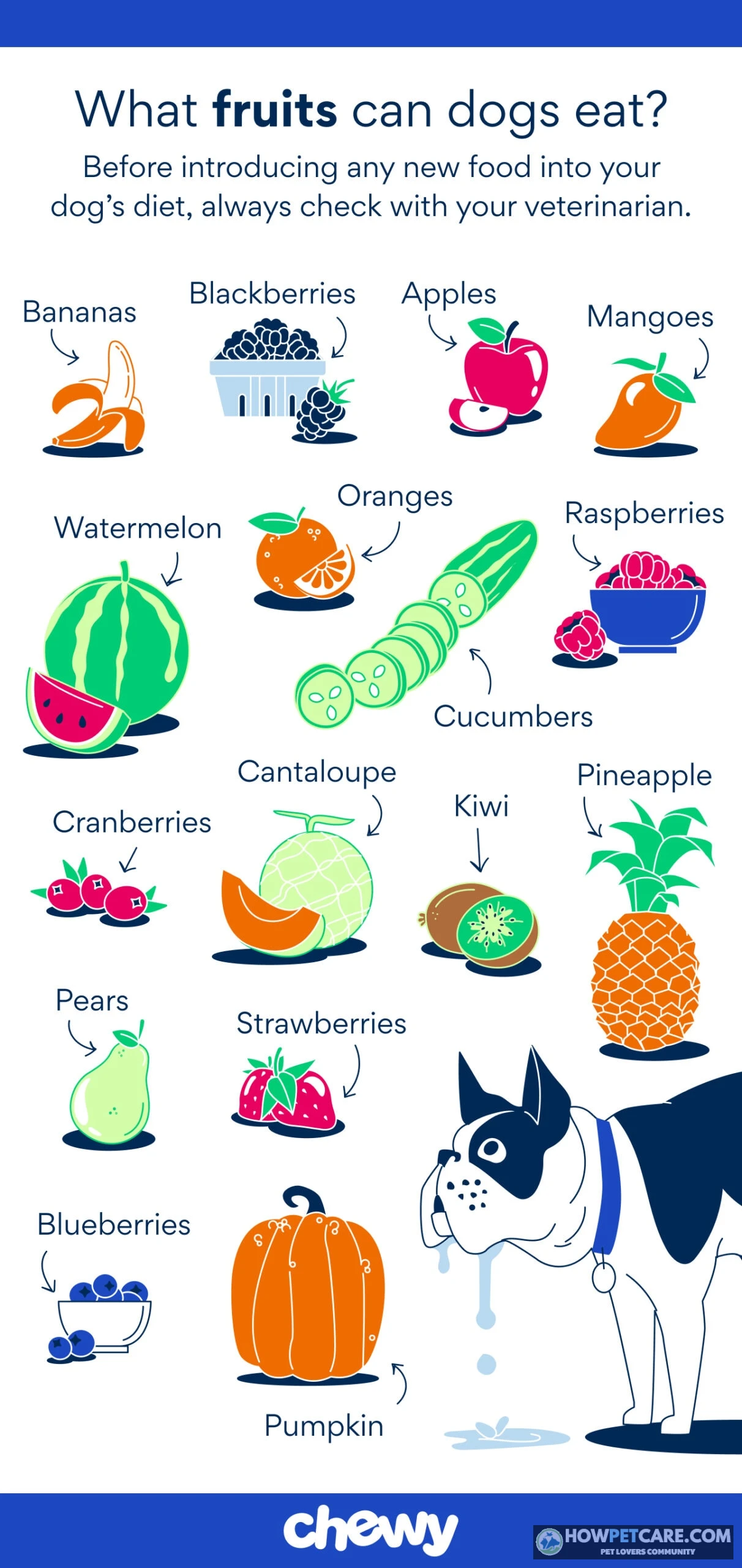
Mango is higher in sugar and calories. It works as an occasional treat for healthy, active dogs; blueberries and other low-sugar picks suit daily or weight-conscious feeding. For more on other fruits, see the sibling articles and the pillar fruit guide. The ASPCA and your veterinarian are good references when you’re unsure about a food; the real no-go list includes grapes, raisins, and xylitol.
Your mango-for-dogs checklist: decide, prep, portion, and respond
Before feeding: Is my dog healthy, adult, and not on a restricted diet? If not, use the special-population rules.
Prep checklist: Ripe, washed, peeled, pitted, cut to size, with the pit and peel disposed of out of reach.
Portion checklist: Find your dog’s weight band, serve no more than the listed amount, and count it toward the treat budget.
Products to skip: Syrup-packed, juice, ice cream, popsicles, xylitol-containing items, seasoned mango.
If something goes wrong: Pit swallowed or choking → vet now. Skin only → monitor. Red-flag symptoms (repeated vomiting, bloat, lethargy, no stool) → same-day care. Save the emergency vet’s number.
Format Approx. calories per 100 g Approx. sugar per 100 g Verdict for dogs Max amount vs. fresh portion If you must / watch-outs Fresh ripe flesh ~60 ~14 g Safe / Occasional treat 100% of chart portion (up to 10% daily treat calories) Must be ripe, washed, peeled, pitted, and diced to size to prevent choking. Frozen plain chunks ~60 ~14 g Safe / Cooling treat 100% of fresh portion, but cut smaller or thaw slightly Must be plain, pitted, peeled, and cut into small pieces; large frozen chunks are a choking risk for small dogs. Mango Pit Not in source Not in source Dangerous / Skip 0% Choking and intestinal obstruction hazard; contains small amounts of cyanide. Requires urgent vet care if swallowed. Mango Skin Not in source Not in source Not recommended / Skip 0% Tough to digest, can cause stomach upset, and may carry pesticide residue or urushiol-like compounds. Mango Leaves and Stems Not in source Not in source Not recommended / Skip 0% Lacks safety data; presents chewing and intestinal obstruction risks. Homemade dried, unsweetened ~300-340 ~60-75 g Tiny amounts only / Caution About 1/5 to 1/4 of fresh portion by weight Sugar and calories are highly concentrated even with no additives; pieces can expand after eating. Store-bought dried ~320-380 ~55-75+ g Usually best to skip At most one tiny sliver Often contains added sugar, sulfites, and tougher pieces; read ingredients. Canned in water or own juice ~60-90 ~13-18 g Distant second About 1/2 of fresh portion, rinsed Rinse off juice; ensure no syrup, spices, excess sugar, or unnecessary additives. Canned in syrup ~90-120 ~20-28 g Skip 0% Syrup-packed fruit carries excess sugar and unnecessary additives; sticky sweet fruit is easy to overfeed. Mango juice ~50-70 ~12-15 g Skip 0% Contains excess sugar and unnecessary additives without fiber; easy to drink too much. Mango ice cream/sorbet/popsicles ~80-220+ ~15-30+ g Skip 0% High sugar; dairy can trigger diarrhea; sugar-free versions may contain highly toxic xylitol/birch sugar; watch for chocolate coatings and sticks as choking hazards. Mango-flavored treats/yogurts/sauces varies varies Usually skip 0% unless label is clean May contain onion, garlic, chili, excess salt, or added sugar; chili powder and seasonings irritate stomach; check for toxic xylitol. Commercial Mango Dog Treats Not in source Not in source Usually okay Fits into regular 10% treat allowance Check label for added sugar and xylitol; count toward daily treat budget.
1A dog swallows a whole mango pit. What is the primary medical emergency that a veterinarian will prepare to address immediately?
A mango pit is large, hard, and slippery, making physical blockage in the throat, esophagus, stomach, or intestines the main life-threatening hazard.
2Which of the following symptoms strongly suggest a potential gastrointestinal obstruction after a dog ingests a mango pit?
Inability to hold down liquids or persistent vomiting indicates a complete physical blockage in the digestive path.
3Why is it recommended to always remove the skin before offering fresh mango to a dog?
Mango peel is fibrous and difficult for a dog's digestive tract to process, leading to potential gastroenteritis or irritation.
4Why must dried mango be offered in much smaller portions than fresh mango flesh?
Removing moisture leaves concentrated fructose and calories per gram, making a tiny dried piece equal in energy to a much larger fresh cube.
5Why is fresh mango generally discouraged as a treat for dogs diagnosed with diabetes mellitus?
Simple sugars like fructose are quickly absorbed, complicating insulin management and blood sugar regulation in diabetic pets.
6When checking ingredients on commercially prepared human mango snacks like sugar-free popsicles, which artificial sweetener is life-threatening to dogs?
Xylitol triggers rapid, severe insulin release in dogs, causing life-threatening hypoglycemia and acute liver failure.
7Which of the following are safe preparation steps when giving fresh mango flesh to a healthy adult dog?
Washing removes dirt, bacteria, and potential chemical residues from the outer peel prior to slicing.
8What is the recommended rule regarding feeding fresh mango to puppies under 3 months of age?
Young puppies have sensitive digestive systems, so introducing unnecessary treats before their core diet settles can cause stomach upset.
FAQ
Can dogs eat mangosteen?
Mangosteen is a different fruit from mango. The flesh is not considered toxic, but the thick rind is tough and hard to digest, and there is little dog-specific guidance. If you offer it, give a small piece of flesh only, and skip the rind and seeds.
Can dogs eat mango with chili-lime or other seasoning?
No. Chili powder, salt, sugar, and seasoning blends can irritate the stomach, and some mixes contain onion or garlic powder, which are harmful to dogs. Serve plain mango only.
What are signs of a mango allergy or intolerance in dogs?
Mild signs include itching, soft stool, gas, or a single episode of vomiting. Stop feeding mango and call a veterinarian if the signs persist. Seek urgent care for facial swelling, hives, or trouble breathing.
Is mango in commercial dog treats or dog food okay?
Usually yes. These products are formulated for dogs and the mango amount is small, but check the label for added sugar and for xylitol. Count the treat toward the daily treat allowance.
Should I make my dog vomit if they swallowed a mango pit?
Do not try it at home unless a veterinarian tells you to. A hard pit can get stuck coming back up, and the vet needs to assess the dog’s size and the pit first. Call the vet or an emergency clinic right away.