
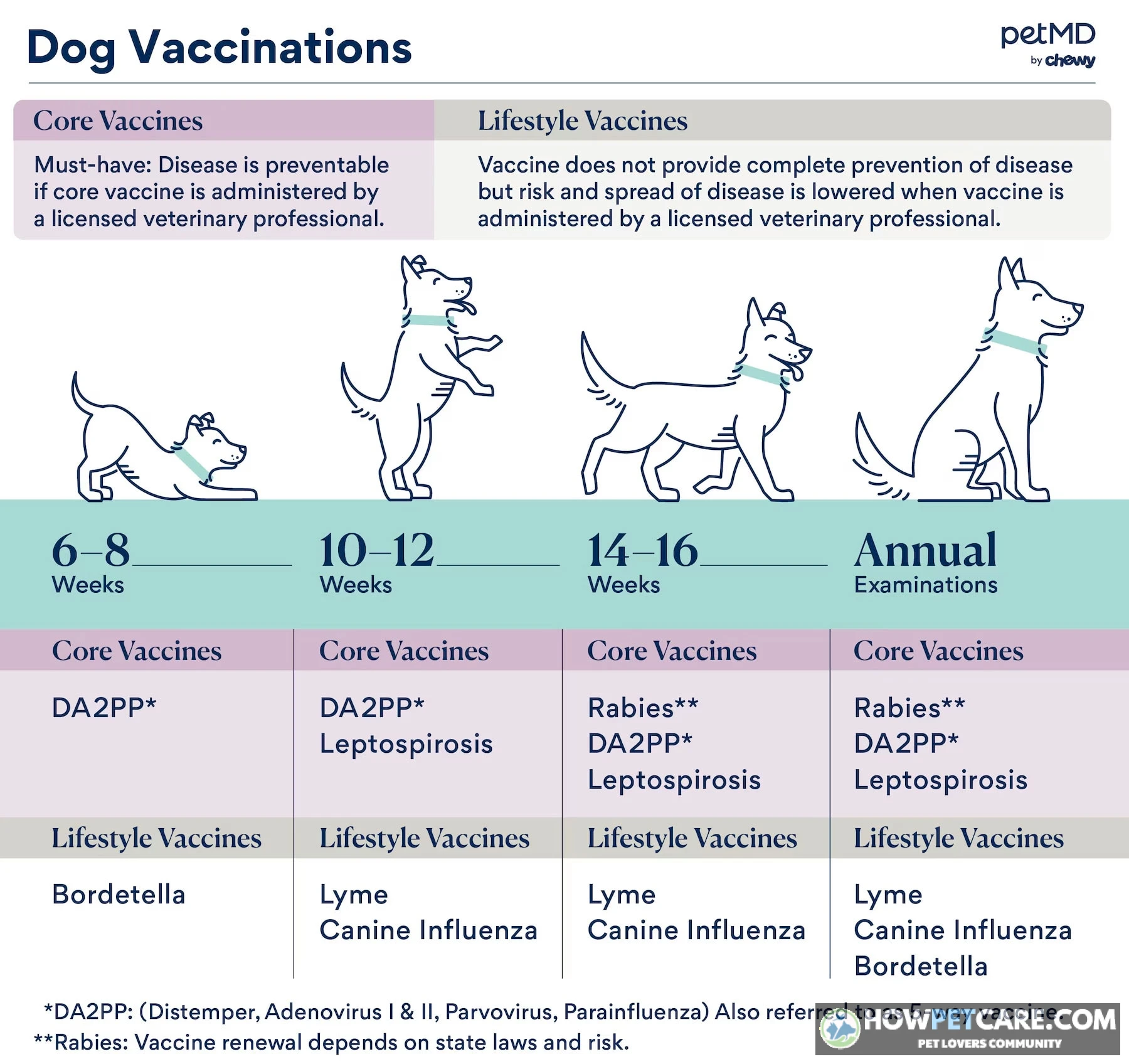
| Age | Vaccines due |
|---|---|
| 6–8 weeks | First DHPP dose |
| 10–12 weeks | DHPP; leptospirosis (if age-appropriate) |
| 12–16 weeks | Rabies, per local law and vaccine label |
| 16 weeks or older | Final puppy DHPP; second lepto dose |
| Adult | DHPP every 3 years; rabies per law; annual lepto and lifestyle boosters |
Puppies usually get their first DHPP dose at 6–8 weeks, then receive doses every 2–4 weeks through at least 16 weeks. A rabies vaccine is typically given around 12–16 weeks, depending on local law. Boosters come later, and adult timing varies by vaccine.
Dog Vaccination Schedule at a Glance: Puppy Shots Week by Week and Adult Boosters
This dog vaccination schedule turns the American Animal Hospital Association (AAHA) canine vaccination guidelines and the World Small Animal Veterinary Association (WSAVA) 2024 vaccination guidelines into a planning tool. Your veterinarian will tailor it to your dog’s age, records, health, local disease risks, vaccine product and rabies rules.
Puppy vaccination schedule week by week
| Age or timing | Vaccine | Core or non-core | Notes |
|---|---|---|---|
| 6–8 weeks | DHPP or a similar combination | Core components | First dose; plan repeat visits every 2–4 weeks. |
| 10–12 weeks | DHPP; leptospirosis when age-appropriate | Core components; lepto is core under AAHA guidance | Continue DHPP. Lepto usually starts at or after 12 weeks and needs a second initial dose; follow the product label and your vet’s plan. |
| 12–16 weeks | Rabies | Core | Usually one initial dose, at an age allowed by local law and the vaccine label. |
| 14–16 weeks and later if needed | DHPP; second lepto dose | Core components | Give the final puppy DHPP dose at 16 weeks or older. Your puppy may need additional visits. |
| During the puppy series, if appropriate | Bordetella, canine influenza or Lyme | Non-core | Starting ages and number of doses depend on the vaccine and your dog’s risk. |
| 6–12 months of age | DHPP follow-up | Core components | Ask your vet when to give the follow-up dose after the puppy series; WSAVA discusses a dose at 26 weeks or later as an option. |
| After the initial series | Rabies, lepto and other indicated vaccines | Core or non-core | Rabies timing follows the product and law; annual lepto and other lifestyle-vaccine boosters may be recommended. |
Most puppies need three or four DHPP visits. The number depends on when the series starts and how doses are spaced. A dose at 14 weeks doesn’t replace the final dose at 16 weeks or older. Maternal antibodies can interfere with early doses, so the series continues as the puppy grows.
Adult dog booster shot schedule
| Vaccine | Usual adult interval after the initial series | Important detail |
|---|---|---|
| DHPP core components | Generally every 3 years | Timing follows the puppy follow-up or adult initial vaccination. |
| Rabies | According to law and product, often 1 or 3 years | The first booster and subsequent validity may differ; check the certificate. |
| Leptospirosis | Usually yearly | Core under AAHA’s 2024 update; complete the initial series first. |
| Bordetella | Commonly every 6–12 months | Product, exposure and facility rules affect timing. |
| Canine influenza and Lyme | Usually yearly if indicated | Both generally need an initial two-dose series. |
Download the free printable vaccine chart and shot record
Print this page, or copy the table into a document and save it as a PDF. Use it as a record template, not as a substitute for the official rabies certificate. Bring it to each vet visit.
| Date given | Dog’s age | Vaccine and product | Dose or booster | Clinic and lot number | Next due date |
|---|---|---|---|---|---|
Dog’s name: __ Date of birth or estimated age: __
Final puppy DHPP date: __ Vet-confirmed lower-risk outing date: __
Core vs Non-Core Dog Vaccines: Which Shots Does Your Dog Actually Need?
A core vaccine is recommended broadly because of the disease’s seriousness, exposure risk or public-health importance. A non-core vaccine is chosen for an individual dog’s circumstances; non-core doesn’t mean unnecessary.
Core vaccines: rabies, DHPP and leptospirosis
- DHPP, also called DAPP or DA2PP, commonly covers distemper, adenovirus, parvovirus and parainfluenza. The distemper, adenovirus and parvovirus components are core. Parainfluenza is often included in the combination, but isn’t itself a core component.
- Rabies vaccine protects against a fatal disease that can also affect people. Legal requirements vary by jurisdiction.
- Leptospirosis vaccine protects against a bacterial disease that can affect dogs and people. AAHA’s 2024 update designated it core for dogs in the United States.
DHLPP generally means the combination also includes leptospirosis. Your clinic may give lepto separately. Check what each product covers rather than assuming every combination has the same ingredients.
Non-core vaccines: bordetella, canine influenza and Lyme
Bordetella vaccination helps protect against one cause of kennel cough. Canine influenza vaccine protects against dog flu. The Lyme disease vaccine reduces Lyme disease risk in appropriate dogs, but doesn’t replace tick prevention. Each vaccine has product-specific starting and booster instructions.
Boarding facilities, daycare providers and groomers set their own requirements. Ask for their current list before your visit.
Lifestyle-risk flowchart: which non-core shots fit your dog
Work through each question. More than one answer may apply.
- Boarding, daycare, grooming or group classes? If yes, ask about the Bordetella vaccine and check the facility’s rules.
- Frequent contact with unfamiliar dogs or a local flu outbreak? If yes, ask whether canine influenza vaccination makes sense.
- Ticks at home or during travel? If yes, discuss Lyme vaccination and year-round tick prevention. Your vet can assess regional risk.
- Standing water, wildlife, rodents or farms? Tell your vet. These exposures matter for leptospirosis, which AAHA already considers core.
- Travel or relocation? Repeat the questions for your destination and check its rabies documentation rules.
Use this as a starting point for a conversation, not a prescription. Local disease patterns, vaccine availability and your dog’s health help shape the plan.
 You might be wonderingDog paw careDog Paw Care: Weekly Routine and When to Call the VetRead the answer
What Happens at Each Puppy Vet Visit and What to Ask
Visit-by-visit checklist
First visit, often 6–8 weeks: Bring any breeder or shelter records. The vet examines your puppy, reviews prior treatments, gives the first needed DHPP dose and discusses parasite testing or deworming, diet and upcoming appointments.
Middle visits, often 10–12 and 14–16 weeks: The team checks your puppy’s growth and health, continues the DHPP series and adds rabies, leptospirosis or lifestyle vaccines when appropriate. Your puppy won’t necessarily get every vaccine at every visit.
Final puppy-series visit, at 16 weeks or later: Confirm the last DHPP dose was given at the right age and that any two-dose series is complete. Ask when your puppy can visit higher-risk places and when the follow-up vaccine is due.
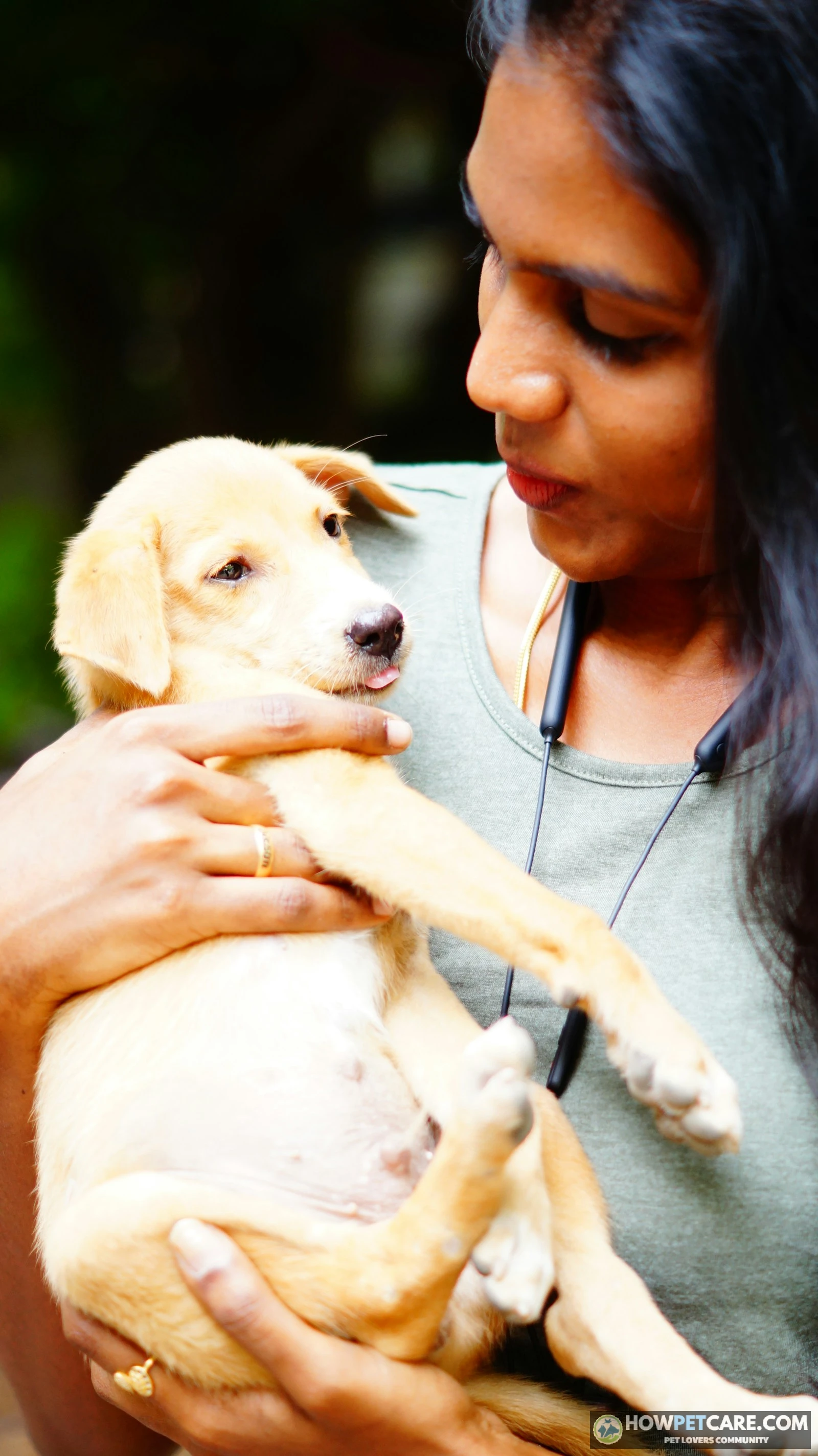
Follow-up visit: Review the schedule as your puppy approaches adulthood. The DHPP follow-up, rabies booster and annual vaccines don’t all have to fall on the same day.
Questions to ask your vet at every appointment
- Which vaccines are being given today, and which diseases does each cover?
- Are any doses still needed to complete a series?
- Should any vaccines be spaced across visits because of my dog’s history or size?
- What is the itemized cost, including the exam?
- Which reactions call for a phone call or emergency care, and when can my puppy safely visit a dog park?
Ask for a dated record with product and lot numbers, and keep the rabies certificate separately.
Dog Vaccine Side Effects: What Is Normal, What Is an Emergency, and Special Cases
Normal reactions vs emergency signs
Some dogs are mildly tired, eat less or have tenderness or slight swelling at the injection site for 24–48 hours. Call your vet if symptoms concern you, get worse or don’t resolve. Have a persistent or enlarging lump checked. AVMA guidance recommends checking a lump that lasts more than three weeks or continues to grow.
Facial swelling, hives, repeated vomiting or diarrhea, difficulty breathing, pale gums or collapse after vaccination need immediate veterinary attention. If possible, call an emergency clinic while you’re on the way.
Serious reactions can happen soon after vaccination. When practical, book the appointment early enough to watch your dog afterward, and keep your vet’s and emergency clinic’s numbers handy.

Same-day vaccines for small and toy breeds
Small dogs can receive standard vaccine doses; don’t reduce a dose based on body weight yourself. A published study by Moore and colleagues on adverse events after vaccination found a higher reaction risk in smaller dogs and when more vaccines were given at one visit. Ask your vet whether spacing injections across visits makes sense, especially if your dog has reacted before. Extra visits can delay protection, so agree on a plan that still completes each series on time.
Pregnant, nursing and immunocompromised dogs
Tell the clinic before the appointment if your dog is pregnant, nursing, immunocompromised, taking immune-suppressing drugs or has an autoimmune condition. Modified-live vaccines are generally avoided during pregnancy unless a veterinarian identifies a suitable product and reason. Nursing dogs also need an individual assessment. For immune-related conditions, the vet and any treating specialist can weigh vaccine type, timing, testing and the risk of delaying protection.
Missed a Booster or Adopted a Rescue With Unknown History? Restart or Continue
A missed appointment doesn’t automatically mean every vaccine must be restarted. The right next step depends on the vaccine, your dog’s age, the time between doses and whether previous doses can be documented.
Late booster decision rules by age and delay
| Situation | Practical next step |
|---|---|
| Puppy under 16 weeks, late for DHPP | Arrange the next dose promptly. Continue the plan and make sure a dose is given at 16 weeks or older; your vet may add doses depending on the gap and prior history. |
| Puppy is now 16 weeks or older and the series was interrupted | Bring the dates and products to your vet. An additional dose or revised series may be needed; don’t assume an early dose completed the series. |
| Previously vaccinated adult overdue for DHPP | A single DHPP dose is generally used to bring a healthy adult up to date; plan the next interval from that dose. |
| Rabies overdue | Arrange vaccination promptly and check local requirements. Legal status and consequences after an exposure or bite depend on jurisdiction and documentation. |
| Lepto, influenza or Lyme series incomplete or substantially overdue | Ask whether the product’s initial two-dose series must be completed or repeated. Don’t assume the DHPP catch-up rule applies. |
Unknown-history adult and rescue dog protocol
Start by asking the shelter, rescue, breeder or previous veterinary clinic for dated records. A microchip registry may help you contact a previous owner or organization, though it may not hold vaccine records itself.
If records can’t be found, the vet will generally plan as for an unvaccinated dog: an adult DHPP dose, rabies vaccination according to local rules and an initial two-dose leptospirosis series. A second DHPP dose may be recommended depending on the product and circumstances. Add Bordetella, influenza or Lyme if the dog’s exposure warrants them; influenza and Lyme generally need two initial doses.
A titer test can help assess antibodies to distemper and parvovirus when history is uncertain, but it doesn’t create a vaccination record and generally doesn’t replace a legally required rabies certificate.
Socializing Your Puppy Safely Before the Vaccine Series Is Finished
Early social experiences matter, even before the puppy series is finished. The American Veterinary Society of Animal Behavior supports well-managed early puppy socialization; waiting until every vaccine is given before introducing your puppy to the world can mean missing valuable learning time. Aim for controlled exposure, not unrestricted contact with unknown dogs.
Do this, not that: safe socialization plan for weeks 6–16
Weeks 6–8: Introduce your puppy to gentle people and ordinary household sounds at low volume. Get them used to having their paws, ears and collar handled. Carry them outdoors to watch traffic and people.
Weeks 8–12: Add short car rides, new surfaces in clean private spaces and playdates with healthy, fully vaccinated dogs you know. You might choose a puppy class that checks vaccination records and cleans its space; ask the provider and your vet about entry requirements.
Weeks 12–16 and beyond: Keep introducing positive experiences at your puppy’s pace. Practice calm visits to the vet and gradually meet more people and explore more environments while completing the shot schedule.
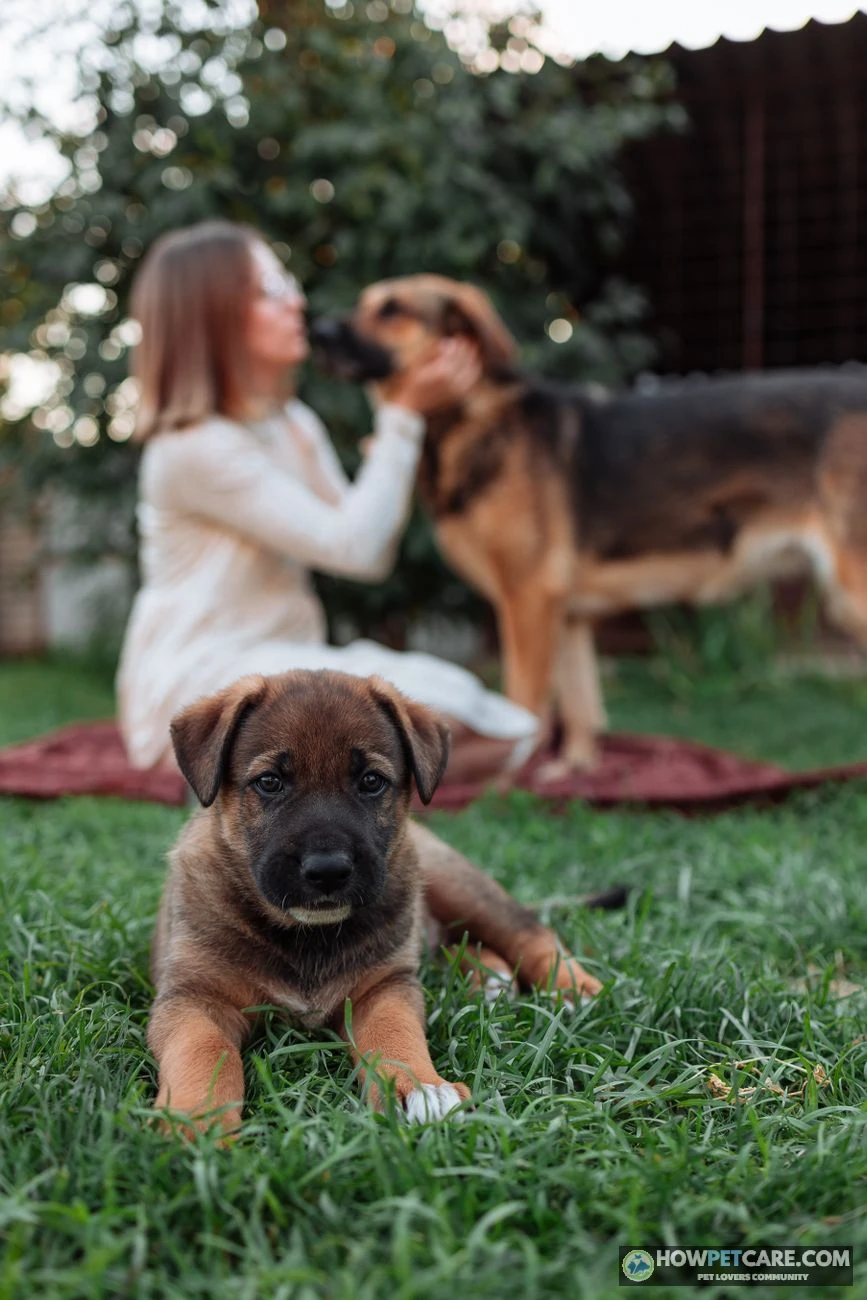
Avoid dog parks, pet-store floors, communal bowls and heavily dog-trafficked public grass or trails until your vet clears them. Parvovirus can persist in the environment, so a place that looks clean isn’t necessarily free of risk. Your own yard isn’t automatically safe if dogs of unknown health use it or contamination is suspected.
When your puppy can safely go to dog parks
Ask your vet for a specific date after the final puppy dose, often allowing around 1–2 weeks for a response. Protection isn’t immediate or absolute; local parvo activity and your puppy’s history matter, too. Even after your vet clears your puppy, choose a well-managed setting and supervise interactions.
Keep outings short and let your puppy retreat from anything frightening. Carry a separate water bowl and reward calm curiosity rather than forcing contact.
Puppy Shots Cost: Price per Vaccine, Full-Series Totals and Low-Cost Clinics
Per-vaccine and full-series cost breakdown
Published estimates put a US puppy vaccine package at approximately $75–$300, depending on the clinic and what’s included; a reported national per-shot range is $27–$96. These are broad estimates, not a verified 2026 clinic price list or a quote for your puppy. Exams, extra vaccines and other services may cost extra.
| Vaccine or service | Price information | Doses in the initial plan | Low-cost clinic option |
|---|---|---|---|
| DHPP | Ask for the clinic’s per-dose price; published general shot estimates are $27–$96. | Often 3–4 puppy doses, depending on timing | Shelter or mobile vaccine clinic |
| Rabies | Ask for a separate price and certificate fee. | Usually 1 initial dose | County rabies event or humane society clinic |
| Leptospirosis | Ask whether it is included in a combination or billed separately. | Usually 2 initial doses | Shelter or mobile clinic; confirm availability |
| Bordetella | Price varies by product and clinic. | Product-dependent | Mobile vaccine clinic |
| Canine influenza or Lyme | Request a quote for both initial doses. | Usually 2 per vaccine | Ask regional clinics about availability |
| Exam and related services | Ask whether the office visit, fecal test and deworming are separate. | Varies | Ask about puppy packages or veterinary-school clinics |
An advertised package may not include every core dose, the follow-up visit or optional vaccines. Request an itemized estimate for the complete puppy series and follow-up instead of multiplying a single advertised price. Don’t skip the final age-appropriate DHPP dose to lower the bill.
Where to find low-cost vaccination clinics
Check local animal shelters and humane societies, county animal-services or public-health rabies clinics, and mobile vaccine clinics. Veterinary teaching hospitals and schools may offer services or point you to community programs. Ask about eligibility and prices before assuming they’re lower. Compare puppy packages and wellness plans with an itemized quote.
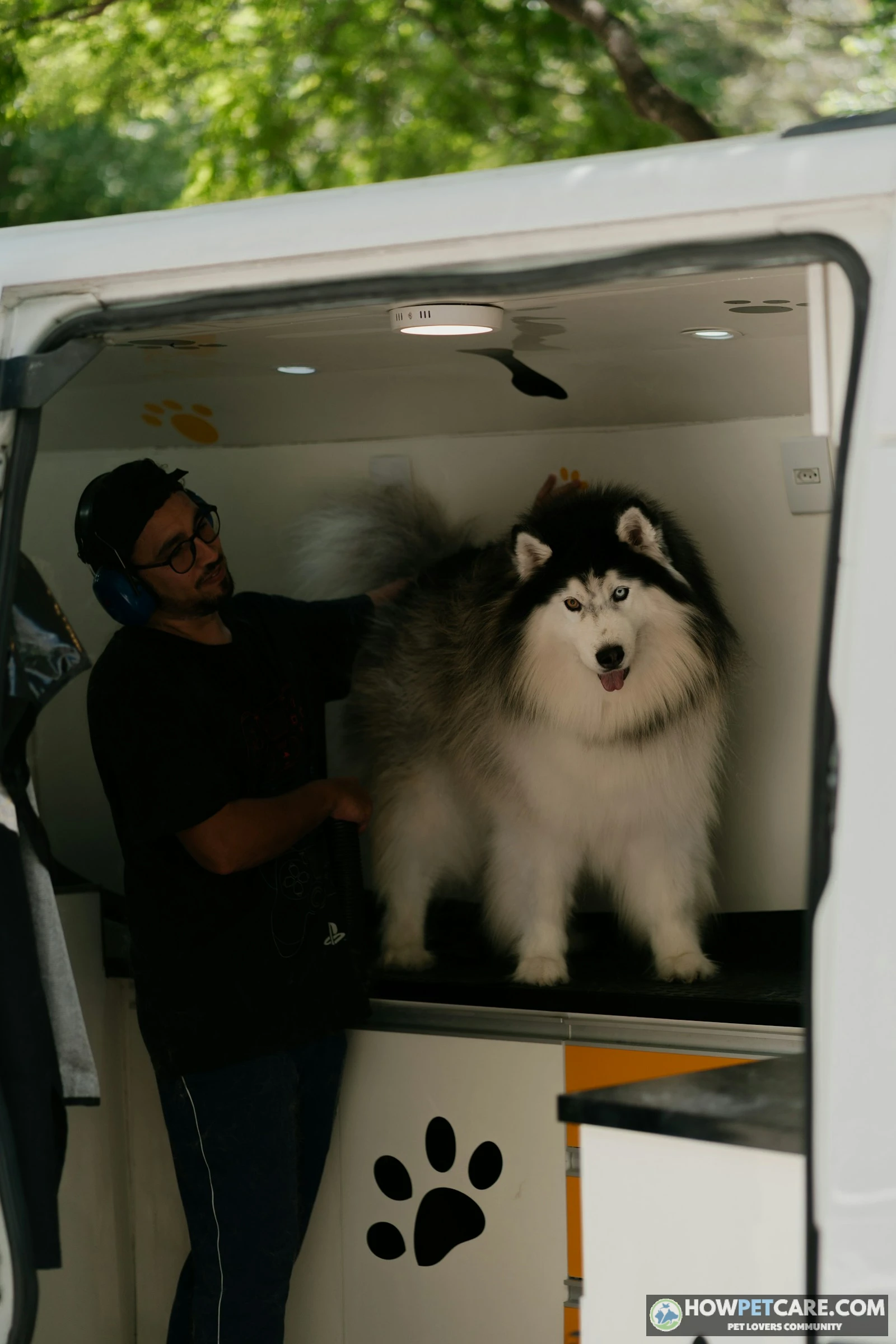
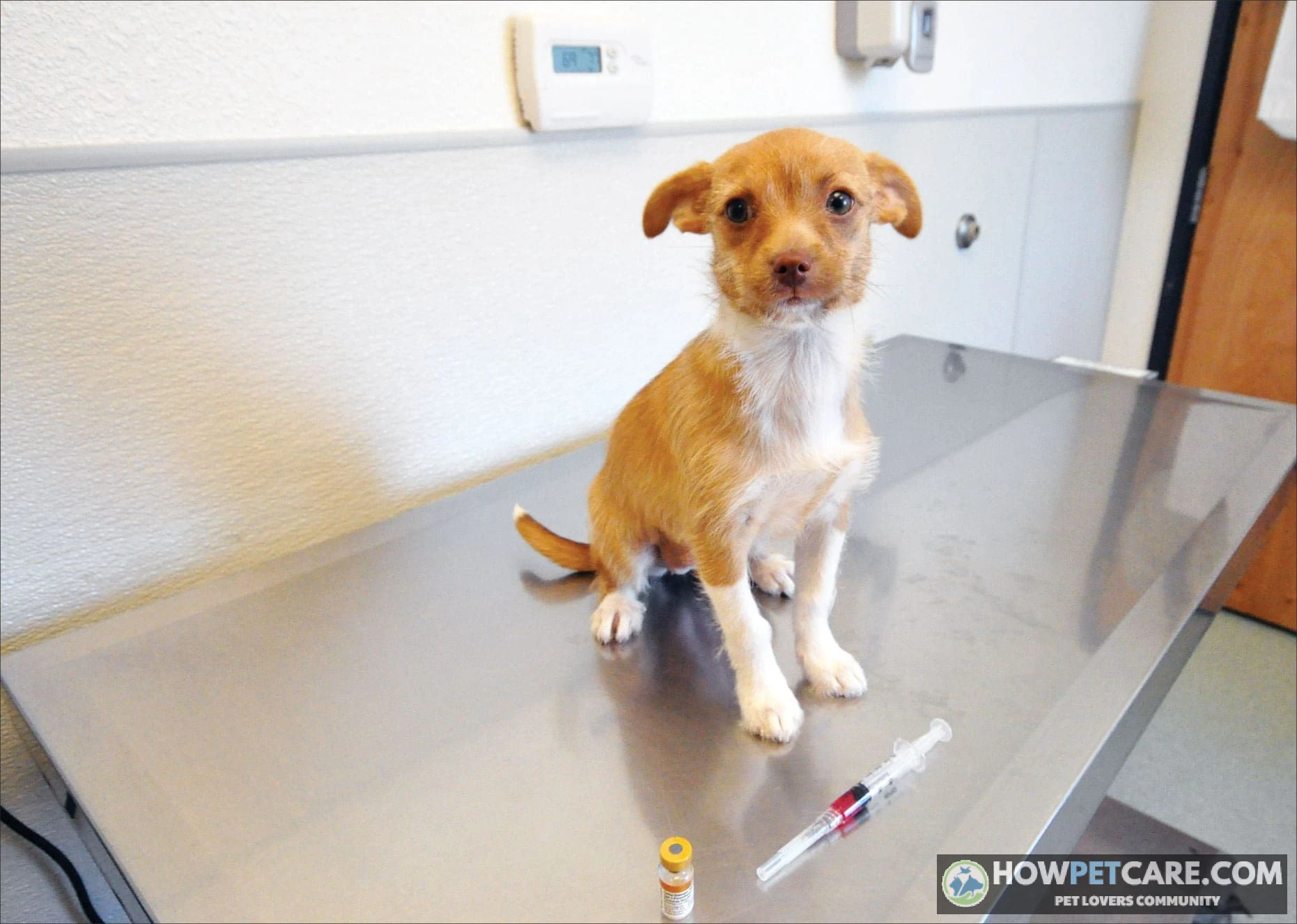
Ask who administers the rabies vaccine and what certificate you’ll receive. Home administration may not meet your jurisdiction’s legal certification rules; non-rabies vaccines also depend on correct storage and handling.
Adult Dog Boosters, Rabies Law by State, and Titer Testing vs Revaccination
How often adult dogs need booster shots
Not every vaccine is given annually. After the initial series and follow-up, the core DHPP components are generally boosted every three years. Leptospirosis and indicated Lyme or canine influenza vaccines are generally boosted annually; Bordetella timing varies. Rabies follows its own legal and product-specific schedule.
Senior dogs still need an individual plan. Age alone doesn’t determine whether a booster is due; your vet will consider health, exposure, vaccination history and applicable law.
State-by-state rabies requirements
There’s no single US rabies timetable. State rules, and sometimes local ordinances, can differ on the age at first vaccination, recognized vaccine duration, administration, licensing and documentation. A first rabies vaccination and a later booster may have different validity periods.
For the rules that apply to your dog, check your state health department or state veterinary board, as well as your county or city animal-services office. Use the due date on your certificate. The National Association of State Public Health Veterinarians’ rabies compendium provides useful background, but it doesn’t replace the law in your jurisdiction.
Can a titer test replace boosters? Lifetime cost comparison
A **titer testmeasures antibodies in a blood sample. For distemper and parvovirus, it can help your veterinarian assess whether your dog has a detectable immune response and needs a booster. It isn’t a reliable substitute for every vaccine decision: rabies law generally requires vaccination documentation, and lepto titers aren’t routinely used to replace annual vaccination.
The following is arithmetic, not a sourced price quote**. Replace the hypothetical amounts with an estimate from your clinic to compare plans. Both plans start after a dog’s puppy follow-up; they exclude rabies, lepto, other vaccines and any tests or care unrelated to this decision.
| Approach | Frequency | Cost per visit, hypothetical | Estimated total over 10 years | Limitations |
|---|---|---|---|---|
| DHPP boosters | Three boosters, at roughly years 3, 6 and 9 | $35 vaccine + $50 exam | $255 | Assumes three separate exams; actual schedules and prices vary. |
| Annual titers | Ten tests | $80 test + $50 exam | $1,300 | Assumes ten separate exams; a booster, blood-draw fee or lab charge could add cost. |
If your dog already needs an annual exam, counting the full exam fee against either option can exaggerate the difference. Titers also don’t guarantee that a booster will never be needed. Before paying for a test, ask which antibodies it covers and how the result will affect the plan.
Your Dog Vaccination Action Plan: Checklist for the Next Vet Visit
Printable pre-visit checklist
- ☐ New puppy: Collect any breeder or shelter records and schedule the next DHPP visit.
- ☐ Puppy mid-series: Check the dates already given and confirm a final DHPP dose at 16 weeks or older.
- ☐ Adult or senior: Bring the current vaccine record and rabies certificate; ask which vaccines are due now.
- ☐ Rescue with unknown history: Request records from the rescue and previous clinic; note what remains unknown.
- ☐ Every dog: Note boarding, travel, tick and wildlife exposure; copy the shot-record table; request an itemized estimate.
- ☐ At the visit: Ask what’s being given, whether to split injections, the total cost, which reactions need urgent care and when higher-risk play is appropriate.
Booster reminder setup
Before you leave, record the product, date and next due date. Set a calendar reminder early enough to arrange the next appointment, and keep a photo of the rabies certificate. Monitor your dog for the next 24–48 hours after vaccination and seek immediate care for emergency signs. Your veterinarian’s assessment and local requirements determine the final schedule.
 You might be wonderingFleas on dogFleas on Dogs: How to Confirm, Treat & Eliminate ThemRead the answer
FAQ
What is the difference between DHPP and DHLPP?
DHPP protects against distemper, adenovirus (hepatitis), parvovirus and parainfluenza. DHLPP adds leptospirosis. Many clinics now give leptospirosis as a separate or combined shot, so check the invoice for what was included.
Can I vaccinate my dog at home?
Some non-rabies vaccines are sold to owners, but the quality of storage and handling is uncertain and a vet exam is skipped. Rabies vaccination must be given by a licensed veterinarian for the certificate to be valid.
What vaccines are required for boarding, daycare or grooming?
Most facilities require proof of rabies, DHPP and often bordetella, and some ask for canine influenza. Requirements vary, so ask the facility and bring your dated vaccination record.
How do I get my dog’s vaccination records if I lost them?
Call the vet clinic, shelter, rescue or breeder that vaccinated the dog, and ask them to send a copy. If none exist, your vet can revaccinate or run a titer test for distemper and parvovirus.
Do senior dogs still need vaccines?
Usually yes, though the plan is tailored to health, lifestyle and local law. Rabies is still legally required, and the vet may adjust or skip some non-core shots in dogs with chronic illness.