
Rocky Mountain spotted fever in dogs is a tick-borne bacterial infection that can turn life-threatening without prompt treatment. Watch for fever, lethargy, and appetite loss for about two weeks after a tick bite — call your vet the same day if they appear, and seek emergency care for seizures, bleeding, or collapse.
Rocky Mountain spotted fever in dogs is a bacterial infection spread by ticks that can become life-threatening without prompt treatment. A tick bite alone is not usually an emergency, but a dog with fever, unusual tiredness, or loss of appetite after tick exposure needs a veterinary call the same day.
Could It Be RMSF? Monitor, Same-Day Vet, or Emergency Now
Use this guide to choose your next step, not to diagnose your dog. If you’re unsure which category fits, call a veterinarian. You may not have seen a tick; tell the clinic about outdoor exposure even if you never found one.
| Urgency level | Signs you see | What to do |
|---|---|---|
| Monitor at home | You removed a tick and your dog is eating, drinking, and behaving normally, with no apparent illness. | Record the bite and watch appetite, energy, and movement daily for about 14 days. Call your vet if anything changes. |
| Call your vet today | Fever, lethargy, appetite loss, a new limp or stiff gait, painful joints, red eyes, vomiting, or diarrhea, particularly after possible tick exposure. | Request a same-day appointment. Tell the clinic when and where exposure may have happened. |
| Emergency clinic now | Seizures, stumbling, collapse, unresponsiveness, difficulty breathing, bleeding from the nose or in urine or stool, widespread bruising, or pinpoint red-purple spots on the gums or belly. | Go to an emergency veterinarian immediately. Call ahead if someone can do so safely. |
Signs can appear roughly 2–14 days after an infected tick bite, so a dog that looks well right after removal still needs watching. A new symptom during that period moves the dog out of the monitor category; serious signs need emergency care whether or not you found a tick.
Antibodies can take time to appear, so an RMSF antibody test may be negative during the first week of illness. Veterinarians often compare an early blood sample with a second sample collected later — a pair of titers — because a rise between the two can support a recent infection. Ask your veterinarian whether a repeat sample is needed and whether treatment should begin while results are pending.
Found a Tick on Your Dog? What to Do in the Next 10 Minutes
Step-by-step tick removal
Remove an attached tick promptly. You don’t need to identify it before taking it off.
-
Protect your hands
Put on disposable gloves if available. Keep your dog still, and ask someone to help if needed.
-
Get close to the skin
Use fine-tipped tweezers or a tick-removal tool. Grasp the tick as close to the skin as possible without squeezing its swollen body.
-
Pull steadily
With tweezers, pull upward with slow, even pressure. Avoid jerking or twisting. If you use a removal tool, follow its instructions.
-
Save and clean
Place the tick in a sealed bag or container. Clean the bite site with soap and water or a pet-safe antiseptic, and wash your hands.
Do not burn the tick, cover it with petroleum jelly or nail polish, or crush it with bare fingers. If mouthparts remain in the skin, don’t dig at them. Contact your vet for advice, especially if the area becomes swollen, painful, or starts to ooze.
What to save and write down
Label the container with the date and where the tick was attached. Note where your dog may have picked it up and whether the tick looked swollen. A veterinarian or local extension office may be able to identify the species, but the tick’s appearance can’t tell you whether your dog is infected.
The 2-week watch checklist
For the next 14 days, check your dog’s appetite, energy, and gait each day. Inspect the bite site and look for new ticks after outdoor time. Call your vet promptly if fever, unusual tiredness, missed meals, limping, red eyes, vomiting, or diarrhea appear.
If your dog seems unwell, a temperature can give the vet useful information, but don’t delay a call while you try to take it. Ask the clinic to show you how to use a lubricated digital rectal thermometer safely; stop if your dog resists or seems distressed. A rectal temperature of 103°F or higher warrants a call. Seizures, collapse, breathing difficulty, bleeding, or new pinpoint spots warrant emergency care, not another day of monitoring.
Fourteen days is a practical watch period for this particular exposure, not a guarantee against every tick-borne disease. Tell the vet about the bite if your dog becomes ill later, too.
RMSF Symptoms in Dogs: Early Signs, Severe Signs, and Neurological Changes
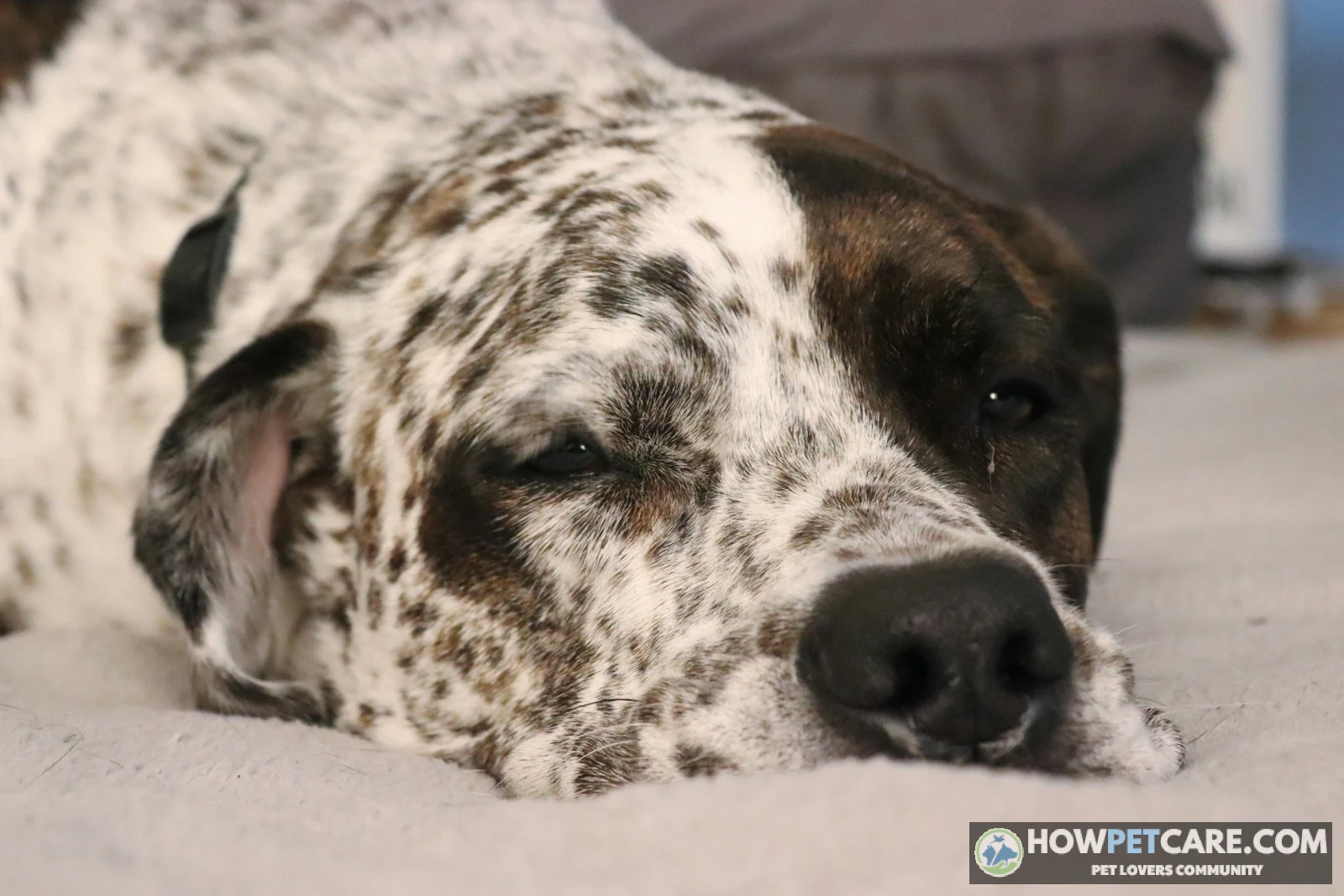
Rocky Mountain spotted fever symptoms in dogs can range from subtle illness to serious problems affecting several organs. Some infected dogs have mild or no apparent signs; others become critically ill. The checklists below are not a required sequence: a dog can develop severe signs without showing every early one.
Early signs
Call your vet today if you notice any of these after known or possible tick exposure:
- Fever, or a dog that feels unusually hot and unwell
- Lethargy, less interest in activity, or unusual quietness
- Loss of appetite
- Muscle or joint pain, stiffness, or reluctance to move
- A limp or swollen limbs
- Red or bloodshot eyes
- Vomiting or loose stools
Severe signs that need urgent care
Go to an emergency veterinarian for:
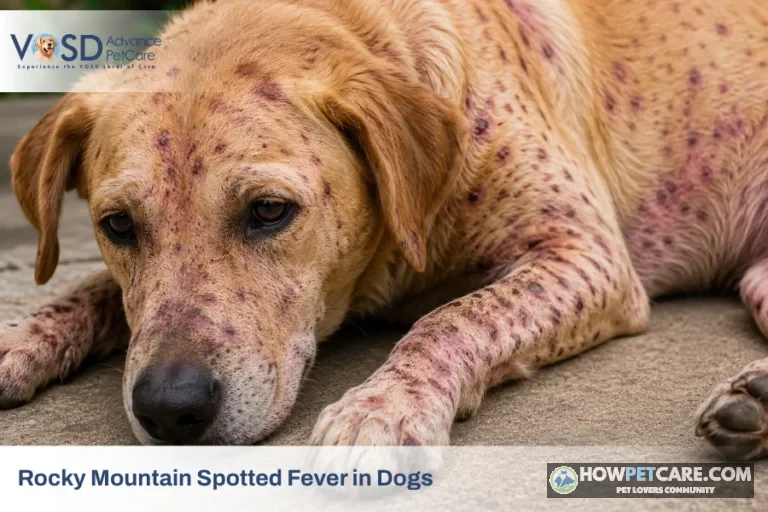
- Petechiae: tiny red or purple bleeding spots, which may show on the gums, belly, or inner ears
- Unexplained bruising, a nosebleed, or blood in the urine or stool
- Difficulty breathing, collapse, or profound weakness
- Repeated vomiting or diarrhea with marked weakness or inability to keep water down
Facial or leg swelling also needs prompt veterinary attention; if it is severe or comes with breathing trouble, go to an emergency clinic. RMSF can cause skin, respiratory, and other multisystem signs.
Neurological signs
Wobbliness, loss of coordination, a head tilt, disorientation, abnormal behavior, and seizures can accompany severe disease. New stumbling, seizures, or unresponsiveness are emergencies. Pain when touched or a new head tilt also warrants urgent veterinary assessment.
Not every dog develops visible spots or bleeding. Their absence doesn’t rule out RMSF, and these signs can also occur with other illnesses.
How Dogs Get RMSF: Tick Vectors, US Regions, and Seasonal Risk
Dogs get RMSF when an infected tick transmits the bacterium Rickettsia rickettsii. Not every tick carries it, and a bite doesn’t automatically mean a dog will become sick.
Which ticks carry RMSF
Ticks linked to transmission include the American dog tick, Rocky Mountain wood tick, and brown dog tick.
- American dog tick (Dermacentor variabilis): A brown tick whose adults may have pale, mottled markings. It lives across much of the eastern and central United States and in some Pacific coastal areas.
- Rocky Mountain wood tick: Similar in appearance to the American dog tick, it occurs in Rocky Mountain states. The two can be hard to tell apart without close examination.
- Brown dog tick: Generally reddish brown without the obvious pale markings of adult American dog ticks. It can infest homes and kennels, making indoor control especially important.
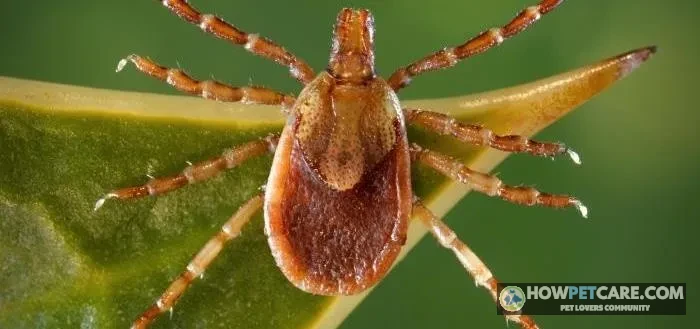
Tick size changes as a tick feeds, and markings vary by life stage and sex. Treat these descriptions as clues, not a home identification test. A veterinarian or extension office can help identify a saved specimen.
Where and when your dog is most at risk
Despite its name, RMSF isn’t confined to the Rocky Mountains. Exposure is possible in many US regions, and no state should be assumed risk-free. Risk depends on local ticks, outdoor activity, travel, and prevention practices.
Ticks are often most active in warmer months, but the season varies by location and weather. Brown dog tick infestations can also persist indoors. Ask your vet what year-round protection makes sense where your dog lives and travels.

RMSF is not directly contagious from dog to dog or from a dog to a person. An affected dog can nevertheless alert a household to infected ticks nearby, so check other pets and family members for ticks.
How Vets Diagnose RMSF, and Why an Early Blood Test Can Be Negative
Your veterinarian will combine the exam with your dog’s signs, possible tick exposure, and test results. A complete blood count, or CBC, may show low platelets or anemia; a chemistry panel and urinalysis can help assess organ involvement. None of these routine findings alone proves RMSF.
A veterinarian may also order an antibody test, a PCR test, or tests for other tick-borne infections. Early serology can be negative because the immune system hasn’t yet made detectable antibodies.
A diagnostic timeline: what each test can show and when
| Stage of illness | Test | What a positive result means | What a negative result means |
|---|---|---|---|
| Early illness | CBC and chemistry panel | Low platelets or other abnormalities can support suspicion and reveal complications. | Normal or near-normal results do not exclude RMSF. |
| Early illness | PCR, often on blood | Detects bacterial genetic material; the lab and vet interpret the result in context. | Does not rule out infection, because the organism may not be detected in the sample. |
| First week | Antibody serology, often an IFA test | Antibodies indicate exposure, but one result may not establish when infection occurred. | May be negative before antibodies develop. |
| Follow-up, often a few weeks later | Paired antibody titers | A substantial rise between the first and second samples supports recent infection. | A result without a rise must be interpreted alongside timing, treatment, and clinical findings. |
A titer is a measurement of antibodies in the blood. With paired titers, the vet compares a sample collected during illness with another collected later. This is more informative than treating one antibody result as a complete answer.
If the first test is negative
Ask: "Which test was performed? Should we collect a second sample? Are we treating while we wait?" A negative early antibody test does not rule out RMSF, and a negative PCR isn’t a perfect exclusion either. When the clinical picture is concerning, a veterinarian may start treatment before confirmatory results return rather than risk a delay.
Improvement on antibiotics can support a vet’s assessment, but it doesn’t by itself prove which infection caused the illness.
RMSF vs. Ehrlichiosis, Anaplasmosis, Babesiosis, and Lyme Disease in Dogs
Fever, lethargy, and a limp are signs of tick-borne illness in dogs, not a reliable way to identify one specific infection. Even a veterinarian may need several tests and follow-up information to tell them apart.
| Disease | Cause | Main tick vector | Typical signs | Distinguishing clues | Usual treatment |
|---|---|---|---|---|---|
| RMSF | Rickettsia rickettsii, a bacterium | American dog, Rocky Mountain wood, and brown dog ticks | Fever, lethargy, poor appetite, pain, red eyes | May involve pinpoint bleeding, bruising, or neurological signs; these are not present in every dog. | Vet-prescribed doxycycline |
| Ehrlichiosis | Ehrlichia bacteria | Brown dog tick and, for some species, lone star tick | Fever, tiredness, poor appetite, bleeding | Low platelets and bleeding can resemble RMSF. | Often doxycycline |
| Anaplasmosis | Anaplasma bacteria | Blacklegged ticks; a brown dog tick association exists for some species | Fever, lethargy, joint pain, lameness | Low platelets or joint pain can overlap with several other diseases. | Often doxycycline |
| Babesiosis | Babesia parasites | Several tick species, depending on the parasite | Fever, weakness, lethargy | Destruction of red blood cells can cause anemia and pale or yellow gums. Some forms can also spread through dog bites. | Species-dependent antiparasitic treatment |
| Lyme disease | Borrelia burgdorferi, a bacterium | Blacklegged ticks | Lameness, swollen joints, fever | Lameness may shift between legs; some dogs develop kidney problems. | Often doxycycline |
The clues are not diagnostic. Dogs can also have more than one infection, and a positive screening test may require further interpretation.
The distinction can change treatment: doxycycline is commonly used for several bacterial diseases in the table, but babesiosis requires a different plan. Ask which infections the clinic’s panel actually checks. Common in-clinic screening panels may test for Lyme, ehrlichiosis, and anaplasmosis without specifically testing for RMSF.
RMSF Treatment in Dogs: Doxycycline, Duration, and Recovery at Home
Doxycycline: what to expect
Doxycycline is the first-choice antibiotic for canine Rocky Mountain spotted fever. Your veterinarian selects the dose and course for your dog’s weight, condition, and possible alternative diagnoses. Do not give a human prescription, leftover medication, or another pet’s antibiotic without veterinary direction.
Courses often run approximately one to two weeks for suspected RMSF, but the prescribed duration can differ, especially if another infection is also suspected. Give the medication for the full period directed, even if your dog looks better. If giving it is difficult, ask the clinic rather than stopping early.
Dogs treated promptly often begin to improve within a day or two. Ask your veterinarian when they expect improvement in your dog’s particular case, and call if that progress doesn’t occur. Worsening signs require earlier attention.
When a dog needs hospital care
A severely ill dog may need hospitalization for monitoring and supportive care along with antibiotics. Depending on the complications, the veterinary team may recommend intravenous fluids, medication to control seizures, treatment for bleeding, or a transfusion. The plan depends on the exam and test results.
A day-by-day home recovery checklist
- When you get home: Confirm the medication schedule, next appointment, expected improvement, and the clinic number to call after hours. Ask whether the medication should be given with food and whether calcium-containing foods or supplements should be separated from it.
- During the first 1–2 days: Provide water, a quiet place to rest, and small meals if your vet approves. Record appetite, energy, vomiting, and any medication problems.
- Over the rest of the course: Continue the prescribed medicine and follow activity restrictions. Don’t assume a return of appetite means treatment can stop.
- At follow-up: Discuss any remaining limp, weakness, abnormal bloodwork, or need for a second antibody sample.
Call the vet if vomiting keeps your dog from holding down medicine, if your dog isn’t improving within the expected window, or if symptoms return. New bleeding, seizures, collapse, or breathing trouble means emergency care.
Can Dogs Survive RMSF? Prognosis, Recovery Time, Complications, and Costs
Survival odds and what changes them
Yes. Many dogs survive, and most dogs treated promptly recover fully. Early treatment improves the outlook; severe disease can progress to life-threatening multisystem organ failure.
A dependable percentage for treated versus untreated dogs can’t be established from the available evidence, so a numerical survival promise would be misleading. Your veterinarian can give you a more useful individual outlook based on your dog’s condition, bloodwork, complications, and response to treatment.
Recovery timeline and possible lasting effects
Early improvement may show in appetite and energy within the first few days of treatment, although regaining normal strength can take longer. Keep follow-up appointments even if your dog seems better, especially when the vet has identified low platelets or other abnormalities.
Dogs that have been severely ill may need continued monitoring for neurological problems or organ injury. The possibility and duration of lasting effects depend on the complications involved; the available evidence does not support a reliable percentage for long-term damage.
Don’t rely on recovery as protection from future tick exposure. Continue the prevention plan your vet recommends, including protection against other tick-borne diseases.
What diagnosis and treatment may cost
The cost can range widely depending on where you live, the clinic, the tests selected, your dog’s size, and whether emergency or hospital care is needed. Reliable current pricing data for each service isn’t available in the evidence for this guide, so ask the clinic for a written estimate rather than relying on a nationwide figure.
| Potential charge | What to ask the clinic |
|---|---|
| Examination or emergency consultation | Is an emergency or after-hours fee included? |
| CBC, chemistry panel, and urinalysis | Which tests are needed today to assess platelets and organ function? |
| Tick-borne disease testing | Does the quoted panel include RMSF testing? Would repeat antibody testing cost extra? |
| Doxycycline | Does the estimate cover the full prescribed course? |
| Hospitalization and supportive care | What is the estimated initial cost, and when will the team update it? |
If cost is a concern, say so at the start. Ask which steps are most urgent, whether treatment can begin while results are pending, and what alternatives are medically appropriate. If you have pet insurance, check your coverage and claims requirements; don’t delay urgent care while waiting for an insurer’s response.
Your RMSF Action Plan: Tick Prevention and Next Steps
Tick prevention routine
- Choose a preventive with your veterinarian. Discuss your dog’s health, local tick exposure, travel, and a schedule you can maintain year-round.
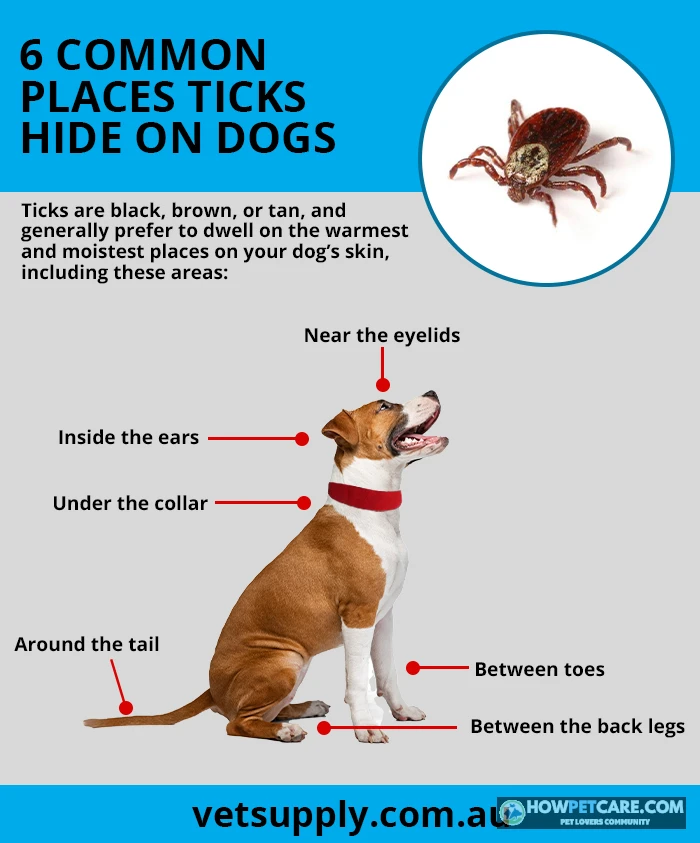
- Check for ticks after outdoor time. Look inside and around the ears, under the collar, in the armpits and groin, and between the toes. No preventive replaces regular checks.
- Make the yard less tick-friendly. Keep grass short and clear brush and leaf litter from areas your dog uses.
- Address indoor infestations. If brown dog ticks are suspected in the home or kennel, ask your veterinarian about treating all pets and appropriate environmental control.
- Protect the household. Check family members and other pets after outdoor activities. A person who develops fever after a tick bite should contact a medical professional.
There is no RMSF vaccine for dogs. Prevention and prompt attention to illness remain important even after a previous infection.
Build a tick kit and emergency plan
Keep fine-tipped tweezers or a removal tool, disposable gloves, a sealable container, and a pen together. Save your regular vet’s number and the address and number of the nearest emergency clinic in your phone.
After a tick bite, watch a well dog for about two weeks. Call your vet the same day for new fever, lethargy, appetite loss, or a limp; go to an emergency clinic now for seizures, collapse, bleeding, or breathing difficulty.
1A dog owner removes an attached tick from their dog. The dog is currently eating, drinking, and behaving normally. What is the recommended course of action according to the triage guide?
Because symptoms can take roughly 2 to 14 days to appear after an infected bite, monitoring a healthy dog at home during this window allows early detection if illness develops.
2When removing an attached tick from a dog's skin, which physical technique is recommended?
Using fine-tipped tweezers or a removal tool close to the skin prevents squeezing the tick's body and helps extract it cleanly without twisting.
3Why might a dog with early Rocky Mountain spotted fever test negative on an antibody serology test during the first week of illness?
Serological tests detect the host's immune response to the pathogen, which often takes longer than a week after infection to reach detectable titers.
4How do veterinarians utilize paired antibody titers to evaluate a suspected RMSF infection?
A substantial rise in antibody levels between two timed samples supports a diagnosis of recent active infection.
5Which tick species capable of transmitting RMSF is specifically known for its ability to establish infestations inside homes and kennels?
The brown dog tick can complete its entire life cycle indoors, making home and kennel infestations a unique concern.
6In comparing tick-borne illnesses in dogs, how does the typical medical treatment for Babesiosis differ from that of RMSF, Ehrlichiosis, Anaplasmosis, and Lyme disease?
Because Babesiosis is caused by protozoal parasites rather than bacteria, targeted antiparasitic medications are required instead of standard antibiotics.
7Which clinical sign in a dog represents a critical emergency requiring immediate evaluation at an emergency clinic?
Petechiae indicate severe underlying bleeding abnormalities or platelet deficits, requiring immediate emergency care.
8What is the primary first-choice antibiotic recommended for treating suspected or confirmed canine Rocky Mountain spotted fever?
Doxycycline is the first-choice antibiotic selected by veterinarians to treat RMSF and several other bacterial tick-borne diseases.
9How is Rocky Mountain spotted fever transmitted to dogs?
Transmission occurs when an infected tick species feeds on the host and transmits the rickettsial bacteria.
10What is the accurate medical recommendation regarding vaccination against Rocky Mountain spotted fever in dogs?
Because there is no vaccine available for canine RMSF, prevention depends on consistent vector control and prompt tick checks.
| Disease | Cause | Main Tick Vector | Typical Signs | Distinguishing Clues | Usual Treatment |
|---|---|---|---|---|---|
| RMSF | Rickettsia rickettsii (bacterium) | American dog tick, Rocky Mountain wood tick, and brown dog tick | Fever, lethargy, poor appetite, pain, red eyes | May involve pinpoint bleeding, bruising, or neurological signs; not present in every dog | Doxycycline |
| Ehrlichiosis | Ehrlichia species (bacteria) | Brown dog tick and lone star tick (for some species) | Fever, lethargy, poor appetite, bleeding | Low platelets and bleeding can resemble RMSF | Doxycycline |
| Anaplasmosis | Anaplasma species (bacteria) | Blacklegged tick; brown dog tick association exists for some species | Fever, lethargy, joint pain, lameness | Low platelets or joint pain can overlap with several other diseases | Doxycycline |
| Babesiosis | Babesia species (parasites) | Several tick species (depending on parasite species) | Fever, weakness, lethargy | Destruction of red blood cells causing anemia and pale or yellow gums; some forms can spread via dog bites | Species-dependent antiparasitic treatment |
| Lyme disease | Borrelia burgdorferi (bacterium) | Blacklegged tick | Lameness, swollen joints, fever | Lameness may shift between legs; some dogs develop kidney problems | Doxycycline |
FAQ
Is Rocky Mountain spotted fever in dogs contagious to humans or other dogs?
Dogs do not pass RMSF directly to people or other dogs. Both get it from the bite of an infected tick, so a sick dog can signal that ticks carrying the bacteria are in your yard or on walking routes. Check family members and other pets for ticks.
Is there a vaccine for Rocky Mountain spotted fever in dogs?
No RMSF vaccine is available for dogs. Prevention relies on year-round veterinarian-recommended tick control and daily tick checks.
Do all ticks carry Rocky Mountain spotted fever?
No. Only a small share of ticks of the vector species carry Rickettsia rickettsii, so most tick bites do not cause RMSF. Because you can’t tell by looking at a tick, watch your dog for fever, lethargy, or appetite loss for about 2 weeks.
Can a dog get Rocky Mountain spotted fever more than once?
Dogs that recover may develop some immunity, but this should not be relied on for protection. Keep using tick prevention after recovery, since a new bite from an infected tick can still pose a risk.
Does RMSF in dogs go away on its own?
Do not count on it. RMSF can progress to serious bleeding, organ, and neurological problems, so a dog with suspected RMSF should see a veterinarian for antibiotics such as doxycycline rather than waiting.