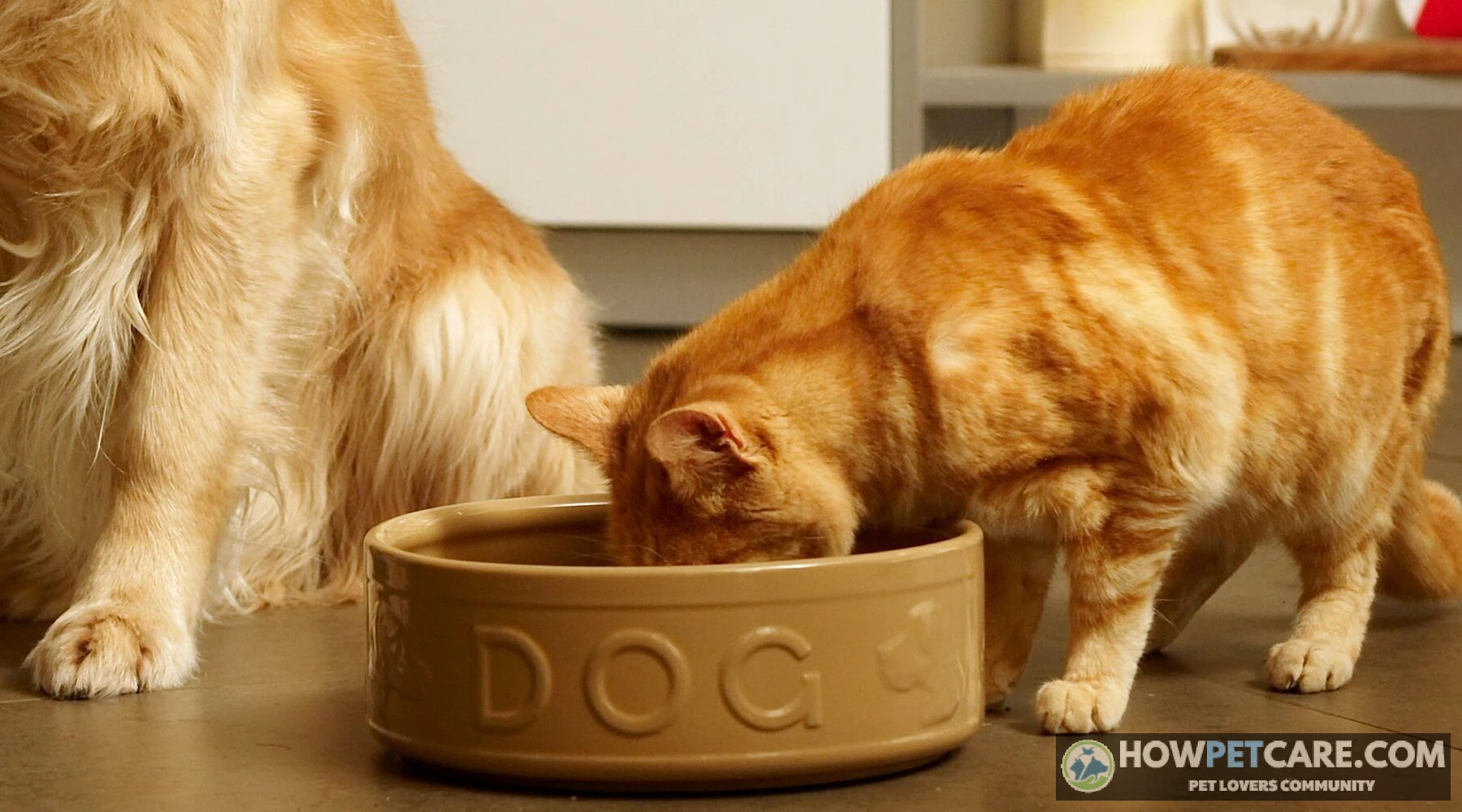

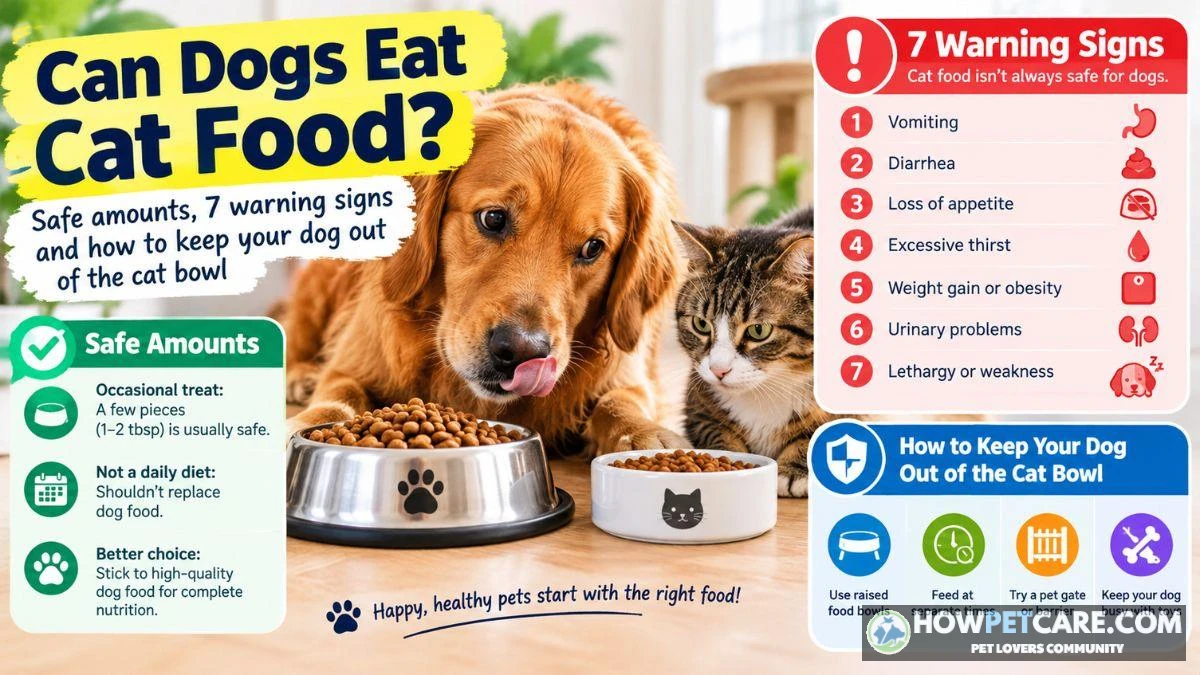
A small accidental amount of cat food is usually harmless for a healthy adult dog — cat food isn’t toxic. Risk rises with large portions, repeated raids, and high-risk dogs (puppies, seniors, toy breeds, or dogs with pancreatitis, kidney, or liver disease). Call a vet for big amounts or red-flag symptoms.
Can dogs eat cat food? A small accidental amount is usually harmless for a healthy adult dog. Cat food isn’t toxic in the poison sense, but it isn’t a safe regular diet. The risk changes if a dog eats a large portion or gets into it repeatedly. Size, age, and health matter too, particularly for dogs with a history of pancreatitis, kidney disease, or liver disease. Use the guide below to assess the amount eaten, decide when to call, watch for symptoms, and prevent another raid.
Quick triage: harmless, monitor, or call the vet
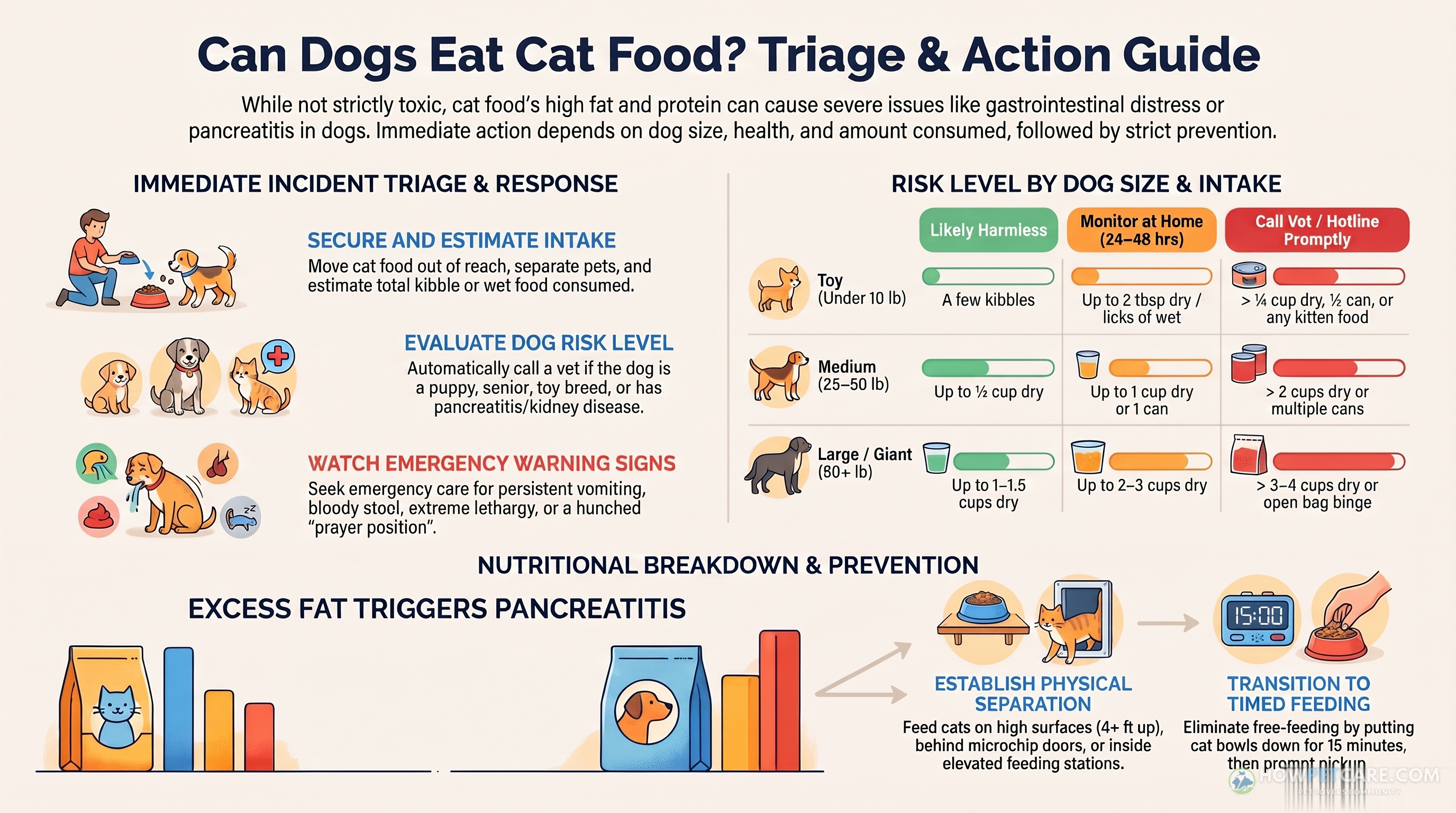
Start by placing the incident in one of these three buckets:
- Harmless: A healthy medium-to-large dog ate a few kibbles or had a couple of licks of wet food. Secure the bowl; no further action is needed.
- Monitor at home: An otherwise healthy dog ate a modest portion (see the size-based table below). Watch for vomiting, diarrhea, or appetite changes for 24–48 hours.
- Call a vet or poison hotline now: Your dog ate a large amount (a full bowl, multiple cans, or a bag raid), or ate any amount and is a puppy, senior, toy breed, has a sensitive stomach, has a history of pancreatitis/kidney/liver disease, or is a pancreatitis-prone breed like a Miniature Schnauzer. Also call if the food was kitten formula or your dog swallowed packaging, a can, or a lid.
Your decision depends on the amount relative to your dog’s weight, the type of food (dry, wet, kitten), and your dog’s risk factors. A single bite rarely causes pancreatitis, so don’t panic, but don’t guess either.
Occasional vs. every-day cat food: what changes
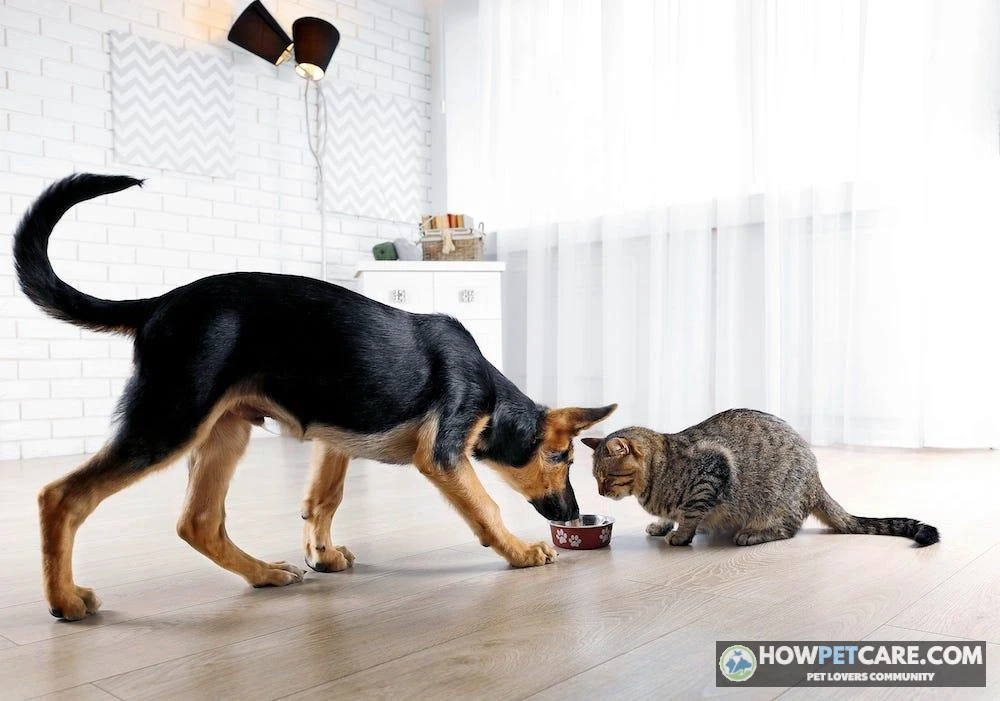
An occasional raid is a gastrointestinal event; daily feeding creates a nutritional mismatch. Cats are obligate carnivores and need 11 essential amino acids; dogs need 10 and can synthesize taurine. Cat food is formulated to AAFCO cat profiles with minimums of 26% protein (dry matter) and 9% fat, while adult dog food minimums are 18% protein and 5.5% fat. That richness can cause immediate upset and contribute to chronic risks: obesity (which shortens lifespan by ~2.5 years), nutritional imbalance, and extra strain on the kidneys and liver in dogs with existing disease.
Cat food is not poison. The danger depends on the dose, frequency, and individual dog. A healthy adult dog will usually tolerate a single meal of plain adult cat food if nothing else is available, though it may cause loose stools. Avoid it for dogs with pancreatitis, kidney or liver disease, or sensitive stomachs, and return to dog food as soon as possible.
How Much Cat Food Is Too Much? Thresholds by Dog Size, Age, and Health
Quick size-based guide: what counts as a little or a lot
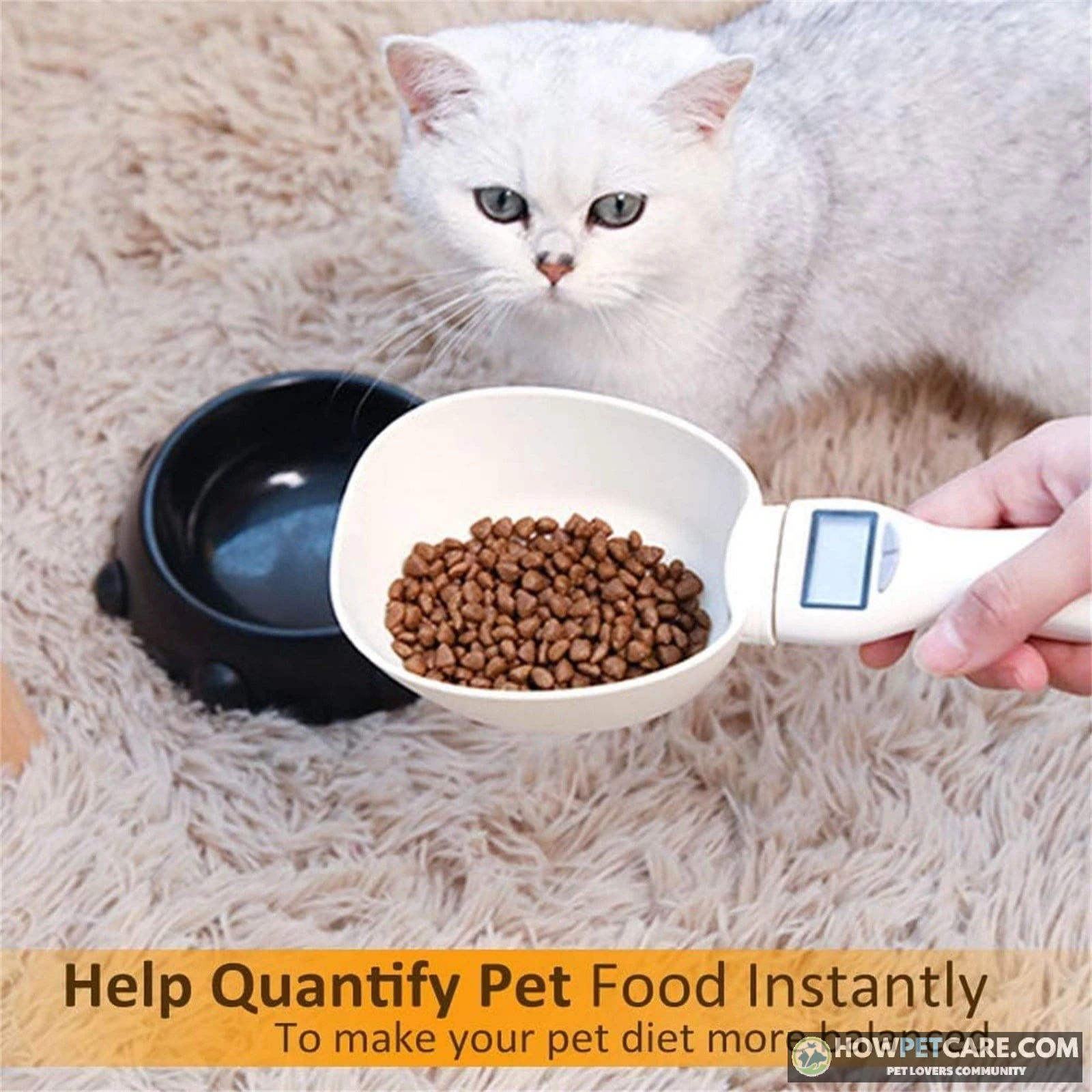
Cat food is calorie-dense. Dry cat kibble typically contains 400–500 kcal per cup. Half a cup for a 10-lb dog can equal 20%+ of its daily calories — proportionally, that’s a "meal," not a "taste." Wet food conversion: 1 standard 3-oz can ≈ ½ cup dry equivalent; 5.5-oz can ≈ 1 cup equivalent. Kitten food is denser still.
Use this table to assess what happened. These are conservative general guidelines, not a diagnosis. When in doubt, move to the next level of caution or call your vet.
| Dog size (weight) | Likely harmless | Monitor at home 24–48 hrs | Call vet / poison hotline promptly |
|---|---|---|---|
| Toy (under 10 lb) | A few kibbles | Up to ~2 tablespoons dry or a few licks of wet | More than ¼ cup dry, half a 3-oz can, or any kitten food |
| Small (10–25 lb) | Up to ~2 tablespoons | Up to ~½ cup dry or half a can | More than 1 cup dry, a full can, or a full cat bowl |
| Medium (25–50 lb) | Up to ~½ cup | Up to ~1 cup dry or one can | More than 2 cups dry, multiple cans, or a whole bag raid |
| Large (50–90 lb) | Up to ~1 cup | Up to ~2 cups dry or two cans | More than 3–4 cups dry or an opened bag/tray binge |
| Giant (90+ lb) | Up to ~1½ cups | Up to ~3 cups | More than ~4 cups, or any amount with symptoms |
Automatically drop to "call the vet" regardless of amount if: the dog is under 1 year old, has a history of pancreatitis/kidney/liver disease, is a pancreatitis-prone breed (e.g., Miniature Schnauzer), the food was kitten food, or the dog also ate packaging, a can, or a lid.
Estimating how much your dog actually ate
- Compare the bowl before and after the raid.
- Check the cat’s usual measured portion.
- Count any missing cans or pouches.
- Note whether the bowl was free-fed (unknown total).
If you can’t estimate the amount, assume the worst-case plausible amount and move to the next caution tier.
When risk factors lower the threshold
- Puppies: Their growth needs differ, and the risk of upset and imbalance is higher.
- Seniors: They’re more likely to get vomiting or diarrhea; obesity and weight concerns matter too.
- Small dogs: A portion that looks "small" to a person is proportionally large.
- History of pancreatitis, kidney disease, or liver disease: Call the vet even after moderate amounts.
- Pancreatitis-prone breeds: Miniature Schnauzers, Cocker Spaniels, and some terriers have a higher baseline risk.
- Sensitive stomach: Any diet change can trigger prolonged GI upset.
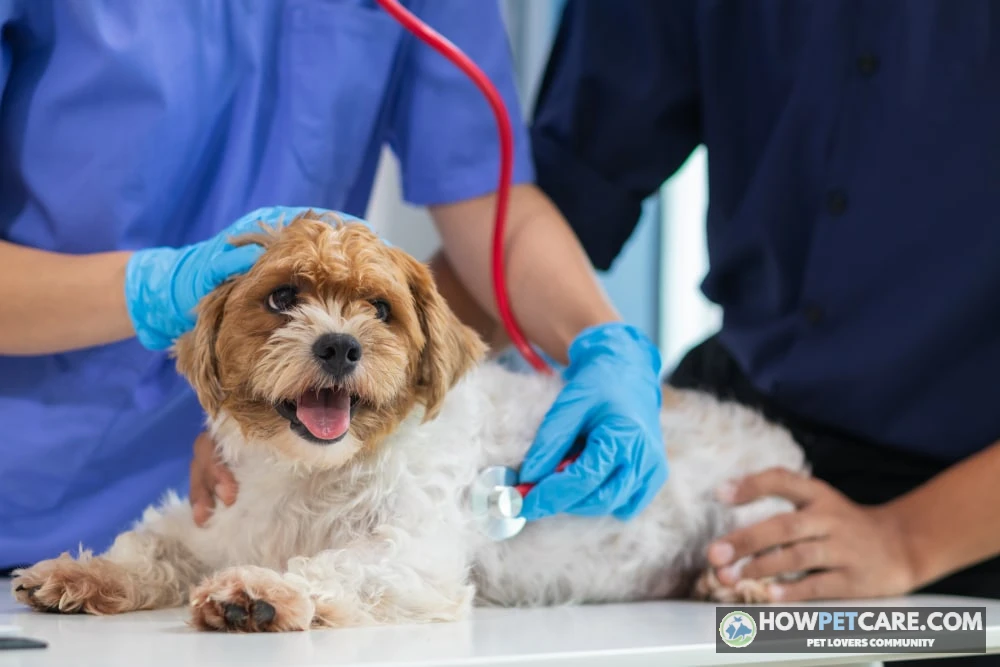
If your dog fits any of the categories above, call your veterinarian or an animal poison control line (ASPCA: 888-426-4435; Pet Poison Helpline: 855-764-7661 — fees may apply). Have your dog’s weight, the estimated amount, the product name, and the time of ingestion ready.
What to Do in the First Hours After Your Dog Eats Cat Food
0–2 hours: stop the raid and gather facts
Start as soon as you catch your dog at the cat’s bowl.
Step 1 — Minutes 0–10: Secure and estimate.
- Move the cat food out of reach and separate the pets.
- Estimate the amount by checking how full the bowl was, the cat’s normal portion, and any missing cans/pouches.
- Note the time and grab the food’s label (brand, type, kitten vs. adult, flavor). Have your dog’s approximate weight ready.
Step 2 — Minutes 10–60: Decide, don’t improvise.
- Compare the amount with the triage table. If it falls in the "call the vet" tier, call now or reach an animal poison control line.
- Do not induce vomiting at home unless a vet or poison-control professional specifically instructs you to. It rarely benefits a dog that has eaten cat food, and home induction carries an aspiration risk.
- Offer fresh water freely; don’t withhold it. Don’t give human medications (antacids, anti-diarrheals) or home remedies without veterinary advice.
Should you induce vomiting? Only under veterinary instruction
Inducing vomiting at home isn’t recommended after a dog eats cat food. The risks — aspiration pneumonia, esophageal injury, and a stressful experience for the dog — outweigh any theoretical benefit. Most cat food cases don’t meet the criteria for emesis (recent ingestion of a known toxin with a narrow treatment window). If a veterinarian or poison-control specialist tells you to induce vomiting, they’ll give you the exact agent, dose, and method for your dog’s weight and condition.
2–24 hours: monitor and feed carefully
- Skip treats and rich extras for the rest of the day. If your dog is acting completely normal, you can make the next regular meal slightly smaller than usual; if your vet advised a bland diet, use plain cooked rice with a small amount of boiled chicken.
- Check in at ~4, ~8, and ~12 hours. Note appetite, energy, vomiting, stool quality, and belly comfort (watch for a hunched posture or flinching when touched).
- Keep a quick incident log with the time, estimated amount, food type, and any symptoms. It’ll be useful if you call the vet later.
24–72 hours: the delayed-risk window
- Keep watching. Pancreatitis signs can appear 12–72 hours after a fatty meal: repeated vomiting, prayer position (front down, rear up), refusal to eat, or obvious pain.
- If 72 hours pass with nothing worse than one soft stool, you’re in the clear. Transition back to normal feeding and fix the access point to prevent another raid.
-
Secure & estimate
Move cat food, separate pets, note time, grab label, weigh dog.
-
Decide & call
Check triage table. Call vet/poison control if in "call" tier. Do NOT induce vomiting unless directed.
-
Observe 2–24 hrs
Offer water, skip treats, feed smaller normal meal or bland diet if vet advised. Log symptoms at 4, 8, 12 hrs.
-
Watch 24–72 hrs
Pancreatitis can appear 12–72 hrs post-meal. If clear at 72 hrs, resume normal diet and fix access.
Symptoms After Eating Cat Food: Monitor at Home vs. Emergency Vet
Mild GI upset you can watch at home
- One soft stool or mild diarrhea
- One episode of vomiting, then normal behavior
- Slightly picky appetite but still eats
- Normal energy and water intake
- Comfortable abdomen
Same-day vet call signs
- 2–3 vomiting episodes in 24 hours
- Diarrhea lasting more than 24 hours
- Refuses a full meal
- Quieter than usual, mild belly discomfort when touched
Emergency red flags: pancreatitis and obstruction
- Repeated or persistent vomiting, can’t hold water down, blood in vomit
- Bloody or black tarry stool
- Severe lethargy, weakness, collapse, pale gums
- Prayer position (front down, rear up), hunched back, restlessness, swollen/hard belly
- Retching with nothing produced, straining, no stool, worsening pain (possible obstruction from packaging/can/lid)
Pancreatitis warning signs typically appear 12–72 hours after a fatty meal. They’re more urgent in predisposed dogs.
What vets may do, typical costs, and prognosis
At the clinic, the vet will likely run blood work (including pancreatic lipase), possibly perform an ultrasound, and provide supportive care such as IV fluids, anti-nausea medication, pain control, and a low-fat diet. Outpatient management for mild pancreatitis can run $500–$1,500; hospitalization for moderate to severe cases often ranges $2,000–$5,000+. The prognosis is good for mild cases caught early, while severe or necrotizing pancreatitis carries a guarded prognosis. Death from cat food alone is very rare. The main dangers are severe pancreatitis, particularly in predisposed dogs, or complications from swallowing packaging or cans.
A single mild sign in a bright dog that’s drinking and interested in food = watch. Any emergency-column sign, or any two "call the vet" signs together = get seen today.
| Symptom | Monitor at home | Call your vet same day | Emergency vet now | Typical onset after eating |
|---|---|---|---|---|
| Vomiting | One episode, then normal | 2–3 episodes in 24 hrs | Repeated/persistent vomiting, can’t hold water down, blood in vomit | 2–24 hrs |
| Stool | One soft stool or mild diarrhea | Diarrhea lasting >24 hrs | Bloody stool, black tarry stool | 6–36 hrs |
| Appetite | Slightly picky, still eats | Refuses a full meal | Refuses food AND vomits or is painful | 12–48 hrs |
| Energy | Normal | Quieter than usual | Severe lethargy, weakness, collapse, pale gums | 12–72 hrs |
| Abdomen | Normal, comfortable | Mild discomfort when touched | Prayer position, hunched back, restlessness, swollen/hard belly (possible pancreatitis) | 12–72 hrs |
| Swallowed packaging/can/lid | — | Ate a small foil shred, acting fine | Retching with nothing produced, straining, no stool, worsening pain (possible obstruction) | Hours–days |
Cat Food vs. Dog Food: Why the Nutrition Doesn’t Match
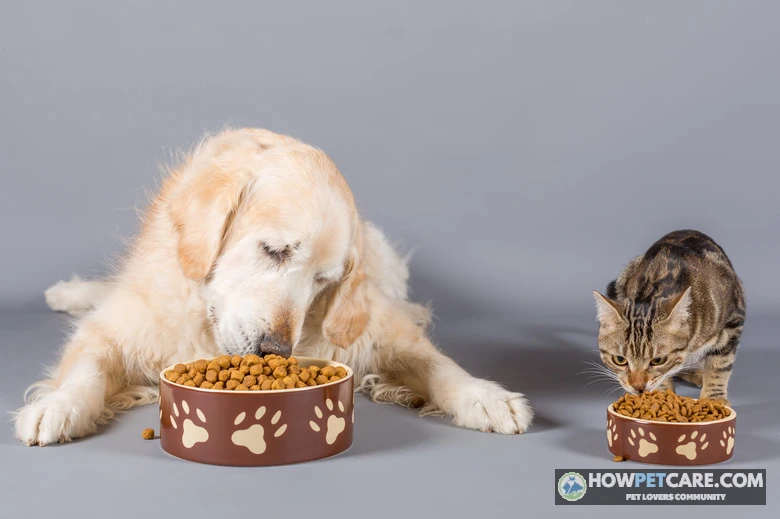
Side-by-side nutrient comparison
Cats are obligate carnivores, and their food is richer across the board. A single serving won’t hurt most dogs, but its nutrient profile doesn’t suit a dog’s daily needs.
The values below reflect AAFCO minimums (on a dry-matter basis) and typical commercial ranges. Exact numbers vary by brand and recipe — check the "guaranteed analysis" on the bag or can you’re holding.
| Nutrient | Typical adult dog food | Typical adult cat food | Typical kitten food | Why it matters for your dog |
|---|---|---|---|---|
| Protein (AAFCO min) | 18% DM; many foods 22–28% | 26% DM; many foods 30–40% | 30% DM; often 35%+ | Dogs can digest it, but chronic excess strains kidneys/liver in dogs with existing disease |
| Fat (AAFCO min) | 5.5% DM; typical 10–16% | 9% DM; typical 15–22% | 9% DM; often 18–25% | The main trigger for GI upset and a driver of pancreatitis risk in susceptible dogs |
| Calories (dry, typical) | ~300–400 kcal/cup | ~400–500 kcal/cup | ~450–550 kcal/cup | A "small" bowl of cat food packs in calories, especially for toy dogs |
| Fiber | Typically 2–5% | Typically 1–3% | Typically 1–3% | Lower fiber + higher fat = looser stools |
| Taurine | No AAFCO minimum (dogs synthesize it) | Required: ~0.10% dry / ~0.20% wet | Required | Extra taurine isn’t the danger; the overall fat/protein density is |
| Vitamin D | Min ~500 IU/kg, max ~3,000 IU/kg | Min ~280 IU/kg, max ~30,000 IU/kg | Same as cat | Cat foods may be formulated at vitamin D levels far above the dog safe maximum, another reason they can’t be a daily diet |
What the extra fat and protein do to a dog’s body
Higher fat content is the primary driver of acute gastrointestinal upset (vomiting, diarrhea) and the main risk factor for pancreatitis in susceptible dogs. Chronic excess protein can accelerate kidney or liver disease progression in dogs already diagnosed with those conditions. The calorie density promotes rapid weight gain; obesity in dogs shortens average lifespan by about 2.5 years. Lower fiber combined with higher fat reduces stool quality — if loose stools are a recurring issue, a higher-fiber dog diet may help. Taurine is essential for cats but not for dogs; the excess in cat food isn’t the problem. The overall nutrient profile is.
Can dogs eat cat food every day?
No. Long-term feeding creates a nutritional imbalance. Dog food is formulated for an omnivorous species with AAFCO dog profiles; cat food meets obligate-carnivore requirements. The vitamin D ceiling alone (up to 30,000 IU/kg in cat food vs. 3,000 IU/kg in dog food) makes daily feeding unsafe. Occasional use as a high-value training treat or short-term appetite stimulant for a critically ill dog (e.g., cancer cachexia) may be appropriate under veterinary guidance, but it isn’t a substitute for a species-specific diet. If you’re rebuilding your dog’s routine from scratch, our beginner’s guide to dog feeding covers portions, costs, and transitions.
| Dog Weight Category | Likely Harmless Amount | Monitor at Home Amount (24-48 hrs) | Call Vet / Poison Hotline Amount |
|---|---|---|---|
| Toy (under 10 lb) | A few kibbles | Up to ~2 tablespoons dry or a few licks of wet | More than ¼ cup dry, half a 3-oz can, or any kitten food |
| Small (10–25 lb) | Up to ~2 tablespoons | Up to ~½ cup dry or half a can | More than 1 cup dry, a full can, or a full cat bowl |
| Medium (25–50 lb) | Up to ~½ cup | Up to ~1 cup dry or one can | More than 2 cups dry, multiple cans, or a whole bag raid |
| Large (50–90 lb) | Up to ~1 cup | Up to ~2 cups dry or two cans | More than 3–4 cups dry or an opened bag/tray binge |
| Giant (90+ lb) | Up to ~1½ cups | Up to ~3 cups | More than ~4 cups, or any amount with symptoms |
Risk Modifiers: Wet vs. Dry, Kitten Food, Puppies, Seniors, and Medical Conditions
Wet vs. dry cat food
- Dry: Calorie-dense and easy to overeat; crumbs can also scatter. A dog can inhale a cup in seconds.
- Wet: Richer and smellier, often with higher fat per bite. Swallowed cans and lids add an obstruction risk.
- Pouches/trays: Similar to wet food; watch for plastic ingestion.
Kitten food and puppies
Kitten food is denser in calories, protein, and fat than adult cat food, so it carries more risk for small dogs and puppies. Puppies have different growth needs (calcium:phosphorus ratio, DHA, controlled calories) that kitten food doesn’t meet. An accident warrants closer monitoring and a vet call for large amounts.
Seniors, sensitive stomachs, and chronic conditions
Older dogs and those with sensitive stomachs are more likely to develop vomiting or diarrhea from the richness, and a diet designed for senior dogs is a better long-term fit. Dogs with a history of pancreatitis, kidney disease, or liver disease should avoid cat food entirely; even moderate amounts warrant a vet call.
Pancreatitis-prone breeds
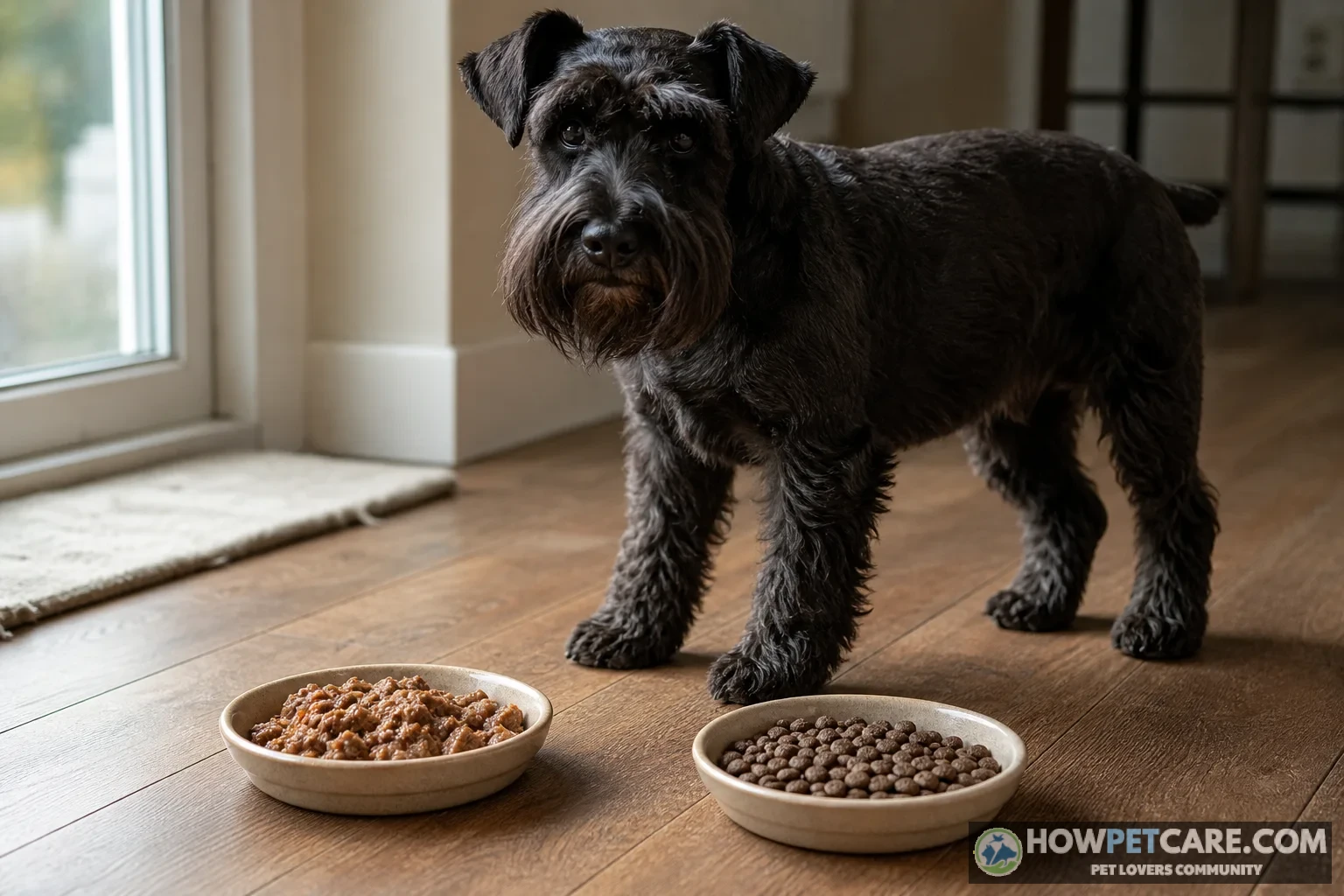
Miniature Schnauzers have a well-documented genetic predisposition to pancreatitis. Other breeds with higher reported rates include Cocker Spaniels, Miniature Poodles, and some terriers. If one of these dogs binges on cat food, contact your veterinarian promptly.
What about cat treats?
A cat treat or two is usually fine for a healthy dog, but the treats are rich and calorie-dense. Check for ingredients your vet has flagged for your dog, and don’t make the treats routine — freeze-dried dog treats are a safer high-value reward.
If your dog has any medical condition or is on a prescription diet, call your vet before "waiting to see" — the threshold for intervention is lower.
Why Dogs Love Cat Food (and Why It Keeps Happening)
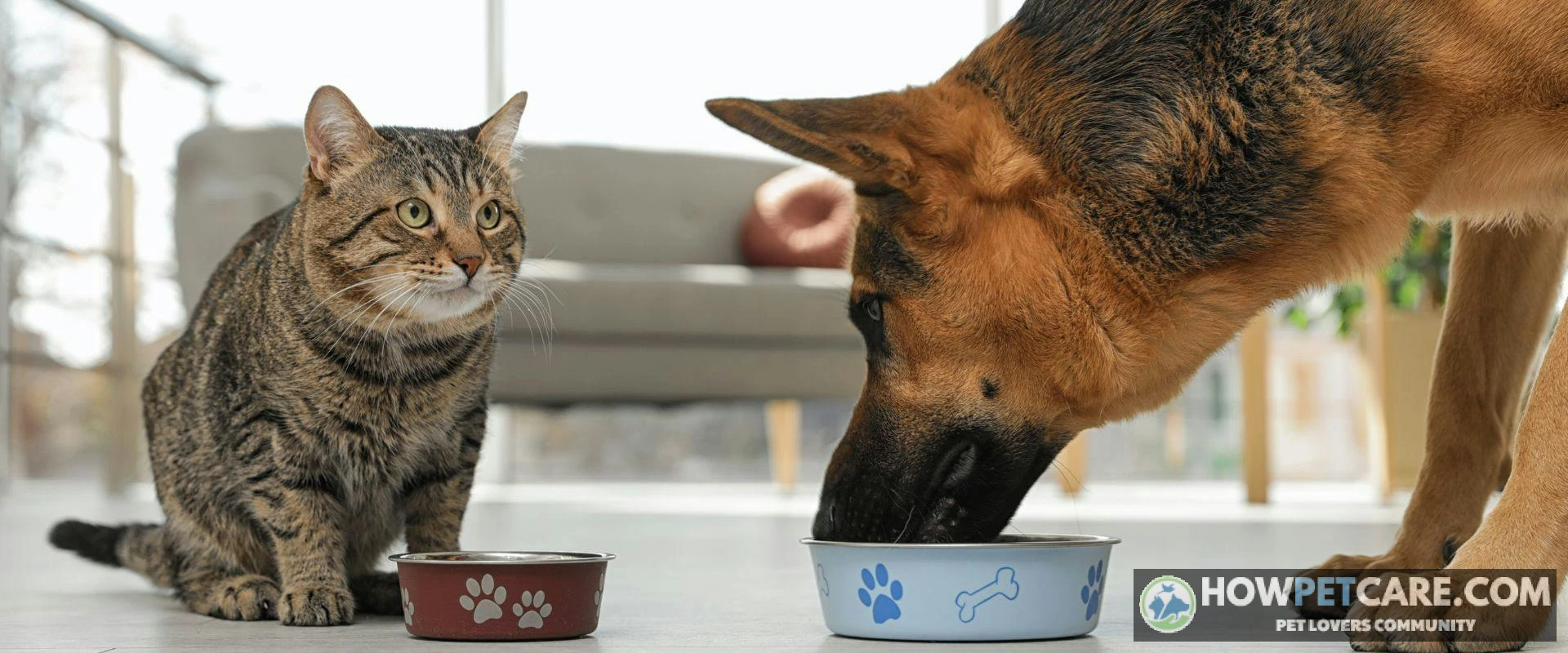
- Palatability: Cat food has higher fat, higher protein, and a stronger aroma. It’s engineered to appeal to obligate carnivores, and dogs are opportunistic scavengers.
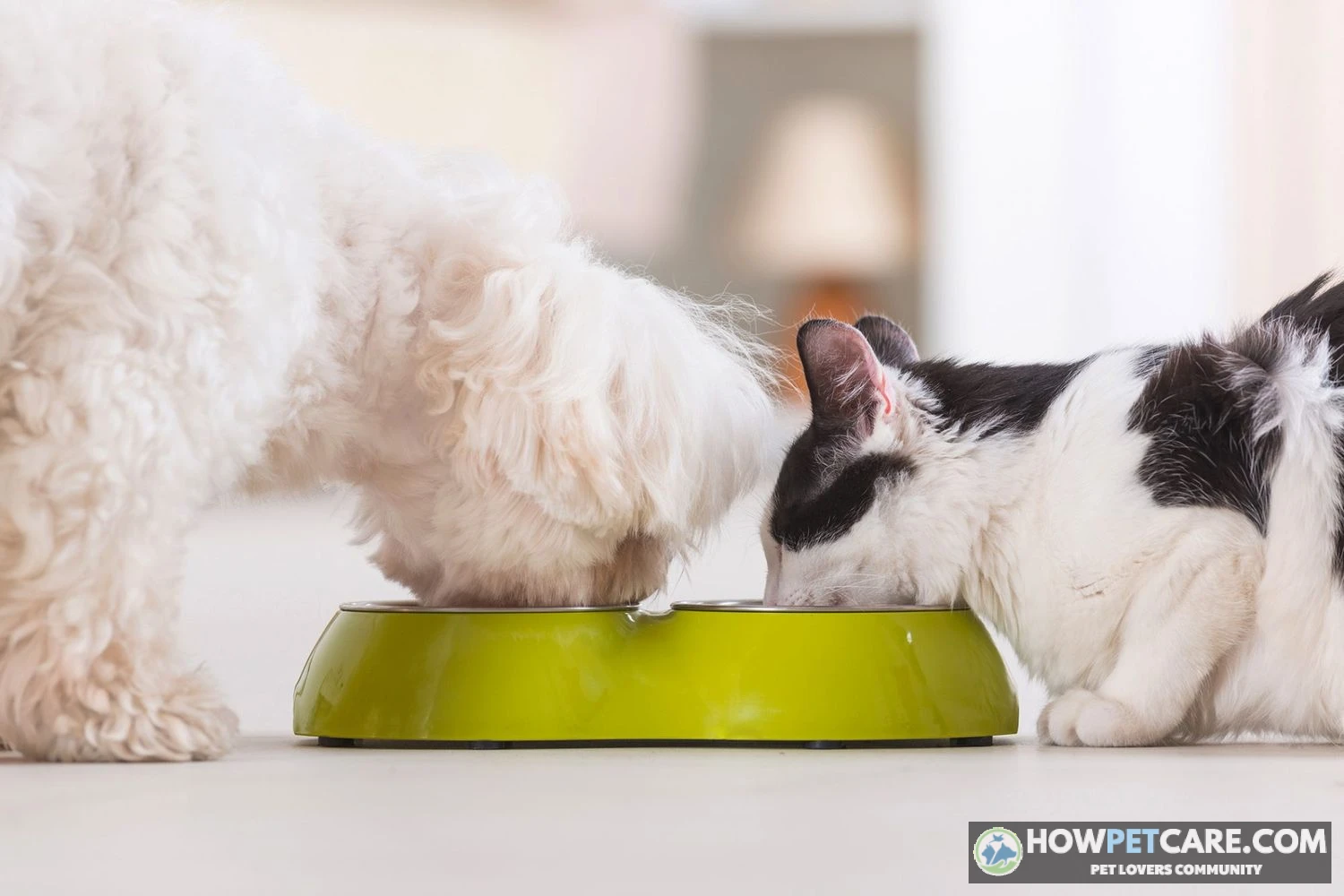
- Opportunity: Free-fed bowls at floor level, unsupervised access, and multi-pet competition can all lead to raids.
- Reinforcement: Each successful raid strengthens the habit.
- Underlying causes: True hunger, an overly restrictive diet, boredom, or a medical increase in appetite can play a part. Mention it to your vet if your dog seems constantly hungry.
How to Stop Your Dog From Eating Cat Food: A Complete Multi-Pet Prevention Plan
Layer 1: separate the spaces
Feed the cat in a separate room, behind a baby gate with a cat-sized gap (or a gate the cat can jump but the dog cannot), behind a microchip cat door, or on an elevated surface the dog can’t reach (counter, sturdy shelf, top of a cat tree — 4+ feet for large dogs).

Layer 2: control the schedule
Swap free-feeding for timed meals — our guide on how often dogs should eat can help set the schedule. Put the cat’s food down for 15–20 minutes, then pick up the bowl. Feed the dog at the same time in a different location so both are occupied.
Layer 3: use the right feeding hardware
- Microchip/RFID-activated feeder: Only the registered cat’s chip opens the lid.
- Elevated feeding station: A platform or shelf the dog can’t access.
- Feeding crate or enclosure: A pen with a cat-sized entry.
These are generic options, not product recommendations.
Layer 4: train "leave it" and a settle cue
- Hold a treat in a closed fist and say "leave it." The moment the dog looks away, mark and reward from the other hand — repeat 10x.
- Put a treat on the floor under your foot/hand, say "leave it," and reward the dog for ignoring it. Then practice near (not on) the cat’s empty bowl.
- Practice "leave it" near the cat’s actual bowl at mealtime, plus a "go to mat" cue so the dog has a job during cat meals.
- Reward the dog generously every single time it ignores the bowl. Cat food is high-value, so the payoff for ignoring it must compete.
A one-week setup checklist
Day 1 — Map the problem
- ☐ Write down where, when, and how the dog gets to the cat food (floor bowl? free-fed? specific room?)
- ☐ Stop free-feeding today: put the cat’s food down only at set meal times
Day 2 — Create physical separation
- ☐ Choose ONE: feed the cat in a closed room, behind a baby gate (with a cat-sized gap or a high jump), behind a microchip cat door, or on an elevated surface the dog can’t reach (counter, sturdy shelf, top of a cat tree — 4+ ft for large dogs)
- ☐ Set a 15–20 minute pickup timer: cat bowl comes up when the meal ends
Day 3 — Sync the schedules
- ☐ Feed dog and cat at the same times in separate locations so the dog is occupied during cat meals
- ☐ Secure secondary targets: covered trash, closed litter box area, wiped-up crumbs
Day 4 — Add hardware (optional but effective)
- ☐ If needed, set up a microchip/RFID-activated feeder or a feeding crate only the cat can enter — these prevent raids even when you’re not home
Days 5–7 — Train ‘leave it’ (2–3 sessions of 5 min daily)
- ☐ Day 5: Hold a treat in a closed fist; say ‘leave it’; the moment the dog looks away, mark and reward from the other hand — repeat 10x
- ☐ Day 6: Put a treat on the floor under your foot/hand; say ‘leave it’ and reward the dog for ignoring it; then practice near (not on) the cat’s empty bowl
- ☐ Day 7: Practice ‘leave it’ near the cat’s actual bowl at mealtime, plus a ‘go to mat’ cue so the dog has a job during cat meals
- ☐ Reward the dog generously every single time it ignores the bowl — cat food is high-value, so the payoff for ignoring it must compete
Reality check: Barriers solve the problem instantly; training takes 2–4 weeks to be reliable. Use both, and don’t test the training by leaving the bowl down unattended.
1Cats are obligate carnivores requiring a higher protein and fat intake than omnivorous dogs. Why is regular consumption of cat food dangerous for healthy dogs despite cat food being non-toxic?
Cat food is formulated for obligate carnivores, meaning its elevated fat and protein levels exceed a dog's dietary needs and can overload organs or trigger pancreatic inflammation.
2A dog owner discovers their dog finished off a bowl of dry cat food 20 minutes ago. Why do veterinary guidelines advise AGAINST inducing vomiting at home in this situation?
Cat food is non-toxic, so the mechanical risks of home-induced emesis—such as inhaling vomit into the lungs or injuring the esophagus—are far higher than letting the food pass.
3Which of the following dog-specific factors or ingestion circumstances automatically require a prompt call to a vet or animal poison control, regardless of how small the portion of cat food was?
Puppies have specific growth requirements and delicate digestive systems, lowering the safety threshold for high-fat dietary disruptions.
4When training a dog using the 'leave it' cue to prevent cat food raids, how should rewards be delivered during practice sessions?
Rewarding from the opposite hand reinforces that ignoring the target object yields a reward, keeping the off-limits item strictly off-limits.
5Aside from immediate digestive upset, what long-term health risk is associated with the high calorie density of cat food when consumed regularly by dogs?
Cat food's high calorie density easily leads to excess calorie intake in dogs, driving weight gain that significantly reduces overall lifespan.
6A dog consumed cat food earlier in the day. Over the next 24 hours, the dog vomits 3 times, refuses its dinner, and appears quieter than usual. What is the recommended course of action according to triage guidelines?
Multiple vomiting episodes (2–3 in 24 hours) combined with lethargy and loss of appetite move the dog out of 'home monitoring' and into requiring a same-day vet call.
7How do the AAFCO baseline nutrient minimums for adult cat food compare to those for adult dog food on a dry-matter (DM) basis?
Cats require significantly higher baseline protein levels to supply 11 essential amino acids needed by obligate carnivores.
Your Action Checklist: What to Do Next Based on What Happened
Decision checklist by scenario
- A few bites, healthy adult dog: Log it, watch for 24 hours, and fix the access point today.
- Large amount, OR dog is small/young/old/high-risk: Call your vet or an animal poison hotline now with weight, amount, and product details.
- Red-flag symptoms appear (repeated vomiting, prayer position, bloody stool, collapse, obstruction signs): Go to an emergency vet immediately.
- Keeps happening: Put the prevention plan into practice and discuss your dog’s weight, diet, or appetite with your veterinarian.
Questions to bring to your veterinarian
- Given my dog’s weight, breed, and history, what amount of cat food would you consider a threshold for concern?
- Should we run a baseline pancreatic lipase or liver/kidney panel after this incident?
- Is my dog’s current diet appropriate, would a vet-recommended dog food be a better fit, or could hunger be driving the raids?
- What is your preferred poison-control hotline and after-hours emergency clinic?
- Can you review my prevention setup (gate height, feeder type, training progress) for gaps?
Keep a simple incident note (time, amount, type, symptoms) to share with the vet. Then use what you learned from the raid to make the cat’s food inaccessible to your dog.
FAQ
Can dogs eat cat food in a pinch or for one meal in an emergency?
A single meal of plain adult cat food is usually tolerated by a healthy adult dog if nothing else is available, though it may cause loose stools. Avoid it for dogs with pancreatitis, kidney or liver disease, or sensitive stomachs, and return to dog food as soon as possible.
Can a dog die from eating cat food?
Death from cat food alone is very rare. The main dangers are severe pancreatitis, particularly in predisposed dogs, or complications from swallowing packaging or cans, so persistent vomiting or abdominal pain needs urgent veterinary care.
Can cats eat dog food too?
Occasional nibbles are usually not harmful, but dog food lacks the taurine and other nutrients cats need, so it should not be a regular diet. Long-term feeding of dog food to cats can cause serious deficiencies.
Can dogs eat cat treats?
A cat treat or two is usually fine for a healthy dog, but treats are rich and calorie-dense. Check for ingredients your vet has flagged for your dog and avoid making them routine.
Is it normal for a dog to have diarrhea after eating cat food?
Yes, loose stools within a day are common because of the higher fat and richness. Call your vet if diarrhea lasts more than 24 hours, contains blood, or comes with vomiting, lethargy, or poor appetite.
Should I change my dog’s food if he keeps stealing the cat’s?
Not necessarily, since the cause is usually smell and access rather than hunger. Fix access first, and talk to your vet if your dog seems constantly hungry or is losing or gaining weight.