

Yes, dogs can have watermelon — plain red, yellow, or orange flesh only, with the rind, white pith, and seeds removed. Serve small bite-size pieces as an occasional treat within the 10% daily treat allowance. Skip juice and flavored products, and call your vet if your dog swallows rind or many seeds.
Yes, Dogs Can Have Watermelon Flesh: Seedless, Rindless, and in Small Portions
Yes, dogs can eat plain watermelon flesh in small portions, as long as you remove the rind and seeds.
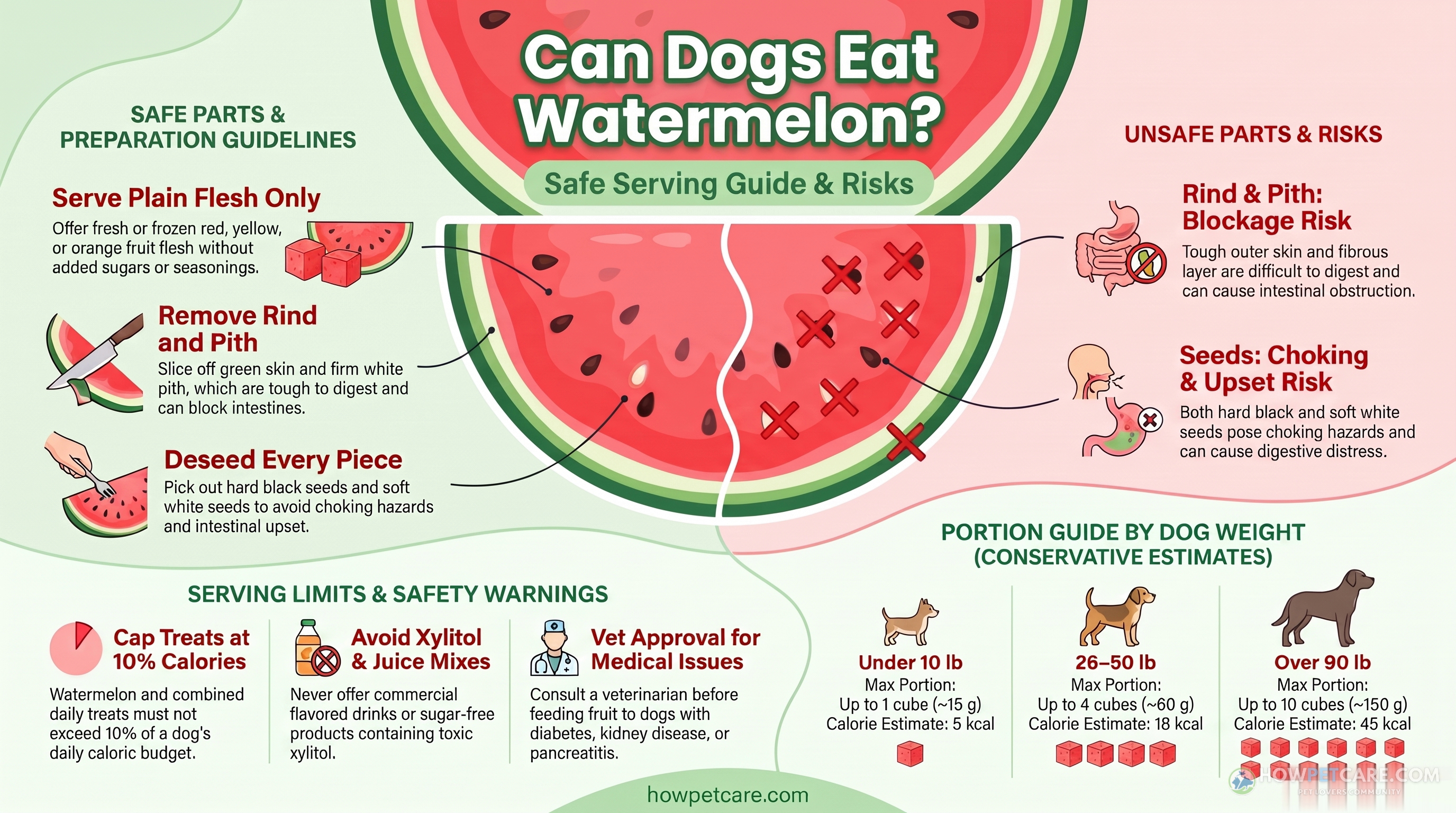
- Remove the green rind, white pith, and seeds before serving.
- Count watermelon toward your dog’s daily treat allowance.
- Serve plain flesh, fresh or frozen, not sweetened or flavored products.
If your dog has already swallowed rind or a pile of seeds, see the triage section below. Trouble breathing, persistent retching, or repeated vomiting requires urgent veterinary care.
Is watermelon good for dogs? The real benefits
Watermelon is about 90% to 92% water and provides small amounts of vitamins A and C, potassium, and other nutrients. It can add some moisture to your dog’s diet, but it’s a treat—not a replacement for fresh drinking water or complete dog food.
The fruit also contains natural sugar. Even though watermelon is relatively low in calories, large servings can upset your dog’s digestion, so portion size matters.
Which Parts of Watermelon Are Safe? Flesh, White Pith, Seeds, and Rind Compared
| Part of watermelon | Safe for dogs? | Main risk | What to do |
|---|---|---|---|
| Red, yellow, or orange flesh | Generally safe | Too much can upset digestion | Serve plain, in small pieces |
| White pith between flesh and skin | Avoid | Tough, fibrous texture | Trim it away with the rind |
| Soft white seeds | Lower risk; best removed | May contribute to digestive upset in quantity | Pick them out, especially for small dogs |
| Hard black seeds | Avoid | Choking or blockage risk, especially in quantity | Remove before serving |
| Green rind or skin | Do not serve | Choking, digestive upset, or intestinal blockage | Cut it off completely |
Rind is difficult to digest. Both rind and seeds can pose a blockage risk, particularly for smaller dogs.

Soft white seeds vs. hard black seeds
The soft, pale seeds sometimes found in seedless watermelon are immature and generally less concerning than hard, mature black seeds. Remove both when preparing a serving, but don’t panic if your dog swallows one soft seed.
A seed or two is generally less concerning for a large dog than a pile of seeds is for a small dog. There is no reliable seed count that makes an obstruction inevitable: the dog’s size, the amount swallowed, and any symptoms all matter. Call your veterinarian if a small dog ate many seeds or you’re unsure how much was eaten.
Is the white pith safe?
Treat the firm white layer as part of the rind and trim it away. A thin trace left on a piece of flesh is not usually a reason to panic. A swallowed chunk is more concerning because it can be tough to digest.
Why seedless watermelon still needs a check
Seedless watermelon is convenient, but it can still contain soft white seed traces and occasionally a hard seed. Check the flesh before serving, particularly if your dog is small.
How Much Watermelon Can a Dog Have? Portions and Calories by Weight
Treats, including watermelon, should provide no more than about 10% of a dog’s daily calories; at least 90% should come from a complete and balanced diet. That’s one shared budget for all treats, not a separate allowance for each kind.
Portion table by dog weight, with calories
These are conservative suggested servings for healthy adult dogs, not guaranteed allowances or targets. Calorie needs vary, and even a listed serving may be too much if other treats have used up the day’s budget. Ask your veterinarian for an individual calorie target, especially if your dog needs to lose weight.
The estimates use roughly 30 calories per 100 grams of raw watermelon: multiply the serving weight in grams by 0.3. A cup of diced watermelon contains about 46 to 50 calories. For consistency, a 1-inch cube weighs roughly 15 grams. Pieces vary, so use a kitchen scale when precision matters. Cut them into smaller bites for small dogs.
| Dog weight | Suggested serving: cubes and grams | Approximate calories | First-time serving |
|---|---|---|---|
| Under 10 lb | Up to 1 cube, about 15 g, cut into tiny pieces | 5 | Start with half that amount |
| 10–25 lb | Up to 2 cubes, about 30 g | 9 | Start with 1 cube, cut smaller |
| 26–50 lb | Up to 4 cubes, about 60 g | 18 | Start with 1–2 cubes |
| 51–90 lb | Up to 8 cubes, about 120 g | 36 | Start with 2 cubes |
| Over 90 lb | Up to 10 cubes, about 150 g | 45 | Start with 2 cubes |
For example, if your veterinarian recommends 400 calories a day, the combined treat budget is about 40 calories. A 30-gram serving of watermelon uses roughly 9 of those calories, leaving about 31 for other treats.
How often is too often?
Most healthy dogs can have a small serving regularly if they tolerate it and all treats fit within their calorie budget. Watermelon can also add variety to a treat rotation that already includes safe strawberry portions for dogs. If watermelon causes loose stool, stop offering it and ask your veterinarian about symptoms that persist.
How to Prepare and Serve Watermelon to Your Dog Safely, Step by Step
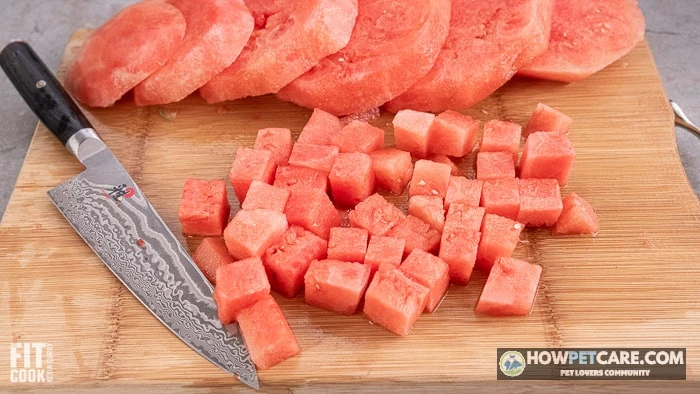
5-step prep method
-
Wash and cut
Wash the outside of the melon before cutting it open.
-
Remove the rind
Slice away the green skin and firm white pith.
-
Check for seeds
Pick out hard black seeds and soft white seeds.
-
Size the pieces
Cut flesh into bite-size pieces appropriate for your dog; use especially small pieces for tiny dogs and fast eaters.
-
Start small
Offer a small first serving and watch over the next 24 hours for vomiting or loose stool.
Refrigerate cut fruit promptly and discard leftovers after a few days. Serve it plain, without added sugar, salt, or sweeteners.
Frozen watermelon treat ideas
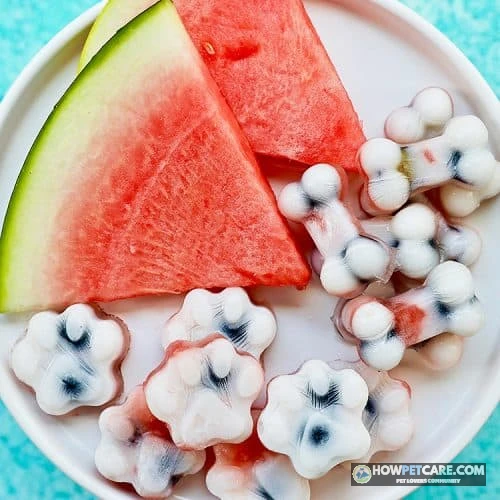
Freeze small pieces of prepared flesh, or blend the flesh and freeze it in small molds. Supervise your dog, since hard frozen chunks can be a choking hazard, especially for dogs that gulp. Choose appropriately small pieces or let them soften before serving. The same size-and-supervision logic applies to blueberry portions by dog size if you rotate other fruit treats. Avoid adding yogurt unless your veterinarian agrees it’s suitable for your dog.
My Dog Already Ate Watermelon Rind or Seeds: What to Do Right Now
A swallowed seed is not automatically an emergency. A large piece of rind, a pile of seeds, or concerning symptoms deserve more attention because rind and seeds can contribute to choking or intestinal blockage. If your dog is struggling to breathe, go to an emergency veterinarian immediately.
First 15 minutes: what to do
- Take away the remaining melon, rind, and seeds so your dog can’t eat more.
- Estimate what was swallowed, when it happened, and your dog’s weight. Keep any packaging if a flavored product was involved.
- Keep your dog calm and make fresh water available. Don’t force food or water.
- Call your veterinarian promptly if your dog is tiny, swallowed a large or sharp-edged piece, ate a pile of seeds, has had gastrointestinal surgery, or you can’t tell how much is missing. Don’t wait for symptoms.
- Don’t induce vomiting or give home remedies unless a veterinarian specifically instructs you to do so.

Watch at home vs. emergency vet: symptom criteria
If a medium or large dog swallowed only a small bite of rind or a few seeds and is acting normally, monitoring at home may be reasonable. Offer normal meals and water, and check appetite, energy, and stools. Contact your veterinarian if you’re unsure; even a small amount can be more concerning in a toy breed.
Call your veterinarian the same day if vomiting, soft stool, or reduced appetite follows the exposure. If your dog vomits repeatedly, becomes weak, has a swollen or painful belly, repeatedly strains without producing stool, can’t keep water down, or retches without bringing anything up, seek emergency care rather than waiting for a routine appointment. Lack of stool alone doesn’t prove a blockage, but it warrants veterinary advice, especially alongside other symptoms.
Timeline: hour 1, day 1, days 2–3
| Time since eating | Watch at home if | Call your vet if | Go to an emergency vet now if |
|---|---|---|---|
| First hour | A medium or large dog ate a small amount and is acting normally | A tiny dog ate rind, a large amount is missing, or your dog has a relevant medical history | Your dog is choking, struggling to breathe, collapsing, or repeatedly retching |
| First 24 hours | Appetite, energy, and stools remain normal | Vomiting occurs once, stool becomes soft, or appetite falls | Vomiting repeats, the belly swells or hurts, or water cannot be kept down |
| Days 2–3 | Your dog remains comfortable and behaves normally | Bowel movements stop or intermittent digestive symptoms develop | Your dog has marked lethargy, a painful or swollen belly, repeated vomiting, or persistent unproductive straining |
Digestive symptoms may develop over hours or the following few days, but timing is unpredictable. A normal first day doesn’t guarantee there is no obstruction. Your veterinarian may recommend a different monitoring period based on what was swallowed. Passing a stool doesn’t necessarily rule out a partial blockage.
Your regular veterinarian or an emergency veterinary clinic can assess the amount and your dog’s size. For a suspected toxic ingredient in a flavored product, you can also contact ASPCA Animal Poison Control at 888-426-4435; a consultation fee may apply.
Is Watermelon Juice Safe for Dogs? Sugar and the Xylitol Warning
Fresh vs. store-bought juice
A little plain juice blended or pressed from prepared watermelon flesh isn’t inherently toxic to most healthy dogs, but fresh water is the better drink. Juice is easy to consume quickly, and straining out pulp removes fiber without removing the fruit’s natural sugar. A small spoonful is plenty for an occasional taste; count it as a treat and skip it for dogs whose veterinarian restricts sugar.
Pulp-free juice isn’t automatically safer or more dangerous than juice with pulp; the ingredients and amount matter. Store-bought juices and flavored drinks may contain added sugar or sweeteners. Check the label, and don’t share them if you can’t confirm every ingredient.
Watermelon-flavored products and xylitol
Xylitol, sometimes called birch sugar, is highly toxic to dogs and can cause a dangerous drop in blood sugar and liver damage. If your dog may have eaten a product containing it, call an emergency veterinarian or animal poison control immediately, even if your dog looks normal. Do not wait for symptoms.
Watermelon-flavored doesn’t mean a product is safe for dogs. Check ingredient lists on sugar-free gum, mints, candy, drink mixes, flavored waters, desserts, sweeteners, medications, and supplements. These product types don’t all contain xylitol, but some formulations may. Prepared watermelon flesh is the simpler choice; never assume a flavored product is safe just because its label mentions fruit.
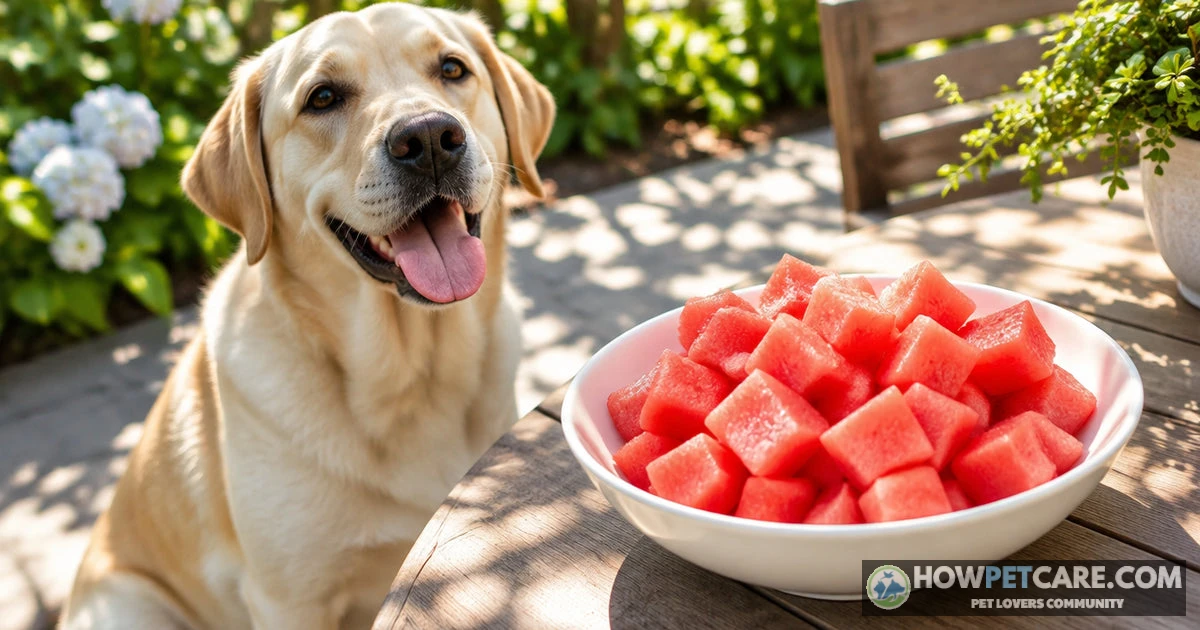
Watermelon for Puppies, Diabetic, Overweight, and Kidney-Disease Dogs
This article offers general information, not a diagnosis or an individual feeding plan. Ask your veterinarian before changing the diet of a dog with a medical condition.
Puppies
Puppies that have transitioned to solid food can have a tiny amount of plain flesh with the rind and seeds removed. Cut it into very small pieces and introduce it slowly. Balanced puppy food should remain their main source of nutrition; ask your veterinarian about portions for a very young or tiny puppy.
Diabetic and overweight dogs
Watermelon contains natural sugar, so ask your veterinarian before feeding it to a diabetic dog. Avoid offering juice unless your veterinarian advises otherwise. For an overweight dog, a measured piece of watermelon may replace a higher-calorie treat, but it still counts toward the daily calorie allowance. Dogs with sensitive digestion may need smaller portions or a different treat.
If your dog has a history of pancreatitis or follows a prescribed diet, check with your veterinarian before introducing a new food. Stop feeding watermelon if it causes vomiting or diarrhea.
Kidney disease and potassium
Watermelon contains potassium. Some dogs with kidney disease need individual adjustments to potassium or other nutrients, depending on their bloodwork and prescribed diet. Don’t assume the table portion is appropriate; ask the veterinarian managing your dog’s kidney disease first.
Yellow Watermelon, Cantaloupe, and Honeydew: How Other Melons Compare for Dogs
Yellow and orange watermelon flesh can be served much like red flesh: offer plain, ripe pieces in small amounts, with the rind and seeds removed. Cantaloupe and honeydew flesh can also be offered in small amounts once the rind and seeds are removed. Introduce any new melon slowly and count it as a treat.
| Melon | Flesh | Rind and seeds | Serving approach |
|---|---|---|---|
| Red watermelon | Generally safe | Remove | Small, plain pieces |
| Yellow or orange watermelon | Generally safe | Remove | Same preparation as red watermelon |
| Cantaloupe | Generally safe | Remove | Small, plain pieces |
| Honeydew | Generally safe | Remove | Small, plain pieces |
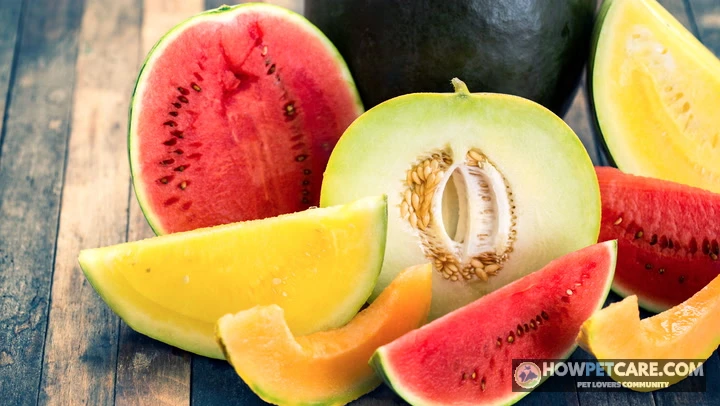
All three types contain water and natural sugars; none replaces the water bowl. Before sharing an unfamiliar fruit, check a dog-specific fruit safety guide. Some fruits and other human foods are toxic to dogs.
Before You Serve It: A Quick Watermelon Safety Checklist and Next Steps
Before handing over a piece, check that:
- The green rind and firm white pith are removed.
- You have picked out the seeds, including pale seed traces where practical.
- The flesh is plain and cut into pieces your dog can handle without gulping.
- The serving fits your dog’s calorie budget alongside other treats.
- You have started with a smaller amount if it’s your dog’s first taste.
- You have checked with your veterinarian first if your dog has diabetes, kidney disease, a prescribed diet, or another relevant health concern.
If your dog already ate rind or seeds, estimate the amount and use the triage section to decide whether to monitor, call your veterinarian, or seek emergency care. If the amount is unknown or your dog is small, a prompt call is the safer next step.
FAQ
Can dogs eat watermelon skin?
No. The green skin is tough and hard to digest, and it can cause choking or intestinal blockage, especially in small dogs. Cut off the skin and the white pith before serving.
Can dogs eat frozen watermelon?
Yes, as long as the flesh is seedless and rindless. Cut the frozen pieces small enough that your dog cannot swallow them whole, and supervise dogs that gulp their treats.
Can dogs have watermelon every day?
A small portion is not harmful for most healthy dogs, but watermelon should stay within the 10% treat allowance. Offering it occasionally and varying treats is a safer habit than daily servings.
Does watermelon count as water for my dog?
Watermelon is mostly water and can add a little hydration, but it is not a substitute for a fresh water bowl. Because it also contains sugar, offer it as a treat, not as a way to meet hydration needs.
What should I do if my dog gets diarrhea after eating watermelon?
Stop giving watermelon and offer water. Mild loose stool often settles within a day. Call your veterinarian if it lasts longer, includes vomiting or lethargy, or if your dog is a puppy or a small breed.
Can dogs eat seedless watermelon?
Yes. Seedless watermelon is a good choice because it has far fewer hard black seeds, but it can still contain small soft white seeds, so check each piece before serving.