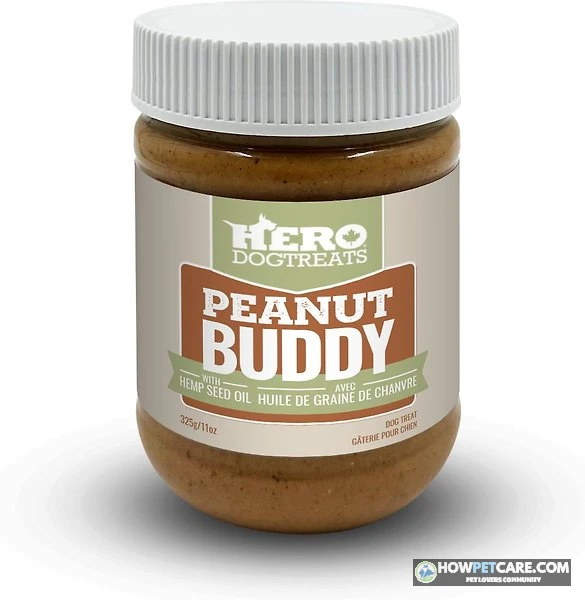

Pick peanut butter dog treats only after checking the exact current label: no xylitol or birch sugar, calories per treat that fit the 10% daily treat budget, and a format your dog can chew. Then compare identical products by cost per ounce across retailers.
Before you add peanut butter dog treats to your cart, check two things: scan the ingredient list for xylitol or birch sugar—plain, xylitol-free peanut butter is safe for most dogs, but xylitol is toxic—and keep treats within about 10% of your dog’s daily calories. This guide shows you how to run both checks, compare products across retailers, and choose a format that suits your dog. Verified current data—product labels, retailer prices, calorie counts, guaranteed analyses, ratings, and review counts—wasn’t available for this guide. Rather than invent a ranked shopping list or label products confirmed xylitol-free without checking, use the comparison framework below to verify a specific listing before buying.
Best Peanut Butter Dog Treats: Quick Picks Compared
There’s no single best treat for every dog. A small, breakable piece can work well for training, while a soft treat may be easier for a senior to chew. A large biscuit, on the other hand, may use up too much of your dog’s daily treat allowance. Milk-Bone sells peanut butter-flavored biscuits, soft treats, and chews, but not every product necessarily contains real peanut butter, so check the individual ingredient list. Greenies Pill Pockets and Zuke’s Mini Naturals Peanut Butter & Oats appear in a retailer’s ranked roundup, but that listing alone doesn’t establish current ingredients or suitability for your dog.
The product evidence provided doesn’t support a current, verified comparison of six or more treats with prices, cost per ounce, calories, guaranteed analysis, ratings, and review patterns. Those details can change by listing and package size. Check the product label and retailer page at checkout rather than relying on outdated or unverified numbers.

Best overall and best value
Choose an overall pick only after confirming its current ingredient statement, calories per treat, package weight, and intended life stage. To compare value, divide the listed price by net ounces. Compare the same package size where possible, and account for shipping or subscription conditions. A low bag price doesn’t necessarily mean the lowest cost per ounce.
Best peanut butter dog treats for small dogs
Look for a small-breed format or a treat that breaks cleanly into smaller pieces. Check the label for age guidance, and supervise your dog while eating. A large, hard biscuit may be difficult to portion and could be a poor fit for a small dog or one with dental problems.

Best lower-calorie or limited-ingredient option
Use the calorie count for the exact product—not an estimate from another flavor or size. If your dog has food sensitivities, ask your veterinarian before introducing a new treat. Peanut-butter flavor doesn’t guarantee a short or suitable ingredient list.
Pick the right treat by use case in under a minute:
- Training: Compare calories per piece and choose a treat small enough for frequent rewards. Break it into smaller portions only if it won’t crumble or create a choking risk.
- Small dogs: Choose a small, easy-to-chew piece or a biscuit that can be safely divided.
- Large dogs: A full-size biscuit may be practical, but check its calories. A larger dog still has a daily treat allowance.
- Seniors: Consider a softer texture if chewing is difficult. Avoid hard treats if dental or swallowing issues make them unsuitable.
- Budget: Compare cost per ounce and total checkout cost, not just the shelf price.
- Medical or weight concerns: Ask your veterinarian whether peanut-based treats fit your dog’s diet.
Check Peanut Butter Dog Treats for Xylitol Before You Buy
Xylitol is toxic to dogs, even in small amounts. Never give your dog a treat or peanut butter that contains it. If your dog may have eaten xylitol, contact a veterinarian or animal poison-control service immediately. Don’t wait for symptoms.
A label-check routine for treats and peanut butter jars
Check every treat package and peanut butter jar, even from familiar brands. Formulas and packaging can change.
- Read the ingredient list instead of relying on front-of-package claims such as “natural” or “no artificial flavors.”
- Look for “xylitol” and “birch sugar.” If you can’t identify a sweetener, don’t feed the product until you confirm its ingredients with the manufacturer or your veterinarian.
- Take extra care with products labeled sugar-free, keto, low-carb, or diabetic-friendly. Those claims don’t identify the sweetener.
- Read the entire ingredient statement, including any “less than 2%” section.
- For homemade treats, use unsweetened peanut butter only after checking the jar’s current label. Don’t assume a brand or product line is safe without checking the exact product.
- Check the other ingredients, too. Xylitol-free doesn’t automatically mean low in fat, salt, sugar, or calories—or appropriate for every dog.

A product’s name, flavor, or “natural” claim can’t replace its ingredient list. Brands may sell several formats with different ingredients. Milk-Bone, for example, offers peanut butter-flavored biscuits, soft treats, and chews.
What to do after possible xylitol exposure
If you suspect your dog has eaten xylitol, call your veterinarian or an animal poison-control service immediately. Keep the package nearby and report the product, estimated amount, and time eaten. Follow professional instructions rather than trying to treat the exposure at home.
Xylitol exposure is urgent. Contact a veterinarian or animal poison-control service immediately; do not wait for symptoms.
How to Compare Safe Brands, Nutrition, and Retailer Prices
The information available here isn’t enough to confirm current ingredient lists for specific treats or peanut butter brands. So no brand or treat below is labeled verified xylitol-free. Confirm the exact product’s current label before buying; a retailer’s product title or an old review doesn’t prove the current formula.
Use this table as a shopping worksheet. Fill in each field from the package or current retailer listing. If a value isn’t available, leave it blank rather than estimating.
| Product | Best for | Verified xylitol status and source date | Package size | Price and retailer | Cost per ounce | Rating and review count | Guaranteed analysis: protein/fat/fiber/moisture | Calories per treat | Notable drawback |
|---|---|---|---|---|---|---|---|---|---|
| Milk-Bone peanut butter-flavored biscuit (exact product) | Medium or large dogs that crunch hard biscuits | Check current package; record date | Net weight | Compare Chewy, Walmart, PetSmart, and Amazon | Price divided by net ounces | Record retailer and date | Copy from product label | Copy from label or manufacturer | A large, hard biscuit can overshoot a small dog’s portion and may not break cleanly |
| Milk-Bone peanut butter-flavored soft treat (exact product) | Seniors or dogs needing a softer texture | Check current package; record date | Net weight | Compare Chewy, Walmart, PetSmart, and Amazon | Price divided by net ounces | Record retailer and date | Copy from product label | Copy from label or manufacturer | Flavor naming doesn’t confirm real peanut butter—check the ingredient list |
| Milk-Bone peanut butter-flavored chew (exact product) | Dogs needing a longer-lasting chew | Check current package; record date | Net weight | Compare Chewy, Walmart, PetSmart, and Amazon | Price divided by net ounces | Record retailer and date | Copy from product label | Copy from label or manufacturer | A chew is hard to divide; count the whole piece toward the calorie budget |
| Greenies Pill Pockets (exact flavor) | A soft, moldable piece; confirm the intended use | Check current package; record date | Net weight | Compare Chewy, Walmart, PetSmart, and Amazon | Price divided by net ounces | Record retailer and date | Copy from product label | Copy from label or manufacturer | Roundup placement doesn’t verify current ingredients or fit for your dog |
| Zuke’s Mini Naturals Peanut Butter & Oats | Training rewards; small pieces for frequent use | Check current package; record date | Net weight | Compare Chewy, Walmart, PetSmart, and Amazon | Price divided by net ounces | Record retailer and date | Copy from product label | Copy from label or manufacturer | A ranked listing isn’t proof of the current formula—recheck the label |
| Any other exact product and flavor | Match to your dog | Check current package; record date | Net weight | Check available listings | Price divided by net ounces | Record retailer and date | Copy from product label | Copy from label or manufacturer | Verify against recent reviews; leave fields blank rather than estimating |

Enter the date you verify each figure; prices, ratings, and label details are current only as of the date you check them.
What the guaranteed analysis tells you
The guaranteed analysis lists minimum crude protein and maximum crude fat, crude fiber, and moisture. It can help you compare products, but it doesn’t replace the calorie count or ingredient list. Copy the values from the exact package; don’t assume two flavors, sizes, or product formats share the same analysis.
How to compare the same treat across retailers
Compare the same brand, product name, flavor, and package weight across Chewy, Walmart, PetSmart, and Amazon. Record the displayed price and any shipping or subscription terms, then calculate price per ounce by dividing the price by net ounces. Ratings and review counts apply to a particular listing and date; they aren’t fixed product specifications.
To spot drawbacks, sort recent reviews from lowest-rated first and look for repeated complaints. Separate recurring issues—such as a hard texture, crumbling, a strong smell, or a small bag—from isolated comments about an individual dog’s taste. Check another retailer before treating a complaint as a consistent product flaw. The available evidence shows that a retailer’s roundup uses price, unit price, ratings, and review counts, but doesn’t include enough current review text to support specific complaints.
Choose Treat Size and Daily Portions for Your Dog
Treats should account for no more than 10% of a dog’s daily calories; the rest should come from complete and balanced food. Use your dog’s actual daily calorie target and the calories per treat on the label. Counting treats alone won’t give you a reliable portion guide because treats vary in size and calories.
Calculate the portion in two steps:
- Treat calorie budget = daily calorie target × 0.10.
- Maximum whole treats = treat calorie budget ÷ calories per treat; round down.
For example, if a veterinarian-provided daily target is 900 calories, the treat budget is 90 calories. If each treat has 16 calories, 90 ÷ 16 is 5.625, so the maximum is five whole treats. Give fewer if your dog also gets snacks or training rewards that day.
These daily calorie figures are illustrative estimates, not individual feeding targets. They assume a typical neutered adult at a healthy weight; actual needs vary. Ask your veterinarian for your dog’s target, especially for puppies, highly active dogs, or dogs above a healthy weight.
| Dog size or life stage | Treat format to consider | Product calories per treat | Daily calorie allowance for treats | Portion calculation | Cautions |
|---|---|---|---|---|---|
| 15 lb small adult | Small or safely divided pieces | Use package value | About 45 kcal if daily needs are 450 kcal | At 2 kcal each: up to 22; at 16 kcal each: up to 2 | Estimates only; round down and include all treats |
| 40 lb medium adult | Small training treats or measured biscuit portions | Use package value | About 90 kcal if daily needs are 900 kcal | At 2 kcal each: up to 45; at 16 kcal each: up to 5 | Daily calorie needs vary |
| 70 lb large adult | Suitable-size biscuit or training pieces | Use package value | About 150 kcal if daily needs are 1,500 kcal | At 2 kcal each: up to 75; at 16 kcal each: up to 9 | Avoid using size as a reason to ignore calories |

Small dogs, puppies, large dogs, and seniors
For small dogs, choose a manageable piece and supervise eating. Puppies need treats suited to their age and chewing ability; follow the product’s age guidance and ask your veterinarian about very young puppies or health concerns. Large dogs may manage bigger biscuits, but their calorie budget still applies. Seniors with worn teeth or swallowing difficulties may do better with a softer texture. Avoid hard treats if your dog can’t chew them safely.
Estimate portions from calories, not treat count alone
Count every treat, including training rewards and homemade snacks, toward the same daily allowance. The 10% limit is a general guideline, not a prescription for a dog with a medical condition. If the label doesn’t state calories per treat, contact the manufacturer rather than guessing.
When Peanut Butter Treats Need Extra Caution
Peanut butter can add substantial calories and fat to your dog’s diet. Dogs with diabetes, obesity, pancreatitis, kidney disease, or another prescribed diet need individualized veterinary advice before having peanut butter treats. Don’t rely on a universal treat count or assume a “natural” or “low-calorie” label makes a product suitable for a specific condition.
Diabetes, weight management, pancreatitis, and kidney disease
Ask your veterinarian whether the ingredients and nutrition fit your dog’s treatment plan. For weight management, your veterinarian can help set a calorie target and identify suitable rewards. For pancreatitis or kidney disease, ask about relevant dietary restrictions before offering a treat. Choose a lower-fat or portion-controlled option with professional guidance; don’t assume marketing claims mean it’s safe.

Peanut allergy signs and substitute ingredients
Possible allergic reactions include itching, hives, facial swelling, vomiting, or diarrhea. Facial swelling or difficulty breathing requires emergency veterinary care. Digestive upset can have other causes, so consult a veterinarian rather than diagnosing an allergy from one symptom.
If peanuts aren’t suitable, ask your veterinarian about alternatives, such as a single-ingredient treat or dog-safe produce that fits your dog’s diet. Food intolerance and a diagnosed allergy aren’t interchangeable. Check a substitute for the same ingredient and calorie concerns as any other treat.
Make a Small Batch of Homemade Peanut Butter Dog Treats
Homemade treats give you control over the ingredients, but they still count toward the daily calorie budget. This no-bake option uses three basic ingredients. Use it only if each ingredient suits your dog, and check the peanut butter jar for xylitol before mixing.
Quick no-bake dog treat recipe
Three-ingredient no-bake peanut butter dog treats
Makes about 20 small balls. Calories per ball will vary by ingredient brand and final size, so don’t rely on an unverified estimate.
Ingredients
- 1 cup unsweetened peanut butter, confirmed xylitol-free on the current label
- 1 ripe banana, mashed, or 1/2 cup plain pumpkin purée
- 1 1/2 to 2 cups rolled oats, pulsed into a coarse flour

Method
- Mash the banana in a bowl and stir in the peanut butter.
- Add the oats gradually until the mixture holds together and isn’t sticky.
- Roll into small balls and place them on a lined tray.
- Refrigerate for at least 30 minutes to firm up. Serve a small portion and introduce the new ingredients gradually.

This recipe isn’t automatically suitable for dogs on a prescribed low-fat diet, with peanut allergies, or with other dietary restrictions. Grain-free treats aren’t automatically healthier; choose ingredients for your dog’s needs, not because of a label trend.
Storage, freezing, and mold prevention
Store the treats in a clean, airtight container in the refrigerator and use them within seven days. Freeze extras as frozen dog treats for up to three months and thaw them in the refrigerator. These are conservative storage directions for this simple homemade mixture, not a guarantee against spoilage. Discard treats with mold, an unusual sour smell, or a slimy surface. Don’t taste-test food that may have spoiled.
Use This Checklist to Pick and Buy the Right Treat
Before buying, check the exact product and package:
- Read the current ingredient list and confirm it contains no xylitol or birch sugar.
- Check calories per treat and calculate a portion from your dog’s daily calorie target. Keep all treats within about 10% of daily calories.
- Compare net weight, cost per ounce, shipping, and package size across retailers; verify that you’re comparing the same product and flavor.
- Confirm the format suits your dog’s size, age, chewing ability, and dietary needs.
- Ask your veterinarian before giving peanut butter treats to a dog with diabetes, obesity, pancreatitis, kidney disease, allergies, or a prescribed diet.
- Recheck the label with every purchase. A familiar product may have a new package or ingredient statement.

Choose a listing that passes the safety and suitability checks and offers the best verified total cost—not simply the highest rating or lowest bag price. Current product-specific prices and label details aren’t established in the available evidence, so verify them on the package and retailer listing before checkout.

| Product | Best for | Verified xylitol status and source date | Package size | Price and retailer | Cost per ounce | Rating and review count | Guaranteed analysis: protein/fat/fiber/moisture | Calories per treat | Notable drawback |
|---|---|---|---|---|---|---|---|---|---|
| Milk-Bone peanut butter-flavored biscuit (exact product) | Medium or large dogs that crunch hard biscuits | Check current package; record date | Net weight | Compare Chewy, Walmart, PetSmart, and Amazon | Price divided by net ounces | Record retailer and date | Copy from product label | Copy from label or manufacturer | A large, hard biscuit can overshoot a small dog's portion and may not break cleanly |
| Milk-Bone peanut butter-flavored soft treat (exact product) | Seniors or dogs needing a softer texture | Check current package; record date | Net weight | Compare Chewy, Walmart, PetSmart, and Amazon | Price divided by net ounces | Record retailer and date | Copy from product label | Copy from label or manufacturer | Flavor naming doesn't confirm real peanut butter—check the ingredient list |
| Milk-Bone peanut butter-flavored chew (exact product) | Dogshttps://howpetcare.com/peanut-butter-dog-treats/ needing a longer-lasting chew | Check current package; record date | Net weight | Compare Chewy, Walmart, PetSmart, and Amazon | Price divided by net ounces | Record retailer and date | Copy from product label | Copy from label or manufacturer | A chew is hard to divide; count the whole piece toward the calorie budget |
| Greenies Pill Pockets (exact flavor) | A soft, moldable piece; confirm the intended use | Check current package; record date | Net weight | Compare Chewy, Walmart, PetSmart, and Amazon | Price divided by net ounces | Record retailer and date | Copy from product label | Copy from label or manufacturer | Roundup placement doesn't verify current ingredients or fit for your dog |
| Zuke's Mini Naturals Peanut Butter & Oats | Training rewards; small pieces for frequent use | Check current package; record date | Net weight | Compare Chewy, Walmart, PetSmart, and Amazon | Price divided by net ounces | Record retailer and date | Copy from product label | Copy from label or manufacturer | A ranked listing isn't proof of the current formula—recheck the label |
| Any other exact product and flavor | Match to your dog | Check current package; record date | Net weight | Check available listings | Price divided by net ounces | Record retailer and date | Copy from product label | Copy from label or manufacturer | Verify against recent reviews; leave fields blank rather than estimating |
FAQ
Are peanut butter dog treats safe for puppies?
They may be suitable if the ingredients are dog-safe, the product is labeled for the puppy’s age, and the treat is sized to reduce choking risk. Check with your veterinarian about treats for very young puppies or puppies with health concerns.
Can I give my dog peanut butter every day?
Only if it fits your dog’s calorie needs and the peanut butter is free of xylitol and other unsuitable ingredients. Keep all treats within about 10% of daily calories and ask your veterinarian for guidance if your dog has a medical condition.
Can dogs eat peanut butter with palm oil or added salt?
These ingredients are not the same as xylitol, but added salt and rich or high-fat ingredients may make a product a poor choice for some dogs. Review the full label and consult your veterinarian if your dog has dietary restrictions.
Should I use peanut butter or another flavor for training treats?
Choose a small, easy-to-chew treat your dog likes and can eat quickly, while keeping calories and ingredients in mind. For frequent training, tiny pieces or a lower-calorie alternative may be more practical than full-size peanut butter biscuits.