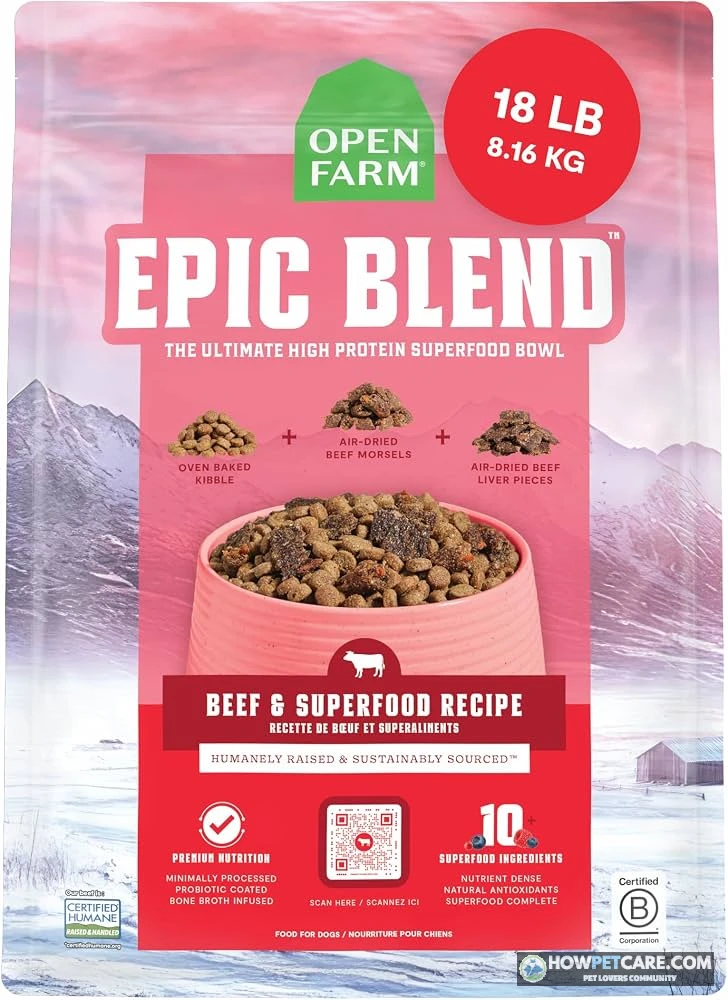

Most adult dog foods contain about 2.5–4.5% crude fiber as fed. Anything above roughly 5% is generally called high fiber, though AAFCO sets no official cutoff. The right choice depends on why you’re adding fiber — mild stool issues may only need a topper, while diabetes, chronic diarrhea, or constipation call for a vet plan.
Most adult dog foods sit around 2.5–4.5% crude fiber as fed. Anything above roughly 5% gets called high fiber, even though AAFCO hasn’t defined an official threshold. The best choice hinges on why you’re adding fiber. A modest topper can smooth out a healthy dog’s occasional loose stool, but diabetes, chronic diarrhea, recurring constipation, or serious weight issues need a vet’s plan.
Fiber helps stool quality, satiety, and gut health, but it won’t cure scooting, diarrhea, or constipation on its own. Before you buy, read the guaranteed analysis, convert fiber to a dry‑matter basis, and match the fiber type to your dog’s issue. The tables that follow separate verified label numbers from data that still needs confirmation — don’t treat an unverified figure as a recommendation.
What Counts as High Fiber Dog Food (and Does Your Dog Need It?)
"High fiber" is a practical label, not an AAFCO nutrient claim. As a rule of thumb, anything above roughly 5% crude fiber as fed counts as high fiber; therapeutic diets can go higher. That single number doesn’t guarantee a good fit — moisture skews the label percentage, and crude fiber only captures part of total dietary fiber.
Dietary fiber is the plant material that escapes digestion in the small intestine. It influences stool bulk, water retention, gut microbes, and the speed of nutrient transit.
The numeric ranges at a glance: normal, high, and therapeutic
| Label figure | Practical interpretation |
|---|---|
| About 2.5–4.5% crude fiber, as fed | Common range for adult foods; not a universal requirement or target |
| Above about 5% crude fiber, as fed | Often described as high fiber, but compare moisture and dry matter before deciding |
| Therapeutic fiber level | Depends on the condition and product; use the veterinary diet’s current label and your vet’s direction |

These ranges are shopping guides, not medical cutoffs. AAFCO doesn’t regulate a "high fiber" claim, and a guaranteed analysis lists crude fiber as a maximum — not a full picture of total dietary fiber. Two foods with identical crude‑fiber numbers can still deliver very different fermentable fiber profiles.
Symptom-to-fiber map: when fiber helps and when it is the wrong lever
| What you notice | Is fiber a reasonable lead? | What to check first |
|---|---|---|
| Soft or inconsistent stools | Maybe. A moderate, appropriate fiber blend can help some dogs. | New treats or food, parasites, infection, food intolerance, and dietary indiscretion |
| Hard, infrequent stool | Sometimes. Fiber may help if the dog is hydrated and there is no obstruction. | Dehydration, pain, medications, and persistent straining; constipation needs a veterinary assessment |
| Scooting or anal gland trouble | Maybe. Fiber may help produce bulkier stool, but it does not treat every cause. | Full or infected glands, allergies, parasites, or skin irritation; arrange an exam if it recurs |
| Weight gain or constant hunger | Often worth discussing. Fiber can contribute to fullness, but calorie control drives weight loss. | Portion size, treats, activity, and medical causes of weight change |
| Blood-sugar swings in a diabetic dog | Vet-directed only. Fiber may affect glucose absorption and insulin needs. | Tell the prescribing veterinarian before changing food or meal timing |

Small, hard, or mucus‑coated stools and erratic stool quality warrant a fiber discussion. Blood or black stool, vomiting, lethargy, unexplained weight loss, or repeated straining aren’t things to fix by just adding fiber — call your vet.
How to Read a Dog Food Label for Real Fiber Content
U.S. pet‑food labels list crude fiber as a maximum, as fed. That works for comparing foods of the same format, but it misses total dietary fiber and can mislead when you pit kibble against canned. Convert to a dry‑matter basis to factor out water.
Crude fiber vs. dry matter: the conversion step by step
Use this formula:
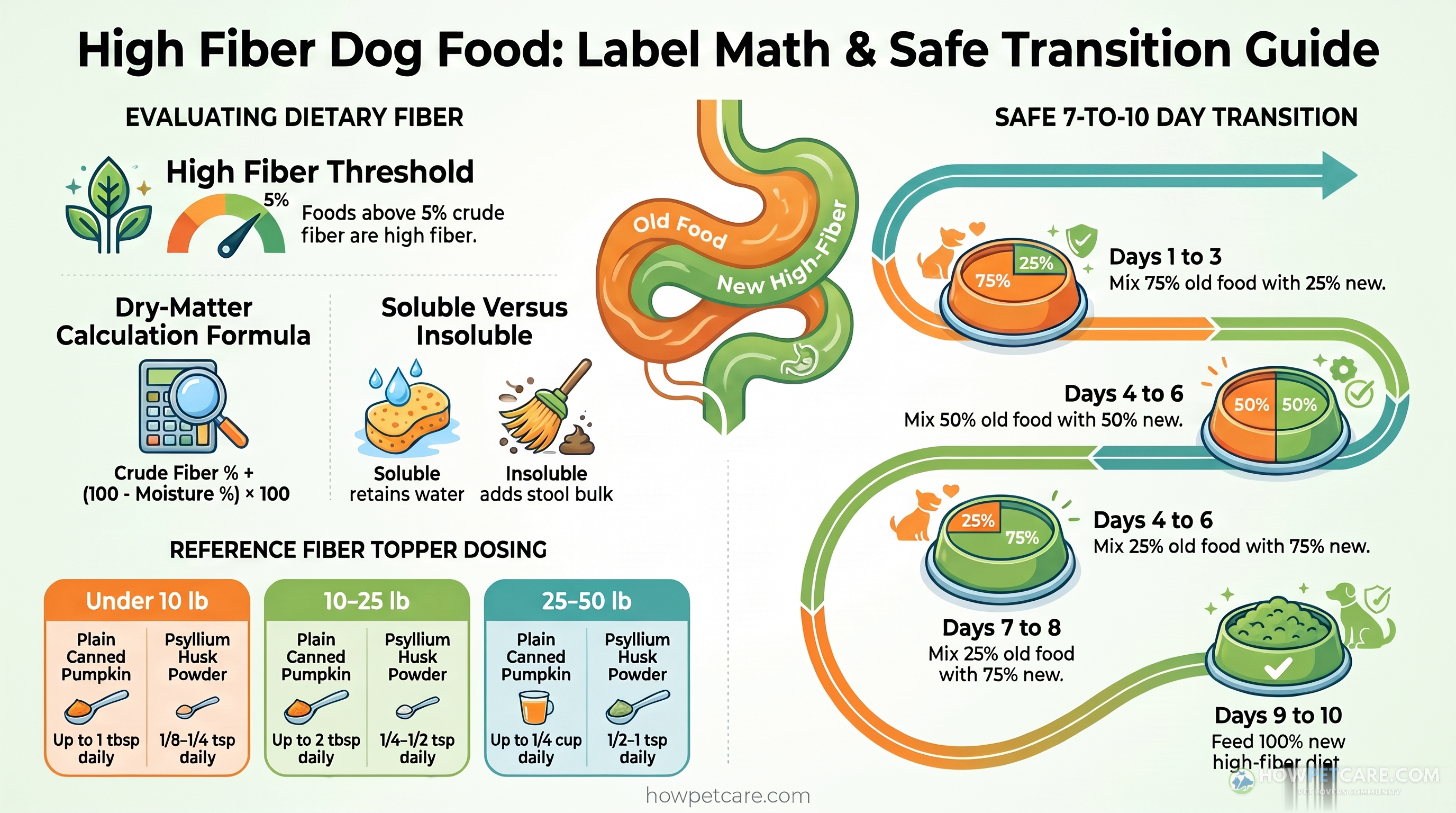
Dry-matter fiber % = crude fiber % ÷ (100 − moisture %) × 100
For a kibble with 4.0% crude fiber and 10.0% moisture:
- Dry matter is 100 − 10 = 90%.
- Dry-matter fiber is 4.0 ÷ 90 × 100 = about 4.4%.
For a canned food with 1.5% crude fiber and 78% moisture:
- Dry matter is 100 − 78 = 22%.
- Dry-matter fiber is 1.5 ÷ 22 × 100 = about 6.8%.
The canned food’s label looks lower, yet its dry‑matter fiber comes out higher. Remember, this is still an approximation — crude fiber is a ceiling and understates total dietary fiber. Always pull the numbers from the current package, and don’t treat the calculation as an exact measure of what your dog actually absorbs.
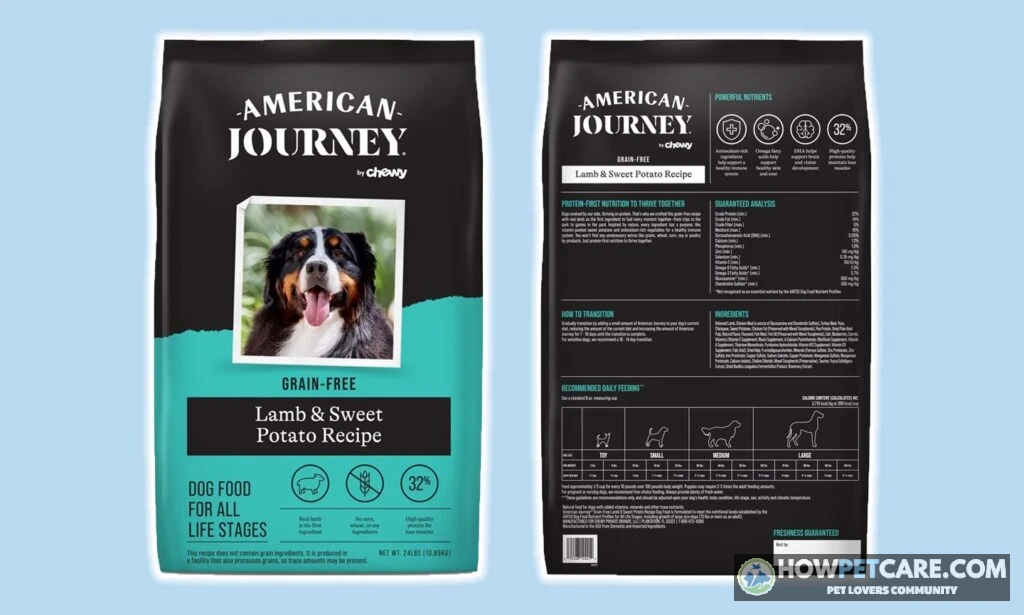
Quality fiber sources vs. low-value fillers on the ingredient list
Useful sources include beet pulp, pumpkin, sweet potato, brown rice, oats, barley, ground flaxseed, psyllium husk, and chicory root or inulin. Their fermentability and stool effects vary, so an ingredient name alone doesn’t guarantee a food fits a specific condition.
Cellulose and powdered cellulose are concentrated insoluble fibers. They’re not inherently bad, but a front‑of‑bag "high fiber" claim doesn’t reveal whether the formula also delivers the fiber types your dog needs. Peanut hulls, rice hulls, and vague "plant fiber" are less informative than named sources. If the list is unclear, ask the manufacturer what the blend is meant to achieve.
Before you compare fiber, verify the AAFCO nutritional adequacy statement for a complete‑and‑balanced food that matches your dog’s life stage. A fiber claim can’t make up for an unsuitable formula. Treat any unquantified front‑of‑bag claim as marketing until you confirm the guaranteed analysis.
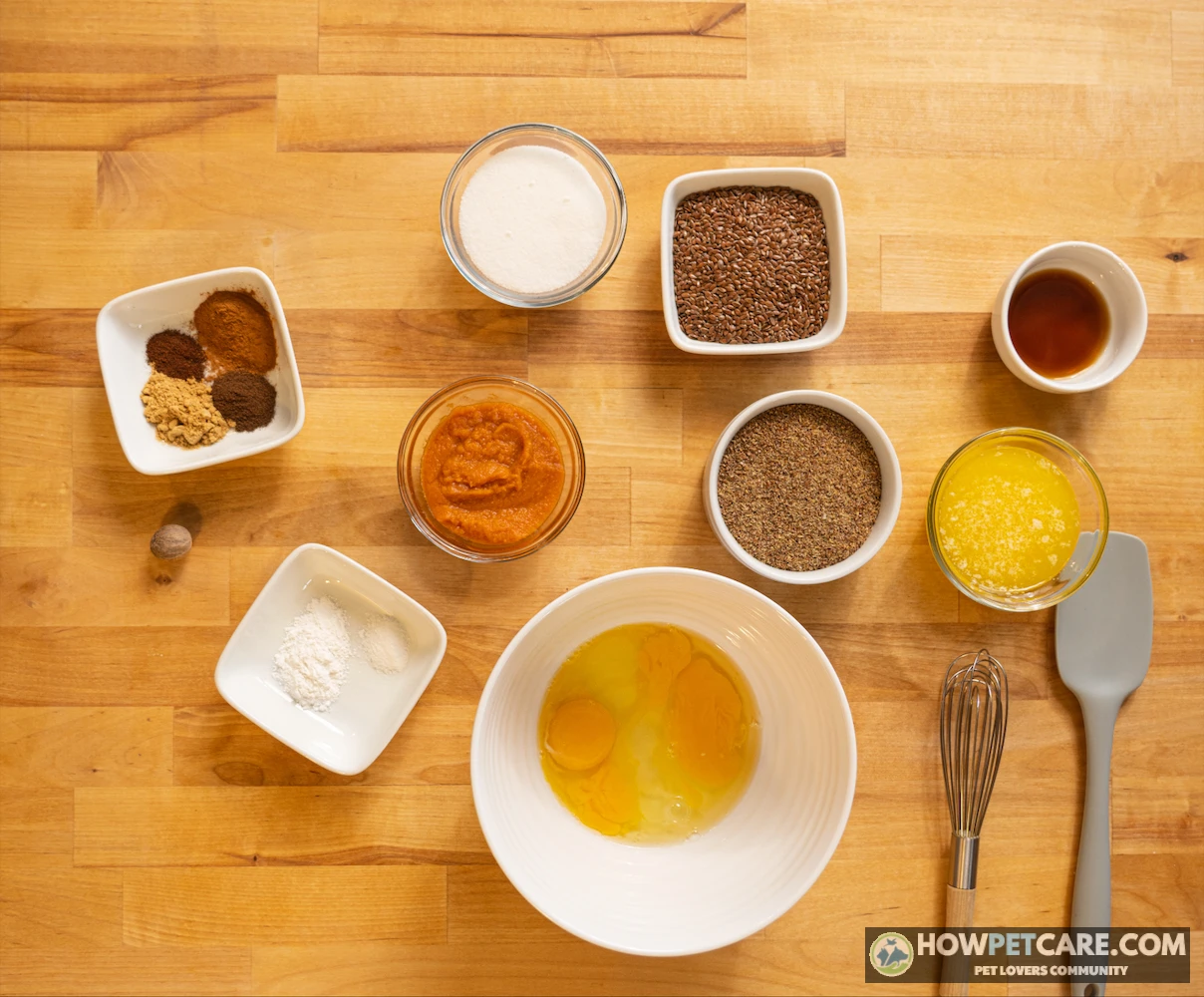
Soluble vs. Insoluble Fiber: Matching Fiber Type to Your Dog’s Condition
Fiber isn’t a single ingredient or effect. Soluble fiber absorbs water and can gel; some fermentable solubles also feed gut bacteria. Insoluble fiber adds bulk and speeds stool transit. Most foods blend both. No universal soluble‑to‑insoluble ratio exists for each condition, so treat the table as a conversation starter, not a prescription.
| Your dog’s problem | Fiber approach to discuss | General dry-matter range sometimes used as a starting point | Product tier |
|---|---|---|---|
| Anal gland support with soft stool | Balanced soluble and insoluble mix for consistent bulk | About 6–10% | Topper or OTC first for mild cases; vet exam for recurring signs |
| Weight management | Often more insoluble bulk, alongside calorie control | About 10–15% | Retail weight formula; veterinary plan for substantial or supervised loss |
| Diabetes | Soluble or moderately fermentable fiber may affect glucose absorption | Vet sets the target | Veterinary guidance before any change |
| Constipation | Mixed, often soluble-forward, with adequate water | About 7–12% | Vet assessment for ongoing constipation; food choice depends on cause |
| Loose stool or colitis-type signs | Soluble or moderately fermentable fiber may suit some dogs | About 6–10% | Vet-directed if persistent or diagnosed |
| General stool quality | A modest increase, if needed | About 5–7% | Topper or OTC food |

Those ranges are broad planning numbers, not validated treatment orders. Your vet should set the target when disease is involved. Constipation isn’t always a fiber shortage — obstruction, dehydration, orthopedic pain, or neurologic issues can be the cause. Adding fiber without enough water can worsen hard stool.
Which fiber type for which problem
Psyllium, oats, pumpkin, and portions of beet pulp are soluble or partly soluble. Beet pulp serves as a moderately fermentable fiber in veterinary diets — not the same as plain cellulose. Insoluble sources include cellulose and certain vegetable fibers. A blend can deliver both water‑holding and stool‑bulking benefits.
Loose stool often improves with soluble or moderately fermentable fiber. Constipation may benefit from a mix, but only after hydration and root causes are addressed. For weight control, insoluble bulk aids satiety, yet calorie reduction stays essential. Anal‑gland support aims for consistent, adequately bulky stool — not the highest fiber count.
How much fiber is enough, and when more stops helping
No single daily gram target fits every dog. Fiber is evaluated within the whole diet — usually on a dry‑matter basis — and tweaked for stool quality, body condition, health, and intake. More isn’t automatically better: excess fiber can trigger gas, loose or frequent stools, lower calorie density, or interfere with nutrient absorption.
Best High Fiber Dog Food by Problem: Anal Glands, Weight, Diabetes, and Breed Size
A solid comparison needs up‑to‑date guaranteed‑analysis numbers for crude fiber, moisture, protein, and fat. The data we have verifies those values for only one product. It doesn’t supply current label data or prices for the other products, so the table avoids inventing figures or assigning unsupported stats. Verify each product’s current package and maker info before buying — formulas change.
| Product | Format | Best for | Crude fiber (as fed) | Crude protein (as fed) | Crude fat (as fed) | Moisture | Dry-matter fiber | Main fiber sources | Price per day, 40-lb dog | Rx required? |
|---|---|---|---|---|---|---|---|---|---|---|
| Purina Pro Plan Veterinary Diets EN Gastroenteric Fiber Balance | Dry kibble | Vet-directed GI support; ask whether it fits the diagnosis | Max 10% | Min 21% | Min 10% | Max 12% | About 11.4% | Blend of soluble, insoluble, and prebiotic fiber | Check current bag price and feeding guide | Yes; veterinary approval required |
| Royal Canin Gastrointestinal Fiber Response | Verify current product and label | Discuss for veterinary GI needs | Verify label | Verify label | Verify label | Verify label | Calculate from label | Verify ingredient list | Check current price | Veterinary diet; confirm authorization requirements |
| Retail weight-management formula | Kibble or wet | Weight management | Verify label | Verify label | Verify label | Verify label | Calculate from label | Check named sources | Use package feeding guide and local price | No, unless the specific formula requires it |
| Small-breed high-fiber formula | Kibble | Small dogs needing an appropriately sized piece and calorie plan | Verify label | Verify label | Verify label | Verify label | Calculate from label | Check named sources | Use package feeding guide and local price | Usually OTC; verify product |
| Large-breed formula | Kibble | Large dogs; confirm life stage and calorie density | Verify label | Verify label | Verify label | Verify label | Calculate from label | Check named sources | Use package feeding guide and local price | Usually OTC; verify product |
| High-fiber wet food | Canned | Dogs needing added moisture or a wet format | Verify label | Verify label | Verify label | Verify label | Calculate from label | Check named sources | Use package feeding guide and local price | Depends on product |
| Anal-gland or stool-support retail formula | Kibble or wet | Mild stool-quality support after veterinary assessment | Verify label | Verify label | Verify label | Verify label | Calculate from label | Check named sources | Use package feeding guide and local price | Usually OTC; verify product |
| Fiber topper on a complete diet | Topper | Modest increase without replacing the main food | Not comparable as a complete diet | Not comparable as a topper | Not comparable as a topper | Varies | Not applicable as a standalone formula | Pumpkin, green beans, or vet-approved psyllium | See topper section | No, but confirm suitability and psyllium dose |
Purina’s EN Gastroenteric Fiber Balance is a veterinary‑approved dry kibble. Its guaranteed analysis lists minimum 21% protein, minimum 10% fat, maximum 10% crude fiber, and maximum 12% moisture, using a blend of soluble, insoluble, and prebiotic fibers. The dry‑matter fiber works out to 10 ÷ 88 × 100 ≈ 11.4%. It’s a therapeutic diet, not a stand‑in for diagnosis or treatment.
Another source lists category picks with fiber numbers for wet, dry, small‑breed, large‑breed, and anal‑gland formulas, but it doesn’t name the products or give moisture, protein, fat, or price data. Those isolated figures can’t support a fair product‑by‑product comparison. Check the actual label instead of attributing those numbers to a brand.
Anal gland problems and firmer stools
If your dog scoots or has recurring anal‑gland issues, start with a vet exam, not a shopping list. Fiber can help when stool bulk is part of the problem, but allergies, infection, impaction, and other causes need different treatment — suspected food allergies, for instance, may warrant a hydrolyzed protein diet trial. If your vet green‑lights a food trial, choose a complete‑and‑balanced formula with a clear fiber analysis and named blend, then monitor stool consistency and scooting.
Weight loss and fullness
A weight‑management food can deliver more bulk per calorie, but portion size still matters. Get a target weight and daily calorie plan from your vet, then compare calories per cup or can — not just crude fiber. Don’t pick a high‑fiber food for an underweight or inexplicably losing dog.

Diabetic dogs: what to settle with your vet first
Some diabetic dogs benefit from a consistent diet with an appropriate fiber level, but no single formula or target fits all. More fiber can shift glucose absorption timing and alter insulin needs. Tell the prescribing vet before switching; keep meal amounts and timing steady, and ask whether glucose monitoring or insulin tweaks are needed during the transition. Never adjust insulin on your own.
Small-breed vs. large-breed considerations
For small dogs, kibble size and meal portion often matter more than a "small‑breed" fiber claim. For large dogs, pick a formula matched to life stage and body condition; growing large‑breed puppies need careful, complete‑and‑balanced nutrition. Neither size class automatically requires high fiber. Verify the actual analysis and calories on the bag.
Dry vs. wet: how format changes the effective fiber dose
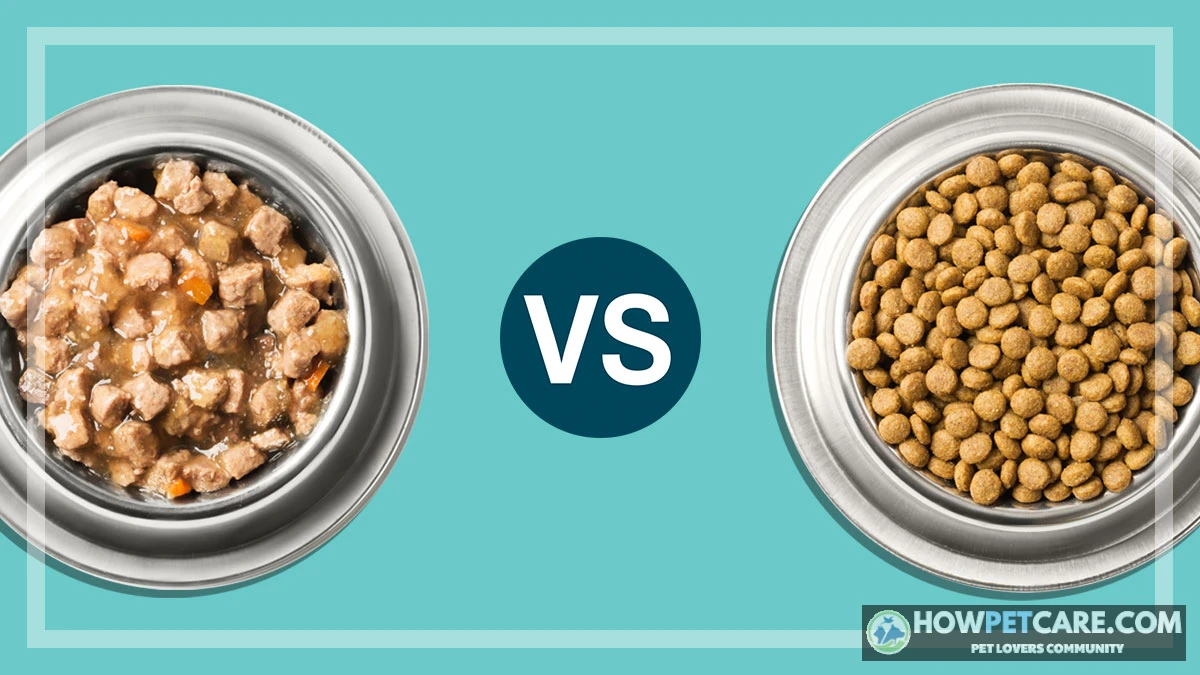
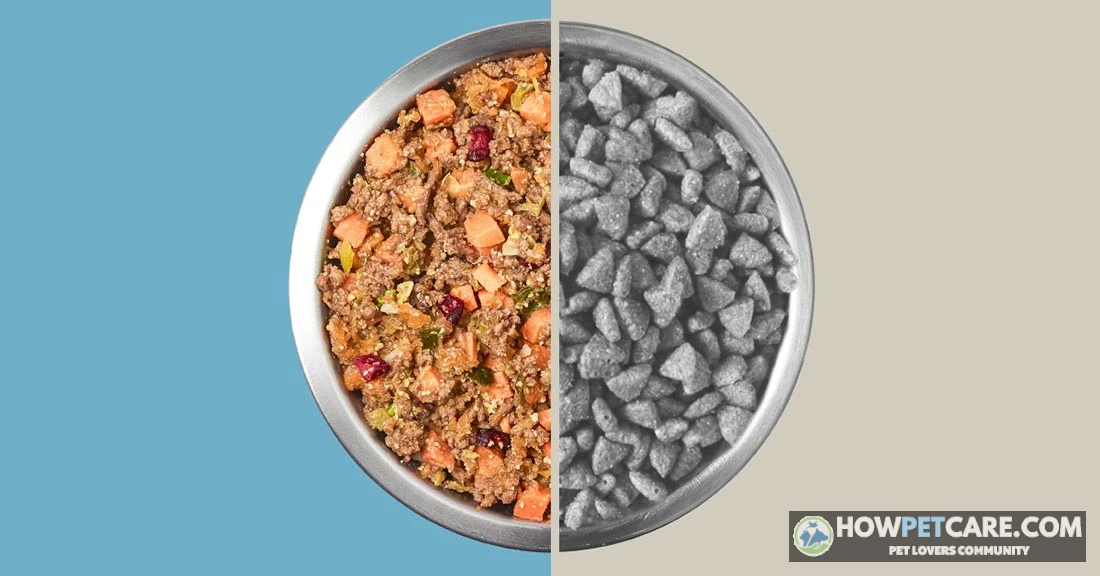
Kibble usually shows a higher crude‑fiber percentage because it holds less water. Canned food can look low as‑fed but rank higher after dry‑matter conversion. Wet food also adds moisture, which helps when a vet is tackling hard stool, though the right amount varies. Compare dry‑matter values and feeding guides, not raw label percentages or cup counts.
Grain-free, pulses, and the DCM concern in high-fiber formulas
High fiber doesn’t equal grain‑free. Fiber can come from grains, vegetables, beet pulp, or other sources. Some grain‑free formulas lean on peas, lentils, chickpeas, or other pulses, but current evidence doesn’t prove every pulse‑based food causes dilated cardiomyopathy (DCM). The FDA’s investigation continues; don’t treat grain‑free status as proof of risk or safety. Talk to your vet about a pulse‑heavy formula, especially if your dog has a heart condition, and base the choice on nutritional adequacy and manufacturer expertise — not just a fiber claim.
Add Fiber Without Switching Foods: Pumpkin, Green Beans, and Psyllium Dosing by Body Weight
A topper is a practical first step when a healthy adult dog needs a modest fiber boost and the current food is otherwise fine. It’s not a replacement for a therapeutic diet if a vet has diagnosed a condition. Add one source at a time so you can see what changes stool.
Plain canned pumpkin is a mild, soluble‑leaning source, but a spoonful isn’t a treatment plan and adds only a little fiber. Use pumpkin puree, not pie filling. Other options: cooked sweet potato, green beans, steamed carrots, oats, brown rice, or ground flaxseed. Keep add‑ins small, count the calories, and don’t let toppers replace a big chunk of a complete‑and‑balanced diet.

Topper dosing by body weight
| Dog weight | Plain canned pumpkin | Green beans, cooked or no-salt canned | Plain psyllium husk powder, vet-confirmed | Approx. cost per week |
|---|---|---|---|---|
| Under 10 lb | Start 1/2 tsp; up to 1 tbsp daily | 1–2 tbsp, chopped | 1/8–1/4 tsp once daily | About $1–2 |
| 10–25 lb | Start 1 tsp; up to 2 tbsp daily | 2–4 tbsp | 1/4–1/2 tsp once daily | About $1–3 |
| 25–50 lb | Start 2 tsp; up to 1/4 cup daily | 1/4–1/2 cup | 1/2–1 tsp once daily | About $2–4 |
| Over 50 lb | Start 1 tbsp; up to 1/3 cup daily | 1/2–3/4 cup | 1–2 tsp once daily | About $3–5 |
These amounts are approximate — confirm with your vet, especially the psyllium range. Mix psyllium into food and keep water handy; dry psyllium without enough fluid can worsen constipation. Avoid human products with sweeteners or flavorings, and watch for xylitol, which is toxic to dogs. Never use pumpkin pie filling — it can contain sugar and spices.
Cost per day: toppers vs. over-the-counter food vs. vet diet
Prices vary by retailer, package size, and region, so compare current checkout prices instead of relying on a static estimate. To figure daily cost, divide the package price by the number of days it lasts at your dog’s measured portion. Do the same for canned pumpkin or green beans based on the actual amount you use.
For illustration, a $75 veterinary‑diet bag and a $40 retail kibble bag can’t be compared fairly without bag weight, calorie density, and the dog’s feeding amount. A few dollars of pumpkin per week isn’t an equivalent swap for a therapeutic food — a topper gives a modest boost, while a prescribed formula targets a specific clinical need. Ask your vet if a topper makes sense as a trial before switching the main diet. For a broader primer on portions, calorie math, and monthly feeding costs, see our beginner’s guide to dog food feeding.
A homemade add‑in isn’t a homemade complete diet. Don’t feed a mix of ingredients as the sole food unless a veterinary nutritionist has formulated the recipe; adding fiber alone doesn’t guarantee adequate protein or other nutrients.
When High Fiber Is the Wrong Choice: Risks, Medication Interactions, and When You Need a Prescription Diet
Too much fiber can cause gas, bloating, looser or more frequent stools, and larger stool volume. High‑fiber foods are often less calorie‑dense, which can lead to unwanted weight loss if portions aren’t adjusted. Excess fiber may affect nutrient availability, but there’s no universal cutoff for when mineral absorption suffers. Don’t quote a precise harm threshold; follow a vet‑set plan, especially for dogs with special nutritional needs.
Side effects and nutrient risks of excess fiber
Slow or stop the switch if stool turns watery, persistent gas or discomfort appears, or weight drops unexpectedly. Fiber and psyllium can interfere with absorption of some oral meds and supplements. Ask your vet or pharmacist whether to space doses and by how long — don’t assume one timing fits all. For diabetic dogs, the bigger concern is that fiber changes can shift glucose patterns and insulin needs, so the prescribing vet should oversee the transition.
Dogs that should skip or limit high fiber
Do not put a dog on a high-fiber diet without veterinary guidance if any of these apply:
- Puppies and growing large-breed dogs: growth requires a carefully balanced diet; extra fiber can dilute calories and nutrients.
- Pregnant or nursing dogs: energy and nutrient needs differ from those of a typical adult.
- Highly active, underweight, or weight-losing dogs: a less calorie-dense diet may make it harder to meet energy needs.
- Dogs with ongoing or diagnosed gastrointestinal disease: the right diet depends on the diagnosis; fiber can help some conditions and worsen others.
- Dogs with constipation, abdominal pain, or possible obstruction: adding bulk without identifying the cause may delay necessary care.

Call your vet for blood or black stool, repeated vomiting, painful or swollen abdomen, straining with little or no output, marked lethargy, or diarrhea lasting more than 24–48 hours. A diabetic dog showing appetite, thirst, or energy changes during a food switch needs prompt guidance from the treating vet.
Prescription vet diet vs. over-the-counter: a decision guide
An OTC high‑fiber food or a small topper trial can work for a healthy adult dog with a mild, short‑lived stool issue after a vet rules out a bigger cause. A prescription veterinary diet is the right conversation for diagnosed chronic colitis, recurrent constipation, fiber‑responsive diarrhea, diabetes, or supervised weight loss.
Purina Pro Plan Veterinary Diets EN Gastroenteric Fiber Balance requires veterinary approval to purchase. Other veterinary products, such as Royal Canin gastrointestinal fiber‑response diets, should be verified by current product name and clinic authorization. A therapeutic diet isn’t interchangeable with an OTC food just because both list fiber.
Ask your vet four practical questions: Which fiber type fits this problem? What target or product should I use? How long should we trial it? When should we recheck? Also list every medication and supplement your dog takes.
How to Transition Your Dog to a High Fiber Diet in 7–10 Days
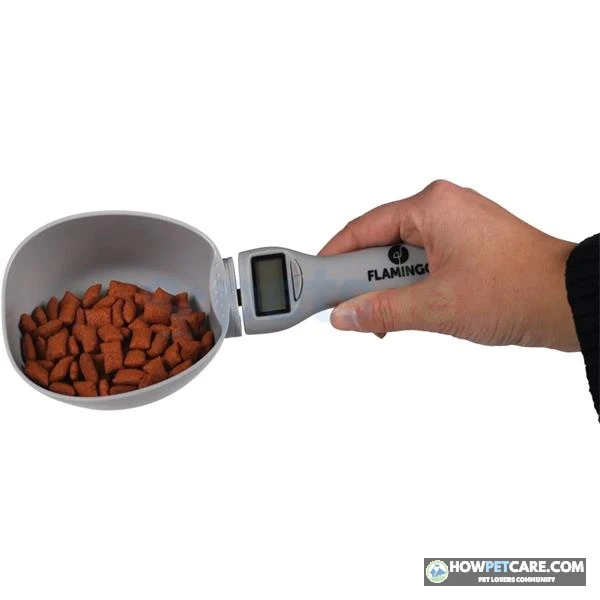
Measure by weight or calories, not scoops — high‑fiber food often has a different calorie density. Keep daily calories and meal timing steady unless your vet says otherwise. Always keep fresh water available.
| Day | Old food | New food | What to watch for | If stools loosen |
|---|---|---|---|---|
| 1–3 | 75% | 25% | Mild gas; stool may stay the same or become slightly bulkier | Hold at 25% for two extra days, then retry 50% |
| 4–6 | 50% | 50% | Stool may be slightly softer or more frequent | Return to 25% for 2–3 days; advance in smaller steps |
| 7–8 | 25% | 75% | Bulkier stool may be normal | Return to 50/50 for 2–3 days |
| 9–10 | 0% | 100% | New stool pattern should settle | If signs persist, stop and call the vet |
For a sensitive dog or a big fiber jump, extend the schedule to 10–14 days or longer with vet input. Soft but formed stool means hold the current ratio a couple of days — don’t abandon the change. Watery stool means step back and move forward more slowly. Diarrhea lasting 24–48 hours, vomiting, blood, or refusal to eat means stop the new food and call your vet.
If you’re adding a topper instead of switching food, start at the lowest dose in the table and increase gradually over 5–7 days. For a diabetic or medicated dog, call the vet before day one. Keep a brief log of food ratios, treats, stool consistency, and symptoms — it makes the follow‑up more useful.
-
Start with the current diet
Measure the existing daily portion and note the food, treats, meal times, and stool pattern.
-
Mix gradually
Use the 75/25, 50/50, 25/75, then 100% schedule, holding a step longer if stool softens.
-
Track and respond
Record changes each day; step back for loose stool and contact the vet for persistent or serious signs.
Your Next Steps: A Checklist for Choosing and Starting a High Fiber Diet
- Confirm the problem. Ask your vet about persistent stool changes, scooting, constipation, weight gain, or blood‑sugar concerns before assuming they’re a fiber shortage.
- Choose the right path. A modest topper suits a healthy dog with a mild issue; an OTC food works when a full diet change is warranted; a veterinary diet is for diagnosed or complex conditions.
- Verify the label. Check the AAFCO complete‑and‑balanced statement, crude fiber, moisture, protein, fat, calories, and named fiber sources. Convert fiber to dry matter before comparing formats.
- Compare actual costs. Use the package’s feeding guide and current price to calculate daily cost; treat toppers as modest additions, not equivalent treatments.
- Switch slowly. Follow the 7–10 day schedule, keep calories and meal times consistent, and keep a stool log. Schedule a recheck if your vet recommends one.
Stop the trial and call your vet for blood or black stool, repeated vomiting, painful straining, a swollen abdomen, marked lethargy, persistent diarrhea, unexpected weight loss, or a diabetic dog showing changes in thirst, appetite, or energy. A successful fiber change yields a manageable stool pattern — not an escalating list of symptoms.
FAQ
Will a high fiber diet make my dog poop more?
Often, yes. Stools usually become bulkier and may be a little more frequent. Watery stool, straining, or blood means the change is too fast or too much, so slow down or call your vet.
How long does it take for high fiber food to help with anal gland problems?
Stool changes often show within one to two weeks of finishing the transition, but fiber only helps when stool bulk is part of the cause. If scooting continues, have your vet check for infection, allergies, or impaction.
Is high fiber dog food the same as grain-free?
No. Fiber can come from grains such as brown rice and oats, vegetables, or beet pulp. Grain-free foods often use pulses for fiber, so check with your vet about the FDA’s DCM investigation before choosing one.
Can I give my dog Metamucil or other human fiber supplements?
Plain psyllium husk is sometimes used for dogs, but dose and timing should come from your vet. Avoid flavored or sweetened products, especially anything containing xylitol, which is toxic to dogs.