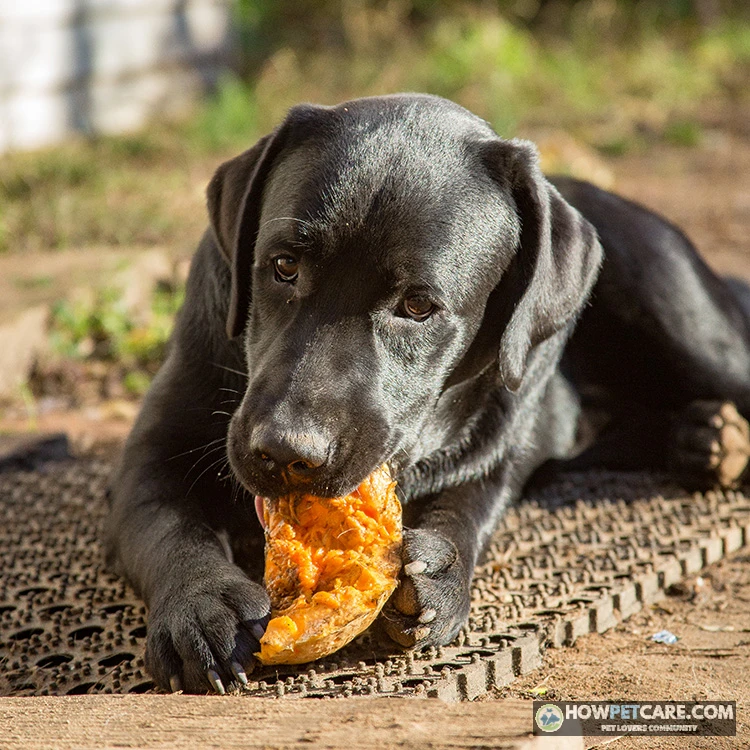

Yes, dogs can eat ripe papaya flesh in small amounts. Peel the skin, remove every seed, and dice the flesh into small cubes. Avoid seeds, rind, and green unripe papaya, and keep papaya within the 10% daily treat-calorie limit.
Dogs can eat ripe papaya flesh in moderation. Just remove the skin and every seed, then cut the fruit into small pieces. Keep seeds, rind, and unripe green papaya out of your dog’s bowl: seeds can upset the gut or pose a choking risk, rind is tough to digest, and green fruit contains irritating latex.
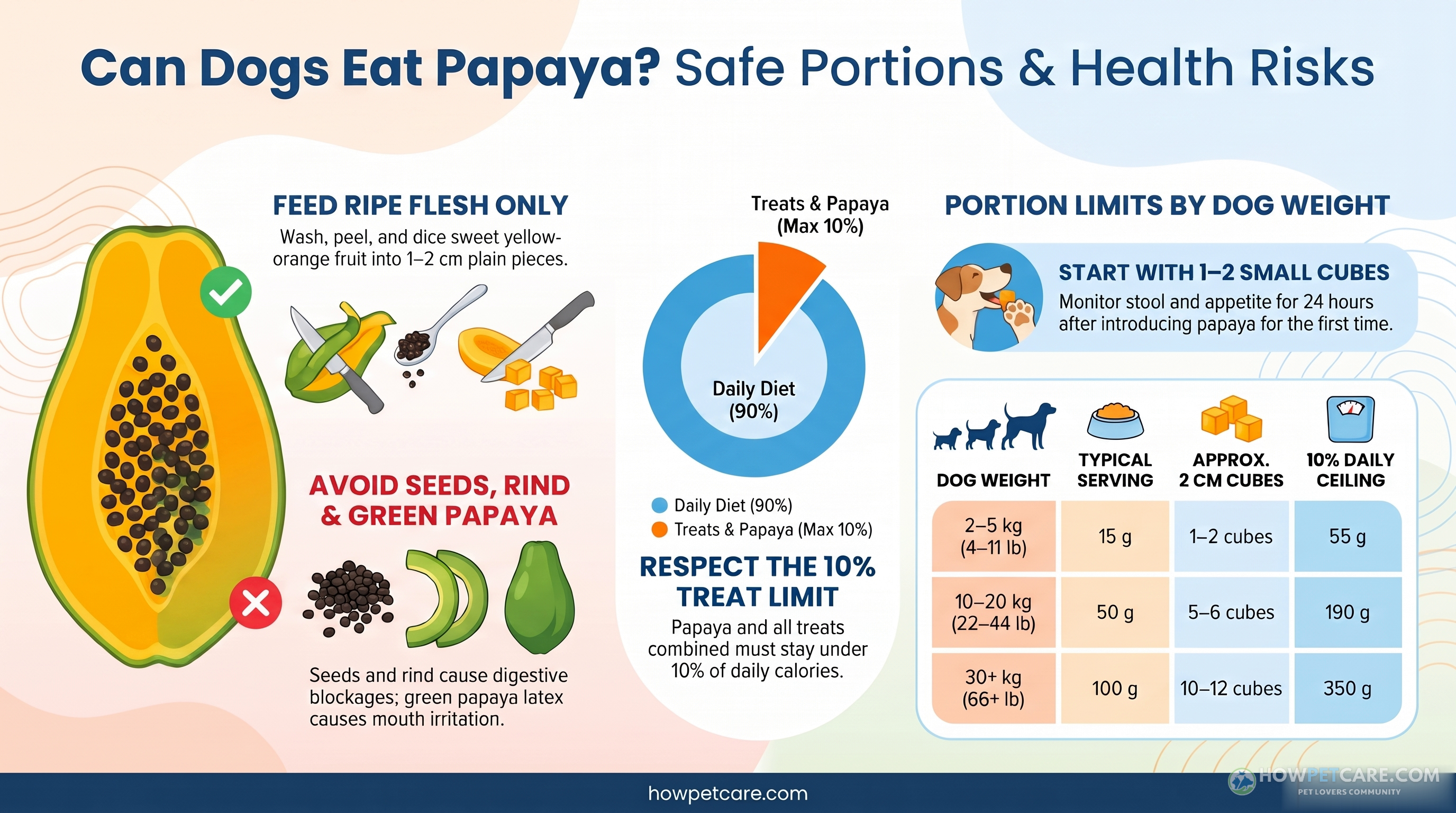
Serve ripe, peeled, seedless papaya in pieces no larger than about 2 cm. Start with 1–2 small cubes. Keep every treat, papaya included, under 10% of your dog’s daily calories. If your dog already ate seeds or rind, skip to the triage section. For a portion by weight, see the serving table. Dogs with diabetes, pancreatitis, or a prescription diet need their veterinarian’s approval first.
This is general information, not a substitute for veterinary advice.
What Papaya Offers a Dog: Nutrition per 100 g and How It Compares With Other Dog-Safe Fruits
Papaya is mostly water, with fiber and carotenoids the body can convert to vitamin A. It also offers vitamin C, folate, and potassium. Per 100 g, raw papaya has about 43 calories, 8 g of sugar, 1.7 g of fiber, and 60 mg of vitamin C; it runs about 88% water. These are approximate food-composition values, not a recommended dog serving.
The fiber may support regular canine digestion, but too much can cause loose stool. Papaya’s vitamin C is a bonus, not a requirement: dogs generally make vitamin C in their bodies. Papain, an enzyme associated with papaya, is found especially in unripe fruit and latex. Claims that papain treats arthritis or improves a dog’s digestion have not been established in dogs, so papaya is a treat—not a supplement or treatment.
Nutrition per 100 g and per typical serving
A 30 g serving delivers about 13 calories, 2.4 g of sugar, and 0.5 g of fiber. A 50 g serving delivers about 22 calories, 4 g of sugar, and 0.9 g of fiber. Those amounts can fit into many treat budgets, but remember the dog’s total calories and other treats.
As a rough calorie-planning example, take a 30 lb (13.6 kg) dog eating about 600 calories a day. Under the 10% rule, all treats combined get a 60-calorie daily budget. At roughly 0.43 calories per gram, 60 calories equals about 140 g of papaya—but that’s not a sensible serving if the dog also gets other treats. Say a dental chew uses 30 calories and training treats use another 10. That leaves about 20 treat calories, or roughly 45 g of papaya. The 10% figure is a ceiling for all treats, not a papaya target.
Papaya vs. other dog-safe fruits
Fruit values vary by variety and ripeness; the figures below are approximate values per 100 g of raw fruit. Remove inedible parts, serve plain, and keep portions small. No fruit is right for every dog, and a full guide to fruits dogs can eat helps when papaya is not the right choice.
| Fruit | Calories (kcal) | Sugar (g) | Fiber (g) | Vitamin C (mg) | Main caution | Best for |
|---|---|---|---|---|---|---|
| Papaya | 43 | 8 | 1.7 | 60 | Remove seeds and skin; moderate sugar | A soft, hydrating treat |
| Mango | 60 | 14 | 1.6 | 36 | Remove the pit and skin; more sugar | Occasional small pieces |
| Pineapple | 50 | 10 | 1.4 | 48 | Tough core and acidity may bother some dogs | A small, juicy treat |
| Watermelon | 30 | 6 | 0.4 | 8 | Remove rind and seeds | A lower-calorie, water-rich option |
| Cantaloupe | 34 | 8 | 0.9 | 37 | Remove rind and seeds | A soft, hydrating option |
| Banana | 89 | 12 | 2.6 | 9 | More calories per weight; offer sparingly | A small, convenient bite |
| Apple | 52 | 10 | 2.4 | 5 | Remove core and seeds; cut into small pieces | A crisp treat |
| Blueberries | 57 | 10 | 2.4 | 10 | Small fruit can still be a choking risk for tiny dogs | Small training treats |
For a lower-calorie option, watermelon flesh without rind or a few blueberries may work better for some dogs than papaya. Make sure any alternative is safe for dogs and prepared without seeds, pits, cores, or added sweeteners where relevant.
How to Prepare and Serve Papaya to a Dog, Step by Step
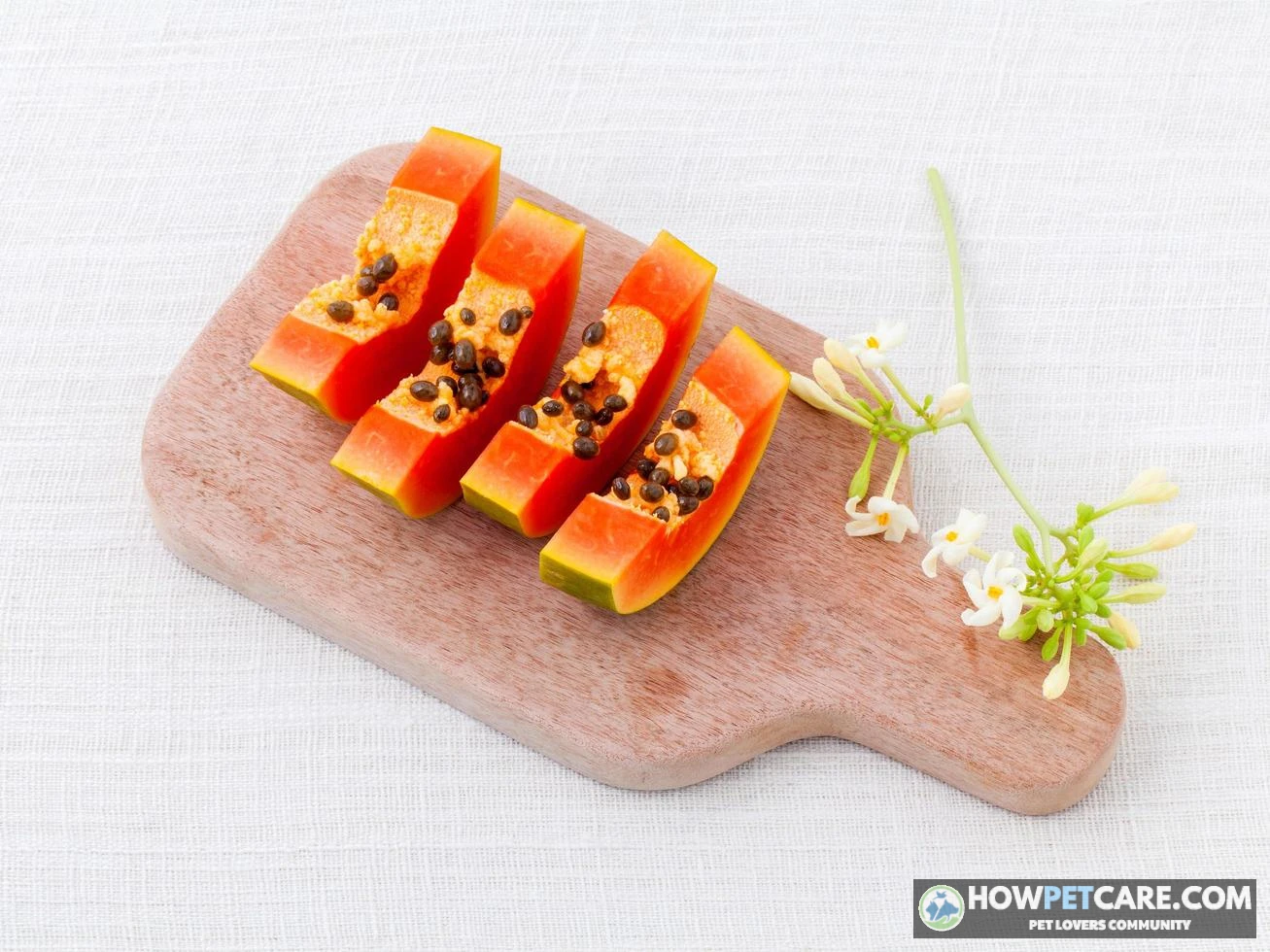
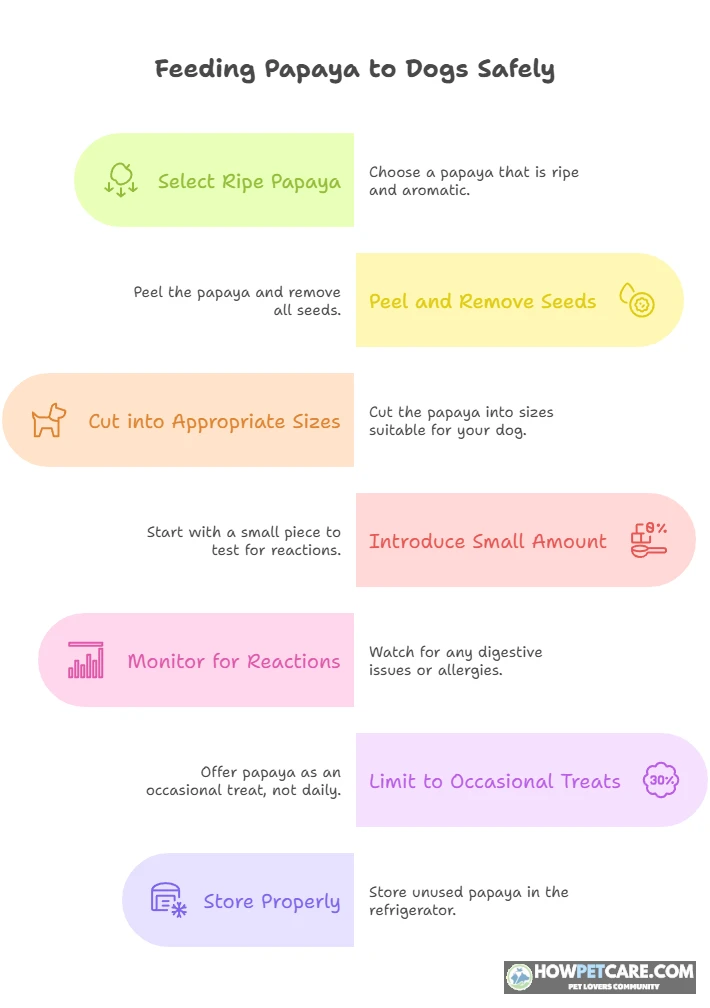
Choose fruit that is yellow-orange, yields slightly to pressure, and smells sweet. Skip hard, green fruit or anything that smells fermented. Share only the ripe flesh—peeled and fully seeded.
-
Wash and open the fruit
Rinse the outside, cut the papaya in half, and scoop out every seed.
-
Peel and dice
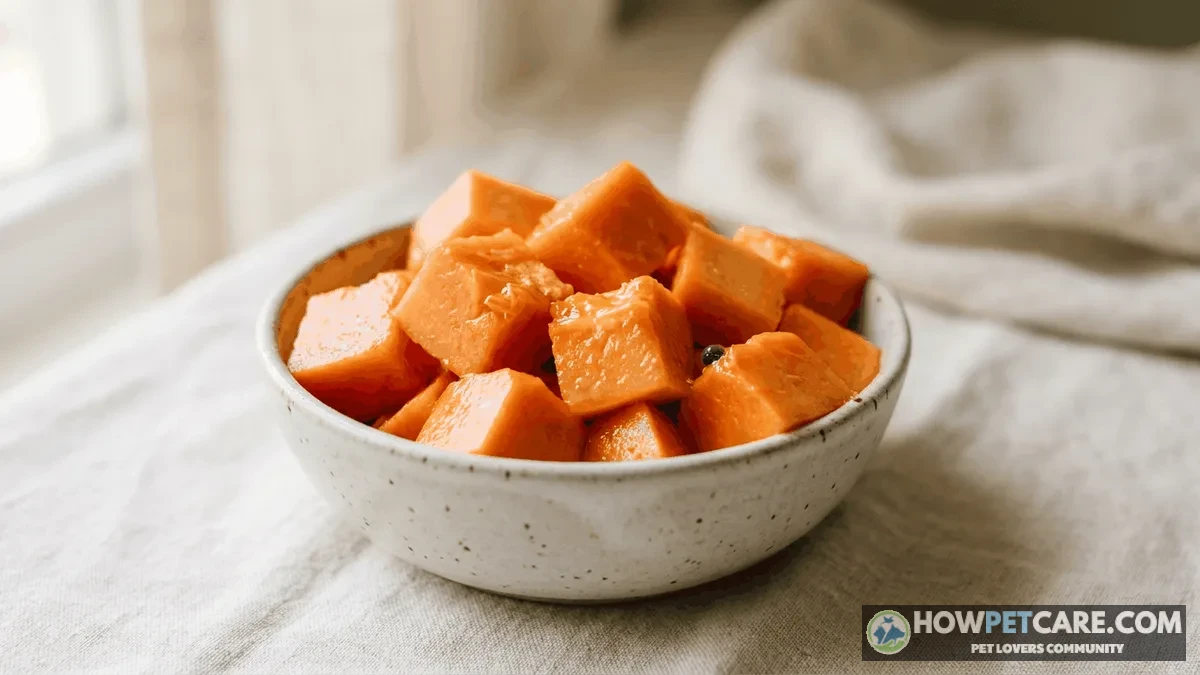
Cut away the skin. Dice the flesh into roughly 1 cm pieces for toy and small dogs, or up to 2 cm for larger dogs.
-
Serve it plain
Offer fresh, chilled, or plain frozen cubes. Do not add sugar, honey, syrup, spices, or yogurt containing xylitol.
-
Start small and observe
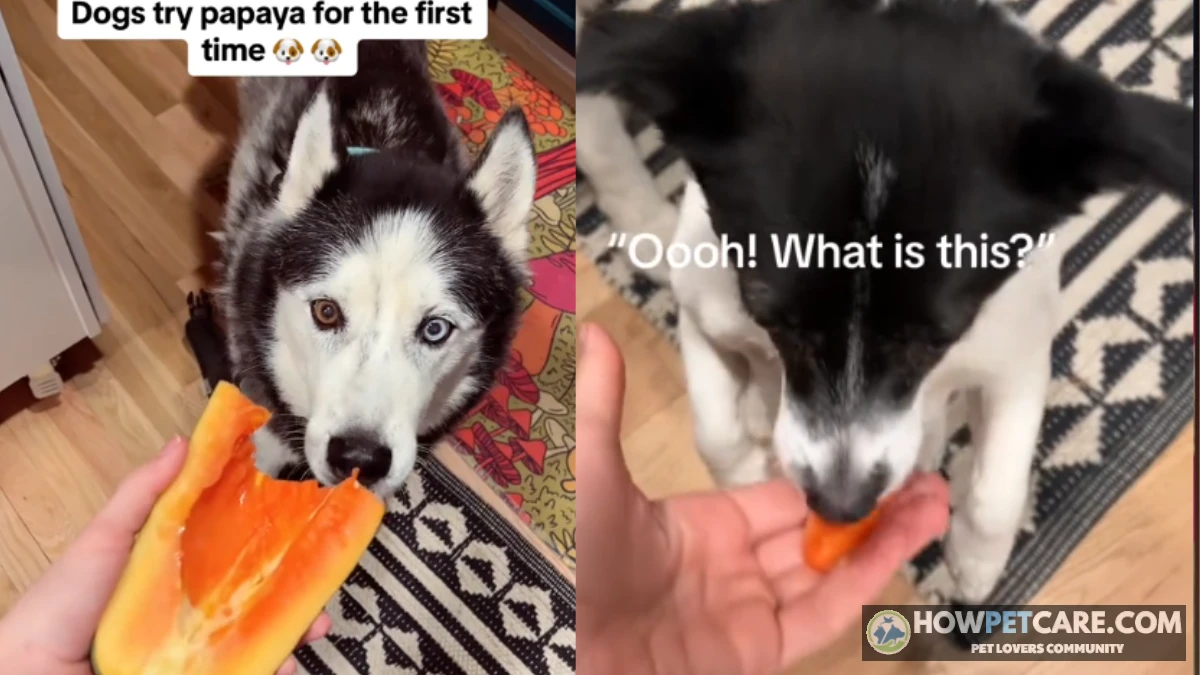
Give 1–2 small cubes the first time, then watch your dog’s appetite and stool for 24 hours before offering more.
Papaya works as a treat or a small meal topper, not a replacement for complete and balanced dog food. Refrigerate cut fruit and use it within 2 days. Frozen cubes can be refreshing, but supervise a fast eater—a hard piece can be a choking hazard. The same core-and-rind caution used for fresh pineapple for dogs applies here: serve soft flesh only.
How Much Papaya Can a Dog Eat? Portions by Weight in Grams, Cubes and Tablespoons
Under the 10% rule, treats should supply no more than 10% of a dog’s daily calories, with the rest coming from nutritionally complete food. Treat the table as a practical starting point, not a prescription. Actual energy needs vary with age, activity, health, and body condition. Stay well below the daily ceiling if your dog gets other treats, chews, or table scraps.
For the estimates below, one 2 cm cube weighs roughly 8–10 g, one level tablespoon of diced papaya weighs about 15–20 g, and papaya provides approximately 0.43 calories and 0.08 g sugar per gram. The daily ceiling estimates use typical calorie needs for a neutered adult dog near the middle of each weight band; your dog’s actual allowance may differ.
| Dog weight | First-time serving (g) | Typical serving (g) | Approx. 2 cm cubes | Approx. tablespoons diced | Daily ceiling at 10% treat rule (g) | Calories and sugar at typical serving |
|---|---|---|---|---|---|---|
| 2–5 kg (4–11 lb) | 8 (about 1 cube) | 15 | 1–2 | About 1 | About 55 | About 6 kcal; 1.2 g sugar |
| 5–10 kg (11–22 lb) | 10 | 30 | 3–4 | About 2 | About 110 | About 13 kcal; 2.4 g sugar |
| 10–20 kg (22–44 lb) | 15 | 50 | 5–6 | About 3 | About 190 | About 22 kcal; 4 g sugar |
| 20–30 kg (44–66 lb) | 20 | 80 | 8–10 | About 4–5 | About 280 | About 34 kcal; 6.4 g sugar |
| 30 kg+ (66 lb+) | 25 | 100 | 10–12 | About 5–6 | About 350 | About 43 kcal; 8 g sugar |
A portion is a guide, not a daily goal. Even the typical serving may be too much for a dog trying papaya for the first time or one with a sensitive stomach. For small dogs, a few cubes can already use much of the practical treat allowance.
Can dogs eat papaya every day?
A small serving a few times a week is a sensible default. Daily papaya isn’t inherently necessary. If you offer it, count it toward the same treat limit and stop if stools soften. No established maximum number of weekly papaya servings suits every dog.
Puppies, diabetic dogs, overweight dogs and sensitive stomachs
Puppies under 6 months: Ask your veterinarian before introducing extras, particularly while you are establishing a balanced growth diet. If approved, offer only ripe, peeled, seedless flesh in tiny pieces—one or two small cubes at most for a small puppy—and introduce papaya by itself so you can notice a reaction. Treats should not displace puppy food.
Diabetic dogs: Papaya contains about 8 g of sugar per 100 g. Even though that is less than some fruits, it still counts. Do not add it to a diabetic dog’s diet without the veterinarian’s approval and a set portion.
Overweight dogs: Papaya can replace a higher-calorie treat, but it still contributes calories and sugar. Measure the portion rather than adding it on top of the usual treats.
Sensitive stomachs, chronic diarrhea, or a history of pancreatitis: Fiber and sugar may worsen symptoms. Start only with veterinary guidance—or skip papaya if your dog is on a restricted diet.
Papaya Seeds, Skin and Green Papaya: What Is Risky and Why
Can dogs eat papaya seeds?
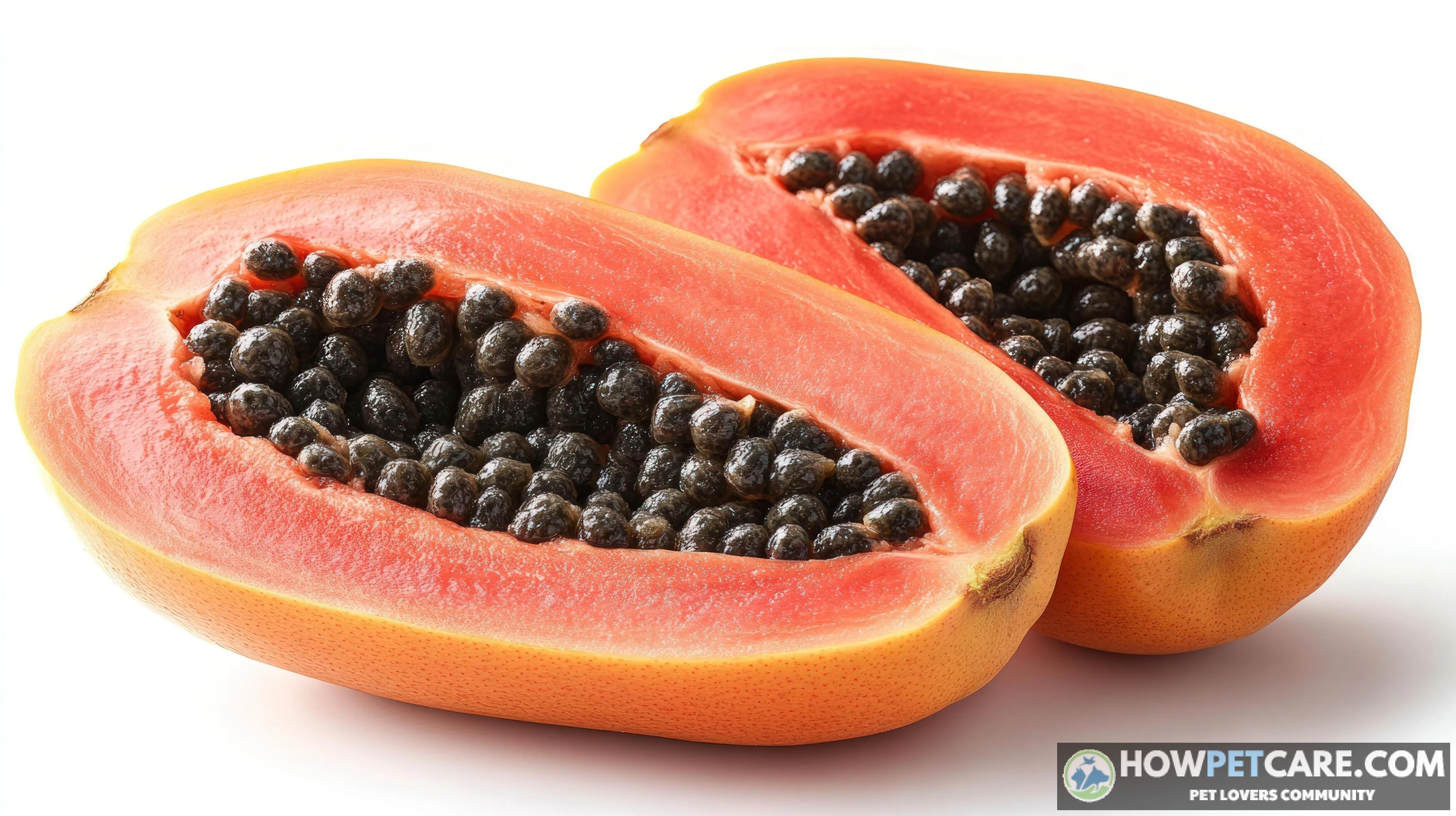
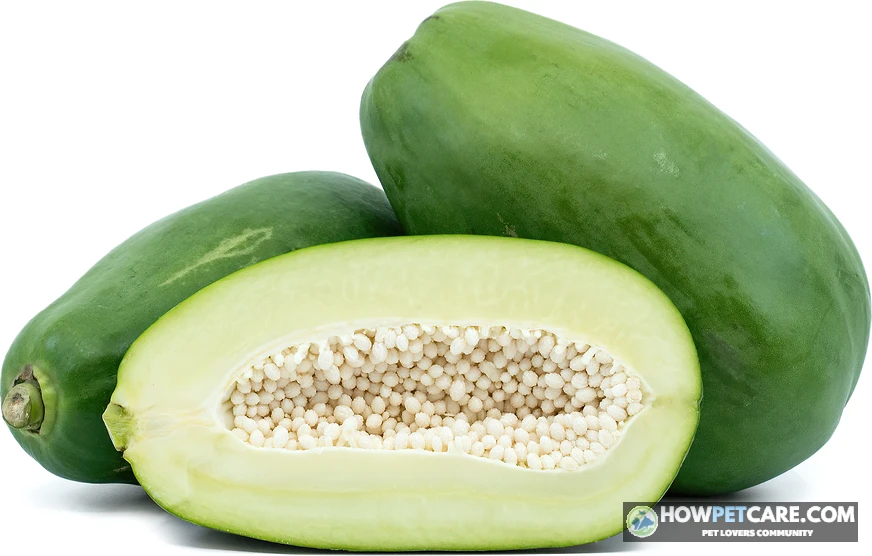
No—remove the seeds rather than feeding them on purpose. Papaya seeds contain trace cyanogenic compounds, and hard seeds can contribute to stomach upset, choking, or blockage, especially in a small dog or when many are swallowed. A few accidentally swallowed seeds are unlikely to cause cyanide poisoning, but there is no reason to offer them. The amount that would cause cyanide poisoning in a dog is not established by the available evidence, so avoid both alarm and deliberate feeding.
Can dogs eat papaya skin?
No. The rind is tough and fibrous, difficult to digest, and can cause choking or an intestinal obstruction. It may also carry wax or pesticide residue. It is not the edible treat portion, so peel it off and discard it.
Is unripe papaya or papaya latex toxic to dogs?
Do not feed green, unripe papaya or its latex. The latex is rich in papain and may irritate the mouth and digestive tract. Dog-specific evidence about toxicity is limited, so the practical advice is to avoid it rather than treat it as a safe food. Ripe flesh is the appropriate part to serve.
Papaya leaves and stems also lack established safety information for dogs; skip them. Cooked green papaya dishes such as stews are not safe to share: recipes commonly include onion and garlic, which are toxic to dogs.
| Part | Practical ruling | Why |
|---|---|---|
| Ripe flesh, peeled and seedless | Fine in a measured portion | Edible fruit; too much can upset the stomach |
| Seeds | Avoid | Choking, digestive upset, and possible blockage; trace cyanogenic compounds |
| Skin or rind | Avoid | Tough, hard to digest, and can obstruct the gut |
| Green fruit or latex | Avoid | Latex may irritate; dog-specific safety evidence is limited |
| Leaves and stems | Avoid | Safety is not established |
Do Papaya Seeds Work as a Natural Dewormer for Dogs?
No reliable dog-specific evidence shows that papaya seeds treat roundworms, hookworms, whipworms, or tapeworms. Research on seed extracts and small human trials doesn’t establish that seeds work in dogs or provide a safe dog dose.
The main danger is delaying effective care: parasites can continue to affect the dog and shed eggs into the environment, and a heavy worm burden can be especially serious for a puppy. Seeds also bring avoidable digestive and choking risks; the amount needed for a supposed treatment is unknown. Do not use papaya seeds instead of veterinary deworming.
If you suspect worms, ask your veterinarian about a fecal test and treatment matched to the parasite and your dog’s weight. Do not give a seed preparation or papain product as a home remedy.
Dried, Canned, Juiced, Cooked Papaya and Papaya Enzyme Supplements: A Single Ruling for Each
Packaged papaya can differ from fresh fruit because water removal concentrates sugar and processing may add sweeteners or seasonings. Read the label; xylitol is toxic to dogs, and added sugar, sulfites, or spice blends are reasons to avoid a product. The added-sugar issues that make canned pears risky for dogs also apply to papaya packed in syrup.
| Form | Verdict | Why | How to serve or what to check |
|---|---|---|---|
| Fresh, ripe flesh | Yes | Appropriate fruit when prepared safely | Peel, remove every seed, and dice small |
| Plain frozen cubes | Yes | Same fruit, served cold | Supervise hard pieces, especially with fast eaters |
| Dried papaya | Not recommended | Concentrated sugar; may contain added sugar or sulfites | Prefer fresh; do not give sweetened or seasoned pieces |
| Canned in syrup | No | Added sugar makes it an unsuitable treat | Do not share |
| Canned in water or its own juice | Caution | May be plain, but processing and portions vary | If ingredients are only papaya and water or juice, rinse and offer a small amount; fresh is simpler |
| Papaya juice | No | Removes much of the fiber and makes sugar easy to overconsume; may be sweetened | Avoid; if the label lists xylitol, contact a veterinarian or poison service immediately |
| Plain cooked ripe papaya | Technically fine, but unnecessary | Cooking adds no known benefit for dogs | Only if plain, with no oil, sugar, or seasoning |
| Cooked green papaya dishes | No | Green fruit is not recommended, and dishes may contain onion or garlic | Do not share |
| Human papaya-enzyme tablets or supplements | No, unless prescribed | Dog dosing is not established; products may contain unsafe sweeteners or fillers | Use only a veterinarian-recommended product |

Some sources judge papaya as a fruit, while others focus on the sugar and additives in processed forms. For a predictable treat, choose fresh ripe flesh and avoid products with unclear ingredients. Select pet-specific digestive enzymes with a veterinarian, not by dosing from a human supplement label.
My Dog Already Ate Papaya Seeds, Skin or Too Much: What to Watch and When to Call the Vet
A few seeds are not automatically an emergency, but the dog’s size, the amount, and any symptoms matter. Use this triage plan, and call your veterinarian or ASPCA Poison Control if you are unsure.
Symptoms to watch for and for how long
Remove the remaining fruit and note what was eaten—seeds, rind, green fruit, flesh, or a mix—how much, when, and your dog’s weight and age. Watch for vomiting, diarrhea, gas, reduced appetite, or straining to defecate. After rind or a large amount, keep monitoring for at least 48 hours because obstruction symptoms may take a day or two to appear.
A medium or large dog that ate a few seeds or a modest amount of ripe flesh can usually be watched at home if acting normally. Keep fresh water available and offer normal meals. If there is one mildly soft stool but your dog otherwise seems well, monitor closely; contact your veterinarian if symptoms continue or worsen. Do not start a bland diet or give medication without veterinary advice.
Call-the-vet thresholds
Call your veterinarian the same day if any of these apply:
- A toy or small dog ate many seeds, a spoonful or more of seeds, or a chunk of skin or rind.
- Any dog ate a large amount of papaya, particularly seeds, rind, or green fruit.
- Vomiting repeats, diarrhea lasts longer than 24 hours, or your dog becomes lethargic, refuses food, has a hard or painful belly, or strains to defecate.
- The fruit was part of a cooked dish that may contain onion or garlic.
Seek emergency veterinary care or call a poison hotline immediately for repeated vomiting with a swollen belly, trouble breathing, collapse, pale or unusually red gums, or inability to keep water down. Do not induce vomiting at home unless a veterinarian tells you to.
When you call, have the amount eaten, the part of the fruit, the time, your dog’s weight and age, and any medications ready. If in doubt, call rather than waiting for symptoms.
Your Papaya Checklist: Decide, Prep, Portion, Monitor
Before sharing papaya, check that your dog is a healthy adult without diabetes, pancreatitis, a sensitive digestive system, or a restricted diet. If any of those apply—or your dog is a young puppy—ask your veterinarian first.
- Decide: Use ripe fruit only; skip it if your dog has a medical diet or relevant health concern without veterinary approval.
- Prep: Wash, peel, remove every seed, and cut the flesh into small plain pieces.
- Portion: Start with 1–2 small cubes. Use the weight table as a guide, and count papaya alongside every other treat under the 10% calorie ceiling.
- Monitor: Watch appetite and stool for 24 hours after the first serving. Stop if your dog develops digestive upset.
- Escalate: Call your veterinarian for concerning symptoms, significant seed or rind ingestion, or any uncertainty about what was eaten.

If papaya does not suit your dog, do not keep testing larger portions. Choose a different dog-safe treat that fits your dog’s diet, or ask your veterinarian for a low-sugar option.
FAQ
Can dogs eat papaya leaves or tinola?
Papaya leaves have no established safety data for dogs and contain latex and the alkaloid carpaine, so skip them. Tinola is usually made with onion and garlic, which are toxic to dogs, so do not share it.
Is papaya good for dogs with digestive issues?
A cube or two of ripe papaya is gentle for many dogs, but its fiber and sugar can loosen stools in sensitive ones. For chronic diarrhea, pancreatitis or a prescription diet, ask your veterinarian before offering it.
Can papaya cause diarrhea in dogs?
Yes. Too much papaya, especially a first large serving, can cause soft stools or diarrhea because of the fiber and sugar. Stop feeding it and call your veterinarian if diarrhea lasts beyond 24 hours or the dog seems unwell.
Can dogs be allergic to papaya?
Food allergies to papaya are uncommon but possible. Itching, hives, facial swelling, or vomiting soon after eating it are reasons to stop and contact your veterinarian.
Can I give my dog papaya enzyme tablets for digestion?
Do not give human papaya enzyme tablets without veterinary approval. Doses are not set for dogs, and some chewables contain sweeteners such as xylitol, which is toxic to dogs.