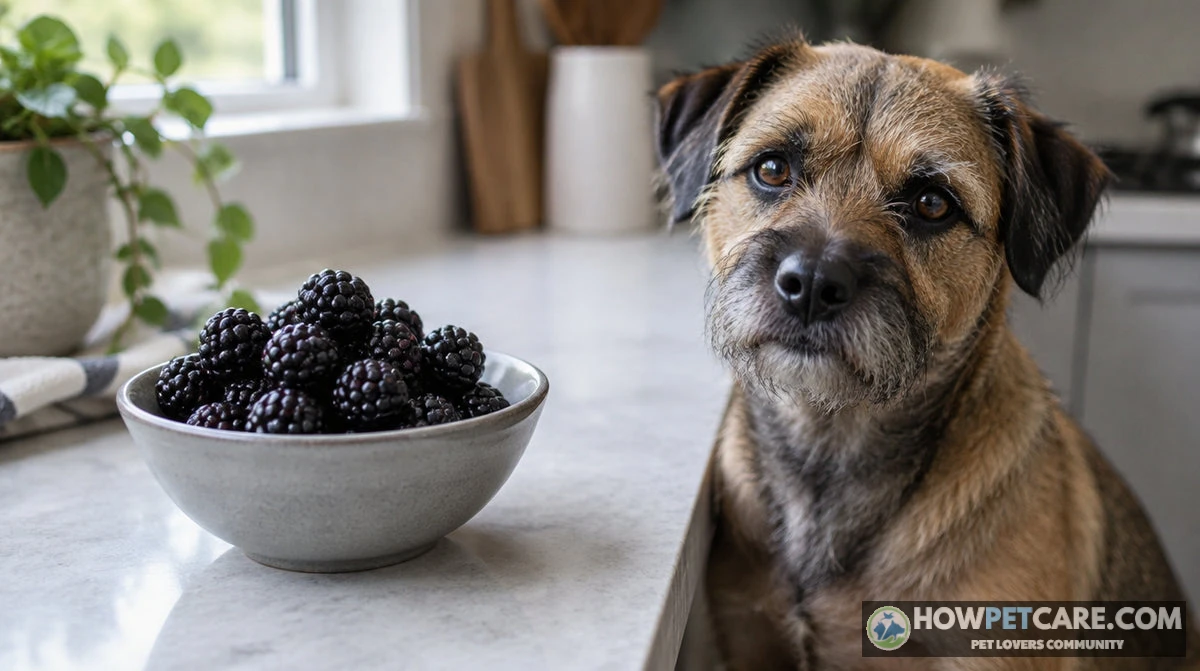

Yes, dogs can eat blackberries. Plain, ripe berries are non-toxic for most healthy dogs as an occasional treat—about 1–10 berries depending on size, kept within the 10 percent treat rule. Skip sweetened products, especially anything containing xylitol, and check with your vet first if your dog has health conditions.
Yes, Dogs Can Eat Blackberries: Safe in Moderation and Not Toxic
The short answer to can dogs eat blackberries is yes: plain, ripe blackberries are generally non-toxic and safe for most healthy dogs as an occasional treat in moderate portions. Wash them first, serve them plain, and scale the portion to your dog’s size.
Keep all treats within 10 percent of your dog’s daily calories. Skip blackberry jam, pie, and other sweetened products, especially anything with xylitol or birch sugar. Wild berries carry separate risks, such as misidentification and chemical exposure.
If your dog has diabetes, pancreatitis, kidney disease, or a history of bladder stones, check with your veterinarian before sharing. The portion chart, product guide, and overeating action plan below can help you decide what to do next.
How Many Blackberries Can a Dog Eat? Portions by Weight
These are conservative starting guidelines for healthy adult dogs, not medically established limits. Offer berries only occasionally, and follow your veterinarian’s advice if it differs from the chart. One average berry is estimated at 5 grams here; actual berries vary in size. Calorie estimates use 43 calories per 100 grams of raw blackberries.
| Dog weight | Example breeds | Fresh blackberries per serving | Approx. grams | Approx. calories | Serving frequency and prep notes |
|---|---|---|---|---|---|
| Under 10 lb | Chihuahua, Yorkshire Terrier | 1–2 | 5–10 g | 2–4 | Occasionally; mash or cut into small pieces |
| 10–25 lb | Miniature Poodle, Beagle | 2–4 | 10–20 g | 4–9 | Occasionally; cut up for gulpers |
| 25–50 lb | Border Collie, Bulldog | 4–6 | 20–30 g | 9–13 | A few times a week; start small |
| 50–90 lb | Labrador Retriever, German Shepherd | 6–8 | 30–40 g | 13–17 | A few times a week; count other treats too |
| Over 90 lb | Great Dane, Mastiff | 8–10 | 40–50 g | 17–22 | A few times a week; avoid serving a whole container |
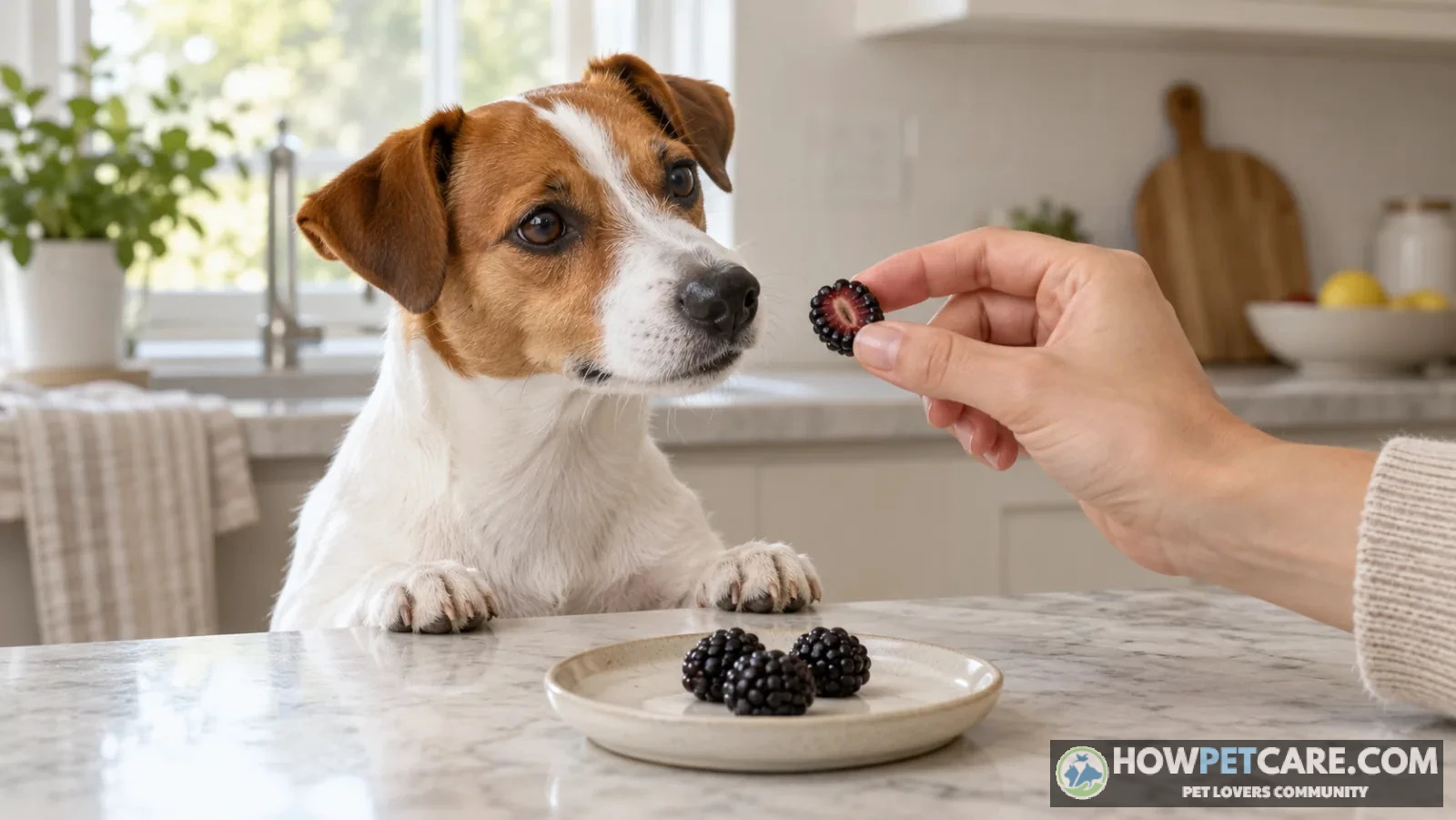
Start with one berry, or a small piece for a toy dog, and watch for digestive upset over the next day. Individual tolerance varies, so there is no need to increase the serving just because your dog enjoyed a smaller amount.
The calorie math behind the chart
The 10 percent treat rule is a ceiling for all treats combined, not an extra allowance for fruit. The rest of your dog’s calories should come from a complete and balanced diet.
For example, if your veterinarian estimates that your 20-pound dog needs 500 calories a day, the daily treat ceiling is 50 calories. Four average blackberries provide about 9 calories, leaving about 41 calories for other treats. If training rewards already use 45 calories, four berries would push the day’s treats over that ceiling.
This is an example, not a calorie prescription: dogs of the same weight can have different needs. Calories also do not establish a comfortable berry portion. A dog could develop loose stool from a large serving even when the calories fit.
Toy and small breeds: gulping, choking hazard, and seed load
A whole blackberry can be a choking hazard for a small dog, especially one that gulps food. Mash the berry or cut it into pieces suited to your dog’s mouth, and supervise while your dog eats.
Blackberry seeds are small and normally pass through the digestive tract. A seed blockage from a modest serving is unlikely, but call your veterinarian if a toy dog eats a large quantity, plant material, or packaging.
Large dogs: why a handful is still not a free pass
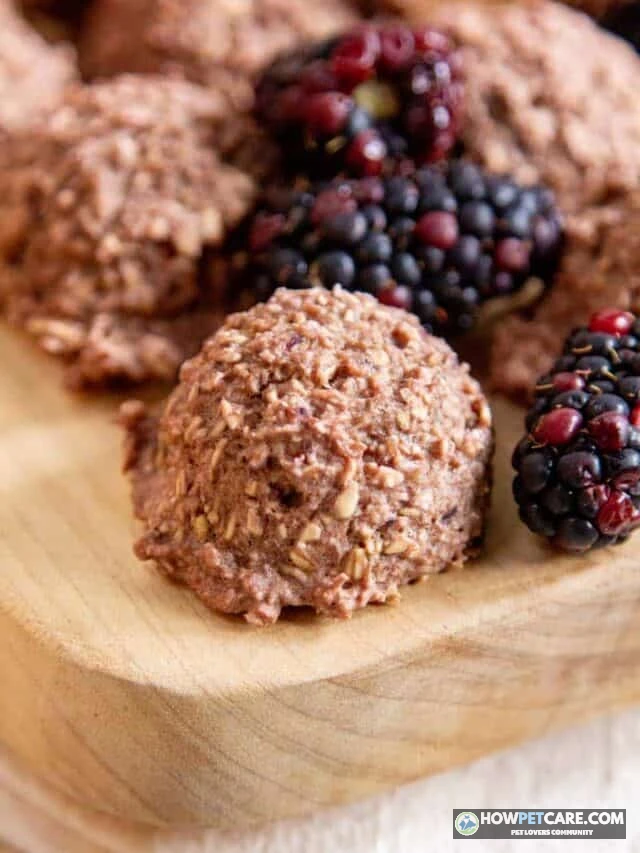
A larger dog may have room for more berries, but size does not eliminate the possibility of digestive upset. Count the serving instead of offering an unrestricted handful, and remember that the chart is a guide—not a target your dog needs to reach.
Blackberry Nutrition for Dogs and How They Compare With Other Berries
What blackberries offer at treat-size servings
Blackberries contain fiber, vitamin C, vitamin K, and antioxidants, including anthocyanins—the pigments behind their dark color. They also contain manganese. Dogs generally make their own vitamin C, so a healthy dog on a complete diet does not need blackberries as a vitamin C supplement.
The nutritional effect of a few berries is modest. Think of blackberries as an occasional lower-calorie alternative to a richer treat, not as a treatment, supplement, or proven way to prevent disease. Their seeds contain some fats, but a small serving is not a meaningful reason to rely on blackberries for omega-3s.
Blackberries vs. blueberries, raspberries, and strawberries
The figures below are approximate raw-fruit values per 100 grams, a comparison amount rather than a recommended dog serving. Blackberry values come from the supplied USDA-based nutrition data. Values for the other berries can vary by variety and preparation.
| Berry, per 100 g | Calories | Sugar | Fiber | Portion practicality for dogs | Caution flags |
|---|---|---|---|---|---|
| Blackberry | 43 | 4.9 g | 5.3 g | Count whole berries; mash for small dogs | Ask your vet first if your dog has a stone history. |
| Blueberry | About 57 | About 10 g | About 2.4 g | Small and easy to count, but also easy to over-serve | Cut or mash for dogs that gulp |
| Raspberry | About 52 | About 4.4 g | About 6.5 g | Soft and easy to mash | Naturally occurring xylitol is distinct from added sweetener; keep portions small |
| Strawberry | About 32 | About 4.9 g | About 2 g | Larger fruit; remove the top and cut into pieces | Pieces should suit the dog’s size |
Dogs can have plain blackberries and raspberries together in small amounts. Introduce each separately first, and count the mix as one treat serving. Blueberries and strawberries are also generally suitable in moderation; see blueberry serving sizes by dog size for portions. Grapes and raisins are different: they are toxic to dogs and should never be substituted for these berries. Avoid unidentified wild berries too.

How to Feed Blackberries to Your Dog: Fresh, Frozen, Dried, and Freeze-Dried
Fresh and frozen blackberries
Choose ripe, plain berries without mold or signs of fermentation. Rinse them under running water and remove stems and leaves. Cut or mash the fruit if your dog is small or tends to swallow food whole.
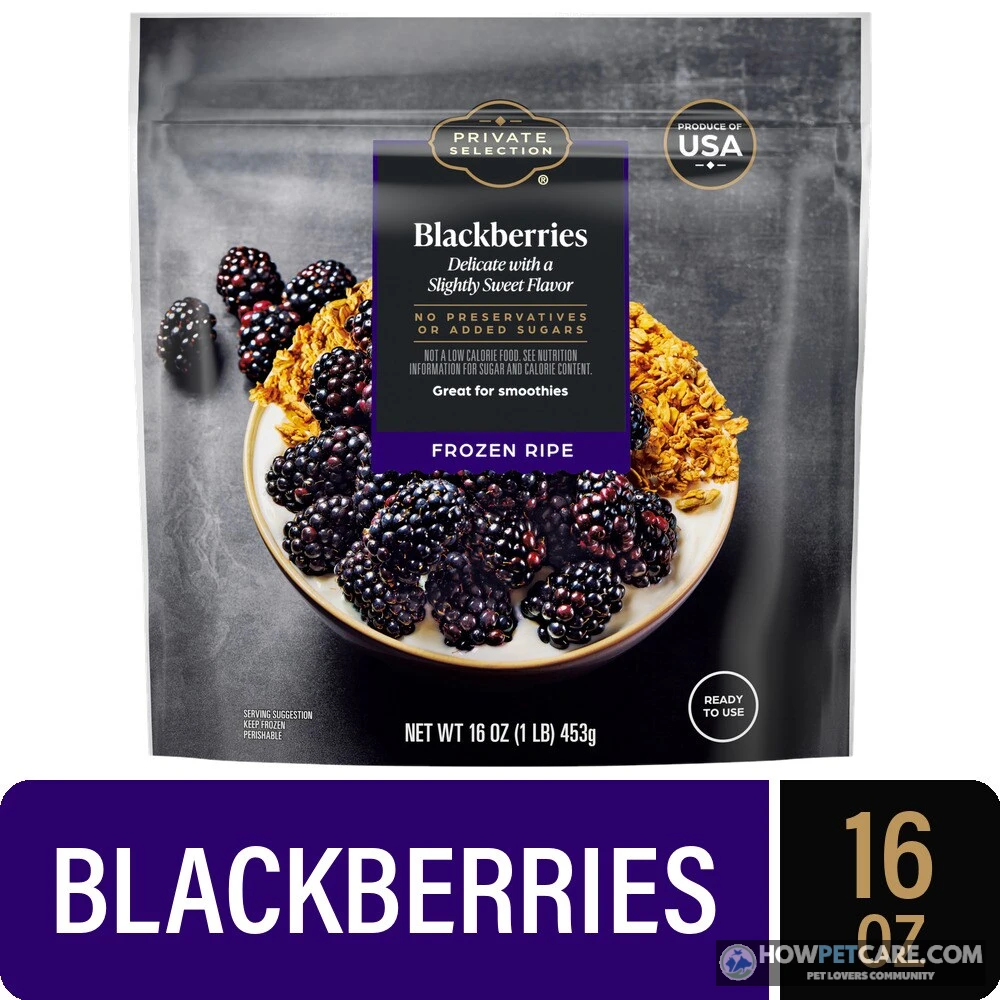
Plain, unsweetened frozen blackberries are another option. Check the package for syrup, sweeteners, and other ingredients. Frozen fruit can be hard, so thaw or mash it for small dogs and gulpers rather than offering whole frozen berries.
Dried and freeze-dried blackberries: why portions shrink
Removing water concentrates calories and sugar by weight. Dried berries may also contain added sugar, oil, or sweeteners. Read the entire ingredient list and avoid products containing xylitol.
A plain freeze-dried whole berry may still represent roughly one fresh berry’s worth of fruit, even though it feels much lighter. If the product is chopped or sweetened, its fresh-fruit equivalent may be difficult to judge. Use the package’s calorie information, offer only a very small amount, and ask your vet if you cannot work out a suitable portion. Do not treat a handful of dried fruit the same as a handful of fresh fruit.
Easy serving ideas that keep treat calories in check
Offer the measured portion by hand, mash it over regular food, or spread a little mashed berry on a lick mat. You can also use a small amount in a food-stuffable toy. Count anything else added to the toy, and check every ingredient for xylitol. Berries should not replace a meal.

Put the day’s berries and other treats in a small dish before you start sharing. This makes it easier for everyone in the household to use the same treat allowance.
Blackberry Products to Skip: Jam, Pie, Canned Berries, Wild Berries, and Sweetened Foods
| Form | Practical verdict | Main concern or preparation |
|---|---|---|
| Fresh, plain, ripe | Generally suitable | Rinse, portion, and cut or mash as needed. |
| Frozen, unsweetened | Generally suitable with preparation | Check ingredients; thaw or mash for small dogs and gulpers. |
| Dried or freeze-dried | Use caution | Concentrated by weight; check calories and ingredients and offer only a small amount. |
| Canned in water | Check the label | Plain fruit without added sweeteners may be served in a small portion, but fresh is simpler. |
| Canned in syrup or pie filling | Skip | Added sugar and other ingredients make these poor choices. |
| Jam, jelly, pie, or cobbler | Skip | Added sugar, fat, or potentially xylitol; inspect the label after accidental ingestion. |
| Baked goods or flavored yogurt | Skip | May contain unsuitable ingredients, including xylitol, chocolate, raisins, or excess fat. |
| Wild or backyard berries | Use caution | Misidentification, sprays, thorns, mold, and fermented fallen fruit are concerns. |
| Product containing xylitol or birch sugar | Never share | Suspected ingestion warrants an immediate call to a vet or animal poison control. |
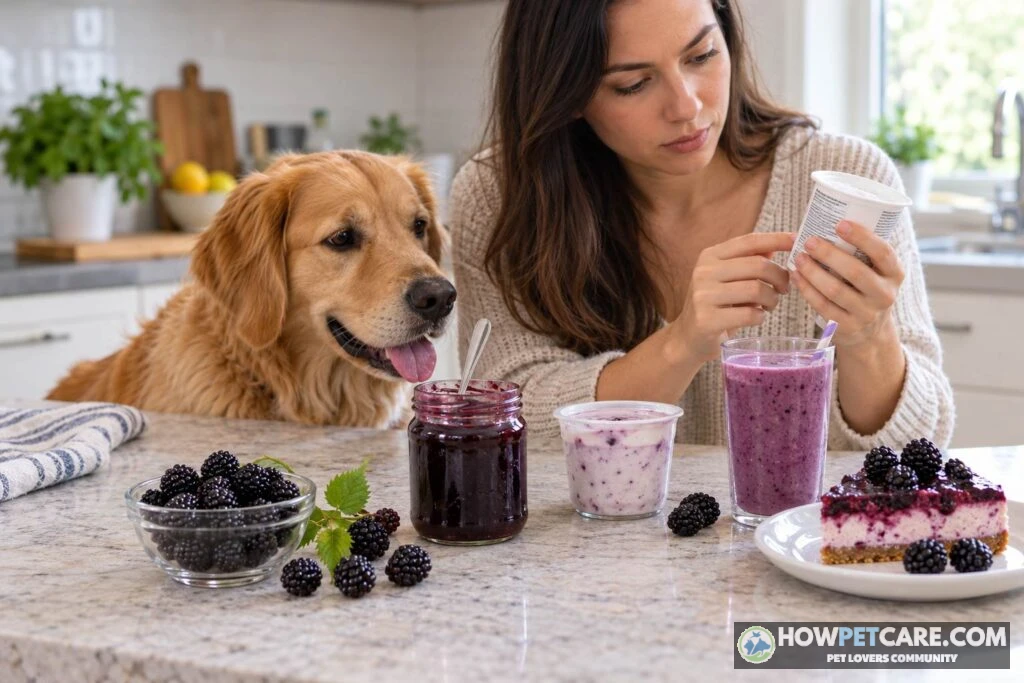
Jam, jelly, pie, and canned berries
Blackberry products are not nutritionally equivalent to plain berries. A lick of ordinary jam may cause no signs or mild stomach upset, but check its ingredients before assuming it is harmless. Sugar-free products require particular care because some contain xylitol.
Pie, muffins, and other baked goods can also contain fat or ingredients such as chocolate or raisins. If you do not know what was in a product your dog ate, keep the packaging and call your veterinarian for advice.
Xylitol-sweetened products: how to spot them
Read the ingredient list for xylitol or birch sugar. It can appear in products beyond berry foods, including some sugar-free gum, peanut butter, yogurt, and baked goods. Do not assume a product is safe just because it is labeled sugar-free or made for people.
If your dog ate a product containing xylitol or birch sugar, call your veterinarian, an emergency veterinary clinic, or animal poison control immediately. Do not wait for symptoms.
Wild and backyard bush berries
A blackberry-looking fruit is not necessarily a correctly identified blackberry. Wild and roadside plants may also have been sprayed or exposed to contaminants. Thorny canes can injure a dog’s mouth or eyes, and fallen fruit may be moldy or fermented.
Do not let your dog graze on bushes. If you choose to share foraged fruit, use only ripe berries from a positively identified, unsprayed plant, remove plant material, and rinse the fruit. Keep leaves, stems, and thorns out of the serving.
Natural Xylitol in Blackberries vs. Dangerous Xylitol Exposure
Why trace amounts in fruit are different from sweetener exposure
Xylitol occurs naturally in very small amounts in some fruits and vegetables. The trace amount reported in blackberries is not considered enough to poison a dog eating a normal treat portion. That is not the same exposure as eating a product with xylitol added as a concentrated sweetener.
The distinction is dose and source: plain berries are a portion-control question for most healthy dogs; a xylitol-sweetened product is an urgent poisoning concern.

Rough threshold comparison by dog weight
A reliable blackberry-specific xylitol value per 100 grams is not available in the evidence for this guide. Without one, it would be misleading to calculate how many berries would reach a toxic dose for a particular dog. A dog’s weight, the product eaten, and the amount of added sweetener all matter when a veterinarian or poison-control specialist assesses an exposure.
Do not use a plain-berry portion chart to judge the safety of a sweetened product. Large quantities of plain berries can still cause digestive upset, even though ordinary servings are not considered a xylitol-poisoning risk.
What to do if the product was sweetened
Call immediately if xylitol is listed or if you suspect it was used and cannot confirm the ingredients. Have the package, your dog’s approximate weight, the amount eaten, and the time of ingestion ready. Do not induce vomiting unless a veterinarian or poison-control professional instructs you to.
Blackberries for Puppies, Diabetic, Overweight, Pancreatitis-Prone, and Kidney-Stone Dogs
Puppies
Puppies eating solid food may be able to have a tiny amount of plain blackberry, but ask your veterinarian first, particularly for a very young or small puppy. Mash a small piece and keep treats from displacing balanced puppy food. A puppy with diarrhea or a sensitive stomach should not get a new treat until your vet advises it.
Diabetic and overweight dogs
For an overweight dog, a measured berry can be a lower-calorie swap for a richer reward. It still counts toward the dog’s daily food and treat plan.
For a diabetic dog, ask your veterinarian before adding fruit. Blackberries contain carbohydrate and sugar, even though a small serving contains relatively little. Your vet can advise whether they fit the dog’s diet and whether serving amounts should stay consistent.
Pancreatitis-prone dogs
Plain blackberries are different from fatty blackberry pie or cobbler. Even so, a dog with pancreatitis or a prescribed low-fat diet should not receive a new treat without veterinary approval. Avoid the baked product even if your veterinarian approves plain fruit.
Kidney disease and calcium oxalate stone risk
Some plant foods contain oxalates, which matter when a dog has a history of calcium oxalate stones or follows a prescribed urinary diet. The available evidence does not establish a reliable oxalate amount for blackberries or a safe serving for a susceptible dog. Ask your veterinarian before feeding them; do not assume a small portion is appropriate for every stone-forming dog.
Kidney disease has several causes and dietary needs differ, so ask the vet managing your dog’s condition rather than relying on a general fruit list. Senior dogs and dogs with sensitive stomachs may also need a more cautious introduction; stop offering berries if they repeatedly cause loose stool.
My Dog Ate Too Many Blackberries: Symptom Timeline and When to Call a Vet
A dog that raids a container of plain berries may develop gas, vomiting, or diarrhea. The amount eaten, the dog’s size, other ingredients, and whether packaging was swallowed all affect the response. The time windows below are a practical monitoring guide, not a prediction: signs can appear earlier, later, or not at all.
First 10 minutes: what to check and what to do
-
Remove access
Take away the remaining berries and container so your dog cannot eat more.
-
Check what was eaten
Estimate the amount and note any stems, wrappers, other foods, or missing packaging. Record your dog’s weight and the approximate time.
-
Read the label
If xylitol or birch sugar is listed or suspected, call a vet or poison control immediately. Do not wait for signs.
-
Decide whom to call
Contact your vet promptly if the amount was large for your dog, packaging was swallowed, or your dog is a puppy, toy breed, senior, or has a medical condition.
Monitoring timeline at 2, 12, and 24 hours
| Time window | Possible signs | What to do | Call the vet if |
|---|---|---|---|
| First 2 hours | No signs, drooling, gas, or vomiting | Check ingredients and quantity; provide fresh water | Xylitol is suspected, vomiting repeats, your dog seems distressed, or packaging may have been swallowed |
| 2–12 hours | Loose stool, diarrhea, vomiting, or reduced appetite | Keep water available; do not give more treats | Vomiting or diarrhea repeats, the belly is painful or swollen, or your dog becomes lethargic |
| 12–24 hours | Signs may resolve or persist; ongoing diarrhea can contribute to dehydration | Continue monitoring and follow your vet’s instructions | There is blood, black tarry stool, worsening lethargy, trouble drinking, or signs are not improving |

Dark or purple-tinged stool can occur after berries and is not by itself proof of bleeding. Black, tarry stool or visible blood is different and warrants a veterinary call.
Red flags that mean call now
Call your veterinarian or an emergency clinic immediately for repeated vomiting or diarrhea, blood in vomit or stool, a swollen or painful abdomen, marked lethargy, tremors, seizures, or collapse. If your dog strains without passing stool after possibly swallowing packaging or plant material, call as well. Do not wait for the next time window.
For mild signs, provide fresh water, stop additional treats, and continue the normal diet unless your vet recommends otherwise. Do not fast your dog, start a bland diet, give medication, or induce vomiting without veterinary advice.
You can contact your veterinarian, a local emergency clinic, ASPCA Animal Poison Control at 888-426-4435, or Pet Poison Helpline at 855-764-7661. Poison-control consultation fees may apply.
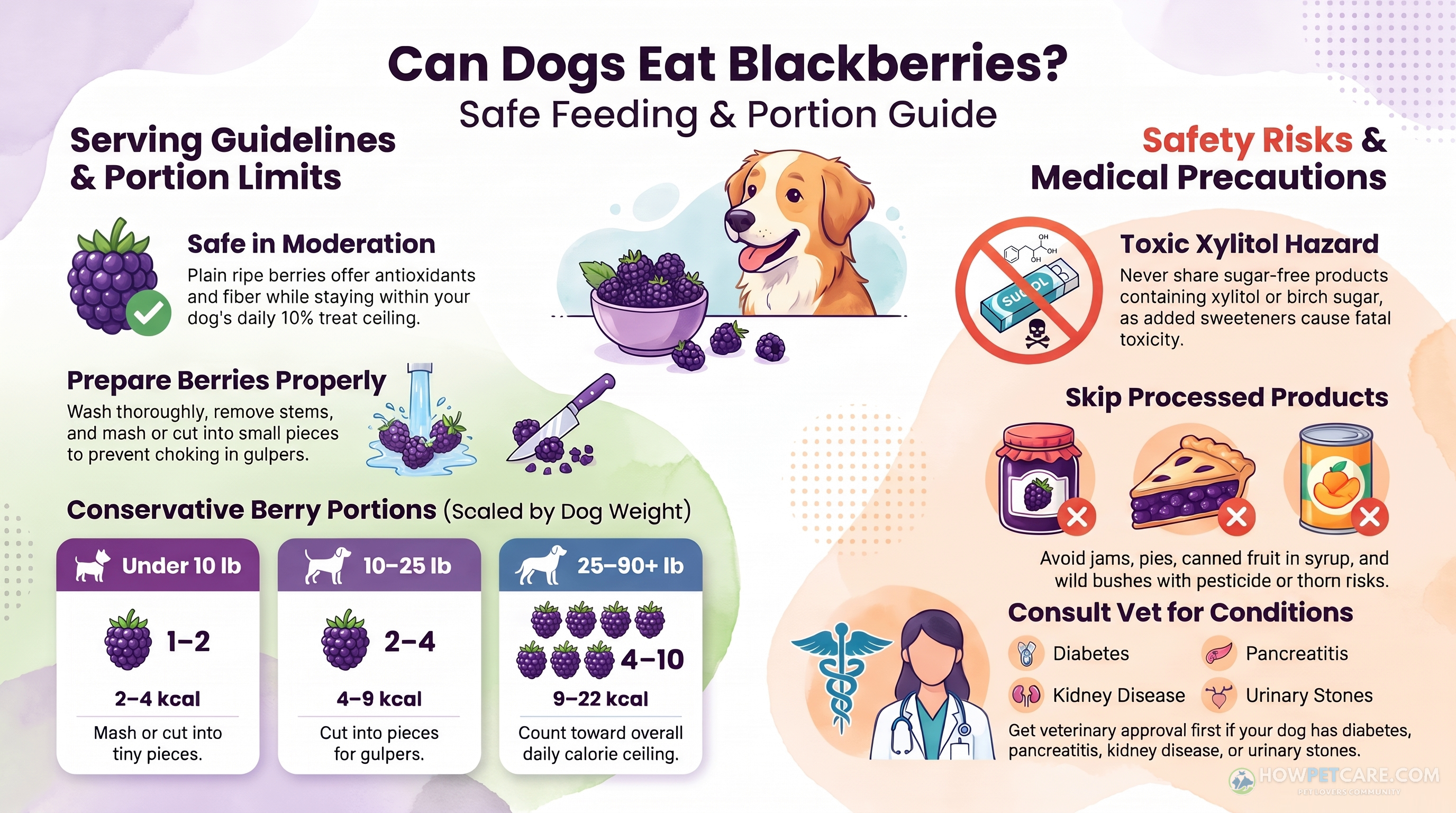
Your Blackberry Feeding Checklist and Next Steps
Before sharing, use this decision path:
- Check your dog: If your dog is a puppy or has diabetes, pancreatitis, kidney disease, a stone history, or recurring digestive upset, ask your veterinarian first.
- Check the fruit: Choose ripe, plain berries; rinse them and remove stems and leaves. Do not share a product containing xylitol or birch sugar.
- Choose a portion: Use the weight chart as a conservative guide, start with a small amount, and count all treats within the daily calorie budget.
- Prepare for your dog: Mash or cut berries for small dogs and gulpers; thaw hard frozen fruit if needed.
- Store the rest: Keep fresh containers, dried fruit, and baked goods out of reach, with dried products sealed securely.
- Watch the response: Stop feeding berries if they cause digestive upset, and contact your vet if signs persist or are severe.
For another treat choice, apply the same plain-fruit and portion principles to blueberries or sliced strawberries. If you are unsure whether a fruit or prepared food is safe, check with your veterinarian before offering it.
FAQ
Can dogs eat blackberry jam, jelly, or pie?
These are best avoided. They contain added sugar and sometimes fat or other ingredients, and some sugar-free versions contain xylitol, which is dangerous for dogs. If your dog ate a sugar-free product, call a vet or poison control right away.
Why is my dog’s poop dark or purple after eating blackberries?
The pigments in blackberries can darken or tint stool. That alone is not a concern, but black, tarry stool, bloody stool, or diarrhea with vomiting or lethargy is a reason to call your vet.
Can dogs eat blackberry leaves or the thorny canes?
It’s best to keep dogs away from the plant. Thorns can scratch the mouth, paws, and eyes, and canes or leaves from wild bushes may carry pesticides or herbicides.
Can dogs have blackberry yogurt or blackberry-flavored foods?
Flavored products usually contain added sugar or sweeteners and little actual fruit. Check the ingredient list for xylitol, and give plain fresh or frozen berries instead.
Can dogs eat blackberries and raspberries together?
Yes, in small portions, as long as both are plain. Count them together toward one treat allowance and offer a mix only if your dog tolerates each berry on its own.