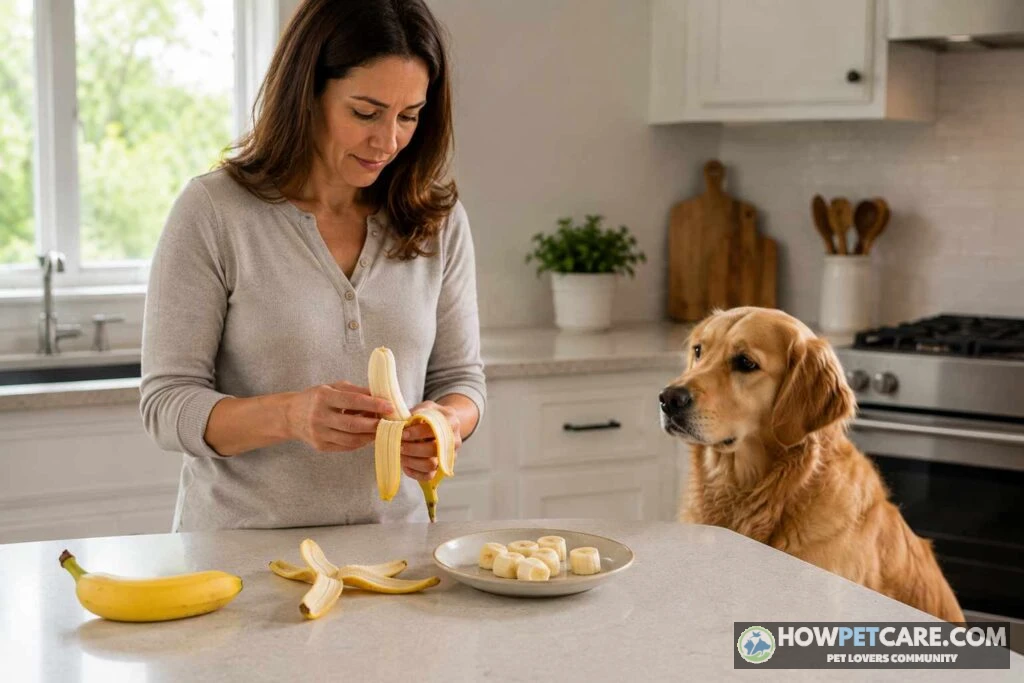

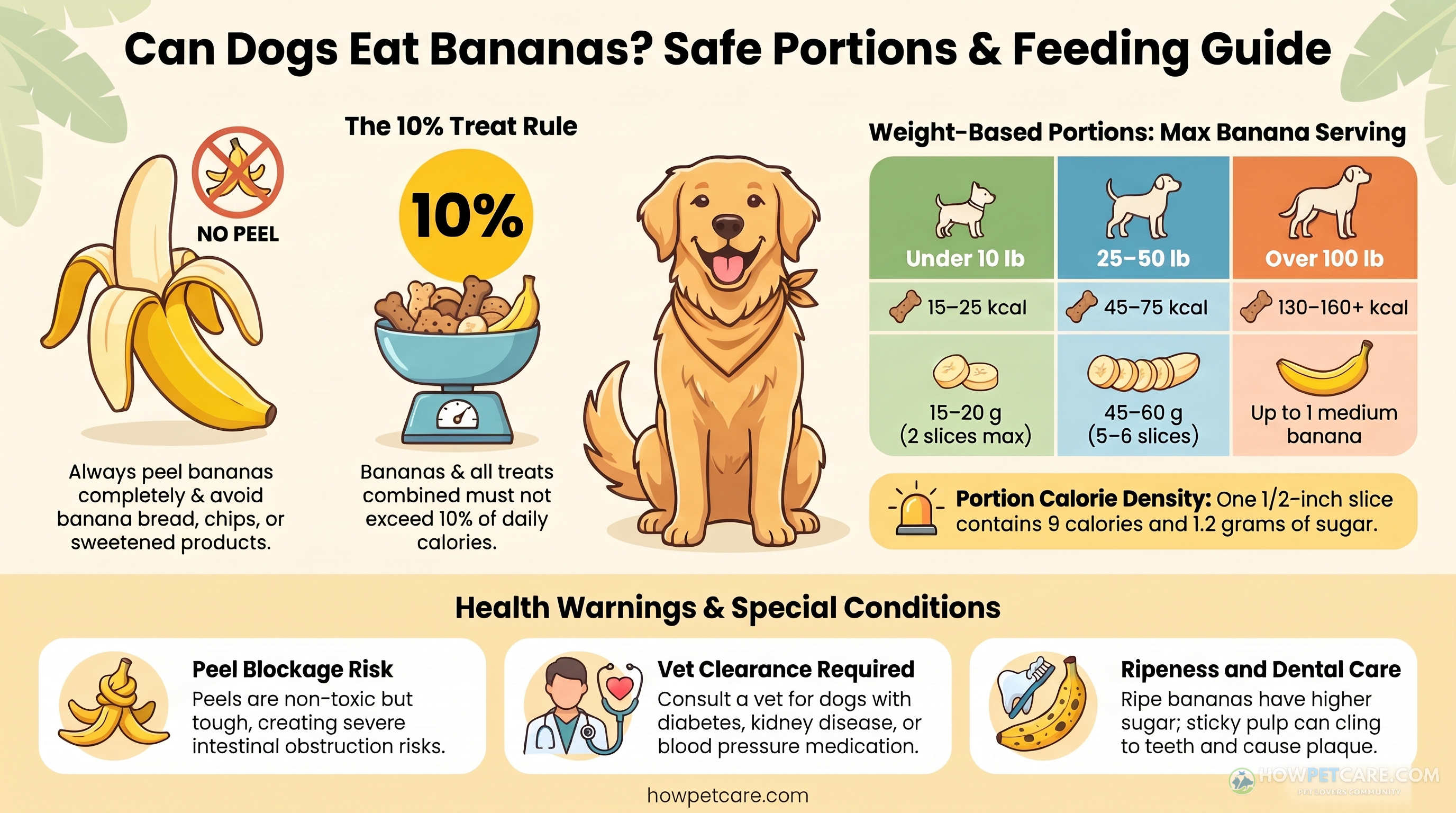
Yes—bananas are good for most healthy dogs as an occasional treat. Serve only plain, peeled flesh, keep the portion within 10% of daily calories alongside all other treats, and offer it 2–3 times per week at most. Skip the peel, banana bread, chips, and sweetened products entirely.
Are bananas good for dogs? Yes—plain, peeled banana flesh is non-toxic and safe for most healthy dogs in measured portions as an occasional treat. It’s a treat, not a nutritional necessity, and its sugar content makes portion size important. Banana is not on the toxic foods for dogs list.
The answer comes with conditions, though. Use these three rules to decide whether banana is suitable for your dog:
- Remove the peel completely before offering any flesh.
- Keep it plain—no banana bread, chips, sweetened products, or added ingredients.
- Keep the serving under the 10 percent treat rule, and offer banana occasionally rather than daily.
Offer only plain, peeled banana flesh. Skip the peel, banana bread, chips, and sweetened banana products. Count every serving toward your dog’s total daily treat budget, not as extra food on top of meals.
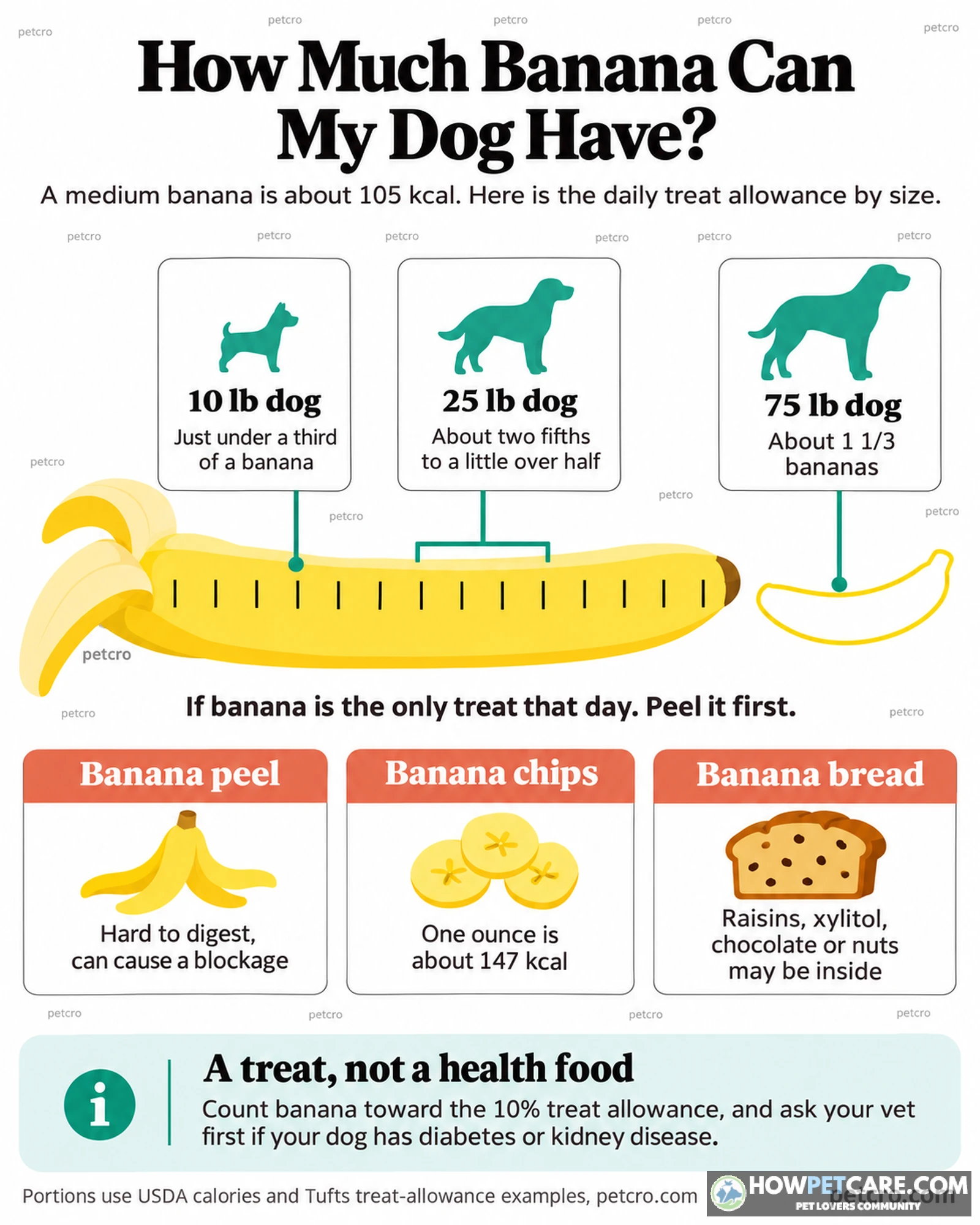
Every 100 g of banana contains about 89 kcal and 12.2 g of sugar. A medium peeled banana weighs roughly 118 g and provides around 105 kcal and 14 g of sugar. A single 1/2-inch slice is about 10 g, with roughly 9 kcal and 1.2 g of sugar. Those amounts are modest for a large dog but meaningful for a small one. Banana also provides potassium, fiber, vitamin B6, vitamin C, and manganese. These nutrients support muscles, nerves, and digestive health, but a dog eating a complete and balanced food already gets adequate amounts. Banana’s nutritional contributions are limited, so they aren’t a reason to feed it every day.
Banana flesh isn’t toxic, but a dog’s body doesn’t distinguish between sugar from fruit and sugar from a cookie. Its calories can still contribute to weight gain, and frequent sugar exposure can contribute to dental plaque over time. For most dogs, a measured portion is an occasional reward, not a daily supplement.
How Much Banana Can a Dog Eat? Portions by Weight, With Calories and Sugar
A suitable portion depends on your dog’s weight and total calorie needs. Start with the numbers: a medium peeled banana is about 118 g, 105 kcal, and 14 g of sugar. A 1/2-inch slice is about 10 g, 9 kcal, and 1.2 g of sugar. These are approximate averages, not exact measurements.
The 10 percent treat rule means all treats combined should supply no more than 10 percent of a dog’s daily calories. For example, a 10 lb dog needs roughly 200 to 250 kcal per day, giving it a total treat budget of 20 to 25 kcal. That covers every biscuit, training treat, and banana slice for the whole day—not banana alone. If your dog has already eaten a 15 kcal biscuit, only 5 to 10 kcal remain for fruit.
Find your dog’s weight band in the table, then account for any other treats already given before slicing the banana.
| Dog weight | Approx. daily calories | 10% treat budget (kcal) | Max banana per serving (grams) | Approx. 1/2-inch slices | Sugar per serving (g) | Max servings per week |
|---|---|---|---|---|---|---|
| Under 10 lb | 150-250 | 15-25 | 15-20 g | 2 slices | ~2 | 2 |
| 10-25 lb | 250-450 | 25-45 | 25-40 g | 3-4 slices | 3-5 | 2-3 |
| 25-50 lb | 450-750 | 45-75 | 45-60 g | 5-6 slices | 5-7 | 2-3 |
| 50-75 lb | 750-1,000 | 75-100 | 60-80 g | 6-8 slices | 7-10 | 2-3 |
| 75-100 lb | 1,000-1,300 | 100-130 | 90-110 g | 9-11 slices | 11-13 | 2-3 |
| Over 100 lb | 1,300-1,600+ | 130-160+ | up to ~118 g | 1 medium banana | ~14 | 2-3 |
The table covers large and giant breeds over 90 pounds. Even if their calorie budget allows more, cap a serving at one medium peeled banana per sitting: the sugar and potassium load can still climb quickly.
Working out your dog’s banana budget with the 10 percent treat rule
Check your dog food label for the daily calorie recommendation and multiply it by 0.10 to find the total treat ceiling. Subtract every training treat, chew, and table scrap already given that day. The remainder is available for banana. A banana serving leaves less room for other treats, so make those smaller or skip them on days you offer it. Activity matters, too: a very active dog may burn more calories, while a senior or sedentary dog needs fewer. Adjust the budget accordingly, and check with your vet if you’re unsure.
For healthy adult dogs, offer banana 2 to 3 times per week rather than making it a daily habit. This accounts for cumulative sugar and calories, potassium load, and the risk of displacing balanced food. Large dogs can have a very small daily piece only if it fits comfortably within the 10 percent budget after all other treats. That distinction helps reconcile guides that suggest daily feeding with those that recommend occasional treats: a safe single serving isn’t necessarily a safe daily habit.
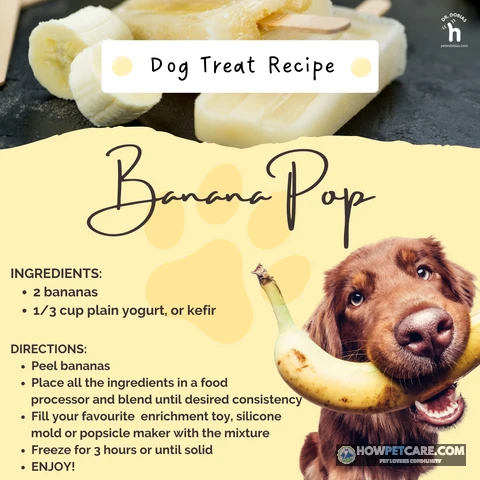
For serving ideas, try banana mashed over food, a few slices, or one frozen slice. No recipes are needed.
Large and giant breeds over 90 pounds
Large dogs can tolerate bigger portions, but the 10 percent rule still applies. A 100 lb dog with a 130 kcal treat budget can have roughly 90 to 110 g of banana—just under one medium banana—with about 11 to 13 g of sugar. Dogs over 100 lb should stop at one medium banana even if the math allows more. Large single servings of fruit can still cause gastrointestinal upset in sensitive dogs. Don’t judge the portion by your dog’s enthusiasm alone.
Can puppies eat bananas safely? Puppy diet limits and first-time tests
Puppies can safely eat tiny amounts of banana, but their diet should be almost entirely complete puppy food. Offer a first test piece of about 5 g, or half a slice, and watch the stool for 24 hours. If the puppy tolerates it, a very small slice can fit into the toy-dog row above, but treats should remain a negligible share of growth calories. Don’t use banana to replace meals during rapid growth phases.
Banana Products Compared: Fresh, Peel, Bread, Chips, Dried and Plantain
Not every banana product is safe for dogs. Fresh flesh is the only form to feed routinely. The table compares the options.
| Banana form | Verdict | Why | Max serving guidance |
|---|---|---|---|
| Fresh ripe flesh, peeled | Safe (measured) | Non-toxic; the only risk is sugar and calories | Follow the weight-band table |
| Frozen plain slices | Safe | Same as fresh; firm pieces can choke tiny dogs if swallowed whole | 1-2 small slices, supervised |
| Banana peel | Never feed | Not toxic, but tough, fibrous, and a real blockage risk—especially in small dogs | 0 |
| Banana bread / muffins | Never | Frequently contains raisins, chocolate, macadamia nuts, nutmeg, or xylitol; high fat and sugar | 0 |
| Banana chips | Avoid | Usually fried in oil and sweetened; roughly 3-4x the calories of fresh banana per gram | 0—offer fresh instead |
| Dried or freeze-dried banana | Caution | Water is removed, so sugar is concentrated about 5x per gram | 1 small piece; count as 2-3x the fresh grams |
| Ripe plantain, cooked plain | Caution | Safe only when cooked and completely unseasoned | 1-2 small bites, rarely |
| Raw green plantain | Avoid | Very starchy and hard to digest; likely GI upset | 0 |
| Banana baby food | Check label | Fine only if 100% banana; scan for added sugar and xylitol | About a teaspoon for small dogs |
| Banana yogurt, pudding, candy | Never | Added sugar and possible xylitol; xylitol is toxic to dogs | 0 |

Xylitol, raisins or grapes, macadamia nuts, chocolate, and nutmeg in baked goods should be treated as toxic foods for dogs. Banana bread may contain several of them, so don’t share a slice just because it contains banana. It often includes butter or oil, too, raising the fat content enough to trigger pancreatitis in susceptible dogs. Even plain quick breads are dense in refined carbohydrates and offer dogs little nutritional value. Banana chips are usually fried and sweetened, adding empty calories to the fruit’s natural sugar. Dried banana is calorie-dense, so its portion in grams is far smaller than a portion of fresh banana.
Frozen banana can be a pleasant treat in warm weather, but peel it and cut it small to prevent choking.
Can Dogs Eat Banana Peels? What to Do Step by Step If Yours Did
Banana peels aren’t considered toxic, but they aren’t safe to feed. They’re tough, fibrous, and hard to digest. The main danger is gastrointestinal upset or an intestinal blockage, especially in small dogs or when a dog swallows a whole peel. Risk depends on the dog’s size and the amount eaten: a small piece often passes through a large dog, while a whole peel is a greater concern for a small dog.
Don’t induce vomiting unless a vet or poison control specifically instructs you to. Call a professional before taking any action at home.
-
Secure the scene
Take away the remaining peel and check your dog’s mouth for pieces stuck inside.
-
Record the facts
Write down how much peel your dog ate, when it happened, and your dog’s weight.
-
Call for advice
Call your vet, ASPCA Animal Poison Control (888-426-4435), or Pet Poison Helpline (855-764-7661; a fee may apply). Share the three facts above and follow their instructions.
-
Pause treats
Skip other treats and chews while you monitor your dog.
Emergency checklist: the first 30 minutes
During the first half hour, remove any remaining peel, note the amount eaten and the time, and call your vet or a poison hotline. Don’t induce vomiting without professional direction. If a small dog swallowed a whole peel, treat it as higher risk even if the dog seems fine.
Blockage warning signs and when to call the vet
Watch your dog closely for 24 to 72 hours. Check appetite, stool, energy, and belly comfort each day.
Go to an emergency vet now for repeated vomiting, inability to keep water down, a bloated or painful belly, straining without producing stool, marked lethargy, or collapse. Don’t wait it out.

Call your vet the same day if there’s no stool after 24 hours, a single vomit plus refusal to eat, loose stool lasting more than 24 hours, or a dog under about 15 lb swallowed a whole peel.
Mild loose stool or one episode of gas after a small piece of peel is common and usually fine to watch at home. Call the vet if it continues past 24 hours.
To prevent another incident, put peels in a closed bin and peel bananas before they reach counter level, where a curious dog could grab them.
Green vs. Ripe Bananas for Dogs, and What Banana Sugar Does to Teeth
Ripeness changes a banana’s sugar and starch profile, which matters for diabetic and overweight dogs.
Ripeness and sugar: which stage to choose
Green bananas contain more resistant starch and less simple sugar. As they ripen, starch converts to simple sugars, making ripe and overripe bananas higher in sugar and easier to digest. Overripe, brown, mushy bananas have the highest sugar density.
For overweight or diabetic dogs, a just-ripe or slightly green banana is the better default, with vet approval, because the simple sugar load is lower. Green bananas can cause gas or constipation in some dogs, though, so introduce them in a very small piece.
Any prebiotic benefit for dogs remains unproven. Resistant starch in green bananas can feed gut bacteria in people, but evidence in dogs is limited.
Are bananas good or bad for dogs’ teeth and gums?
Bananas are soft and sticky, and their sugars can cling to teeth. They don’t clean teeth like a dental chew and aren’t a substitute for brushing. Sugar and plaque are the concern, so keep portions at the low end for dogs with existing dental disease.
Banana pulp can stick to molars and linger longer than crunchy treats. That gives oral bacteria more time to use it to produce acid.
Serve banana as a separate treat, not right before bed. Offer fresh water afterward if your dog will drink it, and maintain regular brushing. Banana won’t remove plaque.

Bananas for Dogs With Diabetes, Obesity, Kidney Disease, Heart Medication or an Upset Stomach
The guidance below explains the concerns for each condition and can help you have a more specific conversation with your veterinarian.
Diabetic and overweight dogs
Diabetic dogs: Banana’s sugar can raise blood glucose. Avoid it unless your vet approves a specific tiny amount, and prefer lower-sugar fruits instead. For a diabetic dog on insulin, even a few grams of banana can complicate glucose regulation if the dose isn’t adjusted. Don’t experiment with fruit without veterinary oversight.
Overweight dogs: Banana is calorie-dense for a fruit. Give a very small slice counted within the 10 percent treat budget, or choose a lower-calorie option such as watermelon.
Kidney disease and potassium
Advanced kidney disease can impair potassium handling. Banana is rich in potassium, with about 358 mg per 100 g, so ask your vet before offering any; potassium restriction is often part of the diet plan. In early kidney disease, a vet may allow a tiny piece after checking bloodwork. In advanced stages, potassium is often restricted, and banana’s potassium load can work against the therapeutic diet.
Dogs on heart or blood-pressure medication
Some drugs, such as ACE inhibitors (enalapril, benazepril) and potassium-sparing diuretics (spironolactone), can raise blood potassium levels. Banana’s potassium can add to this, so check with your vet and ask for a specific allowed amount. This is a caution, not a diagnosis. If your dog takes enalapril, benazepril, or spironolactone, the vet may want to monitor potassium levels more closely if banana becomes a regular treat.
Are bananas good for dogs with diarrhea or an upset stomach?
The idea that banana settles loose stool is anecdotal, not proven. Too much banana can itself cause loose stool or constipation because of its sugar and fiber. It’s not a treatment for an upset stomach. If your dog has active diarrhea or vomiting, skip all treats. If diarrhea lasts more than 24 hours or comes with vomiting, call the vet instead of trying fruit.
Work down this list and stop at the first line that matches your dog:
- Diabetic or on insulin → Skip by default. Banana’s sugar raises blood glucose. Offer only a vet-approved gram amount; blueberries are a better default.
- Kidney disease, any stage → Vet first. Renal diets often restrict potassium.
- On heart or blood-pressure medication → Vet first. ACE inhibitors and potassium-sparing diuretics can raise blood potassium; banana adds more.
- On a prescription or therapeutic diet → Vet first. Any new treat needs clearance.
- Overweight or on a weight-loss plan → Allowed but capped: 1-2 slices maximum, counted within the 10% treat budget.
- Puppy under 6 months → Tiny test piece only (~5 g). Nearly all calories should come from complete puppy food; watch stool for 24 hours.
- Active diarrhea or vomiting right now → Skip all treats. Diarrhea past 24 hours means call the vet, not fruit.
- History of gulping food or a past GI blockage → Cut banana into small pieces, or skip it.
- Healthy adult dog, none of the above → Use the weight-band portion table, with a max of 2-3 servings per week.
You can ask your vet: "My dog weighs [X] lb and has [condition / takes medication]. Is it okay to give [X] grams of banana, and how often?"
Banana vs. Apple, Blueberries and Watermelon: Which Fruit Treat Fits Your Dog
Banana is among the highest in sugar and calories of the common dog-safe fruits. These comparisons show why portion size matters.
| Fruit | Calories per 100 g | Sugar per 100 g (g) | Fiber per 100 g (g) | Potassium per 100 g (mg) | Best for |
|---|---|---|---|---|---|
| Banana | 89 | 12.2 | 2.6 | 358 | A soft, high-value reward for a healthy dog; easiest fruit to portion by the slice |
| Apple (with skin) | 52 | 10.4 | 2.4 | 107 | Crunch and fiber — always remove seeds and core |
| Blueberries | 57 | 10.0 | 2.4 | 77 | Built-in portion control; a lower-sugar, antioxidant-rich pick |
| Watermelon (flesh) | 30 | 6.2 | 0.4 | 112 | Lowest calories and hydrating — flesh only, no rind or seeds |
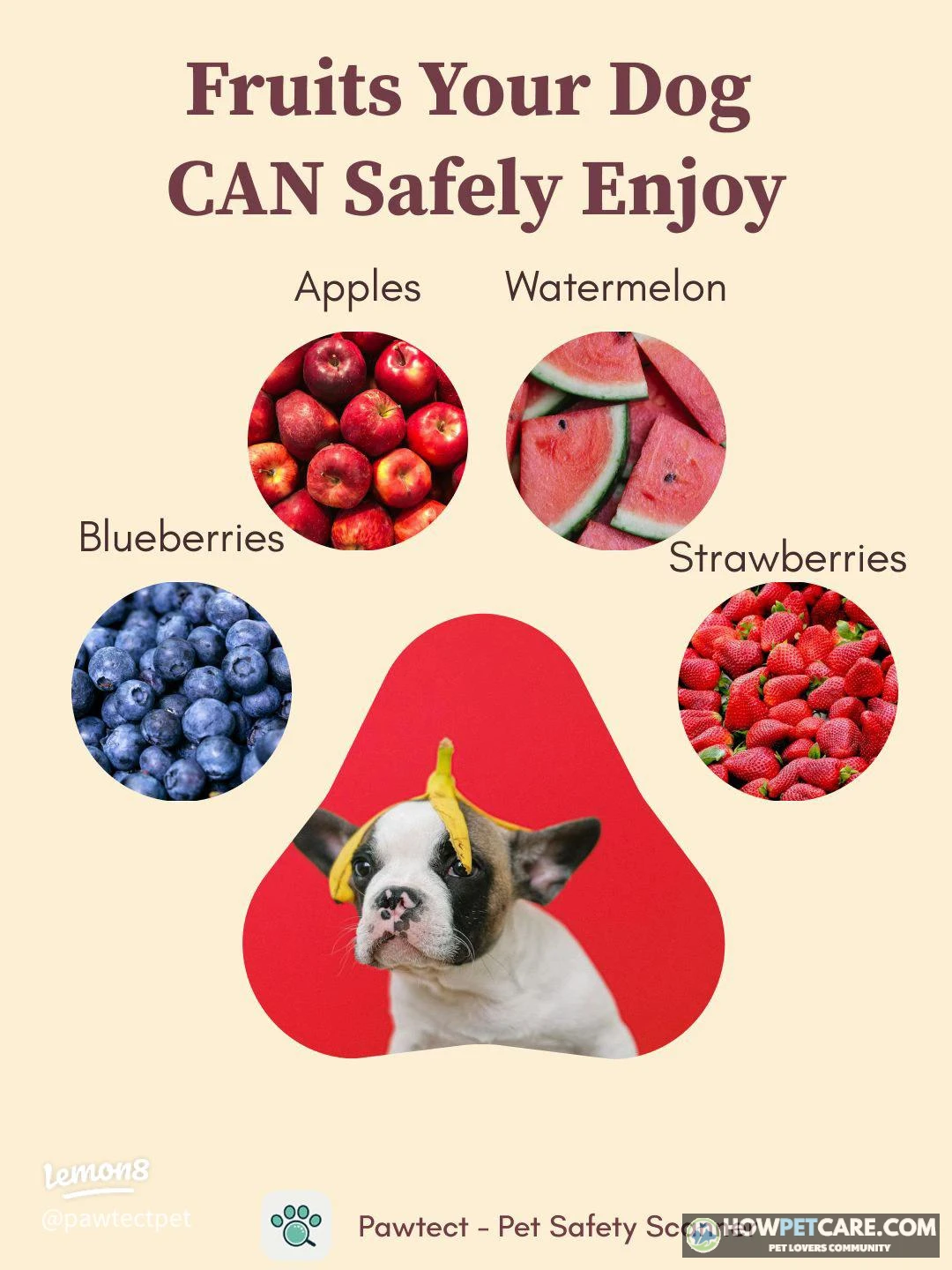
For a dog with a 40 kcal treat budget, that allows about 45 g of banana but roughly 130 g of watermelon—nearly three times the treat volume. Choose banana for a soft, smearable reward for a healthy dog, or blueberries or watermelon when weight management matters. Apple offers crunch; remember to remove the seeds and core first. Plain, portioned strawberries work the same way for dogs that like variety.
Before You Hand Over That Banana: A Quick Decision Checklist
Run through this checklist in under a minute:
- Is my dog healthy, or on a restricted diet or heart/kidney medication? If so, ask the vet first.
- Is the peel removed, and is the banana plain with no bread, chips, or sweetened products?
- Is the portion matched to my dog’s weight band and counted within the 10 percent treat budget?
- Is the frequency no more than 2 to 3 times a week for a healthy adult dog?
- For puppies and first-time eaters, did I introduce a tiny test amount and plan to watch stool for 24 hours?
- Do I know the emergency signs? Repeated vomiting, belly pain, bloating, or no stool means an immediate vet call.
If every box checks out, a measured slice of peeled banana is a safe occasional treat. If any box doesn’t, skip the banana and call your veterinarian.
FAQ
Can dogs be allergic to bananas?
It is uncommon, but any dog can react to a new food. After the first small piece, watch for itching, hives, facial swelling, vomiting, or diarrhea, and call a vet right away if you see swelling or trouble breathing.
Can bananas make a dog constipated?
They can in some dogs, especially when given in large amounts or when the banana is green. Offer only the portion for your dog’s weight and make sure fresh water is available. If constipation lasts more than a day, check with your vet.
Can dogs eat frozen bananas?
Yes. Peeled banana slices frozen plain are safe and count toward the same portion limit. Give small pieces so a dog that gulps its food does not choke.
Can I mix banana into my dog’s food or use it to hide a pill?
Yes, a small mashed amount works for most healthy dogs and counts toward the daily treat budget. Check with your vet first if the medication affects potassium or if the pill must be given on an empty stomach.
Is banana toxic to dogs in large amounts?
Banana is not toxic, but a large amount can cause vomiting, diarrhea, or stomach upset because of the sugar and fiber. A dog that ate a lot of banana flesh should be watched. Call a vet if symptoms persist more than 24 hours.