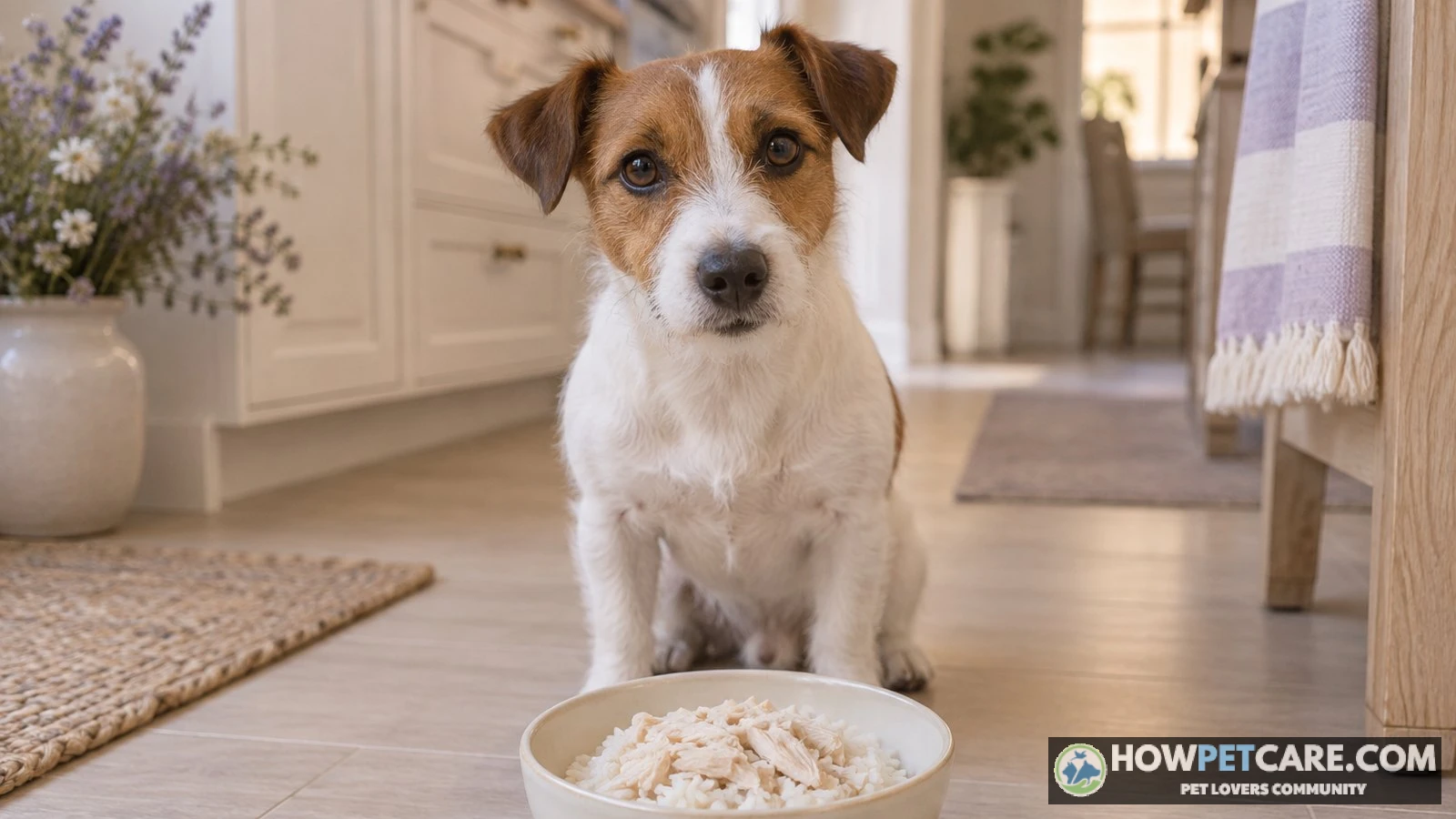

Yes, dogs can safely eat plain, cooked white or brown rice without seasonings, oils, or salt. Veterinarians routinely prescribe plain boiled white rice mixed with lean chicken to soothe acute diarrhea and gastrointestinal upset. However, rice is not nutritionally complete and should only serve as a temporary bland diet or occasional meal topper.
Yes, dogs can safely eat plain, cooked rice. Prepared without oils, salt, or seasonings, cooked rice delivers an easily digestible source of carbohydrates that veterinarians routinely recommend for acute gastrointestinal upset. Rice is not a complete food, though. How you cook it, how much you serve, and whether you choose white or brown grain determine whether it calms your dog’s gut or triggers more digestive trouble.
Plain white rice firms loose stool and lets the canine digestive tract rest, but serving restaurant rice dishes or using rice as a long-term meal replacement creates genuine medical problems. Getting the culinary prep right, sticking to strict time limits, and knowing when rice is contraindicated will keep your dog safe.
Can Dogs Eat Rice? Direct Vet Answer and Safety Overview
Plain cooked rice is non-toxic and acts as a straightforward carbohydrate that healthy dogs readily convert to usable glucose. Dogs produce amylase, an enzyme that splits starches into simple sugars. Because refined white rice carries negligible fat and almost no insoluble fiber, the gastrointestinal tract digests it with minimal effort, making it a reliable staple during mild gastroenteritis.
That ease of digestion comes with a tradeoff. Rice lacks the essential amino acids, fatty acids, fat-soluble vitamins, and balanced minerals required to meet Association of American Feed Control Officials (AAFCO) canine nutrient standards. It is not nutrient-dense, so treat it strictly as a short-term bland diet base or an occasional meal topper—never an everyday staple.
Why Veterinarians Recommend Plain Rice for Dogs
When a dog gets into the trash, experiences stress colitis, or develops sudden watery diarrhea, the intestinal lining becomes inflamed. Vets rely on plain white rice and other safe human foods for dogs because its low fiber and concentrated starch pull excess water out of the intestinal lumen. That fluid absorption firms loose stool, slows transit time, and gives damaged villi room to recover without demanding heavy enzymatic work.
Toxic Additives to Avoid: Fried Rice, Onions, and Seasonings
Never give your dog leftover takeout, seasoned sides, or boxed rice mixes. Human recipes regularly feature ingredients that can make dogs critically ill:

- Alliums (Onions, Garlic, Leeks, Chives): Contain N-propyl disulfide, an organosulfur compound that damages canine red blood cells and causes severe hemolytic anemia.
- Excess Sodium and Bouillon Cubes: Cause clinical dehydration, osmotic diarrhea, and sodium ion toxicity in smaller dogs.
- Fats, Butter, and Cooking Oils: The heavy lipid content in fried or buttered rice can trigger acute pancreatitis, a painful and potentially fatal condition.
- Artificial Sweeteners (Xylitol/Birch Bark Extract): Sometimes present in specialty human grain mixes, xylitol triggers rapid insulin release, leading to profound hypoglycemia and acute liver failure.
Never let your dog ingest raw, uncooked rice grains. Dry grains absorb gastric fluids, swell inside the stomach, and can cause painful food bloat or mechanical intestinal obstructions. Always ensure rice is fully boiled to a soft consistency before offering it to your dog.
White Rice vs. Brown Rice for Dogs: Gastrointestinal Benefits and Differences
Your choice between white and brown rice hinges on your dog’s current health, digestive status, and medical history.
| Nutritional / Clinical Metric | White Rice | Brown Rice | Veterinary Recommendation |
|---|---|---|---|
| Processing Level | Milled and polished; seed coat, bran, and germ removed | Whole grain; retains fibrous outer bran layer and germ | White rice for acute recovery; brown rice for maintenance |
| Fiber Content | Extremely low (<0.5 g per 100 g cooked) | Moderately high (1.8–2.0 g per 100 g cooked) | Low fiber is critical during active gastrointestinal irritation |
| Digestive Transit | Rapid breakdown; absorbs water to bind fecal matter | Slower breakdown; insoluble fiber speeds fecal transit | Use white rice to stop diarrhea; use brown rice for regular motility |
| Glycemic Index (GI) | High (approx. 70–73); rapid blood sugar absorption | Moderate (approx. 50–55); gradual glucose release | Avoid white rice in diabetic dogs without veterinary supervision |
| Micronutrient Profile | Primarily simple starches; lower in native trace minerals | Rich in magnesium, phosphorus, B vitamins, and manganese | Brown rice offers better supplemental value for healthy pets |

When White Rice Is Clinically Preferred (Diarrhea and GI Distress)
During active bouts of acute diarrhea, vomiting recovery, or bowel inflammation, white rice is the clear choice. Milling strips away the fibrous bran and germ layers, so white rice will not irritate the gut wall or stimulate excessive bowel contractions. The gelatinized starches line the gastrointestinal tract, soothe irritation, and absorb free fluid in the bowel to yield formed stool.
When Brown Rice Is Beneficial (Weight Management and Fiber Support)
Brown rice keeps its outer bran coating, giving it more magnesium, selenium, and B vitamins than white rice. For a healthy adult dog that needs extra dietary fiber to support anal gland expression or feel full during weight loss, plain cooked brown rice works well as an occasional supplement, and can be mixed with small amounts of cheese as a treat. That said, brown rice requires more digestive effort, and its insoluble fiber can irritate an already upset bowel, so keep it away from dogs with active gastrointestinal distress.
Special Precautions for Diabetic Dogs
Canine diabetes mellitus requires tight carbohydrate management to avoid dangerous spikes in postprandial glucose. White rice has a high glycemic index that quickly raises blood sugar. If your pet is diabetic, do not offer white rice without direct veterinary guidance. When a diabetic dog needs a temporary bland diet, clinicians generally select complex carbohydrates or prescribe a regulated gastrointestinal diet to maintain glycemic control.
How to Safely Cook Plain Rice for Dogs to Minimize Starch and Arsenic
Cooking rice for a dog involves a few adjustments compared to standard kitchen prep. Dogs produce no salivary amylase, depending entirely on pancreatic enzymes in the small intestine to break down starches. Cooking the grains until they are soft and gelatinized gives those enzymes direct access.
Rice crops also draw trace amounts of inorganic arsenic from soil and irrigation water through their roots. While sporadic meals rarely cause acute toxicity, a thorough rinse and boil removes a large portion of heavy metals and washes away excess surface starch that can leave a gummy residue in the gut.
Cooked rice must be cooled to below 40°F (4°C) within 2 hours of boiling to prevent the rapid proliferation of Bacillus cereus bacteria. Store plain cooked rice in an airtight container in the refrigerator for a maximum of 4 days, or freeze measured individual portions for up to 2 months.
The Rinsing and Boiling Technique for Arsenic Reduction
To strip excess surface starches and reduce inorganic arsenic levels by up to 50%, follow this high-volume boiling protocol before serving rice to your pet:
-
Cold-Water Pre-Rinse
Measure raw white or brown rice into a fine-mesh metal sieve. Rinse under cold running water for 90 to 120 seconds, agitating grains continuously until the runoff turns completely clear.
-
Calibrate 6:1 Water Ratio
In a large stockpot, bring 6 cups of clean water to a rapid, rolling boil for every 1 cup of raw rice. Avoid standard absorption ratios (such as 2:1), as cooking in surplus water extracts free heavy metals out of the grains.
-
Uncovered High-Volume Boil
Add the rinsed rice to the boiling water. Maintain an active, uncovered rolling boil for 15 to 20 minutes for white rice (or 35 to 40 minutes for brown rice).
-
Drain and Discard All Water
Pour the contents through the fine-mesh colander, immediately discarding 100% of the cooking liquid down the drain. Do not let the cooked rice rest or steam in the water.
-
Post-Cook Warm Flush
Pour 2 cups of boiling water over the drained rice while it rests in the colander to wash away any lingering starch residues.
-
Thermal Cool-Down
Spread the rice evenly across an ungreased baking sheet. Allow it to cool thoroughly to room temperature (below 75°F / 24°C) before combining with protein or feeding. Serving warm rice can trap internal heat and irritate an inflamed canine gastric mucosa.
Texture and Cooking Time Requirements for Canine Digestion
Never serve rice al dente. Firm or undercooked grains pass through the canine gut undigested, passing whole into the stool without delivering any clinical benefit. Boil white rice until it is soft, moist, and crushes easily between two fingers. Leave out butter, salt, oils, bouillon, garlic, and herbs throughout the entire cooking process.

Canine Rice Portion Chart: Daily Gram and Cup Limits by Dog Weight
If you feed rice as a topper or supplement to a healthy dog, apply the standard veterinary 10% treat rule: unbalanced supplemental foods should not exceed 10% to 15% of daily calories. Giving more than that displaces essential nutrients and encourages unwanted weight gain.
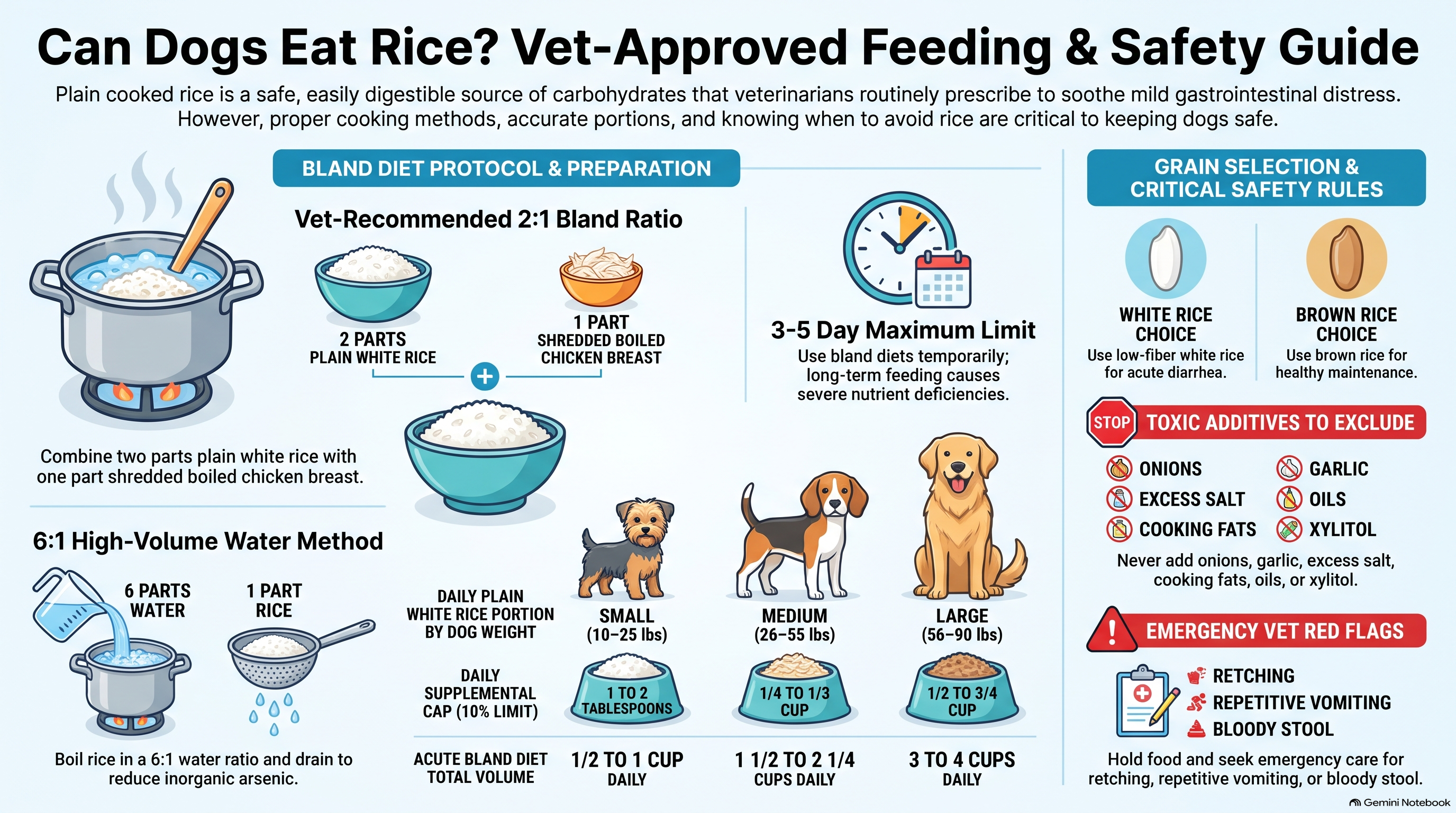
When you use rice under veterinary instruction to nurse an upset stomach, it becomes the primary carbohydrate in a temporary bland diet. The chart below lists clear gram and volume limits for both situations.
| Dog Weight Tier | Weight Range (lbs / kg) | Max Daily Supplemental Serving (10% Caloric Cap) | Acute Bland Diet Total Daily Portion (Cooked Rice + Boiled Chicken) |
|---|---|---|---|
| Toy | Under 10 lbs (under 4.5 kg) | 1 to 2 teaspoons (5–10 g cooked) | 1/4 to 1/2 cup total per day (divided into 4 micro-meals) |
| Small | 10–25 lbs (4.5–11.3 kg) | 1 to 2 tablespoons (15–30 g cooked) | 1/2 to 1 cup total per day (divided into 3–4 meals) |
| Medium | 26–55 lbs (11.8–24.9 kg) | 1/4 to 1/3 cup (45–60 g cooked) | 1 1/2 to 2 1/4 cups total per day (divided into 3 meals) |
| Large | 56–90 lbs (25.4–40.8 kg) | 1/2 to 3/4 cup (90–135 g cooked) | 3 to 4 cups total per day (divided into 3 meals) |
| Giant | 90+ lbs (40.8+ kg) | 3/4 to 1 cup (135–180 g cooked) | 4 1/2 to 6 cups total per day (divided into 2–3 meals) |

Note: Measurements reflect fully cooked, plain white rice. Acute bland diet values reflect the combined total daily volume of 2 parts white rice to 1 part lean boiled chicken breast.
When introducing a bland diet to a dog recovering from an upset stomach, begin by offering just 1/4 of their normal single-meal portion to evaluate gastric tolerance before serving larger amounts.
Daily Supplementary Portions (10% Caloric Cap)
For healthy dogs receiving rice as a topper, limit it to 2 to 3 meals per week. Stir the measured portion straight into their regular balanced kibble. If your dog starts gaining weight, cut back or remove the rice immediately.
Feeding Rice to Puppies: Pediatric Precautions
Puppies under 6 months old have minimal fluid reserves, higher calorie needs per pound, and delicate digestive tracts. Unlike adults, young pups can develop hypoglycemia or dangerous electrolyte shifts quickly during bouts of diarrhea.
If you are adding eggs, be sure to consult your vet.
Never put a puppy on a homemade bland diet without explicit approval from your vet. Diluting their meals with plain rice cuts into the calcium, phosphorus, and protein required for skeletal growth. If your puppy develops diarrhea, call your vet right away to check for parvovirus, coccidia, or giardia before trying home remedies.
The Boiled Chicken and Rice Bland Diet Protocol
The standard clinical approach for resting an upset canine digestive system is a simple homemade diet of lean boiled chicken breast and plain white rice. This meal pairs a low-fat protein with a bland, fast-absorbing carbohydrate.
The Vet-Recommended 2:1 Rice-to-Protein Ratio
The standard formula uses a 2:1 volume ratio: two parts plain boiled white rice to one part skinless, boneless boiled white chicken breast.
- The Protein: Boil boneless, skinless chicken breasts in plain water until cooked through. Drain the water and discard any rendered fat. Shred or chop the meat into small pieces. Avoid dark meat, skin, or ground poultry with higher fat content, since dietary fat delays gastric emptying and can irritate the gut.
- The Rice: Prepare plain white rice with the high-volume water method outlined above. Stir the chicken and rice together thoroughly so your dog cannot eat the meat and leave the starch behind.
(Note: Some veterinary sources list a 1:1 ratio, but the 2:1 ratio is preferred for acute watery diarrhea because it delivers less fat and provides more binding starch.)

The 4-Day Step-Down Transition Schedule Back to Regular Food
After your dog produces firm, normal stool for 24 consecutive hours, begin reintroducing regular commercial food. Switching back abruptly can trigger rebound diarrhea. Use this 4-day schedule, splitting each day’s food across 3 small meals:
| Recovery Day | Bland Diet Ratio (2:1 Rice & Chicken) | Regular Commercial Food Ratio | Clinical Stool Check & Transition Objective |
|---|---|---|---|
| Day 1 | 75% of calculated meal volume | 25% of regular kibble / wet food | Stool should remain formed. If diarrhea reoccurs, revert to 100% bland diet for 24 hours. |
| Day 2 | 50% of calculated meal volume | 50% of regular kibble / wet food | Stool should maintain shape. Monitor for intestinal rumbling, flatulence, or nausea. |
| Day 3 | 25% of calculated meal volume | 75% of regular kibble / wet food | Stool should be firm with normal coloration. Digestive enzymes have adapted to baseline fat/fiber levels. |
| Day 4 | 0% (Discontinue bland diet) | 100% normal daily feeding ration | Complete resolution. Pet has safely returned to their baseline complete and balanced diet. |
The Nutritional Hazard of Feeding Bland Diets Long-Term
Boiled chicken and rice is therapeutic, but it is not complete and balanced. It lacks key vitamins (A, D, E), calcium, zinc, iron, copper, and essential fatty acids.
A chicken-and-rice bland diet should never exceed 3 to 5 continuous days without direct veterinary supervision. Prolonged feeding leads to systemic nutritional deficiencies, muscle wasting, and electrolyte imbalances. If your dog’s gastrointestinal symptoms fail to resolve within 48 to 72 hours, diagnostic clinical intervention is required.
Clinical Red Flags: When NOT to Feed Rice and When to Seek Immediate Vet Care
Home-cooked rice suits mild, self-limiting digestive upset—like a dog that ate a harmless table scrap and passed a soft stool. Do not attempt home feeding if your dog displays systemic illness, severe abdominal pain, or signs of an internal blockage.
| Clinical Presentation | Safe for Home Rice Feeding? | Immediate Action Required |
|---|---|---|
| Mild Dietary Indiscretion • Soft stool or single watery bowel movement • Alert, wagging tail, normal energy • Drinking water normally, zero vomiting | YES (Proceed with bland diet) | Offer 1/4 standard portion of plain cooked white rice. Monitor stool for 24–48 hours. |
| Gastric Dilatation-Volvulus (GDV/Bloat) • Non-productive retching/dry heaving • Distended, firm, drum-like abdomen • Pacing, restlessness, visible panic | NO (CRITICAL EMERGENCY) | DO NOT FEED. Immediate emergency transport to nearest surgical vet clinic. Minutes determine survival. |
| Upper/Lower GI Bleeding • Melena (black, sticky, tarry stools) • Hematemesis (vomit containing dark coffee grounds or blood) • Hematochezia (large volume frank red blood in diarrhea) | NO (SEVERE MEDICAL RISK) | DO NOT FEED. Indicates severe mucosal ulceration, hemorrhagic gastroenteritis (HGE), or toxicity. Hospitalize immediately. |
| Intestinal Obstruction / Foreign Body • Inability to keep water down • Repetitive vomiting within 15–30 minutes of drinking • Tense, guarding, painful abdominal posture ("prayer pose") | NO (POTENTIAL SURGICAL BLOCKAGE) | DO NOT FEED. Adding rice behind an obstruction exacerbates pressure and risks intestinal perforation. Requires X-rays/ultrasound. |
| Chronic/Systemic Distress • Diarrhea lasting >48 hours without improvement • Pale, tacky, or gray gums • Extreme lethargy, collapse, or refusal to stand | NO (SYSTEMIC COMPROMISE) | DO NOT FEED. High risk of life-threatening electrolyte collapse and dehydration. Requires IV fluids and diagnostic blood work. |

Surgical Emergencies vs. Mild Dietary Indiscretion (Bloat & Obstruction)
Feeding a dog during a surgical emergency can prove fatal. In Gastric Dilatation-Volvulus (GDV), the stomach twists along its mesenteric axis, trapping air, liquid, and tissue. Giving food or water stretches the stomach further, accelerates tissue death, and complicates emergency anesthesia. Similarly, if your dog ate a foreign object like a toy, clothing, or a corn cob, feeding rice packs mass behind the obstruction, raising the odds of bowel perforation and peritonitis.
Symptom Checklist Demanding Immediate Hospitalization
If you notice any of these red flags, hold all food and bring your dog to an emergency veterinary clinic:
- Unproductive retching, continuous gagging, or inability to swallow saliva
- Vomiting more than twice in an 8-hour window
- Inability to keep down small sips of water
- High fever (rectal temperature above 103.5°F / 39.7°C) or hypothermia (below 99.5°F / 37.5°C)
- Suspected ingestion of human medications, toxic plants, rodent poison, or foreign objects
- Neurological symptoms, unsteadiness, marked disorientation, or collapse
Actionable Checklist: Safe Feeding Protocol for Dogs with Upset Stomachs
For mild, uncomplicated stomach upset, use this clinical checklist to help your dog recover safely:
☐ Step 1: Perform Clinical Triage
Check for red flags: confirm your dog shows no abdominal pain, dry retching, repeated vomiting, or bloody stool. If any of these appear, stop and contact your vet.☐ Step 2: Institute Controlled Gut Rest (Adult Dogs Only)
If your vet recommends it, withhold food for 6 to 12 hours so gastric inflammation can settle. Keep fresh water available in controlled amounts (a few tablespoons at a time) to prevent stomach bloating. (Note: Do not fast toy breeds or puppies under 6 months due to hypoglycemia risks.)☐ Step 3: Prepare the 2:1 Bland Diet
Boil boneless, skinless chicken breast and white rice separately in generous amounts of water. Pour off all cooking broth and skim off fat. Combine two parts soft white rice with one part shredded lean chicken. Let the mixture cool completely to room temperature.☐ Step 4: Administer Micro-Meals
Avoid serving a full day’s ration at once. Check your dog’s daily bland allowance on the portion chart and split that total into 3 or 4 small meals spaced roughly 6 hours apart. Start with a test serving equal to 1/4 of a normal meal.☐ Step 5: Monitor Stool and Initiate the 4-Day Step-Down
Check your dog’s stool over the next 24 to 48 hours. Once bowel movements are consistently formed, begin the 4-day shift back to regular commercial food, replacing 25% of the bland diet with normal food each day until the transition is complete.
| Dog Weight Tier | Weight Range | Max Daily Supplemental Serving | Acute Bland Diet Daily Portion |
|---|---|---|---|
| Toy | Under 10 lbs (under 4.5 kg) | 1 to 2 teaspoons (5–10 g cooked) | 1/4 to 1/2 cup total per day (divided into 4 micro-meals) |
| Small | 10–25 lbs (4.5–11.3 kg) | 1 to 2 tablespoons (15–30 g cooked) | 1/2 to 1 cup total per day (divided into 3–4 meals) |
| Medium | 26–55 lbs (11.8–24.9 kg) | 1/4 to 1/3 cup (45–60 g cooked) | 1 1/2 to 2 1/4 cups total per day (divided into 3 meals) |
| Large | 56–90 lbs (25.4–40.8 kg) | 1/2 to 3/4 cup (90–135 g cooked) | 3 to 4 cups total per day (divided into 3 meals) |
| Giant | 90+ lbs (40.8+ kg) | 3/4 to 1 cup (135–180 g cooked) | 4 1/2 to 6 cups total per day (divided into 2–3 meals) |
FAQ
Can dogs eat jasmine rice or basmati rice every day?
Yes, dogs can eat plain jasmine or basmati rice, but neither should be fed as a daily staple. White aromatic rices behave similarly to standard white rice in the digestive system, yet feeding them every day displaces essential nutrients found in complete, balanced canine diets.
What should I do if my dog ate raw or uncooked rice?
If a dog consumes a small pinch of raw rice, monitor them closely and provide plenty of fresh water; it will usually pass through undigested. If they ingested a significant volume of dry rice, contact your veterinarian immediately, as uncooked grains absorb stomach fluids, expand, and can cause painful gastric impaction or intestinal obstruction.
Can dogs eat plain rice cakes?
Plain, unsalted rice cakes made strictly from puffed brown or white rice are generally safe as an occasional, low-calorie treat. Ensure they contain no added salt, artificial sweeteners like xylitol (birch sugar), chocolate, or savory onion and garlic flavorings.
Can dogs with pancreatitis eat white rice?
Dogs recovering from an acute bout of pancreatitis can often eat plain white rice as part of an ultra-low-fat bland diet, provided it is approved by their treating veterinarian. However, because pancreatic enzymes assist in carbohydrate digestion, some dogs with chronic pancreatitis require specialized therapeutic GI kibble rather than home-cooked rice.