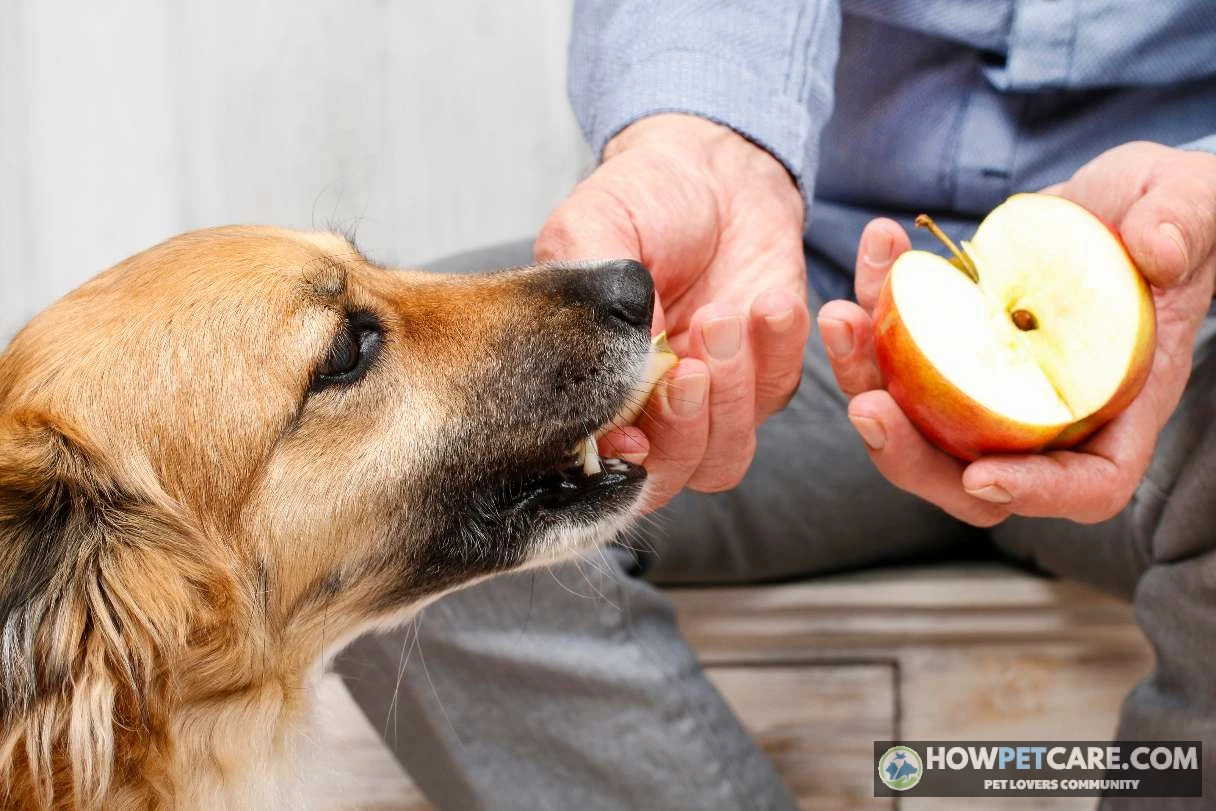

Yes — plain apple is a safe, low-calorie treat for most healthy dogs. Remove the seeds, stem, and core, cut pieces to fit your dog’s size, and keep all treats under 10% of daily calories. For a 20 kg dog, that’s about 3–4 slices a day.
Yes, plain apple is a safe, low-calorie treat for most healthy dogs — as long as you remove the seeds, stem, and core, cut it to fit your dog, and keep the portion small. That one rule covers most situations: wash the apple, cut out the middle, slice or dice it to a safe size, and count it inside your dog’s treat budget.
If your dog just ate a few seeds or gnawed a core, don’t panic. For a medium or large dog, that’s very rarely an emergency, and the triage checklist further down shows exactly where the line is. This page gives you the numbers most guides skip: a portion chart by body weight, the realistic cyanide math behind apple seeds, a safe-or-not table for store-bought apple products, and guidance for puppies, seniors, and dogs with health conditions. If your dog has diabetes, pancreatitis, kidney disease, or a history of stomach trouble, check with your veterinarian before treating — and for the bigger fruit picture, see which fruits dogs can eat safely.
What Apples Give a Dog, and What They Don’t

Apples are a low-calorie, crunchy, high-water treat with some fiber. They provide fiber, vitamin C, quick energy from natural sugars, and are low in calories and fat, along with vitamin A and antioxidants that support general wellness. But let’s be straight about the headline claim: dogs make their own vitamin C, so apple isn’t a meaningful vitamin source for them the way it might be for us.
Per 100 g of raw apple with skin: roughly 50 kcal, about 10 g sugar, about 2.4 g fiber, plus modest vitamin C and a little vitamin A. Most of the fiber sits in the skin. The real value is that apple is a cheap, water-rich, low-calorie chew your dog likes — not a superfood.
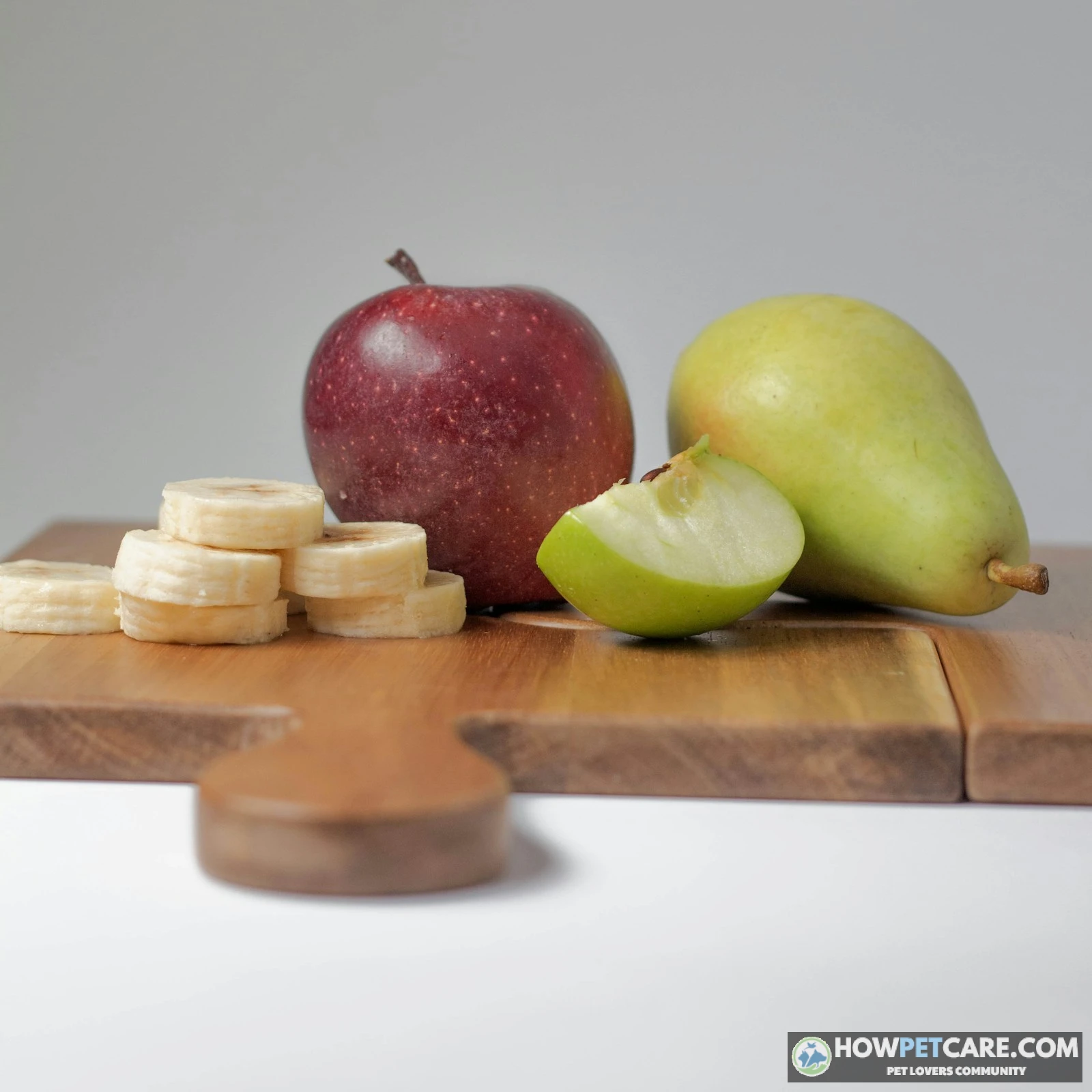
Apple vs banana vs blueberry: sugar, fiber and calories per 100 g
Apple sits in the middle, not at the top. A banana carries far more sugar and calories, while blueberries are lower-calorie but small enough that a real portion adds up fast. Watermelon is mostly water. That’s why apple earns its reputation as a sensible everyday treat rather than an occasional one. The same moderation logic applies to blueberries for dogs.
Does apple really clean teeth and freshen breath?
The crunch scrapes off a little plaque, and malic acid in the flesh has been credited with supporting dental health, but no apple replaces brushing or vet-approved dental chews. Treat it as a small bonus, not dental care. Apple is a treat, not a nutrition plan — the bulk of your dog’s diet should come from complete dog food.
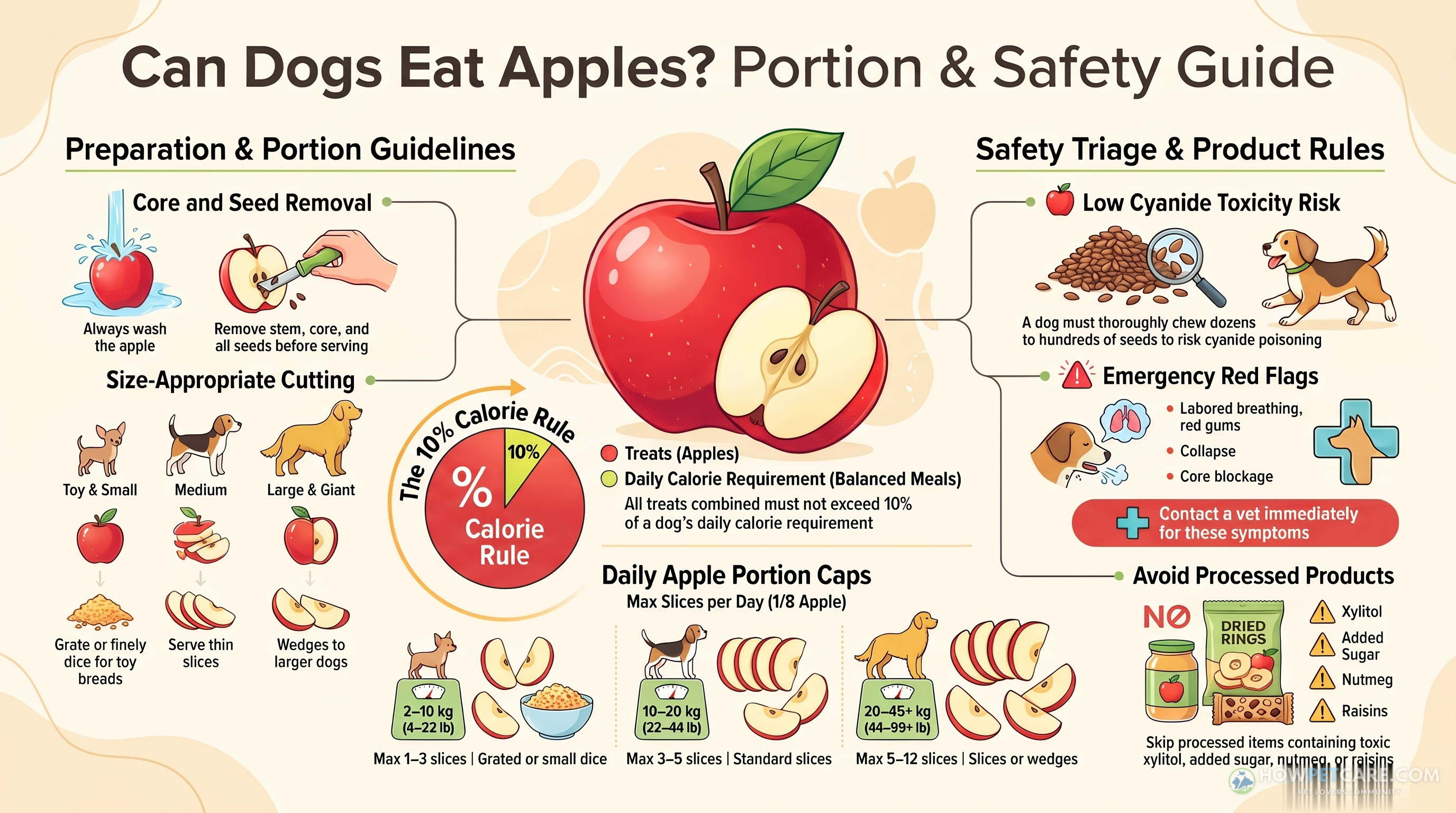
How Much Apple Can a Dog Have? Slices and Grams by Body Weight
Treats, apples included, should not exceed 10% of a dog’s daily calories, and when your dog also gets biscuits or other chews, apple should use only part of that 10%. Portions should be small and size-appropriate.
One unit matters more than anything else here, so let’s define it clearly: in the chart below, one slice is 1/8 of a medium apple — about 20–25 g and roughly 10–13 kcal. Slice size is the biggest source of error in apple feeding, so cut consistently.
The 10% rule worked out for a 20 kg dog
Here’s the math for a 20 kg (44 lb) neutered adult at typical activity:
- Resting energy requirement: 70 × (body weight in kg) ^ 0.75 = 70 × 20 ^ 0.75 ≈ 70 × 9.46 ≈ 662 kcal.
- Apply an activity multiplier of about 1.6 for a typical neutered adult: 662 × 1.6 ≈ 1,060 kcal per day. Real needs vary with age, neuter status, and activity.
- Ten percent of that is the whole treat budget: about 106 kcal.
- At ~12 kcal per slice, that’s about 8–9 slices as an absolute ceiling.
- If the dog gets other treats that day, a sensible apple-only portion is 3–4 slices (roughly 40–50 kcal).
So for a 44 lb dog, 3–4 slices is the everyday number and 8–9 is the hard cap. Use half the slices shown whenever other treats are on the menu.
Daily apple limits for toy, small, medium, large and giant dogs
Assumptions used in this chart: 1 slice = 1/8 of a medium apple ≈ 20–25 g ≈ 10–13 kcal. Daily calorie figures assume a neutered adult dog at typical activity (resting energy requirement × 1.6). Individual needs vary — treat these as ceilings, not targets.
| Dog weight (kg / lb) | Size class | Approx. daily calories | 10% treat budget (kcal) | Max apple per day (g) | Max slices per day (1/8 medium apple) | Apple kcal at max | Cut size and notes |
|---|---|---|---|---|---|---|---|
| 2–5 kg / 4–11 lb | Toy | 170–390 | ~20–40 | 20–45 g | 1–2 | ~10–25 | Grated or thin slivers — biggest choking-risk group |
| 5–10 kg / 11–22 lb | Small | 390–630 | ~40–65 | 45–75 g | 2–3 | ~25–40 | Small dice or thin slices |
| 10–20 kg / 22–44 lb | Medium | 630–1,050 | ~65–105 | 75–120 g | 3–5 | ~40–60 | Standard slices |
| 20–30 kg / 44–66 lb | Large | 1,050–1,400 | ~105–140 | 120–160 g | 5–7 | ~60–85 | Slices or wedges |
| 30–45 kg / 66–99 lb | Extra-large | 1,400–1,900 | ~140–190 | 160–220 g | 7–10 | ~85–120 | Wedges are fine |
| 45+ kg / 99+ lb | Giant | 1,900+ | ~190+ | 220–280 g | 10–12 | ~120–140 | Wedges; still a treat, not a meal |
First-time trial: start with 1 slice or 1 tablespoon of grated apple regardless of size, then watch stools for 24 hours before moving to the chart amount.
Perspective check: a whole medium apple (~180–200 g, ~95 kcal) is about 25% of a 5 kg dog’s entire daily calories — roughly the share of one meal.
A few times a week is plenty. Common varieties — Gala, Honeycrisp, Pink Lady, Fuji, and Granny Smith — are all acceptable.
1A 20 kg (44 lb) neutered adult dog with typical activity has a daily treat calorie allowance of roughly 106 kcal. Assuming one slice is 1/8 of a medium apple (~12 kcal), what is a sensible daily apple portion if the dog receives no other treats, compared to its absolute upper daily ceiling?
For a 20 kg dog, 3–4 slices (~40–50 kcal) keeps the treat well within budget, while 8–9 slices (~106 kcal) equals the entire 10% daily treat calorie limit.
2When preparing a fresh raw apple for a dog, which components must be removed prior to serving?
The tough central core is a direct choking hazard and can lead to gastrointestinal obstruction, particularly in smaller dogs.
3When checking ingredients on store-bought 'sugar-free' apple products or baked goods, which additive poses an immediate, life-threatening danger to dogs by causing severe hypoglycemia?
Xylitol triggers a rapid release of insulin in dogs, leading to severe hypoglycemia and potential liver failure.
4Why is the vitamin C contained in fresh apples considered non-essential for a healthy dog's nutritional requirements?
Unlike humans, healthy dogs produce endogenous vitamin C, making dietary intake of the vitamin unnecessary.
5For which of the following health conditions should a dog owner consult a veterinarian BEFORE feeding plain fresh apple pieces to their dog?
Apples contain natural sugars and carbohydrates that must be carefully calculated and kept consistent within a diabetic dog's meal plan.
6What is the primary safety concern associated with letting a dog eat apples that have fallen naturally onto the ground under an apple tree?
Rotting ground fruit undergoes ethanol fermentation that can intoxicate dogs, while also exposing them to toxic molds and hidden wasps.
7Why is unsweetened applesauce considered a less beneficial everyday treat for dogs compared to fresh plain apple slices?
Pureeing removes the crunchy texture that scrapes plaque and often discards or breaks down the skin where fiber is concentrated.
8Why is a large dog swallowing a few whole, unchewed apple seeds rarely considered a emergency regarding cyanide toxicity?
The hard outer shell protects the inner amygdalin from being digested and converted into hydrogen cyanide.
How to Prepare Apple for Your Dog: Skin, Slices and Choking Risk
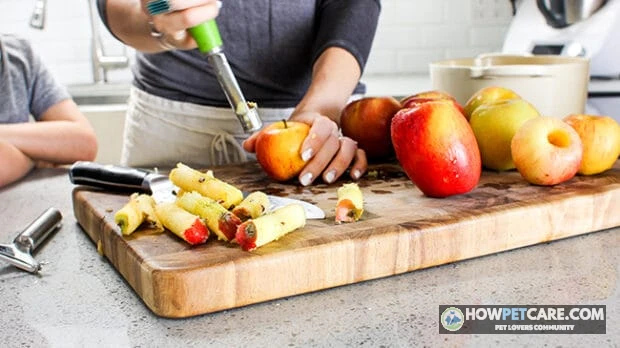
Prep is simple, but the order matters. Follow this checklist every time so you never miss a seed or the core.
-
Wash it
Rinse the apple under running water to remove wax and surface residue before cutting.
-
Cut out the middle
Remove the stem, the entire core, and every seed.
-
Slice or dice to size
Cut to a shape that matches your dog’s size — small dice for small dogs, thin slices or wedges for large ones.
-
Serve it plain
No sugar, honey, cinnamon-sugar, or toppings. Fresh, frozen slices for a hot day, or mixed into food, all work.
Cutting sizes for toy breeds versus large dogs
Skin is safe to leave on and holds much of the fiber; wash it, since residue and wax sit on the surface. Peel only for dogs with sensitive stomachs, or when the apple can’t be washed. Organic is optional. Variety doesn’t matter much — red, green, Gala, and Fuji are all fine; green apples are usually tarter and slightly lower in sugar, and none is toxic.
Whole apples and large chunks are a genuine choking and obstruction risk for toy breeds and dogs that gulp, so shape and size aren’t cosmetic. For toy dogs, grate or finely dice; for small dogs, thin slices or small cubes; for medium and large dogs, standard slices or wedges. The same wash-and-core routine applies when preparing pears for dogs. Never hand over apple scraps from the trash or pie trimmings.
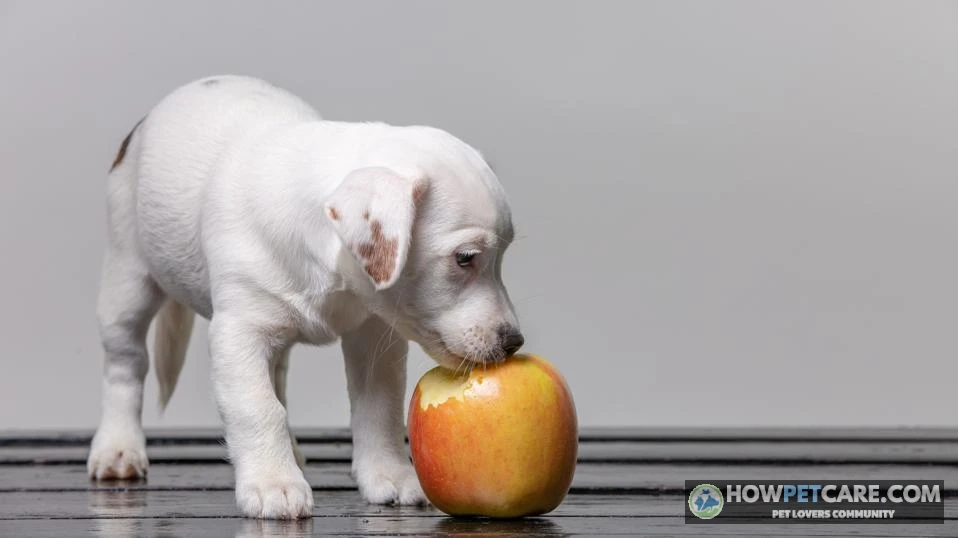
A whole apple or a fist-sized chunk is a real choking and blockage hazard for toy breeds and fast eaters, and a swallowed core raises the same risk.
| Dog Weight Class | Weight Range | Approximate Daily Calories (kcal) | 10% Treat Budget (kcal) | Max Apple Per Day (g) | Max Slices Per Day (1/8 Apple) | Preparation and Cut Notes |
|---|---|---|---|---|---|---|
| Toy | 2–5 kg / 4–11 lb | 170–390 | ~20–40 | 20–45 | 1–2 | Grated or thin slivers — biggest choking-risk group |
| Small | 5–10 kg / 11–22 lb | 390–630 | ~40–65 | 45–75 | 2–3 | Small dice or thin slices |
| Medium | 10–20 kg / 22–44 lb | 630–1,050 | ~65–105 | 75–120 | 3–5 | Standard slices |
| Large | 20–30 kg / 44–66 lb | 1,050–1,400 | ~105–140 | 120–160 | 5–7 | Slices or wedges |
| Extra-large | 30–45 kg / 66–99 lb | 1,400–1,900 | ~140–190 | 160–220 | 7–10 | Wedges are fine |
| Giant | 45+ kg / 99+ lb | 1,900+ | ~190+ | 220–280 | 10–12 | Wedges; still a treat, not a meal |
Apple Seeds and Cores: How Dangerous Is the Cyanide, Realistically?
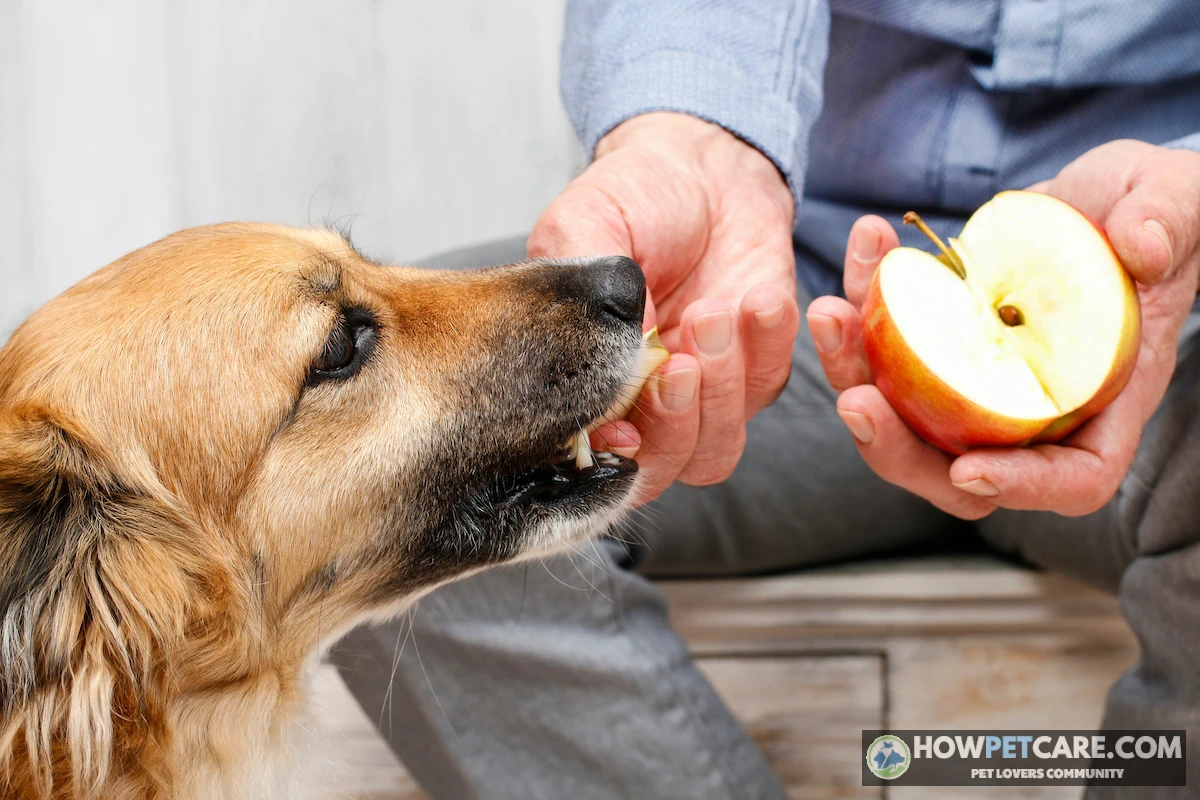
This is the fear question, and it deserves honest math instead of scare headlines. Apple seeds contain amygdalin, which releases hydrogen cyanide only when the seed is crushed or chewed and digested. Whole seeds often pass through intact, so swallowing a few is very different from grinding them up. Both seeds and cores still must be removed, because cores are a choking and obstruction risk, especially for small dogs.
How amygdalin turns into cyanide
Here’s how the estimate works. An apple seed weighs about 0.6–0.7 g and contains roughly 1–4 mg of amygdalin per gram (published values vary widely). Chewed amygdalin releases cyanide at about 6% of its weight, so one thoroughly chewed seed yields roughly 0.04–0.16 mg of cyanide. Veterinary toxicology references put a seriously toxic oral cyanide dose near 2 mg per kg of body weight. Using a mid-range figure of about 0.08 mg per seed, the thresholds look like this.
Estimated seed thresholds by dog weight
| Dog weight (kg / lb) | Estimated seeds needed for a toxic dose if fully chewed | Seeds in a typical apple (5–8) as a share of that dose | Risk if whole seeds are swallowed | Action |
|---|---|---|---|---|
| 5 kg / 11 lb | ~60–250 (midpoint ~125) | ~3–13% | Very low — whole seeds usually pass intact | Monitor at home; call vet if many seeds were chewed |
| 10 kg / 22 lb | ~125–500 (midpoint ~250) | ~2–6% | Very low | Monitor at home |
| 20 kg / 44 lb | ~250–1,000 (midpoint ~500) | ~1–3% | Negligible | Monitor at home |
| 30 kg / 66 lb | ~375–1,500 (midpoint ~750) | under ~2% | Negligible | Monitor at home |
| 45 kg / 99 lb | ~560–2,250 (midpoint ~1,100) | under ~1.5% | Negligible | Monitor at home |
Reading this honestly: a dog would need to thoroughly chew dozens to hundreds of seeds to reach a concerning dose — far more than one apple holds. A few swallowed seeds are not an emergency. The narrow-margin cases are toy dogs and large quantities of crushed seeds, such as a compost pile of cores. "Unlikely" is not "impossible": these are estimates, not a safety guarantee, and they don’t replace a call to a vet or poison control.
For a medium or large dog, a handful of swallowed seeds — even chewed — sits at a tiny fraction of any toxic dose. The bigger physical risk from a core is choking or blockage, not cyanide.
My Dog Ate Apple Seeds, a Whole Core or Too Much Apple: Monitor or Call the Vet?
If it already happened, use this triage decision instead of guessing. Excess apple mainly causes diarrhea, gas, and stomach upset, and most of those cases settle with a break from treats.
Usually fine to monitor at home:
- ☐ Medium or large dog swallowed a few whole seeds
- ☐ Medium or large dog ate one core and is acting normally
- ☐ Dog ate extra apple flesh but is bright, drinking, and not vomiting
For the next 24–48 hours, watch for vomiting, retching, a painful or swollen belly, no stool, lethargy, or skipped meals. A bland meal and a break from treats is reasonable.
Call the vet now if any of these apply:
- ☐ Toy or small dog swallowed a core or large chunks (choking or blockage risk, not cyanide)
- ☐ Dog chewed and swallowed a large number of seeds, or raided a bag or pile of cores
- ☐ Drooling, rapid or labored breathing, bright red gums, tremors, or collapse — signs consistent with cyanide exposure; this is an emergency and onset is usually fast
- ☐ Repeated vomiting, swollen painful abdomen, or straining with no stool — possible blockage
- ☐ Diarrhea or vomiting lasting more than a day, any blood in stool or vomit
- ☐ The dog is a puppy, senior, diabetic, or has a known GI condition — lower threshold to call
What to tell the vet
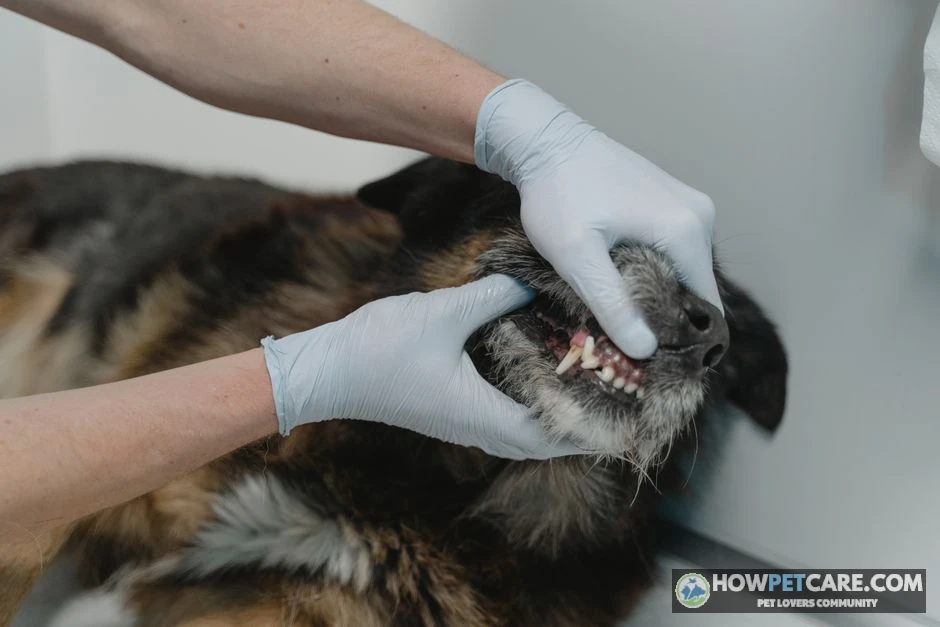
Have ready when you call: your dog’s weight, what and roughly how much was eaten, when it happened, and whether the seeds looked chewed. Call your veterinarian or an animal poison control service such as the ASPCA Animal Poison Control Center or Pet Poison Helpline (fees may apply). Do not induce vomiting unless a vet instructs you to — this article helps you decide whether to call, not how to treat.
Applesauce, Dried Apple, Juice, Cider and Pie: Which Apple Products Are Safe for Dogs?
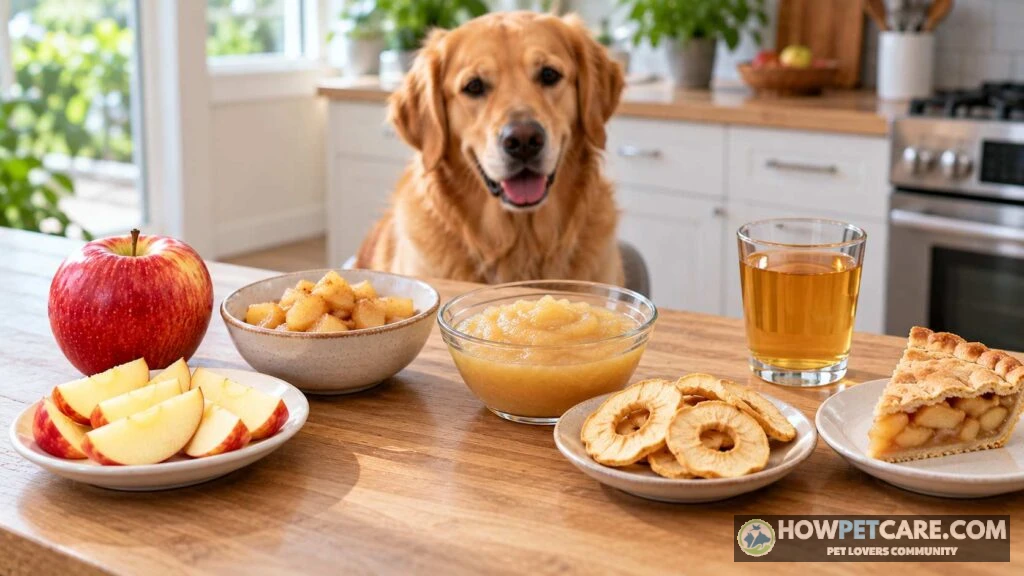
Whole fresh apple isn’t the same as apple in a bottle or a bakery case. Additives, concentrated sugar, and hidden toxins change the verdict, so screen each product individually.
| Product | Verdict | Offending ingredient or issue | If you still want to share |
|---|---|---|---|
| Plain fresh apple | Safe | None — remove seeds, stem, core | Serve per the portion chart |
| Unsweetened applesauce | Limited | Still sugary, no fiber benefit | A spoonful is fine — good for hiding pills or filling a lick mat |
| Sweetened applesauce | Avoid | Added sugar | Choose unsweetened or fresh apple instead |
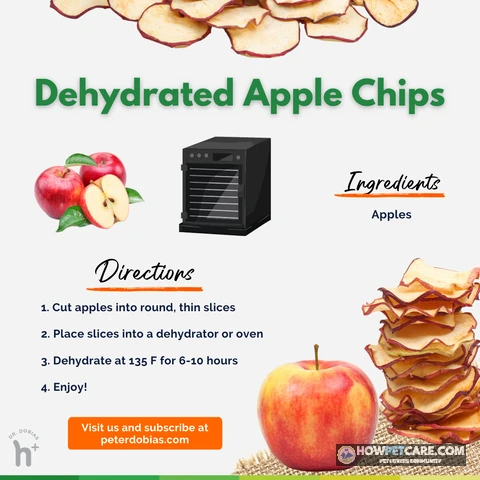
| Dried apple / apple chips | Limited | Concentrated sugar; portions look deceptively small; some brands add sugar or sulfites | One or two small pieces max, unsweetened only |
| Apple juice | Avoid | Concentrated sugar, zero fiber | Offer water; use a spoonful of unsweetened applesauce if you need flavor |
| Fresh (sweet) cider | Avoid | Concentrated sugar; may contain crushed seeds or pomace | Skip it |
| Hard cider | Dangerous | Alcohol is toxic to dogs | Never |
| Apple pie, crumble, turnover | Avoid | Sugar, fat, butter or dough, nutmeg; may contain raisins (toxic) or xylitol | Skip it — bake plain apple pieces if you want a dog-safe version |
| Apple baby food / pouches | Limited | Check label for xylitol or added sugar | Plain, unsweetened versions only, small amounts |
| Apple-flavored baked goods (‘sugar-free’) | Dangerous | Xylitol (may be listed as ‘birch sugar’), raisins, nutmeg | Never — xylitol can cause life-threatening low blood sugar in dogs |
Store-bought label check in 20 seconds
Scan the label for xylitol (sometimes listed as "birch sugar") first, then added sugar, raisins, spices — especially nutmeg — and alcohol. When cider or juice lists pressed whole fruit, remember the seed issue applies here too. If the label is unclear, fresh apple is always the safer call.
Check for xylitol or birch sugar first, then raisins, nutmeg, added sugar, and alcohol. Any of those in an "apple" product and the answer is no — reach for a fresh apple instead.
Apples for Puppies, Seniors and Dogs With Diabetes, Obesity, Pancreatitis or a Sensitive Stomach
Generic moderation advice falls short when a specific health condition is in play. Here’s the verdict for each situation, with the usual veterinary cautions — not a blanket yes.
| Dog’s situation | Verdict | How to serve | Why |
|---|---|---|---|
| Healthy adult | Yes | Per portion chart, 2–3 times a week | No special concerns |
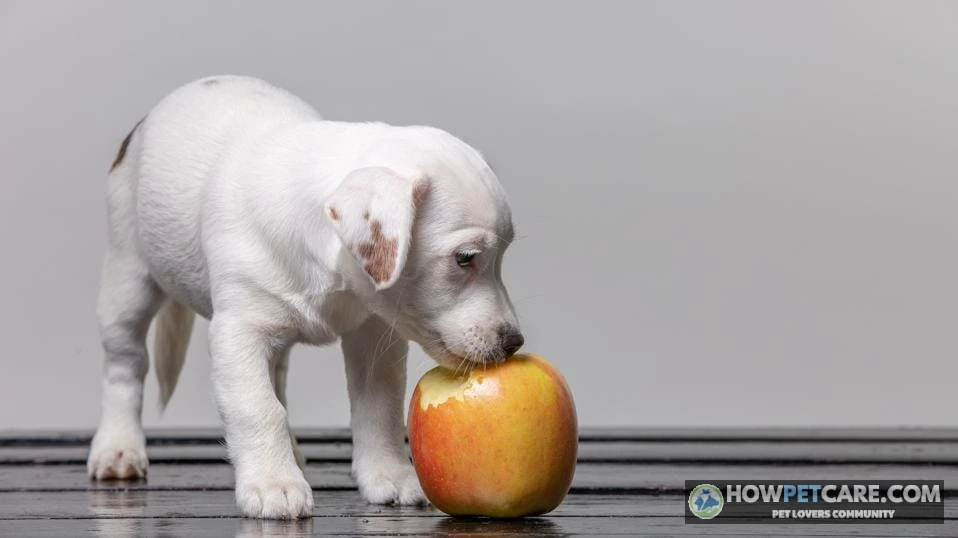
| Puppy (eating solid food) | Yes, tiny amounts | 1–2 small soft seedless pieces | Treats should stay minor during growth; watch stools and choking |
| Senior | Yes | Grated or softened if chewing or swallowing is poor | Texture is the main issue, not the apple |
| Overweight | Yes — good swap | Use the low end of the chart; count toward daily calories | Lower-calorie than most biscuits |
| Diabetic | Ask the vet first | If approved, keep the amount identical each day | Sugar and carbs must stay consistent in the plan |
| Pancreatitis (current or history) | Ask the vet first | Tiny amounts only if approved | Low in fat, but new treats can trigger flares in sensitive dogs |
| Kidney disease | Ask the vet first | Case-by-case | Renal diets are individualized — don’t assume fruit is neutral |
| GI-sensitive / prone to diarrhea | Limit | Peeled, very small amounts, one new food at a time | Too much fiber can worsen loose stools |
| Any dog on a prescription diet | Ask the vet first | — | Rule of thumb: all treats need approval on a prescription plan |
Puppies and senior dogs
Puppies eating solid food can usually have apple in very small, soft, seedless pieces — think 1–2 bites, because treats should stay a minor part of a growing puppy’s diet. Seniors are fine too, as long as teeth and swallowing are good; grate or soften the apple when chewing is hard. Texture, not the fruit itself, is the main issue for both.
Diabetes, weight and pancreatitis
For a diabetic dog, apple contains sugar and carbohydrate, so ask your vet before adding it, and if approved keep the amount identical every day and count it in the daily plan. Overweight dogs can use apple as a lower-calorie swap for biscuits — lean on the low end of the chart. For pancreatitis or a history of it, apple is low in fat, but any new treat can trigger a flare in sensitive dogs, so get vet approval and use tiny amounts.
Kidney disease and sensitive stomachs
For kidney disease, ask your vet, because renal guidance is individualized and fruit is not automatically neutral. For GI-sensitive dogs or those prone to diarrhea, offer peeled, small amounts and introduce one new food at a time — too much fiber can worsen loose stools. The rule of thumb for the whole section: if your dog is on a prescription diet, get treats approved first.
Before You Hand Over the Apple: A Three-Step Decision Checklist
Make it routine. Three checks cover nearly every apple situation before anything reaches your dog.
- Is this dog cleared? Scan the health-condition table above and the puppy and senior guidance. If any applies — diabetes, pancreatitis, kidney disease, a sensitive stomach, or a prescription diet — ask your vet first.
- Is the apple ready? Plain, washed, with seeds, stem, and core removed, and cut to a size that matches your dog.
- What is the amount? Look up your dog’s weight in the portion chart, count the slices out before serving, and use half if other treats are on the menu that day.
Keep one rule handy for accidents: when your dog eats seeds, a core, or too much apple, run the monitor-or-call checklist above, and save your vet’s number and an animal poison control line in your phone before you ever need them. The same moderation logic — wash, remove seeds and pits, cut to size, keep portions small — applies to other dog-safe fruits like pears and bananas.
FAQ
Are apples good for a dog with diarrhea?
Apple is not a treatment for diarrhea, and its fiber and sugar can make loose stools worse in some dogs. If your dog has diarrhea, skip treats and call a vet if it lasts more than a day or comes with vomiting, blood or lethargy.
Are green apples better for dogs than red apples?
Both are safe when the seeds and core are removed. Green apples tend to be tarter and a little lower in sugar, but the difference is small enough that portion size matters more than color.
Can dogs eat frozen apple slices?
Yes, plain frozen slices are a fine cool treat for most dogs, with the same seed removal and portion limits. Cut them small for toy breeds, since hard frozen pieces can be a choking risk for dogs that gulp.
Do apples clean a dog’s teeth?
The crunch may scrape a little plaque, but apple does not replace brushing or vet-approved dental chews. Do not rely on it for dental care.
Can dogs eat apples from the ground or a tree?
Fallen apples may be rotten or fermenting, which can cause stomach upset and alcohol exposure, and they may carry mold or wasps. Pick up fallen fruit in your yard and offer only a fresh, washed apple instead.