

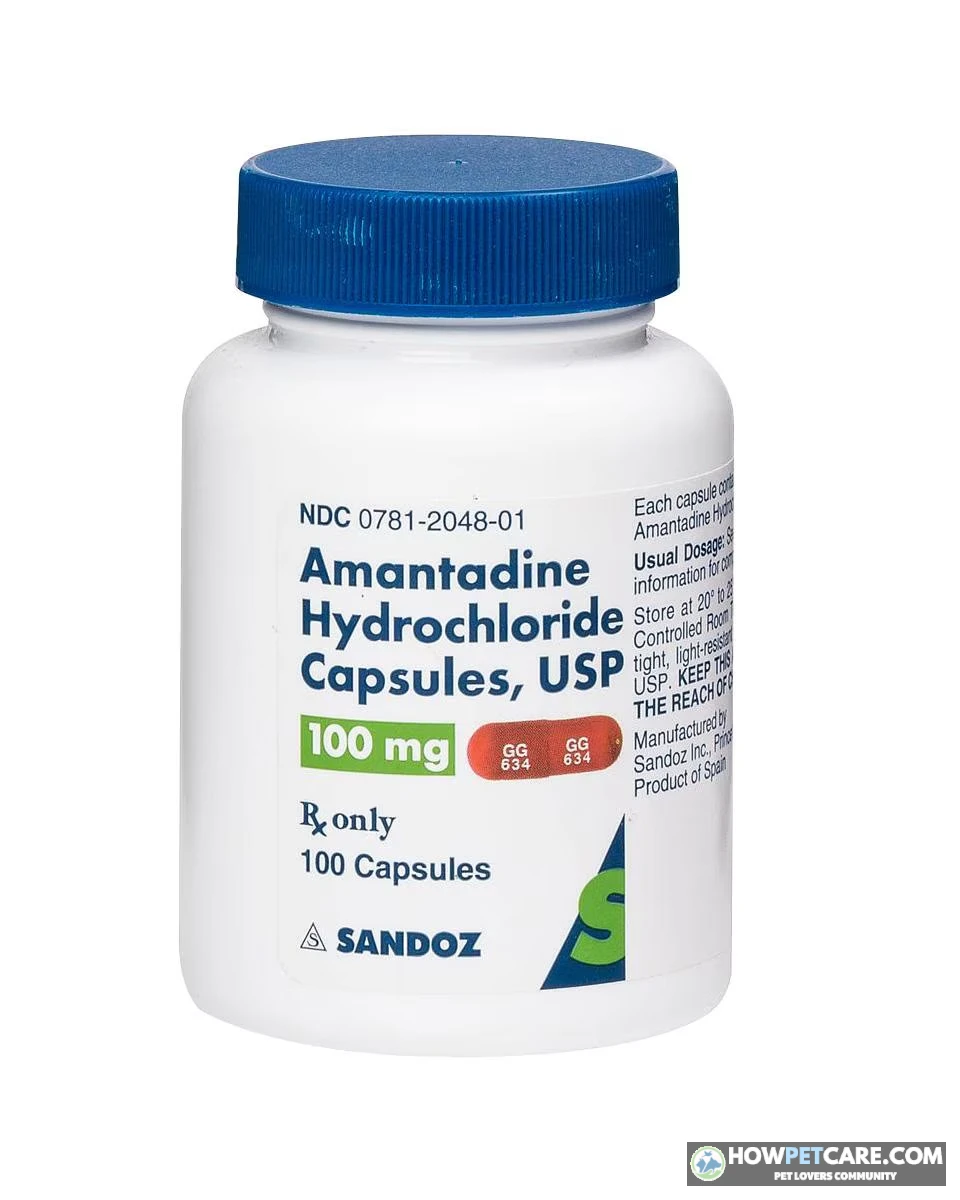
Amantadine is an NMDA receptor antagonist prescribed off-label to dogs as an add-on for chronic pain—most often osteoarthritis pain not adequately controlled by an NSAID. Published dosing guidance is 3–5 mg/kg by mouth once or twice daily, and full effects may take 10 days or longer.
Veterinarians prescribe amantadine for dogs with chronic pain, especially when osteoarthritis isn’t adequately controlled by another treatment. It works differently from anti-inflammatory drugs and usually provides little relief on its own. A typical trial means tracking your dog’s movement and comfort for about three weeks, then reviewing the results with your veterinarian. The right dose and schedule depend on your dog’s health and prescription.
What Amantadine Does for Dogs With Arthritis and Chronic Pain
A veterinarian may add amantadine hydrochloride when an arthritic dog still struggles to rise, walk comfortably, or enjoy normal activities despite treatment. It’s also used for some dogs with neuropathic pain, cancer pain, or other persistent pain, though the evidence and reasons vary by condition.
How amantadine works, without the jargon
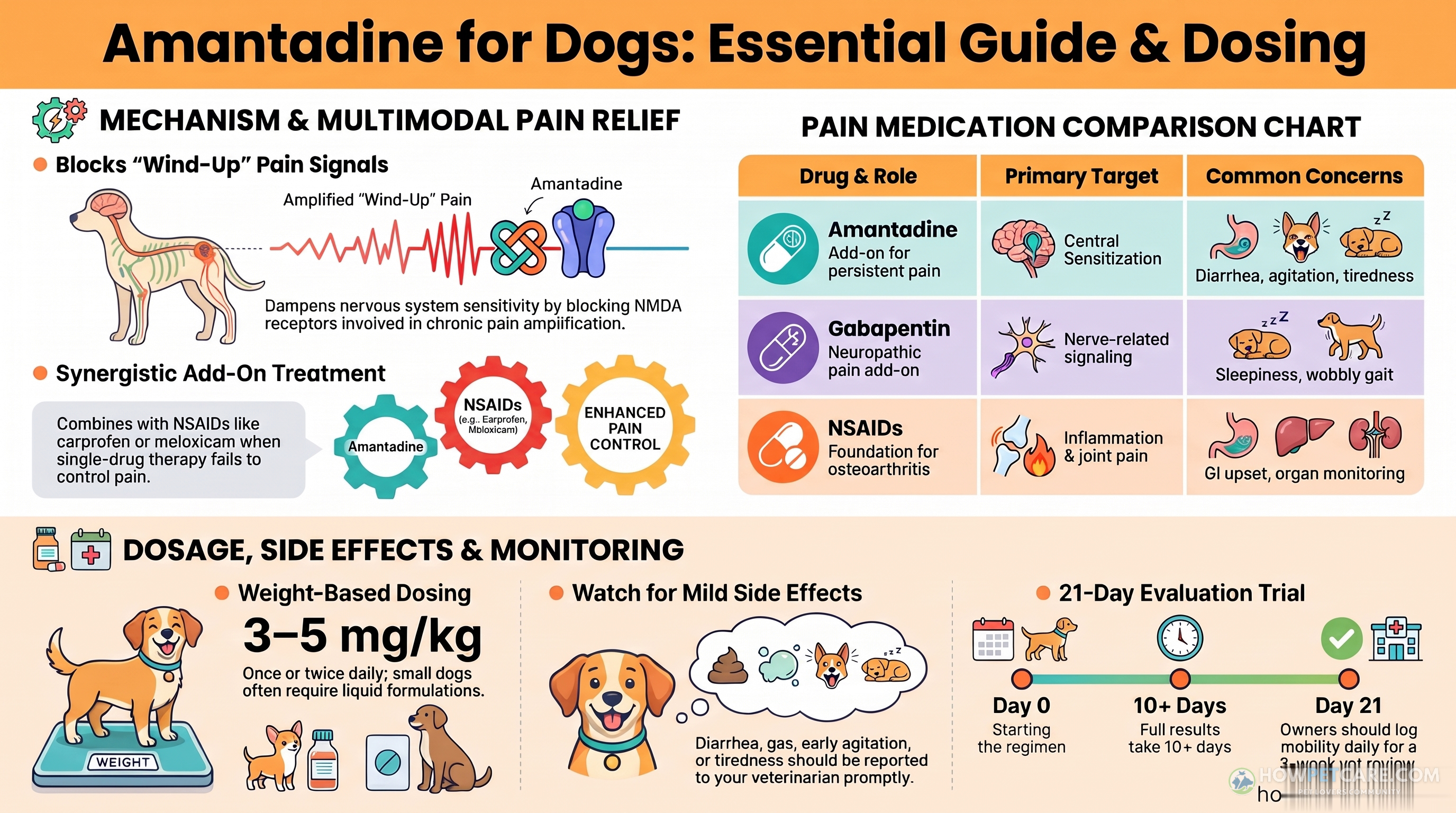
Long-lasting pain can make the nervous system more sensitive—like a volume control turned too high. This process is called central sensitization, or “wind-up.” Amantadine is an NMDA receptor antagonist: it blocks a receptor involved in that sensitization and may help turn down amplified pain signals.
That’s different from reducing inflammation in an arthritic joint. A veterinarian may combine amantadine with an NSAID such as carprofen or meloxicam, or with other safe pain meds for dogs, to address different parts of the pain problem.
The evidence is encouraging but limited. In a 2008 study by Lascelles and colleagues in the Journal of Veterinary Internal Medicine, dogs with osteoarthritis pain not adequately controlled by meloxicam received amantadine or a comparison treatment alongside that NSAID. The course lasted roughly three weeks, and the study does not establish that amantadine works equally well for every dog or as a stand-alone treatment.

Why it is prescribed off-label, and what that means for you
Amantadine is a human medication used for conditions including certain viral infections and Parkinson’s disease. Using it for pain in dogs is extra-label, also called off-label: it has no FDA-approved label for canine pain. Veterinarians can prescribe human formulations for individual animals when appropriate.
Off-label doesn’t mean you should use a leftover human prescription. Your veterinarian chooses the dose, schedule, and formulation for your dog.
Amantadine Side Effects in Dogs and Which Dogs Should Not Take It
Many dogs tolerate amantadine well, but changes in digestion or behavior deserve attention. Tell the prescribing clinic about new symptoms instead of assuming they’re caused by the medication or will disappear on their own.
Common side effects to watch for at home
Reported amantadine side effects in dogs include:
- Gas or diarrhea.
- Agitation or restlessness, particularly early in treatment.
- Tiredness or difficulty with coordination.
A reduced appetite, or a change in sleep or behavior, is also worth recording and discussing with your vet. If stomach upset is mild, ask whether giving the medication with food is appropriate. Contact the clinic promptly if vomiting or diarrhea persists, your dog won’t eat, or any symptom is worsening.
Seizures, collapse, severe agitation, or marked tremors warrant an immediate call to your veterinarian or an emergency clinic. If your dog may have swallowed an extra dose, call without waiting for signs to appear.
Dogs that need extra caution or a different drug
Tell your veterinarian if your dog has kidney disease, a history of seizures, heart disease, or glaucoma, or is pregnant or nursing. Kidney function matters because the body clears amantadine through the kidneys, so a vet may choose a different dose, schedule, or medication when kidney function is impaired. A senior dog isn’t automatically ruled out, but age-related health changes make an individual assessment important.
Give your vet and pharmacist a complete list of prescriptions, over-the-counter products, and supplements. Ask specifically about drug interactions if your dog takes tramadol, uses trazodone for vet visits or fireworks, or takes an antidepressant or medicines with anticholinergic effects, such as some antihistamines. The concern depends on the combination and the individual dog—don’t add, stop, or adjust a medication without checking.
Bloodwork and recheck schedule for long-term use
Ask whether your dog needs baseline bloodwork and a urine test, especially if they’re older, have kidney disease, or also take an NSAID. No single monitoring interval fits every dog or every combination of medications. For a stable dog on long-term treatment, ask whether a recheck and bloodwork roughly every six months makes sense; dogs with existing disease or new symptoms may need a different schedule.
At home, note appetite, stool, sleep, movement, and behavior. A short daily record helps your vet tell a possible side effect from a change in the underlying condition.

Amantadine Dosage for Dogs by Weight: mg Chart Using 100 mg Capsules
Published veterinary guidance describes 3–5 mg per kilogram per dose, given by mouth once or twice daily depending on the case. The osteoarthritis study discussed above used once-daily dosing. The table below shows the math for one dose given once daily—not a recommendation to start or change treatment. A twice-daily prescription needs its own veterinary instructions; don’t simply double or divide the table’s figures.
How to calculate your dog’s dose in mg
Divide your dog’s weight in pounds by 2.2 to estimate kilograms. Then multiply by 3 and by 5 to find the endpoints of the published range for one dose. For example, 44 lb ÷ 2.2 = 20 kg, and 20 × 3 to 5 = 60–100 mg per dose.
Your vet may prescribe outside this illustrative range for a clinical reason, including an adjustment for kidney function. Check any apparent discrepancy before giving the first dose, and don’t change a prescription based on the chart.
Weight-based amantadine dosage chart (5 to 40 kg)
| Dog weight (lb, approx.) | Dog weight (kg) | Range for one once-daily dose (mg) | Mathematical equivalent in 100 mg capsules | Formulation consideration |
|---|---|---|---|---|
| 11 | 5 | 15–25 | 0.15–0.25 capsule | Ask about a measured liquid or custom strength |
| 22 | 10 | 30–50 | 0.30–0.50 capsule | Ask about a measured liquid or custom strength |
| 33 | 15 | 45–75 | 0.45–0.75 capsule | A custom strength or liquid may fit the prescription |
| 44 | 20 | 60–100 | 0.60–1 capsule | One whole capsule equals the upper endpoint |
| 55 | 25 | 75–125 | 0.75–1.25 capsules | One whole capsule is within the illustrative range |
| 66 | 30 | 90–150 | 0.90–1.50 capsules | One whole capsule is within the illustrative range |
| 77 | 35 | 105–175 | 1.05–1.75 capsules | Neither one nor two whole capsules falls in this range |
| 88 | 40 | 120–200 | 1.20–2 capsules | Two whole capsules equal the upper endpoint |
The fractional capsule figures show equivalent amounts only. They are not instructions to open, split, or estimate capsule contents. A 10 kg dog’s calculated range is 30–50 mg; for 20 kg, it’s 60–100 mg; for 30 kg, it’s 90–150 mg. Whether any of those amounts is right for a particular dog is the veterinarian’s decision.
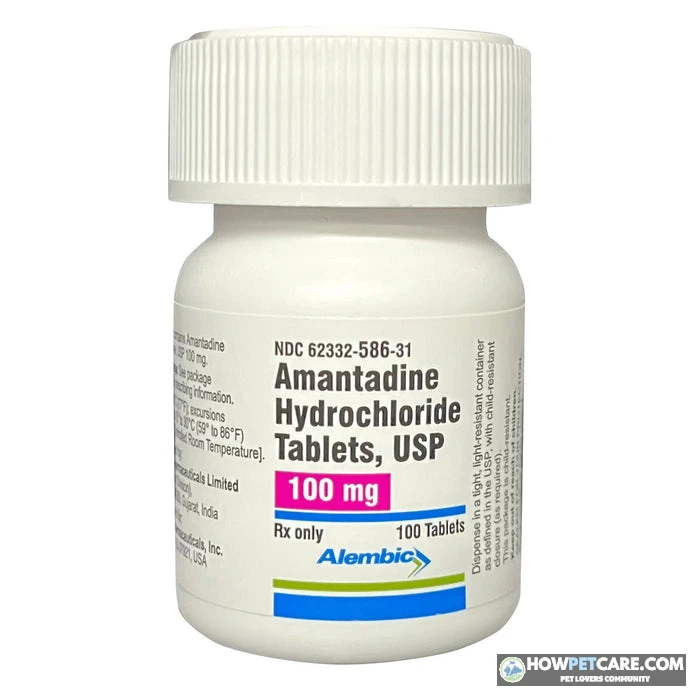
Compare the prescribed milligrams per dose, formulation, number of units, and frequency with the label. If anything is unclear or inconsistent, call your vet or the dispensing pharmacy before giving it. Don’t adjust the amount yourself.
Small dogs under 10 kg: why 100 mg capsules often don’t work
A 5 kg dog’s illustrative once-daily range is 15–25 mg, well below one 100 mg capsule. A pharmacist may be able to supply a suitable liquid or prepare a custom strength when prescribed. Ask for the concentration in milligrams per milliliter and the exact volume to administer; liquids with different concentrations aren’t interchangeable by volume.
Recheck the prescribed dose with your veterinarian if your dog’s weight changes significantly. Your vet may also consider body condition and other health factors instead of relying on the chart alone.
Amantadine for Dogs Cost: Pharmacy Prices, Strengths, and Compounding
Cost depends on the prescribed dose, formulation, pharmacy, discount eligibility, and any shipping or compounding fees. A smaller dog doesn’t necessarily cost less—a custom preparation may cost more than a standard generic capsule. Get current quotes rather than treating an internet estimate as a guaranteed price.
Strengths and forms: capsule, tablet, liquid, compounded
| Form and strength | Where it may be available | Best fit | Relative cost | Things to check |
|---|---|---|---|---|
| Human generic 100 mg capsule or tablet | Human or licensed online pharmacy | A prescription matching an available strength | Compare generic cash and discount quotes | Confirm form, strength, and quantity |
| Human oral liquid, where stocked | Human pharmacy | A vet-prescribed dose measurable with an oral syringe | Varies by product and pharmacy | Confirm concentration, ingredients, and measured volume |
| Custom compounded capsules, such as 25 mg or 50 mg | Compounding pharmacy | A prescribed dose not practical with a standard product | Often more than standard generic forms | Confirm strength, quantity, and beyond-use date |
| Compounded liquid | Compounding pharmacy | Dogs needing a small or precisely measured dose | Varies; may cost more than standard generic forms | Confirm concentration, storage, flavoring, and beyond-use date |
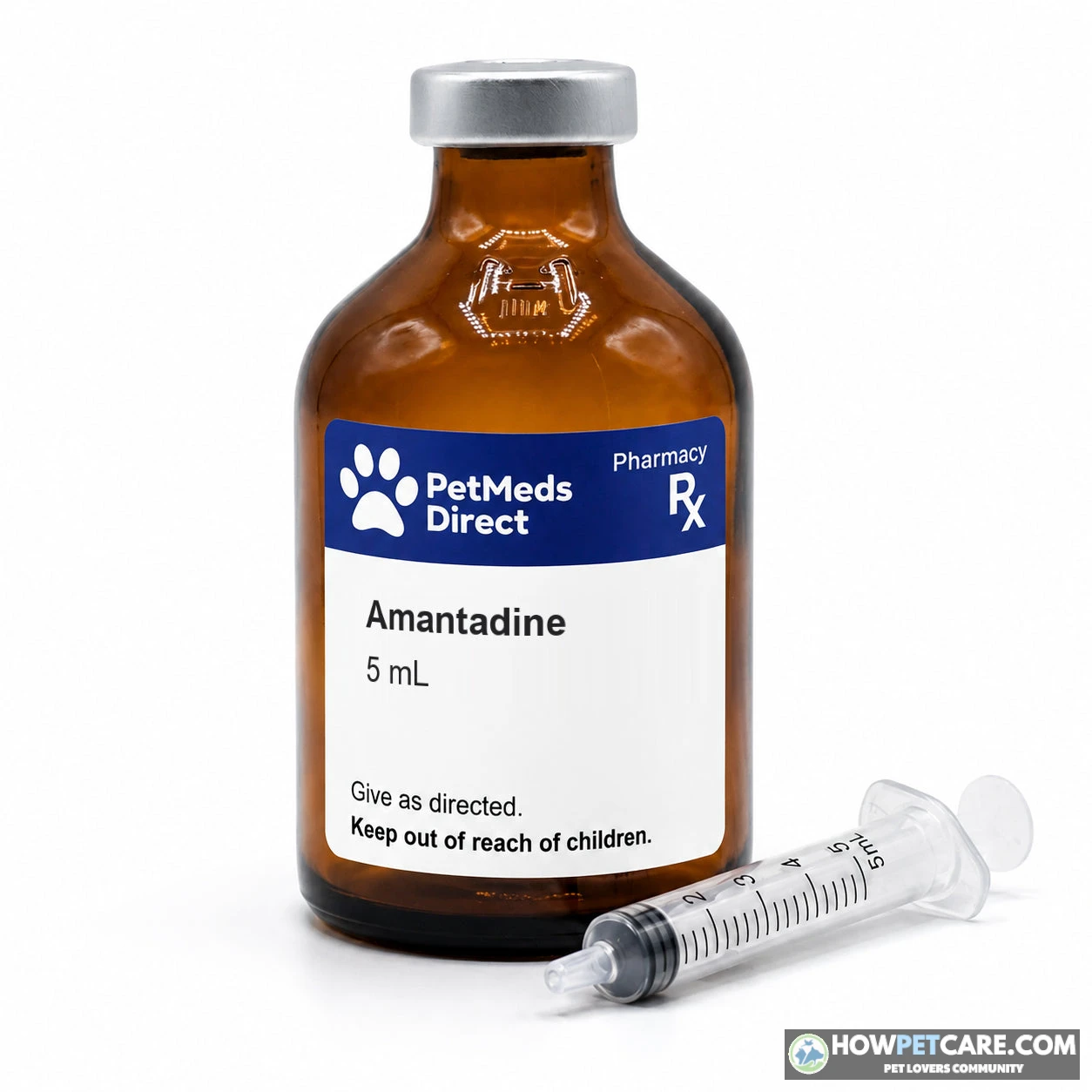
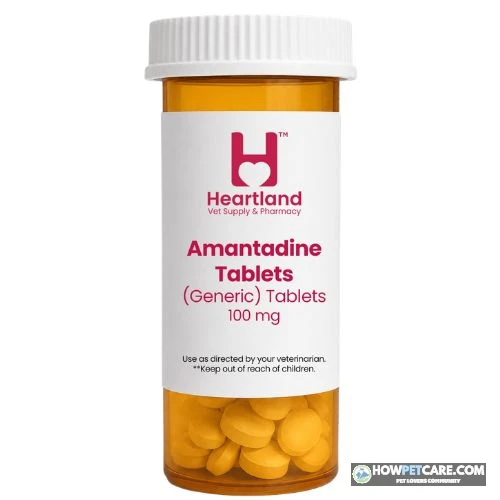
Human amantadine products include capsules, tablets, and liquid, depending on pharmacy availability. Ask the pharmacist to check the specific liquid’s ingredients for suitability for dogs, and use only the formulation your veterinarian approves. A compounded medication is made to meet a prescription’s needs; it isn’t the same as an FDA-approved animal product.
Human pharmacy vs. compounding pharmacy: when each makes sense
A regular human pharmacy, including a chain such as CVS or Walgreens, may fill a veterinary prescription for a stocked human product. Call ahead to confirm the location accepts the prescription and carries the right form. A compounding pharmacy can prepare a custom strength or liquid when your veterinarian determines it’s needed.
Ask for a written prescription if you want to compare a local pharmacy, a properly licensed online pharmacy, and a compounder. Confirm the seller requires a valid prescription. Factor in shipping, dispensing fees, and any discount-card conditions when you compare.
How to estimate your monthly cost
For capsules, estimate monthly cost with: price per capsule × capsules per day × 30. For a liquid, ask for the total bottle price, volume, concentration, prescribed volume per dose, and expected number of days per bottle.
For illustration only, if a pharmacy quotes a hypothetical $0.20–$0.60 per 100 mg capsule, one capsule daily comes to $6–$18 for 30 days. Two capsules daily comes to $12–$36. These are arithmetic examples, not verified 2026 market prices or a quote for your dog. A compounded product must be priced separately; ask whether the quoted batch lasts a full month and whether shipping is included. Reliable current retail and compounding price ranges aren’t established by the evidence available here, so verify actual prices before budgeting.
Amantadine vs. Gabapentin vs. NSAIDs: Why Vets Combine Them
Amantadine is generally an add-on, not a substitute the owner chooses. Multimodal pain management means using treatments with different actions when one approach doesn’t provide enough relief. Combining drugs can also add monitoring needs, so your veterinarian should direct the plan.
Amantadine, gabapentin, and NSAIDs side by side
| Drug | What it targets | Typical role | Common side effects or concerns | Often considered when |
|---|---|---|---|---|
| Amantadine | Central sensitization, or amplified pain signaling | Add-on for persistent pain | Diarrhea, gas, agitation, tiredness, or coordination difficulty | Pain remains despite a primary treatment |
| Gabapentin | Nerve-related signaling | Often used for neuropathic pain or as an add-on | Sleepiness and wobbliness | Nerve pain is suspected |
| NSAIDs, such as carprofen or meloxicam | Inflammation and associated pain | Common foundation for osteoarthritis treatment | Gastrointestinal problems and possible kidney or liver complications | Inflammation contributes to pain and the dog can safely take an NSAID |
These are broad descriptions, not rules for choosing a prescription. If a dog cannot take an NSAID, the vet must build an individual plan; amantadine alone isn’t an automatic equivalent. Evidence for gabapentin and other add-ons also varies by condition.
Other medicines can target NMDA receptors, including ketamine, which a veterinarian may use in a monitored clinical setting. It’s not a home substitute for amantadine.
Can a dog take amantadine with carprofen or gabapentin?
A veterinarian may prescribe amantadine with carprofen or gabapentin because they act on different aspects of pain. Some dogs receive more than one of these medications, but the combination, dose, and monitoring should be individualized. Don’t start gabapentin, use a human NSAID, or change carprofen because of this comparison.
How to Give Amantadine to a Dog and What to Do After a Missed Dose or Overdose
Give the prescribed amount by mouth on the schedule printed on the label. Amantadine may be given with or without food. If it upsets your dog’s stomach, ask your vet about giving it with a small meal. Measure liquid with an oral syringe rather than a kitchen spoon, and follow the pharmacy’s storage instructions.

Missed a dose: what to do
Give a missed dose when you remember, unless it’s almost time for the next scheduled dose. If the next dose is near, skip the missed one and resume the normal schedule. Never give two doses to catch up. If you’re unsure whether a dose was given—or how close is too close—call your vet or pharmacist.
Suspected overdose: steps and poison control numbers
Don’t wait for symptoms if your dog may have swallowed an extra dose, chewed a bottle, or taken another pet’s medication.
-
Call for help
Contact your veterinarian or an emergency veterinary clinic right away. You can also call ASPCA Animal Poison Control at (888) 426-4435 or Pet Poison Helpline at (855) 764-7661; consultation fees may apply.
-
Gather the details
Have your dog’s weight, product name and strength, estimated amount swallowed, and approximate time ready. Report signs such as agitation, tremors, or collapse.
-
Follow professional instructions
Don’t induce vomiting unless a veterinarian or poison specialist directs you to. Bring the packaging if your dog needs to be seen.
Keep medication secured away from children and other animals. Although a vet may prescribe a human amantadine product, don’t give your dog a leftover prescription or a cold-and-flu combination product; other ingredients may be harmful.
How Long Does Amantadine Take to Work? Signs It Is Helping and When to Decide
Amantadine isn’t a quick test of pain relief: full effects may take 10 days or longer. Ask your vet to set a trial length and decision date. About 21 days is a practical discussion point because the cited osteoarthritis study used a three-week course, but your veterinarian may recommend a different timeline.
A week-by-week trial timeline
- Before starting, if possible: Record several ordinary activities for a few days or a week. Take a short video of your dog walking and rising from rest. Don’t delay prescribed treatment to create a baseline without checking with the vet.
- Days 1–7: Give the medication as directed and log appetite, stool, sleep, and any restlessness or wobbliness. Improvement may not yet be apparent.
- Days 8–14: Compare movement and daily routines with your baseline. Retake the video under similar conditions.
- Days 15–21: Review the pattern with your vet at the agreed decision point, including any side effects and changes to other treatments.

Improvement signs to look for at home
Choose three or four activities that matter to your dog. Possible signs of improved comfort include:
- Rising from a bed with less hesitation or effort.
- Less stiffness after rest or a smoother walk on the usual route.
- More willingness to play, greet family, or take a comfortable-length walk.
- Better sleep or less frequent repositioning.
- Less licking or guarding of an area that was previously sore.
If stairs or getting onto furniture are already part of your dog’s safe routine, note whether they become easier. Don’t encourage jumping or longer walks simply to test the medication, especially if your vet has advised activity restrictions.
Score the same activities consistently—0 for unable to perform the activity, 10 for performing it comfortably. Compare several days instead of relying on one unusually good or bad day. Owners report varied experiences, but anecdotes can’t establish whether a change came from amantadine, another treatment, or normal day-to-day variation.
When to ask the vet to change the plan
If comfort clearly improves and side effects are acceptable, discuss continuing and scheduling a recheck. If improvement is partial, ask whether the dose, other treatments, or the diagnosis should be reassessed. If there’s no meaningful change by the agreed endpoint, discuss whether to stop, switch, or investigate other causes.
No validated rule says a particular number of checked boxes proves the drug works. Don’t stop or alter the dose on your own; ask your vet whether a taper or other change is appropriate for your dog’s complete treatment plan.
Your Amantadine Checklist: Questions for the Vet and a Go/No-Go Plan
Before the first dose, confirm the milligrams per dose, number of capsules or milliliters, frequency, and estimated monthly cost. Ask why amantadine was chosen, which existing medication it complements, where it fits among common medications for dogs, and whether baseline tests are needed. Agree on a trial endpoint and a recheck and bloodwork schedule.
During the trial, use a simple record like this:
Dog: __________ Weight: ______ lb / ______ kg
Dose: ______ mg = ______ capsule(s) or ______ mL
Frequency and time: ___________________________
Trial start: __________ Decision date: __________
DateRising 0–10 Walk/activity Appetite Stool Sleep/behavior
Notes
______________ _____________ ________ _____ ______________
_____
______________ _____________ ________ _____ ______________
_____
Other medication or activity changes: ______________________________
Missed doses and dates: ___________________________________________
Questions for the recheck: ________________________________________Take the log and comparable videos to the appointment. Together, decide whether the benefit is meaningful enough to continue, whether the plan needs adjustment, or whether another approach is warranted. Call sooner for concerning side effects. For a suspected overdose, call your vet or emergency clinic right away, or contact ASPCA Animal Poison Control at (888) 426-4435 or Pet Poison Helpline at (855) 764-7661.
FAQ
Is amantadine safe for senior dogs?
Many dogs on amantadine are seniors, since arthritis is common in older dogs. The main concern is kidney function, because the drug is cleared by the kidneys, so vets usually check bloodwork before starting and periodically afterward.
Can I give my dog human amantadine or a cold and flu medicine?
Veterinarians do prescribe the human generic, but only at a dose set for your dog’s weight. Never give your dog a leftover human prescription or a combination cold and flu product on your own.
Is amantadine safe for dogs long-term?
Dogs with chronic pain are often kept on it for months or longer when it helps. Long-term use generally means regular rechecks and bloodwork, often about every 6 months, so ask your vet for a schedule.
Can I stop amantadine suddenly if it isn’t helping?
Ask your vet before stopping, so the decision is based on your trial notes and the dog’s other pain medications. The vet can tell you whether to stop outright or taper and what to watch for afterward.
Does amantadine work for dog pain that isn’t arthritis?
Vets also use it for neuropathic pain and for chronic pain after surgery or from some cancers. The evidence is strongest for osteoarthritis pain that persists on an NSAID, so your vet’s reasoning for your dog’s condition matters.