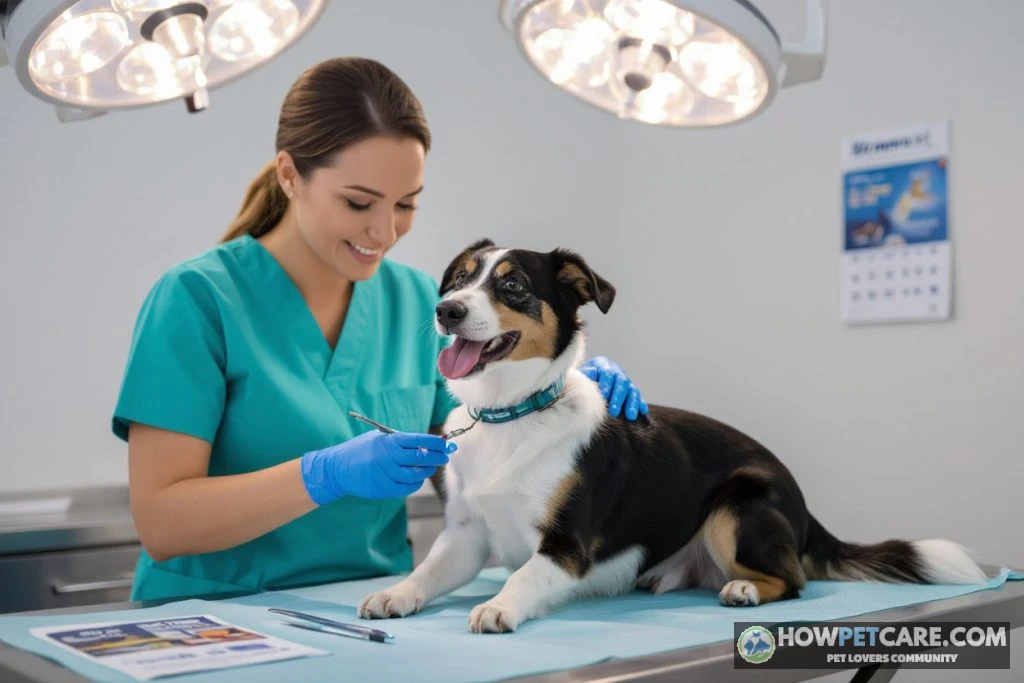

Spayed means a female dog, cat, or other female pet has had permanent sterilization surgery, usually removing the ovaries and uterus. She cannot go into heat or become pregnant, while males are described as neutered rather than spayed.
Spayed means a female animal has had permanent sterilization surgery so she cannot reproduce. The term applies only to female dogs, female cats, and other female pets—never males. It describes a pet whose ovaries and usually uterus have been surgically removed, ending heat cycles and preventing pregnancy. This spelling is distinct from “spade,” the digging tool pronounced the same way.
What Does Spayed Mean? A Plain-Language Definition
Spayed definition for pet owners
In everyday pet care, “spayed” means a female animal has undergone sterilization surgery performed by a veterinary professional. Because the procedure removes reproductive organs, the animal can no longer go into heat or become pregnant. If you see “spayed” on an adoption record, it tells you that female dog or cat has already been sterilized and will not produce litters.

What spayed means on adoption or medical paperwork
Shelters and rescues often mark “spayed” on paperwork before an animal goes home. For a new adopter, this means the surgery is complete and no further breeding is possible. On a medical document, “spayed” may appear in a surgical history section, signaling that the pet no longer has ovaries and usually no uterus. Students in biology or veterinary coursework should treat “spayed” as a clinical descriptor of female reproductive status, not a general word for “fixed.”
Spayed vs Neutered: What the Difference Means for Your Pet
Spaying applies only to females; neutering applies only to males. Saying “spayed male” is incorrect—the male equivalent is neutered or castrated.
Spay vs neuter comparison table
| Term | Applies to | Organs removed | Common alternative name |
|---|---|---|---|
| Spayed | Female dogs, cats, and other female pets | Ovaries and usually the uterus | Ovariohysterectomy |
| Neutered | Male dogs, cats, and other male pets | Testicles | Castration |

Both spaying and neutering sterilize the pet and prevent unwanted pregnancies. Spaying removes a female animal’s ovaries and uterus, while neutering removes a male animal’s testicles.
Why males are neutered, not spayed
Because spaying targets ovaries and the uterus, it cannot be performed on males. Male dogs and cats are neutered, meaning their testicles are removed. Some sources note neutering may lower prostate disease risk in males, while spaying may reduce risks such as ovarian cancer in females.
| Term | Applies to | Organs removed | Common alternative name | Typical behavior changes |
|---|---|---|---|---|
| Spayed | Female dogs, cats, and other female pets | Ovaries and usually the uterus | Ovariohysterectomy | Ends heat cycles; may reduce roaming and urine marking linked to mating behavior |
| Neutered | Male dogs, cats, and other male pets | Testicles | Castration | May reduce urine marking, roaming, and some mounting behaviors |
| Spayed male | Incorrect usage | None | Not a real term | Use “neutered” for males |
Note: Behavior changes are tendencies, not guarantees. Individual pets vary by age, breed, environment, and training.
 You might be wonderingWhat colors can dogs see?What Colors Can Dogs See? A Practical Color GuideRead the answer
What Spaying Involves: Surgical Terms in Plain Language
Ovaries, uterus, and reproductive anatomy basics
Spaying is the surgical removal of a female animal’s ovaries and usually her uterus, also called an ovariohysterectomy. In an ovariectomy, the veterinarian removes the ovaries but typically leaves the uterus in place. Removing the ovaries stops the heat cycle and removes the ability to reproduce. Sterilization in veterinary terms means a permanent procedure that prevents reproduction.

Anesthesia and the surgical setting
Spaying is performed under general anesthesia by a veterinary professional. Because it is abdominal surgery, the pet is monitored throughout the procedure and given pain control afterward. Your veterinarian can advise on the specific protocol appropriate for your pet.
Ovariohysterectomy: surgery that removes the ovaries and uterus.
Ovariectomy: surgery that removes the ovaries, usually leaving the uterus in place.
Laparoscopic spay: a minimally invasive spay performed through small incisions using a camera and specialized instruments.
Sterilization: a permanent procedure that prevents reproduction.
Heat cycle: the reproductive cycle in intact female animals that can include behavioral and physical changes.
Laparoscopic Spay vs Traditional Spay
Minimally invasive spaying technique
A traditional spay uses one abdominal incision through which the ovaries and usually the uterus are removed. A laparoscopic spay uses small incisions and a camera to guide specialized instruments. It is a minimally invasive alternative to traditional open surgery.
When laparoscopic spay may be offered
Availability depends on the veterinary clinic and equipment. Not every practice offers laparoscopic spay, so owners should ask whether it is available and appropriate for their pet.
| Feature | Traditional open spay | Laparoscopic spay |
|---|---|---|
| Incisions | One larger abdominal incision | Several small incisions |
| Visualization | Direct view by the surgeon | Camera-guided view |
| Typical recovery | Standard recovery expectations | Often similar recovery, though clinic protocols vary |

Individual healing varies, and veterinary instructions override general guidance.
Benefits and Risks of Spaying a Dog or Cat
Health and behavior benefits for female dogs and cats
Spaying prevents pregnancy and eliminates heat cycles. Removing the ovaries and uterus may reduce the risk of certain reproductive diseases, including pyometra and mammary tumors, though long-term health effects can vary by species, breed, size, and age. Behavior changes tied to removing reproductive hormones may include reduced roaming and urine marking linked to mating, but these are tendencies, not guarantees.

Surgical and recovery risks to understand
Surgical risks include anesthesia complications, infection, and bleeding. Your veterinarian can advise on individual risk factors based on your pet’s health, breed, and age. All medical claims about benefits and risks should be discussed with a veterinary professional before consenting to surgery.
When to Spay: Age and Timing Recommendations
Spaying age for cats
Cats can safely undergo surgery as early as eight weeks, though four to six months is commonly recommended. Your veterinarian can determine the best timing for an individual kitten.
Spaying age for dogs by breed and size
Dogs are typically spayed or neutered between six and nine months, with large breeds sometimes waiting longer. Ideal timing varies by pet type, breed, and size, so there is no universal mandate that fits every animal.
Adult and senior pet considerations
Late-life spaying is possible for intact adult dogs and cats, but age and overall health affect surgical risk. Owners of older intact pets should discuss whether late-life spaying is appropriate with their veterinarian.
Illustrative scenario, not a prescription for one specific cat.
- Pet: 6-month-old female domestic shorthair, about 2.5 kg, indoor, healthy on exam
- Timing discussion: many veterinarians consider spaying around 5–6 months for cats, but the final plan depends on growth, health, and clinic protocol
- Surgery type: traditional open spay (ovariohysterectomy) is common; laparoscopic spay may be available at some clinics with the right equipment
- Cost context: general estimate often varies by region, clinic type, and pet size; ask for an itemized quote that includes anesthesia, monitoring, pain medication, and follow-up
- Recovery milestones: quiet rest for the first 24–72 hours; incision checks daily; activity restriction for about 10–14 days; recheck if directed by the veterinarian
- Owner action: confirm fasting instructions, medication plan, and emergency contact before surgery day
Spayed Recovery: Timeline and Wound Care
First days after spaying
The typical recovery period begins with quiet rest for the first 24–72 hours. The pet should stay in a calm, confined space and be monitored closely, and carrying your dog after spay should be done carefully. Individual healing varies, and veterinary instructions override general guidance.
Activity restrictions and incision care
Activity should be restricted for about 10–14 days, with no jumping, running, or rough play. Check the incision daily for redness, swelling, or discharge. An Elizabethan collar or approved recovery garment may prevent licking. Use only veterinarian-approved pain medication if prescribed, and when a dog can walk after spay varies by recovery.
When to call the vet immediately
Contact the veterinary clinic the same day if you notice:
- Incision opens, bleeds actively, or has thick, yellow, green, or foul-smelling discharge
- Swelling at the incision that is increasing, hot, or painful to touch
- Repeated vomiting, diarrhea, or refusal to drink for more than 24 hours
- Marked lethargy, weakness, pale gums, or collapse
- Trouble breathing, persistent coughing, or blue/gray gums
- Straining to urinate or inability to urinate
- Seizures, severe pain, or crying that does not settle with approved medication
When in doubt, call; it is safer to report a concern early than to wait.
| Timeframe | What to expect | Care focus |
|---|---|---|
| First 24–72 hours | Quiet rest, possible grogginess from anesthesia | Monitor closely, limit activity, offer water and small meals |
| Days 3–10 | Incision healing begins, energy gradually returns | Daily incision checks, continued activity restriction |
| Days 10–14 | Suture removal or healing check as directed | Gradual return to normal activity only if the veterinarian approves |

Spaying Cost Estimates and Next Steps
Typical cost range by pet type
General cost estimates for spaying vary widely by geography, clinic type, and animal size, and any figures cited here should be treated as rough ranges rather than quotes. Dog spays often cost more than cat spays because larger animals require more anesthesia and surgical time. A typical cost to spay a cat also varies by clinic type and region. Request an itemized cost estimate from your clinic that includes anesthesia, monitoring, pain medication, and follow-up, including the cost to spay a dog.
Checklist before and after spay surgery
Before scheduling:
- ☐ Ask whether the veterinarian recommends ovariohysterectomy or ovariectomy for your pet
- ☐ Ask what anesthesia monitoring and pain control are included
- ☐ Ask whether laparoscopic spay is available and appropriate for your pet
- ☐ Request an itemized cost estimate
- ☐ Confirm pre-op fasting and medication instructions
Home preparation:
- ☐ Prepare a quiet recovery space away from stairs and jumping surfaces
- ☐ Have an Elizabethan collar or approved recovery garment ready
- ☐ Stock veterinarian-approved pain medication if prescribed
- ☐ Plan to monitor the incision daily for the first 10–14 days
- ☐ Arrange transportation and a calm pickup plan after surgery
Recovery red-flag list: call the veterinarian same day if you notice:
- ☐ Incision opens, bleeds actively, or has thick, yellow, green, or foul-smelling discharge
- ☐ Swelling at the incision that is increasing, hot, or painful to touch
- ☐ Repeated vomiting, diarrhea, or refusal to drink for more than 24 hours
- ☐ Marked lethargy, weakness, pale gums, or collapse
- ☐ Trouble breathing, persistent coughing, or blue/gray gums
- ☐ Straining to urinate or inability to urinate
- ☐ Seizures, severe pain, or crying that does not settle with approved medication
The fastest way to be certain about your pet is to schedule a veterinary consultation. Bring the adoption or medical paperwork, ask about timing and technique, and confirm the full recovery plan before surgery day.
 You might be wonderingDhpp vaccine for dogsDHPP Vaccine for Dogs: Schedule, Costs, and Safety GuideRead the answer
FAQ
Does spayed mean sterilized?
Yes. Spayed means a female animal has been surgically sterilized so she cannot reproduce.
What does spayed mean for a male dog?
Spayed does not apply to male dogs. The male equivalent is neutered or castrated.
What does spayed mean for cats and dogs differently?
The definition is the same for both species: permanent sterilization surgery for females. The organs removed and recovery details can vary slightly by species.
What is spayed meaning in veterinary terms?
In veterinary medicine, spaying is the surgical removal of a female animal’s ovaries and usually the uterus, also called an ovariohysterectomy.
Can you spay a male animal?
No. Spaying is only for females. Male animals are neutered or castrated instead.
Does spaying stop heat cycles?
Yes. Removing the ovaries eliminates heat cycles and the associated behaviors in female dogs and cats.