
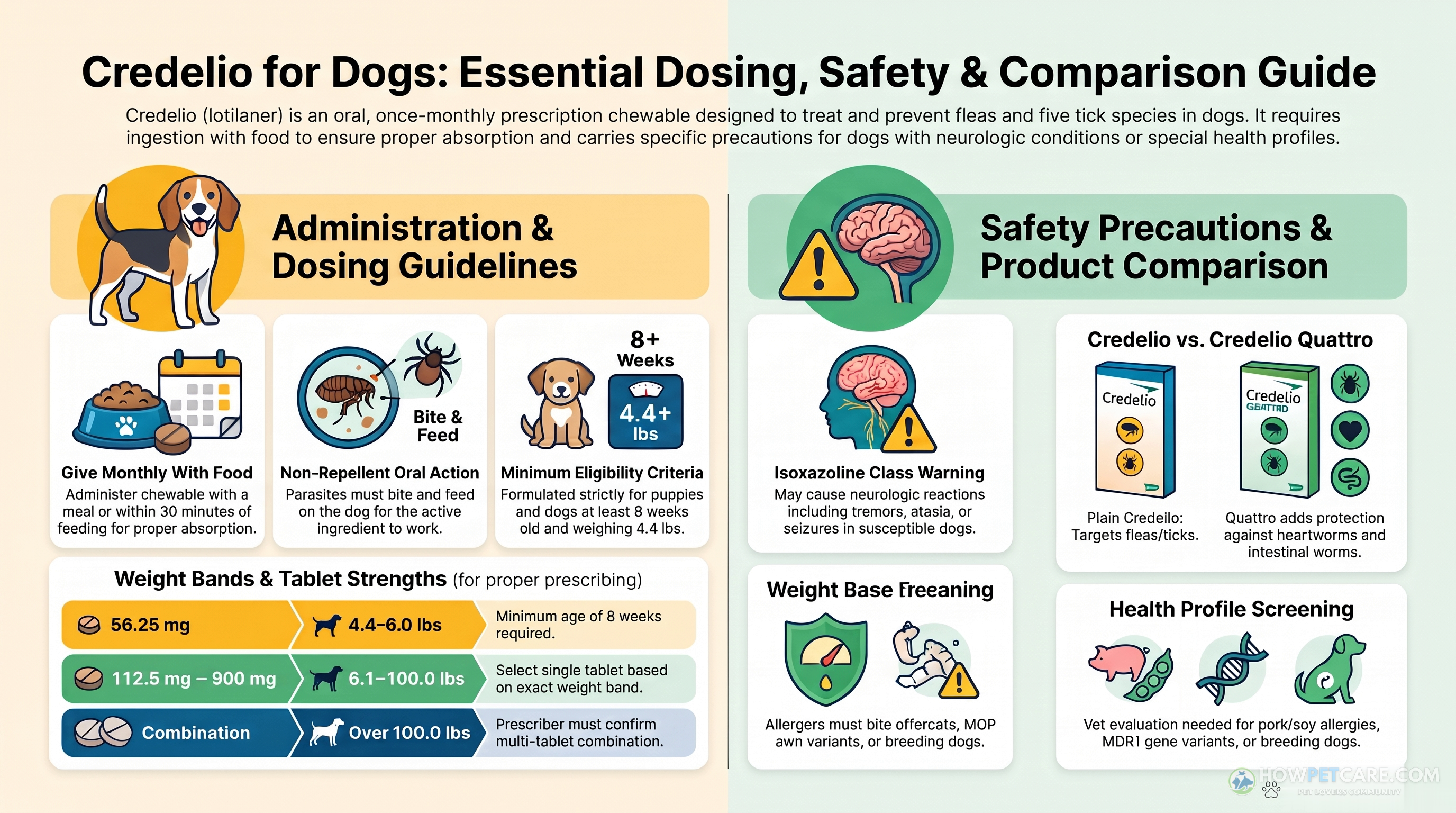
Credelio for dogs is a prescription-only, once-monthly chewable that uses lotilaner (an isoxazoline) to treat and prevent flea infestations and treat tick infestations. It is labeled for dogs at least 8 weeks old and 4.4 pounds, and each dose must be given with food or within 30 minutes of a meal.
Credelio for dogs is Elanco’s once-monthly, prescription-only chewable. Its active ingredient, lotilaner, belongs to the isoxazoline class. It treats and prevents flea infestations and treats tick infestations. The labeled minimum is 8 weeks of age and 4.4 pounds, and each dose must be given with food or within 30 minutes of a meal.
The practical choice depends on your dog’s weight, medical history, and whether it also needs heartworm or intestinal-worm prevention. Credelio covers fleas and five labeled tick species, but it does not prevent heartworm or control intestinal worms. Credelio Quattro adds those parasite protections, along with additional active ingredients and considerations. In short: plain Credelio fits a dog that needs only flea-and-tick control or already has heartworm prevention covered, while Quattro may suit a dog whose veterinarian wants those protections combined into one monthly product. The detailed decision checklist appears in the Credelio vs Credelio Quattro section below. Before any dose, confirm the product and tablet strength with your veterinarian.
What Credelio is, what it treats, and which dogs it fits
Lotilaner works only after a parasite feeds on the dog. Credelio is not a repellent: a flea or tick must bite before the drug can affect it. As an oral chew, it can’t be washed off by bathing or swimming the way a topical product can.
The label covers dogs and puppies at least 8 weeks old and weighing at least 4.4 pounds (2 kg). In the United States, it’s a prescription flea medication. Before starting it, have a veterinarian check age, current weight, health history, and other common medications for dogs.
Fleas and the five approved tick species
Credelio’s label lists five tick species: the lone star tick, American dog tick, blacklegged tick (also called the deer tick), brown dog tick, and Gulf Coast tick. Older product summaries may list only four. When verifying coverage for a particular region or parasite, check current product labeling.
Credelio treats flea infestations and tick infestations, but it doesn’t repel ticks, and it doesn’t replace tick checks after walks. Remove attached ticks promptly, and discuss local tickborne-disease prevention with your veterinarian.
Does Credelio prevent Lyme disease?
Credelio is not a Lyme disease vaccine, and it shouldn’t be described as preventing Lyme disease transmission. It kills susceptible ticks after they attach and feed. That is different from repelling ticks before they bite. If your dog spends time in areas where blacklegged ticks are common, ask your veterinarian about a broader prevention plan, including vaccination where appropriate.
Screwworm emergency-use authorization: what changed and what did not
New World screwworm coverage is a separate, time-sensitive regulatory issue, not one of the routine flea-and-tick indications described above. The information available for this draft doesn’t establish the exact current FDA emergency-use authorization date, scope, or conditions. Don’t rely on a general product summary to decide whether a particular use is authorized; ask your veterinarian to check the current FDA authorization and product instructions before using Credelio for screwworm.
Credelio dosage by weight: tablet strength chart and how to give it
Use the chart as a starting point for checking the labeled weight band, not as a substitute for the prescription on your dog’s package. Weigh your dog, then confirm the strength with the veterinarian or dispensing pharmacy. The supplied evidence doesn’t include a current FDA label document for independently verifying every boundary below, so confirm the chart against the package insert before dosing.
Dosing chart by weight band
| Tablet strength | Dog weight (lb) | Dog weight (kg) | Package color cue | Notes |
|---|---|---|---|---|
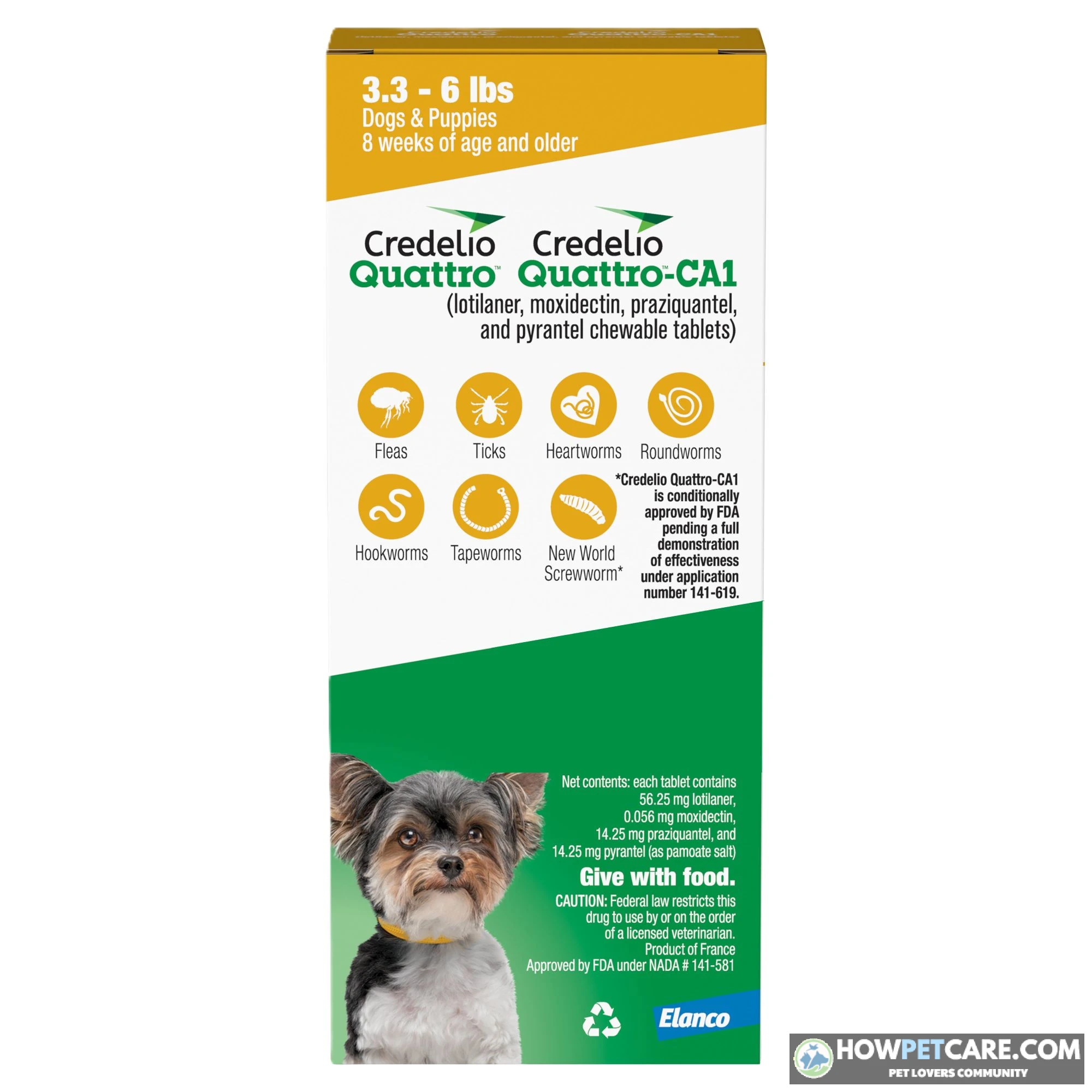
| 56.25 mg | 4.4–6.0 | 2.0–2.7 | Verify on current packaging | Smallest listed band; minimum age is 8 weeks. |
| 112.5 mg | 6.1–12.0 | 2.8–5.4 | Verify on current packaging | Confirm the prescribed strength. |
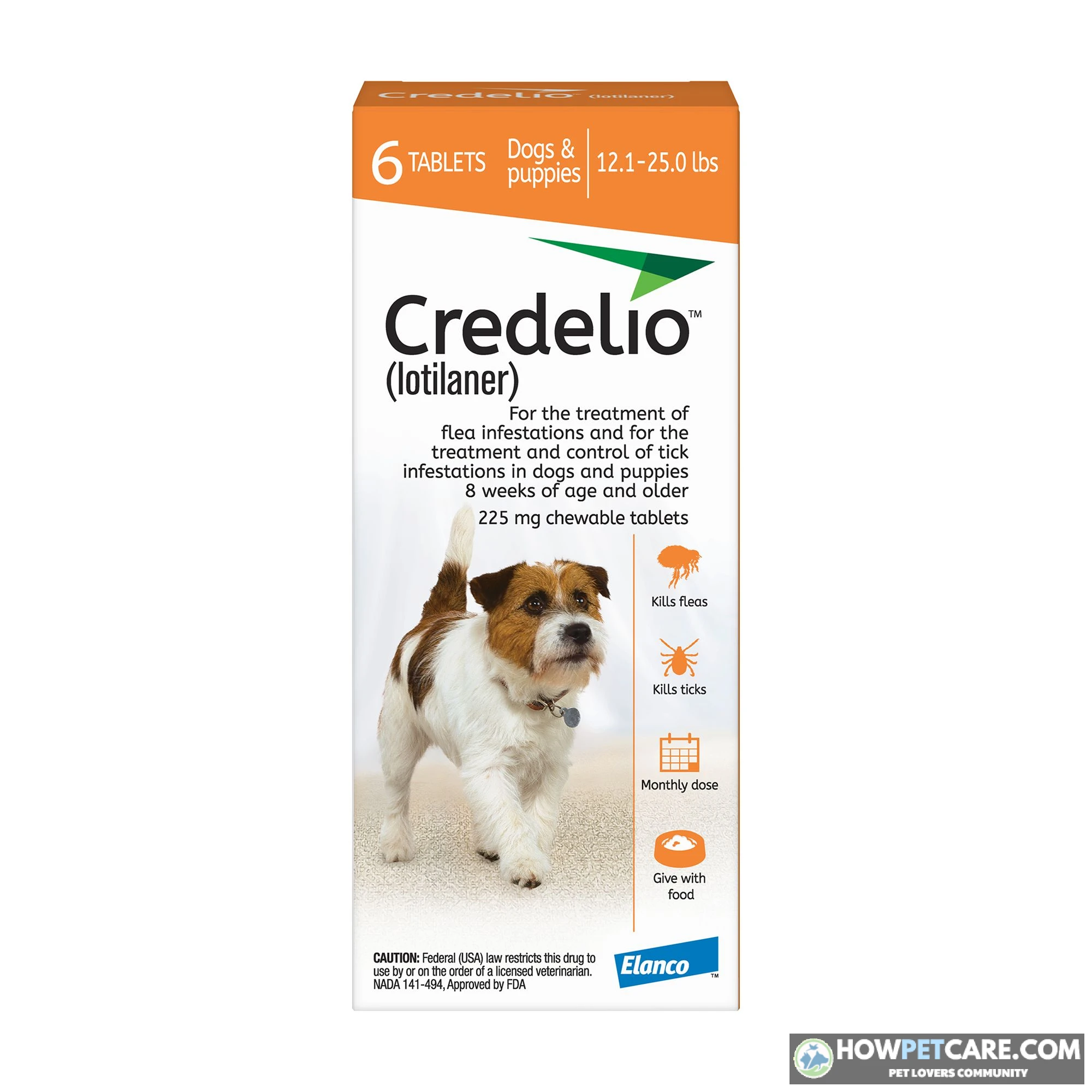
| 225 mg | 12.1–25.0 | 5.5–11.3 | Verify on current packaging | Confirm the prescribed strength. |
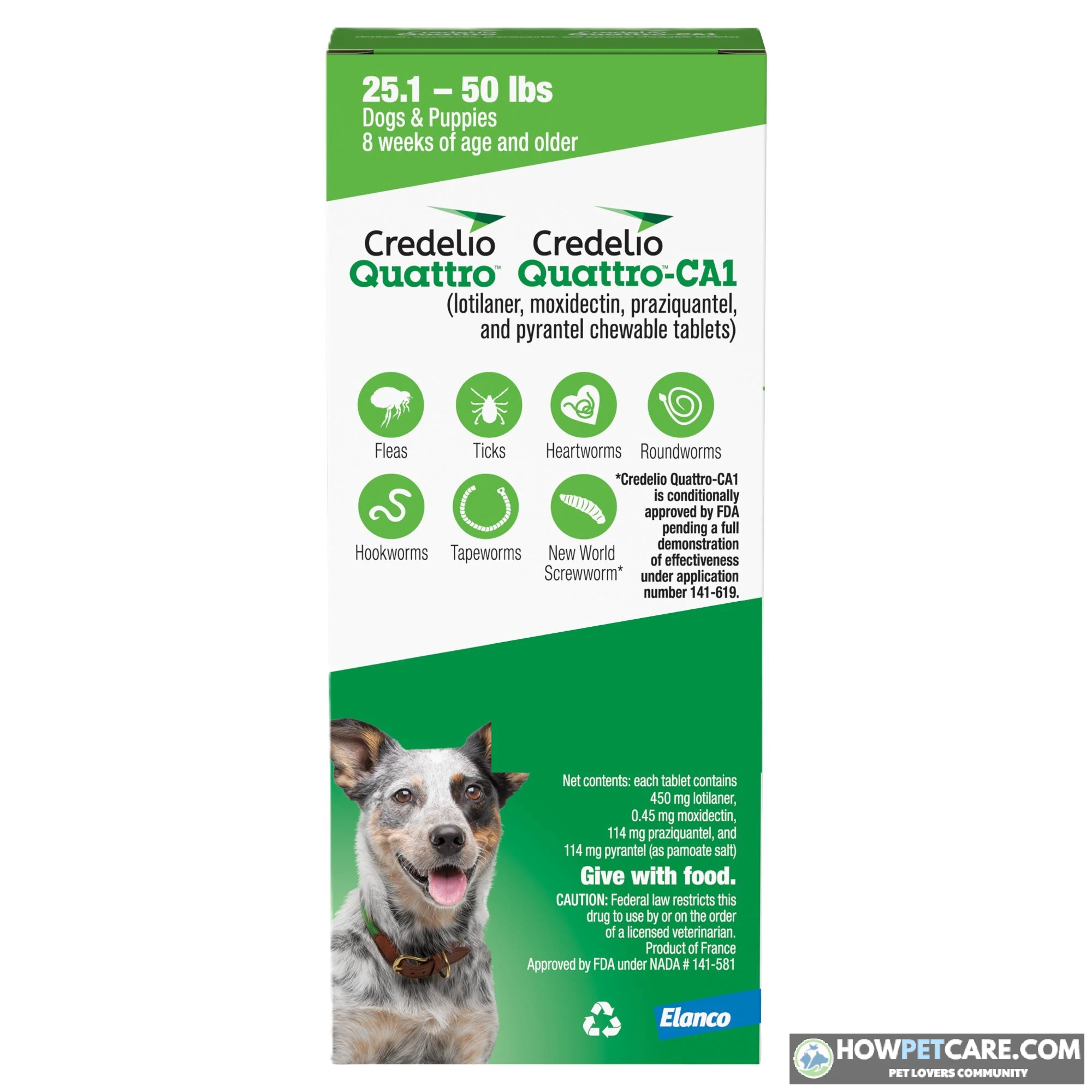
| 450 mg | 25.1–50.0 | 11.4–22.7 | Verify on current packaging | Confirm the prescribed strength. |
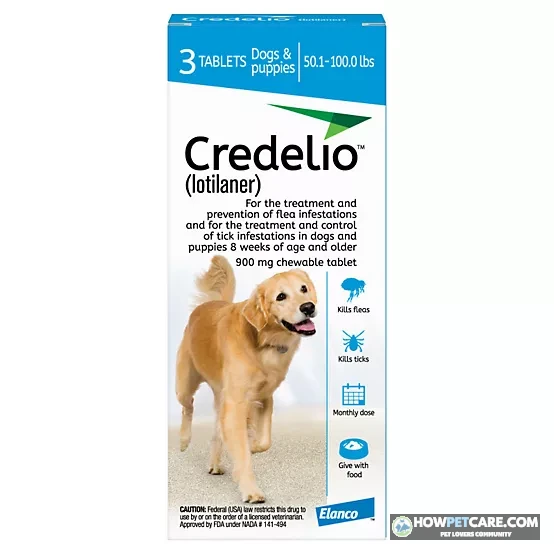
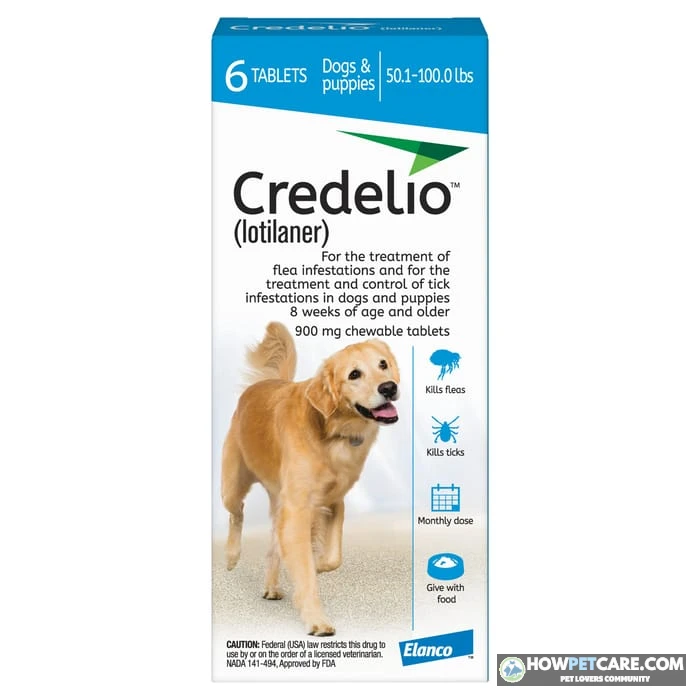
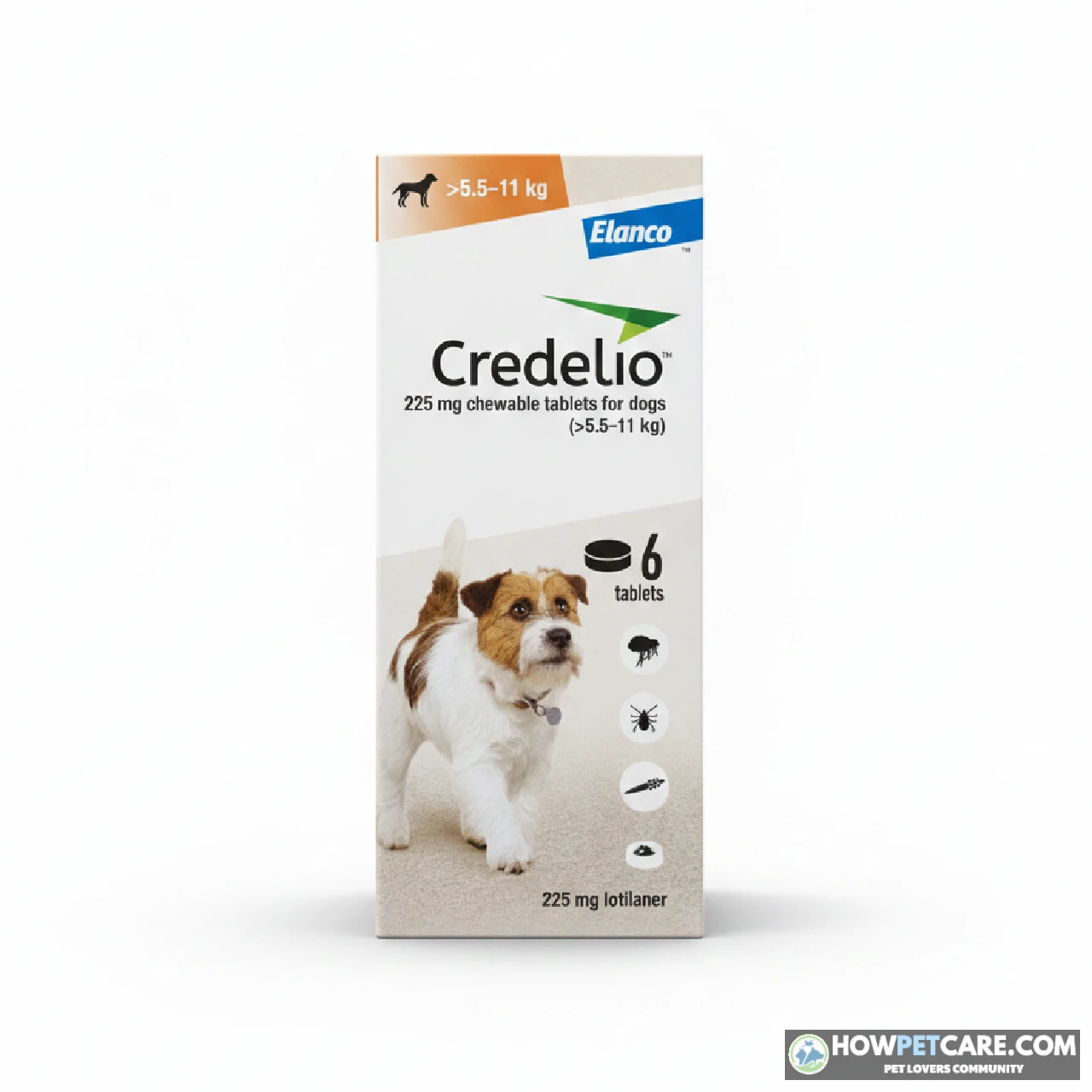
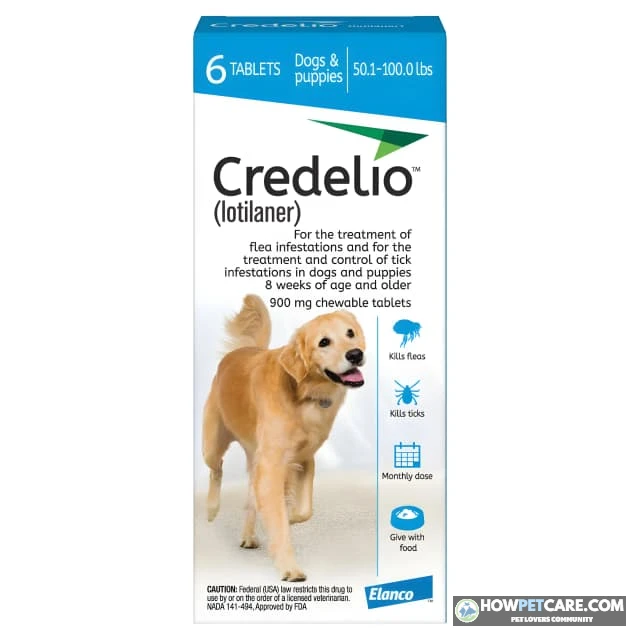
| 900 mg | 50.1–100.0 | 22.8–45.4 | Verify on current packaging | Confirm the prescribed strength. |
| Combination of tablets | Over 100 | Over 45.4 | Check each package | A 110-pound dog example would use 900 mg plus 112.5 mg; have the veterinarian confirm the combination. |

Give Credelio once a month, with food or within 30 minutes after a meal. The minimum age and weight, the monthly schedule, and the food requirement are key parts of the product directions. Don’t split, crush, or combine tablets unless the veterinarian confirms the exact instructions for your dog and product.
How to give the chewable
- Check the package name, tablet strength, expiration date, and your dog’s current weight.
- Offer the chew with a meal or within 30 minutes after the dog eats.
- Watch to make sure the dog swallows the full dose. If the chew is refused or partly spit out, contact the clinic or pharmacy for advice rather than guessing how much was taken.
- Record the date, and set a reminder for the next monthly dose.
Growing puppies can cross into a different weight band. Re-weigh them before refills; don’t assume the previous strength still fits. For a dog over 100 pounds, ask the prescriber to specify the tablet combination rather than calculating a replacement dose yourself.
If your dog vomits or you miss a dose
The supplied evidence doesn’t establish an exact Credelio re-dosing window after vomiting. Resist giving another tablet automatically: part of the dose may already be absorbed, and an extra dose could be unsafe. Call your veterinarian or dispensing pharmacy, and tell them when the chew was given, when vomiting occurred, whether tablet pieces were visible, and the dog’s weight and prescribed strength.
If you miss a dose, contact your veterinarian for timing instructions, and don’t double the next dose to catch up. Keep the monthly schedule written down. The right plan depends on how late the dose is and which other parasite preventives the dog receives.
Credelio side effects ranked by how often they happen
The evidence supplied for this draft doesn’t contain the FDA label’s adverse-reaction table or verified percentages from the field study. Rather than assign unsupported frequencies, use the tiers below as a practical severity guide, and check the current package insert for exact reported rates. Timing alone doesn’t prove that Credelio caused a symptom.
Common reactions to watch
Reported reactions associated with Credelio include vomiting, diarrhea, low energy, decreased appetite, and skin or itching symptoms. Without the label’s verified percentages, ranking them by frequency here wouldn’t be responsible. Mild, brief signs may resolve, but keep monitoring your dog, and contact the clinic if symptoms persist, worsen, or worry you.

Rare but serious neurologic reactions
Isoxazoline products have been associated with neurologic adverse reactions, including muscle tremors, ataxia (poor coordination), and seizures. These reactions have been reported in dogs with and without a prior history of seizures. A seizure history is a reason to discuss the risk with your veterinarian before choosing Credelio, not a reason to change medication on your own.
When to call the vet, and what to tell them
Call a veterinarian promptly for tremors, stumbling, a seizure, collapse, repeated vomiting, severe lethargy, or symptoms that keep getting worse. A seizure, collapse, or severe loss of coordination warrants urgent veterinary assessment rather than waiting to see whether it passes.
Have these details ready: the dose date and time, tablet strength, your dog’s current weight, when symptoms began, what you observed, and all other medications or supplements—from trazodone for dogs to flea products. Keep the carton or blister packaging available.
If your dog eats several Credelio tablets
Call your veterinarian, an emergency veterinary clinic, or an animal poison-control service immediately. Don’t wait for symptoms, and don’t induce vomiting unless a veterinary professional specifically instructs you to. Report the number of tablets, the strength of each, the time eaten, the dog’s weight, current symptoms, and any other medicines. Keep the packaging so the product and strength can be identified.
Is Credelio safe for seizure-prone, MDR1, food-allergic, and breeding dogs?
“Safe” depends on the individual dog and the product label. Credelio requires a prescription so a veterinarian can weigh age, weight, neurologic history, allergies, and concurrent medicines. Don’t start it, stop it, or substitute another preventive based only on a general online description.
Seizure history
Tell the veterinarian about any seizure, tremor, or unexplained coordination problem before the first dose. The isoxazoline warning applies even to dogs with no known neurologic history. The vet can weigh parasite risk against alternatives; switching to another isoxazoline doesn’t remove the class warning.
MDR1 breeds: Collies, Australian Shepherds and others
MDR1 gene variants can affect how some dogs handle certain medicines. The supplied evidence doesn’t establish a Credelio-specific MDR1 safety conclusion, so don’t assume either that lotilaner is a problem or that it’s risk-free for an individual dog. Tell the vet if your dog is a Collie, Australian Shepherd, Shetland Sheepdog, related mix, or has a known MDR1 result. This matters most when considering combination products that contain additional drug classes, including moxidectin in Credelio Quattro.

Pork liver and soy flavoring in food-allergic dogs
If your dog has a confirmed pork or soy allergy, ask the veterinarian to review the ingredient list for the exact product and strength before giving it. A flavored chew shouldn’t be assumed to be hypoallergenic. If a reaction occurs after a dose, contact the clinic and describe the signs and timing.
Do you need a prescription?
Yes. Credelio is prescription-only in the United States. Get it through a veterinarian or a pharmacy that verifies the prescription. A seller offering prescription medication without requiring a valid prescription is a warning sign.
Breeding, pregnant, and lactating dogs require special caution: don’t assume Credelio has been established as safe for them. The product’s safety in these groups should be checked in the current label and discussed with the veterinarian. The same applies to a puppy below the labeled age or weight threshold.
| Dog’s situation | Main question | What to discuss with the vet |
|---|---|---|
| Seizure or neurologic history | Is an isoxazoline appropriate? | Neurologic risk and non-isoxazoline options |
| Known or suspected MDR1 variant | Which ingredients are in the chosen product? | Testing history and combination-drug considerations |
| Pork or soy allergy | Does the exact chew contain a relevant ingredient? | Ingredient review and an alternative if needed |
| Pregnant, breeding, or lactating | Has safety been established for this situation? | Current label and an individualized plan |
| Taking other medications | Are there relevant interactions or overlapping preventives? | A complete medication and supplement list |
How fast Credelio works, how long it lasts, and what to expect on your dog
Credelio is intended for monthly flea and tick control. One product-source statement says it begins killing fleas and ticks within four hours, and reports a specific eight-hour tick result; however, that statement names Ixodes ricinus, so it shouldn’t be treated as proof of an identical result for every U.S.-labeled tick species. The same source reports flea killing throughout the month. These are product-study claims, not a head-to-head comparison with other brands.
Time to kill: fleas vs ticks
The supplied evidence reports that killing begins within four hours for fleas and ticks and that 98.7% of the named tick species were killed within eight hours. Because the evidence identifies Ixodes ricinus, verify the current U.S. label’s species-specific study results before applying that percentage to U.S. ticks. Killing time is not repellency: a parasite may attach and feed before it dies.
Why dead ticks may stay attached
A dead tick can remain attached after it has been killed. That alone doesn’t show the dose failed, because Credelio is not a repellent. Remove the tick with fine-tipped tweezers or a tick-removal tool, grasping close to the skin and pulling steadily. Avoid crushing the tick. Clean the bite area, and contact the vet if it becomes increasingly red, swollen, painful, or starts to drain.
Swimming, bathing, and the day-28 question
Credelio is an oral medication, so swimming or bathing doesn’t wash it off the dog’s coat. The supplied evidence includes no label statement about water exposure or a specific post-dose waiting period, so confirm any product-specific instructions with the package insert or veterinarian.
The evidence provided also doesn’t establish whether efficacy dips between days 28 and 35. Give doses on schedule, and ask the veterinarian how to handle a late dose, travel, or a missed month. Don’t shorten the interval or give an extra tablet without professional direction.

Is there lotilaner resistance?
The evidence supplied doesn’t establish the prevalence of flea or tick resistance to lotilaner. It would be inaccurate to claim that resistance is impossible, or to imply that it’s widespread without data. If fleas or ticks remain a problem despite correctly timed doses, ask the vet to check the dose, administration with food, exposure sources, other pets in the home, and whether another explanation or treatment plan is needed.
For dogs with flea allergy dermatitis, even a small number of bites may trigger significant itching. Discuss a full flea-control plan with the veterinarian; if itch persists, ask whether Cytopoint for dogs fits alongside flea treatment. Treating the dog alone may not immediately clear immature flea stages already in the home.
Credelio vs NexGard vs Simparica Trio vs Bravecto: side-by-side comparison
The table distinguishes the products by their general purpose, but exact tick species, minimum weights, kill-time claims, and dosing instructions must be checked against each current U.S. label. The evidence available here doesn’t provide enough verified label detail to complete every comparison cell accurately.
| Product | Active ingredient(s) | Spectrum: fleas and ticks | Heartworm and intestinal worms | Dosing interval | Kill speed | Prescription status (US) |
|---|---|---|---|---|---|---|
| Credelio | Lotilaner | Fleas and five labeled tick species; verify species on current label | No heartworm or intestinal-worm coverage | Monthly | Product-source evidence reports killing begins within four hours; species context matters. | Prescription required |
| NexGard | Afoxolaner | Fleas and ticks; verify labeled species | Standard NexGard does not provide the same combined coverage as Simparica Trio; check product variant | Monthly | Do not compare without the current product label and study context | Prescription required |
| Simparica Trio | Sarolaner, moxidectin, pyrantel | Fleas and ticks; check current label for species | Includes heartworm and certain intestinal-parasite coverage; check label | Monthly | Do not compare without the current product label and study context | Prescription required |
| Bravecto chew | Fluralaner | Fleas and ticks; species coverage and duration can vary by parasite | Does not provide the same combined heartworm coverage as Simparica Trio | Longer interval than monthly products for labeled uses; confirm exact interval and species | Do not compare without the current product label and study context | Prescription required |
All four products listed contain an isoxazoline active ingredient, so the class neurologic warning remains relevant when comparing them. A different brand isn’t automatically a way around that concern. Product formulations and labels can change; compare the exact product name, not just the brand family.
What actually differs: spectrum, speed, and interval
The most useful distinction is what else the dog needs protected against. Credelio is a flea-and-tick product; Simparica Trio combines flea-and-tick treatment with heartworm and certain worm coverage. Bravecto’s longer dosing interval may matter to owners who struggle with monthly dosing, but the precise interval depends on the product label and parasite. NexGard and its combination-product variants should not be treated as interchangeable.
Reported kill speeds come from each product’s own studies, and they shouldn’t be used to declare a winner unless studies directly compare the products under the same conditions. The evidence here doesn’t provide a reliable head-to-head study.
Which one fits which dog
Ask the veterinarian to match the label to your dog’s weight, age, local parasite exposure, health history, and existing preventives. A dog already receiving effective heartworm prevention may not need a combination product. A dog that needs a single monthly product for several parasite types may have a different set of options. For a dog with seizure history, discuss the isoxazoline class warning across the options rather than switching brands on your own.
Credelio vs Credelio Quattro: which one does your dog need?
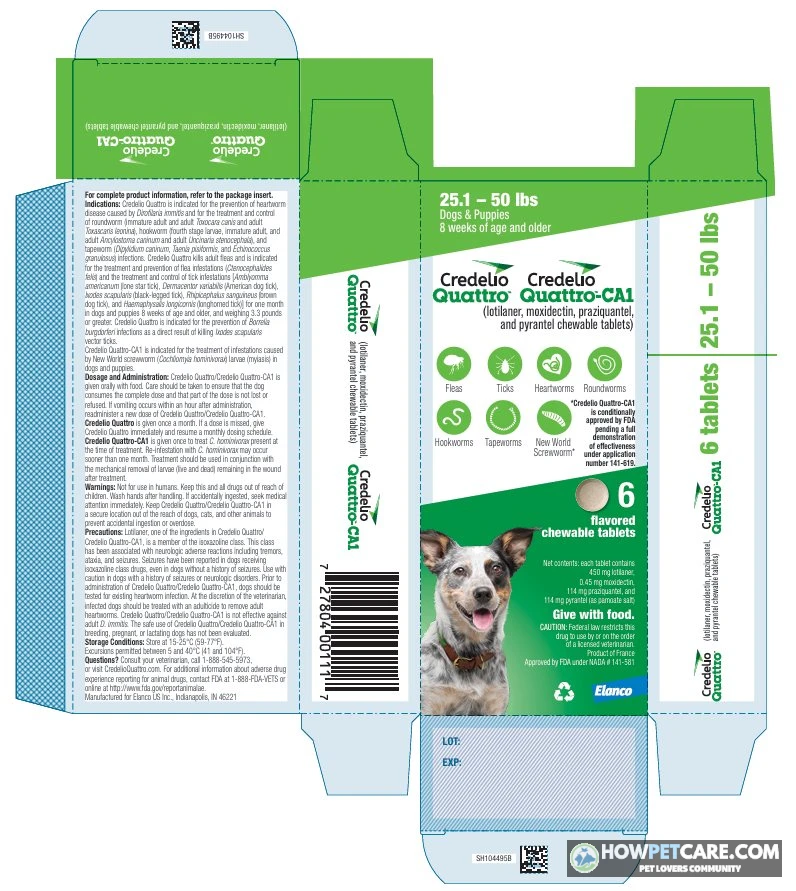
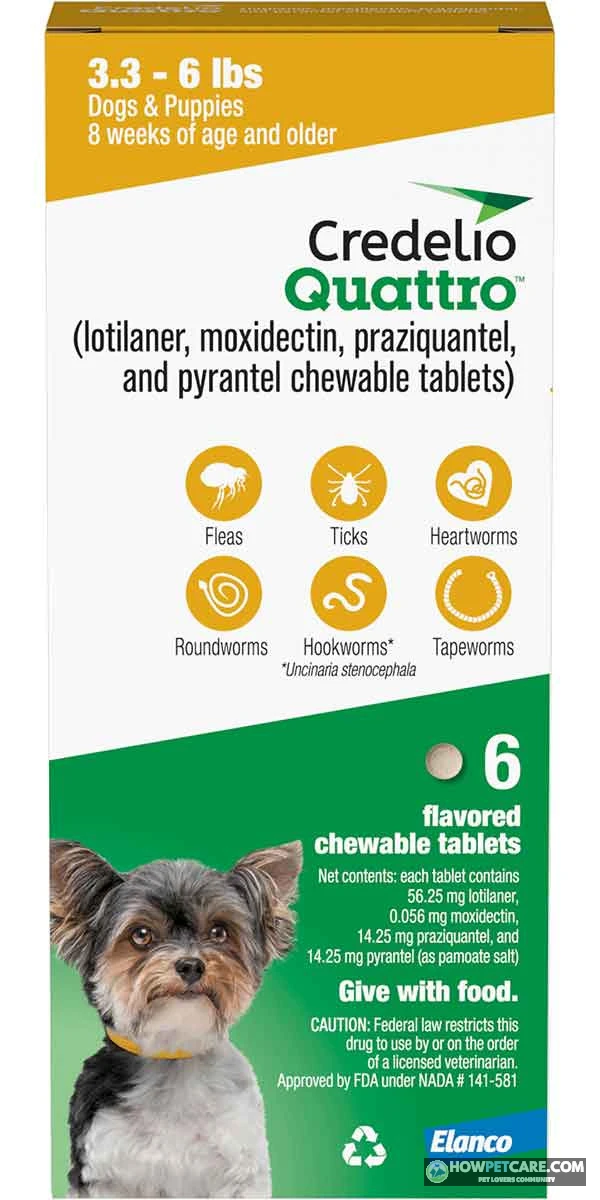
Credelio contains lotilaner for fleas and ticks. Credelio Quattro, the newer combination product launched in the Credelio line, combines lotilaner with moxidectin, praziquantel, and pyrantel, adding heartworm and intestinal-parasite coverage. Confirm the current Quattro label for exact indications, age and weight minimums, testing requirements, and administration instructions before choosing between them.
What Quattro adds to lotilaner
The practical trade-off is broader parasite coverage versus additional active ingredients. Quattro may suit a dog that needs the added protections and for whom the veterinarian considers the combination appropriate. Plain Credelio may be preferable when a separate heartworm preventive is already working well or when the vet wants to avoid unnecessary ingredients. Neither is a universal upgrade over the other.
Decision checklist: Credelio or Credelio Quattro
- Is your dog below Credelio’s 4.4-pound minimum? Credelio’s labeled minimum is 4.4 pounds and 8 weeks old. Ask whether Quattro is labeled for your dog’s exact weight and age; do not infer eligibility from another product.
- Does your dog already take a separate heartworm preventive? Ask whether plain Credelio plus the existing preventive is the better fit, or whether changing to a combination product is appropriate.
- Does your dog have an MDR1 result or belong to a higher-risk breed? Quattro contains moxidectin. Discuss that ingredient and your dog’s individual risk with the vet before choosing.
- Does your dog have a seizure history? Both products contain lotilaner, so the isoxazoline neurologic warning applies to both. Ask about alternatives if the vet believes the class is not appropriate.
- Do you need flea, tick, heartworm, and intestinal-worm coverage in one monthly product? Ask whether Quattro’s labeled spectrum meets that need and whether any required testing should be completed first.
Small dogs, MDR1 breeds, and dogs already on heartworm prevention
Don’t assume a lower minimum weight, a combination product, or a single chew is automatically safer or more convenient. The current Quattro minimums and heartworm testing instructions are not established by the evidence supplied for this draft; verify them with the product label and veterinarian. Bring a list of all preventives to avoid accidentally doubling up on active ingredients.
Credelio cost per dose and rebate options
Credelio’s cost depends on tablet strength, pack size, pharmacy, and clinic. No verified, dated U.S. price or current rebate terms were available in the evidence for this draft, so a fixed price would be misleading. Ask for the cost of the prescribed strength and package size, then compare the total preventive plan, not just the price of one chew.
How to work out cost per dose
Use this formula: pack price divided by the number of monthly doses equals cost per dose. Multiply that amount by 12 for a simple annual estimate. For example, if a hypothetical 6-dose pack costs $120, the arithmetic is $120 divided by 6, or $20 per dose; $20 multiplied by 12 is $240 for 12 doses. These are illustrative placeholder numbers, not a Credelio quote.
When comparing with a combination product, include any separate heartworm or intestinal-worm medicines that it could replace. Check that the products cover the parasites your veterinarian wants addressed, and that you’re comparing the same number of months.
Where rebates and savings programs come from
Manufacturer rebate and loyalty-program terms can change. Check Elanco’s current program information, and ask the veterinary clinic whether a valid offer applies to your prescription. A legitimate online pharmacy still needs a prescription. Avoid sellers that bypass the prescription requirement or cannot identify the product source.
Your next steps: a pre-vet-visit checklist for choosing Credelio
Checklist to bring to the vet
- Your dog’s current weight and age; for a puppy, the most recent weigh-in.
- Breed and any known MDR1 test result.
- Seizure, tremor, coordination, or other neurologic history.
- Known food allergies, including pork or soy.
- Every medication, supplement, flea product, and heartworm preventive your dog receives.
- Your region, travel plans, and typical exposure to fleas and ticks.
- The exact Credelio or Credelio Quattro package, if already prescribed.
Questions to ask before you start
Ask which product best fits your dog’s parasite risks and current preventives, which tablet strength matches its weight, whether the dog’s medical history changes the choice, and what to do if a dose is vomited, refused, or missed. If you’re considering Quattro, ask which additional parasites it covers for your dog and whether any testing is needed first.
First 48 hours and monthly routine
After the first dose, monitor your dog and note any symptoms and when they begin. Call promptly for tremors, stumbling, seizures, collapse, or severe symptoms; for possible overdose, contact a veterinarian or animal poison-control service immediately, and don’t induce vomiting unless instructed. Keep the package, record each dose date, and set a monthly reminder. Re-weigh growing puppies before refills, and confirm the strength whenever their weight changes.
FAQ
Is Credelio the best flea and tick treatment for dogs?
No single product is best for every dog. Credelio, NexGard, Simparica Trio, and Bravecto all work well, and the right choice depends on your dog’s weight, health history, whether it needs heartworm or intestinal worm coverage, and your vet’s advice.
Do I need to give Credelio all year?
Fleas can survive indoors and ticks are active in many regions in cooler months. Many vets therefore recommend year-round prevention. Ask your vet what fits your climate and your dog’s risk.
Can Credelio be given with other medications and vaccines?
The label reports that Credelio was used in field studies with commonly used veterinary products such as vaccines, antibiotics, and steroids. Credelio does not prevent heartworm, so dogs usually need a separate preventive, and your vet should review all of your dog’s medications.
Does Credelio kill flea eggs or just adult fleas?
Credelio works on adult fleas that bite the dog, killing them before they lay more eggs. Eggs, larvae, and pupae already in the home keep hatching for weeks, so it can take time to clear an infestation even when dosing is on schedule.