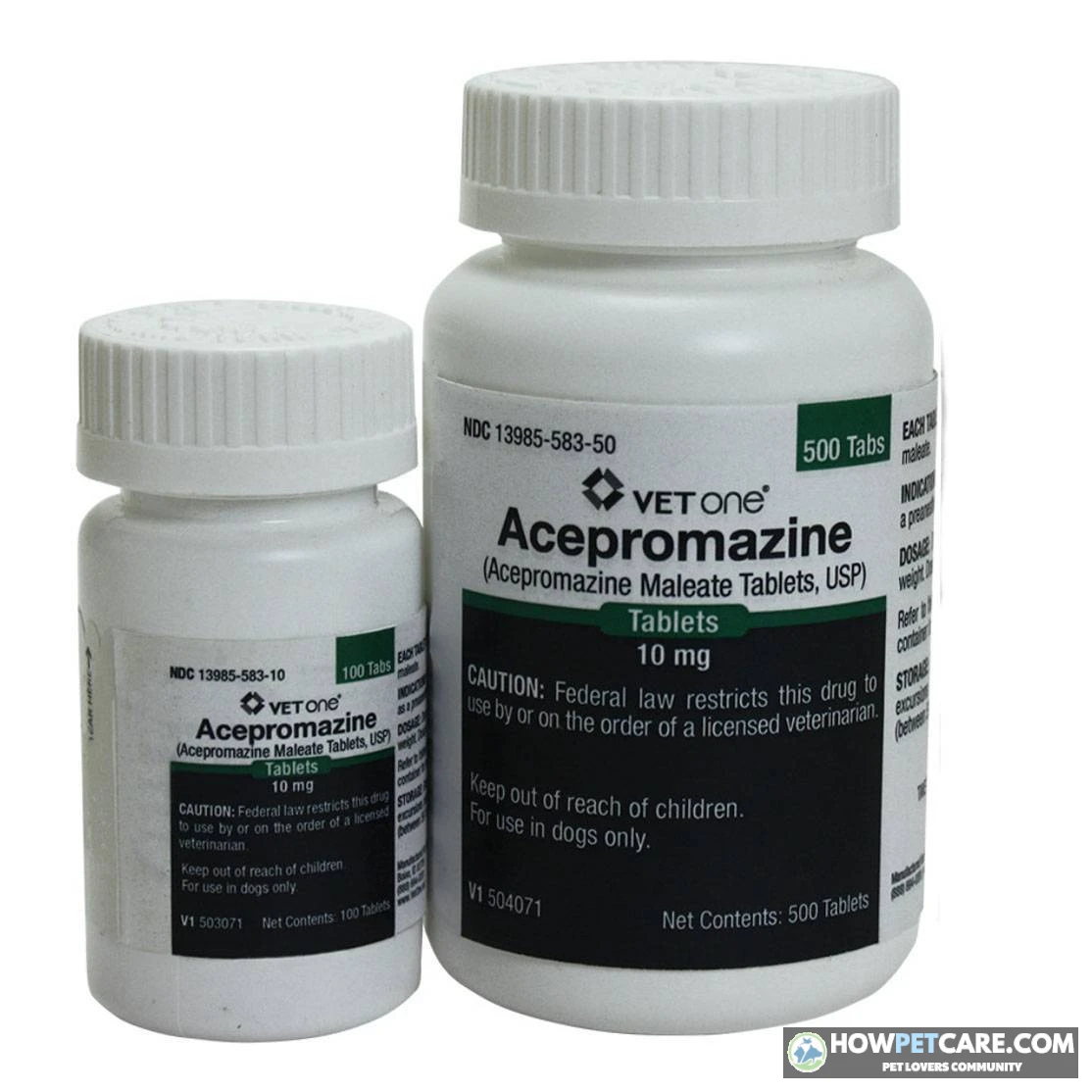

Acepromazine is a prescription phenothiazine tranquilizer: it sedates and immobilizes dogs but does not relieve fear or pain. Published dose ranges (your vet sets the actual dose):
| Form | Typical dose range | Onset | Duration |
|---|---|---|---|
| Oral tablet | 0.25–1 mg/lb (~0.5–2 mg/kg) | 30–60 min | 4–8 hr (up to 24 hr in sensitive dogs) |
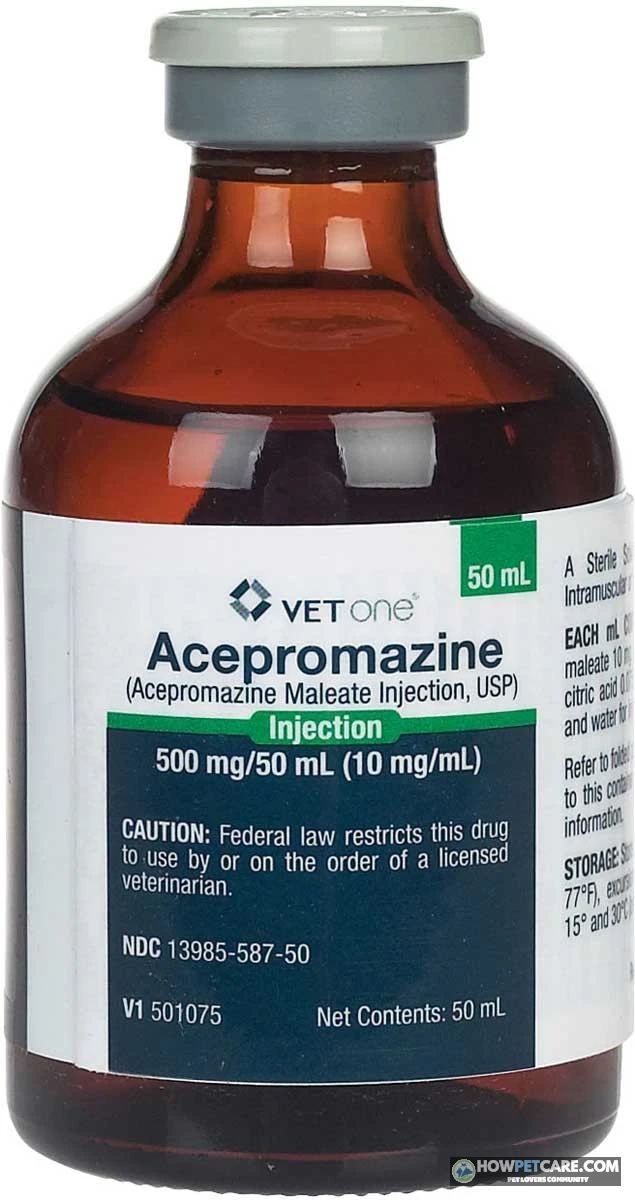
| Injectable (clinic only) | ~0.01–0.05 mg/kg IV/IM/SC | ~10 min | 4–8 hr |
There is no reversal agent, so vets typically start at the low end.
Acepromazine maleate is a phenothiazine tranquilizer. It blocks dopamine receptors to produce sedation and reduced movement, but it has no pain-relieving effect — and critically, it does not reduce the emotional experience of fear. It is a veterinary prescription drug. The injectable form carries an FDA veterinary label for dogs, while oral tablets are widely used, often extra-label or compounded.
Common uses include anesthesia premedication, calming for vet visits, grooming, and travel, plus motion sickness or nausea control. It is also prescribed for noise phobia, which carries the weakest evidence. The core takeaway: acepromazine immobilizes without relieving fear. A quiet dog may still be terrified underneath the sedation.
- Oral onset: 30–60 minutes (some dogs take 1–2 hours)
- Injectable onset: ~10 minutes (IV fastest, IM/SC slower)
- Duration: 4–8 hours; up to 12–24 hours in sensitive dogs
- No reversal agent exists — the drug must wear off
- Extra caution in MDR1-affected breeds (Collies, Australian Shepherds), Boxers, sighthounds, and giant breeds
- This article provides published dose ranges, a comparison with modern sedatives, and questions for your vet — it is not a substitute for a vet-set dose
How Long Acepromazine Takes to Work and How Long It Lasts in Dogs
Oral acepromazine typically begins working in 30–60 minutes, though some dogs don’t show effects for 1–2 hours. Injectable routes are faster: intravenous takes effect almost immediately, while intramuscular or subcutaneous injection peaks around 10 minutes. Peak sedation occurs later than the first noticeable drowsiness, so plan for the full onset window before the stressful event.
Duration is usually 4–8 hours, but older dogs, giant breeds, and dogs with the MDR1 mutation can stay groggy for 12–24 hours. Because there is no reversal agent, the effect has to wear off on its own — which is the main reason veterinarians start at the low end of the dose range.
Give the dose before the stressor begins, not during it. A dog who is already panicking or highly aroused absorbs and responds to the drug less predictably.
Practical timing examples
- Car travel: dose about 60 minutes before departure; the dog should be visibly drowsy when you load up.
- Grooming appointment: give 60–90 minutes before you leave home.
- Vet visit: 60–90 minutes before the appointment (some vets say 1–2 hours — follow your vet’s instructions).
- Storm or fireworks forecast: dose when the forecast is issued or skies darken, not after the first thunderclap.
7–14 days before the event
- ☐ Run a trial dose on a calm, uneventful day — never let the first dose be the real event.
- ☐ Record: time given, time drowsiness started, how deep the sedation got, and when the dog was fully normal again.
- ☐ Flag for your vet before the event: wobbliness beyond mild stumbling, pale or gray gums, agitation instead of calm, or sedation lasting past ~12 hours.
Day of a vet visit or grooming appointment
- ☐ Give the oral dose 60–90 minutes before you leave (some vets say 1–2 hours — follow your vet’s instructions).
- ☐ Keep the dog quiet and indoors between dosing and departure; excitement can partly override the drug.
Day of a car ride
- ☐ Dose about 60 minutes before departure; the dog should be visibly drowsy at pickup time.
- ☐ Skip the meal right before travel — it also helps with the anti-nausea benefit.
Storm or fireworks forecast
- ☐ Dose when the forecast is issued or skies darken — not after the first thunderclap. A dog already panicking absorbs the drug unpredictably.
- ☐ Set a weather-alert notification so you’re not caught off guard.
If the dose seems ineffective at 90 minutes
- ☐ Do not give a second dose on your own, and do not add another sedative.
- ☐ Call your vet or an after-hours line; they may adjust the plan for next time rather than redose mid-event.
Acepromazine Dosage for Dogs by Weight: Oral and Injectable Ranges
The commonly cited oral range is 0.25–1 mg/lb (about 0.5–2 mg/kg). For injectable premedication, the range is roughly 0.01–0.05 mg/kg IV/IM/SC, and many references cap the total injectable dose around 3 mg even for giant breeds. These are published reference ranges, not a prescription: your vet sets the actual dose based on your dog’s breed, health, and the event, and most vets start at the low end for a first dose.
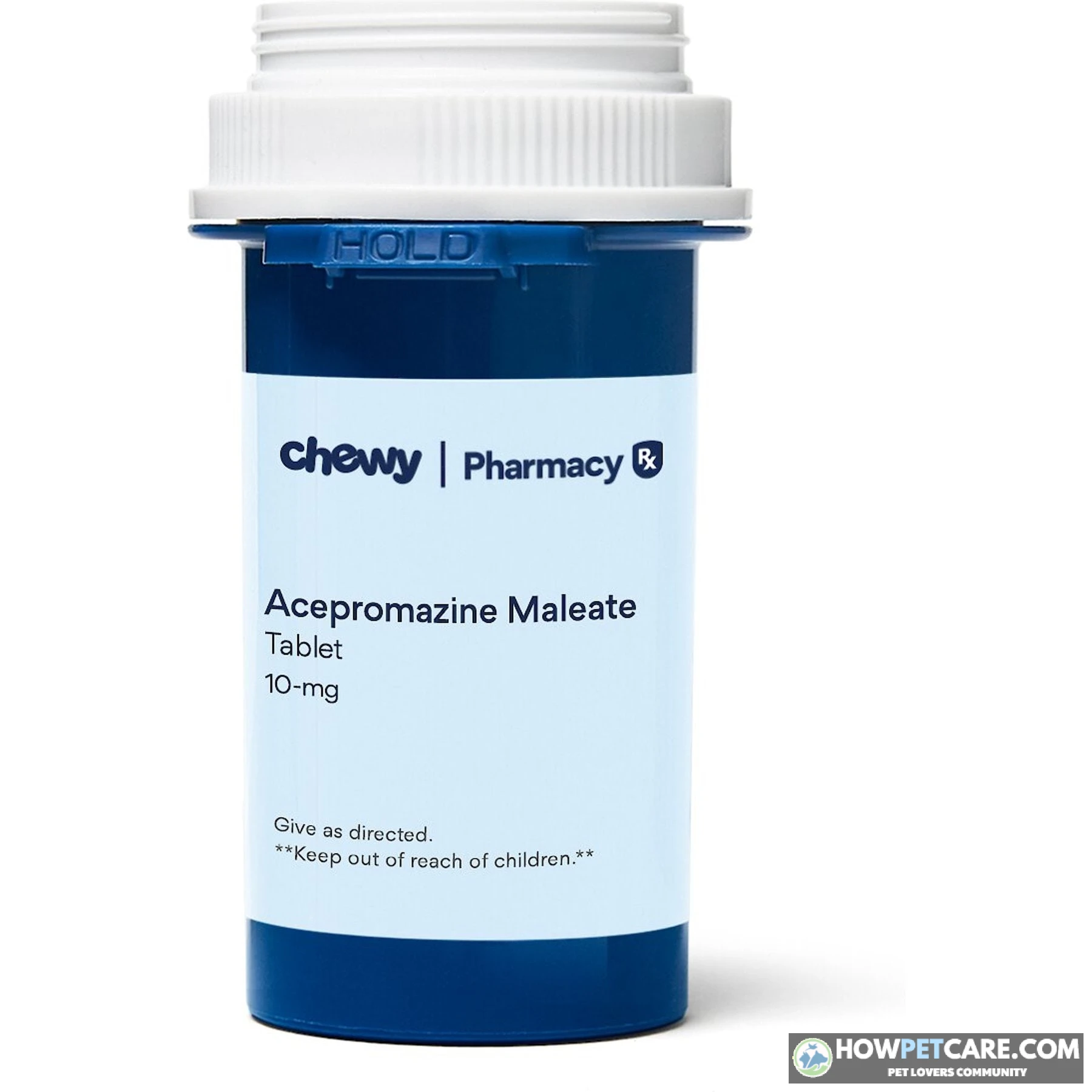
Commercial tablets come in 10 mg and 25 mg strengths. Splitting tablets is imprecise for small dogs, so ask your vet about compounded liquids or smaller-dose tablets.
Dosage table in mg/lb and mg/kg, with tablet examples
Published reference ranges — not a prescription. Your vet sets the actual dose based on your dog’s breed, health, and the event. Most vets start at the low end, especially for a first dose.
| Dog weight (lb) | Dog weight (kg) | Oral range: 0.25–1 mg/lb | Injectable premed range: ~0.01–0.05 mg/kg | Tablet example (10 mg / 25 mg) | Notes for sensitive dogs |
|---|---|---|---|---|---|
| 10 lb | ~4.5 kg | 2.5–10 mg | ~0.05–0.23 mg | ¼ to 1 × 10 mg tablet | Quarter-tablet cuts are imprecise at this size — ask about a compounded liquid. MDR1 dogs: vet may reduce 25–50%. |
| 20 lb | ~9.1 kg | 5–20 mg | ~0.09–0.45 mg | ½–2 × 10 mg, or up to ~¾ × 25 mg | Start at the low end for a first dose; giant-breed-mix puppies can be surprisingly sensitive. |
| 50 lb | ~22.7 kg | 12.5–50 mg | ~0.23–1.1 mg | ½–2 × 25 mg | Boxers and sighthounds near this weight often get doses at or below the low end. |
| 80 lb | ~36.3 kg | 20–80 mg | ~0.36–1.8 mg | ~¾–3 × 25 mg | Many references cap the total injectable dose around 3 mg even for giant breeds — confirm the ceiling with your vet. |

How to read this table: the oral range is what standard veterinary references list for tablets given at home; the injectable range is what a clinic uses for anesthesia premedication — it is far lower per pound because it skips digestion. If your vet’s prescribed dose falls outside the oral range shown, ask why rather than assuming an error — there are legitimate reasons (compounding concentration, MDR1 reduction, combination protocols) — but never stretch a dose upward on your own.
Oral vs. injectable vs. transmucosal dosing
Transmucosal dosing — oral gel or sublingual application — appears in some settings, but absorption and timing are less predictable than with swallowed tablets, and it should only be done on a veterinarian’s instruction. Injectable forms are given by veterinary professionals and produce more predictable sedation because they bypass the variability of gastrointestinal absorption.
Running a trial dose at home before the event
Run a trial dose on a calm day, not before the actual event. Record the onset, depth of sedation, and duration. Tell your vet about any wobbliness beyond mild stumbling, pale gums, agitation, or sedation lasting past ~12 hours before the real event. Never combine acepromazine with other sedatives, and never use another dog’s supply, unless your vet says otherwise.
Does Acepromazine Help Dog Anxiety? Why It’s a Poor Fit for Fireworks and Thunderstorms
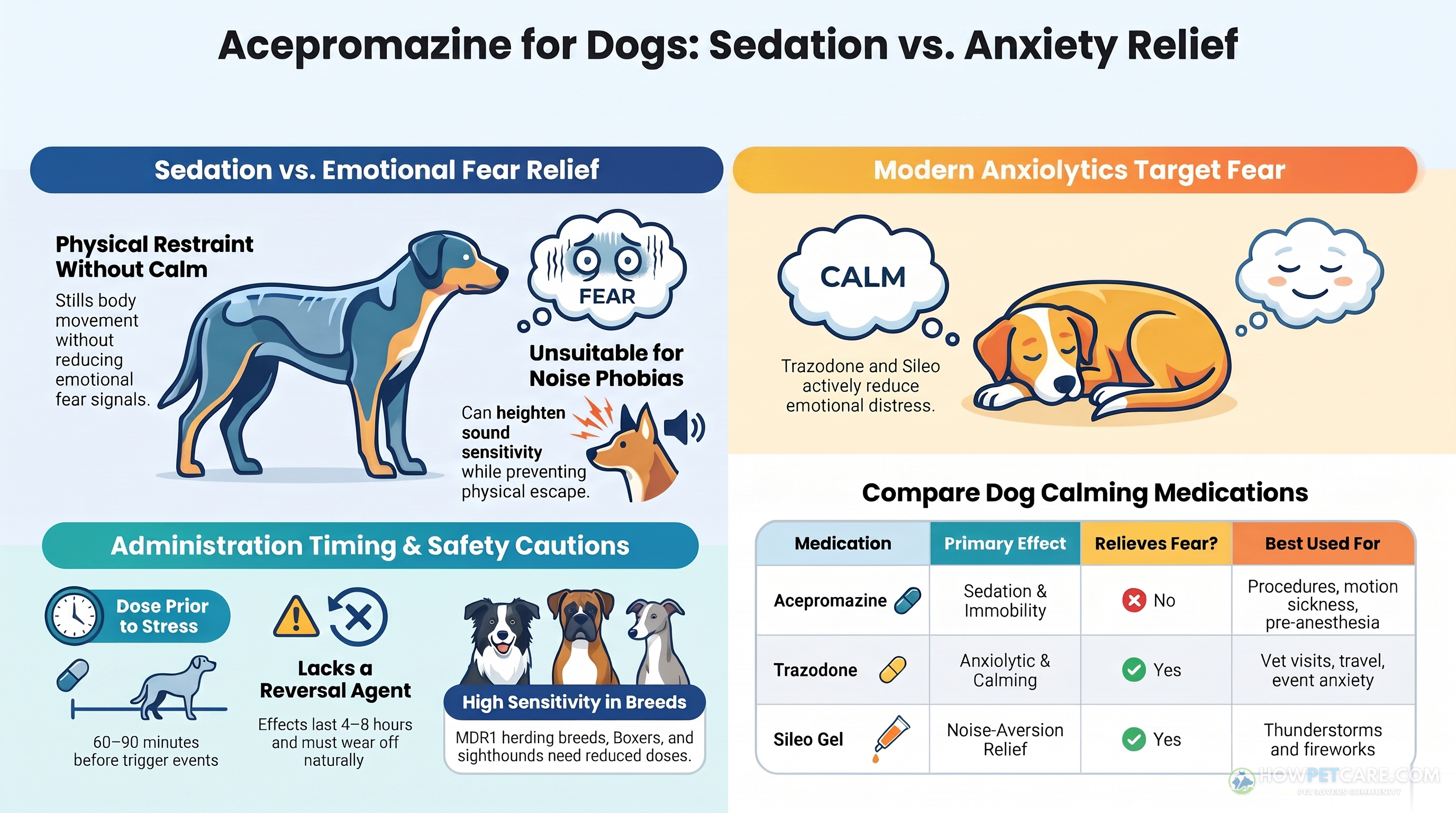
Acepromazine blocks movement and responsiveness, but it does not reduce the emotional experience of fear. A sedated dog can still be frightened but unable to show it. Some evidence and clinical opinion suggest heightened sensitivity to noise on acepromazine, making it a poor standalone choice for thunderstorm anxiety and noise phobia, even though it is widely prescribed for both.

Sedation vs. anxiety relief in plain terms
Think of acepromazine as a chemical restraint: it stills the body without touching the fear. True anxiolytics (such as trazodone, gabapentin, or Sileo) reduce the fear signal in the brain, so the dog is both behaviorally and emotionally calmer.
How to tell if your sedated dog is still frightened
Acepromazine suppresses movement, not fear. A dog lying still during a storm may be frozen, not calm. During or after dosing, check for these signs that fear is still present underneath the sedation:
- ☐ Eyes wide or ‘whale eye’ — whites showing, scanning, or pupils dilated
- ☐ Panting with no heat or exertion to explain it
- ☐ Trembling or muscle tension even while lying down
- ☐ Startle or flinch response when thunder cracks or a firework pops — the dog reacts but can’t get up
- ☐ Drooling more than the drug’s usual mild amount
- ☐ Tucked tail, pinned ears, or a rigid tucked posture
- ☐ Attempts to crawl, hide, or press against you at partial mobility
If you checked two or more: the sedation is working but the anxiety isn’t treated. Note which signs you saw and when, and tell your vet — that’s the opening to discuss an anxiolytic (trazodone, Sileo, or a behavior plan) instead of a higher acepromazine dose. Raising the dose makes the dog more immobilized, not less afraid.
Acepromazine still fits when immobility is the goal — grooming, some travel, vet handling — or for nausea, motion sickness, and anesthesia premedication. For noise phobia, many vets now pair an anxiolytic drug with behavior work and environment management as part of the broader landscape of dog medications.
Acepromazine Side Effects in Dogs: Common Reactions and Warning Signs
Common effects include drowsiness, wobbliness, lowered body temperature, slow heart rate, drooping third eyelid (nictitating membrane), mild gum color change, and reduced appetite for a few hours. The drug dilates blood vessels, which is why dehydrated, anemic, or heart-compromised dogs are at higher risk for hypotension. A harmless but surprising effect: urine may turn pink or reddish-brown, which is a benign metabolic byproduct.
Serious effects requiring immediate veterinary attention:
- Hypotension (low blood pressure), collapse, or fainting
- Prolonged sedation far beyond the expected window
- Paradoxical agitation or restlessness
- Prolonged penile protrusion in male dogs (priapism)
- Very slow or irregular heartbeat
- Seizures
- Pale or gray gums, weakness, or an unrousable dog

Home-safety tips: keep the dog warm, supervise near stairs and water, and offer no food or water until the dog is fully alert. Most healthy dogs tolerate appropriate doses well; the risk depends on the dose, the dog, and the health context.
Is Acepromazine Safe? Breed Sensitivity, Health Conditions, Seizure Evidence, and Pregnancy
Breed and genetic cautions at a glance
Check everything that applies to your dog, then bring the checked items to your vet conversation. Any check is a reason to confirm the dose and the drug choice — not necessarily a reason to avoid acepromazine entirely.
Breed and genetics
- ☐ Collie — roughly 70% carry the MDR1 (ABCB1) mutation; affected dogs get deeper, longer sedation
- ☐ Australian Shepherd — about 50% carry the mutation
- ☐ Sheltie, Border Collie, Old English Sheepdog, German Shepherd, or any herding-breed mix — mutation rates vary; a simple cheek-swab MDR1 test exists
- ☐ Boxer or other flat-faced (brachycephalic) breed — prone to pronounced sedation, slow heart rate, and low blood pressure
- ☐ Greyhound, Whippet, or other sighthound — low body fat changes drug handling; sedation runs deeper and longer
- ☐ Giant breed (Great Dane, Mastiff, Saint Bernard, etc.) — often sensitive; may stay groggy 12–24 hours
Health status
- ☐ Heart disease or a known murmur
- ☐ Liver disease
- ☐ Seizure history (older labels list a blanket contraindication, but retrospective studies found no clear increase in seizures — your vet weighs this case by case)
- ☐ Dehydration, anemia, recent bleeding, or a clotting problem
- ☐ Senior, very young, underweight, or debilitated
- ☐ Pregnant or nursing — the drug crosses the placenta and enters milk
Medications and exposures
- ☐ Currently on opioids, other sedatives, or blood-pressure-lowering drugs
- ☐ Recent exposure to organophosphate pesticides (some flea/lawn products)
Result key: MDR1-affected dogs typically get a 25–50% dose reduction depending on genotype — if you checked a herding breed and haven’t tested, ask about the swab before dosing.
Seizures and epilepsy: what current evidence shows
Older labels carry a blanket contraindication for dogs with a seizure history. However, retrospective studies of epileptic dogs found no increased seizure incidence with acepromazine. The evidence is limited and retrospective, so the veterinarian decides case by case. If your dog has a seizure disorder, discuss the current data with your vet rather than assuming the drug is off-limits.
Pregnant, nursing, and medically fragile dogs
Data are limited. Acepromazine crosses the placenta and can pass into milk, so it is generally used only when the benefit outweighs the risk and under veterinary direction. In Canada, withdrawal times for food-producing animals are 7 days for meat and 48 hours for milk, but for companion animals the principle is the same: avoid unless clearly indicated.
Interaction cautions: other sedatives, opioids, blood-pressure-lowering drugs, and certain pesticides (organophosphates) can amplify effects. Tell the vet about every medication and supplement.

Acepromazine vs. Trazodone, Gabapentin, Sileo, and Dexmedetomidine: How Vets Choose
When a vet reaches for acepromazine
- Anesthesia premedication (reduces anesthetic dose, provides anti-nausea benefit)
- Motion sickness or nausea control
- Procedures where the dog must stay still (grooming, imaging, minor procedures)
- Low cost and long track record in healthy dogs
- Part of combination protocols in clinic settings
When a vet picks something else
| Drug | Primary effect | Relieves anxiety? | Onset and duration | Best for | Key cautions | Reversible? |
|---|---|---|---|---|---|---|
| Acepromazine | Tranquilization — sedation and immobility | No — masks fear signals without reducing fear | Oral: 30–60 min onset, 4–8 hr (up to 24 hr in sensitive dogs) | Anesthesia premed, motion sickness/nausea, procedures where the dog must stay still | Low blood pressure; MDR1, Boxer, sighthound, and giant-breed sensitivity; poor fit for noise phobia | No — must wear off |
| Trazodone | Anxiolytic and calming | Yes | ~1–2 hr onset, roughly 6–12 hr | Vet-visit and event anxiety, post-surgery confinement | GI upset, sedation; caution combined with SSRIs | No |
| Gabapentin | Calming + pain relief | Mild to moderate | 1–2 hr onset, ~8–12 hr | Vet visits (often paired with trazodone), dogs with pain plus anxiety | Wobbliness, sedation; dose care in kidney disease | No |
| Sileo (dexmedetomidine oromucosal gel) | Sedation + noise-aversion relief — FDA-approved for this use | Yes, for noise events | ~30–60 min onset, ~2–3 hr; can be re-dosed during a long event (per label) | Fireworks and thunderstorms — the only drug labeled for noise aversion in dogs | Must absorb in the cheek pouch — swallowing it reduces effect; not for dogs with serious heart/liver/kidney disease | Not at home (a reversal agent exists in clinic) |
| Dexmedetomidine injectable | Deep sedation | Primarily immobility | Minutes; clinic-administered | In-clinic procedures needing reliable, controllable sedation | Slows heart rate significantly; professional monitoring required | Yes — reversed with atipamezole |
The pattern to notice: only acepromazine and injectable dexmedetomidine are built for immobility first — and only one of them can be reversed. For anything driven by fear, the drugs that relieve anxiety (trazodone for event anxiety, gabapentin, Sileo) are usually the better tool. Vets sometimes combine drugs (e.g., gabapentin + trazodone) — but layering sedatives without vet direction is a real overdose risk.
Non-drug supports that belong alongside any option: desensitization, a safe room, white noise, and a pressure wrap.

Filling the Prescription and Questions to Ask Your Vet Before You Give Acepromazine
Vet clinic vs. pharmacy vs. compounding
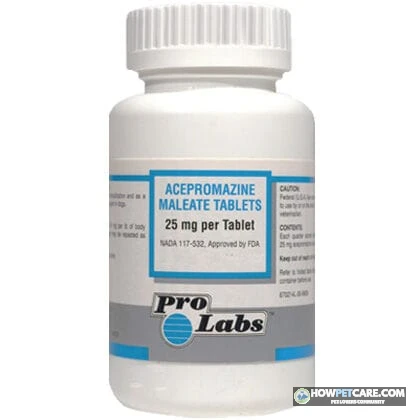
Cost is roughly $0.80 per 25 mg tablet from typical sources. Options:
- Vet clinic: convenient, immediate, but often highest per-tablet price.
- Human or online pet pharmacy: lower cost, may require a written prescription and shipping time.
- Compounding pharmacy: essential for small dogs (liquid, flavored, or smaller-dose tablets) because splitting 10 mg or 25 mg tablets is imprecise at low weights.
Storage and handling
Keep at room temperature, away from light, in a childproof container and out of reach of pets and children. Never share tablets between pets.
Questions to ask your vet
- What is my dog’s exact dose in mg, and in tablet fractions?
- When should I give it relative to the event?
- Does breed, MDR1 status, or heart/seizure history change the dose?
- Is acepromazine the right drug for this event, or would trazodone, gabapentin, or Sileo fit better?
- Should we do a trial dose?
Pre-appointment checklist
Bring:
- Your dog’s current weight
- Breed and any MDR1 test result
- Current medications and supplements
- Health history (heart, liver, seizures, etc.)
- A description of how your dog reacts to the trigger (panting, hiding, trembling, aggression, etc.)
Decision guide: choose acepromazine when immobility is the goal (procedures, motion sickness, pre-anesthesia). When fear is the problem (fireworks, thunderstorms, vet-visit panic), talk through an anxiolytic instead. If pain is also part of the picture, review safe pain meds for dogs with your vet rather than layering sedatives.
If you suspect an overdose — extreme sleepiness or inability to rouse, pale gums, weak or very slow pulse, low body temperature, collapse — call your vet, an emergency clinic, or a pet poison hotline (ASPCA Animal Poison Control: 888-426-4435; Pet Poison Helpline: 855-764-7661) right away. Do not induce vomiting unless directed. There is no reversal agent; treatment is supportive (IV fluids, monitoring, warming).
Drug Primary Effect Relieves Anxiety? Onset and Duration Best For Key Cautions Reversible? Acepromazine Tranquilization — sedation and immobility No — masks fear signals without reducing fear 30–60 min onset (oral), 4–8 hr duration (up to 24 hr in sensitive dogs) Anesthesia premedication, motion sickness/nausea, procedures where the dog must stay still Low blood pressure; MDR1, Boxer, sighthound, and giant-breed sensitivity; poor fit for noise phobia No — must wear off Trazodone Anxiolytic and calming Yes ~1–2 hr onset, ~6–12 hr duration Vet-visit and event anxiety, post-surgery confinement GI upset, sedation; caution when combined with SSRIs No Gabapentin Calming + pain relief Yes (mild to moderate) 1–2 hr onset, ~8–12 hr duration Vet visits (often paired with trazodone), dogs with pain plus anxiety Wobbliness, sedation; dose care in kidney disease No Sileo (dexmedetomidine oromucosal gel) Sedation + noise-aversion relief — FDA-approved for this use Yes, for noise events ~30–60 min onset, ~2–3 hr duration; can be re-dosed during a long event (per label) Fireworks and thunderstorms — the only drug labeled for noise aversion in dogs Must absorb in the cheek pouch — swallowing it reduces effect; not for dogs with serious heart/liver/kidney disease No at home (a reversal agent exists in clinic) Dexmedetomidine injectable Deep sedation No — primarily immobility Minutes onset; clinic-administered In-clinic procedures needing reliable, controllable sedation Slows heart rate significantly; professional monitoring required Yes — reversed with atipamezole
1A dog given acepromazine appears completely still and quiet during a severe thunderstorm, but its eyes are wide with dilated pupils, its muscles are tense, and it is trembling. What fundamental pharmacological characteristic of acepromazine explains this behavior?
Acepromazine acts on dopamine receptors to induce sedation and immobility, but because it does not alter fear signals in the brain, the animal can remain emotionally terrified while physically incapacitated.
2A dog owner plans to administer oral acepromazine to their pet before a high-stress veterinary visit scheduled for 2:00 PM. Based on standard onset times and pre-stressor timing recommendations, at what time should the medication ideally be given?
Oral acepromazine typically requires 30–60 minutes to begin working (and up to 1–2 hours in some dogs), and it must be given before the stressor begins to ensure predictable absorption and peak sedation.
3A veterinarian is evaluating a Herding breed, such as a Collie or Australian Shepherd, for an acepromazine prescription. What specific genetic factor requires the veterinarian to consider a 25% to 50% reduction from the standard dose?
Dogs with the MDR1 gene mutation process certain drugs less efficiently, leading to enhanced sensitivity and sedation lasting up to 12–24 hours.
4Following the administration of oral acepromazine, an owner notices several physiological changes in their dog. Which of the following observed signs is a harmless metabolic byproduct of the medication rather than a serious adverse reaction?
Acepromazine produces benign metabolic byproducts excreted in the urine that can temporarily turn it pink or reddish-brown.
5An owner is seeking a medication to manage their dog's severe fear and panic during thunderstorm events. Which of the following medications provide true anxiety relief (anxiolytic effects) suitable for noise phobia, as opposed to acting primarily as a physical tranquilizer?
Trazodone is a true anxiolytic that reduces fear signals in the brain, helping the dog feel emotionally calmer during anxiety-inducing events.
6Acepromazine causes peripheral vasodilation, leading to lowered blood pressure. Because of this cardiovascular impact, which of the following pre-existing conditions places a dog at the greatest risk for severe hypotension or sudden collapse?
Dehydrated, anemic, or hypovolemic dogs lack normal compensatory fluid volume, making drug-induced blood vessel dilation significantly more dangerous.
FAQ
What does an acepromazine overdose look like, and what should I do?
Signs include extreme sleepiness or inability to rouse, pale gums, a weak or very slow pulse, a low body temperature, and collapse. Call your vet, an emergency clinic, or a pet poison hotline right away, and don’t induce vomiting unless told to. There is no reversal agent, so treatment is supportive and may include IV fluids and monitoring.
Can a dog on acepromazine still become agitated or aggressive?
Yes, though it’s uncommon. A sedated dog can still startle at sudden noise or touch and may snap or lash out if handled or woken abruptly. Keep the environment quiet, and handle the dog gently and as little as possible while the drug is active.
Why do vets still prescribe acepromazine when newer sedatives exist?
It is inexpensive, has a long safety record in healthy dogs, and reliably reduces movement. It also helps with nausea and is a standard part of anesthesia premedication. Vets increasingly choose other drugs when the goal is fear relief rather than immobility.
Is acepromazine available over the counter?
No. It is a veterinary prescription drug, so you need a prescription from your vet. It can be filled at the clinic, at some human or online pet pharmacies, or at a compounding pharmacy.
Can acepromazine be combined with trazodone or gabapentin?
Vets sometimes combine sedatives for travel or procedures, but the combination adds sedation and can lower blood pressure further. Never combine them on your own. Ask your vet for a specific plan and dose for your dog.