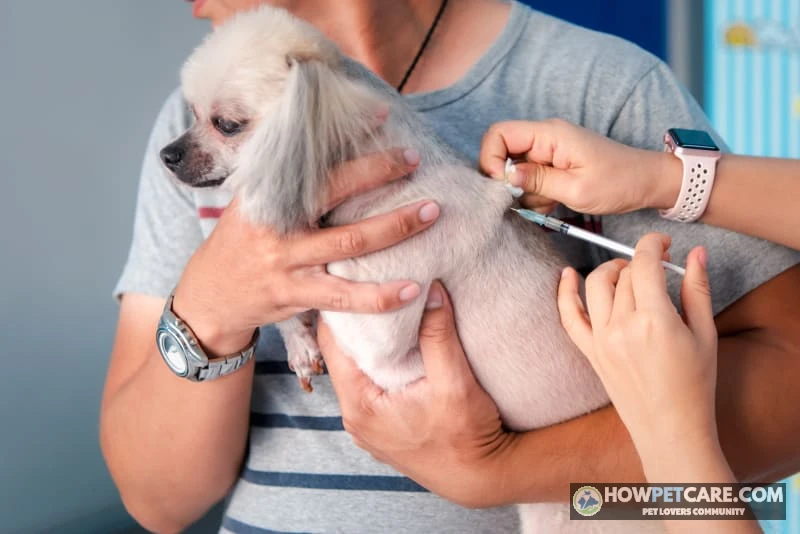

Standard heartworm treatment for dogs follows a vet-directed protocol:
- Confirm the infection with antigen and microfilariae testing, plus chest X-rays and bloodwork.
- Start a heartworm preventive and a course of doxycycline.
- Restrict exercise strictly from diagnosis through recovery.
- Give three melarsomine injections: one, then two 24 hours apart about 30 days later.
- Retest the antigen about six months after the final injection.
Heartworm treatment for dogs usually starts with a veterinarian-confirmed diagnosis and includes a heartworm preventive, a course of doxycycline, exercise restriction, and three injections of melarsomine to kill adult worms. The injections are given as one shot, followed about a month later by two shots 24 hours apart. Your vet may also prescribe a steroid to control inflammation.
Treatment and recovery take months. An antigen retest is commonly scheduled about six months after the final injection. Use this guide to plan for appointments, costs, and care at home, alongside your veterinarian’s diagnosis and individualized treatment plan.
The Standard Heartworm Treatment Protocol for Dogs, Step by Step
Heartworm disease is caused by the parasite Dirofilaria immitis. A separate guide explains how dogs get heartworms in the first place. A positive test is worrying, but it gives you and your veterinarian a starting point: confirm the infection, assess its effects on your dog, and choose a treatment plan.
The American Heartworm Society (AHS) recommends melarsomine for adult worms; it’s the only drug approved to kill adult heartworms. A veterinarian gives it as a deep injection into the back muscle. Your dog may need pain medication and observation or hospitalization afterward.
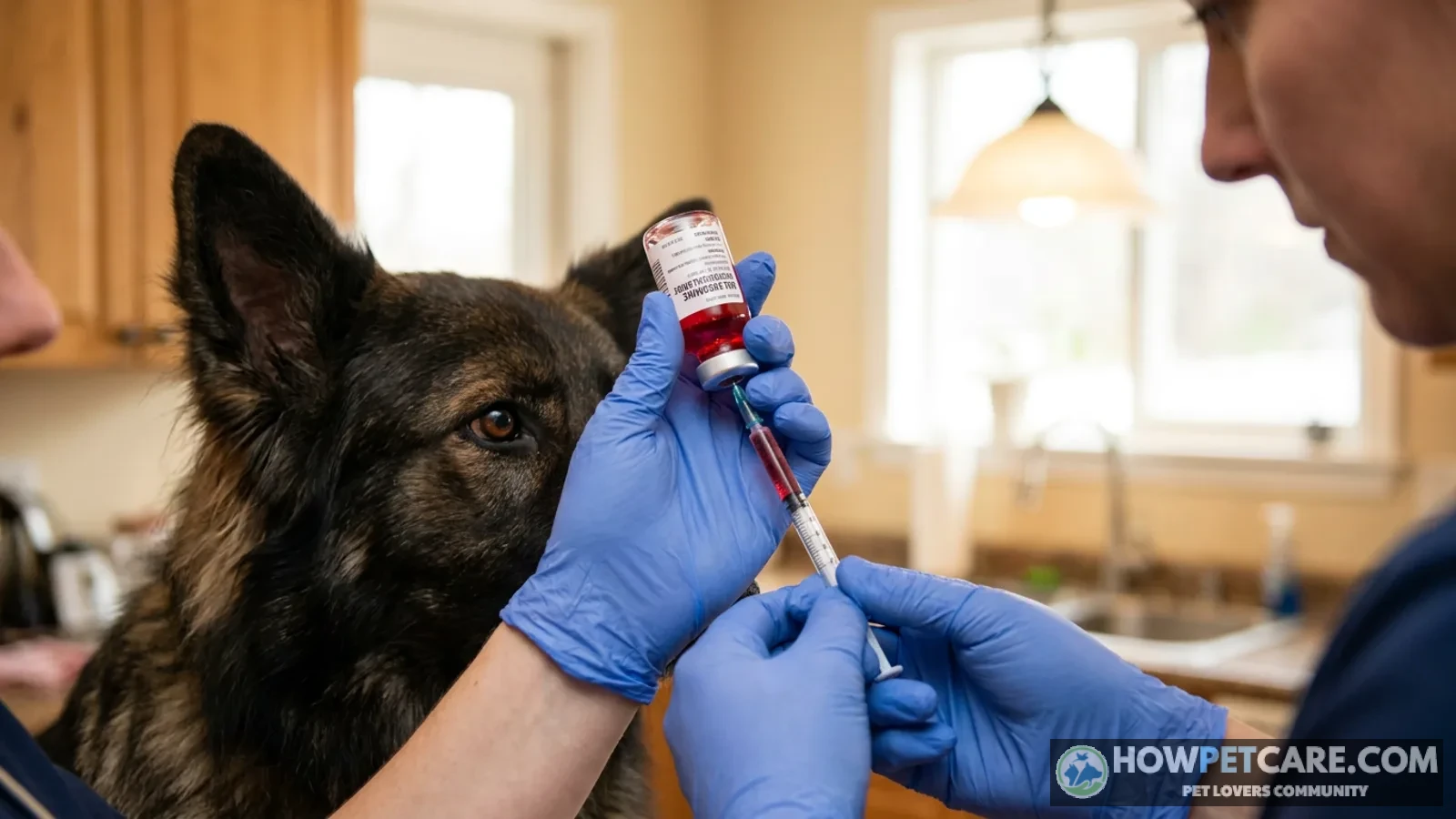
What each drug in the protocol does
- Heartworm preventive: A prescription preventive, including the dog heartworm medicine your vet selects, helps address susceptible immature worms and prevent new infections. Some drugs in this group, including ivermectin, also act against circulating immature worms called microfilariae. Your vet will explain the product and timing for your dog.
- Doxycycline: This antibiotic targets Wolbachia, bacteria that live in association with heartworms. Removing the bacteria helps weaken the worms and supports treatment.
- Prednisone: Your veterinarian may prescribe this steroid to reduce inflammation associated with dying worms.
- Melarsomine: Sold under names including Immiticide and Diroban, this injectable medication kills adult heartworms. The usual three-injection sequence is one injection, then two injections 24 hours apart approximately 30 days later.
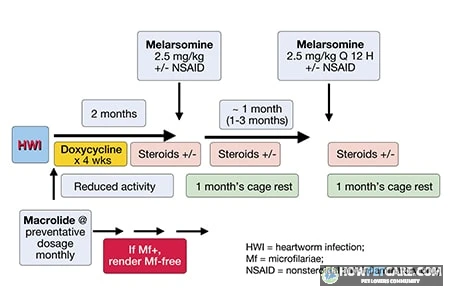
Each medication has a different job; one isn’t a simple substitute for another. Follow your veterinarian’s schedule rather than starting, stopping, or changing a drug yourself.
Tests your vet runs before treatment starts
Your veterinarian will typically confirm an initial positive antigen test with additional testing and check for microfilariae. Bloodwork and chest X-rays help assess your dog’s overall health and the effects of infection. Other tests may be needed if your dog is very sick. Together, the results help the vet assess disease severity and plan treatment.
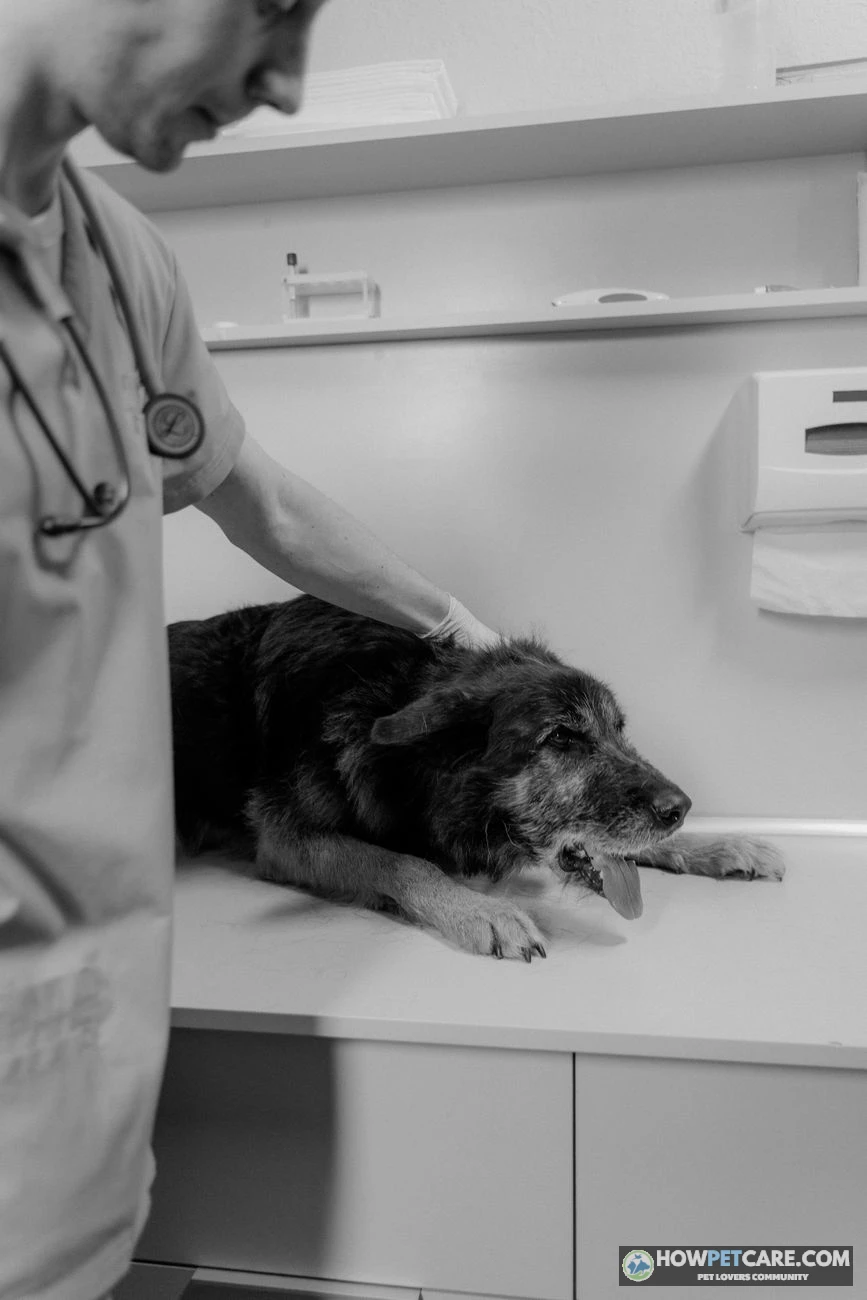
Some infected dogs have no obvious signs. Others develop a persistent cough, tire easily, lose weight, or have trouble breathing. Symptoms warrant a veterinary examination, but a test—not symptoms alone—is needed to determine whether heartworms are present.
Ask your veterinarian for activity instructions as soon as your dog tests positive. Even an energetic dog can have heartworm-related lung disease. If you wait until injection day to discuss rest, you may not have a plan for this important part of care.
Month-by-Month Timeline: From Positive Test to the 6-Month Antigen Retest
Use the following as a planning guide, not a prescription. The three-injection sequence and six-month post-treatment retest are established parts of the schedule described in veterinary sources. Your veterinarian may adjust dates or add care based on your dog’s condition.
Visual schedule: diagnosis through retest
| Timeframe | What happens | Medications / vet visits | Activity level and owner tasks |
|---|---|---|---|
| Diagnosis, approximately week 0 | Positive test is confirmed and disease severity assessed | Confirmation testing, microfilariae check, and recommended staging tests; preventive started when the vet directs | Begin the vet’s exercise restriction; arrange a quiet recovery area |
| Weeks 1–4 | Preparation for adult-worm treatment | Doxycycline course; preventive and other medication as prescribed | Give medication on schedule and maintain restricted activity |
| Weeks 5–8 | Waiting period before the first injection in a common AHS-style schedule | Continue prescribed preventive; attend any planned checks | Keep the dog calm even if there are no symptoms |
| Approximately week 9 | First melarsomine injection | Clinic visit, possible observation, and pain relief | Strict rest; monitor for soreness and breathing changes |
| Approximately week 13 | Second and third injections, 24 hours apart | Consecutive clinic visits or hospitalization | Maintain strict rest as worms die over the following weeks |
| Following 6–8 weeks | Recovery and management of complications | Follow-up and medications as directed; one published treatment account describes eight weeks of restriction | Leash-only bathroom trips and confinement as instructed; resume activity gradually only with vet approval |
| Approximately months 9–10 from diagnosis | Antigen retest, about six months after the final injection | Retest and any additional testing your vet recommends | Continue year-round prevention and follow the vet’s activity plan |

Where timelines commonly shift
A seriously ill dog may need stabilization before injections. Appointment availability, other illnesses, drug reactions, or a need for closer monitoring can also change the calendar. Ask your clinic to write down the date of the last injection: the six-month retest is counted from that date, not from diagnosis.
The most restrictive part of recovery extends through the weeks after the injections, but activity management begins earlier. Plan work schedules, pet sitters, travel, and household routines around the whole treatment period—not just the injection appointments.
 You might be wonderingDental chews for dogsDental Chews for Dogs: VOHC-Approved Picks, Costs & SafetyRead the answer
What Heartworm Treatment for Dogs Costs: Itemized by Protocol
The cost of heartworm treatment for dogs varies with dog size, location, clinic fees, disease severity, and complications. Ask for a written estimate for your dog rather than relying on a national average. Some clinics package services; others bill separately for tests, medications, and monitoring.
Line-item cost breakdown
The following figures are illustrative planning estimates, not verified national averages or clinic quotes. They may not reflect local prices, and the rows should not be added together as a guaranteed total. Emergency care for a sick dog can cost substantially more.
| Cost item | Melarsomine protocol | Moxi-doxy protocol | Notes on what drives the price |
|---|---|---|---|
| Exam, initial test and confirmation | Roughly $100–$350 | Roughly $100–$350 | Both approaches need diagnosis and a veterinary plan |
| Chest X-rays and bloodwork | Roughly $200–$600 | Roughly $200–$600 | Extra imaging or tests add cost |
| Doxycycline course | Roughly $30–$150 | Roughly $30–$150; additional courses may add cost | Dog size and pharmacy pricing matter |
| Preventive | Roughly $80–$300 per year | Roughly $80–$300 per year, potentially over a longer treatment period | Product and dog size affect cost; prevention is needed after either approach |
| Prednisone | Roughly $20–$60 if prescribed | Depends on the plan | Not every dog receives the same supportive drugs |
| Three melarsomine injections | Roughly $500–$1,500 | Not used | Drug amount and clinic fees vary |
| Sedation, pain relief, observation or hospitalization | Roughly $0–$1,000 or more | Varies with visits and complications | Ask what is included in the injection price |
| Follow-up visits and testing | Roughly $100–$300 or more | Variable; monitoring can extend longer | Ask about both antigen and microfilariae testing |
For a practical budget, request two numbers: the clinic’s estimate for the planned, uncomplicated course and an explanation of possible additional costs if your dog needs hospitalization or repeat treatment. Ask whether the estimate includes initial tests, all three injections, pain relief, follow-up visits, and the post-treatment retest.
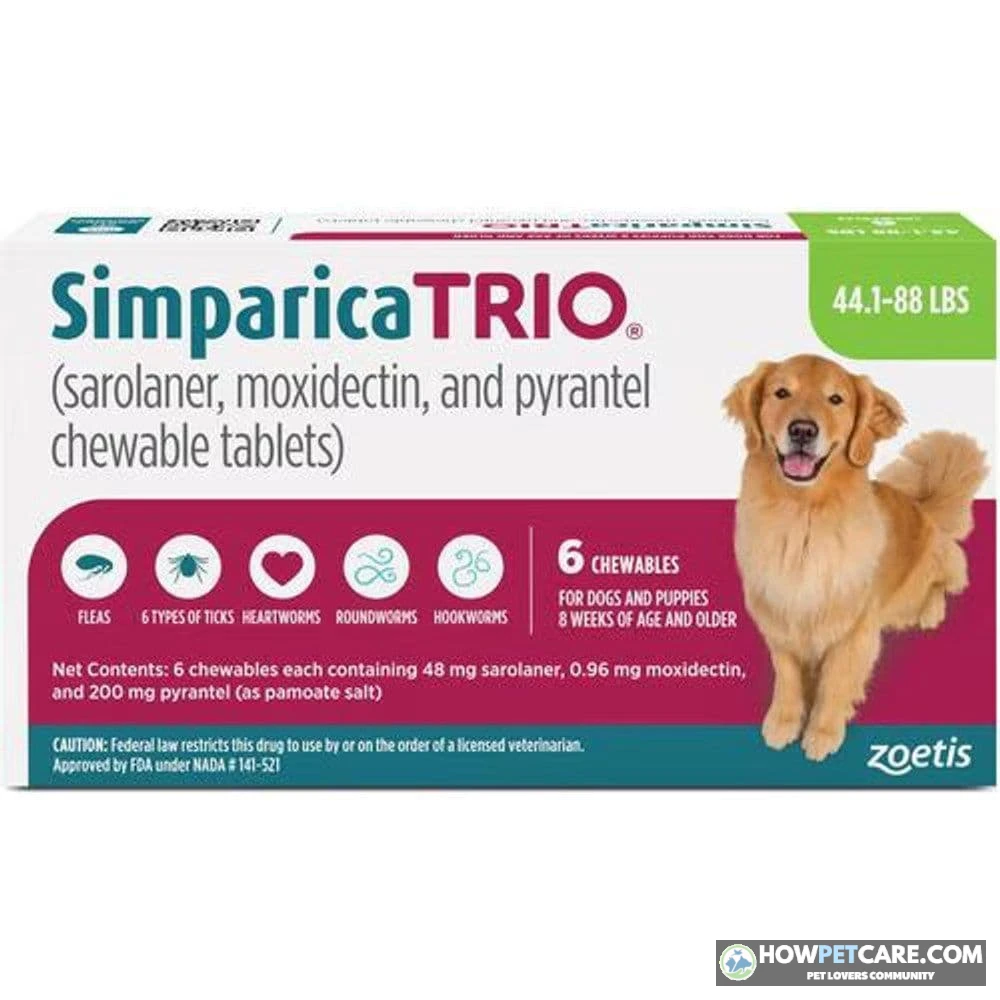
Cost comparison across protocol options
Melarsomine generally has a larger injection-related expense. A vet-directed moxi-doxy plan avoids that initial adulticide charge but may require medication, examinations, and testing over a longer period. A published case report describes moxi-doxy as a lower-cost alternative, but it did not clear that dog’s infection after approximately ten months. That single case can’t predict your dog’s outcome or total bill.
Management-only care—for example, treating symptoms without a plan to clear adult worms—has no dependable fixed price and does not remove the underlying infection. It may be part of stabilization or comfort-focused care, but it isn’t equivalent to adult-worm treatment. Ask the vet what ongoing monitoring and likely complications would mean for your dog’s welfare and for cost.
If you can’t afford the full protocol: realistic options and trade-offs
Tell the clinic your budget before treatment starts. Ask about staged billing, payment plans, veterinary financing, and local humane society or shelter programs. If you have insurance, check with the insurer about pre-existing-condition and preventive-care exclusions before assuming the claim will be covered.
If the standard plan is out of reach, ask whether the clinic can refer you to a lower-cost provider or discuss a veterinarian-supervised alternative. Don’t skip monitoring or buy an unprescribed regimen to make a quoted price fit.
Fast-Kill vs. Slow-Kill: A Decision Framework for Choosing the Protocol
“Fast-kill” usually refers to melarsomine-based treatment that directly targets adult worms. “Slow-kill” describes approaches that use a preventive-class drug over time, often with doxycycline; our guide to slow-kill heartworm treatment covers how those plans are monitored. Moxi-doxy specifically combines moxidectin and doxycycline; it shouldn’t be treated as interchangeable with every ivermectin-based regimen.
Side-by-side comparison: efficacy, time to clearance, cost, and restriction length
| Factor | Melarsomine + doxycycline | Moxidectin or ivermectin-based slow-kill approach | Best fit / veterinary discussion |
|---|---|---|---|
| Adult worms | Melarsomine directly kills adults | Effects develop more slowly; ivermectin shortens adult worms’ lifespan rather than directly killing them as an adulticide | Melarsomine is the AHS-recommended adulticide |
| Efficacy | The standard three-injection approach is intended to clear adult infection; no treatment guarantees success | Outcomes vary by protocol; evidence is less directly comparable, and the approach can fail to clear infection | Ask how the proposed plan’s outcome will be checked |
| Time to clearance | Injections are completed over approximately one month, after preparation; confirmation comes later | Often many months or longer; the duration is uncertain | Ask when the vet will test and what happens if the result remains positive |
| Cost | Higher injection-related expense | May lower initial expense, but longer monitoring and medication add cost | Compare written estimates for the whole care plan |
| Activity restriction | Begins during treatment planning and remains strict after injections | Ask the vet for a long-term restriction plan while infection persists | Household ability to manage rest matters with either approach |
| Main trade-off | Treatment-related worm die-off can cause serious lung-vessel complications | Adult worms remain for longer, and treatment may not clear the infection promptly | Neither approach is risk-free |
When melarsomine is the preferred choice
For most dogs able to receive it, melarsomine is the standard adult-worm treatment recommended by the AHS. Ask why your veterinarian recommends it, what stabilization is needed first, and how the clinic will manage pain and the risk associated with worm die-off.
“Non-negotiable” isn’t a useful blanket rule: a veterinarian must assess each dog. A dog with caval syndrome, in particular, needs emergency assessment rather than a routine comparison of slow-kill and injection prices.
When a vet might consider moxi-doxy
A veterinarian may discuss an alternative when melarsomine is unavailable, a dog has conditions that complicate treatment, or cost is a genuine barrier. Moxi-doxy is not the AHS-recommended first-line adulticide approach, and it should be supervised with a defined monitoring plan. Longer exposure to preventive-class drugs in infected dogs also raises resistance concerns worth discussing with the vet.
Bring these questions to the decision:
- What disease class is my dog, and what did the chest X-rays and bloodwork show?
- Is melarsomine medically appropriate and available? If not, why?
- What is the full expected cost of each plan, including testing and follow-up?
- How long will activity need to be restricted, and when will we check for clearance?
- What will we do if the alternative does not clear the infection?

Can You Treat Heartworm at Home or Without a Vet Prescription?
No. There is no proven, safe do-it-yourself cure for adult heartworms. A veterinarian administers melarsomine, and the drugs and monitoring used in treatment require veterinary direction. Natural or herbal products are not a demonstrated substitute for an adulticide.
Why treating heartworms at home without a vet is risky
A positive result needs confirmation, and the vet must assess how the infection has affected the heart and lungs. Treatment itself can cause dangerous complications as worms die and fragments lodge in lung blood vessels. Giving a preventive to an infected dog without a plan can also be risky in some circumstances, including when microfilariae are present.
Medication sourced online doesn’t replace a diagnosis, a safe treatment schedule, or emergency support. If cost is the obstacle, ask the veterinarian about the lower-cost care pathways above rather than improvising a regimen.
What you can safely do at home under veterinary direction
Care for dogs on heartworm treatment still depends on veterinary direction. Your role is essential: give prescribed medication, enforce activity restrictions, record changes, and attend rechecks. Ask the clinic to show you how to give each medicine and explain what to do if a dose is missed or vomited. The clinic handles the diagnosis, injections, and interpretation of follow-up tests.

Don’t start an online heartworm regimen, use another pet’s prescription, or change a prescribed dose on your own. Call your veterinarian before giving a preventive to a dog with a new positive result.
Strict Rest Explained: Why Exercise Restriction Matters and How to Enforce It
When adult worms die, fragments can lodge in the blood vessels of the lungs and cause a pulmonary embolism. Increased activity places more demand on the heart and lungs, so keeping your dog calm helps reduce treatment risk. The danger isn’t limited to injection day: follow the clinic’s instructions throughout treatment and recovery.
A daily crate-rest routine that works
Set up a crate, exercise pen, or small quiet room where your dog can turn around and rest comfortably. Take short, slow, leash-only trips outside for bathroom breaks, then return indoors. Avoid running, fetch, rough play, dog parks, and jumping on furniture. Limit stairs where practical; ask your vet how to handle unavoidable steps or a dog too large to carry.
Separate your dog from playful pets and excited children. Before guests arrive, settle your dog away from the door; mute the doorbell or ask visitors to text. For necessary car trips, use a secure restraint and don’t let your dog jump in or out.

Keeping an energetic dog calm
Offer low-arousal enrichment that your veterinarian approves: a lick mat, food puzzle, safe chew, or brief quiet training session. Adjust meal portions if treats add significant calories. Avoid activities that make your dog jump, race around, or become frustrated.
If your dog barks, paces, or can’t settle despite a quiet setup, call the vet. Prescription calming medication may help some dogs; don’t give human sedatives or over-the-counter products without veterinary advice.
Printable owner checklist
Daily routine
- ☐ Use a short leash for bathroom breaks; return indoors without play.
- ☐ Keep my dog in the designated quiet space when not supervised.
- ☐ Prevent running, jumping, rough play, and excited greetings.
- ☐ Give prescribed medicines and mark each dose on the calendar.
- ☐ Offer calm enrichment and arrange quiet time away from guests and other pets.
Daily monitoring
- ☐ Check the injection site for growing swelling, heat, or discharge.
- ☐ Observe breathing while my dog rests; note a sustained change from normal.
- ☐ Check appetite, energy, and gum color.
- ☐ Keep the regular clinic and emergency-vet numbers accessible: ____.
- ☐ Call the vet if my dog cannot stay calm or if I am unsure whether an activity is safe.
Side Effects, Risks, Disease Class Outlook, and Warning Signs to Watch For
Treatment can be demanding, but the risks aren’t all alike: discomfort at an injection site is different from breathing distress. Ask your clinic which effects to expect and whom to call after hours.
Common side effects and what’s normal
Melarsomine injections can cause soreness, stiffness, swelling, or a firm area near the injection site. A dog may seem tired or eat less afterward. Prednisone can increase thirst and urination. Ask about pain relief before leaving the clinic, and call if discomfort is significant, swelling grows, or appetite and energy don’t improve as expected.
Don’t automatically dismiss a cough as normal. Report a new or changing cough to your veterinarian, particularly after injections.
Emergency signs: when to call the vet immediately
Call an emergency veterinarian immediately and follow their directions if your dog has:
- Labored, rapid, or distressed breathing, especially at rest.
- Persistent or worsening coughing, or coughs up blood or pink foam.
- Collapse, sudden weakness, or inability to stand.
- Pale, gray, or blue gums.
- Repeated vomiting or a sudden, marked deterioration.

Call your regular veterinarian promptly about fever, a hot or rapidly growing injection-site swelling, discharge, or a dog that won’t eat. If the clinic is closed or your dog seems seriously unwell, contact an emergency hospital instead. These signs can have different causes; breathing trouble or collapse requires urgent assessment rather than an attempt to diagnose an embolism at home.
Outlook by disease class, including caval syndrome
Veterinarians assess dogs across four broad risk classes. The classes help describe severity, but they can’t predict an individual dog’s lifespan or promise that existing lung damage will reverse.
- Class I: Dogs may have few or no signs. The outlook with appropriate treatment is generally favorable.
- Class II: Dogs have more noticeable signs; many can do well with treatment and careful restriction.
- Class III: More severe disease means higher-risk treatment and recovery; stabilization and longer-term management may be needed.
- Class IV, caval syndrome: This is an emergency in which dogs can be critically ill. Urgent surgical removal of worms may be needed, and the outlook is guarded.
Older age alone doesn’t automatically rule out treatment. Ask the vet how your senior dog’s heart, lung, kidney, and liver health affect the risks, anesthesia or hospitalization needs, and likely quality of life.
After Treatment: Retesting Schedule, Persistent Positives, and Which Preventive to Restart
A dog can look well after treatment and still need testing. In the treatment course described in one veterinary case account, the antigen retest was scheduled six months after the final injection. Confirm your dog’s date with the clinic and ask whether a microfilariae check is also planned.
What a positive test at 4 months vs. 6 months means
The antigen test detects material associated with adult female heartworms; it isn’t a real-time count of every worm. A positive result before the planned six-month check, such as around four months after the last injection, can be difficult to interpret: residual antigen or surviving worms are possibilities. Contact the vet rather than assuming immediate retreatment is needed.
A positive result at the scheduled six-month check raises concern that infection may persist, but it still needs veterinary interpretation. The vet may consider the test history, preventive use, exposure, and whether additional or repeat testing is appropriate. A positive result alone doesn’t tell you exactly how many worms remain.
Next steps if the retest is still positive
Ask when the result should be confirmed or repeated, whether microfilariae are present, and what activity restriction applies while you wait. If the veterinarian concludes that adult worms survived, further treatment may be recommended. The drugs, timing, and need for another injection course depend on your dog and the findings. Don’t restart doxycycline or any other medication without a prescription.
Restarting prevention and the long-term testing plan
In a standard plan, preventive medication is generally started during treatment at the veterinarian’s direction and continued year-round rather than saved for after the final injection. Heartgard is one example of an ivermectin-containing preventive; the vet should select a suitable product and schedule for your dog. If a dose is missed, ask the clinic what to do.
After a negative follow-up, continue year-round prevention and the veterinarian’s testing schedule, commonly including an annual heartworm test. Return to exercise gradually only after the vet clears your dog; a negative test and an activity-release date are separate decisions.
Your Action Plan: Questions for Your Vet and a Treatment Readiness Checklist
Questions to bring to your vet appointment
- Has the positive test been confirmed, and were microfilariae found?
- What disease class is my dog, and are any additional tests or stabilization needed?
- Which protocol do you recommend, and why is it appropriate for my dog?
- Can I have an itemized estimate covering tests, all injections, medicines, observation, and retesting?
- What are the injection dates, emergency warning signs, and exact activity restrictions?
- If my dog cannot settle, can we discuss a calming medication?
- What is the date of the antigen retest, and what happens if it is positive?
Home setup checklist before the first injection
- ☐ Prepare a comfortable crate or quiet room and a leash-only bathroom route.
- ☐ Arrange help for workdays, children, guests, and other pets.
- ☐ Stock vet-approved calm enrichment and any prescribed medications.
- ☐ Save both the clinic’s and emergency hospital’s phone numbers.
- ☐ Set aside funds for the estimate and ask about unexpected-care costs.
- ☐ Mark doxycycline start and finish dates, injection appointments, and medication refills.
- ☐ Record the vet-approved restriction end date, a possible four-month check-in if advised, and the antigen retest about six months after the final injection.

Before leaving the appointment, ask the clinic to put the plan in writing. Your veterinarian directs treatment; consistent medication, rest, monitoring, and follow-up give your dog the best opportunity to complete it safely.
 You might be wonderingGrass treatment for fleasGrass Treatment for Fleas: Best Options and Application PlanRead the answer
FAQ
What are the signs my dog needs heartworm treatment?
Early heartworm infection often shows no signs, so a positive antigen test is how most dogs are identified. Later signs include a persistent cough, fatigue after mild exercise, weight loss, and trouble breathing, and any of these warrants a heartworm test at the vet.
Is heartworm treatment safe for older dogs?
Age alone does not rule out treatment, and many senior dogs complete it successfully. The vet weighs heart, lung, kidney, and liver health first, and may adjust the plan if the dog has other conditions.
Does heartworm treatment hurt my dog?
The melarsomine injections go into the back muscles and commonly cause soreness, swelling, or a firm lump at the site for several days. Vets can give pain relief and the injection-site pain usually improves with time, but call the vet if swelling grows or your dog seems very uncomfortable.
Should I give my dog heartworm preventive while it has heartworms?
A preventive is normally part of the vet’s treatment plan, but timing and product matter, especially in dogs with microfilariae. Start it only when your vet directs, not on your own.
Does pet insurance cover heartworm treatment?
It depends on the policy. Many plans cover treatment if the dog was enrolled and kept on prevention, but exclude it as a pre-existing condition or when prevention lapsed, so read the exclusions and ask the insurer before starting.