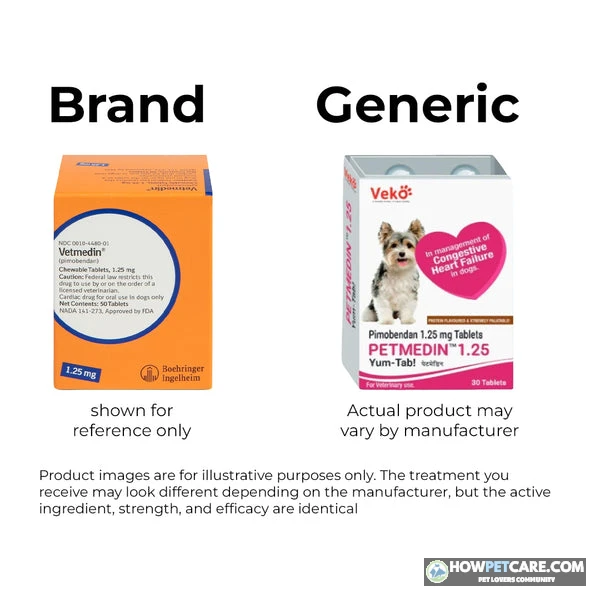

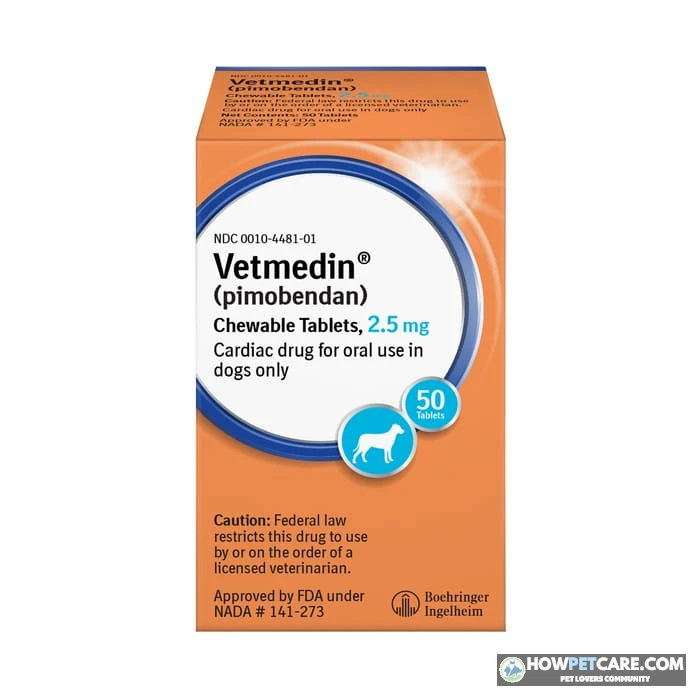
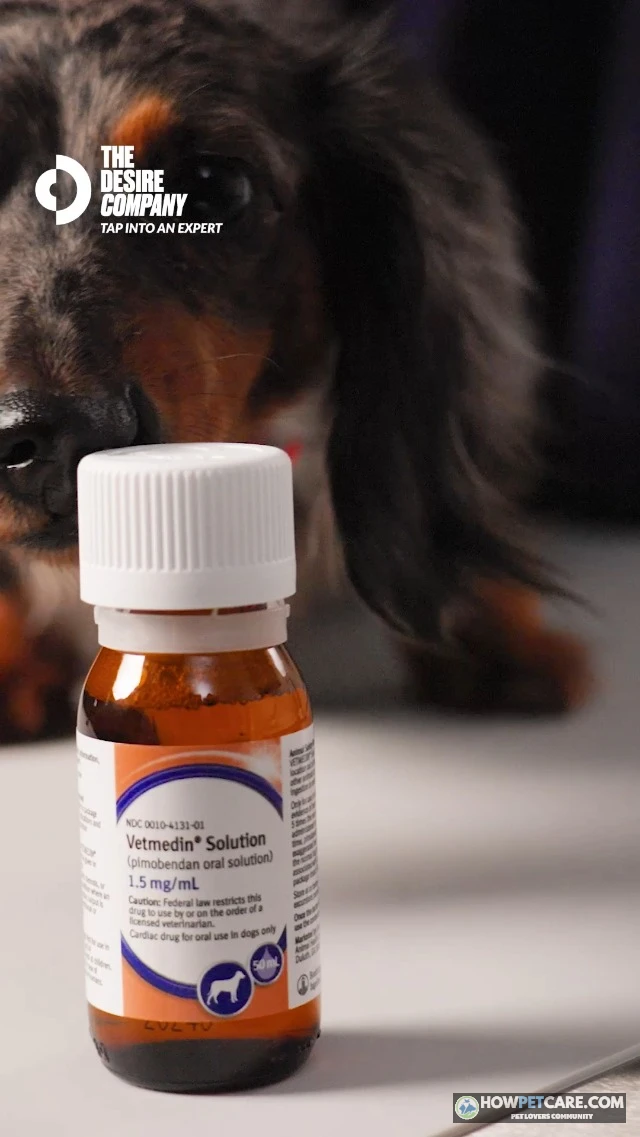
Pimobendan (brand name Vetmedin) is a prescription heart medication for dogs. As an inodilator, it strengthens heart contractions and widens blood vessels. Vets prescribe it for congestive heart failure caused by mitral valve disease or dilated cardiomyopathy, and to delay heart failure in qualifying Stage B2 dogs.
Pimobendan is a prescription heart medication that helps the heart pump more strongly and relaxes blood vessels, allowing blood to circulate more easily. Vets prescribe it for some dogs with congestive heart failure and for certain dogs with enlarged hearts before heart failure develops. Vetmedin is a brand name for pimobendan.
The right dose and timing depend on your dog’s prescription. A heart murmur alone doesn’t necessarily mean your dog needs this medication. If your dog has labored breathing, collapses, or has blue or gray gums, seek emergency veterinary care. Don’t wait to see whether a dose helps.
What Pimobendan Does for Dogs and Which Heart Conditions It Treats
How pimobendan works in dogs, in plain language
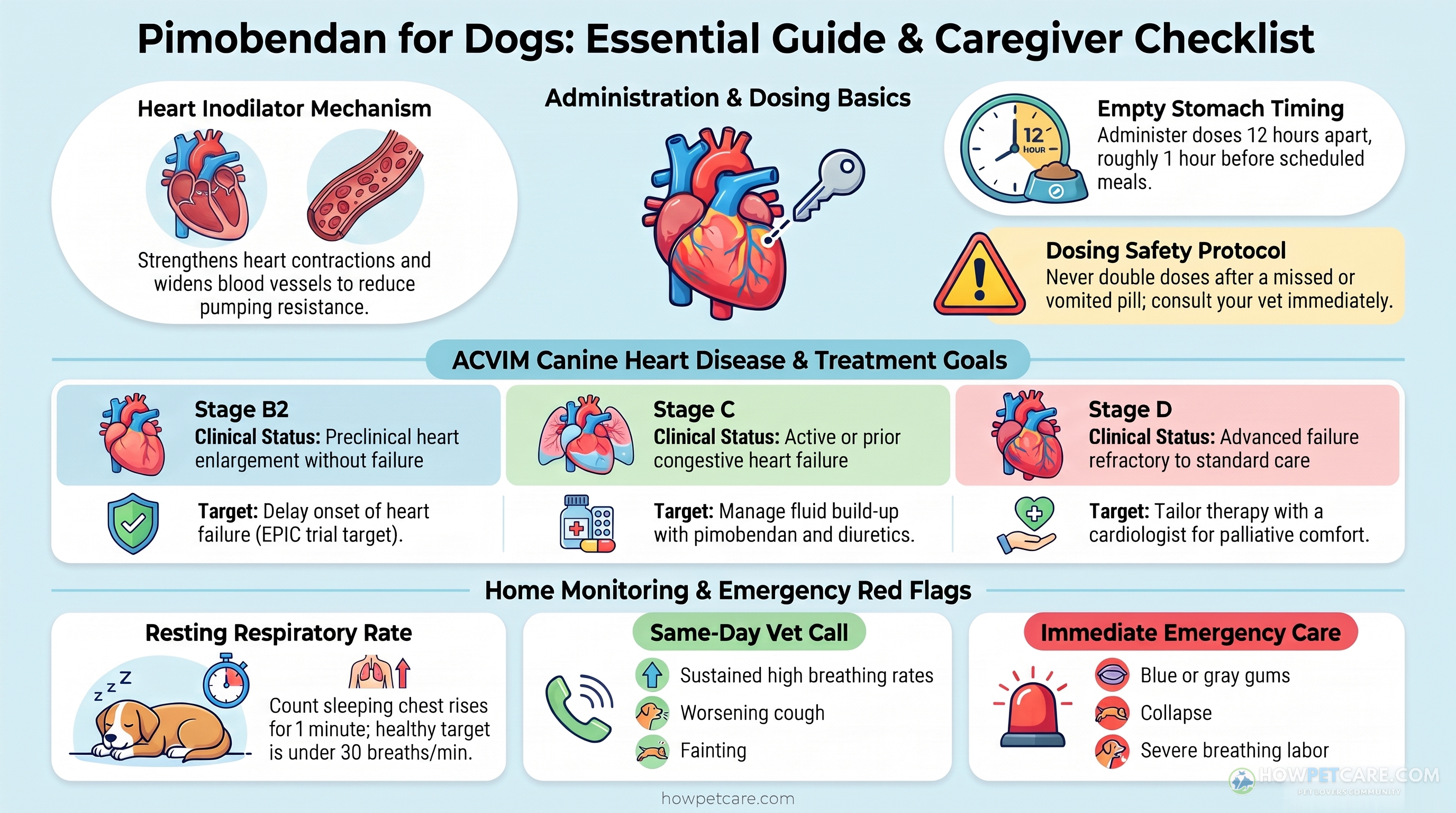
Pimobendan is an inodilator. It strengthens the heartbeat and widens blood vessels, helping the heart move blood while working against less resistance.
It’s often one part of a treatment plan, not a replacement for every other heart medicine. A dog with congestive heart failure may also need a diuretic such as furosemide and, in some cases, an ACE inhibitor such as benazepril. Each medicine has a different job. Ask your vet what each heart medicine is meant to do.
Mitral valve disease vs dilated cardiomyopathy: why the same drug is used
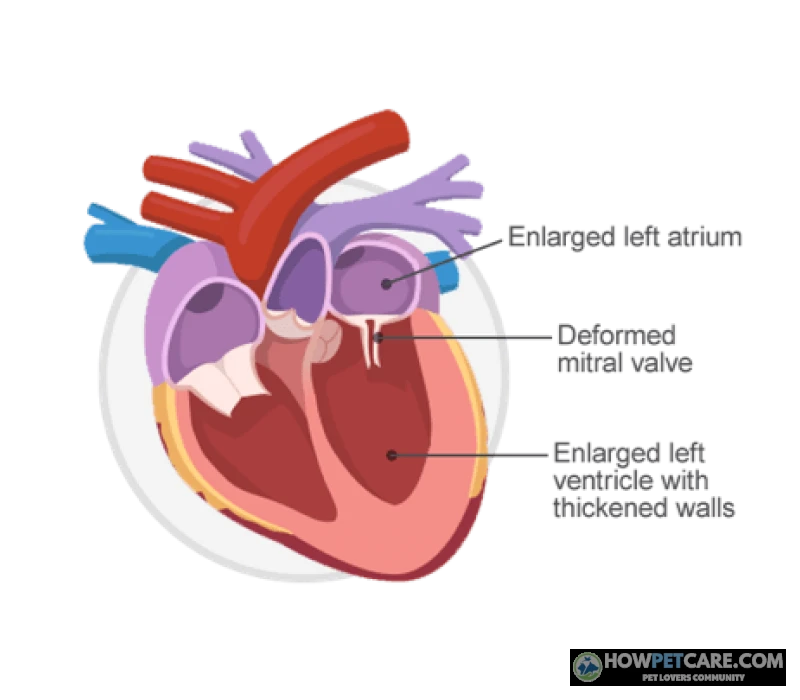
In myxomatous mitral valve disease, or MMVD, a valve between heart chambers becomes leaky. Cavalier King Charles Spaniels and other small breeds are commonly affected. In dilated cardiomyopathy, or DCM, the heart muscle weakens and the chambers can enlarge; Doberman Pinschers and some other large breeds are at increased risk.
Both diseases can eventually interfere with circulation and lead to congestive heart failure, in which fluid accumulates because of heart disease. Pimobendan is used in dogs with heart failure associated with valvular disease or DCM.
A cardiac murmur is a sound a vet hears with a stethoscope. It doesn’t, by itself, measure heart size or diagnose heart failure. An echocardiogram—an ultrasound of the heart—and chest X-rays can help your vet determine what the murmur means and whether treatment is appropriate.
When Should a Dog Start Pimobendan? Stage B2 vs Heart Failure Explained
Some dogs start pimobendan before congestive heart failure develops. That distinction matters: a dog may have no obvious symptoms but still have a leaky mitral valve and enough heart enlargement to meet treatment criteria.
In the EPIC study, dogs with qualifying preclinical mitral valve disease who received pimobendan went longer before reaching the study’s heart-failure outcome than dogs given a placebo. The reported difference was approximately 15.6 months. That’s a group comparison, not a promise for an individual dog.
What “Stage B2” means for your dog’s murmur
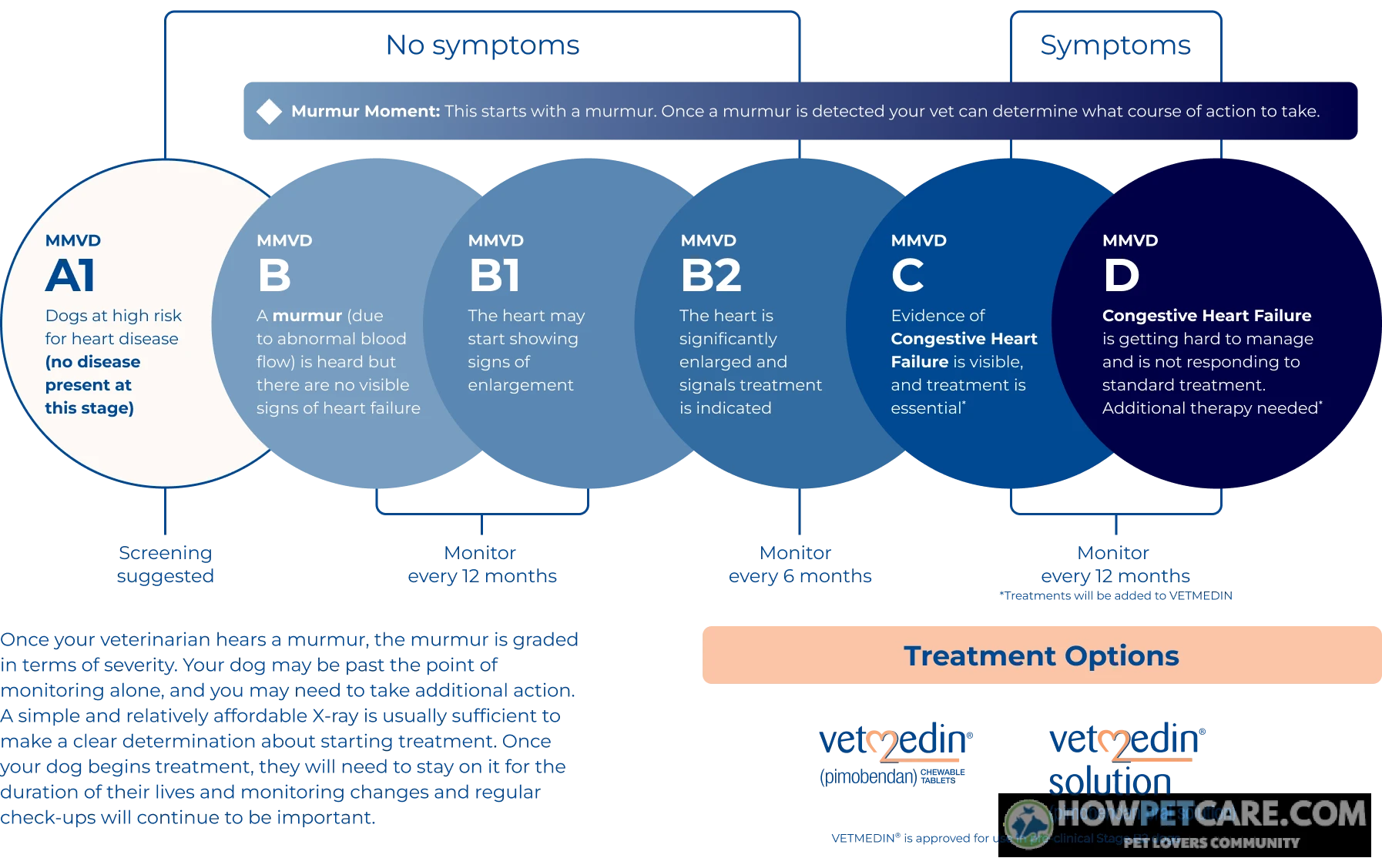
Veterinarians use ACVIM heart-disease stages to describe where a dog is in the disease process:
- Stage A: At risk of heart disease, but without identified structural disease.
- Stage B1: Structural disease, often with a murmur, but without enough heart enlargement to meet B2 criteria.
- Stage B2: Preclinical mitral valve disease with qualifying heart enlargement, but no current or past congestive heart failure.
- Stage C: Current or previous congestive heart failure.
- Stage D: Advanced heart failure that standard treatment does not adequately control.
These terms can help you make sense of a cardiology report. Your vet interprets the measurements together; none is a home diagnostic test.
| What you may hear | What it means | Why it matters |
|---|---|---|
| Grade 3 or louder murmur | The murmur is readily audible on a standard grading scale. | Murmur grade helps describe a leak, but doesn’t establish B2 by itself. |
| Enlarged vertebral heart score, or VHS | The heart’s silhouette looks enlarged on a chest X-ray. | It adds evidence of enlargement; breed and other findings matter. |
| Enlarged left atrium | A heart chamber receiving blood from the lungs is larger than expected on ultrasound. | It helps the vet assess the effect of the leaking valve. |
| Enlarged left ventricle | The main pumping chamber is enlarged for the dog’s size. | Alongside other findings, it helps distinguish B2 from B1. |
| B2 without obvious symptoms | The heart is enlarged, but the dog has not had congestive heart failure. | This is a preclinical situation in which a vet may recommend starting treatment. |
A dog in B1 is generally monitored rather than automatically given pimobendan. Ask when imaging should be repeated; the disease stage can change.
Questions to ask your vet or cardiologist before starting
- What is causing the murmur, and what stage is my dog in?
- Which echocardiogram or X-ray findings support that stage?
- Is the goal to delay heart failure, treat existing heart failure, or address another problem?
- If we’re monitoring for now, when should the next examination or imaging take place?
- Would a veterinary cardiologist help clarify the diagnosis or treatment plan?
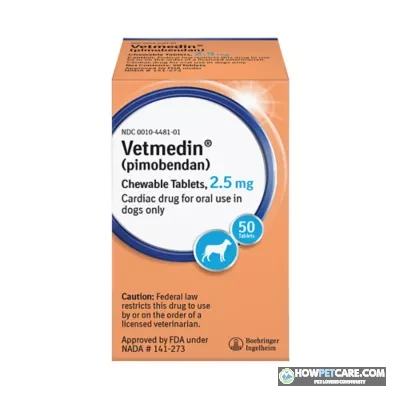
Pimobendan Dosage by Weight: Chart, Timing, and What to Do If You Miss a Dose
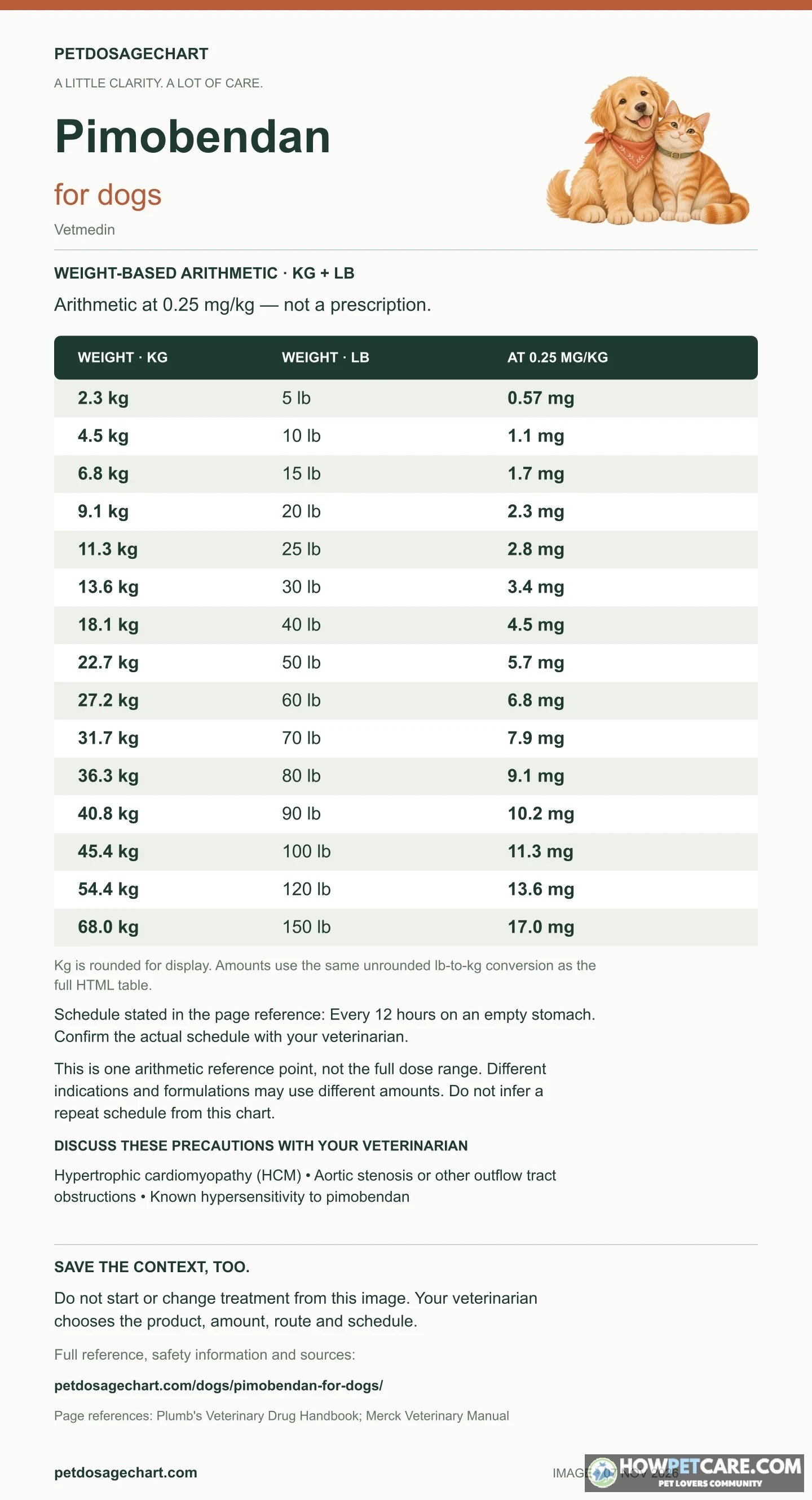
A commonly referenced total daily dose is approximately 0.5 mg per kilogram of body weight, divided into two doses: about 0.25 mg/kg per dose every 12 hours. Follow the exact prescription and product instructions.
The table is an arithmetic reference, not a dosing calculator or permission to change a dose. Tablet strengths and individual circumstances can make the prescribed amount different from the exact calculated amount. Call your vet or pharmacist if the label and your expectations do not match.
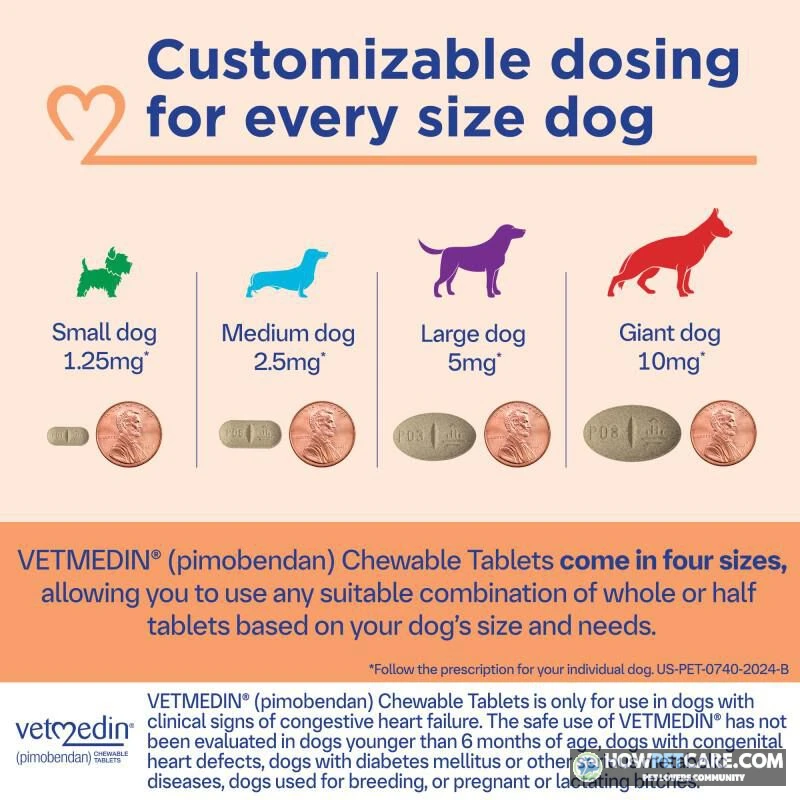
Dosage chart by weight (1.25, 2.5, and 5 mg chewable tablets)
These examples use specific weights rather than broad weight ranges. The calculated dose may not be practical to give as a tablet; the final column shows amounts a vet might consider, not a recommendation to substitute them.
| Dog weight (lb) | Approx. weight (kg) | Calculated amount per dose at 0.25 mg/kg | Tablet-strength comparison per dose | Doses per day |
|---|---|---|---|---|
| 5.5 | 2.5 | 0.625 mg | Half of a 1.25 mg tablet, only if that product may be split and the vet prescribes it | 2 |
| 11 | 5 | 1.25 mg | One 1.25 mg tablet | 2 |
| 22 | 10 | 2.5 mg | One 2.5 mg tablet | 2 |
| 33 | 15 | 3.75 mg | One 2.5 mg tablet plus one 1.25 mg tablet | 2 |
| 44 | 20 | 5 mg | One 5 mg tablet | 2 |
| 66 | 30 | 7.5 mg | One 5 mg tablet plus one 2.5 mg tablet | 2 |
| 88 | 40 | 10 mg | Two 5 mg tablets, or a prescribed 10 mg tablet | 2 |
| 110 | 50 | 12.5 mg | Two 5 mg tablets plus one 2.5 mg tablet | 2 |
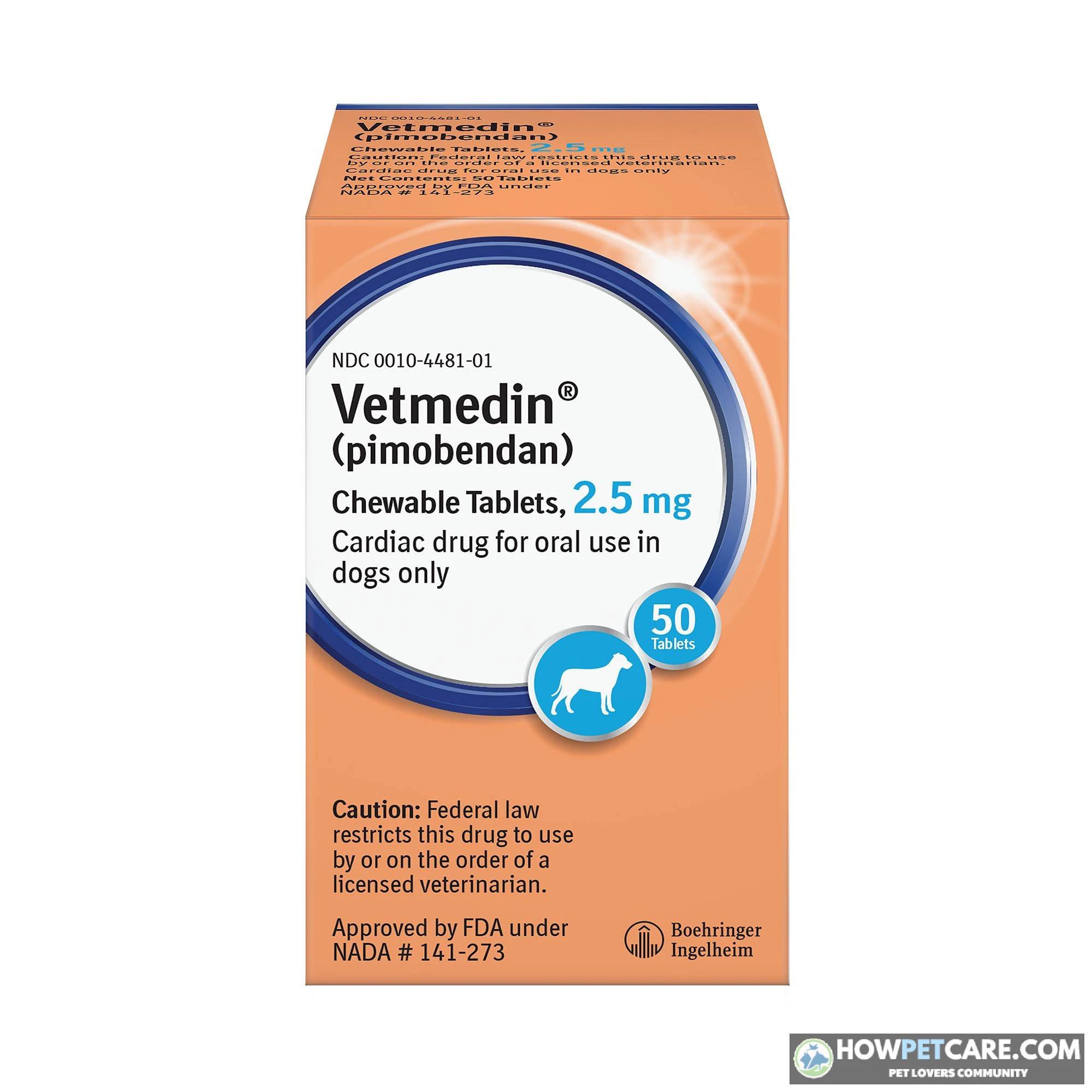
To check the calculation, divide the prescribed milligrams per dose by your dog’s weight in kilograms. If the result isn’t near 0.25 mg/kg, ask the clinic to explain the difference. Don’t adjust the dose yourself: rounding, the product, or a clinical reason may explain the prescription.
How to give pimobendan: with or without food, and timing
Pimobendan tablets are generally given on an empty stomach, about an hour before a meal. For example, you might give a dose at 7 a.m., then breakfast at 8 a.m., followed by a dose at 7 p.m. and dinner at 8 p.m. Alarms or a written log can help you keep doses roughly 12 hours apart.
If that schedule doesn’t fit your household, or your dog will take the medicine only with food, ask your vet for a workable plan instead of changing the instructions yourself. If your dog won’t eat, contact the clinic for advice based on your dog’s condition and other medicines.
Some chewable tablets can be divided, but whether you can split one depends on the specific product and its labeling. Check with the vet or pharmacist before splitting or crushing a tablet. Store the medication securely, away from pets and children, and follow the package instructions.
Missed dose, vomited dose, and double-dose scenarios
If you miss a dose, give it when you remember unless it’s nearly time for the next one. If it is, skip the missed dose and resume the regular schedule. Don’t give two doses at once.
If your dog vomits after a dose, don’t automatically give another one; you may not know how much was absorbed. Ask your vet what to do. Contact the clinic if you miss multiple doses.
If you suspect a double dose or another overdose, call your vet, an emergency veterinary clinic, or a pet poison hotline right away—even if your dog looks well. Keep the package handy so you can report the strength, amount, and time involved.
Is It Working? Home Monitoring, Resting Respiratory Rate, and First Weeks on Pimobendan
A dog being treated for heart failure may become more comfortable as the overall treatment plan takes effect. You might notice easier breathing at rest, more interest in food, or greater willingness to take part in normal routines. When several medicines start at once, you can’t attribute improvement to pimobendan alone.
A dog treated at Stage B2 may look exactly the same. The aim is to delay a future heart-failure event, not necessarily to produce a visible change. Keep recheck appointments even if your dog seems well.
How to measure resting respiratory rate step by step
-
Choose a quiet moment
Watch your dog while asleep or fully relaxed, not immediately after exercise, excitement, or a meal.
-
Count the breaths
One rise and fall of the chest is one breath. Count for 30 seconds and multiply by two, or count for a full minute.
-
Record the result
Write down the rate, date, and whether your dog was asleep. Repeat the count if the number seems unusual.
-
Look for a trend
Compare readings at a similar time each day and share a persistent increase with your vet.
A sleeping rate consistently below about 30 breaths per minute is a commonly used general guide, not a diagnosis for an individual dog. Ask your vet for your dog’s target and call threshold. A repeated rate above 30 or a sustained rise from your dog’s normal baseline merits a call; a sustained rate around 40 or higher needs prompt veterinary advice. Breathing effort matters as much as the number. Don’t wait to recount if your dog is struggling to breathe.
Signs the medication is working vs signs the disease is progressing
| Reassuring observations to record | Changes to act on |
|---|---|
| Comfortable sleep breathing within the range your vet set | A rising sleeping rate, faster breathing, or difficulty settling at night |
| More interest in food, family, or gentle activity after treatment for heart failure | New or worsening cough, reduced stamina, or a swollen belly |
| A B2 dog remains outwardly much the same | Fainting, collapse, marked weakness, or blue or gray gums |
| Appetite and digestion remain normal | Persistent vomiting or diarrhea, refusal of food, or blood in vomit or stool |
Go to an emergency vet now for labored or open-mouth breathing, collapse, blue or gray gums, or severe distress. Call ahead if doing so won’t delay care.
Call your vet promptly, the same day when possible, about a sustained high or rising sleeping breathing rate, new or worsening cough, fainting, belly swelling, persistent digestive upset, or a significant loss of appetite. If the clinic is closed and your dog is worsening, call an emergency clinic.
Raise routine questions at the planned recheck: whether the dose schedule is working, when to repeat imaging, and whether bloodwork is due. Dogs taking furosemide may need kidney values and electrolytes checked as directed by the vet.
Pimobendan Side Effects, Contraindications, and Drug Interactions
Common side effects vs red flags: when to call the vet
Reported pimobendan side effects include reduced appetite, diarrhea, and lethargy. Vomiting and a fast heartbeat can also occur. These signs can have other causes, including the underlying heart disease or another medication. Report them rather than assuming pimobendan is responsible.
Weakness or fainting can be associated with low blood pressure and warrants immediate veterinary contact. Collapse, difficult breathing, or blue or gray gums is an emergency. Persistent vomiting, unusual bruising or bleeding, or a noticeably fast or irregular heartbeat also calls for prompt veterinary advice.
For a senior dog, tell the vet about other health problems and medicines. Older dogs may have concurrent conditions that affect monitoring, but age alone doesn’t mean pimobendan is unsafe. If your dog also takes a diuretic, follow the recommended bloodwork schedule.
Conditions and medications that rule pimobendan out or need caution
Tell your vet if your dog has been diagnosed with hypertrophic cardiomyopathy, in which the heart muscle is abnormally thick, or aortic stenosis, a narrowing that obstructs blood leaving the heart. Pimobendan may not be appropriate if increasing the force of contraction wouldn’t improve blood flow or could worsen an obstruction. The vet needs to assess the specific condition.
Bring a list of every prescription, over-the-counter product, and supplement your dog takes — including calming aids such as trazodone for stressful vet visits. Certain beta-blockers and calcium-channel blockers may oppose some effects of pimobendan; that doesn’t mean you should stop a heart medicine yourself. Furosemide and ACE inhibitors, by contrast, are often used as part of the same heart-failure plan.
Off-label means a veterinarian prescribes a medication in a way not covered by its approved labeling, such as for a different species or condition. Vets sometimes prescribe pimobendan for cats off-label; that decision requires an individual veterinary assessment. Never give another pet your dog’s prescription.
Vetmedin vs Generic vs Compounded Pimobendan: Equivalence, Risks, and Real Monthly Cost
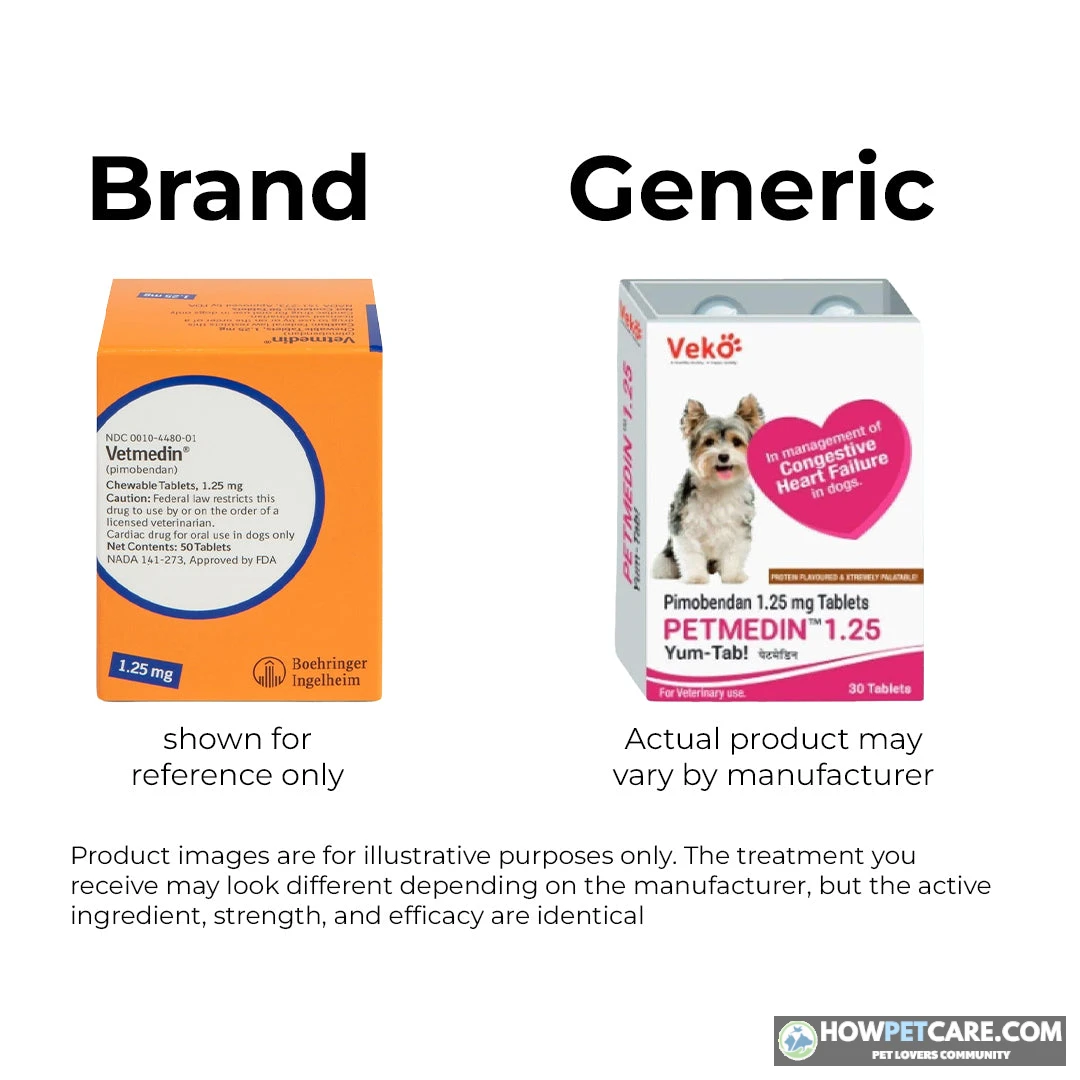
The active ingredient is only one part of the decision. Product approval, formulation, dose accuracy, whether your dog will take it, and the price for the prescribed quantity all count. Check with your vet before switching products, and confirm what’s available from a licensed pharmacy.
What Vetmedin-CA1 is and how it differs from standard Vetmedin
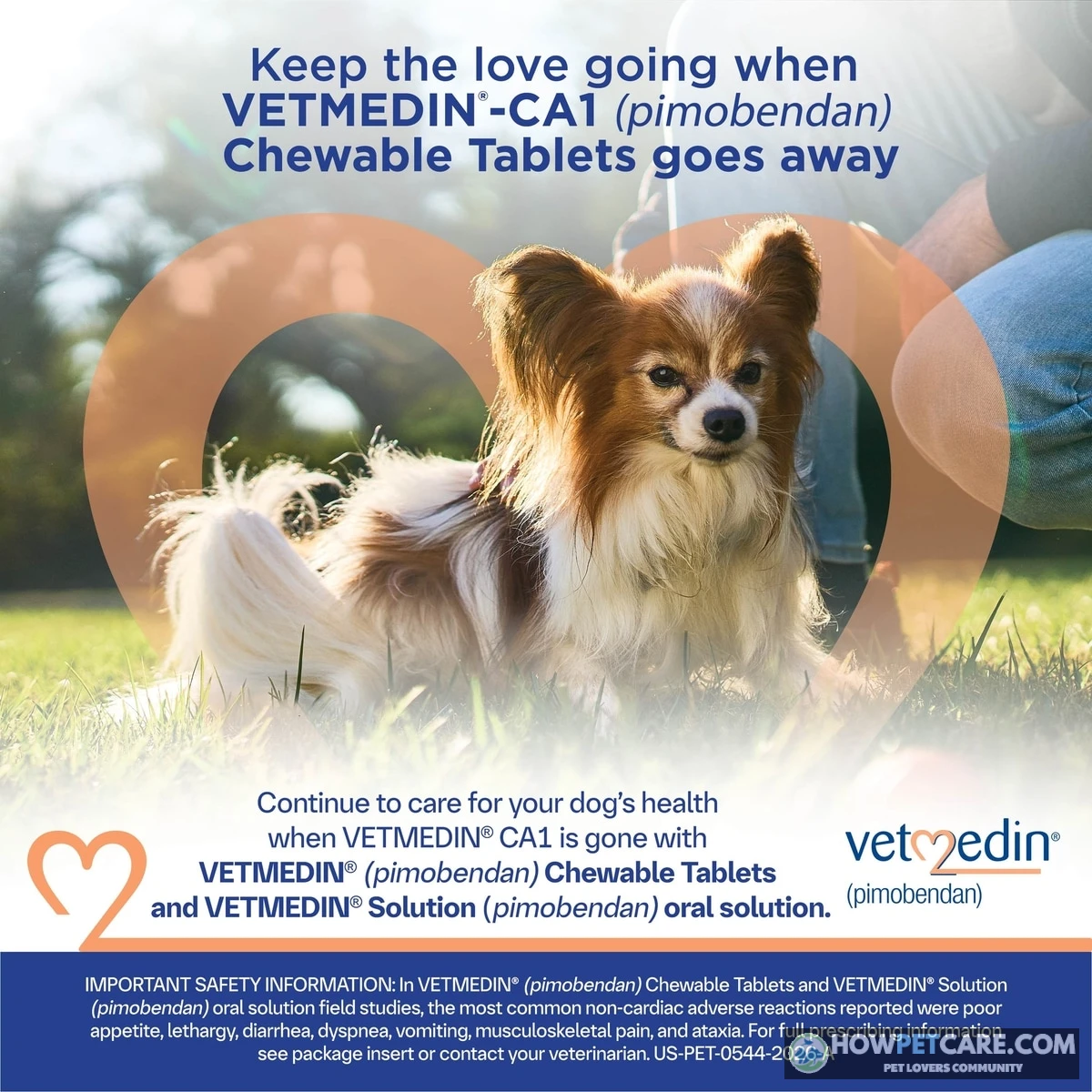
Vetmedin and Vetmedin-CA1 contain pimobendan. Vetmedin-CA1 received conditional FDA approval for delaying the onset of heart failure in qualifying dogs with Stage B2 MMVD. The manufacturer also describes Vetmedin labeling that covers Stage B2 disease and clinical heart failure due to MMVD or DCM.
The names and approval histories can be confusing, and labeling or availability can change. Ask your vet or pharmacist to check the current label for the exact product being dispensed instead of assuming the products are interchangeable for every indication. Follow your own prescription; don’t assume a different product comes with the same tablet instructions.
Generic pimobendan: what “equivalent” means
An FDA-approved generic animal drug must meet applicable FDA requirements, including demonstrating equivalence to its reference product. Its inactive ingredients, taste, scoring, and appearance don’t have to be identical. Ask the pharmacist for the product name and approval status; something casually described as “generic” isn’t necessarily an FDA-approved generic.
Compounded pimobendan: when it makes sense and the risks
A compounded preparation is made for a patient’s particular needs and isn’t itself an FDA-approved animal drug product. A vet may consider one when an appropriate approved product can’t meet an individual dog’s needs—for example, if a suitable dose or form can’t otherwise be given.
Compounded products don’t undergo the same product-specific FDA review for safety, effectiveness, manufacturing quality, and equivalence as approved products. How much is absorbed can depend on the formulation, so don’t assume a compounded liquid or capsule is interchangeable with an approved tablet. Ask why compounding is needed, which pharmacy will prepare it, how to measure it, and what to do if the formulation changes.
Pimobendan cost per month and ways to pay less
A reliable current price range can’t be established from the evidence available for this guide. Prices depend on the exact product, strength, quantity, pharmacy, and discounts; a custom compounded quote may include preparation costs. Ask for quotes rather than assuming the least expensive option for one dog will cost the least for another.
| Product type | Regulatory status | Monthly cost | Potential advantage | What to check |
|---|---|---|---|---|
| Vetmedin brand | FDA-approved product; check the exact current label | Request a quote for your prescribed strength and quantity | Approved formulation and established product labeling | Price per tablet, palatability, and refill availability |
| FDA-approved generic, if available for the prescription | FDA-approved when the particular product is listed as such | Request a quote; don’t assume availability or savings | May provide another approved option | Exact product, strength, approval status, and whether the vet agrees to a switch |
| Compounded pimobendan | The compounded preparation is not an FDA-approved product | Request a patient-specific quote | A custom form or dose may meet a particular medical need | Why it is needed, pharmacy, concentration, expiration, and measuring instructions |
For a 30-day supply of one tablet twice daily, ask for the price of 60 tablets. Calculate it as 2 tablets per day × 30 days × the quoted price per tablet. For example, at a purely illustrative—not surveyed—price of $1 per tablet, the medication portion would be $60 for 30 days. Add any dispensing or shipping fees. If the prescription uses more than one tablet strength per dose, price each strength separately.
Ask your vet for a written prescription, then compare the clinic, a licensed online veterinary pharmacy, and a local or warehouse-club pharmacy if it stocks the product. Ask whether a larger fill or manufacturer savings program would change the price. If you have pet insurance, check the policy’s prescription coverage and pre-existing-condition exclusions before counting on reimbursement.
When requesting a quote, provide the exact product, strength, tablets per dose, doses per day, and quantity. A cheaper bottle is not necessarily a cheaper month of treatment.
How Long Can a Dog Live on Pimobendan? Prognosis by Disease Stage
There’s no single lifespan for a dog taking pimobendan. Diagnosis, heart-failure stage, breed, other illnesses, and response to the full treatment plan all matter. Trial results describe groups of dogs; they can’t predict the number of months or years for an individual dog.
Stage-by-stage outlook in plain language
| Stage or diagnosis | What it means | Typical treatment approach | What the evidence or stage tells you | What to watch at home |
|---|---|---|---|---|
| B2 MMVD | Enlarged heart from mitral valve disease, without previous heart failure | Pimobendan for qualifying dogs, plus scheduled reassessment | EPIC reported an approximately 15.6-month difference in time to the study’s heart-failure outcome versus placebo; it is not a guaranteed survival extension. | Sleeping breathing trend, stamina, and new cough |
| C | Current or previous congestive heart failure | Pimobendan as part of a plan that commonly includes a diuretic and other treatment as appropriate | Some dogs respond well for a time, but the course varies. A trial result for a group can’t set an individual deadline. | Breathing rate and effort, appetite, activity, and medication tolerance |
| D | Heart failure remains inadequately controlled despite standard treatment | Vet or cardiologist adjusts treatment to improve comfort and control fluid | The outlook is generally more guarded; the plan depends on response and the dog’s other conditions. | Ability to sleep, eat, breathe comfortably, and enjoy normal routines |
| DCM | A heart-muscle disease with a course that can differ from MMVD | Treatment depends on findings, symptoms, and heart rhythm | Don’t apply the EPIC MMVD timeline to a dog with DCM. | Weakness, fainting, exercise tolerance, and resting breathing |
The PROTECT study is relevant to certain Dobermans with preclinical DCM, but its results shouldn’t be treated as an MMVD prognosis or a prediction for every dog with DCM. Ask your cardiologist which evidence best fits your dog’s diagnosis and stage.
Factors that change an individual dog’s outlook
Ask your vet how heart size, rhythm problems, kidney function, other diseases, and response to treatment affect your dog’s outlook. For advanced disease, a cardiologist may adjust diuretics or add other medicines as appropriate. Those decisions depend on examination and monitoring, not a fixed online recipe.
Track quality of life along with test results. Note whether your dog breathes comfortably at rest, eats with interest, sleeps, and enjoys familiar activities. If bad days start to outnumber good ones, or your dog can’t settle comfortably, arrange a conversation about treatment goals, safe pain relief options for dogs, and palliative care. Breathing distress calls for emergency attention, not a scheduled quality-of-life discussion.
Your Pimobendan Action Plan: A Checklist for the First Month
- Confirm the plan before the first dose. Write down the diagnosis and stage, product name, tablet strength, amount per dose, and dosing schedule. Give the clinic a list of all medicines and supplements.
- Build the routine. Set two alarms, plan meals around the prescribed timing, store the medication safely, and record each dose. Ask which product instructions apply before splitting a tablet.
- Start a home log. Record sleeping breathing rate, appetite, activity, coughing, and any vomiting or diarrhea. Ask the vet for your dog’s personal breathing-rate threshold.
- Arrange follow-up. Confirm the recheck date and whether bloodwork or repeat imaging is needed. Don’t wait for the appointment if symptoms worsen.
- Plan refills and costs. Ask for a written prescription, compare quotes for the exact monthly quantity, and discuss an approved alternative or compounded form with the vet if cost or administration is a problem.
- Know who to call. Use an emergency clinic for breathing distress, collapse, or blue or gray gums; call your vet promptly about a rising breathing rate, worsening cough, fainting, or persistent stomach upset; bring routine scheduling and product questions to the recheck.
Pimobendan is often a long-term medicine because the underlying heart disease usually remains. Don’t stop it or change the dose without veterinary advice. At your next visit, ask: “What changes would make you adjust the plan, and what should I do if they happen after hours?”
1Pimobendan is classified as an inodilator. Which two primary physiological actions define how it works to manage cardiac disease in dogs?
As an inodilator, pimobendan enhances cardiac contractility (positive inotropy) while dilating blood vessels (vasodilation) to reduce systemic resistance.
2A dog presents with a heart murmur and confirmed left ventricular and left atrial enlargement on diagnostic imaging, but has never shown any clinical signs or history of congestive heart failure. Under the ACVIM staging system, which stage best describes this dog's condition?
Stage B2 is defined as preclinical heart disease with qualifying cardiac enlargement prior to the onset of congestive heart failure.
3Which of the following clinical and imaging findings are evaluated together by a veterinarian to confirm that a dog has reached ACVIM Stage B2 mitral valve disease? (Select all that apply.)
A louder murmur indicates significant valvular regurgitation, contributing evidence alongside structural imaging.
4What is the standard recommendation regarding meal timing when administering pimobendan chewable tablets to a dog?
Giving pimobendan on an empty stomach about an hour before meals optimizes absorption efficiency.
5If an owner suspects their dog received a double dose or accidental overdose of pimobendan, what is the safest immediate action?
Immediate expert medical advice is necessary to evaluate the potential risk of severe low blood pressure or fast heart rate, even if the dog appears normal initially.
6Which of the following clinical observations represents a life-threatening emergency requiring immediate transport to an emergency veterinary clinic?
Severe breathing distress, cyanosis (blue/gray gums), and collapse indicate critical lack of oxygen and acute circulatory crisis requiring immediate emergency intervention.
7Pimobendan is generally contraindicated or requires extreme caution in dogs diagnosed with which of the following cardiac conditions?
In conditions where physical obstructions exist or heart walls are pathologically thickened, increasing contraction force can exacerbate vascular obstruction or worsen cardiac strain.
8What is a major regulatory and formulation distinction between custom compounded pimobendan and FDA-approved Vetmedin tablets?
Compounded preparations lack product-specific FDA approval for manufacturing quality and bioequivalence, meaning actual absorption can differ from commercial tablets.
9When treating a dog in active congestive heart failure, which pair of medications is commonly prescribed alongside pimobendan as part of a comprehensive combination treatment plan?
Furosemide eliminates fluid accumulation while ACE inhibitors reduce vascular resistance, complementing pimobendan's inodilator effects.
FAQ
Can pimobendan be given to cats or to dogs with other conditions?
Pimobendan is FDA-approved for dogs, so using it in cats or for other conditions is ‘off-label’. Veterinarians sometimes prescribe it that way based on their own judgment, and it should only be given under a vet’s direction.
Does my dog have to stay on pimobendan for life?
In most dogs, pimobendan is a long-term treatment because the underlying heart disease does not go away. Stopping or changing the dose should only happen on a vet’s advice.
Can I crush or split pimobendan tablets?
Some chewable tablets are scored and may be split, but not every product is. Ask the vet or pharmacist before splitting or crushing, since an inaccurate dose can matter in a small dog.
What should I do if my dog takes too much pimobendan?
Call your veterinarian, an emergency clinic, or a pet poison hotline right away, even if your dog seems fine. An overdose can cause a fast heart rate, vomiting, and low blood pressure.
Which dog breeds are most likely to need pimobendan?
Small breeds prone to mitral valve disease, such as Cavalier King Charles Spaniels, Dachshunds, and Chihuahuas, are commonly treated. Large breeds prone to dilated cardiomyopathy, such as Doberman Pinschers and Great Danes, are also commonly treated.