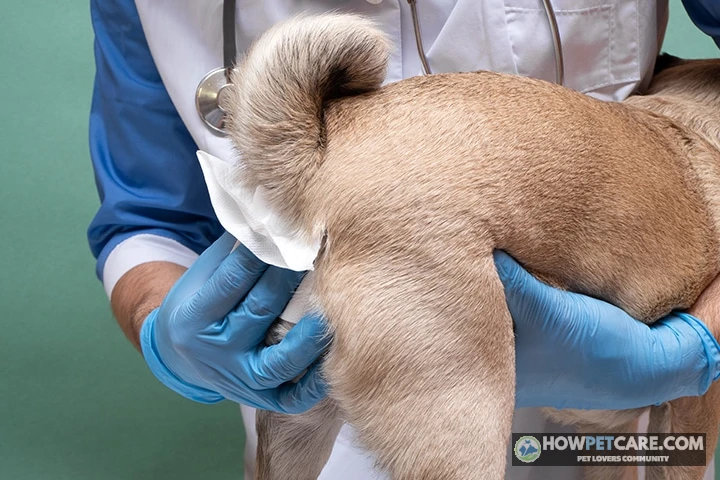

Only express when signs appear, using gentle external pressure on the 4 and 8 o’clock sacs with gloved, lubricated fingers. Stop immediately for pain, blood, pus, swelling, or no release, and call your veterinarian. Never attempt internal expression at home.
If your dog is scooting, licking its rear, or giving off a fishy odor, full or impacted anal glands are a common cause. This article explains how to recognize those signs, perform safe external expression at home when appropriate, clean up afterward, and decide exactly when to call a veterinarian instead.
Dogs have two anal sacs beside the anus that normally empty during bowel movements. When they do not empty properly, fluid builds up and causes discomfort, odor, or infection. External expression means gently squeezing the sacs from outside the anus with gloved fingers. Internal expression reaches the sacs directly and is a veterinary skill; beginners should never attempt it at home. For a broader overview, see our guide to anal glands in dogs, including symptoms, safe care, and vet red flags.
For most owners, the short answer is simple: only express when signs appear, use gentle external pressure, stop at the first sign of pain, blood, pus, or resistance, and call your veterinarian if anything looks abnormal.
Signs Your Dog’s Anal Glands Are Full

Common signs include frequent scooting, fishy odor, excessive anal licking, inflammation, and straining to poop. Other symptoms include licking or chewing the back end, difficulty sitting, straining to toilet, blood, or discharge around the rectum.
Anal sacs sit at the 4 and 8 o’clock positions beside the anus. Occasional scooting after a loose stool is not always a problem, but repeated scooting, irritated skin, or a persistent fishy smell suggests the sacs may be full. If you are trying to understand why your dog smells like fish, that guide covers related causes beyond anal glands.
Before touching your dog, confirm the signs are present and check for red flags. If you see swelling, blood, pus, fever, or severe pain, stop and call your veterinarian before attempting any expression.
How to Express Dog Anal Glands at Home: Step-by-Step
Supplies You Will Need
Gather everything before you start so you do not have to leave the dog mid-session. You will need disposable gloves, water-based lubricant or petroleum jelly, paper towels or clean cloths, warm water, treats, and a towel-covered solid surface. An assistant to hold the dog gently is strongly recommended.

External Expression Steps
- Put on disposable gloves and apply a small amount of lubricant to your thumb and forefinger.
- Place your dog standing on a towel-covered surface, with an assistant holding the dog steady and calm.
- Locate the anal sacs at about the 4 and 8 o’clock positions beside the anus.
- Place your thumb outside the anus and your forefinger inside, about an inch from the opening, or place both fingers outside depending on your dog’s size and comfort.
- Apply gentle, steady pressure upward and inward toward the sacs. Do not squeeze hard or repeat forcefully.
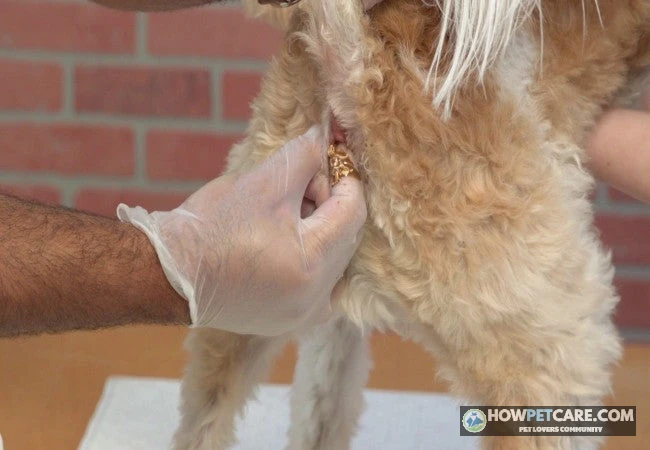
- Watch for thin, brownish or yellowish fluid to release onto a paper towel held nearby.
- Repeat once on the other side if needed, then stop. If nothing releases after gentle pressure, do not press harder.
- Wipe the area clean with warm water, dispose of gloves, and wash your hands thoroughly.

Blood, pus, chunky fluid, visible swelling, fever, severe pain, snapping, or trying to bite. These are red flags that require veterinary care, not more pressure.
Small Dogs and Puppies
Very small dogs and puppies have tiny sacs, so use even lighter pressure and a smaller hand position. An assistant is especially important because small dogs may feel more vulnerable and resist handling. If you cannot locate the sacs or the dog resists, stop and use a groomer or veterinarian instead.
Beginner Mistake Roundup
- Mistake: Pressing hard or squeezing repeatedly. Safer alternative: use gentle, steady pressure and stop if nothing releases.
- Mistake: Expressing when the dog has blood, pus, swelling, fever, or severe pain. Safer alternative: use the red-flag checklist first and call the vet.
- Mistake: Trying internal expression at home. Safer alternative: leave internal expression to a veterinarian.
- Mistake: Expressing on a fixed schedule even when the dog has no signs. Safer alternative: express only when signs appear unless a vet recommends a plan.
- Mistake: Pinning or scolding a resisting dog. Safer alternative: pause, use treats, shorten the session, and get professional help if needed.
- Mistake: Ignoring repeated scooting after expression. Safer alternative: monitor for 24 hours and book a vet visit if signs return.
External vs. Internal Anal Gland Expression
External expression squeezes the anal sacs from outside the anus with gloved fingers. Internal expression involves inserting a lubricated, gloved finger into the rectum to reach each sac directly and is performed by a veterinarian or trained veterinary nurse. Internal expression carries higher injury risk and can be painful if the sacs are impacted or infected. External expression is the only appropriate at-home approach for beginners.

When to Stop and Call the Vet Instead
Red-Flag Abort Checklist
| Observation | What It May Mean | Action |
|---|---|---|
| Blood in or around the secretion | Inflammation, trauma, or a mass in the anal sac | Stop immediately and call the vet the same day |
| Pus, cloudy fluid, or a foul, infected odor | Likely infection or abscess | Do not express; seek veterinary care |
| Thick, chunky, or gritty material | Impaction or dried secretion | Stop; a vet may need to soften or flush the sac |
| Visible swelling beside the anus | Impaction, infection, or abscess | Do not squeeze; arrange a veterinary exam |
| Fever, lethargy, or loss of appetite | Systemic illness or worsening infection | Stop and contact the vet promptly |
| Severe pain, crying, snapping, or trying to bite | Expression is unsafe or the sac is diseased | Stop at once; use a professional |
| No release after gentle external pressure | The sac may be empty, impacted, or internally located | Stop and reassess rather than pressing harder |

What Abnormal Secretion Means
Normal secretion is typically thin and brownish or yellowish. Bloody, pus-like, or chunky secretion suggests inflammation, infection, abscess, or impaction. These conditions cannot be fixed by squeezing at home and may worsen if you try. Call your veterinarian the same day if you see blood or pus, and do not attempt expression.
Cost of Veterinary and Groomer Expression
At-Home Supplies vs. Professional Expression: Worked Cost Example
Example for one dog with occasional full glands:
- At-home external expression: disposable gloves, water-based lubricant, paper towels, warm water, and treats. These are usually already on hand or cost only a few dollars total; one supply set can be used for multiple sessions if stored cleanly.
- Groomer expression: often offered as an add-on during a bath or nail trim, or as a standalone quick service. Fees vary by region and pet size, so ask for the exact add-on price before booking.
- Veterinary expression: usually costs more than a groomer add-on and may cost more if the vet finds impaction, infection, inflammation, or needs sedation, antibiotics, or follow-up care.
Expression Cost Comparison
| Provider | Typical Cost | Best For |
|---|---|---|
| Groomer add-on or standalone | Varies by region and pet size; ask before booking | Healthy dogs with occasional full glands and no red flags |
| Veterinary clinic | Higher than groomer; more if sedation, antibiotics, or treatment are needed | Dogs with red flags, pain, infection, or no release at home |
| At-home supplies | A few dollars for gloves, lubricant, and paper towels | Owners comfortable with gentle external expression on cooperative dogs |
Decision rule: if the dog has red flags, repeated episodes, pain, or no release at home, paying a professional is usually the safer and cheaper long-term choice because it avoids complications and repeated failed attempts.
How Often Dogs Need Anal Glands Expressed
Most dogs never need manual expression because a normal bowel movement usually expresses the anal sacs sufficiently. Only express when signs appear.
Frequency Decision Table
| Situation | Suggested Approach | Why |
|---|---|---|
| No scooting, licking, odor, or swelling | Do not express; leave glands alone | Most dogs empty naturally during bowel movements |
| Occasional signs, otherwise healthy | Express only when signs appear | Avoids irritation from unnecessary handling |
| Frequent signs in a small or toy breed | Track episodes and ask the vet for a plan | These breeds are more prone to impaction |
| Overweight dog with recurring signs | Address weight and fiber with veterinary guidance | Extra weight can reduce natural emptying |
| Signs with allergy or skin issues | Treat the underlying allergy plan with the vet | Inflammation can worsen gland problems |
| Repeated episodes despite home expression | Stop routine expression and schedule a workup | May indicate infection, impaction, or another cause |
Chronic cases may need a veterinarian-designed schedule rather than a fixed home routine. Over-expressing anal glands can irritate the sacs and surrounding tissue and may increase impaction risk, so avoid routine expression unless your vet advises otherwise.
Breed Risk, Weight, and Long-Term Prevention
Breed Predisposition
Small and toy breeds are more prone to anal gland problems, and overweight dogs are overrepresented in impaction cases. Genetics, obesity, skin problems, fiber-deficient nutrition, gastrointestinal issues, and allergies are common contributing factors. Breed alone does not guarantee problems, but these dogs benefit from closer monitoring and weight management. If you want to understand why dogs scoot their butts, that guide explores common triggers and when to seek care.
Diet, Weight, and Allergies
Fiber-rich nutrition, healthy weight, and allergy management can reduce recurrences. If your dog has chronic scooting or odor despite expression, ask your veterinarian about a workup rather than repeating home expression.
Aftercare and Cleanup After Expression
Cleanup Steps
- Immediately: wipe the area with warm water and a clean cloth or paper towel, dispose of gloves, and wash hands thoroughly.
- 0-2 hours: keep the dog calm, offer water, and watch for renewed scooting, licking, or straining.
- 2-6 hours: check the bedding and rear area for leakage or odor; clean any residue promptly.
- 6-12 hours: note appetite, energy, and stool quality; a single soft stool can occur after expression.
- 12-24 hours: if scooting, swelling, odor, pain, or aggression returns, stop home expression and contact the vet.
- After 24 hours: record what happened, including signs, amount released, and any resistance, so future decisions are consistent.

Monitoring and Resistance Handling
Monitor your dog for 24 hours for renewed scooting, swelling, or odor. If your dog resists handling or tries to bite, pause the session, use treats, keep it short, and get professional help if needed. Never pin or scold a resisting dog.
Your At-Home Action Checklist
Use this checklist before, during, and after any home expression attempt.
Pre-expression check:
- Signs are present (scooting, licking, fishy odor, or swelling).
- No red flags: no blood, pus, swelling, fever, or severe pain.
- Supplies are ready: gloves, lubricant, paper towels, warm water, treats, and an assistant.
During expression:
- Use gentle, steady pressure only.
- Stop immediately on pain, resistance, or no release.
- Do not attempt internal expression.
Post-expression:
- Clean the area and wash your hands.
- Monitor for 24 hours.
- Book a vet visit if signs return or any red flag appears.
If you are unsure at any point, call your veterinarian before proceeding. Safe expression means knowing when not to do it at all.
FAQ
Does expressing anal glands hurt the dog?
External expression should not hurt when done gently with proper lubrication. Stop immediately if the dog shows pain, vocalizes, or resists, as that can signal impaction or infection needing veterinary care.
How do I clean up after expressing my dog’s anal glands?
Wipe the area with warm water and a soft cloth, remove and discard gloves, wash your hands thoroughly, and monitor the dog for 24 hours for renewed scooting, swelling, or odor.
Are some dog breeds more prone to anal gland problems?
Small and toy breeds and overweight dogs are overrepresented in anal gland impaction cases. Breed alone does not guarantee problems, but these dogs benefit from closer monitoring and weight management.
Do I need to express glands on a regular schedule or only when signs appear?
Most dogs never need manual expression and should only be expressed when signs appear. Chronic cases should follow a veterinarian-designed plan rather than a fixed home schedule.
Can over-expressing anal glands cause harm?
Yes, frequent unnecessary expression can irritate the sacs and surrounding tissue and may increase impaction risk. Express only when clinical signs are present unless your vet advises otherwise.
 Read nextAnal glands in dogs