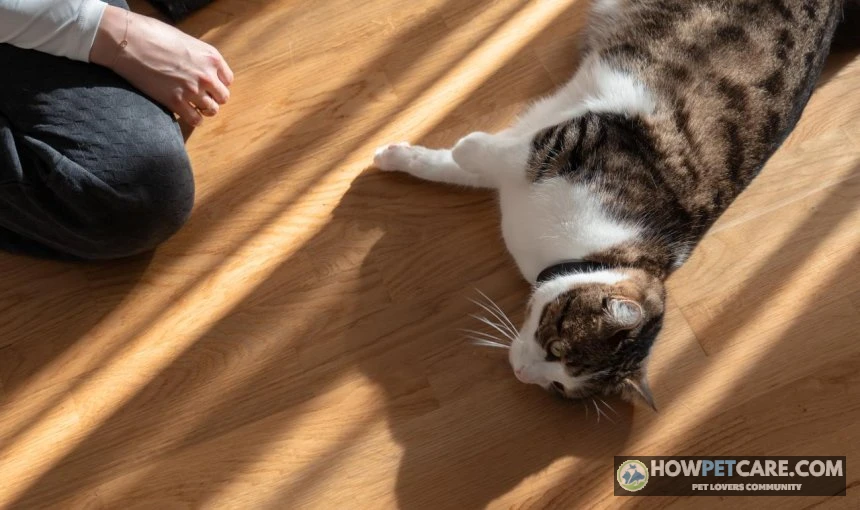

Yes—cats can get heat stroke, and it’s an emergency. Move your cat to a cooler area, wet the fur with cool or room-temperature water, use airflow, and call a vet. Go now for collapse, confusion, seizures, breathing trouble, abnormal gums, panting with lethargy, or 105°F (40.6°C)+.
Yes, cats can get heat stroke. It’s a life-threatening emergency that occurs when the body can’t shed heat effectively. A normal feline temperature is approximately 100–102.5°F (37.8–39.2°C); above 103°F (39.4°C) is concerning, and 105°F (40.6°C) or higher after heat exposure warrants emergency care. There’s no precise temperature at which heat exhaustion reliably becomes heat stroke: serious injury can occur at lower readings. If your cat collapses, seems confused, struggles to breathe, or pants while lethargic, go to an emergency vet now, whatever the temperature. Start gentle cooling and call the clinic on the way.
Heat Stroke in Cats: Immediate Actions and Severity Check
Move your cat out of the heat right away. Dampen the fur with cool or room-temperature water, provide airflow, and contact a veterinarian. Don’t delay leaving to complete a cooling routine or take your cat’s temperature. If your cat is struggling to breathe, handle them as little as possible.
Heat exhaustion describes overheating with signs of distress. Heat stroke is more severe and can have life-threatening effects on the brain and other organs. No thermometer reading reliably separates the two. Temperatures above 104–105°F (40–40.6°C) are associated with serious heat injury, but symptoms and exposure matter just as much as the number.
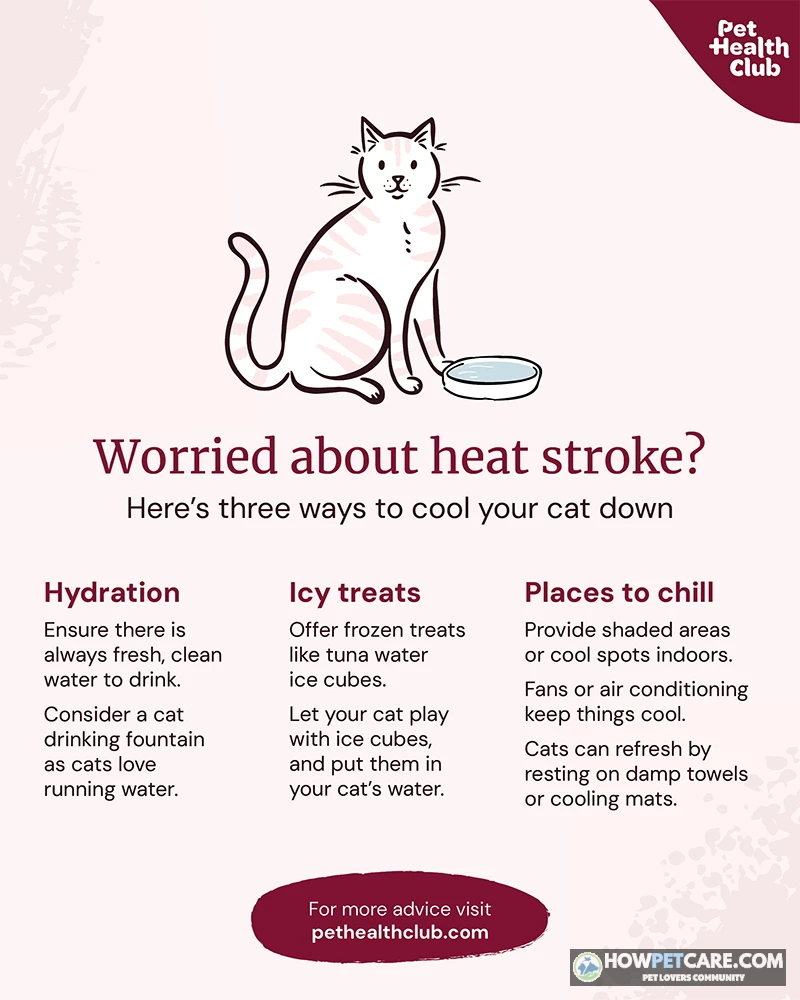
Exhaustion vs. stroke at a glance
Emergency vet now: Collapse, seizures, disorientation, inability to stand, abnormal gum color, breathing difficulty, or panting with lethargy after heat exposure. A temperature of 105°F (40.6°C) or higher is also an emergency.
Call a vet promptly: Any panting, drooling, unusual lethargy, or elevated temperature after heat exposure—even if your cat is still alert. Open-mouth breathing is abnormal in cats and can have causes other than heat.
Monitor only if signs are mild: If your cat merely sought a cool floor or seemed restless, then quickly returns completely to normal in a cool room, you may monitor closely. If signs persist, recur, or you’re unsure, call a vet. Suspected heat stroke always requires veterinary care, even if your cat appears to recover.
Heat Exhaustion vs. Heat Stroke in Cats: Symptoms by Severity Stage
Use this scale to decide what to do, not to diagnose your cat at home. Temperature ranges overlap, and a cat can be seriously ill without a temperature reading.
| Stage | Typical Body Temperature | Signs to Look For | What to Do | Vet Urgency |
|---|---|---|---|---|
| Normal | About 100–102.5°F (37.8–39.2°C) | Alert, comfortable, breathing normally | Provide water and access to a cool area | Routine care if otherwise well |
| Possible early overheating | May be normal or mildly elevated | Restlessness, seeking cool surfaces, sprawling, extra grooming or unusual quietness | Move to a cool area and observe closely | Call if signs persist, return or concern you |
| Concerning overheating or heat exhaustion | Above 103°F (39.4°C) is concerning; readings overlap with more severe illness | Panting, drooling, rapid breathing, red gums or lethargy | Begin cooling and contact a vet promptly | Call immediately; go to emergency care for panting with lethargy or other severe signs |
| Suspected heat stroke | Often 105°F (40.6°C) or higher, but serious signs can occur at lower temperatures | Stumbling, confusion, vomiting, abnormal gum color, seizures, collapse or unresponsiveness | Cool gently while arranging transport | Emergency vet now |
Research supports the normal temperature range and concerning heat-related thresholds. These stages are a practical guide, not a diagnostic test.
Early warning signs cats show before panting
Your cat may move away from a sunny window, stretch out on tile, groom more, or become unusually quiet. These behaviors alone don’t prove overheating: healthy cats seek cool places, too. Look at the whole picture: the heat of the environment, a change from your cat’s usual behavior, and whether they promptly return to normal in a cooler space.
Warm ears, a warm belly, or damp paw pads aren’t reliable ways to measure body temperature. Cats use grooming and evaporation to help cool themselves, and they sweat through their paw pads.
Emergency signs that mean go now
Go straight to emergency veterinary care if your cat has collapsed, is unresponsive or seizing, seems disoriented, is staggering, or can’t stand. Pale, blue, or very dark red gums, labored breathing, or vomiting after heat exposure also call for urgent assessment. Panting together with lethargy is an emergency. Don’t wait for a thermometer reading to confirm it.
Why the line between exhaustion and stroke is blurry
An elevated temperature tells you your cat is hot, but not how much internal damage has occurred. A reading can also fall during cooling while an injury remains. Heat stroke can affect organs even after body temperature returns to normal. A vet must assess your cat as a whole, including breathing, circulation, mental state, and exposure history.
How to Cool an Overheated Cat: A Timed First-Aid Protocol
The clock is a guide for what to do, not a reason to wait 10 minutes before leaving. If emergency signs are present, head to the vet while cooling your cat. Call ahead if someone can do so safely.
The first 10 minutes, step by step
| Time | Action | Why It Works | Common Mistake to Avoid |
|---|---|---|---|
| Minute 0–1 | Move the cat to air conditioning, shade or another cooler area. Call a vet or emergency clinic. | Stops further heat exposure and starts the handoff to veterinary care. | Waiting for the cat to recover before calling. |
| Minute 1–5 | Gently wet the fur and skin with cool or room-temperature water, including the belly, paws and armpits if accessible. Direct a fan or moving air toward the damp fur. | Water and airflow support cooling through evaporation. | Using ice water, an ice bath or full submersion. |
| Minute 5–10 | If the cat is alert and swallowing normally, offer water in a bowl. Prepare the carrier and leave as directed by the vet. | Voluntary drinking can help without delaying transport. | Syringing water into the mouth or forcing the cat to drink. |
| During transport | Keep air conditioning or airflow on. Continue gentle cooling as advised by the clinic. | Reduces further heat buildup on the journey. | Wrapping the cat in wet towels or leaving them in a hot carrier. |
If you can safely take a rectal temperature without delaying care, recheck it about every five minutes during active cooling. Stop applying water and active cooling when the temperature reaches approximately 103°F (39.4°C), and tell the vet the reading; continued cooling can make the temperature fall too far. Keep your cat in a comfortably cool environment. If taking a reading isn’t safe, follow the clinic’s instructions instead.
A cat with suspected heat stroke needs veterinary assessment even if cooling seems to work. Internal injury may not be apparent immediately.
Common cooling mistakes that make things worse
- Don’t use ice water, ice baths, or ice packs against the body. Ice-cold cooling can constrict surface blood vessels and interfere with heat loss.
- Don’t force water or food. A weak or distressed cat may inhale liquid into the lungs.
- Don’t wrap the cat in wet towels. A damp towel can go under the cat; leave the body exposed to airflow.
- Don’t use rubbing alcohol or human fever medicines. They aren’t a substitute for cooling or veterinary treatment and may harm your cat.
- Don’t restrain a struggling cat to finish first aid. Minimize handling, especially if breathing is difficult.
Getting to the vet when it’s an hour away
Call the emergency clinic as soon as you can. Explain the travel time, signs, and any temperature readings. Start driving without waiting for a complete cooling cycle. Use a ventilated carrier, keep the vehicle comfortably cool, and, if another adult is available, have them monitor the cat while the driver focuses on the road. Follow the clinic’s instructions about continuing or stopping cooling. If the cat deteriorates, call the clinic again when it’s safe.
How to Take Your Cat’s Temperature at Home (and What the Numbers Mean)
A digital rectal thermometer can provide useful information, but it’s optional in an emergency. A struggling cat could be injured during an attempted reading, and restraint can add stress. Never delay cooling or transport to get a number.
Step-by-step: rectal temperature in a cat
- Gather a digital pet thermometer, water-based lubricant or petroleum jelly, and a towel. Don’t use a glass thermometer.
- If possible, ask another adult to hold the cat gently on a stable surface. Keep the cat’s chest free to move; don’t compress the body or wrap an overheated cat tightly.
- Lubricate the thermometer tip and gently lift the tail.
- Insert the tip gently into the rectum, following the thermometer’s instructions. Don’t force it; stop if you feel resistance or your cat struggles.
- Hold the thermometer in place until it signals that the reading is complete. Remove it gently.
- Record the temperature and time, then clean the thermometer according to its instructions.
If your cat is weak, breathing hard, distressed, or difficult to hold, stop trying and let the veterinary team take the reading. Ear thermometers can be less dependable, so don’t use a reassuring ear reading to dismiss serious symptoms.
Reading the result
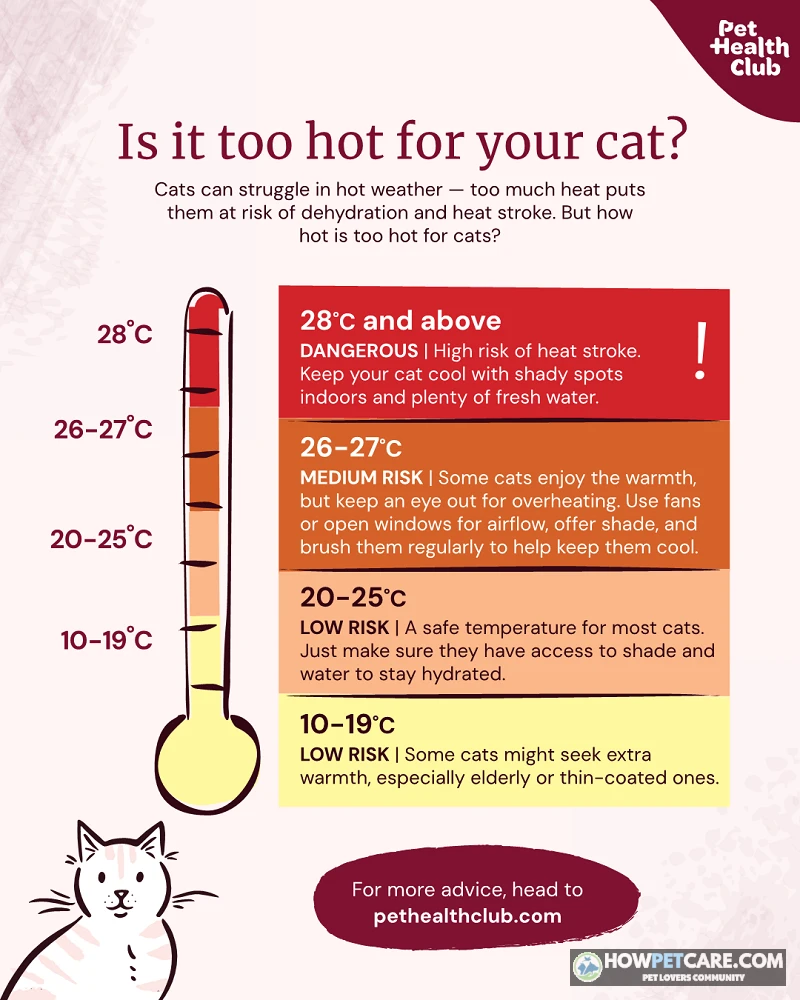
- About 100–102.5°F (37.8–39.2°C): Within the usual range. A normal reading doesn’t rule out an emergency if your cat has concerning signs or has already been cooled.
- Above 103°F (39.4°C): Concerning after heat exposure. Start cooling and call a vet promptly.
- 105°F (40.6°C) or higher: Emergency care now. Temperatures in the 104–105°F (40–40.6°C) range can also be associated with serious heat injury.
A temperature between the normal range and 103°F isn’t automatically safe. Consider the exposure, your cat’s behavior, and whether cooling has already begun. A high temperature can also have causes other than environmental heat, so a vet should interpret the result.
Monitor at Home or Emergency Vet Now? Explicit Triage Criteria
Work through these choices from the top. When in doubt, call an emergency clinic and describe exactly what you see.
The “my cat seems better now” checklist
Go to an emergency vet now if any of these apply:
- The cat collapsed, had a seizure, is unresponsive, seems confused, or can’t walk normally.
- Breathing is labored, gums are pale, blue, or very dark red, or panting occurs with lethargy.
- The cat vomits after significant heat exposure, or the measured temperature is at least 105°F (40.6°C).
- A vet suspects heat stroke, even if your cat now looks comfortable or the temperature has fallen.
- Concerning signs aren’t improving promptly with cooling. Don’t wait for a specific time limit if signs are severe.
Call a vet promptly for advice and a same-day assessment if recommended: Your alert cat panted or drooled after heat exposure, had a temperature above 103°F (39.4°C), or was trapped in a hot car, dryer, garage, or closed room—even if the signs have stopped. Describe the exposure rather than assuming that a return to normal means no injury occurred.
Monitor at home only when: Your cat showed no panting, drooling, weakness, or other signs of illness; merely sought a cool spot or appeared mildly restless; and quickly returned fully to normal in a cooler room. Provide water and watch closely for the next few hours. Call a vet if the behavior returns, a new symptom develops, or you’re uncertain about the exposure.
Who should skip home monitoring entirely
Call a vet promptly about any concerning heat-related change in a flat-faced cat, kitten, senior cat, overweight cat, or cat with known heart, respiratory, or kidney disease. These cats may have less margin for coping with heat or illness.
For the call or visit, bring your temperature log if you have one, an estimate of when and where exposure occurred, the signs you observed, and the cooling steps you used.
Which Cats Are Most at Risk, and Hidden Indoor Heat Traps
Flat-faced cats and other high-risk groups
Brachycephalic breeds have shortened faces and may have breathing difficulties that make heat harder to tolerate. Persians, Himalayans, and Exotic Shorthairs are among the breeds identified as higher risk. Individual anatomy and health matter more than a breed label alone.
Kittens, older cats, overweight cats, and cats with heart or respiratory disease also need particular attention during hot weather. A cat with kidney disease or limited mobility may need an individualized plan for access to water and cool resting places. Long-haired cats can benefit from regular grooming, but ask a vet before shaving.
Indoor heat-index risk guide for cats
Humidity makes evaporative cooling less effective, so how hot is too hot for a cat depends partly on moisture in the air. However, the supplied evidence doesn’t establish a validated indoor temperature-and-humidity cutoff that can reliably determine whether an individual cat is safe. Use this guide as a prompt to act, not as a diagnostic chart.
| Room Conditions | Humidity Level | Risk Level | Who Is Most Vulnerable | Recommended Action |
|---|---|---|---|---|
| Comfortable, ventilated room with access to water | Any | Lower, not zero | Cats with illness or breathing problems | Check the cat and maintain a cool retreat. |
| Warm or stuffy room; cat can move to a cooler space | Higher humidity adds concern | Increased | Flat-faced, older, very young or ill cats | Improve cooling and airflow; check behavior frequently. |
| Hot, poorly ventilated room or power outage with no cooler escape | Any; higher humidity adds concern | High | All cats, especially vulnerable cats | Move the cat to a reliably cool location. |
| Closed car, dryer or other confined hot space | Any | Emergency exposure | All cats | Remove the cat safely, begin cooling if needed and call a vet. |
Don’t rely on an outdoor heat index alone: the temperature where your cat is confined can be very different. Access to shade, ventilation, water, and a cooler room matters.
Indoor heat traps owners overlook
Heat stroke can happen indoors. A top-floor apartment without air conditioning, a sunroom, garage, shed, or closed bedroom can become dangerous, particularly during a power outage. A cat shut in a dryer may also face burns or mechanical injury; contact an emergency vet immediately.
A parked car is never safe for a waiting cat. Dangerous heat can build quickly, and there’s no dependable number of minutes that guarantees safety. The time to heat stroke depends on the temperature, ventilation, humidity, confinement, and individual cat. If you find a cat trapped in a hot car, remove them safely as soon as possible and call an emergency clinic.
What the Vet Will Do: Treatment, Cost, Prognosis and Recovery Timeline
Inside the emergency vet visit
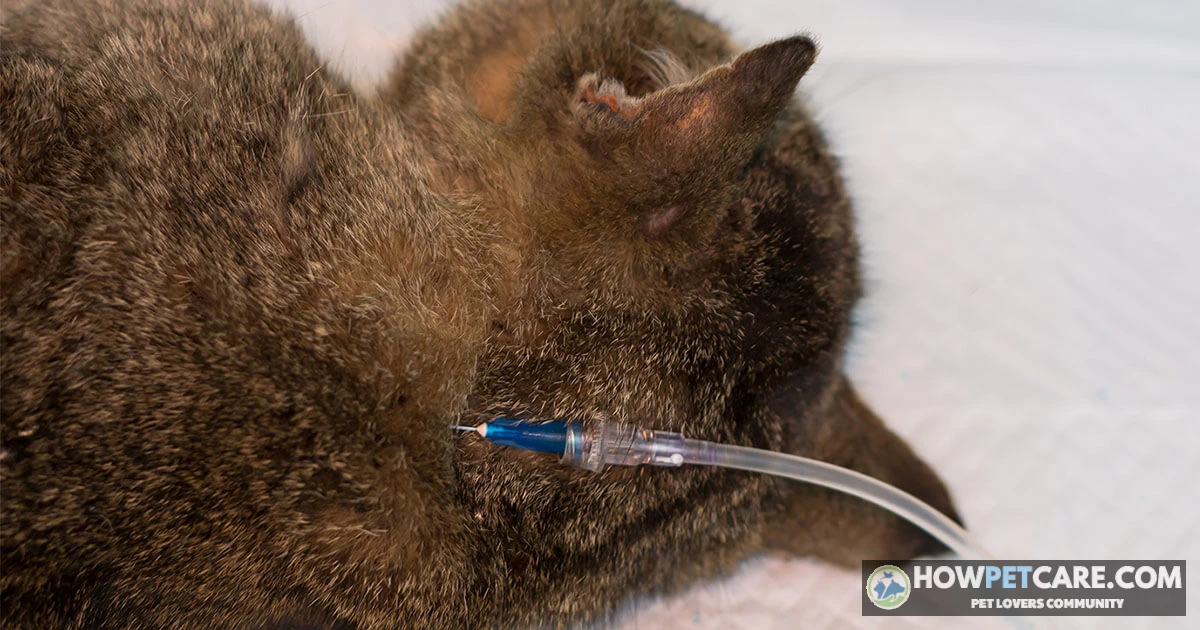
The veterinary team will assess temperature, breathing, circulation, and mental state. They may continue controlled cooling, provide oxygen, and place an intravenous catheter for fluids. Blood and urine tests can help assess dehydration, electrolytes, kidney and liver function, and other complications. Repeat testing may be needed because injury can emerge later.
Treatment depends on your cat’s condition. The vet may use anti-nausea medication, anticonvulsants for seizures, or other treatments for specific complications. Intravenous fluid type and rate must be tailored to the cat, especially if heart or kidney disease is present. Severe cases may require hospitalization and repeated monitoring; not every overheated cat needs the same treatment.
What emergency treatment costs and how to prepare
US emergency costs vary substantially by location, clinic, tests, treatment, and length of hospitalization. A brief assessment and basic treatment generally cost less than intensive care with oxygen, repeated laboratory testing, and several days in hospital. The available evidence doesn’t establish a reliable national dollar range for feline heat stroke, so a specific estimate here would be misleading.
Call ahead if possible, but don’t postpone emergency care while comparing prices. Ask the clinic for an initial estimate, what’s needed immediately, and an updated estimate if hospitalization becomes necessary. You can also ask about payment options and whether your pet insurance policy may apply; coverage and payment arrangements vary.
Prognosis: what improves or worsens the odds
Heat stroke can be fatal. Prognosis depends on how hot your cat became, how long the exposure lasted, how quickly cooling and veterinary treatment began, and whether organs were injured. Earlier action gives the veterinary team a better chance to limit ongoing heat exposure, but no outcome can be guaranteed.
A cat with a milder episode may recover over days; a cat with serious complications may need hospitalization and a longer recovery with rechecks. The evidence provided doesn’t establish reliable cat-specific survival percentages, so don’t use a generic online percentage to predict your cat’s outcome.
Aftercare: Feeding, Monitoring and Delayed Warning Signs in the Days After
Follow your veterinarian’s discharge instructions rather than relying on a general checklist. Heat-related organ damage can become apparent after body temperature returns to normal. Ask the clinic what changes should trigger an immediate return and when test results or repeat bloodwork are due.
Feeding and hydration after heat stroke
For the first few days, provide a quiet, comfortably cool room, fresh water, and easy access to the litter box. Offer food in the amounts and form your vet recommends. If your cat feels nauseated or has been hospitalized, ask when to restart their usual diet and whether smaller meals are appropriate. Don’t force food or water.
Track appetite, drinking, energy, and litter-box use against your cat’s normal habits. Take a temperature only if your vet recommends it and your cat tolerates it safely; repeated stressful restraint isn’t a substitute for a professional examination.
Delayed signs of organ failure to watch for
Check your cat closely during the first 72 hours and keep watching for changes over the following days. Contact a vet immediately for new or returning vomiting or diarrhea, poor appetite, marked lethargy, unusual hiding, weakness, or a major change in drinking or urination.
Go to emergency care immediately for difficulty breathing, collapse, seizures, disorientation, unexplained bruising or bleeding, or straining with little or no urine. Yellowing of the gums or whites of the eyes, and dark or bloody urine, also need urgent veterinary assessment. Don’t wait for a scheduled recheck.
Follow-up vet schedule
Before discharge, ask when your cat should be examined again and whether kidney, liver, electrolyte, or clotting tests need repeating. Timing depends on the initial results and your cat’s recovery. Ask whether another check in the following week or two is appropriate, particularly if tests were abnormal or symptoms return.
Heat Wave Safety for Cats: Your Prevention and Emergency-Prep Checklist
Heat wave prevention checklist
- Keep fresh water available in more than one accessible location, and check bowls frequently.
- Provide shade and a cool room with air conditioning when available. Close curtains against direct sun and let your cat choose a cool resting surface.
- Use fans to improve airflow, but don’t rely on a fan alone to make a dangerously hot room safe.
- Never leave a cat in a parked car, even for a short errand.
- Check dryers, garages, sheds, closets, and closed rooms before shutting doors or turning on appliances.
- During an outage, move your cat to a reliably cool backup location if the home can’t be kept comfortable. A wrapped frozen water bottle can provide an optional cool spot; leave enough space for the cat to move away from it.
- Brush long-haired cats regularly and ask your vet about grooming suited to their coat and health.
Build your cat first-aid and emergency plan
Keep a ventilated carrier accessible and save your regular vet’s number and a 24-hour emergency clinic’s number in your phone. A pet first-aid kit can include a digital thermometer, lubricant, a spray bottle, and towels. Decide in advance who can help with transport and where you can take your cat during a prolonged outage.
If your cat shows concerning signs in the heat, move them somewhere cool, begin gentle cooling, and call a vet. For collapse, breathing difficulty, or other emergency signs, leave for emergency care immediately.
1What is the normal body temperature range for a healthy cat?
Research establishes that a healthy feline body temperature naturally resides within this physiological window.
2Which water temperature is recommended for wetting an overheated cat's fur during first aid?
Gentle cooling with cool or room-temperature water supported by airflow effectively promotes heat loss through evaporation.
3At what body temperature should active wet cooling measures be stopped to prevent overcooling?
Stopping active cooling near this threshold prevents body temperature from dropping too low as cooling continues naturally.
4What is the correct protocol for using towels when cooling an overheated cat?
Placing a damp towel under the cat allows heat to escape into the surface while keeping the coat exposed to circulating air for evaporation.
5Why is open-mouth panting in cats considered a critical warning sign following heat exposure?
Unlike dogs, cats do not routinely use panting for normal temperature regulation, making it an indicator of potential heat distress.
6What is the primary guideline regarding taking a rectal temperature during a suspected heat stroke emergency?
Physical handling and restraint can cause additional stress, making transport to professional care the main priority.
7Which symptom combination demands immediate emergency veterinary transport regardless of body temperature?
These signs reflect potential neurological impairment, cardiovascular strain, or severe organ distress requiring urgent emergency intervention.
8Why are brachycephalic cat breeds, such as Persians and Himalayans, at higher risk for heat stroke?
Conformational changes in flat-faced breeds impair efficient breathing, reducing their margin of safety in hot conditions.
9What is the correct way to offer oral hydration during home first-aid for an overheated cat?
Voluntary drinking from a bowl allows hydrated support without risking airway aspiration or delaying transport.
10Why must a cat with suspected heat stroke receive veterinary assessment even if they seem to recover after cooling?
Thermal injury to internal organs like the kidneys, liver, and brain may not present symptoms immediately upon temperature reduction.
| Stage | Typical Body Temperature | Signs to Look For | First-Aid Action | Veterinary Urgency |
|---|---|---|---|---|
| Normal | About 100–102.5°F (37.8–39.2°C) | Alert, comfortable, breathing normally | Provide water and access to a cool area | Routine care if otherwise well |
| Possible early overheating | May be normal or mildly elevated | Restlessness, seeking cool surfaces, sprawling, extra grooming, or unusual quietness | Move to a cool area and observe closely | Call if signs persist, return, or concern you |
| Concerning overheating or heat exhaustion | Above 103°F (39.4°C) is concerning; readings overlap with more severe illness | Panting, drooling, rapid breathing, red gums, or lethargy | Begin cooling and contact a vet promptly | Call immediately; go to emergency care for panting with lethargy or other severe signs |
| Suspected heat stroke | Often 105°F (40.6°C) or higher, but serious signs can occur at lower temperatures | Stumbling, confusion, vomiting, abnormal gum color, seizures, collapse, or unresponsiveness | Cool gently while arranging transport | Emergency vet now |
FAQ
Can I use ice or cold water to cool my cat?
No. Ice or very cold water can constrict surface blood vessels and interfere with heat loss. Use cool or room-temperature water on the fur with airflow instead, and avoid full submersion.
How long does it take for a cat to get heat stroke?
There’s no dependable minute cutoff. Heat can build fast in a parked car and more slowly in hot rooms, depending on temperature, ventilation, humidity, confinement, and the individual cat.
Can a cat get heat stroke indoors?
Yes. Apartments without AC, sunrooms, garages, closed rooms, dryers, and power outages during heat waves can all create dangerous conditions. Indoor cats still need shade, ventilation, water, and a cooler escape.
Do cats sweat to cool down?
Only a little, through their paw pads. Cats rely mostly on grooming, evaporation, shade-seeking, and resting, so open-mouth panting is abnormal and can signal they are already struggling.
Should I give my overheated cat water to drink?
Offer water in a bowl only if the cat is alert and swallowing normally. Never syringe or force water, since it can enter the lungs, and don’t delay cooling or transport for drinking.
Can heat stroke kill a cat?
Yes. Heat stroke can injure the brain and other organs and can be fatal without prompt cooling and veterinary care. Earlier action improves the veterinary team’s chance to limit damage, but no outcome is guaranteed.