

Cat gagging is a short hacking or retching sound from the throat or stomach. One brief episode in a cat that breathes, eats, and acts normally can usually be monitored at home. Gagging with trouble breathing, blue or pale gums, collapse, or suspected string swallowing is an emergency—go to a vet now.
If your cat is gagging and struggling to breathe, breathing with an open mouth, has collapsed, or shows blue, gray, or very pale gums, go to an emergency vet now. If your cat has one brief episode and is breathing, eating, and acting normally afterward, close monitoring may be reasonable. Hairballs and eating too quickly are possible causes, but coughing, a swallowed object, and other illnesses can look similar.
Is Your Cat Gagging Right Now? 60-Second Emergency Check
Use the highest urgency level that fits. If you suspect your cat cannot get air, call an emergency vet while you prepare to leave, and follow the choking first-aid steps below. Do not delay the trip to identify the sound.
| Urgency tier | Signs to look for | Practical threshold | What to do |
|---|---|---|---|
| Emergency now | Open-mouth breathing at rest; obvious breathing effort; blue, gray, or very pale gums; collapse; a swollen or painful belly with repeated dry heaving | Any one of these signs, or suspected string ingestion or a blocked airway | Call an emergency vet and leave now. Keep your cat calm and minimize handling. |
| Vet today | Recurring gagging or coughing; repeated vomiting; refusal of food; unusual hiding or lethargy; weight loss; drooling or difficulty swallowing | Call today if episodes recur, continue into the next day, or your cat refuses a meal and seems unwell | Request a same-day assessment. Escalate to emergency care if breathing becomes difficult or the cat deteriorates. |
| Monitor closely | One or two brief episodes in an otherwise well adult cat | Cat returns fully to normal, breathes comfortably, and continues eating and drinking | Observe for up to 24 hours; call sooner if another episode occurs or any concerning sign appears. |
These are practical triage guidelines, not a diagnosis. A cat gagging more than once or twice a day warrants a veterinary checkup. If you cannot tell which row fits, call your vet or an emergency clinic.
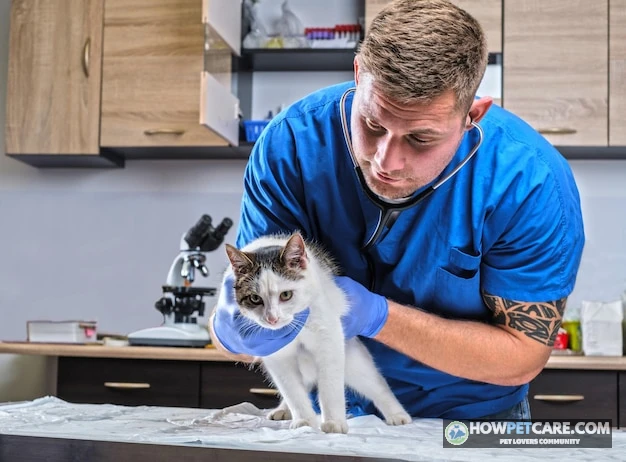
Red flags: go to the emergency vet immediately
Trouble breathing, gums or tongue tinged blue, and collapse all mean emergency care. Drooling and pawing at the mouth can indicate something is stuck, especially when accompanied by distress or difficulty breathing. Repeated unproductive retching with a swollen or painful abdomen also needs emergency assessment.
If you see string in your cat’s mouth or suspect it was swallowed, seek emergency veterinary advice even if your cat seems comfortable. Never pull the string.
Yellow flags: call your vet today
Call for recurring episodes, repeated vomiting, reduced appetite, weight loss, or a cat that is hiding or less active. Do not wait for a full day to pass if symptoms are getting worse. Repeated coughing deserves an exam too: what looks like a hairball attempt may instead be an airway problem.
Green flags: safe to monitor at home
A brief, isolated episode in an alert adult cat that is comfortable between episodes may be observed at home. A plausible trigger, such as eating quickly, is reassuring but does not prove the cause. Check your cat periodically, and contact a vet if it happens again or anything else changes.
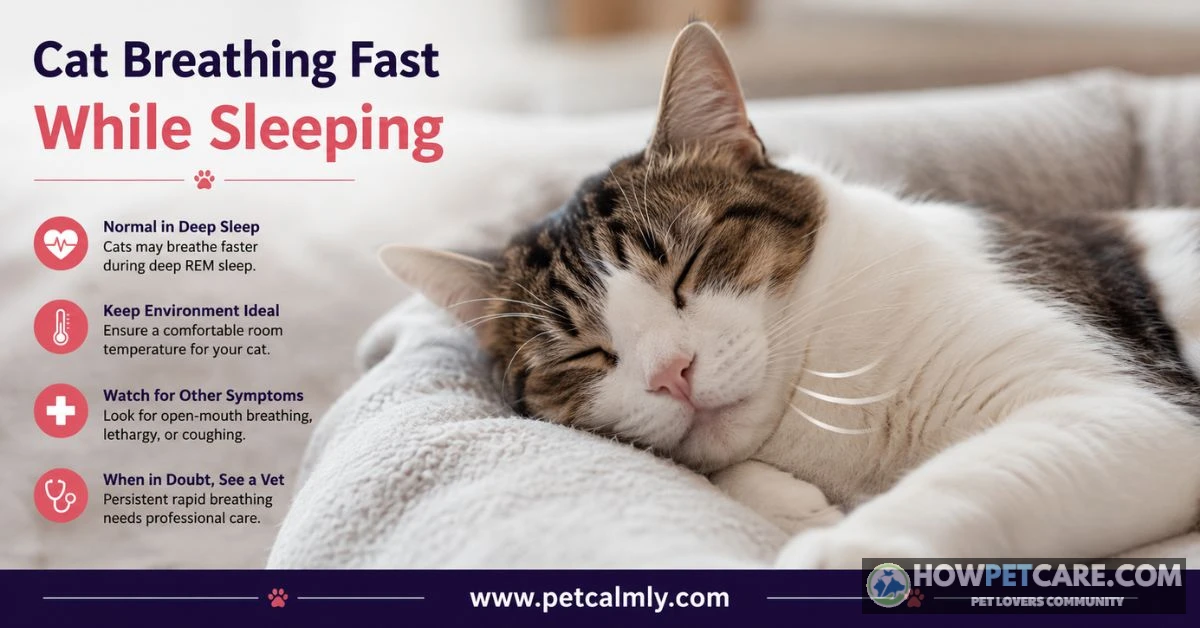
When your cat is asleep or resting quietly, count chest rises for 30 seconds and multiply by two. If the rate stays above about 30 breaths per minute, call your vet for advice; a rate above 40 at rest or any visible struggle to breathe warrants urgent assessment. Do not delay emergency care to count breaths in a distressed cat.
Gagging, Coughing, Retching, Vomiting, Asthma or Choking? How to Tell What You’re Hearing
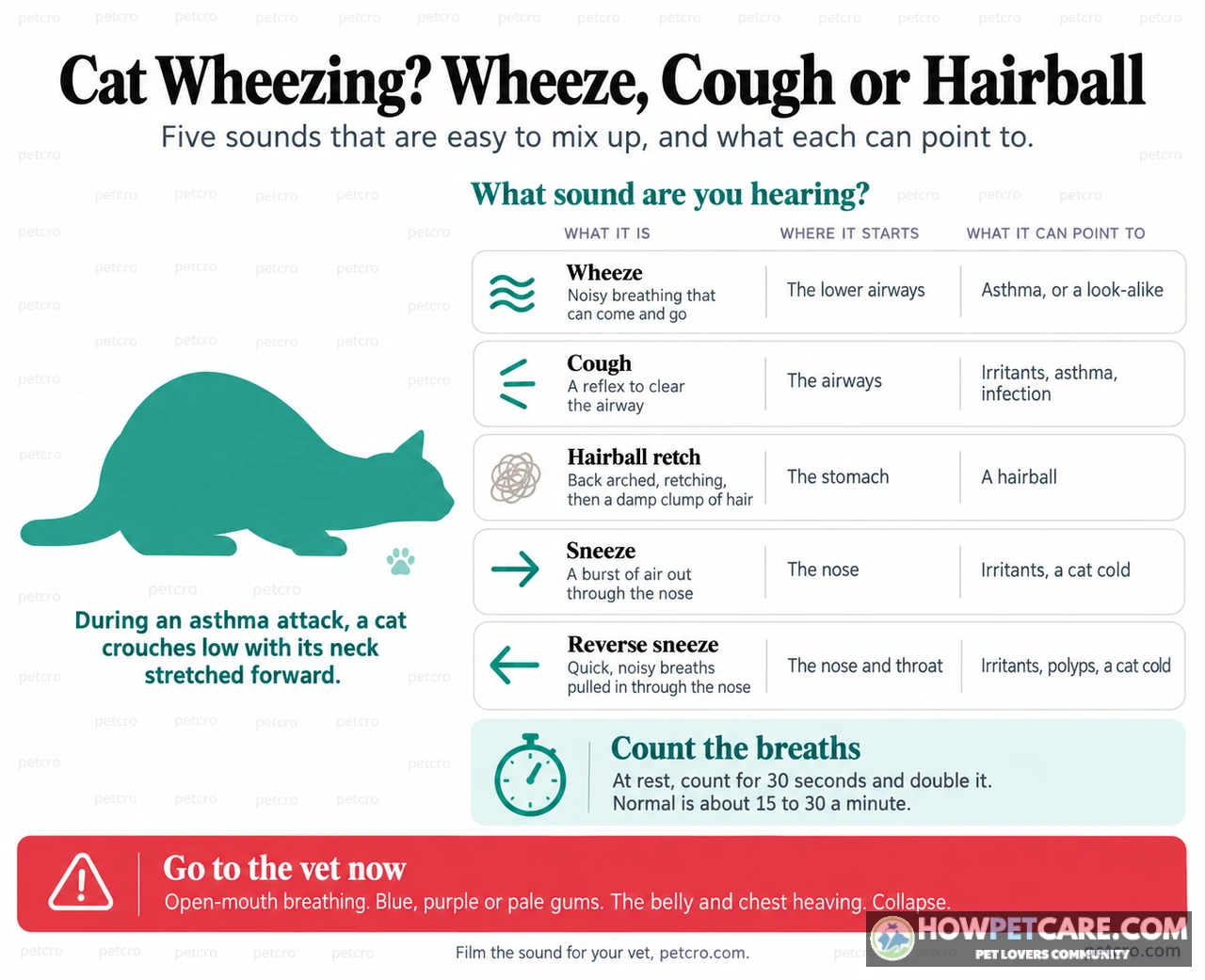
The same frightening sound can come from the throat, stomach, or airways. Match the sound with the posture and what happens afterward, but treat this as a description tool—not a way to rule out an emergency.
Sound-and-posture symptom matcher
| Event | What it sounds like | Body posture | Typical duration | What usually comes up | Urgency level |
|---|---|---|---|---|---|
| Gagging | A short wet gurgle or dry hack, sometimes followed by swallowing or lip-smacking | Head lowered or neck extended | Seconds, sometimes in a cluster | Saliva, foam, or nothing | Monitor an isolated mild episode; call if recurring or accompanied by other signs. |
| Retching or dry heaving | Rhythmic heaving, sometimes with a gagging sound | Neck extended; abdominal muscles visibly contract | Seconds to a minute; may recur | Nothing, foam, or sometimes a hairball | Call today if repeated; emergency if accompanied by a swollen or painful belly or distress. |
| Coughing | Dry hack or honk, sometimes in a series | Often crouched low with neck stretched forward | Seconds to a bout | Usually nothing, although a cough can end with a gag | Repeated coughing needs a vet assessment; breathing distress is an emergency. |
| Vomiting | Heaving followed by wet expulsion | Nausea signs may precede visible abdominal contractions | Usually a short episode | Food, fluid, bile, or a hairball | Call today for repeated vomiting or other illness; seek emergency care for severe distress. |
| Regurgitation | Often quiet; food seems to come back up | Little or no abdominal effort | Often sudden | Undigested food or fluid | Repeated episodes or difficulty swallowing need veterinary assessment. |
| Reverse sneezing | Rapid inward snorts | Neck extended, often standing still | Usually seconds | Nothing | If fully recovered, monitor; call if frequent or hard to distinguish from breathing trouble. |
| Asthma-related episode | Coughing, hacking, or wheezing; sometimes little audible sound | May crouch with neck extended and show increased breathing effort | Variable; episodes can resolve or progress | Usually nothing | Repeated cough needs assessment. Open-mouth breathing or significant effort is an emergency. |
| True choking | May be silent or produce a high-pitched sound | Distress, pawing at the mouth, inability to breathe normally | Continues while the airway is blocked | Usually nothing | Emergency. Call and leave for the vet immediately. |
These patterns overlap, and not every cat follows the table. In particular, an asthma episode can improve temporarily, and a cat that is choking may not make a dramatic noise. Breathing comfortably between episodes matters more than the name of the sound.
How to tell a hairball attempt from an asthma cough
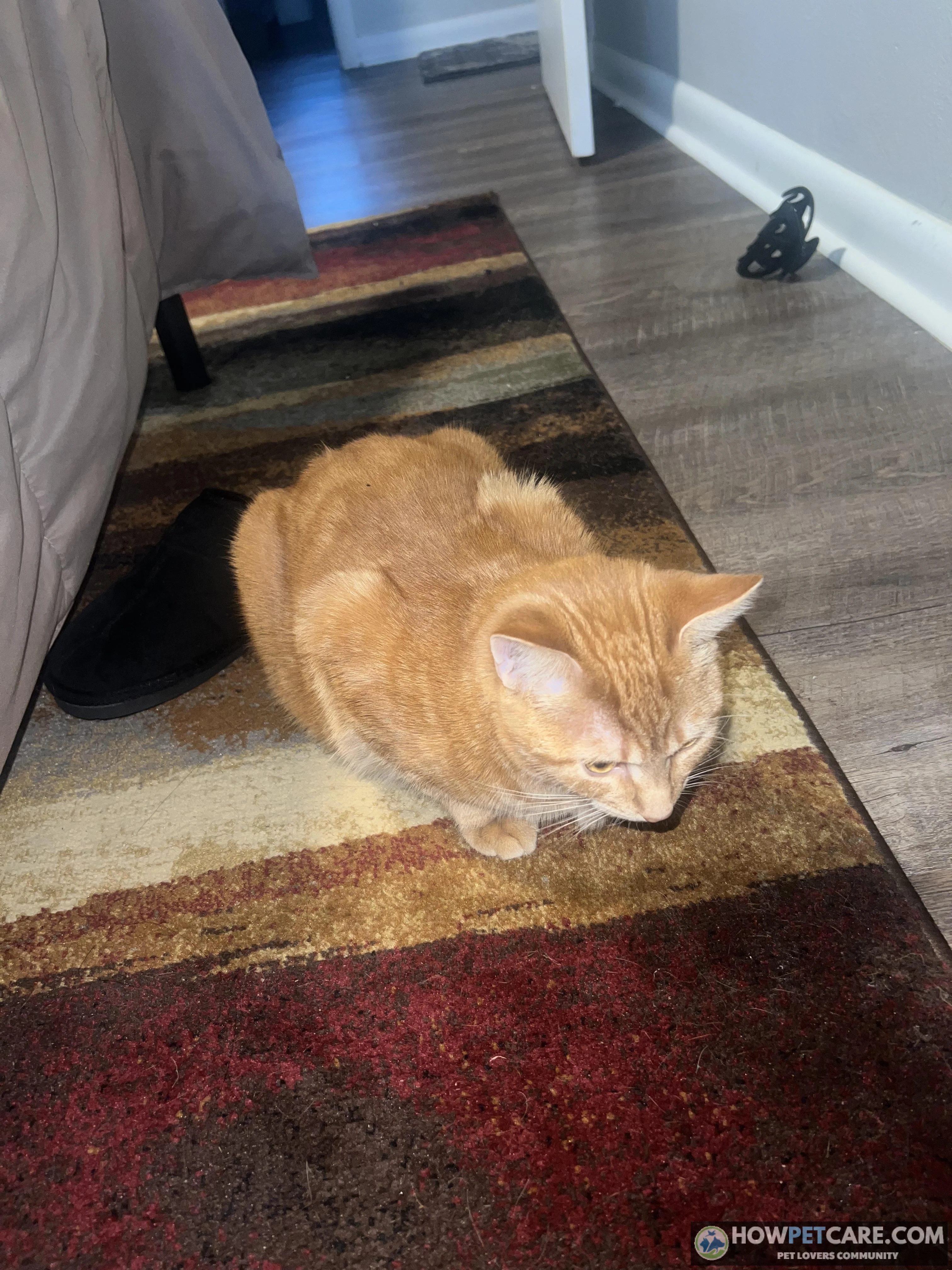
A hairball attempt often involves visible abdominal heaving and may end with a compact mass of wet hair. A cough may look like a low crouch with the neck stretched forward and produce nothing. Neither pattern confirms the cause: gagging and retching can occur without a hairball, and a cat may cough and then gag.
If the episode repeats, film it if doing so will not delay care. A video showing the whole body, rather than just the face, can help your vet see whether the abdomen is heaving and how your cat is breathing.

What to Do Right Now If Your Cat Is Choking or Has Something Stuck in Its Throat
A cat that cannot move air needs an emergency vet immediately. If another person is available, have them call and arrange transport while you help. A cat that is coughing or retching and still moving air may not have a completely blocked airway; keep it calm and call the vet rather than attempting abdominal thrusts.
How to check your cat’s mouth safely
Only look if you can do so quickly and your cat tolerates it. A frightened cat can bite, and struggling or restraint can worsen breathing distress. Do not force the mouth open if it will delay the trip or make breathing harder.
Choking first-aid steps, in order
- Call the emergency clinic and prepare to leave. Put the phone on speaker or ask someone else to call. Describe whether your cat can breathe and whether you suspect an object or string.
- Handle gently. If needed, use a towel to protect yourself without compressing the chest or covering the nose and mouth. Do not force a distressed cat into a position that makes breathing harder.
- Look only if safe. Briefly check the front of the mouth with a light. If an object is clearly visible, loose, and easy to grasp, carefully remove it without pushing it farther in. Do not spend time searching deep in the throat.
- Leave string, thread, ribbon, or anything attached in place. Tell the vet what you saw. Pulling string from the throat or rear can cause intestinal injury.
- If your cat cannot breathe and you cannot immediately remove the obstruction, ask the emergency clinic to coach you through first aid. Abdominal thrusts or back blows are last-resort measures for a truly blocked airway, not for a cat that is breathing, coughing, or retching. They can cause injury and must not delay transport.
- Go to the emergency vet even if the object comes out. The airway may still be injured or obstructed, and the vet can check for complications.

Never sweep blindly with your fingers, pull on string, force food or water, or give oil or medication. Keep your cat as calm and cool as possible during transport.
A pet first-aid course can help you practice emergency techniques before you need them. During an actual emergency, follow the veterinary team’s instructions for your cat’s condition.
What not to do
Do not assume a cat making gagging sounds is choking and perform thrusts automatically. Conversely, do not wait for a hairball if your cat has trouble breathing. If an object seems lodged but your cat can breathe, avoid repeated mouth checks and travel promptly for veterinary care.
Why Is My Cat Gagging? Causes Ranked From Common to Serious
Hairballs and fast eating are familiar explanations, but the sound alone cannot establish a cause. This list runs from everyday possibilities to more serious conditions. Where a possible cause falls on that list does not change the need for urgent care in an individual cat.
Common and usually harmless
Hairballs. Swallowed hair can collect in the stomach and come back up as a hairball, also called a trichobezoar. Your cat may heave several times before bringing one up. You can monitor an occasional episode that ends with normal behavior, but recurring attempts without producing anything deserve a vet call.
Eating or drinking too quickly. A cat that gulps food may gag, vomit, or bring food back up shortly after a meal. If your cat is otherwise well, try the feeding changes below. Repeated regurgitation or signs of difficulty swallowing should not be dismissed as fast eating.
Grass or mild throat irritation. A blade of grass, inhaled irritant, or something unpleasant in the mouth can trigger a brief gag. Remove access to the suspected irritant and monitor only if your cat recovers completely. Check plants for toxicity; do not assume a plant is safe because cats sometimes chew grass.

Common but needs treatment
Mouth or throat pain. Dental disease, gum inflammation, or pharyngitis (inflammation of the throat) can make swallowing uncomfortable. Clues include drooling, bad breath, dropping food, or gagging while chewing. Arrange an exam rather than trying to inspect a painful mouth yourself.
Nausea. Stomach upset, a medication, or an underlying illness can cause lip-smacking, swallowing, gagging, or vomiting. Kidney disease is one possible underlying cause. Call your vet if your cat seems nauseated repeatedly, eats less, or has another health condition.
Upper respiratory infection. Sneezing, nasal discharge, congestion, or throat irritation alongside gagging could indicate an infection. Feline herpesvirus and feline calicivirus are among possible causes; a vet can assess the signs and decide whether testing or treatment is appropriate.
Airway disease. Repeated dry coughing or wheezing could indicate feline asthma or another respiratory condition rather than a hairball. Allergens and irritants may contribute to airway signs. Arrange an exam; any breathing struggle is an emergency.
Esophageal irritation. Reflux or esophagitis can contribute to discomfort or regurgitation. Difficulty swallowing, also called dysphagia, needs a veterinary assessment because the cause cannot be determined at home.
Rare but serious
A foreign body or obstruction. An esophageal foreign body, such as a bone, toy, or string, can cause gagging, drooling, repeated swallowing, or difficulty swallowing. A gastrointestinal obstruction may cause vomiting, unproductive retching, abdominal pain, or lethargy. Suspected string ingestion or a distressed cat needs emergency veterinary advice.
A growth or other illness. Nasopharyngeal polyps, throat or airway masses, poisoning, and heart-related breathing problems are among other possibilities. These cannot be identified reliably from sound alone. Seek urgent care for breathing changes, collapse, or known toxin exposure.
Cats can hide discomfort. A change as subtle as eating less, withdrawing, or hiding alongside new gagging is a reason to call your vet.
Cat Gagging but Nothing Comes Up: What It Usually Means
If your cat is gagging but nothing comes up, the event could be a hairball attempt, a brief throat irritation, nausea, coughing, or reverse sneezing. It could also indicate a foreign object, dental pain, or an airway problem. The absence of a hairball or vomit does not identify the cause.
Look for the pattern: note whether the belly contracts as if your cat is trying to vomit, whether it’s a dry cough from a crouched position, and when it happens—while eating, after grooming, or at rest. Note whether your cat returns fully to normal afterward.
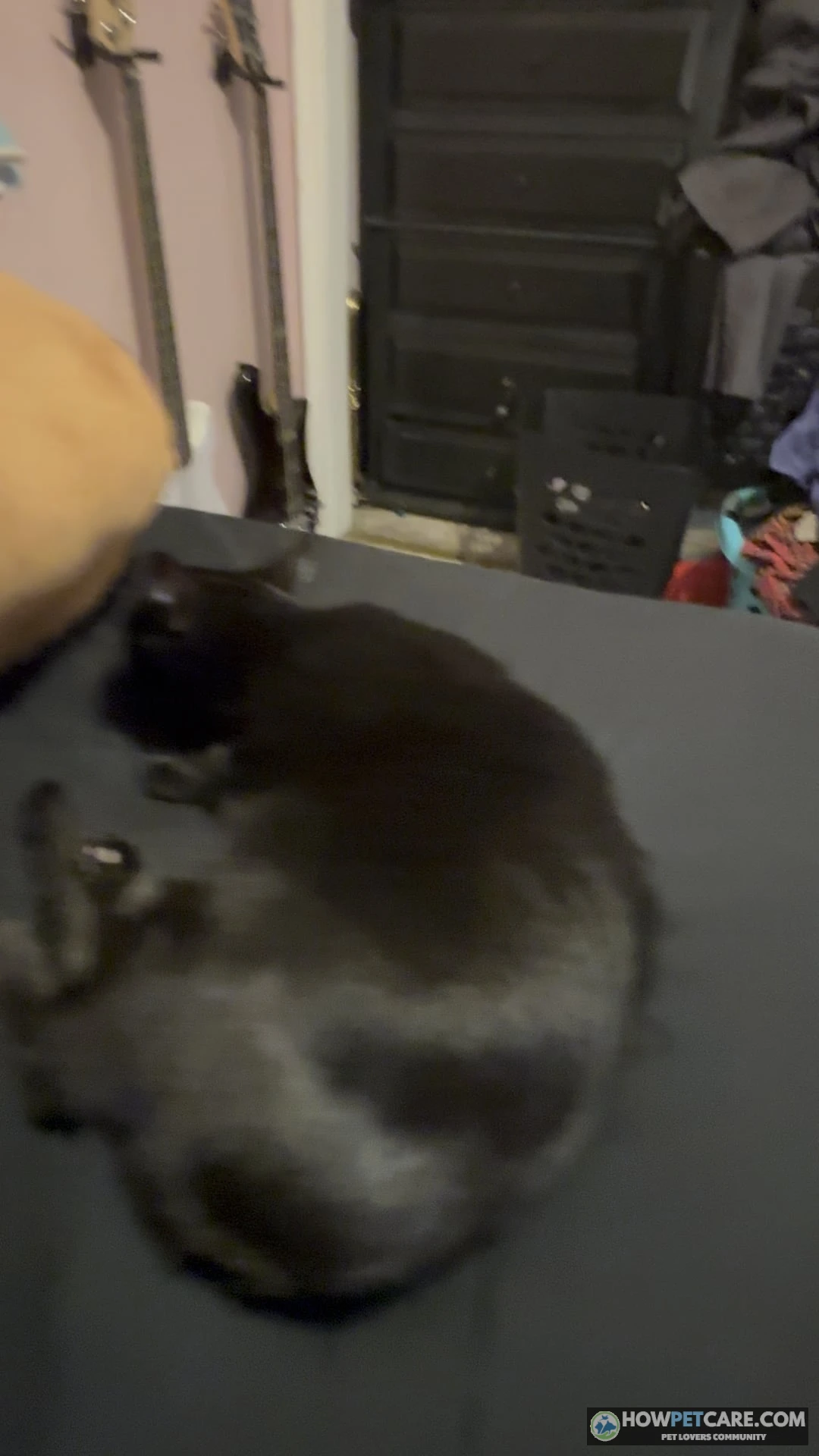
Why your cat may be gagging at night
Nighttime episodes may be easier to hear in a quiet home, or they may follow grooming, eating, or exposure to an irritant. Some digestive or respiratory problems can also cause signs at rest. Nighttime alone does not distinguish reflux from asthma or a hairball. Record the time and what your cat was doing beforehand, and show the video to your vet if it recurs.
When “nothing comes up” becomes a vet problem
Call your vet today for repeated unproductive episodes, especially if your cat is eating less, losing weight, hiding, or seems uncomfortable. Do not wait to see a hairball before calling. Repeated dry heaving with a swollen or painful abdomen, collapse, or breathing difficulty means emergency care now.
Why Your Cat Gags After Eating and How to Fix It
A cat that gags after eating too fast may be gulping food and bringing it back up soon afterward. Food competition, meal size, or the way food is presented may be worth investigating—but recurrent regurgitation can also indicate a swallowing or esophageal problem.
Fixes to try this week
If your cat is otherwise well and the episode was isolated, try one change at a time:
- Divide the usual daily ration into smaller meals. Do not increase the total amount simply because you feed more often.
- Slow access to food. Try a cat-appropriate slow feeder, puzzle feeder, or a thin layer of food spread on a flat plate or lick mat.
- Feed cats separately. Give each cat a quiet station away from competition.
- Consider texture. Ask your vet whether wet food or moistened kibble suits your cat’s diet and health needs. Introduce dietary changes gradually.

Record the change and the result over the next week or two, but do not use that period to wait out recurring symptoms. A raised bowl is not a proven fix for every cat; ask your vet before using one for a suspected swallowing problem.
Signs it’s not just fast eating
Call your vet if food repeatedly returns without obvious heaving, your cat struggles to swallow, coughs while eating, drools, drops food, or avoids meals. These signs could indicate dental pain, dysphagia, an esophageal problem, or a lodged object. If breathing is affected, seek emergency care.
Home Care and Monitoring Plan for Mild Gagging
Home observation is appropriate only for a well-appearing adult cat with a brief episode and no warning signs. It is not a treatment for a blockage, asthma attack, or ongoing vomiting.
24-hour monitoring checklist
For the next 24 hours, check that your cat is breathing comfortably, eating and drinking, using the litter box, and behaving normally. Keep fresh water available; do not force food or water. Remove string, ribbon, hair ties, and small objects your cat could swallow.
Stop monitoring and call your vet if another episode occurs, appetite falls, vomiting develops, or your cat becomes unusually quiet or hides. Go to an emergency clinic immediately for the red flags in the first section.
What to film and tell your vet
If it is safe to do so, capture the sound and your cat’s full body. Note the following in your phone:
- Date, time, and approximate duration of each episode.
- Sound and posture: wet gag, dry hack, snort, crouching, or visible belly contractions.
- What came up, if anything, and whether it looked like food, foam, or hair.
- What happened before and after: eating, grooming, playing, sleeping, or exposure to a possible hazard.
- Appetite, water intake, litter-box use, energy, and any resting breathing count.
- Medications, existing conditions, and possible access to string, plants, or small toys.

Do not delay helping a distressed cat to get a video. A description and a prompt call are enough to start.
Hairball prevention that actually helps
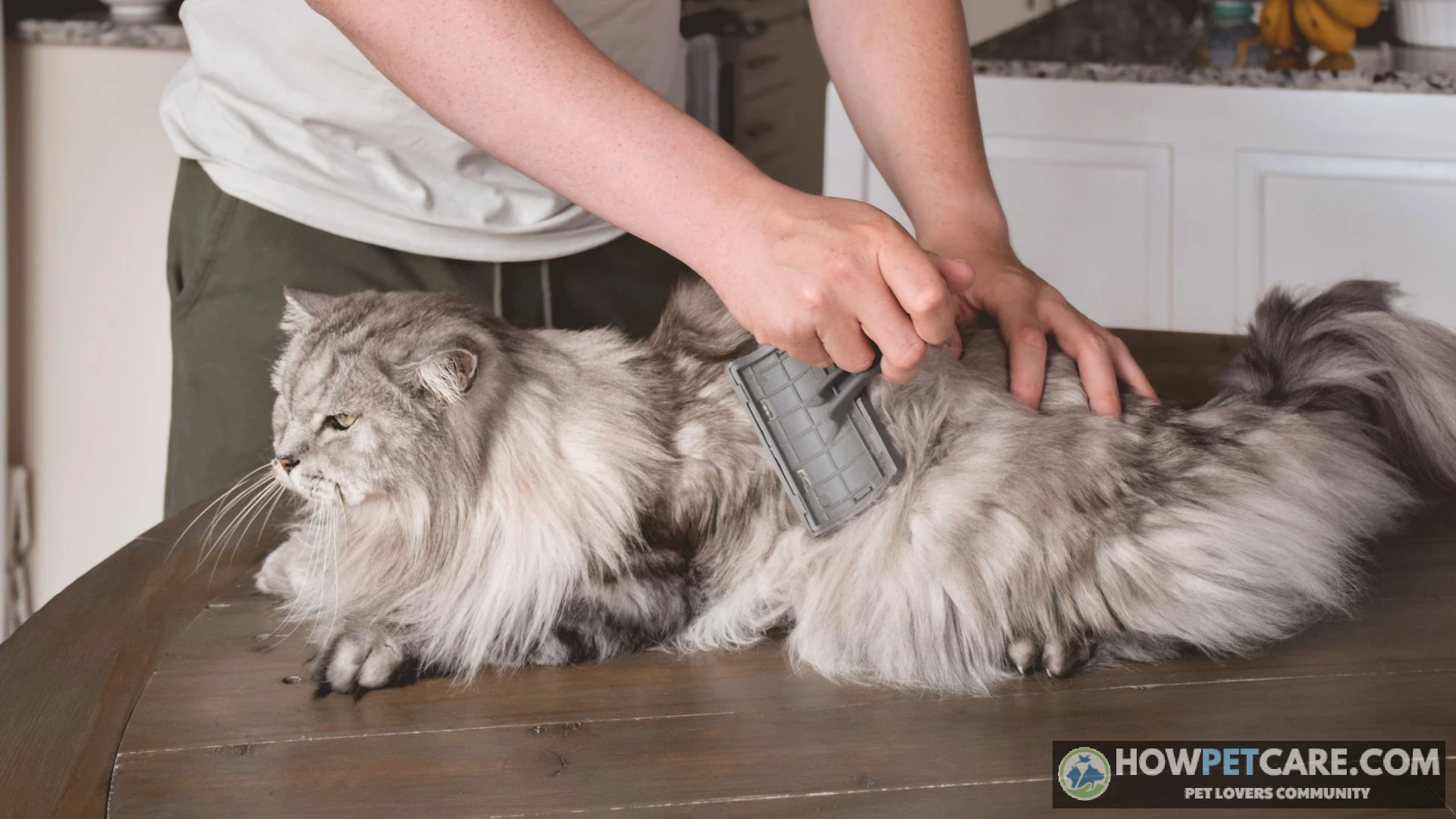
Regular brushing can remove loose hair before it is swallowed. The amount needed varies with coat length and shedding; longhaired cats may benefit from daily grooming, while shorter coats may need less frequent brushing. Keep water available and discuss a hairball-formulated diet with your vet if hairballs recur.
If your cat overgrooms, ask your vet about skin irritation, pain, or stress rather than focusing only on the hairball. A predictable routine, places to hide, and appropriate play may help reduce stress. Reduce smoke, strong aerosols, and dusty or heavily scented litter, particularly if coughing is a concern.
Do not give butter, oils, human medicines, or hairball supplements without veterinary guidance. A remedy that seems harmless can delay diagnosis or be unsafe for your cat.
If gagging happens when you pick up or pet your cat, stop applying pressure to the area and arrange an exam if it recurs. A sore mouth, throat, or another painful area could be involved.
Kittens, Senior Cats, and Cats With Asthma or Kidney Disease: When the Rules Change
The monitor-at-home category is most useful for an otherwise healthy adult cat. For cats with less reserve or a known illness, call earlier.
Kittens
Kittens can swallow small objects and may become unwell quickly. Call your vet promptly about new or repeated gagging, especially if your kitten has nasal discharge, eats poorly, or might have chewed string or a toy. Breathing difficulty or suspected string ingestion is an emergency.
Senior cats
New gagging in an older cat could reflect dental disease, nausea associated with kidney disease, an esophageal problem, or another illness. Do not assume it is simply age or a hairball. Arrange an exam for recurring episodes, appetite changes, or weight loss.

Cats with asthma or kidney disease
For a cat with known asthma, contact your vet promptly if coughing increases or the established action plan is not controlling signs. Follow the prescribed plan; do not increase medication on your own unless the vet has instructed you to do so. Open-mouth breathing or obvious breathing effort is an emergency.
For a cat with kidney disease, report new gagging, nausea, reduced appetite, or changes in drinking promptly. The vet may need to assess hydration and whether the underlying condition or another problem is contributing.
If your vet visit didn’t explain the gagging
Arrange a recheck if episodes continue, change, or become more frequent. Bring your log and video, and ask what has been ruled out and what remains possible. Depending on the exam, your vet may discuss repeat imaging, bloodwork, an assessment for airway or digestive disease, endoscopy, or referral. Ask what signs should trigger an immediate return rather than waiting for the recheck.
What to Expect at the Vet: Tests, Treatments, and Typical Costs
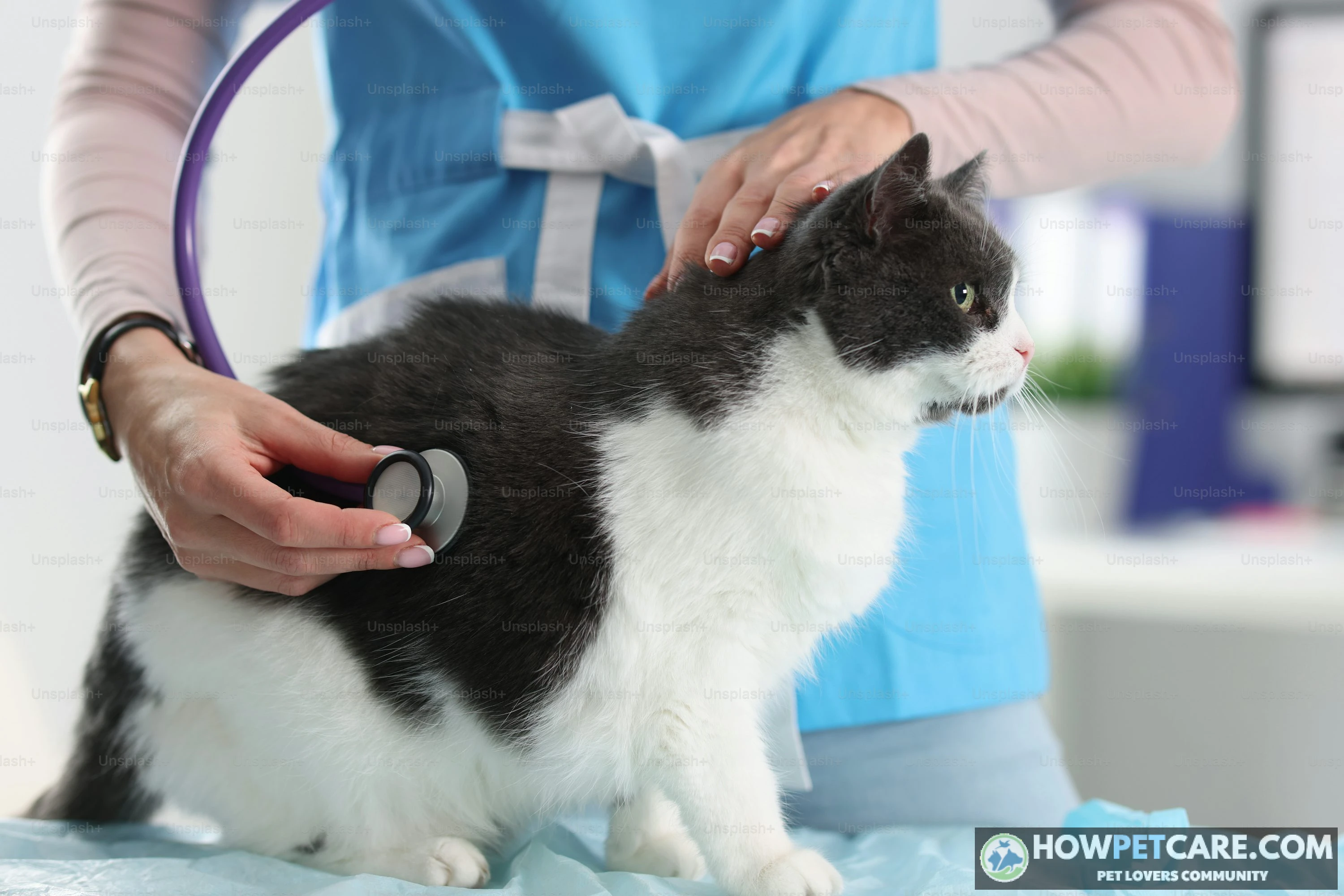
The vet will first assess breathing and stability, then ask about the episodes, diet, medications, and possible exposure to objects or toxins. The exam may include the mouth, throat, chest, and abdomen. If your cat is distressed, stabilization may come before a complete examination.
Diagnostic tests
Depending on the suspected cause, your vet may recommend an X-ray of the chest, neck, or abdomen; bloodwork to assess organ function and other changes; or an ultrasound to examine abdominal structures. An endoscopy uses a camera to look inside parts of the digestive tract and may also allow an object to be removed. Other tests may be considered when the initial findings do not explain the signs.
No single test finds every cause. For example, an X-ray may help assess the chest or reveal some foreign objects, but a normal result does not automatically rule out every airway, swallowing, or digestive problem.
Treatments by cause
Treatment depends on the diagnosis. Your vet may recommend a diet or hairball-management plan, medication for nausea, treatment for dental disease, or medication for asthma. A lodged object may require removal by endoscopy or surgery. Antibiotics are used when a vet judges a bacterial infection likely; they are not a general treatment for every gagging cat.
Cost expectations by tier
U.S. veterinary charges vary substantially by location, clinic, timing, and the care your cat needs. Reliable price ranges are not established by the evidence provided here, so ask the clinic for its current fees rather than relying on a national figure. The services below can help you discuss an estimate:
| Service or treatment | When it may be used | What it finds or addresses | How to estimate the cost |
|---|---|---|---|
| Physical or emergency exam | Initial assessment or urgent presentation | Breathing, mouth, chest, abdomen, and overall condition | Ask the clinic; emergency pricing may differ from a routine visit. |
| X-rays | Suspected chest, neck, or abdominal problem | May reveal certain objects or changes in organs and lungs | Ask for an estimate for the areas being imaged. |
| Bloodwork | Illness, nausea, or organ-disease assessment | Helps assess blood cells and organ function | Ask which tests are included in the panel. |
| Ultrasound | Further assessment of soft tissues | Can help evaluate abdominal organs and some obstructions | Ask whether a specialist interpretation is included. |
| Endoscopy | Selected swallowing problems or foreign objects | Views the tract and may allow object removal | Request an estimate including anesthesia and recovery. |
| Surgery | An obstruction or another condition requiring an operation | Removes an object or treats affected tissue | Request an itemized estimate including hospitalization. |
| Medication or dental treatment | Nausea, asthma, or oral disease | Addresses the identified cause | Ask about medication, anesthesia, and extraction charges where relevant. |
Ask which test is most important first, whether a staged plan is medically safe, and whether the clinic offers payment options. Insurance coverage depends on the policy and its exclusions; check before assuming a condition is covered. Do not postpone emergency stabilization while comparing prices.
Your Next Steps: A Decision Guide for the Next 24 Hours
- Emergency signs or suspected string ingestion: Call the emergency clinic and leave now. Bring information about anything your cat may have swallowed; take a video only if it does not delay care.
- Recurring gagging, coughing, appetite loss, or repeated vomiting: Call your vet today. Share the episode log and ask how soon your cat should be examined.
- One brief episode and otherwise normal behavior: Monitor for up to 24 hours, remove hazards, and keep water available. If fast eating seems plausible, try a smaller, slower meal without increasing the daily ration.
- Any worsening or another concerning sign: Stop home monitoring and move to the appropriate higher urgency level. Do not wait for a hairball to appear.
- After an unexplained vet visit: Keep recording episodes and schedule a recheck if they continue. Ask what remains to be investigated and when to return urgently.
Save the numbers for your regular veterinarian and the nearest emergency clinic before you need them.
1What resting respiratory rate in a sleeping cat indicates a need to call a veterinarian for advice?
A resting respiratory rate consistently exceeding 30 breaths per minute indicates potential respiratory involvement that requires veterinary guidance.
2If a string is visibly hanging from a cat's mouth during or after a gagging episode, what is the critical safety rule?
Leaving linear foreign bodies untouched prevents dangerous intestinal tearing or esophageal trauma while getting professional aid.
3How can an owner visually distinguish a coughing episode from a hairball vomit attempt in a cat?
Airway irritation leads to neck extension to open respiratory passages, while vomiting relies on strong abdominal wall contractions.
4When are physical choked-airway maneuvers like abdominal thrusts appropriate for a gagging cat?
Abdominal thrusts carry risks of tissue injury and should only be performed if air movement is entirely obstructed.
5Which physical sign places a gagging cat into the 'Emergency Now' triage category?
Color changes in the gums and open-mouth breathing signal severe respiratory compromise requiring immediate stabilization.
6What is an effective home adjustment for a cat that gags after eating too rapidly?
Pacing access to food reduces food gulping and decreases mechanical stomach distension that leads to regurgitation.
7Why might a veterinarian evaluate kidney function in a senior cat presenting with new, recurring gagging?
Metabolic waste build-up from failing kidneys directly triggers central nausea and upper digestive irritation in older felines.
8At what frequency does hairball production typically warrant a consultation with a veterinarian?
Bringing up hairballs more than once or twice a month may reflect underlying skin irritation, pain, stress, or digestive tract motility issues.
9What is the recommended protocol for an alert adult cat experiencing a single, brief gagging episode with no red flags?
Isolated, non-distressed episodes in healthy cats can be safely monitored to check if symptoms recur or resolve.
10Why is capturing a whole-body video of a cat's gagging or coughing episode valuable for a veterinarian?
Viewing full-body posture and abdominal muscle involvement helps distinguish respiratory coughing from gastrointestinal heaving.
| Event | What It Sounds Like | Body Posture | Typical Duration | What Usually Comes Up | Urgency Level |
|---|---|---|---|---|---|
| Gagging | A short wet gurgle or dry hack, sometimes followed by swallowing or lip-smacking | Head lowered or neck extended | Seconds, sometimes in a cluster | Saliva, foam, or nothing | Monitor an isolated mild episode; call if recurring or accompanied by other signs. |
| Retching or dry heaving | Rhythmic heaving, sometimes with a gagging sound | Neck extended; abdominal muscles visibly contract | Seconds to a minute; may recur | Nothing, foam, or sometimes a hairball | Call today if repeated; emergency if accompanied by a swollen or painful belly or distress. |
| Coughing | Dry hack or honk, sometimes in a series | Often crouched low with neck stretched forward | Seconds to a bout | Usually nothing, although a cough can end with a gag | Repeated coughing needs a vet assessment; breathing distress is an emergency. |
| Vomiting | Heaving followed by wet expulsion | Nausea signs may precede visible abdominal contractions | Usually a short episode | Food, fluid, bile, or a hairball | Call today for repeated vomiting or other illness; seek emergency care for severe distress. |
| Regurgitation | Often quiet; food seems to come back up | Little or no abdominal effort | Often sudden | Undigested food or fluid | Repeated episodes or difficulty swallowing need veterinary assessment. |
| Reverse sneezing | Rapid inward snorts | Neck extended, often standing still | Usually seconds | Nothing | If fully recovered, monitor; call if frequent or hard to distinguish from breathing trouble. |
| Asthma-related episode | Coughing, hacking, or wheezing; sometimes little audible sound | May crouch with neck extended and show increased breathing effort | Variable; episodes can resolve or progress | Usually nothing | Repeated cough needs assessment. Open-mouth breathing or significant effort is an emergency. |
| True choking | May be silent or produce a high-pitched sound | Distress, pawing at the mouth, inability to breathe normally | Continues while the airway is blocked | Usually nothing | Emergency. Call and leave for the vet immediately. |
FAQ
Can asthma, allergies, or respiratory infections make a cat gag?
Yes. Feline asthma, allergies, and upper respiratory infections can irritate the throat and airways, causing coughing that owners often describe as gagging. A cat with repeated episodes, wheezing, or nasal discharge should be examined by a vet.
Is it normal for a cat to gag once in a while?
An occasional gag, particularly around hairballs or after eating fast, is common in healthy cats. Frequent gagging, gagging with other symptoms, or episodes that become more frequent warrant a vet visit.
Can I give my cat anything to stop gagging?
Do not give human medication, oils, or butter without veterinary advice. Safe supports include brushing, a hairball-formulated diet, and slower feeding, while a vet can recommend specific products for the underlying cause.
Why does my cat gag when I pet or pick it up?
Pressure on the neck or throat, a collar that is too tight, or throat inflammation can trigger gagging. If it happens repeatedly, have a vet check for pharyngitis, dental disease, or a mass.
How many hairballs per month is too many?
Many cats bring up a hairball occasionally, but frequent hairballs, such as more than one or two a month, can point to overgrooming, a digestive problem, or skin disease. Discuss it with your vet, especially if the cat is losing weight or has a poor appetite.