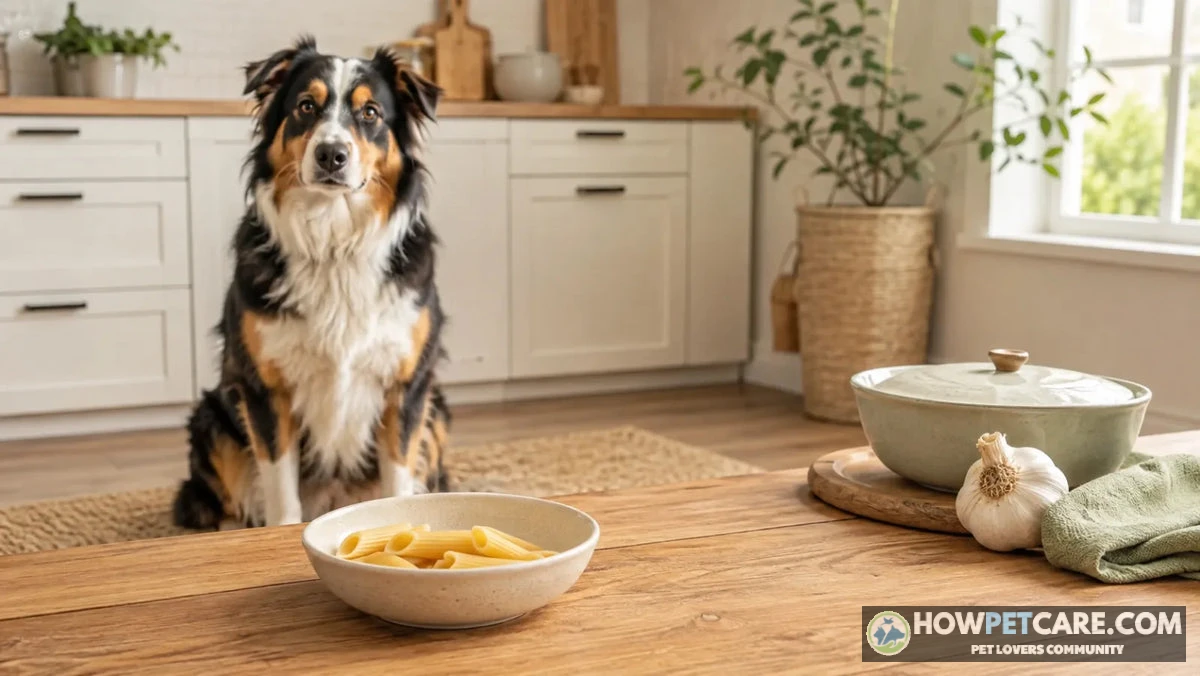

Yes. Healthy adult dogs can eat small amounts of plain, fully cooked pasta as an occasional treat. Serve it cooled and without sauce, salt, butter, cheese, or seasonings, and count it toward the daily treat-calorie budget. If pasta contains garlic, onion, or xylitol, contact a veterinarian or animal poison service immediately.
Yes, healthy adult dogs can eat plain cooked pasta in very small portions, but sauce, seasonings, butter, cheese, and raw dough can be dangerous. If your dog ate a plain noodle, you can monitor at home; if garlic, onion, or xylitol are involved, call a vet immediately. Below are gram portions, emergency steps, and preparation tips for dogs of different sizes and health conditions.
Plain cooked pasta versus pasta with sauce
Plain, fully cooked wheat or semolina pasta is mostly carbohydrate, with a modest amount of protein. It’s non-toxic when served without salt, oil, butter, cheese, garlic, onion, broth, or other seasonings. The carbohydrates provide quick energy but little essential dog nutrition. For a dog that otherwise eats a balanced diet, a plain noodle can be a harmless occasional treat.

When one stolen noodle is unlikely to be an emergency
A single piece of plain cooked pasta is usually a situation you can monitor at home. Whether you need to call a vet depends on your dog’s size, the amount eaten, and any seasonings present. If the pasta is plain, fully cooked, cooled, and free of toxic ingredients, watch for mild gastrointestinal upset (vomiting, soft stool) for the next 12–24 hours. Keep your dog hydrated and limit further treats to stay within the 10% daily treat-calorie ceiling.
Even a small piece warrants a brief check with your veterinarian if your dog has already eaten other treats, is a small breed, or has underlying health issues (obesity, diabetes, kidney disease). Puppies and senior dogs have tighter calorie budgets and may have more sensitive digestive systems, so it’s best to be conservative.
Other treats, such as honey for dogs, should be given sparingly.
How Much Cooked Pasta Can a Dog Eat? Weight-Based Portions
A simple portion formula
Count pasta as a treat and apply the 10% daily treat-calorie rule. Treats, including pasta, should make up no more than 10% of a dog’s total daily caloric intake; the remaining 90% should come from complete, balanced dog food. The treat-calorie ceiling varies with weight, age, activity level, and neuter status. For a typical, neutered adult dog at maintenance, approximate daily needs are: 10 lb ≈ 200 cal, 25 lb ≈ 425 cal, 50 lb ≈ 750 cal, and 75 lb ≈ 1050 cal.
Examples for small, medium, and large dogs
| Dog weight | Daily treat-calorie ceiling | Plain pasta calories | Approximate grams | Approximate tablespoons | Use and cautions |
|---|---|---|---|---|---|
| 10 lb | 20 calories | 20 calories | 13 g | 1½ tbsp | The entire treat budget; use less if the dog has already had treats. |
| 25 lb | 43 calories | 43 calories | 27 g | 3 tbsp | Maximum estimate, not a routine serving. |
| 50 lb | 75 calories | 75 calories | 47 g | 5 tbsp | Maximum estimate; count other treats in the same daily budget. |
| 75 lb | 105 calories | 105 calories | 66 g | 7 tbsp | Maximum estimate; don’t use pasta to replace balanced food. |

Planning estimate, not a prescription. This table uses a 10% daily treat-calorie ceiling and assumes plain cooked pasta provides about 158 calories per 100 g, or 1.58 calories per gram. The calorie ceilings use approximate daily needs for typical, neutered adult dogs at maintenance: 10 lb = 200 calories, 25 lb = 425, 50 lb = 750, and 75 lb = 1,050. Individual needs vary, and the 10% ceiling includes all treats—not just pasta. These are maximums, not recommended servings; offer less, especially to a sedentary, overweight, or sensitive dog.
Math: pasta grams = treat-calorie ceiling divided by 1.58. For example, 20 calories divided by 1.58 is about 13 g. Tablespoon amounts are rough estimates for cooked pasta and vary with its shape and how tightly it’s packed. Check the package or a reliable nutrition database for the actual calorie value of the pasta you serve; use that value if it differs.
Measure the pasta before cooking. A kitchen scale (grams) gives the most accurate portion, especially for small dogs, where a few grams matter. If you don’t have a scale, use the tablespoon estimates as a rough guide. Remember that the treat-calorie ceiling includes all snacks given that day, not just pasta.
Pasta Sauce Triage: Garlic, Onion, Xylitol, Fat, and Salt
The first 10 minutes after a sauce ingestion
If your dog snatches pasta with sauce, act promptly. Identify the sauce ingredients, estimate the amount eaten, note your dog’s weight, and record the time of ingestion. This information helps your vet or poison control advise whether monitoring at home is safe or emergency care is needed.
If garlic, onion powder, or xylitol are present, call a veterinarian or animal poison service immediately – don’t wait for symptoms. Save the sauce label or recipe and be ready to share the ingredient list and estimated amount eaten.

Symptom timeline and emergency thresholds
| Ingredient or scenario | Primary risk | Possible onset | What to do now | Emergency signs |
|---|---|---|---|---|
| Garlic, including garlic powder | Allium-related stomach upset and possible red-blood-cell damage; powders are concentrated | Stomach signs may begin within hours; anemia signs can be delayed for several days | Call a veterinarian or animal poison service promptly for dose assessment. Save the label or recipe and estimate the amount eaten. | Weakness, pale gums, rapid breathing, collapse, repeated vomiting, or dark urine: seek emergency care. |
| Onion, including onion powder | Allium-related stomach upset and possible delayed anemia | Stomach signs may occur within hours; red-blood-cell effects may take days to appear | Call promptly even if the dog seems well. Report the dog’s weight, amount, form, and time eaten. | Weakness, pale gums, rapid breathing, collapse, or dark urine: seek emergency care. |
| Xylitol in a sugar-free sauce or product | Rapid blood-sugar drop; potentially severe complications | Signs can develop rapidly, sometimes within minutes to hours | Treat as an emergency: call a veterinarian or animal poison service immediately and take the package. Don’t wait for symptoms. | Weakness, vomiting, unsteadiness, tremors, seizures, or collapse: go to an emergency veterinarian. |
| Butter, oil, cheese, or other fatty topping | Stomach upset; rich or fatty food can be especially concerning for dogs prone to pancreatitis | Often within hours, but timing varies | Call a veterinarian for advice if a substantial amount was eaten or the dog has a history of pancreatitis. Note the type and amount. | Repeated vomiting, abdominal pain, marked lethargy, or inability to keep water down: seek urgent veterinary care. |
| Very salty sauce or pasta water | Excessive salt exposure, depending on amount and dog size | Signs may develop over hours | Remove access and call a veterinarian or animal poison service if more than a small taste was consumed; provide an amount estimate. | Repeated vomiting, severe thirst, wobbliness, tremors, seizures, or collapse: emergency care. |
Onset timing can vary, and symptoms may be delayed or absent early on. Don’t use this table to decide that a particular dose is safe: contact a veterinarian or animal poison service with the dog’s weight, estimated amount, ingredient list, and time eaten. Don’t induce vomiting or give home remedies unless a veterinary professional directs you to.
Published toxicity figures can vary by ingredient, preparation, and dog. Figures sometimes cited here—0.5% of body weight for certain irritants and 15–30 g/kg for allium compounds—are not reliable safe-dose cutoffs for an individual dog. Do not use them to decide whether an exposure is safe; contact a veterinarian or animal poison service for dose assessment. Xylitol exposure also warrants immediate professional advice, even before symptoms appear.
Spaghetti, Macaroni, Pasta Salad, and Raw Pasta: What Changes?
Can dogs eat spaghetti or macaroni?
Spaghetti and macaroni are different shapes of the same semolina dough. Plain, fully cooked, and unseasoned, they have the same safety profile as other wheat pasta. Shape mainly affects how easily a dog can swallow the pasta and how you measure the portion. Long strands can be hard for small dogs to chew and increase the risk of gagging; cutting them into bite-size pieces reduces that risk. Pasta salad is different because dressings and mix-ins may contain toxic ingredients such as garlic, onion, grapes or raisins, or xylitol; check every ingredient and avoid sharing it if you cannot verify what’s in it.

What to do after dry pasta is eaten
Dry, uncooked pasta isn’t toxic, but it can absorb moisture and may pose a choking hazard or cause gastrointestinal irritation or obstruction, particularly if a large amount is eaten. Sharp edges on broken noodles can also irritate the esophagus and intestines, leading to vomiting, constipation, or pain. If your dog eats a large amount, especially if it’s a small dog, contact your veterinarian promptly.
Watch for repeated vomiting, reluctance to eat, abdominal pain or distension, lethargy, straining to defecate, or difficulty breathing. Contact a veterinarian promptly if these signs appear or you suspect an obstruction. Keep a close eye on your dog for 24–36 hours, and seek care if any of these signs appear.
Raw dough presents another concern. Yeast can ferment in the stomach, producing gas and potentially alcohol, which is toxic to dogs. Signs of dough ingestion include bloating, disorientation, and seizures. This always warrants immediate veterinary attention.
Dry or raw pasta can cause choking, sharp fragment irritation, vomiting, constipation, or gastrointestinal obstruction. If you think your dog ate a large amount, contact a veterinarian promptly for assessment.
Wheat, Whole-Wheat, Rice, Lentil, Chickpea, Buckwheat, and Konjac Pasta Compared
Carbohydrates, glycemic impact, and fiber
Pasta types differ in carbohydrate density, fiber content, and potential allergenicity. Rice for dogs can be a safe grain alternative when wheat is not tolerated. Those differences can help you compare ingredients, but they do not establish which type is best for an individual dog. The table compares seven common categories based on ingredient profiles, rather than nutrition facts for specific brands.
These are broad ingredient-based comparisons, not guarantees: brands and recipes differ. Check the package for added salt, seasoning, sauces, and other ingredients. No pasta type is a complete dog food.
| Pasta type | Carbohydrate load | Likely glycemic effect | Fiber/protein | Digestive or allergy considerations | Dog-safe serving note |
|---|---|---|---|---|---|
| Wheat | High | Moderate to high; varies by cooking and recipe | Usually modest fiber and protein | Contains wheat and gluten; may not suit a dog with a diagnosed sensitivity or allergy | Plain, thoroughly cooked wheat pasta is not inherently toxic; measure the portion. |
| Whole wheat | High | Often lower than refined wheat, but still carbohydrate-rich | More fiber; some protein | Extra fiber may cause gas or loose stool in dogs not used to it; contains gluten | Introduce only a small plain amount and watch for digestive changes. |
| Rice | High | Often moderate to high; product and preparation matter | Usually low to moderate fiber and protein | May suit some dogs that avoid wheat, but is not automatically easier to digest | Use plain cooked rice pasta; it is not a balanced diet or a guaranteed treatment for stomach upset. |
| Buckwheat | Moderate to high | Varies by product; do not assume low-impact | Often more fiber and protein than refined wheat pasta | Despite its name, buckwheat is not wheat; recipes may include other flours or additives | Check the full ingredient list and serve plain in a measured amount. |
| Lentil | Moderate to high | Often lower than refined wheat, but recipes vary | Often higher protein and fiber | Legumes may cause gas or loose stool; added ingredients vary | Start with less than the dog’s usual pasta portion and monitor digestion. |
| Chickpea | Moderate to high | Often lower than refined wheat, but recipes vary | Often higher protein and fiber | Can cause gas or digestive upset; check for added seasonings | Plain and thoroughly cooked only; more protein does not make it a meal replacement. |
| Konjac | Very low in digestible carbohydrate for many products | Usually low, but formulations vary | High in glucomannan fiber; little protein | Its texture and concentrated fiber may be difficult for some dogs to tolerate; products can include additives | Do not offer seasoned or prepared konjac dishes; ask a veterinarian before using it as a diet substitute. |

Choosing an alternative pasta safely
If your dog has a known wheat or gluten allergy, rice or buckwheat pasta may avoid those ingredients, but check the full ingredient list and choose a product that does not contain the trigger. Legume-based pastas (lentil, chickpea) may offer more protein but can also increase the risk of gas and looser stools. Konjac products are very low-calorie, but their thick, gelatinous texture can be difficult for some dogs to chew or digest.
Introduce any new pasta type in a tiny amount (¼–½ tsp) and watch for signs of intolerance – itching, ear inflammation, diarrhea, or vomiting. If a reaction occurs, stop feeding the pasta and consult your veterinarian.
A grain-free label doesn’t guarantee safety. Check the full ingredient list for hidden wheat, dairy, or allium ingredients that could trigger a reaction.
Pasta Rules for Puppies, Seniors, and Dogs With Medical Conditions
Puppy and senior portions
Growing puppies need a diet that meets specific protein, calcium, and calorie requirements for development. Even a small amount of plain pasta can displace essential puppy food, so offer it only as an occasional treat, with a veterinarian’s approval, and keep it to no more than 10% of daily calories. Use the smallest portion from the table (e.g., ¼–½ tbsp for a 5-lb puppy) and watch for digestive upset.
Senior dogs often have slower metabolisms, dental issues, or kidney concerns. Their daily calorie needs are lower, so their treat-calorie ceiling shrinks too. Use weight-based portions but stay toward the lower end of the range. If your dog has kidney disease, avoid pasta high in sodium or phosphorus.
Obesity, diabetes, pancreatitis, and kidney disease
- Obesity & Diabetes: Dogs that need weight or blood-sugar management require strict carbohydrate control. Pasta is calorie-dense and offers little nutritional benefit, so check with your veterinarian before offering it. If your vet approves an occasional portion, count it within the total daily calorie budget; don’t assume a particular pasta type is suitable for blood-sugar management.
- Pancreatitis: Fatty toppings (butter, cheese, creamy sauce) are especially risky. Plain, unseasoned pasta is low in fat, but any added fat increases the concern. If your dog has a history of pancreatitis, check with your vet before offering pasta.
- Kidney Disease: Dogs with compromised kidneys may need individualized phosphorus, protein, and sodium limits. Pasta content varies by product, so avoid assuming wheat, rice, or konjac is appropriate; check with your veterinarian before offering it as part of a restricted diet.

Don’t assume a "healthy" adult portion works for puppies, seniors, or dogs with chronic conditions. Get explicit approval from your veterinarian before introducing pasta into a restricted diet.
How to Prepare, Cool, Cut, and Serve Pasta Safely
A dog-safe plain pasta method
- Select a simple starch – choose plain wheat, rice, or alternative-grain pasta with no added seasonings, sauces, or cheese.
- Cook in water only – use plenty of unsalted water, with no oil, butter, garlic, onion, or broth. Cook until al dente, then drain thoroughly.
- Rinse briefly – this removes excess starch that could make the pasta sticky.
- Cool to room temperature – let the pasta sit for 10–20 minutes; a quick rinse in cold water can speed cooling.
- Measure the portion – use a kitchen scale or the tablespoon estimate from the weight-based table.
- Cut for safety – cut long strands into 1–2-inch pieces for small dogs; shorter shapes (macaroni) need no cutting.
- Serve immediately or store – give the measured portion as a treat or mix it with your dog’s regular food only if calorie budgets allow. Supervise eating to prevent gulping.
- Store leftovers – put cooled pasta in a sealed container, label it with the date, and refrigerate for up to 3–4 days. Discard any pasta left at room temperature for more than 2 hours.

Serving and leftover checklist
- ☐ Adding "just a little" butter: Butter adds fat and calories; skip it, especially if your dog has a history of pancreatitis.
- ☐ Topping pasta with cheese: Cheese adds calories and fat, and some dogs don’t tolerate dairy well. Serve pasta plain instead.
- ☐ Sharing from a seasoned pot: Salt, oil, broth, garlic, onion, and seasoning make exposure hard to judge. Set aside an unseasoned portion before adding anything.
- ☐ Giving a small dog an adult-sized serving: Use a weight- and calorie-based portion, not an amount that looks small on a human plate.
- ☐ Treating pasta salad as plain pasta: Check every dressing and mix-in for onion, garlic, grapes or raisins, excess salt, fatty ingredients, and sugar-free sweeteners such as xylitol.
- ☐ Ignoring xylitol in sugar-free sauce: Read the ingredient label. If your dog may have eaten xylitol, call a veterinarian or animal poison service immediately; don’t wait for symptoms.
- ☐ Refeeding raw pasta scraps: Dry pasta can be a choking or gastrointestinal hazard. Keep scraps out of reach and contact a veterinarian if your dog ate a large amount or symptoms appear.
These steps can help you share a bite of plain pasta as an occasional treat while keeping your dog’s health and calorie budget in mind. If you’re unsure about what your dog ate or how much to serve, call your veterinarian or a pet poison helpline for guidance. For a broader guide on safe human foods, see what human food can dogs eat.

| Pasta Type | Carbohydrate Load | Likely Glycemic Effect | Fiber and Protein Profile | Digestive & Allergy Considerations | Dog-Safe Serving Note |
|---|---|---|---|---|---|
| Wheat | High | Moderate to high; varies by cooking and recipe | Usually modest fiber and protein | Contains wheat and gluten; may not suit a dog with a diagnosed sensitivity or allergy | Plain, thoroughly cooked wheat pasta is not inherently toxic; measure the portion. |
| Whole wheat | High | Often lower than refined wheat, but still carbohydrate-rich | More fiber; some protein | Extra fiber may cause gas or loose stool in dogs not used to it; contains gluten | Introduce only a small plain amount and watch for digestive changes. |
| Rice | High | Often moderate to high; product and preparation matter | Usually low to moderate fiber and protein | May suit some dogs that avoid wheat, but is not automatically easier to digest | Use plain cooked rice pasta; it is not a balanced diet or a guaranteed treatment for stomach upset. |
| Buckwheat | Moderate to high | Varies by product; do not assume low-impact | Often more fiber and protein than refined wheat pasta | Despite its name, buckwheat is not wheat; recipes may include other flours or additives | Check the full ingredient list and serve plain in a measured amount. |
| Lentil | Moderate to high | Often lower than refined wheat, but recipes vary | Often higher protein and fiber | Legumes may cause gas or loose stool; added ingredients vary | Start with less than the dog's usual pasta portion and monitor digestion. |
| Chickpea | Moderate to high | Often lower than refined wheat, but recipes vary | Often higher protein and fiber | Can cause gas or digestive upset; check for added seasonings | Plain and thoroughly cooked only; more protein does not make it a meal replacement. |
| Konjac | Very low in digestible carbohydrate for many products | Usually low, but formulations vary | High in glucomannan fiber; little protein | Its texture and concentrated fiber may be difficult for some dogs to tolerate; products can include additives | Do not offer seasoned or prepared konjac dishes; ask a veterinarian before using it as a diet substitute. |
FAQ
Can dogs eat pasta instead of rice during an upset stomach?
Plain cooked pasta may be tolerated by some dogs, but it is not automatically better than rice and is not a complete bland diet. Vomiting, bloody diarrhea, dehydration, or persistent symptoms warrant veterinary advice rather than home feeding experiments.
Is gluten-free pasta safer for a dog with a wheat allergy?
Only if it avoids the ingredient that triggers that individual dog and is free of unsafe seasonings. Gluten-free does not mean lower calorie, more nutritious, or safe from sauce ingredients such as garlic and onion.
Can dogs eat spaghetti with meat sauce?
Plain spaghetti may be acceptable in a small portion, but meat sauce commonly adds onion, garlic, excess fat, and salt. Check the full ingredient list, and contact a veterinarian or animal poison service promptly if your dog ate sauce containing garlic or onion; xylitol exposure requires an immediate call.
Are noodles bad for dogs?
Plain, fully cooked noodles are not inherently bad for most healthy dogs, but they are calorie-dense relative to their nutritional value and can contribute to weight gain. Seasonings, raw noodles, fatty sauces, and toxic ingredients create the bigger risks.