

Yes — dogs can eat ripe cantaloupe flesh in small amounts. Remove all rind and seeds, wash the whole melon before cutting, and cut pieces smaller than your dog’s throat width. Keep cantaloupe within the 10% daily treat limit, and get vet approval first for diabetic, overweight, or kidney-disease dogs.
Yes — ripe cantaloupe flesh is non-toxic to dogs when you remove the rind and seeds and keep the portion small. To share it safely, follow four conditions: feed only the peeled, seedless flesh; wash the whole melon before cutting to avoid Salmonella cross-contamination; cut pieces smaller than the width of your dog’s throat; and count every gram toward the 10% daily treat allowance. Cantaloupe is not on the toxic foods list for dogs (unlike grapes or raisins), so the risks are mechanical (choking, blockage), caloric, and digestive. Puppies, diabetic dogs, overweight dogs, and dogs with kidney or heart disease need extra caution — see the dedicated sections below. Remember: cantaloupe is a treat, not a nutritional requirement, and dogs on prescription diets should get veterinary approval first.
What Cantaloupe Actually Offers a Dog: Vitamin A, Vitamin C, Fiber and Water
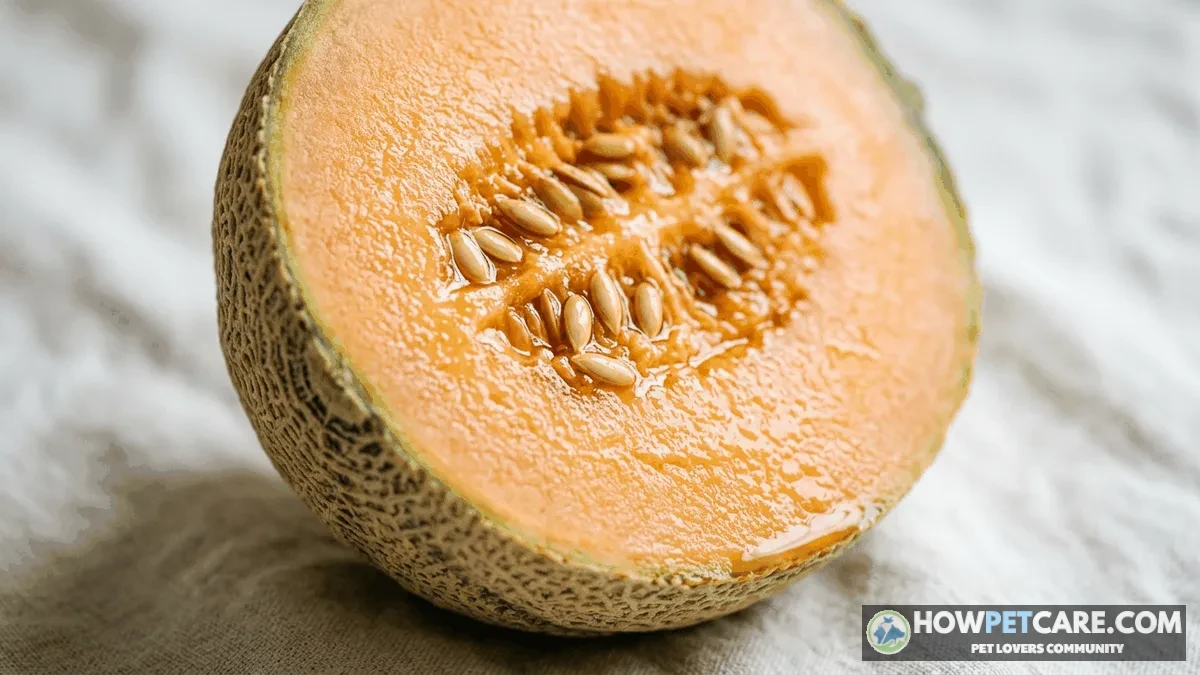
Per 100 g of raw cantaloupe flesh (USDA FoodData Central), you get roughly 34 kcal, 90% water, 7.9 g sugar, 0.9 g fiber, plus vitamin A (from beta-carotene) and vitamin C. Beta-carotene converts to vitamin A, but a healthy dog on a complete, balanced diet does not need extra vitamin A from fruit. The main benefits are hydration and low calorie density — a cool swap for a high-calorie biscuit on a warm day. At about 8 g of sugar per 100 g, the sugar content is the main reason portions stay small. No evidence shows that cantaloupe treats or prevents disease; like other fruits dogs can eat safely, it’s simply an occasional snack when prepared correctly.
How Much Cantaloupe Can a Dog Eat? Gram Portions by Body Weight
The 10% treat rule turned into grams
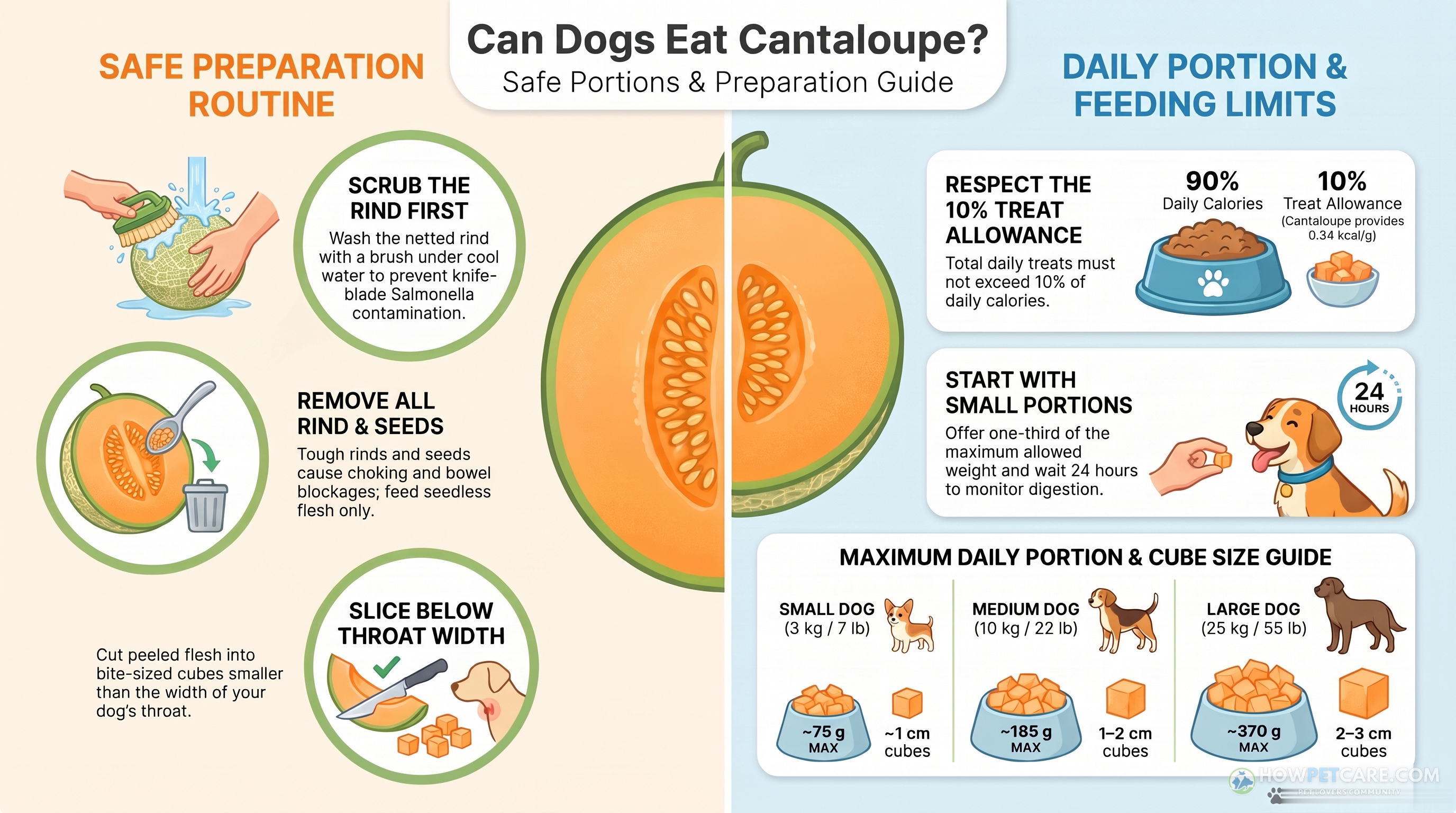
Estimate your dog’s daily calorie needs. For a typical neutered adult, that’s 1.6 times the resting energy requirement, where RER equals 70 times body weight in kilograms raised to the 0.75 power. Take 10% of that number as the total treat budget. Cantaloupe provides about 0.34 kcal per gram, so divide the treat budget by 0.34 to get the maximum grams of cantaloupe. The table below shows upper limits for a typical adult dog; those grams share the day’s 10% treat budget with every other snack. Start at roughly one-third to one-half of the ceiling for a first-time serving.
| Dog weight (kg / lb) | Example breeds | Approx. daily calories | 10% treat budget (kcal) | Maximum cantaloupe flesh (g) | Suggested first-time amount (g) | Sugar in maximum serving (g) | Cube size guide (cm) |
|---|---|---|---|---|---|---|---|
| 3 kg / 7 lb | Chihuahua, toy poodle | ~255 | ~26 | ~75 g | ~20 g | ~6 g | ~1 cm cubes |
| 10 kg / 22 lb | Beagle, cocker spaniel | ~630 | ~63 | ~185 g | ~60 g | ~15 g | 1–2 cm cubes |
| 15 kg / 33 lb | French bulldog, small border collie | ~855 | ~85 | ~250 g | ~80 g | ~20 g | ~2 cm cubes |
| 25 kg / 55 lb | Labrador, golden retriever | ~1,250 | ~125 | ~370 g | ~120 g | ~29 g | 2–3 cm cubes |
| 35 kg / 77 lb | German shepherd, large lab | ~1,610 | ~160 | ~470 g | ~150 g | ~37 g | ~3 cm cubes |
| 45 kg / 99 lb | Great Dane, mastiff | ~1,945 | ~195 | ~570 g | ~190 g | ~45 g | 3–4 cm cubes |

Overweight, senior, or low-activity dog? Ask your vet for the real daily calorie target and recalculate, or simply use the first-time column as the serving.
Frequency: daily versus a few times a week
Cantaloupe works best as an occasional treat a few times a week. Daily feeding eats into the treat budget and adds sugar. Discuss daily portions with your vet, especially if your dog is overweight, diabetic, or has kidney disease.
Cantaloupe Rind and Seeds: What’s Dangerous and How to Prepare It Safely
Can dogs eat cantaloupe rind or skin?
The rind is tough, fibrous, and indigestible. It can cause choking or intestinal blockage, especially in small dogs and dogs that gulp their food. The rind isn’t chemically toxic, but the mechanical risk depends on the size of the piece and the dog.
Are cantaloupe seeds toxic to dogs?
Seeds aren’t poisonous. A few swallowed by a large dog usually pass without trouble, but they add choking risk for small dogs and can contribute to blockage if eaten in volume, so remove them.
Wash first, then cut: a Salmonella-safe routine
Salmonella and Listeria can live on the netted rind. Cut an unwashed melon, and the knife drags rind bacteria straight into the flesh. Follow these steps:
-
Scrub the whole melon
Run it under cool water and scrub the netted rind with a clean produce brush for 30–60 seconds. The netting traps Salmonella and Listeria.
-
Dry it
Pat the rind dry so the knife doesn’t slip and bacteria-laden water doesn’t pool on the cutting board.
-
Trim both ends, then halve
A flat base keeps the melon stable — fewer slips, safer hands.
-
Scoop all seeds
Run a spoon along the cavity until no seeds remain.
-
Remove every trace of rind
Quarter each half and slice the rind off completely — the firm green-white layer under the colored flesh is as tough as the skin itself.
-
Weigh, then cube
Weigh the portion against the gram limit for your dog’s weight, then cut into cubes sized for your dog (for small breeds, smaller than the width of their throat). Store leftovers covered in the fridge and use within 2–3 days; discard anything slimy or fermented-smelling.
First-time introduction: Offer a portion from the suggested first-time column in the gram table and wait 24 hours before giving a full serving.
My Dog Already Ate Cantaloupe Rind or Seeds: What to Do and When to Call the Vet
Immediate steps in the first 15 minutes
Take away any remaining melon. Estimate how much was eaten — a bite of rind versus a whole rind — and note your dog’s weight and the time of ingestion. Do not induce vomiting unless a vet tells you to.
Hour-by-hour symptom timeline
Timing varies by dog size and amount eaten. Treat this as a triage guide, not a diagnosis.
| Time since ingestion | What you may see | Monitor at home if | Call the vet now if | Emergency if |
|---|---|---|---|---|
| 0–6 hours | Gagging, drooling, one-off vomiting, mild stomach gurgling | Small amount eaten, normal behavior, drinking water | Repeated vomiting or unproductive retching; a small dog ate a large piece of rind | Choking, struggling to breathe, blue or pale gums |
| 6–24 hours | Reduced appetite, loose stool, tiredness | Still eating a little, passing normal stool | Cannot keep water down, marked lethargy, vomiting continues | Collapse, very pale gums, unresponsive |
| 24–72 hours | Straining to pass stool, no bowel movement, bloated or painful belly | Passing stool, belly soft, appetite returning | No stool after ~48 hours, abdomen painful or swollen, vomiting after drinking | Rigid, hard, swollen abdomen; collapse; severe pain |

Call the vet now versus watch at home
If you’re unsure which column fits your dog, call an animal poison helpline or your vet’s nurse line. They can triage by phone if you have your dog’s weight, what was eaten, and when. The vet may examine the abdomen, take X-rays, or use ultrasound. Rind is plant matter and may not show clearly on X-rays, so clinical signs matter.
Puppies, Diabetic Dogs, and Dogs With Kidney or Heart Disease: Who Should Skip or Limit It
Puppies under 6 months
Puppies have sensitive digestion. Offer only a tiny taste (a few grams) after the vet has cleared it, keep treats within the 10% limit, and expect softer stool. Cantaloupe isn’t necessary for a growing puppy on complete puppy food.
Diabetic and overweight dogs
Cantaloupe contains about 7.9 g sugar per 100 g. A typical 30 g serving delivers roughly 2.4 g sugar. Treat it as an occasional, vet-approved snack at a fixed portion, and don’t offer it around insulin timing without your vet’s guidance. Overweight dogs should use the lowest tier in the portion table and subtract it from other treats, like a few blueberries.
Kidney disease and heart conditions: the potassium question
Cantaloupe contains about 267 mg potassium per 100 g (USDA). Dogs with advanced chronic kidney disease, hyperkalemia, or certain heart medications (for example, ACE inhibitors or spironolactone) may need potassium restrictions. Ask your vet before offering any.
Quick reference:
- Pancreatitis history: sugar and fiber changes may trigger flare-ups — ask vet.
- Sensitive stomach: introduce tiny amount, watch 24 hours.
- Prescription diet: vet approval required.

Cantaloupe vs Watermelon vs Honeydew: Which Melon Fits Your Dog
Approximate USDA values per 100 g raw flesh:
| Melon | Calories (kcal) | Sugar (g) | Water (%) | Fiber (g) | Potassium (mg) | Best fit for which dog |
|---|---|---|---|---|---|---|
| Watermelon | ~30 | ~6.2 | ~91.5 | ~0.4 | ~112 | Overweight or diabetic dogs (with vet approval); hot-weather hydration; dogs whose vet restricts potassium |
| Cantaloupe | ~34 | ~7.9 | ~90 | ~0.9 | ~267 | First-time fruit tasters; dogs needing a low-calorie biscuit swap; richest in beta-carotene |
| Honeydew | ~36 | ~8.1 | ~90 | ~0.8 | ~228 | Occasional variety for healthy dogs; sits between the other two on potassium |

Same rind, same seeds, same wash-first prep for all three; if watermelon is your dog’s usual, check safe watermelon portions by weight. Portion ceilings differ slightly because calories differ, but the cantaloupe gram limits above work as a practical ceiling for all three melons.
Dried, Canned, Juiced or Frozen Cantaloupe: Which Forms Are Safe for Dogs
- Dehydrated: Sugar concentrates roughly 5–6× by weight. Feed dried portions at about one-fifth of the fresh gram limit (for example, a 10 kg dog’s ~185 g fresh ceiling becomes ~30–35 g dried). Reject any with added sugar, sulfites, or coatings; keep it plain — the same label check applies to dried mango for dogs.
- Canned or packed in syrup: Avoid due to added sugar and preservatives. Plain fruit canned in water is less concerning but still needs draining and portioning.
- Juice: Avoid — it removes fiber, concentrates sugar, and bottled juice may contain additives. Watch for xylitol (highly toxic) in any melon-flavored product.
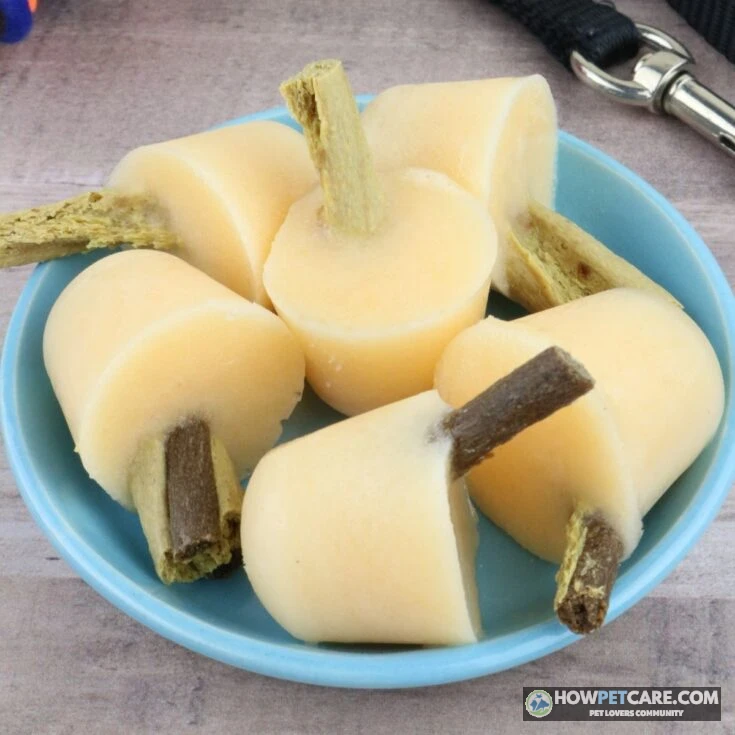
- Frozen plain cubes: Fine as a texture change, with the same gram portion and cube size as fresh. For small dogs, cut pieces small or let them soften slightly to avoid a hard choking hazard.
Check the label: ingredient screen for packaged cantaloupe
Before offering any packaged, dried, canned, or flavored cantaloupe product, scan the ingredient list:
- ☐ Xylitol / birch sugar — check first, every time. Even small amounts are highly toxic to dogs (can appear in sugar-free fruit snacks, flavored products, and some packaged mixes). If it’s on the label, the answer is no.
- ☐ Added sugar or syrup — "in heavy syrup," "in light syrup," fruit juice concentrate, or sugar listed in the first few ingredients. Drain-and-rinse doesn’t fully fix this; skip it.
- ☐ Sulfites / sulfur dioxide — common preservatives on dried melon; choose unsulfured or none at all.
- ☐ Artificial flavors and colors — not acutely toxic, but pointless additives a dog doesn’t need.
- ☐ Alcohol — appears in some packaged fruit cups and dessert products; never feed.
- ☐ Grapes or raisins — scan fruit-mix ingredients carefully; grapes and raisins are genuinely toxic to dogs, unlike cantaloupe itself.
Allergic Reaction or Stomach Upset? Symptoms After Cantaloupe and What to Do Next
Allergy versus GI upset checklist
| Sign | Typical GI Upset / Sugar Overload | Allergic Reaction |
|---|---|---|
| Timing | Within hours | Minutes to hours |
| Location | Digestive tract (stool, vomiting, gas) | Skin, face, ears, paws, respiratory |
| Severity | Loose stool, mild vomiting, increased thirst/urination | Facial swelling, hives, intense itching, red/inflamed skin, ear/paw scratching, trouble breathing |
| Action | Reduce portion, monitor 24–48 hrs; call vet if persistent | Facial swelling or breathing trouble = emergency; otherwise call vet promptly |
Your before-you-feed checklist
- Is the cantaloupe ripe and clean?
- Are the rind and seeds completely removed?
- Is the portion weighed in grams for my dog’s weight?
- Does my dog have a condition that calls for a vet check first?
- Did I introduce it with a tiny weighed portion and wait 24 hours?
- Are emergency numbers (vet, poison helpline) where I can find them?
When in doubt about a medical condition, ask the vet for a gram limit before the first bite.
1Why is it critical to thoroughly scrub the outside netted rind of a whole cantaloupe under water before cutting into the flesh to feed a dog?
Slicing an unwashed rind causes the knife blade to drag surface pathogens straight into the clean internal melon flesh.
2A dog diagnosed with advanced chronic kidney disease and hyperkalemia is being evaluated for fresh fruit treats. Why would a veterinarian advise restriction or avoidance of cantaloupe for this patient?
Patients with impaired renal function struggle to regulate electrolyte excretion, making high-potassium foods problematic.
3A dog is given a tiny piece of cantaloupe flesh for the first time. Which of the following clinical signs would indicate a true allergic reaction rather than routine gastrointestinal upset from dietary switch or sugar overload?
Facial edema is a classic sign of a systemic type-I hypersensitivity or allergic response.
4Although cantaloupe seeds are non-toxic, why must they be removed entirely from the fruit before serving it to a small dog?
The danger of melon seeds in small dogs is mechanical obstruction in the airway or narrow intestinal tracts.
5An owner wants to offer a hydration-focused melon treat to an overweight dog. Comparing watermelon (~30 kcal, ~6.2 g sugar per 100 g) and cantaloupe (~34 kcal, ~7.9 g sugar per 100 g), why is watermelon slightly preferred for weight management?
Lower calories and sugar per unit mass allow for maximum volume and hydration with minimal energy impact on a weight-loss diet.
6Which of the following preparation practices are mandatory when serving fresh cantaloupe to a dog safely?
Washing the netted rind eliminates trapped bacteria before the knife slices through the fruit.
7When introducing cantaloupe to a healthy dog for the very first time, what is the safest feeding strategy?
A trial portion allows the owner to test individual gastrointestinal tolerance before offering a full treat allocation.
8How do plain frozen cantaloupe cubes compare to fresh cantaloupe cubes in terms of safety and portioning for dogs?
Freezing changes texture but does not alter nutrient or caloric values; hard frozen items must be sized appropriately to prevent choking.
FAQ
Can dogs eat cantaloupe every day?
It is better as an occasional treat, such as a few times a week, because the sugar and calories count toward the 10% treat limit. Daily feeding is best discussed with your vet, especially for overweight, diabetic, or kidney-disease dogs.
How long does cut cantaloupe stay fresh for my dog?
Keep cut flesh in a covered container in the refrigerator and use it within about 3 to 4 days. Throw it out if it feels slimy, smells sour, or shows mold.
Can dogs eat frozen cantaloupe?
Yes, plain frozen flesh is fine in the same gram portion as fresh. For small dogs, cut the pieces small or let them soften slightly so they are not a hard choking hazard.
Can cantaloupe give my dog diarrhea?
Yes. Too much cantaloupe, its fiber and sugar, or a sudden new food can cause loose stool or gas. Cut back the portion and call your vet if diarrhea lasts more than a day or two, or if your dog is vomiting or lethargic.
Is cantaloupe okay for dogs on a prescription or weight-loss diet?
Ask your vet first, because prescription diets are balanced for specific conditions and treats can disrupt them. If approved, the vet can give you a gram limit that fits your dog’s calorie target.