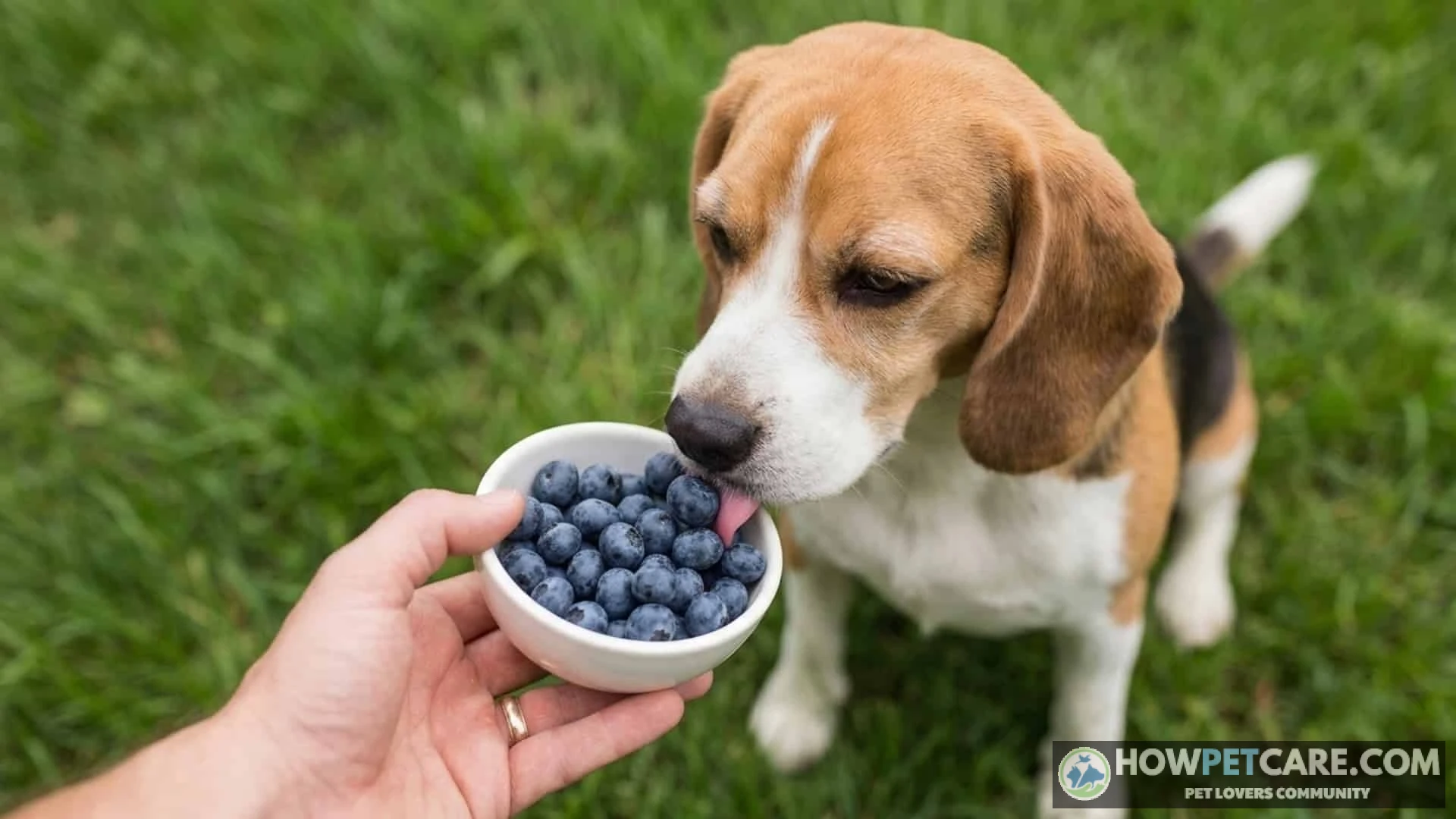

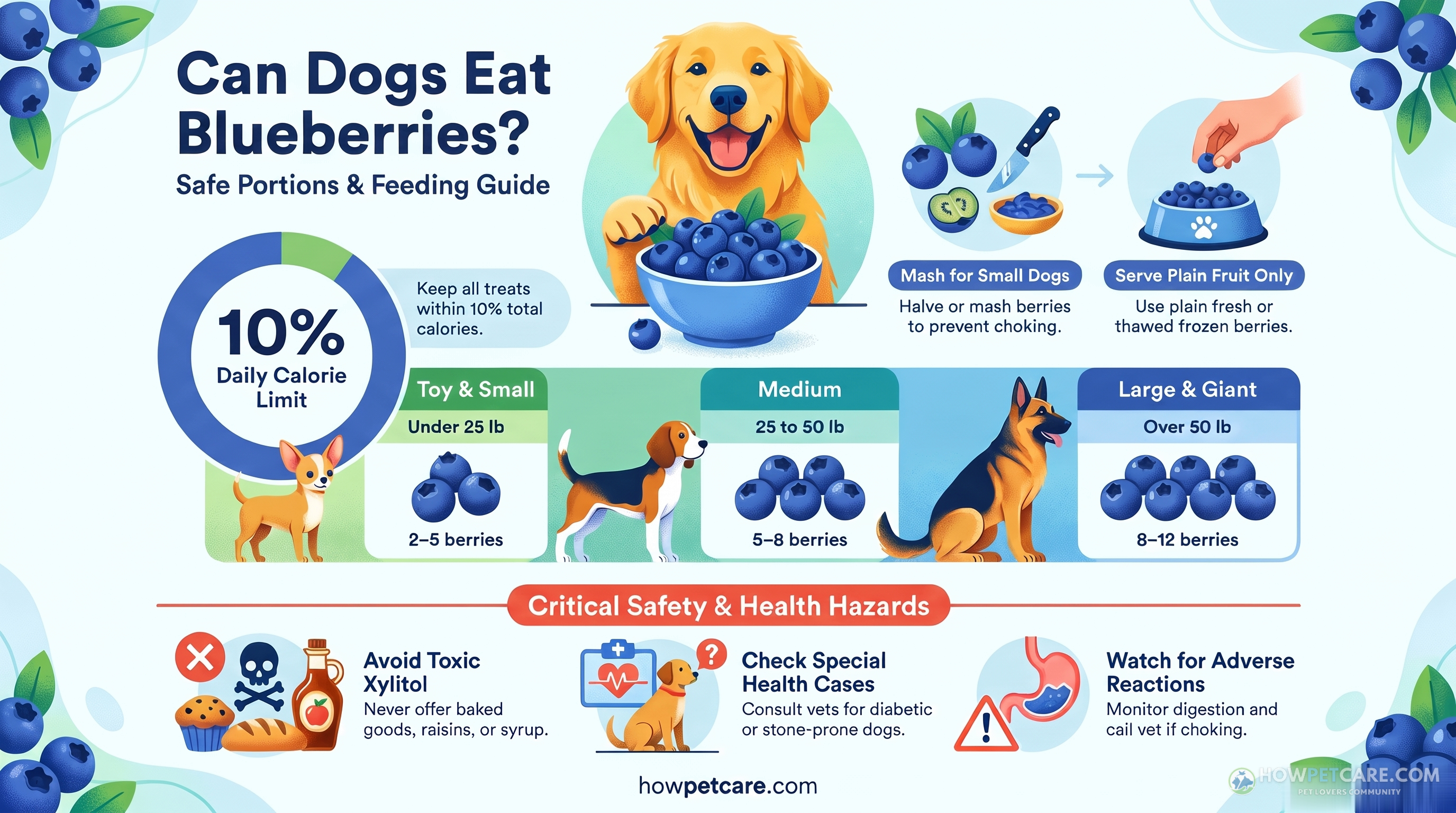
Yes, dogs can have blueberries. Plain fresh or unsweetened frozen berries are safe in moderation—roughly 2 to 12 per day depending on your dog’s size—as long as all treats stay under about 10% of daily calories. Halve or mash berries for small dogs, and avoid products containing xylitol, raisins, or added syrup.
Can Dogs Have Blueberries? Yes, Plain Ones in Small Amounts
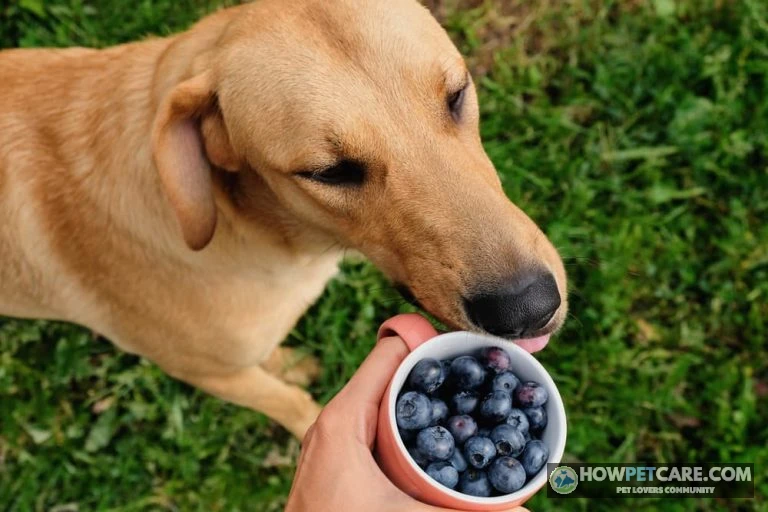
Yes, dogs can eat plain blueberries in moderation.
For a healthy adult dog, choose plain berries, offer a size-appropriate portion, and prepare them so they are easier to chew and swallow. Fresh or unsweetened frozen blueberries work fine; avoid berries packed in syrup and products containing xylitol.
Ask your veterinarian first if your dog has diabetes, a history of urinary stones, or a prescription diet, or if you want to give blueberries to a puppy. Unlike blueberries, grapes and raisins are toxic to dogs—see the broader safe versus toxic fruit list—and should never be offered.
If your dog just ate a large quantity or swallowed a product containing xylitol or raisins, see the emergency guidance near the end of this article. If your dog may be choking and cannot breathe, call an emergency clinic and start toward it immediately. The numbered summary below is not a substitute for hands-on veterinary first-aid training:
- Look in the mouth if it is safe. Open it carefully and look for an obstruction. Remove an object only if you can clearly see and grasp it without pushing it farther back. Never blindly sweep the throat.
- If the airway remains blocked, seek immediate guidance. Have someone call the emergency clinic on speaker while you travel or provide aid. The clinic can coach you on an appropriate maneuver for your dog’s size and position.
- Use thrusts only if the dog cannot move air and the object remains lodged. Veterinary first-aid training teaches inward-and-upward abdominal thrusts just behind the rib cage for an obstructed dog; positioning differs for small and large dogs. Avoid force over the ribs or the tip of the breastbone. Don’t delay transport to practice a maneuver.
- Recheck the mouth and breathing. Remove the object only if it becomes visible and accessible. If the dog becomes unresponsive, tell the clinic immediately and follow its instructions on CPR.
- Have the dog examined urgently even if the berry comes out. The airway may have been injured or material inhaled.
How Many Blueberries Can a Dog Eat? Portions by Weight and Calories
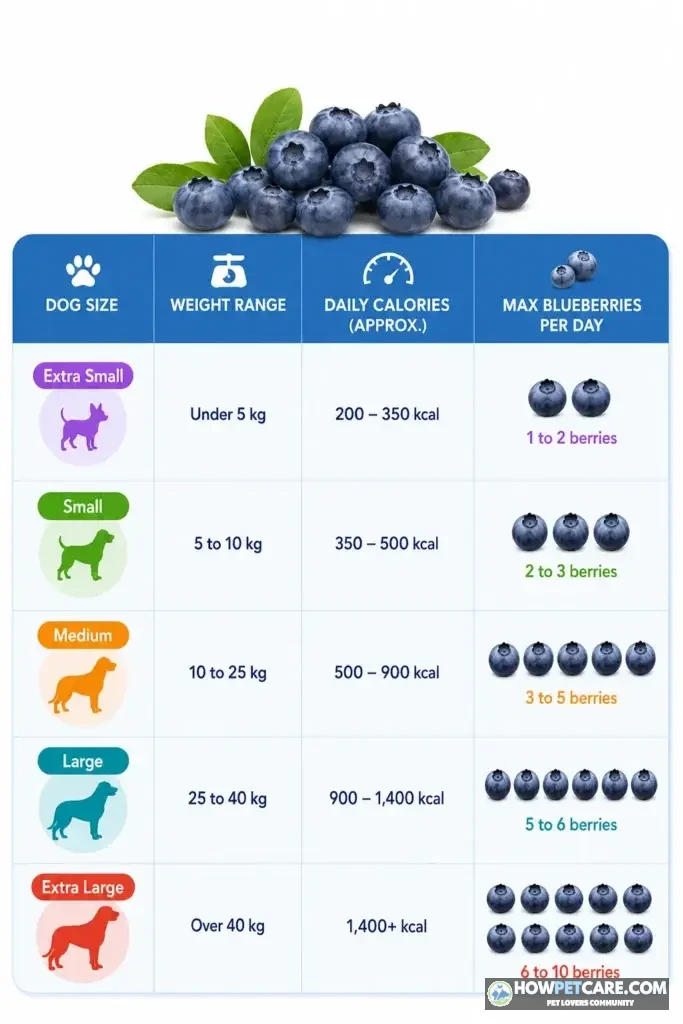
The portions below are practical, conservative starting suggestions for healthy adult dogs—not medically established doses. Start with one prepared berry, particularly if your dog has a sensitive stomach. Puppies, dogs with diabetes, and dogs on prescription diets need a veterinarian’s approval before you use the table.
For illustration, the calorie estimates assume approximately 1 calorie per medium berry. Berry sizes vary, so these figures are approximations, not a substitute for weighing food when precise calorie control matters.
| Dog size | Typical weight range | Suggested berries per day: starting point | Approximate calories from berries | Prep and notes |
|---|---|---|---|---|
| Toy | Under 10 lb | 2–3 | 2–3 kcal | Halve or mash; start with one berry. |
| Small | 10 to under 25 lb | 3–5 | 3–5 kcal | Halve or mash for small mouths and fast eaters. |
| Medium | 25 to under 50 lb | 5–8 | 5–8 kcal | Prepare smaller pieces if your dog gulps food. |
| Large | 50 to 75 lb | 8–10 | 8–10 kcal | Offer individually and count them as treats. |
| Giant | Over 75 lb | 10–12 | 10–12 kcal | More is not necessarily better; monitor digestion. |
These are suggested upper starting portions, not amounts every dog needs. If your dog already gets other treats, or your veterinarian recommends fewer calories, offer less. Too many blueberries can cause an upset stomach, and the extra calories add up.

The 10% treat rule, step by step
A common feeding guideline is to keep all treats together at no more than about 10% of a dog’s daily calories. The remaining calories should come from a complete and balanced diet. A treat budget is a ceiling, not a target or an instruction to fill it with fruit.
For example, if your veterinarian estimates that your dog needs 600 calories a day, 10% is 60 calories. Five medium blueberries, using the table’s estimate, contribute about 5 calories. That leaves approximately 55 calories within the treat budget for anything else offered that day. It does not mean that 60 berries would be a sensible serving.
Use the calorie information on your dog’s food and treat labels, and ask your veterinarian what daily calorie intake fits your dog. Age, activity, body condition, and health can change the answer.
Can dogs eat blueberries every day?
A healthy adult dog can generally have a small portion of plain blueberries daily if the berries agree with them and all treats fit the daily calorie budget. You don’t need to feed them every day. For small dogs, use the lower weight-tier portion and halve or mash the berries.
Fresh, Frozen or Dried: Which Blueberries Are Best for Dogs?
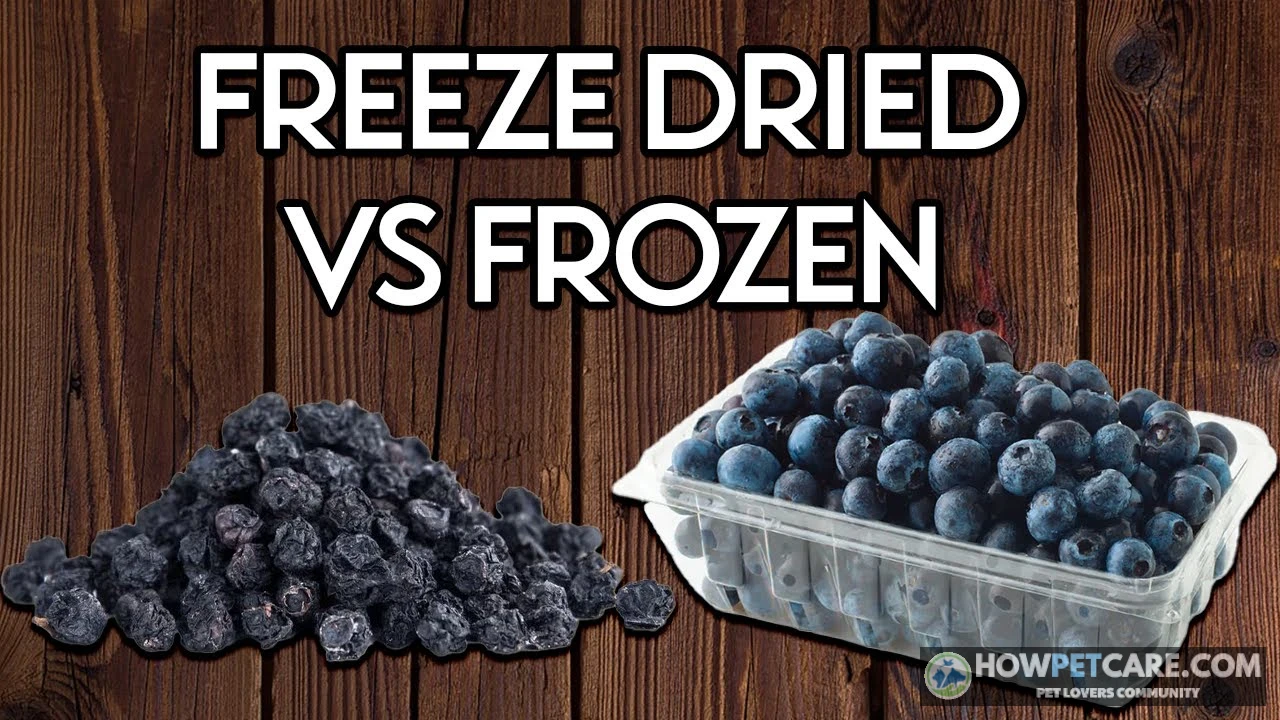
Plain fresh berries are the simplest choice. Frozen blueberries can work too, but their hardness makes preparation more important. Unsweetened dried blueberries are less straightforward because removing water concentrates nutrients and calories by weight.
| Form | Calories and sugar density | Glycemic and diabetes consideration | Choking and dental risk | Portion equivalence | Best use |
|---|---|---|---|---|---|
| Fresh | Contains water, natural sugar, and relatively few calories. | Contains carbohydrate; a diabetic dog’s veterinarian should approve the portion. | Whole berries can be a choking hazard, especially for small dogs. | Baseline for the weight table. | A plain, washed, appropriately prepared treat. |
| Frozen, unsweetened | Similar ingredients to fresh when nothing is added. | Count the portion as you would fresh berries; ask the vet for a diabetic dog. | Hard berries can be difficult to chew or swallow. | A whole frozen berry starts as one whole berry, although size varies. | Thaw or crush before serving, especially for small dogs and gulpers. |
| Dried, unsweetened | More concentrated per ounce because much of the water has been removed; products vary. | Easy to give more carbohydrate in a small volume. Check the label and ask the vet before offering it to a diabetic dog. | Small pieces may still be swallowed quickly; sticky products can cling to teeth. | There is no reliable spoon-for-spoon conversion: compare product weight and label information. | Fresh or thawed berries are usually simpler to portion. |
Don’t assume a handful of dried berries equals a handful of fresh ones. Some dried products also contain added sugar, oil, or other ingredients, and a trail mix may contain raisins.
Wild vs. cultivated blueberries: what the research does and does not show
Blueberries contain antioxidants and other phytochemicals, including anthocyanins, as well as fiber and vitamins C and K. A few berries supply only small amounts, and they don’t replace balanced dog food or treat a medical condition.
Wild and cultivated berries can differ in their composition, but there isn’t enough information here to establish that one provides a meaningful health advantage for dogs. In particular, a higher antioxidant measurement in a food doesn’t establish how much a dog absorbs or benefits from it.
Do blueberries help a dog’s gut? What the microbiome research says so far
Blueberry fiber is one reason researchers are interested in dog digestion, but it isn’t a proven treatment for digestive disease. Evidence isn’t sufficient to recommend a particular blueberry portion to change a dog’s gut microbiome. If your dog has persistent digestive problems, ask a veterinarian rather than trying to correct them with fruit.

Blueberry Muffins, Yogurt, Pie Filling and Dried Mixes: What’s Safe and What Isn’t
The berry itself isn’t the only ingredient that matters. Check the complete ingredient list before sharing a prepared food, and remember that an unfamiliar product may contain ingredients not obvious from its name.
| Product | Verdict | Main hazard | What to do instead |
|---|---|---|---|
| Plain fresh blueberries | Generally suitable in moderation. | Choking or digestive upset if poorly prepared or overfed. | Wash and portion; halve or mash when needed. |
| Plain frozen blueberries | Generally suitable in moderation. | Hard texture and swallowing risk. | Thaw or crush, especially for small dogs. |
| Plain unsweetened dried blueberries | Not the easiest choice. | Concentrated calories and carbohydrate; portions are easy to misjudge. | Choose fresh or thawed berries. |
| Blueberry muffins and baked goods | Avoid sharing. | May contain xylitol, raisins, chocolate, or substantial fat and sugar. | Offer plain berries instead. |
| Pie filling and jam | Avoid. | Added sugar; some products may contain xylitol. | Serve a small portion of plain fruit. |
| Syrup-packed or sweetened canned berries | Avoid. | Added sugar or syrup. | Choose plain fresh or unsweetened frozen berries. |
| Blueberry yogurt | Avoid flavored or sweetened varieties. | Possible xylitol, added sugar, or dairy intolerance. | Consider a little plain, unsweetened, xylitol-free yogurt if your dog tolerates dairy. |
| Trail mix with raisins | Unsafe. | Grapes and raisins are toxic to dogs. | Keep the entire mix away from your dog. |
| Blueberry-flavored dog treats | Check the label. | Ingredients and calorie content vary; flavor doesn’t establish how much fruit is present. | Follow the label and include the treat in the daily budget. |
Xylitol is the toxic ingredient; added sugar is primarily a portion and nutrition concern, not the same kind of poison. If your dog eats a product containing xylitol, grapes, or raisins—or you can’t rule them out—call your veterinarian, an emergency clinic, or animal poison control immediately. Don’t wait for symptoms or induce vomiting unless a veterinary professional tells you to.

Can Puppies Eat Blueberries? Age-Tiered Guidance
Puppies need food formulated for growth. Blueberries are optional, and a puppy’s small size makes both portion control and safe preparation important. Ask your veterinarian before adding them, particularly if your puppy is very young or follows a controlled feeding plan.
Can puppies under 3 months eat blueberries?
For nursing puppies and those just beginning to wean, generally under about 8 weeks old, don’t offer blueberries; follow your veterinarian’s advice on milk and weaning food. From roughly 8 to 12 weeks, wait for your veterinarian’s approval before introducing fruit.
This is a cautious approach, not a claim that a particular amount of blueberry fiber has been proven harmful at a specific age. A formal blueberry-fiber threshold for puppies under 3 months isn’t established in the available evidence.
How to introduce a first blueberry
From about 3 months, ask the veterinarian whether a blueberry is appropriate for your puppy’s diet. If approved, offer one mashed or finely cut berry and watch for changes over the next 24 hours. Don’t give a small puppy a whole, hard frozen berry.
Stop offering it and contact your vet if vomiting, diarrhea, or itching develops. Facial swelling or difficulty breathing needs emergency care. Keep all treats modest so they don’t crowd out the complete growth diet, particularly for a large-breed puppy whose feeding plan is carefully managed.

Blueberries for Diabetic Dogs and Stone-Prone Breeds
A safe food for a healthy dog isn’t automatically suitable for a dog with a medical feeding plan. The safest portion may be none until the veterinarian who manages that plan has reviewed it.
Diabetic dogs and blueberry carb limits
Blueberries contain natural carbohydrate and sugar. There is no established universal daily gram allowance for blueberries that applies to every stable diabetic dog; the treating veterinarian should decide whether a serving fits the dog’s food and insulin schedule.
For a practical way to count, weigh the proposed serving and use the carbohydrate figure for the specific food you are using. For example, if a nutrition label or verified food entry lists 14 grams of total carbohydrate per 100 grams, a 10-gram serving works out to about 1.4 grams of carbohydrate. This is an illustration of the calculation, not a serving recommendation or a verified figure for every blueberry product.
Ask your veterinarian whether to include that amount, when to give it, and whether consistency matters for your dog’s plan. Don’t change insulin or add an intermittent handful of dried fruit on your own. Fresh and unsweetened frozen berries are easier to portion consistently than many dried products.
Urinary stones, oxalate and urine pH
Dogs with a history of urinary stones need advice based on the type of stone and their full diet. Calcium oxalate and struvite stones are different problems; a recommendation for one shouldn’t automatically be applied to the other.
The effect of blueberries on urine pH or recurrence of oxalate or struvite stones in dogs isn’t established by the available evidence. Don’t use blueberries to acidify urine or prevent stones. If your dog has had stones or crystals—including a stone-prone dog such as a Dalmatian, Miniature Schnauzer, Shih Tzu, or Bichon Frise—ask the treating veterinarian or a veterinary nutritionist before adding them.
A vet check also makes sense for dogs with kidney disease, a history of pancreatitis, or a prescription or weight-management diet.
My Dog Ate Too Many Blueberries or Choked on One: What to Do
The right response depends on what was eaten and how your dog looks now. Plain blueberries are different from a muffin containing xylitol or a mix containing raisins.
Wait-and-see vs. call-the-vet symptoms
If a healthy adult dog ate extra plain berries and has only mild gas or a loose stool, stop treats, provide access to water, and watch closely. Contact your vet if symptoms persist, worsen, or you’re concerned about the quantity. A puppy, very small dog, or dog with an existing illness deserves an earlier call.
Call a veterinarian promptly for repeated vomiting, bloody stool, black tarry stool, a painful or swollen belly, unusual lethargy, or refusal to drink. If xylitol, grapes, or raisins may have been eaten, call immediately even if your dog seems normal. Keep the package or ingredient list handy.
If your dog cannot breathe normally, has blue or pale gums, or collapses, call an emergency veterinary clinic and leave immediately. Have someone else call while you help the dog or travel, if possible.
Canine choking first aid for a lodged berry
Choking signs can include frantic pawing at the mouth, gagging, difficulty moving air, and pale or blue-tinged gums. A dog coughing forcefully may still be moving air: allow them to cough, keep them calm, and contact an emergency vet. Don’t put your fingers into a struggling dog’s mouth without considering the risk of a bite.
If the dog cannot breathe, call the emergency clinic and start toward it immediately, and follow the numbered first-aid steps near the top of this article. Those steps are an emergency summary, not a substitute for hands-on veterinary first-aid training. A veterinary-led pet first-aid course can teach and demonstrate techniques before an emergency. Save your nearest emergency clinic and an animal poison-control contact in your phone.
Dark stool after blueberries: pigment or melena?
Food pigments can change stool color, but color alone can’t reliably rule out bleeding. Melena is digested blood in stool and can look black, sticky, and tar-like. Don’t assume black stool is simply blueberry pigment.
Call your veterinarian promptly about black or tarry stool, blood, or a dog that is vomiting, weak, or unusually tired. Pale gums, collapse, or marked weakness warrant emergency care. If you’re unsure whether a dark stool is normal, take a photo or save a sample and call the vet.
Your 5-Step Blueberry Safety Checklist for Dogs
-
Buy
Choose plain fresh or unsweetened frozen blueberries. Avoid syrup, xylitol, and mixes that may contain raisins.
-
Wash
Rinse under running water. Remove stems and leaves, and discard moldy berries.
-
Prep
Halve or mash for small dogs and fast eaters. Thaw or crush frozen berries before serving. For puppies, get veterinary approval first.
-
Portion
Use the adult weight table as a starting point and count berries alongside every other treat. Ask the vet first for diabetes, stone history, or a prescription diet.
-
Monitor
After a first serving, watch for vomiting, diarrhea, itching, or other changes over the next 24 hours. Stop feeding berries and call the vet if signs develop or worsen.
Decision guide: If your adult dog is healthy, the berries are plain, and the portion and preparation suit their size, a small serving is generally reasonable. If your dog is a puppy, has a medical condition, or follows a prescription diet, ask your vet first. Avoid the product altogether if it contains xylitol, grapes, or raisins.
For variety, plain strawberries for dogs, raspberries, and blackberries are also generally suitable in small amounts. Introduce one new food at a time, prepare it for your dog’s size, and count all fruit together with the day’s other treats.

FAQ
Can dogs eat blueberries with strawberries, raspberries or blackberries?
Yes, these plain berries are generally safe for dogs. Count them together toward the 10% treat limit and introduce one new fruit at a time, so you can tell what causes any stomach upset. Raspberries contain a small natural amount of xylitol, so keep those portions especially small.
Can a dog be allergic to blueberries?
It is uncommon, but any food can trigger a reaction. Itching, hives, facial swelling, vomiting or diarrhea after eating blueberries mean you should stop feeding them and contact your vet. Swelling of the face or trouble breathing is an emergency.
Are blueberry-flavored dog treats the same as real blueberries?
No. Flavored treats may contain little real fruit and can add sugar, fat or other ingredients. Read the label, and count the calories toward your dog’s treat budget.
Can dogs eat blueberry leaves, stems or bush parts?
Berries are the part intended for eating, so remove stems and leaves before serving. Garden plants may also carry pesticide residue. If your dog has eaten a lot of plant material and is vomiting or lethargic, call your vet.
Should I cook or puree blueberries for my dog?
Cooking is not required. Mashing or pureeing plain berries can help small dogs and puppies avoid choking, and you can mix them into regular food. Do not add sugar, honey or spices.