

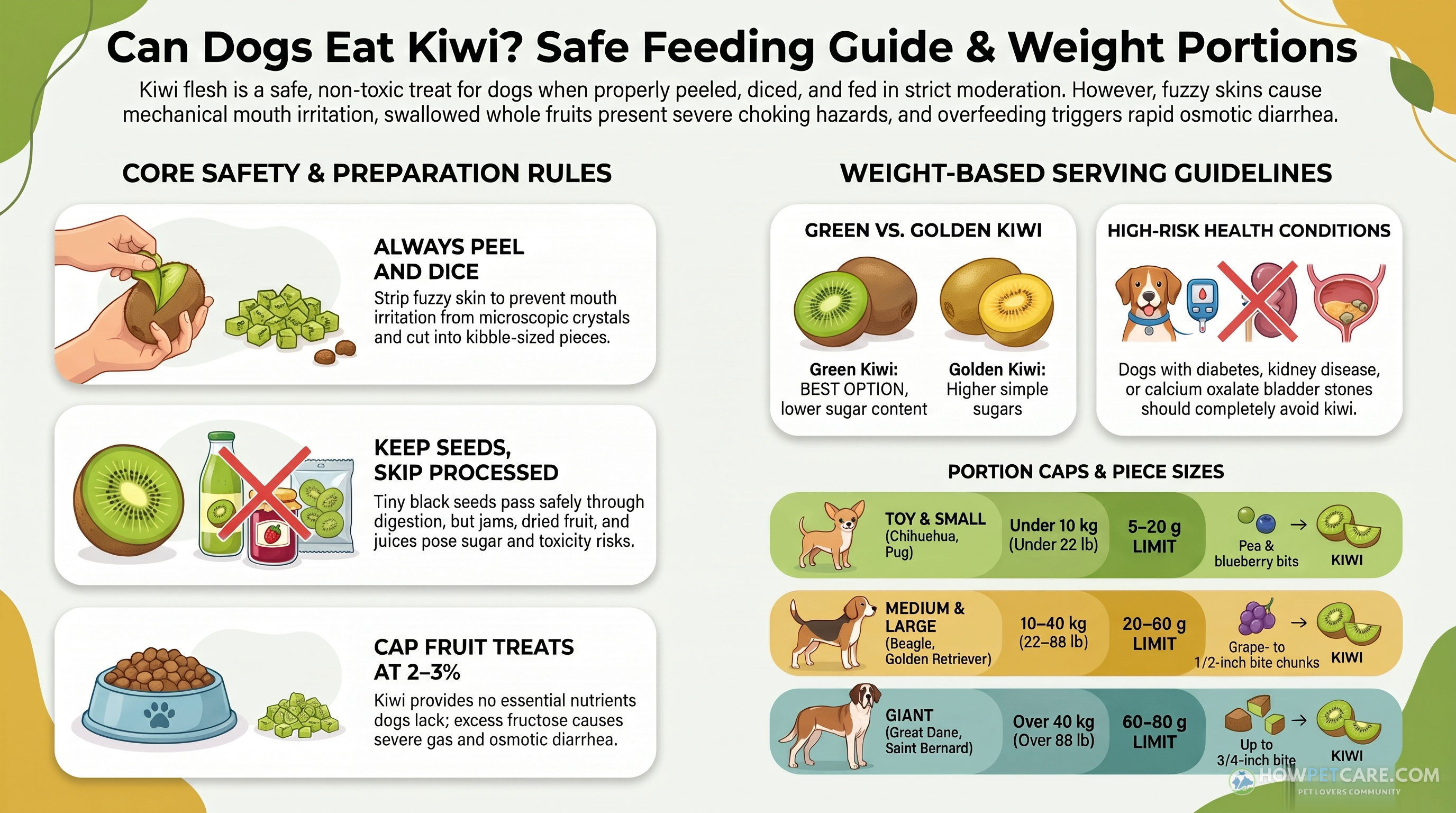
Yes — dogs can have kiwi as an occasional treat. Peel off the fuzzy skin, dice the flesh into bite-sized pieces, and keep servings within weight-based gram limits (about 5–80 g). Skip kiwi jam, juice, and dried chips, and call a vet immediately if a small dog swallows a whole fruit.
Yes, dogs can safely eat kiwi fruit as an occasional treat, provided the rough skin is removed, the flesh is cut into bite-sized pieces, and servings stay within strict weight-based limits. Kiwifruit flesh is non-toxic to canines, but feeding an entire unpeeled fruit introduces immediate choking hazards and gastrointestinal risks.
To share kiwi with your dog safely, keep five core feeding rules in mind:
- Peel the fruit by default: The hairy skin of green kiwi is tough to digest and frequently causes mechanical irritation in canine mouths.
- Dice into kibble-sized pieces: Never offer whole fruit, thick rounds, or large wedges that a dog can inhale or choke on.
- Follow gram limits: Fresh fruit should represent only a tiny fraction of your dog’s daily treat allowance, scaled strictly to body weight.
- Skip all processed kiwi: Steer clear of kiwi jams, dried chips, commercial smoothies, and bottled juices.
- Act fast on swallowed whole fruit: If a small dog gulps down a whole kiwi, contact your veterinarian immediately to evaluate obstruction risks.
Kiwi does not appear on any veterinary toxic-foods list. When pet owners ask can dogs have kiwi or if kiwi is bad for dogs, they are usually dealing with the fallout of overfeeding: stomach cramps, loose stools, or an emergency obstruction caused by swallowing a whole fruit. For the wider produce context, see our safe versus toxic fruit list before rotating snacks.
While kiwi is packed with vitamin C and dietary fiber, dogs naturally synthesize their own vitamin C and vitamin K within the liver. Kiwi offers no required nutrients that your dog’s complete and balanced commercial diet lacks. It is a refreshing, low-stakes treat, not a nutritional necessity.
Kiwi is just one of many dog-safe fruits you can rotate into your pet’s snack routine. Always verify each new fruit individually before sharing, as safe preparation rules vary widely across species.
Kiwi Skin and Kiwi Seeds: Why Sources Disagree and What to Do
If you search online pet guides, you will find stark contradictions: some sources claim kiwi skin is a healthy, fiber-dense superfood, while others warn it is toxic. Similarly, some pet blogs insist kiwi seeds carry lethal cyanide, while others say they are completely harmless. These opposing views create unnecessary panic. The disagreement stems from confusing theoretical toxicity with practical digestive biology.
Can dogs eat kiwi skin?
Kiwi skin is not poisonous. Chemically, it carries no systemic toxins that damage canine organs. In fact, consuming the skin increases dietary fiber by 30% to 50%, alongside small amounts of folate and vitamin E. This nutritional fact is why a handful of raw-feeding advocates label kiwi peel as edible.
However, edible does not mean advisable. The dense fuzz on standard green kiwifruit carries microscopic, needle-shaped calcium oxalate crystals known as raphides. When a dog chews fuzzy skin, these tiny crystals mechanically prick the delicate mucosal lining of the tongue, gums, and throat. This produces an uncomfortable stinging sensation, excessive drooling, and pawing at the mouth. Furthermore, the tough, leathery texture of the skin resists breakdown in the canine stomach, leading to gut irritation, cramping, and sudden bouts of diarrhea.
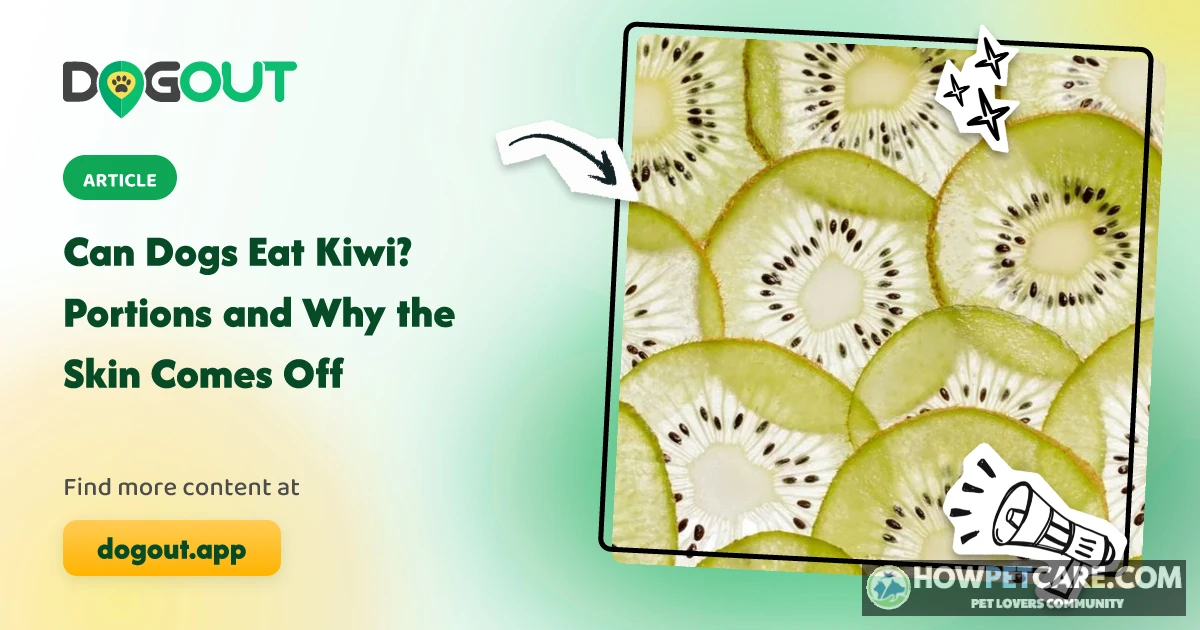
Can dogs eat kiwi seeds?
Yes, dogs can safely eat the tiny black seeds scattered throughout the kiwi’s green flesh. Panic surrounding kiwi seeds stems from confusion with the larger pits of stone fruits—such as cherries, peaches, plums, and apples—which contain amygdalin, a cyanogenic glycoside that releases cyanide when crushed and metabolized.
While kiwi seeds contain microscopic traces of amygdalin-related compounds, the concentration is toxicologically negligible. Moreover, canine digestion does not grind these microscopic seeds open; they pass through the digestive tract entirely whole and exit in the stool unaffected. There is no medical or practical need to painstakingly scoop seeds out of fresh kiwi flesh.
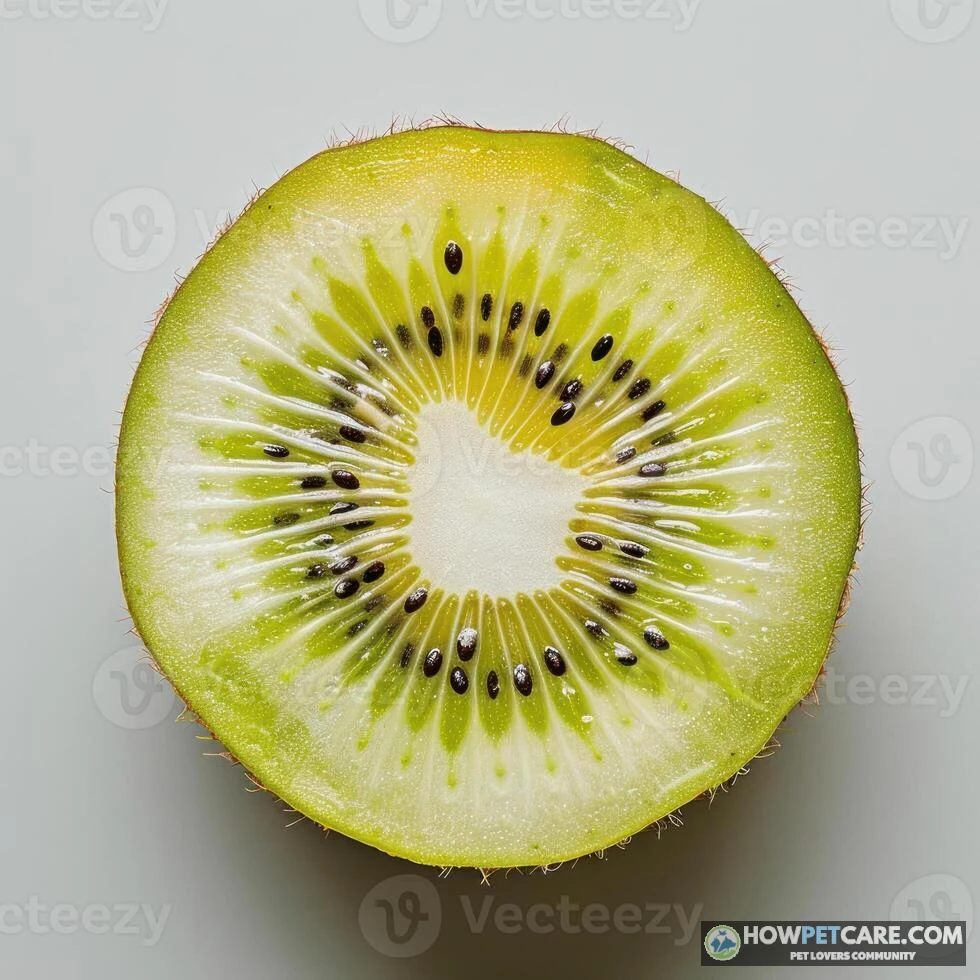
The reasoning behind the verdict
The split between veterinary advice and casual pet blogs comes down to two different questions: "Will this compound poison my dog?" versus "Is this texture worth the irritation risk?"
- The toxicologist’s answer: Neither the skin nor the seeds contain lethal poisons.
- The clinician’s answer: The skin’s abrasive fuzz and calcium oxalate crystals regularly provoke oral irritation and severe loose stools. The small fiber boost does not justify the gastrointestinal distress.
The practical rule: Always peel green kiwi. Leave the natural black seeds embedded in the flesh. Never blend massive quantities of whole seeds into a concentrated puree for small dogs, as concentrated seed masses can accelerate bowel emptying too aggressively. If your dog accidentally snares a strip of peeled skin off the kitchen floor, do not panic; expect mild lip-licking or a soft stool, and monitor them over the next 24 hours.
Green, Golden or Kiwi Berry: Which Is Safest for Your Dog?
Not all kiwifruit varieties share the same skin texture or sugar profile. When choosing fruit for your dog, green kiwi, golden kiwi, and kiwi berries each present distinct pros and cons.
| Variety | Sugar per 100 g | Fiber per 100 g | Skin texture | Is the skin safe for dogs? | Choking risk | Best for |
|---|---|---|---|---|---|---|
| Green Kiwi (Actinidia deliciosa) | ~9.0 g | ~3.0 g | Fuzzy, rough, thick | No — peel before feeding | Low (when diced) | Best overall default; lowest sugar, easiest to portion safely |
| Golden Kiwi (Actinidia chinensis) | ~12.3 g | ~1.4 g | Smooth, hairless, thin | Caution — lower irritation, but peeling is still best | Low (when diced) | Picky dogs who prefer sweeter flavors; use smaller portions |
| Kiwi Berry (Actinidia arguta) | ~11.5 g | ~2.9 g | Paper-thin, completely smooth | Yes — edible skin with zero prickly fuzz | High if swallowed whole | Dogs needing quick bites; must be sliced to prevent airway blockage |

Nutritional values referenced from USDA FoodData Central standard reference profiles for raw kiwifruit varieties.
Green kiwi remains the gold standard for canine treats because it contains less natural sugar per gram than its golden counterpart. Golden kiwi features a smooth, bronze skin with almost no hair, which significantly reduces mouth irritation if a scrap is ingested. However, golden varieties are bred for higher sweetness, meaning they dump more simple sugars into your dog’s digestive tract.
Kiwi berries are miniature, grape-sized kiwifruits with entirely hairless, thin skins. While their smooth peel eliminates the need for tedious peeling, their physical dimensions make them an exact fit for a canine trachea. Feeding a whole kiwi berry creates an immediate choking hazard, particularly for medium and large dogs that gulp food without chewing. If you offer kiwi berries, you must wash them thoroughly and slice them into halves or quarters.

These safety comparisons apply exclusively to whole, fresh agricultural produce. Never apply fresh kiwi guidelines to processed, sweetened, or shelf-stable kiwi snacks.
How Much Kiwi Can a Dog Eat? Gram Portions by Dog Weight
Canine digestive systems are optimized for animal fats and proteins, not the simple carbohydrates and high moisture found in fruit. Kiwi flesh consists of roughly 80% water and delivers high levels of soluble and insoluble fiber. While beneficial in human diets, an excess of these compounds triggers rapid osmotic shifts in the canine colon, ending in explosive diarrhea and severe flatulence.
All canine treats must adhere to the 10% treat rule: supplemental snacks should never exceed 10% of your dog’s total daily caloric intake. Because fruit contains substantial fructose, pet parents should keep kiwi well below that 10% threshold—ideally capping fruit at 2% to 3% of daily calories.
The math behind the portions:
Consider an average 10 kg (22 lb) dog requiring roughly 400 kcal per day. The broad 10% treat ceiling allows 40 daily treat calories. Kiwifruit flesh contains approximately 0.6 kcal per gram. Mathematically, 40 kcal equates to nearly 66 grams of kiwi. However, feeding 66 grams of raw fruit to a 22-pound dog guarantees severe osmotic diarrhea. To prevent digestive upset, we cap fruit intake at roughly 20 grams (~12 kcal), keeping simple sugars modest while treating your dog safely.
For a reference point, one standard medium kiwi yields approximately 70 grams of peeled edible flesh. Even a massive 90-pound giant-breed dog should never receive more than roughly one single medium kiwi in a day.
Portion chart
| Dog weight (kg) | Dog weight (lb) | Size band | Grams of peeled kiwi per serving | Teaspoon equivalent | Approximate piece size | Max servings per week |
|---|---|---|---|---|---|---|
| Under 5 kg | Under 11 lb | Toy | 5–10 g | 1–2 tsp | Tiny, pea-sized dice | 1–2 times |
| 5–10 kg | 11–22 lb | Small | 10–20 g | 2–4 tsp | Blueberry-sized bits | 2–3 times |
| 10–25 kg | 22–55 lb | Medium | 20–40 g | 1–2 tbsp (up to 6 tsp) | Grape-sized chunks | 2–3 times |
| 25–40 kg | 55–88 lb | Large | 40–60 g | ~1/2 a medium kiwi (up to 8 tsp) | 1/2-inch bite chunks | 2–3 times |
| Over 40 kg | Over 88 lb | Giant | 60–80 g | Up to 1 whole peeled kiwi (up to 10 tsp) | 3/4-inch bite chunks | 2–3 times |
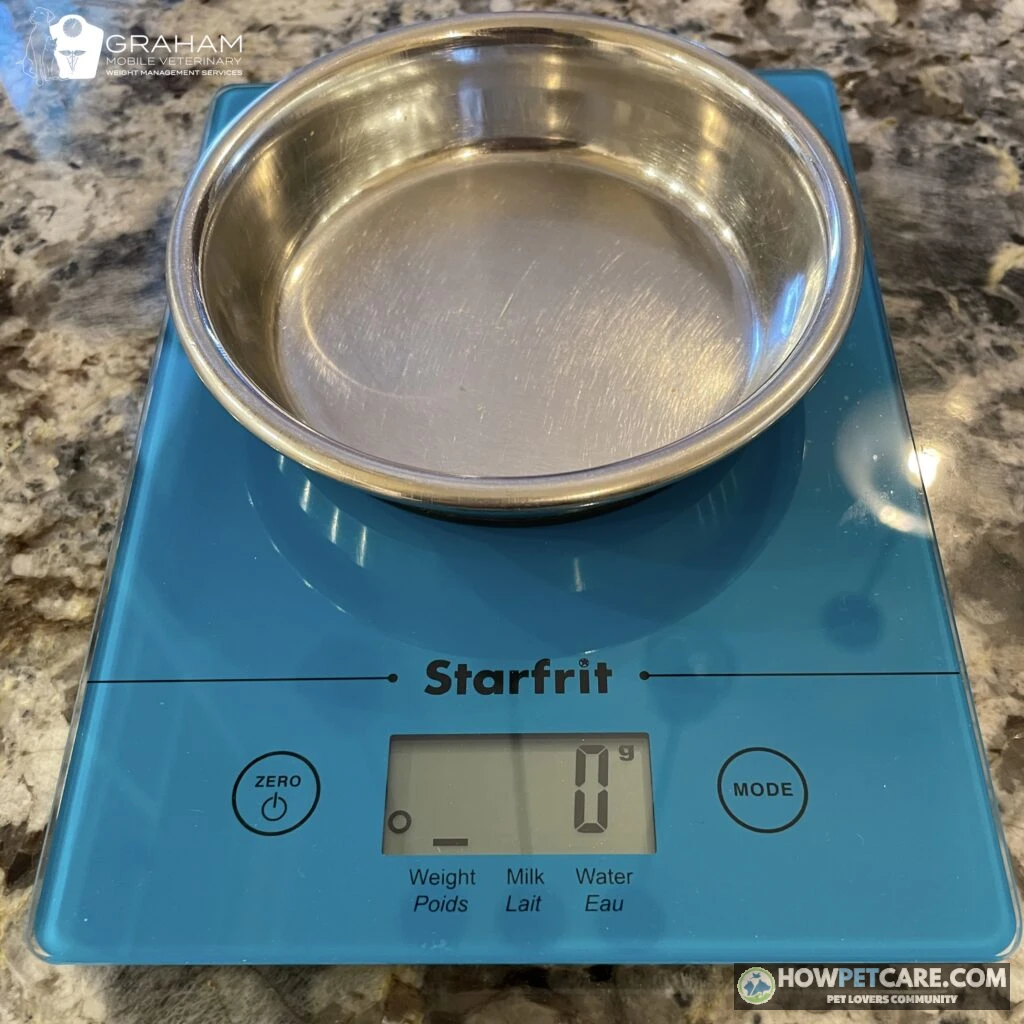
If you do not own a kitchen gram scale, use the teaspoon measurements as your hard upper limit. When introducing kiwi for the very first time, feed half the recommended minimum amount and observe your dog for 24 to 48 hours before offering it again. Use the same gram discipline you would for blueberry portions by dog size rather than estimating by handful.
What overfeeding looks like
When a dog consumes too much kiwi, symptoms typically appear within 2 to 12 hours. Because kiwifruit is roughly 80% water and loaded with active roughage, an overfed dog’s gut moves too fast to absorb fluids. Look out for these signs:
- Hyperactive gut sounds (borborygmi): Loud gurgling and sloshing noises emanating from the abdomen.
- Excessive gas: Foul flatulence and visible abdominal bloating.
- Osmotic diarrhea: Loose, watery, or mucous-covered stools, frequently containing bright green flecks of undigested kiwi flesh.
- Single or double vomiting episodes: The stomach purging excess acid, enzymes, and unfermented fiber.
If your dog displays mild diarrhea but remains energetic, alert, and willing to drink water, withhold food for 6 to 8 hours and transition them to a bland diet (boiled chicken breast and white rice). If vomiting is continuous or diarrhea persists beyond 48 hours, seek veterinary care.

My Dog Ate a Whole Kiwi: What to Do in the First 2 Hours
Dogs are opportunistic scavengers. If your dog snatches an entire unpeeled kiwi off a counter or fruit bowl and swallows it whole, panic helps no one. Follow this immediate, time-stamped protocol.
First 2 minutes: choking check
Your immediate concern is mechanical airway obstruction. A whole kiwi is the exact shape and diameter to wedge tightly in the pharynx or upper trachea.
- Look for distress: Is the dog frantically pawing at its face, gagging silently, retching without sound, or wheezing?
- Inspect gum color: Pull back the lip. Healthy gums are bubblegum pink. Pale, dusky grey, or blue gums (cyanosis) indicate total oxygen deprivation.
If your dog is choking, act immediately:
- Small dogs (under 22 lb): Pick up the dog, holding its hindquarters against your chest with the head angled down toward the floor. Deliver five rapid, firm back slaps between the shoulder blades using the palm of your hand to dislodge the fruit.
- Medium and large dogs: Stand behind your standing dog. Wrap your arms around its belly just behind the ribcage. Make a fist, grasp it with your other hand, and pull firmly up and forward toward the chest in rapid thrusts (canine abdominal thrusts).
- Never sweep blindly: Do not shove your fingers deep down your dog’s throat unless you can clearly see the kiwi and grasp it securely. A blind finger sweep pushes the slippery, round fruit deeper into the larynx, converting a partial blockage into a fatal obstruction.
Minutes 2–120: stay or go decision tree
If your dog is breathing comfortably, the fruit has successfully cleared the pharynx and entered the esophagus or stomach. Your next move depends directly on your dog’s physical size.
A standard green kiwi measures 5 to 8 centimeters in length. While a 90-pound Golden Retriever has an esophagus and pyloric sphincter large enough to pass a soft, whole fruit into the stomach, a 10-pound Dachshund or French Bulldog does not. For small dogs, a whole kiwi poses a major physical obstruction risk.
- Dog weighs under 10 kg (22 lb): Call your veterinarian or an animal emergency hospital immediately. Inform them that your dog ingested a whole, intact kiwi with skin on. The vet may advise bringing the dog in within the 2-hour window so they can safely induce emesis (vomiting) using veterinary medications like apomorphine or ropinirole under clinical supervision.
- Dog weighs over 10 kg (22 lb): Call your vet to log the incident, but home monitoring is often recommended if the dog shows zero distress. The gastric acids and muscular contractions of a large dog’s stomach can often break down the soft fruit over several hours.
- Do not induce vomiting at home: Never administer hydrogen peroxide, table salt, or home remedies down your dog’s throat. Hydrogen peroxide causes severe, ulcerating gastritis in canines, and salt administration can trigger fatal hypernatremia (salt toxicity). If vomiting is required, let a veterinarian induce it safely.
Next 24–48 hours: what to watch
If the whole kiwi passes into the stomach, it must eventually travel through the narrow pyloric valve and small intestines. An unpeeled kiwi can stall along this route, creating a complete mechanical gastrointestinal blockage.
Monitor your dog closely for the following emergency obstruction red flags:
- Repeated, unproductive retching (attempting to throw up but producing only white foam).
- Inability to keep water or bland food down (immediate regurgitation).
- Severe abdominal pain (standing in a "prayer position" with front elbows down and rear legs up; groaning when the abdomen is touched).
- Profound lethargy and refusal to walk.
- Total absence of defecation for more than 36 to 48 hours.

If your dog exhibits any of these symptoms, take them to an emergency veterinary clinic for abdominal radiographs (X-rays) or an ultrasound. Conversely, if you observe soft stools, mild flatulence, or see pieces of kiwi skin pass in their bowel movement over the next 48 hours, the danger has passed.
If you cannot reach your regular clinic, contact pet emergency poison hotlines for professional guidance:
- ASPCA Animal Poison Control Center (APCC): (888) 426-4435
- Pet Poison Helpline: (855) 764-7661
(Note: Both services operate 24/7 across the United States; consultation fees may apply.)
Kiwi Allergy or Skin-Fuzz Irritation? A Symptom Checklist
Dog owners often see their pet drool, rub their face on the carpet, or smack their lips after licking a kiwi and assume their dog is having an allergic reaction. In most cases, the dog is experiencing mechanical contact irritation from the skin’s fuzz and raphide crystals rather than an actual immunological allergy. Understanding this distinction helps you react calmly and appropriately.
Signs of mouth irritation
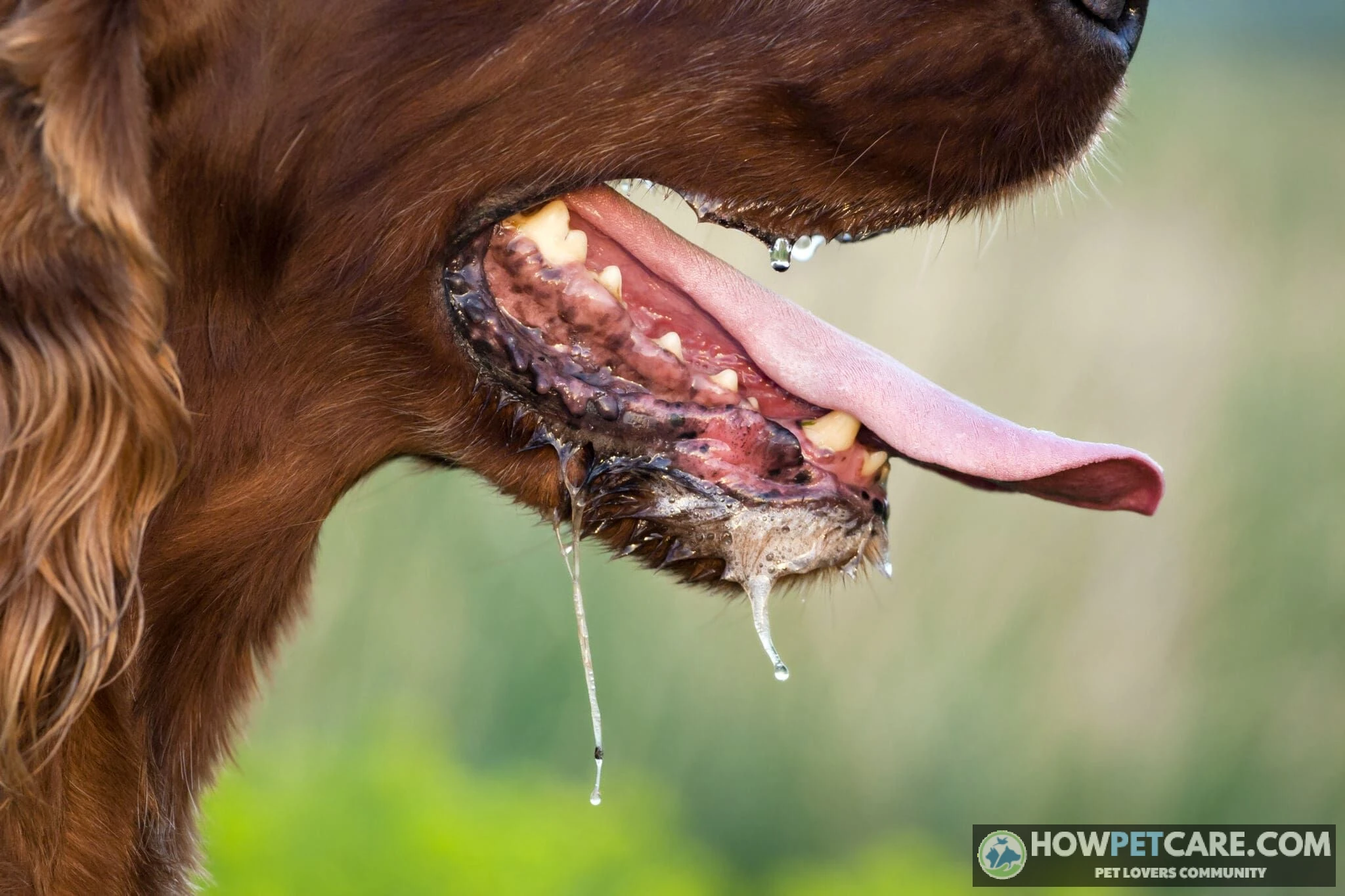
Mouth irritation is a localized physical reaction caused by needle-like calcium oxalate crystals and prickly surface hairs piercing the oral mucosa.
- Onset: Starts almost instantaneously (within 1 to 5 minutes of chewing an unpeeled fruit or skin scraps).
- Oral discomfort: Profuse, clear drooling (ptyalism) and persistent, rhythmic lip-licking.
- Facial rubbing: Pawing repeatedly at the snout, rubbing the muzzle along furniture or carpets, and head shaking.
- Mild localized redness: Slight erythema (redness) along the margins of the gums and lips.
- Resolution: Symptoms typically peak early and subside entirely within 45 to 90 minutes once saliva washes the microscopic crystals away.
Signs of a true allergy
A true allergy is an IgE-mediated immunological response to specific proteins inside the kiwi fruit, most notably actinidin, a potent cysteine protease enzyme found throughout the green flesh. Actinidin breaks down proteins aggressively and is a well-documented human allergen that can also trigger immune reactions in sensitive canines.
- Onset: Develops 15 minutes to several hours after consuming kiwi (even peeled flesh).
- Dermatological signs: Generalized pruritus (intense itching), red hives (urticaria) developing across the belly or inner thighs, and intense scratching at the ears and paws.
- Angioedema: Noticeable fluid swelling puffing up the muzzle, lips, eyelids, or ear flaps.
- Gastrointestinal signs: Sudden, repeated vomiting and acute diarrhea with abdominal cramping occurring every time kiwi is consumed.
When to go straight to a vet
While mechanical irritation fades on its own, true allergies can progress into life-threatening anaphylaxis. Rush to the nearest veterinary emergency hospital immediately if you observe any of the following signs:
- Swelling expanding into the throat, neck, or lower jaw.
- Respiratory distress: noisy breathing, wheezing, gasping, or stretched-out neck posture.
- Sudden weakness, uncoordinated stumbling, collapse, or extremely pale gums.
The next-day isolation test: If your dog showed mild lip irritation after eating unpeeled kiwi, wait a week until all symptoms are long gone. Offer one single, pea-sized cube of completely peeled kiwi flesh. If your dog eats it with zero issues, the initial reaction was purely mechanical irritation from the fuzzy skin. If your dog develops hives, facial swelling, or an upset stomach from the naked flesh, they are allergic to actinidin or other kiwi proteins; remove kiwi from their diet entirely.

Dogs diagnosed with calcium oxalate bladder stones (urolithiasis) or breeds genetically predisposed to stone formation—such as Miniature Schnauzers, Shih Tzus, and Yorkshire Terriers—should never be fed kiwi. Kiwifruit contributes dietary oxalates that can increase urinary stone risk.
Dried Kiwi, Kiwi Juice, Jam and Frozen Fruit Blends: Which Are Safe for Dogs?
Commercial kiwi products carry completely different risk profiles than fresh produce. Human pantry staples frequently hide massive sugar loads and ingredients that are toxic to dogs.
| Form | Verdict | Main concern | What to check on the label |
|---|---|---|---|
| Fresh, peeled kiwi | Yes | Portion control and choking | Nothing — 100% natural fruit |
| Plain frozen kiwi chunks | Yes | Choking on rock-hard pieces | Ensure the ingredient list states only "kiwi" with no added sugar or syrups |
| Dried / dehydrated kiwi chips | Caution | Concentrated sugars; preservative chemicals | Look out for added cane sugar and sulfites (sodium metabisulfite) |
| Kiwi juice | No | Zero beneficial fiber; severe sugar spike | Avoid entirely; plain fresh water is best |
| Kiwi jam / preserves | No | Dangerously high sugar; potential sweetener toxicity | Watch for xylitol (birch sugar) — highly lethal to canines |
| Frozen smoothies / fruit blends | Caution | Cross-contamination with toxic fruits | Scan for grapes, raisins, currants, macadamia nuts, or chocolate |
| Kiwi-flavored yogurt / treats | No | Artificial sweeteners, lactose intolerance | Check for artificial flavorings, high corn syrup, and xylitol |
Dehydrated and dried kiwi chips
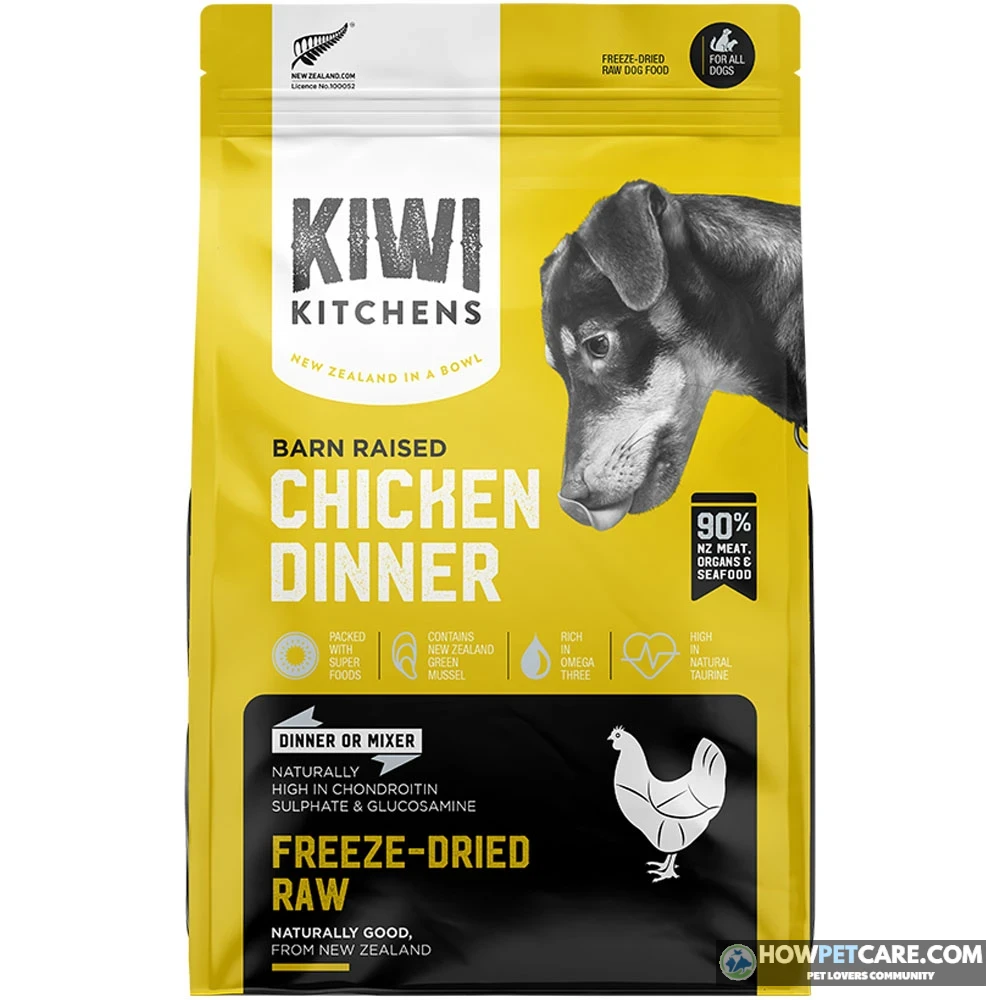
Dehydrating fruit strips away its natural water content (which makes up roughly 80% of fresh kiwi), concentrating all natural sugars into a dense, leathery treat. A single dried kiwi slice delivers the caloric and sugar punch of nearly half a fresh fruit, making it remarkably easy to overfeed your dog. Furthermore, commercial dried kiwi chips are regularly treated with sulfur dioxide or sodium metabisulfite to preserve their vibrant green color. Sulfites can trigger respiratory irritation and digestive upset in sensitive canines. If you choose to feed dried kiwi, offer only homemade slices dried without added sugar or preservatives, and limit servings to half a chip. The same concentration problem applies to dried mango for dogs, so weighed fresh pieces remain easier to control.
Kiwi juice and bottled purees
Juicing strips out all the insoluble dietary fiber that slows carbohydrate absorption in your dog’s gut. Drinking kiwi juice delivers an immediate, unbuffered sugar spike to the bloodstream. The canine stomach struggles with acidic, high-fructose liquids, which frequently leads to acute osmotic diarrhea and vomiting. Never pour fruit juice into your dog’s water bowl.
Kiwi jam, jellies, and preserves
Traditional jams rely on a roughly 1:1 ratio of fruit to refined cane sugar, which can contribute to long-term canine dental decay, obesity, and pancreatitis. Far more dangerous, however, are sugar-free jams. Low-calorie fruit spreads often substitute sugar with xylitol, an artificial sweetener commonly marketed as birch sugar or wood sugar.
In dogs, xylitol triggers an immediate, massive release of insulin from the pancreas, resulting in profound, life-threatening hypoglycemia (plummeting blood sugar) within 15 to 30 minutes, followed by acute, irreversible liver necrosis (hepatic failure). Even a tiny lick of xylitol-sweetened kiwi jam can be fatal to a small dog. Jam of any kind has no place in a dog’s diet.
Commercial smoothie mixes and frozen fruit bags
Pre-packaged frozen smoothie blends frequently combine kiwi with fresh strawberries, mangoes, and other safe fruits. However, they also frequently contain fruits that are deadly to dogs. Grapes, raisins, and zante currants are highly nephrotoxic to canines; eating even small amounts can cause sudden, irreversible acute kidney failure. Never feed your dog a frozen fruit mix or sip of a commercial smoothie without personally verifying that every single ingredient on the bag is 100% dog-safe.
Can Puppies, Diabetic Dogs and Dogs With Kidney Disease Have Kiwi?
Certain life stages and clinical health conditions change how a dog processes dietary simple sugars, fiber, and electrolytes.
Puppies
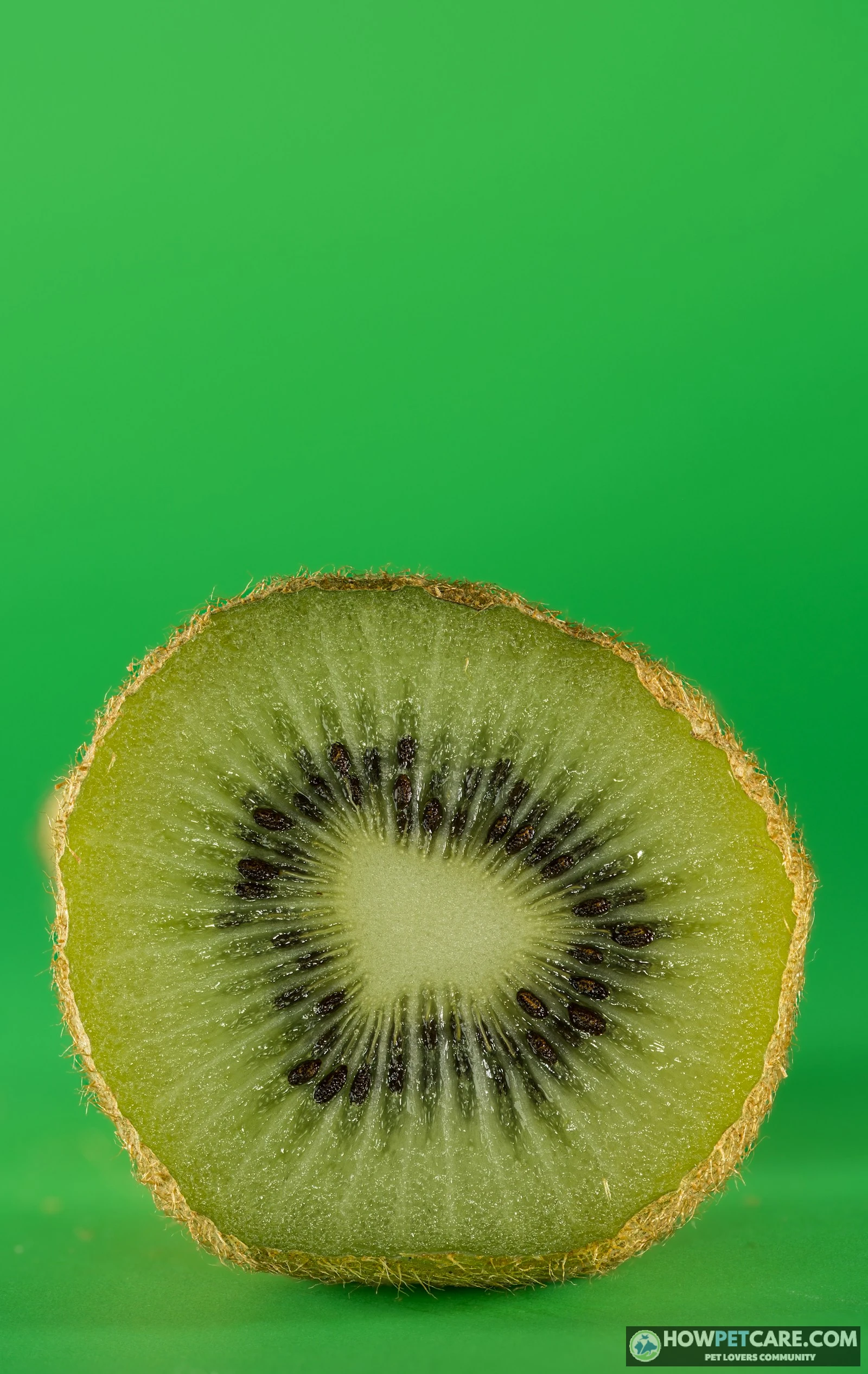
A growing puppy’s digestive tract is remarkably delicate. The digestive enzymes and microbial flora required to ferment novel fibrous fruits are not fully developed until a puppy matures. Introducing rich, fibrous, and acidic fruits like kiwi too early often triggers sudden gastrointestinal upset and foul, watery diarrhea. Diarrhea in very young puppies leads to dehydration much faster than in adult dogs.
- Age threshold: Do not offer kiwi to puppies under 12 weeks of age. Wait until your puppy is fully weaned, stable on a veterinary-formulated complete puppy diet, and accustomed to standard dog treats.
- Puppy portions: If your puppy is older than 12 weeks, offer no more than a single, pea-sized scrap of peeled green kiwi flesh (under 2 grams). Keep treats under 5% of a puppy’s total daily calories to prevent diluting the essential calcium, phosphorus, and protein balances required for proper skeletal development.
Diabetic dogs
Canine diabetes mellitus requires strict management of dietary carbohydrate intake to maintain consistent blood glucose curves. While kiwi has a low-to-moderate glycemic index in humans thanks to its soluble fiber matrix, its fructose content still provokes an unneeded postprandial glucose spike in diabetic dogs.
If your dog has diabetes, do not offer kiwi without explicit clearance from your veterinarian. If your vet grants permission for a rare treat, adhere to these clinical rules:
- Choose green kiwi exclusively; avoid sweeter golden kiwi varieties entirely.
- Restrict portions to a single small cube (under 5 grams).
- Always feed the fruit slice immediately alongside your dog’s scheduled, balanced meal—never as an isolated mid-day snack. Feeding fruit alongside complex proteins and fats blunts glycemic absorption and prevents erratic insulin spikes.
Kidney disease and oxalate stone history
Dogs battling chronic kidney disease (CKD) lose the ability to regulate blood electrolytes and eliminate metabolic wastes effectively. Kiwifruit carries two nutritional compounds that complicate renal care:
- Moderate potassium levels: Diseased kidneys struggle to excrete potassium, raising the risk of hyperkalemia, which can trigger cardiac arrhythmias.
- Oxalate content: Kiwifruit contains measurable amounts of soluble and insoluble oxalates. In dogs with a history of calcium oxalate uroliths (bladder or kidney stones), dietary oxalates are filtered into the urine, where they bond with urinary calcium to form razor-sharp, insoluble crystal stones. Because calcium oxalate stones cannot be dissolved with specialized medical diets and must be removed surgically, dogs with a history of stones should avoid kiwi altogether.
Disclaimer: This nutritional guidance is for educational purposes only. Always consult your primary care veterinarian before introducing any novel fruit to dogs with underlying endocrine, renal, or gastrointestinal diseases.
Prep, Freeze and Serve Kiwi Safely: Step-by-Step Plan and Pre-Feed Checklist
Transforming raw kiwi into a safe, engaging, and mess-free canine treat requires proper culinary handling. Follow this standard kitchen prep ritual:
Step-by-step prep
-
Step 1: Select ripe produce
Choose a kiwi that yields gently to slight thumb pressure. Rock-hard, unripened fruit is excessively acidic, fibrous, and difficult for canine teeth to crush safely. Avoid overripe, mushy, or fermenting fruit, which contains trace ethanol.
-
Step 2: Wash the exterior
Rinse the whole kiwi under cold running tap water to remove surface dirt, agricultural chemicals, and pesticide residues from the skin before peeling.
-
Step 3: Slice off the woody ends
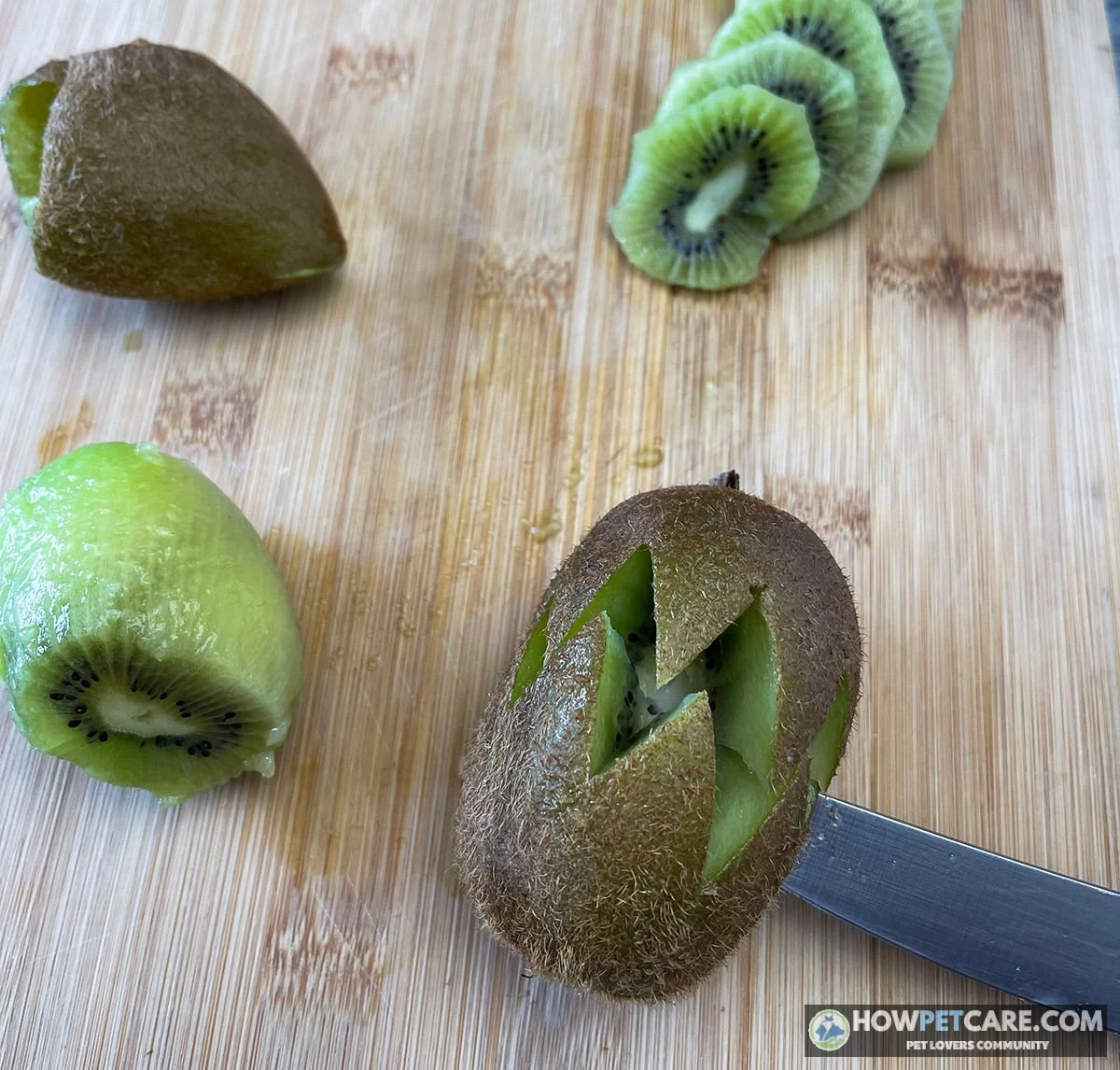
Use a sharp paring knife to slice off both the top stem end and bottom blossom end of the fruit, removing the hard, fibrous woody core cap.
-
Step 4: Strip away the skin
Stand the kiwi upright on a cutting board and slice downwards along the contours of the fruit with a knife to remove all fuzzy peel. Alternatively, slide a metal soup spoon between the skin and the green flesh, rotating it all the way around the circumference to pop out the cylinder of peeled flesh cleanly.
-
Step 5: Dice to canine kibble size
Cut the peeled flesh into small, manageable cubes. For toy and small dogs, cubes should match the size of a green pea or standard dry kibble. For medium and large dogs, pieces should be no larger than a nickel or blueberry to prevent accidental inhalation.
-
Step 6: Weigh the precise serving
Place a small dish on a digital kitchen gram scale, tare it to zero, and weigh out the exact gram allowance corresponding to your dog’s weight category. Discard the fuzzy skins securely into a closed compost or trash bin where your dog cannot scavenge them.
Frozen kiwi treats and enrichment ideas
Feeding fresh dice directly from your hand is simple, but kiwi also works wonderfully in interactive canine enrichment toys to help soothe teething gums, reduce boredom, and extend treat time. In hot weather, owners sometimes rotate these cubes with seedless watermelon flesh, but kiwi still needs the same gram cap.
- Single-ingredient kiwi ice pops: Arrange diced kiwi cubes on a parchment-lined baking sheet, leaving space so they do not stick together. Freeze for 3 to 4 hours. On hot summer days, offer one or two frozen cubes as a cooling, crunchy treat. The freezing process firms up the slippery flesh, encouraging dogs to chew rather than swallow pieces whole.
- Canine kiwi-kefir lick mat: Mash 15 to 20 grams of peeled fresh kiwi with an ordinary fork until it forms a smooth, pulp-like paste. Mix it with two tablespoons of plain, unsweetened, xylitol-free non-fat Greek yogurt or goat’s milk kefir. Use a silicone spatula to spread the mixture across a textured silicone lick mat. Freeze the mat for two hours before serving. Licking releases endorphins in the canine brain, promoting calm behavior while keeping the fruit portion safely controlled.
- Enrichment puzzle stuffer: Mash a small portion of kiwi alongside your dog’s regular wet food or rehydrated kibble. Pack the mixture into a hollow rubber toy (such as a Kong) and freeze overnight. Your dog will work for up to 30 minutes to extract the frozen filling, providing valuable mental stimulation without exceeding their daily caloric limit.
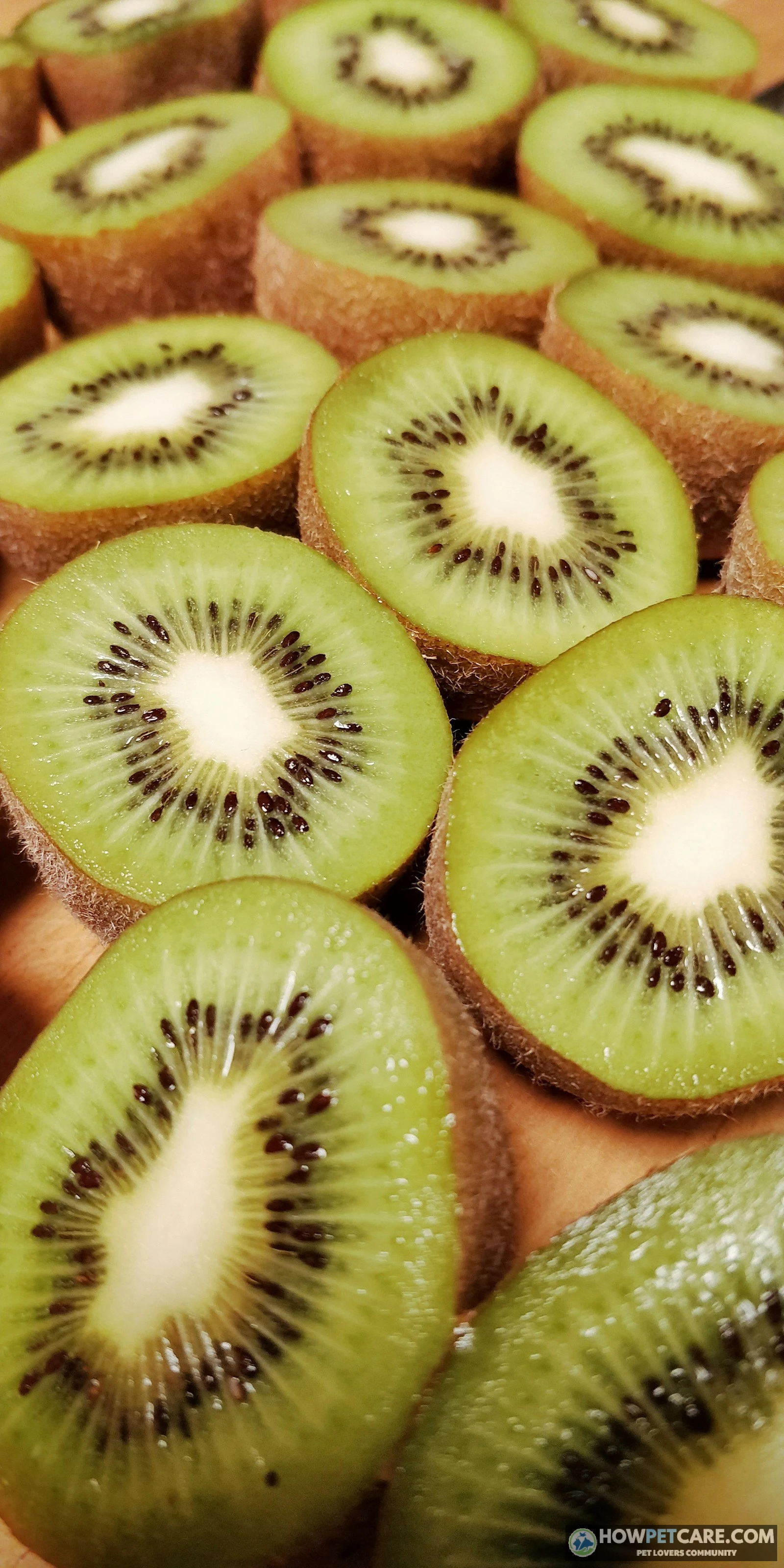
Pre-feed checklist
Before you hand any piece of kiwi over to your dog, run through this quick safety checklist:
- ☐ Is your dog clinically healthy? (No active diarrhea, vomiting, pancreatitis, diabetes, or history of calcium oxalate bladder stones).
- ☐ Is the kiwi completely peeled? (All fuzzy skin, abrasive hairs, and hard end stems have been completely removed).
- ☐ Are the pieces cut small enough? (Diced small enough that your dog cannot choke if they swallow without chewing).
- ☐ Is the portion accurately weighed? (Weighed out on a kitchen scale within the exact gram limit for your dog’s weight band).
- ☐ Is it 100% plain and unprocessed? (Free from added cane sugar, sulfites, syrups, dairy, and artificial sweeteners like xylitol).
- ☐ Is this your dog’s first time eating kiwi? (If yes, feed half the recommended portion and observe them for 24 to 48 hours before offering more).
Final decision framework
- Green Light (Safe to feed): Healthy, non-diabetic adult dogs receiving peeled, bite-sized fresh or plain frozen kiwi within their daily gram limits 1 to 2 times per week.
- Yellow Light (Check with your vet first): Puppies aged 3 to 6 months, dogs on strict weight-loss programs, and medically stable diabetic dogs needing calculated carbohydrate allowances.
- Red Light (Do not feed): Dogs with an active or previous history of calcium oxalate bladder stones, dogs with kidney disease, dogs displaying previous oral allergic reactions to kiwi, and any commercial kiwi products containing added sugars, juice concentrates, or artificial sweeteners.
FAQ
Can dogs eat kiwi every day?
Daily kiwi is not recommended. Offer it as an occasional treat, one to three times a week, within the gram limit for your dog’s weight, since kiwi adds sugar and fiber that a complete diet does not need.
What fruits can dogs eat safely?
Blueberries, seedless watermelon, apple slices without seeds or core, banana, and peeled and pitted mango are common dog-safe fruits, all in small portions. Grapes, raisins and currants are toxic and must always be avoided.
Can kiwi cause diarrhea in dogs?
Yes. Too much kiwi, or the skin, can cause loose stool, gas or vomiting because of the fiber and sugar. Mild signs usually pass within 24 to 48 hours. Call a vet if diarrhea is severe, bloody, or lasts longer than two days.
Can dogs eat unripe kiwi?
Unripe kiwi is hard and tart and harder to chew into safe pieces, so it is more likely to upset the stomach or cause choking. Choose ripe fruit that gives slightly when pressed.