
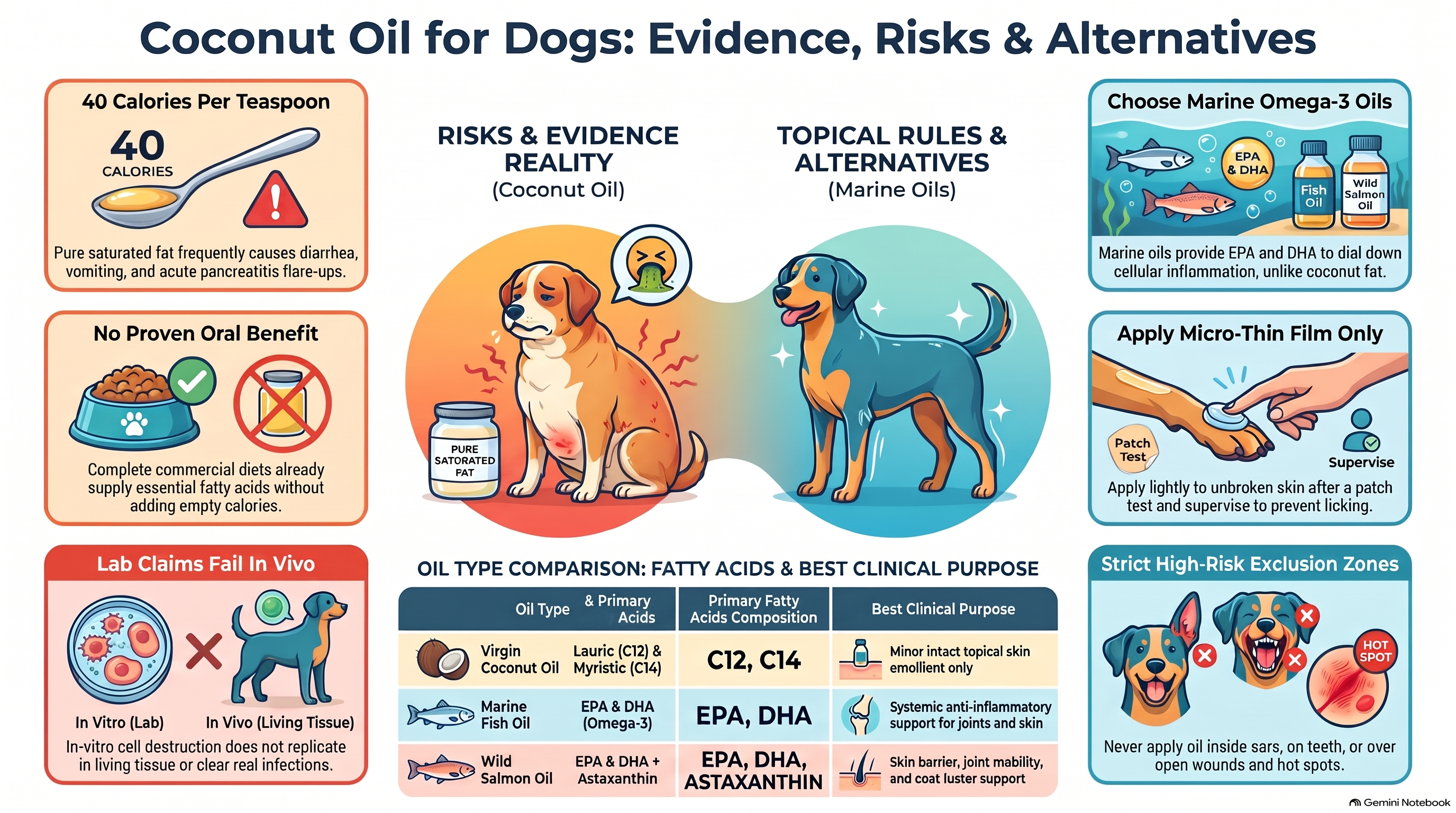
Coconut oil is technically non-toxic to dogs in tiny amounts, but routine oral feeding is not recommended. It provides roughly 40 calories and 4.5 grams of saturated fat per teaspoon, posing significant risks of diarrhea, weight gain, and acute pancreatitis without offering proven clinical benefits over balanced commercial diets.
Coconut oil is not a medically necessary supplement for dogs. Most healthy dogs eating a complete, balanced commercial diet get no proven health benefit from adding it to their bowls. While some dogs tolerate small amounts, coconut oil is almost entirely saturated fat and packs roughly 40 calories per teaspoon. That density makes it a common trigger for diarrhea, vomiting, and acute pancreatitis. It also will not cure canine allergies, wipe out fleas, heal deep wounds, or clear up ear infections. If you are dealing with dry skin or itching, you have five practical options: leave the diet as it is, run a careful oral trial with your vet’s input, apply a micro-thin layer topically to intact skin, pick a clinically backed alternative like marine omega-3s, or schedule an immediate veterinary exam.
The short answer for healthy dogs
Is coconut oil safe for dogs? For a healthy adult dog with no underlying medical conditions, tiny amounts are usually non-toxic, but tolerance is not the same as therapeutic benefit. Commercial diets built to Association of American Feed Control Officials (AAFCO) standards already supply balanced fatty acids. Adding pure saturated fat provides no nutritional boost and risks crowding out essential nutrients. When a dog takes in extra dietary fat, the pancreas has to work harder to generate digestive enzymes, which raises the odds of gastrointestinal inflammation. For these reasons, routine use of coconut oil for dogs is not recommended, and any oral feeding should remain limited to tiny, measured amounts cleared by a veterinarian.
Owners often wonder which human foods are safe for dogs.
Why natural and organic do not automatically mean safe or effective
Marketing often paints virgin, cold-pressed, or certified organic coconut oil as a gentle, holistic fix for canine health problems. Cold pressing avoids chemical solvents and preserves natural medium-chain fatty acids, but the resulting botanical fat is still dense with saturated lipids. Natural fats change lipid metabolism and gut transit times whether they are certified organic or not. Assuming a product is harmless because it comes from a plant often delays real diagnostic work for worsening conditions like atopic dermatitis, endocrine disorders, or bacterial pyoderma.
Even natural sweeteners like giving honey to dogs should be evaluated before sharing with your pet.
Coconut Oil for Dogs Benefits: What the Evidence Actually Shows

To look past marketing claims, you need to know what coconut oil contains. Its fat profile consists mostly of medium-chain triglycerides (MCTs), led by lauric acid (roughly 48% to 50%), with myristic acid (around 20%), palmitic acid, capric acid, and caprylic acid making up the rest. Lauric acid is chemically categorized as an MCT, but a dog’s body processes it much like a long-chain fatty acid. It travels through the lymphatic system rather than heading straight to the liver for quick energy. Because of this, regular coconut oil is chemically and functionally distinct from purified, medical‑grade C8 and C10 MCT oils.
There is a wide gap between petri‑dish observations and veterinary clinical trials. A compound that destroys a microbe on a culture plate will not necessarily clear up an infection in living tissue without harming canine cells or causing side effects.

Feeding peanuts to dogs can also contribute extra calories and potential allergies.
| Claim or intended use | What evidence is relevant | Evidence strength in dogs | Practical guidance |
|---|---|---|---|
| Skin hydration & coat shine | Small veterinary pilot trials on barrier function; rodent lipid models; human dry skin data. | Weak to moderate (mostly limited topical barrier effect; oral coat benefits lack robust trials) | Minor intact flaking may temporarily soften with a micro-thin topical film, but oral dosing is unproven to fix dull coats compared to balanced essential fatty acids. |
| Digestive health & stool quality | Rodent metabolism studies; clinical veterinary gastrointestinal safety trials. | Negative to very weak | Does not improve healthy canine digestion. High saturated fat frequently triggers osmotic diarrhea, greasy stool, vomiting, or pancreatitis flare-ups. |
| Antimicrobial, fungal, & yeast action | In‑vitro laboratory culture assays showing lauric acid disrupts lipid membranes in Petri dishes. | Unproven in live dogs | In‑vitro cell destruction does not replicate on living canine tissue. Never use to treat Malassezia (yeast), pyoderma, ringworm, or ear infections. |
| Cognitive support in senior dogs | Multi‑center canine trials using purified medium-chain triglyceride (MCT) diets (specifically C8/C10 enriched caprylic/capric triglycerides). | Misapplied (high for purified C8/C10 medical diets; unproven for whole coconut oil) | Whole coconut oil is roughly 50% lauric acid (C12), which metabolizes more like a long-chain fat and does not reliably produce the therapeutic ketone levels demonstrated by purified veterinary MCT supplements. |
| Flea, tick, & mite control | Laboratory parasite repellant screening tests utilizing concentrated botanical fatty acids. | None in live dogs | Zero pesticidal or knock‑down effect on live infestations. Relying on it risks severe flea allergy dermatitis, tapeworms, and tick‑borne pathogen transmission. |
| Wound healing & hot spots | Rodent wound‑closure studies under sterile occlusive laboratory dressings. | Unproven and clinically hazardous | Traps heat, exudate, and surface bacteria against inflamed skin. High risk of secondary bacterial dermatitis, maceration, and compulsive licking. |
| Thyroid & metabolic stimulation | Rodent dietary thermogenesis papers; disproven human weight‑loss hypotheses. | None in dogs | Cannot stimulate canine thyroid hormone production (T3/T4) or reverse hypothyroidism. Adds dense calories that accelerate weight gain. |
Some owners consider adding cheese to the diet for flavor, but it carries its own risks.

Why coconut oil does not treat allergies, infections, fleas, or thyroid disease

Allergic disease in dogs is an immune reaction triggered by environmental allergens like dust mites and pollen, or by food proteins. It is not an oil deficiency. Feeding coconut oil will not stop the immune response that makes a dog scratch its sides or chew its paws. Laboratory tests showing that lauric acid damages bacterial walls in a dish do not translate to clearing up staph infections or Malassezia dermatitis on a dog’s body. In fact, spreading a layer of fat over active microbial growth creates an airtight barrier that can help bacteria and yeast multiply.
Coconut Oil for Dogs Dosage: Start With Calories, Not a Teaspoon Chart

There is no scientifically validated weight chart, starting dose, or universal maximum for feeding coconut oil to dogs. Online charts suggesting a teaspoon per ten pounds of body weight are informal feeding lore, not clinical guidelines. Because coconut oil is pure fat, you have to approach any oral use through strict caloric budgeting.
Feeding eggs to dogs is another common human food that owners sometimes give, but they must be prepared properly.
Why body weight alone cannot establish a safe dose
A dog’s ability to handle extra dietary fat depends on its resting energy needs, activity level, metabolic efficiency, and individual risk for pancreatitis. Scale weight alone tells you very little about those factors. Standard virgin coconut oil has roughly 40 calories (kcal) and 4.5 grams of fat per level teaspoon, which jumps to 120 calories and 13.5 grams of fat per tablespoon. Pet supplement brands may list different numbers, such as 19.5 kcal per half tablespoon (around 8,570 kcal/kg) with 99.5% crude fat. Always check the guaranteed analysis on the product packaging.
In canine nutrition, all discretionary extras—biscuits, training treats, chews, table food, and oils—must stay under 10% of the dog’s total daily calories. Going past that 10% ceiling unbalances the overall diet and dilutes vital amino acids, vitamins, and minerals.
Example: calculating the remaining treat‑calorie allowance
Before offering any supplemental fat, calculate your dog’s daily energy requirement (DER) and subtract every daily treat to see if you have any room left.
=========================================================================================
              CANINE ORAL COCONUT OIL TRIAL EVALUATION WORKSHEET
=========================================================================================
1. PATIENT MEDICAL EXCLUSIONS (Check all that apply):
   [ ] Pancreatitis history (single or recurrent episode)
   [ ] Diagnosed hyperlipidemia (elevated blood triglycerides or cholesterol)
   [ ] Overweight / Obese (Body Condition Score 6/9 or higher)
   [ ] Currently eating a prescribed low-fat gastrointestinal diet
   [ ] History of chronic diarrhea, inflammatory bowel disease (IBD), or lymphangiectasia
   --> VERDICT: If ANY box above is checked, oral coconut oil is STRICTLY CONTRAINDICATED.

2. CALORIC BUDGET ACCOUNTING:
   * Patient Target Body Weight:                 [_______] lbs / kg
   * Total Daily Caloric Requirement (DER):      [_______] kcal/day
   * 10% Discretionary Treat Ceiling (DER x 0.1): [_______] kcal/day
   * Existing Daily Chews, Biscuits, & Rewards:  [_______] kcal/day
   * Net Available Discretionary Headroom:       [_______] kcal/day
   --> If Net Available Headroom is under 40 kcal, oral oil cannot be added without
       removing existing daily treats.

3. PROPOSED TRIAL PARAMETERS (Must be clinician‑approved):
   * Verified Product Label Calorie Content:     [_______] kcal per tsp
   * Universal Starting Dose:                     NOT CLINICALLY ESTABLISHED
   * Universal Maximum Safe Dose:                 NOT CLINICALLY ESTABLISHED
   * Patient‑Specific Vet‑Approved Start Volume: [_______] (e.g., 1/8 to 1/4 tsp)
   * Clinician‑Set Absolute Daily Ceiling:       [_______] tsp/day
   * Planned Re‑Evaluation Date:                 [_______] (Check weight, stool, blood lipids)
=========================================================================================
Here is how that math looks for two different dogs:

Dog A: 50 lb (22.7 kg) Moderately Active Adult Lab Mix
- Daily Energy Requirement: ~1,000 kcal/day
- Maximum 10% Discretionary Ceiling: 100 kcal/day
- Existing Daily Extras: 1 dental chew (45 kcal) + small training treats (20 kcal) = 65 kcal
- Net Available Allowance: 100 kcal – 65 kcal = 35 kcal available
- Numerical Assessment: Half a level teaspoon of coconut oil provides roughly 20 kcal and 2.25 grams of fat. That fits mathematically within the remaining 35 kcal headroom. Calorie headroom, however, does not guarantee physical tolerance. Introducing this concentrated fat can still cause loose stools or stomach upset.
Dog B: 15 lb (6.8 kg) Low‑Activity Senior Miniature Schnauzer
- Daily Energy Requirement: ~350 kcal/day
- Maximum 10% Discretionary Ceiling: 35 kcal/day
- Existing Daily Extras: 1/2 biscuit (20 kcal) + pill‑administering treat (15 kcal) = 35 kcal
- Net Available Allowance: 35 kcal – 35 kcal = 0 kcal available
- Numerical Assessment: Adding 1 teaspoon of coconut oil adds 40 kcal and 4.5 grams of fat, forcing an 11.4% caloric surplus above maintenance needs. Miniature Schnauzers also have a recognized genetic risk for idiopathic hyperlipidemia and acute pancreatitis, making oral oil strictly unsafe for this dog.

When no oral trial is appropriate
Skip oral coconut oil if your dog has no caloric room to spare or tends to have a sensitive stomach. If your vet does approve a small trial, start with tiny amounts, like one‑eighth of a teaspoon, and keep the rest of the diet completely consistent. Stop the trial immediately if you notice vomiting, loose or greasy stools, reduced appetite, lethargy, or signs of abdominal pain like hunching or stretching out.
Meeting the mathematical 10% treat ceiling does not guarantee digestive safety. A dog can remain within its daily calorie limit while still suffering acute pancreatitis from a sudden influx of concentrated saturated fatty acids.
Who Should Avoid Coconut Oil or Ask a Veterinarian First?
Certain health conditions and life stages turn high‑fat supplements into an outright hazard. In these dogs, adding oil can trigger severe systemic illness.
Pancreatitis, high blood lipids, and fat‑restricted diets
The canine pancreas produces enzymes that break down dietary fats. Ingesting large amounts of saturated fat can cause digestive enzymes to activate prematurely inside the pancreas, causing the organ to inflame and digest its own tissue. Dogs with active pancreatitis, a past bout of the illness, or known hyperlipidemia should never get coconut oil. The same rule applies to dogs on prescription low‑fat diets for conditions like lymphangiectasia, inflammatory bowel disease, or gallbladder mucoceles.
Puppies, senior dogs, and dogs with sensitive digestion
Growing puppies need precise balances of calcium, phosphorus, protein, and energy to develop sound bones and joints. Calorie‑heavy oils throw those ratios off and frequently provoke diarrhea, which can dehydrate a young pup fast. Older dogs burn fewer calories and often have subclinical kidney, liver, or pancreatic vulnerabilities. Saturated fats add empty calories without helping joint stiffness or cognitive changes.
Never feed coconut oil to help a dog lose weight. At approximately 40 calories per teaspoon, adding dietary oils to an overweight dog’s meals accelerates weight gain rather than promoting satiety or fat oxidation.
Coconut oil for dogs with allergies: why diagnosis comes first
Pet owners often reach for coconut oil to soothe itchy skin. Atopic dermatitis and food allergies require systematic diagnostic work, including skin cytology, controlled flea treatment trials, or hydrolyzed‑protein diet trials. Giving coconut oil introduces an unvetted dietary variable that can muddle test results or cause digestive problems that disguise the real culprit.
How to Use Coconut Oil Topically on Dog Skin, Paws, and Nose

A light topical application can help soften minor surface dryness on unbroken skin. You need to apply it carefully, however, to keep your dog from licking it off or trapping bacteria.
A cautious patch‑test and application protocol

Never rub raw coconut oil over wide expanses of irritated skin. Follow these steps for small areas of surface dryness:
-
Inspect the Target Area
Confirm the skin is completely intact. If you detect redness, weeping, crusting, open cracks, bleeding, or unusual odor, stop and book a veterinary exam.
-
Conduct a 24‑Hour Patch Test
Melt a drop the size of a sesame seed between your fingertips and rub it onto a hairless area of the inner groin. Monitor the site for 24 hours. If redness, hives, or scratching appears, do not use the product.
-
Apply a Micro‑Thin Film
Melt a tiny portion between your fingers until clear. Pat lightly onto the dry area. The skin should look lightly conditioned, not wet, white, or greasy.
-
Prevent Licking for 15 Minutes
Supervise your dog and distract them with a walk, game, or approved toy while the thin film absorbs. Licking transfers topical fat into the stomach, converting an external treatment into systemic calories.
-
Monitor and Halt
Discontinue use immediately if the dog begins chewing the area, or if the skin develops bright erythema, pimples, or a greasy odor.
How to prevent licking and overuse
Dogs naturally lick off creams and oils applied to their paws or skin. Licking converts a topical balm into oral fat, reintroducing the risk of digestive distress and extra calories. Putting on heavy layers also traps dirt, hair, and dander against the surface, cutting off airflow and encouraging microbial growth.
When dry‑looking skin may be allergies, parasites, or infection
Flaking skin is rarely a simple hydration issue. It is usually a symptom of a deeper problem like flea allergy dermatitis, mange, walking dandruff (Cheyletiella), ringworm, cutaneous lymphoma, or a bacterial infection. If your dog scratches constantly, loses patches of fur, gets hot spots, or smells yeasty, topical coconut oil will not solve the issue and only delays proper medical care.
Where Coconut Oil Does Not Belong: Ears, Teeth, Wounds, and Hot Spots

Certain areas of canine anatomy are vulnerable to home remedies. Keep coconut oil completely away from these spots:
- Ear Canals and Flaps: Do not drop or wipe coconut oil inside a dog’s ears. Canine ear canals are warm, L‑shaped passages where yeast (Malassezia pachydermatis) and bacteria thrive. Oil leaves a film that traps moisture and debris, worsening infections. If the eardrum happens to be torn, oil reaching the middle ear can trigger Horner’s syndrome or permanent balance disorders.
- Teeth and Gums: Coconut oil pulling has no basis in veterinary medicine. It cannot remove tartar or reverse periodontal disease beneath the gumline. Swabbing oil in the mouth leads to swallowed fat calories and creates a real risk of lipid aspiration into the lungs.
- Wounds, Punctures, and Hot Spots: Hot spots require clipping, cleaning, drying, and targeted antimicrobial care. Smearing saturated fat over cuts, scrapes, surgical incisions, or weeping sores traps bacteria, seals in exudate, and encourages destructive licking.
- Cracked Paw Pads and Diseased Noses: While a thin coat helps dry, intact pads, do not put coconut oil on deep cracks, bleeding tissue, or crusty nasal hyperkeratosis. Changes in nasal pigment or open fissures require a veterinary workup to rule out autoimmune conditions like discoid lupus.
Coconut Oil vs Fish Oil vs Salmon Oil for Dogs

Choosing an oil means looking at fatty acid profiles and real evidence rather than marketing slogans.
MCTs versus EPA and DHA omega fatty acids
Coconut oil is made of saturated fatty acids like lauric and myristic acid, which do not supply essential polyunsaturated fats. Marine oils from wild salmon, anchovies, sardines, and menhaden are rich in long‑chain omega‑3 fatty acids: eicosapentaenoic acid (EPA) and docosahexaenoic acid (DHA). A dog’s body incorporates EPA and DHA into cellular membranes, where they help dial down inflammatory pathways.
| Oil | Primary fatty acids | Best‑supported purpose | Calories & typical fat profile | Key clinical risks | Essential label verification |
|---|---|---|---|---|---|
| Virgin Coconut Oil | Saturated fatty acids (~90%): Lauric (C12), Myristic (C14), Palmitic (C16) | Minor intact topical skin emollient; limited palatability enhancer. | ~40 kcal per tsp; 4.5g fat (zero EPA/DHA; minimal polyunsaturated fat). | Acute pancreatitis, hyperlipidemia, osmotic diarrhea, unwanted weight gain. | 100% pure single ingredient; unrefined/cold‑pressed; zero xylitol, added flavorings, or essential oils. |
| Standard Marine Fish Oil (Anchovy / Sardine / Menhaden) | Omega‑3 Polyunsaturated: Eicosapentaenoic acid (EPA) & Docosahexaenoic acid (DHA) | Systemic anti‑inflammatory support: pruritic skin disease, osteoarthritis, cardiac cachexia, chronic kidney disease. | ~40–43 kcal per tsp; 4.5g fat (variable EPA/DHA concentrations per mL). | Platelet inhibition at high doses, stool loosening, heavy metal accumulation in low‑grade oils, rancidity. | Declared concentration of EPA and DHA in mg (not total omega‑3 mg); third‑party tested (IFOS certified) for heavy metals/PCBs. |
| Wild Salmon Oil | Omega‑3 Polyunsaturated: EPA & DHA, plus natural Astaxanthin carotenoid | Skin barrier support, joint mobility support, senior cognitive health, coat luster. | ~40–42 kcal per tsp; 4.5g fat (typically moderate EPA/DHA ratios compared to concentrated fish oil). | Rancidity via rapid oxidation, GI upset if started too quickly, caloric surplus. | Clear sourcing (wild‑caught preferred over farmed); packaging in dark, oxygen‑barrier pump bottles; declared mg of EPA/DHA. |
Choosing an oil based on a defined nutrition goal
If you want to reduce allergic inflammation, protect stiff joints, or manage kidney disease, marine omega‑3 oils have extensive clinical backing, while coconut oil does not. Keep in mind that fish oils also supply roughly 40 calories per teaspoon, so they still need to be counted within the 10% treat limit. Look for single‑ingredient oils that list specific milligrams of EPA and DHA rather than vague claims. Never buy products containing sweeteners like xylitol (birch bark extract), flavorings, or essential oils, all of which can harm dogs.
Choose the Right Next Step for Your Dog’s Symptom
Use this practical guide to figure out the right approach for your dog’s current situation.
Decision checklist before adding any oil
Run through these points before using coconut oil orally or topically:
- Is your dog eating a complete, balanced commercial diet? If yes, and there is no diagnosed nutritional deficiency, you do not need to add oil.
- Does your dog have a history of pancreatitis, elevated blood lipids, or chronic GI issues? If yes, do not give oral oil under any circumstances.
- Have daily treats and chews reached the 10% calorie limit? If yes, you cannot add oil without cutting back on their regular treats.
- Is the skin red, oozing, open, or tender? If yes, skip the oil and call your vet.
| Dog’s situation or symptom | Avoid oral use? | Limited topical trial appropriate? | Better next step | Veterinary referral signs |
|---|---|---|---|---|
| Healthy dog; no current symptoms | Highly recommended to avoid | No | Maintain balanced AAFCO diet; supplement only with clinician approval | Unexplained changes in body weight, coat quality, or stool consistency. |
| Minor surface dryness on intact nose/pads | Yes | Yes (micro‑thin film; intact tissue only) | Protect paws from extreme surfaces; use protective dog booties | Deep fissures, bleeding, limping, crusting, discharge, or pigment loss. |
| Persistent whole‑body itching & scratching | Yes | No | Schedule skin cytology; implement veterinary flea control trial | Hair loss, red papules, skin odor, chewing at paws, or open sores. |
| Chronic dull coat or excessive shedding | Yes | No | Discuss veterinary‑prescribed EPA/DHA marine omega‑3 fatty acids | Symmetrical bald patches, lethargy, cold intolerance, or sudden weight gain. |
| Suspected ear infection or head shaking | Yes | No (Strictly prohibited) | Professional otoscopic exam, ear swab cytology, and prescribed drops | Ear odor, brown/yellow discharge, head tilt, ear hematoma, or pain on touch. |
| Hot spot, cut, puncture, or open wound | Yes | No (Strictly prohibited) | Clip hair around lesion, cleanse with chlorhexidine, keep dry | Moist spreading lesion, swelling, purulent exudate, heat, or fever. |
| Digestive issues (vomiting, soft stool) | Yes (Strictly prohibited) | No | Fasting period if advised by vet; highly digestible gastrointestinal diet | Blood in stool, repeated vomiting, pale gums, fever, or abdominal hunching. |
Symptoms that should move from home care to veterinary care
Home remedies cannot replace an accurate medical diagnosis. Contact your veterinarian promptly if your dog shows persistent vomiting, bloody diarrhea, fever, lethargy, or signs of stomach pain. Skin with hair loss, crusting, dark pigmentation, an unpleasant odor, or ongoing inflammation needs cytology and medical treatment, not an oily kitchen remedy. Taking a careful, diagnostic approach protects your dog’s health and solves underlying problems much faster.
| Claim or Intended Use | Relevant Evidence | Evidence Strength in Dogs | Practical Guidance |
|---|---|---|---|
| Skin hydration & coat shine | Small veterinary pilot trials on barrier function; rodent lipid models; human dry skin data. | Weak to moderate (mostly limited topical barrier effect; oral coat benefits lack robust trials) | Minor intact flaking may temporarily soften with a micro-thin topical film, but oral dosing is unproven to fix dull coats compared to balanced essential fatty acids. |
| Digestive health & stool quality | Rodent metabolism studies; clinical veterinary gastrointestinal safety trials. | Negative to very weak | Does not improve healthy canine digestion. High saturated fat frequently triggers osmotic diarrhea, greasy stool, vomiting, or pancreatitis flare-ups. |
| Antimicrobial, fungal, & yeast action | In-vitro laboratory culture assays showing lauric acid disrupts lipid membranes in Petri dishes. | Unproven in live dogs | In-vitro cell destruction does not replicate on living canine tissue. Never use to treat Malassezia (yeast), pyoderma, ringworm, or ear infections. |
| Cognitive support in senior dogs | Multi-center canine trials using purified medium-chain triglyceride (MCT) diets (specifically C8/C10 enriched caprylic/capric triglycerides). | Misapplied (high for purified C8/C10 medical diets; unproven for whole coconut oil) | Whole coconut oil is roughly 50% lauric acid (C12), which metabolizes more like a long-chain fat and does not reliably produce the therapeutic ketone levels demonstrated by purified veterinary MCT supplements. |
| Flea, tick, & mite control | Laboratory parasite repellant screening tests utilizing concentrated botanical fatty acids. | None in live dogs | Zero pesticidal or knock-down effect on live infestations. Relying on it risks severe flea allergy dermatitis, tapeworms, and tick-borne pathogen transmission. |
| Wound healing & hot spots | Rodent wound-closure studies under sterile occlusive laboratory dressings. | Unproven and clinically hazardous | Traps heat, exudate, and surface bacteria against inflamed skin. High risk of secondary bacterial dermatitis, maceration, and compulsive licking. |
| Thyroid & metabolic stimulation | Rodent dietary thermogenesis papers; disproven human weight-loss hypotheses. | None in dogs | Cannot stimulate canine thyroid hormone production (T3/T4) or reverse hypothyroidism. Adds dense calories that accelerate weight gain. |
FAQ
What type of coconut oil is best for dogs?
If a veterinarian approves coconut oil, choose a plain, single-ingredient food-grade product with no flavorings, sweeteners, essential oils, or additives. Organic, virgin, cold-pressed, and pet-specific labels do not by themselves prove better safety or effectiveness.
Can coconut oil help a dog’s coat shine?
A shinier coat is sometimes reported, but it is not strong evidence that coconut oil corrects a nutritional or skin problem. Persistent dullness, shedding, dandruff, or itching merits a diet and health review rather than escalating oil intake.
Can dogs eat coconut oil every day?
Daily use is not necessary for dogs eating a complete diet, and there is no universal established daily dose. Frequent use can add substantial calories and fat, so veterinary guidance is especially important for dogs with weight, digestive, pancreatic, or lipid concerns.
Is coconut oil safe for puppies?
Do not routinely add coconut oil to a puppy’s complete growth diet without veterinary advice. Puppies can develop digestive upset easily, and added calories or fat can displace the balanced nutrition needed for growth.