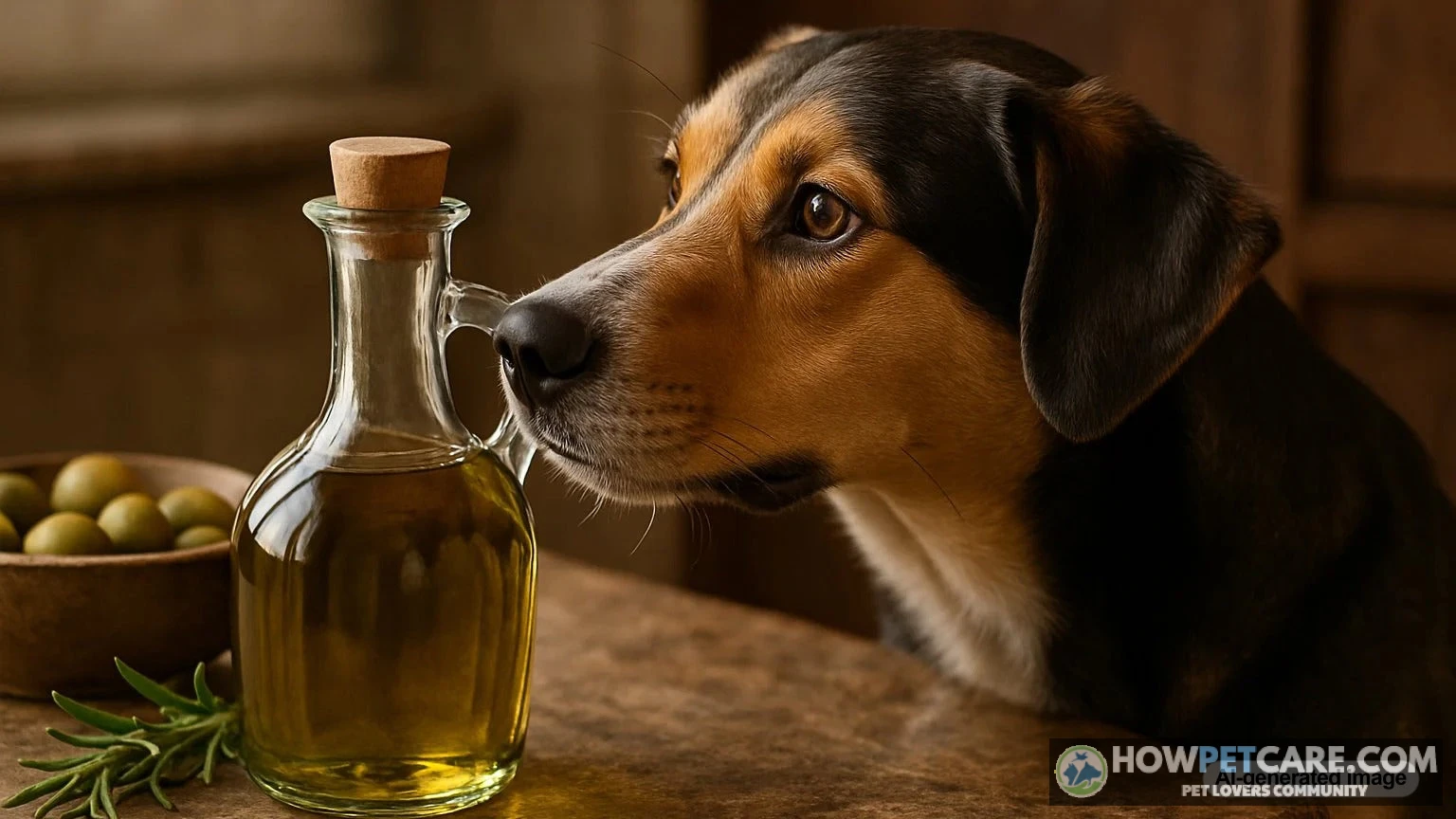

Small amounts of extra virgin olive oil can be safe for many healthy adult dogs when measured and mixed into food, but it is not necessary or a treatment. Avoid it for dogs with pancreatitis history, obesity, puppies, or fat-restricted diets, and monitor stool, appetite, and weight.
Small amounts of olive oil can be safe for many healthy adult dogs when mixed into food, but it isn’t a cure-all and shouldn’t replace a complete canine diet or veterinary care. Whether it fits your dog depends on weight, body condition, health status, and whether you can measure and monitor the amount consistently.
Is Olive Oil Safe for Dogs? The Short Verdict
Olive oil is generally safe for healthy adult dogs in small amounts, but “safe” doesn’t mean “necessary.” Dogs don’t need olive oil to thrive if they already eat a complete and balanced dog food. It works as an occasional, measured addition, not a health treatment. If you’re comparing options, safe human foods for dogs can help frame olive oil as only an optional add-on.

Who should avoid olive oil:
- Dogs with a history of pancreatitis or suspected fat intolerance
- Dogs that are overweight or obese
- Dogs on fat-restricted or prescription diets
- Puppies under 12 months, pregnant dogs, and nursing dogs unless a veterinarian approves
- Dogs with sensitive digestion or recent vomiting or diarrhea
What “safe” means in practice:
- Use extra virgin olive oil unless a veterinarian recommends otherwise
- Start below the maximum daily amount and watch stool quality, appetite, and weight
- Never free-pour; measure every serving
- Stop and contact a veterinarian if warning signs appear
Olive Oil Benefits for Dogs: Skin, Coat, Joints, and Digestion
Olive oil contains monounsaturated fats, oleic acid, vitamin E, and polyphenols—nutrients of interest in a canine diet. The most commonly discussed benefit is support for skin and coat health. Olive oil may help some dogs with dry skin or a dull coat as part of a broader care plan, but it isn’t a guaranteed fix. That claim is best treated as anecdotal. Digestive health claims, including constipation relief, are even weaker: some owners report softer stool after small amounts, but too much oil can cause loose stool or diarrhea. Unlike plain rice in a bland diet, olive oil should not be used to settle an upset stomach.

Evidence-quality labels
- Label A, anecdotal: owner-reported observations without controlled data. Example: some owners report softer stool or a shinier coat.
- Label B, expert opinion: veterinary or nutrition professional guidance without a cited study. Example: extra virgin olive oil is often preferred for freshness and quality.
- Label C, study-supported: backed by available research in dogs or closely related evidence. Example: olive oil provides monounsaturated fat and vitamin E, which are recognized dietary nutrients.
Apply the label next to each benefit claim instead of using words like “proven” or “guaranteed.” Treat skin, coat, joint, immune, and ear claims as weaker unless a specific study is cited. Older studies have examined olive oil’s effects on protein digestion in dogs and fatty acid concentrations in dog skin, but they’re dated and shouldn’t be read as current proof that adding olive oil will improve your dog’s health.
Benefits with weaker support
Joint, brain, heart, and immune benefits appear often on retail sites but lack strong dog-specific evidence. Omega-3s are frequently cited for joints, yet olive oil isn’t a meaningful source of the omega-3 fatty acids found in fish oil. Ear care isn’t a standard use for olive oil; putting oil in a dog’s ears can worsen an undiagnosed infection.
How Much Olive Oil to Give Your Dog by Weight
Base the daily amount on body weight, body condition, and health status. Start below the maximum and reassess after several days. Track stool quality, appetite, and weight during introduction.
Daily Olive Oil Amount by Dog Weight
| Dog weight range | Starting amount | Maximum daily amount | Calories from max amount | Notes |
|---|---|---|---|---|
| Under 10 lb | 1/8 tsp | 1/4 tsp | About 10 kcal | Toy breeds need tiny, carefully measured amounts |
| 10 to 25 lb | 1/4 tsp | 1/2 tsp | About 20 kcal | Small dogs; reassess stool after 3 to 5 days |
| 26 to 50 lb | 1/2 tsp | 1 tsp | About 40 kcal | Medium dogs; keep within total daily calories |
| 51 to 90 lb | 1 tsp | 1 1/2 tsp | About 60 kcal | Large dogs; do not scale up by breed size alone |
| Over 90 lb | 1 1/2 tsp | 2 tsp | About 80 kcal | Giant breeds still need weight-based limits |
Start below the maximum and increase only if stool, appetite, and weight stay normal. Do not exceed the listed amount without veterinary guidance.

Starting amounts
Use the starting column on the first day. If the dog tolerates it well for 3 to 5 days, you may move toward the maximum for its weight range. Toy breeds require especially tiny doses because even a quarter teaspoon represents a meaningful share of their daily calories.
Reassessment checkpoints
- Day 3 to 5: check stool consistency and appetite
- Day 7 to 14: check body weight and coat appearance
- Ongoing: reduce or stop if weight rises, stool loosens, or appetite drops
Risks and Side Effects of Olive Oil for Dogs
Excess fat can contribute to weight gain and obesity. Olive oil may aggravate pancreatitis or interfere with a fat-restricted diet plan. Possible digestive upset includes loose stool, vomiting, or reduced appetite. High-calorie oils can unbalance an otherwise complete canine diet. Stop feeding and contact a veterinarian if warning signs appear.
Pancreatitis and fat-restricted diets
Dogs with pancreatitis history or suspected fat intolerance face high risk if given olive oil. The pancreas can become inflamed when exposed to dietary fat, and added oil may trigger or worsen an episode. Dogs on fat-restricted or prescription diets shouldn’t receive olive oil unless the veterinarian changes the feeding plan.
When side effects start
Side effects can appear within a day or two of starting oil. Watch for loose stool, vomiting, abdominal discomfort, lethargy, or sudden weight gain. If any of these occur, stop the oil and contact your veterinarian.
When to Avoid or Limit Olive Oil
| Condition or situation | Risk level | Recommended action |
|---|---|---|
| Pancreatitis history or suspected fat intolerance | High | Avoid unless a veterinarian specifically approves |
| Obesity or overweight body condition | High | Avoid or use only with a calorie-controlled veterinary plan |
| Fat-restricted or prescription diet | High | Do not add olive oil unless the veterinarian changes the plan |
| Puppy under 12 months | Moderate | Ask a veterinarian before adding any oil |
| Pregnant or nursing dog | Moderate | Use only with veterinary guidance |
| Chronic illness, kidney disease, or medication use | Moderate | Review timing and interactions with a veterinarian |
| Sensitive digestion or recent vomiting or diarrhea | Moderate | Start with a very small amount or skip until resolved |
| Healthy adult dog with stable weight | Lower | May trial a measured amount with monitoring |
Puppies, Pregnant Dogs, and Toy or Giant Breeds
Puppies need extra caution because their diets and digestive systems are still developing. Their calorie and nutrient needs are best met through a puppy-formulated, complete diet. Adding olive oil can unbalance that plan and contribute excess calories.

Puppy guidance
Ask a veterinarian before adding any oil to a puppy’s food. Puppies under 12 months shouldn’t receive olive oil as a routine supplement without professional approval.
Special life stages
Pregnant or nursing dogs should use olive oil only with veterinary guidance. Their nutritional demands change during gestation and lactation, and added fat may interfere with a prescribed prenatal or nursing diet.
Toy breeds need very small, carefully measured amounts because their daily calorie budget is low. Giant breeds need weight-based limits rather than household teaspoon assumptions; a large dog can still receive too many calories if the owner scales up by breed size instead of measured weight. Body condition matters as much as breed size.
Which Olive Oil Type and Quality Should You Choose
Extra virgin olive oil is generally preferred for quality and freshness. Avoid flavored, garlic-infused, or heavily processed oils. Garlic is toxic to dogs and should never be included in anything you feed them.

EVOO vs. other olive oils
Extra virgin olive oil is less refined and typically fresher than regular or light olive oil. Quality matters more than marketing claims about skin or immune benefits. Don’t assume that a more expensive bottle is safer for your dog.
Storage and oxidation
Check freshness and storage to reduce oxidation and rancidity. Store oil in a cool, dark place and keep the bottle tightly closed. Don’t heat olive oil with dog food in ways that may worsen oxidation. Discard oil that smells rancid or stale.
Feeding Olive Oil Safely: Mixing, Storage, and Oxidation
Mix the measured amount thoroughly into the dog’s regular food. Store oil-mixed food according to food safety rules and avoid letting it sit at room temperature for long periods. Discard rancid-smelling or oxidized oil. Keep calories from oil within the dog’s overall daily energy needs. Use consistent measuring tools rather than free-pouring.
Meal mixing
Pour the measured oil over the food and stir well so the dog receives the full dose in each bite. Don’t drizzle oil on top and leave it uneaten; the dog may consume too much or too little.
Storage and freshness checks
Buy small bottles if you’ll use oil slowly, since oxidation accelerates after opening. Check the oil before each use. If mixed food smells off, discard it rather than saving it for the next meal.

Calorie Adjustment Worked Example
Example: A 40 lb adult dog eats 900 kcal per day and is at a healthy weight.
- Choose a starting amount: 1/2 tsp olive oil per day.
- Estimate the added calories: 1/2 tsp is about 20 kcal.
- Subtract those calories from the dog’s usual food: 900 kcal minus 20 kcal = 880 kcal from regular food.
- If the food label says 350 kcal per cup, reduce by about 0.06 cup, or roughly 1 tablespoon of kibble; measure with a kitchen scale if possible.
- Recheck after 7 to 14 days: body weight, stool quality, appetite, and coat appearance.
- If weight rises or stool loosens, reduce or stop the olive oil and return calories to the original plan.
Olive Oil With Fish Oil, Omega-3 Supplements, and Fat-Restricted Diets
Don’t stack multiple fat supplements without veterinary guidance. Fish oil and olive oil serve different nutritional roles. Fish oil provides omega-3 fatty acids such as EPA and DHA, while olive oil is primarily monounsaturated fat. Using both at once adds calories and fat without a proven benefit for most dogs.
Supplement stacking
Track total dietary fat rather than counting olive oil alone. If your dog already receives fish oil or an omega-3 supplement, ask a veterinarian before adding olive oil. Medication timing and supplement interactions should be reviewed by a professional.
Fat-restricted diet cautions
Dogs on fat-restricted diets may need to avoid or limit olive oil. The oil adds fat and calories that can conflict with a therapeutic feeding plan. Dogs with kidney disease or other chronic illness need individualized nutrition advice before any oil is added.
When to Skip Olive Oil or Call Your Veterinarian
This section turns the article into a practical safety decision checklist. Use it before the first feeding and whenever your dog’s health changes.
Red-flag symptoms
- Vomiting
- Diarrhea
- Abdominal pain or a tense belly
- Lethargy
- Sudden weight gain
- Loss of appetite
Feed-or-Don’t-Feed Decision Checklist
- Is the dog a healthy adult with no pancreatitis history? If no, stop and ask a veterinarian.
- Is the dog at a healthy body condition score, not overweight or obese? If no, avoid or limit olive oil.
- Is the dog on a fat-restricted, prescription, or weight-loss diet? If yes, avoid unless a veterinarian approves.
- Is the dog a puppy, pregnant, nursing, or on medication? If yes, ask a veterinarian first.
- Can you measure the amount precisely with a teaspoon or syringe? If no, do not free-pour.
- Are you prepared to track stool, appetite, and weight for 7 to 14 days? If no, wait until you can monitor.
- Verdict: Feed only if all answers are yes; otherwise skip or ask a veterinarian.
Decision checklist
Skip olive oil for dogs with pancreatitis history or suspected fat intolerance. Call a veterinarian for vomiting, diarrhea, abdominal pain, lethargy, or weight gain. Use veterinary guidance for dogs with kidney disease, chronic illness, or medication use. Reassess if benefits aren’t visible after a reasonable trial period. Keep olive oil as an optional supplement, not a required part of the canine diet.
Olive oil can be a safe, occasional addition for some healthy adult dogs, but it’s never required. Measure precisely, start small, monitor closely, and involve your veterinarian whenever your dog’s health status is anything other than straightforward.

| Condition or Situation | Risk Level | Recommended Action |
|---|---|---|
| Pancreatitis history or suspected fat intolerance | High | Avoid unless a veterinarian specifically approves |
| Obesity or overweight body condition | High | Avoid or use only with a calorie-controlled veterinary plan |
| Fat-restricted or prescription diet | High | Do not add olive oil unless the veterinarian changes the plan |
| Puppy under 12 months | Moderate | Ask a veterinarian before adding any oil |
| Pregnant or nursing dog | Moderate | Use only with veterinary guidance |
| Chronic illness, kidney disease, or medication use | Moderate | Review timing and interactions with a veterinarian |
| Sensitive digestion or recent vomiting or diarrhea | Moderate | Start with a very small amount or skip until resolved |
| Healthy adult dog with stable weight | Lower | May trial a measured amount with monitoring |
FAQ
Is olive oil good for dogs itchy skin?
It may help some dogs as part of a broader skin-care plan, but it is not a guaranteed fix. Persistent itching should be evaluated by a veterinarian.
Is olive oil good for dogs ears?
Olive oil is not a standard ear treatment and should not be put in the ears without veterinary direction. Ear symptoms can signal infection or other problems.
Is olive oil good for dogs with kidney disease?
Dogs with kidney disease need individualized nutrition advice, so ask a veterinarian before adding olive oil. It should not replace a prescribed renal diet.
Can olive oil help dog constipation?
Some owners use small amounts, but evidence is limited and too much can cause diarrhea. Check with a veterinarian if constipation lasts more than a day or two.