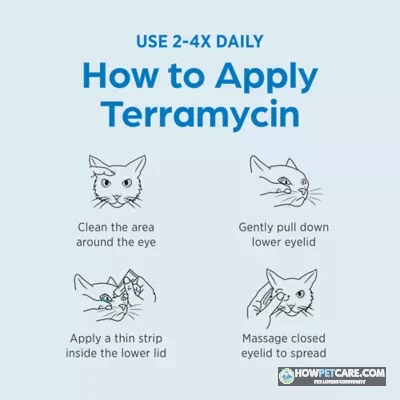

Terramycin for cats is a prescription-only antibiotic eye ointment (oxytetracycline + polymyxin B) used for bacterial conjunctivitis. Apply a ~¼-inch strip into the lower lid 2–4 times daily, finishing the full course. It won’t treat viral causes like feline herpesvirus, and since October 2024 it requires a vet’s prescription in the U.S.
Terramycin for Cats in Short: What It Treats and Whether You Still Need a Prescription
If your cat has goopy, red eyes and you’re wondering whether terramycin for cats is the right option, here’s the short version: it’s a topical antibiotic ointment for bacterial eye infections in cats. It won’t touch viral causes such as feline herpesvirus (FHV-1). As of October 2024, you need a veterinarian’s prescription in the U.S., so the legal path is a vet visit or an order through a vet-authorized online pharmacy. A tube runs roughly $30, depending on the retailer. Older sources that list it as over the counter are outdated. The purchasing section below covers the exact legal steps.
What is in the tube and how it works
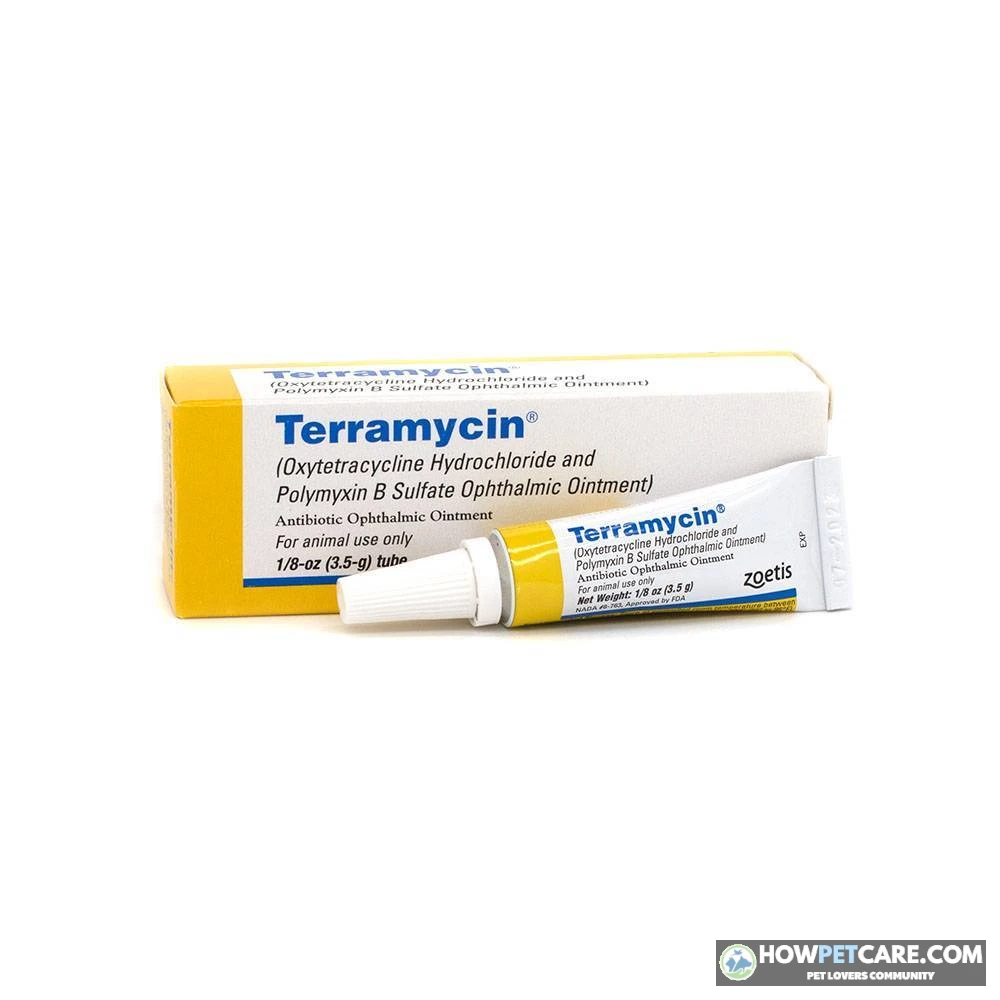
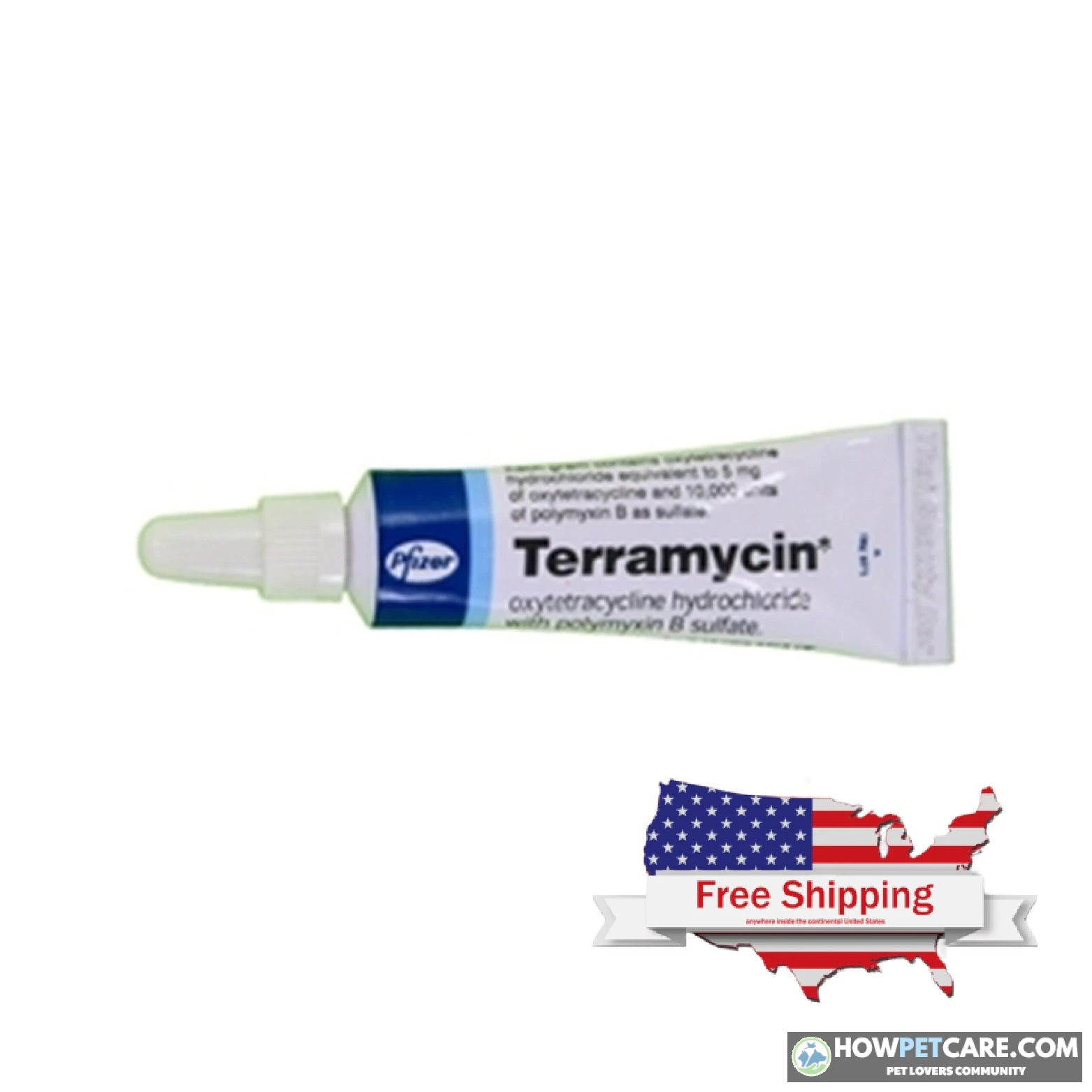
Each 3.5 g tube holds oxytetracycline hydrochloride (5 mg/g) and polymyxin B sulfate (10,000 units/g) suspended in a petrolatum base. Together they cover both gram-positive and gram-negative bacteria, including Chlamydophila felis and Mycoplasma species behind many cases of feline conjunctivitis. The ointment keeps antibacterial levels in tears for up to 12 hours.
Which feline eye problems it is meant for
Terramycin is labeled for bacterial conjunctivitis—what many call pink eye in cats—and for secondary bacterial infections of the eye. Vets also reach for tetracycline-class ointments against Chlamydia felis and Mycoplasma conjunctivitis; the MSPCA antimicrobial brief backs frequent dosing, about four times daily, for those organisms. Viral infections, fungal infections, and eye injuries won’t respond to it.
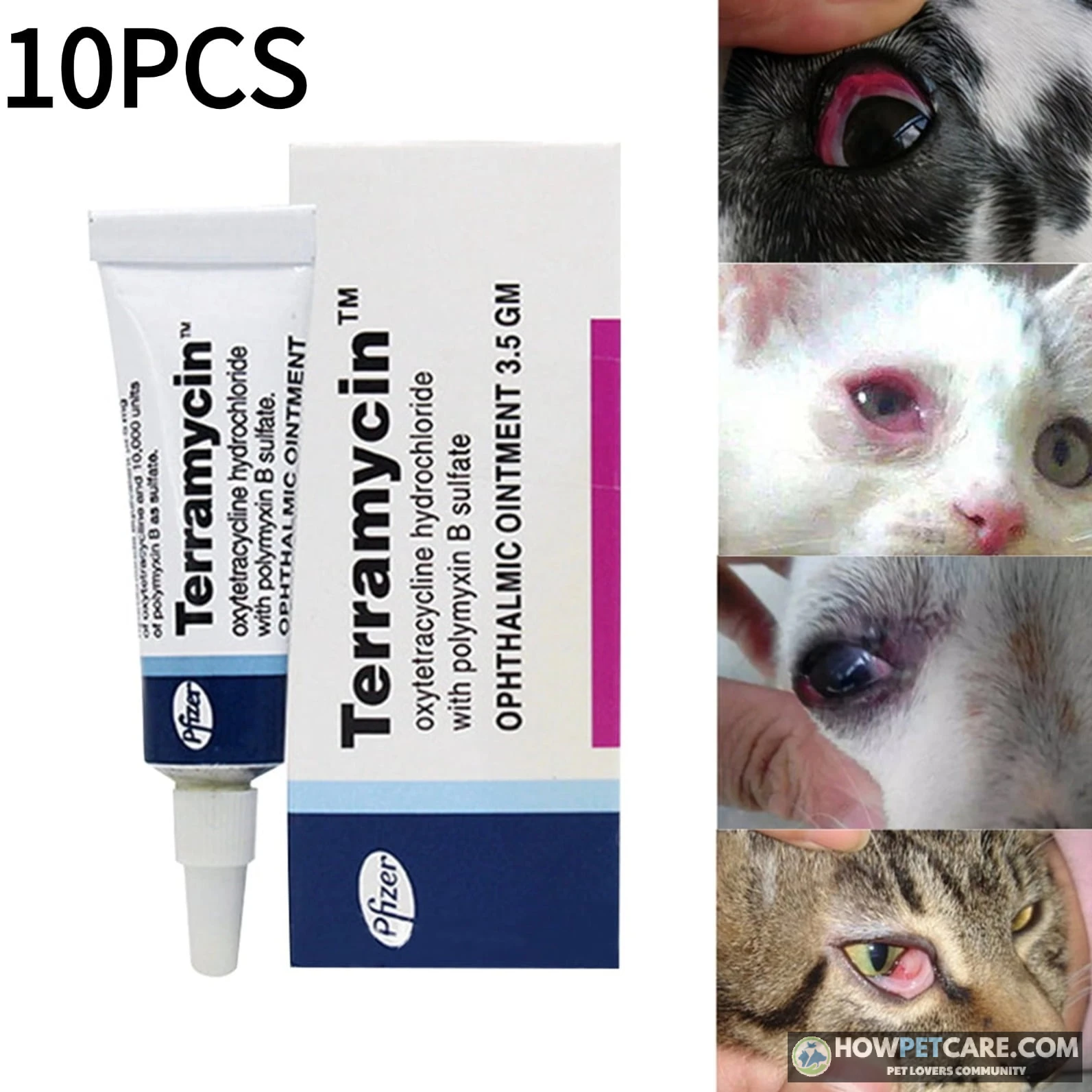
Since October 2024, Terramycin ophthalmic ointment has moved from over-the-counter to prescription-only status in the U.S. due to FDA guidance on medically important antimicrobials. Any product sold without a prescription is either old stock, mislabeled, or from an unverified source. See the purchasing section for the legal steps to obtain it.
Is Your Cat’s Eye Discharge Bacterial or Viral? A Triage Checklist Before You Treat
Most feline conjunctivitis traces back to feline herpesvirus (FHV-1), which often comes with sneezing, nasal discharge, or other upper respiratory signs. Antibiotic ointment won’t clear a virus, although a bacterial infection can tag along as a secondary issue. Figuring out which you’re dealing with saves money and avoids delayed care.
Signs that point to herpesvirus or another viral cause
- Clear or watery discharge early on, becoming thicker later
- Sneezing, nasal discharge, congestion, or fever
- Recurrent flare-ups, especially after stress, moving, or boarding
- Both eyes affected, or rapid spread from one eye to the other
Red flags that mean skip the ointment and call a vet
- Squinting or holding the eye shut
- Cloudy, bluish, or hazy cornea
- Visible scratch, white spot, or ulcer on the eye surface
- Bulging eye or extreme redness
- Light sensitivity (photophobia)
- Lethargy, fever, or not eating
- Any eye symptoms in a kitten under ~8 weeks
Only a veterinary exam can confirm the cause. A fluorescein stain checks for a corneal ulcer, which matters because putting antibiotic ointment on an unrecognized ulcer can delay healing. Your vet may also run a PCR test or culture to pin down Chlamydia, Mycoplasma, or FHV-1.

Color of discharge alone cannot confirm the cause. Thick yellow/green discharge suggests bacterial involvement, but many viral cases develop secondary bacterial infection. When in doubt, get a vet exam before self-treating.
Bacterial vs. Viral Cat Eye Infection: Signs and Next Step
| Sign or situation | More likely bacterial | More likely viral (FHV-1) | What to do |
|---|---|---|---|
| Discharge type | Thick, yellow or green, crusting the lids shut | Clear and watery early on, turning thicker later | Color alone can’t confirm cause — note it for the vet |
| Other illness signs | None — eye is the only problem | Sneezing, nasal discharge, congestion, fever | URI signs strongly suggest herpesvirus; antibiotic ointment alone won’t fix it |
| History | First episode, often after a scratch or debris | Recurrent flare-ups, especially after stress, moving, or boarding | Recurrence pattern is a classic FHV-1 fingerprint |
| One eye vs. both | Often starts in one eye | Frequently both, or spreads quickly | Either pattern can appear in both types — use it as a hint, not proof |
| Squinting, cloudy or bluish cornea, eye held shut, bulging | Possible in either | Possible in either | Red flag: skip self-treatment and see a vet now — could be a corneal ulcer |
| Kitten under ~8 weeks with any eye symptoms | Possible in either | Very commonly herpesvirus | Vet visit is non-negotiable — neonatal eye infections can permanently damage the eye |
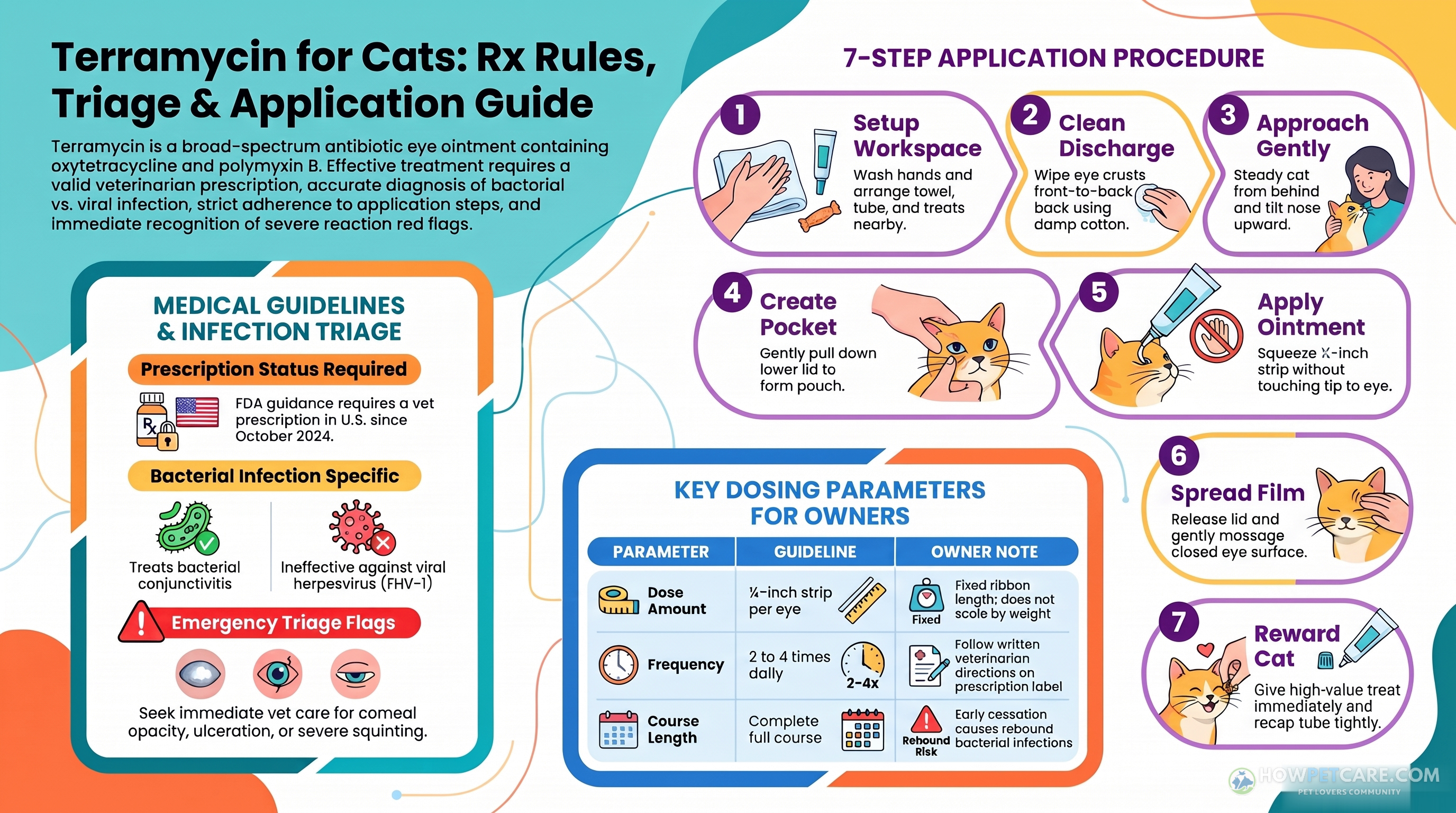
How to Apply Terramycin Eye Ointment to a Cat, Step by Step
Putting ointment in a cat’s eye can feel intimidating. This walkthrough is built so each step could be a photo or a short video clip. Follow the order to keep stress low and get as much medicine as possible into the eye.
What to gather before you start
- Terramycin tube (cap off)
- Damp cotton balls or gauze squares
- A bath towel (for a "purrito" wrap if needed)
- High-value treats
- Clean hands

Applying to a squirmy or fearful cat
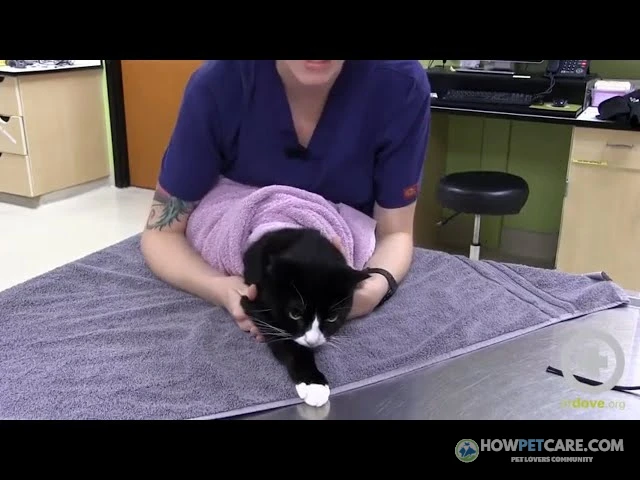
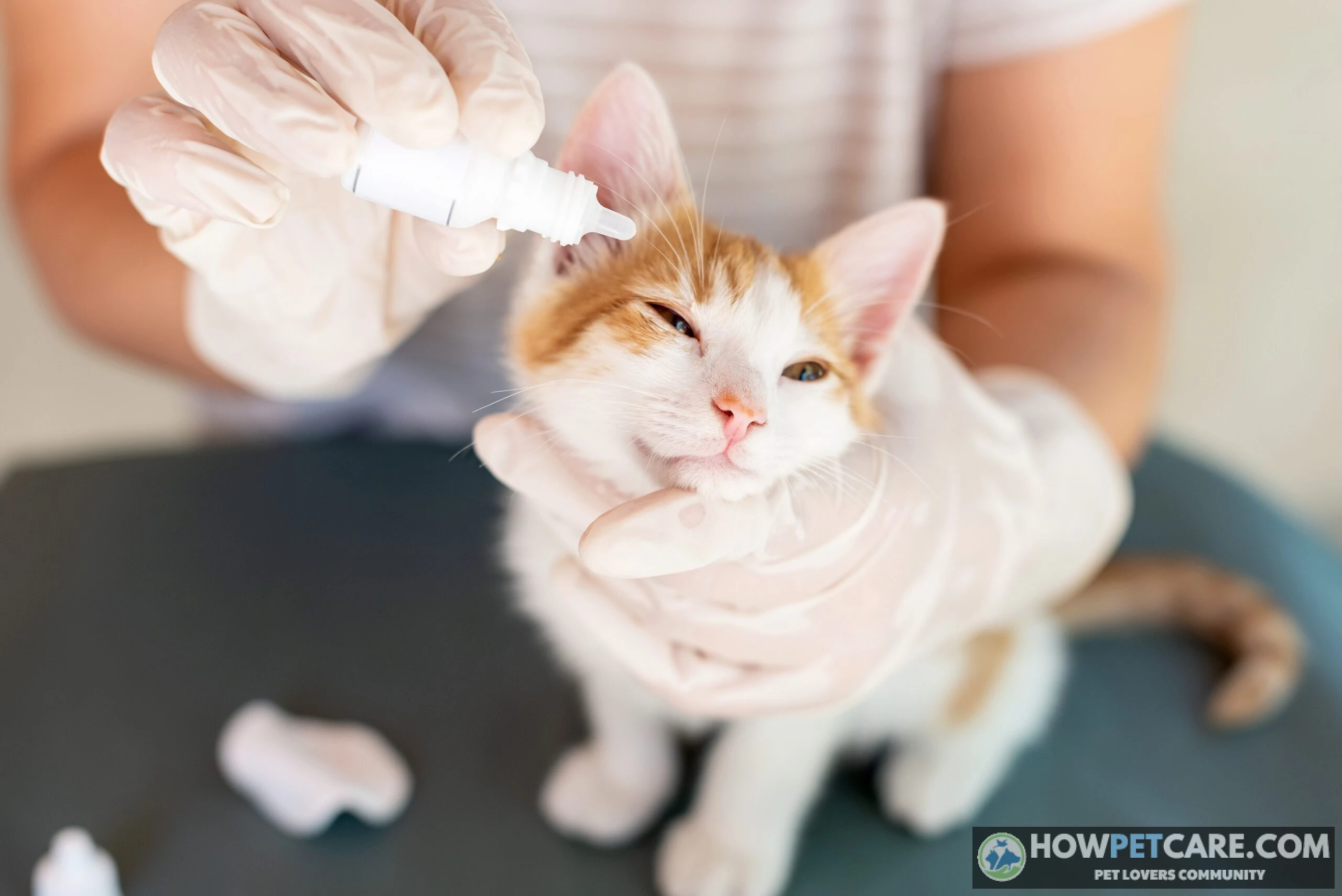
Swaddle the cat in a towel with just the head sticking out—the "purrito"—and get a second person to help; one person holds the wrap while the other applies the ointment. If you’re treating both eyes, do the healthier-looking eye first, and never share a tube between cats. If stress makes even a towel wrap impossible, ask your vet about a gabapentin dose for anxious cats before handling.
-
Setup
Wash your hands. Lay out the tube (cap off), a damp cotton ball or gauze square, and a towel within arm’s reach. Have treats ready.
-
Clean wipe
Wipe away crusts and discharge with the damp cotton ball, swiping once front-to-back per wipe. Use a fresh section each pass so you’re not smearing discharge back onto the eye.
-
Approach
Come at the cat from behind or the side, never looming over the face. Steady the head with your non-dominant hand and tilt the nose slightly upward.
-
Pocket
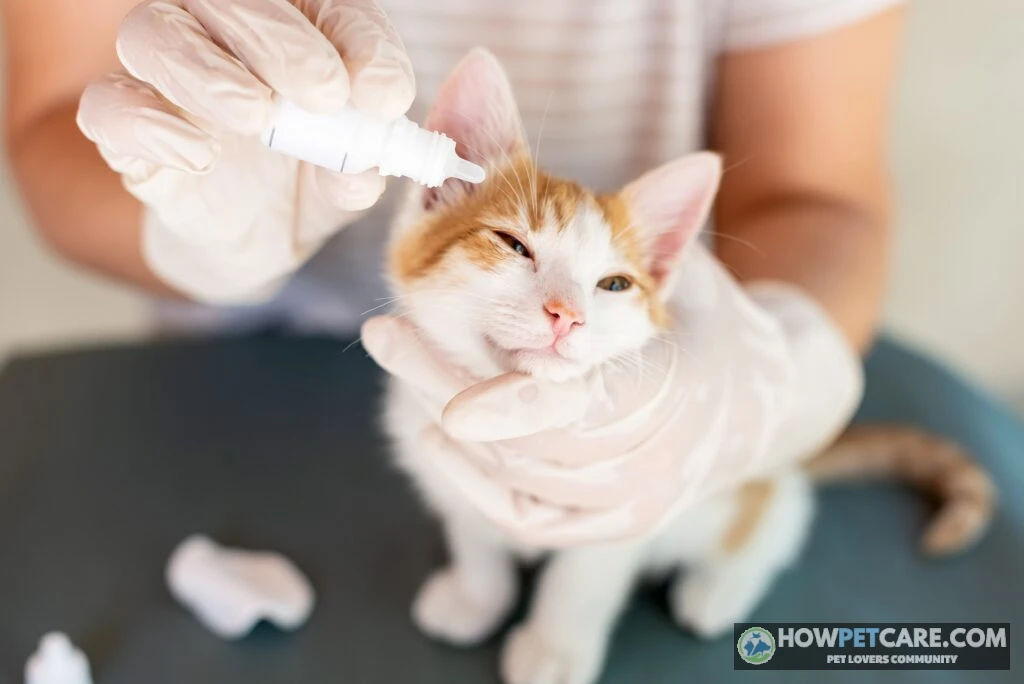
With the thumb or finger of your steadying hand, gently pull the lower eyelid down and away from the eye to form a small pocket.
-
Strip
Squeeze a thin ~¼-inch ribbon of ointment into the pocket. Hold the tube tip a few millimeters above the tissue — it must never touch the eye, lashes, or fur.
-
Spread
Release the lid, let the cat blink, and gently massage the closed lid for a few seconds to distribute the film. Wipe away any excess on the fur.
-
Reward
Treat immediately. Expect a greasy, blurry look for a few minutes — that’s normal. Wipe the tube tip clean and recap tightly.
Hygiene reminders: Do not touch the tip to the eye. Wipe the tip clean after each use and cap tightly. Do not share a tube between cats. If both eyes need treatment, apply to the healthier eye first.
Terramycin Dosage for Cats: Strip Length, Frequency, Course Length, and Missed Doses
The table below pulls together label guidance, the MSPCA antimicrobial brief, and standard veterinary practice. The written directions on your prescription label override any generic schedule.
Terramycin Dosing at a Glance for Cats
| Item | Guidance | Source or who confirms it | Notes for owners |
|---|---|---|---|
| Amount per dose | A thin strip about ¼ inch long per affected eye | Product label | The dose does not scale with body weight — it’s a film across the eye surface, not a body-mass dose |
| Frequency | Typically 2–4 times daily; the MSPCA antimicrobial brief recommends about 4 times daily (QID) for tetracycline-type eye ointments | Product label, then your vet’s written directions | Some labels list fewer applications — the vet’s instructions on the label override any generic schedule |
| Course length | Finish the entire prescribed course even if the eye looks normal by day 2 or 3 | Prescribing vet | Stopping early is the most common cause of a rebound infection |
| Missed dose | Apply as soon as you remember, unless it’s almost time for the next dose | Standard ointment practice — confirm with vet or label | Never apply a double strip to ‘catch up’ |
| Storage | Room temperature (68–77°F / 20–25°C), cap tight, tip kept clean | Product label | Discard at the expiry date or sooner if the tip touched the eye; many clinics advise discarding roughly 30 days after opening |
| Kittens under ~8 weeks | No neonate-specific dose is established on the label | Must be set by a vet | Sealed or swollen eyelids in newborns (ophthalmia neonatorum) need a vet to open and flush the eye — do not squeeze ointment onto a closed kitten eye |
Terramycin for kitten eye infection: what is known and what needs a vet
Safety and dosing data for neonates under 5 weeks aren’t established. Kitten conjunctivitis is often driven by herpesvirus, so an antibiotic might not be the main treatment. If a kitten’s eyelids are sealed shut with discharge, a veterinarian needs to open and clean them before any ointment goes on. Always get a vet-confirmed plan for kittens under ~8 weeks.
Terramycin Side Effects in Cats and Allergic-Reaction Red Flags
Common and mild (expected)
- Temporary blurred vision (greasy film over the eye)
- Slight redness or irritation immediately after application
- Extra blinking or pawing at the eye for a minute or two
Allergic or hypersensitivity signs — stop the ointment and seek emergency care
- Facial swelling, hives, or rapidly worsening eyelid redness/swelling
- Frantic pawing at the face, vomiting, or trouble breathing
- Weakness or collapse
Anaphylaxis from topical tetracycline/polymyxin B is rare but documented. In one study of 61 feline cases, 21% (13/61) had anaphylactic reactions, typically within 4 hours of administration. The polymyxin B component is the likely trigger. If you spot any of these signs, wipe the eye clean, stop the medication, and call your vet or an emergency clinic right away. The ASPCA Animal Poison Control Center (888-426-4435) is another option.
Cats who need extra caution
- Known sensitivity to tetracyclines or polymyxin B
- Corneal ulcer (requires a vet’s decision; tetracyclines have anti-collagenase properties that can aid ulcer healing, but the choice of drug and frequency must be vet-directed)
If your cat develops facial swelling, hives, vomiting, or difficulty breathing after applying Terramycin, wipe the eye clean and seek veterinary emergency care immediately. This is a life-threatening emergency.
How Long Terramycin Takes to Work, and What to Do If It Isn’t Helping
A day-by-day progress guide (bacterial conjunctivitis, consistent dosing)
- Day 1–2: Discharge may look similar or slightly less; the greasy ointment film is normal.
- Day 2–3 (the 48–72 hour mark): Less discharge when you wipe in the morning, eye opens more fully, less crusting.
- Day 3–5: Eye looks clearly brighter; continue to the end of the prescribed course even if it looks "cured."
The 48–72 Hour Benchmark and ‘Call the Vet If’ Triggers
Call the vet if:
- ☐ No visible improvement after ~3–5 days of correct, consistent dosing
- ☐ The eye gets worse at any point — more squinting, swelling, or discharge
- ☐ New signs appear: cloudy or bluish cornea, eye held shut, visible scratch or white spot on the surface
- ☐ Colored discharge returns after the course ends (suggests viral cause, ulcer, or resistant bug)
- ☐ Your cat goes off food, seems lethargic, or develops sneezing/fever
Stop the ointment and seek care immediately if you see allergic-reaction signs: facial swelling, hives, rapidly worsening lid redness or swelling, frantic pawing at the face, vomiting, or any trouble breathing. Anaphylaxis from topical tetracycline/polymyxin B is rare but documented — wipe the eye clean and call your vet or an emergency clinic right away.
Why it fails
- Viral cause (FHV-1) — antibiotic does not affect the virus
- Fungal infection or an eye injury — needs a different treatment plan entirely
- Corneal ulcer — needs different medication and possibly surgery
- Blocked tear duct, foreign body, or allergy
- Inconsistent dosing (missing doses or stopping early)
- Resistant organism
What the vet may do next
- Swap to a different antibiotic (e.g., fluoroquinolone drops for a deep ulcer)
- Add oral medication if Chlamydia or Mycoplasma is suspected
- Prescribe an antiviral for herpesvirus
- Refer to a veterinary ophthalmologist
Note on lysine: Large studies have not shown a consistent benefit for FHV-1, so it is not recommended as a primary treatment.
When Terramycin Is the Wrong Choice: Erythromycin, Tobramycin, Fluoroquinolones, and Neosporin
The table below shows what a veterinarian weighs when choosing an eye antibiotic. It’s not a self-selection guide. Keep in mind these are all topicals for the eye — a cat with a body-wide bacterial problem like strep needs a systemic drug instead, which is where penicillin dosing for strep in cats comes in.
Terramycin vs. Other Eye Antibiotics: When a Vet Picks Each
| Medication | Form | Typically used for | When it is the better or worse choice | Prescription status |
|---|---|---|---|---|
| Terramycin (oxytetracycline + polymyxin B) | Ointment | Superficial bacterial conjunctivitis; Chlamydia felis and Mycoplasma infections (tetracycline class is preferred); secondary bacterial infection | Better: suspected Chlamydia/Mycoplasma, mild superficial infection, owners who find ointment easier than drops. Worse: severe Pseudomonas corneal ulcers, where an aminoglycoside or fluoroquinolone is usually chosen | Prescription required |
| Erythromycin | Ointment | Superficial bacterial conjunctivitis, similar role to Terramycin | Better: cats with a prior tetracycline-class reaction. Worse: narrower gram-negative coverage than the Terramycin combination; often a matter of vet preference or availability | Prescription required |
| Tobramycin | Drops (occasionally ointment) | Gram-negative infections, including Pseudomonas | Better: corneal ulcers where Pseudomonas is a concern. Worse: can be irritating; poor choice for Chlamydia/Mycoplasma | Prescription required |
| Fluoroquinolones (ciprofloxacin, ofloxacin, moxifloxacin) | Drops | Deeper or serious corneal ulcers, resistant infections | Better: infected or melting corneal ulcers needing strong gram-negative punch. Worse: overkill for routine conjunctivitis; rare hypersensitivity reactions reported in cats | Prescription required |
Why human ointments like Neosporin are not a substitute
Human triple-antibiotic ointments—bacitracin, neomycin, and polymyxin B—aren’t made for the eye. Some versions contain steroids, which can make a herpesvirus infection or a corneal ulcer far worse. Never swap in a human product without a veterinary exam.
Steroid-containing eye ointments can worsen herpesvirus and corneal ulcers. Never use one without a veterinarian’s explicit prescription.
Can You Still Buy Terramycin for Cats Without a Prescription? The Rx Change and How to Get a Tube Now
What changed in October 2024, and why sources disagree
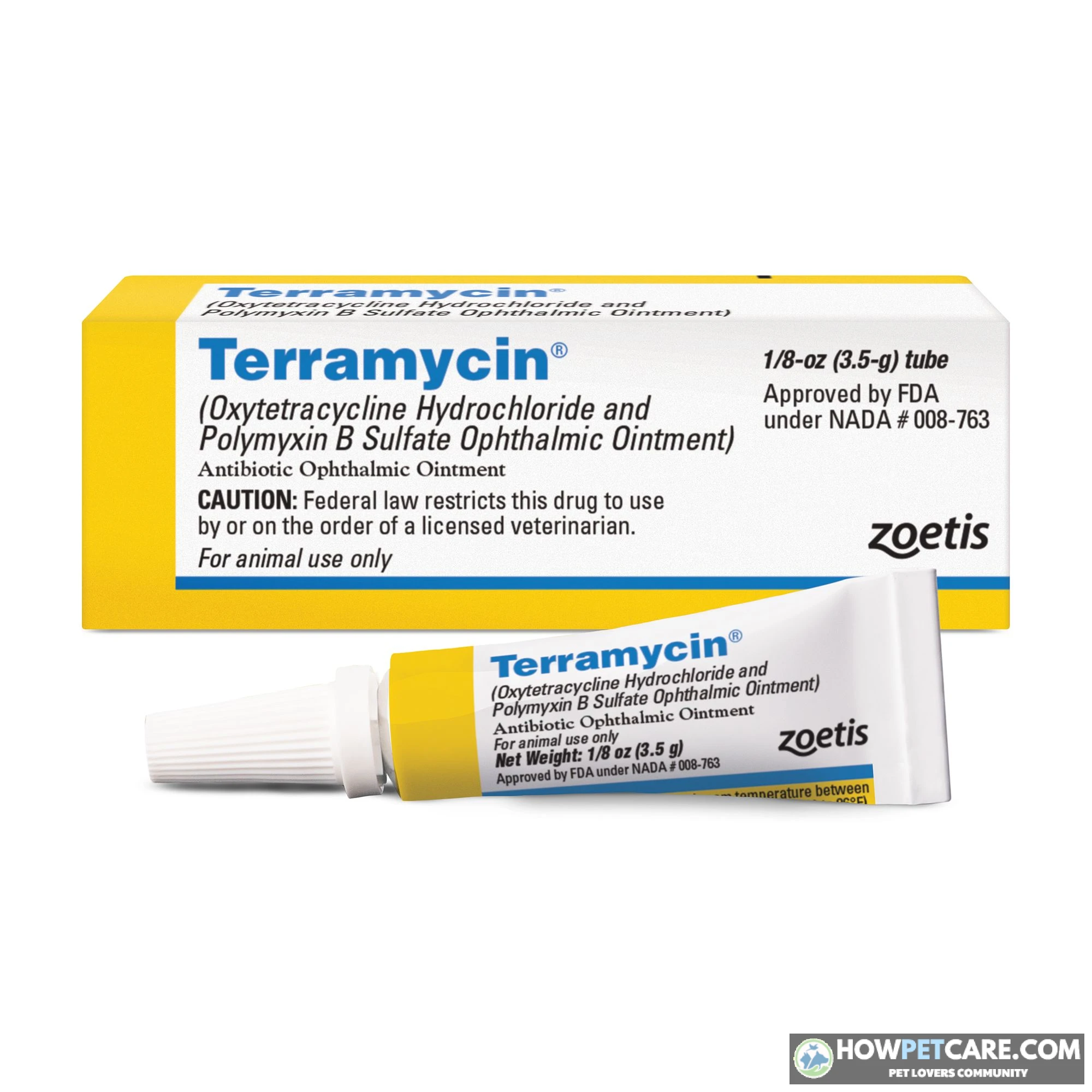
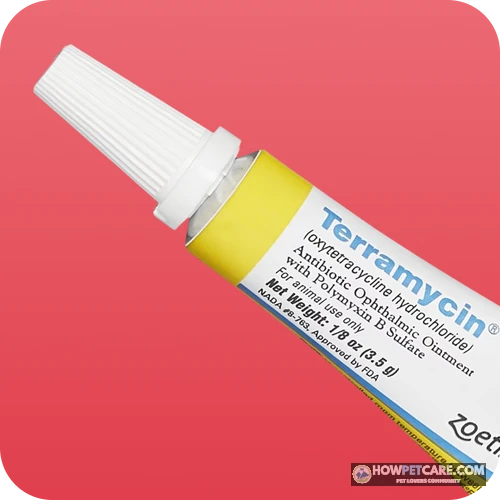
In October 2024, Terramycin ophthalmic ointment switched from over-the-counter to prescription-only in the U.S., in line with FDA guidance on medically important antimicrobials (GFI #263). Many websites and retailers haven’t updated their listings, so you’ll still spot "OTC" claims. Those pages are outdated, selling old stock, or mixing up the eye ointment with other Terramycin products, such as livestock injectables. The Zoetis product label now reads "Rx only."
Step-by-step: how to legally get Terramycin now
- Establish a VCPR. Schedule an exam or a telehealth visit with a veterinarian who can legally prescribe (a valid veterinarian-client-patient relationship is required).
- Get the prescription. The vet writes a script or authorizes a pharmacy fill electronically.
- Fill it. Options include the clinic’s pharmacy, a local pharmacy that compounds or stocks veterinary ophthalmic ointments, or a vet-authorized online pet pharmacy (e.g., Chewy Pharmacy, 1800PetMeds, or similar) that verifies the prescription before shipping.
- Verify the product. Ensure the tube is labeled "Terramycin Ophthalmic Ointment," contains oxytetracycline and polymyxin B, and is not expired.
Cost and where to buy Terramycin for cats in the US
Expect to pay roughly $30 per 3.5 g tube, plus any exam or telehealth fee. Prices vary by retailer and region. Your vet can also write a prescription for a generic oxytetracycline/polymyxin B ophthalmic ointment, if one is available, which may cost less.
Buyer safety checklist:
- Avoid sellers who ship without asking for a prescription.
- Look for a verified pharmacy seal (VIPPS, NABP Vet-VIPPS, or state license).
- Beware of counterfeit or expired product — check the lot number and expiration date on arrival.
For a detailed comparison of online pet pharmacies, see our pillar article on buying pet medications online safely.
Your Terramycin Action Plan: A Decision Checklist for the Next 24 Hours and the Full Course
Printable checklist
Step 1: Check red flags
- ☐ Squinting, cloudy eye, eye held shut, bulging, or light sensitivity
- ☐ Kitten under ~8 weeks with any eye symptoms
- ☐ Lethargy, fever, not eating, or sneezing/nasal discharge
→ If ANY apply: book a vet visit NOW.
Step 2: Get a diagnosis and prescription
- ☐ Schedule an exam or telehealth visit.
- ☐ Ask the vet to confirm bacterial vs. viral cause.
- ☐ Obtain a written prescription with exact strip length, frequency, and course length.
Step 3: Fill and verify
- ☐ Fill through an approved route (clinic, local pharmacy, verified online pharmacy).
- ☐ Confirm the tube matches the prescription and is unexpired.
Step 4: Apply and track
- ☐ Follow the 7-step application walkthrough.
- ☐ Track each dose (time/date) — a phone note or paper log works.
- ☐ Take a daily photo in similar lighting to monitor progress.
- ☐ Finish the full course even if the eye looks normal early.
Step 5: Know when to escalate
- ☐ No improvement after 3–5 days of consistent dosing → call vet.
- ☐ Worsening at any point → call vet.
- ☐ Allergic signs (facial swelling, hives, vomiting, breathing trouble) → emergency care.
- ☐ Colored discharge returns after course ends → call vet.
Storage & reuse: Store at room temperature (68–77°F), cap tight, tip clean. Discard 30 days after opening or at expiration, whichever comes first. Do not reuse a leftover tube for a new problem without checking with your vet.
FAQ
Can I use leftover Terramycin from a previous infection?
Only if the tube is unexpired, uncontaminated, and your vet agrees the new problem looks like the old one. Discard it if the tip ever touched the eye. New or different symptoms, especially squinting or a cloudy eye, call for an exam instead of a leftover tube.
Can I use Terramycin if my cat has an eye ulcer or is squinting?
No, not without a vet. Squinting, a cloudy cornea, or an eye held shut can mean a corneal ulcer, which needs an exam and a vet-chosen treatment.
Will Terramycin treat my cat’s sneezing and runny nose?
No. It is a topical eye ointment and does not treat an upper respiratory infection. If your cat also sneezes or has nasal discharge, the cause is often feline herpesvirus or another respiratory pathogen, and a vet can advise on appropriate treatment.
Should I treat both eyes if only one looks infected?
Ask your vet. Infections often spread to the second eye, so vets commonly advise treating both or watching the healthy eye closely. If you do treat both, apply to the healthy eye first and use a clean tube tip each time.
Is Terramycin eye ointment the same as injectable Terramycin used in livestock?
No. The ophthalmic ointment is formulated for the eye. Injectable and other Terramycin products are made for other uses and should never be put in a cat’s eye.