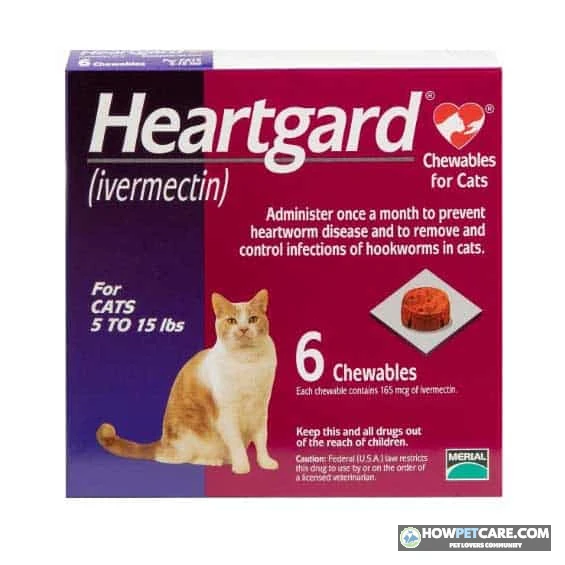

Yes — the American Heartworm Society recommends year-round heartworm prevention for every cat, including indoor-only cats, because mosquitoes get into homes and no approved treatment exists for feline infection. All U.S. feline preventives require a prescription; most are monthly, with one two-month topical option.
Does Your Cat Need Heartworm Prevention?
Yes. Heartworm prevention is worth a conversation for every cat, even one that never goes outside. The American Heartworm Society recommends year-round prevention for cats because mosquitoes get into homes. Outdoor access raises the odds of exposure, but an indoor address doesn’t remove them.
The right choice depends on your cat’s age, weight, health, whether your cat will take a pill, and whether you also need flea or tick protection. In the United States, approved feline heartworm preventives require veterinary authorization. Most are given monthly; one longer-interval topical option is applied every two months.
Do indoor cats need heartworm prevention?
An indoor-only cat generally gets fewer mosquito bites than one that spends time outside. Lower risk isn’t zero risk, though. In one frequently cited study, about one in four cats diagnosed with heartworm infection were described by their owners as indoor-only cats.
That doesn’t mean every indoor cat needs the most expensive combination product. Ask your veterinarian about mosquito exposure where you live, and whether a more focused preventive — rather than one that also covers ticks or multiple intestinal parasites — fits your household.
Can cats get heartworms from mosquitoes indoors?
Yes. Mosquitoes transmit heartworms; ordinary contact with another cat does not. An infected mosquito can come through an open door, a damaged screen, or another opening and bite a cat indoors.

When risk is lowest and when to be most cautious
Think about your cat’s circumstances when you discuss options:
- Indoor-only, with intact screens: Exposure may be lower, but mosquitoes can still get inside.
- Window, balcony, or screened-patio access: Check screens and consider how often mosquitoes reach those spaces.
- Indoor/outdoor or outdoor cats: More time outside means more opportunities for bites.
- Multi-cat homes: Discuss prevention for each cat individually; weight, age, and health can differ even when cats share the same environment.
- Any region or season: Mosquito activity varies. Ask your veterinarian about local exposure, but don’t assume winter or a dry spell removes all risk.

Heartworm Disease in Cats vs Dogs: Why Prevention Is the Only Real Protection
How cats get infected: the mosquito-to-cat lifecycle in brief
Dirofilaria immitis is the mosquito-borne parasite responsible for heartworm disease. A mosquito picks up immature parasites from an infected animal and can then pass the infection on when it bites another susceptible animal. Cats are atypical hosts: many worms never survive to adulthood, and an affected cat may have only a few adult worms or none.

That difference from dogs makes feline infection difficult to detect. It doesn’t make it harmless: immature worms can contribute to heartworm-associated respiratory disease, or HARD.
Symptoms and HARD in cats
Signs can include coughing, asthma-like or difficult breathing, vomiting, lethargy, and weight loss. Some cats show few obvious signs before a crisis. Because these symptoms can have several causes, a veterinarian needs to evaluate them rather than relying on symptoms alone.
If your cat is struggling to breathe, collapses, or has severe weakness, contact an emergency veterinarian immediately.
What happens if an infected cat is diagnosed
There is no FDA-approved drug for killing adult heartworms in cats. The drug used to treat heartworm infection in dogs cannot be used in cats. Depending on the cat’s condition, a veterinarian may recommend monitoring and supportive care, medication for inflammation, or surgery in selected cases. Those decisions are individual, and they are not a substitute for prevention.

Heartworm Test for Cats: Do You Test Before Starting and How Often?
Talk about testing before starting a preventive, particularly if your adult cat has never been tested or has respiratory symptoms. The American Heartworm Society recommends screening cats before prevention when possible, using both antigen and antibody tests. Your veterinarian can decide whether testing happens at the same appointment as the first dose or whether other investigations come first.
A negative test does not reliably rule out infection in cats. Nor should an owner delay discussing prevention simply because a test is not immediately available: the veterinarian can weigh the cat’s history, symptoms, product label, and testing options.
Antigen test vs antibody test for cats
An antigen test looks for substances associated primarily with adult female worms. It may miss an infection when there are few worms, only male worms, or no mature female worms.
An antibody test looks for evidence that the cat has been exposed to heartworm larvae. A positive result does not, by itself, prove that adult worms are present now. A veterinarian may combine test results with an examination, chest X-rays, or ultrasound when the history or symptoms warrant it.

Testing an adult cat that has never been tested
Ask whether both blood tests make sense as a baseline and what each result would change. Unlike the familiar dog-testing protocol, feline testing is complicated by low worm burdens and the limitations of each test. Cats can have immature worms that cause respiratory disease without detectable adult worms.
No single testing schedule fits every cat. Some veterinarians recommend periodic screening for apparently healthy cats; others tailor repeat testing to symptoms, exposure, previous results, and preventive lapses. The American Heartworm Society advises discussing periodic retesting with your veterinarian. Ask your clinic for its recommended interval and the reason behind it.
Retesting after a missed month or lapse
Tell your veterinarian the date of the last confirmed dose and the length of the gap. Testing immediately after a possible exposure may be too early for an infection to show up. Your veterinarian can select tests and timing; a follow-up around six to seven months after the possible exposure may be considered, but antibody and antigen tests have different detection windows. Don’t treat a negative early test as proof that the lapse was harmless.
Heartworm Medicine for Cats Compared: Major Preventives Side by Side
Most feline preventives contain a macrocyclic lactone, a drug class that acts against susceptible heartworm larval stages acquired before dosing. Consistent administration matters: a preventive is not an adult-worm cure.
The table is a shopping shortlist, not a substitute for the package label. Parasite claims can apply only to particular species or life stages. Check minimums, availability, and prices against the exact U.S. product and your cat’s weight before you buy. The price ranges are illustrative budgeting estimates, not verified 2026 retail quotes; ask a clinic or pharmacy for current prices.
| Product | Active ingredient(s) | Format | Coverage beyond heartworm | Minimum age / weight | Frequency | Approximate cost per month | U.S. prescription | Possible fit |
|---|---|---|---|---|---|---|---|---|
| Heartgard for Cats | Ivermectin | Oral chewable | Certain hookworms | 6 weeks; check weight band | Monthly | About $8–$15, if available | Yes | A pill-tolerant cat needing limited additional coverage |
| Interceptor for cats | Milbemycin oxime | Oral tablet | Certain roundworms and hookworms | 6 weeks and 1.5 lb | Monthly | About $10–$18, if available | Yes | An oral option when intestinal worm coverage is also useful |
| MilbeGuard | Milbemycin oxime | Oral tablet | Certain roundworms and hookworms | 6 weeks and 1.5 lb; verify feline label | Monthly | About $8–$15, if available | Yes | A possible lower-cost oral alternative; confirm feline availability |
| Revolution | Selamectin | Topical spot-on | Fleas, ear mites, certain roundworms and hookworms | 8 weeks; check weight band | Monthly | About $15–$22 | Yes | A cat that resists pills and also needs flea coverage |
| Selarid | Selamectin | Topical spot-on | Fleas, ear mites, certain roundworms and hookworms | 8 weeks; check weight band | Monthly | About $12–$18 | Yes | A selamectin alternative when stocked |
| Senergy | Selamectin | Topical spot-on | Fleas, ear mites, certain roundworms and hookworms | 8 weeks; check weight band | Monthly | About $10–$16 | Yes | A possible lower-cost selamectin option |
| Revolution Plus | Selamectin and sarolaner | Topical spot-on | Fleas, certain ticks, ear mites, roundworms and hookworms | 8 weeks and 2.8 lb | Monthly | About $20–$28 | Yes | A cat that also needs tick coverage |
| Advantage Multi for Cats | Imidacloprid and moxidectin | Topical spot-on | Fleas, ear mites, certain roundworms and hookworms | 9 weeks and 2 lb | Monthly | About $15–$22 | Yes | Flea and intestinal worm coverage without a tick claim |
| NexGard COMBO | Esafoxolaner, eprinomectin and praziquantel | Topical spot-on | Fleas, certain ticks, roundworms, hookworms and tapeworms | 8 weeks and 1.8 lb | Monthly | About $22–$30 | Yes | A cat whose veterinarian recommends broader parasite coverage |
| Bravecto Plus | Fluralaner and moxidectin | Topical spot-on | Fleas, certain ticks, roundworms and hookworms | 6 months and 2.6 lb | Every 2 months | About $15–$22 when divided across two months | Yes | An eligible cat whose owner prefers a longer interval |
Availability can change, especially for oral feline products. Don’t use a dog product or split doses between cats unless your veterinarian explicitly directs you to do so.

Oral vs topical heartworm preventive: how to choose
A chewable tablet avoids a wet application site, but it only works as intended if your cat swallows the full dose. A topical spot-on avoids pilling, but you have to apply it to the skin at the labeled site and prevent the cat — or a housemate — from licking it while it dries.

For a cat that reliably takes medication and does not need tick coverage, ask whether Heartgard or a feline milbemycin product is available and suitable; some of these oral options also address treatment for roundworms in cats. For a cat that refuses pills and needs flea protection, ask about Revolution, Selarid, Senergy, or Advantage Multi. Compare the actual price for the appropriate weight band rather than assuming one is always cheapest.
Is a combination product worth it for an indoor-only cat?
It can be, but not automatically. Fleas or ticks can enter on other pets or on people, and a combination product may replace a separate medication. A veterinarian can help you decide whether those exposures justify the extra coverage.
Use these questions to narrow the choice:
- Will your cat take a pill? If not, start with a topical discussion.
- Are fleas or ticks a realistic concern? Revolution Plus, NexGard COMBO, and Bravecto Plus include labeled tick coverage; confirm which tick species matter locally.
- Is tapeworm coverage needed? NexGard COMBO includes labeled tapeworm coverage; it may be useful when your veterinarian identifies that need. It can also help to know whether people can catch tapeworms from cats for everyday household hygiene.
- Is remembering monthly dosing difficult? Bravecto Plus has a two-month interval for eligible cats, but it still requires a reliable reminder.
- What is your budget per cat? Compare the total cost of all the parasite products your cat needs, not only the price of one box.
Monthly heartworm prevention for cats vs longer-interval options
Most products in the table are monthly. Bravecto Plus is applied every two months for heartworm prevention in eligible cats; its flea and tick claims can have different durations depending on the parasite, so follow the U.S. label for the specific claim.
Don’t assume that a yearly injectable product used in dogs is an option for cats. Ask your veterinarian which feline product and interval are available for your cat.

Do You Need a Prescription? Rx vs OTC Status and the Cheapest Legitimate Way to Get It
Yes. All FDA-approved feline heartworm preventives listed above require a prescription or veterinarian authorization in the United States. Over-the-counter flea products are not interchangeable with prescription heartworm preventives.
Heartworm prevention for cats without a vet visit
A new in-person appointment is not always necessary if your veterinarian already has the required veterinarian-client-patient relationship and enough current information to prescribe. Whether an exam or telehealth consultation is sufficient depends on state rules and the circumstances. A seller that promises an approved prescription preventive without asking for veterinary authorization is a reason to pause.
To reduce costs, ask whether the prescription discussion can be included in an already-scheduled wellness exam. Request a written prescription and compare the clinic’s price with a legitimate pharmacy’s price, including shipping and rebates. Ask about generic alternatives and multi-dose discounts without assuming that a larger pack is always cheaper.
Buying from online pharmacies safely
A legitimate pharmacy should request your prescription or contact your veterinarian for authorization. Check the pharmacy’s state license and look for verification through the National Association of Boards of Pharmacy. Avoid unregulated imports, unclear packaging, and sites that offer prescription heartworm medicine without a prescription or veterinary approval.

What Heartworm Prevention for Cats Costs vs What an Infection Workup Costs
For planning, the illustrative product ranges above run roughly $8–$30 per cat per month. A real quote may fall outside that range. Product, weight band, pack size, pharmacy, shipping, and rebates all affect the final price; an exam or testing can add to the first-year cost.
A diagnostic workup can cost more than the medication alone, but there is no reliable national price in the evidence available here. The figures below are examples for budgeting — not verified averages or a promise of what your clinic will charge. Request an itemized estimate before nonemergency testing.
| Item | What it includes | Illustrative cost range | How often | Notes |
|---|---|---|---|---|
| Preventive medication | Prescription product for one cat | About $8–$30 per month | Monthly equivalent, year-round | Longer-interval doses must be divided by months covered |
| Veterinary exam | Wellness or sick visit | About $60–$100 | As needed | Regional and clinic fees vary |
| Heartworm blood testing | Antigen and/or antibody tests | About $60–$120 for a panel | As recommended | Confirm which tests and laboratory charges are included |
| Chest X-rays | Imaging to investigate respiratory changes | About $150–$350 | If indicated | Views and interpretation can affect cost |
| Echocardiogram | Heart ultrasound | About $300–$600 | If indicated | Not every cat needs this test |
Real monthly cost by product and supply size
Divide the final pack price by the number of months it protects one cat. For example, if a 12-dose monthly pack costs $180, the medication costs $15 per month, or $180 per year. Two cats using the same priced product would cost $30 per month for medication, provided each receives the correct individual dose.
For a two-month product, divide the price of each dose by two. Add any examination, dispensing, shipping, or testing charges separately. Don’t divide one pipette between cats to make a pack last longer.

Prevention vs diagnosis: the cost contrast
Consider a hypothetical indoor cat whose preventive costs $180 per year. If the veterinarian also recommends a $60–$120 blood-test panel, that example totals $240–$300 before an exam or other fees.
Using the illustrative ranges in the table, an exam, blood-test panel, and chest X-rays total about $270–$570. Adding an echocardiogram, if needed, brings the example to about $570–$1,170. Actual bills can be lower or higher, and not every suspected case needs every test. These are different scenarios, not a prediction that an unprotected cat will become infected or that prevention eliminates all future veterinary costs.
Request the price for your cat’s weight band from your clinic and a verified pharmacy. Compare the final price per month after any shipping or rebate, and include other parasite products the preventive could replace.
How to Dose Heartworm Prevention: Schedule, Kittens, Missed Doses, and Vomiting
Heartworm prevention for cats monthly vs yearly: what’s actually available
The American Heartworm Society recommends year-round prevention. Monthly products are generally given on the same date each month; a longer-interval product follows its own label. Mosquito activity can vary, and preventives act on susceptible larvae acquired before the dose. If you are considering seasonal dosing, ask your veterinarian about local exposure and the precise start and stop dates rather than choosing them yourself.
Set a phone reminder, record each completed dose, and order refills before the supply runs out. Protection can fail after missed or incorrectly administered doses, so no schedule is a substitute for administering the product correctly.

Kittens: when to start
Heartworm prevention for kittens under six months is possible, but not every product is labeled for every kitten. Some oral products start at six weeks; several topicals start later, and Bravecto Plus has a six-month minimum. Check both age and weight in the table, then have your veterinarian confirm the exact product, current weight, and first-dose date. The same age-and-weight checks matter when picking a dewormer for kittens.

What to do after a missed dose
For many monthly preventives, the label directs owners to give a missed dose promptly and resume monthly administration. Follow your product’s instructions and contact your veterinarian if you are unsure how long the gap lasted. Don’t give extra doses to make up for a lapse unless you are instructed to do so.
| Situation | What to do now | When to call your vet | Testing or restart implications |
|---|---|---|---|
| A dose is late | Check the label; generally give a missed monthly dose promptly and record the date | Call if the gap is uncertain or prolonged, or if the cat has symptoms | Ask when to give the next dose and whether follow-up testing is useful |
| Cat vomits after an oral dose | Check the label and contact the vet before repeating the dose; note when vomiting occurred and whether the tablet was visible | Call if you cannot tell how much was retained, or vomiting continues | Do not double-dose on your own; record the incident as a possible gap |
| Cat licks a wet topical | Prevent further licking; offer water and monitor | Call for persistent drooling, vomiting, unusual behavior, or concern about the amount swallowed | Ask whether another dose is needed; do not automatically reapply |
| Another pet grooms the site | Separate the animals and prevent further contact | Call if either animal shows concerning signs or you are unsure about exposure | Ask whether the treated cat received enough medication |
What to do if your cat vomits a dose or licks a topical
There is no universal safe redosing window for every product and situation. Keep the packaging, note the product and the time it was given, and ask your veterinarian whether a replacement dose is appropriate. Follow product-specific food instructions rather than assuming every oral preventive should be given with a meal.
Apply a topical to the labeled spot on the skin, typically at the back of the neck, and keep pets apart until the site is dry as directed. A bitter taste can cause drooling, but tremors, repeated vomiting, marked lethargy, or breathing trouble need urgent veterinary advice. If your veterinarian is unavailable, contact an emergency clinic or a pet poison-control service; fees may apply.
Pregnant, Nursing, or on Other Medications? Safety, Side Effects, and Interactions
Is heartworm prevention safe during pregnancy and nursing?
Safety information differs by product. Some labels include reproductive safety information; others state that safety in breeding, pregnant, or nursing cats has not been established. Neither statement should be generalized to every preventive.
Before dosing a pregnant or nursing cat, tell your veterinarian the product name and stage of pregnancy or nursing. The veterinarian can weigh the label information against the cat’s exposure and health needs.
Medication interactions and chronic illness
Many cats receiving other medications can use a preventive, but the right choice requires an individual review. Tell your veterinarian about kidney disease, hyperthyroidism, respiratory disease, prior reactions, and all medications and supplements — including steroids, flea products, and prescriptions from other clinics. Bring the packaging or a current medication list and your cat’s recent weight.
Possible adverse effects depend on the product and can include vomiting, diarrhea, lethargy, or irritation at a topical application site. Contact your veterinarian about unexpected or persistent signs; seek urgent help for collapse, seizures, or breathing difficulty. Some combination products contain an isoxazoline ingredient, so mention any history of seizures or other neurologic problems when discussing them.
Cat-safe mosquito control: what to avoid
Environmental measures reduce exposure but do not replace a prescription preventive:
- Repair door and window screens, including screens on catios.
- Empty standing water from plant saucers, outdoor containers, and other places where mosquitoes can breed; refresh outdoor pet water regularly.
- Consider keeping cats inside during periods of heavy mosquito activity.
- Ask your veterinarian before applying any repellent to a cat.
- Never apply permethrin-containing dog products to cats; prevent contact with a recently treated dog according to the product label.
- Avoid using essential-oil repellents or sprays on cats, and discuss diffusers and household insecticides with your veterinarian. Natural does not automatically mean cat-safe.
- Keep cats away from foggers and treated areas; follow the pesticide label’s removal, ventilation, and re-entry instructions, and ask your veterinarian or the manufacturer if safety is unclear.

If your cat develops tremors, seizures, or significant illness after contact with an insecticide, seek emergency veterinary help. Bring the product packaging if it is safe to do so.
Your Action Plan: Decide, Test, Buy, and Dose in Five Steps
A printable decision checklist
-
List your cat’s risk factors
Note indoor or outdoor access, age, weight, pregnancy or nursing status, health conditions, and current medications.
-
Talk with your veterinarian
Discuss baseline antigen and antibody testing, local mosquito exposure, and a prescription appropriate for your cat.
-
Choose a format and coverage
Weigh a suitable oral product against a topical; add flea, tick, or intestinal parasite coverage when your veterinarian recommends it.
-
Compare the real price
Ask for a written prescription, check a verified pharmacy and your clinic, and work out the cost per cat per month.
-
Dose and document
Follow the label year-round, set reminders for the correct interval, record each dose, and refill before you run out.
When to call your veterinarian
Call about coughing, new breathing changes, repeated vomiting, a possible medication reaction, or an uncertain or prolonged dosing gap. Ask what testing is appropriate and when it would be meaningful. For severe breathing difficulty, collapse, or seizures, seek emergency care rather than waiting for a routine appointment.
| Product | Active ingredient(s) | Format | Coverage beyond heartworm | Minimum age / weight | Frequency | Approximate cost per month | U.S. prescription | Possible fit |
|---|---|---|---|---|---|---|---|---|
| Heartgard for Catshttps://howpetcare.com/heartworm-prevention-for-cats/ | Ivermectin | Oral chewable | Certain hookworms | 6 weeks; check weight band | Monthly | About $8–$15, if available | Yes | A pill-tolerant cat needing limited additional coverage |
| Interceptor for cats | Milbemycin oxime | Oral tablet | Certain roundworms and hookworms | 6 weeks and 1.5 lb | Monthly | About $10–$18, if available | Yes | An oral option when intestinal worm coverage is also useful |
| MilbeGuard | Milbemycin oxime | Oral tablet | Certain roundworms and hookworms | 6 weeks and 1.5 lb; verify feline label | Monthly | About $8–$15, if available | Yes | A possible lower-cost oral alternative; confirm feline availability |
| Revolution | Selamectin | Topical spot-on | Fleas, ear mites, certain roundworms and hookworms | 8 weeks; check weight band | Monthly | About $15–$22 | Yes | A cat that resists pills and also needs flea coverage |
| Selarid | Selamectin | Topical spot-on | Fleas, ear mites, certain roundworms and hookworms | 8 weeks; check weight band | Monthly | About $12–$18 | Yes | A selamectin alternative when stocked |
| Senergy | Selamectin | Topical spot-on | Fleas, ear mites, certain roundworms and hookworms | 8 weeks; check weight band | Monthly | About $10–$16 | Yes | A possible lower-cost selamectin option |
| Revolution Plus | Selamectin and sarolaner | Topical spot-on | Fleas, certain ticks, ear mites, roundworms and hookworms | 8 weeks and 2.8 lb | Monthly | About $20–$28 | Yes | A cat that also needs tick coverage |
| Advantage Multi for Cats | Imidacloprid and moxidectin | Topical spot-on | Fleas, ear mites, certain roundworms and hookworms | 9 weeks and 2 lb | Monthly | About $15–$22 | Yes | Flea and intestinal worm coverage without a tick claim |
| NexGard COMBO | Esafoxolaner, eprinomectin and praziquantel | Topical spot-on | Fleas, certain ticks, roundworms, hookworms and tapeworms | 8 weeks and 1.8 lb | Monthly | About $22–$30 | Yes | A cat whose veterinarian recommends broader parasite coverage |
| Bravecto Plus | Fluralaner and moxidectin | Topical spot-on | Fleas, certain ticks, roundworms and hookworms | 6 months and 2.6 lb | Every 2 months | About $15–$22 when divided across two months | Yes | An eligible cat whose owner prefers a longer interval |
FAQ
Is there a treatment for heartworm disease in cats?
There is no FDA-approved drug to kill adult heartworms in cats, so veterinarians focus on supportive care, such as monitoring and sometimes steroids, and occasionally surgery. This is why prevention is considered the only reliable protection.
What are the symptoms of heartworm disease or HARD in cats?
Signs include coughing, asthma-like or labored breathing, vomiting, lethargy, and weight loss, although some cats show no signs before sudden collapse. Because symptoms resemble feline asthma, a veterinarian should evaluate any cat with breathing problems.
Should I use oral or topical heartworm prevention for my cat?
Oral chewables suit cats that take pills well and avoid grooming and licking concerns, while topical spot-ons suit cats that refuse pills but need careful application. The right choice depends on your cat’s temperament, other parasites you want covered, and household grooming habits.
Can a cat on heartworm prevention still get infected?
No preventive is described as perfect, and missed or poorly absorbed doses can leave gaps in protection. Giving doses on schedule year-round and following your vet’s testing advice gives the best protection.
Do I need to keep giving prevention in winter?
The American Heartworm Society recommends year-round prevention because mosquito activity and indoor exposure can vary, and monthly dosing works on larvae already acquired. Ask your vet whether any seasonal approach is defensible where you live.