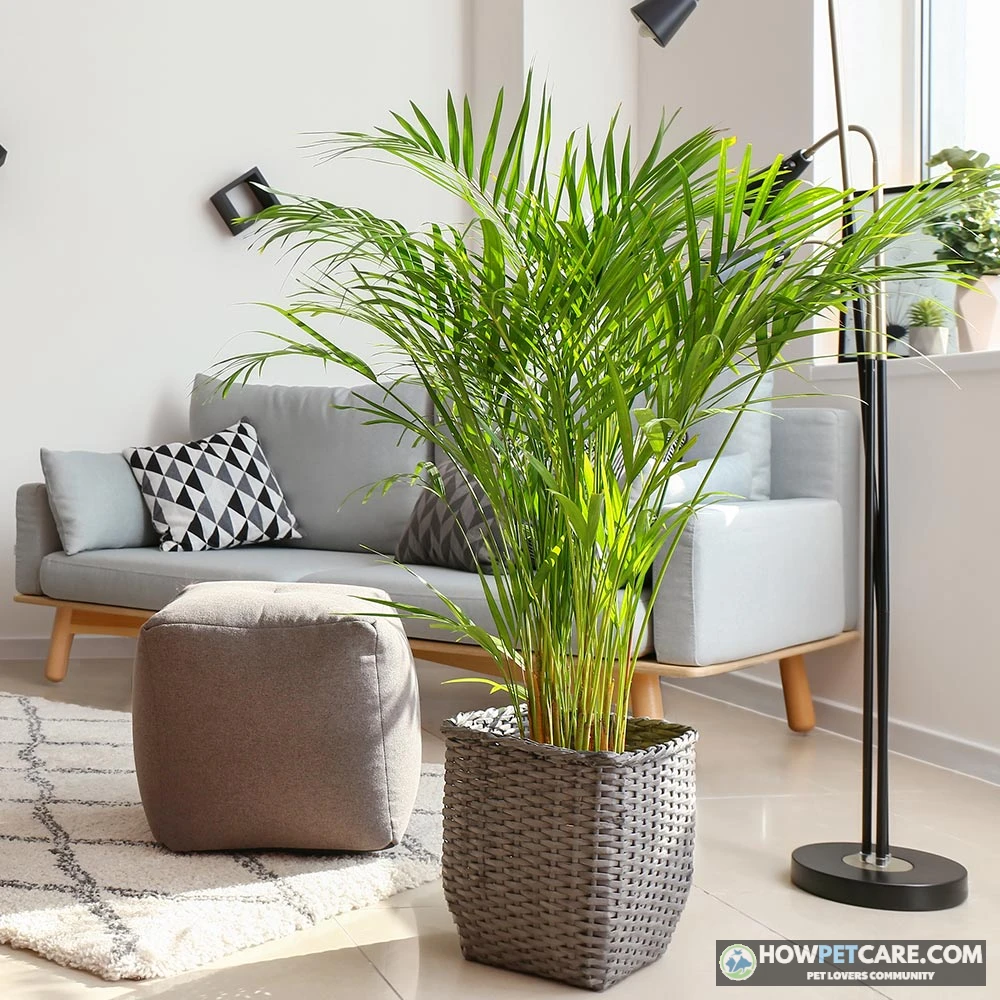

An areca palm (Dypsis lutescens) thrives indoors with bright, indirect sunlight, temperatures between 65°F and 75°F, and watering every 7 to 10 days when the top 1 to 2 inches of soil feel dry. Potted specimens typically range from $25 for a 6-inch desktop size to $150 for mature 14-inch floor plants.
The areca palm (Dypsis lutescens), also known as the butterfly palm or golden cane palm, grows well indoors when provided with bright indirect light and moderate humidity. Selecting the right plant requires matching its pot size and growth rate to your indoor space. Below, you’ll find common container sizes to order, standard price ranges for 2026, and a practical care routine to keep your palm healthy for years. The included 12‑month calendar and pruning schedules outline everything required to maintain proper proportions in residential rooms.
Areca Palm Buying Guide: Container Sizes, Growth Expectations, and Pricing
Commercial growers ship the areca palm in three standard nursery pot sizes. Each size dictates the plant’s eventual height and spread over its first three years inside. Select the container volume that aligns with your ceiling height, floor space, and initial budget.
| Pot Diameter | Purchase Height* | Expected Height (Year 3) | Lateral Spread (Year 3) | Typical Price Range (2026) |
|---|---|---|---|---|
| 6‑inch (desktop) | 12‑18 in | 2‑3 ft | 1‑1.5 ft | $25 – $40 |
| 10‑inch (floor) | 18‑24 in | 3‑4 ft | 2‑2.5 ft | $45 – $70 |
| 14‑inch (statement) | 24‑30 in | 4‑5 ft | 3‑3.5 ft | $90 – $150 |
*Measured from the soil line to the tallest frond at purchase. Height estimates assume bright indirect light, a 70 °F daytime temperature, and regular irrigation.
What to look for in the nursery: Look for clean, rich green fronds without webbing along the undersides, a firm root ball, and soil that lacks white salt crusts. These indicators point to healthy stock that will acclimate quickly to indoor conditions.
Container Size vs. Expected 1‑to‑3 Year Height
- 6‑inch pot: Well suited for desks or shelves in rooms with standard 8‑ft ceilings. The palm usually tops out around 3 ft by year 3. It rarely requires repotting unless the soil breaks down.
- 10‑inch pot: Sized for corners and open floor plans. The plant reaches 4‑5 ft within three years, adding substantial vertical greenery.
- 14‑inch pot: Designed for large rooms requiring an immediate focal point. Fronds can reach 5‑6 ft, and the root system will likely require moving to a 16‑inch container after year 3.

Estimated Cost of Ownership: First‑Year Supplies and Pot Upgrades
| Item | Approx. Cost (2026) | Frequency |
|---|---|---|
| Well‑draining potting mix (1 cubic ft) | $12 | One‑time |
| 5‑gal watering can with fine rose | $15 | One‑time |
| Balanced palm fertilizer (slow‑release, 5 lb) | $20 | Replace every 2 years |
| Humidity tray or pebble set | $10 | One‑time |
| Up‑size pot (12‑inch) | $30‑$45 | Every 2‑3 years if needed |
All pricing reflects data collected from major U.S. retailers in October 2026 (including Home Depot, Lowe’s, and specialty online nurseries) and was cross‑referenced with active catalog listings (retrieved 2026‑10‑28). Baseline retail pricing for an established areca palm starts at $45 for a 10‑inch container and can exceed $150 for mature 14‑inch specimens.
Toxicity Check: Is the Areca Palm Safe for Cats and Dogs?
The ASPCA lists Dypsis lutescens as non‑toxic to cats and dogs. It contains no systemic toxins, so casual contact will not poison pets. Keep in mind, however, that the fibrous fronds can cause physical irritation or vomiting if swallowed in large quantities. Place your container on a stable, broad base so active pets cannot tip it over.
Pet‑friendly companion plants that share similar environmental needs include:
- Spider plant (Chlorophytum comosum) – non‑toxic and forgiving in moderate indoor light.
- Boston fern (Nephrolepis exaltata) – thrives alongside palms in humid environments.
- Calathea spp. – offers contrasting leaf patterns while sharing identical humidity targets.

Core Indoor Care: Light, Watering Schedule, and Soil Requirements
Consistent moisture, loose potting soil, and soft, filtered light are the pillars of indoor palm care.
Light
Position your palm in bright indirect light. East-facing windows work well, as do north-facing exposures or spots set back a few feet from uncovered south- or west-facing glass. Direct midday sun bleaches and scorches the leaflets, whereas heavy shade produces weak, spindly fronds that lean toward light sources.
Watering Mechanics
- When to water: Check moisture by inserting a finger 1‑2 inches into the soil. Water whenever that top layer feels dry.
- How much: Pour water evenly across the surface until liquid drains freely from the pot’s bottom drainage holes. Let all runoff drain completely to flush mineral salts out of the root zone.
- Water quality: Use distilled water, collected rain, or filtered water. Municipal tap water containing fluoride or chlorine frequently causes burnt, brown leaflet tips.

Substrate Composition
Heavy potting soils hold too much water and cause root rot. Mix a porous substrate using:
- 40 % peat moss or coconut coir (moisture retention)
- 30 % coarse perlite (aeration)
- 30 % fine sand or orchid bark (structure)

A properly balanced mix feels loose in the hand, drains water through the profile in under a minute, and resists heavy compaction.
Download a printable PDF of the 12‑month watering, feeding, and maintenance schedule. Click the “Download Calendar” button on the product page to get your personalized sheet now.
How Often to Water an Areca Palm Indoors
In typical indoor living conditions kept around 70 °F, water roughly once every 7‑10 days throughout the active spring and summer months. Extend that window to 10‑14 days during late fall and winter, when cooler temperatures and lower light levels slow moisture uptake.
Managing Seasonal Water Needs at 70°F
- Spring (Mar‑May): Increase watering frequency as spear leaves open; check soil moisture twice weekly.
- Summer (Jun‑Aug): Maintain regular weekly watering to offset warm, dry indoor air.
- Fall (Sep‑Nov): Ease back to bi‑weekly watering as day length drops.
- Winter (Dec‑Feb): Water strictly when the top inch dries out; halt all fertilizer applications.
The 12‑Month Areca Palm Care and Feeding Calendar
| Month | Watering | Fertilizer | Light Adjustment | Other Tasks |
|---|---|---|---|---|
| January | Check soil moisture; water if dry 10‑14 days | None (dormant) | Keep away from cold drafts | Wipe dust from fronds |
| February | Same as Jan | None | Ensure bright indirect light | Inspect for spider mites |
| March | Every 10 days | Apply slow‑release palm fertilizer (¼ cup) | Slightly increase east‑window exposure | Prune dead fronds |
| April | Every 7‑9 days | Liquid feed (½ tsp diluted 1:10) | Maintain bright indirect | Clean pot rim |
| May | Every 7 days | Continue liquid feed | Rotate pot for even growth | Start humidity tray |
| June | Every 7 days | Liquid feed | Keep temperature 70‑75°F | Mist lightly if RH <40% |
| July | Every 7 days | Liquid feed | Same as June | Check for root crowding |
| August | Every 8 days | Liquid feed | Slightly lower light if leaves scorch | |
| September | Every 9‑10 days | Reduce to ½ fertilizer dose | Adjust light as days shorten | |
| October | Every 10 days | None | Move away from heating vents | |
| November | Every 12 days | None | Keep humidity stable | |
| December | Every 12‑14 days | None | Ensure no cold drafts |
Save this table or keep the PDF version nearby to track feeding intervals throughout the season.
Controlling Indoor Size and Spread: Apartment and Living Room Pruning
Areca palms produce tight clusters of slender canes that emerge from a basal crown. Because canes grow outward as they mature, you must manage cane density and root volume to maintain a manageable indoor footprint.
- Cane thinning: In early spring, cut back 1‑2 older outer canes at the soil line using clean bypass shears. Thinning the exterior allows light to reach the inner shoots and stops the plant from widening.
- Root containment: Retaining the palm in its nursery container (or sizing up only an inch or two) restricts lateral root growth, naturally tempering vertical height without starving the plant.
- Snipping suckers: Remove weak secondary suckers near the soil rim when they are ≤6in tall to prevent the clump from expanding laterally across walkways.

Areca Palm Size‑Control & Growth Milestone Checklist
Print or save this log to manage cane spread and prevent your palm from outgrowing residential living rooms:
- ☐ Year 1 Target: Max 4.5 ft Height / 3 ft Spread
- Keep plant restricted to original 10‑inch nursery container to throttle vertical growth rate.
- Mar 15 (Spring Pruning): Sanitize bypass shears in 70% isopropyl alcohol; excise outer dying fronds flush at base.
- Jun 1 (Spread Check): Measure lateral perimeter. If spread exceeds 3.5 ft, wrap a soft green horticultural velcro tie around the lower 12 in of central canes.
- ☐ Year 2 Target: Max 5.5 ft Height / 3.5 ft Spread
- Apr 1 (Root Assessment): Slide root ball up 2 in. If roots coil tightly, root‑prune the outer 0.5 in instead of upsizing pot.
- Jul 15 (Cane Thinning): Cut back 1‑2 mature outer canes at soil level to let light into the inner crown and prevent horizontal bulge.
- ☐ Year 3 Target: Max 6.5 ft Height / 4 ft Spread (Ceiling Buffer: Min 2 ft)
- Spring Upgrade Prompt: Only upgrade to a 12‑inch pot if water pools >60 seconds on surface, indicating compaction.
- Remove any suckers or micro‑shoots under 6 in tall emerging at the perimeter to stop footprint expansion.
Troubleshooting Decision Tree: Brown Tips, Yellow Fronds, and Pests
Foliage symptoms pinpoint specific culture issues. Use the diagnostic table below to match visible changes with their underlying cause.
| Foliage Symptom | Primary Cause | Secondary Culprit | Corrective Action |
|---|---|---|---|
| Brown leaf tips | Low ambient humidity (<40%) | Tap‑water mineral buildup | Raise humidity (see 3‑Method protocol); flush soil with distilled water |
| Brown leaf tips | Under‑watering | Poor drainage | Water thoroughly; improve potting mix drainage |
| Yellow lower fronds | Natural senescence (older leaves) | Nitrogen deficiency | If >30% of fronds yellow, apply balanced palm fertilizer; otherwise prune |
| Yellow lower fronds | Over‑watering / root rot | Compacted soil | Repot into fresh well‑draining mix; allow soil to dry between waterings |
| Stippled webs on undersides | Spider mites | Dry indoor air | Increase humidity; treat with horticultural oil (2 % solution) every 7 days |
| Cotton‑like clusters | Mealybugs | Moisture‑rich micro‑climates | Apply insecticidal soap; isolate plant for 2 weeks |

Correcting Low Humidity Without a Dedicated Humidifier
3‑Method Zero‑Cost Humidity Boost Protocol
- Submerged Heavy‑Pebble Reservoir – Place a drip tray 3‑4 in wider than the pot, fill with river pebbles, add water to just below the stone line, and sit the palm on top. This creates a localized 15 % RH increase.
- Strategic High‑Transpiration Grouping – Cluster the areca with two broad‑leaf tropicals (e.g., Monstera or Spathiphyllum). Their combined transpiration raises ambient moisture without a machine.
- Targeted Thermal‑Shower Acclimation – Every 14 days, run a warm shower for 5 minutes, close the bathroom door, and leave the palm inside for 45 minutes. The steam rehydrates leaf cells and dissolves dust.
Step‑by‑Step Eradication of Spider Mites and Mealybugs
- Check the undersides of leaves and cane joints under direct light, watching for webbing or pale deposits.
- Spray all foliage thoroughly with a 2 % horticultural oil solution, saturating the undersides of the fronds.
- Reapply the oil spray after 7 days to target newly hatched nymphs.
- Maintain ambient relative humidity above 45 % and keep the plant away from forced-air vents.
Repotting and Propagation Workflow for Mature Palms
Most areca palms require repotting every 2‑3 years. This window also offers an opportunity to propagate through crown division.
-
Prepare the Workspace
Place a large plastic sheet, gather a fresh well‑draining mix, and have a clean 12‑inch pot ready. Sterilize all tools with 70 % isopropyl alcohol.
-
Water the Mother Palm
Drench the palm with chlorine‑free water 24 hours before repotting to hydrate root tissues and reduce tearing.
-
Remove the Plant
Gently tilt the pot, tap the sides, and coax the root ball out. Keep the soil intact as much as possible.
-
Inspect and Divide Offshoots
Identify healthy clumps with at least three canes and their own root mass. Using a sterilized hori‑hori, cut the connecting rhizome cleanly.
-
Pot the Division
Place each clump into a 6‑inch container filled with 40 % coco coir, 40 % coarse perlite, and 20 % orchid bark. Lightly tamp the mix.
-
Create a Humidity Dome
Cover the new pots with a clear plastic bag or plant tent, securing the edges with a rubber band. Provide indirect bright light and maintain 75 °F for three weeks.
-
Transition to Normal Care
After 21 days, remove the dome gradually over 2‑3 days. Resume the regular watering schedule and monitor for leaf curl.
Repotting Cadence: Only repot when thick roots push out through the bottom drainage holes or water sits on the soil surface for more than 60 seconds. Choose a replacement container only 2‑inches wider than the original to avoid overpotting.

Buyer’s Pre‑Purchase Checklist and Setup Protocol
Review this space and nursery checklist before ordering to ensure the plant acclimates quickly to your room.
- Room evaluation:
- Ceiling clearance ≥ 7 ft (gives a 6 ft specimen overhead breathing room).
- Indirect sunlight path ≥ 4 ft from window glass.
- Floor perimeter clearance ≥ 4 ft around the container to accommodate frond spread.
- Unboxing steps:
- Cut open the shipping box carefully; check stems and leaf undersides for webbing, brown margins, or insects.
- Let the palm rest in a warm, low-light corner for 7‑10 days before its first deep watering.
- Run clear water through the root mass until drainage runs clear, then discard standing water.
- Sourcing criteria:
- Select sellers offering live-arrival coverage and a clear 30‑day health warranty.
- Verify the plant comes potted in nursery plastic with functional drain holes and a loose peat-perlite base.
- Check customer reviews for unboxing photos uploaded within the past month to verify current stock quality.
Where to buy:
- Home Depot (online) – $45 for a 10‑inch plant, with an in-store pickup option (price verified 2026‑10‑28).
- Lowe’s – $48 for a 10‑inch plant, packaged with an initial bag of potting mix (price verified 2026‑10‑27).
- Etsy seller “GreenLeafNursery” – $52, hand‑potted in a woven basket (price verified 2026‑10‑26).
Next steps: Decide on your container size, order from a verified grower, print your maintenance calendar, and prep a pebble tray. With proper light and clean water, your new areca palm will establish quickly while staying safe around your pets.

| Pot Diameter | Purchase Height | Expected Height (Year 3) | Lateral Spread (Year 3) | Typical Price Range (2026) |
|---|---|---|---|---|
| 6‑inch (desktop) | 12‑18 in | 2‑3 ft | 1‑1.5 ft | $25 – $40 |
| 10‑inch (floor) | 18‑24 in | 3‑4 ft | 2‑2.5 ft | $45 – $70 |
| 14‑inch (statement) | 24‑30 in | 4‑5 ft | 3‑3.5 ft | $90 – $150 |
FAQ
What are the main disadvantages of having an areca palm indoors?
The primary drawbacks are its vulnerability to spider mites in dry environments, sensitivity to fluoride and minerals in municipal tap water which causes brown tips, and its relatively wide lateral spread that demands significant floor space.
Are areca palms effective air-purifying plants?
Yes, areca palms are recognized for their high transpiration rates, which naturally humidify dry indoor rooms, and their ability to filter trace indoor volatile organic compounds (VOCs) such as formaldehyde and toluene.
Can I put my indoor areca palm outside on a patio during summer?
Yes, you can move your areca palm outdoors once night temperatures consistently stay above 55°F (13°C). Place it in full shade or dappled light first, as abrupt exposure to direct sun will scorch the fronds.
How fast does an areca palm grow inside a house?
Indoors, areca palms grow at a moderate rate of 6 to 10 inches per year when provided with bright indirect light and steady warmth, typically reaching a maximum domestic height of 6 to 8 feet.