
A bland diet for dogs is a short-term, low-fat meal of one lean protein (boiled skinless chicken) and one simple carbohydrate (white rice), mixed at roughly 1 part chicken to 2 parts rice by weight. Serve it plain in 3–6 small meals for a few days only — it isn’t nutritionally complete, and emergency signs mean skip it and see a vet.
A bland diet for dogs is a short-term, low-fat, easily digestible meal made from one lean protein and one simple carbohydrate. Fed in small portions, it can help settle mild gastrointestinal upset in a dog who has mild diarrhea or a single bout of vomiting but is otherwise bright, alert, drinking water, and still interested in food. It’s a temporary aid, not a complete diet or a treatment for the cause of the upset. Check the red flags below before you start cooking. If your dog matches any emergency box, skip the recipe and go to a vet.
For an otherwise healthy adult dog with a mild upset, stools usually start to firm up within 24 to 48 hours of bland feeding. If that hasn’t happened by 48 to 72 hours, stop cooking and call your veterinarian rather than continuing the diet.
This is general guidance for dog owners, not a diagnosis. It doesn’t replace advice from a veterinarian who knows your dog.
Bland Diet for Dogs: What It Is and Whether Your Dog Can Start Tonight
A bland diet gives an irritated stomach and gut a break with food that’s low in fat and fiber and easy to digest. It’s intended for short-term use: because it isn’t nutritionally complete and balanced, it’s suitable for a handful of days while mild symptoms settle, not as an everyday meal plan. The aim is to keep small amounts of gentle food and fluids going so the gut can calm down rather than resting it completely.
Vets commonly use bland diets for dogs with signs of gastroenteritis, including vomiting, diarrhea, and reduced appetite. Most veterinary sources recommend the same basic combination: one lean protein and one simple carbohydrate, with the meat boiled and drained and no seasoning.
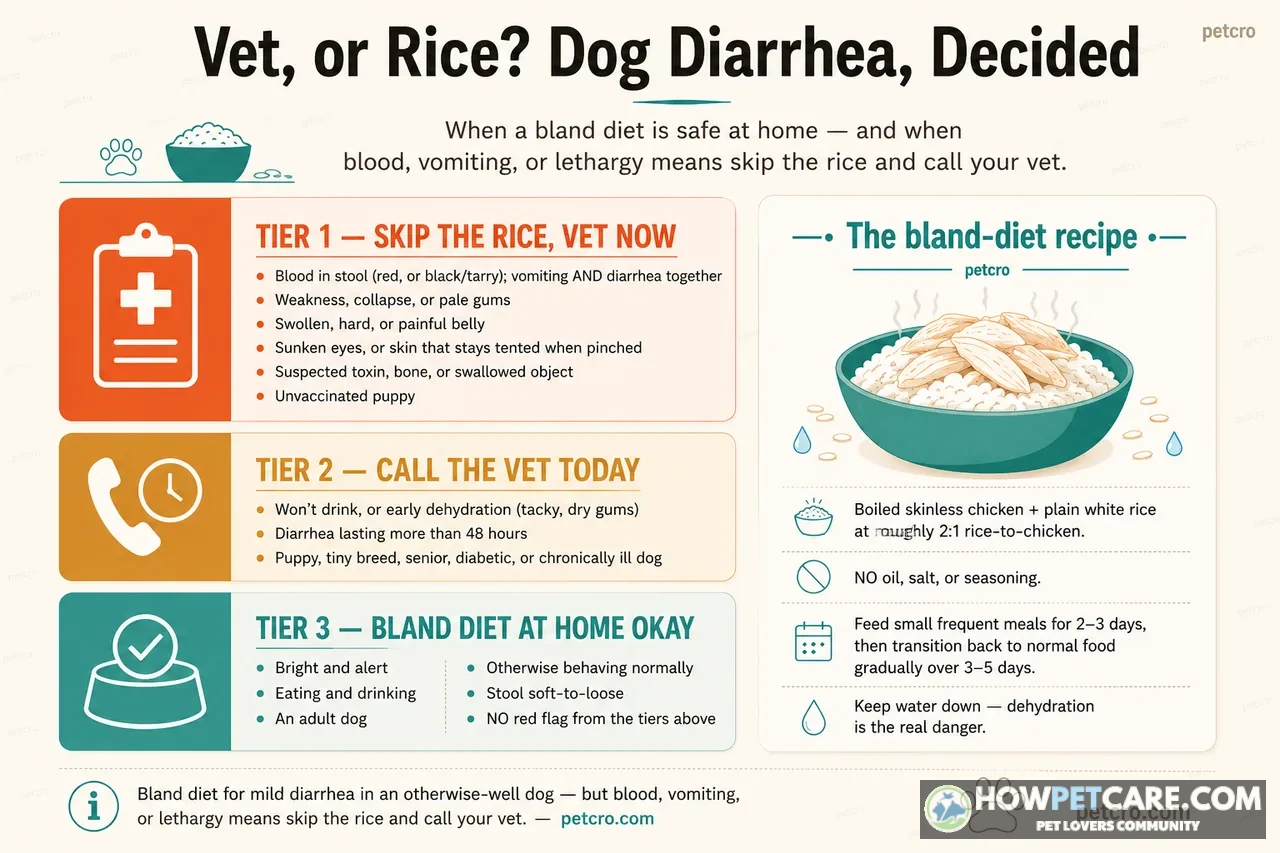
Before you reach for the rice, check your dog’s signs. Read each box and stop at the first tier that matches.
The 30-second definition
A bland diet consists of low-fat, low-fiber, easily digestible food made from a single lean protein and a single simple carbohydrate, served plain in small meals. It’s gentle on an upset digestive tract, but it isn’t a balanced long-term food. It lacks the vitamins, minerals, and fatty acids a dog needs over time, so use the calorie plan in this article as a short-term target for days, not weeks.
Red-flag triage: home care, vet today, or emergency
Check these signs before cooking. Choose the FIRST tier that matches.
Emergency now — go to an emergency vet:
- ☐ Repeated vomiting, retching without producing anything, or a dog who can’t keep water down
- ☐ Bloated, tight, or painful abdomen; collapse; pale or gray gums
- ☐ Blood in vomit or stool, black tarry stool, a suspected toxin, or a swallowed chew toy, bone, string, or other foreign object
- ☐ An unvaccinated puppy with diarrhea or vomiting
Call a vet today:
- ☐ A puppy under 6 months, a senior, a toy breed, a diabetic or pregnant dog, or one with chronic kidney, heart, or liver disease
- ☐ Diarrhea lasting more than 24 hours, fever, marked lethargy, refusing water, or signs getting worse
- ☐ More than one vomiting episode, even if the dog seems bright afterward
Home care may be reasonable:
- ☐ Adult dog, bright and alert, drinking normally, one vomit or mild loose stool, still interested in food
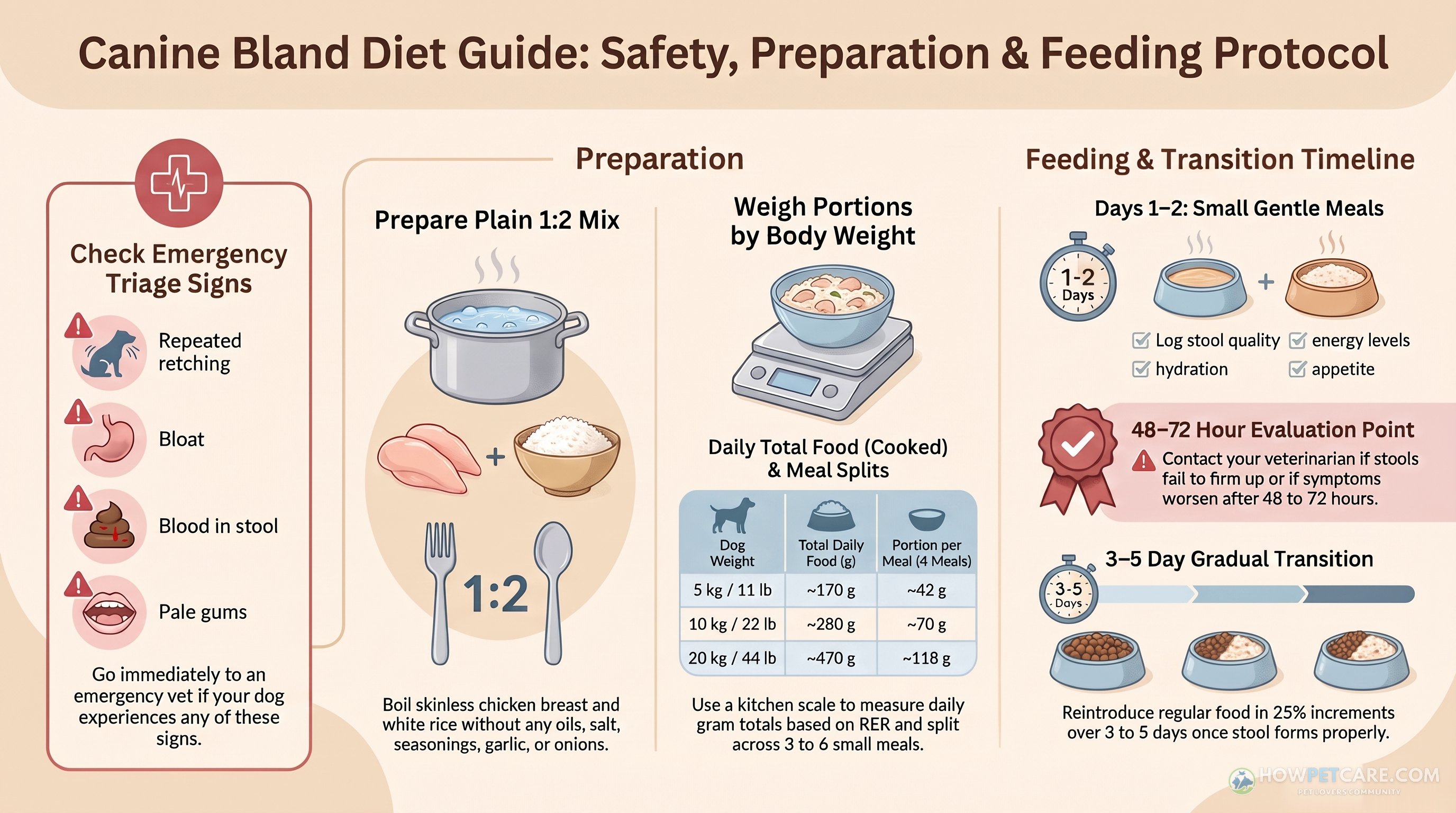
If any emergency box is checked, don’t feed a bland diet — go now. It’s best to call your vet first for any vomiting or diarrhea, because these signs can point to something serious — wider dog digestive problems — rather than a simple upset. If the home-care box fits, recheck your dog’s signs every few hours and move up a tier as soon as anything worsens. This check is the most important part of the guide; a visual can help you act quickly when your dog looks unwell.
How to Make a Bland Diet for Dogs: Boiled Chicken and Rice, Step by Step
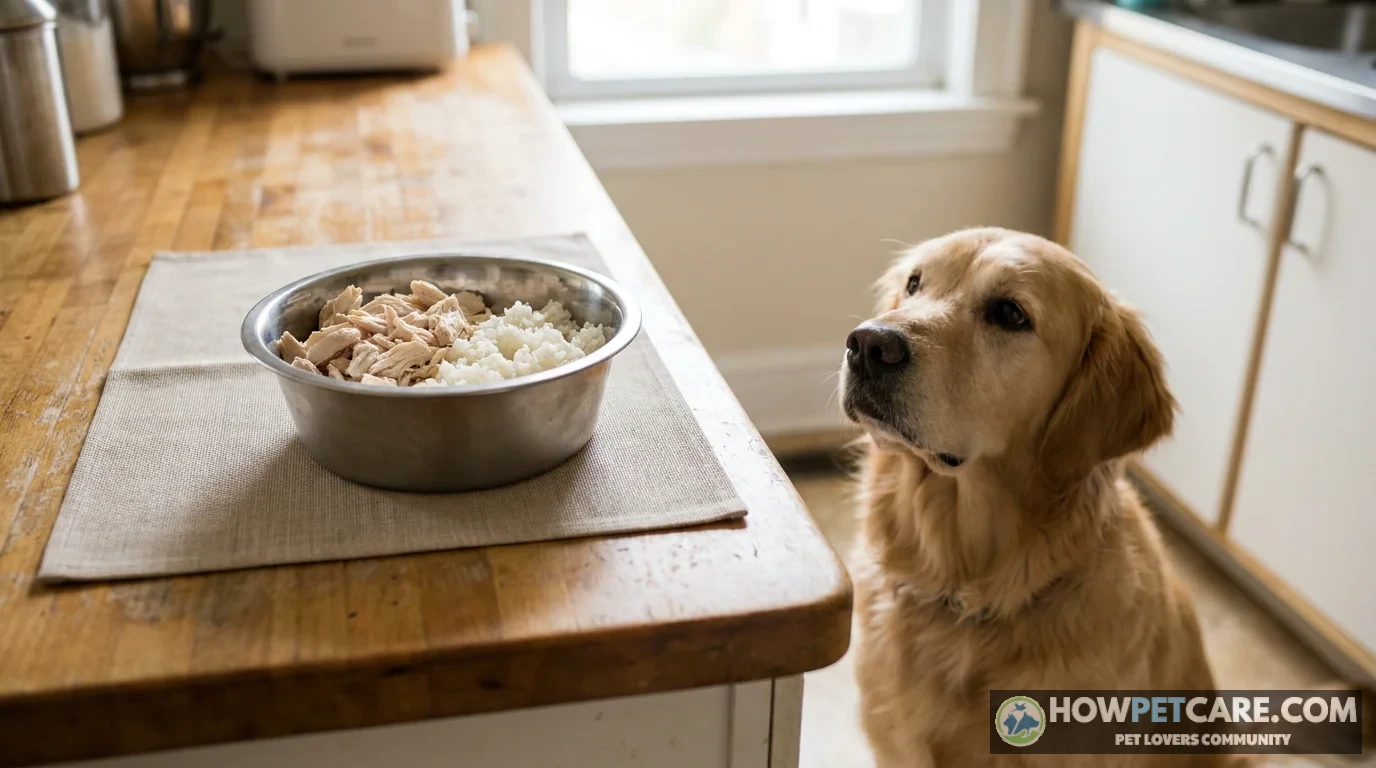
The classic recipe is boiled chicken and rice, and you may already have what you need in the kitchen. Here’s how to prepare it in line with the guidance most clinics provide.
Ingredient list and what to leave out
- Skinless, boneless chicken breast (or a lean thigh with all visible fat trimmed off)
- Plain white rice
- Water
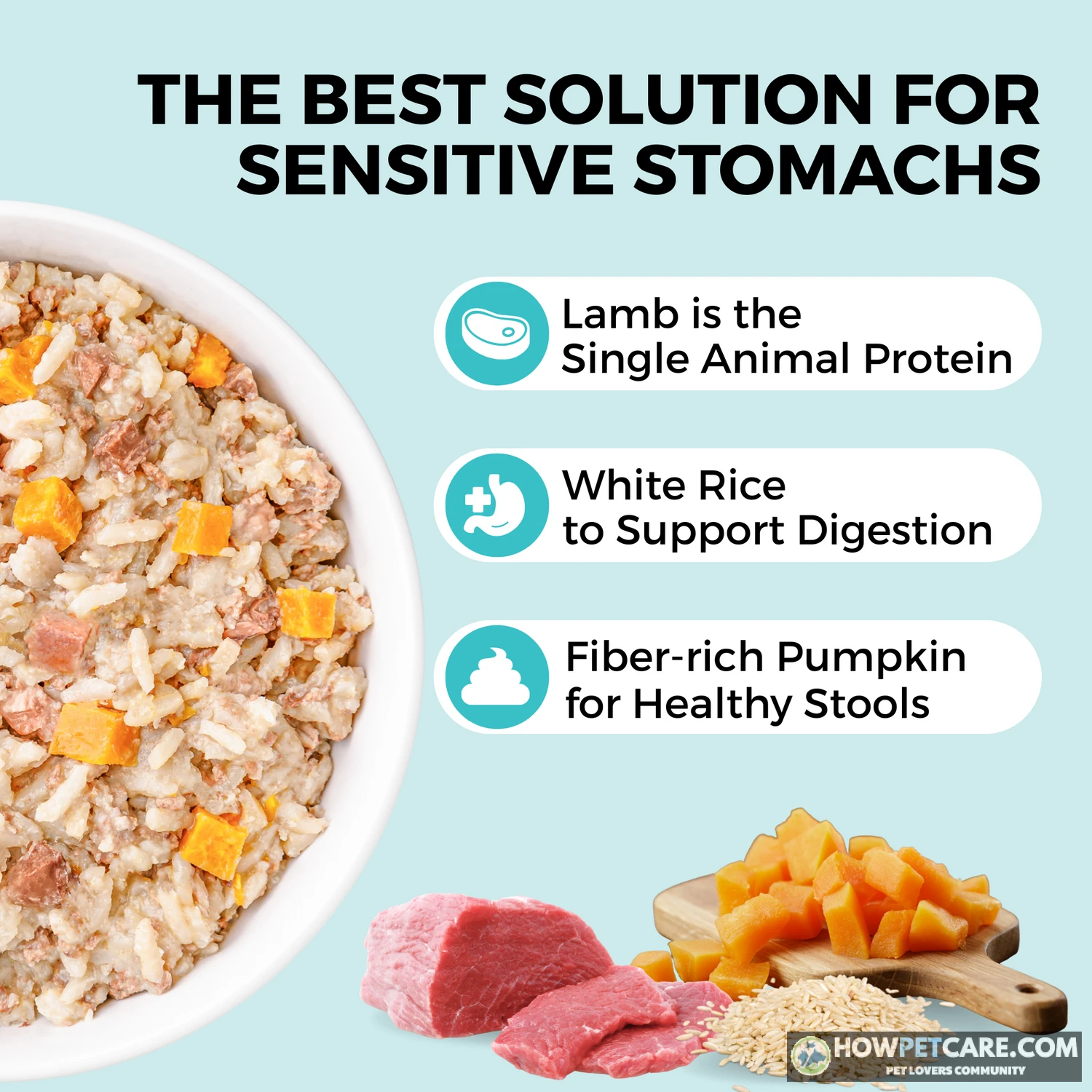
Leave out salt, oil, butter, garlic, onion, and all seasoning. Onion and garlic are toxic to dogs, and fat can be a problem when the gut is inflamed. Ground beef is risky unless it’s very lean and well drained. Rotisserie chicken is also unsuitable because it usually contains salt and seasoning, often including garlic or onion.
Cooking steps and storage
- Boil the chicken in plain water until cooked through to 165°F internally. Lift it out and remove all skin, fat, and bone.
- Shred or dice the cooked chicken.
- Cook the rice until soft and slightly overcooked, using a little extra water.
- Discard the chicken cooking water, or skim the fat off the top if you plan to reuse any of it.
- Cool everything to lukewarm before serving. Never serve it hot.
Refrigerate leftovers in sealed, portioned containers and use them within about 3 days, or freeze portions for longer. Reheat only to lukewarm.
Chicken-to-rice ratio explained
Start with roughly 1 part chicken to 2 parts rice by weight — the same 2:1 carbohydrate-to-meat ratio most clinics publish. A scale is more reliable than cups, which can hold different amounts depending on how they’re packed. Some veterinarians recommend a different ratio or a lower-fat mix for particular dogs, so follow your vet’s instructions if you have them. White rice is the default rather than brown because its lower fiber content is gentler on an inflamed gut during active diarrhea.
A kitchen scale makes portions repeatable. If you don’t have one, a level tablespoon of the cooked mix holds close to 15 g — useful in a pinch, but the gram table below is only trustworthy with a scale.
How Much Bland Food to Feed a Dog by Weight (Grams per Day and per Meal)
Many feeding guides use cup measures without making clear whether they apply to each meal or the whole day. In the table below, every total is per day; split that amount across meals.
The RER formula in plain terms
The starting point most vets use for a short-term diet is the resting energy requirement, or RER:
RER = 70 × (body weight in kg) raised to the power of 0.75
To work it out, convert your dog’s weight to kilograms (divide pounds by 2.2), raise that number to the 0.75 power, then multiply by 70. The result is a rough daily calorie target in kcal. You can then convert calories to grams using the cooked values for your mix.
Portion table by dog weight
The table uses these assumptions: cooked skinless chicken breast is about 150–165 kcal per 100 g; cooked white rice is about 130 kcal per 100 g; and the 1:2 mix works out to roughly 140 kcal per 100 g cooked. These are estimates from standard food-composition data, not exact lab values. Adjust if your ingredients differ, and follow your vet’s calorie target if you have one.
| Dog weight | Estimated kcal/day (RER) | Total cooked food (g/day) | Chicken (g/day) | Rice (g/day) | Per meal at 3 meals (g) | Per meal at 4 meals (g) |
|---|---|---|---|---|---|---|
| 3 kg / 6.6 lb | ~160 | ~115 | ~40 | ~75 | ~38 | ~29 |
| 5 kg / 11 lb | ~235 | ~170 | ~55 | ~115 | ~56 | ~42 |
| 10 kg / 22 lb | ~395 | ~280 | ~95 | ~185 | ~94 | ~70 |
| 20 kg / 44 lb | ~660 | ~470 | ~155 | ~315 | ~157 | ~118 |
| 30 kg / 66 lb | ~900 | ~645 | ~215 | ~430 | ~215 | ~161 |
| 40 kg / 88 lb | ~1,115 | ~795 | ~265 | ~530 | ~265 | ~199 |
Worked example. A 40 lb dog is about 18 kg. RER is roughly 615 kcal/day, so the cooked mix target is about 440 g/day — around 145 g chicken plus 295 g rice. Split into 4 small meals, that’s about 110 g per meal, or roughly 7 level tablespoons only if your tablespoon holds about 15 g. A kitchen scale is far more reliable. To work out how much chicken and rice to feed your dog, start with the daily gram total, then divide it by the number of meals.
Per-day vs per meal: how to split it
Don’t serve the daily total in one giant bowl. Split it into small, frequent meals — ideally 3 to 6 across the day while the gut settles. Each row gives the whole day’s food; the last two columns show portions for different meal counts. Weigh the portions, feed little and often, and increase gradually if your dog keeps each meal down. Because the bland diet isn’t complete, use this calorie target for days rather than longer. Ask your vet about portions for underweight dogs, toy breeds, and dogs on medication, since their needs differ.
| Dog Weight | Estimated Daily Energy Requirement (kcal) | Total Cooked Food (g/day) | Chicken Portion (g/day) | Rice Portion (g/day) | 3-Meal Portion (g) | 4-Meal Portion (g) |
|---|---|---|---|---|---|---|
| 3 kg / 6.6 lb | ~160 | ~115 | ~40 | ~75 | ~38 | ~29 |
| 5 kg / 11 lb | ~235 | ~170 | ~55 | ~115 | ~56 | ~42 |
| 10 kg / 22 lb | ~395 | ~280 | ~95 | ~185 | ~94 | ~70 |
| 20 kg / 44 lb | ~660 | ~470 | ~155 | ~315 | ~157 | ~118 |
| 30 kg / 66 lb | ~900 | ~645 | ~215 | ~430 | ~215 | ~161 |
| 40 kg / 88 lb | ~1,115 | ~795 | ~265 | ~530 | ~265 | ~199 |
Feeding Schedule: Should You Fast First, How Long to Continue, and How to Switch Back
Some older clinic sheets recommend longer fasts. Here’s the current guidance, followed by a day-by-day plan you can use tonight.
Do you still need to fast your dog first?
The old advice to withhold all food for 12 to 24 hours to "rest the gut" is no longer routine for most dogs. Modern veterinary guidance generally favors at most a short withholding period, or starting small bland meals early, for adult dogs with mild signs. Vomiting and diarrhea alone call for different approaches: vomiting may warrant a brief pause, while dogs with diarrhea only usually benefit from starting gentle food sooner.
Don’t fast puppies, toy breeds, diabetic dogs, or seniors without direct vet instruction; they risk dangerously low blood sugar. After vomiting, start with small sips of water, then a few spoonfuls of bland food. Offer more if vomiting doesn’t recur.
The blanket 24–48 hour fast has been replaced by early small-meal feeding for most adult dogs with mild upset. Puppies under 6 months, toy breeds, and diabetic dogs must not be fasted without vet direction because of hypoglycemia risk.
Day-by-day feeding plan
- Day 0, vomiting dog: withhold food only briefly for an adult dog with mild signs; offer small sips of water or ice chips. Don’t fast puppies, toy breeds, diabetics, or seniors without vet direction. If vomiting repeats, call a vet; a dog throwing up yellow bile follows the same escalation rules.
- Day 0, diarrhea only: skip the old blanket fast for most bright adults and start small bland meals sooner.
- First bland meal: give a few spoonfuls for a small dog, or a small weighed portion for a large dog. Wait 2–4 hours. If there’s no vomiting and your dog still has an appetite, feed the next small meal.
- Days 1–2: feed 3–6 small meals across the day using the gram table. Keep water available at all times. Log stool form, vomiting, appetite, energy, and water intake.
- 48–72 hour decision point: stools should be firming and your dog acting normal. If there’s no improvement, signs worsen, new symptoms appear, or vomiting returns, call the vet rather than extending the diet.
- Transition over 3–5 days once stool is formed: feed 75% bland + 25% regular food; then 50/50; then 25% bland + 75% regular; then 100% regular. Drop back one step if stool softens.
- Stop rule: don’t continue the bland diet beyond a few days without vet input — it isn’t complete and balanced. Recurring episodes need a workup, not another reset.
How to switch back to regular dog food
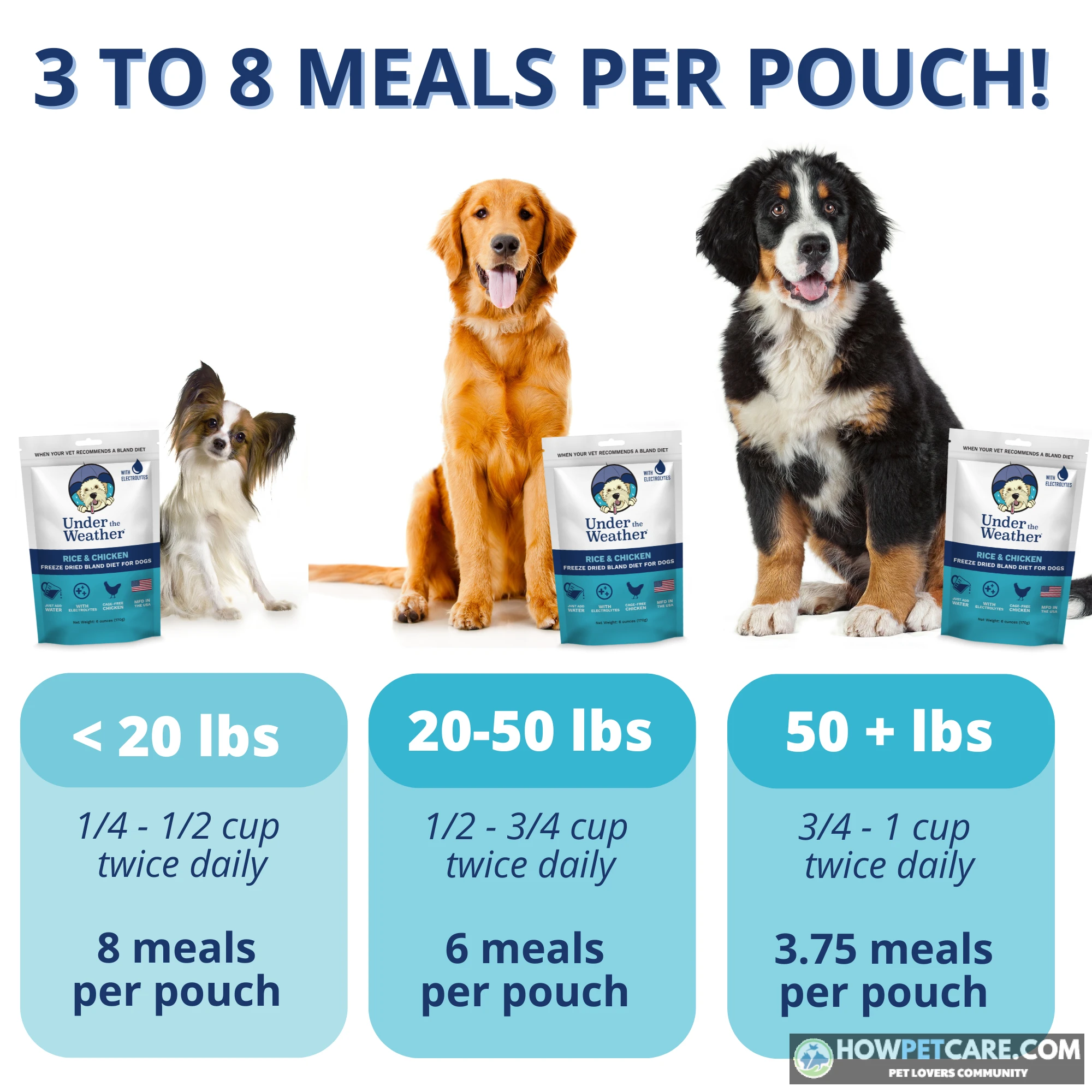
Start returning to normal food only when the stool is formed or firming and your dog is behaving normally. Make the change gradually in about 25% increments over roughly 3 to 5 days, and move back a step if stools loosen. Rushing the switch is the most common cause of relapse. Look for firm stools and a return of appetite and energy rather than relying on a fixed calendar day. A dog will usually need 2 to 3 days of bland food once stools improve, followed by the gradual transition, adjusted to how the dog is doing.
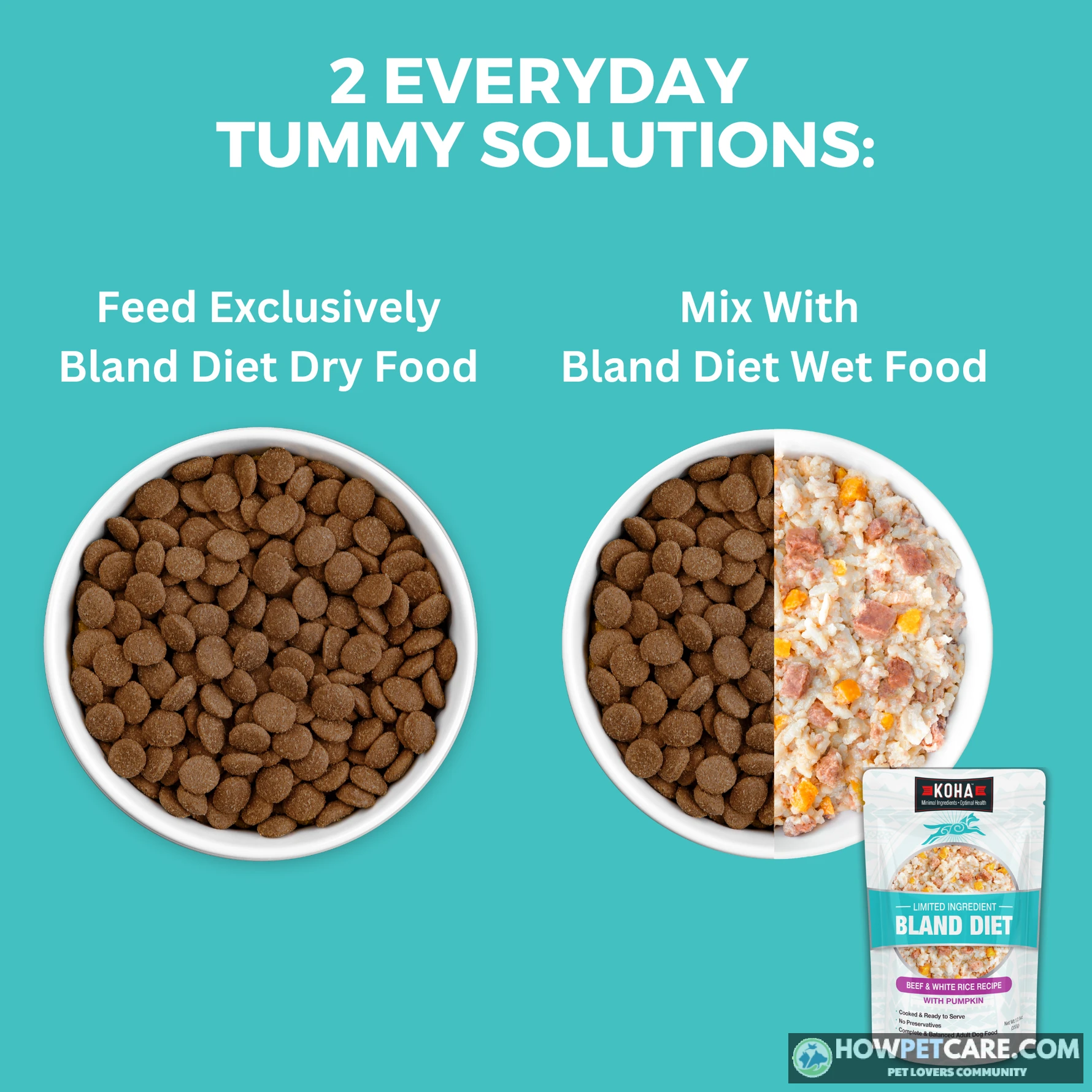
Chicken-Free and Rice-Free Bland Diets for Dogs With Allergies or Sensitivities
Chicken and rice is the usual choice, but it isn’t the only one. Some dogs have a chicken allergy or sensitivity, and some owners run out of rice. The alternatives below use the same gram logic as the table above to help you measure a meal for a dog with an upset stomach.
Chicken-free protein swaps
Lean protein options include boiled turkey breast; lean white fish such as cod or pollock, with every bone removed; low-fat cottage cheese or egg if your dog tolerates dairy and egg; and vet-chosen novel proteins for confirmed allergies. Turkey is still poultry, so some chicken-allergic dogs react to it. Check with your vet before offering turkey to a dog with an allergy.
Bland diet for dogs without rice
For a bland diet without rice, the carbohydrate can be plain boiled potato (no skin, no seasoning), plain boiled sweet potato in modest amounts, plain pasta, or oatmeal cooked in water. Some contain more fiber or sugar, so favor the lower-fiber choices during active diarrhea.
Three complete allergy-aware recipes
Start with the same per-day gram target from the chicken-rice table, then adjust upward if the mix is leaner and lower in calories. Ratios are protein to carb by cooked weight. Calories vary with draining, potato type, and dairy fat, so weigh the food and confirm portions with your vet for allergy cases. Cook any of these the same way as the classic recipe: boil the protein in plain water until cooked through, boil the peeled potato until soft (or cook the rice until slightly overdone), combine at the stated ratio, and cool to lukewarm before serving.
| Recipe module | Protein : carb by weight | Fat / ratio notes | Best use case | Cautions |
|---|---|---|---|---|
| Cod or pollock + boiled potato | 1:2 | Very lean; lower-calorie mix, often roughly 90–105 kcal per 100 g, so dogs may need a larger gram amount than chicken-rice | Chicken allergy or a very fat-sensitive dog | Remove every bone; no oil, butter, skin, or seasoning |
| Turkey breast + white rice | 1:2 | Similar handling to chicken if the breast is skinless; roughly comparable to the standard mix | Poultry swap when turkey is tolerated | Turkey is still poultry; some chicken-allergic dogs react, so confirm with a vet |
| 93% lean ground beef + potato | 1:2 | Boil, drain thoroughly, and rinse off surface fat; higher fat than fish or breast meat | When chicken and rice are unavailable and beef is tolerated | Not for pancreatitis-risk dogs; avoid fatty ground beef, sausage, and seasoning |
| Low-fat cottage cheese + rice | 1:2 | Choose low-fat only; dairy can trigger loose stool, so keep portions conservative | Short-term protein swap for dairy-tolerant dogs | Skip for lactose intolerance, pancreatitis risk, or unknown allergy history |
| Vet-chosen novel protein + potato | 1:2 | Rabbit, venison, or other novel protein stays lean when boiled or steamed without oil | Confirmed food allergy under vet guidance | A true allergy workup needs an elimination trial, not rotating home recipes |
Avoid rotisserie or seasoned meat, skin, bones, onion, garlic, gravies, smoked meats, high-fat ground beef, and table-scrap mixtures. A food allergy is different from a food intolerance: a true allergy is an immune response and calls for a vet-guided elimination trial, not an ongoing rotation of home recipes that may mask the trigger.
1An adult dog experiences a single bout of mild diarrhea but remains bright, alert, normal in energy, and continues to drink water and show interest in food. Based on triage red-flag guidelines, what is the appropriate initial action?
Bright, alert adult dogs with a single mild gastrointestinal upset and retained appetite fall into the home-care tier for short-term dietary management.
2Which of the following clinical signs indicate an immediate veterinary emergency that requires skipping home care and taking the dog directly to an emergency vet?
Gastrointestinal bleeding, toxicosis, or foreign body obstruction poses life-threatening risks requiring urgent veterinary intervention.
3Why is plain white rice preferred over brown rice when making a short-term bland diet for a dog recovering from gastroenteritis?
Lower fiber content reduces gastrointestinal workload and irritation when the digestive tract is inflamed.
4An owner wants to substitute ground beef for chicken breast in a dog's home-cooked bland diet. What is the primary dietary risk associated with ground beef unless it is exceptionally lean, boiled, and thoroughly drained?
Elevated fat levels put extra strain on an inflamed digestive system and are a known trigger for pancreatitis.
5Which of the following preparation and feeding practices should be followed when administering a bland diet?
Removing fat and bones prevents gastrointestinal irritation as well as physical choking or perforation hazards.
6When checking a dog's hydration status during a period of loose stools, which physical finding signals severe dehydration that warrants calling a veterinarian?
Dry/tacky mucous membranes and delayed skin elasticity (tenting) are clear clinical indicators of dehydration.
7Why are prescription commercial gastrointestinal diets (such as Hill's i/d or Royal Canin GI) often preferred over homemade chicken and rice when dietary management is required for more than a few days?
Commercial GI formulas contain essential vitamins, minerals, and fatty acids that homemade bland diets lack.
Pumpkin, Probiotics, Bone Broth, and Hydration: What Helps Alongside a Bland Diet
Food is only part of caring for a dog with diarrhea or vomiting. Fluids matter, and a few add-ins may help in some cases. Use this checklist alongside the feeding plan to see what’s optional and what to avoid.
Water and electrolytes
Hydration comes first. Plan roughly 50–70 ml per kg per day (about 0.7–1.0 oz per lb per day): a 20 kg dog needs about 1.0–1.4 L daily before accounting for extra losses from diarrhea or vomiting. Offer small amounts often. If your dog gulps water and then vomits, try ice chips instead of a full bowl.
Check for dehydration: gums should be pink and moist, not tacky or pale, and the skin over the shoulder blades should snap back in about 1–2 seconds. Call your vet if you notice tacky gums, a slow skin tent, sunken eyes, weakness, or poor urination.
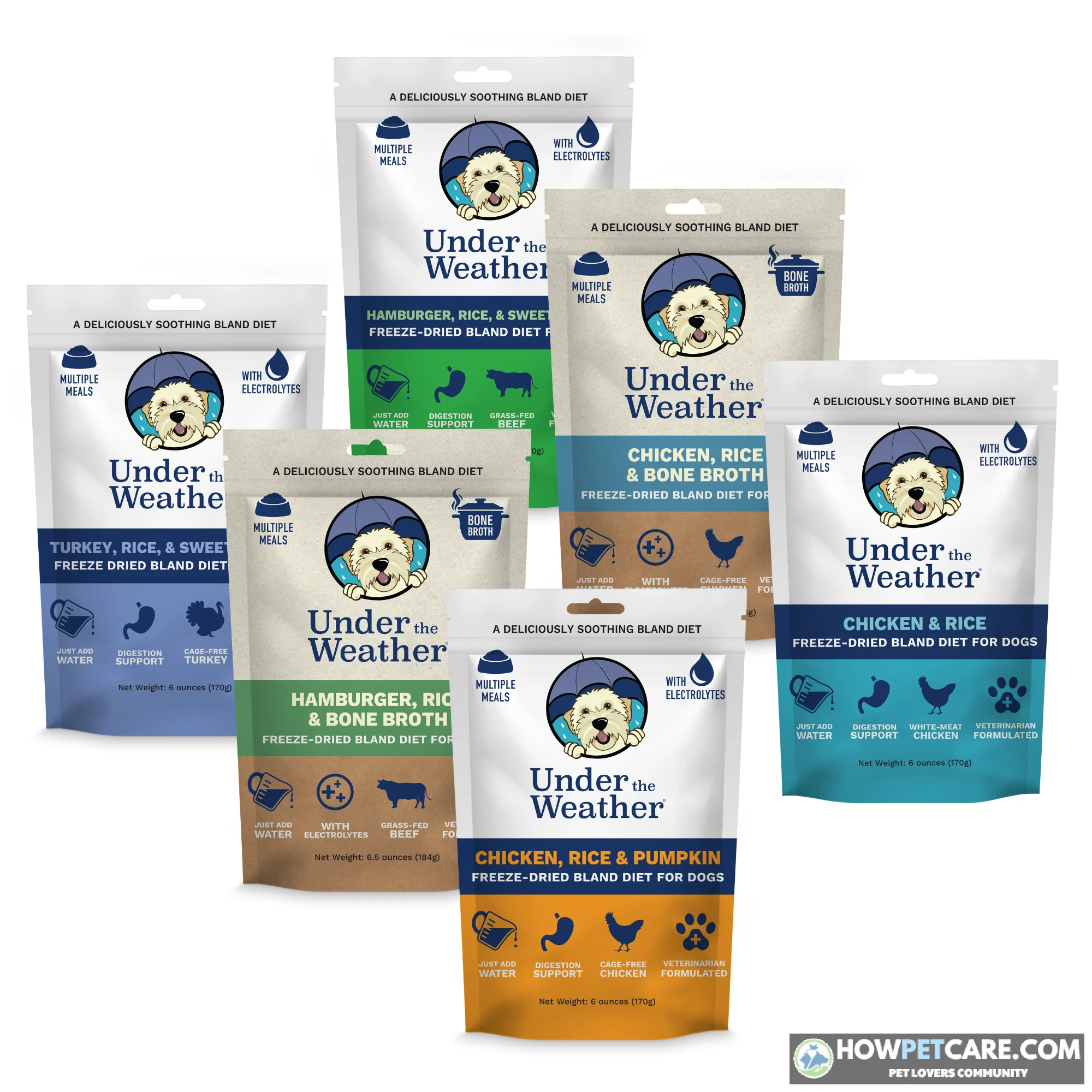
Use only unflavored or vet-approved electrolyte products. Skip sports drinks and anything with xylitol (also called birch sugar), heavy sugar, caffeine, or onion or garlic flavoring — xylitol is toxic to dogs. Don’t syringe-force water unless a vet tells you to.
Pumpkin: how much and what kind
Plain canned pumpkin is a mild fiber source you can add in small amounts. Don’t use pumpkin pie filling, which is spiced and sweetened. Start with about 1 teaspoon for toy or small dogs, 1–2 teaspoons for medium dogs, and up to about 1 tablespoon for large dogs per meal. Pumpkin is fiber, not medicine. Stop if it makes gas or stool worse.
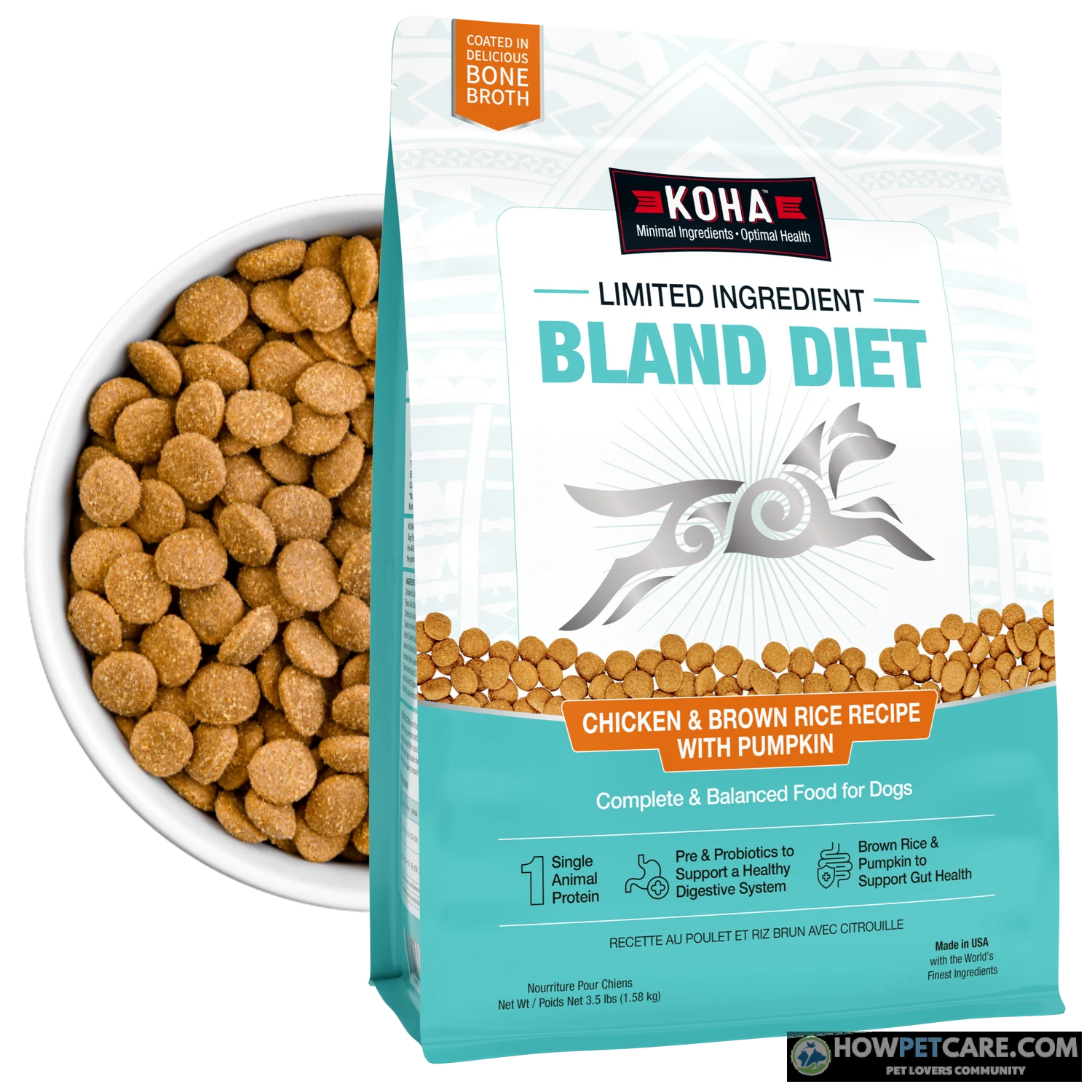
Probiotics, bone broth, and digestive enzymes
Probiotics for dogs may be worth considering in some cases of acute diarrhea. Use a dog-specific product and follow the label or your vet’s dosing advice; the evidence is supportive but modest, and probiotics aren’t a substitute for a diagnosis.
Bone broth can tempt a reluctant drinker, but use only plain, low-sodium broth with no onion, garlic, or chives and little fat. It isn’t a meaningful source of calories or nutrients.
Digestive enzymes generally aren’t needed for a routine acute upset, though a vet may consider them for specific conditions.
Don’t give human anti-diarrheal or antacid medications — including bismuth products like Pepto-Bismol, Imodium, or antacids — unless your veterinarian tells you to. Some are unsafe for certain dogs and breeds, and they can mask a problem that needs treatment.
Bland Diet for Puppies, Senior Dogs, and Dogs With Pancreatitis or Diabetes
Standard bland-diet advice assumes a healthy adult dog. Other dogs need a different approach, and for some, following the standard advice can carry real risks.
Puppies under 6 months
Puppies have less reserve and use it up quickly. They face a higher risk of hypoglycemia and dehydration, so they need smaller, more frequent meals, no fasting, and a much lower threshold for a vet call. Diarrhea in an unvaccinated puppy can signal parvovirus, an emergency. Deep-chested pups can also deteriorate fast, so learn puppy bloat warning signs before an emergency. That’s why an unvaccinated puppy with diarrhea or vomiting belongs in the emergency tier above.
Senior dogs
Older dogs dehydrate more easily and are more likely to have an underlying disease causing the upset. Monitor them closely and call your vet earlier than you would for a healthy adult.
Pancreatitis, diabetes, and other chronic conditions
A low-fat diet is central to managing pancreatitis, but homemade chicken and rice isn’t a substitute for veterinary treatment. Don’t try to manage suspected pancreatitis yourself with fasting or home diets — get veterinary care and follow a pancreatitis recovery and feeding guide. Dogs with diabetes are sensitive to skipped meals and shifts in carbohydrate load, both of which interfere with insulin dosing, so call your vet before changing food or fasting. The same advice applies to dogs with kidney, heart, or liver disease and any dog on medication: ask your vet before starting a bland diet. Make feeding decisions for a dog with pancreatitis or diabetes with your vet, not on your own.

If the Bland Diet Isn’t Working After 48–72 Hours: Vet Next Steps and Prescription Diet Options
Sometimes a bland diet helps within two days. When it doesn’t, knowing when to call the vet can keep a mild problem from becoming a serious one.
What counts as "not working"
Call your vet rather than extending the diet if there’s no improvement after 48 to 72 hours, signs worsen, new symptoms appear, your dog loses weight, or episodes recur. Continuing a diet that isn’t helping can delay needed care. If your dog’s diarrhea isn’t better after 48 hours on a bland diet, book an appointment.
Tests and treatments a vet may recommend
A vet workup commonly starts with a physical exam, followed by fecal testing for parasites and infections, bloodwork, and sometimes imaging such as X-rays or ultrasound. Depending on the findings, treatment may include fluids, anti-nausea medication, other targeted care, or a prescription diet. The plan depends on what the vet finds, so use this as a guide to what might happen, not a promise of a particular outcome. A bland diet is a home-care bridge; antibiotics or acid-suppressing medication are used only when a vet decides they’re needed.
Homemade vs prescription GI diet
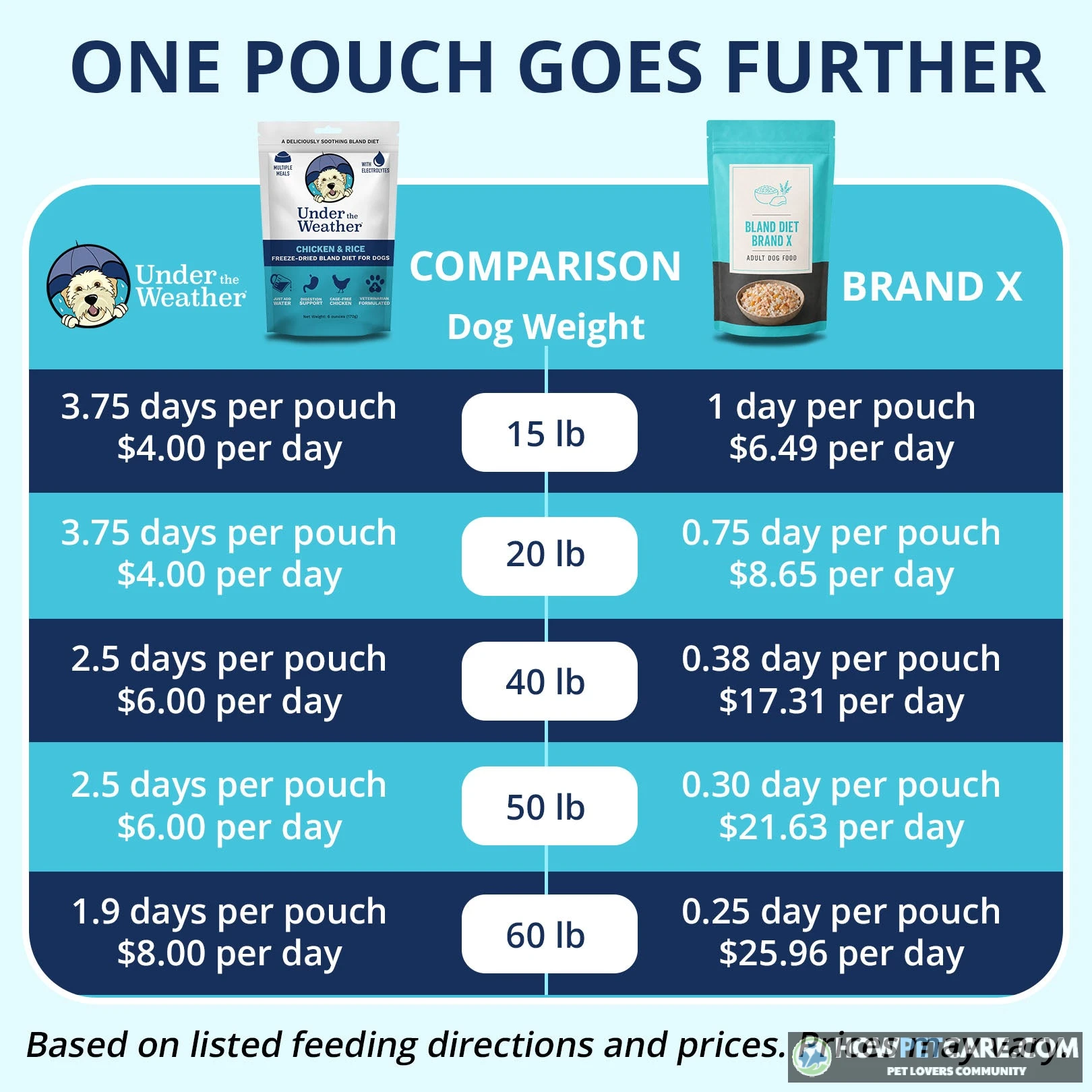
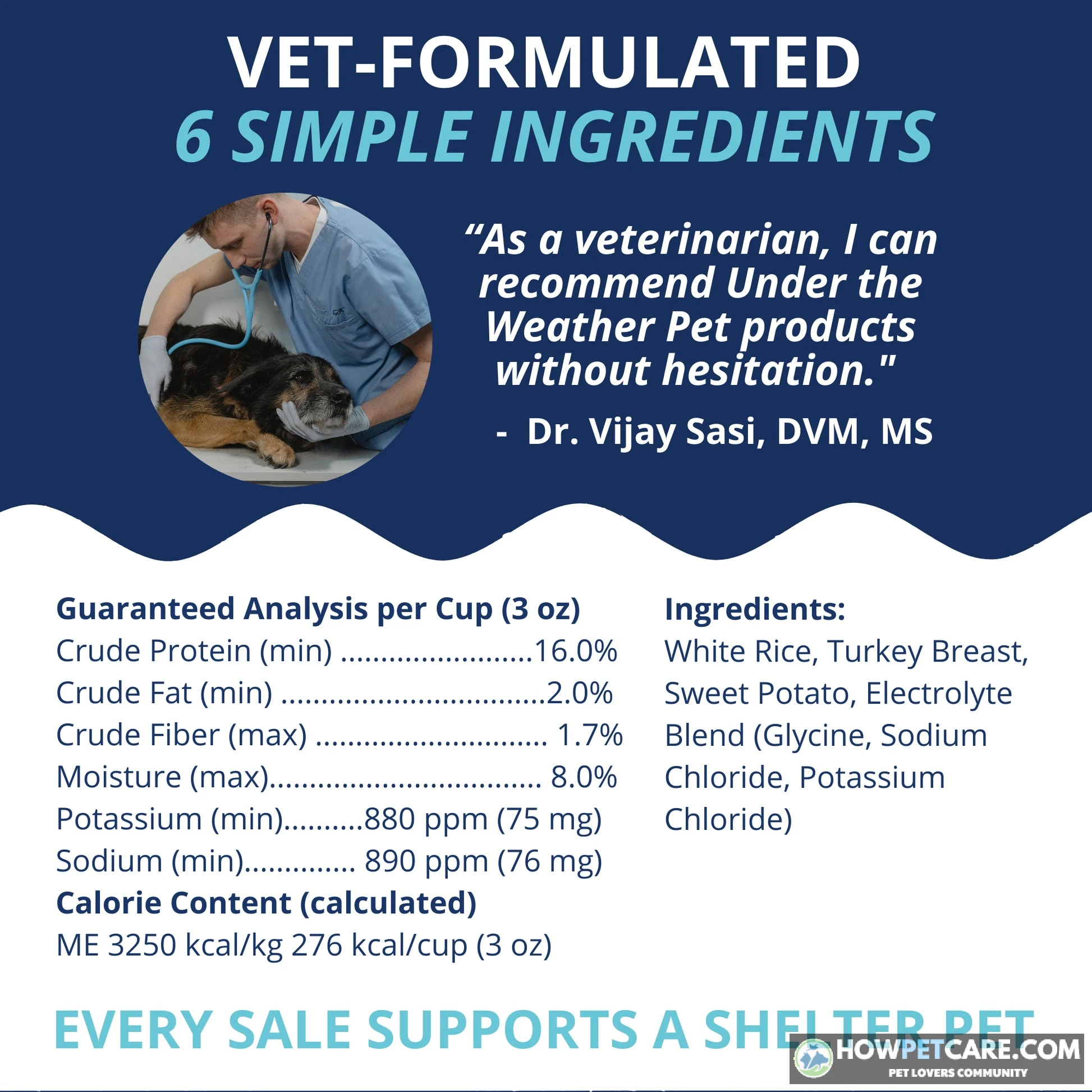
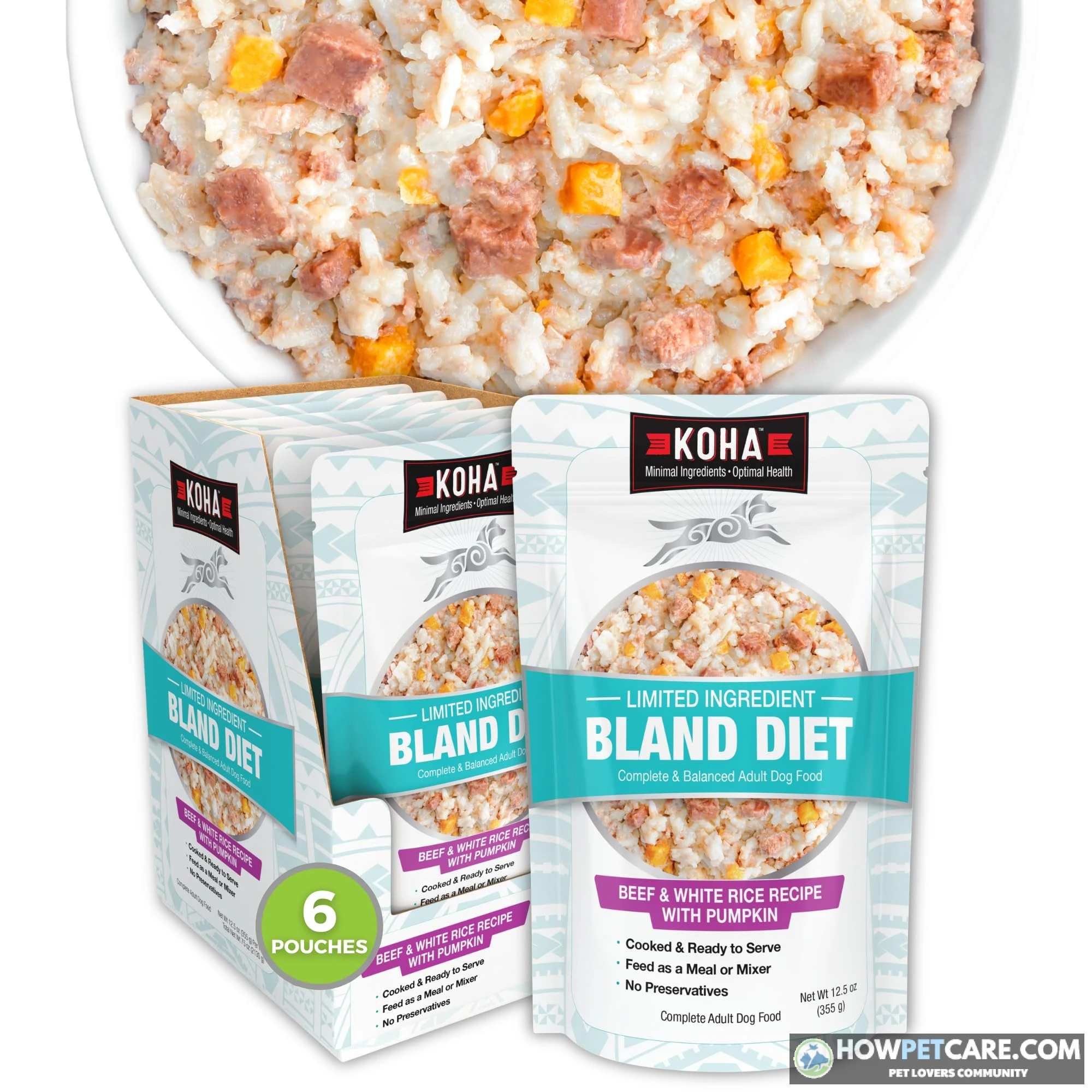
Prescription gastrointestinal diets — such as Hill’s Prescription Diet i/d, Royal Canin Gastrointestinal, and Purina Pro Plan EN — are formulated to be complete and balanced. Vets often use them for longer-term management of ongoing GI issues. A homemade bland diet is inexpensive, quick to prepare from kitchen ingredients, and not complete. Here’s how the options compare:
| Factor | Homemade bland diet | Prescription or therapeutic GI diet | Best use case |
|---|---|---|---|
| Cost | Low; mostly pantry staples, though meat and rice add up over many days | Higher per bag or case; check local and online pricing | Short episodes favor homemade; ongoing needs may justify the cost |
| Nutritional completeness | Not complete or balanced — safe for days only | Formulated complete and balanced for extended feeding | Any situation needing more than a few days |
| Speed and convenience | Ready tonight from what you have | Requires a vet visit, prescription, or order | First 24–72 hours favor homemade; diagnosed conditions favor prescription |
| Best use case | A brief bridge for mild upset while stools firm up | Longer-term management and chronic GI conditions | Let your vet match the choice to the cause and duration |
No single option fits every dog. Your vet may recommend either one depending on the cause, how long it’s been a problem, and your dog’s needs. Costs vary, so check a range of local prices rather than relying on a fixed number.
Your Tonight Checklist: Cook, Feed, Monitor, and Know When to Call
Use this checklist to put the guidance into practice tonight.
- Run the red-flag check. Emergency, vet today, or home care — stop at the first tier that matches. If home care fits, continue.
- Cook the batch. Boil skinless chicken and rice at roughly 1 part chicken to 2 parts rice by weight, without seasoning, and cool to lukewarm.
- Weigh the portions. Use the gram table for your dog’s weight, and split the daily total across 3–6 small meals.
- Feed small meals with water always available. Start with a few spoonfuls or a small weighed portion, then increase if your dog keeps it down.
- Record everything. Log stool form, vomiting, appetite, energy, and water intake.
Watch for these decision points:
- Within 24 hours: escalate immediately if your dog can’t keep water down, keeps vomiting, seems weak, or develops a bloated or painful belly.
- At 48–72 hours: if stools are firming and your dog is bright, begin the gradual transition back to regular food. If not, call your vet.
- Any emergency sign: blood in vomit or stool, collapse, pale gums, a swollen abdomen, or suspected toxin or foreign object — go now.
Once stools are formed, transition back to regular food over about 3 to 5 days in 25% steps. Ask your vet whether to continue a probiotic or pumpkin.
For a vet visit, bring a symptom timeline, photos of the stool or vomit, a list of food and treats eaten, current medications, and details of exactly what you’ve fed so far. That history gives your vet a clearer starting point.
Repeated episodes warrant a vet workup, not another round of home care. If the problem keeps returning, a bland diet may address the symptom while the cause remains undiagnosed. Ask your vet to help find it.
FAQ
Can I use brown rice instead of white rice for a bland diet?
White rice is usually preferred because its lower fiber content is gentler on an upset gut. Brown rice can be harder to digest during acute diarrhea, so save it for normal meals.
Can I give my dog Pepto-Bismol or Imodium with a bland diet?
Do not give human anti-diarrheal or stomach medications unless a vet tells you to. Some are unsafe for certain dogs and breeds, and they can hide a problem that needs treatment.
How soon should my dog’s stool improve on a bland diet?
Mild cases often start to improve within 24 to 48 hours. If there is no improvement by 48 to 72 hours, or your dog gets worse, call your vet.
Can I feed boiled chicken and rice long term?
No. It is not nutritionally complete or balanced, so it is meant for a few days only. If your dog needs a special diet for longer, ask a vet about a complete and balanced option.
Can I use ground beef or rotisserie chicken?
Avoid both. Ground beef is usually too fatty unless it is very lean and drained, and rotisserie chicken often has seasoning, salt, garlic, or onion that can upset or harm your dog.
How long can I keep cooked bland diet in the fridge?
Store it in sealed containers in the refrigerator and use it within about 3 days, or freeze portions for longer storage. Reheat to lukewarm and do not serve it hot.