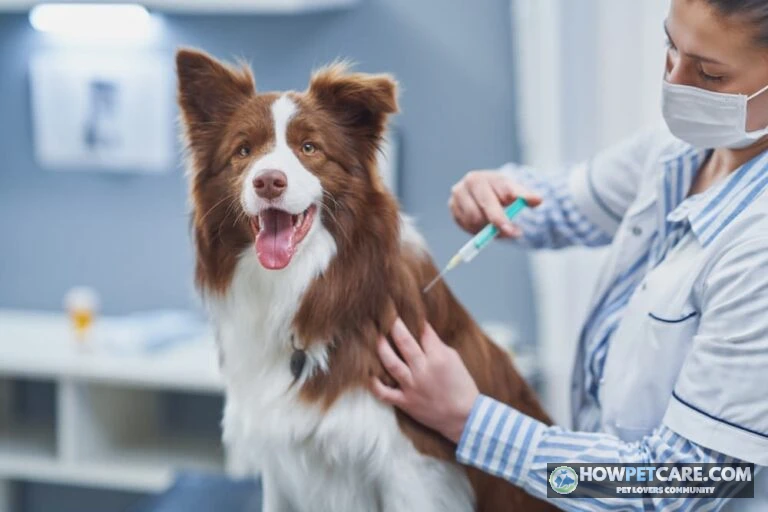

The canine influenza vaccine is a non-core vaccine for dogs that protects against H3N2 and H3N8 strains. It starts with two initial doses given 2-4 weeks apart, followed by annual boosters, and is recommended for dogs with social exposure risk such as boarding, daycare, grooming, or travel.
Canine influenza comes from two influenza virus strains, H3N2 and H3N8, and available vaccines target one or both of them. The canine influenza vaccine is a non-core veterinary immunization—not required for every dog, but recommended for dogs whose lifestyle creates exposure risk. Dogs that board, attend daycare, visit grooming salons, compete in shows, or travel with other dogs face the highest risk. Dogs with little contact outside the home may not need it at all. Your dog’s needs depend on where they go, how often they mix with other dogs, local outbreak activity, and your veterinarian’s assessment of their health.
Canine Influenza Vaccine: What It Is and Who Needs It

Canine influenza, commonly called dog flu, is a contagious respiratory infection caused by influenza A viruses adapted to canine hosts. The two strains recognized in dogs are H3N2 and H3N8. H3N8 originated from an equine influenza strain that adapted to dogs, while H3N2 is believed to have come from an avian source before circulating in dogs. Only H3N2 variants are currently circulating widely in North America, but vaccines may cover one strain or both.
H3N2 and H3N8: the two canine influenza strains
H3N2 is associated with more severe disease in some outbreaks and can cause a cough that lasts 10 to 21 days without responding to antibiotics or cough suppressants. H3N8 was the first strain identified in dogs and remains included in bivalent vaccines even though its circulation is more limited in North America. Because immunity to influenza is serotype-specific, protection against one strain does not reliably protect against the other.
Core vs non-core: what that means for your dog
Veterinary authorities classify the canine influenza vaccine as non-core. Core vaccines, such as the DHPP vaccine for dogs, are recommended for essentially all dogs. Non-core vaccines are given based on lifestyle, geography, and exposure risk. The canine influenza vaccine for dogs is not universally required, but boarding kennels, grooming facilities, dog daycares, and training facilities may require proof of vaccination before admitting a dog.
Quick risk signal: vaccinate, defer, or ask your vet

Use your dog’s routine as the first filter. Dogs that visit boarding facilities, grooming salons, daycare, dog shows, or training classes regularly are strong candidates for vaccination. Dogs that rarely leave home and have minimal contact with other dogs may be able to defer, subject to veterinary advice. Regional outbreaks also matter: if canine influenza cases are reported in your area, your veterinarian may recommend vaccination even for a lower-risk dog.
Does My Dog Need the Canine Influenza Vaccine? Risk-Based Decision Framework
Not every dog needs the canine influenza vaccine, but many social dogs benefit from it. Base the decision on exposure risk, age, health status, and local disease activity rather than a blanket rule.
High-risk lifestyles: boarding, grooming, daycare, and shows
Dogs in group settings face the highest risk because canine influenza spreads through respiratory droplets, contaminated surfaces, and direct contact. Facilities where dogs congregate—boarding kennels, grooming salons, dog daycares, training classes, shows, and sporting events—create ideal conditions for transmission. Some require the canine influenza vaccine for dogs as a condition of entry, and many require it alongside bordetella vaccination for kennel cough protection.
Moderate and low-risk profiles: when vaccination may be optional
Dogs that visit dog parks occasionally, walk in groups now and then, or travel intermittently fall into a moderate-risk category. Dogs that stay home most of the time, live in a single-dog household, and rarely encounter unfamiliar dogs are generally low risk. For these dogs, vaccination is a conversation with your veterinarian rather than an automatic recommendation.
Puppies, seniors, and immunocompromised dogs

Puppies can receive the canine influenza vaccine starting at the minimum age listed on the product label—commonly puppy-age approval—and the initial series follows the same two-dose pattern as for adult dogs, so it should be coordinated with your puppy vaccination schedule. Senior dogs and dogs with chronic illness may still be candidates, but their overall health and immune status should be reviewed by a veterinarian first. Dogs with immune-mediated disease or those receiving immunosuppressive medication require individual assessment.
Regional risk: finding current outbreak information
Canine influenza activity varies by region and over time. This guide does not include a permanent, real-time national outbreak map. Instead, ask your veterinarian about current canine influenza cases in your area, check with local animal health authorities, and review AVMA-aligned resources for regional updates. Treat outbreak information as time-sensitive rather than a fixed risk level.
Canine Influenza Vaccine Lifestyle Risk Score
Score each factor 0, 1, or 2, then add the points.
Boarding, daycare, or grooming: 0 = never, 1 = a few times per year, 2 = monthly or more
Dog shows, training classes, or group sports: 0 = never, 1 = occasional, 2 = regular
Dog parks or group walks: 0 = none, 1 = occasional, 2 = frequent
Travel or staying with other dogs: 0 = none, 1 = occasional, 2 = frequent
Local outbreak or facility requirement: 0 = no, 1 = possible, 2 = yes
Total score:
0-2: Defer unless your veterinarian advises otherwise
3-5: Consider vaccination; discuss timing and product with your veterinarian
6-10: Vaccinate; schedule the initial two-dose series before high-risk exposure
Bring this score to your appointment and ask how it changes your dog’s boarding, grooming, or travel plans.
 You might be wonderingSkin problems canineCanine Skin Problems: Causes, Care & When to See a VetRead the answer
Canine Influenza Vaccine Schedule and Booster Dose Timing

The canine influenza vaccine schedule begins with an initial two-dose series, followed by periodic boosters. Timing matters because protection is not immediate and an incomplete series may leave gaps in coverage.
Initial series: first dose and second dose timing
Most canine influenza vaccine products require two initial doses spaced 2 to 4 weeks apart, depending on the product label. One widely used product calls for two doses about 3 weeks apart. Puppies and adult dogs follow the same basic schedule, with the first dose given no earlier than the label’s minimum age.
Booster dose and annual revaccination intervals
After the initial series, dogs generally receive an annual booster dose to maintain immunity. Duration of immunity is product-specific, so follow the label and your veterinarian’s recommendation rather than assuming a single shot provides lasting protection.
What to do if a dose is missed or delayed
If the second dose is late, contact your veterinary clinic to reschedule rather than restarting the series automatically. Your veterinarian will determine whether the original timeline can be resumed or whether adjustments are needed based on how much time has passed.
Timing around boarding, grooming, or travel

Plan the initial series well before any required boarding, grooming, or travel date. Because the second dose comes weeks after the first and immunity takes time to develop after that, starting the series at the last minute will not protect your dog in time for an upcoming reservation.
Available Canine Influenza Vaccine Products: Head-to-Head Comparison

Several canine influenza vaccine products are available in the United States, and they differ in strain coverage, minimum age, dosing, and availability. No head-to-head field trials establish one product as clearly superior, so product choice should be made with your veterinarian based on what is available locally and your dog’s needs.
Strain coverage: bivalent vs monovalent
Bivalent canine influenza vaccine products protect against both H3N2 and H3N8. Monovalent products cover a single strain—either H3N2 or H3N8. Because only H3N2 variants are currently circulating widely in North America, some veterinarians may emphasize H3N2 coverage, but bivalent products remain common because they guard against both recognized strains.
Age approval and dosing by product
Product labels specify minimum age for administration, and many products are approved for puppies starting at 8 weeks of age. Dose volume is typically 1 mL administered by subcutaneous injection. Confirm exact age and dosing details on the current product label before scheduling.
Booster intervals and duration of immunity
Booster intervals are generally annual after the initial two-dose series, but exact timing depends on the product. Duration of immunity is not identical across all products, and no published head-to-head comparison establishes longer-lasting protection for one brand over another.
Availability and how to obtain each product
Canine influenza vaccines are distributed through veterinary clinics and animal health distributors. Availability varies by region and clinic, so call ahead to confirm which product your veterinarian stocks.
| Vaccine product | Strains covered | Minimum age | Dose and route | Initial series | Booster interval | Availability |
|---|---|---|---|---|---|---|
| Vanguard CIV H3N2/H3N8 | H3N2 and H3N8 | Label-listed minimum age (commonly puppy-age approval) | 1 mL, subcutaneous | 2 doses, 2-4 weeks apart | Annual | Widely available through veterinary clinics |
| Nobivac NXT Canine Flu H3N2 | H3N2 only | Label-listed minimum age | 1 mL, subcutaneous | 2 doses, about 3 weeks apart | Annual | Widely available through veterinary clinics |
| TruCan Ultra CIV | H3N2 and H3N8 | Label-listed minimum age | 1 mL, subcutaneous | 2 doses, 3-4 weeks apart | Annual | Veterinary clinic and distributor dependent |
Confirm the current product label, strain availability, and dose instructions with your veterinarian before scheduling.
Canine Influenza Vaccine Side Effects and Adverse Reactions
Most dogs tolerate the canine influenza vaccine well, and side effects are usually mild and short-lived. Knowing what to expect helps you tell normal reactions from symptoms that need veterinary attention.
Common and expected side effects
Mild soreness at the injection site, temporary lethargy, low-grade fever, and reduced appetite are common after vaccination. These effects typically resolve within a day or two without treatment.
Rare adverse reactions and emergency signs

Serious reactions are uncommon but can include facial swelling, hives, vomiting, diarrhea, breathing difficulty, or collapse. These signs require prompt veterinary care and should not be monitored at home.
What to do after vaccination: monitoring and care
Side-Effect Timeline: Expected vs. Urgent
First 24 hours:
Expected: mild soreness at the injection site, sleepiness, lower appetite, or a temperature that feels slightly warm
Watch for: hives, facial swelling, repeated vomiting, diarrhea, or coughing/wheezing
Days 1-3:
Expected: mild lethargy or reduced activity; appetite usually returns
Watch for: swelling that grows, pain when touched, or limping on the vaccinated leg
Days 3-7:
Expected: most dogs return fully to normal; the injection-site bump should be shrinking
Watch for: persistent fever, refusal to eat, marked lethargy, or any breathing difficulty
Seek veterinary care the same day for facial swelling, hives, vomiting, diarrhea, collapse, or breathing changes. Call your clinic for symptoms that last beyond 48-72 hours or worsen after improving.
Puppy-specific considerations
Puppies may experience the same mild side effects as adult dogs. Because puppies are still developing, any vomiting, diarrhea, breathing difficulty, or marked lethargy after vaccination should be reported to your veterinarian promptly rather than assumed to be routine.
Which Dogs Should Not Receive the Canine Influenza Vaccine

Certain dogs should not receive the canine influenza vaccine without specific veterinary direction, and others need clearance before vaccination. This section answers which dogs should not receive the vaccine and when to pause.
Clear contraindications: do not vaccinate
Dogs with a known severe vaccine reaction or anaphylaxis should not be vaccinated without explicit veterinary direction. Dogs with active moderate-to-severe illness, fever, or significant infection should generally wait until they have recovered. Dogs receiving immunosuppressive medication or diagnosed with immune-mediated disease require individual veterinary assessment before vaccination.
Conditions requiring veterinary clearance first
Prior mild vaccine reactions, chronic disease such as kidney, liver, heart, endocrine, or respiratory disease, pregnancy, nursing, breeding plans, senior age, frailty, or an overdue or off-schedule previous dose are all reasons to seek veterinary clearance first.
Temporary deferral vs permanent exclusion
A sick or recovering dog is usually temporarily deferred rather than permanently excluded. Permanent exclusion is reserved for confirmed severe allergy or a veterinarian’s documented medical judgment.
Owner pre-appointment contraindication checklist
Pre-Appointment Contraindication and Caution Checklist
Do not vaccinate without veterinary direction if any are true:
Known severe vaccine reaction or anaphylaxis
Active moderate-to-severe illness, fever, or significant infection
Current immunosuppressive medication or diagnosed immune-mediated disease
Recent live vaccine or immune-modulating treatment that your veterinarian has not cleared
Get veterinary clearance first if any are true:
Prior mild vaccine reaction, such as facial swelling or hives
Chronic disease, such as kidney, liver, heart, endocrine, or respiratory disease
Pregnancy, nursing, or breeding plans
Senior age or frail condition
A previous dose was given off-schedule or is overdue
Temporary deferral is common for a sick or recovering dog; permanent exclusion is reserved for confirmed severe allergy or a veterinarian’s medical judgment. Only your veterinarian can make the final determination.
Canine Influenza Vaccine Cost: Realistic Price Ranges in the United States
Cost is a practical consideration for most dog owners. The canine influenza vaccine cost in the United States varies by clinic type, region, and whether an office visit or exam is required.
What the price includes: shot, exam, and office visit
The total charge usually includes the vaccine product itself plus an examination or office visit fee. Some clinics offer vaccine-only appointments at lower cost, while general practices typically bundle the shot with an exam. Always request an itemized estimate that separates the product from the visit fee.
Worked cost examples: first dose, full series, annual booster
First-Year and Annual Revaccination Cost Scenarios
These are planning ranges, not quotes. Actual charges vary by region, clinic type, and whether an exam is required.
Low-cost scenario (low-cost clinic, vaccine-only visit):
First dose: $25-$40
Second dose: $25-$40
First-year total: $50-$80
Annual booster visit: $25-$40
Typical scenario (general practice with exam):
Exam/office visit: $50-$90
First dose: $30-$55
Second dose: $30-$55
First-year total: $110-$200
Annual booster visit: $80-$145
High-cost scenario (specialty or urgent-care setting):
Exam/office visit: $90-$180
First dose: $45-$80
Second dose: $45-$80
First-year total: $180-$340
Annual booster visit: $135-$260
Ask for an itemized estimate that separates the vaccine product from the exam fee, and ask whether boarding or grooming proof is needed before the second dose.
Regional and clinic-type price variation
Prices tend to be higher in urban areas and at specialty or urgent-care practices, and lower at low-cost clinics or vaccine-only events. Regional differences in labor and overhead mean the same product can cost meaningfully more in one city than another.
Cost context versus illness treatment
Treating a respiratory infection can involve examination, diagnostic testing, medications, supportive care, and, in severe cases, hospitalization. Mortality from canine influenza is 1-5%, mostly in dogs with other severe illnesses. Vaccination cost should be weighed against potential illness costs and the value of meeting boarding or grooming requirements, but it does not guarantee prevention of infection.
Next Steps: Talk to Your Veterinarian and Build a Vaccination Plan
Use this guide to prepare for a productive conversation with your veterinarian rather than to make a final medical decision on your own.
Pre-visit decision checklist
Assess your dog’s lifestyle risk using the lifestyle risk score above. Review the contraindication checklist and note any conditions that apply. Call your clinic to confirm which canine influenza vaccine products are in stock and request a cost estimate. Bring your dog’s vaccination records, especially if boarding or grooming proof will be needed.
Questions to ask your veterinarian
Ask whether your dog’s lifestyle warrants the canine influenza vaccine, which product the clinic recommends and why, what the initial series and booster schedule will be, what side effects to watch for, and what the total cost will be including exams and boosters.
Documentation for boarding and grooming facilities
If a boarding kennel, grooming salon, or daycare requires proof of vaccination, request a signed certificate or record after each dose. Keep it accessible for reservations and check whether the facility requires completion of the full two-dose series before admission.
Where to find current local canine influenza updates
Ask your veterinarian about current canine influenza cases in your area. Regional animal health authorities and AVMA-aligned resources may also provide outbreak information. Treat any outbreak data as current only for the moment it is published, not as a permanent risk map.
This guide supports conversations with your veterinary care team; it does not replace professional diagnosis, treatment, or medical judgment.
 You might be wonderingAllergy medicine for dogsAllergy Medicine for Dogs: Doses, Costs & Best OptionsRead the answer
FAQ
Is the canine influenza vaccine a core vaccine?
No. The canine influenza vaccine is considered non-core, meaning it is recommended based on lifestyle and exposure risk rather than given to every dog.
Canine influenza vaccine vs bordetella vaccine: are they the same?
No. Bordetella protects against one bacterial cause of kennel cough, while the canine influenza vaccine targets H3N2 and/or H3N8 influenza viruses; dogs in high-risk social settings may need both.
Where can I get the canine influenza vaccine near me?
The vaccine is administered by licensed veterinarians; call local veterinary clinics to confirm product availability and schedule an appointment.
How long does immunity last after the canine influenza vaccine?
Immunity is generally maintained with annual revaccination or booster doses as recommended by the product label and your veterinarian.
Which canine influenza strains does the vaccine cover?
Bivalent canine influenza vaccines cover both H3N2 and H3N8, while monovalent products cover only a single strain, either H3N2 or H3N8.
At what age can puppies get the canine influenza vaccine?
Puppies can receive the canine influenza vaccine starting at the minimum age listed on the product label, commonly around 8 weeks of age, following the same two-dose initial series as adult dogs.