
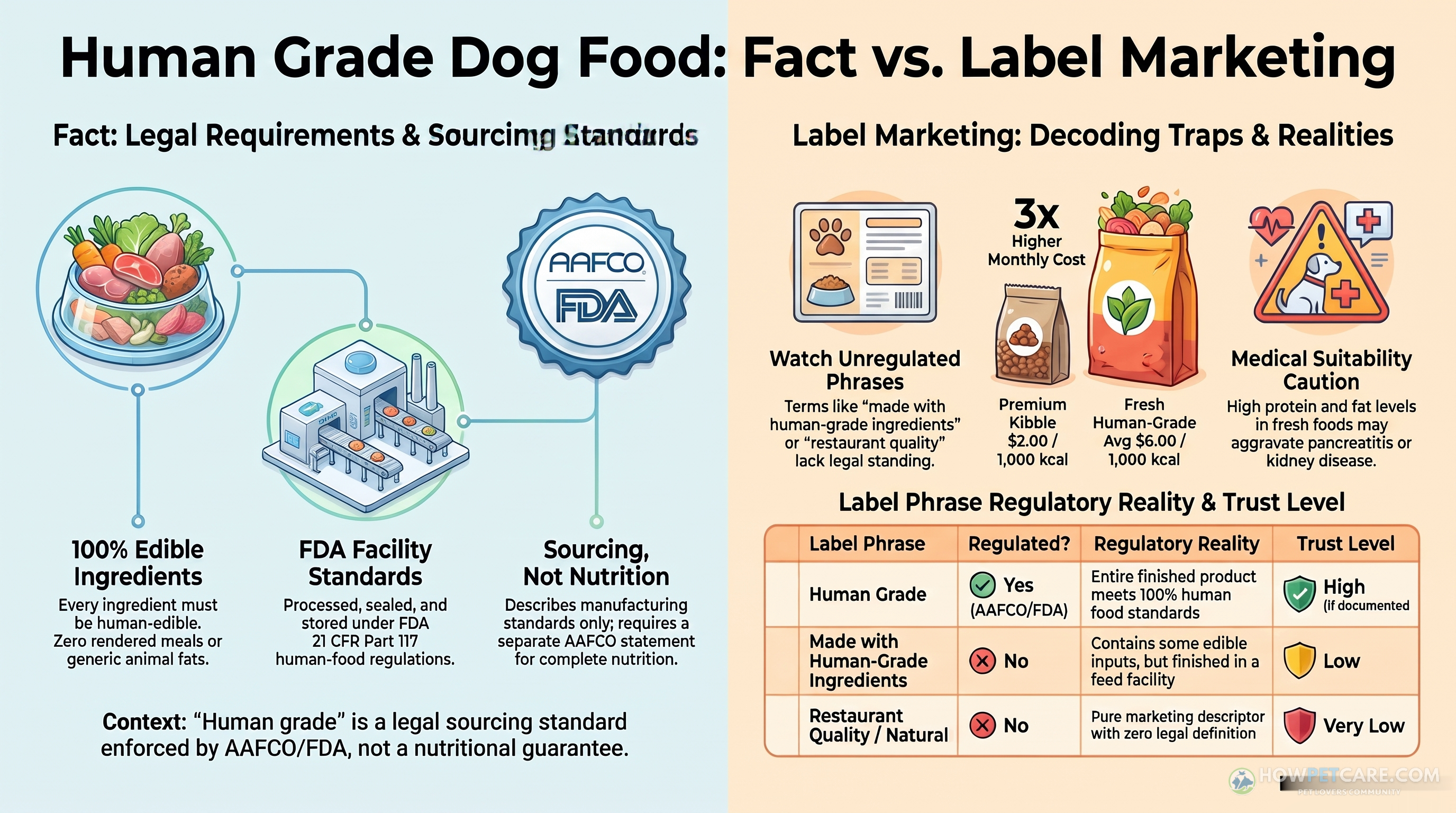
"Human grade" dog food is a sourcing and manufacturing claim, not a nutrition claim. Under AAFCO’s definition, every ingredient must be human-edible and the finished product must be made, packed, and held under FDA human-food regulations (21 CFR Part 117). Nutritional adequacy requires a separate "complete and balanced" statement.
"Human grade" is a manufacturing and sourcing claim, not a nutrition claim. Under AAFCO’s definition, a finished dog food qualifies only if every ingredient is edible by humans and the entire product is made, packed, and held according to federal human-food regulations—the FDA rules in 21 CFR Part 117. That’s a high bar for quality control, but it says nothing about whether the recipe is nutritionally complete. To know if a food can serve as your dog’s main diet, look for the separate AAFCO "complete and balanced" statement.
Here’s the straightforward trade-off: a genuine human-grade product may offer benefits in digestibility and palatability, along with more confidence in sourcing. It can also cost two to four times more per month than premium kibble, with no proven payoff in lifespan or disease prevention. This guide explains what the label requires, how to verify a brand’s claim, what the food costs for dogs of different sizes, and how to decide whether it’s worth the expense. If the numbers don’t work for you, staying with a good kibble is a reasonable choice.
What "Human Grade" Legally Means (and What It Doesn’t Guarantee)
A product qualifies as human grade only if it meets all four AAFCO criteria:
- Every ingredient is human-edible.
- Every ingredient is manufactured, packed, and held according to federal human-food regulations.
- The finished product is manufactured, packed, and held under those same human-food regulations.
- The label truthfully claims human grade for the finished product.
Miss even one, and the whole-product claim doesn’t hold. That’s why the term is harder to earn than many shoppers assume—and why "human grade" and "made with human-grade ingredients" don’t mean the same thing.
The four criteria in plain English
Here’s what each criterion requires of a brand:
- Human-edible ingredients. No rendered meals, by-product meals, or generic "animal fat." A single feed-grade ingredient disqualifies the whole-product claim.
- Human-food facility. The food is cooked, sealed, and stored in a facility licensed and inspected to produce human food—typically under FDA 21 CFR Part 117, the same current-good-manufacturing-practice framework that governs foods for people. A feed mill doesn’t meet this standard just because it handles good ingredients.
- Whole product, not parts. The claim applies to the finished bag, not just to a marketing statement about its ingredients.
- Truthful labeling. The package’s claim must accurately describe the product.
AAFCO publishes model definitions, and individual states adopt them into their feed laws. The FDA oversees pet-food safety overall, so enforcement varies from state to state. In practice, a claim depends on the company’s facility documentation, not a federal stamp.
What "human grade" does not tell you
This is the distinction many shoppers miss, and veterinary sources are clear about: "human grade" describes ingredients and manufacturing, not balanced nutrition. A human-grade food can still be nutritionally incomplete, while a feed-grade kibble can be complete and balanced. The label describes sourcing and process. It says nothing about lifespan, disease outcomes, or whether a recipe meets nutrient minimums. For those, check the AAFCO adequacy statement—a separate line on the label.

Human Grade vs. Feed Grade Dog Food: What Actually Differs
Feed grade means the ingredients are legal for animal feed and the food is processed in facilities regulated for feed production. Most kibble falls into this category. It may include rendered meals and by-products that human-food rules don’t permit.
For skeptical buyers, the key point is that feed grade doesn’t automatically mean unsafe or low-quality. Many premium kibbles are feed grade, meet complete-and-balanced standards, and have strong quality control. The categories differ, but they don’t map neatly onto good versus bad.
Here’s where they differ:
- Facility and traceability. Human-grade foods come from facilities inspected to human-food standards, with the record-keeping and traceability that entails. Feed-grade supply chains are regulated for animal feed and are generally less transparent.
- Ingredient sourcing. Human-grade recipes tend to use USDA-inspected meats and whole-food ingredients. Feed-grade foods may include rendered and by-product ingredients that are still legal and nutritious.
- Preservatives and additives. Fresh human-grade foods often rely on freezing or gentle drying rather than added preservatives. Many premium kibbles use approved natural preservatives, and some use synthetic ones. Fewer preservatives may be a preference, but it isn’t a safety guarantee.
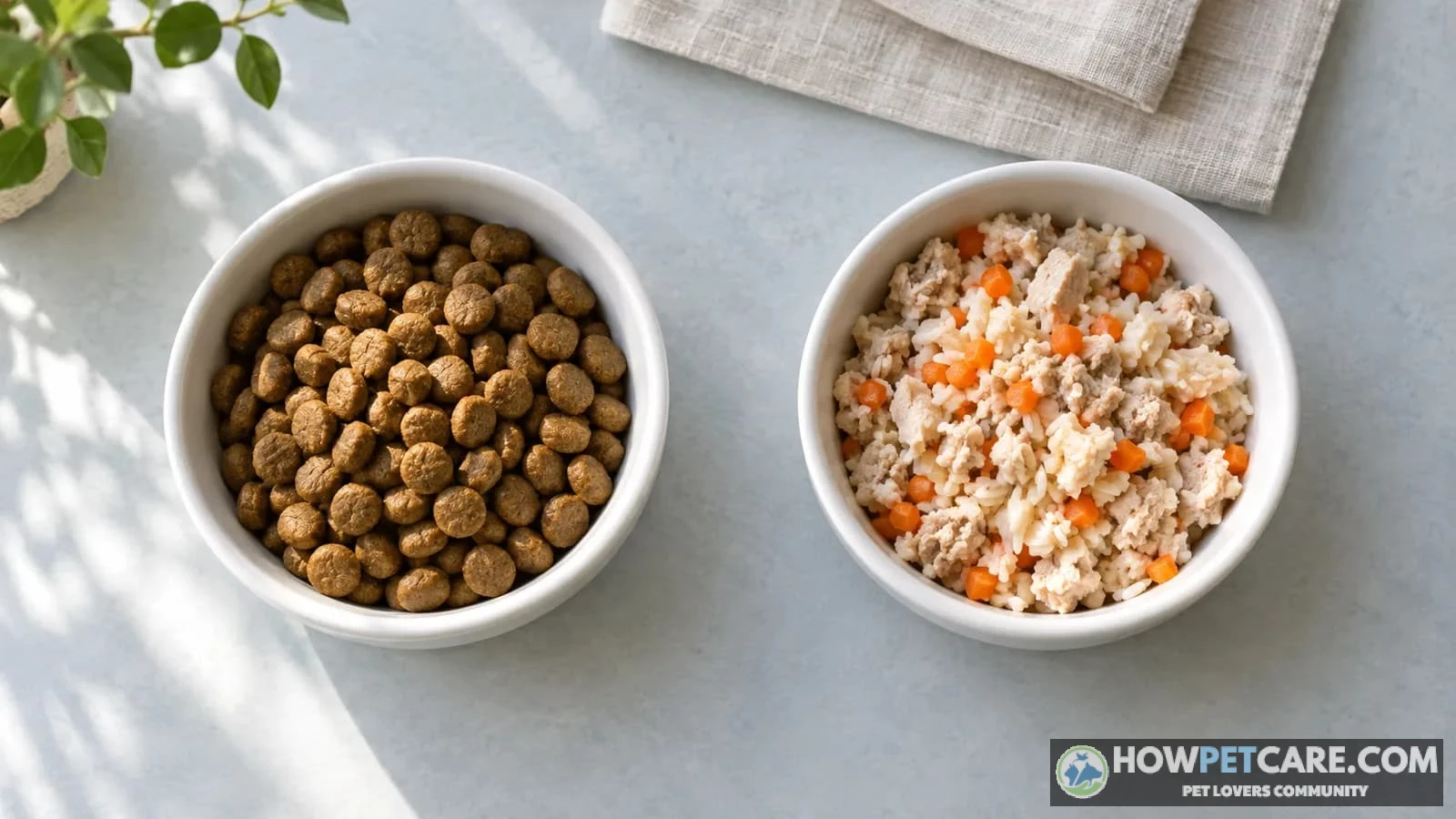
Where feed grade is a real downside
The legitimate drawbacks are less stringent traceability requirements, rendered and by-product ingredients that some owners prefer to avoid, and the fact that feed-grade products aren’t made to human-food manufacturing standards. Compared with human-food facilities, that’s a modest but real gap in contaminant controls.
Where the difference is mostly marketing
A premium feed-grade kibble from a company with a strong safety record can be as nutritious and safe in practice as a human-grade fresh food. "Human grade" tells you how a food was made and sourced; it doesn’t establish that the food is better for your dog. That depends on the recipe, its nutrient profile, and whether it’s complete and balanced.
Is Human Grade Dog Food Complete and Balanced? How to Check
Marketing can blur ingredient quality and nutritional adequacy, but they’re separate questions. "Human grade" describes the first. The AAFCO nutritional adequacy statement addresses the second and tells you whether a food can be your dog’s everyday diet.
A food’s "complete and balanced" claim follows one of two substantiation paths:
- Formulated to meet AAFCO nutrient profiles. The recipe was designed to meet established nutrient targets for a life stage. This is the most common path.
- Proven through AAFCO feeding trials. Dogs were fed the diet under a defined AAFCO protocol and monitored. This supports a stronger claim, and fewer foods have it.
Formulated vs. feeding-trial substantiation
Both paths are legal and acceptable, but they offer different levels of evidence. A feeding-trial substantiation means dogs ate the diet under a defined protocol; a formulated claim means the recipe was designed to meet a specification. If you prefer the higher bar, ask the brand which path applies to the exact recipe you’re buying, and get the answer in writing.
Red-flag phrases on the bag
Check for these adequacy problems:
- "For intermittent or supplemental feeding only." This isn’t a complete diet. It can work as a topper, not as the main meal.
- No AAFCO statement at all. Don’t use it as your dog’s sole diet.
- Wrong life stage. "Adult maintenance" food isn’t appropriate for puppies. Puppies need a statement for "growth" or "all life stages."
Fresh and home-style recipes are especially likely to miss nutrient targets, which is why formulation by a board-certified veterinary nutritionist (DACVN or equivalent) matters. Look for a company that names its nutritionist and will provide a full nutrient analysis on request. Finally, confirm that the adequacy statement covers your dog’s life stage; a general claim of quality isn’t enough.
How to Verify a Human Grade Claim: A Label-Literacy Checklist
Three phrases cause much of the confusion on the shelf, but they mean different things. "Human grade" applies to the whole finished product and is tied to the AAFCO definition. "Made with human-grade ingredients" doesn’t make that claim; it may describe a feed-grade process using human-edible inputs. "Restaurant quality," "human-quality," "premium," "natural," and "farm-fresh" are unregulated marketing terms with no legal definition.
Use this table to decode the language before you spend money:
| Label phrase | Regulated? | What it means | Verification step | Trust level |
|---|---|---|---|---|
| Human grade | Yes — AAFCO model definition, state feed law | Finished product made and held to human-food standards | Confirm it applies to the whole product, not one ingredient | High if documented |
| Made with human-grade ingredients | No — the "made with" qualifier breaks the claim | Some inputs are human-edible; process may be feed grade | Ask about the finished product, not the ingredients | Low |
| Restaurant quality / human-quality | No | Pure marketing | Ignore unless backed by the full claim | Very low |
| Premium / natural / farm-fresh | No | Unregulated descriptors | Check the AAFCO statement instead | Very low |
| Complete and balanced | Yes — AAFCO adequacy statement | Meets nutrient minimums for a life stage | Read the life stage and substantiation path | High |
| Brand | Format | Human-grade claim wording | AAFCO complete & balanced | Protein % (dry matter) | Fat % (dry matter) | Calories | Price per 1,000 kcal | Delivery or availability |
|---|---|---|---|---|---|---|---|---|
| The Farmer's Dog | Fresh, gently cooked | "Human grade" — USDA-inspected facilities | Yes — formulated (all life stages) | ~30–38% | ~20–30% | ~500–600 kcal/lb | ~$5.50–7.00 | Subscription, shipped frozen |
| Ollie | Fresh, gently cooked | "Human-grade" whole-product claim | Yes — formulated | ~30–40% | ~15–25% | ~500 kcal/lb | ~$5.00–7.00 | Subscription |
| Nom Nom | Fresh, gently cooked | "Human grade" — human-food kitchens | Yes — formulated with a vet nutritionist | ~30–40% | ~15–25% | ~450–550 kcal/lb | ~$6.00–8.00 | Subscription + select retail |
| Raised Right | Fresh, gently cooked | "Human grade" — human-food facilities | Yes — formulated (adult or all life stages by recipe) | ~40–50% | ~20–35% | ~450–500 kcal/lb | ~$7.00–9.00 | Subscription + retail freezers |
| Spot & Tango | Fresh + UnKibble (dried) | "Human-grade ingredients made in USDA kitchens" — verify per line | Yes — formulated | ~30–40% | ~15–30% | Varies by line | ~$4.00–6.50 | Subscription |
| The Honest Kitchen | Dehydrated (also wet, clusters) | "Human grade" | Yes — formulated | ~25–35% | ~10–25% | ~460–490 kcal/cup | ~$4.50–6.00 | Retail, Chewy, Amazon, direct |
| Sundays | Air-dried | "Human grade" — human-food facility | Yes — formulated (all life stages) | ~35% | ~20% | ~4,500+ kcal/kg | ~$7.00–9.00 | Subscription, shelf-stable |
| Premium kibble baseline (Orijen Original) | Extruded kibble | No human-grade claim (feed grade, shown for comparison) | Yes — formulated | ~43% | ~19% | ~3,800–4,000 kcal/kg | ~$1.80–2.30 | Everywhere |
Human grade vs. "made with human-grade ingredients"
This is the most useful distinction to keep in mind at the store. A product labeled "made with human-grade ingredients" tells you that some components are human-edible. It doesn’t tell you the finished food was made and held to human-food standards. Treat a whole-product "human grade" claim as the full standard and "made with" as a weaker, partial signal.
The 5-Point Human Grade Verification Checklist
Check every brand against these five points before buying. A product only earns a genuine "human grade" claim if it passes all five.
- Exact wording check. The label or product page says "human grade" and applies the claim to the finished product—not "made with human-grade ingredients," "human-quality," or "restaurant quality." Only the whole-product claim is tied to the AAFCO definition.
- Human-food facility. The food is manufactured, packed, and held in a facility licensed to produce human food and inspected under FDA 21 CFR Part 117—not a feed mill that also handles "good" ingredients.
- Every ingredient is human-edible. Check for rendered meals, by-product meals, and generic "animal fat." A single feed-grade ingredient disqualifies the whole-product claim.
- AAFCO adequacy statement is present. Find the nutritional adequacy statement and confirm it says "complete and balanced" for your dog’s life stage, not "for intermittent or supplemental feeding only."
- Documentation on request. Email customer service to ask for facility registration details and whether a board-certified veterinary nutritionist formulates the recipes.
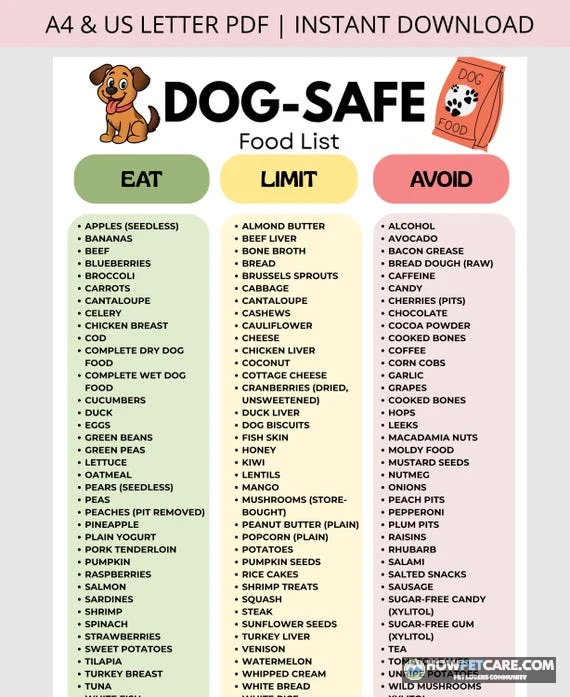
Scoring: 5/5 is a verified claim. 3–4/5 is yellow—ask more questions before paying a premium. 0–2/5 is marketing language, not a regulatory claim.
Questions to email the brand
Send these questions to customer support. The specificity of the answers matters:
- "Is your finished product made in a USDA- or FDA-inspected human-food facility?" A useful answer names the facility type and inspection framework. A red flag is "proprietary information."
- "Does a board-certified veterinary nutritionist (DACVN or equivalent) formulate your recipes?"
- "Can you share the full nutrient analysis and say whether the recipe is formulated or feeding-trial substantiated?"
Green, yellow, and red flags
Green: whole-product "human grade" wording, a complete-and-balanced statement for your dog’s life stage, a named nutritionist, and documentation supplied on request. Yellow: some criteria are met, but the brand is vague about its facility or nutritionist—verify before paying more. Red: only "made with human-grade ingredients," no adequacy statement, or refusal to share facility and formulation details.
Human Grade Dog Food Brands Compared on Real Numbers
Selection criteria, up front: a whole-product "human grade" claim (not "made with human-grade ingredients"), an AAFCO complete-and-balanced statement, transparent published nutrient data, and US availability. Prices are company-published figures as of 2026, converted to cost per 1,000 kcal to compare formats fairly. Check current prices before ordering; subscription costs change often.
Each format has trade-offs. Fresh and gently cooked foods offer palatability and moisture, but cost the most per calorie and need freezer space. Freeze-dried foods are shelf-stable and light, though expensive per calorie. Dehydrated foods rehydrate with water and fall between fresh and kibble on cost. Human-grade kibble is the least expensive way to get a human-grade claim and is easy to store.
| Brand | Format | Human-grade claim wording | AAFCO complete & balanced | Protein % (dry matter) | Fat % (dry matter) | Calories | Price per 1,000 kcal | Delivery or availability |
|---|---|---|---|---|---|---|---|---|
| The Farmer’s Dog | Fresh, gently cooked | "Human grade" — USDA-inspected facilities | Yes — formulated (all life stages) | ~30–38% | ~20–30% | ~500–600 kcal/lb | ~$5.50–7.00 | Subscription, shipped frozen |
| Ollie | Fresh, gently cooked | "Human-grade" whole-product claim | Yes — formulated | ~30–40% | ~15–25% | ~500 kcal/lb | ~$5.00–7.00 | Subscription |
| Nom Nom | Fresh, gently cooked | "Human grade" — human-food kitchens | Yes — formulated with a vet nutritionist | ~30–40% | ~15–25% | ~450–550 kcal/lb | ~$6.00–8.00 | Subscription + select retail |
| Raised Right | Fresh, gently cooked | "Human grade" — human-food facilities | Yes — formulated (adult or all life stages by recipe) | ~40–50% | ~20–35% | ~450–500 kcal/lb | ~$7.00–9.00 | Subscription + retail freezers |
| The Honest Kitchen | Dehydrated (also wet, clusters) | "Human grade" | Yes — formulated | ~25–35% | ~10–25% | ~460–490 kcal/cup | ~$4.50–6.00 | Retail, Chewy, Amazon, direct |
| Spot & Tango | Fresh + UnKibble (dried) | "Human-grade ingredients made in USDA kitchens" — verify per line | Yes — formulated | ~30–40% | ~15–30% | Varies by line | ~$4.00–6.50 | Subscription |
| Sundays | Air-dried | "Human grade" — human-food facility | Yes — formulated (all life stages) | ~35% | ~20% | ~4,500+ kcal/kg | ~7.00–9.00 | Subscription, shelf-stable |
| Premium kibble baseline (Orijen Original) | Extruded kibble | No human-grade claim (feed grade, shown for comparison) | Yes — formulated | ~43% | ~19% | ~3,800–4,000 kcal/kg | ~$1.80–2.30 | Everywhere |
To read the table: "formulated to AAFCO profiles" means a recipe was designed to meet nutrient targets; feeding-trial substantiation means dogs ate the diet under an AAFCO protocol. Protein and fat figures on a dry-matter basis come from each company’s published guaranteed analysis; expect roughly ±5% variance by recipe. There isn’t one clear winner. Fresh foods stand out for palatability and moisture, while dehydrated and air-dried options offer lower costs per calorie and shelf stability. The premium-kibble row provides an honest price anchor. Some human-grade examples are grain-free, which matters to the DCM discussion below.
Fresh and gently cooked
The Farmer’s Dog, Ollie, Nom Nom, and Raised Right ship frozen recipes formulated to AAFCO profiles. Dogs often find these foods appealing, making them a common option for picky eaters. They also cost the most and need reliable freezer and fridge space. Raised Right has the highest protein figures in this group, which is relevant to the medical caveats later on.
Freeze-dried and dehydrated
Dehydrated foods like The Honest Kitchen rehydrate with warm water and remain shelf-stable before opening. Freeze-dried and air-dried options like Sundays sit at the shelf-stable, higher-cost-per-calorie end. These formats suit owners who want a human-grade claim without freezer space, and they work well as travel backups.
Human-grade kibble
Human-grade kibble offers a genuine whole-product claim at a fraction of fresh-food cost, with the convenience of standard kibble storage. It’s a middle ground for budget-conscious buyers who still want that sourcing standard.
Best picks by situation: picky eaters, seniors, budget
For picky eaters, fresh, gently cooked foods tend to appeal because of their aroma and moisture. For senior dogs, follow your vet’s guidance on calories and joint needs rather than choosing a food for its protein number alone. For a tighter budget, consider human-grade kibble or using a dehydrated line as a topper. You can get the sourcing standard without paying for a fresh-food subscription. Try a short order before committing to a subscription to see if your dog accepts the food.

What Human Grade Dog Food Really Costs per Month by Dog Weight
"Expensive" doesn’t tell you much; the numbers do. These estimates assume a 30-day month and maintenance calories for a neutered adult dog with average activity—roughly 30 × body weight in kilograms + 70 calories per day, rounded. Unit costs from the brand comparison: premium kibble about $2.00 per 1,000 kcal, fresh human grade about $6.00, freeze-dried about $9.00, dehydrated about $5.00, and human-grade air-dried or kibble about $3.50.
| Dog weight | Daily calories | Premium kibble/mo | Fresh human grade/mo | Freeze-dried or dehydrated/mo | Human-grade air-dried/mo | Monthly gap vs. kibble (fresh) |
|---|---|---|---|---|---|---|
| 10 lb | ~300 kcal | ~$18 | ~$54 | ~$45–81 | ~$32 | +$36/mo (~$430/yr) |
| 25 lb | ~640 kcal | ~$38 | ~$115 | ~$96–173 | ~$67 | +$77/mo (~$925/yr) |
| 40 lb | ~950 kcal | ~$57 | ~$171 | ~$143–257 | ~$100 | +$114/mo (~$1,370/yr) |
| 80 lb | ~1,700 kcal | ~$102 | ~$306 | ~$255–459 | ~$179 | +$204/mo (~$2,450/yr) |
| 100 lb | ~2,000 kcal | ~$120 | ~$360 | ~$300–540 | ~$210 | +$240/mo (~$2,880/yr) |
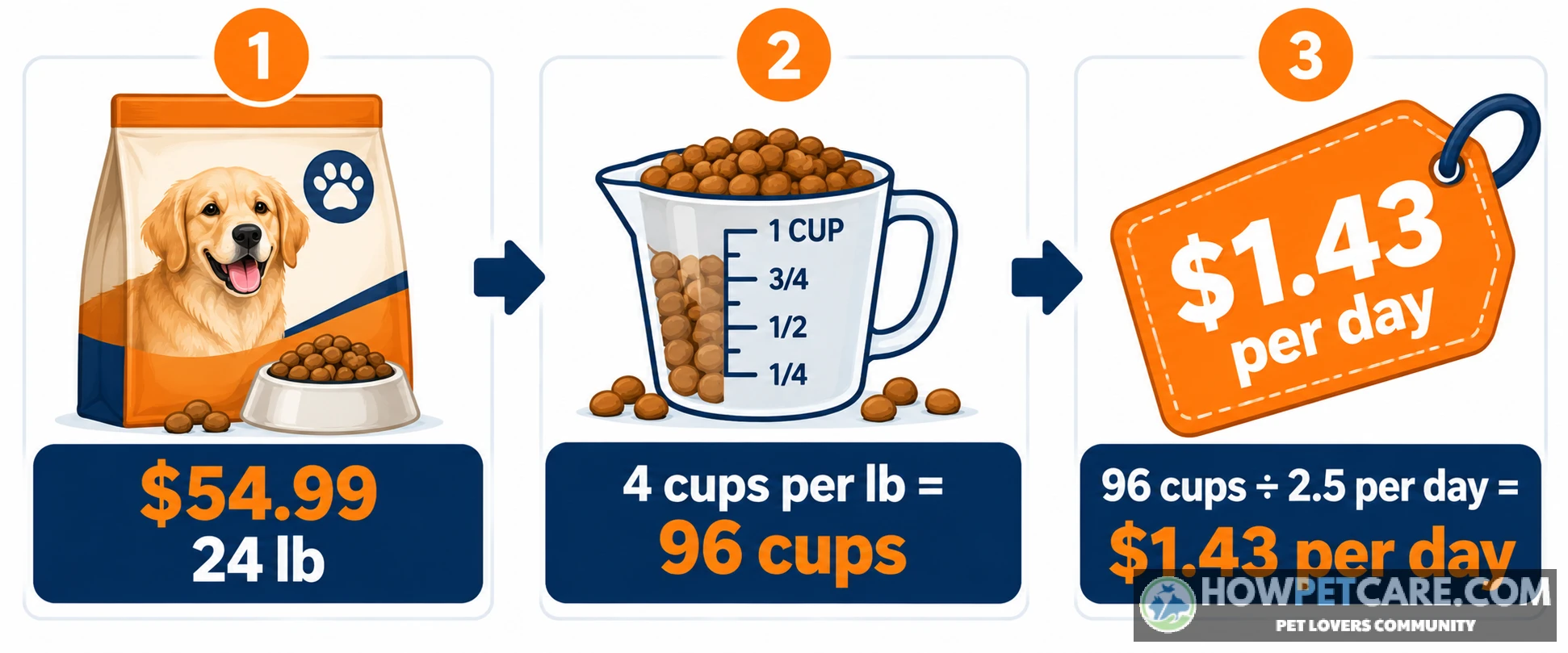
For a large dog, a fresh human-grade subscription can add $2,400–$2,900 a year compared with premium kibble. That’s the cost difference many families need to weigh.
The formula to calculate your own cost
Monthly cost = (your dog’s daily kcal ÷ 1,000) × price per 1,000 kcal × 30.
For example, a 55 lb dog eating about 1,150 kcal/day on a fresh brand at $6.50 per 1,000 kcal costs 1.15 × 6.50 × 30 ≈ $224/month. Find your dog’s daily calories on the current bag or ask your vet. To find the price per 1,000 kcal, divide the package price by its total calories (kcal per cup × cups in the package). If you’re new to portions and safe feeding, start with beginner dog food feeding basics before scaling up.
Hybrid feeding to cut costs
One way to keep some of the benefits while spending less is to use fresh food as a 25–50% topper over a complete-and-balanced kibble. For a 40 lb dog, that brings the fresh-food portion to roughly $43–86 per month. You get added palatability and variety without paying the full subscription price. Both foods need to be complete and balanced for this mix to work.
Is Human Grade Dog Food Worth It? What the Evidence Shows and Doesn’t
A useful answer separates what research supports from what remains marketing.
Fresh and gently cooked diets tend to show higher digestibility and better stool quality than some dry foods. They also tend to be palatable, which can help picky eaters. Owners commonly report coat improvements, too. These are short-term, quality-of-life benefits with some data behind them.
It’s not established that human-grade feeding extends lifespan or prevents disease over the long term. No robust long-term controlled feeding trials compare human-grade diets with premium kibble head to head. Treat claims about longevity or disease prevention as marketing, not fact. If a brand promises your dog will live longer on its food, it is getting ahead of the science.
What’s proven vs. what’s marketing
Digestibility and palatability data exist. Lifespan, disease-prevention, and long-term microbiome claims lack solid support. Weigh the supported benefits against the costs above to decide whether the trade-off makes sense for you.
Grain-free and DCM: where the research stands now
The FDA’s 2018-era investigation into grain-free diets and dilated cardiomyopathy (DCM) is sometimes treated as proof that grain-free food causes heart disease. The issue remains unresolved. Current understanding points to diet formulation—including taurine, legumes, and how a recipe is built—rather than to the "human grade" label. Some human-grade recipes are grain-free. Discuss that formulation choice with your vet; it doesn’t make the whole category dangerous.
Grain-free nuance aside, weigh the trade-offs
Potential benefits include strong palatability, higher moisture, fewer preservatives, transparent sourcing, and better stool quality for many dogs. The trade-offs are higher cost, dependence on freezer or fridge space, stricter safe-handling, and no proven health advantage over quality kibble. If stool quality is your main goal, compare high fiber dog food options before paying a fresh premium.
When premium kibble is the smarter choice
A complete-and-balanced premium kibble remains a sound choice for many healthy dogs. If the cost doesn’t work, fresh-food handling isn’t practical, or your dog is thriving on a well-formulated kibble, staying with it is a legitimate decision—not a compromise. Many veterinarians focus on WSAVA-style criteria: whether a company employs a nutritionist, conducts feeding trials or meets nutrient profiles, and controls quality. Those factors matter more than the human-grade label alone.
The decision rule
Human-grade fresh food may be worth the extra cost if your dog is a picky eater, sourcing transparency matters to you, and the monthly bill fits your budget. Don’t stretch to pay for it if your dog is healthy and happy on quality kibble, fresh-food handling is impractical, or the cost would strain your finances. Either choice can make sense for the right household.

Human Grade Food for Dogs With Kidney Disease, Pancreatitis, or Diabetes
This topic often gets little attention, yet it matters most for dogs with health conditions. Human grade describes ingredients and manufacturing, not medical suitability. Several popular fresh recipes contain 30–50% protein and 20–35% fat on a dry-matter basis—nutrient levels that may be wrong for some sick dogs. "Cleaner" ingredients can still come with the wrong nutrient profile. For suspected food allergies, ask whether hydrolyzed protein dog food is more appropriate than a richer fresh recipe.
Pancreatitis and fat sensitivity
Dogs recovering from pancreatitis, and dogs with fat sensitivity, are usually managed on low-fat diets. Many fresh recipes provide more fat per calorie than the low-fat therapeutic diets veterinarians use. Bring the brand’s actual fat-per-1,000-kcal figure to your vet. Many post-pancreatitis dogs are managed at roughly 25–30 g of fat or less per 1,000 kcal. A rich fresh food may be a poor fit.
Chronic kidney disease
Therapeutic renal diets restrict phosphorus and moderate protein to protect the kidneys. Most human-grade fresh foods are protein-forward and don’t set phosphorus targets, so a fresh recipe that sounds healthy may be unsuitable for chronic kidney disease. Choosing a diet for this condition is a decision for your vet, not a label-reading exercise.
Diabetes
For diabetic dogs, consistency matters more than labeling. Any food your vet approves can work if calories and carbohydrates stay consistent from meal to meal. Rotating fresh recipes or switching proteins can disrupt the consistency insulin dosing relies on. Set the diet before you set up a subscription.
Senior dogs
Senior dogs need attention to calorie density, muscle maintenance, and organ function. Before switching an older dog to fresh food, ask your vet about calorie targets and underlying conditions. Older dogs are more likely to have the kidney, heart, or metabolic issues noted above. For age-specific portions and health trade-offs, see dog food for senior dogs before changing diets.

If your vet steers your dog to a therapeutic diet, that is not a step down from human grade — therapeutic diets are the one category where the formulation itself is the therapy. Bring three questions to the appointment: (1) "Here is this brand’s full nutrient analysis — do the fat and phosphorus levels fit my dog’s condition?" (2) "Would a therapeutic diet do this job better, and which one?" (3) "If we trial it, what should we recheck in 4–8 weeks?"
Switching to Human Grade Food: Day-by-Day Transition and Safe Fresh-Food Handling
Make the switch gradually, handle fresh food as you would raw chicken, and keep a backup plan. Here’s the practical guidance many guides leave out.
Day-by-day transition schedule
Use this old-food-to-new-food ratio by volume:
-
Days 1–2: 75% old, 25% new
Start at three-quarters old food and one-quarter new. Watch for normal appetite and normal stool.
-
Days 3–4: 50/50
Move to an even split. If stool softens, hold at 50/50 for an extra day before advancing.
-
Days 5–6: 25% old, 75% new
Shift to mostly new food. If you see gas or loose stool, drop back to 50/50 for a day.
-
Day 7+: 100% new
Go fully to the new food. Firm stool for three straight days means the transition is done.
For a sensitive stomach, stretch each stage to three days for a 14-day transition. Call your vet instead of just slowing the switch if your dog vomits more than once, has diarrhea lasting 48 hours or longer, has blood in the stool, or refuses two meals.
Thawing, storing, and serving safely
Handle fresh food as you would raw chicken. The same pathogens—Salmonella and Listeria—are a concern:
- Thaw in the refrigerator only, about 24 hours per pack for most brands. Never thaw on the counter; the 40–140°F zone lets bacteria multiply quickly.
- Use thawed food within 3–4 days. If it smells off or has sat out for more than two hours, throw it away.
- Wash bowls after every meal in hot, soapy water. Fresh food has no preservatives, so biofilm builds quickly. Run bowls through the dishwasher weekly.
- Use a dedicated scoop, wipe counters after serving, and wash your hands. Households with infants, elderly members, or immunocompromised people should be especially careful.
Freeze-dried and dehydrated foods need different handling: rehydrate with warm, not hot, water; use them within the package’s rehydration window; and don’t leave rehydrated food out for hours.

Travel, power outages, and cold-chain breaks
- If a delivery arrives above refrigerator temperature (about 40°F), contact the brand for a replacement instead of trying to "cook it off."
- In a power outage, a full, unopened freezer holds frozen food safely for about 48 hours; a half-full freezer about 24 hours. Keep the door closed.
- For travel, bring a shelf-stable complete-and-balanced backup—dehydrated food or kibble—instead of relying on hotel fridge space. Don’t use the cat’s bowl as a fallback—what happens if dogs eat cat food depends on amount and size.
1A pet food manufacturer advertises its new product as 'human grade' because it contains whole, USDA-inspected beef and organic vegetables. However, the finished product is cooked, processed, and packaged inside a commercial feed mill. Why does this food fail to meet AAFCO standards for a whole-product 'human grade' claim?
AAFCO whole-product human-grade criteria dictate that both ingredient sourcing and the processing facility must meet FDA human-food standards (21 CFR Part 117).
2Which of the following statements accurately describe operational differences between feed-grade dog foods and genuine human-grade dog foods?
Human-grade standards strictly require human-food facility licensing under federal standards for every step of manufacturing.
3An owner reviewing a package of fresh human-grade dog food spots the phrase 'For intermittent or supplemental feeding only.' What does this phrasing indicate about the product?
An AAFCO statement specifying intermittent or supplemental use indicates the recipe lacks the complete nutrient profile needed to serve as a primary daily diet.
4Why might transitioning a dog with chronic kidney disease to a standard protein-forward fresh human-grade diet be problematic without specific veterinary oversight?
Renal management requires precise restriction of phosphorus and moderation of protein, whereas standard fresh human-grade foods are protein-forward and typically unmonitored for phosphorus.
5According to safe handling guidelines for fresh frozen human-grade dog food, which of the following practices should pet owners follow to manage bacterial contamination risks?
Refrigerator thawing maintains food below 40°F, preventing bacterial multiplication in the danger zone.
6A pet food brand advertises that switching to its fresh human-grade recipe is scientifically proven to extend a dog's lifespan and prevent chronic organ disease compared to feeding premium kibble. How should a consumer evaluate this claim?
Digestibility and palatability benefits are documented, but long-term health outcomes like disease prevention and extended lifespan lack controlled comparative study data.
7Why does the label phrase 'made with human-grade ingredients' represent a significantly lower trust level than a whole-product 'human grade' claim?
The phrase 'made with' modifies the claim so that only individual inputs are human-edible, leaving the processing and storage under feed-grade standards.
Your Decision Path: Should You Buy Human Grade Dog Food?
Use three questions to make the decision: Is your dog healthy, or does it have a condition on the medical list above? What can you spend each month after running the cost formula? Are you willing to handle fresh food safely?
- Healthy dog, comfortable budget, and willingness to handle fresh food: consider a fresh human-grade subscription, or human-grade kibble for a lower-cost option.
- Healthy dog, tight budget, or fresh-food handling isn’t practical: choose a complete-and-balanced premium kibble or use human-grade food as a topper.
- Dog with a medical condition: talk with your vet first and bring the brand’s nutrient analysis.
Five steps before you buy
- Check your dog’s daily calories on the bag or with your vet.
- Run the cost formula for the brands you’re considering.
- Use the 5-point label-verification checklist to narrow your choices.
- Confirm the AAFCO "complete and balanced" statement covers your dog’s life stage.
- Consult your vet before switching, especially for seniors or dogs with health conditions.
How to evaluate a trial
Order the smallest trial size before committing to a subscription, then track stool quality, energy, weight, and coat over 4–8 weeks. If you see steady improvement and the cost fits, consider ordering more. If nothing changes or the price doesn’t add up, staying with a complete-and-balanced premium kibble is a sound, defensible choice. Understanding the label helps you decide what you’re paying for.
FAQ
Do veterinarians recommend human grade dog food?
Most vets focus on whether a food is complete and balanced and made by a company with nutrition expertise, rather than on the human-grade label. Human-grade food can be a fine choice if it meets those standards, but it is not required for a healthy dog.
Is human grade dog food better than kibble?
Some human-grade fresh foods show better digestibility and palatability, but evidence that they extend lifespan or prevent disease is limited. A complete-and-balanced premium kibble can be equally healthy for many dogs.
Is human grade dog food safe for puppies?
Only if it is labeled complete and balanced for growth or all life stages. Puppies have strict calcium and phosphorus needs, so check the AAFCO statement and talk with your vet first.
Can I mix human grade food with kibble?
Yes, as long as the total daily calories are right and both foods are complete and balanced. Mixing is a common way to lower cost and ease a transition.
Does human grade dog food have preservatives?
Often fewer, but not always. Fresh frozen products rely on refrigeration, while others use natural or approved preservatives, so check the ingredient list.