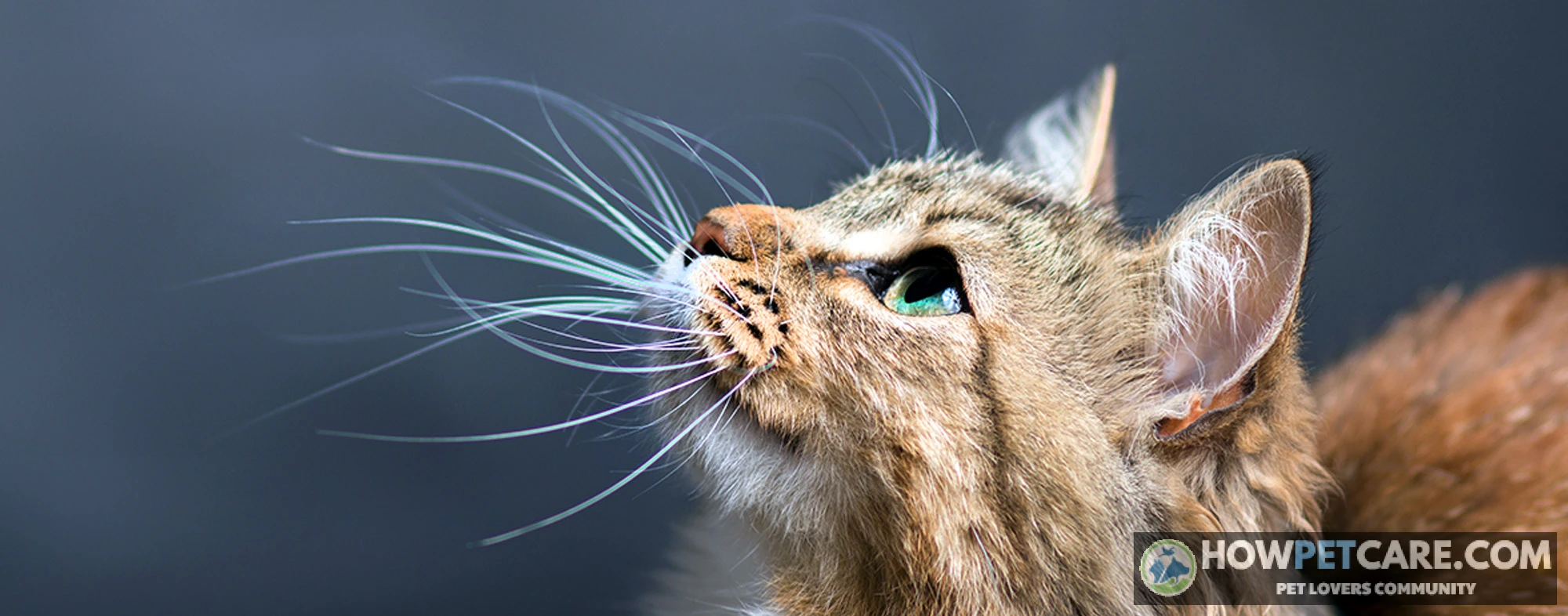

Cat whiskers (vibrissae) are specialized sensory hairs rooted in nerve-rich follicles. They help cats detect nearby objects, air movement, and their own body position—supporting navigation, hunting, and communication. Occasional shedding is normal and whiskers regrow, but never trim them: they feed real sensory information to the brain.
Cat whiskers are specialized sensory hairs that help cats detect nearby objects and movement. Finding one or two shed whiskers from time to time is usually normal, and a cut or shed whisker generally grows back if its follicle remains healthy. Don’t trim whiskers deliberately; they give cats useful information about their surroundings.
If whisker loss is noticeable, or comes with sore skin, facial scratching, appetite changes, or unusual behavior, contact your veterinarian. Burns and chemical exposure call for prompt advice, even if the whiskers seem to be the only thing affected.
Cat Whiskers Are Sensory Organs: How Vibrissae Work
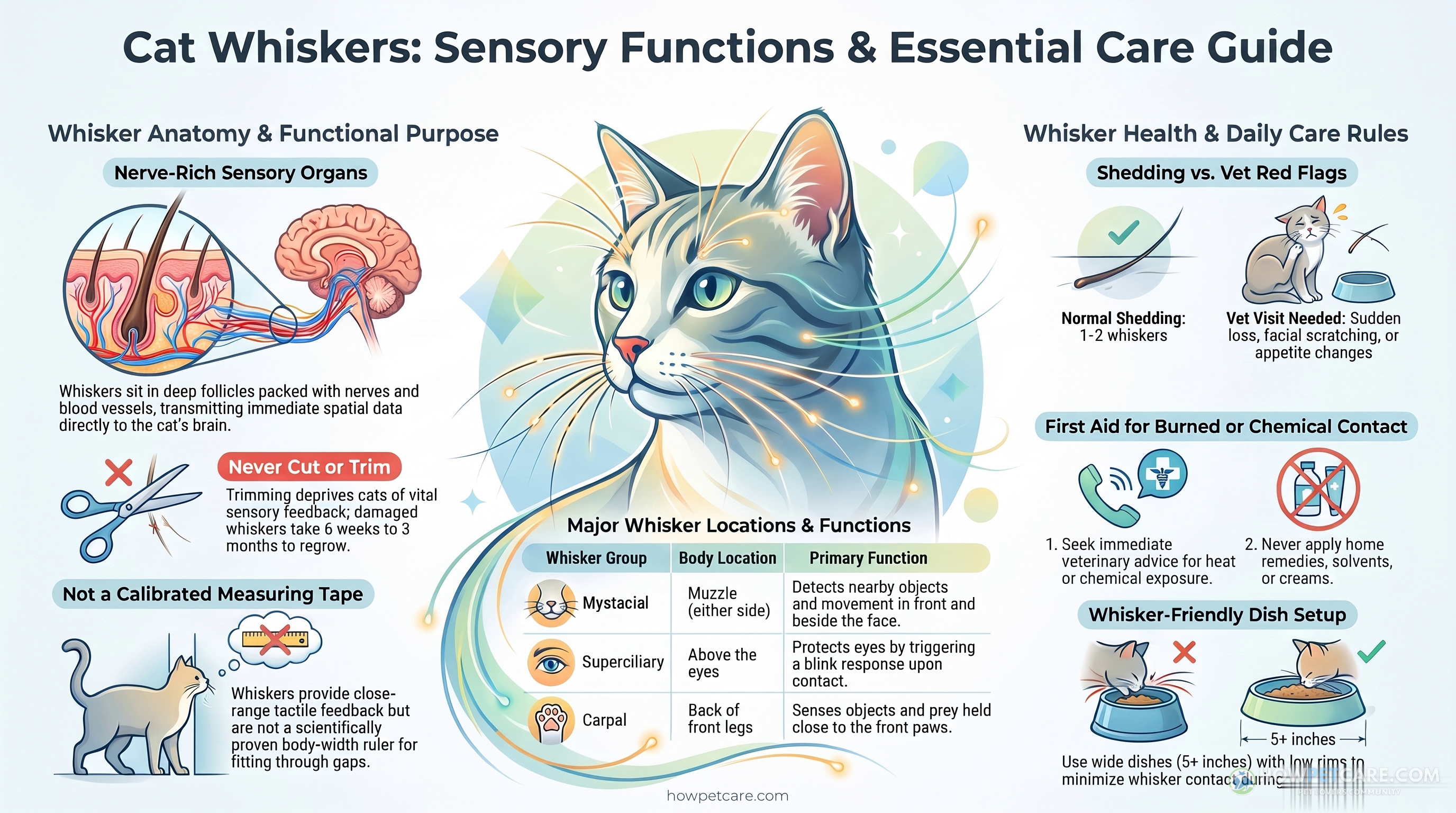
Whiskers, also called vibrissae, are stiff hairs made of keratin. Each one sits in a deep follicle surrounded by blood vessels, nerve endings, and sensory receptors. When a whisker bends or moves, receptors around the follicle send information toward the cat brain’s sensory pathways. The exposed hair shaft itself has no feeling.
That structure helps explain why feline whiskers are more than decoration. They add close-range information to the feline sensory system, complementing vision and other senses. Some of this feedback also helps a cat sense its body’s position and movement.

Two familiar claims call for caution: a cat’s whisker span isn’t a proven way to measure its body width, and whisker fatigue isn’t an established disease. Still, an individual cat may prefer one feeding dish over another.
The Five Whisker Groups on a Cat and What Each One Does
Whiskers grow in several places, not just around the muzzle. This table covers five commonly described groups. Their roles can overlap, and researchers haven’t established the specific contribution of every group to the same degree.
| Whisker group | Location on the body | Main function | Owner note |
|---|---|---|---|
| Mystacial | On either side of the muzzle | Detect nearby objects and movement in front of and beside the face | Cats commonly have about 12 on each side, although individuals vary. |
| Superciliary | Above the eyes | Help protect the eyes by contributing to a blink response when touched | These are easy to mistake for long eyebrow hairs. |
| Genal | On the cheeks, toward the sides of the face | Provide tactile information around the sides of the head | They may be less obvious than muzzle whiskers. |
| Mandibular | Under the chin and lower jaw | Provide tactile information beneath the face | Look gently; there’s no need to lift or pull them. |
| Carpal | On the back of the front legs, above the paws | Help sense objects close to the paws, including prey being held | These whiskers are not on the face. |
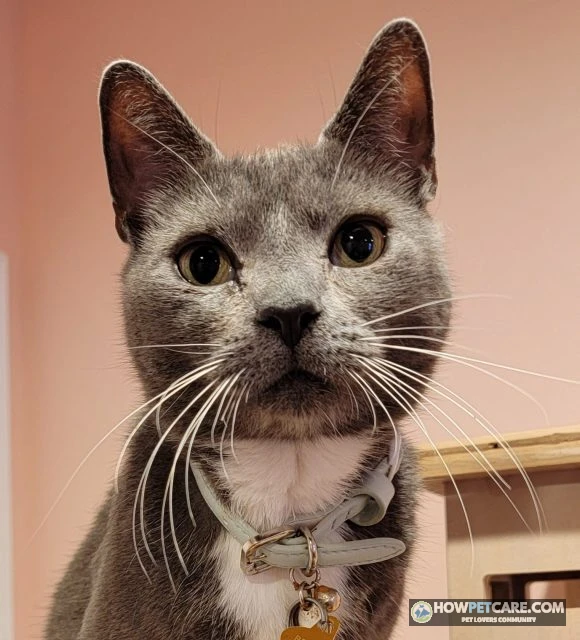
Sphynx cats vary: some have short, sparse, curly, or broken whiskers, while others appear to have almost none. A sparse set may be normal for an individual. New skin changes or a sudden difference from that cat’s usual appearance still deserve attention.
What Cat Whiskers Do: Navigation, Hunting, Balance, and Mood
How whiskers sense air movement and nearby objects
A whisker can move when it touches a surface or responds to air movement. The resulting signal tells a cat about its immediate surroundings, including in low light. This can help with navigation and spatial awareness, but whiskers work alongside the other senses; they don’t replace vision.
Feedback from the whisker system also contributes to body awareness. Whiskers don’t control balance on their own. Balance relies on several systems, including the inner ear and information from the body.
Whiskers during hunting and play
Cats can angle their muzzle whiskers forward while investigating or interacting with something nearby. Whiskers may help them gather information about a toy or prey that’s difficult to see clearly at very close range. Carpal whiskers can also provide information about prey held near the front paws.

Dogs have vibrissae, too. Both species use these specialized hairs to gather sensory information, though their appearance and visibility vary between animals.
Reading cat behavior from whisker position
Forward-facing whiskers can accompany curiosity or alertness; whiskers held close to the face can accompany fear or anxiety. A relaxed cat may hold them more loosely. Treat these as clues, not a translation guide: consider the ears, tail, posture, and situation as well.
Do Whiskers Really Measure Body Width? What the Evidence Shows
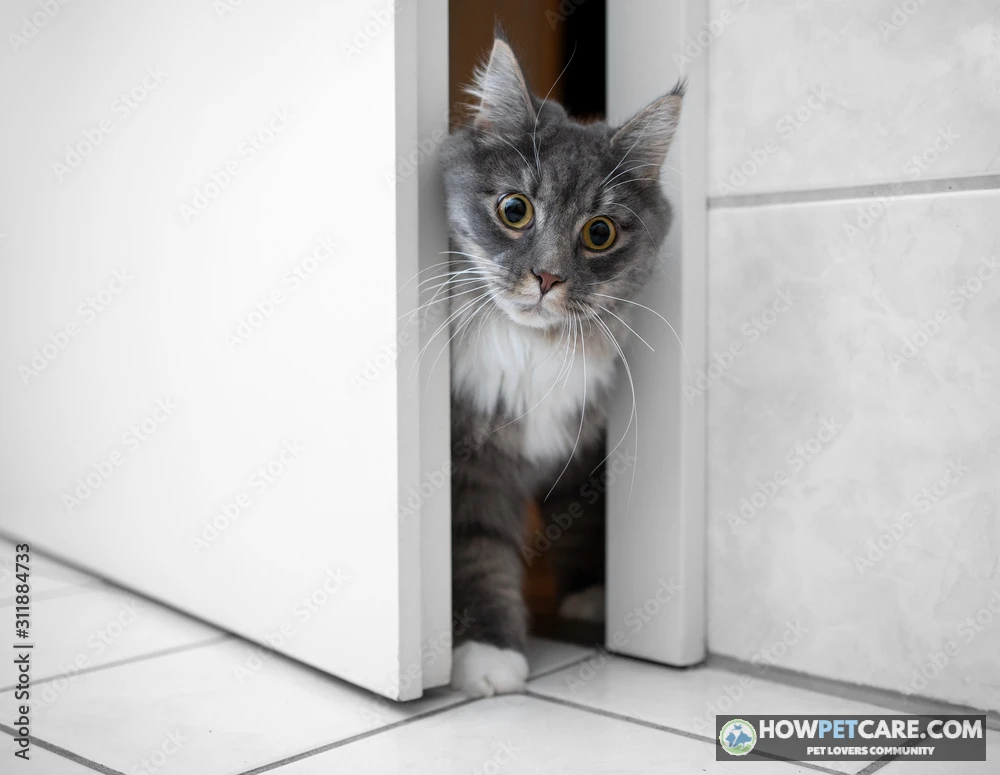
A common explanation holds that a cat’s whiskers are as wide as its body and act like a ruler to tell it whether it can fit through a gap. Whiskers do provide information about nearby surfaces, but the stronger claim—that their span is a reliable, calibrated measure of body width—hasn’t been confirmed experimentally.
The body-width explanation is plausible and widely repeated, but it shouldn’t be treated as a proven measuring rule.
Cats also draw on vision, information about their body position, and experience when they navigate—topics that sit within a broader feline anatomy guide. Don’t assume a cat will fit through an opening just because its whiskers pass through, or that it can’t fit because they touch the sides.
Can You Cut or Trim a Cat’s Whiskers? Regrowth and Handling Rules
Don’t cut or trim a cat’s whiskers. These hairs have a sensory function, and there’s no routine grooming reason to shorten them. Ask a groomer to leave them intact, even when grooming a long-haired cat.
What happens if whiskers are cut
Cutting the shaft differs from pulling the hair out: the shaft has no nerve endings, while the follicle is richly supplied with sensory nerves. A cut whisker can’t provide the same normal contact information along its missing length, and the cat may feel less confident navigating. Pulling or plucking can hurt.
If you’ve accidentally cut a whisker, don’t panic or trim the others to match. Leave them alone and watch for normal behavior and regrowth.
How long whiskers take to grow back
Cat whiskers generally grow back after shedding or breaking. Regrowth can take weeks to a few months; one commonly cited range is roughly six weeks to three months, though timing varies. A damaged follicle or an underlying skin problem may affect regrowth. Ask your vet if the area is sore, the loss is spreading, or you’re concerned that the whiskers aren’t growing back.
Safe handling rules for the household
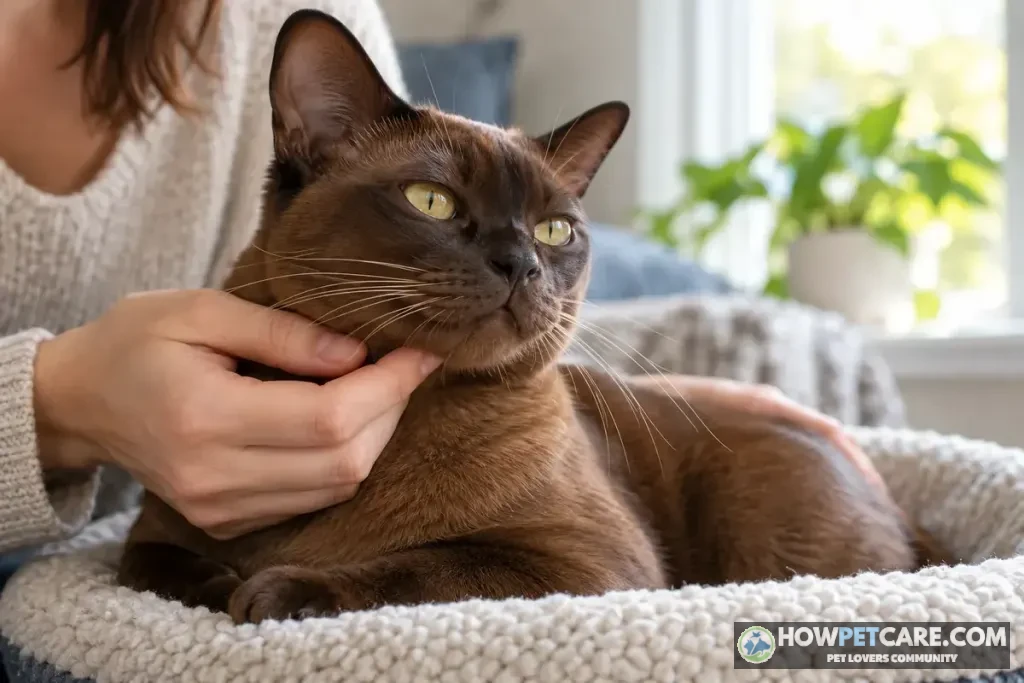
Gentle contact during ordinary petting is generally fine if your cat accepts it. Don’t pull, twist, pluck, or deliberately trim whiskers. Teach children to stroke the cat gently and stop if it flinches, turns away, or moves off.
Is It Normal for Cat Whiskers to Fall Out? A Symptom Checklist
Finding an occasional whisker on the floor is usually normal: whiskers shed and are replaced. There’s no useful exact quota to count at home. One or two found now and then, with skin and behavior that look normal, are generally less concerning than a noticeable change in the whisker pattern.
Use this checklist to decide what to monitor and when to seek veterinary care. It’s a triage aid, not a diagnostic tool.
| What you see | Likely normal or concerning | Other signs to look for | What to do |
|---|---|---|---|
| An occasional shed whisker or two | Usually normal if the cat is otherwise well | Normal-looking skin and usual eating and behavior | Note any changes; new growth may be hard to spot. |
| Several whiskers lost or repeatedly broken in a short period | Worth investigating | Rubbing, scratching, or changes in the surrounding fur | Book a vet appointment. |
| A noticeable thinning or bare patch, especially on one side | Concerning if new or worsening | Redness, flakes, crusts, bumps, swelling, or discharge | Book a vet appointment and take a photo. |
| Whisker loss with facial discomfort | Concerning | Pawing at the face, pain, or reluctance to be touched | Call your vet for advice on how soon to be seen. |
| Whisker loss with appetite, weight, or energy changes | Concerning | Eating less, lethargy, or other behavior changes | Contact your vet promptly; don’t assume the whiskers are the cause. |
Normal shedding versus loss that needs a vet
You don’t need to spot new whisker stubble or find equal numbers on each side to feel reassured. Instead, look for changes from your cat’s usual appearance. A single bent or broken whisker can happen without a serious problem, but repeated breakage or a new patch of missing whiskers is worth discussing with a vet.
For an appointment, bring photos of the muzzle and note when you first noticed the change. Mention recent diet changes, grooming products, possible injuries, and any other pets with skin problems.
Possible causes: ringworm, folliculitis, endocrine and skin conditions
A veterinarian may consider several causes, including rubbing or trauma, allergies, inflammation of the hair follicles known as folliculitis, or ringworm, a fungal infection. Broader health problems, including endocrine disorders, can also affect the coat or skin. A fallen whisker alone can’t reliably identify the cause.
Ringworm can spread to people and other animals. If you spot suspicious patches or another pet has a diagnosed infection, contact your vet for advice about examination and handling.
Does diet affect whisker health? Protein, biotin, and zinc
Whiskers are made of keratin, so overall nutrition matters for healthy hair growth. Protein and nutrients such as biotin and zinc play roles in skin and coat health. For most cats, the practical starting point is a complete and balanced food suited to their life stage—not a supplement added because a whisker fell out.
If your cat eats a restricted diet, has unexplained coat changes, or loses its appetite, discuss nutrition with your veterinarian. Avoid high-dose supplements without veterinary advice; excesses can be harmful, too.
What to Do if a Cat’s Whiskers Are Burned, Broken, or Damaged
Burned or singed whiskers
Move the cat away from the candle, stove, or other heat source. Carefully check the face and eyes without forcing the cat to hold still. Singed whiskers may look curled or shortened, but the nearby skin or eyes may also be injured.
Call a vet promptly if you see redness, blistering, swelling, squinting, or signs of pain, or if you’re unsure whether the face was burned. Seek urgent veterinary care for breathing difficulty or a significant burn. Don’t apply creams, oils, or home remedies unless a vet tells you to.
If only the whisker shafts appear singed, leave them alone and monitor your cat. They typically regrow as part of the normal cycle; skin or follicle damage needs veterinary assessment.
Broken or bent whiskers
Leave a bent or snapped whisker in place. Don’t pull out the stub or trim the others to make them even. Watch the skin and your cat’s behavior, and mention repeated breakage, soreness, or missing patches to your vet.
Glue, chemicals, or other contamination
Don’t scrub, pull, apply a solvent, or try to cut contaminated whiskers free. Prevent your cat from licking the area if you can do so safely, and promptly call your veterinarian or a pet poison-control service. Have the product name or container ready, then follow the instructions for that specific substance. Tell the professional immediately if the eyes or skin may be exposed.
Prevent accidents by keeping candles out of reach, restricting kitchen access while cooking, and storing adhesives and cleaning products securely.
Whisker Fatigue: What the 2021 Study Found and Which Bowl to Choose
Is whisker fatigue real? Preference versus pathology
Whisker fatigue, sometimes called whisker stress, describes the proposed discomfort of whiskers repeatedly touching a container. A bowl preference and a diagnosed medical condition are different claims. A 2021 study by Slovak and Foster reported a preference for a whisker-friendly dish, but it didn’t establish whisker fatigue as a disease or show that bowl contact causes pathology.
A cat that pulls food from a bowl, hesitates at meals, or leaves food may dislike something about its setup. Those behaviors can have other explanations, including dental pain or nausea. Trying a different dish is a reasonable, low-cost experiment, but it isn’t a substitute for veterinary care when appetite or behavior changes.
Bowl specifications that reduce whisker stress
These are practical starting points, not dimensions the study proved would prevent a medical condition. Choose a dish that suits your cat and the food you’re serving.
| Feature | Suggested specification | Why it may help | Notes |
|---|---|---|---|
| Width or diameter | Start around 5–6 inches or wider | A broad opening gives the face more room | Watch your cat eat; use a wider dish if the whiskers still press against the sides. |
| Depth | Around 1 inch or less for wet food, or use a plate | A low edge reduces contact with a deep rim | Dry food may need a little more edge to contain it. |
| Rim | Low rim or gently sloped sides | Makes food accessible without reaching into a narrow container | A flat saucer is another option. |
| Material | Food-safe ceramic, glass, or stainless steel | Smooth surfaces are straightforward to wash | Replace chipped dishes; plastic can retain odors and may irritate some cats’ chins. |
| Base | Stable and non-slip | Keeps the dish from sliding while the cat eats | A washable mat can help. |

Feeding setup tips
For several days, try serving the same food on a clean, wide plate while keeping the feeding location and routine consistent. Watch whether your cat approaches and eats comfortably. Improvement may point to a dish preference, but it doesn’t prove whisker fatigue or rule out a health issue.
Wash dishes regularly and put them where your cat can eat without being crowded by other pets. If your cat eats less than usual, seems uncomfortable, or stops eating, contact your vet promptly instead of waiting to see whether a bowl experiment helps.
Your Whisker-Care Action Plan: Bowls, Handling, and When to Call the Vet
- Check your cat’s muzzle in good light to learn what’s normal for that individual. Photograph any new bare patch, irritation, or repeated breakage.
- Leave whiskers intact. Ask family members and groomers not to trim, twist, pull, or pluck them.
- If the current dish seems awkward, try a clean, wide, shallow dish or plate. Let your cat’s comfort guide the choice rather than assuming a particular measurement is a cure.
- Keep a dated note of changes in whiskers, skin, eating, and behavior to share with your vet.
- Contact your vet about noticeable loss, skin changes, facial discomfort, or appetite and behavior changes. Seek prompt advice after burns or chemical exposure.
FAQ
Can I touch my cat’s whiskers?
Brief, gentle contact while petting is usually fine, but many cats dislike having their whiskers handled directly because the follicles are very sensitive. Never pull, twist, or pluck them.
Do Sphynx cats have whiskers?
Yes, but they are often short, sparse, brittle, or broken, which is why sources disagree. Some Sphynx cats have stubbly whiskers and a few have almost none.
Does it hurt a cat to cut its whiskers?
The whisker shaft has no nerve endings, so cutting it is not painful in the way pulling is. The cat can still be disoriented, because the follicle no longer receives normal input.
Are whiskers on a kitten different from an adult cat’s?
Kittens are born with whiskers already present, and they use them to find their way to the mother and littermates. They grow and change as the kitten matures.
Why do cats have whiskers above their eyes?
Those are superciliary whiskers, one of several whisker groups on a cat’s face. They help protect the eyes by triggering a blink response when something touches them, much like eyelashes do in people.